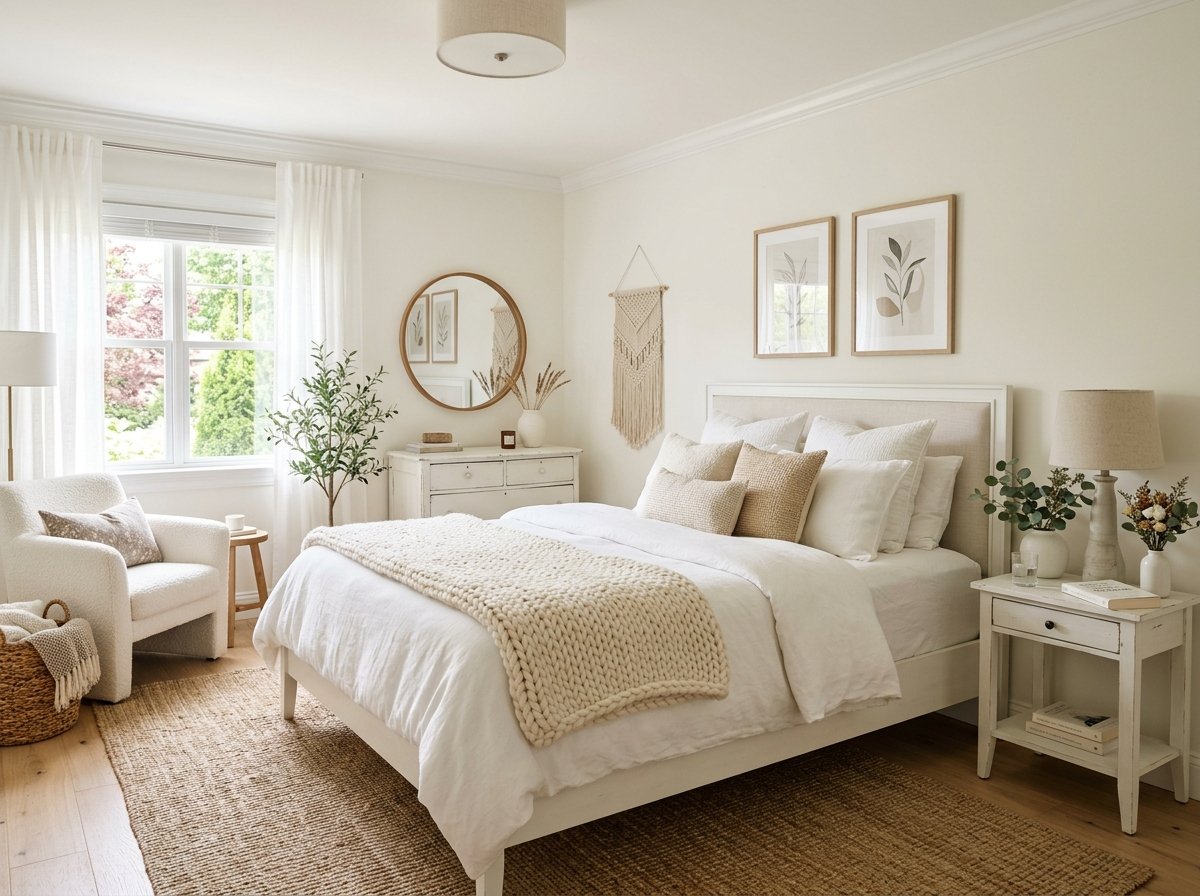
18 White Bedroom Ideas That Look Expensive (Without Feeling Like a Hospital)
A white bedroom sounds simple until you stand in front of fifty paint chips that are all called something like “Cloud Whisper.” One looks pink, one looks gray, and one appears to change its mind every hour. Still, white is one of the hardest-working choices in home decor. It can brighten a small rental, calm a busy family home, and make mixed furniture feel connected.
The surprise is that a beautiful white bedroom is rarely only white. The rooms that feel warm and expensive use layers: cream beside bright white, smooth cotton beside nubby linen, clean walls beside natural wood. This guide is organized like a decorating recipe, so you can start with the base, add personality, solve storage, and finish the room without buying everything at once.
A quick budget note: Prices change by store and location, but current U.S. examples put one gallon of basic white interior paint near $35, a pair of simple off-white sheers near $15, a striped full/queen duvet cover near $40, and a two-pack of white pillow covers near $21. Use those as planning clues, not promises. Shop your home first, measure twice, and spend on the pieces you touch every day.
First, Build a White Room That Feels Warm
1. Layer Three Shades of White
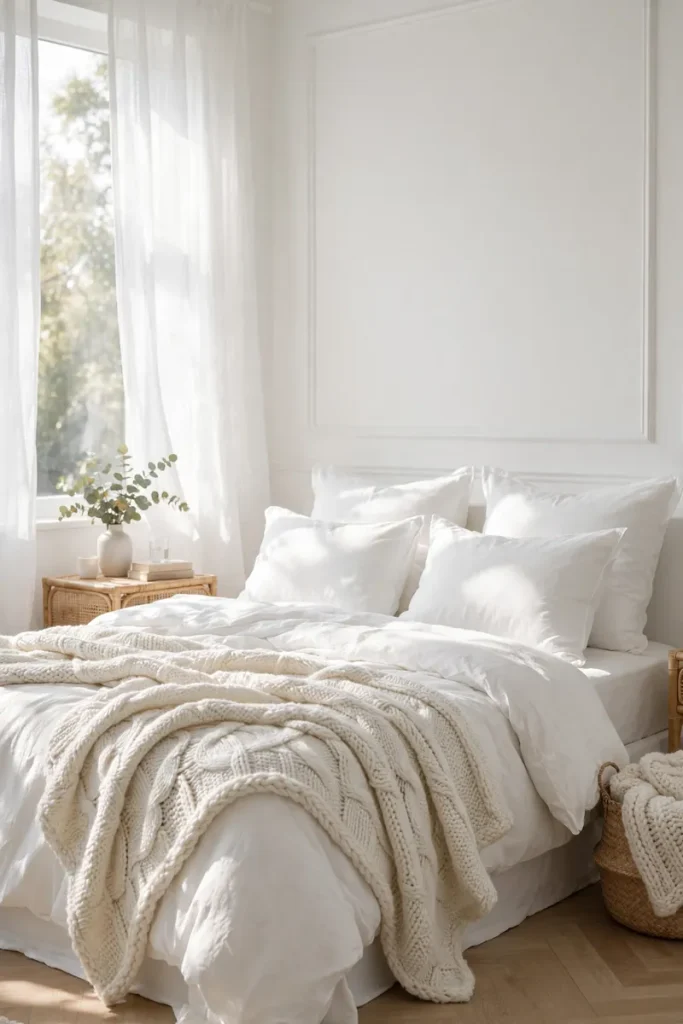
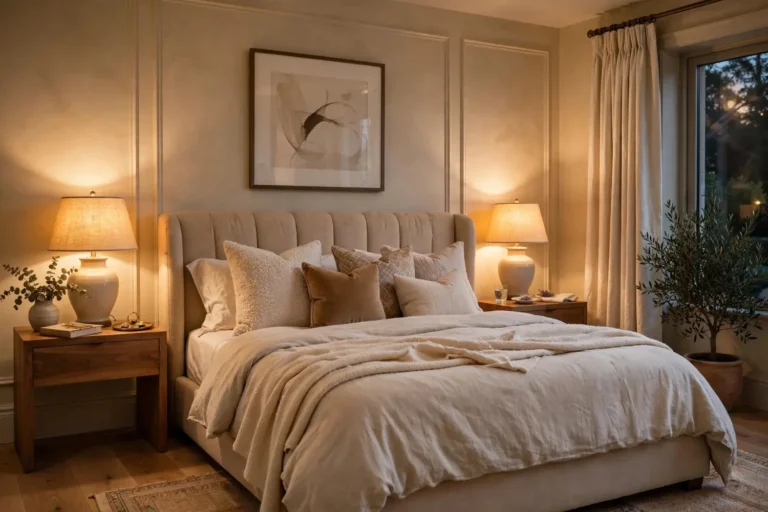
Pure white on every surface can look sharp, but it can also feel a little like a very polite refrigerator. Mix a creamy wall, crisp sheets, and an ivory throw instead. The small color shifts add depth while the room still reads as white. I learned this after painting my first apartment bedroom in one icy shade; by sunset, I felt as if I should be wearing a lab coat. If you are testing paint, move a sample board around the room for a full day. Warm north-facing rooms with creamier white; balance yellow afternoon light with a cleaner white. Budget: low if you are changing linens, and medium if you repaint.
2. Warm It Up With Natural Wood
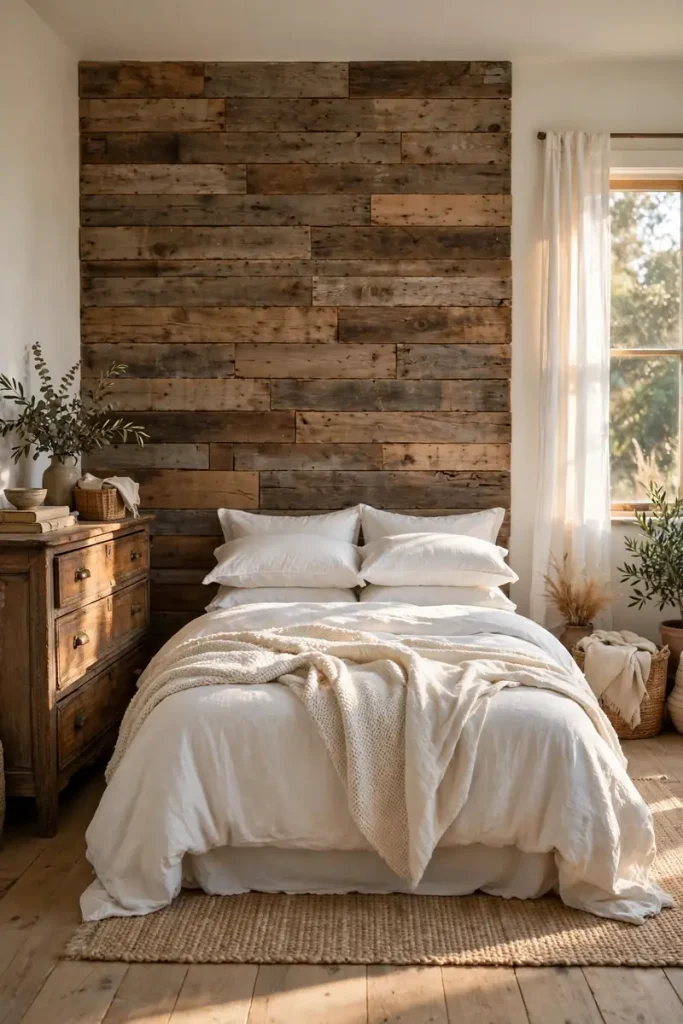
A white bedroom becomes friendlier the second you bring in wood. Try an oak nightstand, a walnut bench, or a simple pine headboard. You do not need a matching set; in fact, a collected mix often feels more personal. For a rental, lean a finished wood panel behind the bed or swap in thrifted bedside tables without touching the walls. Keep the wood tones within one warm family so the look feels calm, not like a furniture store clearance aisle. Budget: about $30 to $100 for a thrifted accent, or more for a new bed frame.
3. Make the Bed the Softest Thing in the Room
The bed is the largest object, so let it carry the cozy part of the design. Start with white or oatmeal sheets, add a quilt with visible stitching, then fold a chunky throw across the foot. Two sleeping pillows, two larger shams, and one lumbar pillow are plenty. I once stacked nine decorative pillows because a magazine told me to. Every night they moved to the floor, where they became a very expensive obstacle course. Choose washable fabrics if pets, kids, coffee, or real life enter the bedroom. Budget: low to medium, depending on whether you reuse your insert and only replace the cover.
4. Use Sheer Curtains to Borrow More Daylight
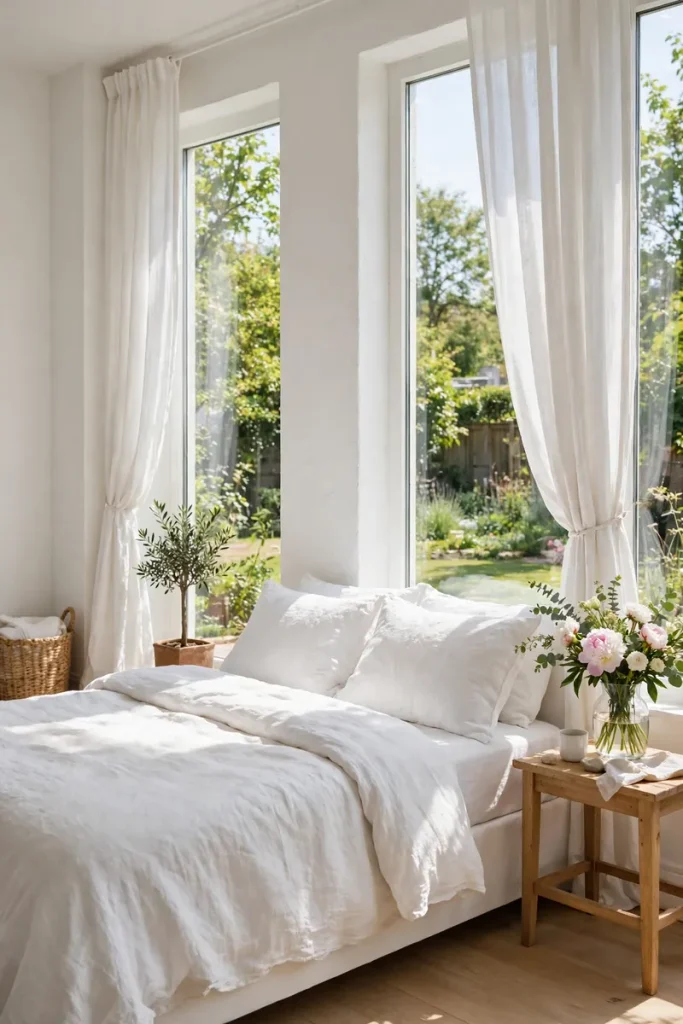
White sheers soften a window without blocking all the sunshine, which is wonderful in a small or dark bedroom. Hang the rod a few inches above the frame and extend it past both sides; the window will appear taller and wider. If you need privacy or sleep late, pair sheers with a blackout roller shade. Renters can use a tension rod or removable brackets when the lease says no holes. A current budget example is about $15 for a basic pair of off-white sheers, before the rod. Steam the panels after hanging them. Wrinkled curtains have a special talent for making a finished room look unfinished.
5. Add One Quiet Pattern
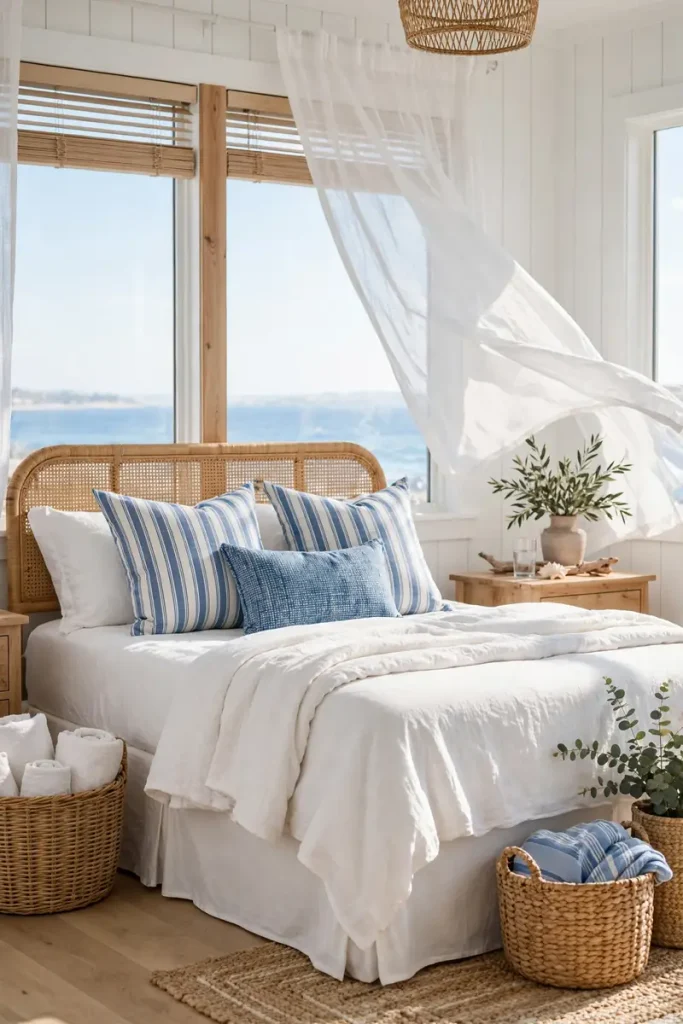
An all-white room still needs rhythm. Bring in one gentle pattern through striped bedding, a small check, a block-printed pillow, or a faded rug. Keep the pattern low contrast so it supports the room rather than shouting across it. This trick works especially well when you already own plain white furniture and do not want to replace anything. For a renter-friendly update, use a patterned throw and repeat one of its soft colors in a vase or lamp. Budget: often under $50 if you shop for one textile instead of a full matching set. One pattern is charming; six competing patterns may start a family argument.
Now Give the White Some Personality
6. Try a Black-and-White Outline
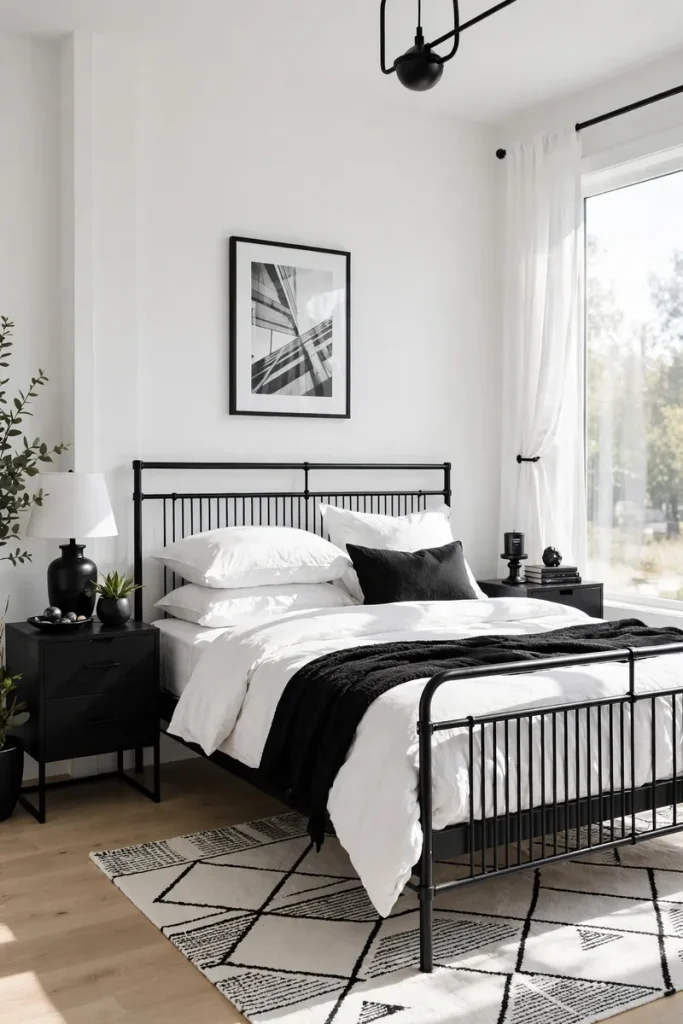
A few slim black details make white feel crisp instead of blank. Think black picture frames, a narrow metal lamp, or one black-edged mirror. Keep the dark pieces small and spread them around the room so one corner does not feel heavy. This is a smart approach for renters because almost everything can move with you. Start with frames you already own and paint them black, or use removable picture strips. Budget: low, often $20 to $80 for a few accents. The secret is restraint. You want punctuation marks, not a whole paragraph written in bold.
7. Bring in Blush Without Turning the Room Pink
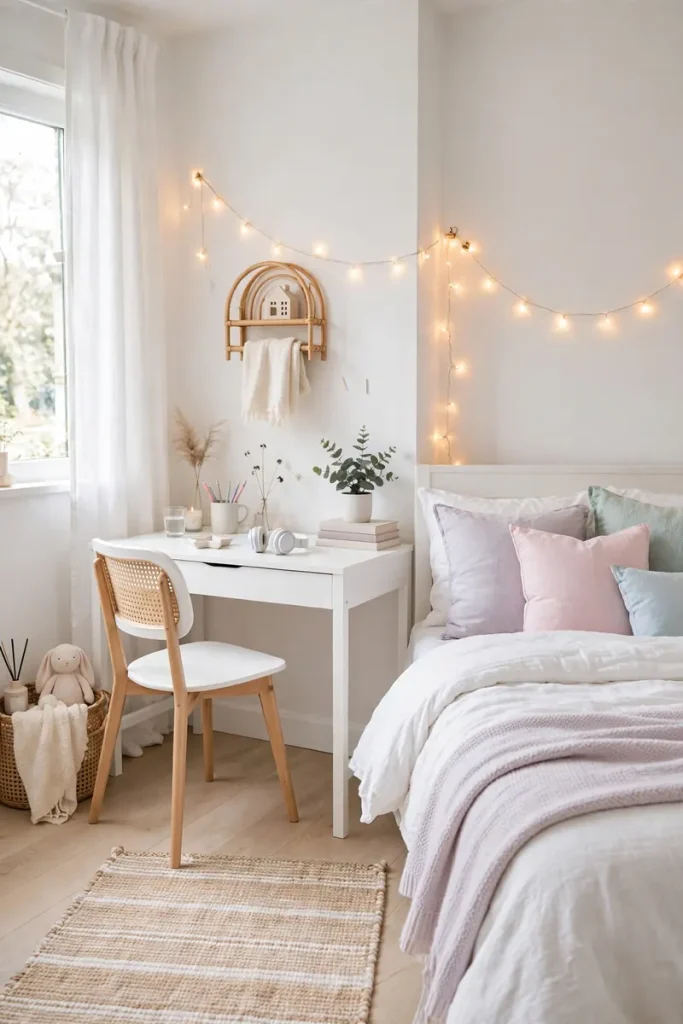
Blush is lovely beside white because it warms the space while keeping the airy mood. Use it on one throw, one lumbar pillow, or a small upholstered stool. Dusty rose and clay pink look more grown-up than bubblegum tones, but choose what makes you happy; the bedroom is not a board meeting. I added a faded pink blanket to a guest room that had felt flat for months, and suddenly the old wood dresser looked intentional. For an easy seasonal change, keep the walls and bedding white and rotate the accent color. Budget: low when you change only one or two soft pieces.
8. Create a Calm Coastal Bedroom
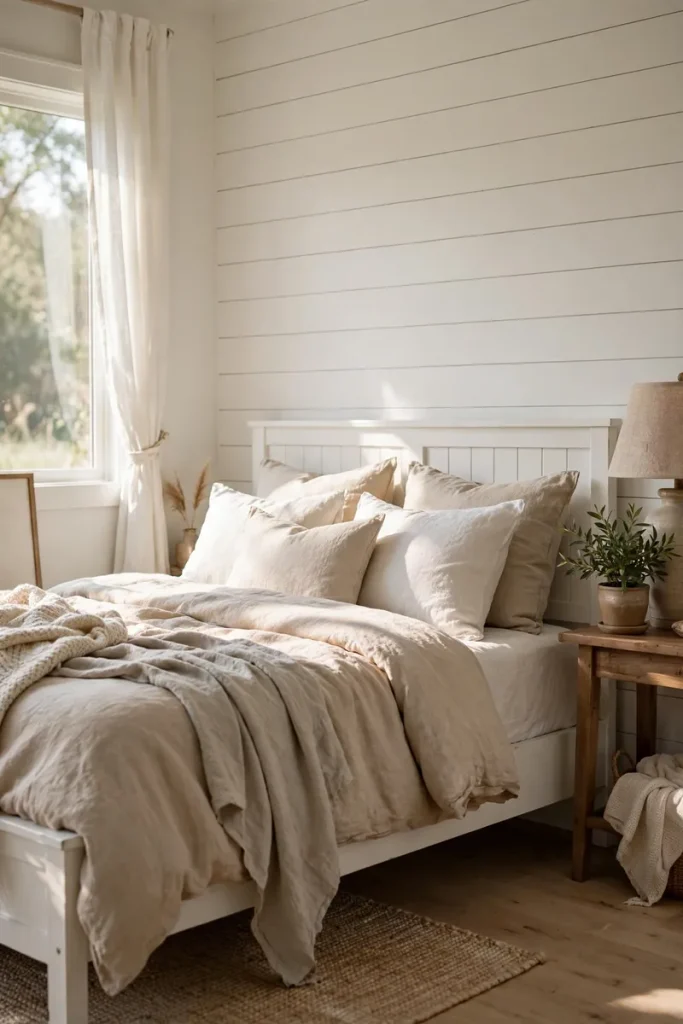
Skip the obvious anchors and seashell signs. A modern coastal white bedroom is quieter: bleached wood, woven grass, pale blue-gray, and breezy linen. Add a rattan tray, a textured basket, or a faded blue cushion. Leave some surfaces open so the room feels like a deep breath. This style suits sunny rooms, but it can also lighten a narrow apartment bedroom. Renters can get the look with textiles and baskets only. Budget: $25 to $100 for a few accents, especially if you thrift the basket. Think relaxed beach house, not gift shop near the boardwalk.
9. Go Soft and Romantic With Vintage Details
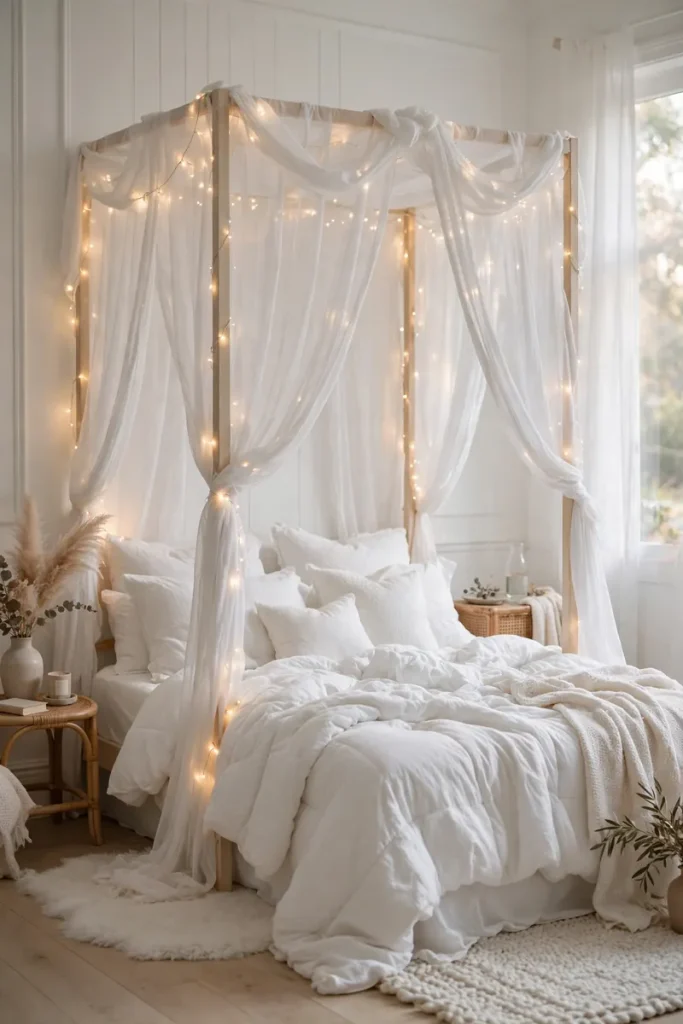
White gives vintage pieces room to shine. Try a curved mirror, a small brass lamp, embroidered pillowcases, or a painted nightstand with gently worn edges. Avoid buying a full theme set. One or two older pieces feel collected; twelve can make the room look like it is waiting for a historical tour guide. A flea-market frame can become wall art with a fabric scrap or botanical print inside. If painting is not allowed, place removable wallpaper inside the back of a bookcase for a soft pattern. Budget: low to medium, and often friendlier when you shop secondhand.
10. Let Green Plants Break Up the White
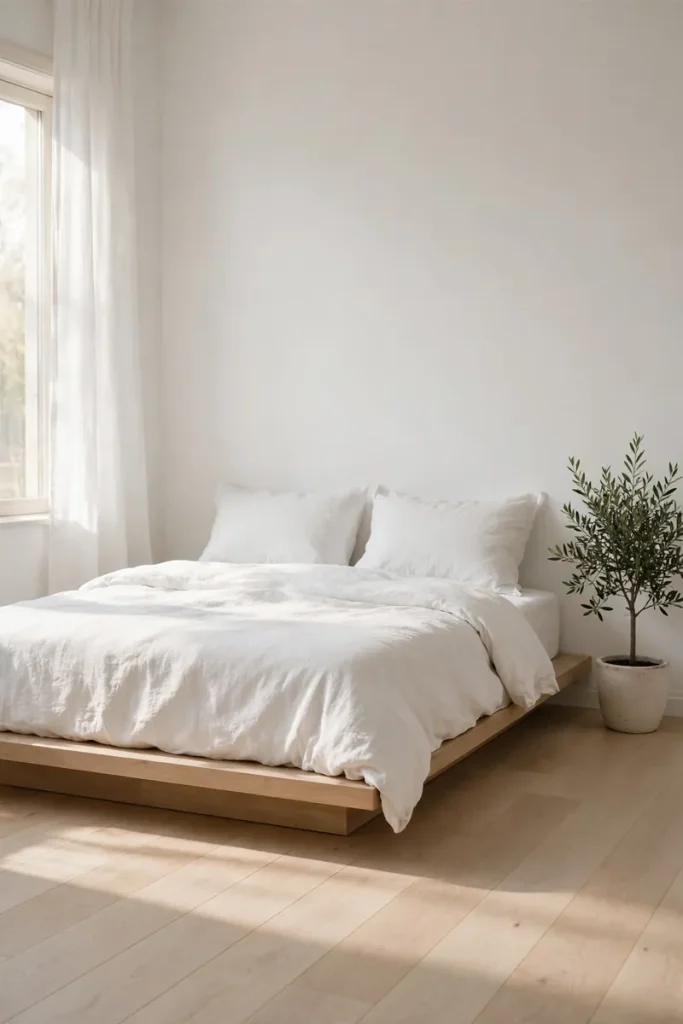
Plants add life, shape, and a natural color that works with every white. Put a trailing plant on a shelf, a medium plant near the window, or one sturdy plant on a dresser. Choose the plant for the actual light in your room, not for the heroic version of yourself who remembers every watering day. Faux greenery is fine in a dark corner; no plant police will visit. Use simple clay, woven, or white pots so the leaves stay in focus. Budget: around $15 to $60 for one or two modest plants and pots. In a tiny room, hang one plant to save floor space.
Make Small White Bedrooms Work Harder
11. Float the Nightstands
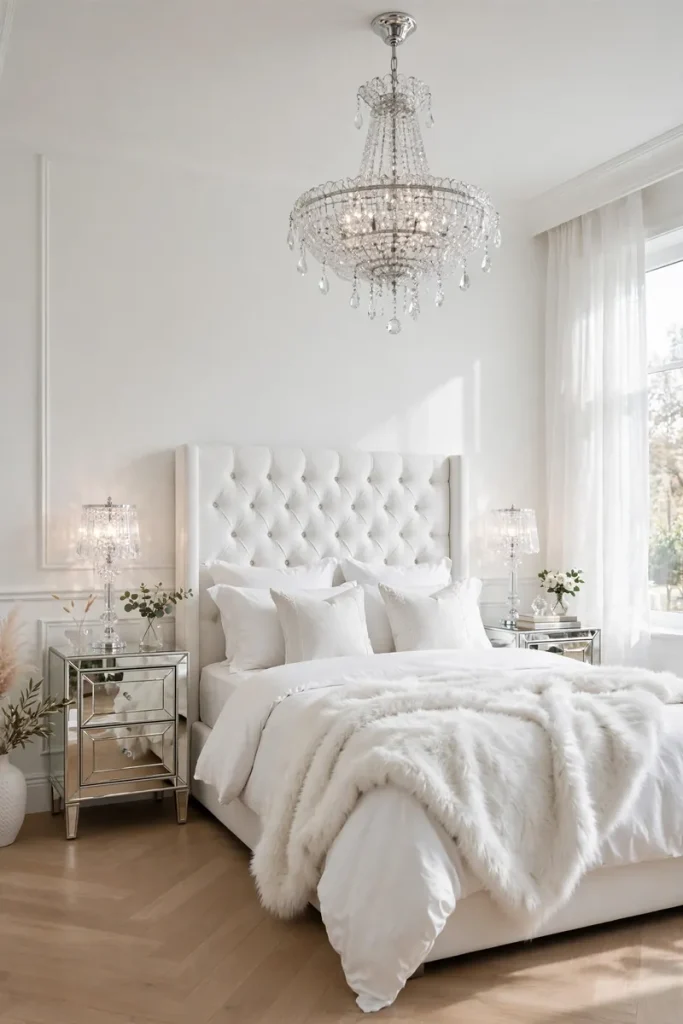
Wall-mounted nightstands open the floor and make a tight bedroom feel less crowded. A small shelf can hold a phone, a glass of water, and a book without using a bulky cabinet. Keep it at mattress height and round any sharp corner near a narrow walkway. Homeowners can install into studs; renters can use a slim C-table or a sturdy bedside stool for the same visual effect. Budget: roughly $30 to $120 for a pair of simple shelves or compact tables. Add a plug-in wall sconce above each side and you will free the surface completely. Tiny room, suddenly much less tiny.
12. Use One Wall of Closed White Storage
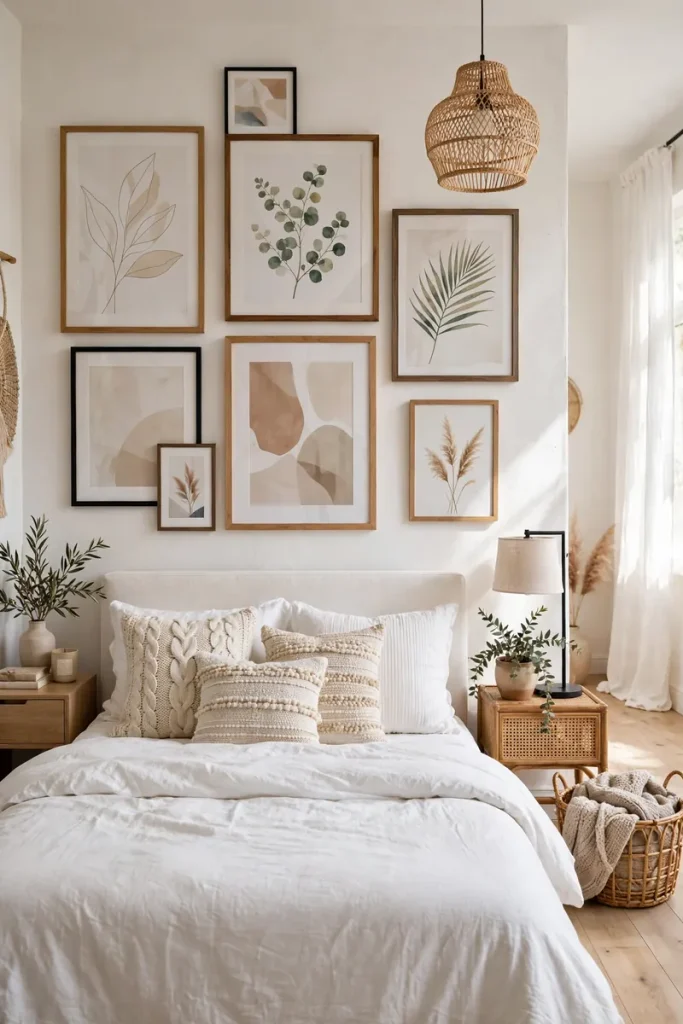
When storage matches the wall, it visually steps back. A white wardrobe, dresser, or cabinet can hold clothing without breaking the room into busy blocks. Closed doors are helpful because everyday clutter has many talents, and looking restful is not one of them. Measure the baseboard, ceiling height, outlets, and door swing before buying anything. In rentals, freestanding wardrobes are safer than built-ins; use anti-tip hardware as directed. Budget: medium to high, so look for used pieces and update only the knobs. Keep the top clear or add one basket, not a museum of forgotten objects.
13. Place a Mirror Where It Catches Light
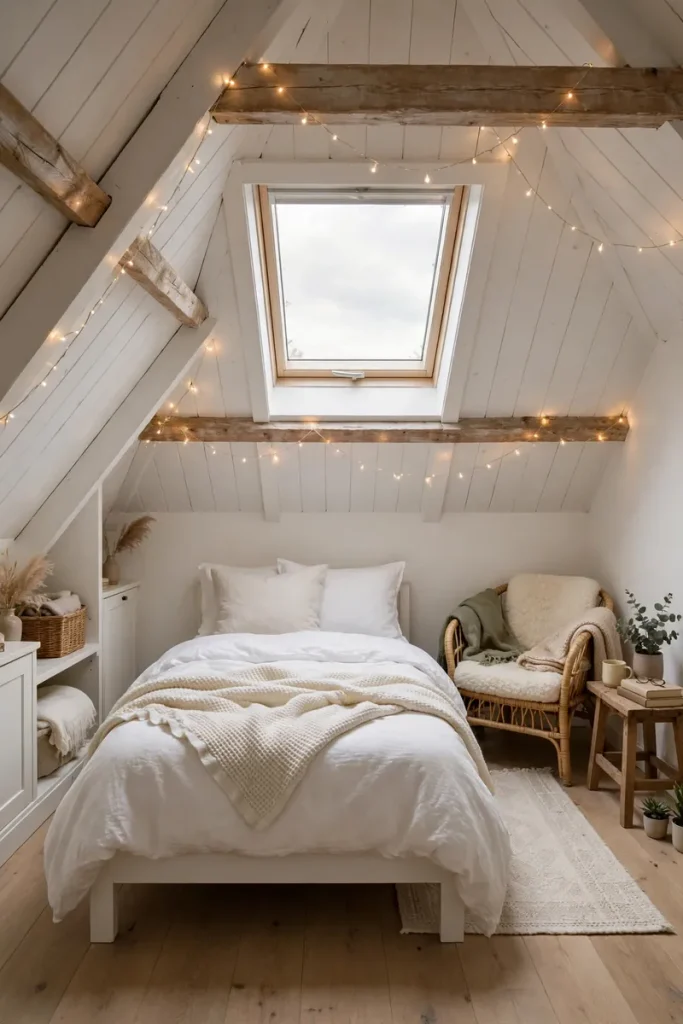
A mirror can bounce daylight through a white room and make a narrow space feel more open. Position it across from or beside a window, not where it reflects the laundry pile you are pretending does not exist. A tall leaning mirror works in a bedroom corner, while a round mirror softens boxy furniture. Renters can choose an over-the-door mirror or use approved removable mounting hardware for lighter pieces. Budget: about $25 to $150, depending on size and frame. Always secure a leaning mirror, especially around children or pets. The goal is bright and graceful, not a surprise crash at 2 a.m.
14. Choose a Low Bed for More Visual Air
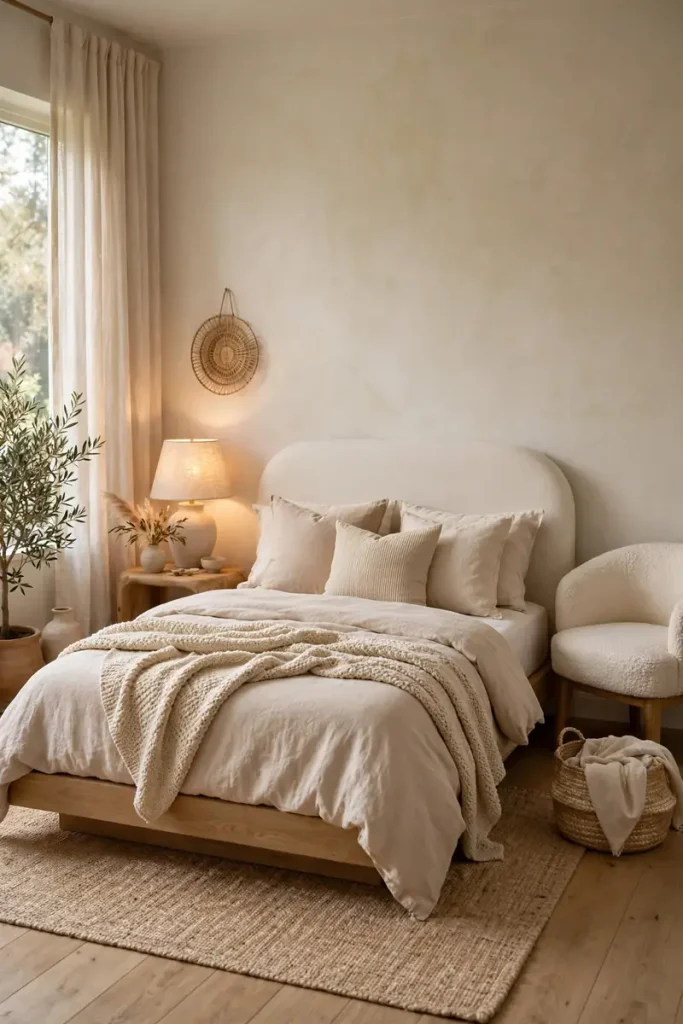
A lower bed leaves more blank wall above it, which can make a small bedroom feel taller and calmer. Platform frames also suit the clean lines of a white palette. Before buying, think about comfort and storage: a very low bed may be harder to get out of, and it removes valuable under-bed space. You can create the feeling without a new frame by choosing a shorter headboard and keeping bedding from pooling on the floor. Budget: free if you restyle what you own, or high for a new frame. Measure first, because furniture looks much smaller online than it does blocking your closet door.
Finish the Room Like a Stylist—But Keep It Livable
15. Add a Soft Headboard Moment
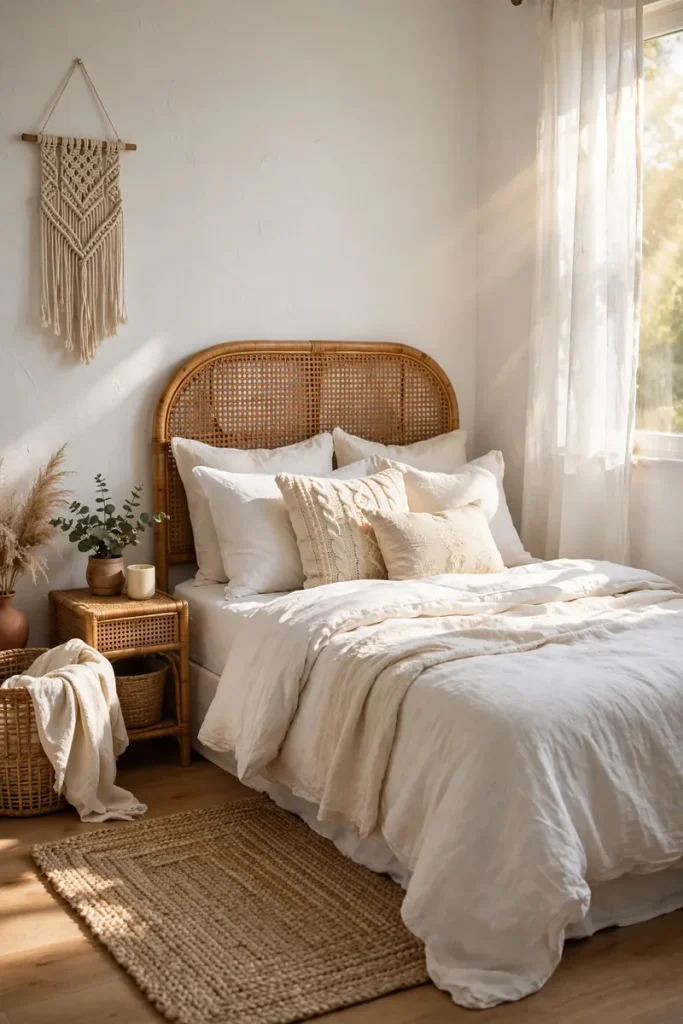
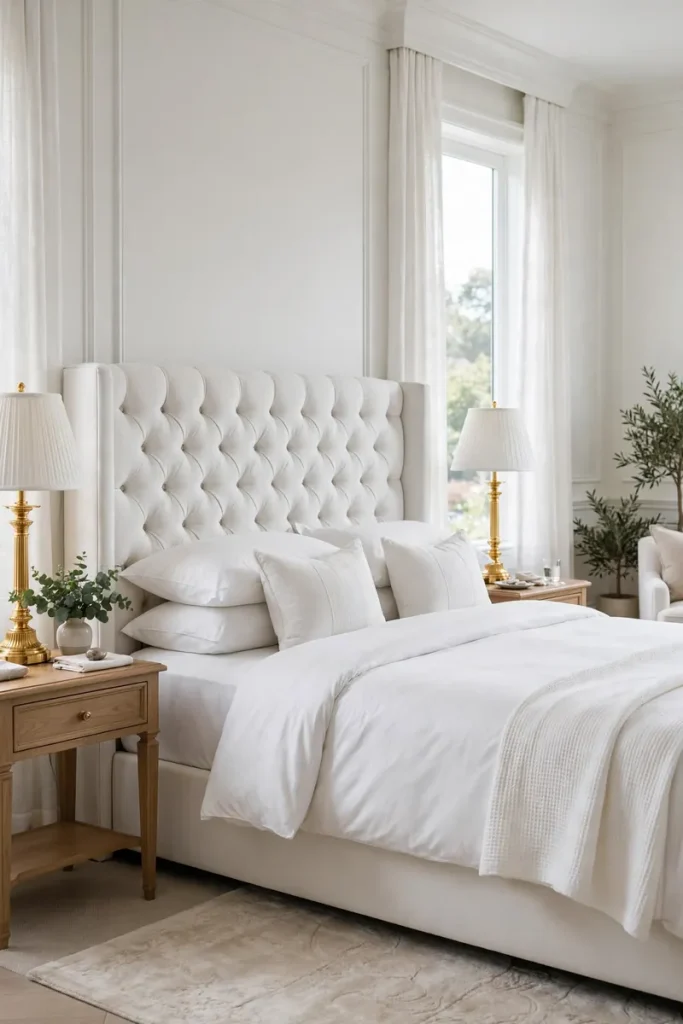
A headboard gives the bed a clear focal point, and a pale upholstered version adds softness without introducing a strong color. Look for oatmeal, boucle, linen-look fabric, or channel tufting. If a new headboard is not in the budget, hang a quilt on a removable rod, place two large European pillows against the wall, or cover an existing headboard with a washable slipcover. Budget: low for a fabric trick and medium to high for upholstery. My favorite guest room once had no headboard at all—just two giant pillows and a narrow shelf. Everyone assumed it was a design decision. I accepted the compliment.
16. Style a Simple Reading Corner
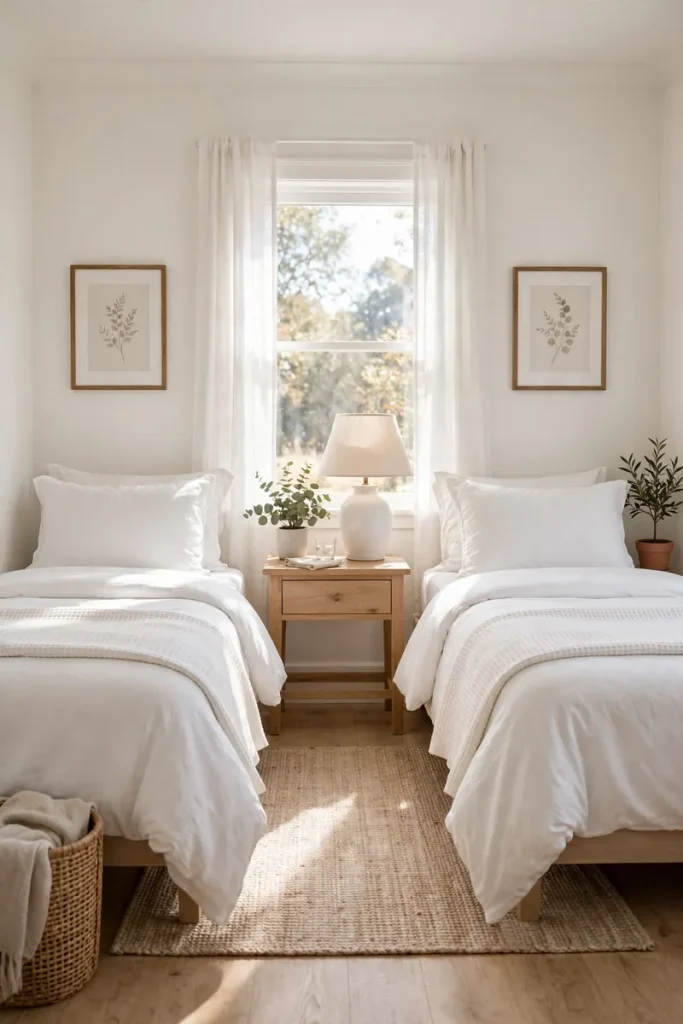
An empty corner can become useful with a compact chair, a floor lamp, and a tiny table. In a white bedroom, choose one piece with texture—boucle, cane, or woven fabric—so the corner does not disappear. If space is tight, use a firm floor cushion or place a bench beneath the window. Keep at least a comfortable walking path around the bed. Budget: $40 to $200 depending on whether the chair is thrifted or new. This corner is also ideal for putting on shoes. It may collect clothes occasionally, because chairs have secret second jobs, but a nearby basket can keep the peace.
17. Use Warm Lighting After Sunset
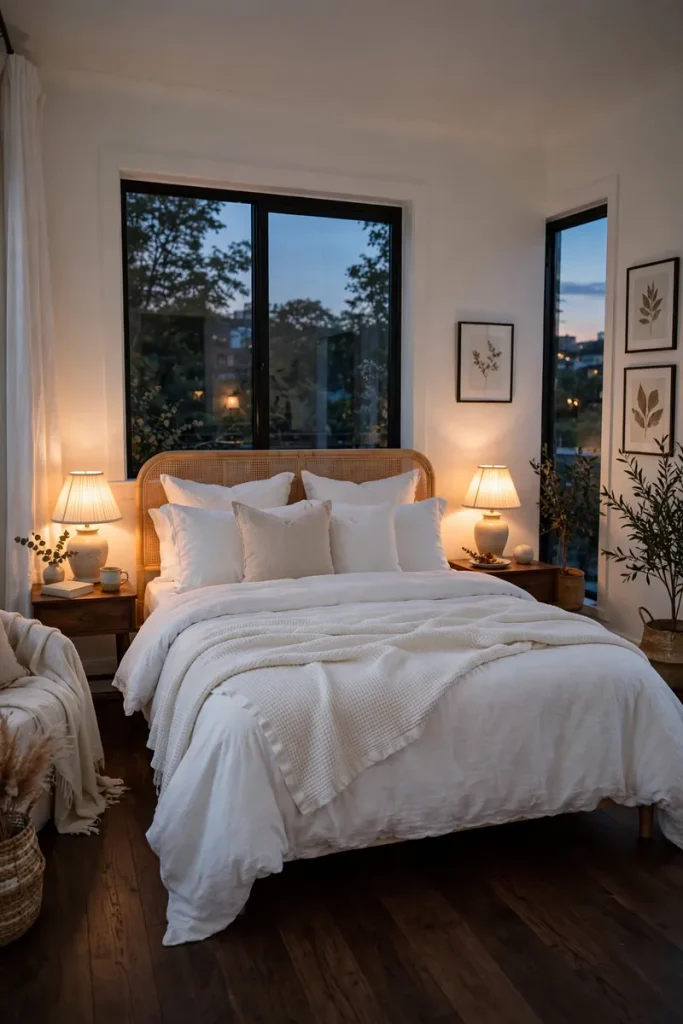
White walls can turn blue or gray under cool bulbs. Warm light makes the same room feel softer at night. Use bedside lamps, plug-in sconces, or a small shaded pendant rather than one harsh ceiling fixture. Match the color temperature of the bulbs so one side of the room does not look like sunrise and the other like a parking garage. Dimmers are helpful, but renters can choose smart bulbs or plug-in dimmer switches that do not require rewiring. Budget: $20 to $100 for a lamp or two and matching bulbs. Always follow fixture wattage limits and ask a licensed electrician for hardwired changes.
18. Finish With One Personal Story
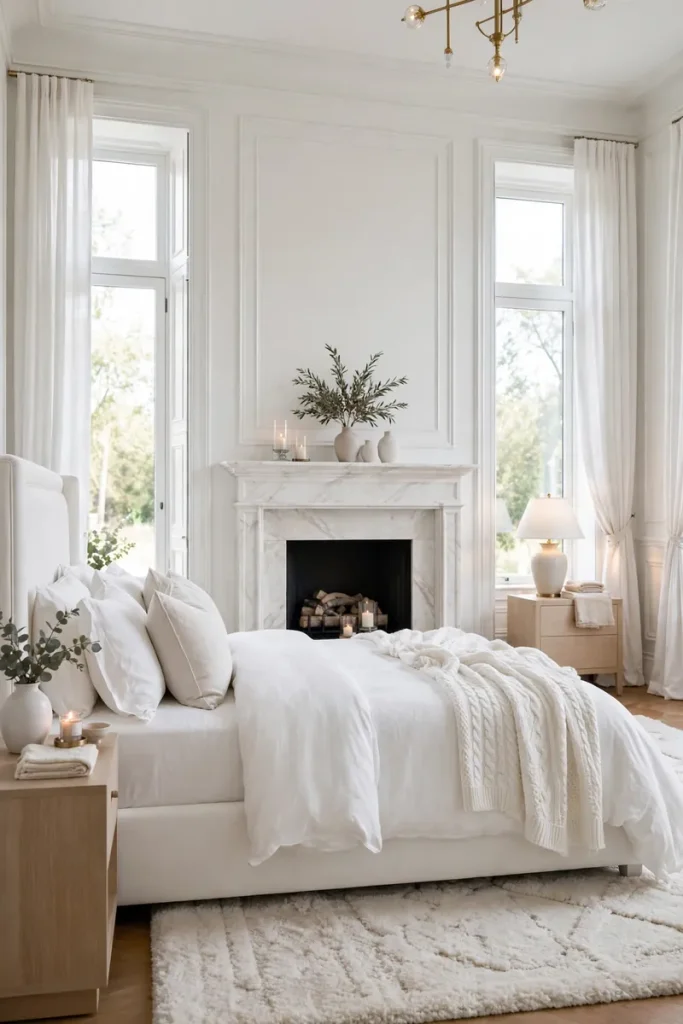
The best white bedrooms are not empty; they are edited. Finish with one object that says something about you: a framed travel photo, your grandmother’s little dish, a stack of favorite books, or a handmade quilt. Keep the display small so it feels meaningful instead of crowded. I have a crooked ceramic bowl made during a very optimistic pottery class. It holds earrings and proves that personal beats perfect every time. This final layer can cost nothing because you probably already own it. Rotate special objects when the room needs a refresh. White is the background, not the personality; your story is what makes the room home.
Your White Bedroom, Without the Cold Feeling
You do not need all 18 ideas. Pick one move from each part of the recipe: a warmer white, a natural texture, one personality accent, and one practical fix. That may mean cream walls, a wood nightstand, blush bedding, and a better lamp. In a rental, it may be sheers, a thrifted mirror, a woven basket, and art hung with removable strips.
Before shopping, take a photo of the room in daylight and at night. The picture will show where the space feels empty, cluttered, or too cool. Then change the largest, easiest thing first—usually bedding, curtains, or paint. Give the room a week before adding more. White rooms reward patience. They also reveal dust with alarming honesty, but let us call that a built-in cleaning reminder.