17 Tiny Bathroom Ideas That Make a Small Space Feel Shockingly Bigger
A tiny bathroom can feel like a daily obstacle course. You step around the open door, bump the vanity, and discover that your towel is somehow farther away than the moon. I once lived with a bathroom so narrow that opening the cabinet blocked the exit. It was less “spa retreat” and more “very clean escape room.” Still, a small footprint does not have to mean poor style or painful storage.
The best tiny bathroom ideas do three things: protect open floor space, use the walls wisely, and make every finish feel intentional. Start by measuring the room, the door swing, and the clear space in front of each fixture. A pretty layout is useless if you have to sit sideways. Keep plumbing where it is when possible, because moving drains and supply lines can turn a simple update into a major remodel. The rough costs below are planning ranges for the United States; labor, permits, materials, and your city can change them greatly.
Phase One: Steal Back Every Inch
1. Float the Vanity to Show More Floor
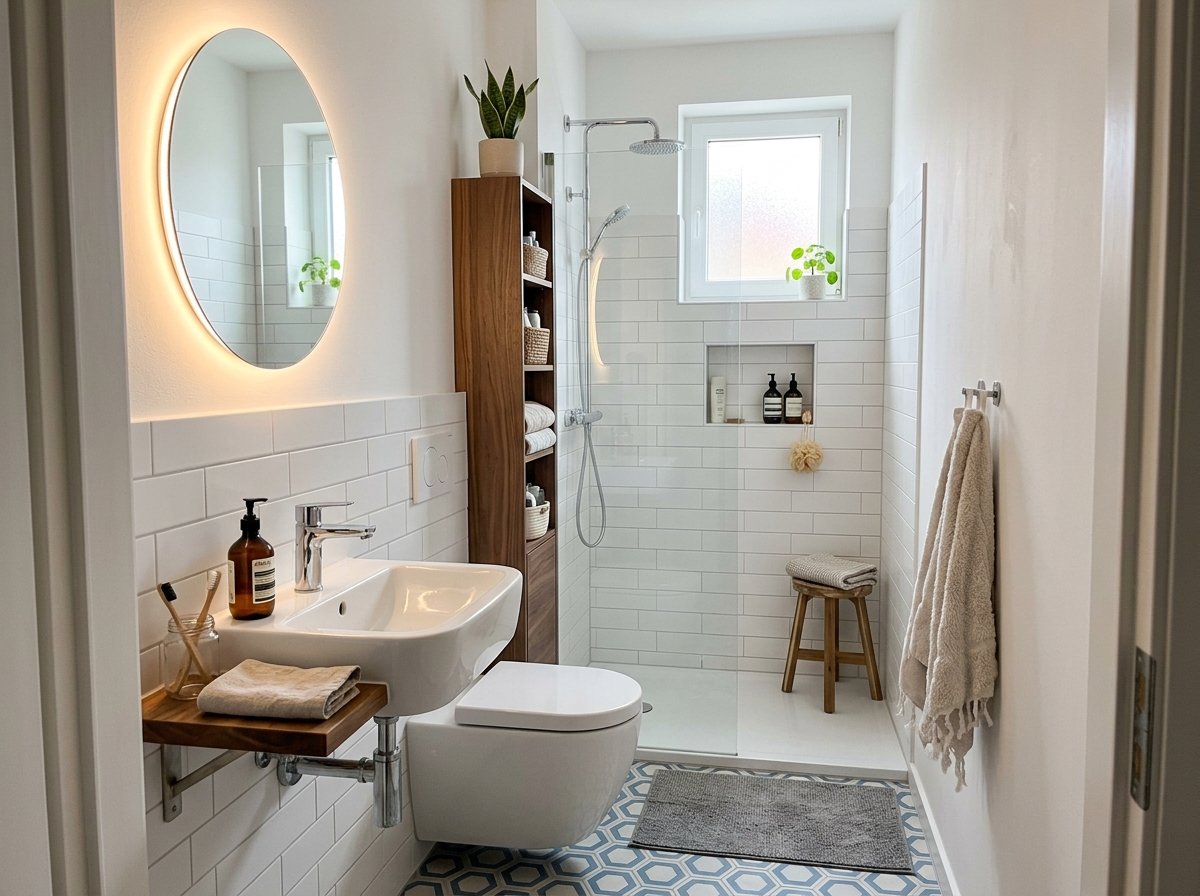
A wall-mounted vanity lets your eye travel beneath the cabinet, so the room feels lighter. It also creates a handy spot for a slim scale or a small basket. Choose a model about 16 to 19 inches deep when a standard vanity crowds the walkway. A basic floating vanity may cost roughly $300 to $1,200 before installation, while custom work costs more. Ask a contractor to add strong wall blocking; sinks are not the place for a “hope this holds” approach. Renters can copy the airy look with a narrow leggy console and matching wall color.
2. Replace a Tiny Mirror With One Big Reflection
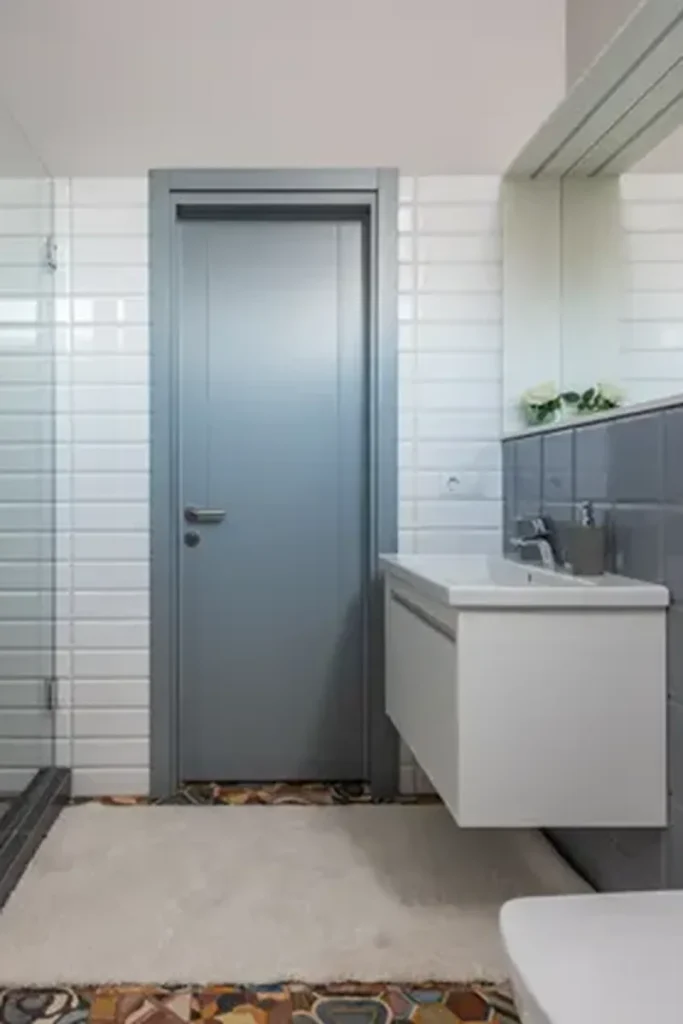
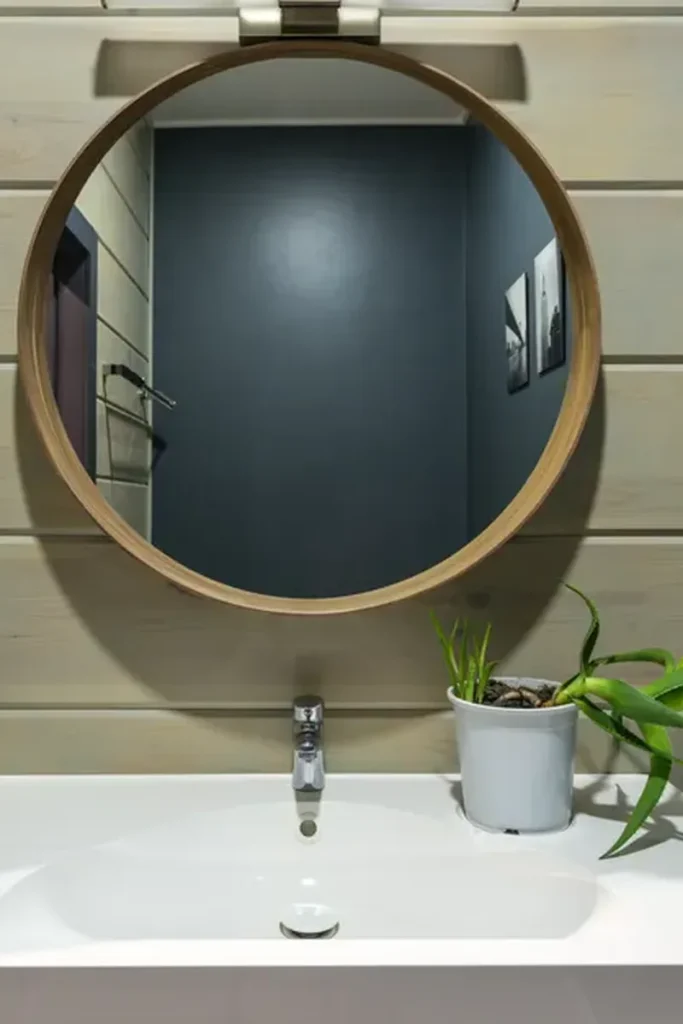
A wide mirror doubles the light and gives the wall visual depth. Run it nearly from the vanity to the ceiling, or choose a large round mirror to soften a boxy room. I swapped a little medicine-cabinet mirror for a wider one in a guest bath, and the room instantly stopped feeling like a broom closet with plumbing. Ready-made mirrors often run about $80 to $400. Renters can use a large framed mirror hung on approved hardware, then store the original safely. Place a lamp or window opposite it for the strongest brightening effect.
3. Build Storage Up, Not Out
When the floor is full, the walls are your next room. Install two or three shallow shelves above the toilet, add a tall narrow cabinet beside the vanity, or hang small baskets behind the door. Keep the lowest shelf high enough that nobody bumps a head during a sleepy midnight visit. Simple shelves can cost $30 to $200, while a fitted tower may start around $300. For renters, use an over-the-toilet unit or tension-pole caddy. Store matching towels and attractive bottles in view; hide the mystery cords and bulk toilet paper in closed bins.
4. Trade the Shower Curtain for Clear Glass
A clear glass panel keeps the shower in sight, which helps the whole bathroom read as one space. A fixed panel can also avoid the awkward swing of a full door. Expect a basic panel and installation to land around $700 to $2,000, depending on size, glass thickness, and hardware. Measure carefully and check that the shower slope controls splashes. If glass is not in the budget, choose a clear or light curtain and keep it open when the shower is dry. Glass looks beautiful, but yes, it does have one hobby: collecting water spots.
5. Use a Soft, Light Color Envelope
White is not the only color that makes a room feel open. Warm cream, misty blue, pale sage, and light greige can all bounce light while adding personality. Paint the walls, trim, and ceiling in close shades to reduce harsh visual breaks. A gallon of bathroom-rated paint usually costs about $35 to $90, making this one of the friendliest weekend upgrades. Pick a satin or semi-gloss finish that handles moisture, and run the fan after showers. My first “bright white” bathroom looked strangely blue at night, so test a large sample in morning and evening light.
6. Mount the Faucet on the Wall
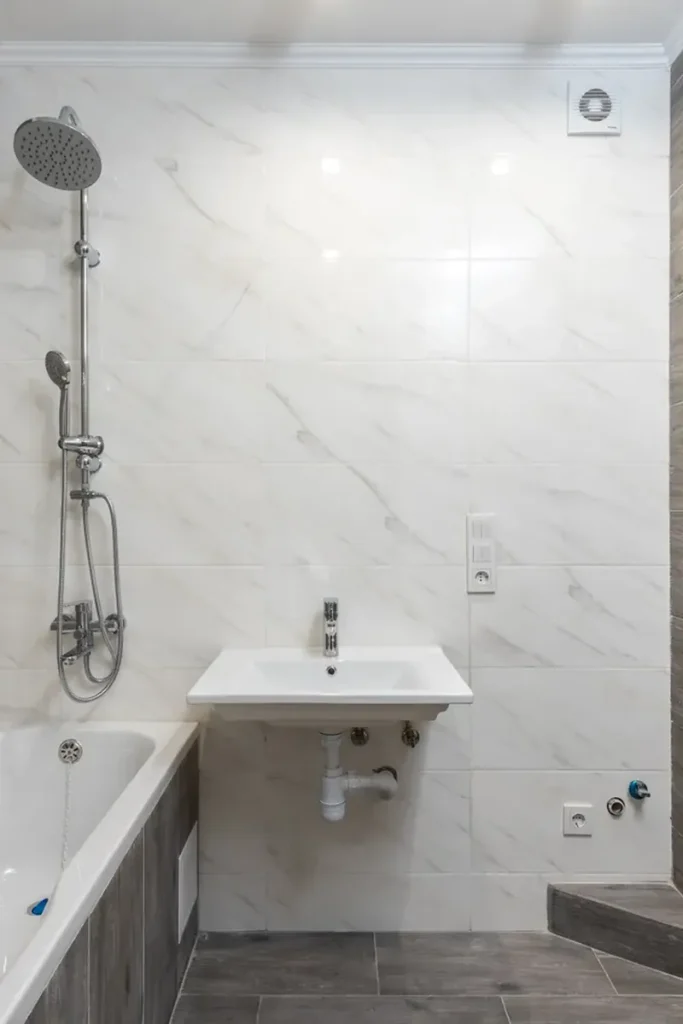
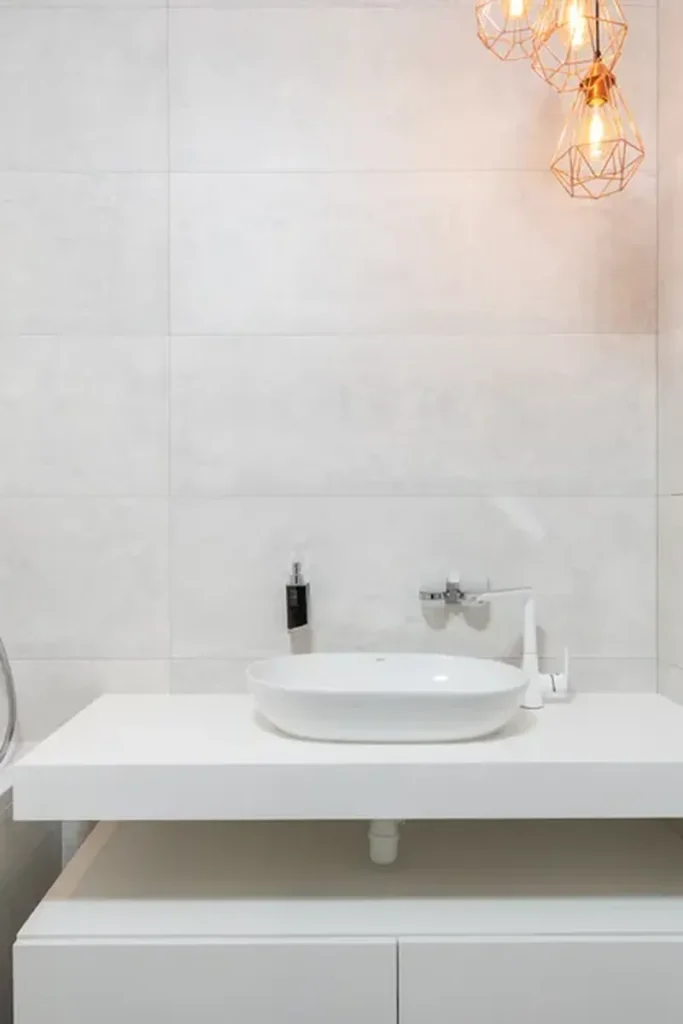
A wall-mounted faucet frees precious counter depth and allows a shallower sink. It looks clean, modern, and surprisingly calm in a tight room. This works best during a larger remodel because the plumbing sits inside the wall. A faucet may cost $150 to $700, but labor and wall repair can push the total much higher. Confirm the spout reaches the basin correctly before tile goes up; a beautiful faucet that sends water onto your pajamas is not luxury. For an easier update, pair a short-reach deck faucet with a compact sink and wall-mounted soap dispenser.
Phase Two: Make Function Look Like Decor
7. Let the Floor Be the Main Character
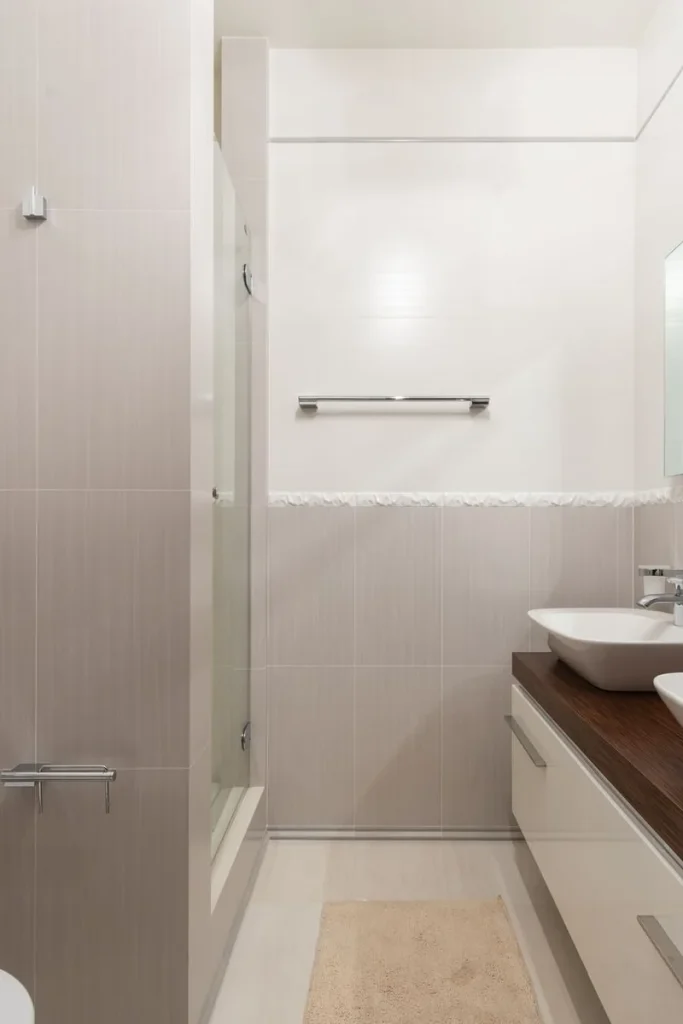
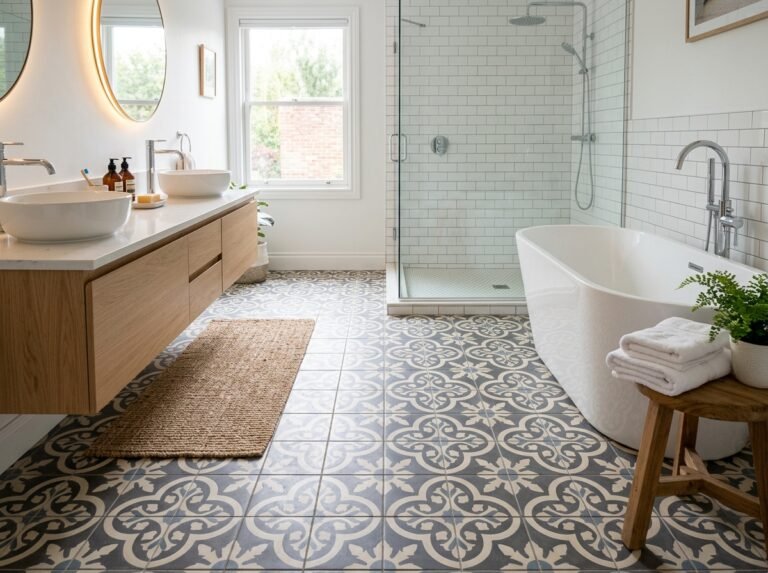
A tiny floor needs fewer materials, so it is a smart place to use a fun tile. Try black-and-white checks, small hexagons, or a gentle geometric pattern. Keep the walls quiet so the room does not feel busy. Porcelain is usually easier to maintain than many natural stones, and a small tile can add grip when wet. Material and installation might run roughly $8 to $30 per square foot, with complex patterns costing more. Order extra for cuts and future repairs. Renters can try water-resistant peel-and-stick floor tiles, but only if the lease and existing surface allow them.
8. Recess a Niche Into the Shower Wall
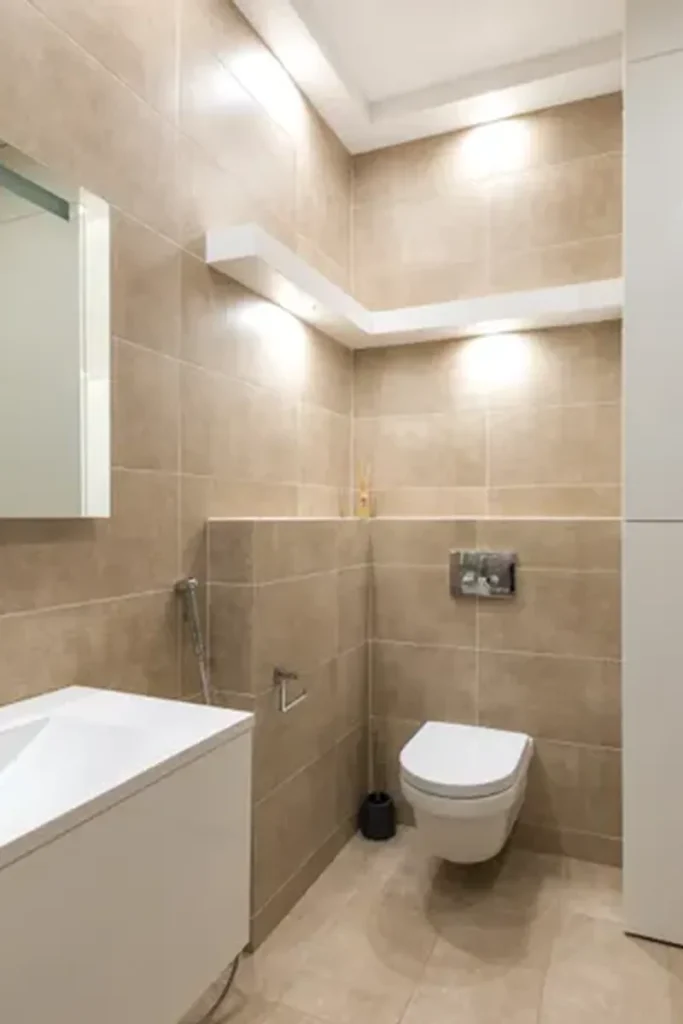
A recessed niche holds shampoo without stealing elbow room. Plan it before waterproofing, and position it away from the strongest spray when possible. A long horizontal niche can make the shower look wider, while two small niches separate everyday products from the fancy bottle you bought because the label looked expensive. Adding one during a shower rebuild may cost about $300 to $900, depending on framing and tile work. Have a professional waterproof and slope the bottom shelf. If the walls are staying intact, use a rust-resistant corner basket instead of risking a leak.
9. Change the Door Before Changing the Room
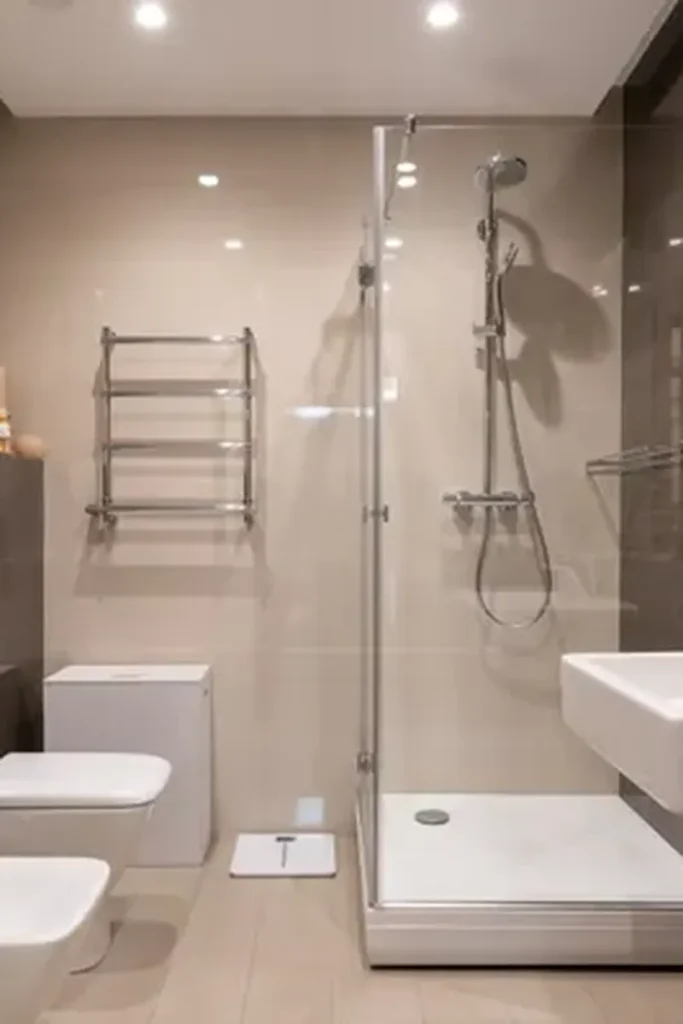
An inward-swinging door can eat a surprising amount of usable space. A pocket door slides into the wall, while a surface-mounted sliding door travels along it. Either option can free room for hooks, a better vanity, or simply your knees. Pocket-door installation often ranges from about $1,000 to $3,500 because the wall may need rebuilding. Check for wiring or plumbing before choosing it. A less expensive solution is reversing the swing when local code and the hallway allow. Renters can use an over-door organizer and remove any bulky floor storage blocking the door path.
10. Consider a Wall-Hung Toilet
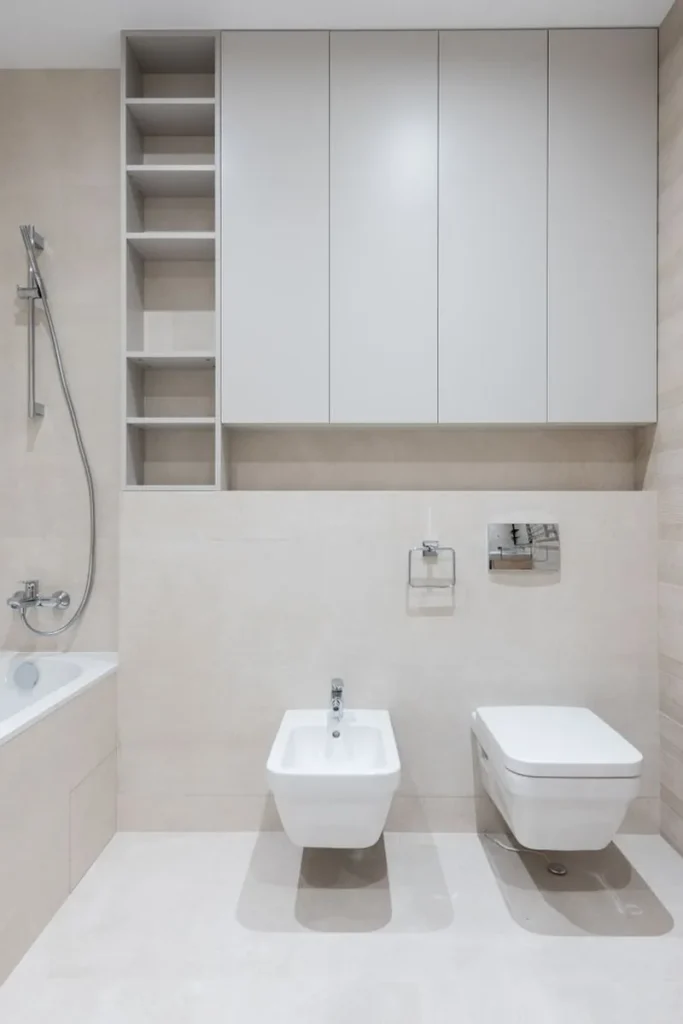
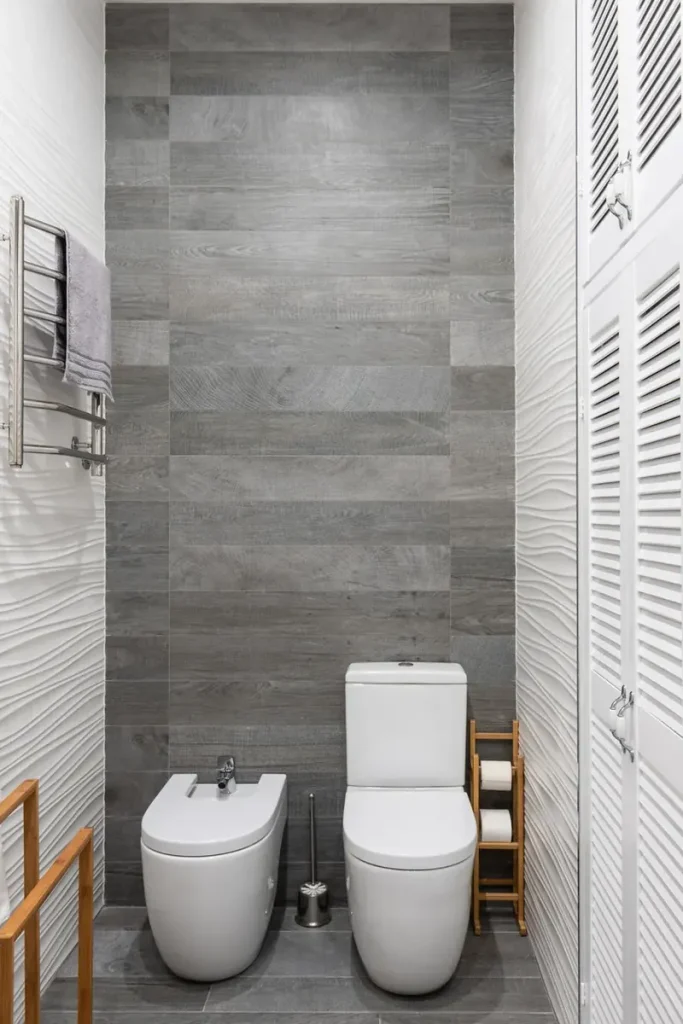
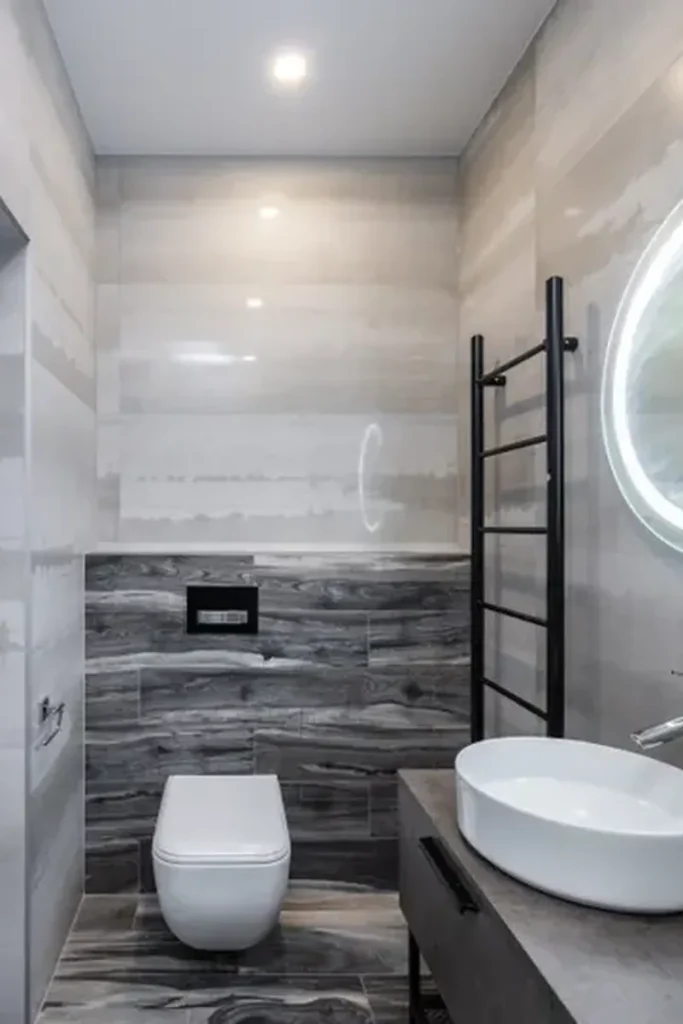
A wall-hung toilet hides the tank inside the wall and leaves the floor clear. It can make cleaning easier and visually stretch a narrow room. The seat height can also be planned for comfort. The trade-off is cost: the carrier, toilet, wall work, and labor can total roughly $1,500 to $5,000 or more. Include an access panel so future service does not become a demolition event. If that budget makes your wallet faint, choose a compact round-front toilet in the existing location. You still gain a few inches without opening the wall.
11. Layer the Lighting Instead of Using One Harsh Bulb
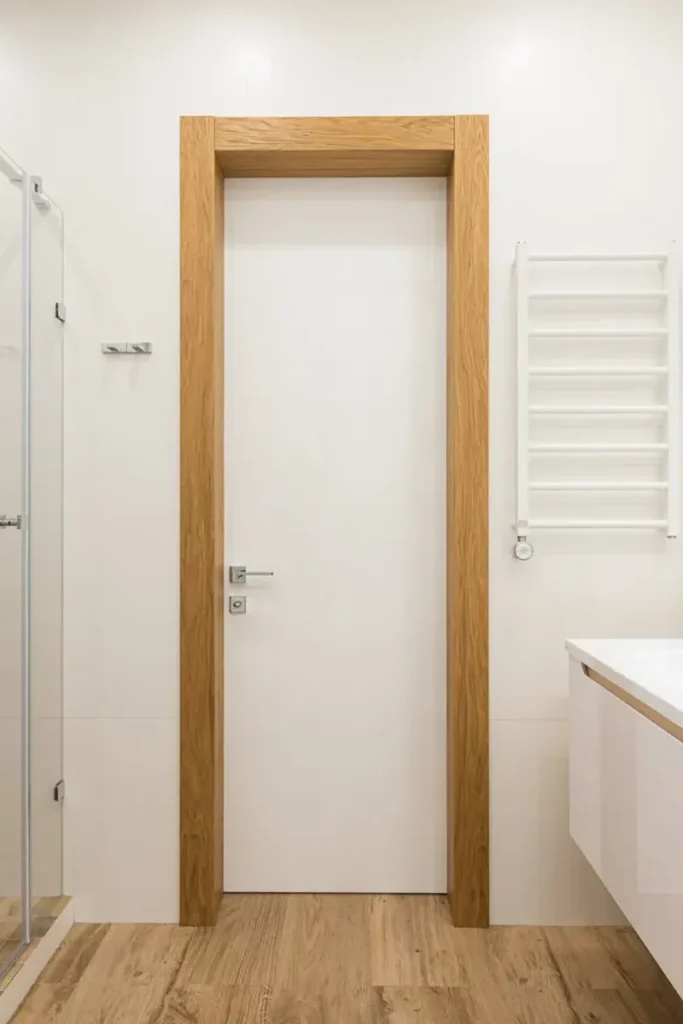
One ceiling light creates shadows exactly where you do not want them—usually while applying eyeliner. Combine a damp-rated ceiling fixture with sconces or a lighted mirror near the vanity. Warm white bulbs around 2700K to 3000K feel cozy, while a higher color-rendering bulb helps makeup colors look more true. Fixtures can range from $50 to several hundred dollars each, plus an electrician. Renters can add a plug-in lighted mirror if outlets are safely placed. Always use bathroom-rated fixtures in wet zones and keep electrical work firmly in professional hands.
12. Choose Curves for Easier Movement
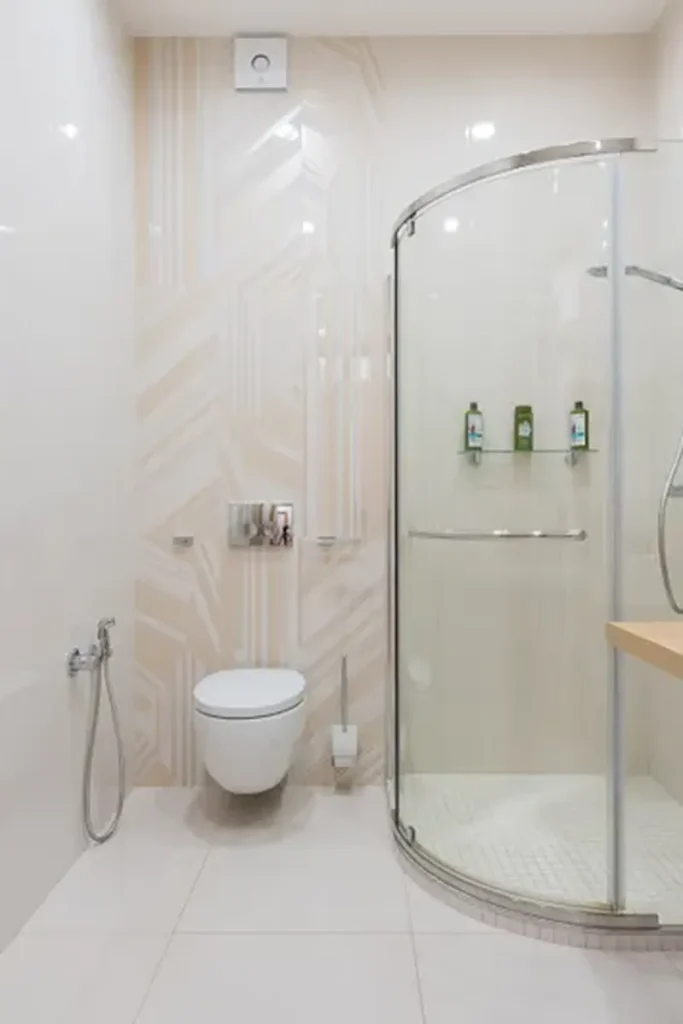
Sharp corners feel sharper when you meet them every morning. A rounded vanity, oval mirror, curved shower screen, or round-front toilet improves the flow and makes the design gentler. In an especially narrow bath, even a vanity with clipped corners can prevent hip bumps. A curved shower enclosure may cost about $700 to $2,500, depending on the base and glass. You can get the look cheaply with an oval mirror, rounded hooks, and a small round rug. Repeat the curve two or three times so it feels intentional rather than like the room lost a geometry argument.
13. Turn the Space Above the Toilet Into a Useful Zone
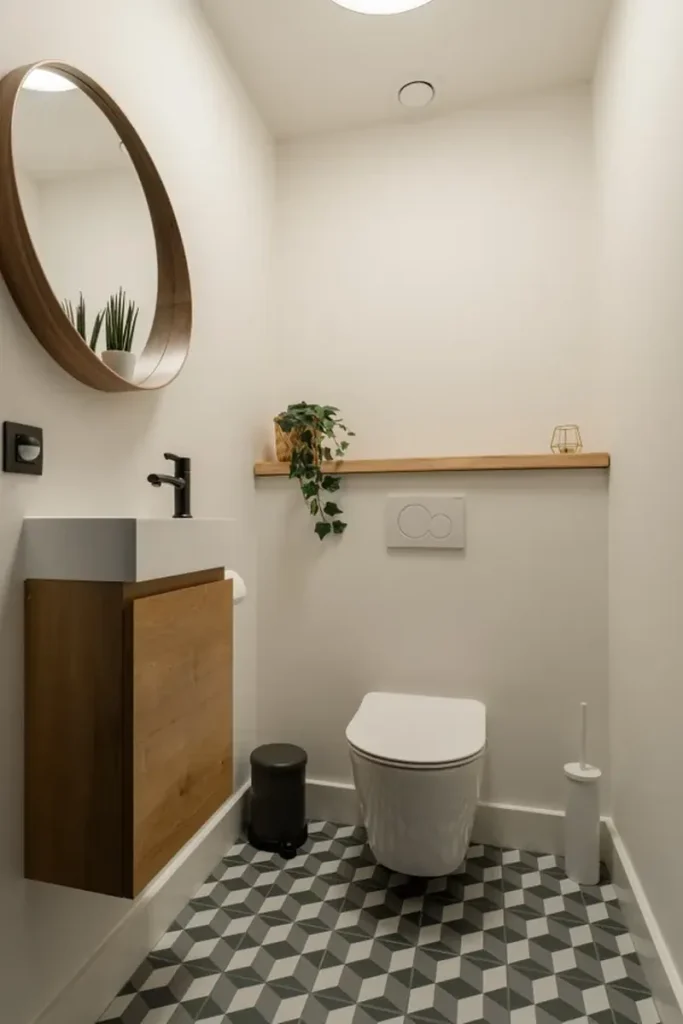
The wall above a toilet is often blank, but it can hold the items a small bath needs most. Add a closed cabinet for medicines and backups, or use one sturdy shelf for rolled towels and a small plant. Keep decor simple; fifteen tiny jars create visual clutter faster than actual storage. An off-the-shelf cabinet may cost $80 to $400. For renters, try a freestanding over-toilet organizer that leaves the wall mostly untouched. Measure the tank lid and flush controls first, and leave room for repairs. Nobody wants to dismantle a miniature art gallery just to fix a running toilet.
Phase Three: Add Personality Without Adding Clutter
14. Use Statement Wallpaper on One Dry Wall
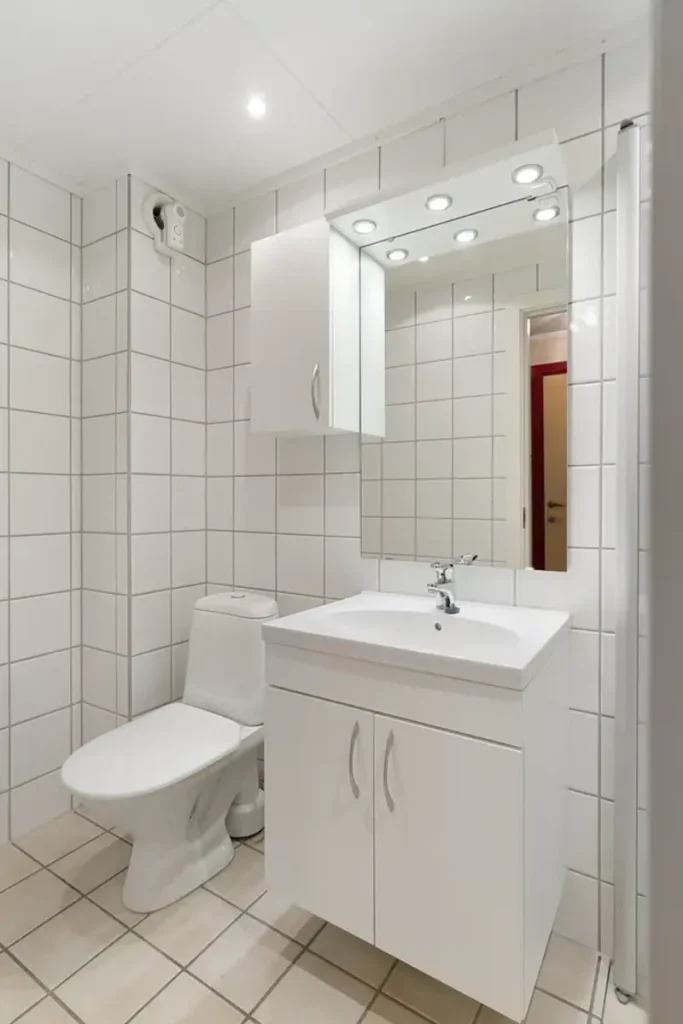
A tiny bathroom is a perfect place for a brave print because the area is limited. Try botanical leaves, soft stripes, or a small vintage pattern on the vanity wall. Choose moisture-resistant wallpaper and strong ventilation, and avoid paper inside a shower or a constantly damp splash zone. Professional paper and installation might cost around $300 to $1,200 for a small room, while peel-and-stick options can begin near $60. Renters should test a sample in a hidden spot first. Balance a bold wall with plain towels and simple hardware so the room feels charming, not caffeinated.
15. Run Large-Format Tile Across the Room
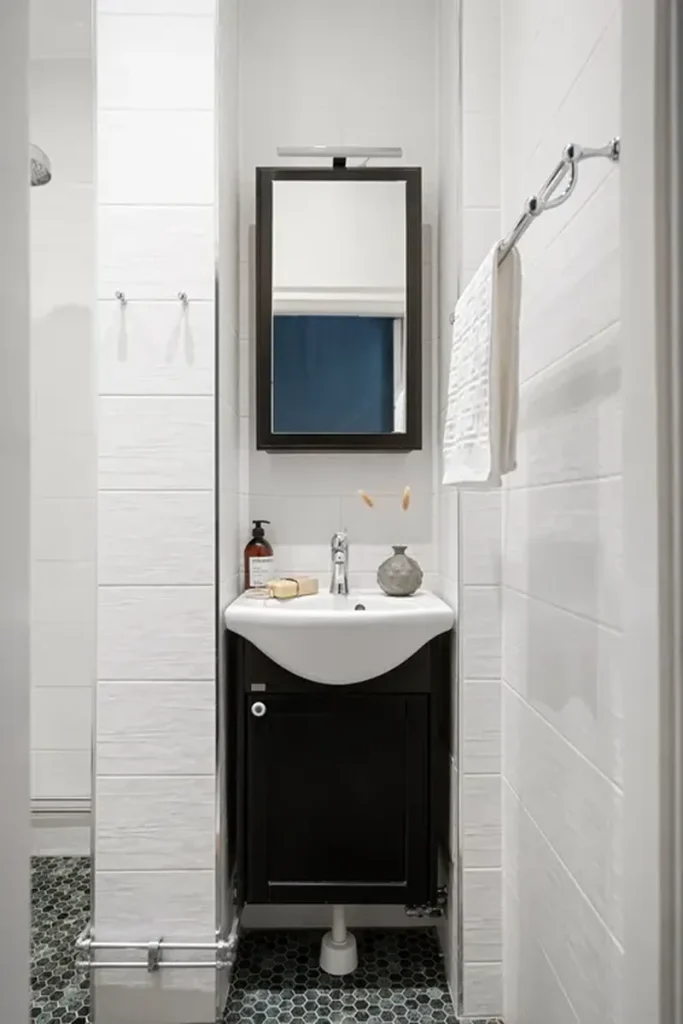
Large tiles mean fewer grout lines, which can make a small bathroom feel calmer and easier to scan. A 12-by-24-inch porcelain tile is a practical starting point for walls or floors. Continue the same tile into the shower to avoid chopping the room into smaller boxes. Installed cost can vary widely, often around $10 to $35 per square foot, and very large pieces may require extra labor. The walls and floor must be flat, so do not skip prep. Choose a grout close to the tile color for a seamless look and seal it if the product requires it.
16. Hang the Shower Curtain Near the Ceiling
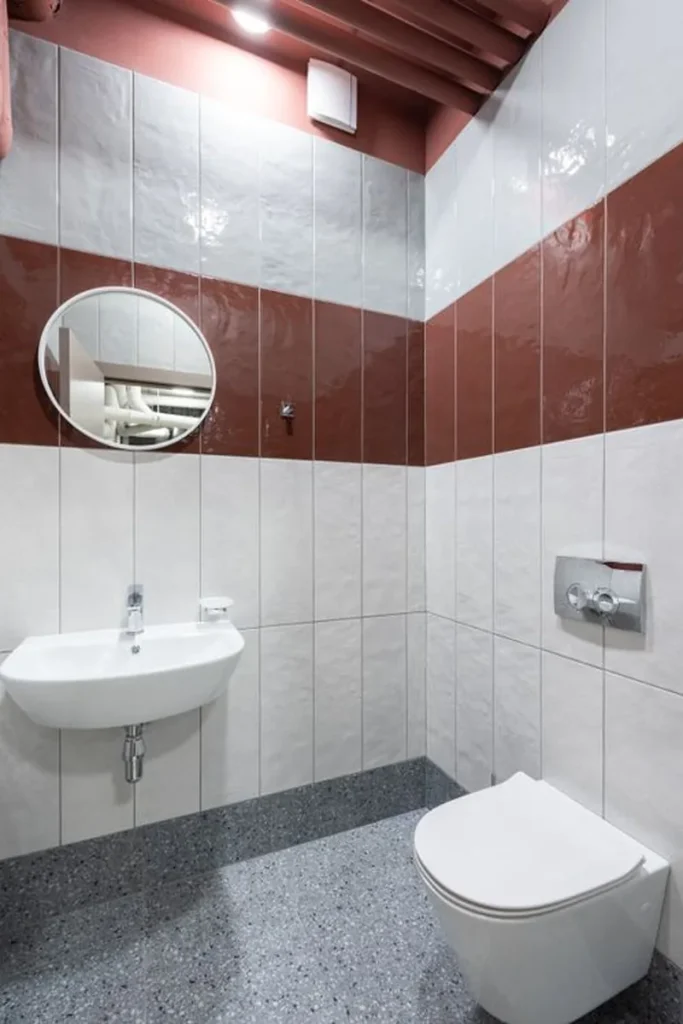
A high shower curtain pulls the eye upward and makes the ceiling seem taller. Mount the rod a few inches below the ceiling, then use an extra-long washable curtain that nearly reaches the floor. Keep a proper waterproof liner inside the tub. This trick can cost as little as $40 to $150 and requires no construction. It is one of my favorite renter moves because it creates drama without a single broken tile. Choose a solid color, narrow stripe, or quiet print. Measure twice before ordering; a floating ankle-length curtain has the same energy as pants that shrank in the dryer.
17. Warm the Room With Wood and Woven Texture
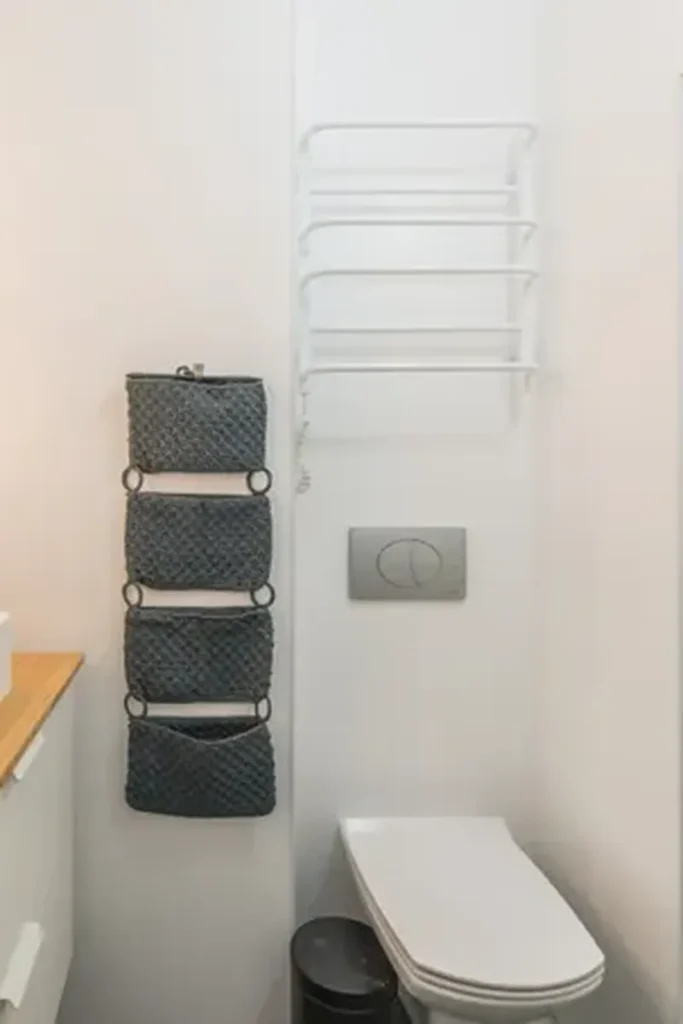
Tiny bathrooms can feel cold when every surface is white tile and chrome. Add warmth with a sealed wood shelf, teak stool, woven basket, amber bottle, or warm-toned vanity. Use only materials suited to humidity, and keep natural fibers away from constant splashes. A few accents may cost $50 to $250, while a new wood vanity can reach $500 to $2,000 before labor. Renters can make this change in one afternoon with a bamboo bath mat and matching baskets. Repeat one wood tone instead of mixing five shades; the goal is a tiny spa, not a lumber sample wall.
A Tiny-Bathroom Plan That Prevents Expensive Regrets
Before buying anything, tape the outline of the vanity, toilet, and shower opening onto the floor. Open the door. Pretend to dry your hair. Reach for a towel. This slightly silly rehearsal catches real problems. A commonly used planning target is about 30 inches of clear floor space in front of bathroom fixtures, though local building codes and existing conditions may differ. Check your local requirements and ask a qualified professional before changing the layout.
Next, divide the wish list into three levels. A cosmetic refresh—paint, mirror, hardware, curtain, and shelves—might stay below $1,500 if you do safe tasks yourself. A partial update with a new vanity, lighting, flooring, or glass can move into several thousand dollars. A full remodel with plumbing, waterproofing, and tile can easily reach five figures. Keep a 15% to 20% cushion for hidden water damage or old wiring. Prices vary sharply across the United States, so get multiple written quotes for major work.
Spend first on the parts that protect the house: ventilation, plumbing, electrical safety, waterproofing, and a sound floor. Then choose the pretty things. I know that wallpaper is more exciting than an exhaust fan, but the fan is the quiet friend who prevents the wallpaper from peeling off in protest. For DIY projects, stay with painting, removable decor, simple hardware, and other work you can complete safely. Hire licensed professionals for wiring, major plumbing, structural changes, and shower waterproofing.
Small Room, Big Finish
You do not need all 17 ideas. In fact, using all of them at once might make your bathroom file a formal complaint. Pick one space-saving change, one storage fix, and one style moment. A floating vanity, tall cabinet, and warm wood accents can be enough. Or keep every fixture, then use paint, a large mirror, and a ceiling-height curtain for a renter-friendly transformation.
The best tiny bathroom is not the one that looks largest in a photo. It is the one that works on a rushed Monday morning, stays easy to clean, and makes you smile when you switch on the light. Measure carefully, protect the wet areas, and let each item earn its place. Small rooms are honest that way: there is no space for decor that does nothing. Give every inch a job, and your tiny bathroom may become the hardest-working—and prettiest—room in the house.