18 Bathroom Design Ideas That Made My Guests Ask If I Hired a Designer (I Did Not)
My bathroom makeover began after a guest asked whether the toilet handle was “supposed to jiggle like that.” The room had beige walls, a tiny builder mirror, and lighting that made everyone look tired. I laughed, handed her a fresh towel, and quietly decided the bathroom had to change.
I did not have a designer budget, so I studied what makes beautiful bathrooms feel calm, polished, and expensive. The surprise? Impact does not always match price. A smart mirror or better light can matter more than fancy stone. These ideas are ranked by visual impact, from room-changing renovations to easy finishing touches.
The 3 Design Rules I Wish Someone Told Me Sooner
First, choose one star. If the tile is dramatic, let the vanity and fixtures support it. Second, repeat every finish at least twice so nothing looks accidental. A brass faucet feels planned when brass appears on the mirror or cabinet pulls too.
Third, protect function before chasing pretty. Check door swings, storage, waterproofing, and cleaning needs. Keep at least 30 inches of clear space in front of major fixtures when possible, and bring home samples because bathroom light changes colors in sneaky ways.
Big Moves: Changes That Transform the Whole Room
1. The Walk-In Shower With Zero Doors
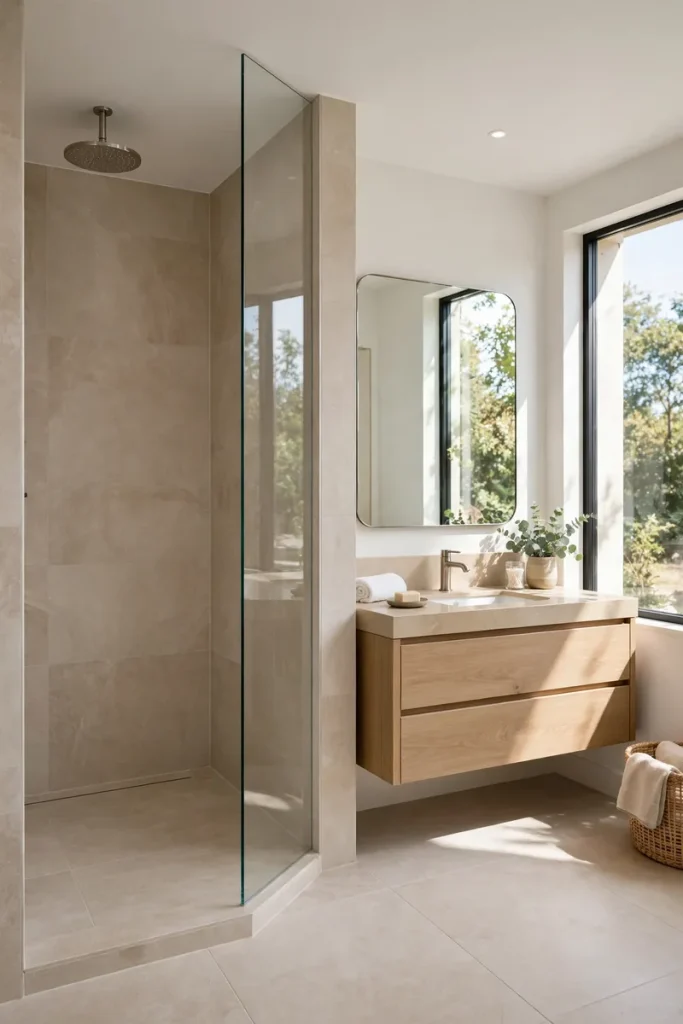
A doorless shower gave my friend’s narrow bathroom the biggest glow-up I have seen. Removing the glass door erased a visual stop, so the tile seemed to continue forever. It also ended the daily wrestling match between her bathmat and the swinging door.
Plan on roughly $4,000 to $12,000 for professional waterproofing, tile, drainage, and plumbing. A slight floor slope and a wide splash zone are essential; otherwise, your “spa” becomes a puddle park. Large-format porcelain tile has fewer grout lines, making weekly cleaning much easier.
2. A Floating Vanity That Fakes Square Footage
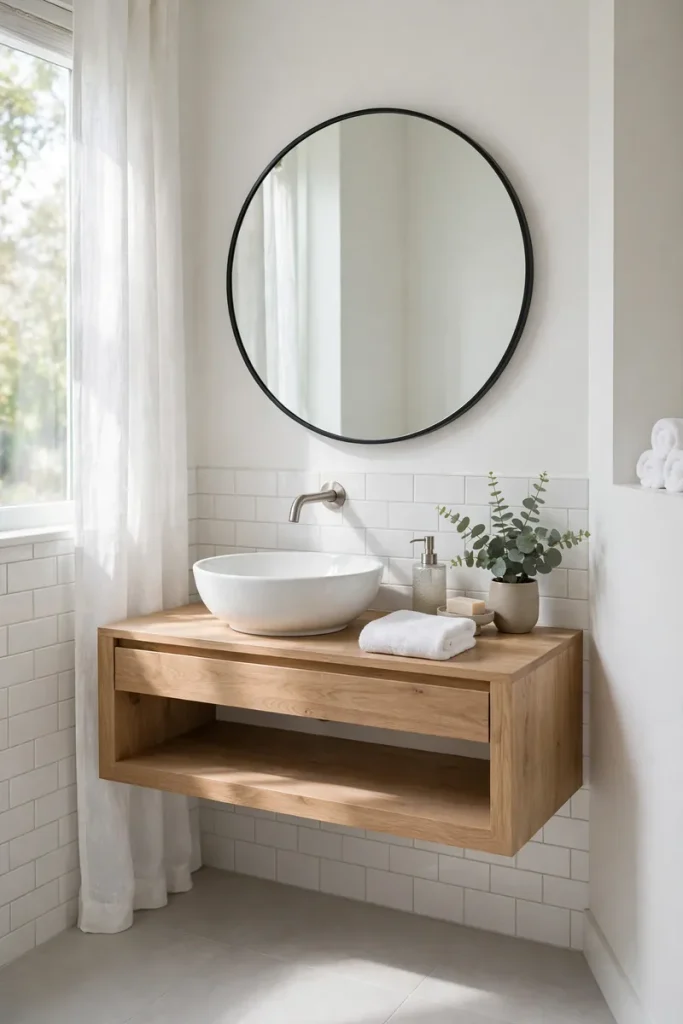
My powder room felt boxed in until I replaced the bulky cabinet with a floating vanity. Seeing floor beneath it made the room breathe. I even added a soft night-light underneath, which feels very boutique hotel and prevents sleepy midnight toe disasters.
Ready-made floating vanities often cost $500 to $1,800, plus installation. Anchor the unit into wall studs, especially with a heavy stone top. In a tiny bath, choose drawers instead of doors because they reveal supplies without requiring you to kneel and explore the cabinet like a cave.
3. Floor-to-Ceiling Tile on One Statement Wall
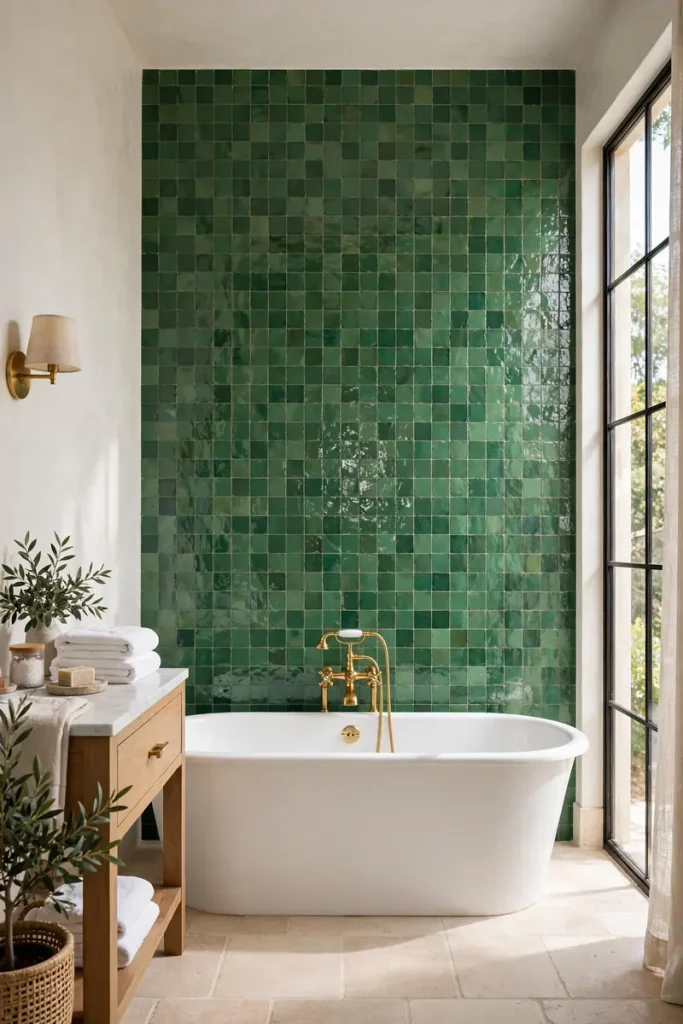
I once thought every wall needed expensive tile to look luxurious. Then I tiled only the vanity wall in glossy sage rectangles. That single surface bounced light around the room and made my plain painted walls look intentional instead of unfinished.
A statement wall can run about $800 to $3,000, depending on material and labor. Porcelain offers the best balance of durability and easy cleaning. Take tile behind the mirror for a seamless look, and use stain-resistant grout in a close color so splashes and toothpaste marks do not become the main attraction.
4. The Freestanding Tub Moment
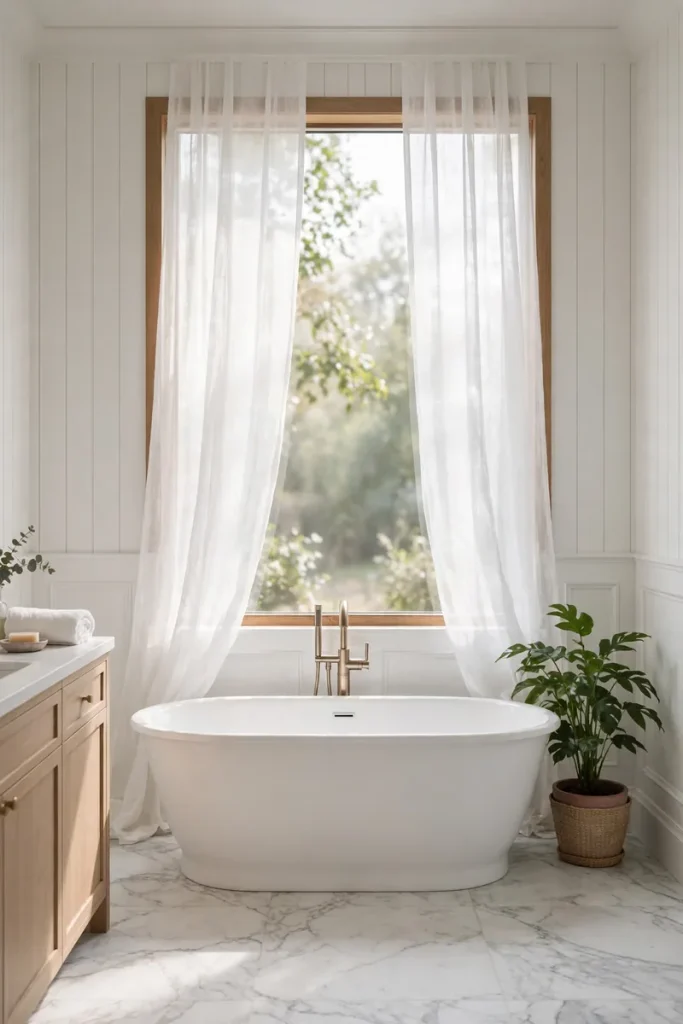
A freestanding tub can make an ordinary bathroom feel like a retreat before you light a single candle. My cousin found a compact oval model, and now everyone assumes her home is newer than it is. She mostly uses it for baths, not as a dramatic laundry basket, which is admirable.
Budget about $900 to $4,000 for the tub, faucet, and installation. Measure the doorway before buying, and leave enough room around the tub to mop comfortably. Acrylic is lighter and warmer to the touch than cast iron, making it a practical choice for an upstairs remodel.
5. A Skylight (or Sun Tunnel) Over the Shower
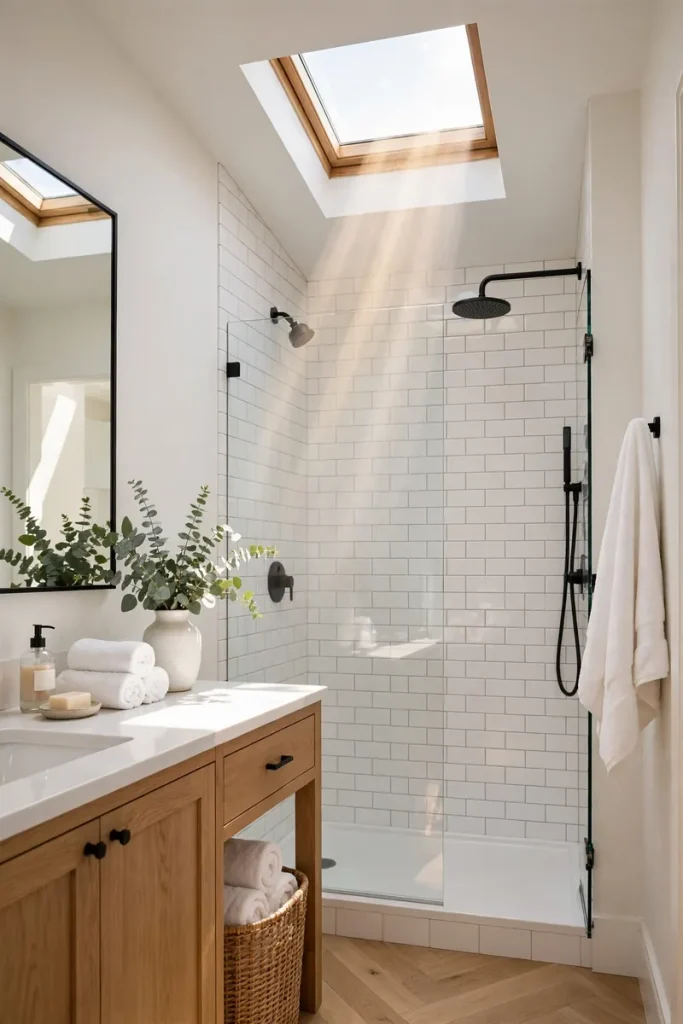
Natural light above a shower feels magical because it brightens the room without sacrificing privacy. I stayed in a rental with a skylight and spent far too long admiring shampoo bottles in sunlight. Even gray tile looked warm and alive.
A traditional skylight may cost $1,500 to $5,000 installed, while a sun tunnel often lands around $700 to $2,000. Hire a qualified roofer and ask about flashing and condensation control. If structural work is impossible, a daylight-toned, wet-rated ceiling light creates a convincing budget version.
6. Heated Floors: The Luxury You Feel, Not See
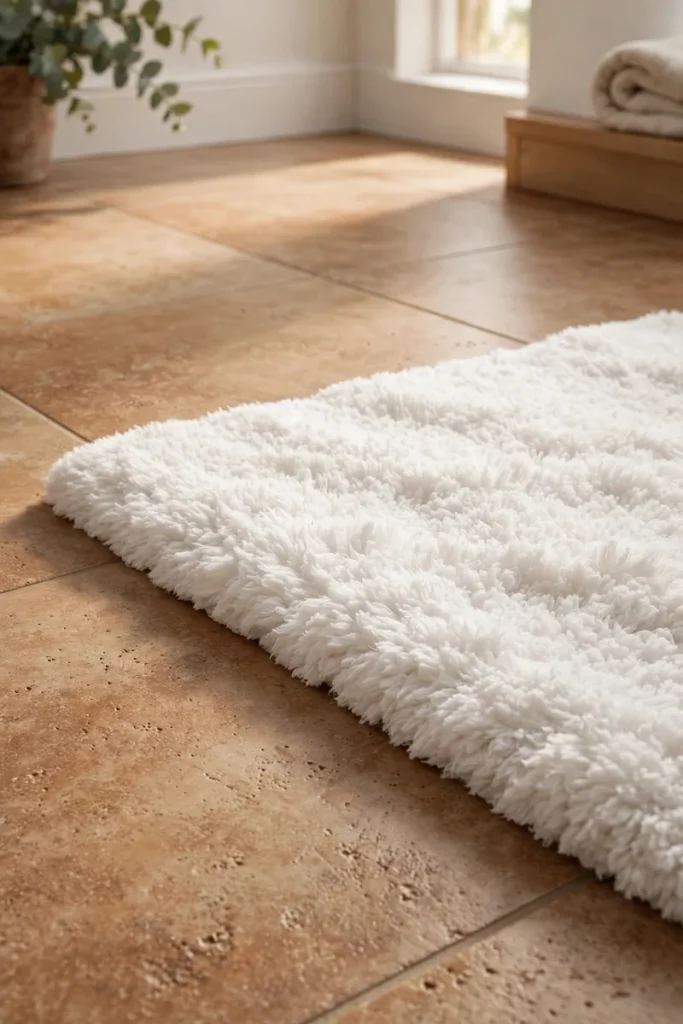
Heated flooring is invisible, but cold toes understand its value immediately. My aunt installed it during a tile replacement, and winter guests now linger in her bathroom like cats on a sunny windowsill. It is comfort, not just decoration.
Electric radiant mats typically add $8 to $20 per square foot before flooring labor. They are easiest to install during a renovation, and a programmable thermostat controls energy use. Porcelain and ceramic tile transfer heat well and handle moisture. Keep a future floor plan showing the cable locations so nobody drills into them later.
Middle Moves: Weekend Projects With Major Payoff
7. A Double Vanity in a ‘Too Small’ Bathroom
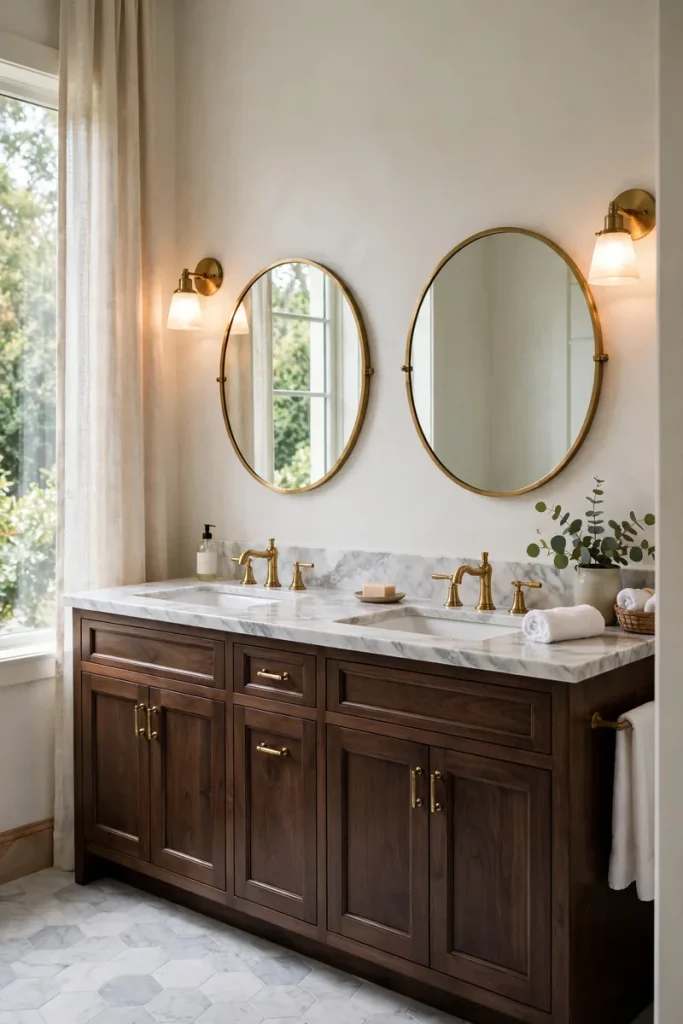
A double vanity does not have to be a giant furniture piece. A slim 48-inch model with two compact sinks gave my sister and her husband separate morning zones. Their marriage survived toothpaste season, and the bathroom somehow looked more organized.
Expect $1,200 to $4,500 when plumbing changes are limited. Wall-mounted faucets or shallow sinks can preserve counter space. Before ordering, tape the vanity footprint on the floor and open every nearby door. If two sinks feel cramped, choose one long trough sink with two faucets for a similar shared effect.
8. The Arched Mirror Trick
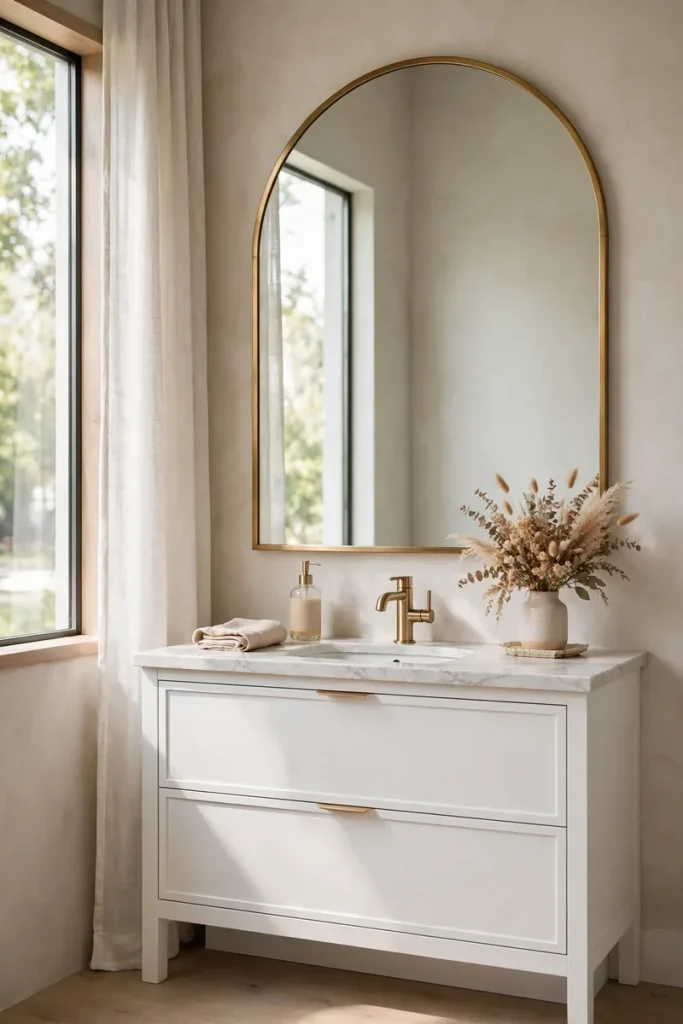
Replacing my square mirror with an arch softened every hard edge in the room. The curve pulled the eye upward, making the ceiling feel taller. It was the rare project where I used only two screws and zero apology texts to a handyman.
Arched mirrors usually cost $120 to $600. Choose one slightly narrower than the vanity and center it over the sink or faucet. In humid rooms, look for a sealed metal frame or moisture-resistant backing. Renters can lean a lightweight version on a sturdy ledge, but it should still be secured against tipping.
9. Fluted Wood Vanity Fronts
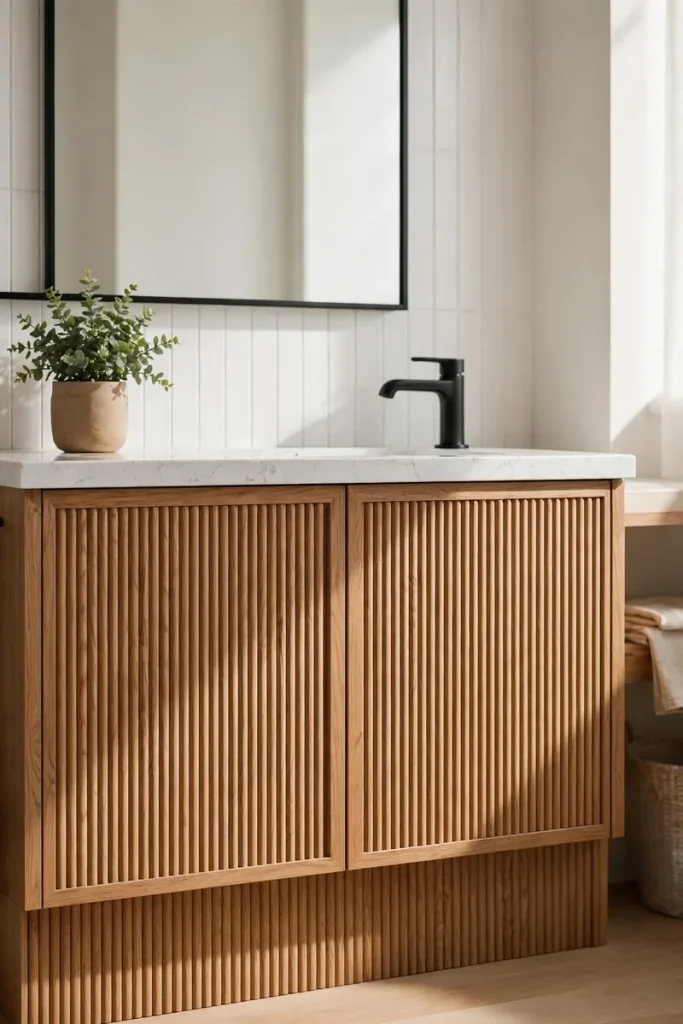
Fluted wood adds texture without shouting. I used slim half-round molding on flat cabinet doors, and the vanity suddenly looked custom. My only regret was discovering that glue dries faster when you are still trying to make the last strip behave.
A DIY front can cost $80 to $250, while a new fluted vanity may run $900 to $3,000. Seal real wood carefully against steam and splashes, especially near sink edges. For easier cleaning, use shallow grooves or water-resistant reeded panels; deep channels collect dust like they are being paid to do it.
10. Terrazzo-Look Flooring That Hides Everything
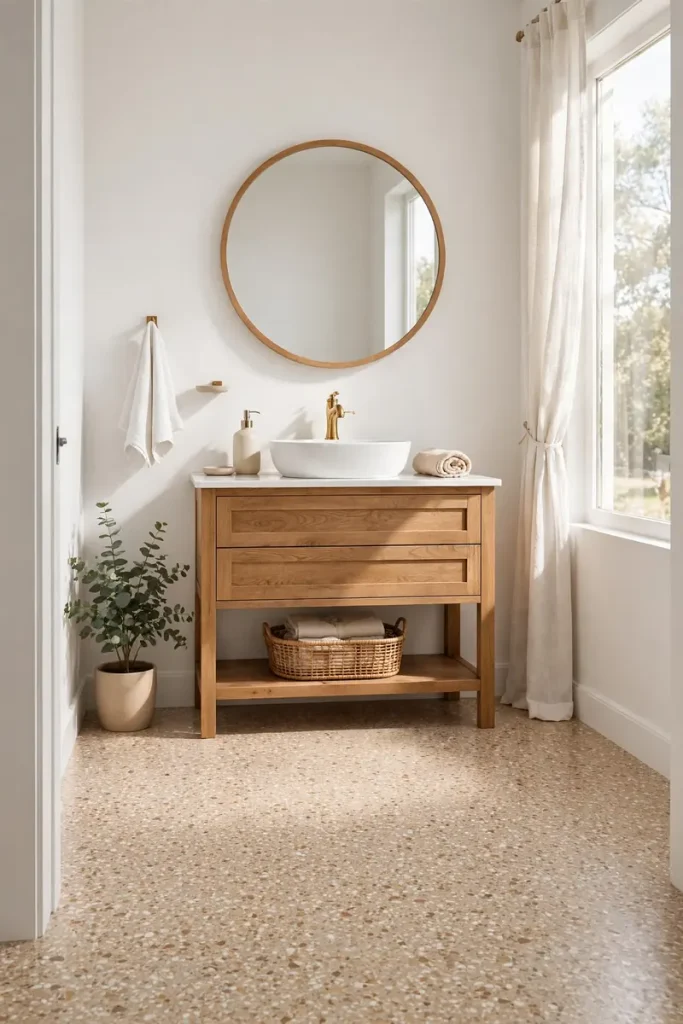
Real terrazzo is gorgeous, but terrazzo-look porcelain gives the confetti effect with less cost and maintenance. I love it in family bathrooms because the scattered pattern politely ignores stray hair, tiny water spots, and whatever mystery glitter children bring home.
Porcelain versions often cost $3 to $12 per square foot before installation. Pick a medium-scale pattern for a small room; huge chips can overwhelm it. Use a slip-resistant matte finish, and ask for narrow grout lines. Unlike cement-based terrazzo, porcelain does not need regular sealing and handles common bathroom cleaners well.
11. Matte Black Fixtures Against Warm White
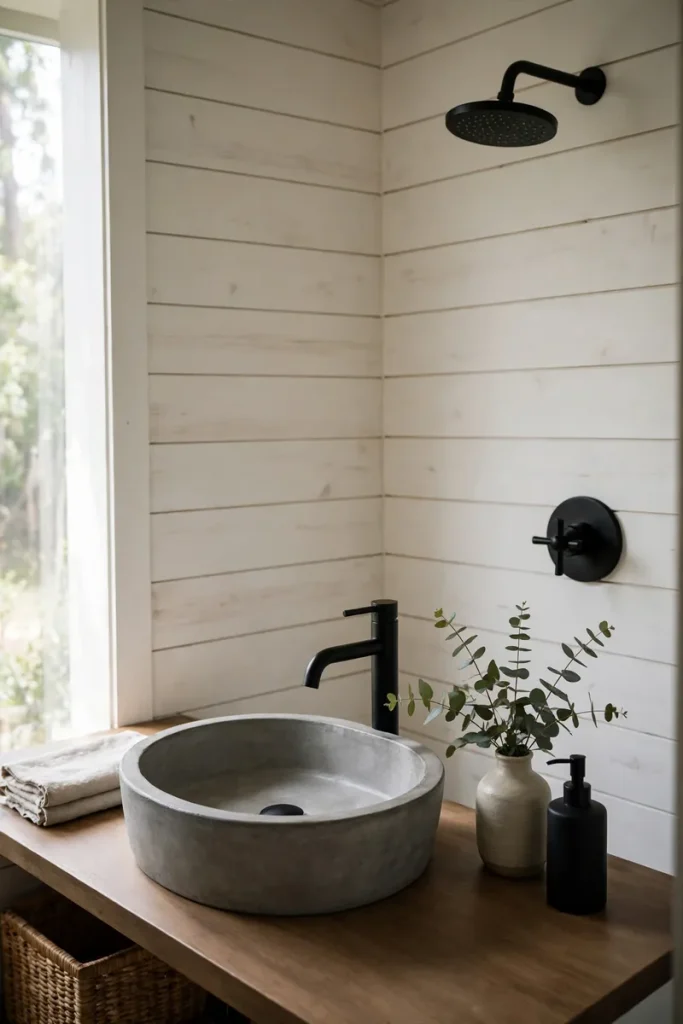
Matte black fixtures gave my warm white bathroom the crisp outline it was missing. The contrast made a plain sink and shower look sharper, almost like someone traced the room with a fine pen. Suddenly the builder basics had confidence.
A coordinated faucet, shower trim, and hardware update can cost $350 to $1,500. Repeat black in two or three places, but stop before the room feels themed. Matte finishes show soap residue, so wipe fixtures with a soft cloth and mild cleaner; abrasive pads can damage the coating. Save old parts if you rent.
12. Open Shelving Styled Like a Spa
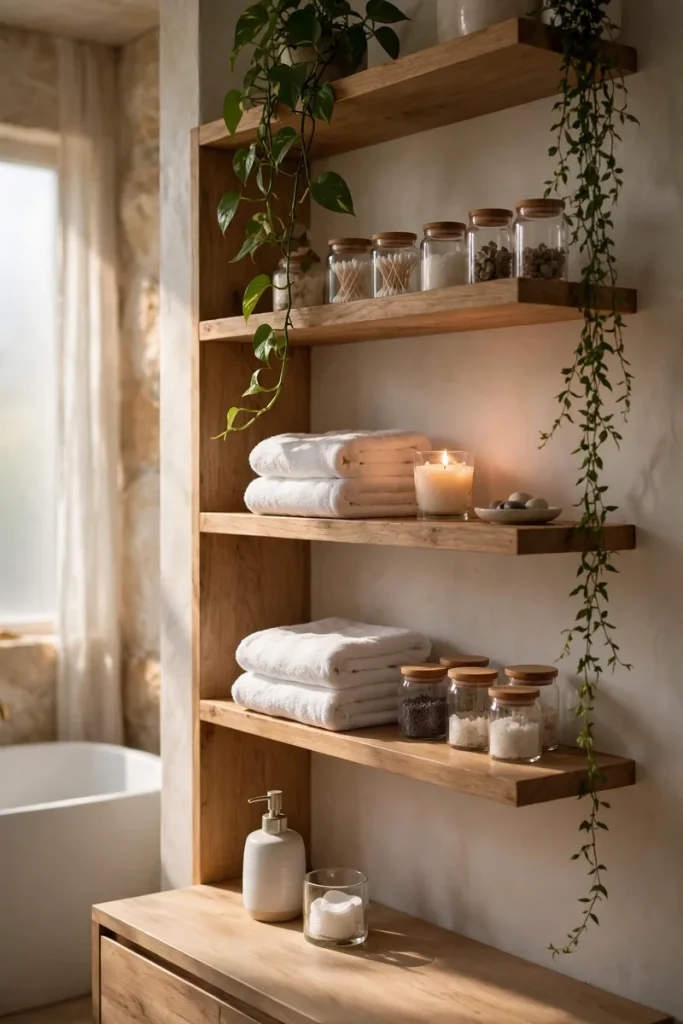
Two wood shelves above my toilet turned wasted wall space into a useful little spa display. I rolled towels, added a lidded jar, and hid the less glamorous supplies in matching baskets. Nobody needs decorative toilet paper, but neatly stacked rolls are oddly satisfying.
Basic shelves cost $40 to $250. Install them high enough that no one bumps a shoulder when standing, and anchor brackets into studs or proper wall anchors. Use sealed wood or powder-coated metal for humidity. Keep daily items low and decor high, then leave some empty space so the shelves do not look like a store stockroom.
Finishing Touches: Small Swaps, Shockingly Big Difference
13. Peel-and-Stick Tile for Renters
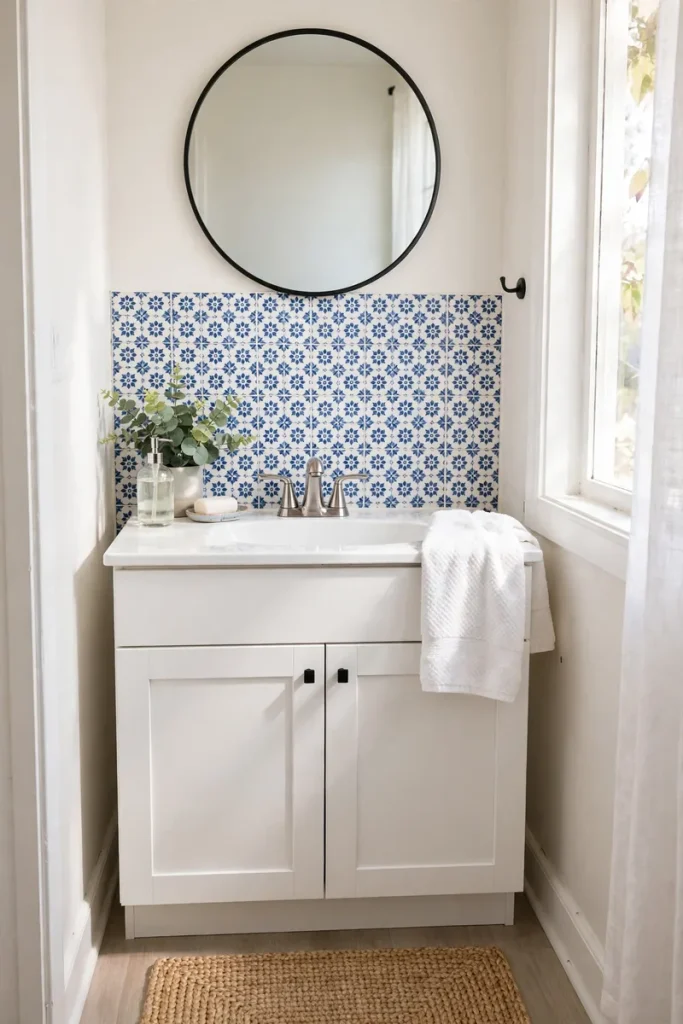
Peel-and-stick tile rescued a rental backsplash that was somehow both brown and pink. I chose a simple cream pattern, and the whole vanity area looked cleaner in one afternoon. Best of all, there was no grout haze in my hair.
Most projects cost $40 to $200. Clean and dry the wall first, then test one piece in a hidden spot for several days. Use it outside direct shower spray and away from peeling paint. Removable vinyl is easiest to wipe, but moisture can loosen edges, so press seams firmly and keep a spare sheet for repairs.
14. Layered Lighting: Sconces Plus Overhead
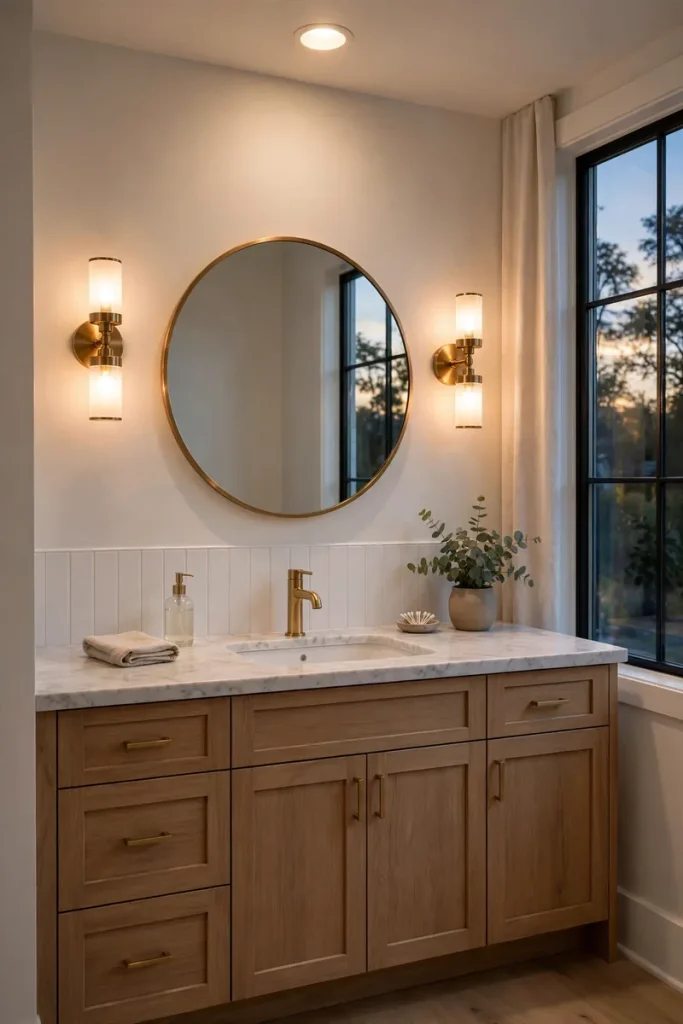
One overhead bulb made my bathroom look like an interrogation room. Adding sconces beside the mirror softened shadows and made makeup much easier. The ceiling light still handles cleaning day, while the sconces create the flattering evening mood everyone deserves.
New fixtures can cost $150 to $900, depending on wiring. Place sconces near face height when possible and choose wet- or damp-rated models for the location. Use bulbs around 2700K to 3000K for warm, clear color. Renters can try rechargeable wall lights, but secure them well and avoid placing them inside splash zones.
15. A Bold Color on the Ceiling (the Fifth Wall)
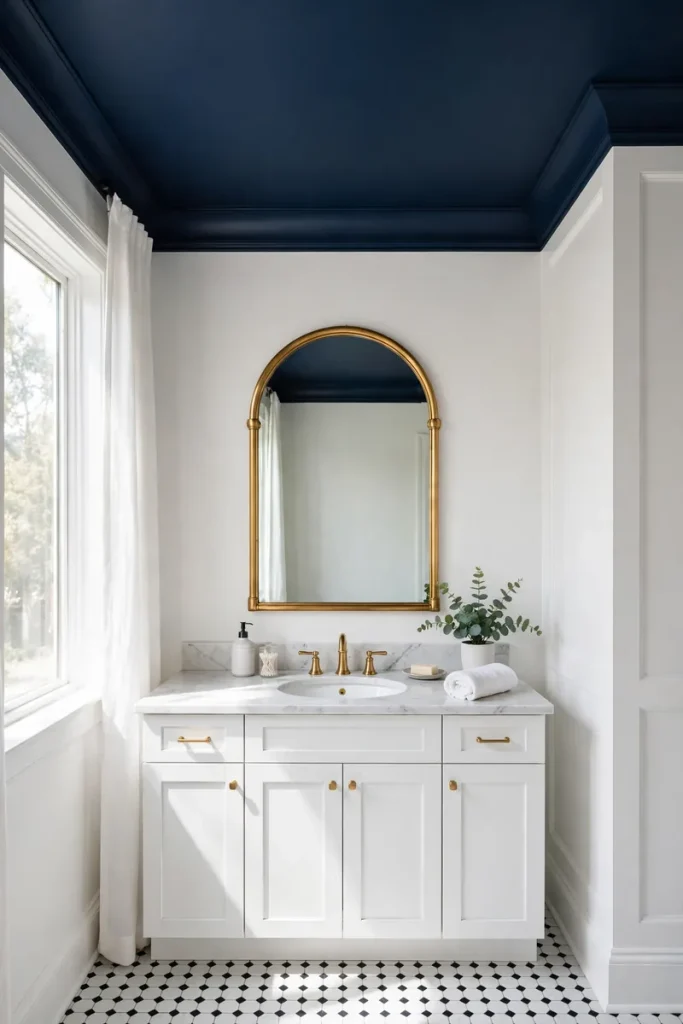
I painted a tiny bathroom ceiling dusty blue, and it made the room feel taller instead of smaller. The color reflected softly in the mirror and gave the plain white walls a purpose. Painting overhead is an arm workout disguised as decorating.
A gallon of quality bathroom paint usually costs $45 to $90. Choose a mildew-resistant finish and repair moisture problems before painting. Dark shades feel cocooning in powder rooms; lighter colors suit bathrooms with low ceilings. This is renter-friendly if repainting is allowed and you are willing to return it to the original color later.
16. A Vintage Brass Hardware Swap
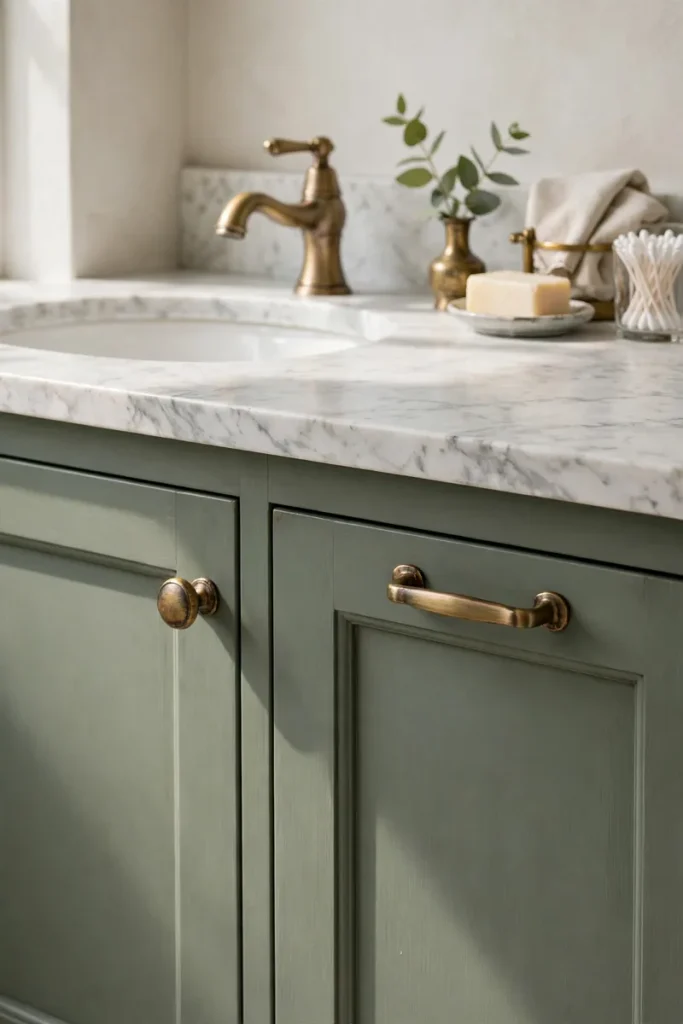
Vintage brass pulls made my plain vanity feel collected rather than purchased in one frantic Saturday trip. I mixed simple knobs with small bin pulls, and the warm metal instantly softened the room. It looked inherited, although the receipt said otherwise.
A full hardware swap can cost $35 to $250. Measure the distance between existing screw holes so you can avoid filling and drilling. Unlacquered brass develops a natural patina; sealed or aged-brass finishes stay more consistent and need only gentle wiping. Renters should label and store the original hardware for move-out day.
17. A Roman Shade Instead of Blinds
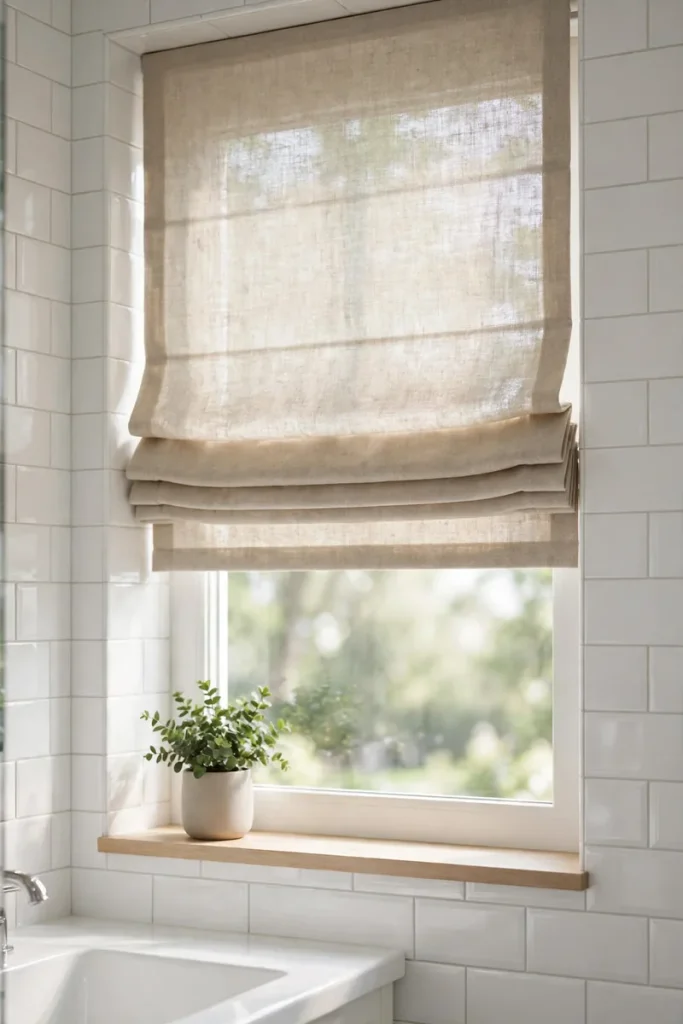
A Roman shade gives a bathroom window softness that metal blinds simply cannot fake. I chose a subtle stripe, and it added pattern without taking over the room. It also stopped the blinds from clattering every time the vent fan turned on.
Ready-made shades start around $60, while custom moisture-resistant options can reach $500. Choose washable performance fabric or a faux-linen polyester, and keep it away from direct shower spray. Add a privacy lining for street-facing windows. A tension-mounted shade or no-drill bracket can make this look possible in a rental.
18. Spa Styling: The Eucalyptus Bundle and the Tray
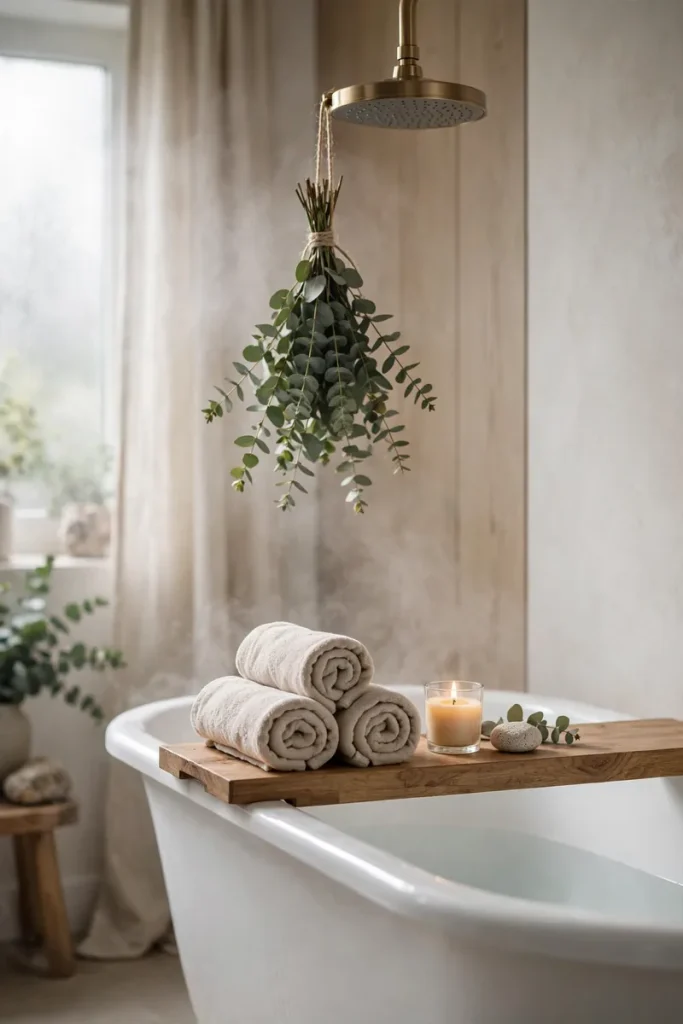
The fastest bathroom makeover I ever did involved a wood tray, folded towels, and a small eucalyptus bundle. Nothing structural changed, yet the room felt calmer. Even my drugstore soap looked as if it had checked into a wellness retreat.
Spend $25 to $120 and keep the display practical. Use a sealed tray that can handle water, decant only products you use, and wash fabric items regularly. Fresh eucalyptus should hang away from direct water and pets; faux stems give the look with no shedding. In a tiny bathroom, style one surface rather than every corner.
5 Bathroom Design Mistakes That Scream ‘Rental’
Mistake one is using only the harsh ceiling light. Mistake two is hanging a mirror that is much narrower or wider than the vanity. Mistake three is mixing several unrelated metal finishes with no repetition. Mistake four is leaving every bottle on display. Mistake five is choosing a bathmat so small that it looks like a misplaced napkin.
The fix is not necessarily renovation. Add a warmer bulb, size the mirror to the vanity, repeat one main finish, hide backup products, and choose one washable runner or generous mat. These changes can cost less than $150 together, and most can move with you.
Your Turn (Yes, Even If Your Bathroom Is Tiny)
You do not need to tackle all 18 ideas. Choose one move from the impact level that fits your budget and your patience. Maybe that is a doorless shower during a planned remodel, or maybe it is an arched mirror and better lighting this weekend. Both count.
Start with the feature that annoys you every morning. Fixing that problem will improve the room more than copying a perfect photo. Measure twice, save samples, and leave some breathing room. A well-designed bathroom is not the one with the biggest budget; it is the one that makes your daily routine feel easier and a little more beautiful.