18 Guest Bathroom Ideas That Make a Tiny Room Feel Like a Boutique Hotel
The guest bathroom is usually the smallest room in the house, yet visitors notice every detail. I learned this after a friend stayed over and politely asked where the hand towel was. It was in the dryer, along with every other clean towel I owned. The room had pretty paint and a new mirror, but it failed the one job that mattered. Since then, I judge a guest bathroom by a simple question: can someone find what they need without opening six cabinets and wondering whether they are allowed to use the fancy soap?
These guest bathroom ideas follow a hosting countdown instead of a standard shopping list. Start with the changes that improve the room’s bones, add comfort the day before company arrives, style the last few details, and save the bigger upgrades for later. You can use the whole plan or borrow one easy idea. Most work in a small bathroom, several are renter-friendly, and every cost is a rough U.S. planning range because labor and materials vary by city. The goal is not a perfect showroom. It is a clean, calm room that quietly tells your guest, “Yes, that towel is for you.”
Seven Days Before: Fix What Guests Notice First
A week out is the right time for paint, hardware, and anything that needs to dry. Stand in the doorway and look at the room the way a first-time visitor would. You will spot the dull corner and crooked hook much faster than you do during your normal morning rush.
1. Layer Warm Light Around the Mirror
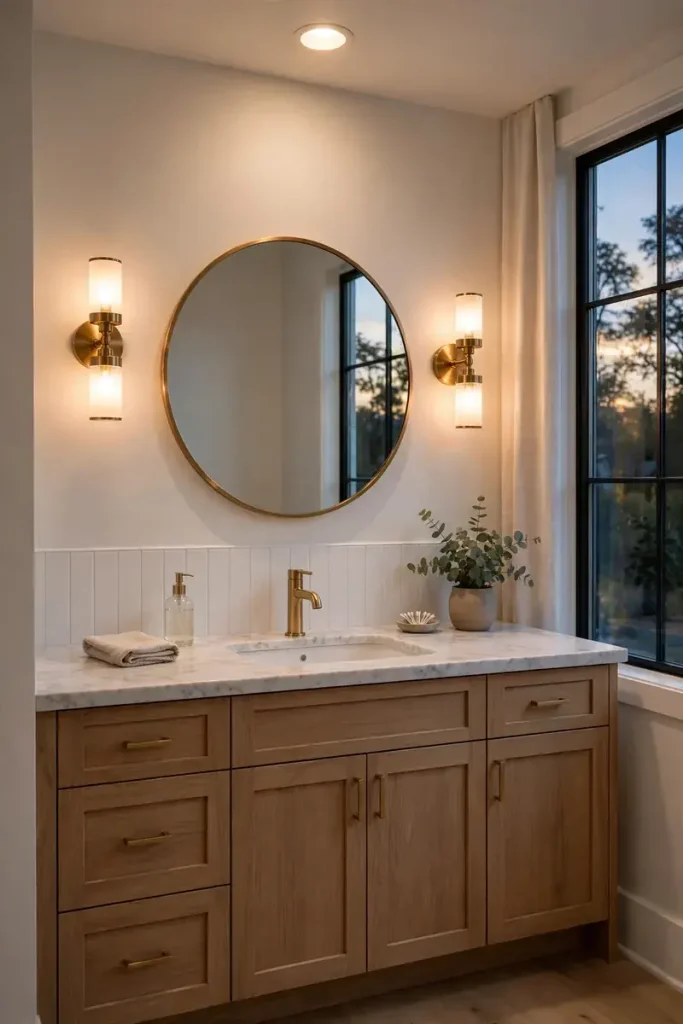
One bright ceiling bulb can make a guest bathroom feel like an airport security line. Add soft light at face level with sconces or a slim light bar beside the mirror. Warm-white bulbs around 2700K to 3000K flatter skin and still feel clean. If you rent, try plug-in sconces with cord covers or rechargeable wall lights that attach with screws or strong removable mounts. Set aside roughly $35–$150 for a simple DIY lighting refresh; hardwired fixtures and an electrician will cost more. Use matching bulbs so one side does not look sunny while the other looks mysteriously blue.
2. Paint the Ceiling for a Secret Wow Moment
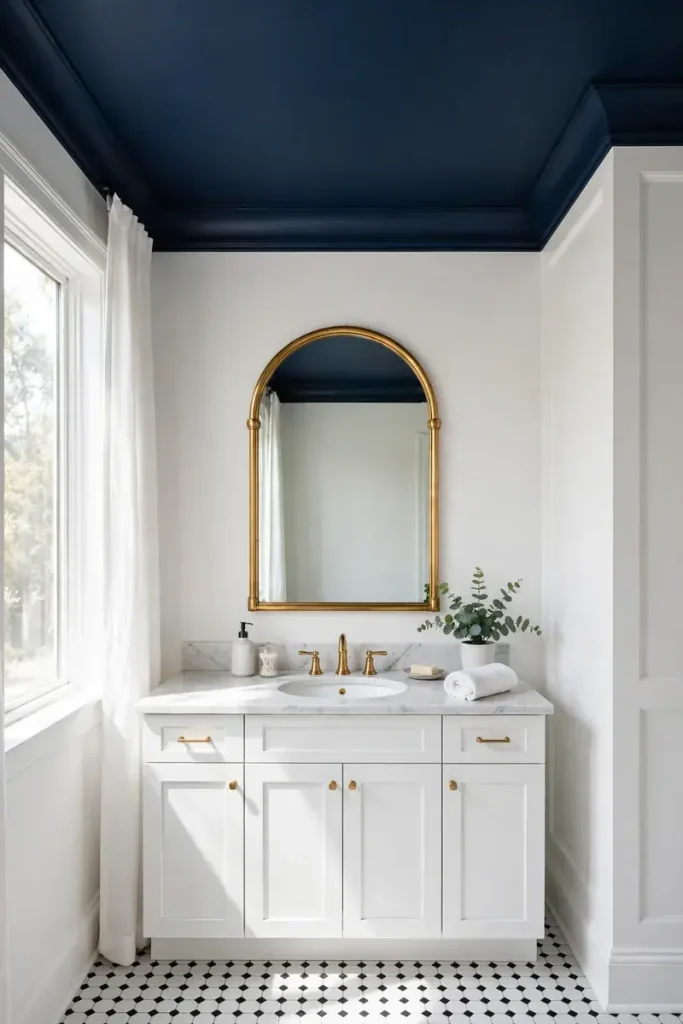
A dark blue, forest green, or warm clay ceiling gives a plain guest bathroom a designed look without stealing floor space. This trick works especially well when the walls and vanity are light. Buy a mildew-resistant bathroom paint and prep carefully; steamy rooms are not kind to shortcuts. A quart may cover a small ceiling, so a DIY version can fit a modest paint budget of about $30–$80 including supplies. Renters can get a similar effect with removable ceiling decals, but test one first. I once painted around a vent instead of removing the cover. It looked like the ceiling was wearing a tiny white hat.
3. Give Guests a Landing Spot
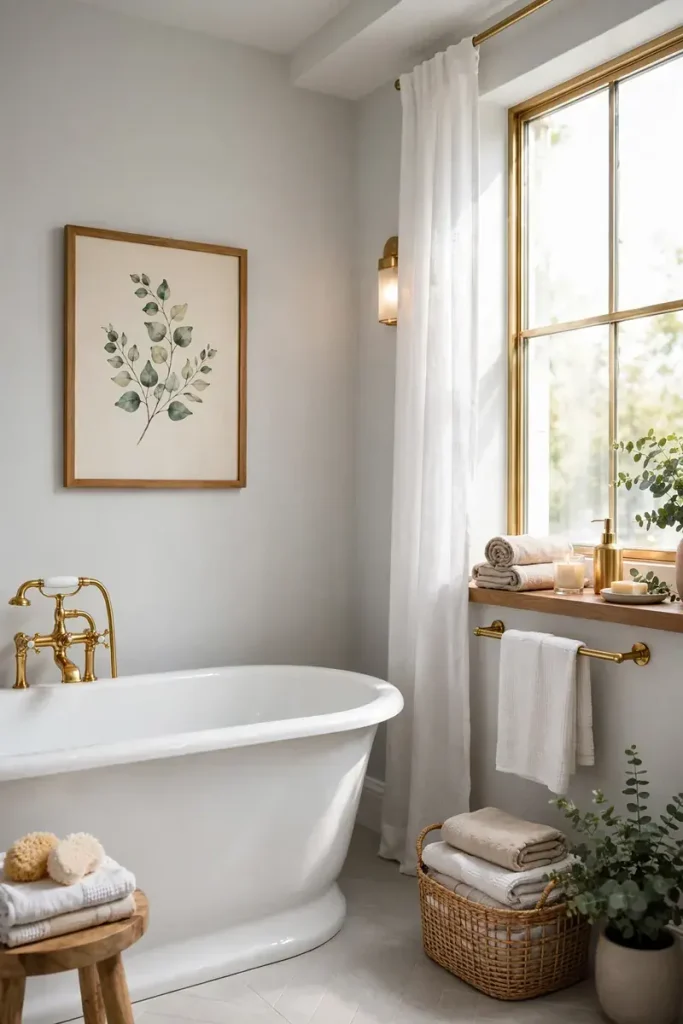
Guests need somewhere to place pajamas, jewelry, or a toiletry bag. A small wood stool, lidded basket, or narrow bench does the job without turning the vanity into a luggage carousel. In a tight bath, choose a piece that slides beneath a floating sink or sits beside the tub. Expect about $25–$120 depending on material, or repurpose a sealed wooden stool from another room. Renters can take it along when they move. Add one folded towel on top and leave the rest of the surface open; empty space is part of the welcome.
4. Refresh the Vanity Instead of Replacing It
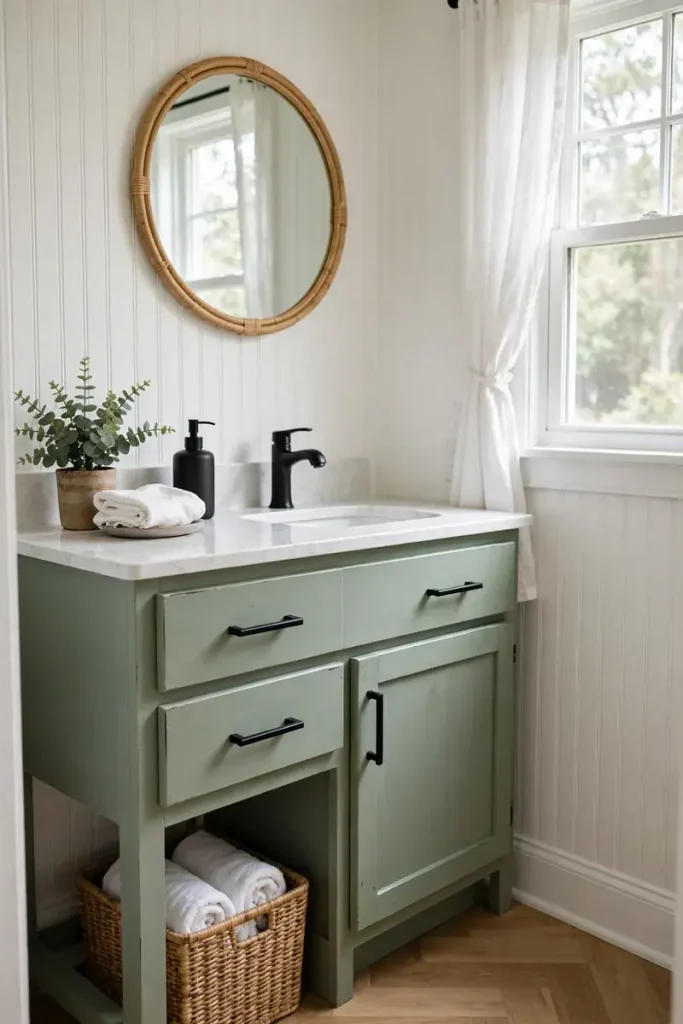
A tired vanity can look new after paint, fresh knobs, and a neat line of caulk. Sage, dusty blue, warm white, and deep navy are friendly colors that photograph beautifully and hide everyday wear. For a DIY update, plan roughly $60–$200 for primer, cabinet paint, hardware, and supplies. Remove doors and label hinges before painting. If the cabinet is swollen from water, repair or replace it rather than covering damage. Renters can swap knobs and store the originals in a labeled bag. It is a five-minute step that saves the classic move-out mystery: “Which tiny screw belonged where?”
5. Hang One Mirror With Real Personality
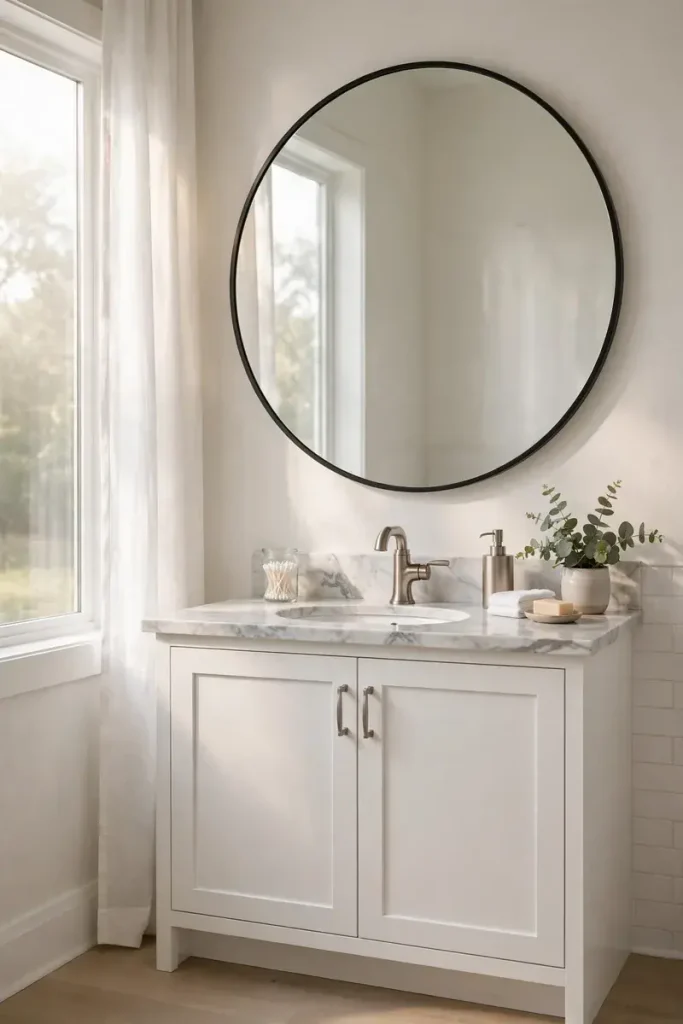
The mirror is often the biggest decoration in a small bathroom, so let it do more than reflect toothpaste. A round black frame feels modern, warm wood adds softness, and aged brass brings a gentle vintage note. Keep the width a little narrower than the vanity for balanced proportions. Basic decorative mirrors often fit a $60–$250 budget, while custom sizes cost more. For renters, use the existing wall anchor if it is secure and choose a lighter mirror. Always use bathroom-safe hardware and confirm the wall can support the weight. A leaning mirror is charming in a bedroom; over a sink, it is a suspense movie.
The Day Before: Add Comfort Without Adding Clutter
Now solve the little problems a guest may feel awkward asking about. A clear place for towels, toiletries, and a phone is more welcoming than a counter covered in decorative objects. Think useful first, pretty second, and combine both whenever possible.
6. Make Open Shelves Guest-Friendly
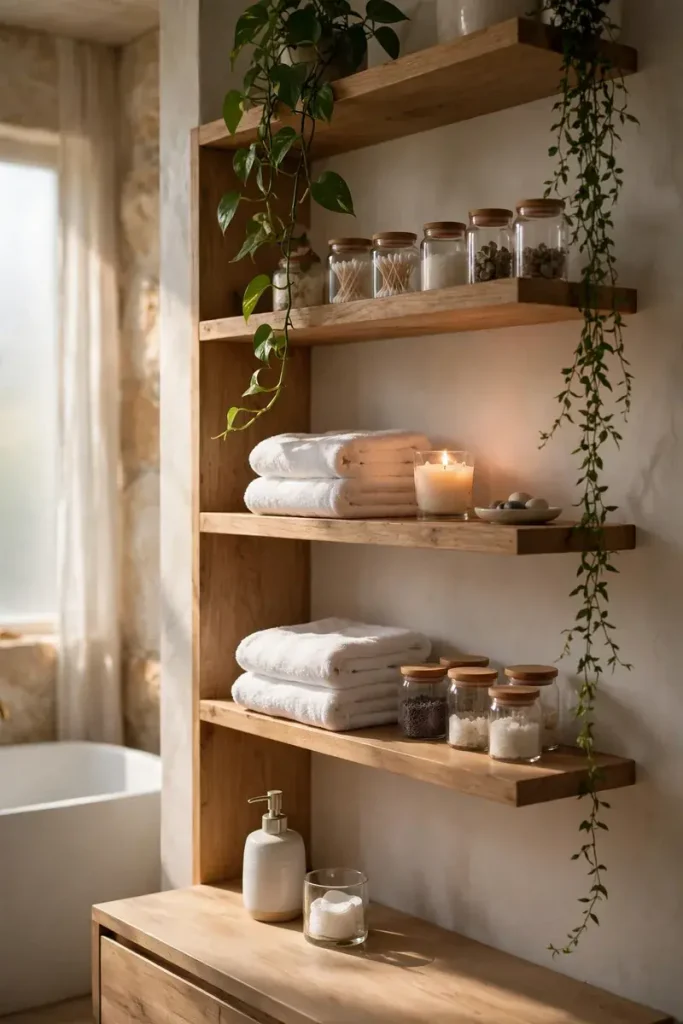
Open shelves work only when guests can tell what is available. Put extra towels on one shelf, a small basket of basics on another, and leave breathing room around both. Matching containers calm the look, but avoid unlabeled mystery jars. A pair of shelves and brackets can run about $40–$180, depending on wood and hardware. Over-the-toilet ladder shelves are a drill-free alternative for renters and tiny bathrooms. Mount permanent shelves into studs or proper anchors, not hope. Keep toilet paper within easy reach but not directly above an open toilet, because physics enjoys bad timing.
7. Create a Simple Hotel Towel Stack
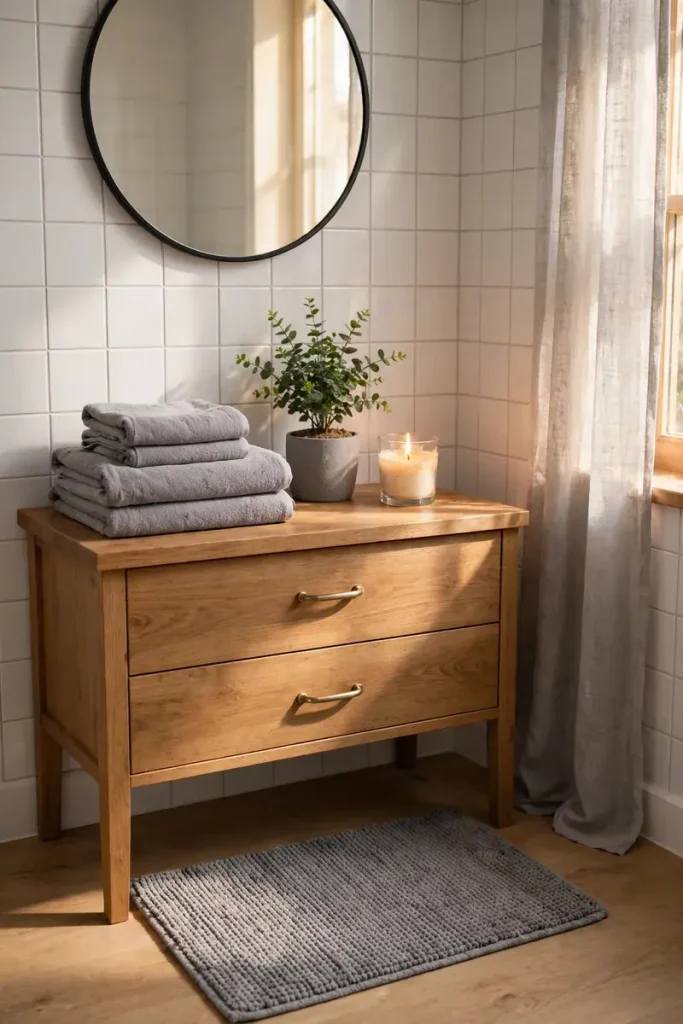
Fresh towels make a stronger impression than almost any decorative purchase. Give each overnight guest one bath towel, one hand towel, and a washcloth, then keep one obvious hand towel by the sink. White feels hotel-clean, while oatmeal, olive, or muted blue hides makeup marks better. A complete starter set can be budgeted at roughly $40–$120. Wash new towels before use and skip heavy fabric softener, which can reduce absorbency. If space is tight, roll towels into a basket below the vanity. Do not create an elaborate swan. Your guest needs to dry off, not attend towel origami school.
8. Build a Tiny “Forgot Something?” Tray
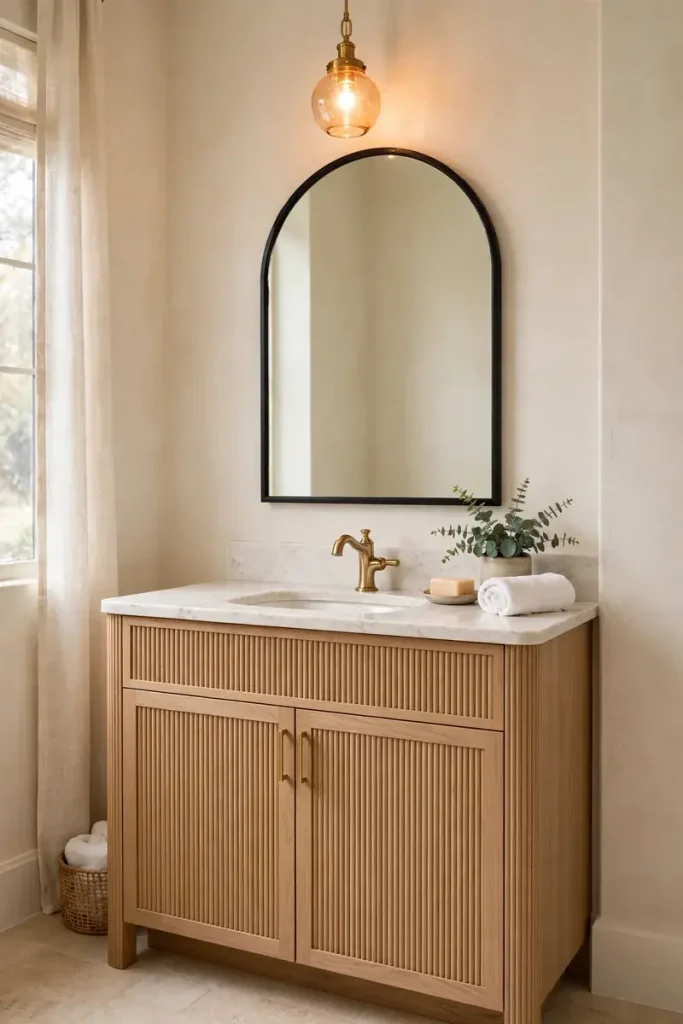
Place travel-size toothpaste, a wrapped toothbrush, floss, cotton swabs, and a few period products in a small tray or drawer. The point is quiet help, not a miniature drugstore. Check expiration dates, keep products sealed, and add a simple paper label if the storage is not obvious. You can assemble the whole setup for about $15–$40, and refill it from items you already buy. In a renter bathroom with no drawer space, use a lidded box on the shelf. Guests may never mention it, which is exactly the win: they found what they needed without announcing that they forgot a toothbrush.
9. Use a Double Vanity as Two Clear Zones
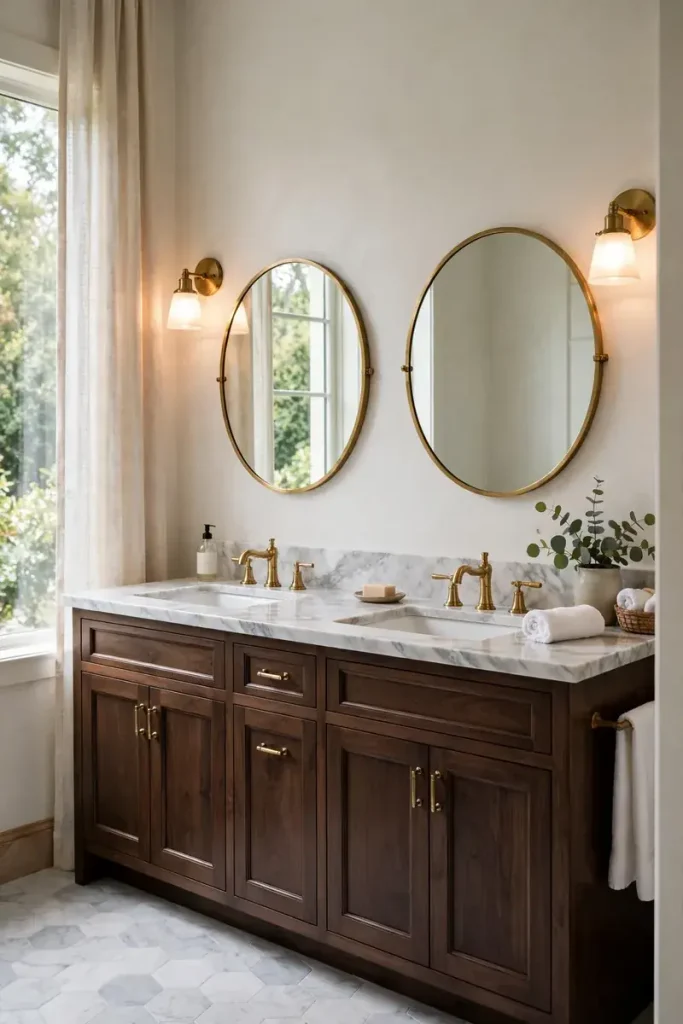
If your guest bath already has a double vanity, resist filling every inch between the sinks. Give each side a hand towel and a small open area, then place shared soap in the middle. Twin mirrors make the layout feel intentional and can cost less than one oversized custom mirror. A cosmetic update with two mirrors, matching faucets, and new hardware may range from a few hundred dollars upward; moving plumbing is the expensive part, so keep sinks where they are. In a family guest bath, one side can hold daily items while the other stays visitor-ready. Boundaries save counters—and possibly marriages.
10. Tile One Feature Wall, Not the Whole Room
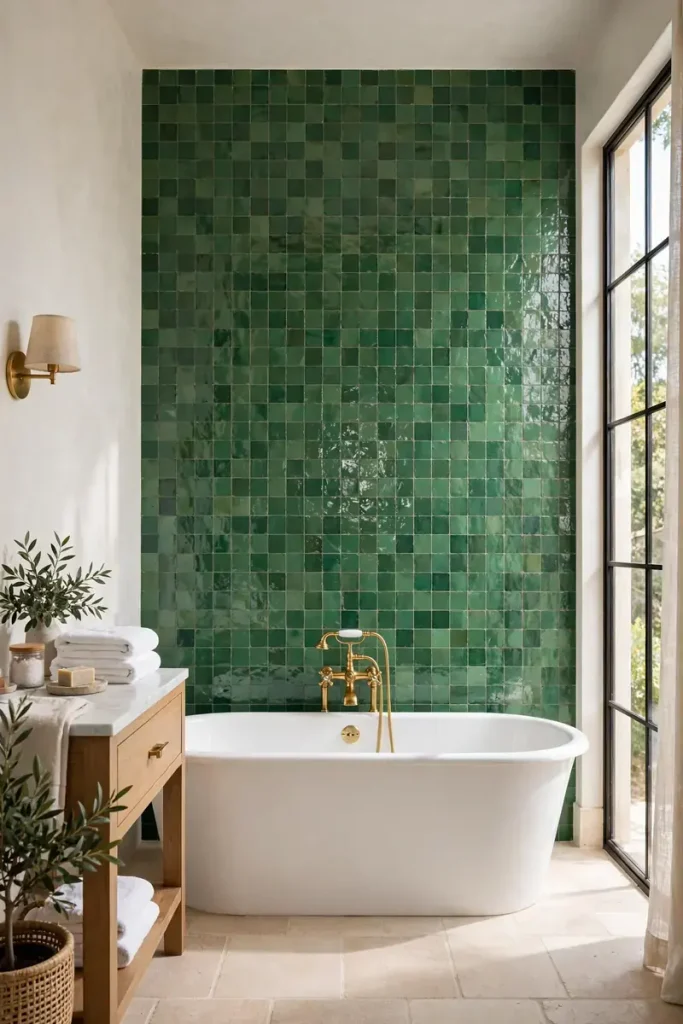
A single tiled wall behind the vanity or tub delivers color without the cost of wrapping the entire bathroom. Glossy green, soft blue, or handmade-look cream tile bounces light and makes a small room feel special. The budget depends heavily on tile and labor, but limiting the area keeps both under control. Ask for a quote that includes backer board, waterproofing, edge trim, grout, and demolition, not just tile. Renters can try high-quality peel-and-stick panels outside the wet zone. Keep temporary products away from direct shower spray; “water-resistant” and “submarine” are not the same thing.
Ten Minutes Before Arrival: Style the Room Like a Host
This round is quick, affordable, and mostly renter-friendly. You are not remodeling with someone already in the driveway. You are creating a polished final layer with textiles, greenery, and smart editing—plus hiding the toothpaste tube that has been flattened beyond recognition.
11. Swap in a Better Shower Curtain
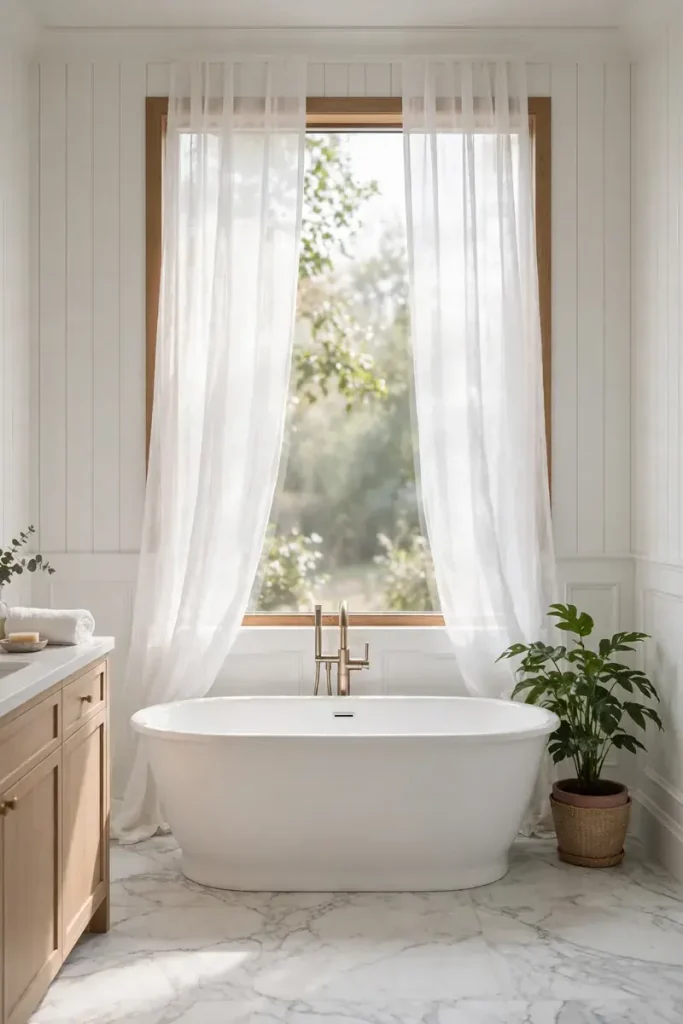
A full-length shower curtain can soften a small bathroom and hide an ordinary tub in one afternoon. Hang the rod a little higher and choose a curtain that nearly reaches the floor without puddling. Cotton or washable polyester looks polished; a separate liner handles the water. Budget about $35–$100 for the curtain, liner, hooks, and tension rod. This is one of the best renter-friendly updates because it leaves no permanent mark. Wash the liner regularly and replace it when cleaning no longer works. A pretty curtain cannot distract from mildew forever, though it may attempt a very brave performance.
12. Borrow Daylight With a Clear Shower Zone
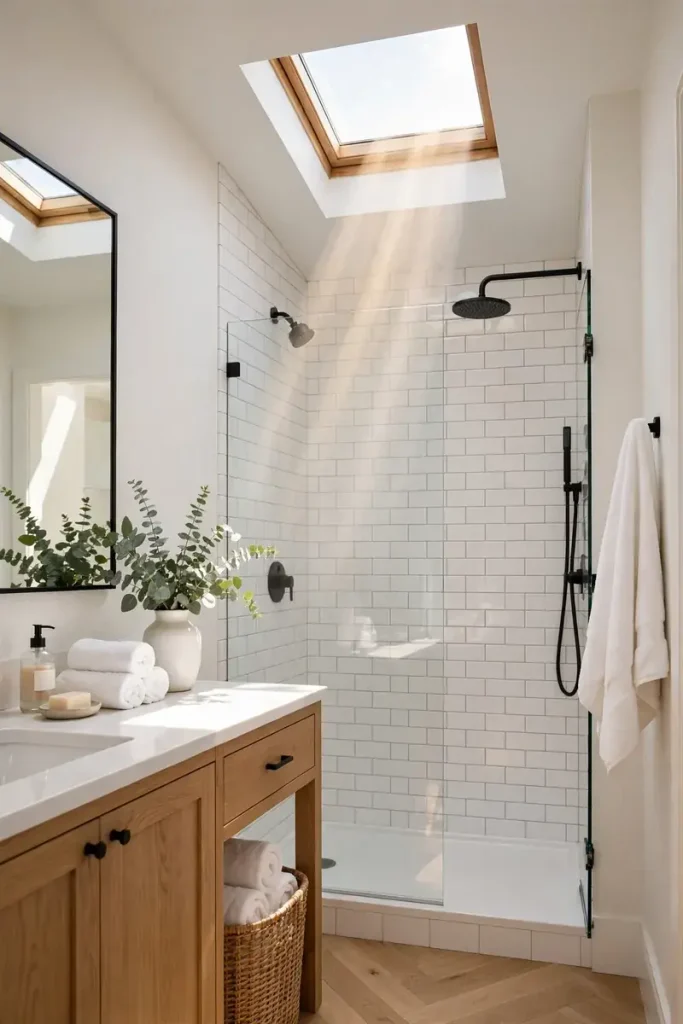
Natural light makes pale tile, chrome, and glass feel fresher. If your bathroom has a window or skylight, avoid blocking it with a heavy curtain or tall storage unit. Use frosted window film for privacy; it is inexpensive, removable, and lets daylight spread. During a remodel, a clear upper shower panel can share light across the room, but any new window or skylight is a major professional project. Whatever the budget, pair daylight with a working exhaust fan so moisture does not linger. The dreamy sunbeam is welcome. The tiny damp ecosystem trying to form behind the shampoo bottles is not.
13. Add a Shower Bench or Corner Perch
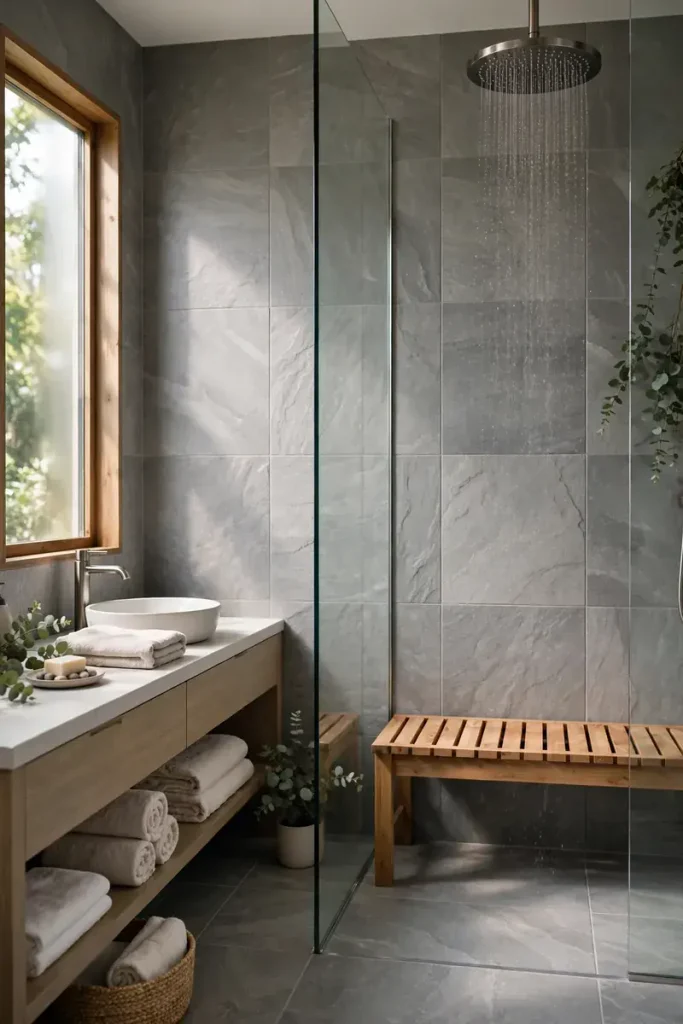
A bench gives guests a place for toiletries, makes shaving easier, and supports anyone who prefers to sit. In a roomy shower, a properly sloped built-in bench feels seamless. For a small or rented bathroom, use a compact teak corner stool with rubber feet, usually a much easier $40–$150 purchase. Permanent benches must be included in the waterproofing plan; do not attach one casually through tile. Keep the seat clear before company arrives so it works as intended. Seven decorative bottles arranged by height may look spa-like, but they also turn the useful bench into a tiny product auditorium.
14. Choose a Pedestal Sink When Floor Space Matters
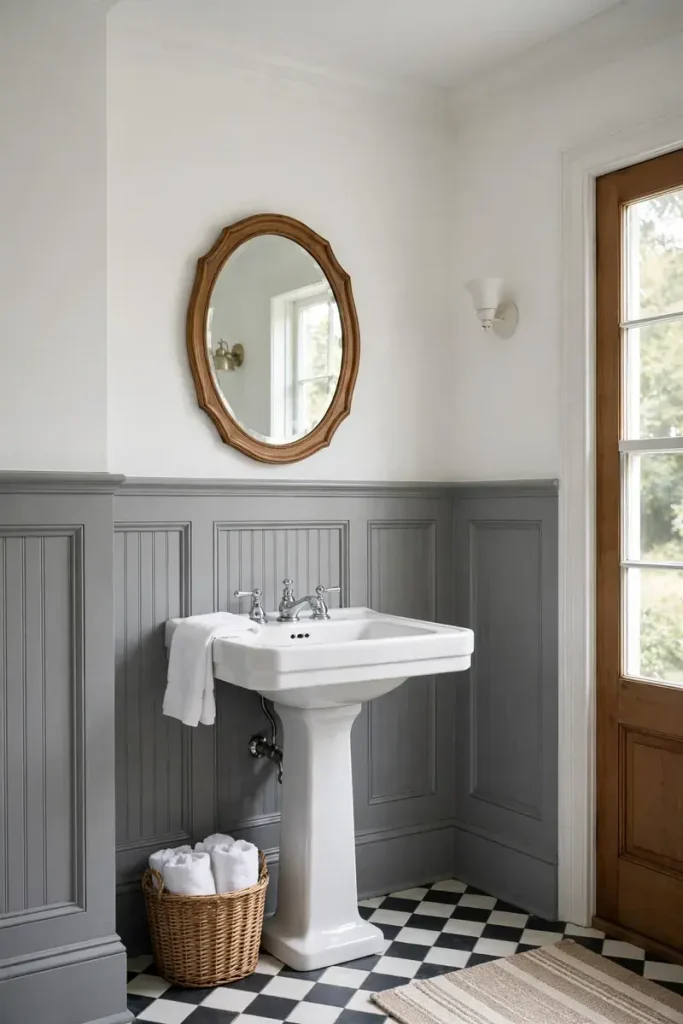
A pedestal sink opens the sightline and can make a narrow powder room feel larger. The trade-off is storage, so add a medicine cabinet, wall shelf, or basket nearby. This upgrade works best when plumbing already lines up; changing supply and drain locations raises labor costs quickly. A basic sink may be affordable, but professional installation, wall repair, and new hardware should be included in the quote. Renters can fake the airy look by using a slim console table around an existing wall sink, if clearance allows. Measure the door swing first. A beautiful sink should not greet the door with a daily collision.
After the Visit: Choose the Upgrades Worth Saving For
If the bathroom still feels cramped or dated after the easy fixes, plan one lasting improvement at a time. Keep the plumbing in place when possible, ask contractors for itemized quotes, and put waterproofing and ventilation ahead of trendy finishes.
15. Replace a Heavy Frame With Clear Glass
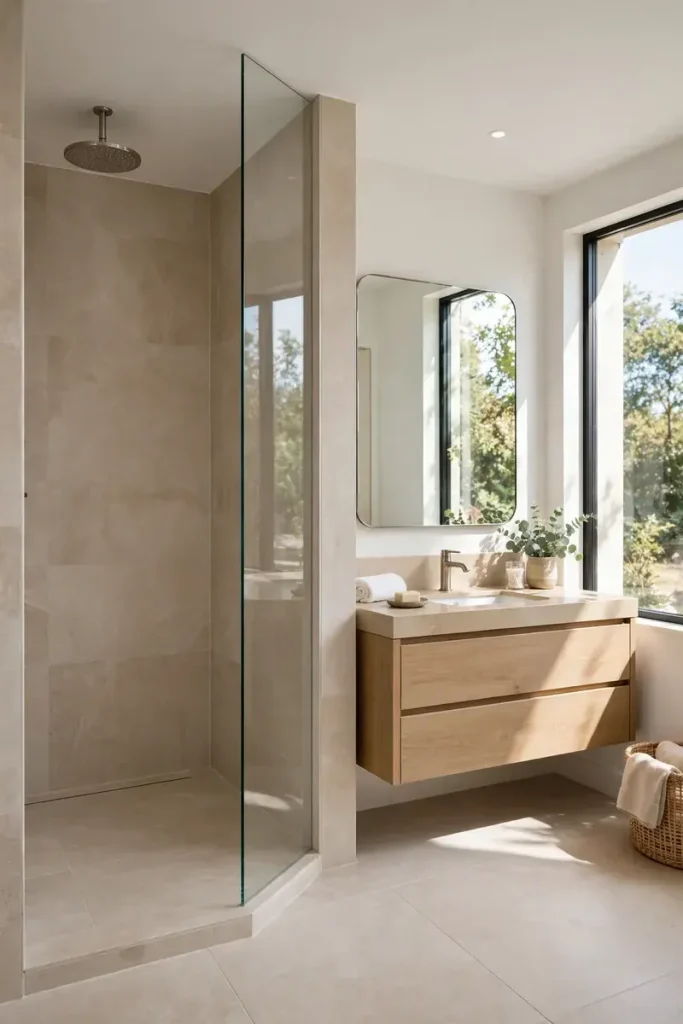
Clear glass lets your eye travel to the back wall, so even a modest guest bathroom can feel wider. Frameless enclosures give the cleanest view, while semi-frameless options may stretch the budget further. This is a professional upgrade: glass must be tempered, accurately measured, and anchored correctly. Expect a four-figure project in many U.S. markets, especially for custom panels, and collect more than one quote. If that is not in the plan, a clear liner and simple curtain can create a lighter look for under $100. Keep a squeegee nearby; water spots are very committed to being noticed.
16. Use Black Framing to Sharpen a Plain Bathroom
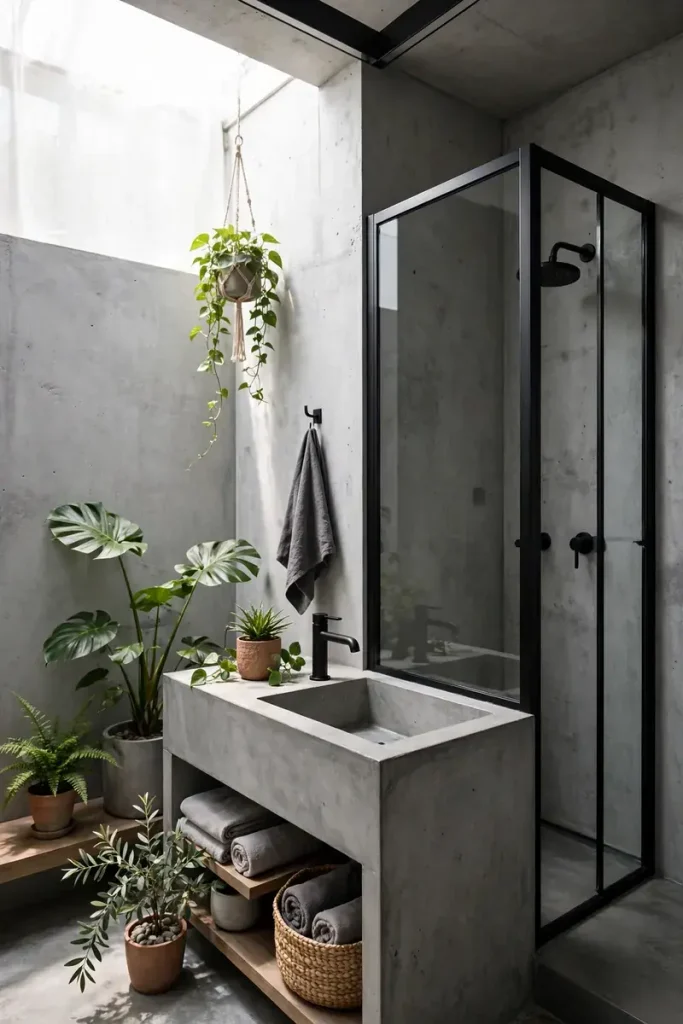
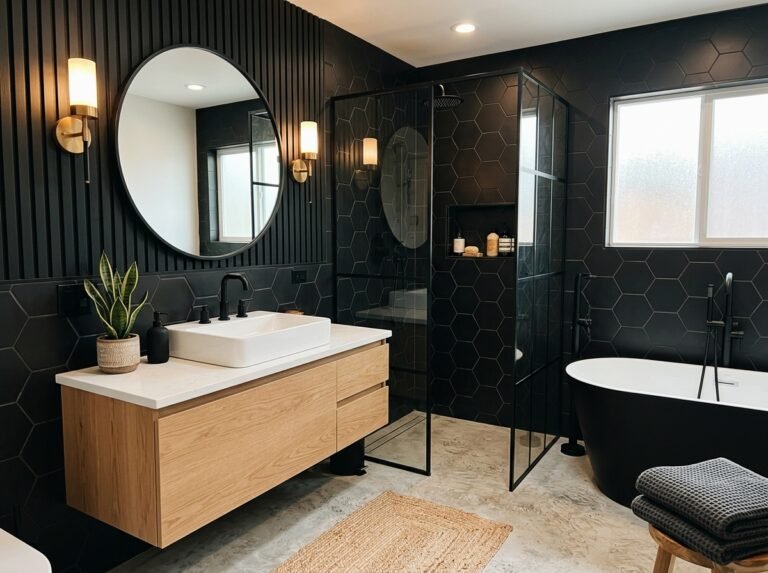
Black shower framing, a black mirror, and two or three matching accents can give builder-basic finishes a crisp outline. The secret is restraint. Repeat the finish enough to look planned, but do not turn every hook, hinge, and tissue box into a matching uniform. Start small with a $50–$200 group of hardware and accessories. A factory-finished framed shower door is a bigger installed purchase and must fit the opening precisely. Renters can use a black mirror, tension rod, and removable hooks for the same graphic effect. Skip painting existing metal door frames; moisture and moving parts punish weak finishes quickly.
17. Upgrade to a Warm Wood Vanity
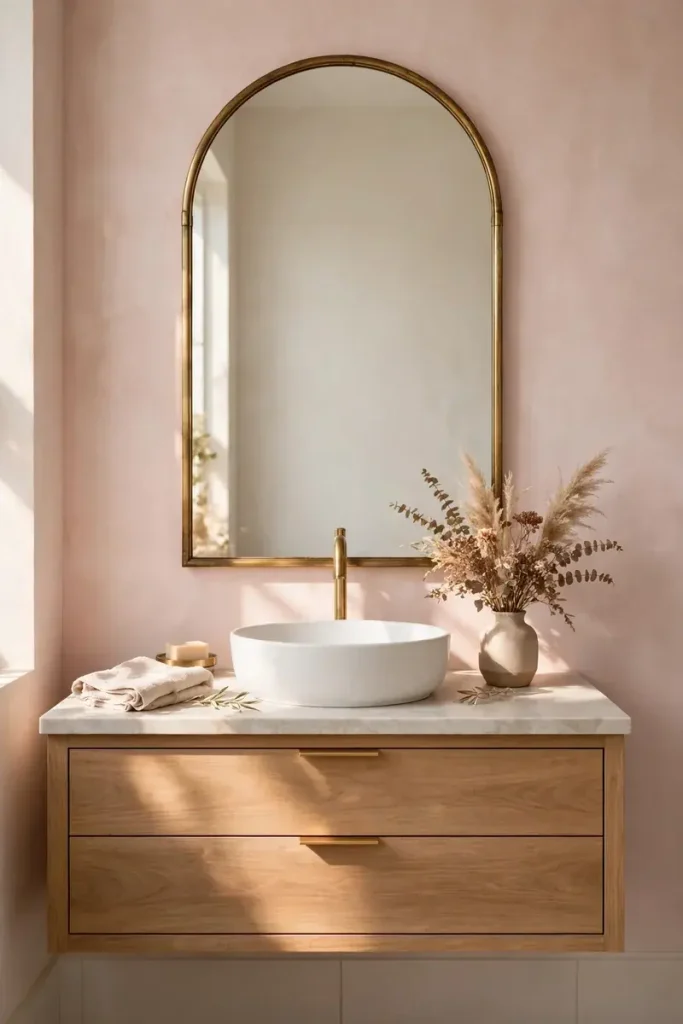
Wood grain adds warmth to all the hard surfaces in a bathroom. A floating oak-look vanity feels modern, while a furniture-style cabinet feels collected and cozy. Keep the existing plumbing location and choose a standard size to control cost. Recent U.S. cost guides place many vanity installations in a broad range from several hundred dollars into the low thousands, depending on size, countertop, plumbing, and labor. Ask whether removal, disposal, faucet hookup, and backsplash repair are included. On a tiny budget, apply wood-tone adhesive film to flat drawer fronts outside splash zones. Test a hidden corner first so the “upgrade” does not become sticky archaeology.
18. Try Patterned Wallpaper in the Dry Zone
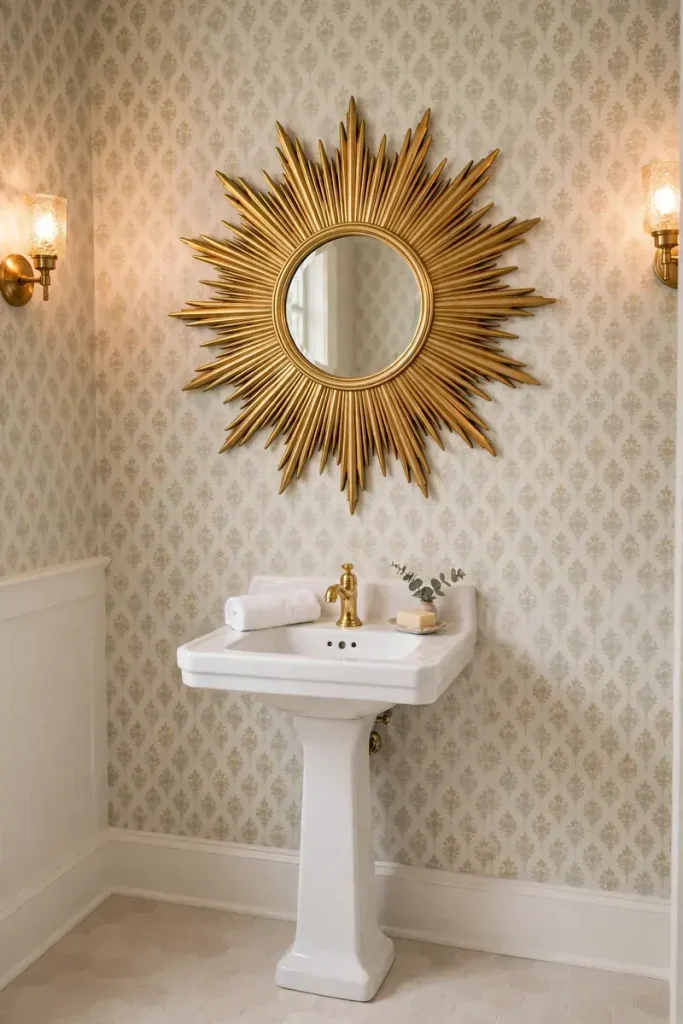
A guest powder room is the perfect place for a pattern you might fear in a larger space. Small florals, soft geometrics, or a vintage print can turn four plain walls into a jewel box. Use bathroom-suitable paper, run the exhaust fan, and avoid wallpaper inside the shower or directly behind a splashy sink. Peel-and-stick rolls make this renter-friendly, though textured walls can be tricky. Set aside roughly $80–$300 for a small DIY room, depending on pattern repeat and wall size; professional hanging costs more. Order a sample first. Patterns can be charming online and surprisingly loud when they are standing six inches from your face.
The Five-Minute Guest Check
The best guest bathroom is not necessarily the newest one. It is the room where the light is kind, the towels are obvious, the soap is full, and nobody has to search for toilet paper like they are solving an escape room. Start with one seven-day fix, one comfort upgrade, and one ten-minute styling step. Then live with the room before planning expensive work. You may discover that warm bulbs, a fresh curtain, and a basket solved most of the problem. If you do remodel, spend first on waterproofing, ventilation, safe electrical work, and reliable plumbing; those choices are invisible in photos but priceless after a steamy weekend visit. Finally, stand in the doorway, walk through the space as a guest, and remove anything that gets in the way. Hospitality is not about adding more stuff. It is about making every small thing feel easy.