16 Fall Nail Design Ideas, Composed Like Fragrances at a Perfume Counter
A perfumer once explained to me that a great fragrance isn’t one single smell, it’s three layers unfolding over time: a top note you smell in the first few minutes, a heart note that emerges once the top fades, and a base note that lingers for hours after everything else is gone. I couldn’t stop thinking about nail design the same way. The best manicures aren’t one single element either. They’re a base color, a mid-layer detail, and a final finishing touch, each one doing a different job and showing up at a different moment when someone actually looks at your hands.
So I built this post like a perfume counter. Sixteen designs, each composed as an actual fragrance with a top note, heart note, and base note, plus a sillage rating for how much attention the design draws from across a room, and a longevity rating for how long it realistically holds up. Extras on composition and application follow the counter.
The Counter
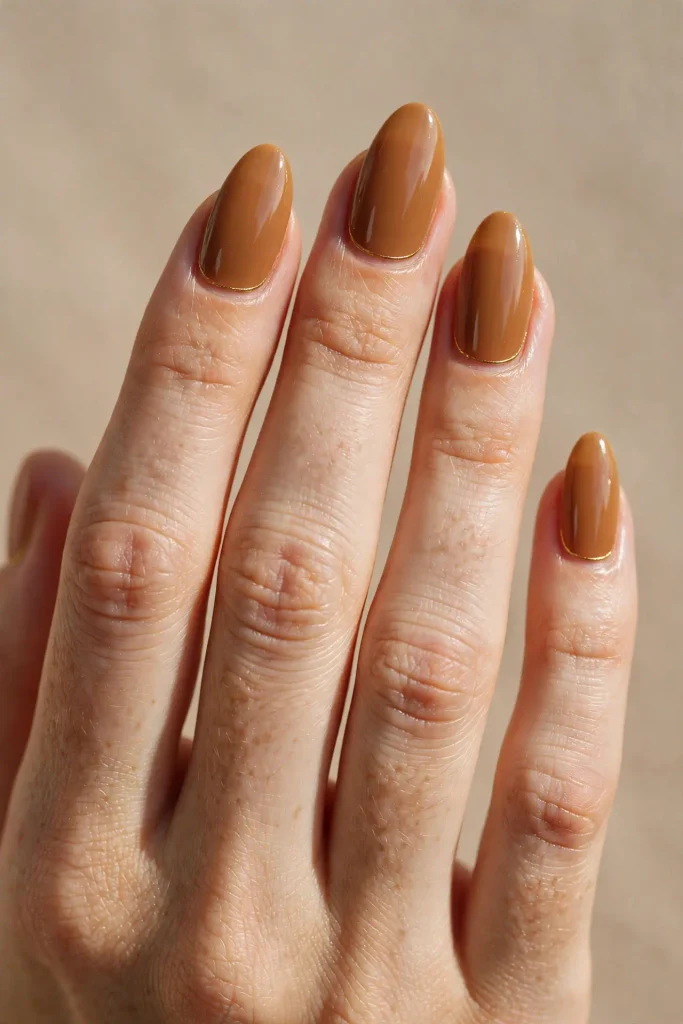
Fragrance 1, Amber Study.
Top note: a warm, glossy caramel base coat, the first thing you notice.
Heart note: a thin gold line at the cuticle, appearing once you look closer.
Base note: a final glossy seal that makes the whole thing glow under warm light.
Sillage: quiet, noticed only up close.
Longevity: excellent, since the simple layering has nothing fine to chip first.
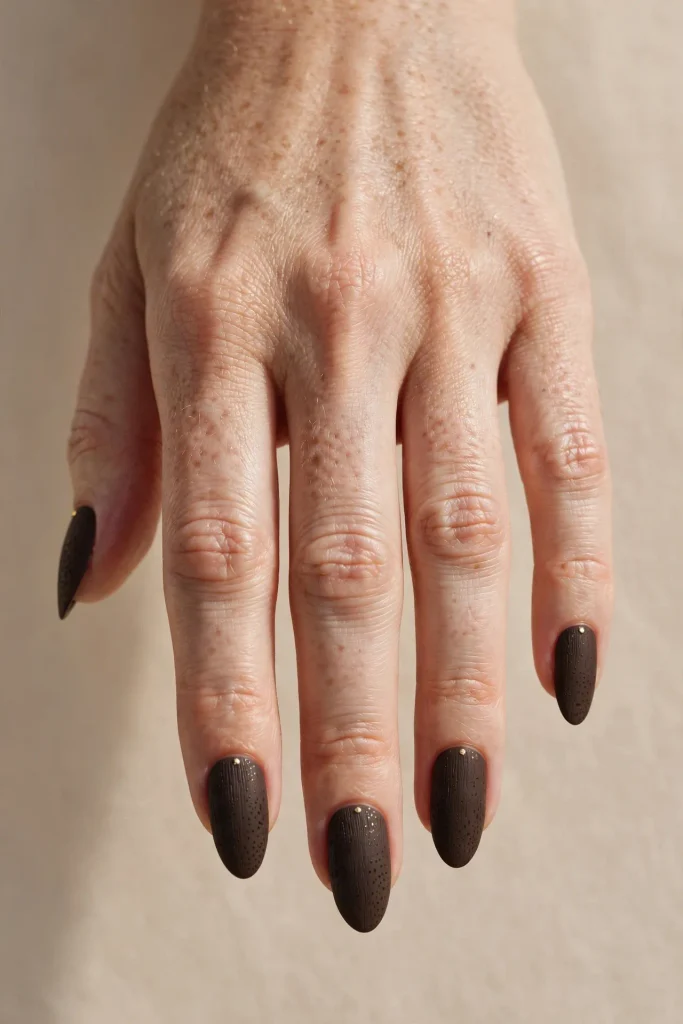
Fragrance 2, Smoked Oak.
Top note: a deep, matte espresso brown covering the whole nail.
Heart note: a subtle, barely-there texture built with a stippling brush, like the grain of real wood.
Base note: a single, tiny gold fleck pressed near the cuticle, the last detail someone notices.
Sillage: moderate, reads as rich rather than loud.
Longevity: good, matte finishes need a refresh at the halfway point but otherwise hold well.
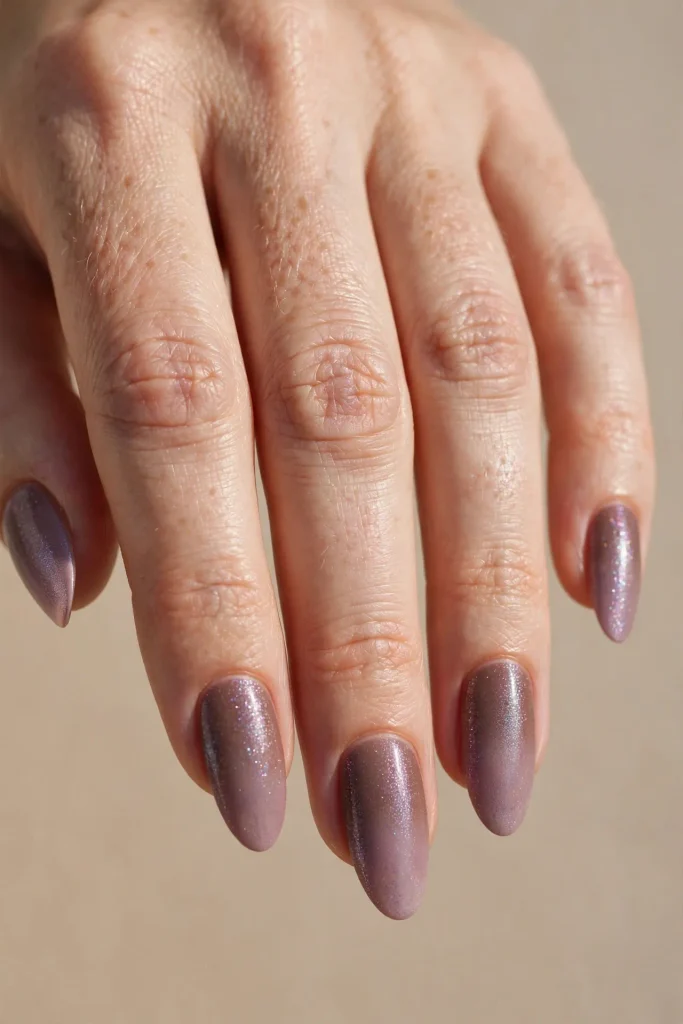
Fragrance 3, Wild Fig.
Top note: a dusty, muted plum-brown base.
Heart note: a soft, blended gradient fading toward a lighter mauve at the tip.
Base note: a fine, cool-toned shimmer mixed through the final layer.
Sillage: moderate, sophisticated rather than bold.
Longevity: good, since the gradient hides regrowth exceptionally well.
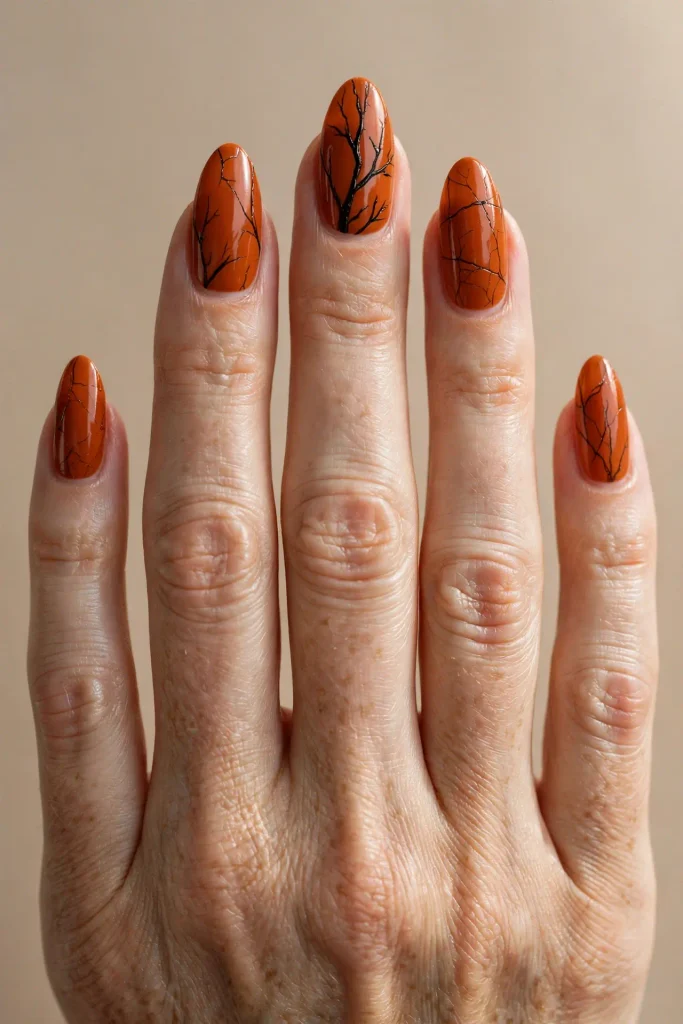
Fragrance 4, Burnt Cedar.
Top note: a rich burnt-orange creme, the boldest opener on the whole counter.
Heart note: thin, hand-painted black lines suggesting cracked bark or bare branches.
Base note: a glossy top coat that lets the orange glow rather than mute it.
Sillage: strong, noticed immediately from across a room.
Longevity: fair, since the fine painted lines near the tip are the first element to show wear.
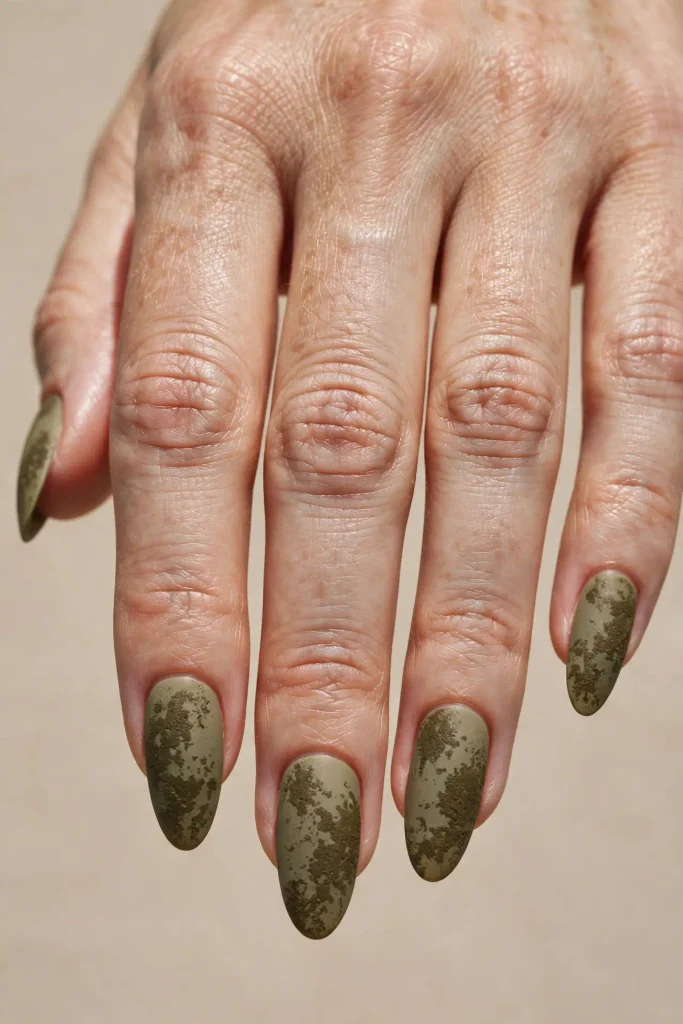
Fragrance 5, Vetiver Root.
Top note: a muted, earthy olive-green base.
Heart note: an irregular, sponge-dabbed texture in a slightly darker olive, suggesting root and soil.
Base note: a matte top coat that keeps the whole composition grounded rather than glossy.
Sillage: quiet, an understated fragrance for someone who prefers not to be the loudest thing in the room.
Longevity: excellent, muted matte tones wear exceptionally evenly.
Fragrance 6, Spiced Plum.
Top note: a deep, saturated wine-burgundy creme.
Heart note: a fine gold web traced in one corner, appearing only when someone looks closely.
Base note: a high-gloss finish that makes the burgundy read almost black-red under low light.
Sillage: strong, this is a fragrance built for evening.
Longevity: good, provided the fine web detail is fully sealed under top coat.
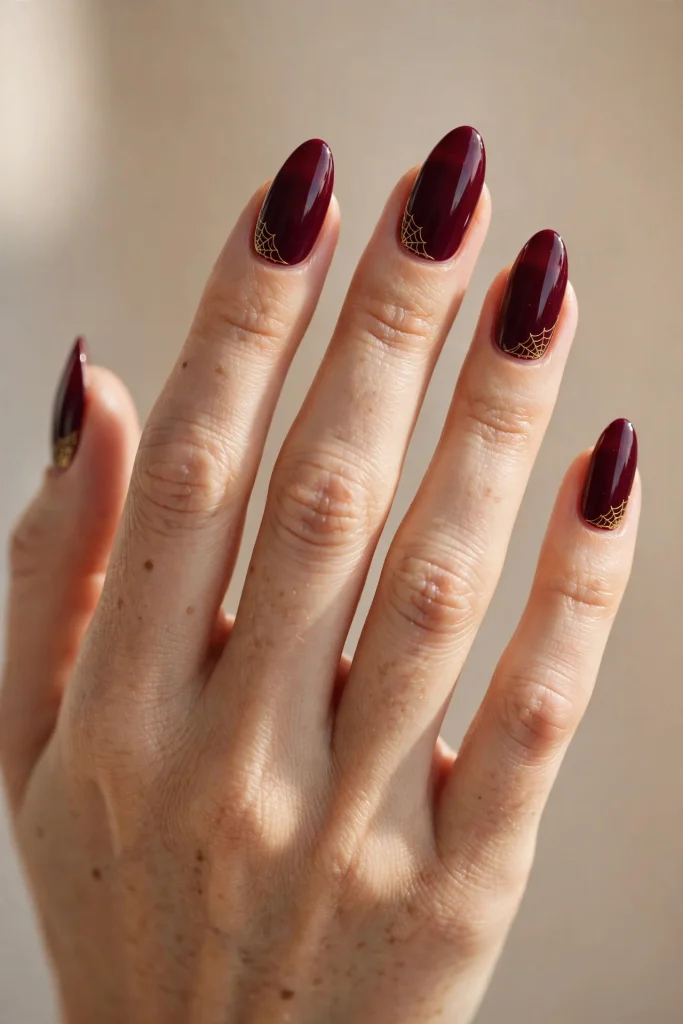
Fragrance 7, Golden Amber Resin.
Top note: a sheer, milky nude base.
Heart note: a warm champagne-gold chrome finish covering the whole nail.
Base note: nothing added, letting the chrome itself be the lasting impression.
Sillage: strong but elegant, catches light rather than shouting.
Longevity: good, chrome finishes hold well over a gel base though they show fine scratches more readily than a matte or glossy creme.
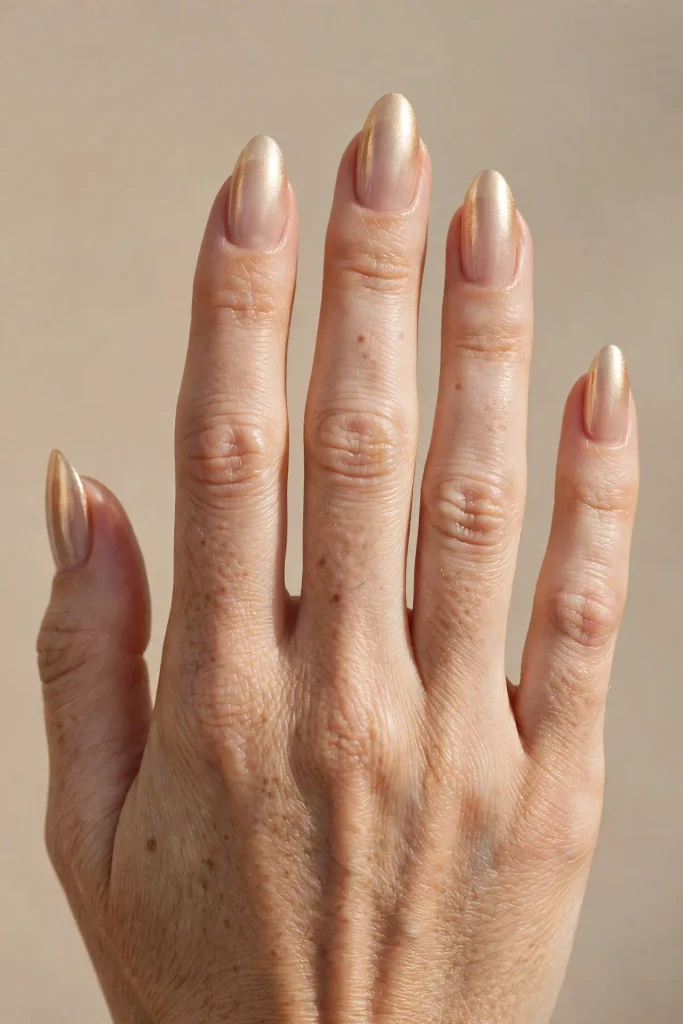
Fragrance 8, Mossy Greenwood.
Top note: a deep, near-black forest green.
Heart note: tiny, scattered gold dots suggesting light filtering through dense leaves.
Base note: a glossy seal that makes the green read almost jewel-toned.
Sillage: moderate, rich without being loud.
Longevity: excellent, small dots near the cuticle are among the most protected placement on the whole nail.
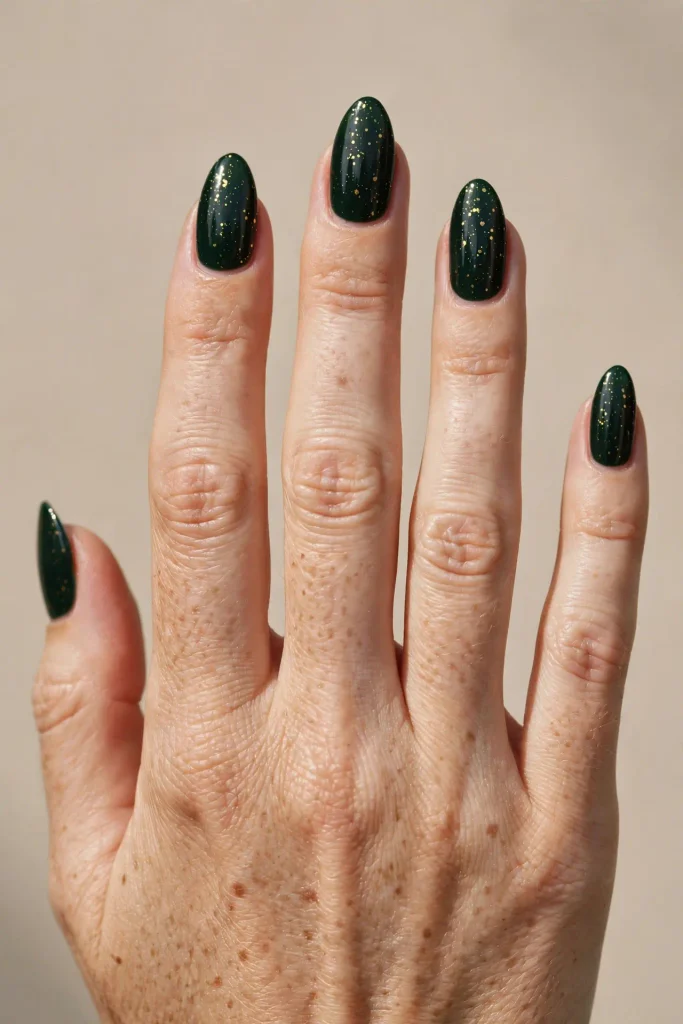
Fragrance 9, White Musk and Cream.
Top note: a soft, milky ivory base, the palest composition on the counter.
Heart note: nothing added, letting the color itself breathe.
Base note: a pearl-finish top coat for a soft, glazed shine.
Sillage: quiet, an intentionally minimal fragrance.
Longevity: fair, pale bases show natural nail growth and minor wear sooner than deep pigments.
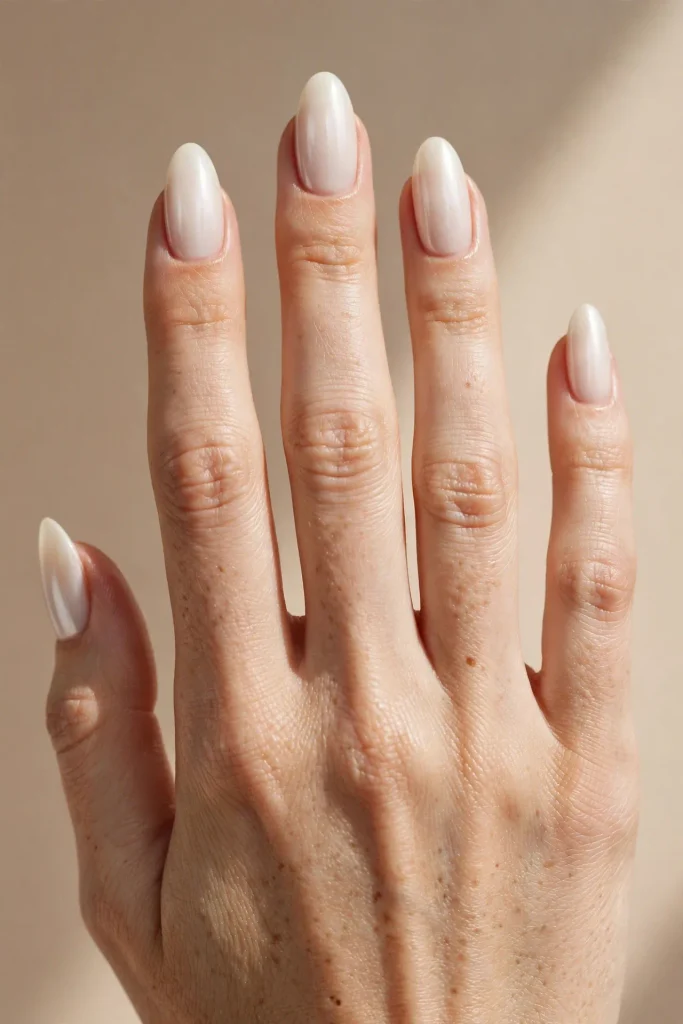
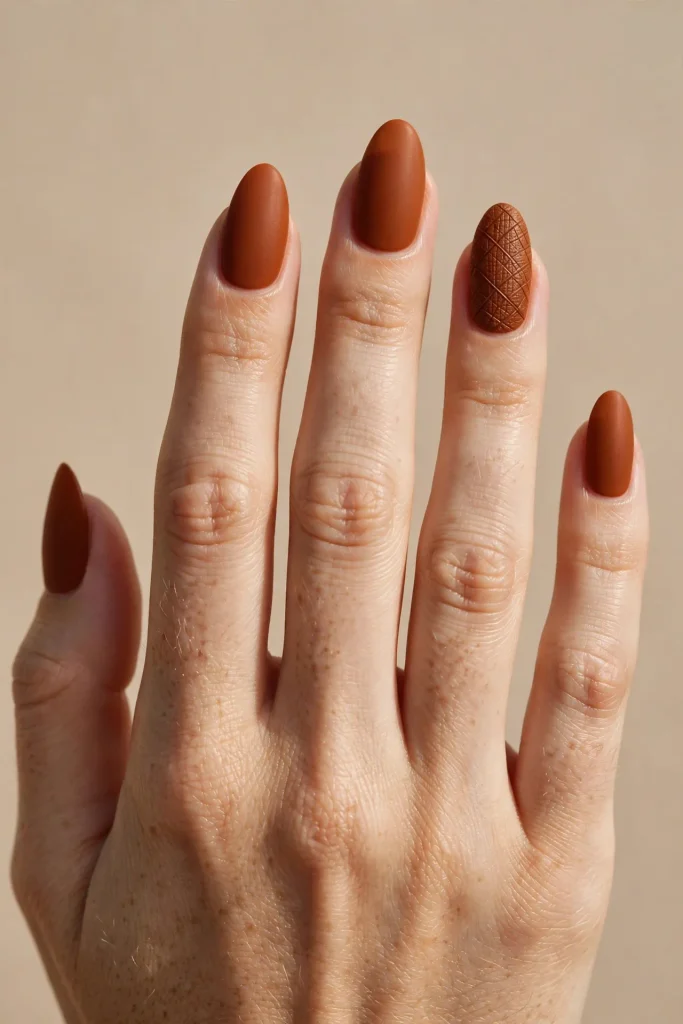
Fragrance 10, Leather and Tobacco.
Top note: a rich, saturated cognac-brown creme.
Heart note: a fine, hand-painted crosshatch texture on one accent nail, suggesting stitched leather.
Base note: a slightly warm-toned matte finish.
Sillage: moderate to strong, distinctive without being flashy.
Longevity: good, since the detailed texture is contained to a single nail rather than the full set.
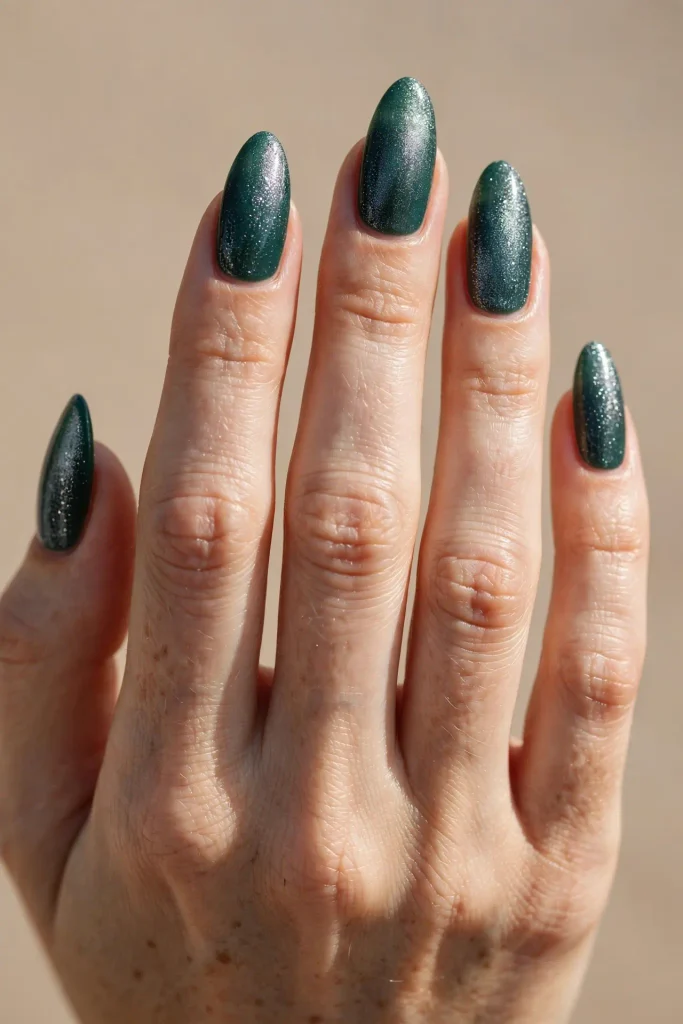
Fragrance 11, Frosted Pine.
Top note: a deep, cool-toned pine green.
Heart note: a fine silver shimmer mixed through the base, suggesting frost.
Base note: a glossy seal.
Sillage: moderate, reads as crisp and cool from across a room.
Longevity: excellent, deep shimmer-flecked cremes wear similarly to plain solid colors.
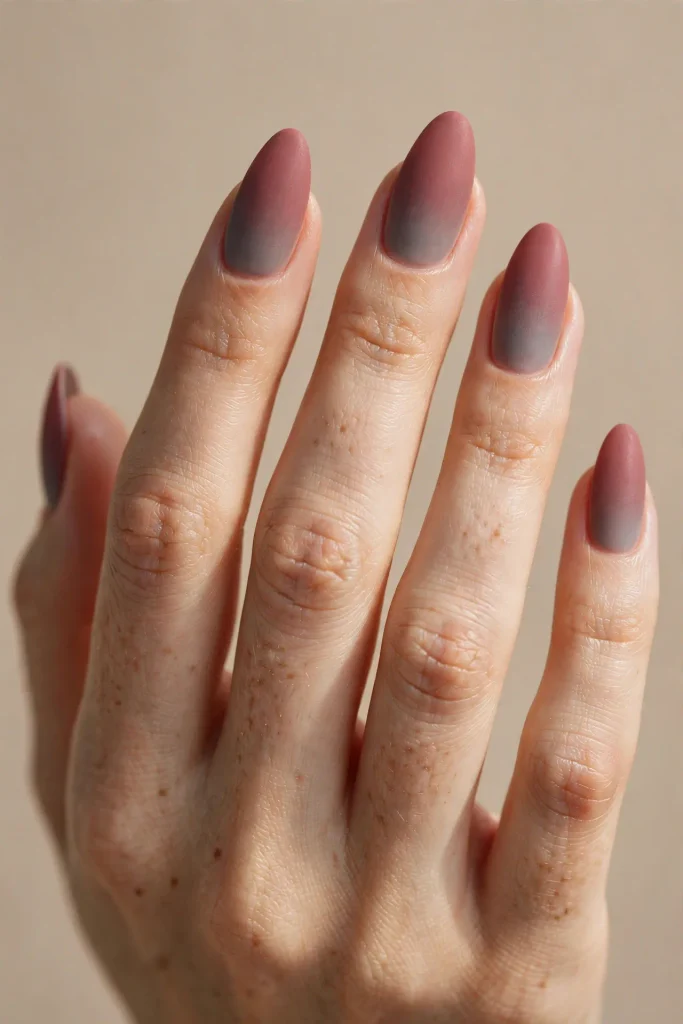
Fragrance 12, Rose and Smoke.
Top note: a dusty, muted rose-mauve base.
Heart note: a soft, smoky gray gradient blending in from the cuticle.
Base note: a satin, semi-matte finish.
Sillage: quiet to moderate, romantic and understated.
Longevity: good, since the muted, blended tones hide minor wear well within the gradient itself.
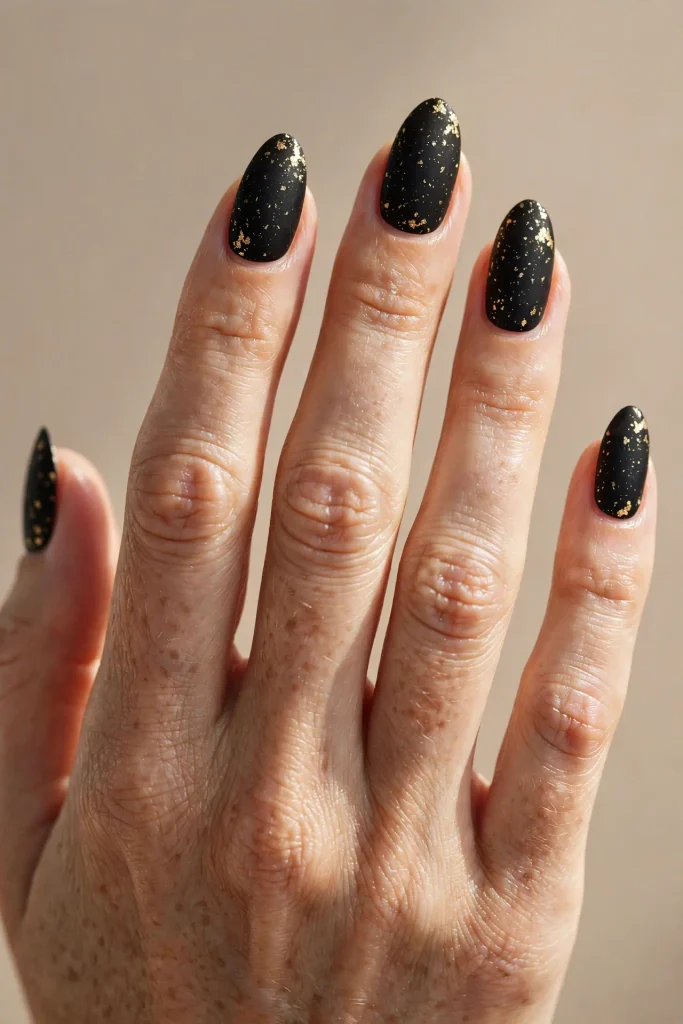
Fragrance 13, Black Pepper and Gold.
Top note: a matte, deeply saturated black.
Heart note: tiny, irregular gold flecks scattered across the nail, like cracked black pepper caught in light.
Base note: a glossy sealing layer only over the gold flecks, leaving the black matte, so the two finishes contrast against each other.
Sillage: strong, dramatic and confident.
Longevity: good, provided the mixed matte and glossy sealing technique is applied carefully to avoid an uneven finish.
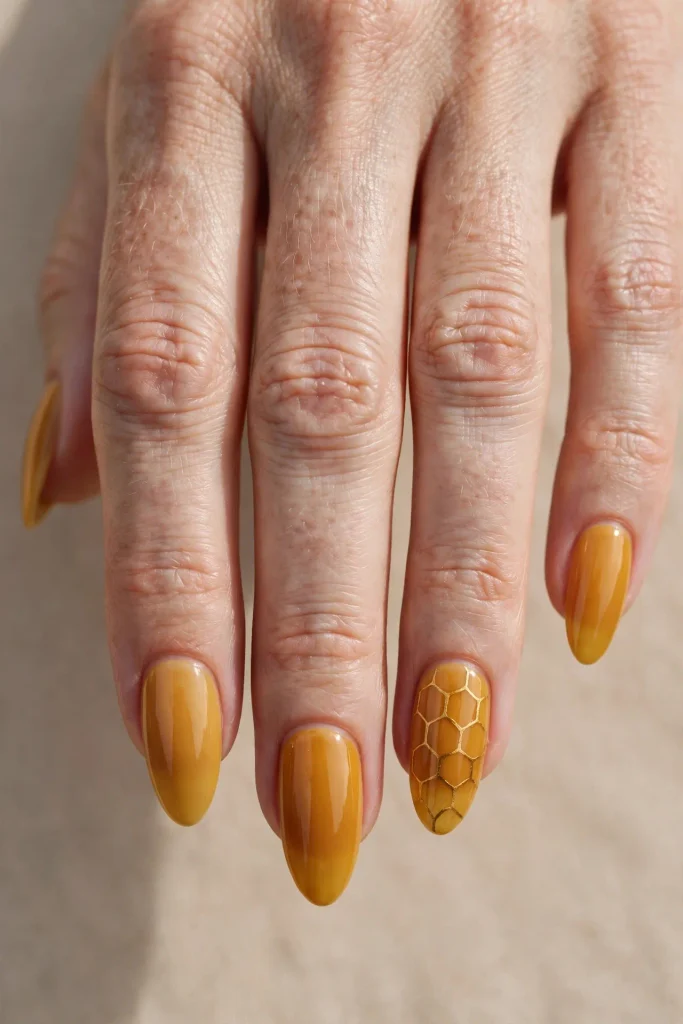
Fragrance 14, Warm Honeycomb.
Top note: a warm, golden honey-amber base.
Heart note: a subtle, hexagonal-suggestion texture, thin gold lines forming loose, irregular hexagon shapes across one accent nail, echoing a honeycomb.
Base note: a glossy finish that lets the amber glow.
Sillage: moderate, warm and inviting rather than bold.
Longevity: fair, since the fine geometric linework is the first element likely to show wear.
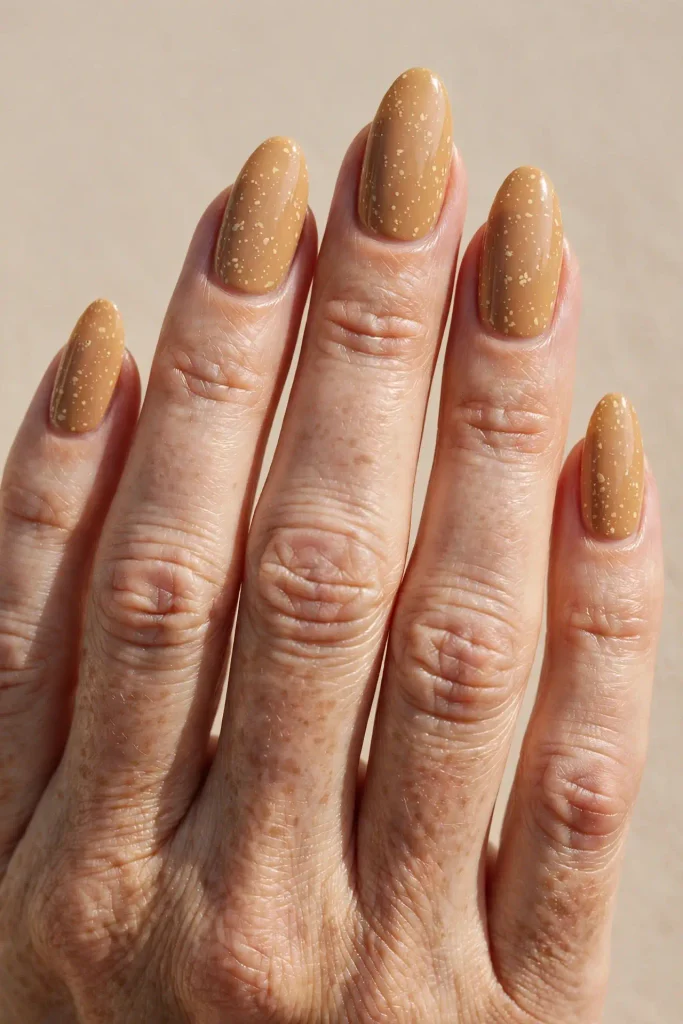
Fragrance 15, Salted Caramel.
Top note: a warm caramel-tan creme.
Heart note: a scattering of tiny cream-colored dots, like flecks of sea salt across caramel.
Base note: a glossy top coat.
Sillage: quiet to moderate, cozy and approachable.
Longevity: good, small dots hold up reasonably well when sealed properly.
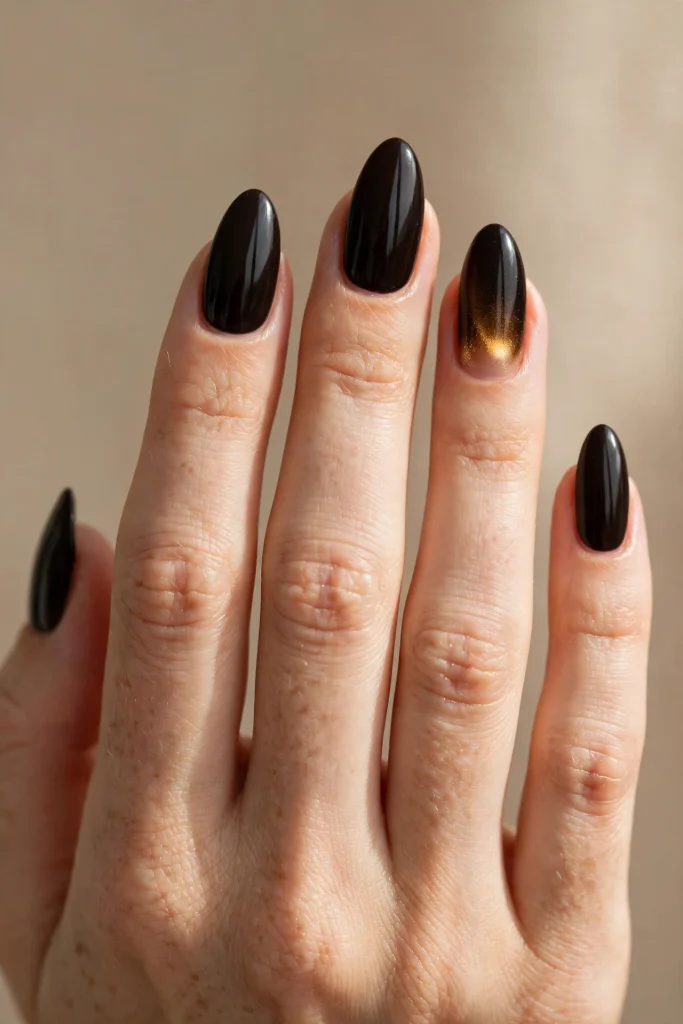
Fragrance 16, Midnight Amber.
Top note: a near-black, deep espresso base.
Heart note: a single, small warm amber-gold glow effect on one accent nail, created by layering a translucent gold shimmer in a concentrated area near the cuticle.
Base note: a glossy overall finish.
Sillage: strong, the darkest and most dramatic composition on the whole counter.
Longevity: good, since the glow effect is contained to a single protected zone on a single nail rather than spread across the full set.
Something New: The Note Pyramid Explainer
Understanding how a perfume’s note pyramid actually works makes composing your own nail design far more intuitive than picking colors randomly.
In real perfumery, top notes are the lightest, most volatile molecules, the ones you smell in the first five to fifteen minutes before they evaporate. On a nail, this translates to your base color, the thing anyone notices in the first glance from across a room, which is why the boldest colors on this counter, Fragrance 4’s burnt cedar and Fragrance 13’s black pepper, are described as strong sillage. Heart notes emerge as the top notes fade, typically thirty minutes to a few hours into wearing a real fragrance, and they form the actual character of the scent. On a nail, this is your mid-layer detail, the gold line, the texture, the gradient, the thing someone notices only once they’re standing close enough to actually look at your hands rather than glancing from a distance. Base notes are the heaviest, longest-lasting molecules, often not fully perceptible until hours in, and they’re what someone remembers after the fragrance itself has faded. On a nail, this is your finish, glossy, matte, or shimmer, the quality that determines how the whole composition ages over the coming days rather than how it looks in the first five minutes.
A genuinely well-composed nail design, like a genuinely well-composed fragrance, needs all three layers working together rather than a single loud top note with nothing underneath it to sustain interest once someone looks closer.
The Layering Guide
Perfumers frequently layer two complementary fragrances to create something more complex than either wears alone, and the same principle works beautifully applied to nail design across a full set of ten nails rather than treating every nail identically.
Rather than wearing the exact same fragrance on all ten nails, consider layering two compositions from the counter above the way you might layer two scents on different pulse points. Wear Fragrance 1, Amber Study, on eight nails as your quiet, everyday base, and layer in Fragrance 16, Midnight Amber, on just the ring fingers as a deeper, more dramatic accent. This mirrors exactly how a perfumer might wear a soft vanilla base fragrance with a single spray of something darker and woodier layered on top, quiet most of the time, with one deliberate, noticeable moment.
The Scent-Memory Personality Matcher
Perfume counters often ask what scents you’re drawn to elsewhere in life, a specific childhood memory, a favorite food, a place you’ve traveled, as a way of narrowing down which fragrance family actually suits you. The same questions work here.
If you’re drawn to the smell of a wood-paneled library or an old bookshop, you’ll likely gravitate toward Fragrance 2, Smoked Oak, or Fragrance 10, Leather and Tobacco, both built around deep, warm brown tones with subtle texture. If you’re drawn to the smell of rain on dry earth or a walk through a forest after a storm, Fragrance 5, Vetiver Root, or Fragrance 8, Mossy Greenwood, both lean into that same earthy, grounded green territory. If you’re drawn to the smell of a candle burning in a quiet, softly lit room, Fragrance 9, White Musk and Cream, or Fragrance 3, Wild Fig, both sit in that same understated, softly glowing register. If you’re drawn to the smell of an actual open fire or spiced cider, Fragrance 4, Burnt Cedar, or Fragrance 15, Salted Caramel, both carry that same warm, immediate intensity.
Application Technique, Borrowed From the Perfume Counter
Real fragrance is applied to pulse points specifically, the wrist, the neck, behind the ear, because warmth intensifies how a scent unfolds over the day. There’s a genuine parallel worth applying to nail application technique.
Just as a perfumer degreases skin lightly before application, using an unscented lotion base so the fragrance doesn’t fight with natural skin oils, always start with a genuinely clean, oil-free nail before any polish goes on, wiping each nail with a little rubbing alcohol even after washing your hands, since natural oils are the single most common cause of polish lifting prematurely regardless of how good the actual formula is. Just as fragrance is applied in thin, controlled amounts rather than saturating the skin, apply polish in thin, controlled coats rather than one heavy layer, since a thin top note base color that’s allowed to dry fully between coats will always outlast a thick, rushed application, exactly the way a lightly applied fragrance actually lasts longer on skin than an oversaturated one that overwhelms and fades unevenly. And just as a fragrance’s final drydown, the true base note, only reveals itself hours after application once you stop actively smelling it, a nail design’s true final look only reveals itself once the top coat has fully cured and set, which is why testing a design under different lighting the following day, rather than judging it immediately after application, gives a far truer read of how it will actually wear.
Sillage and Longevity, Summarized
| Fragrance | Sillage | Longevity | Best Worn |
|---|---|---|---|
| Amber Study, Mossy Greenwood, Frosted Pine | Quiet to moderate | Excellent | Everyday, office |
| Wild Fig, Rose and Smoke, Smoked Oak | Moderate | Good | Daytime, transitional weather |
| Burnt Cedar, Spiced Plum, Black Pepper and Gold, Midnight Amber | Strong | Good to fair | Evenings, statement occasions |
| White Musk and Cream, Salted Caramel | Quiet | Fair to good | Minimal, understated days |
| Golden Amber Resin, Leather and Tobacco, Warm Honeycomb | Moderate to strong | Fair to good | Special detail days, one accent nail |
Building Your Own Signature Composition
If none of the sixteen counter fragrances feel quite right, build your own the way a perfumer would, starting from the base note backward rather than the top note forward. Decide first how you want the finish to feel days into wearing it, glossy and bright, matte and quiet, or shimmer-catching, since this base note decision shapes everything else. Choose a heart note detail next, a gradient, a fine line, scattered dots, or texture, matched to how much daily wear you’re willing to risk, referencing the load-bearing logic from the individual fragrances above: dots and lines near the cuticle wear better than detail crossing the tip. Choose your top note color last, since it’s the easiest element to swap out entirely without disturbing the rest of the composition, the same way a perfumer might test several different top notes over one consistent, beloved base accord.
Quick Answers
What’s the most beginner-friendly fragrance on the counter?
Fragrance 1, Amber Study, since its three layers, base color, thin cuticle line, glossy seal, are each simple enough to execute without advanced technique.
How do I make a bold color last longer without it feeling too loud every day?
Follow the Layering Guide above, wearing the bold composition on just one or two accent nails while a quieter fragrance covers the rest of the set.
Why do some of these designs wear better than others?
Compositions with detail placed near the cuticle, the most protected zone on the nail, consistently outlast those with fine detail crossing the tip, which takes the most daily friction.
How do I know which fragrance family actually suits me?
Use the Scent-Memory Personality Matcher above, thinking about which real-world smells you’re genuinely drawn to rather than which nail photo simply looks prettiest at first glance.
One Last Thing
A nail design, like a genuinely well-made fragrance, isn’t really one single decision. It’s three layers working together across time, a color that greets someone first, a detail that rewards a closer look, and a finish that determines how gracefully the whole thing ages over the coming days.
Start with a simple, three-note composition if you’re new to thinking about design this way, try layering two fragrances across one set once you’re comfortable, and let the Scent-Memory Matcher guide you toward whichever family genuinely feels like yours rather than whichever bottle catches your eye first.
Which composition are you trying first: something quiet and everyday, or something bold enough to be smelled, so to speak, from across the room? Save this article for your next manicure appointment, and send it to a friend who always says she “doesn’t know what she likes” whenever she’s standing in front of a wall of nail polish.