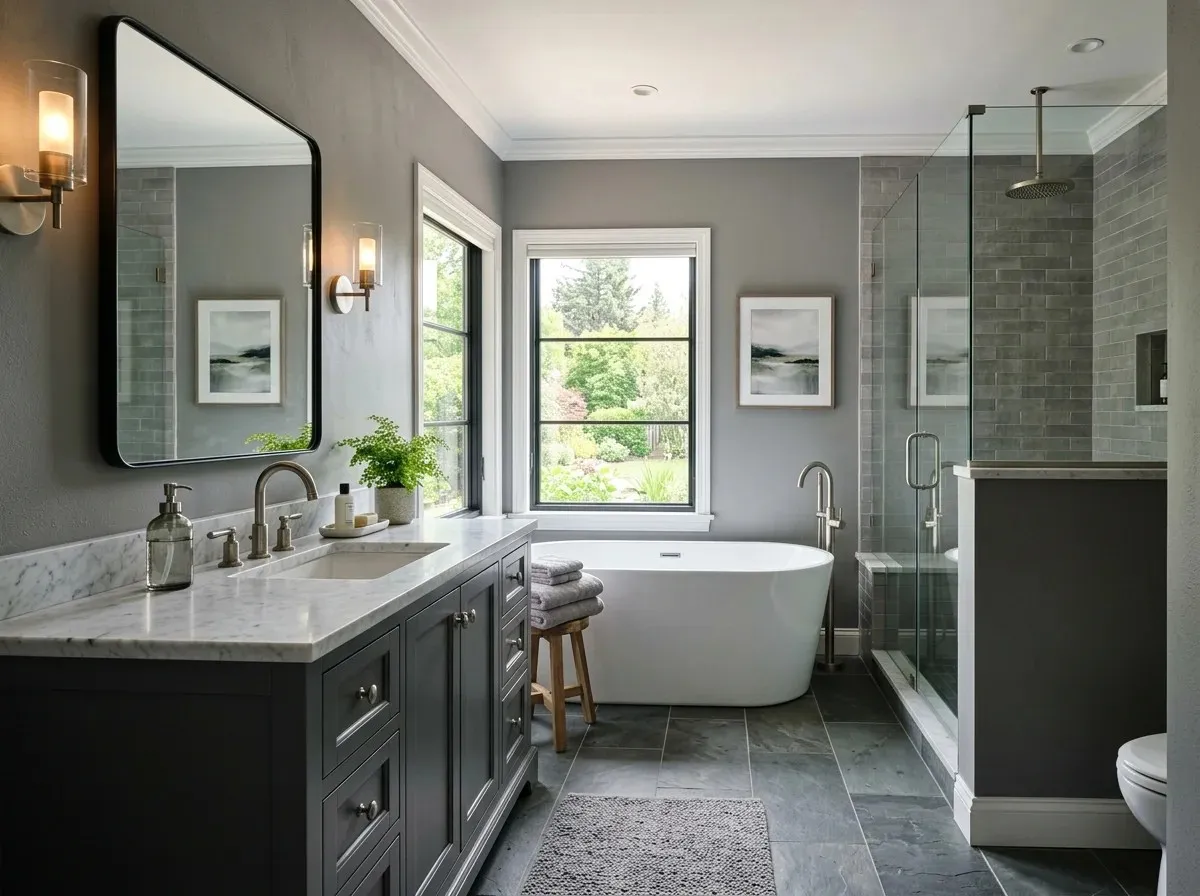
18 Grey Bathroom Ideas So Stunning, You’ll Never Call Grey Boring Again
Grey bathrooms have a bad reputation for feeling cold, flat, or a little too much like an office lobby. But the right grey can feel soft, spa-like, dramatic, cozy, or surprisingly warm. It is also one of the easiest colors to live with because it plays nicely with white, wood, brass, black, blush, and almost any towel you impulse-buy at Target.
I once painted a tiny bathroom a blue-grey that looked elegant on the paint chip. On the wall, it looked like a thunderstorm had moved in and refused to leave. The lesson? Grey is not one color. Light, undertone, texture, and finish matter. Test samples beside your tile in morning and evening light before committing.
Below are 18 grey bathroom ideas arranged as a simple design journey: start with quiet foundations, add personality, then finish with low-stress updates. Whether you own your home or rent, there is an idea here that can fit your space and budget.
Begin With a Calm Grey Foundation
1. Classic Light Grey Tiles
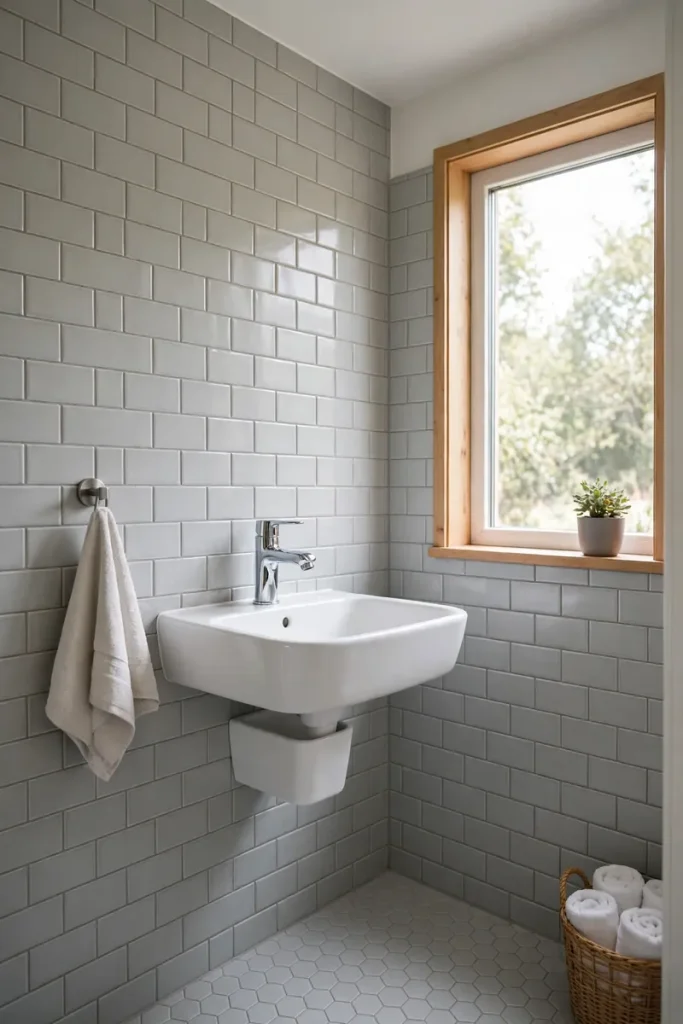
Light grey tile gives a bathroom a clean background without the sharpness of bright white. Choose a soft cement grey for floors, shower walls, or both. In a small bathroom, medium or large tiles with matching grout create fewer visual breaks, which can make the room feel wider. Porcelain is usually the practical choice because it handles water well and is easier to maintain than natural stone. For a budget refresh, tile only the shower and paint the remaining walls. Depending on the tile and local labor, a professionally tiled area can range from a few hundred dollars to several thousand, so measure carefully and get more than one quote.
2. Dark Charcoal Feature Wall
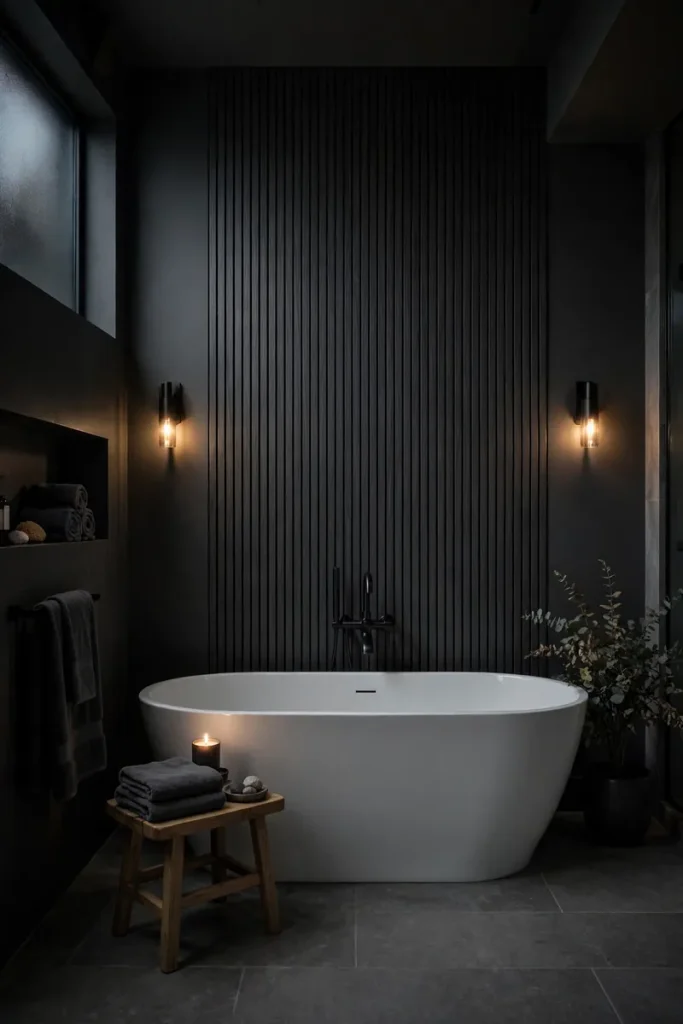
A charcoal feature wall gives grey some backbone. Place it behind the vanity or freestanding tub, where it can create a clear focal point without shrinking the whole room. In a windowless bath, balance it with a large mirror, bright bulbs, white towels, and a pale ceiling. Moisture-resistant bathroom paint is the easiest route and may cost about $40 to $100 for paint and supplies. If you are nervous, paint a large poster board first and move it around the room. It is cheaper than repainting after one dramatic evening decision.
3. Grey and White Marble Look
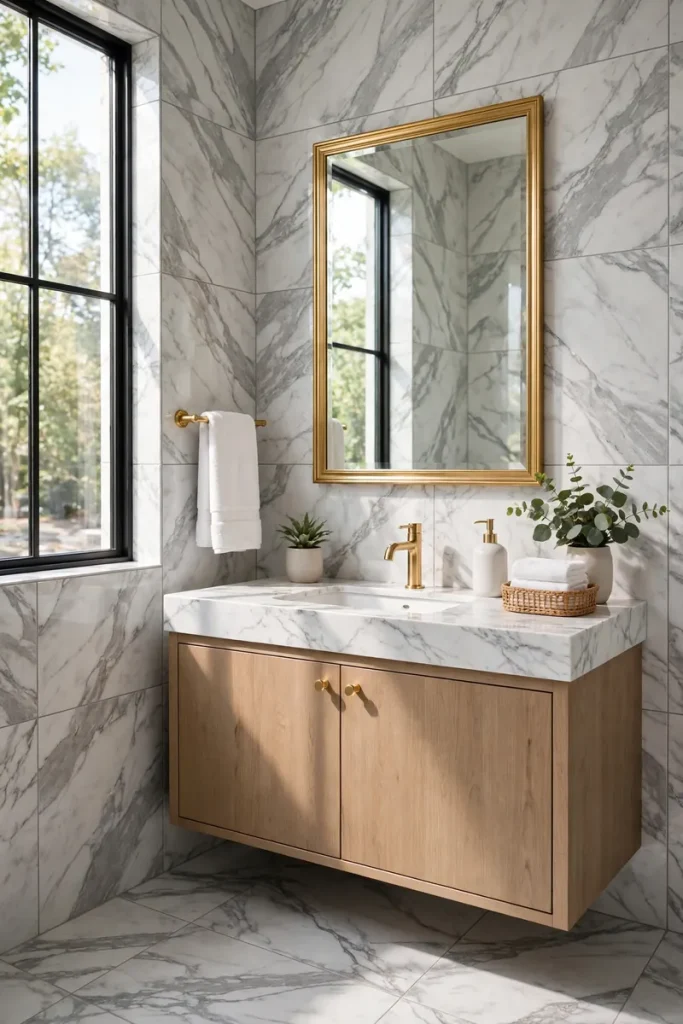
Love marble but not the sealing, staining, and heart palpitations every time someone spills hair dye? Try marble-look porcelain. A white base with gentle grey veining gives you that polished hotel feeling while staying easier to clean. Use it on the shower walls, then pair it with a simple grey floor so the pattern does not take over. Large-format slabs or tiles reduce grout lines and can make a compact bath feel more open. Save money by using the marble look in one high-impact zone, such as behind the vanity, instead of wrapping every surface.
4. Warm Greige Vanity
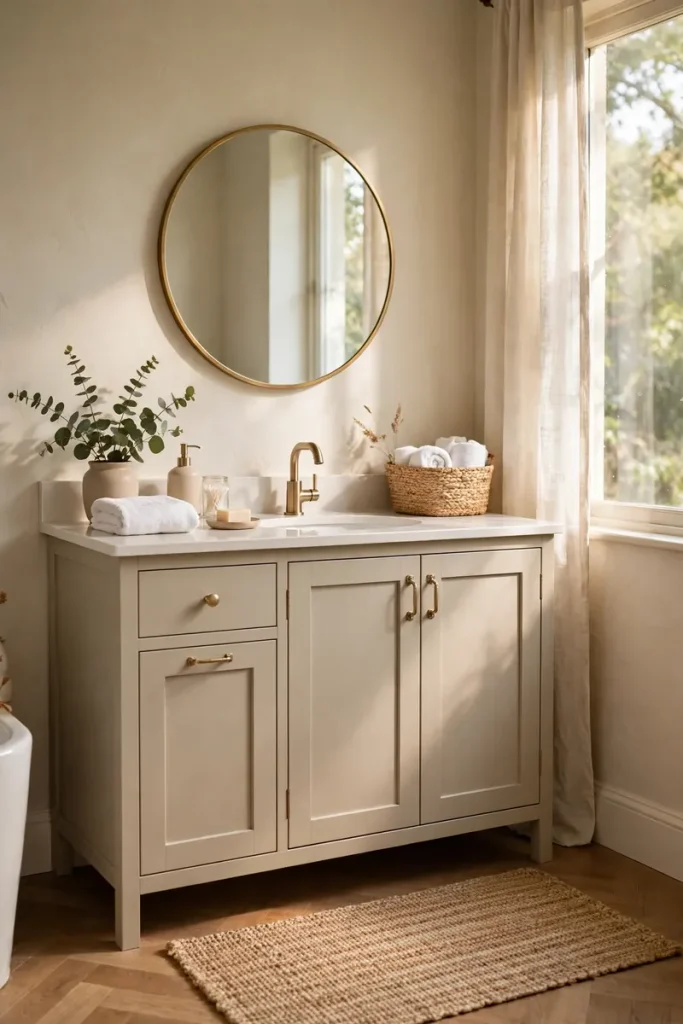
A greige vanity brings together grey and beige, making it a friendly choice for bathrooms with warm flooring or creamy trim. It feels softer than cool steel grey and works beautifully with woven baskets, oak shelves, and off-white walls. If your existing vanity is solid, a DIY paint update can cost roughly $50 to $150 for cleaner, primer, paint, and supplies. Use a durable cabinet enamel and let each coat cure. New hardware can add another $20 to $80 and instantly make the makeover look more finished.
5. Grey Wood-Look Flooring
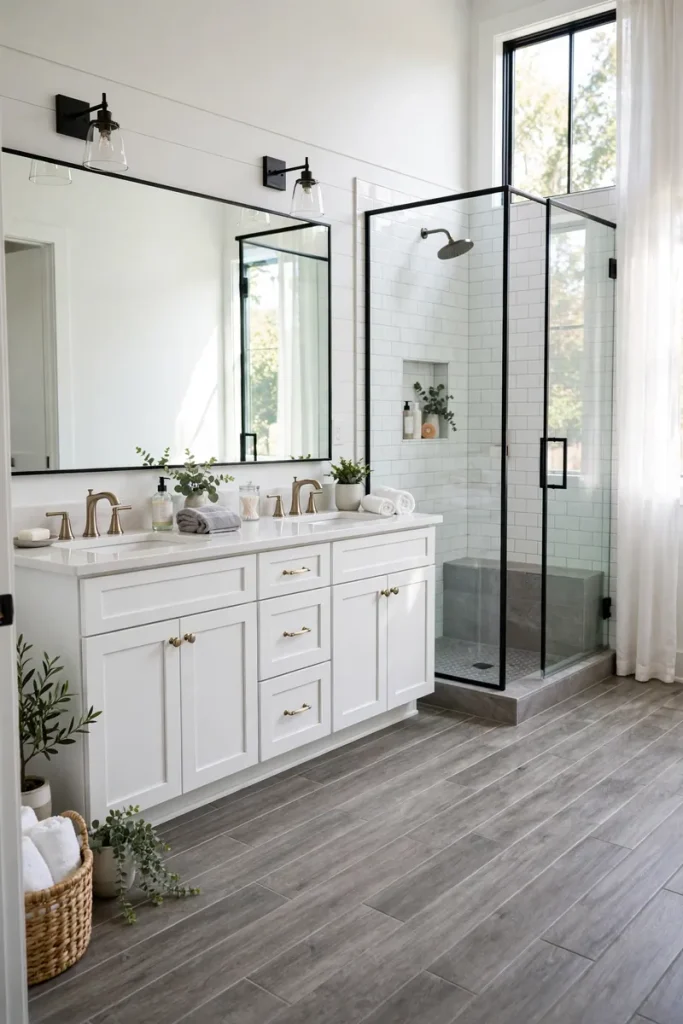
Grey wood-look porcelain offers the cozy appearance of planks without asking real wood to survive puddles and steam. Lay the tiles lengthwise in a narrow bathroom to pull the eye through the room. A warmer grey-brown finish looks more natural than a very blue grey, and subtle grain is usually easier to live with than a busy pattern. For a lower-cost, renter-friendly direction, water-resistant peel-and-stick vinyl planks may work if your lease allows them. Check the product instructions and test removal in a hidden corner first.
Turn Up the Drama Without Losing the Calm
6. Soft Grey Shiplap
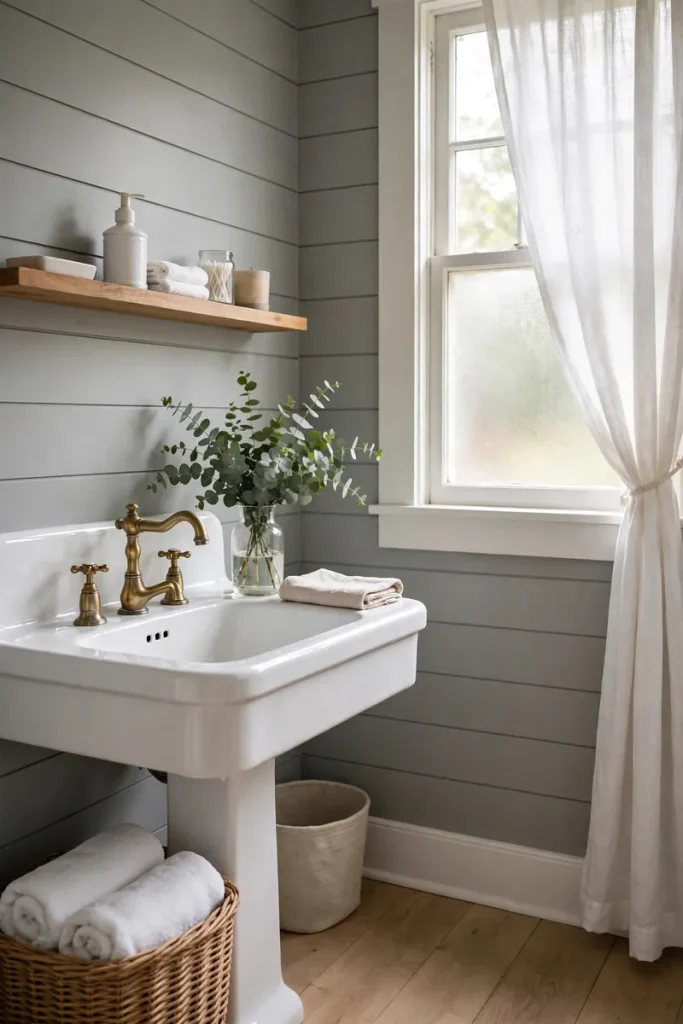
Soft grey shiplap gives the bathroom a relaxed cottage feeling and adds texture without a loud pattern. Use it on the vanity wall, above a tile backsplash, or around the room outside direct splash zones. Vertical boards can help a short room feel taller. Choose moisture-resistant material, seal edges, and use bathroom-safe paint. A DIY accent wall may cost a few hundred dollars depending on the material and wall size, while professional installation will be more. Renters can get a similar rhythm from removable faux-panel wallpaper, provided the wall is smooth and the lease permits it.
7. Dove Grey Subway Tile
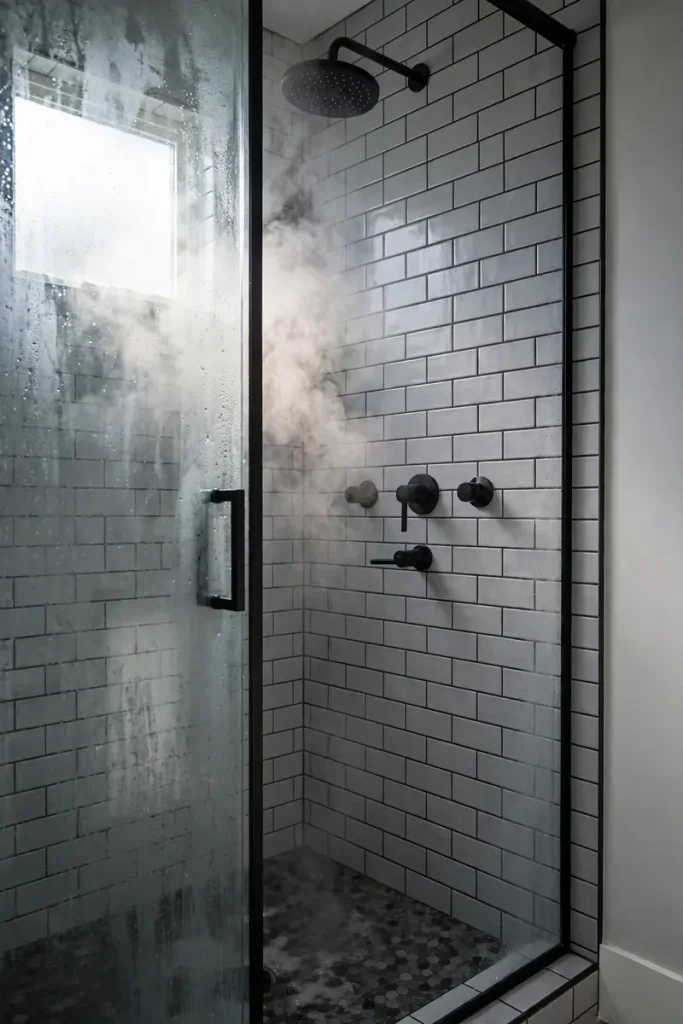
Dove grey subway tile is classic, but it feels gentler than white and more interesting than beige. Stack it vertically to make a low ceiling look taller, or use a traditional brick layout for a timeless finish. White grout makes every tile stand out; grey grout gives a quieter, easier-to-maintain look. If you are watching costs, choose a basic ceramic tile and spend the style budget on the layout. A slim line of darker trim can make inexpensive tile look custom without turning the shower into a pattern festival.
8. Grey Terrazzo Floor
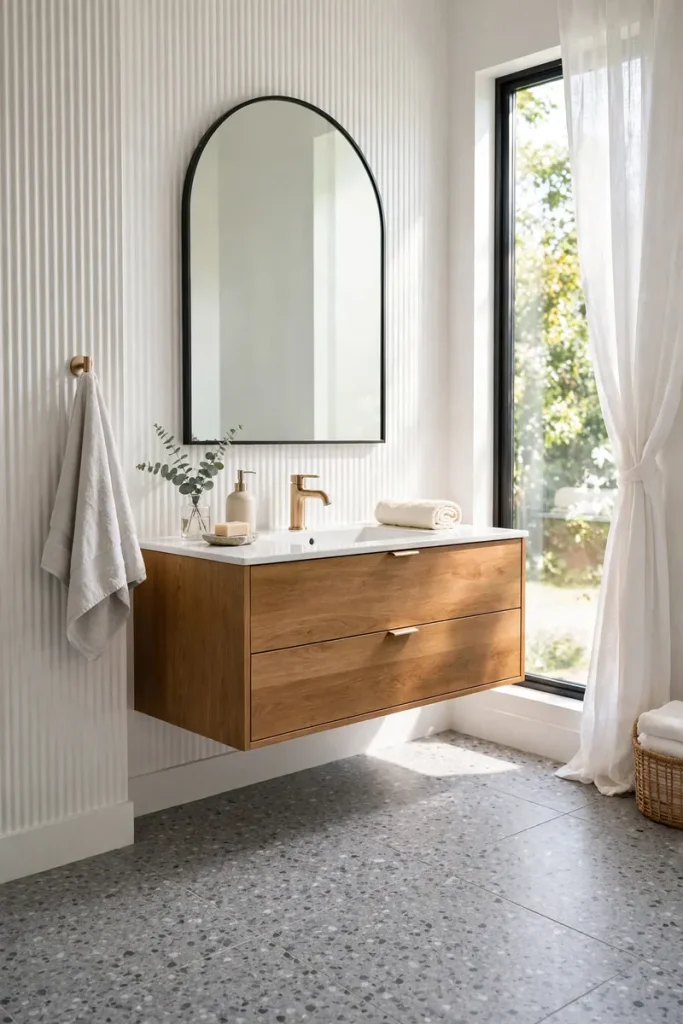
Grey terrazzo adds playful color chips while keeping the overall palette grounded. It is especially helpful in a plain bathroom because the floor becomes the personality. Real terrazzo can be expensive, but terrazzo-look porcelain delivers a similar effect with simpler care. Choose a smaller-scale pattern for a tiny room and repeat one chip color in the towels or vanity hardware. Because the floor already has movement, keep walls and shower curtains fairly simple. Your toothbrush holder does not need to compete for attention.
9. Two-Tone Grey Vanity
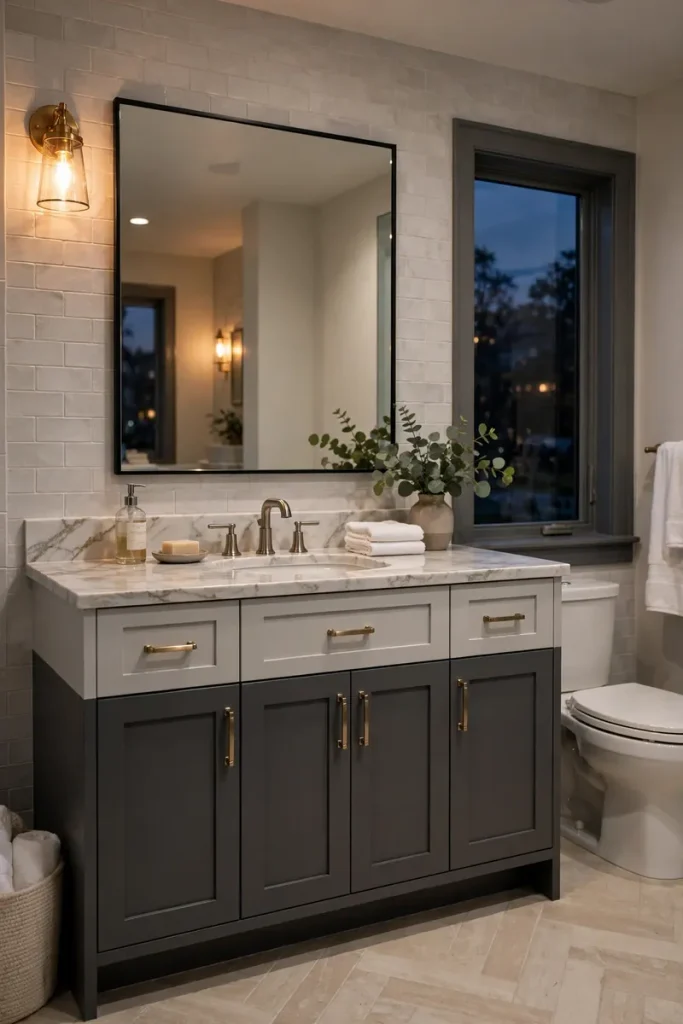
A two-tone vanity can make a basic cabinet feel designed rather than merely painted. Try charcoal on the lower cabinets and light grey on the upper drawers, or use a grey cabinet with a natural wood front. Another easy version is a grey vanity topped with a pale quartz counter. If you are painting, tape clean dividing lines and label every door before removal. This idea is excellent for using leftover paint, but stick with one undertone. A cool grey beside a muddy warm grey can look accidental instead of layered.
10. Grey Mosaic Shower Niche
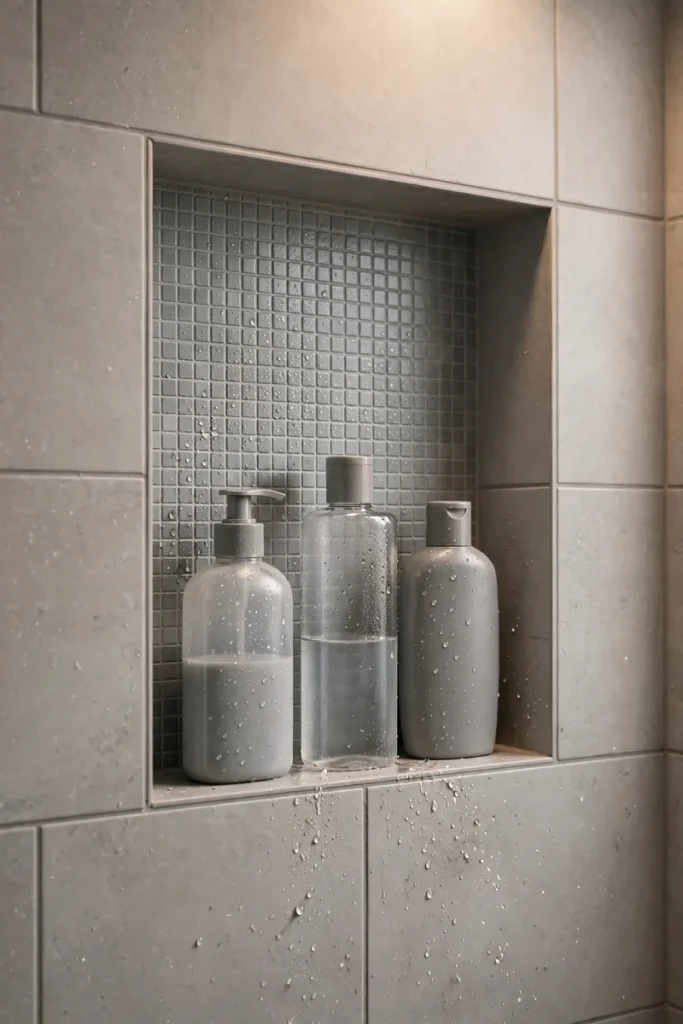
A shower niche is small, which makes it the perfect place for a pricier mosaic. Use tiny grey hexagons, herringbone pieces, or mixed stone-look tiles inside the recess while keeping the main shower simple. One or two sheets may be enough, though exact cost depends on niche size and tile. Choose grout that does not create dozens of harsh outlines unless that graphic look is intentional. During a remodel, confirm the niche is fully waterproofed and slightly sloped so water drains instead of setting up a tiny indoor pool.
11. Matte Grey Fixtures
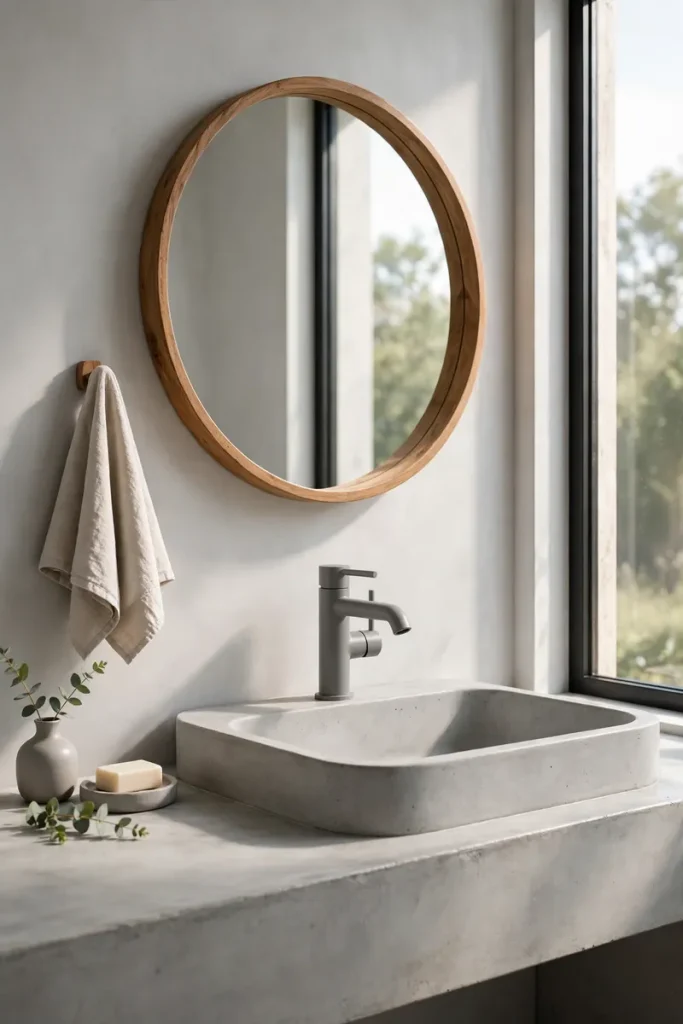
Matte grey faucets, shower controls, and towel bars offer a softer alternative to black fixtures. They look modern without creating as much contrast, and fingerprints may be less obvious on a muted finish. The catch is matching: “gunmetal,” “graphite,” and “brushed grey” can vary widely between brands. Order finish samples when possible, or buy the main visible pieces from one collection. If replacing plumbing fixtures is outside the budget, start with a grey-framed mirror and coordinating cabinet pulls for a similar effect with less installation work.
12. Light Grey Walls with Brass Accents
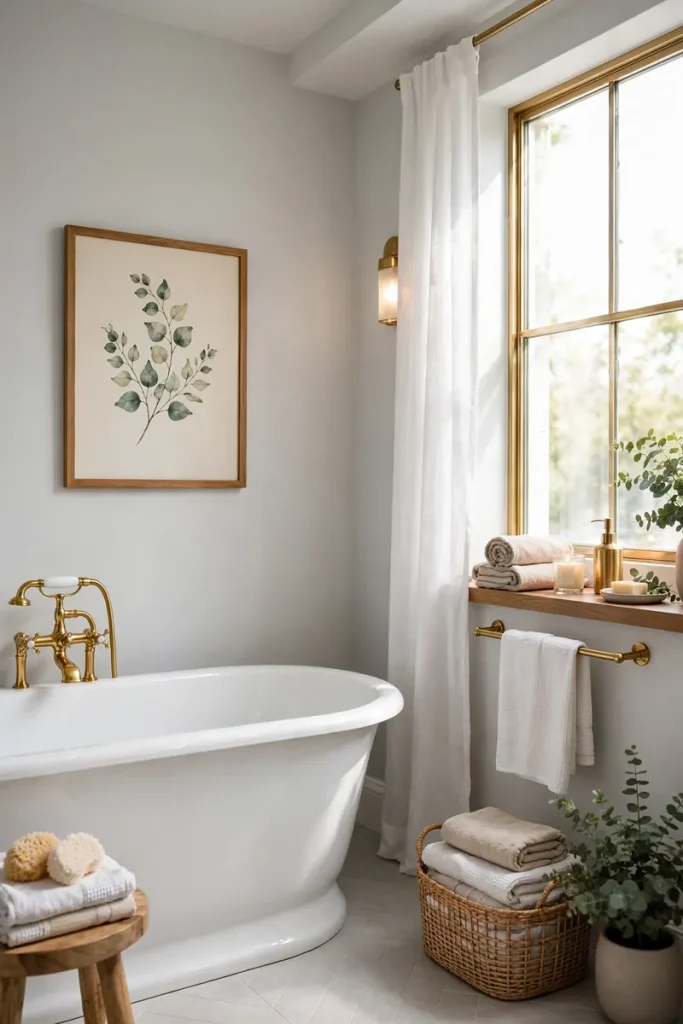
Light grey and brass are a reliable pair because the cool background lets the warm metal glow. Start with pale grey paint, then add brass through a mirror frame, sconces, faucet, or drawer pulls. You do not need to replace everything at once. Two brass sconces and new knobs can be enough to shift the mood. Mix metals intentionally by repeating each finish at least twice; for example, brass lighting and hardware with chrome plumbing. Warm bulbs around 2700K to 3000K keep the grey from looking icy and make morning routines kinder.
Add Architecture, Texture, and a Little Warmth
13. Grey Penny Tile Floor
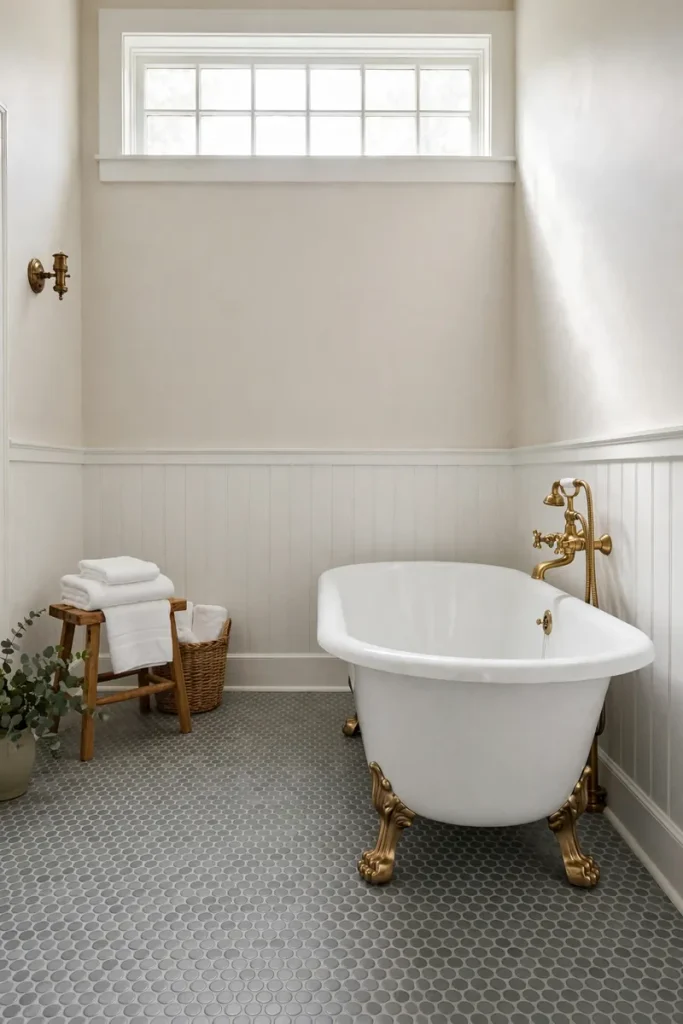
Grey penny tile is charming, slip-friendly when properly rated, and easy to shape around tight corners. It suits vintage, coastal, and modern bathrooms depending on the grout and surrounding finishes. Darker grout gives definition and hides discoloration better than bright white, though every grout choice still needs regular care. Because penny tile has many joints, installation can be labor-heavy. Use it in a powder room or shower floor for a smaller dose. Before buying, confirm the tile is approved for floors and wet areas rather than trusting the word “bathroom” in a pretty product photo.
14. Large Grey Stone Tiles
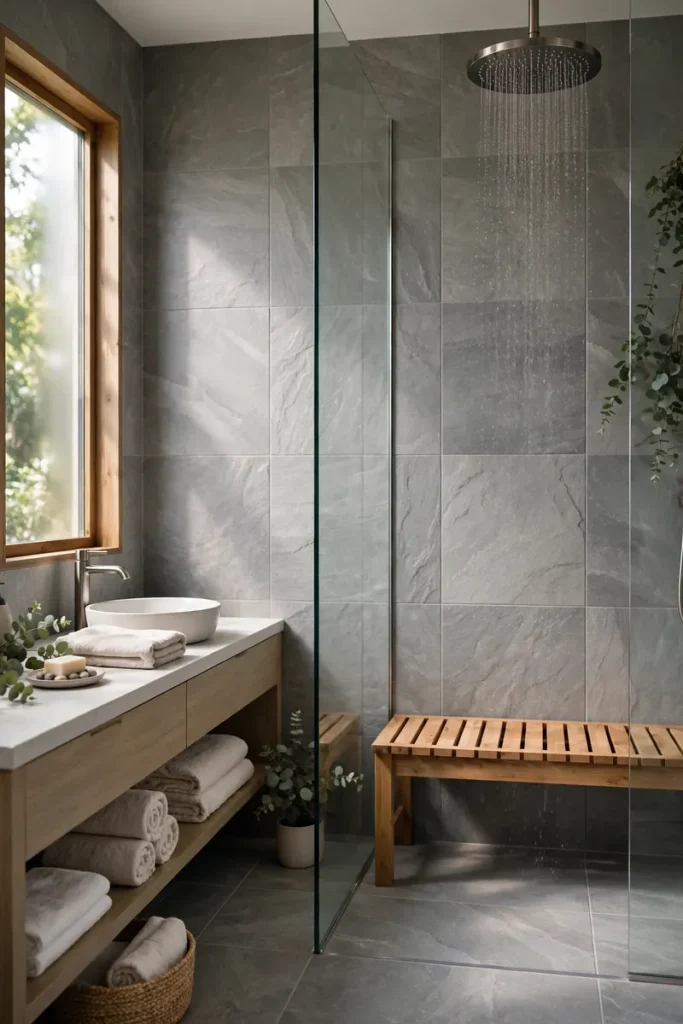
Large grey stone-look tiles can turn an ordinary shower into a calm, high-end backdrop. Fewer grout joints mean less visual clutter and often easier cleaning, which is a gift to anyone who would rather do almost anything than scrub grout on Saturday. Pick a tile with gentle variation so it resembles limestone or slate without looking printed. Large tiles need a flat surface and careful installation, so this is one place where skilled labor can be worth the money. In a small bath, continue the same tile from floor to shower for a seamless look.
15. Grey Wainscoting
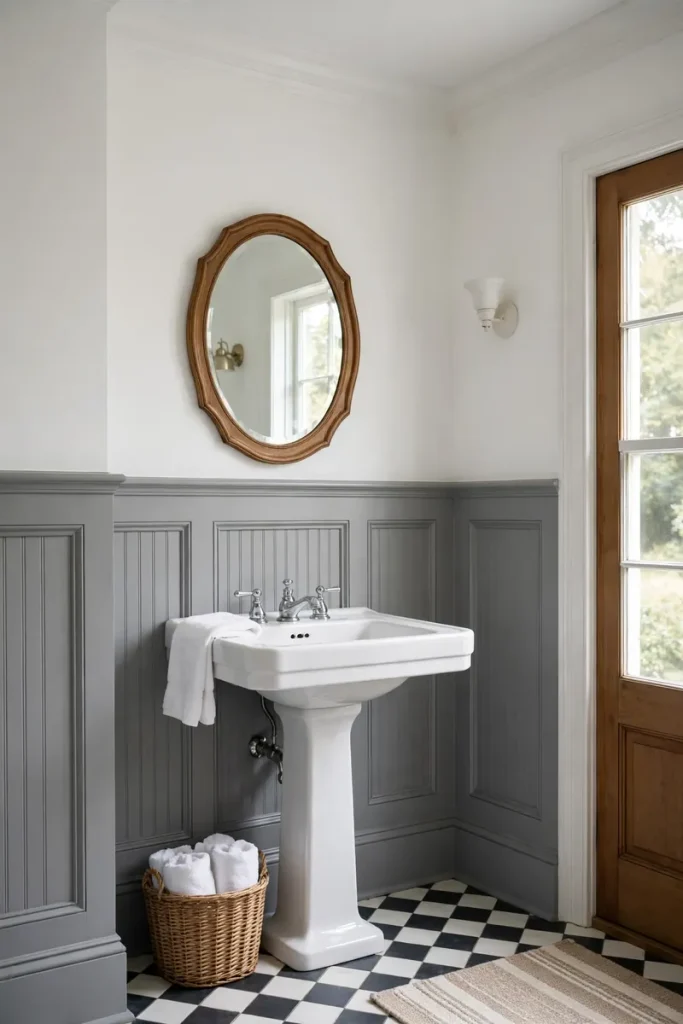
Grey wainscoting makes a plain bathroom feel finished while protecting the lower wall from everyday bumps. Try simple shaker panels in medium grey with warm white above, or paint existing beadboard for a quick update. Keeping the upper wall lighter helps a small room breathe. If you are building panels, plan around outlets, baseboards, and the vanity before cutting. DIY materials and paint can start in the low hundreds for a small room, but trim style and labor change the total. Use moisture-resistant boards and seal seams, especially near the sink.
16. Renter-Friendly Grey Peel-and-Stick
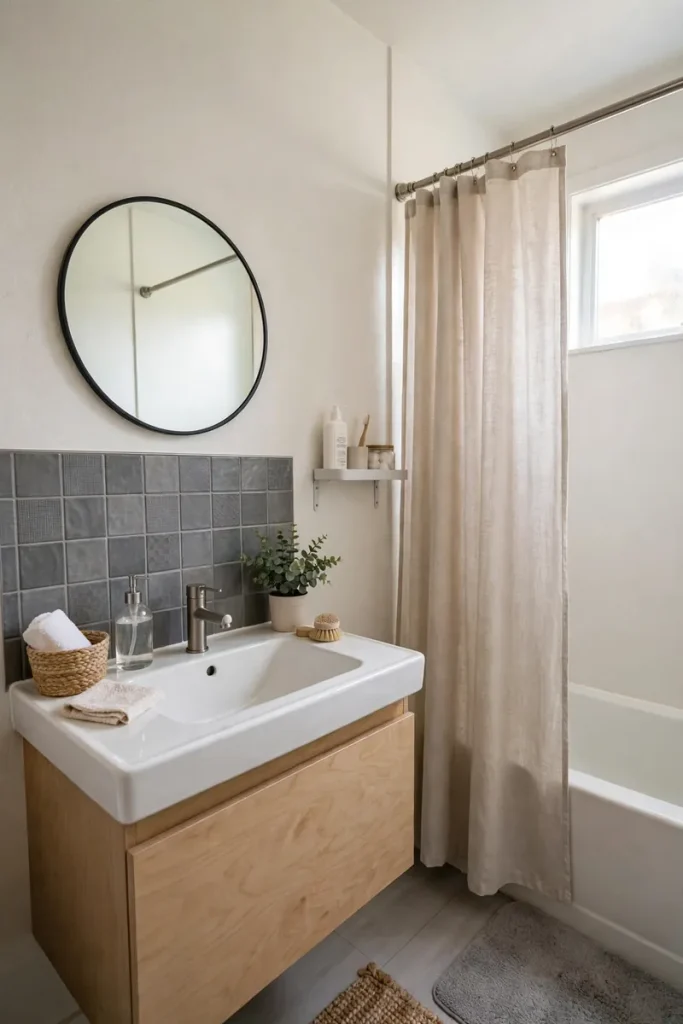
Peel-and-stick tile or wallpaper can add grey pattern without a permanent renovation. Try a stone-look backsplash behind the vanity, a removable geometric wall, or vinyl floor decals over smooth existing tile. The key is preparation: clean away soap, dust, and grease, then let the surface dry completely. Buy one extra pack for mistakes and future repairs. Products commonly run from about $1 to $6 per square foot before supplies, but quality varies. Ask the landlord first, save the original listing, and test a small hidden area for clean removal.
Finish With Flexible, Budget-Friendly Layers
17. Grey Concrete-Look Walls
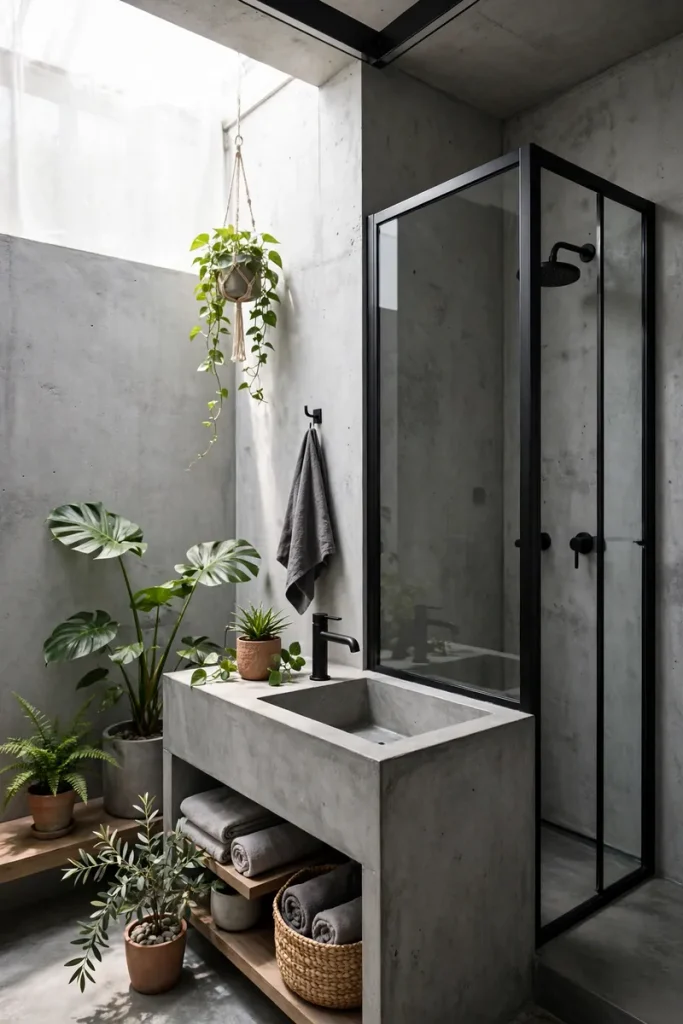
Concrete-look walls bring modern loft energy without requiring an actual warehouse. Porcelain panels are durable in wet zones, while limewash-style or specialty concrete-effect paint can work on dry walls if rated for bathroom use. Keep the room from feeling industrial by adding a wood vanity, soft lighting, and fluffy cream towels. For a budget update, create the look on one dry wall with layered paint rather than using real cement. Always follow the manufacturer’s moisture guidance; a pretty finish that peels after three steamy showers is not the kind of plot twist we want.
18. Cozy Grey Textiles and Decor
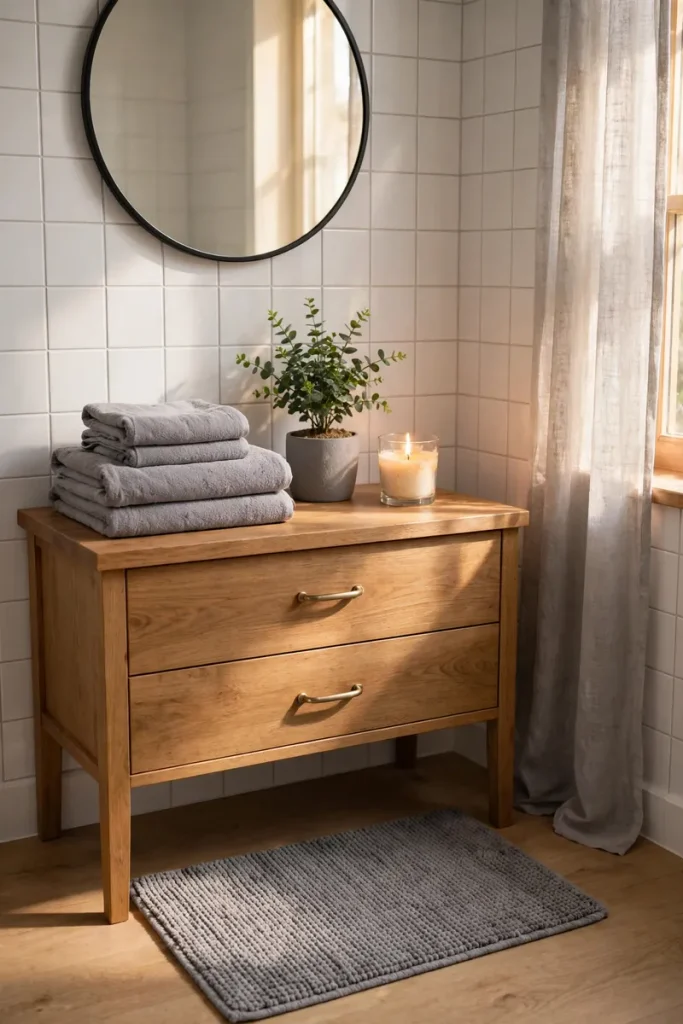
If construction is not happening—and honestly, bless that decision—use textiles to build the look. Layer charcoal bath mats, dove grey towels, a soft shower curtain, and one patterned hand towel. Add warmth with a wood stool, woven basket, amber bottle, or small plant suited to the room’s light. A coordinated refresh can cost under $100 if you reuse containers and shop your home first. Mix three grey tones instead of matching everything exactly, and vary textures such as waffle weave, cotton, and knit. The result feels collected, not like a boxed bathroom set.
A Simple Grey Bathroom Plan That Actually Works
Before buying anything, choose one main grey, one supporting neutral, and one warm element. For example: light grey tile, warm white walls, and a walnut vanity. Or try charcoal paint, white fixtures, and brass accents. This three-part plan keeps the bathroom from becoming a grey blur.
For a small space, prioritize good lighting, a large mirror, and fewer material changes. For a tight budget, paint the vanity, replace the hardware, and refresh the towels before touching tile or plumbing. Renters can focus on removable wall treatments, textiles, art, and organizers. Homeowners planning a full remodel should spend first on waterproofing, ventilation, and durable surfaces; the pretty tray can wait.
Grey is not boring when texture, warmth, and contrast are doing their jobs. It can be the quiet backdrop for a glamorous brass mirror, the moody wall behind a white tub, or the soft floor that makes a tiny bathroom feel peaceful. Pick one idea that solves a real problem in your room, test it in your light, and build slowly. Your bathroom does not need to become a showroom overnight. It just needs to feel more like you—and a little less like that sad office lobby.