17 Boho Fall Outfits, Wandered Like Stalls at an Autumn Flea Market
The best boho outfit I ever put together came from three completely unrelated places: a suede vest from my mother’s closet, a rust-colored scarf I bought for two dollars at an actual flea market, and a pair of jeans I already owned. Nothing about it was planned as a set, and that is exactly the point of boho dressing. It is not a matching outfit bought together off a mannequin. It is a collection, gathered slowly, the way you’d wander a market stall by stall.
So I wrote this post as that wander. Seventeen stalls, each one a different outfit, each with a short story about what you’d find there and a haggle note on which piece is worth spending real money on versus which piece you can find secondhand for almost nothing.
The Stalls
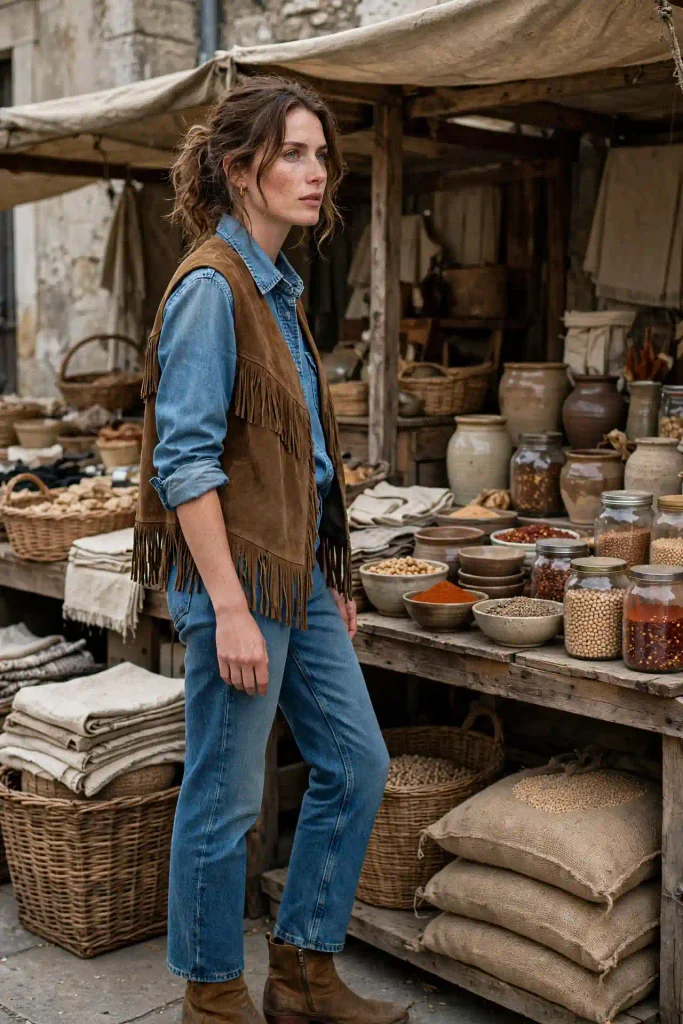
Stall 1, The Suede and Denim Table.
A fringed suede vest over a chambray shirt, straight-leg jeans, ankle boots. Vendor story: the vest is the piece that makes this outfit read as boho rather than plain western wear, since the fringe adds movement a structured vest never could. Haggle note: spend on the suede vest if you can, since real suede ages beautifully and fake suede tends to look flat and stiff within a season. The jeans and shirt are fine secondhand.
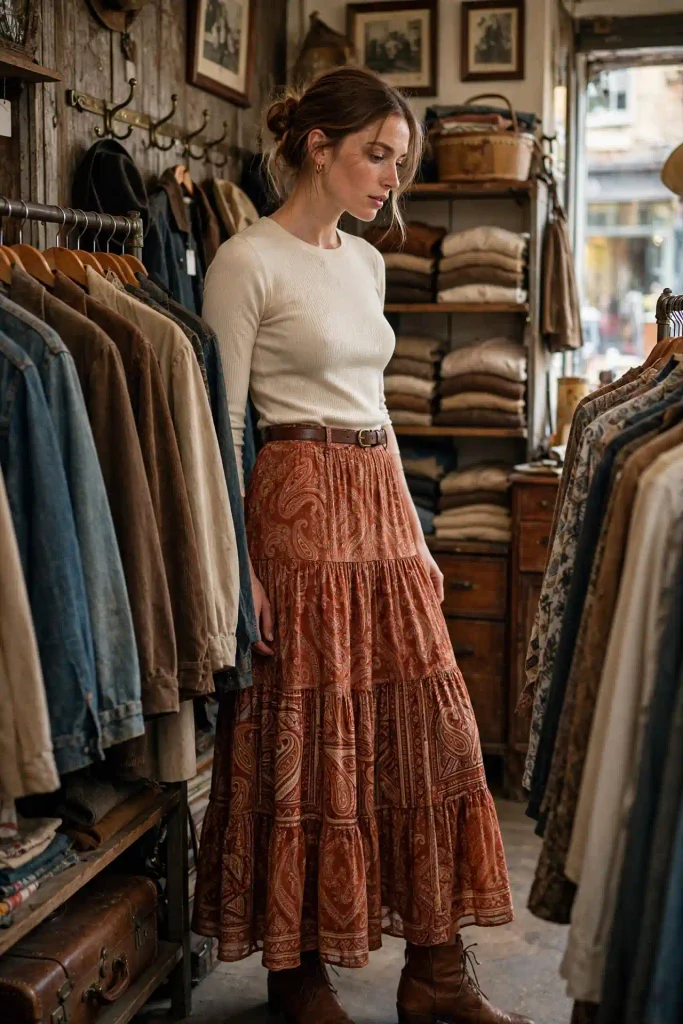
Stall 2, The Layered Skirts Corner.
A long, tiered maxi skirt in a rust print, a fitted ribbed top tucked in, a thin belt at the natural waist, flat sandals or ankle boots. Vendor story: tiered skirts are one of the oldest boho staples because the multiple layers of fabric create movement without needing any pattern mixing at all. Haggle note: this is a great thrift find, since tiered maxi skirts show up often secondhand and rarely go out of style enough to matter.
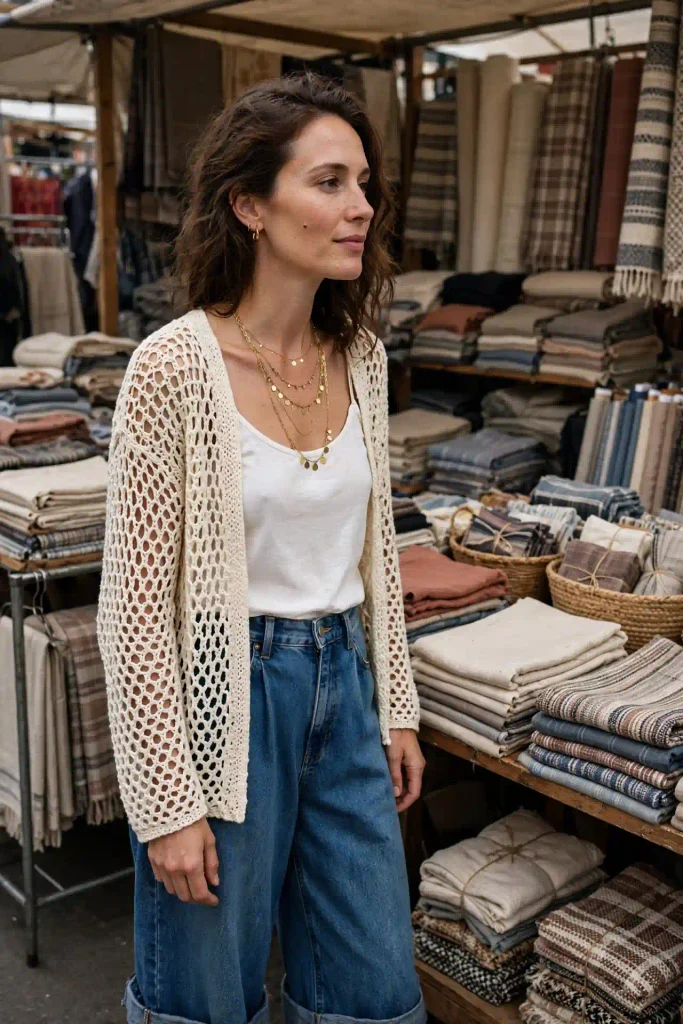
Stall 3, The Knit and Crochet Table.
An open-weave crochet cardigan over a simple cami, wide-leg jeans, layered necklaces. Vendor story: crochet is doing double duty here, adding texture and letting a hint of the cami color show through the open weave, which reads as more intentional than a plain solid cardigan would. Haggle note: vintage crochet pieces are worth searching for specifically, since the handmade irregularity of an older piece has a texture new crochet often can’t replicate.
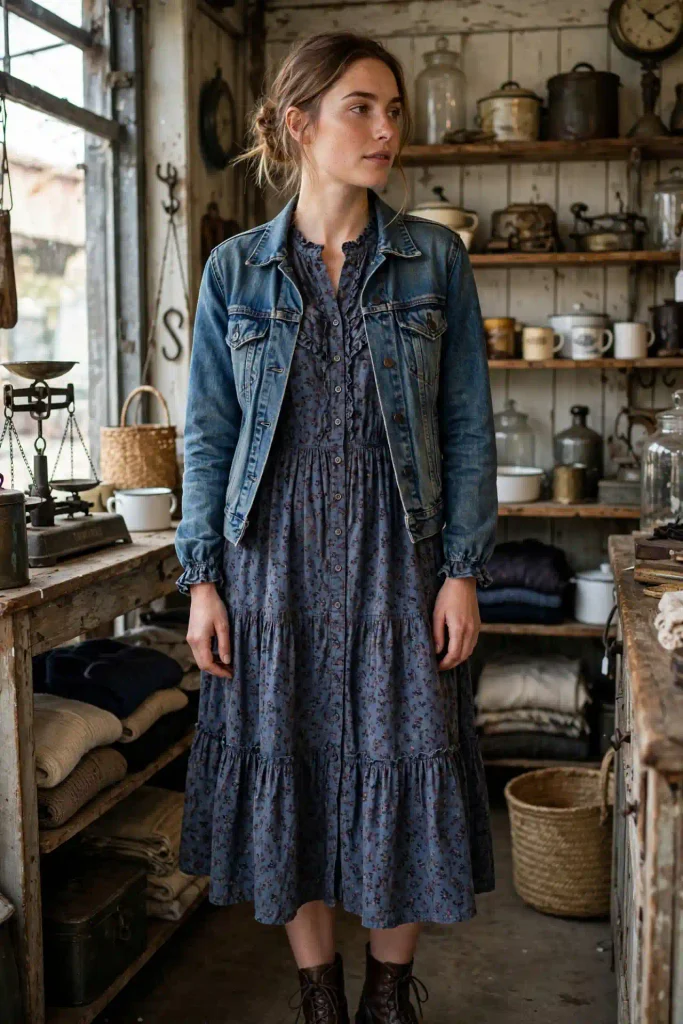
Stall 4, The Prairie Dress Rack.
A long-sleeve prairie-style dress with a small floral print, layered with a denim jacket, lace-up boots. Vendor story: the prairie silhouette, high neck, puffed sleeves, gathered waist, is one of the clearest boho signatures, and a small, dark-background print reads as fall rather than the lighter spring version of the same dress. Haggle note: spend a little more here if the fabric feels substantial, since a thin prairie dress can look flimsy rather than romantic.
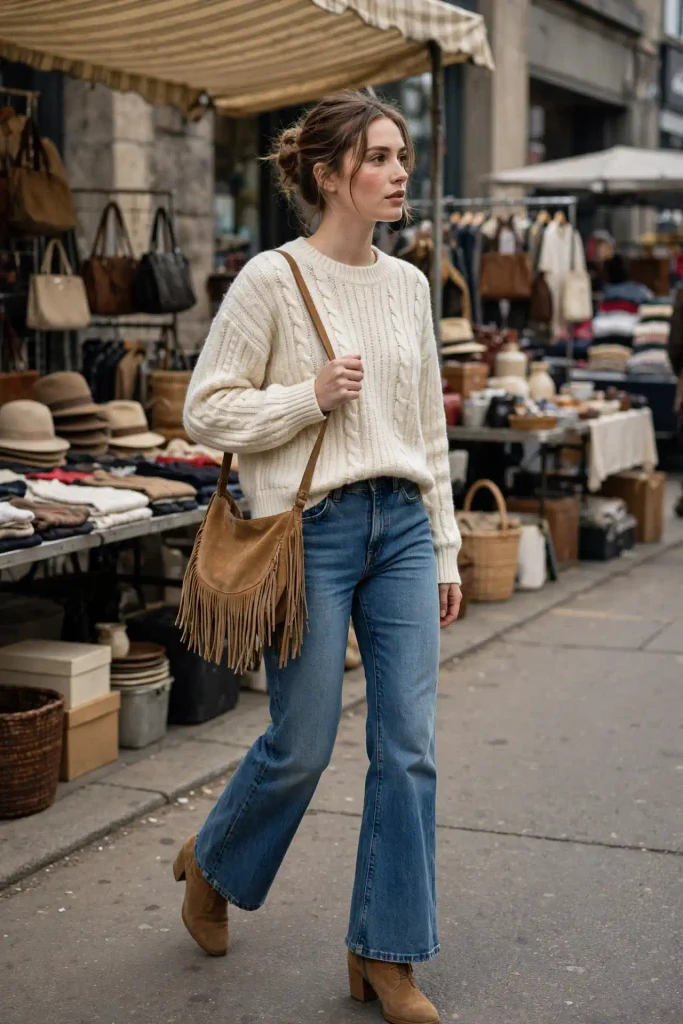
Stall 5, The Fringe and Leather Corner.
A fringed leather or suede bag, a plain knit sweater, flared jeans, ankle boots. Vendor story: this stall proves you don’t need fringe on your body to get the effect, since a fringed bag alone can carry the entire boho signature for an otherwise simple sweater-and-jeans outfit. Haggle note: this is the stall to spend on, since a well-made fringed bag lasts years and works across nearly every other outfit on this list.
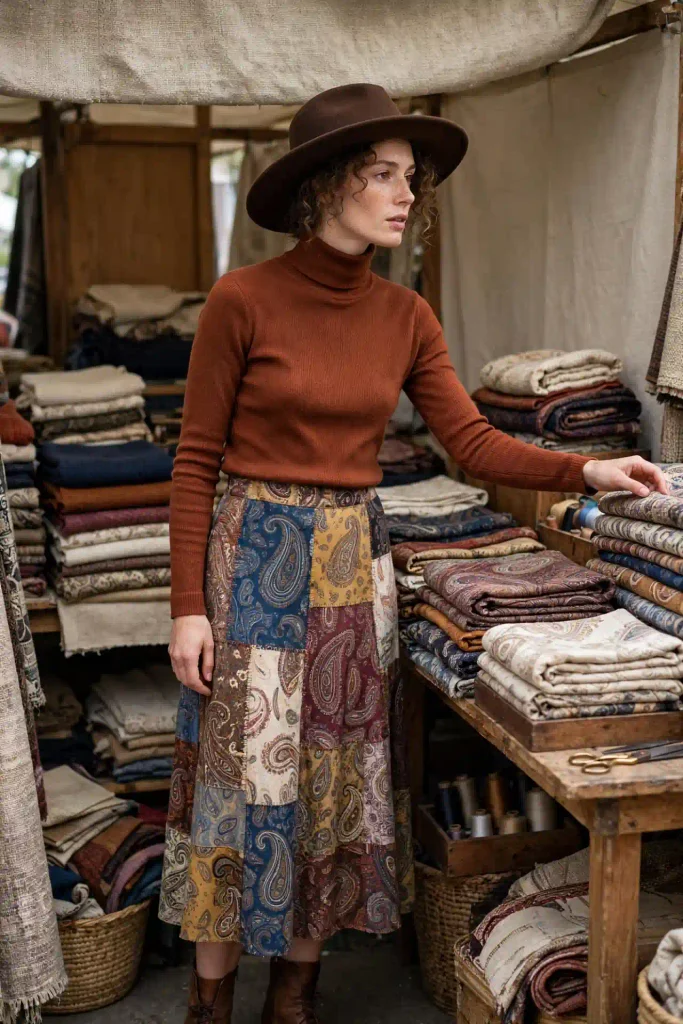
Stall 6, The Patchwork Table.
A patchwork or paisley-print midi skirt, a solid rust turtleneck, a wide-brim felt hat, boots. Vendor story: letting the skirt carry all the pattern while keeping the top completely solid is the easiest way to wear a busy print without it overwhelming the whole outfit. Haggle note: patchwork pieces vary enormously in quality, so look closely at the seams before buying secondhand, since poorly finished patchwork unravels faster than a single-fabric piece.
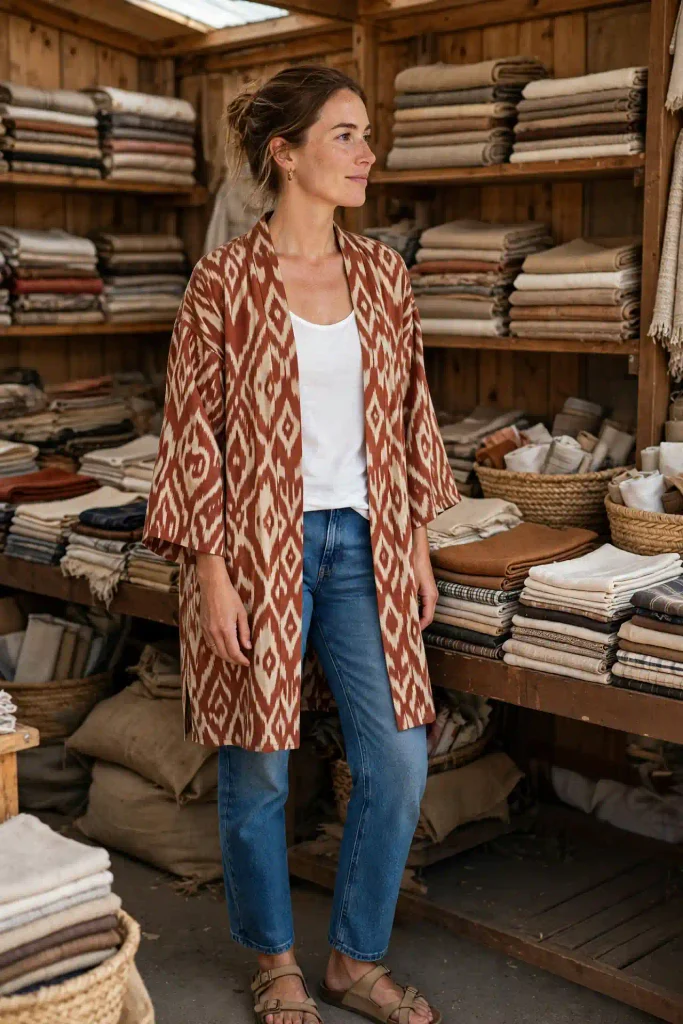
Stall 7, The Kimono Rack.
A long, open kimono-style jacket in a rust and cream print, a plain tank, straight jeans, sandals or boots. Vendor story: a kimono jacket is essentially a wearable blanket with sleeves, and it is one of the fastest ways to add pattern and movement to an outfit without committing to a printed top or bottom underneath. Haggle note: these are common at flea markets and thrift stores specifically because they were a big trend a few years back, so this is a genuinely easy, affordable find.
Stall 8, The Wide-Brim Hat Stand.
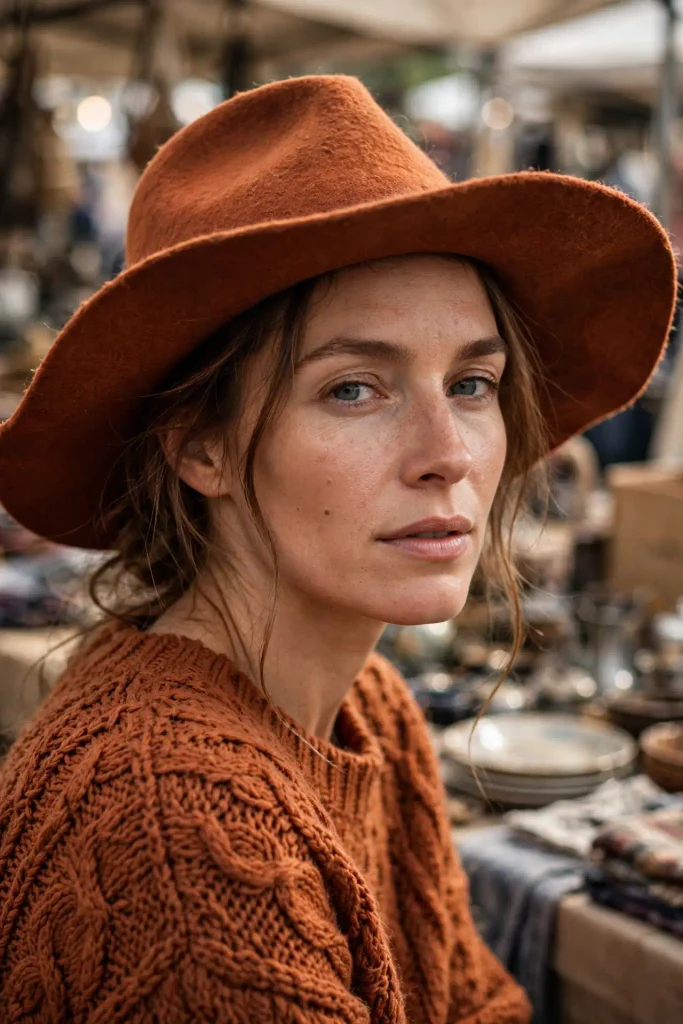
Not a full outfit, but a stall worth stopping at regardless: a wide-brim felt hat in rust, olive, or chocolate. Vendor story: a single hat can shift almost any plain outfit on this list toward boho instantly, the same way a fringed bag does. Haggle note: spend a bit more on a well-shaped felt hat, since cheap versions lose their shape and start looking floppy rather than structured within a season.
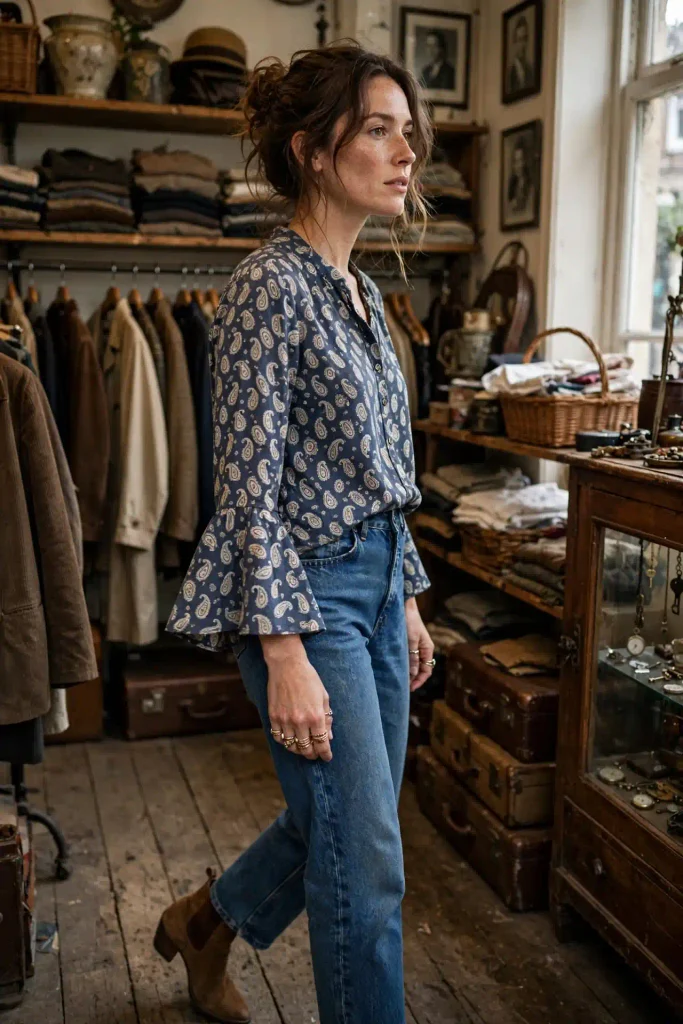
Stall 9, The Bell Sleeve Table.
A bell-sleeve blouse in a small print, straight-leg jeans, layered rings, ankle boots. Vendor story: bell sleeves move the same way fringe does, catching air and drawing the eye with motion rather than a static line, which is the whole visual language of boho dressing. Haggle note: check the sleeve fabric weight before buying, since a very thin, lightweight bell sleeve can look cheap and shapeless compared to one with slightly more structure.
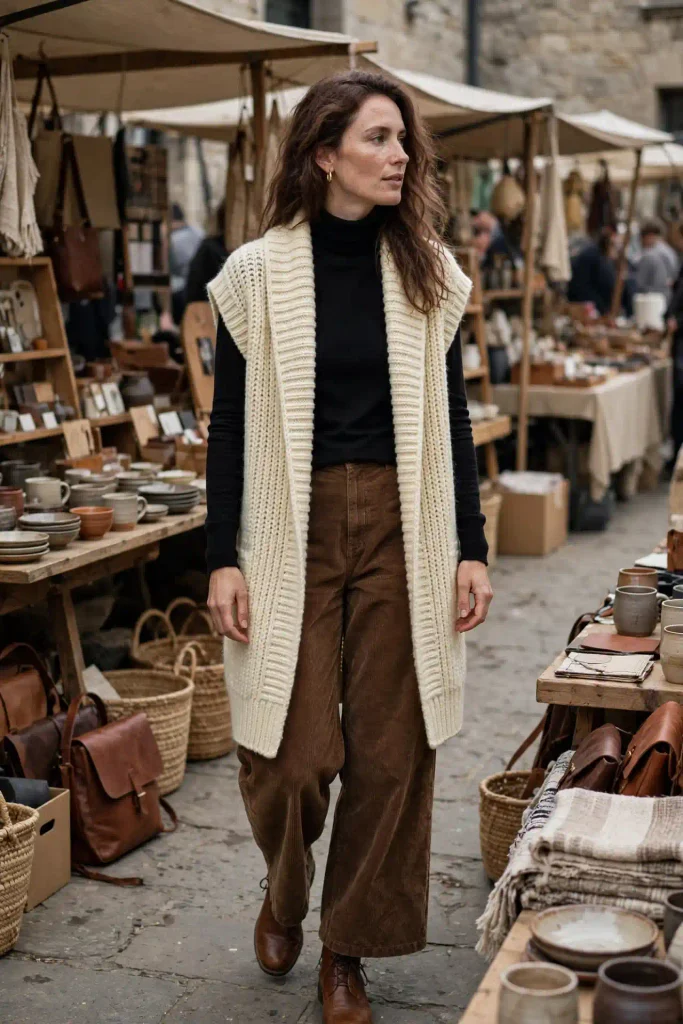
Stall 10, The Layered Vest Corner.
A long knit vest over a fitted turtleneck, wide-leg corduroy pants, boots. Vendor story: a long vest, one that hits mid-thigh rather than waist-length, creates the elongated, flowing silhouette boho outfits often lean on, without needing an actual dress or skirt. Haggle note: this is an easy DIY-adjacent stall, since a long cardigan with the front buttons removed can double as a vest in a pinch.
Stall 11, The Statement Jewelry Table.
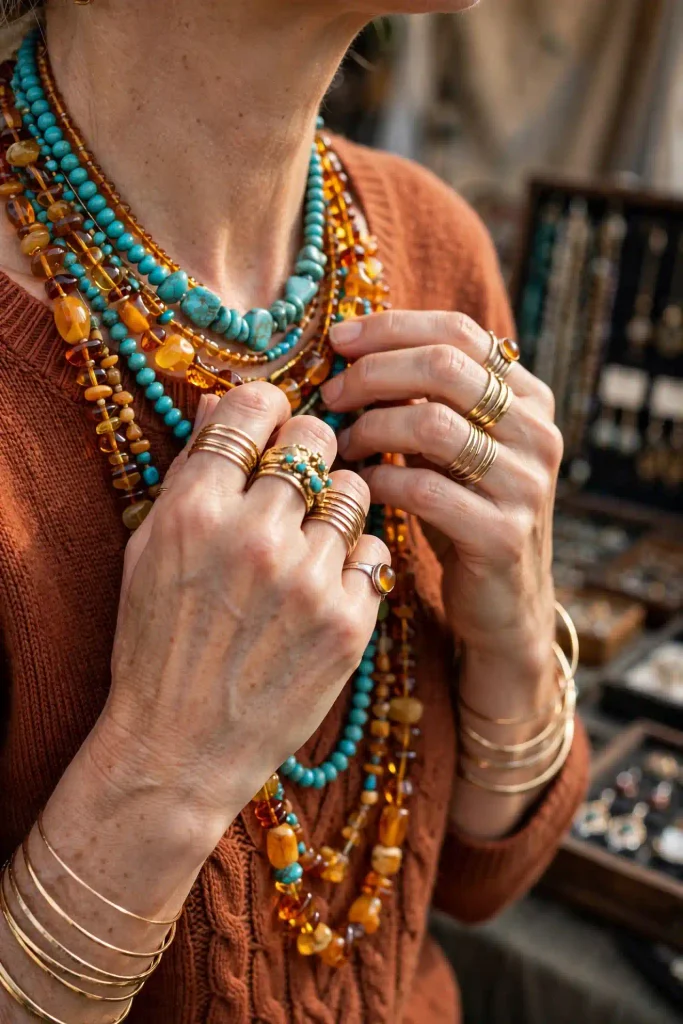
Not clothing at all, but essential: layered turquoise or amber-toned necklaces, stacked rings, a few thin bangles. Vendor story: boho outfits often rely on jewelry to do work that a plain outfit’s clothing alone can’t, adding color, texture, and a sense of collected-over-time history. Haggle note: this is the stall to genuinely haggle at, since costume jewelry at a flea market is almost always priced with room to negotiate, unlike the clothing stalls.
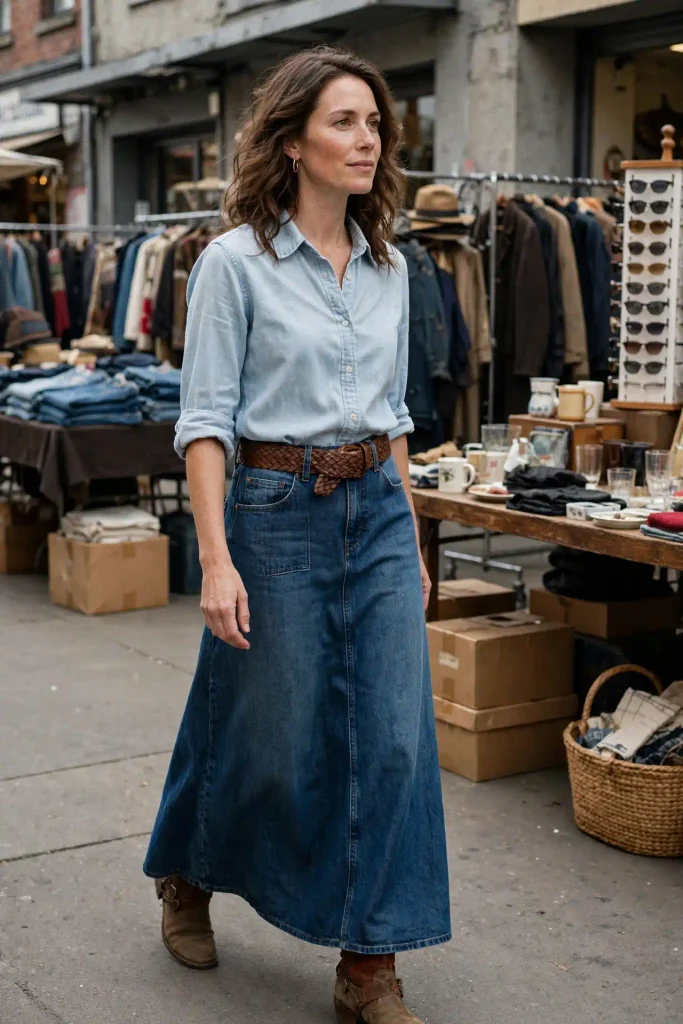
Stall 12, The Denim on Denim Table.
A denim maxi skirt, a chambray top, a woven belt, sandals or boots. Vendor story: denim-on-denim reads as boho specifically when the two washes are slightly different rather than perfectly matched, giving it that collected, not-bought-as-a-set feeling. Haggle note: mismatched denim pieces are often cheaper secondhand than a matched set precisely because buyers assume they need to match, so this is a genuine bargain opportunity.
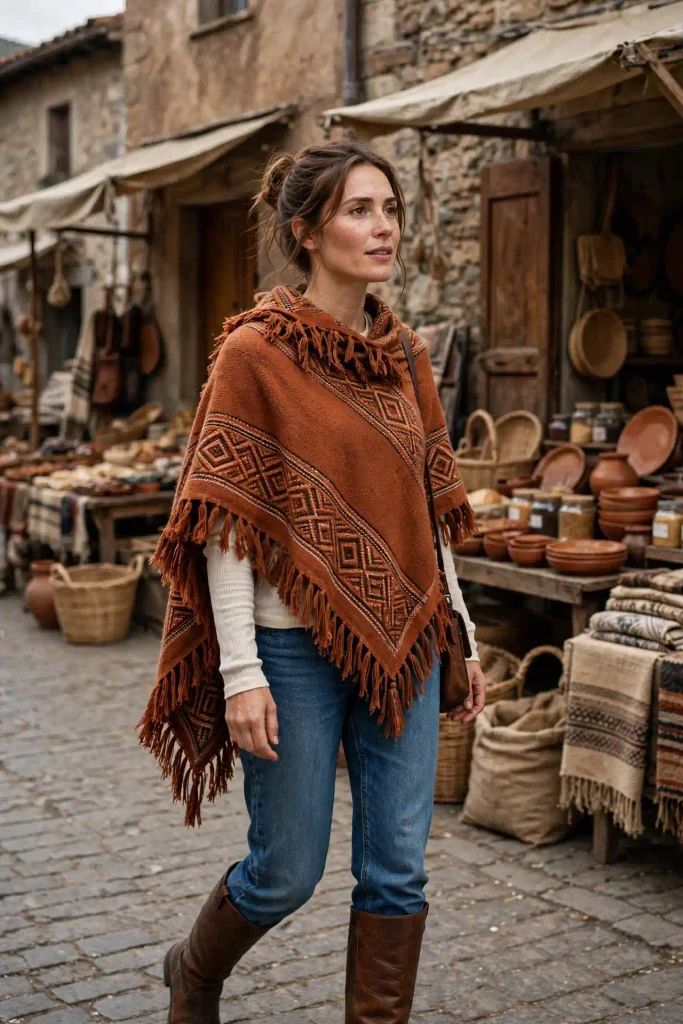
Stall 13, The Poncho and Layering Table.
A fringed poncho over a long-sleeve base layer, skinny or straight jeans, tall boots. Vendor story: a poncho solves the temperature-layering problem boho maxi dresses often create in fall, since it adds real warmth without losing any of the flowing silhouette. Haggle note: check the poncho’s opening width before buying, since some are too narrow to fit comfortably over a sweater, which defeats the whole point of it as a layering piece.
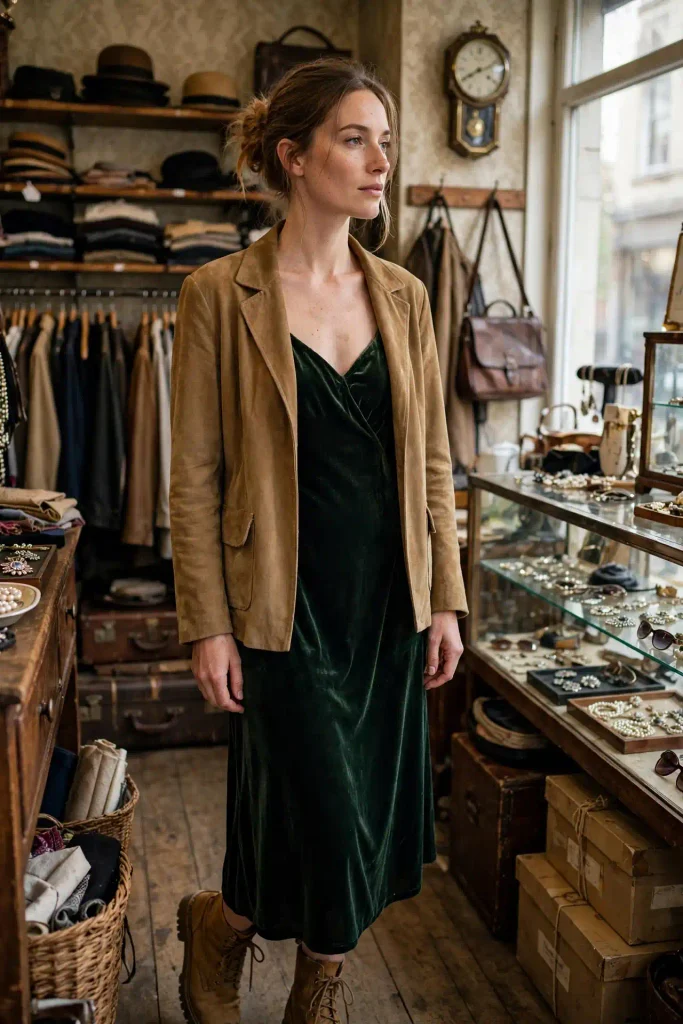
Stall 14, The Velvet and Suede Mix.
A velvet slip dress layered under a suede jacket, lace-up boots. Vendor story: this stall mixes two textures that shouldn’t work together on paper, shiny velvet and matte suede, but the contrast is exactly what keeps a fall boho look from feeling like one flat block of fabric. Haggle note: spend on the suede jacket specifically, since velvet slip dresses are common and affordable secondhand, while a genuinely good suede jacket is harder to find in good condition.
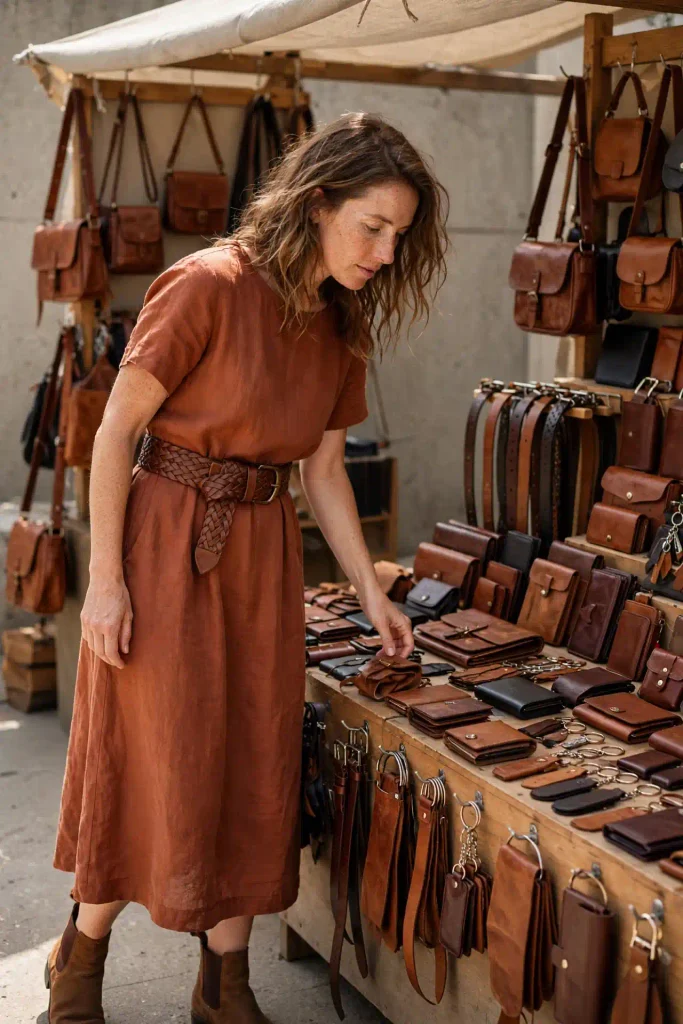
Stall 15, The Woven Belt Table.
Not a full outfit again, but worth a stop: a wide, woven or braided leather belt. Vendor story: this single accessory is what turns a plain dress or an oversized top into something with actual shape, doing the same defining work a corset seam does in structured dressing, just with a completely different visual language. Haggle note: this is a cheap, high-impact stall, since a five-dollar belt can transform an outfit more than almost any clothing purchase on this whole list.
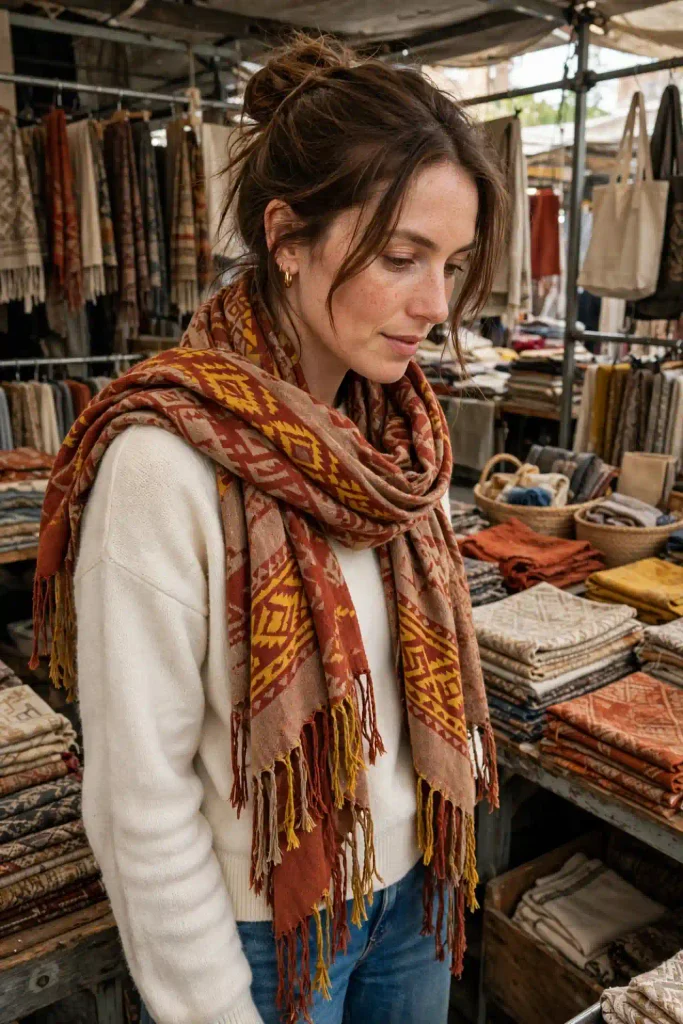
Stall 16, The Layered Scarves Corner.
A long, fringed scarf in a rust or mustard print, worn loosely over a plain sweater and jeans. Vendor story: a scarf worn as a loose layer rather than tightly wrapped adds the same movement principle as fringe or bell sleeves, letting fabric hang and sway rather than sit still against the body. Haggle note: this is another genuinely cheap stall, and scarves are one of the easiest boho pieces to find secondhand in excellent condition, since they see less wear than clothing.
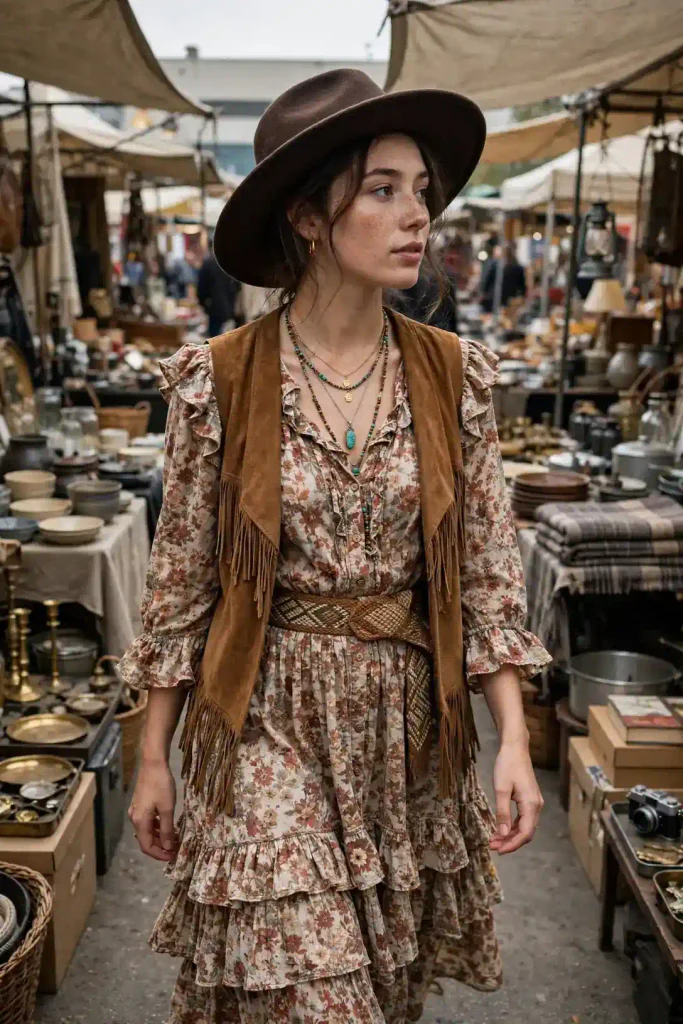
Stall 17, The Full Layered Look.
The stall at the end of the row that pulls everything together: a prairie dress, a fringed vest over it, a woven belt at the waist, a wide-brim hat, and layered jewelry, all from the stalls above. Vendor story: this is what boho dressing looks like at its most complete, several individually gathered pieces layered together rather than a single purchased outfit, and it only works because each piece was chosen with the others already in mind. Haggle note: build toward this stall slowly across a season rather than buying it all at once, since the collected, gathered-over-time feeling is genuinely part of what makes it read as boho rather than costume.
Something New: The Texture-Layering Wheel
Boho outfits rely on texture more than almost any other style category, so instead of a color wheel, think in a texture wheel with four points: soft (knit, crochet), structured (suede, leather), flowing (chiffon, thin cotton), and textured-flat (corduroy, denim). A genuinely successful boho outfit usually pulls from at least three of these four points rather than staying in just one, which is exactly why Stall 14’s velvet-and-suede pairing works, and why an outfit built entirely from soft knits alone, while cozy, can start to look a little shapeless without a structured or flowing element mixed in.
The Print-Mixing Rule
Boho dressing is famous for pattern mixing, but the actual rule that keeps it from looking chaotic is simpler than people expect: mix scale, not color family. A small floral print and a large paisley print in the same rust-and-cream color family will read as intentional, while two prints in wildly different color families, even at the same scale, tend to clash. Look back at Stall 6 and Stall 7 specifically, since both rely on this exact principle, letting only one piece carry pattern at a time while everything else stays solid, which is the easiest entry point before attempting true multi-pattern mixing.
The Fringe-and-Movement Test
Before buying a fringed or bell-sleeve piece specifically, do this quick test in the dressing room or at home: walk a few steps, then turn around. If the fringe or sleeve moves noticeably with the motion, it’s doing its job. If it hangs stiff and barely shifts, the fabric is likely too heavy or too cheaply made to create the visual effect boho pieces rely on. This matters more than it sounds, since a fringed vest that doesn’t actually move when you walk loses most of its reason for existing in the outfit at all.
The Volume Balance Guide
Because boho outfits often involve multiple loose, flowing layers at once, like Stall 17’s full look, it helps to anchor at least one point of the silhouette with something fitted or defined, usually the waist. A woven belt, as in Stall 15, or a fitted base layer under a loose outer piece, as in Stall 10’s vest-over-turtleneck combo, keeps several loose layers from reading as one shapeless mass. If every single piece in an outfit is loose and flowing with nothing fitted anywhere, the overall silhouette tends to lose definition, regardless of how nice each individual piece is.
Natural Fiber Care Primer
Boho wardrobes lean heavily on suede, leather, crochet, and other natural materials that need different care than a typical synthetic-blend closet. Suede should never be worn in genuine rain without a protective spray applied beforehand, since water spots are difficult to fully remove afterward. Leather pieces benefit from a light conditioning treatment every few months to prevent the material from drying out and cracking, particularly on fringe specifically, since thin fringe strands crack faster than a solid leather panel. Crochet and other open-weave knits should be hand washed or placed in a garment bag for machine washing, since the open construction snags easily in a regular wash cycle. Hang suede and leather pieces on padded hangers rather than folding them, since folding creates creases that can become permanent over time.
Building a Boho Capsule Slowly
Rather than trying to buy Stall 17’s full layered look all at once, most people find more success building toward it gradually, the way the stall’s own haggle note suggests. Start with one accessory stall, the belt or the hat, since these single pieces can transform several outfits you already own before you’ve spent much money at all. Add one structured piece next, a suede vest or jacket, since these hold their value and quality longest and are worth the higher upfront cost. Fill in soft and flowing pieces last, since crochet, prairie dresses, and printed skirts are the easiest and cheapest to find secondhand whenever you’re ready for them.
Quick Answers
What’s the single most impactful boho accessory to buy first?
A wide, woven belt, since it can add definition and boho character to outfits you already own without requiring any new clothing at all.
How do I mix prints without it looking chaotic?
Keep the prints within the same color family and let only one piece in the outfit carry pattern at a time, keeping everything else solid.
What fabric should I spend more money on versus buy cheaply?
Suede and leather pieces are worth the higher cost, since quality genuinely affects how they age. Crochet, printed skirts, and scarves are safe to buy secondhand or budget-priced.
Can boho work in a cold climate?
Yes, particularly with the poncho and layered vest approaches above, which add real warmth without losing the flowing silhouette boho relies on.
One Last Thing
Boho dressing was never meant to be bought as a matched set off one rack. It is genuinely, by nature, a gathered style, one piece found here, one piece inherited there, built slowly the way you’d actually wander a flea market rather than a department store.
Start at whichever stall matches something you already half-own, add one accessory piece to test the waters, and let the rest of your collection grow the way the best boho wardrobes always have, slowly, and a little bit by accident.
Which stall are you stopping at first: the suede and fringe, the layered prints, or the jewelry table worth haggling at? Save this article for your next thrift trip, and send it to a friend who always finds the best pieces at flea markets and somehow makes them look like they were always meant to go together.