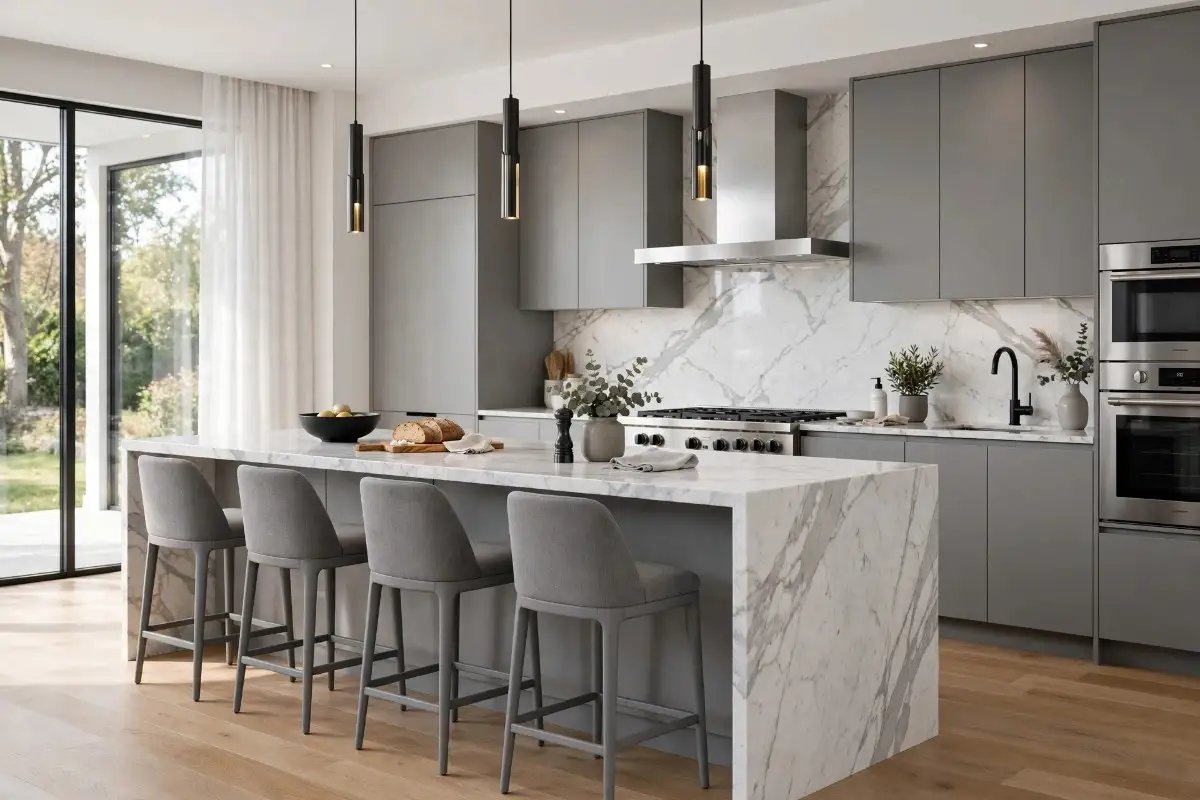
18 Modern Kitchen Ideas That Made My Dated Kitchen Look Like a Million Bucks
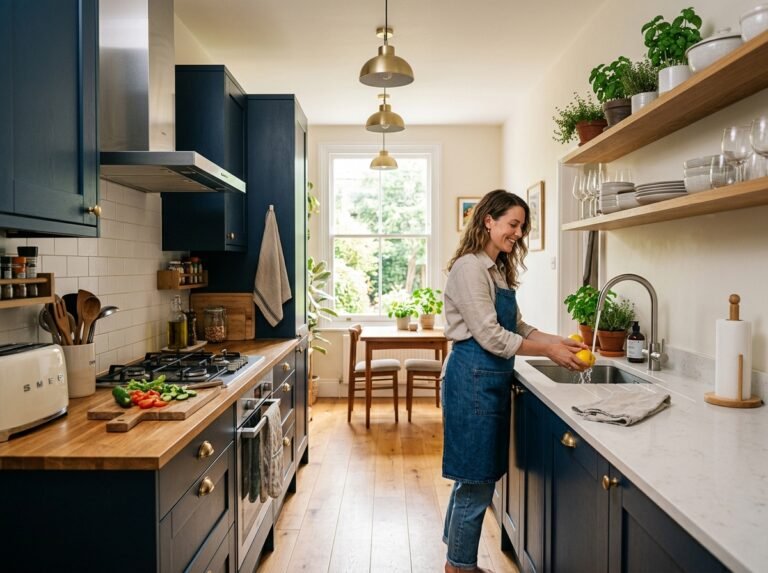
My old kitchen had orange oak cabinets, shiny brass hardware, and one ceiling light that made every dinner look slightly suspicious. I kept telling myself it had “retro charm.” It did not. It looked like 1997 had packed a lunch and refused to leave.
When we finally renovated, I wanted modern without making the room feel like a cold spaceship. I also wanted surfaces that could survive pasta sauce, wet backpacks, and my talent for spilling coffee. So I planned the kitchen by the way we actually use it, from the first sleepy cup to the last wipe of the counter.
You do not need to copy every detail. Pick two or three ideas that solve your biggest daily annoyances. That is how a kitchen starts looking expensive: not through fancy labels, but through fewer visual interruptions and smarter places for ordinary stuff.
7 AM: The Coffee Hour
1. Flat-Panel Cabinets With Hidden Pulls
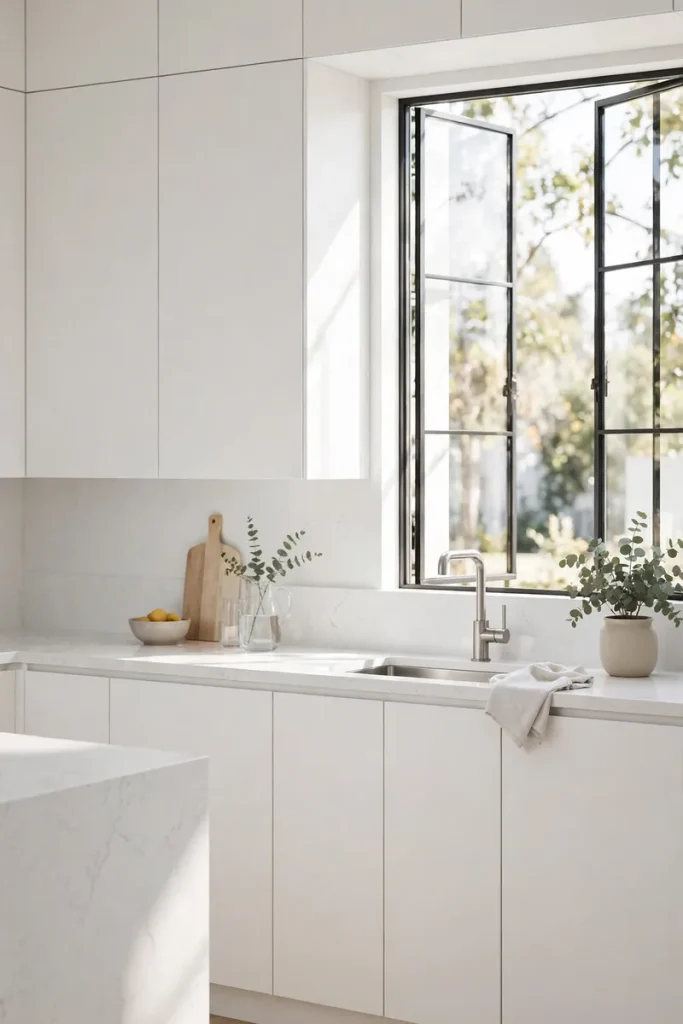
The oak doors were the loudest thing in our room, so flat-panel fronts gave us the biggest visual change. I chose slim edge pulls instead of totally handle-free doors because buttery fingers and push-latches are not best friends. New semi-custom cabinets usually run $8,000–$20,000; replacement fronts can cost $2,000–$7,000.
Painted MDF stays smooth and resists warping, while laminate is even easier to wipe. Clean hidden pulls weekly because crumbs are sneaky. Renters can cover plain doors with removable architectural vinyl and swap hardware, then store the original knobs safely.
2. The Waterfall Island
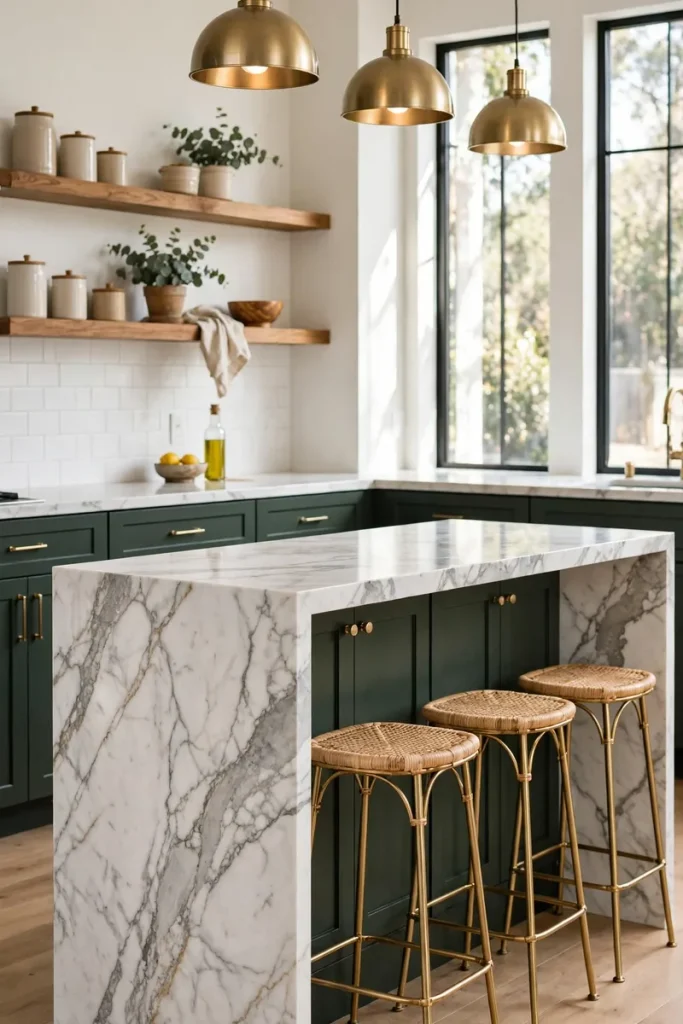
I wanted one dramatic feature, and wrapping the countertop down one side of the island did it. A quartz waterfall edge typically adds $1,500–$4,000 beyond a standard top. I saved money by wrapping only the side visible from the living room. From every other angle, nobody knows.
Quartz handles stains and daily wiping well, though hard hits can chip exposed corners. In a small kitchen, use a narrow peninsula with one waterfall end. Renters can fake the blocky look on a rolling island with removable stone-look film, keeping heat and sharp knives away from it.
3. A Real Coffee Bar Nook
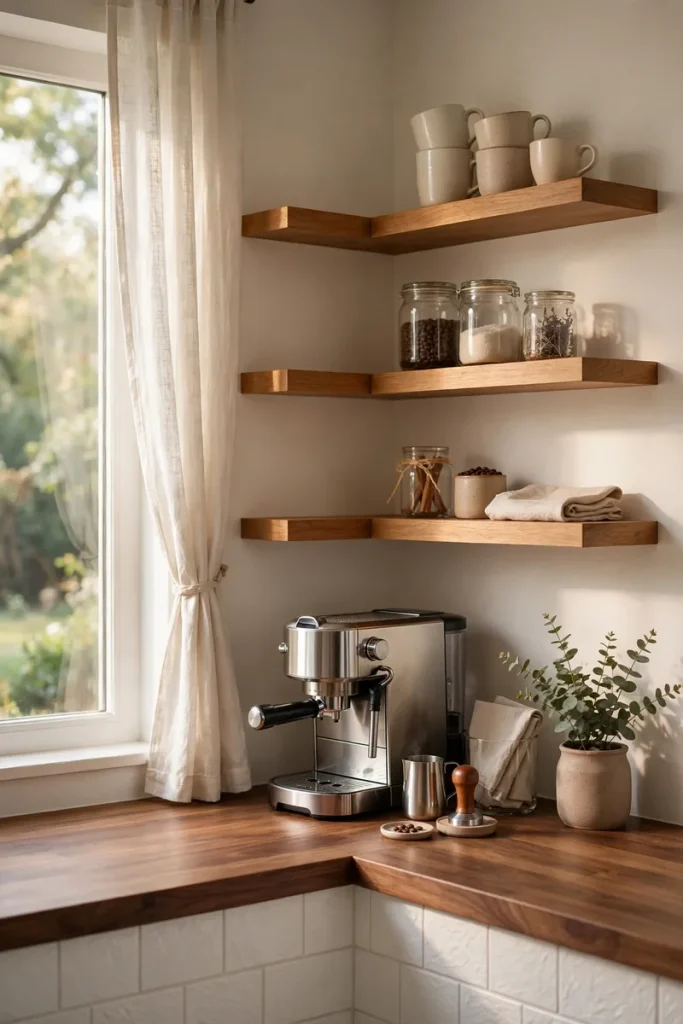
Our coffee maker used to travel around the counter like it owed someone money. I claimed a 30-inch nook, added one shelf, and put mugs directly above it. A DIY setup costs about $150–$600; a built-in cabinet nook with outlets may run $1,500–$4,000.
Leave breathing room around hot appliances and place the machine on a washable tray. A vertical shelf works in tiny kitchens. Renters can use a slim cart, plug-in lamp, and matching canisters. The best part is keeping morning traffic away from the cooking zone.
4. Under-Cabinet LED Strips
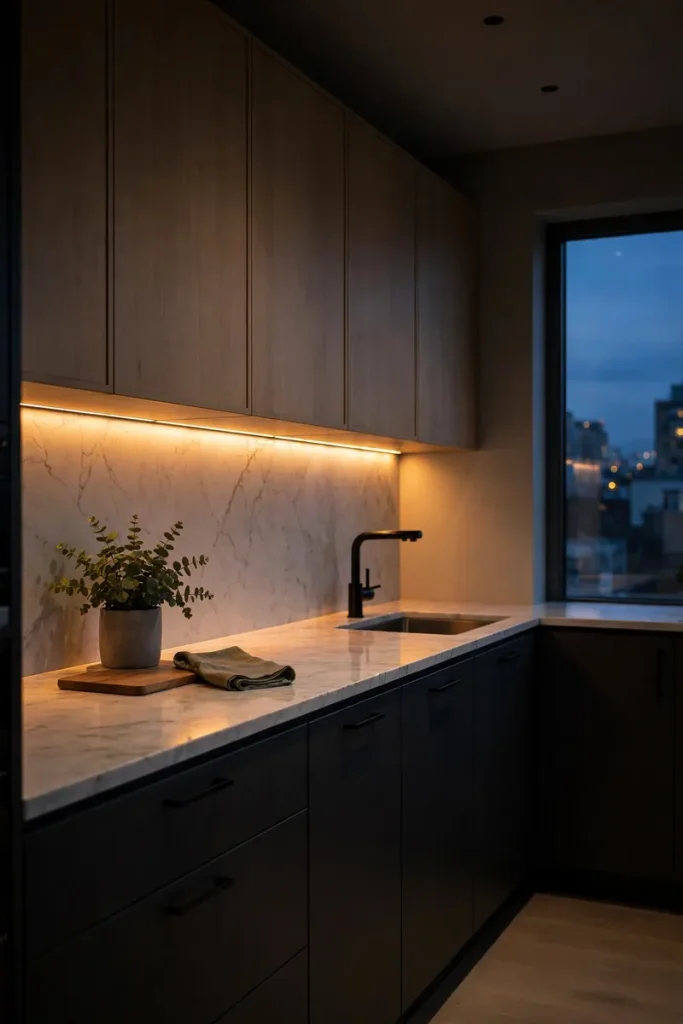
At 7 a.m., bright ceiling lights feel personally rude. Warm-white LED strips made the counters glow and helped me measure coffee before my eyes fully opened. Plug-in kits cost $30–$120, while professionally wired lighting usually costs $300–$1,000.
Choose 2700K to 3000K light and a diffuser channel so you see a smooth glow, not tiny dots. LEDs last for years and wipe clean with a dry cloth. Renters should pick adhesive strips with removable clips and route the cord beside a cabinet.
Noon: The Cooking Shift
5. The Statement Range Hood

Our old microwave hood sounded like a lawn mower and moved approximately three molecules of steam. A simple plaster-look hood became the room’s focal point without adding clutter. A decorative shell over a quality insert costs roughly $1,500–$5,000; a basic stainless wall hood starts near $400.
Match the hood width to the range and vent outdoors when possible. Smooth painted or metal surfaces are easier to degrease than rough plaster. Renters can create impact with a removable backsplash panel behind the existing hood rather than changing the appliance.
6. The Workstation Sink
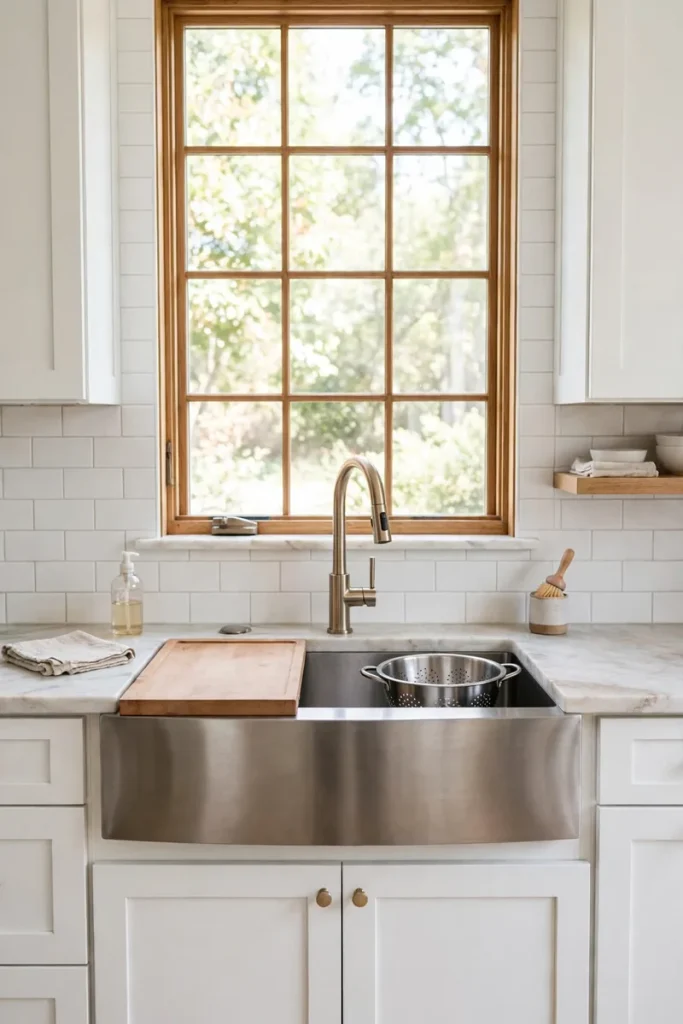
I doubted a sink could change my life, which was dramatic of me. Then I slid a cutting board over our workstation sink and gained prep space exactly when lunch chaos began. Good models with accessories cost $500–$1,800, plus about $300–$700 for installation.
Choose stainless steel around 16 or 18 gauge for durability, and dry the ledges so mineral spots do not build up. In a small kitchen, it can replace a separate prep zone. Renters can buy an over-sink cutting board and roll-up drying rack for $30–$90.
7. A Slab Backsplash (No Grout Lines!)
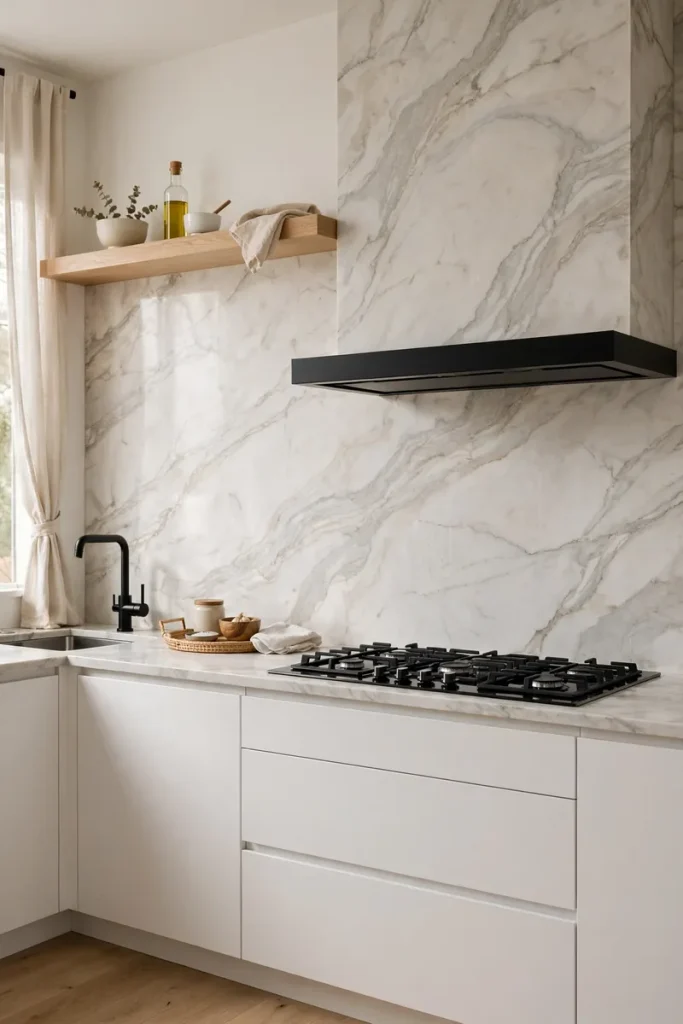
I once cleaned grout with a toothbrush on a Saturday night, which is when I knew we needed a slab backsplash. Matching quartz behind the range gave us one calm surface. Fabricated quartz or stone often costs $1,500–$5,000, depending on material and wall size.
Quartz is easy to wipe, but verify heat limits behind powerful ranges; porcelain slabs tolerate heat beautifully. For a lower budget, use a single stainless panel. Renters can try one-piece peel-and-stick panels from $100–$400, provided the lease and wall finish allow clean removal.
8. Deep Drawers Instead of Lower Cabinets
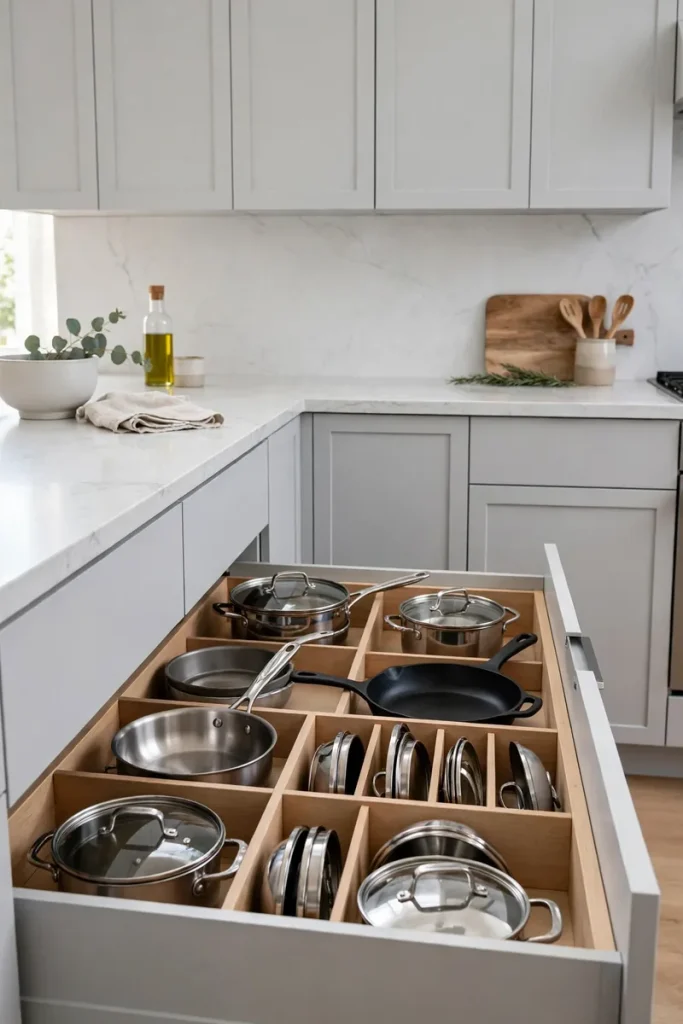
I used to kneel on the floor and excavate pans like an archaeologist. Deep drawers brought every pot into view. During a remodel, drawer bases often add $200–$600 per cabinet over basic doors; retrofit pull-out drawers cost about $75–$250 each.
Pick full-extension, soft-close hardware rated for heavy loads. Vacuum crumbs from the tracks and avoid overfilling. In a narrow kitchen, drawers also stop you from blocking the aisle while searching. Renters can place sturdy slide-out baskets inside existing lower cabinets.
9. Panel-Ready Appliances That Disappear
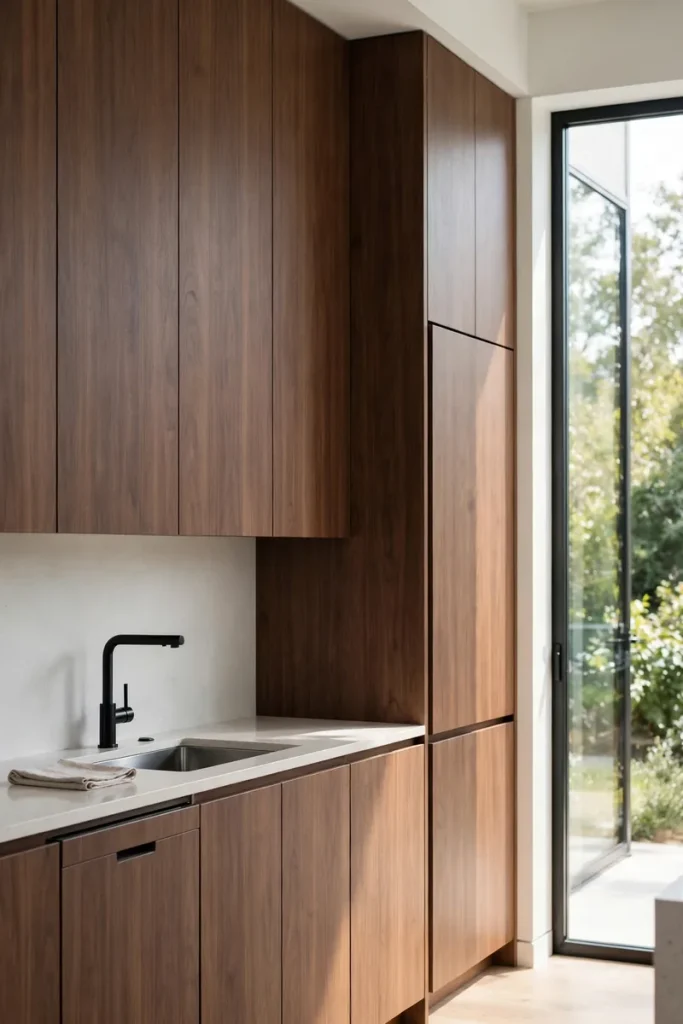
Covering the dishwasher with a matching cabinet panel made the whole wall look twice as calm. Panel-ready dishwashers generally cost $1,200–$3,000, plus $300–$900 for the custom front and installation. A matching refrigerator can climb above $8,000, so ours remained proudly visible.
Panels wipe like the surrounding cabinets, but appliance ventilation and manufacturer specs matter. In a small kitchen, hiding just the dishwasher is enough. Renters should skip permanent panels and use appliance-safe removable vinyl in a color close to the cabinetry.
6 PM: The Gathering
10. Sculptural Pendant Lights
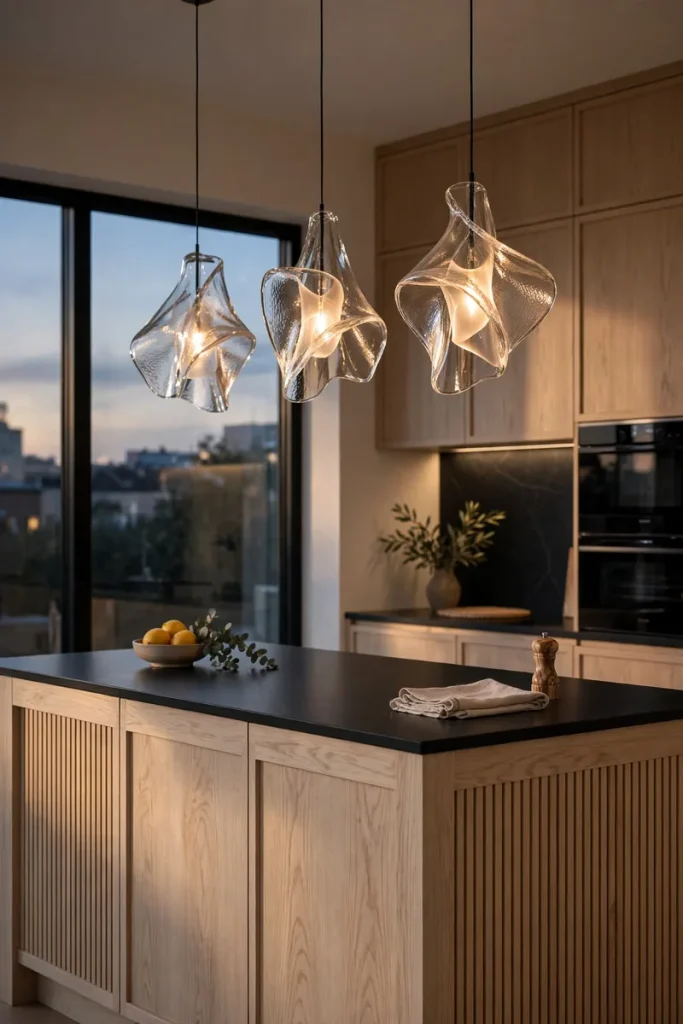
At dinner, the island becomes homework desk, buffet, and family meeting room. Two oversized pendants made that hardworking spot feel intentional. Fixtures range from $150–$800 each, with electrician labor often adding $250–$700. I taped paper circles to the ceiling before buying anything.
Hang pendants about 30–36 inches above the counter, adjusting for sightlines. Simple glass or metal shades collect less dust than woven ones. Renters can use a plug-in pendant with a ceiling hook, or upgrade bulbs in existing fixtures for warmer light.
11. Warm Wood Meets Crisp White
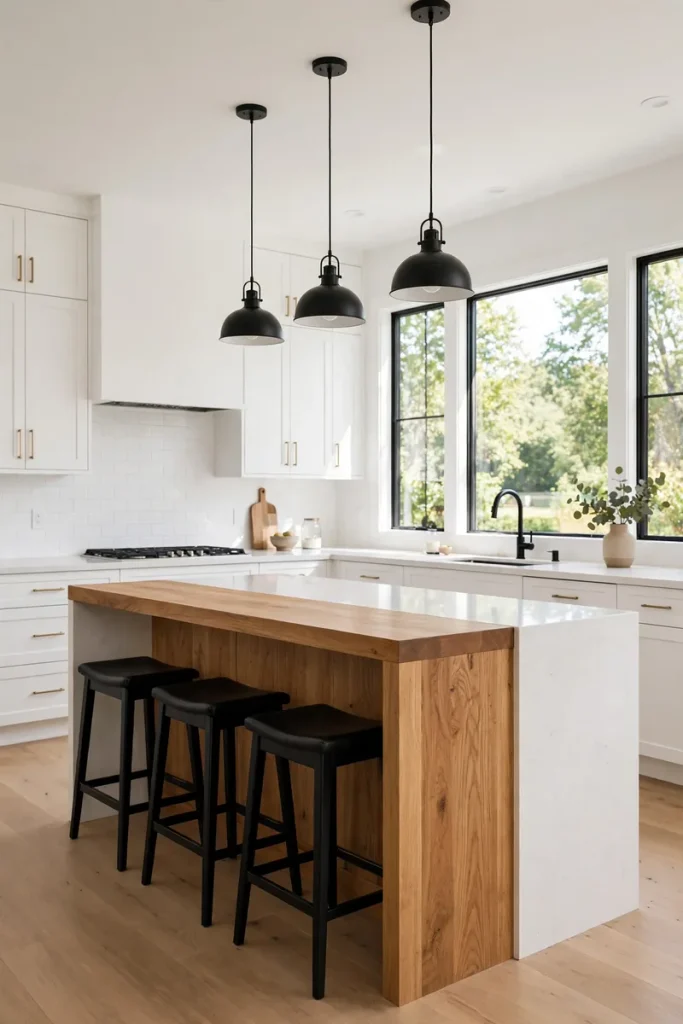
All-white samples made our kitchen feel like a dentist’s office, so we used white perimeter cabinets and warm walnut on the island. Refacing or painting cabinets costs roughly $2,000–$8,000; a wood island finish may add $500–$2,000 depending on veneer or solid wood.
Repeat the wood tone in two small places, such as stools and cutting boards, so it looks planned. Seal real wood and wipe spills quickly. Renters can add a wood cart, white washable runner, and removable white cabinet film for the same balanced effect.
12. Glass-Front Display Cabinets
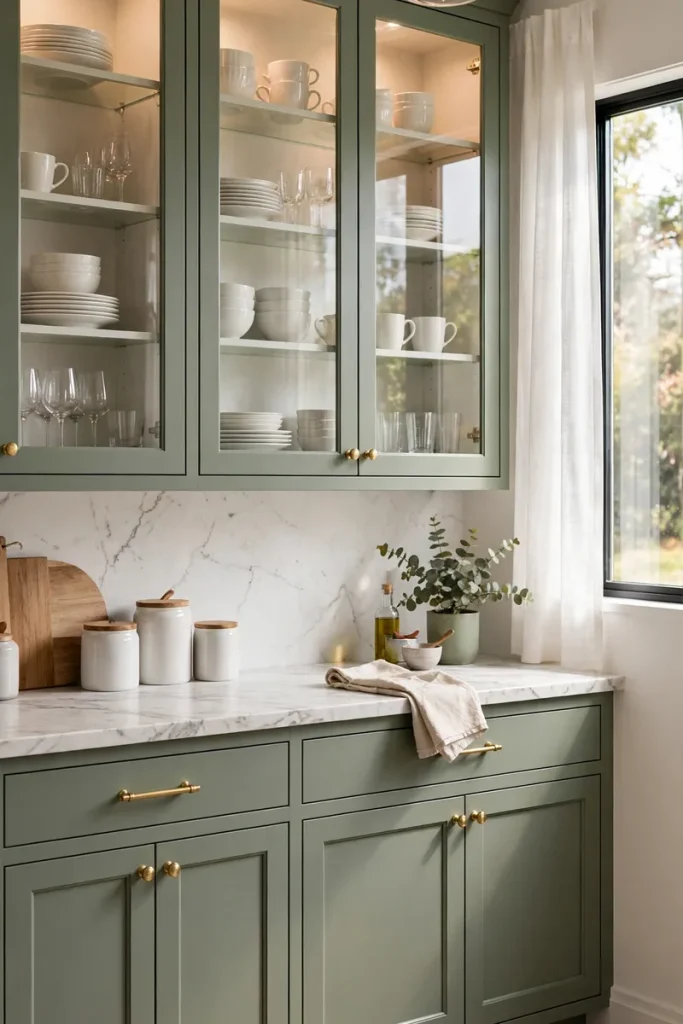
I installed two glass doors for pretty dishes, then learned that cereal boxes are not decor. Limiting glass fronts to one small zone keeps the room light without turning every shelf into a performance. Converting two doors usually costs $300–$1,200.
Use tempered or reeded glass; reeded glass hides imperfect stacks and fingerprints better. Clean both sides with a microfiber cloth. In a tiny kitchen, one glass-front cabinet adds depth. Renters can remove one upper door with permission, store it safely, and style the open shelf.
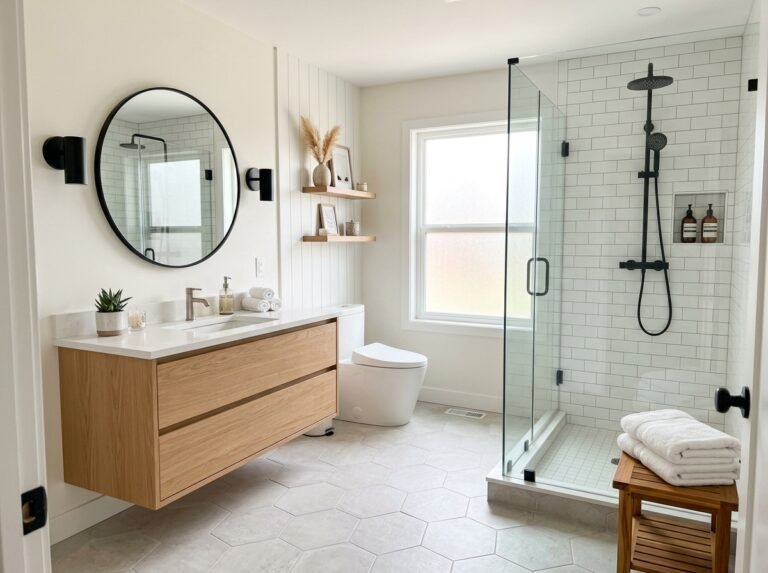
13. Matte Black Faucets and Hardware
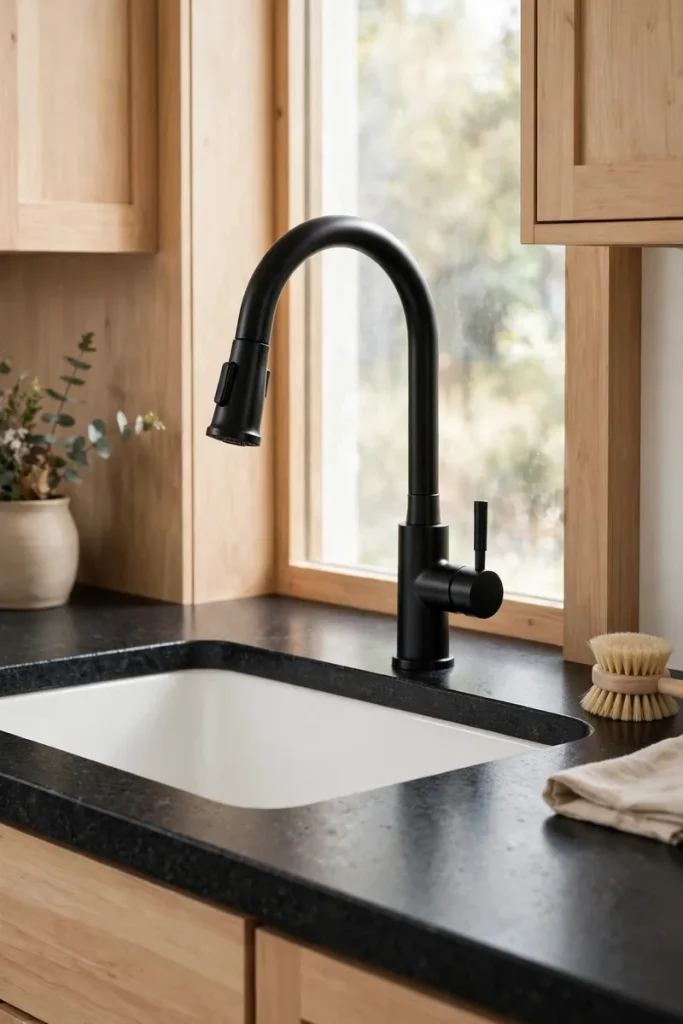
Black accents gave our pale kitchen a crisp outline, like mascara for cabinets. A matte black faucet costs about $150–$700, and pulls usually run $4–$20 each. I used black only on the faucet, pendants, and some hardware so the room did not look polka-dotted.
Quality finishes are durable, but hard water can leave pale spots. Dry the faucet after splashes and avoid abrasive cleaners. Renters can change cabinet pulls and use a countertop soap pump in black; just measure hole spacing and keep every original piece.
9 PM: The Wind-Down
14. The Hidden Walk-In Pantry
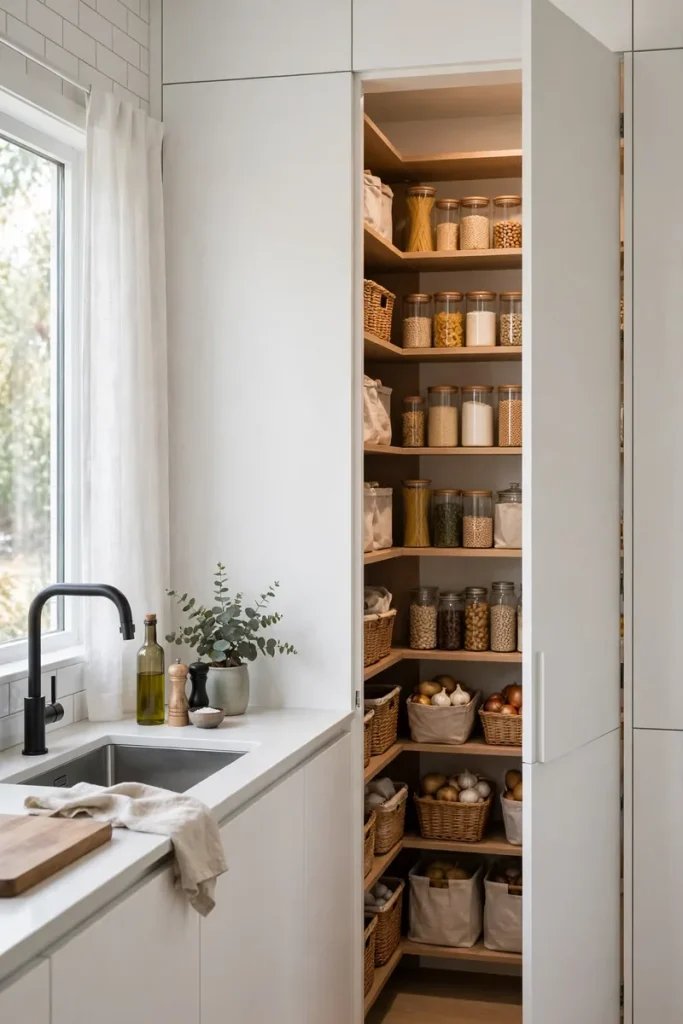
Our pantry door now matches the cabinet fronts, so the food cave disappears after dinner. A custom concealed door and cabinetry can cost $3,000–$10,000. We kept the inside basic with painted shelves, because crackers do not require luxury accommodations.
Use sturdy hinges, good ventilation, and motion-sensor lighting. Wipe shelves monthly and keep heavy items low. Small kitchens can hide a shallow pantry behind tall cabinet doors. Renters can hang a curtain in the cabinet color over open utility shelving for a softer illusion.
15. Mixed Metals, Done Right
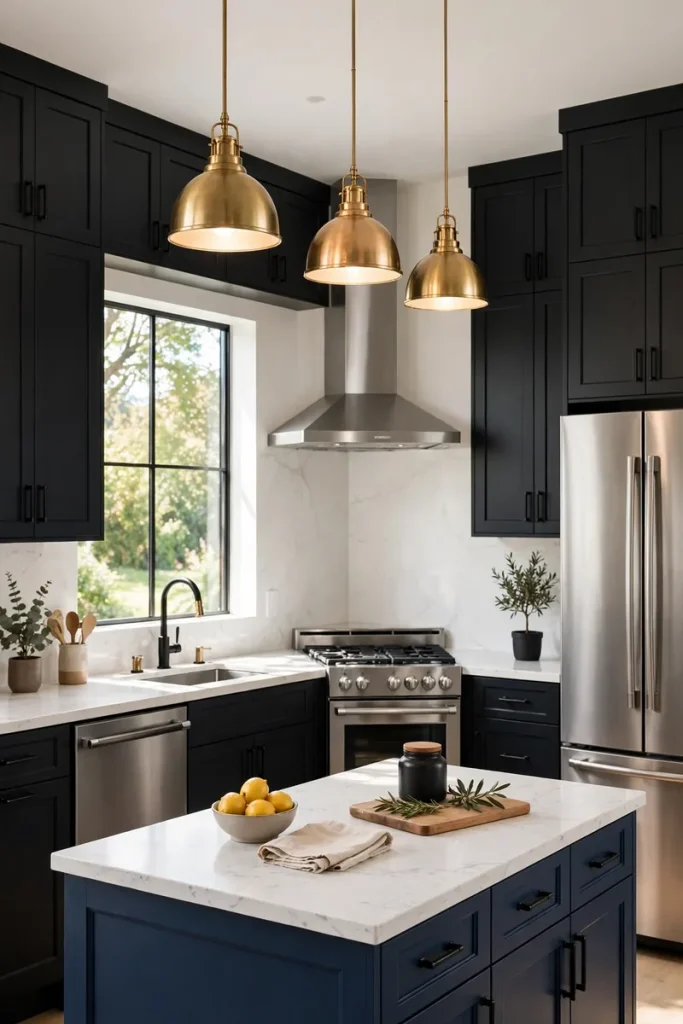
I nearly matched every metal until the room looked like a hardware showroom display. Instead, matte black became the main finish and warm brass appeared on two lights and a tray. Changing hardware can cost $100–$600; new lights and a faucet can bring the mix to $600–$2,500.
Choose one dominant metal, one supporting metal, and repeat each at least twice. Keep nearby pieces in similar sheens so the mix feels calm. Most finishes need only mild soap. Renters can mix metals through knobs, a lamp, frames, and countertop accessories.
16. Concrete-Look Floors That Forgive Everything
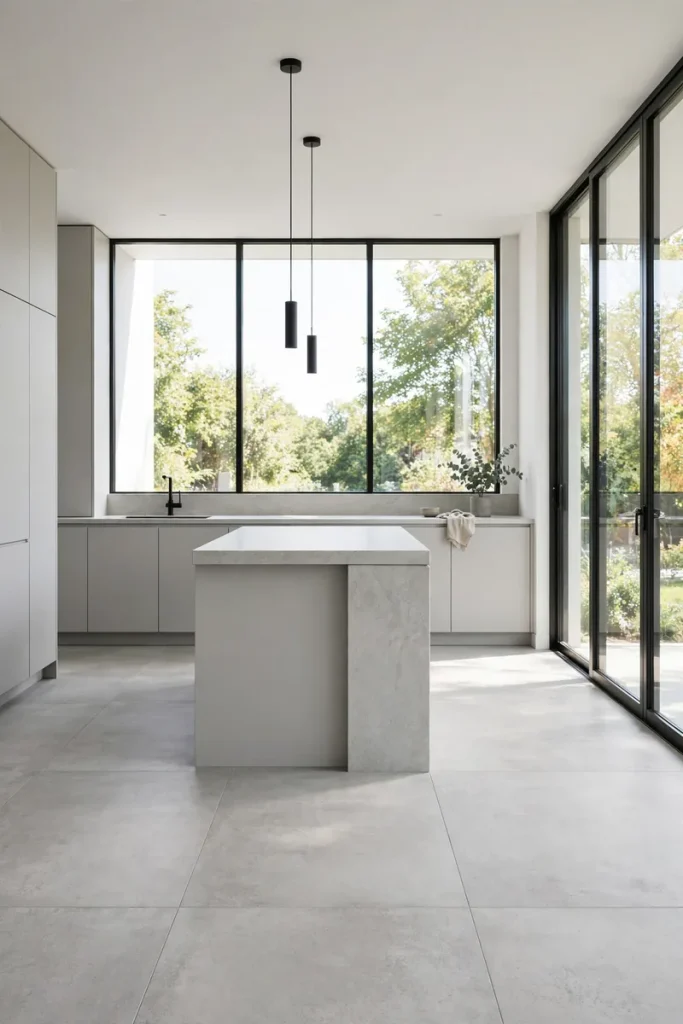
Our pale tile showed every crumb, including crumbs I swear came from meals we never ate. Large-format concrete-look porcelain gave us modern texture without real concrete’s cracking and sealing worries. Installed porcelain typically costs $8–$20 per square foot; luxury vinyl runs about $4–$10 installed.
Choose a mid-tone pattern with gentle variation, and use the narrowest grout line the tile allows. Porcelain is tough and easy to mop. Vinyl feels warmer and suits rentals better; floating planks may be removable, but always check the lease and protect the floor below.
The Two Rules That Hold It All Together
17. The Rule of Three Colors
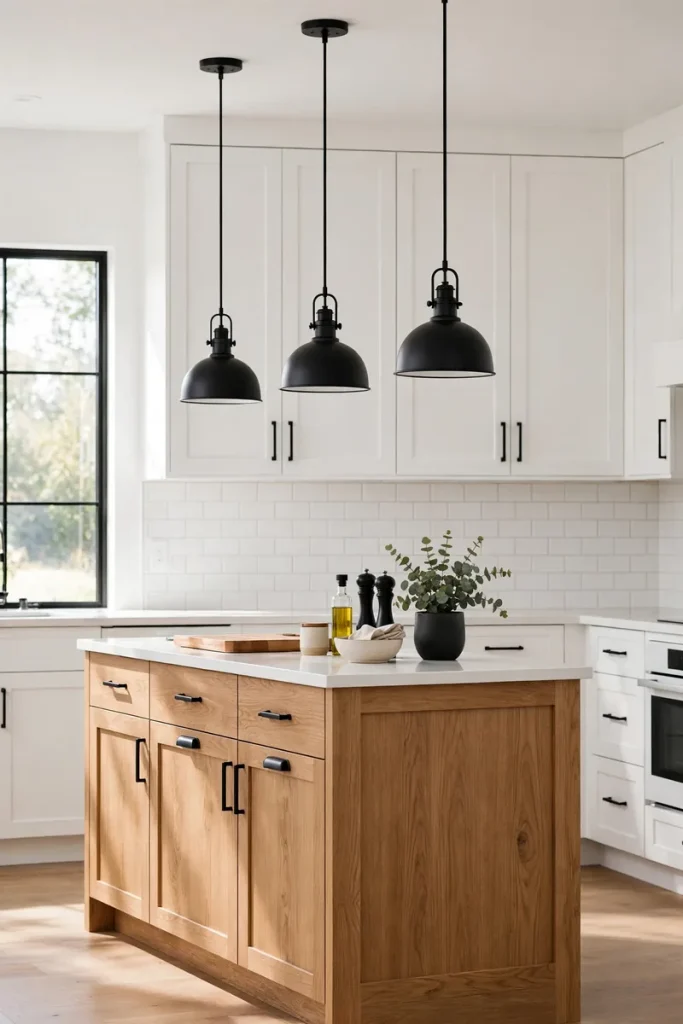
Whenever I added something new, I checked our three-color plan: warm white, walnut brown, and black. That little rule stopped panic purchases and made budget pieces look related. Paint and accessories can establish a palette for $200–$1,000, while cabinet refinishing may cost $2,000–$8,000.
Use one color on about half the room, a second on roughly a third, and the last as a small accent—not a math test, just a guide. In compact kitchens, lighter dominant colors help. Renters can build the trio with art, towels, stools, and removable covers.
18. Everything Gets a Home (or It Goes)
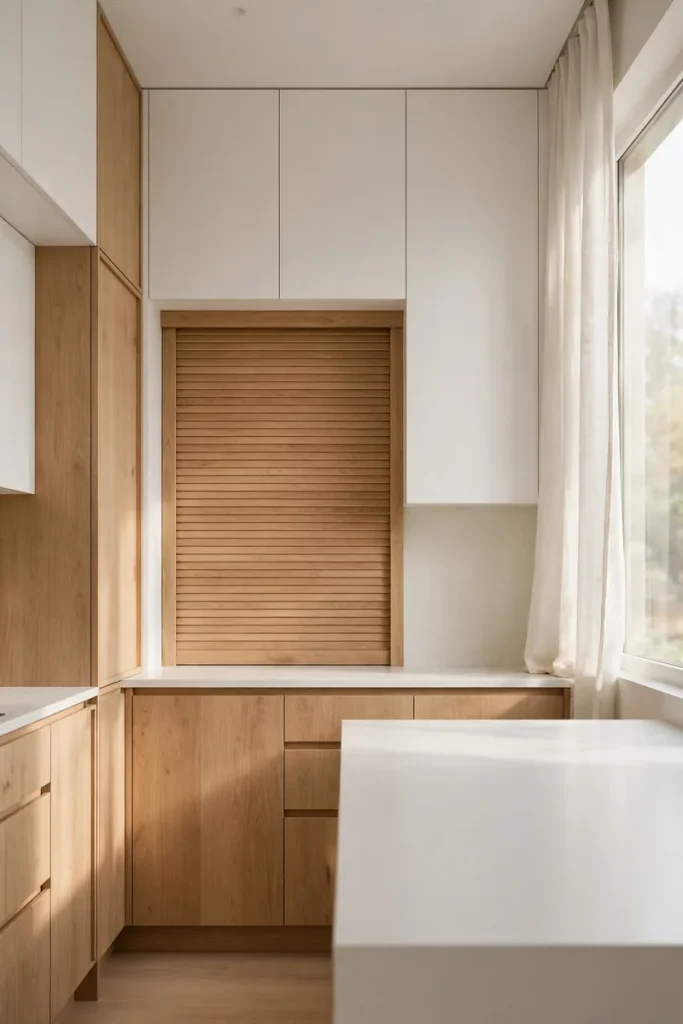
The most modern choice was not quartz or lighting. It was deciding that mail, chargers, and twelve lonely water bottles needed assigned homes. Drawer dividers, bins, and a charging station cost us about $100–$450. Custom organizers can reach $1,500, but labels did most of the work.
Keep daily items between waist and eye level, store occasional tools higher, and donate duplicates. Wipe organizers during seasonal resets. Small kitchens need stricter limits, not more containers. Renters can use freestanding bins, tension shelves, and adhesive hooks that remove cleanly.
Your Turn: Steal My Playbook
Start with one full day in your kitchen. Notice what annoys you at coffee time, what slows lunch prep, where everyone piles things at dinner, and what you still have to clean at night. Your best modern upgrade is hiding inside those tiny complaints.
For a quick start, choose three colors, clear one counter, add better task lighting, and fix one storage problem. Next, price one high-impact feature—cabinet fronts, a hood, or a backsplash—and add a 15 percent cushion for surprises. Renovations love surprises almost as much as toddlers do.
Our kitchen does not actually cost a million bucks, thankfully. It simply feels calm, works hard, and no longer traps me on the floor behind a pile of pans. Pick one idea this weekend. A modern kitchen is not built in one dramatic reveal; it grows from choices that make tomorrow morning easier.