17 White Kitchen Ideas That Make the Whole House Look Expensive
White kitchens get called boring, hard to clean, and “so last year” at least once every season. Yet they keep showing up in beautiful homes for one simple reason: white is flexible. It can feel warm, modern, coastal, traditional, or playful depending on what you place beside it. It also reflects light, which can help a small kitchen feel less boxed in.
I discovered the power—and danger—of white during my first cabinet-painting weekend. I expected a quick Saturday project. By Sunday night, every mug was in the living room, the cat had one white paw, and I had learned that preparation is not a suggestion. The finished kitchen looked brighter, though, and it taught me a useful rule: white works best when texture, contrast, and real-life function are part of the plan.
Below are 17 different ways to design a white kitchen, from renter-friendly changes to full-remodel choices. Use one idea or mix a few. You do not need a mansion, a designer, or a sink that costs more than your first car.
1. Warm Up White Cabinets With Honey-Toned Wood
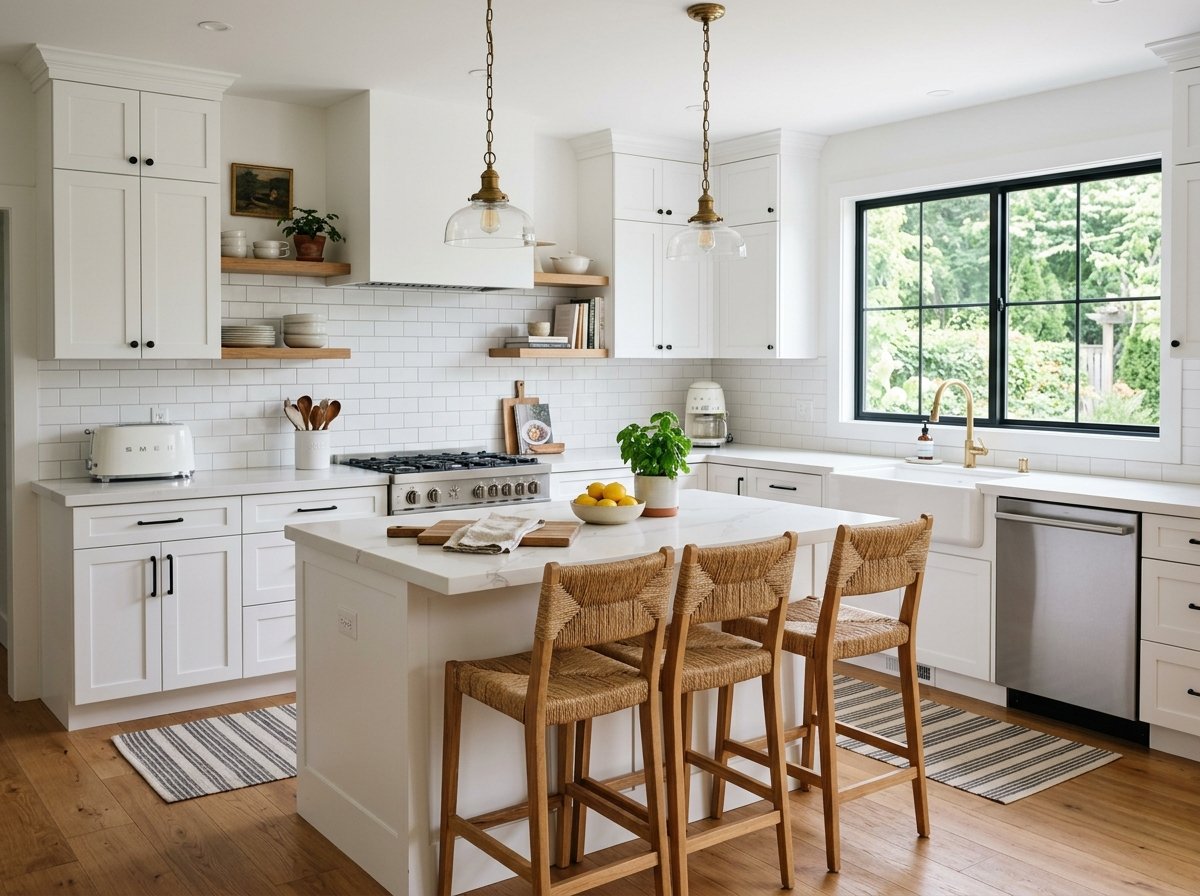
White cabinets can feel crisp, but a warm wood countertop, island panel, or row of stools keeps the room from feeling like a dentist’s office. I learned this after painting my first kitchen pure white and wondering why it looked chilly even in July. One oak cutting board and two wood shelves later, the room finally relaxed. For a full remodel, butcher-block counters often cost less than stone, though they need regular sealing near the sink. On a smaller budget, try wood frames, trays, and bowls. Renters can use a slim wood cart or peel-and-stick wood-look shelf liner. Keep the wood tone similar across the room so the mix feels planned, not like five different forests moved in.
2. Choose Soft White Instead of Bright White
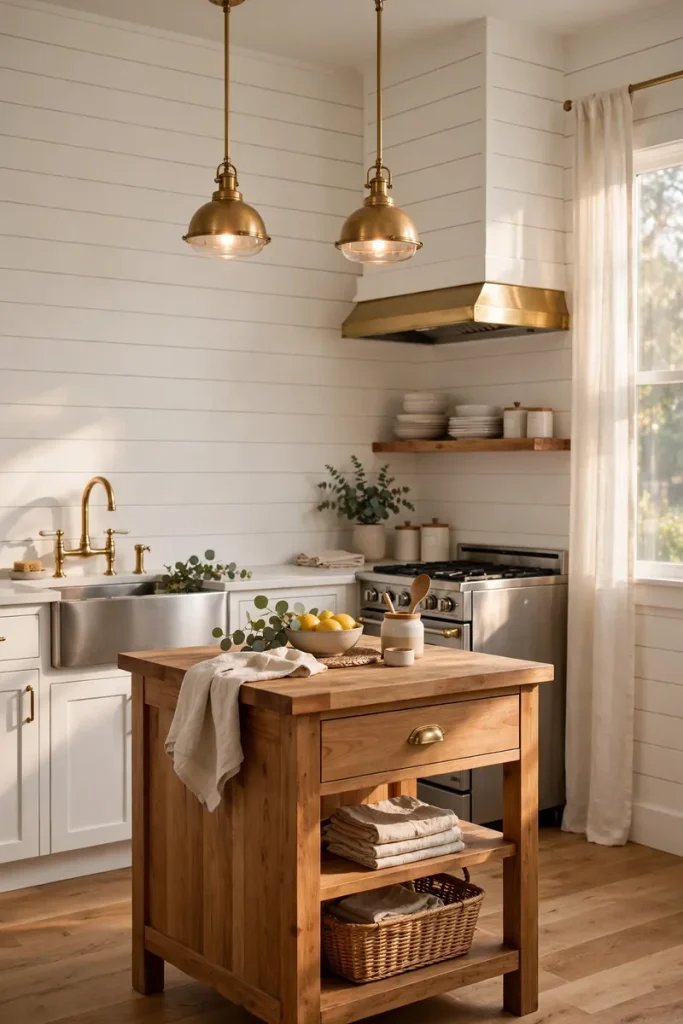
Not every white is the same. A cool blue-white looks clean in strong daylight, while a creamy white feels softer in a north-facing kitchen. Before buying gallons of paint, tape large sample boards beside the floor, countertop, and backsplash. Check them morning, afternoon, and at night. My sister skipped that step and her ‘warm white’ turned banana-yellow under the bulbs. We still call it the lemon kitchen. Cabinet paint can be an affordable weekend update, but preparation matters: clean grease, sand lightly, prime, and allow time to cure. If you rent, paint only with permission; otherwise bring in warm white through curtains, washable rugs, canisters, and removable art.
3. Use a Subway Tile Backsplash With Character
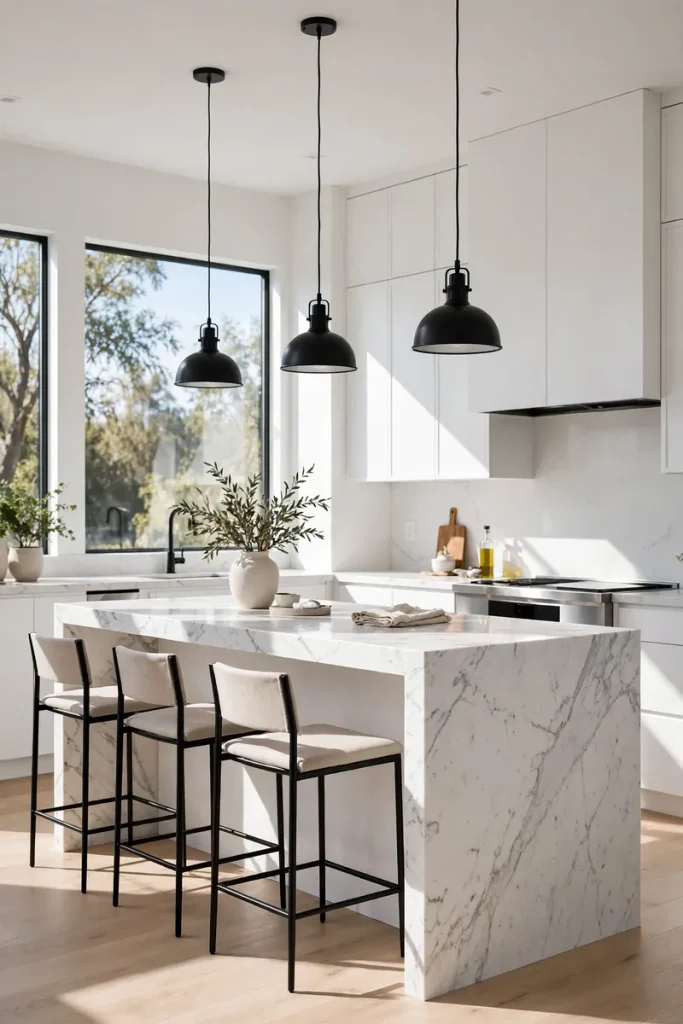
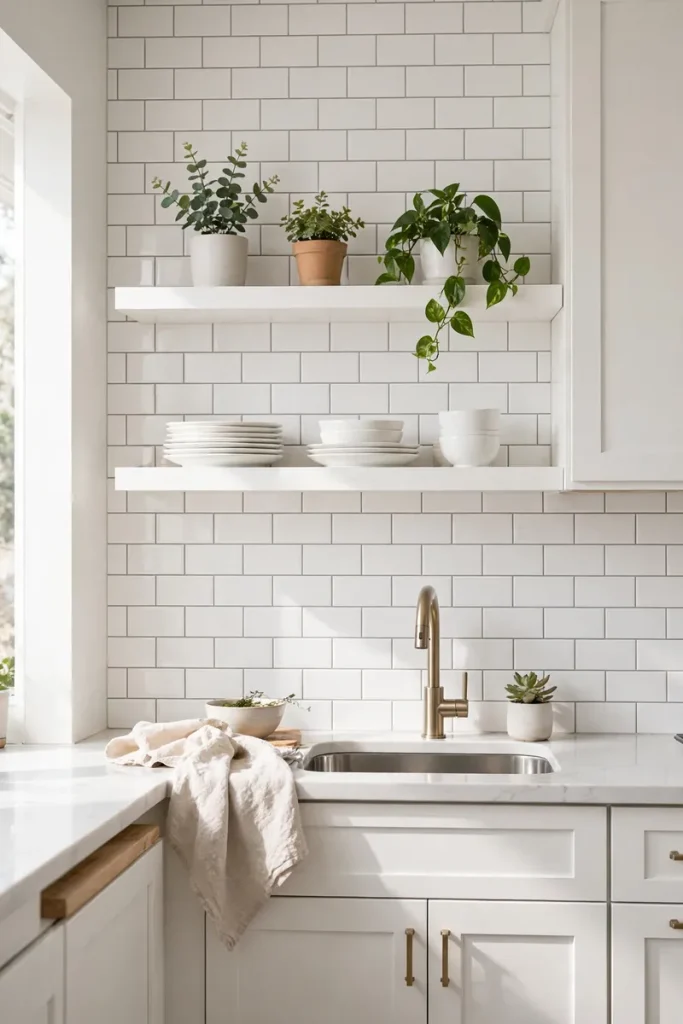
Classic white subway tile is popular because it is easy to clean and works with farmhouse, coastal, and modern rooms. Make it more interesting by choosing handmade edges, a vertical layout, or soft gray grout. White grout looks seamless but shows cooking splatters faster; gray is the forgiving friend who does not mention the spaghetti sauce. A professionally installed backsplash can become a larger expense once labor and wall repair are included, so get more than one quote. Handy homeowners may use real tile in a simple grid. Renters can try removable tile panels behind low-splash areas, following the maker’s heat and moisture rules.
4. Add Contrast With Matte Black Hardware
Black knobs, pulls, faucets, and lights draw a clean outline around white cabinets. The contrast is especially helpful when a white kitchen feels flat. You do not need to replace everything at once. Start with cabinet hardware, which is one of the quickest upgrades in the room. Measure the distance between existing screw holes before shopping or you may end up holding a drill at midnight and questioning every choice you have made. For a softer look, mix black with warm wood and woven textures. Renters can save the original hardware in a labeled bag and reinstall it before moving.
5. Make a Narrow White Kitchen Feel Wider
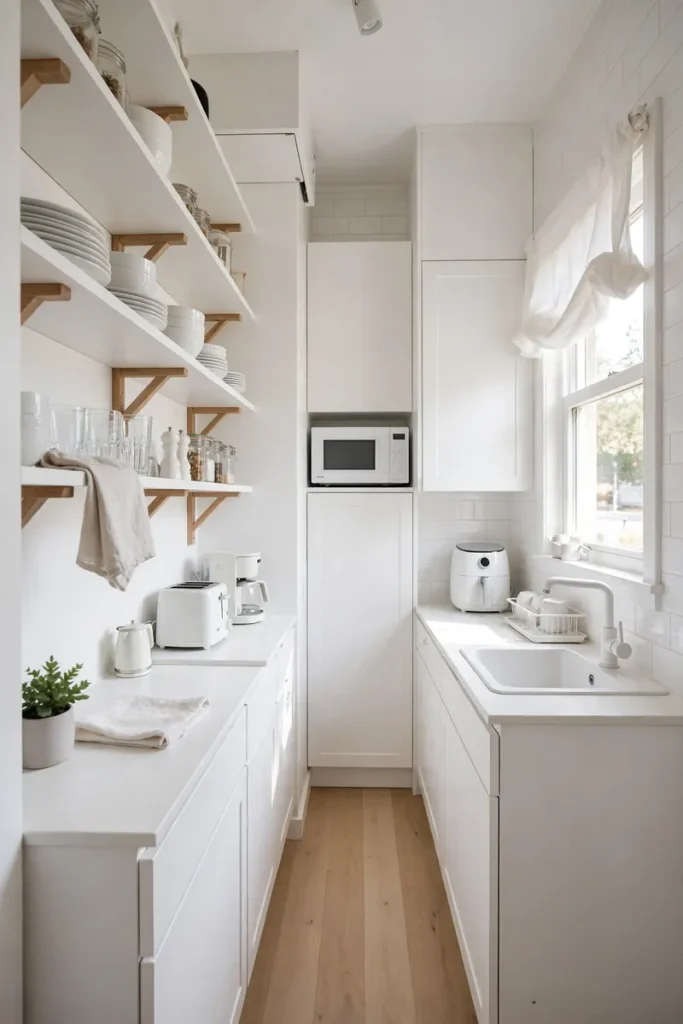
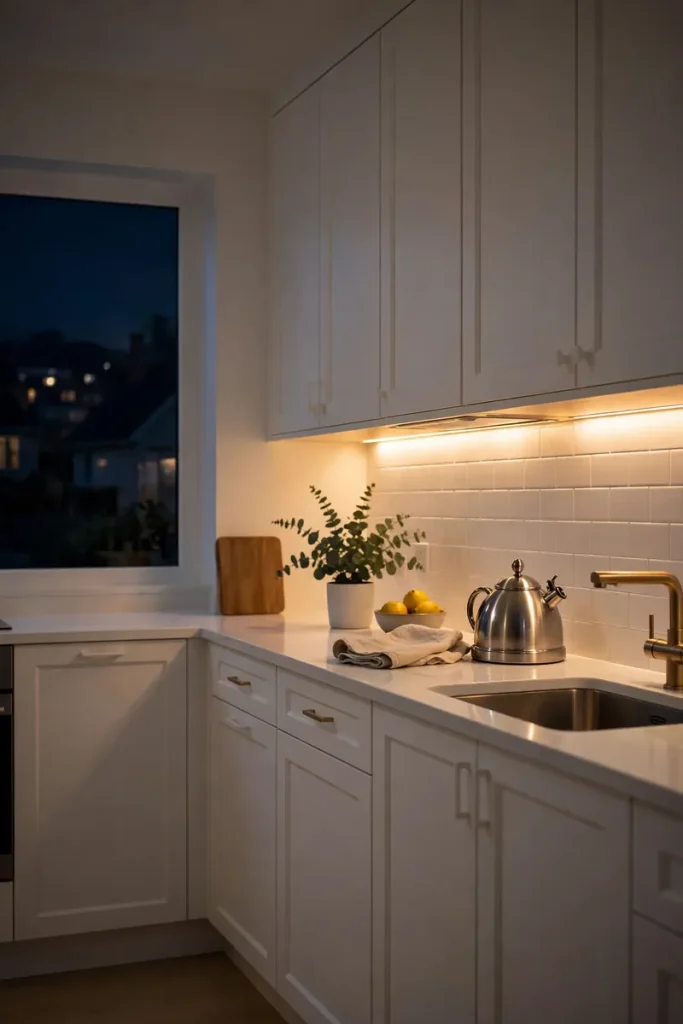
In a galley or apartment kitchen, white can bounce light and reduce visual clutter. Choose simple cabinet fronts, keep the counters mostly clear, and use the same pale color on walls and upper cabinets. A long runner pulls the eye through the space, while under-cabinet lights remove dark corners. Avoid packing every open wall with bulky storage; one slim rail or shallow shelf may work better. I once added three organizers to a tiny counter and somehow created less storage than I started with. Measure the walking path before adding a cart. If two people cannot pass without performing an awkward kitchen tango, the cart is too wide.
6. Pair White Cabinets With Pale Gray
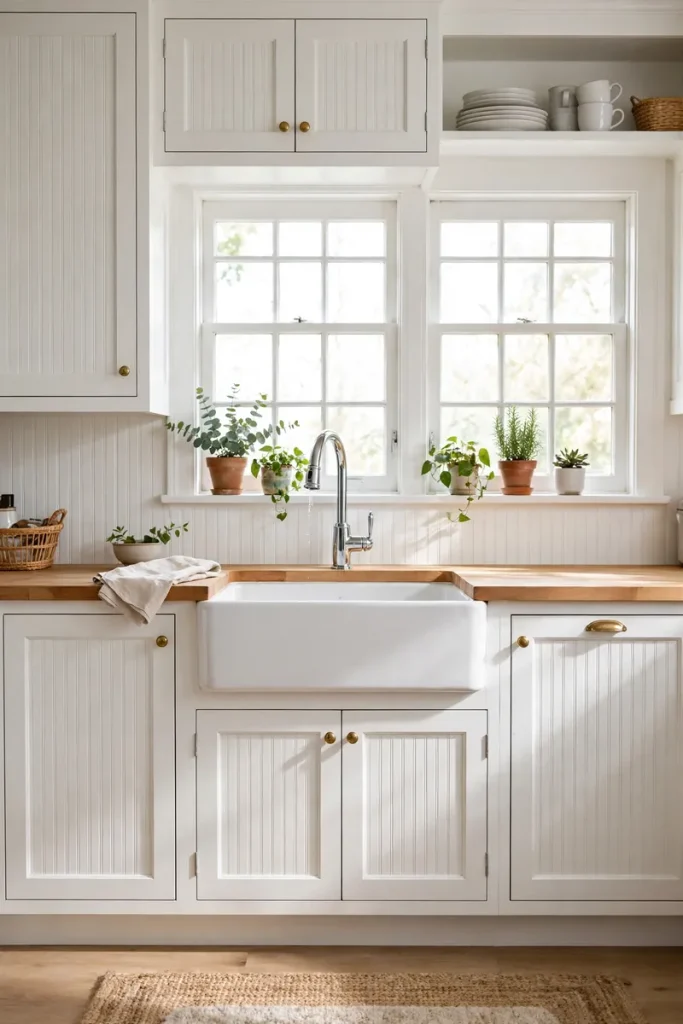
Pale gray gives an all-white kitchen gentle depth without making it dark. Use it on the island, backsplash grout, floor, or lower cabinets. The best gray has an undertone that works with your countertop; some lean blue, green, or beige. Bring samples home instead of trusting a phone screen. This combination is practical for families because the darker lower area hides small scuffs. Painting only the base cabinets also costs less than replacing the entire kitchen. In a rental, use a gray runner, stools, towels, or removable wallpaper inside open shelves for the same layered effect.
Layer Two: Add Warmth, Shape, and Personality
7. Bring In a White-and-Oak Two-Tone Look
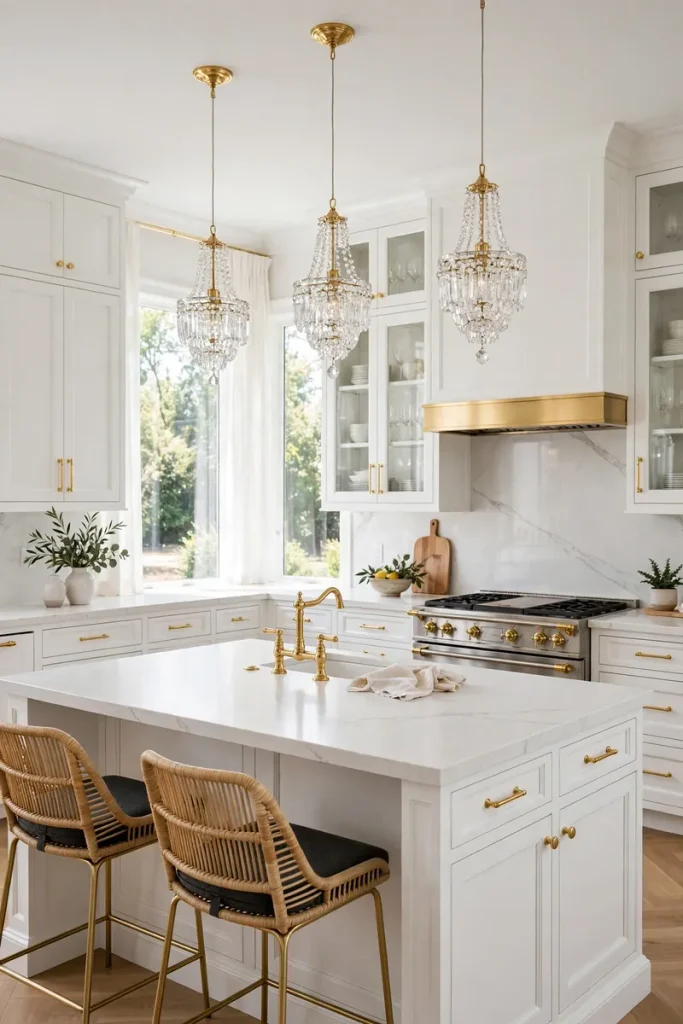
Two-tone cabinets solve a common white-kitchen problem: too much sameness. Keep white cabinets above to preserve an airy view, then use oak or wood-look fronts below for warmth and durability. This layout can make ceilings feel taller because the upper half visually fades into the walls. Real custom wood cabinetry is an investment, but cabinet refacing or replacing only selected fronts may control the cost. A budget version uses a wood island, breakfast table, or freestanding hutch. Choose one main wood finish and repeat it at least twice so it feels connected.
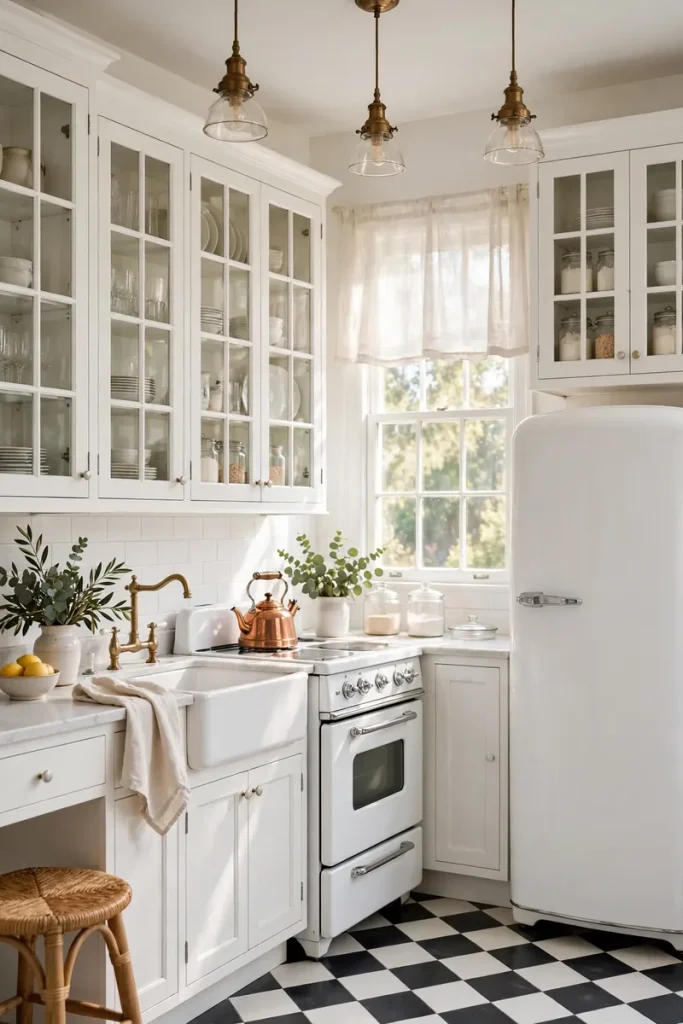
8. Create a Cozy Breakfast Corner
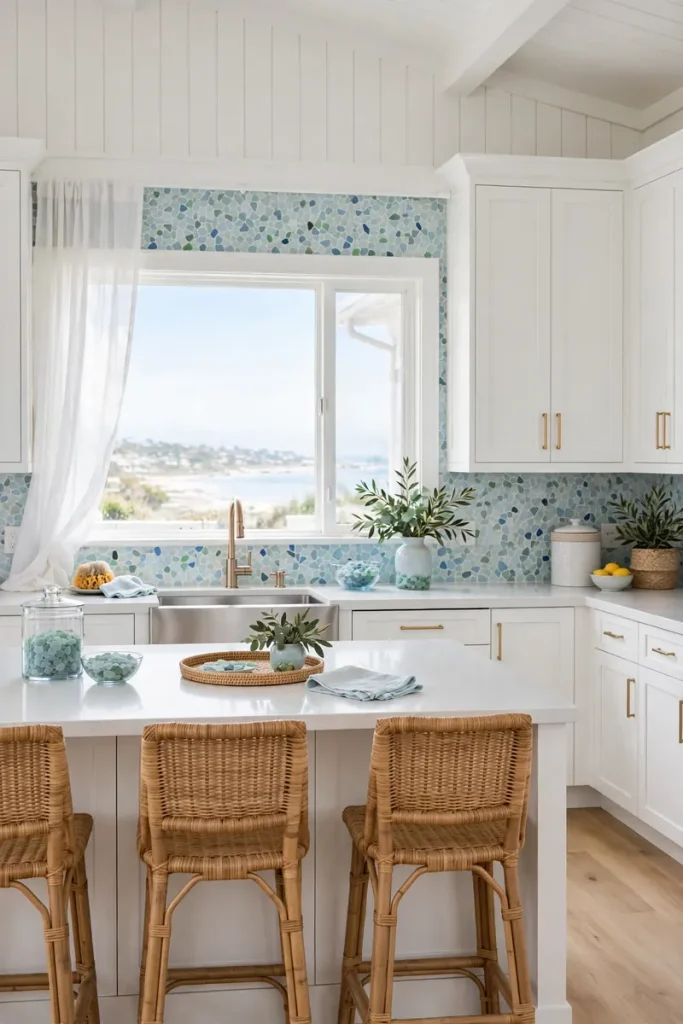
A white kitchen does not have to be only cabinets and appliances. A small breakfast corner with a round table, padded chairs, and one warm pendant can make it the room where everyone actually wants to sit. Round tables are friendly to tight traffic paths because there are no corners waiting to attack your hip. If space is tiny, try a wall-mounted drop-leaf table or a narrow counter with two stools. Washable seat covers are smart for homes with kids, pets, or adults who believe coffee can fly. Add a small vase or bowl of fruit for color without clutter.
9. Try White Shaker Cabinets for Timeless Style
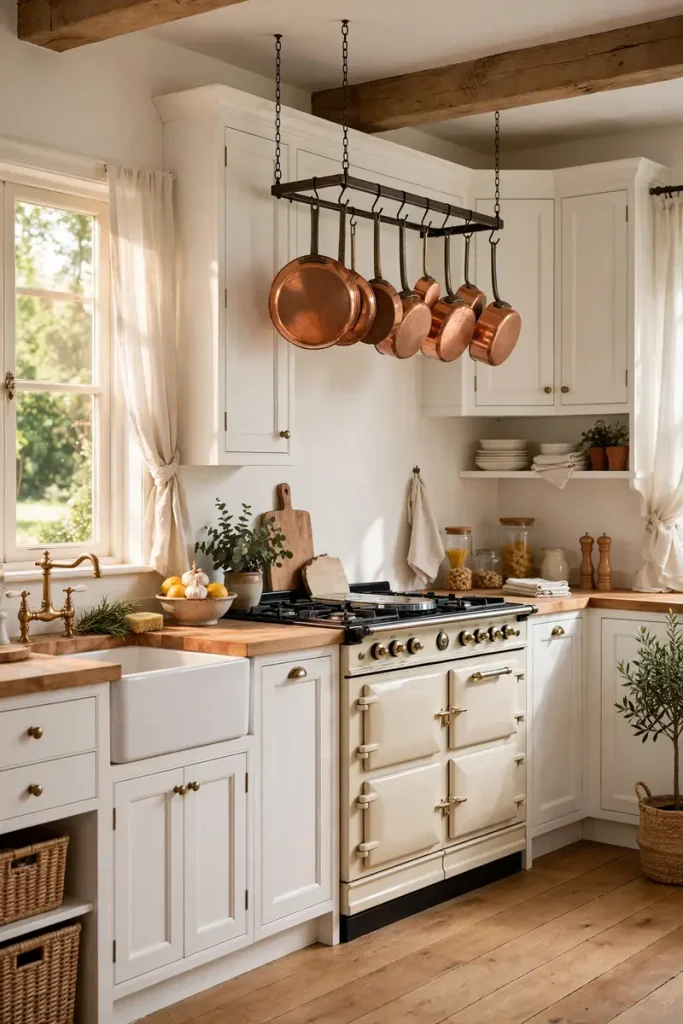
Shaker cabinets have a simple framed door that fits traditional, farmhouse, and transitional homes. They add shadow and detail without looking busy, which makes them a safe long-term choice. If your cabinet boxes are solid, new doors may give you the look for much less than a full tear-out. Ask about painted wood versus medium-density fiberboard; each handles moisture, expansion, and dents differently. A semi-gloss or satin finish is easier to wipe than flat paint. For renters, mimic the clean lines with framed white art, paneled storage furniture, or removable trim only if it will not damage the surface.
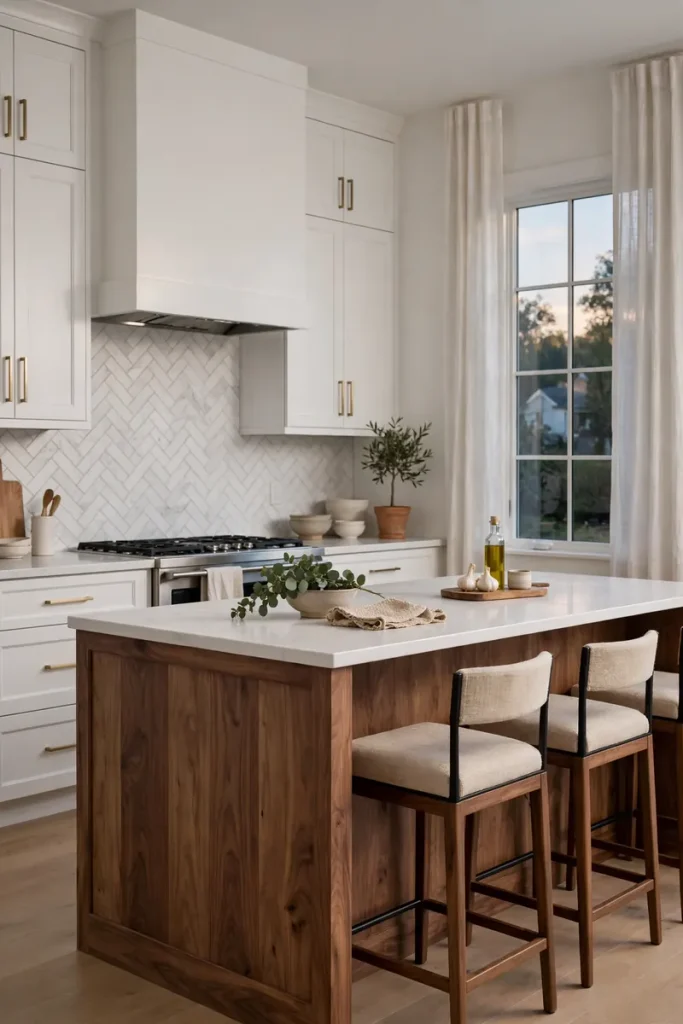
10. Turn the Island Into the Star
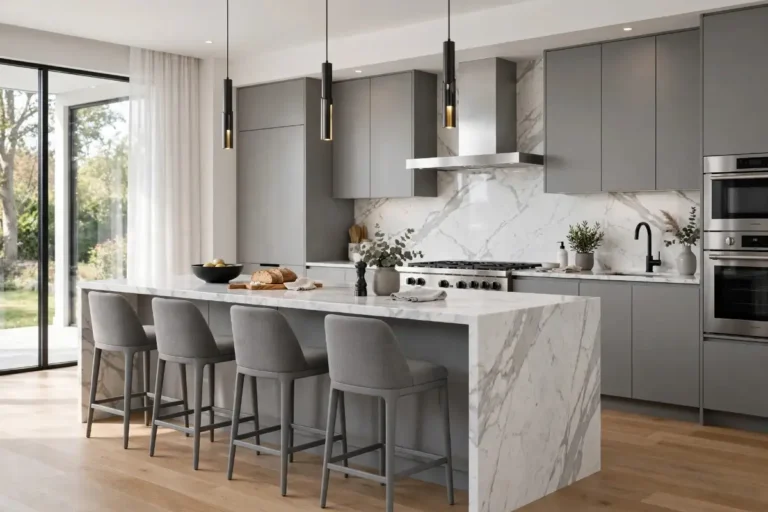
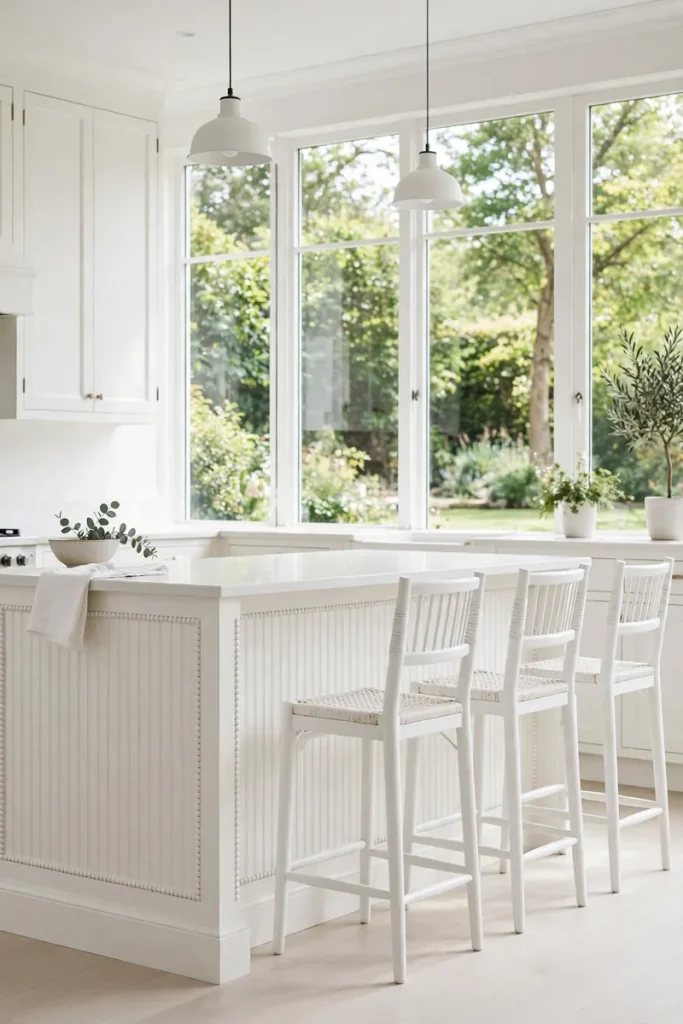
A white island can feel like bright furniture in the center of the room. Give it personality with paneled sides, comfortable stools, statement lights, and a durable worktop. Before choosing a huge island, protect the walkways around it and check how the dishwasher, oven, and refrigerator doors open. Bigger is not always better; sometimes it is just a very expensive obstacle. A movable cart offers similar prep space in a small kitchen and can be rolled away. If you already own an island, changing the pendants or stools can refresh the entire scene without touching the cabinets.
11. Mix White With a Soft Blue Accent
Soft blue makes white feel fresh and calm, like a coastal morning without the souvenir signs. Use it sparingly on an island, pantry door, runner, or dishes. Dusty blue usually feels more grown-up than bright aqua and works well with nickel, brass, or wood. Paint is the least expensive way to test the idea, and a single accent can be changed later. In a rental, blue counter stools or removable fabric shades give you color without permanent work. Repeat the blue in two or three small places, then stop before the kitchen starts auditioning to become an ocean.
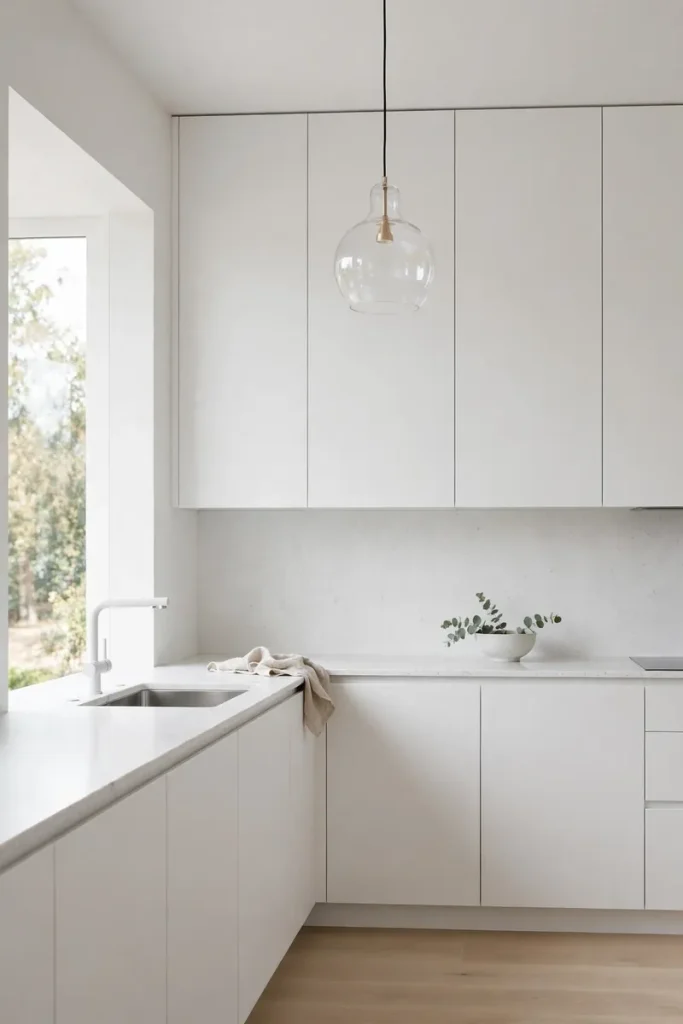
12. Go Sleek With Flat-Front White Cabinets
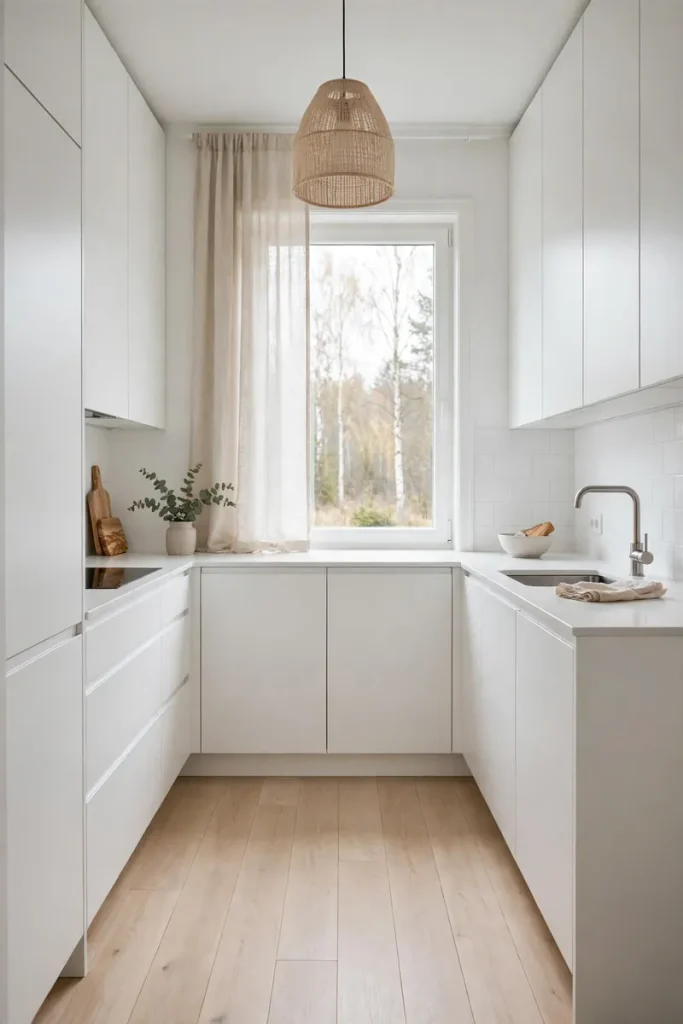
Flat-front cabinets give a white kitchen a calm, modern look. With fewer grooves, they are also quick to wipe, a major win near the stove. Handleless doors look seamless, while slim pulls are easier for many hands to use. Glossy finishes reflect light but show fingerprints; matte finishes hide glare yet may need special cleaning. Ask to see a full door sample because a tiny chip cannot show how the finish behaves across a room. Renters can capture the style with plain-front storage cabinets, a simple white cart, and clutter-free counters.
Layer Three: Make the White Kitchen Work Hard
13. Use Warm Metals for a Polished Glow
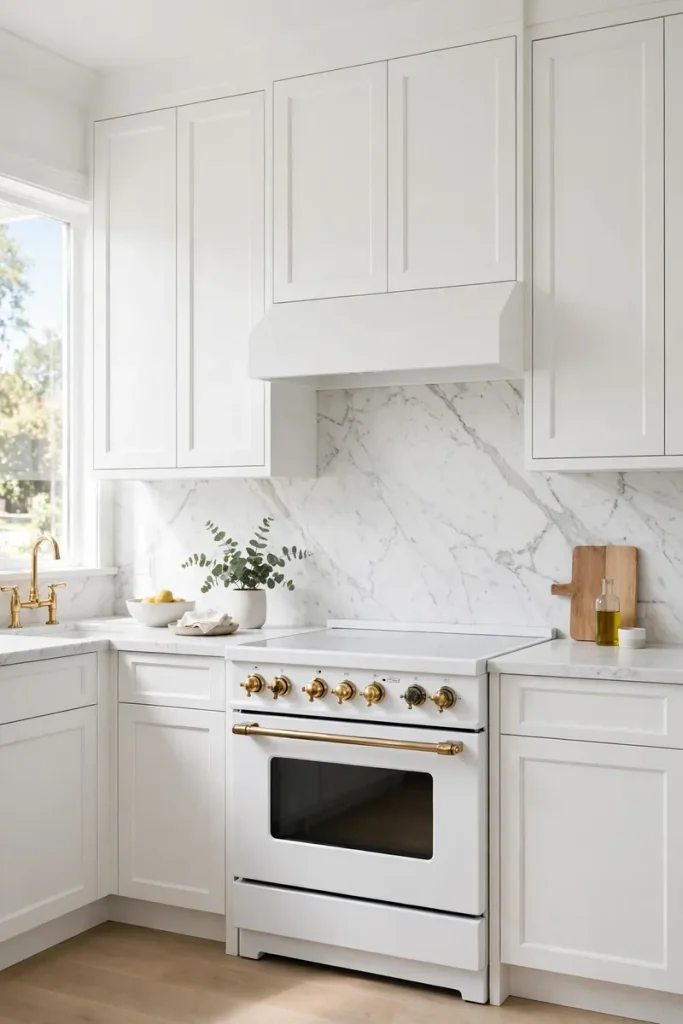
Brass, champagne bronze, and copper add a jewelry-like glow to white cabinets. The trick is restraint. Choose one main metal for cabinet hardware and repeat it in a light or faucet; other metals can stay quieter. Living finishes change with age, while coated finishes remain more even, so decide whether you enjoy patina. Hardware is a manageable upgrade, but faucets and electrical fixtures may require professional installation. If the budget is tight, a brass tray, picture frame, or utensil cup adds warmth. I once mixed four gold shades in one room; it looked less ‘collected’ and more ‘lost-and-found.’
14. Let a Dark Floor Ground the Room
A charcoal tile, dark wood-look plank, or deep brown floor can anchor a bright white kitchen. It creates contrast and can make pale cabinets look even cleaner. Dark floors do show crumbs and pet hair, so choose a finish with grain or gentle color variation rather than a perfectly solid shade. For kitchens, check water resistance and slip ratings before choosing a material. Luxury vinyl may be a practical mid-priced option, while porcelain tile can be durable but harder underfoot. Renters can use a dark washable runner to test the contrast without changing the floor.
15. Build Storage Into Every White Wall
White kitchens look peaceful when everyday items have a home. Add deep drawers for pots, pull-out trays for pantry goods, vertical dividers for baking sheets, and a narrow cabinet for spices. Custom inserts add cost, so decide which problem annoys you daily and fix that first. A $20 bin that stops lids from falling on your toes may bring more joy than a fancy appliance. In small kitchens, take storage upward with cabinets or shelves near the ceiling, but keep a safe step stool nearby. Renters can use tension shelves, over-door racks, and labeled bins that leave no holes.
16. Add Open Shelves Without Adding Chaos
A pair of open shelves can break up a wall of white cabinets and give pretty dishes room to breathe. Put daily-use items on the lower shelf so they are washed often, and keep decor simple above. Wood shelves add warmth; white shelves blend in and make a small room feel lighter. Secure heavy shelves into proper supports and follow load limits. If dust makes you grumpy, skip the giant display and use one short shelf. Renters can choose a freestanding baker’s rack or counter shelf. Curate the display—seventeen mismatched mugs are a collection, but they can also look like a meeting.
17. Finish With Greenery and Real-Life Texture
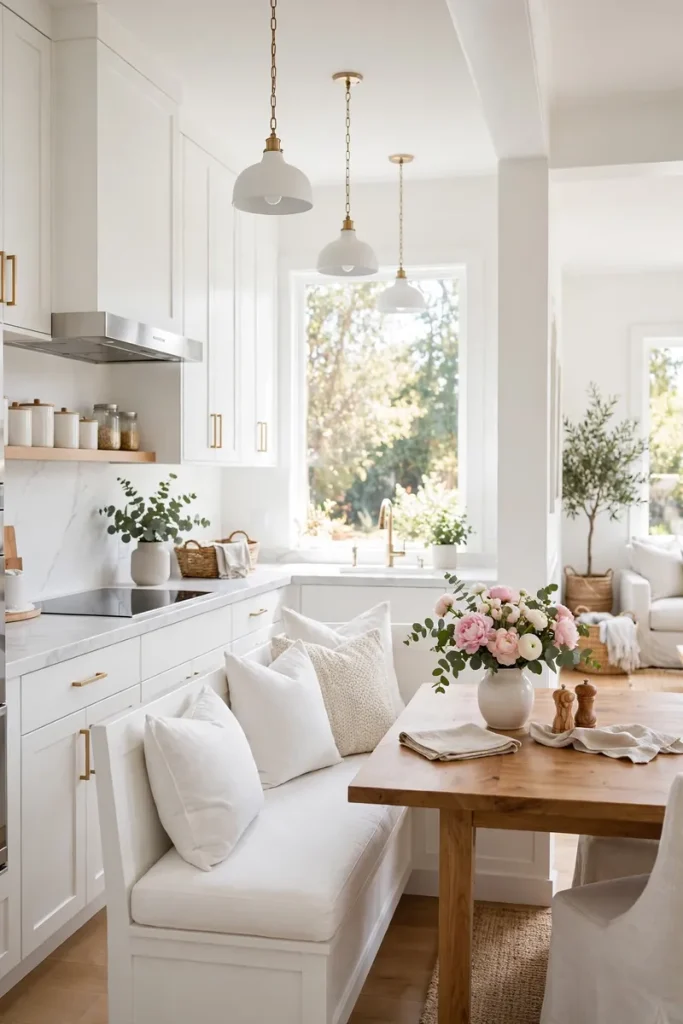
Plants, herbs, linen towels, woven baskets, and pottery stop a white kitchen from feeling staged. Choose plants for the light you actually have, not the light you wish you had. Herbs near a sunny window are useful, while a convincing faux stem can work in a dark corner. Washable natural-looking textiles soften hard surfaces, and a bowl of lemons or apples adds easy color. These details are ideal for renters and budget makeovers because they move with you. My favorite white kitchen had expensive stone, but what I remember is the crooked basil pot by the sink. Real life is the finishing touch.
A Simple White Kitchen Plan Before You Shop
Start by listing what is truly wrong with your kitchen. Is it dark, crowded, hard to clean, short on storage, or simply not your style? Then choose one main white, one supporting material, one accent color, and one metal. This small palette keeps purchases connected. Test samples in the room, measure every walkway, and save part of the budget for surprises. Old walls love surprises. They usually hide behind the first cabinet you remove.
If you own your home, compare the cost of painting, refacing, and replacing cabinets before deciding. A contractor can also tell you whether plumbing, electrical work, or ventilation will change the budget. If you rent, focus on hardware you can restore, removable surfaces approved for the area, better lighting, textiles, art, and portable storage. Always keep original pieces safely labeled.
The Bright Finish
A successful white kitchen is not a blank room. It is a bright background for wood grain, family meals, colorful fruit, a favorite coffee mug, and the little messes that prove people live there. Choose the version that fits your light, space, cleaning habits, and budget. Then add warmth until it feels like your home—not a showroom where nobody is allowed to make toast.