
17 Small Bedroom Design Ideas 2026: Transform Your Tiny Space Into a Cozy Haven
Look, I get it. You’re staring at your small bedroom right now, feeling like you’re living in a shoebox, wondering how the heck you’re supposed to fit your life into this cramped space. Your clothes are everywhere, your bed takes up half the room, and don’t even get me started on trying to add a desk or a reading corner. But here’s the truth nobody tells you: small bedrooms aren’t your enemy—bad design is. Let me show you how to make your tiny room feel like a luxury suite.
Why Small Bedroom Design Matters More Than Ever
Small bedroom design ideas for 2026 aren’t just about making things “pretty”—they’re about reclaiming your sanity and your space. With urban living getting more expensive and apartments shrinking faster than your bank account after rent day, knowing how to maximize every square inch has become a survival skill.
Here’s something wild: According to recent housing data, the average bedroom size in new apartments has dropped by 15% over the last decade. That means your grandparents’ closet was probably bigger than your entire sleeping area. But don’t stress—this actually forces us to get creative, and that’s where the magic happens.
Key Statistics You Should Know:
- 68% of millennials and Gen Z live in spaces under 600 square feet
- Proper bedroom design can increase your home’s resale value by 3-7%
- Smart storage solutions can recover up to 30% of your usable floor space
- People who optimize their bedroom layout report 40% better sleep quality
The game has changed. We’re not just designing bedrooms anymore—we’re engineering personal sanctuaries that work overtime as offices, gyms, and entertainment zones. Let’s dive into the strategies that actually work.
1. Murphy Beds: The Ultimate Space-Saving Weapon
Murphy beds (also called wall beds) are like having a magic trick in your bedroom. During the day, your bed literally disappears into the wall, giving you an entire room to work with. At night, you pull it down and boom—instant bedroom again.
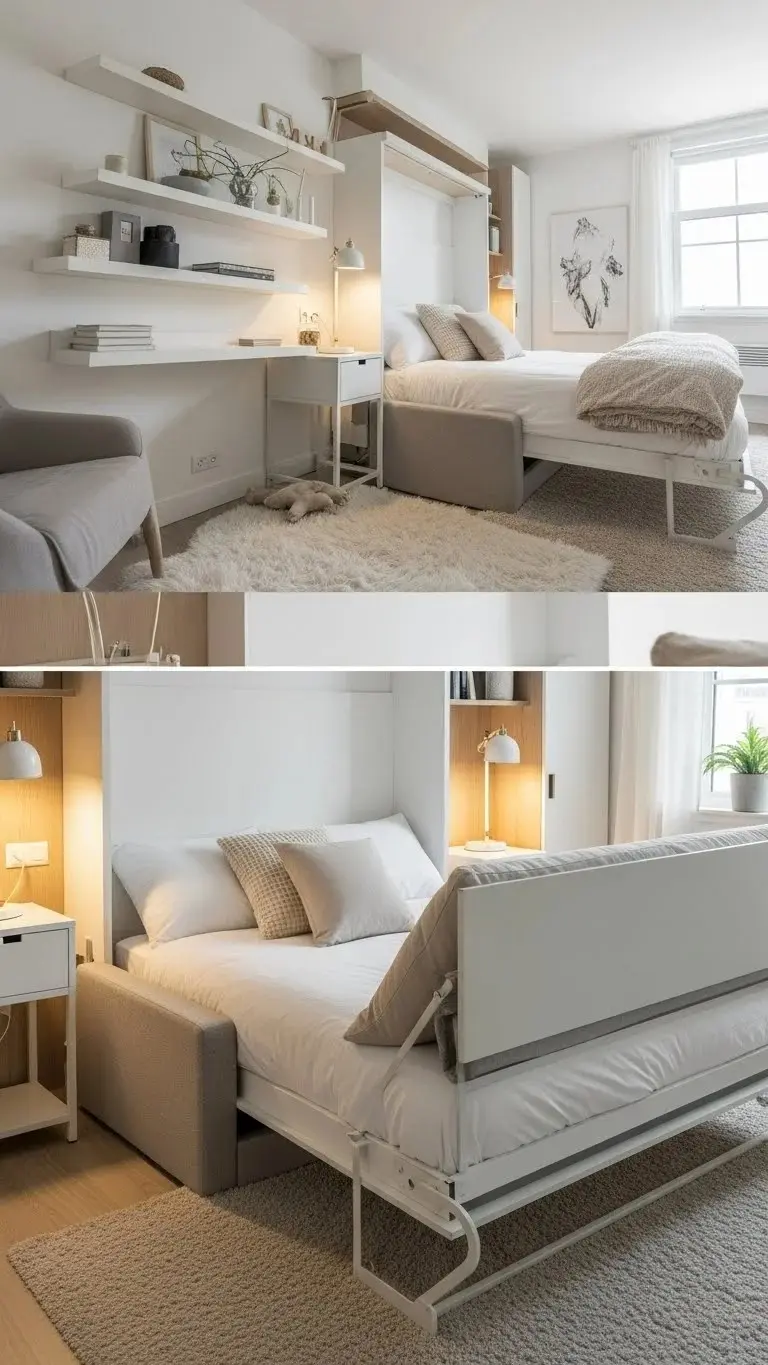
My friend Sarah lives in a 250-square-foot studio in Brooklyn. She installed a Murphy bed last year, and it literally changed her life. Now she has space for yoga in the morning, a proper desk for work, and she’s even hosted small dinner parties. The bed folds up in 30 seconds, and nobody even knows it’s there. Modern Murphy beds come with built-in shelving, USB ports, and some even have sofas attached to the front. We’re talking serious functionality here.
2. Vertical Storage Solutions That Actually Work
Vertical storage means using your walls from floor to ceiling instead of letting all that space go to waste. Think tall bookshelves, floating shelves, and wall-mounted cabinets that draw the eye upward and keep your floor clear.
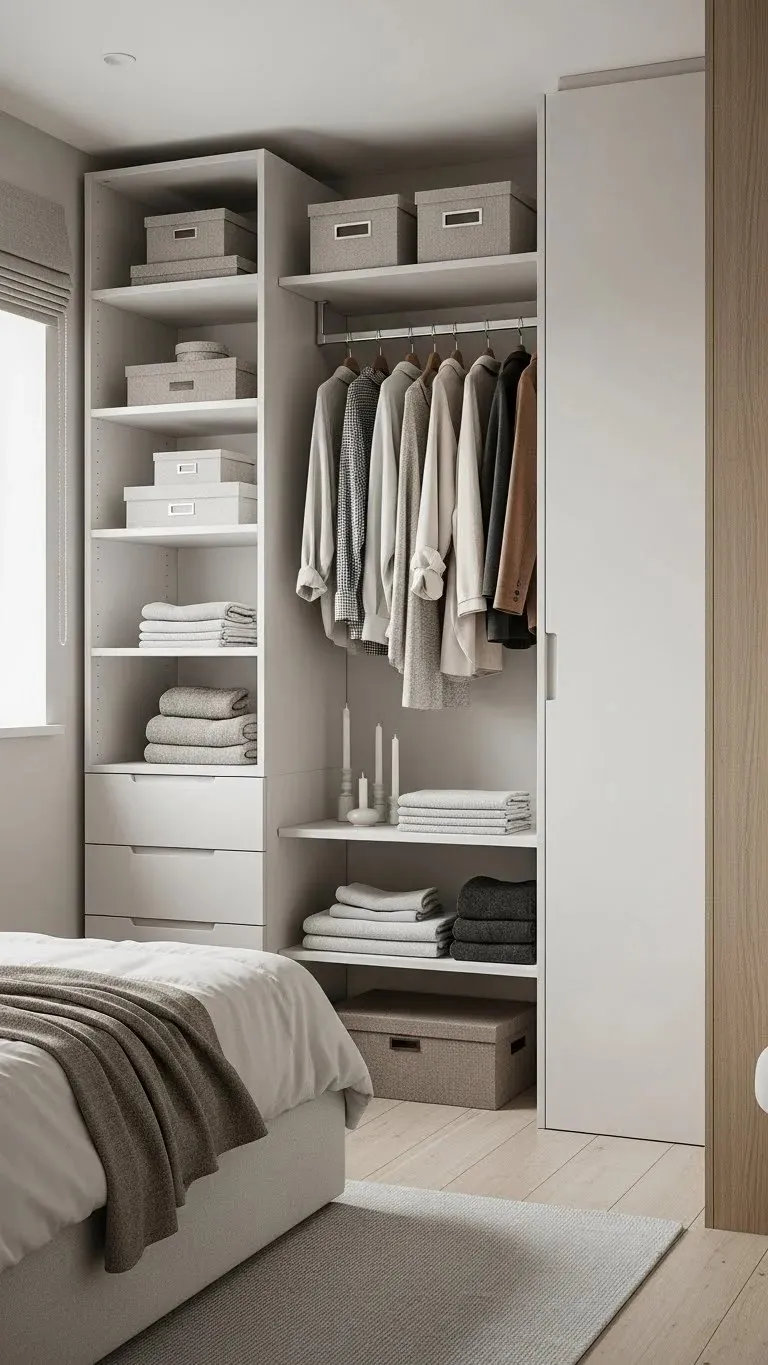
Here’s what most people miss: when you go vertical, your room feels bigger because you’re not cluttering the walking space. Install shelves up to 8 feet high (use a step stool, who cares), and suddenly you’ve got storage for books, plants, photos, and all your random stuff without sacrificing precious floor real estate. My neighbor Jason did this in his 10×10 bedroom, and he freed up enough space to add a guitar stand and a small armchair. Game changer.
3. Under-Bed Storage: Your Secret Weapon
Under-bed storage is literally free real estate that most people ignore. We’re talking about the 4-8 inches of space under your bed frame that could hold your entire off-season wardrobe, extra bedding, or those random boxes you can’t throw away.
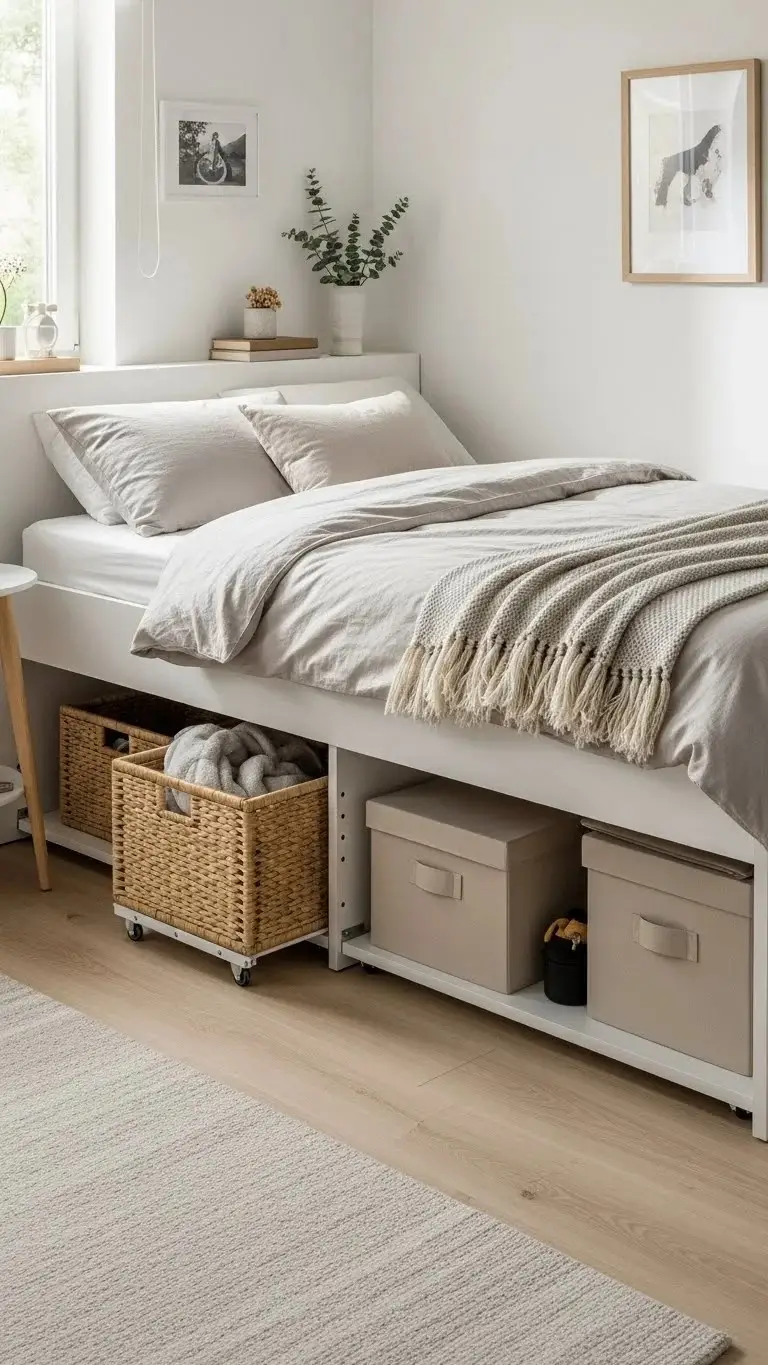
Get some rolling storage bins or those vacuum-sealed bags that compress your winter clothes flat. I keep my entire summer wardrobe under there from October to March, and it’s like having an extra closet. If you’re buying a new bed, get one with built-in drawers—it’s a no-brainer. Some platform beds come with hydraulic lifts that turn the entire mattress into a giant storage lid. That’s the kind of innovation we need in 2026.
4. Light Colors Make Small Rooms Feel Massive
Light color schemes—whites, creams, soft grays, and pastels—reflect natural light and create an illusion of more space. Dark colors absorb light and make walls feel like they’re closing in on you (not the vibe we’re going for).
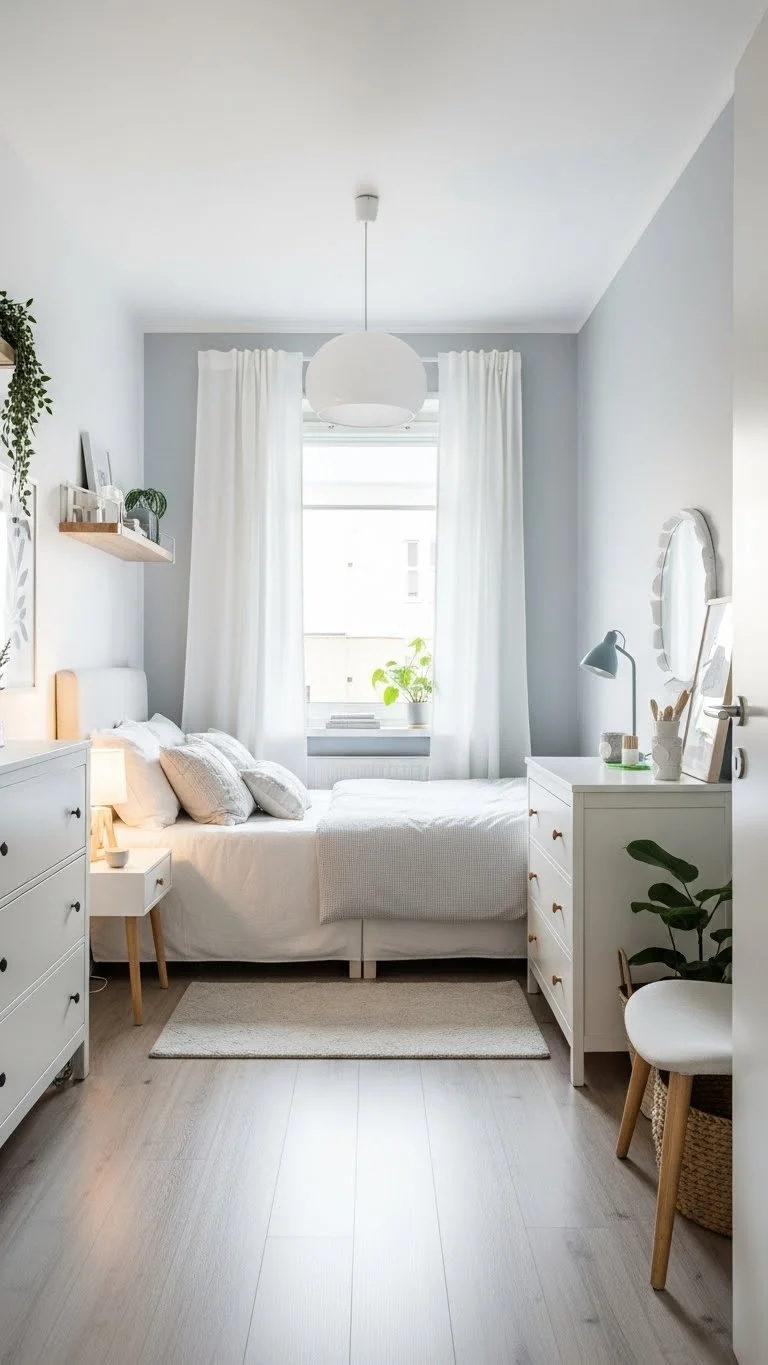
Paint your walls white or light beige, and watch your room grow by like 20% visually. I’m serious. My cousin painted her dark gray bedroom a soft cream color, and people literally ask if she moved to a bigger apartment. She didn’t—she just understood color psychology. Add white or light-colored bedding, curtains, and furniture, and you’ve got yourself a bright, airy space that feels twice its actual size.
5. Mirrors: The Oldest Trick in the Book (Because It Works)
Strategic mirror placement doubles your visual space instantly. A large mirror opposite a window reflects natural light and creates the illusion that your room continues beyond the wall.
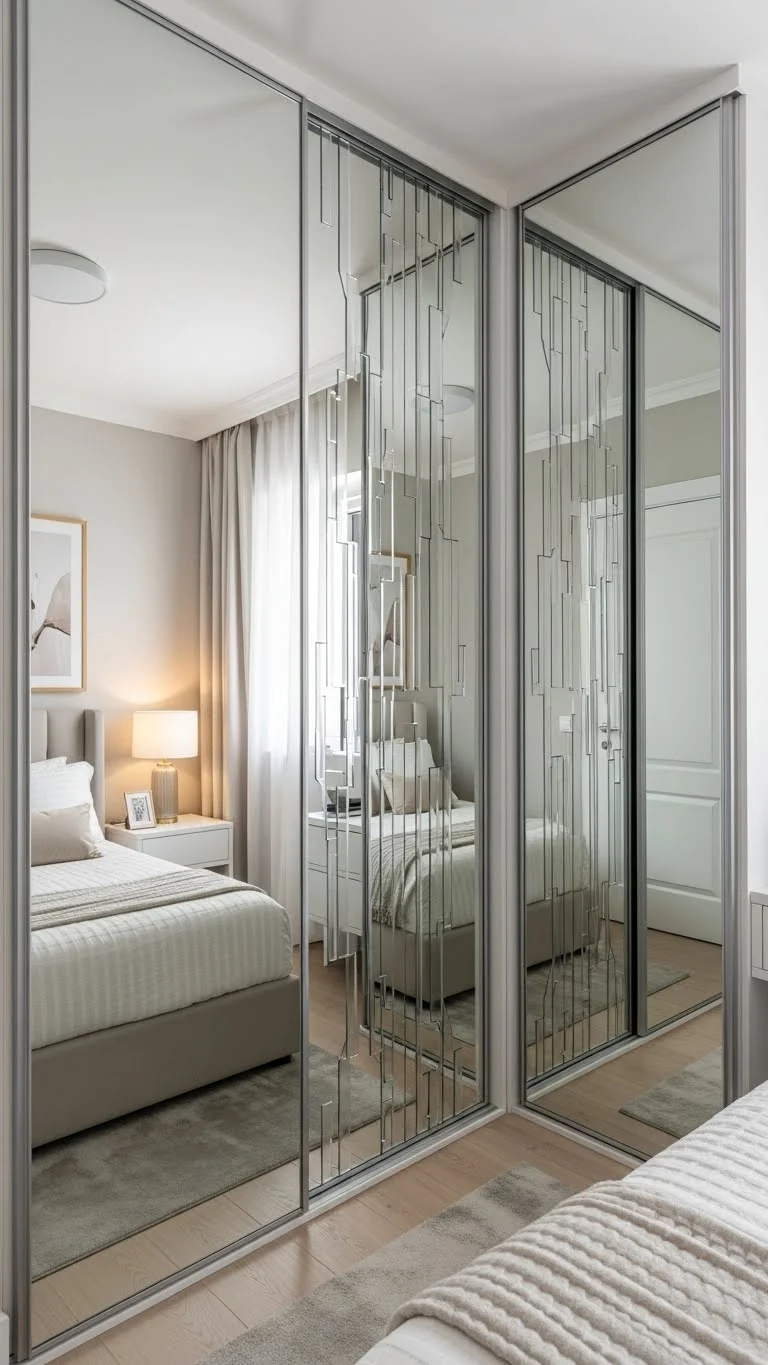
Hang a full-length mirror on your closet door or lean a big one against the wall. Interior designers have been using this trick for centuries because it’s basically magic. My apartment has a 6-foot mirror on one wall, and guests always think my bedroom is way bigger than it actually is. Pro tip: avoid placing mirrors directly across from your bed if you’re superstitious or if seeing yourself first thing in the morning freaks you out.
6. Floating Furniture Keeps Things Breezy
Floating furniture—like wall-mounted nightstands, desks, and shelves—keeps your floor visible and makes the room feel less cluttered. When you can see the floor under furniture, your brain perceives more space.
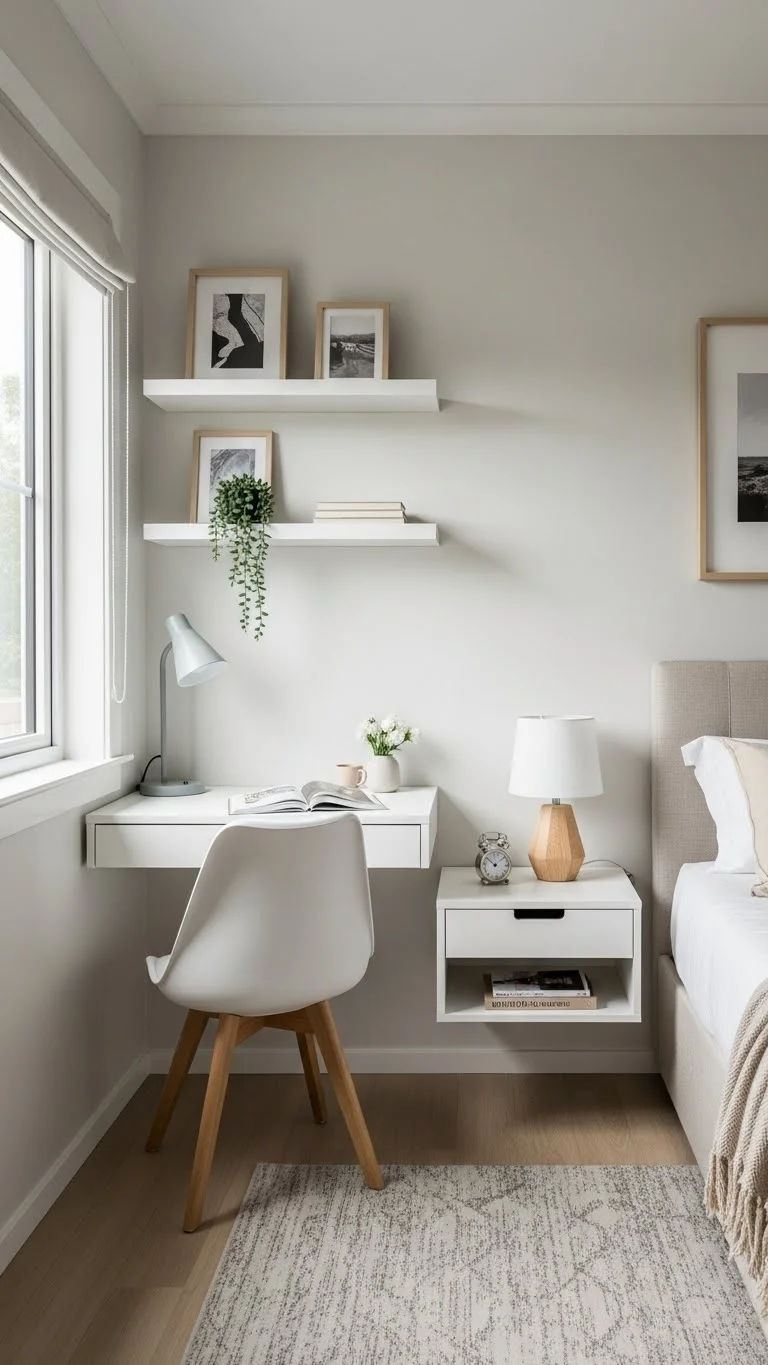
I installed floating nightstands on both sides of my bed, and it opened up so much floor space for cleaning and moving around. You can also mount your TV on the wall instead of using a bulky entertainment center. Wall-mounted desks fold up when you’re not using them, giving you flexibility throughout the day. This approach keeps everything feeling light and airy instead of cramped and claustrophobic.
7. Multi-Functional Furniture Is Your Best Friend
Multi-functional furniture means one piece does the job of two or three. Think ottomans that open up for storage, beds with built-in drawers, or desks that convert into vanities.
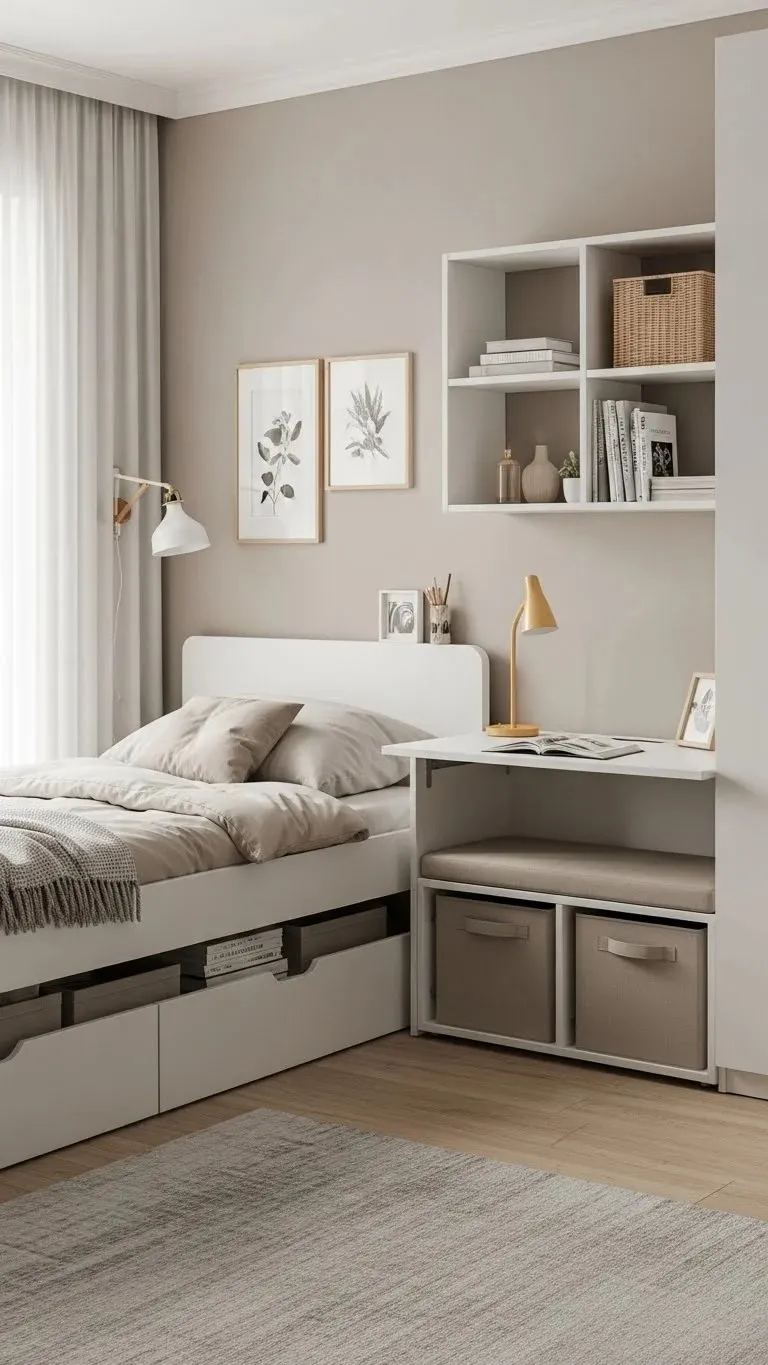
Get a storage ottoman that works as a seat, a footrest, and a place to hide blankets. Buy a desk that doubles as a nightstand. My bedroom has a bench at the foot of the bed that opens up—I store extra pillows and sheets inside. When every piece of furniture earns its keep by serving multiple purposes, you maximize functionality without adding clutter. This is how you win at small space living.
8. Keep Your Nightstands Small and Simple
Compact nightstands take up less visual and physical space while still giving you somewhere to put your phone, water, and that book you’re totally going to finish reading. Oversized nightstands are space killers in small bedrooms.
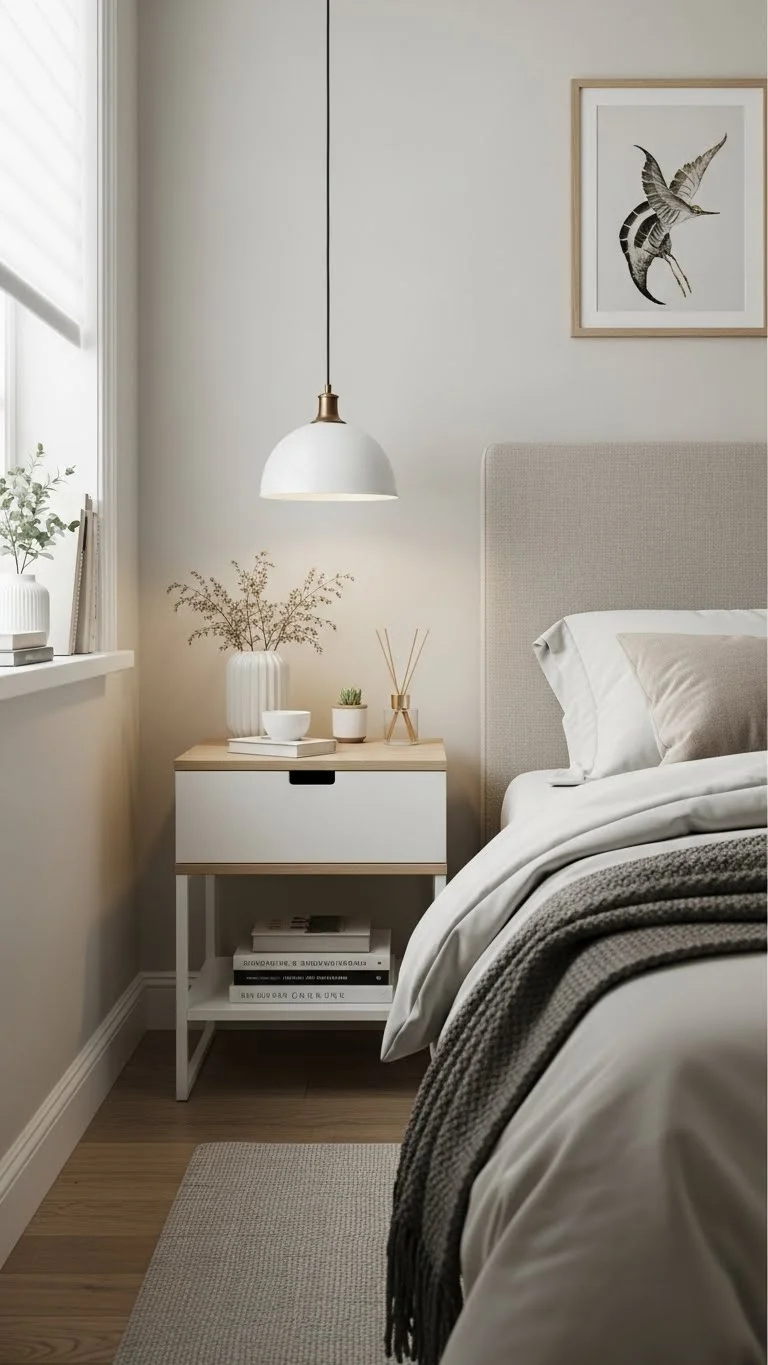
Try using a small stool, a stack of books, or even a tiny wall-mounted shelf instead of traditional bulky nightstands. I’ve seen people use vintage suitcases, small ladders, and tree stumps (if you’re into that rustic vibe). The point is to keep it minimal. You don’t need drawers upon drawers—you need just enough surface area for the essentials and nothing more.
9. Curtains Near the Ceiling Create Height
Hanging curtains close to the ceiling (even if your window is lower) draws the eye upward and makes your walls look taller. This vertical line creates an illusion of height that makes your whole room feel more spacious.
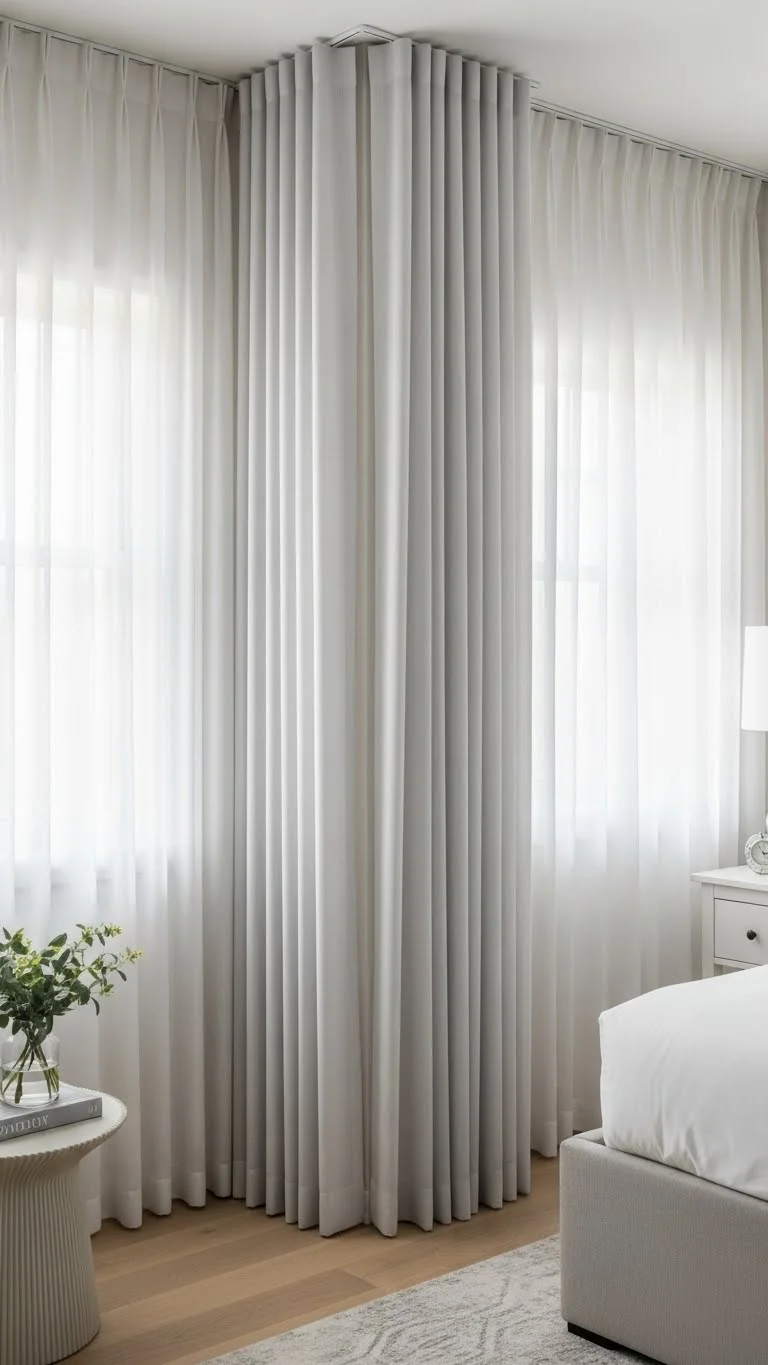
Install your curtain rod right below the ceiling molding and let the curtains pool slightly on the floor. This technique has been used by interior designers forever because it works ridiculously well. My mom did this in her bedroom, and suddenly a room with 8-foot ceilings looked like it had 10-foot ceilings. Use light, flowy fabrics to keep things feeling airy rather than heavy.
10. Corner Spaces Are Goldmines
Corner furniture and storage utilizes those awkward spaces that usually sit empty. Corner desks, shelves, and even beds can turn dead zones into functional areas.
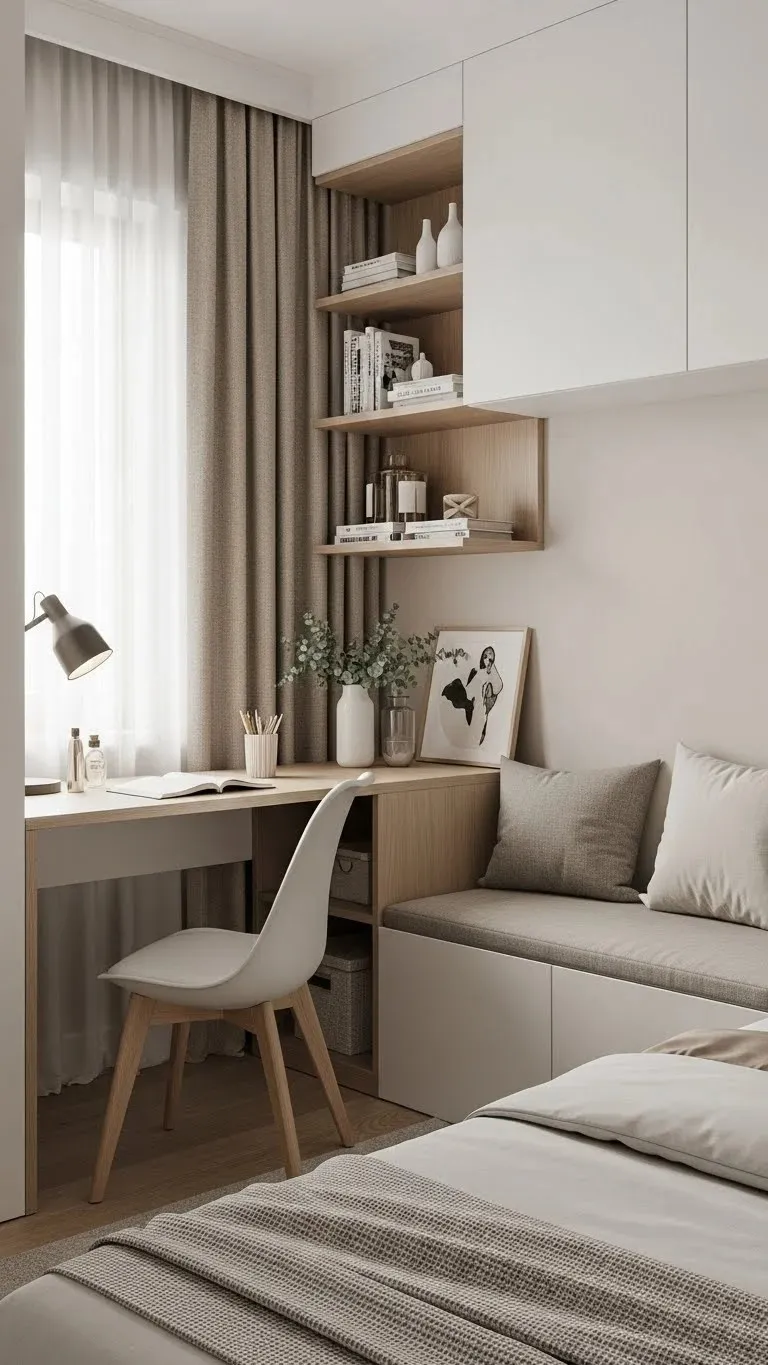
Put a corner shelf unit where two walls meet, and suddenly you’ve got display space for plants, books, and decorative items without using any precious wall real estate. I’ve seen people put their beds in corners to free up the rest of the room for a small seating area or workspace. Corners are like bonus space that most people forget exists—don’t make that mistake.
11. Sliding Doors Save Serious Space
Sliding doors (barn doors or pocket doors) don’t swing out into your room, which means you save the 2-3 feet that a traditional door needs to open. That’s huge in a small bedroom.
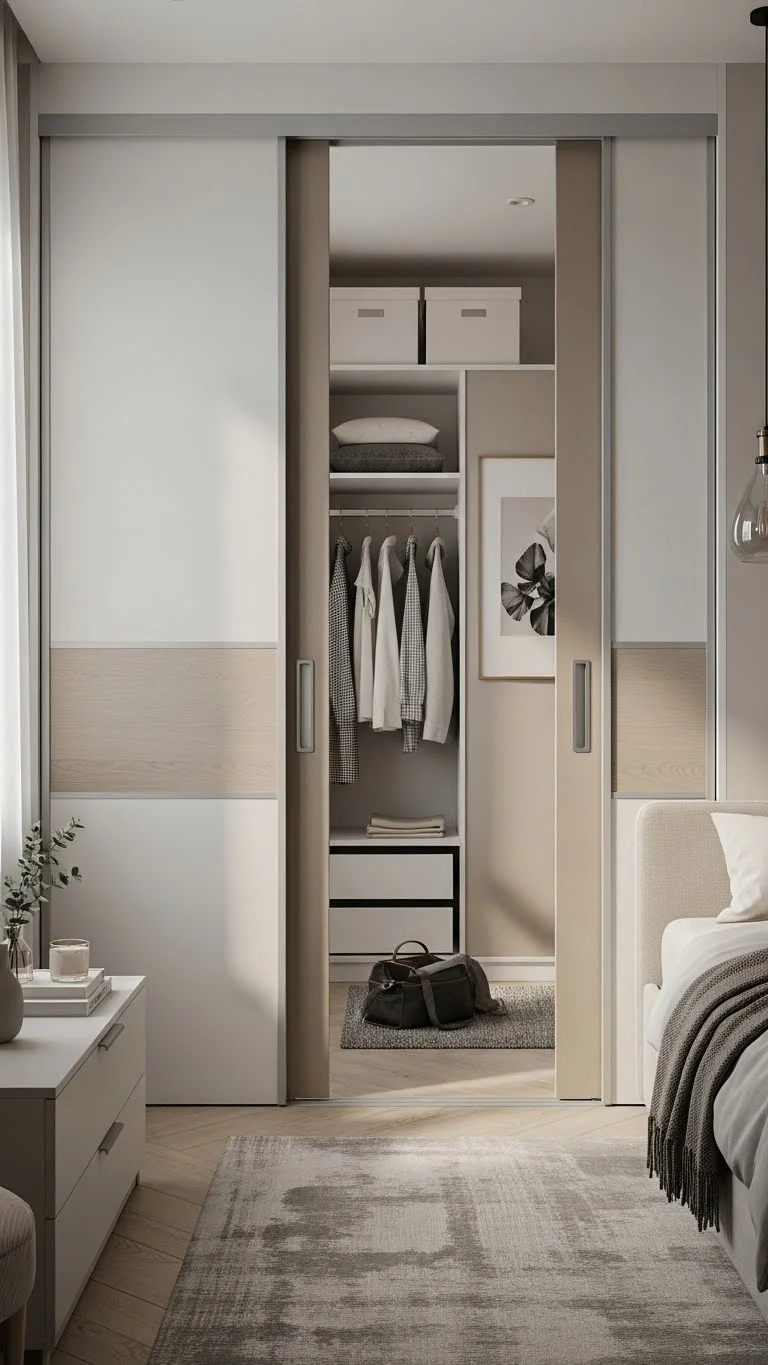
If you’re dealing with a tiny closet, replace those hinged doors with sliding ones. You can also use sliding doors for your bedroom entrance if you own your place. My friend installed a sliding barn door in his bedroom, and it freed up enough wall space to fit a tall dresser that he desperately needed. Every inch counts when you’re working with limited space.
12. Built-In Storage Maximizes Every Inch
Built-in storage—custom shelving, wardrobes, or window seats with storage—is designed specifically for your space, which means zero wasted inches. Unlike store-bought furniture, built-ins fit perfectly and can be tailored to your exact needs.
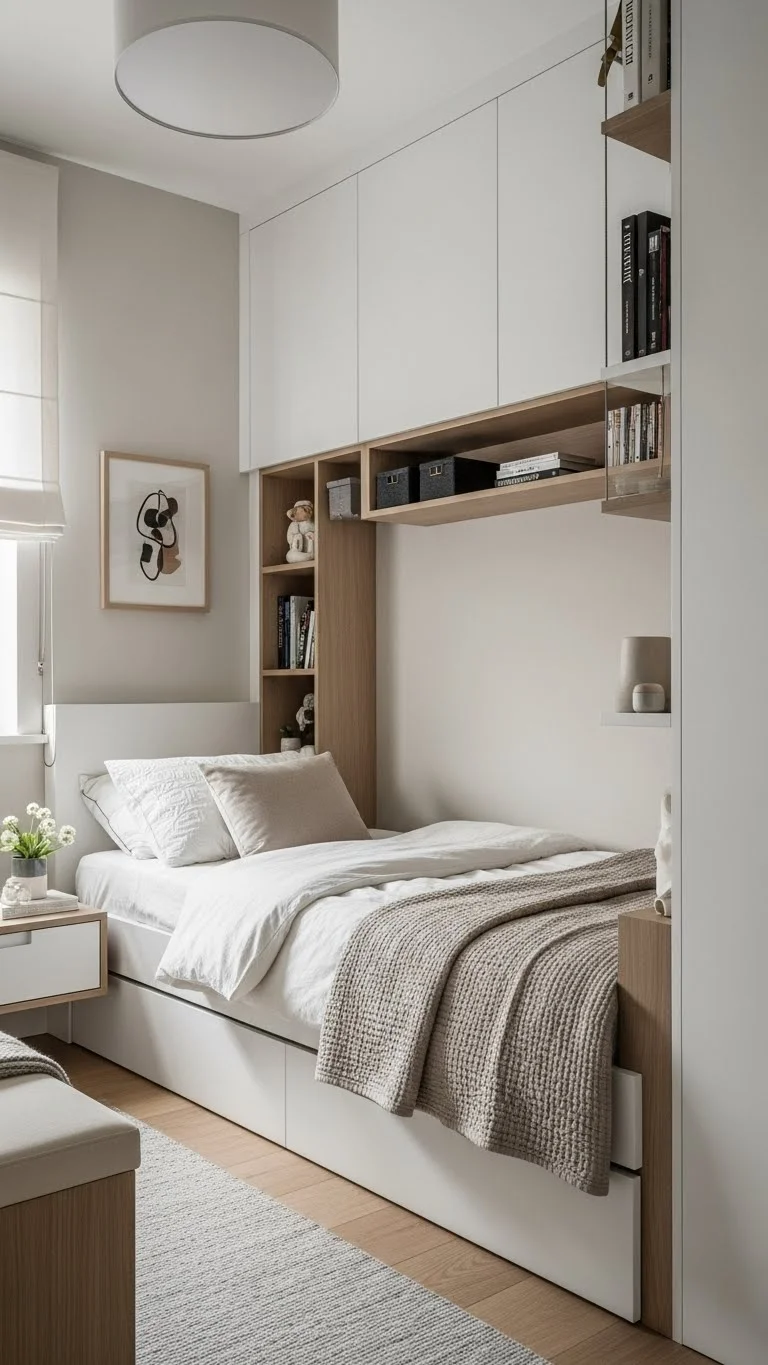
I’ve seen bedrooms with built-in storage benches under windows, custom closets that use every inch of wall height, and even built-in bed frames with integrated drawers and shelves. Yes, it costs more upfront, but if you’re staying put for a while, it’s worth every penny. These solutions turn awkward spaces (like the area around windows or sloped ceilings) into functional storage.
13. Platform Beds With Drawers Are Pure Genius
Platform beds with built-in drawers eliminate the need for separate dressers or storage units. You’re literally sleeping on top of your storage—efficiency at its finest.
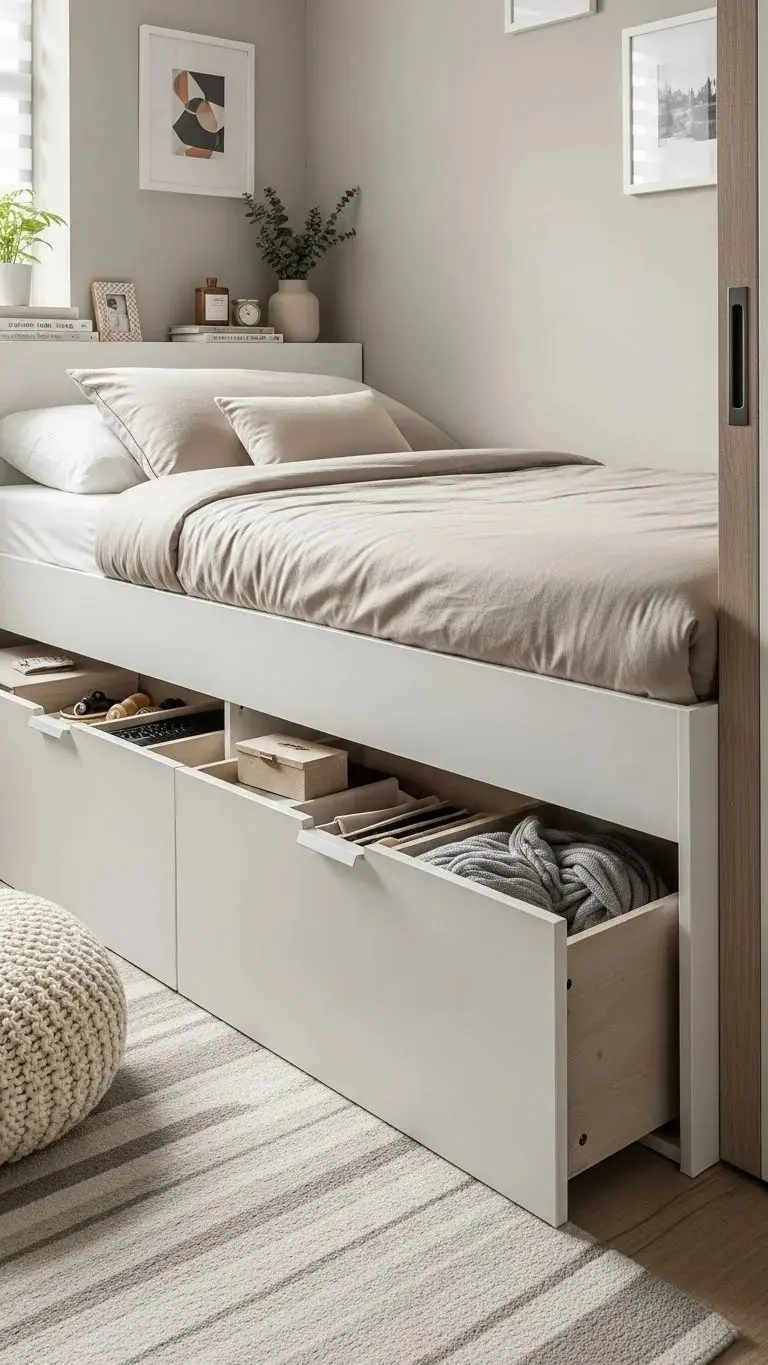
These beds typically have 2-6 large drawers built into the base where you can store clothes, shoes, linens, or whatever you need to hide away. My sister switched to one of these last year and got rid of her entire dresser. She now has way more floor space and still has all her storage. Plus, platform beds sit lower to the ground, which can make ceilings feel higher.
14. Minimalist Approach: Less Is Genuinely More
Minimalist bedroom design isn’t just an aesthetic—it’s a practical approach that keeps small spaces from feeling overwhelmed. The fewer items you have, the bigger your room feels.
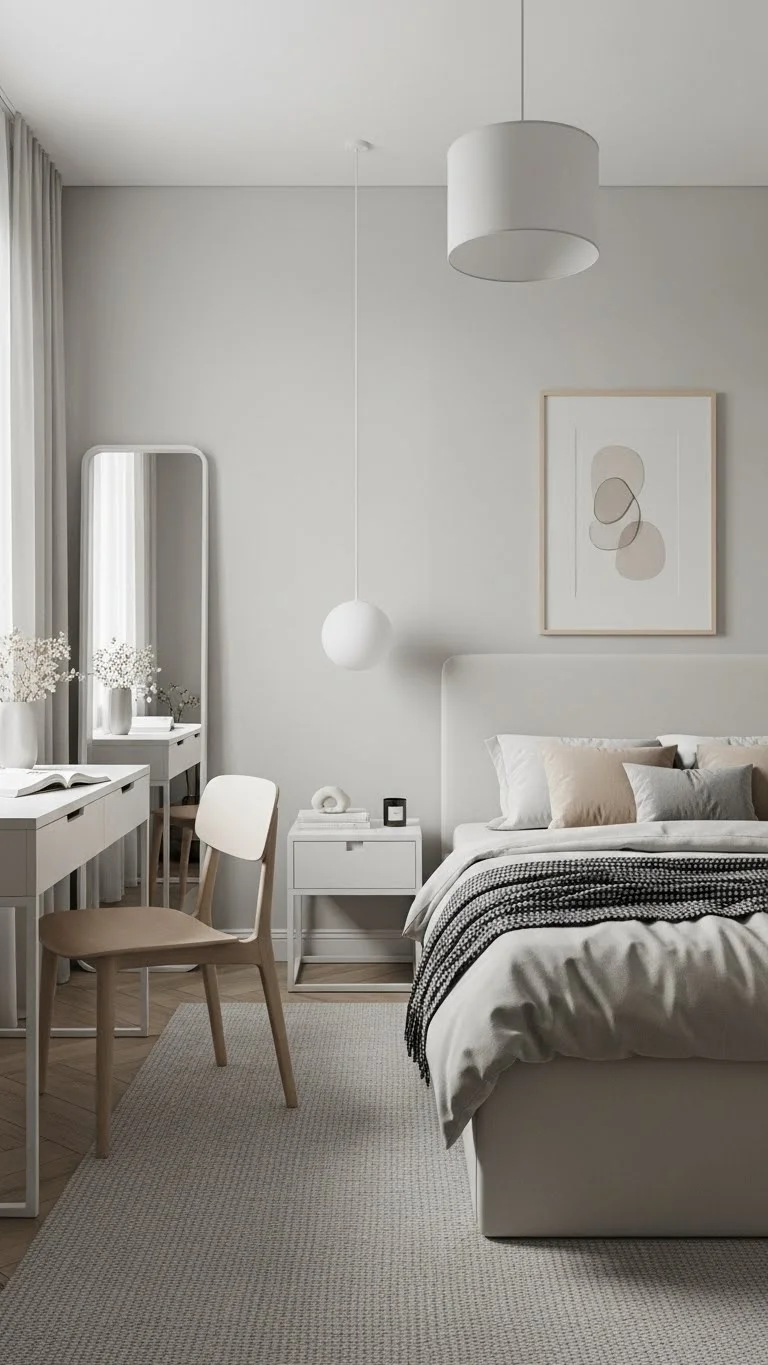
Clear out anything you don’t actually use or love. Keep surfaces mostly bare. Choose a few meaningful decorative pieces instead of twenty random ones. I went through my bedroom last month and donated three bags of stuff I hadn’t touched in a year. The result? My room feels 50% bigger, and I can actually find things now. In small spaces, every item either serves you or suffocates you—choose wisely.
15. Smart Lighting Opens Up Your Space
Layered lighting—combining ambient, task, and accent lighting—creates depth and makes your room feel larger and more inviting. One harsh overhead light makes everything feel flat and small.
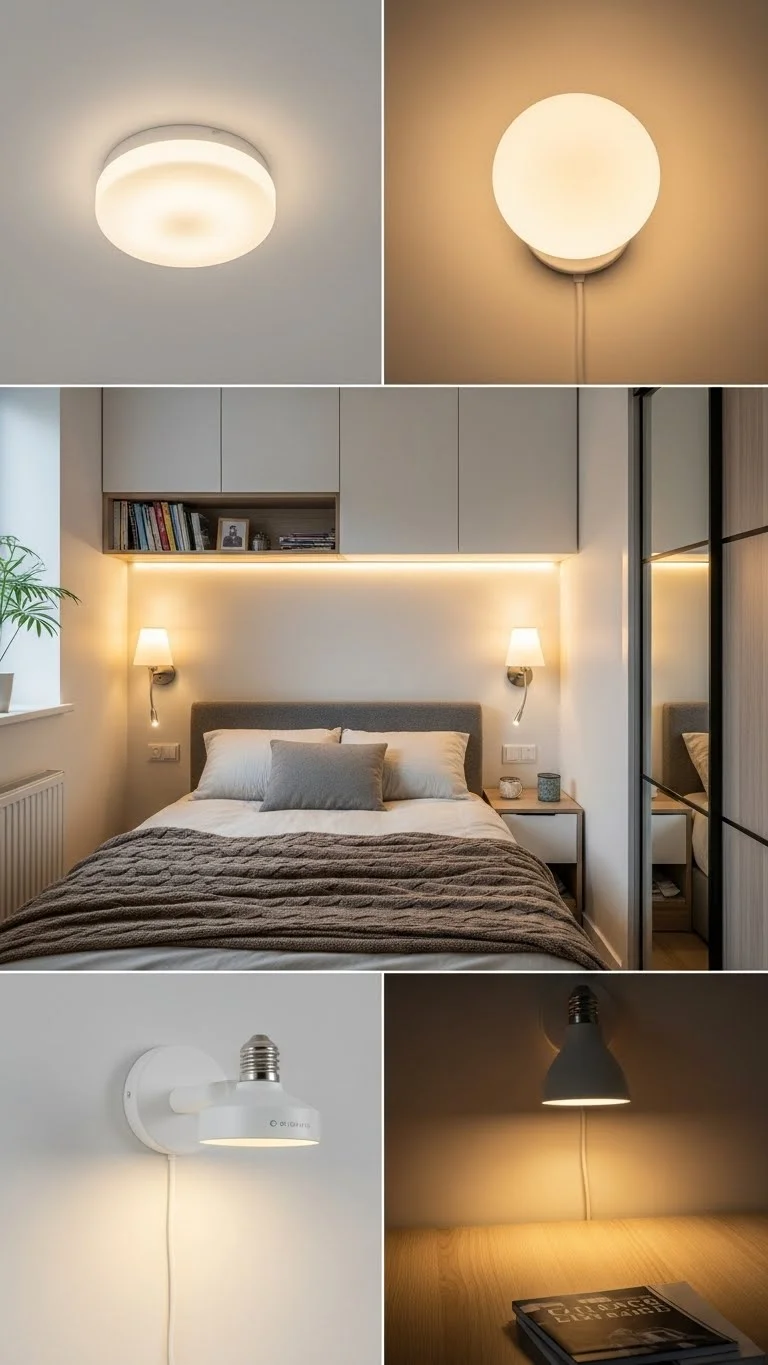
Use a combination of ceiling lights, bedside lamps, and maybe some LED strips behind furniture or under shelves. Warm, soft lighting in multiple spots creates shadows and dimension that add visual interest. I have three light sources in my bedroom, and I can adjust the mood depending on whether I’m working, relaxing, or getting ready for bed. Good lighting is like makeup for your room—it highlights the good stuff and hides the flaws.
16. Fold-Down Desks Give You Workspace Without Sacrifice
Wall-mounted fold-down desks (also called Murphy desks or wall desks) give you a full workspace when you need it and disappear when you don’t. This is perfect for bedrooms that need to double as home offices.
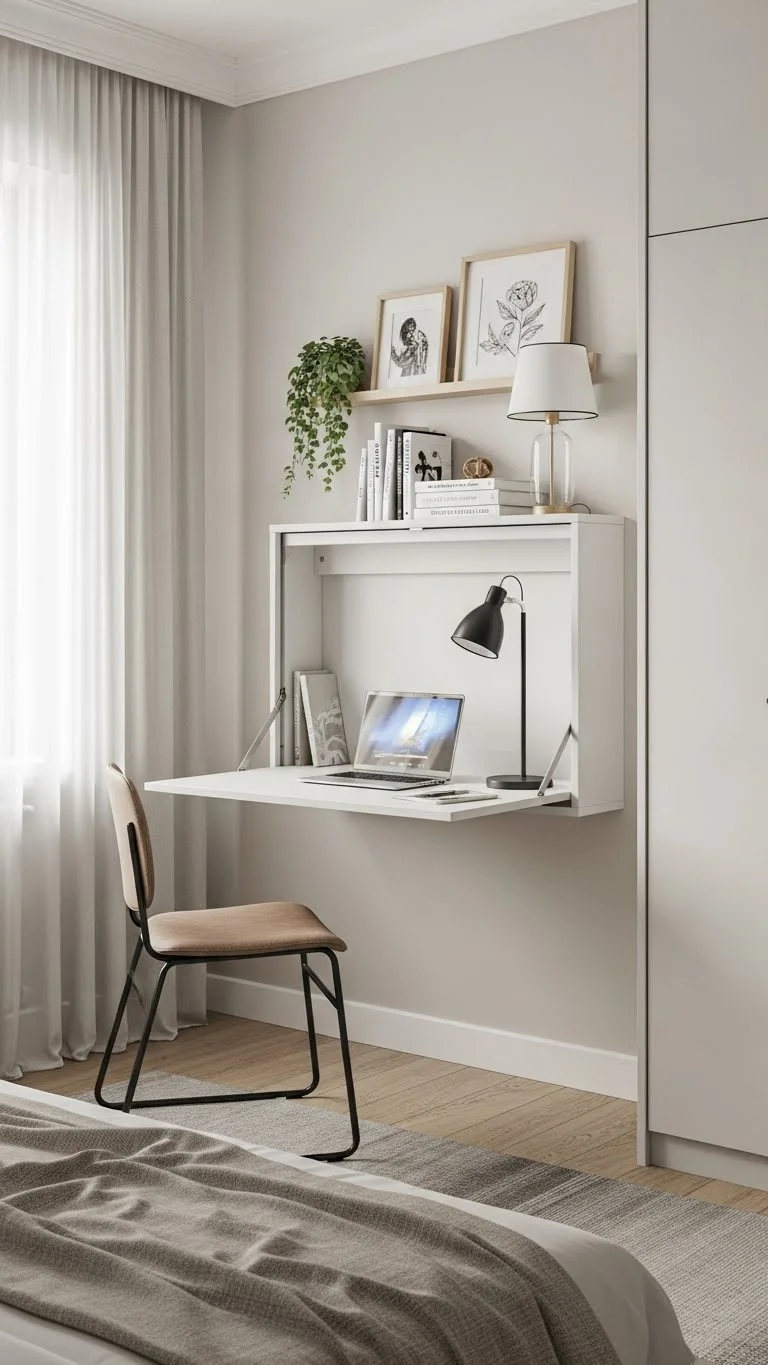
Install one of these bad boys on an empty wall, and you’ve got a desk for work or hobbies that folds flat against the wall when you’re done. I’ve seen designs with built-in shelving, corkboards, and even chalkboard surfaces. My roommate has one in his bedroom, and he uses it every morning for work, then folds it up and has his full bedroom back by 5 PM.
17. Transparent Furniture Creates Visual Space
Transparent or glass furniture—like acrylic chairs, glass nightstands, or lucite desks—doesn’t block sightlines, which makes your room feel more open. Your eyes can see through the furniture to the walls beyond.
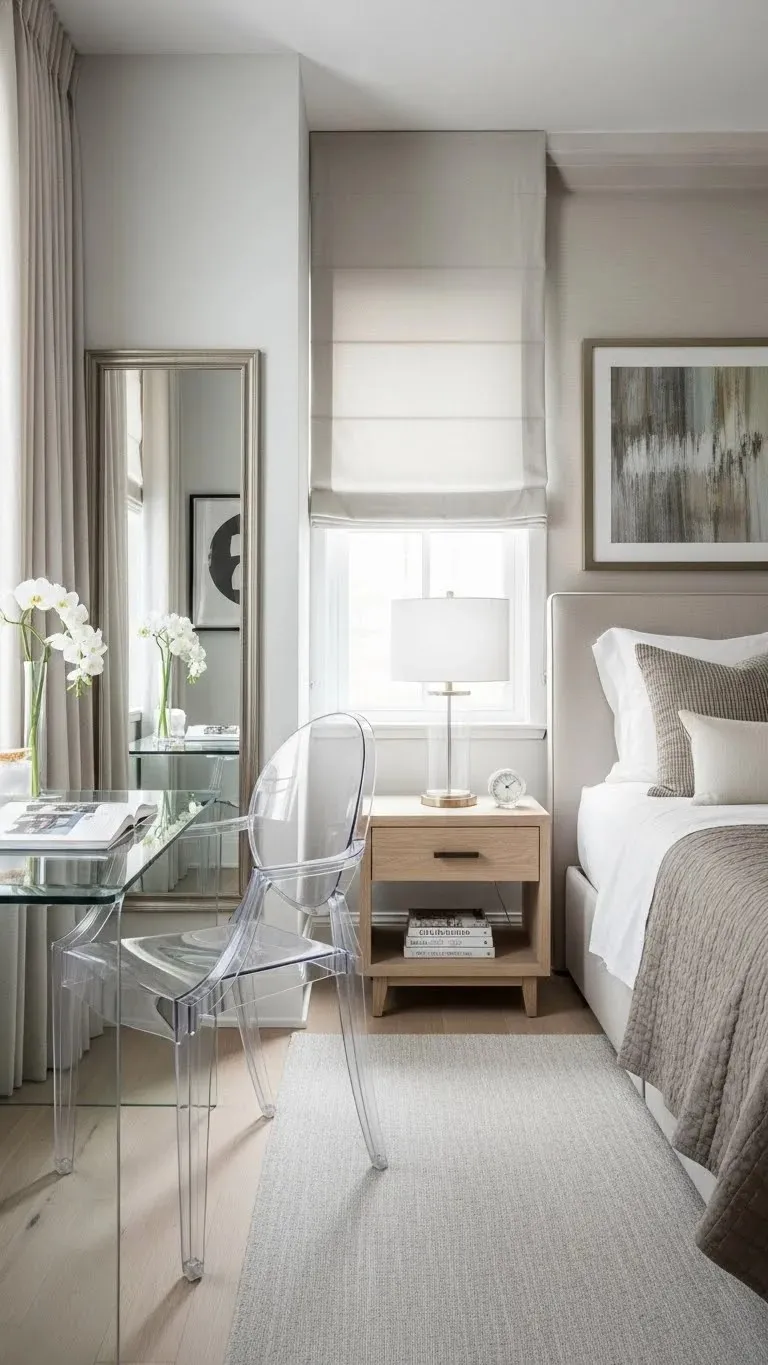
This psychological trick makes spaces feel less crowded even though the furniture is still there. I have a clear acrylic chair in my bedroom, and it’s functionally identical to a regular chair but takes up way less visual space. Ghost chairs (those clear Philippe Starck-style chairs) are popular for exactly this reason. Your room feels airier when light passes through furniture instead of being blocked by solid pieces.
How to Choose the Right Design Ideas for Your Space
Start with your actual lifestyle needs. Don’t just copy what looks good on Pinterest—think about how you actually use your bedroom. Do you work from home? You need desk space. Got tons of clothes? Prioritize storage solutions. Love reading? Create a cozy corner with good lighting.
Measure everything twice before buying anything. I can’t tell you how many people buy furniture that’s too big for their space because they eyeballed it at the store. Use painter’s tape on your floor to mark out furniture dimensions before purchasing. Also, consider your building’s restrictions if you’re renting—you might not be able to paint walls or drill into certain surfaces, which changes your options.
Mix and match these ideas based on your budget and skill level. You don’t need to implement all 17 strategies at once. Start with the easy wins (mirrors, light colors, decluttering) and work your way up to the bigger investments (Murphy beds, built-ins) as your budget allows.
Common Mistakes to Avoid in Small Bedroom Design
Don’t overfill your space trying to make it functional. The biggest mistake I see is people cramming too much furniture into a small bedroom because they want it to “do everything.” Sometimes less is more. If your room feels claustrophobic, remove something rather than rearranging for the hundredth time.
Another huge mistake is using furniture that’s too large. That king-size bed might be comfortable, but if it leaves you only 18 inches to walk around it, you’re going to feel trapped. Scale your furniture to your space. A queen or even a full-size bed might be the smarter choice. Also, avoid heavy, dark furniture in small spaces—it makes everything feel closed in and cave-like.
Don’t forget about air circulation and natural light. Keep windows accessible and don’t block vents with furniture. A stuffy, dark room will always feel smaller than it actually is, no matter how clever your storage solutions are. Let light and air flow naturally through your space.
Conclusion
Small bedroom design ideas for 2026 aren’t about accepting limitations—they’re about getting creative with what you’ve got. From Murphy beds that disappear into walls to transparent furniture that tricks your brain into seeing more space, these 17 strategies give you the tools to transform your cramped bedroom into a functional, beautiful sanctuary. Start with one or two ideas that fit your lifestyle and budget, then build from there. Your small bedroom has way more potential than you think—you just need to unlock it. Now stop reading and start designing. Your dream bedroom is waiting.
FAQs
What is the best color for a small bedroom?
Light colors like white, cream, soft gray, and pale pastels work best because they reflect light and make walls appear farther away. Avoid dark colors that absorb light and make spaces feel smaller.
How can I make my small bedroom look luxurious?
Focus on quality over quantity—invest in good bedding, add layered lighting, use mirrors strategically, and keep clutter minimal. A clean, well-lit room with a few nice pieces always looks more expensive than a cluttered space.
What size bed is best for a small bedroom?
A full-size or queen-size bed works best for most small bedrooms. Measure your room and leave at least 24-30 inches of walking space on each side of the bed for comfortable movement.
Are Murphy beds worth it for small spaces?
Absolutely, especially if your bedroom doubles as a living area or office. Modern Murphy beds are comfortable, easy to use, and can free up 15-20 square feet of floor space during the day.


