19 Long Sleeve Wedding Dress Ideas (That Don’t Look Conservative)
Let’s kill a myth right now: long sleeves do not mean matronly, modest-only, or boring. I know, because I walked into my first bridal appointment convinced I’d hate every long-sleeve dress in the building — and walked out having tried on forty of them across six salons, with strong opinions about each one.
What I learned: the sleeve is the most misunderstood part of a wedding dress. It can be sexy (illusion lace), dramatic (bishop sleeves), modern (clean crepe), or romantic (bell sleeves) — the long sleeve isn’t a limitation, it’s a whole design language. These nineteen are the ones worth knowing, organized the way I wish someone had organized them for me: by what the dress actually does.
First, the Sleeve Itself: 4 Styles You Need to Know
Before the dresses, learn the sleeves — because “long sleeve” covers four completely different looks, and knowing which you want saves hours in the salon.
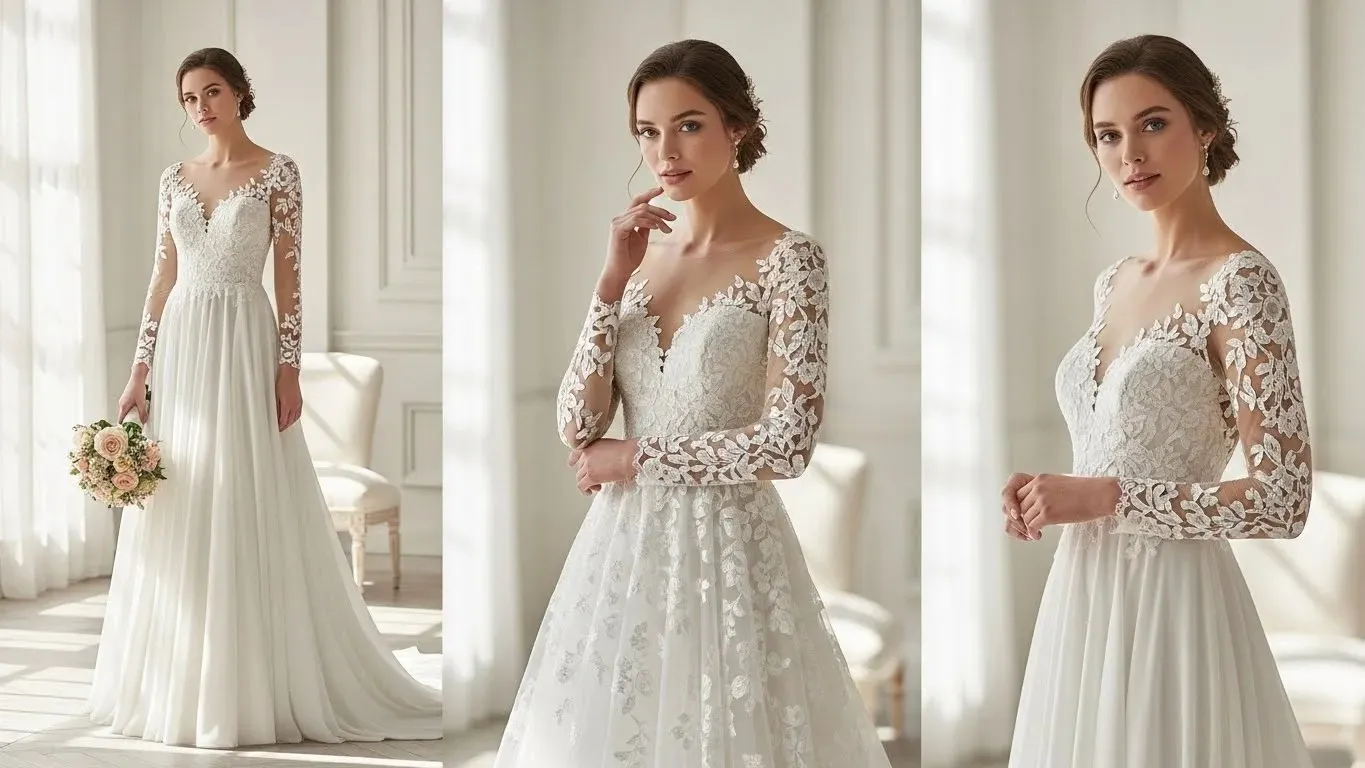
Illusion: sheer lace or tulle that looks like bare skin with embroidery floating on it. The most popular for a reason — coverage without heaviness. Best for: brides who want sleeves but don’t want to feel covered.
Fitted: solid fabric cut close to the arm, usually crepe or satin. Clean, modern, architectural. Best for: minimalist dresses and brides who like sharp lines.
Bishop: full through the arm, gathered into a fitted cuff. Romantic, boho, a little dramatic. Best for: outdoor and vintage-inspired weddings.
Bell/flare: fitted upper arm opening into a wide cuff. Retro-glamorous, very photogenic in motion. Best for: brides who want the sleeve to be the statement.
1. The Classic Lace Illusion
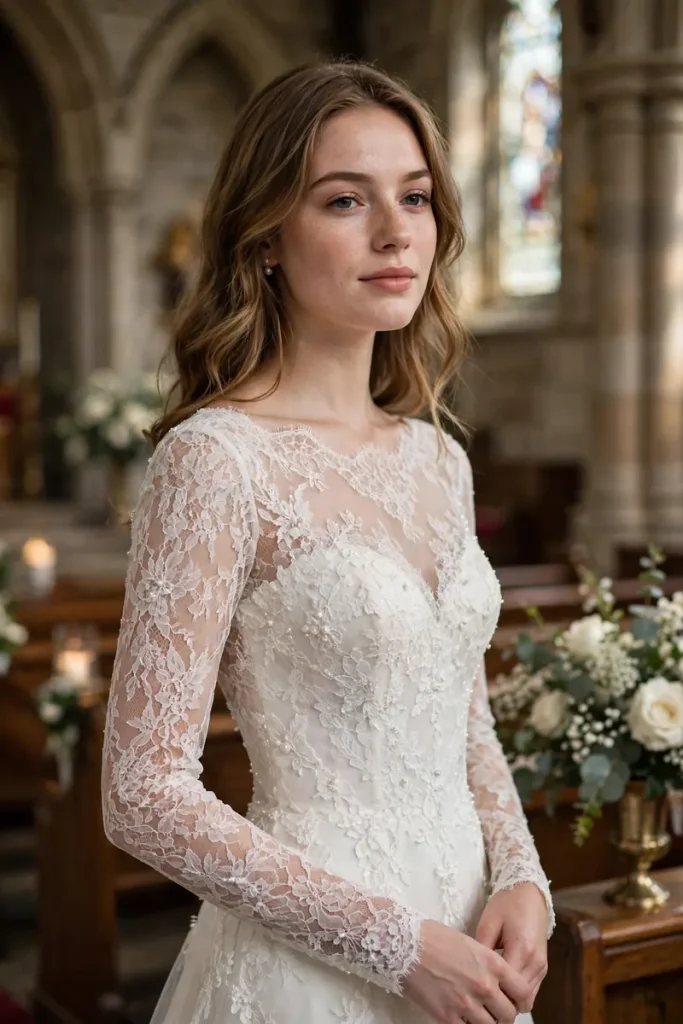
The dress that launched a thousand Pinterest boards. Ivory lace appliqué over sheer illusion sleeves and bodice, usually with a fitted silhouette and a soft skirt. It’s timeless because it photographs like a dream and flatters nearly everyone.
I tried this style in three salons and understood the hype by the second one — the illusion sleeve gives you that “tattooed lace” effect that looks incredible in photos. Ask to see it in natural light; some illusion mesh looks perfect indoors and slightly grey outdoors.
2. Minimalist Crepe, Fitted Sleeves
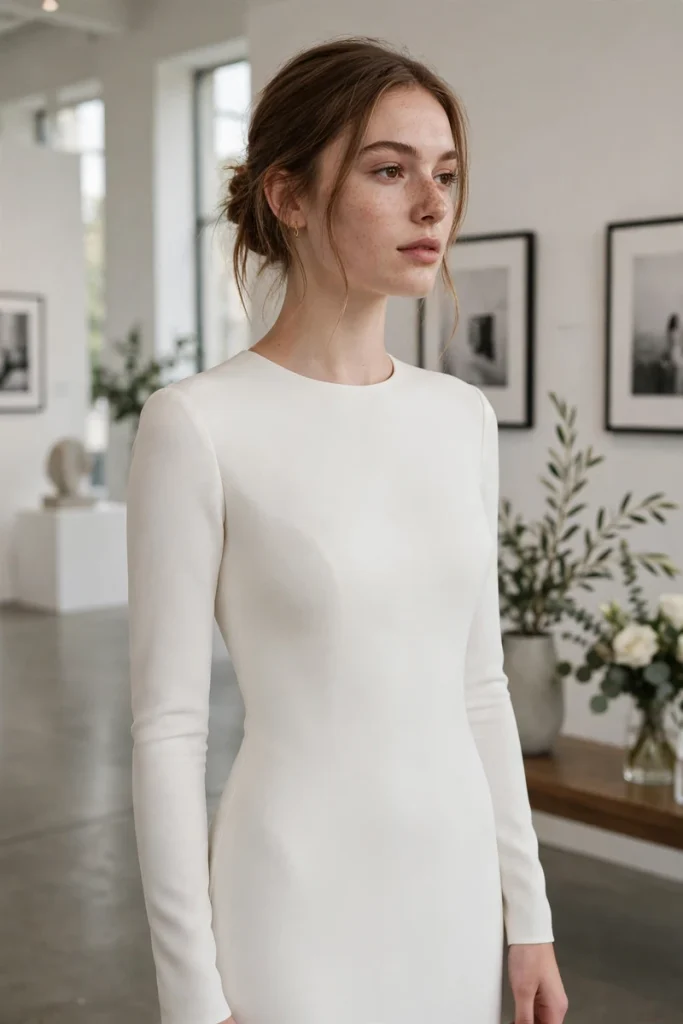
Clean crepe, long fitted sleeves, nothing else — no lace, no beading, just perfect tailoring. This is the dress for brides who find embellishment stressful. The beauty is entirely in the cut.
A friend wore this for her city hall wedding and looked like a fashion editor. Warning from my salon visits: crepe shows every fit flaw, so budget for alterations. When it’s tailored right, though, nothing looks more expensive.
3. Bohemian Bishop Sleeves
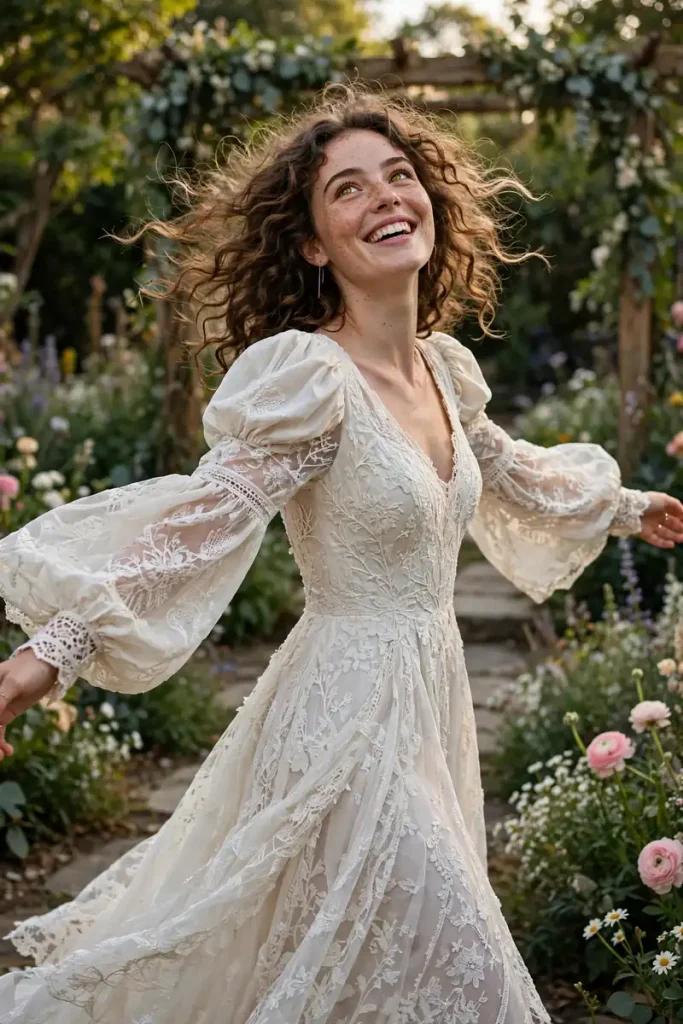
Flowy, romantic, gathered at the wrist — the sleeve does all the talking while the dress stays soft and unstructured. Usually paired with a relaxed A-line or sheath skirt in chiffon or soft lace.
I tried one on for fun and nearly cried — there’s something about that billowing sleeve that feels like a fairytale without trying. Best for outdoor, garden, or barn weddings where the dress can move. Skip it if your venue involves a lot of candlelight; you’ll be nervous around flames all night.
4. Satin Slip with Sheer Sleeves
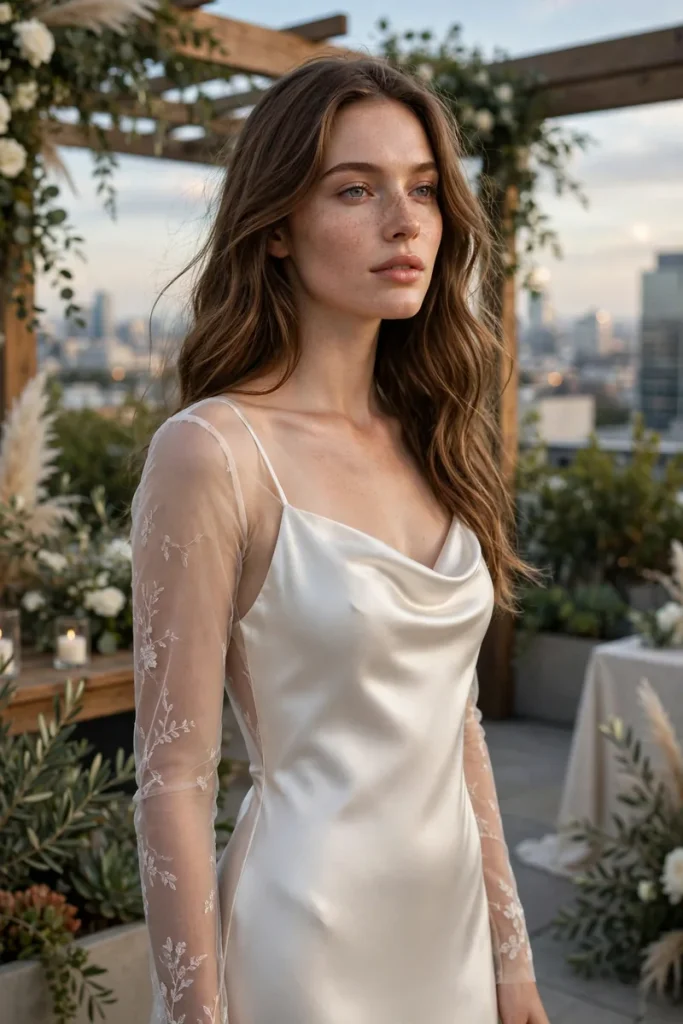
Nineties minimalism meets coverage: a bias-cut satin slip dress with sheer long sleeves added on. Sleek, a little sexy, very modern. The contrast between liquid satin and airy sheer is what makes it work.
This was the surprise favorite of my appointments — I expected to feel overdressed-underdressed, but the combination just works. It moves beautifully, which matters more than you’d think; you’ll be walking, hugging, and dancing for eight hours.
5. Vintage Bell Sleeves
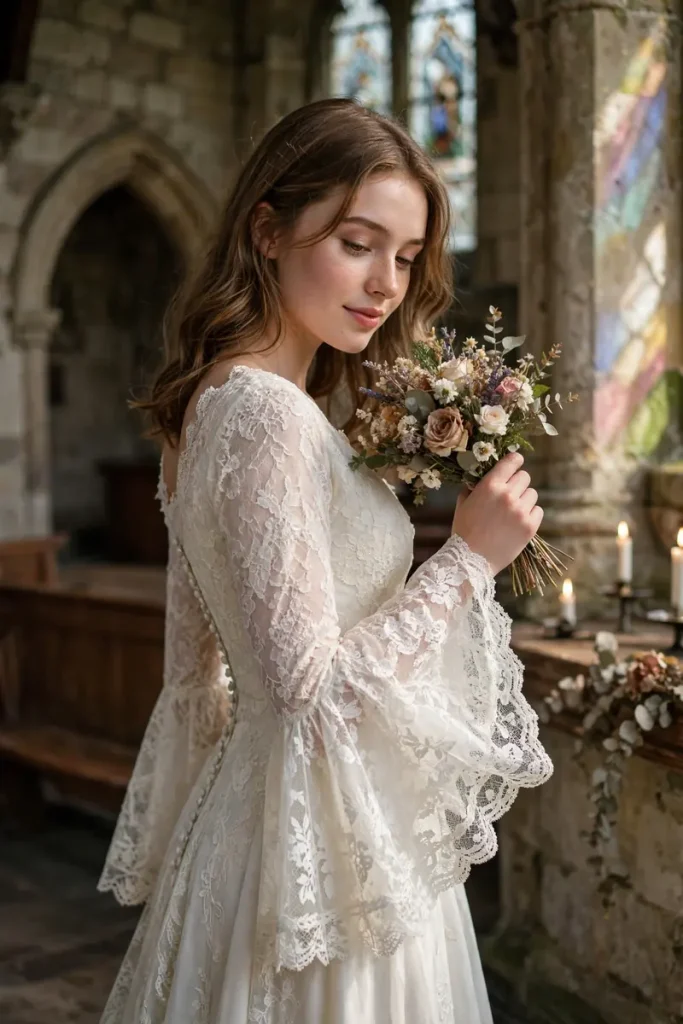
Seventies-inspired: fitted bodice, sleeves that flare from the elbow into wide bells. It’s retro without being costume, especially in clean fabrics like crepe or mikado.
The consultant told me bell sleeves photograph best in motion — walking down the aisle, turning on the dance floor. She’s right; standing still they look pretty, moving they look spectacular. Just practice holding your bouquet with wide cuffs first.
6. Square Neckline + Long Sleeves
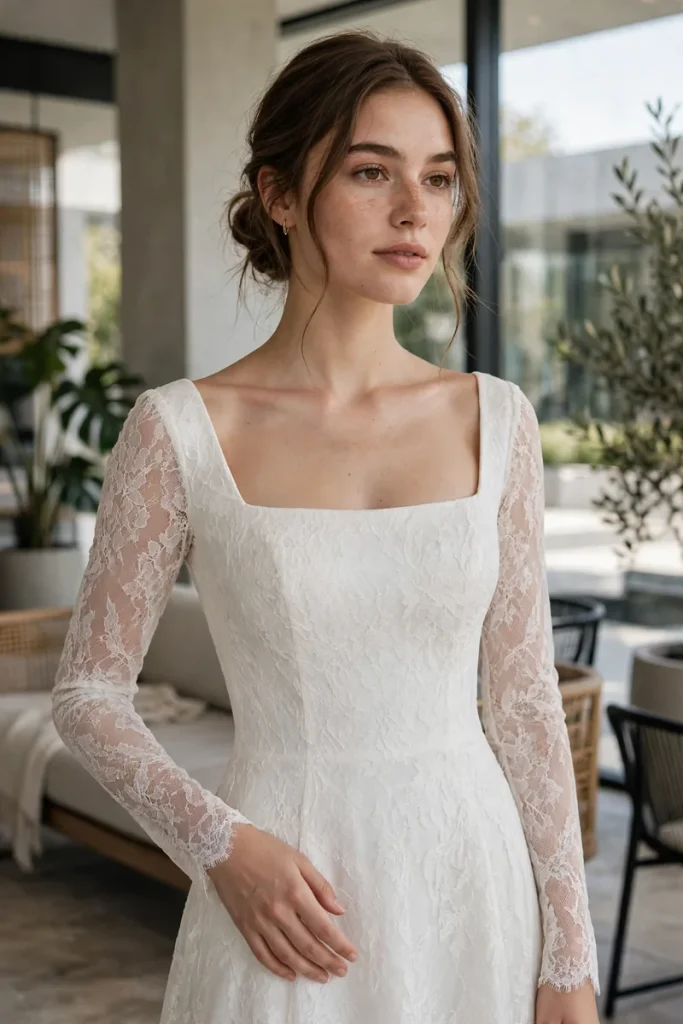
The neckline doing the heavy lifting: a modern square neckline balanced by long fitted sleeves. It’s structured, a little regal, and incredibly flattering on the collarbones.
This combination is having a moment, and I get why — the square neckline keeps it fashion-forward while the sleeves keep it timeless. It suited every body type I saw try it in the salon. If you want “modern but not trendy,” start here.
7. Floral Appliqué Sleeves
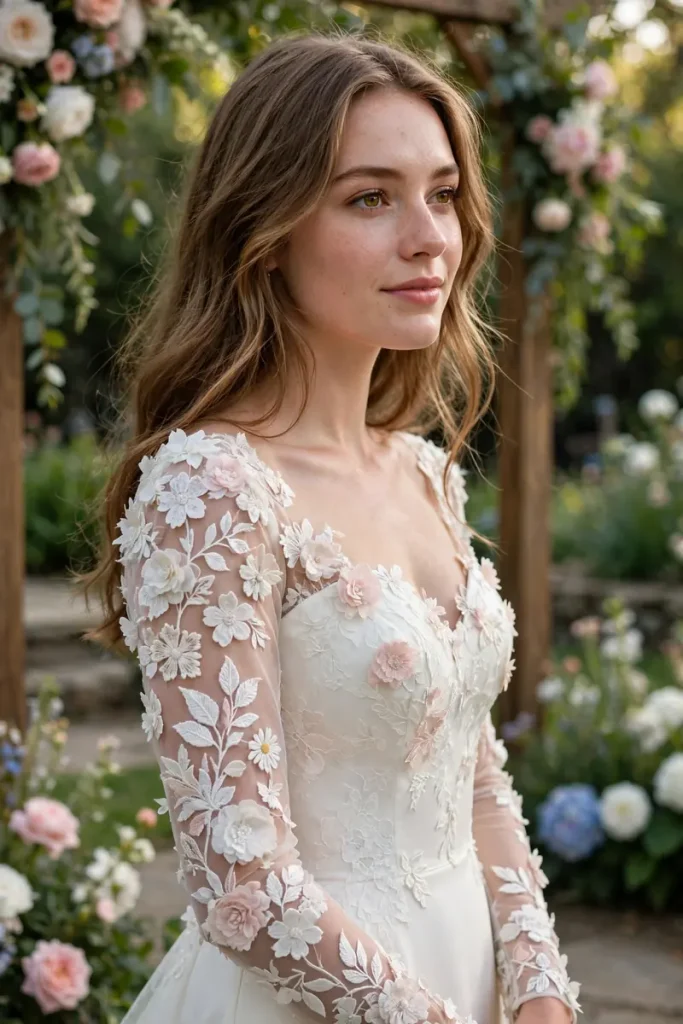
Three-dimensional flowers climbing up sheer sleeves — romantic to the point of maximalism, and utterly gorgeous. The appliqué usually continues onto the bodice so the whole thing reads as one garden.
I’ll be honest: this is a lot of dress, and that’s the point. I tried one and felt like the most extra version of myself, in the best way. Best for brides who want their dress to be the talking point. Keep everything else simple — hair, jewelry, bouquet all quiet.
A Quick Note on Fabrics (It Matters More Than the Sketch)
Two dresses can look identical on the hanger and feel like different garments on your body — that’s fabric. Lace varies wildly: Chantilly is delicate, Alençon is bolder, and cheap lace itches (ask to press it against your inner arm). Crepe is the minimalist’s fabric but unforgiving — it needs tailoring. Satin photographs with a glow but shows water spots; keep it away from rain. Chiffon is light and romantic but wrinkles if you look at it wrong — fine for the ceremony, steam it before photos.
My rule after forty try-ons: choose the fabric for your venue and your tolerance. A winter ballroom forgives heavy satin; a beach wedding does not. And always, always sit down in the dress before deciding — you’ll spend half the day seated, and some fabrics punish sitting.
8. Off-Shoulder with Long Sleeves
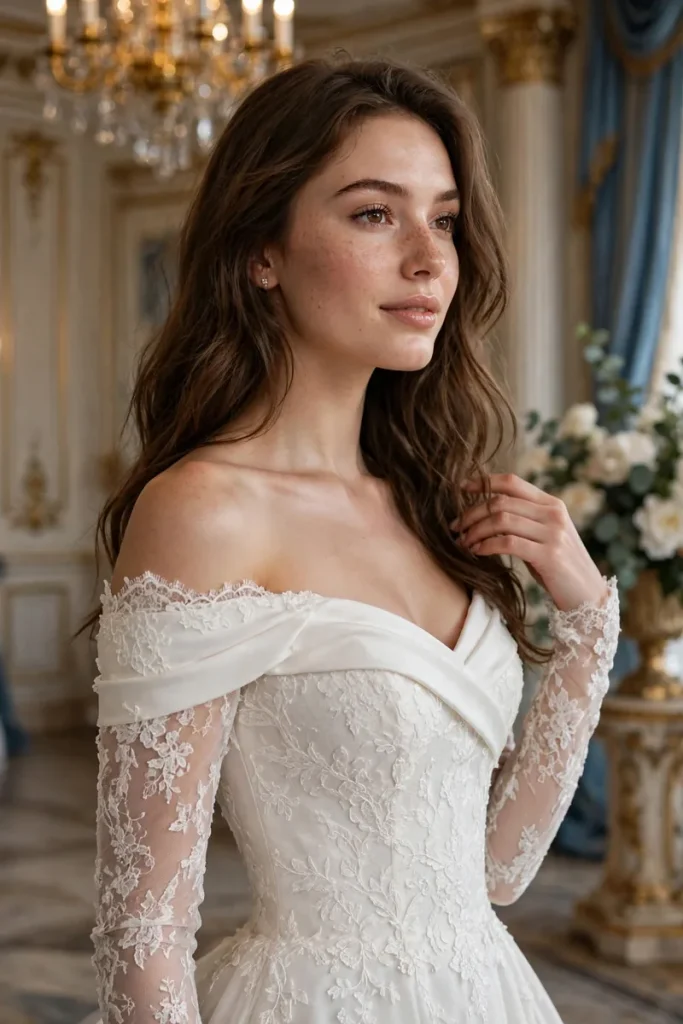
The best of both worlds: bare shoulders and collarbones, with long sleeves starting at the upper arm. It’s romantic and a little daring — the off-shoulder neckline keeps it from feeling covered-up.
This was my personal favorite silhouette. The exposed shoulder line is universally flattering, and the sleeves add drama. One practical note: you’ll adjust the neckline throughout the day — that’s just the reality of off-shoulder. Worth it.
9. High Neck, Grace Kelly Style
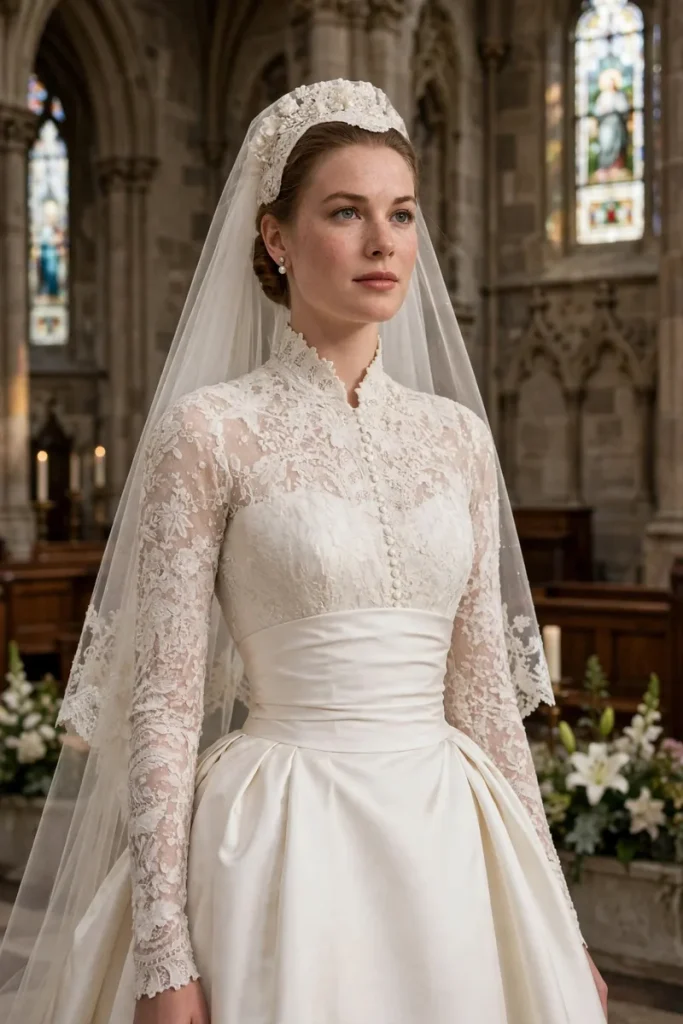
High lace neckline, long lace sleeves, fitted bodice, full or A-line skirt. The royal wedding look, and still stunning sixty years later. It’s the most “bridal” a dress can look.
There’s a reason this silhouette never dies — it’s dignified without being dull. It suits formal, traditional weddings best: churches, ballrooms, estates. I found it runs warm, though; all that lace is insulation. Lovely for fall and winter weddings.
10. Backless with Long Sleeves
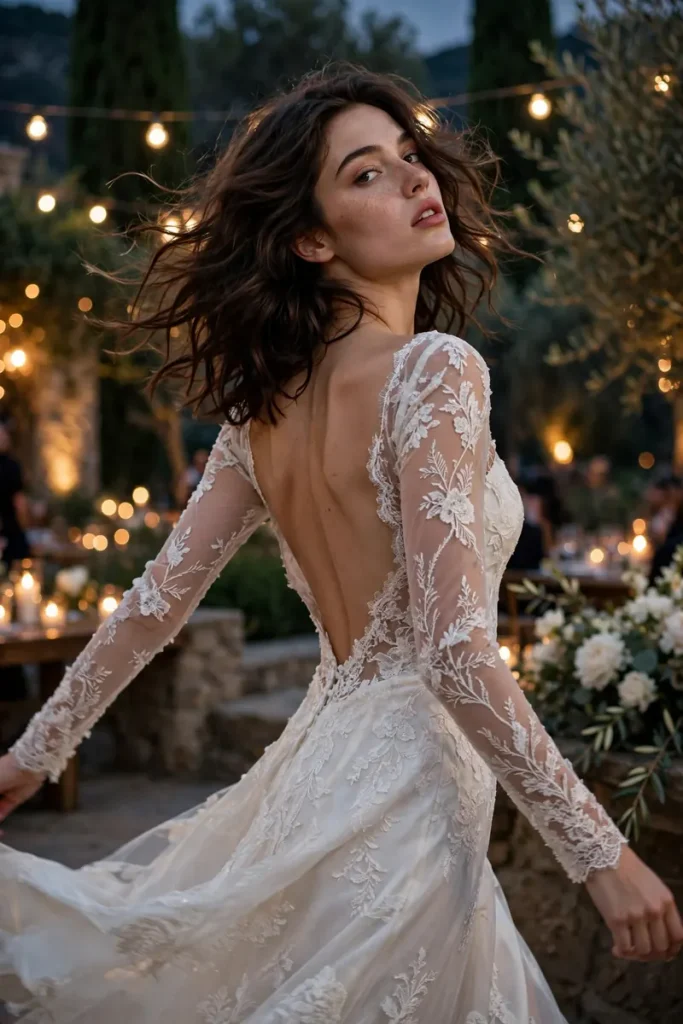
Covered in front, open in back — the contrast is the whole design. Long sleeves and a high or illusion front, with a low dramatic back, sometimes with button detailing down the spine.
This is the dress for brides who want modesty and a moment. Walking away from the ceremony, the back is what everyone sees in photos. I gasped at one in the salon — the front was so demure I almost skipped it, and then I turned around. Try everything on; dresses surprise you.
11. Velvet Long Sleeve (Winter Weddings)
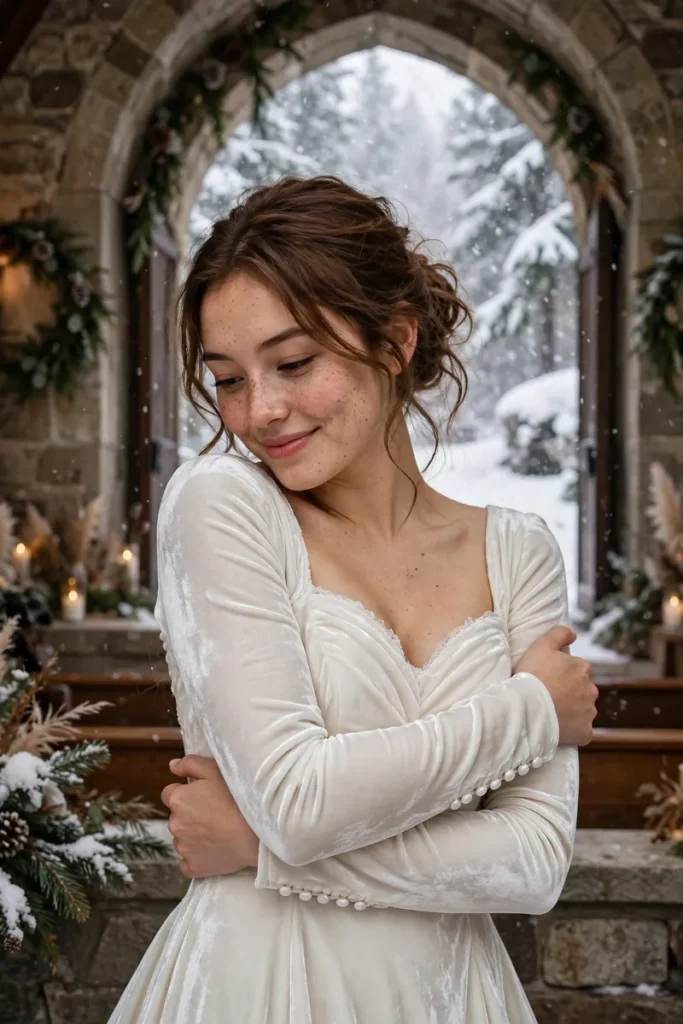
For the winter bride who commits to the season: deep jewel-tone or ivory velvet with long sleeves. It’s rich, warm (literally), and looks incredible in candlelight and low winter sun.
I only saw two velvet gowns in all my appointments and both stopped me cold — velvet has a depth that photographs like nothing else. It’s a bold choice and absolutely venue-dependent: perfect for a December ballroom, wrong for a June garden. If your wedding is winter, at least try one on.
12. Flowy Chiffon (Beach & Destination)
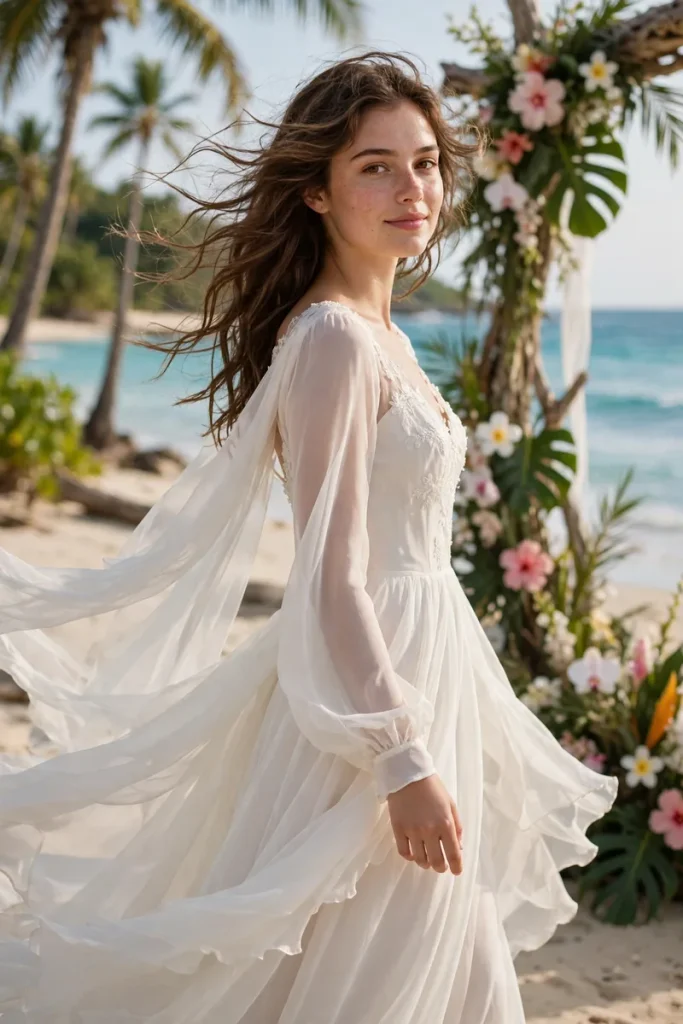
Long sleeves don’t have to mean heavy: sheer chiffon sleeves on a flowy, unstructured dress are made for destination weddings. They move in the ocean breeze and keep sun off your shoulders.
A bride I know wore this in Santorini and the photos are unreal — the sleeves caught the wind in every shot. Practical bonus: no tan lines to worry about, and the sheer fabric keeps you cool. This is proof that long sleeves work in every climate.
13. Pearl-Embellished Sleeves
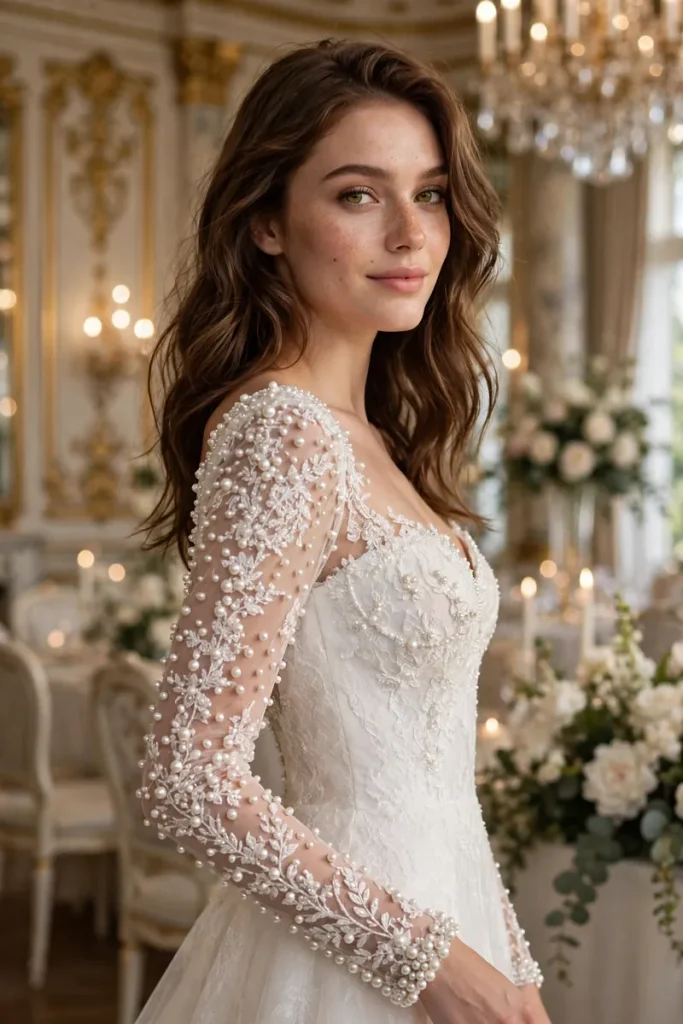
Hand-sewn pearls scattered or patterned over the sleeves (and usually the bodice) — luminous, feminine, and very now. Pearls catch light differently than crystals: softer, more romantic.
Up close, this detailing is exquisite; from a distance, it reads as a soft glow. I loved it but noted two things: it adds weight, and you’ll want to check how the pearls feel when people hug you. Small price for that shimmer, in my opinion.
What About the Venue? Match the Dress to the Room
The number one mistake I watched brides make (myself included): falling for a dress without picturing the venue. A ballgown with bell sleeves overwhelms a small restaurant wedding; a slinky satin slip disappears in a grand cathedral. Before your appointment, save three photos of your venue and show them to the consultant — a good one will edit your choices instantly.
Quick venue logic: church/cathedral — drama welcome, trains and veils shine; garden/outdoor — lighter fabrics, shorter trains (mud is real), sleeves that move; ballroom — go big, the room can take it; beach/destination — light, packable, wind-friendly; city hall/courthouse — chic and simple wins, you’ll be photographed on stairs and streets.
14. Detachable Sleeves (The Two-in-One)
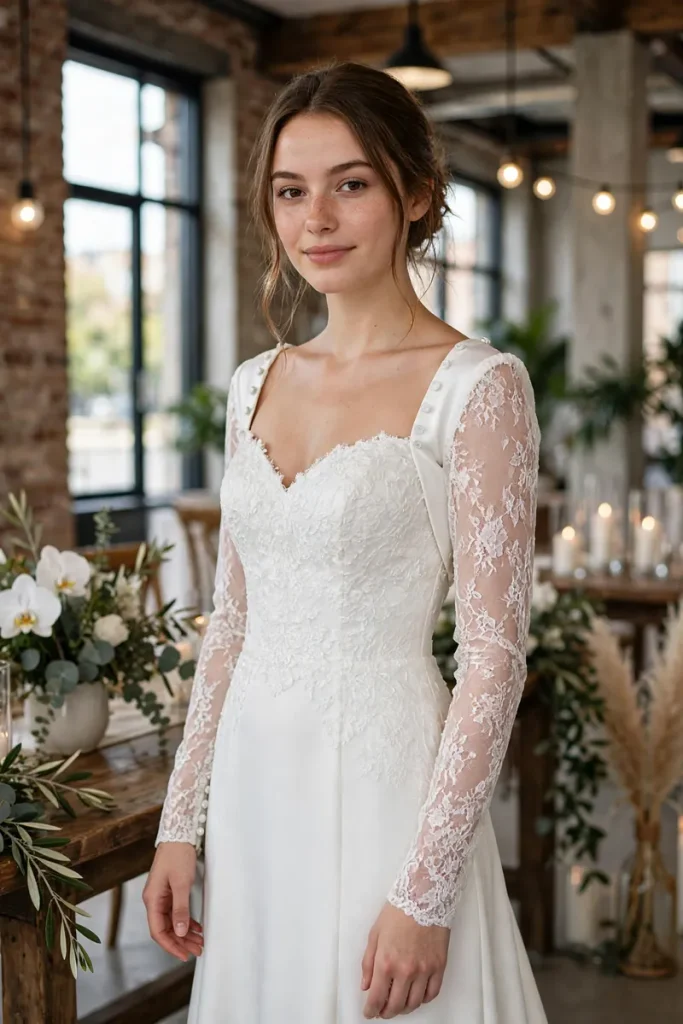
Sleeves that come off: ceremony with sleeves, reception without (or vice versa). Usually illusion or lace sleeves that attach at the shoulder with discreet closures. Two looks, one dress, one budget line.
This is genius for brides torn between two visions — and for anyone who wants photos with sleeves and dancing without them. I watched a bride demo the switch in the salon; it took thirty seconds. Just make sure the attachment points are truly invisible, and practice the change before the wedding day.
15. The Long Sleeve Jumpsuit
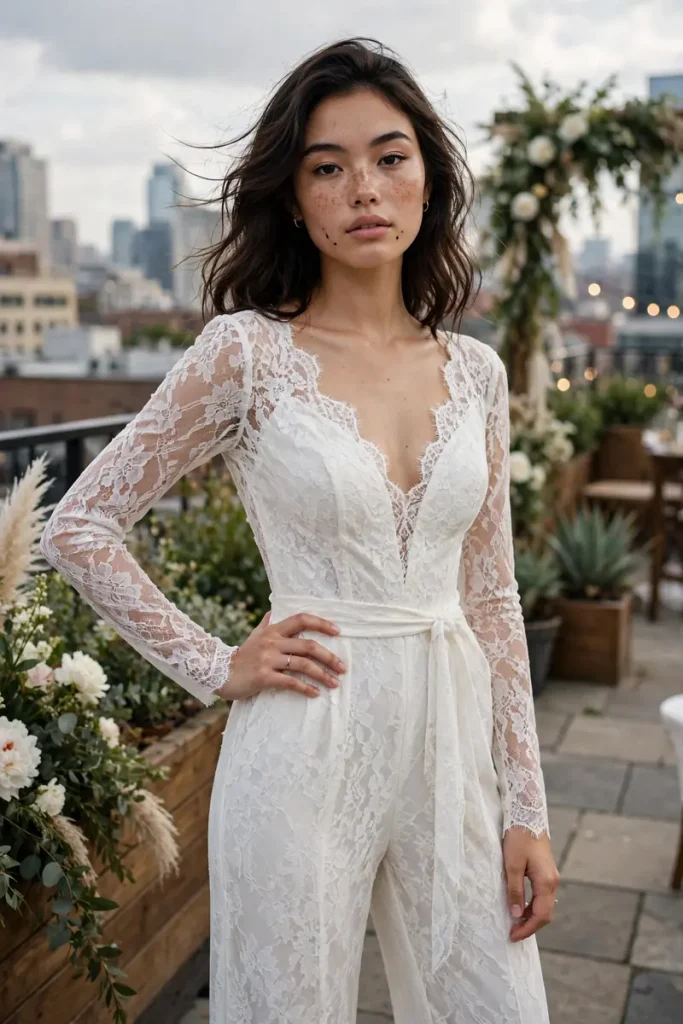
For the bride who doesn’t want a dress at all: a tailored bridal jumpsuit with long sleeves. Wide-leg or tapered, in crepe or satin, sometimes with a detachable overskirt for the ceremony.
I have so much respect for this choice. It’s modern, comfortable (pockets! sitting! dancing!), and genuinely chic. It suits city weddings, courthouse ceremonies, and second weddings beautifully. The tailoring has to be perfect — there’s nowhere to hide in a jumpsuit — so find a salon that does a lot of them.
16. Modest High-Neck Lace
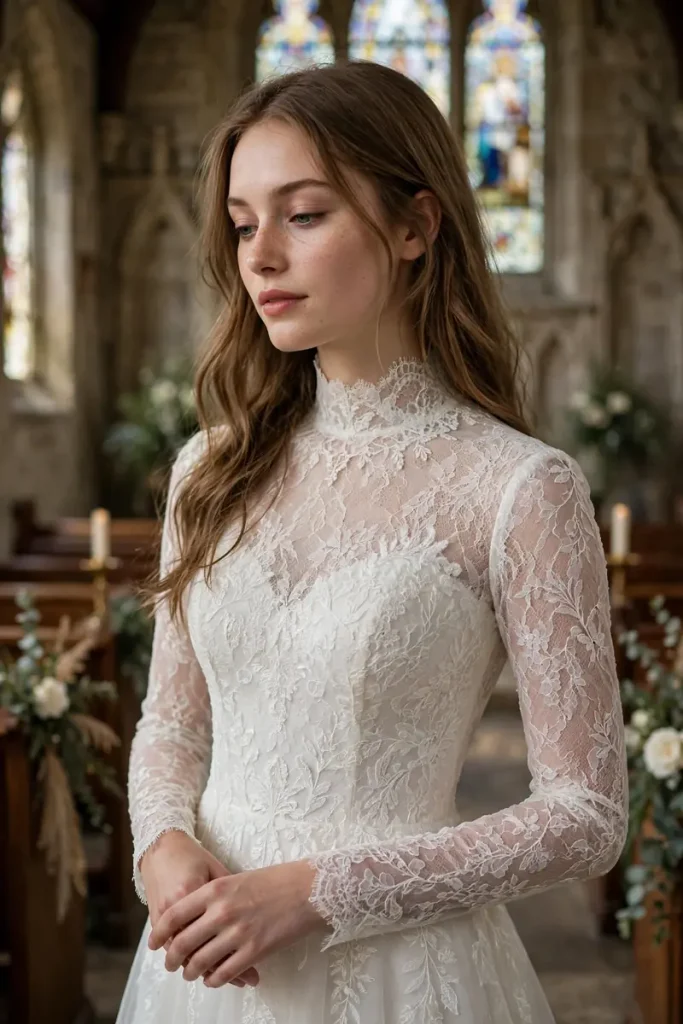
Full coverage, high neckline, long sleeves, often with a flowing skirt — chosen for faith, family, culture, or personal preference, and beautiful on its own terms. Modern modest designs are genuinely stunning, not compromises.
What struck me in the salon: the best modest gowns weren’t “covering up” a sexy dress — they were designed as modest from the first sketch, and it showed in the proportions. If this is your direction, seek designers who specialize in it rather than adapting a strapless gown.
17. Short Dress, Long Sleeves (Courthouse Chic)
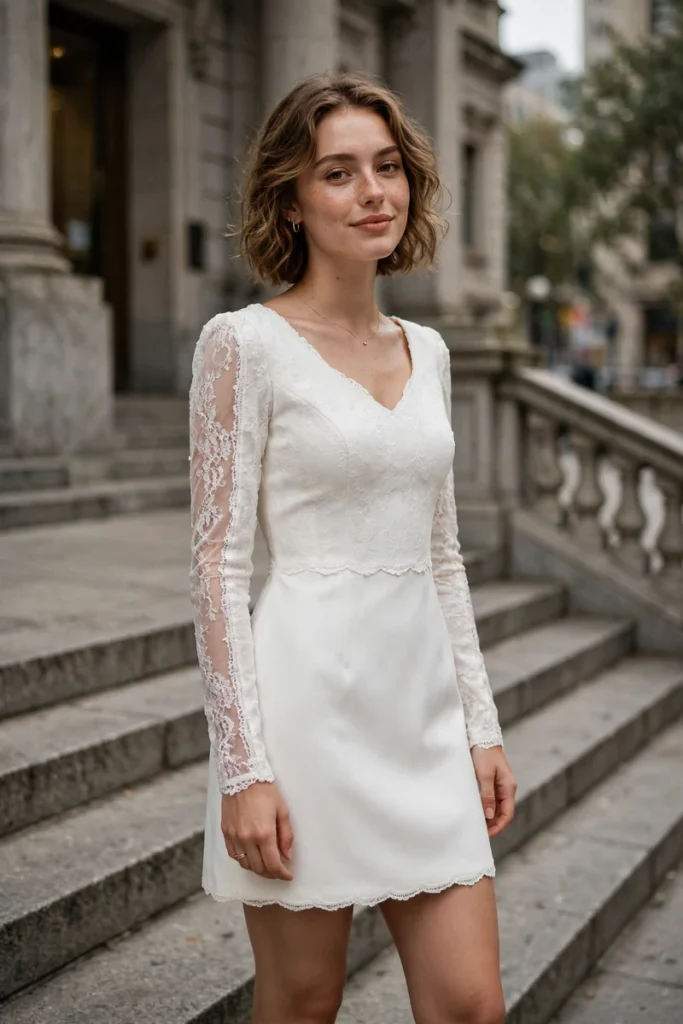
Knee-length or tea-length with long sleeves — the courthouse, city hall, and elopement uniform. Playful but polished, and you’ll actually wear it again (or at least, you won’t feel silly in photos in ten years).
A friend got married at city hall in a tea-length lace long-sleeve dress and looked perfect — bridal enough for the occasion, practical enough for lunch after. This is also the best rehearsal-dinner or second-look option if your main gown is dramatic.
18. Blush & Color (Not Just Ivory)
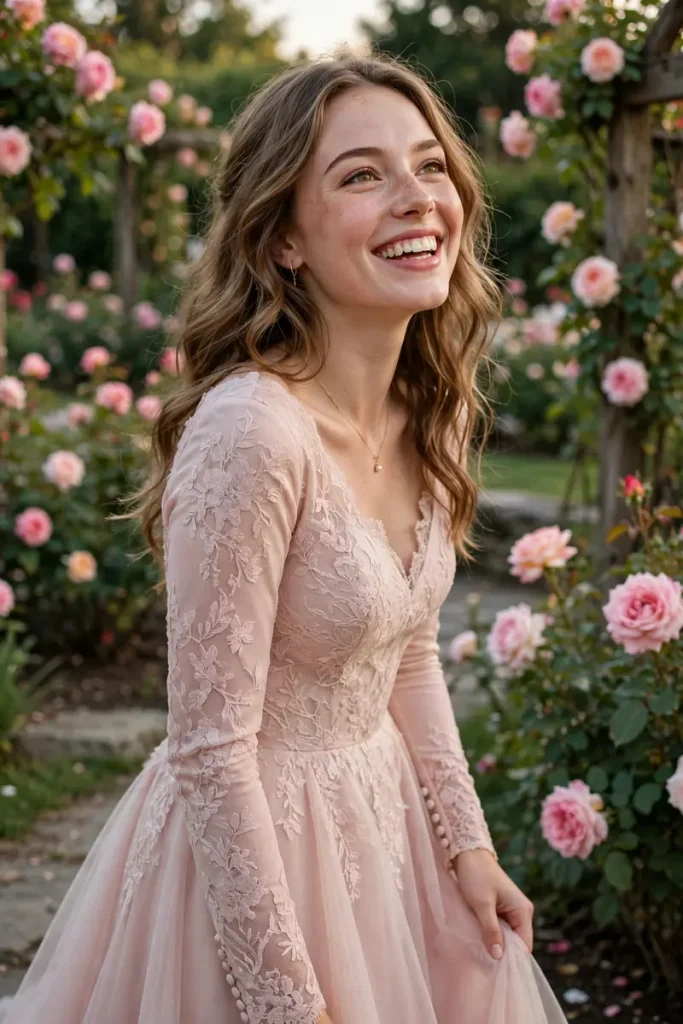
Long sleeves in blush, champagne, pale blue, or even black — color is the fastest way to make a classic silhouette feel personal. The sleeves carry the color beautifully, especially in lace or tulle.
I’ll admit I was skeptical until I saw a pale-blue illusion sleeve in person — it was ethereal. Color suits the bride who wants tradition with a twist, and it photographs distinctively (your wedding photos won’t look like everyone else’s). Just check it against your skin tone in daylight, not just salon lighting.
19. The Dramatic Train + Long Sleeves
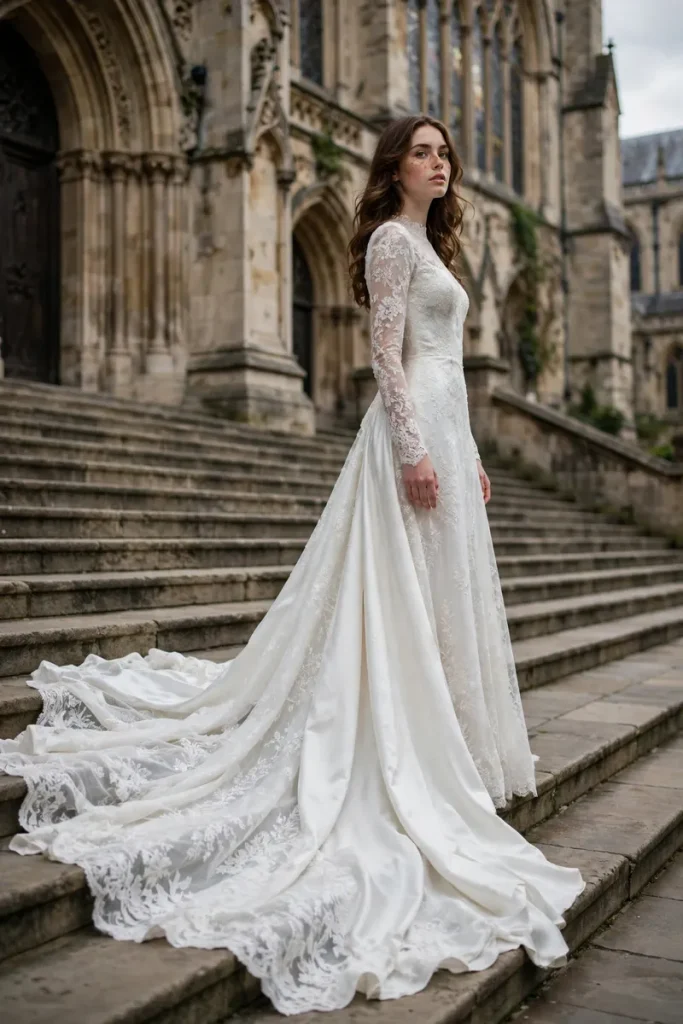
The full fantasy: long sleeves, fitted bodice, and a cathedral train that goes on forever. This is the dress for the grand entrance — the aisle, the staircase, the first look.
Practical talk: you’ll need a bustle, and you should practice it. You’ll need someone assigned to the train all day. And you will not regret it — I watched a bride try one and the entire salon went quiet. Some dresses are garments; this one is an event. If your venue and your heart both say yes, say yes.
The Alterations Talk (Read Before You Buy)
Almost every wedding dress needs alterations, and long sleeves add a specific one: sleeve length and fit. Sleeves that are slightly too long bunch at the wrist; slightly too tight restrict movement (try raising your arms, hugging, and dancing in the salon). Budget $200–$500 for alterations on top of the dress price — more for lace sleeves, which are fiddly to adjust.
Three questions to ask before you commit: Can the sleeves be shortened from the shoulder or only the cuff? (shoulder alterations preserve lace patterns), How will the bustle work with this skirt? (non-negotiable to see it done), and What’s the timeline? (most salons need 8–12 weeks plus fittings). Get the answers in writing. Future you, calmly sipping champagne the week before the wedding, will be grateful.
FAQs
Are long sleeve wedding dresses flattering on all body types? Yes — because “long sleeve” isn’t one look. Illusion sleeves flatter arms without adding visual weight; fitted sleeves streamline; bishop sleeves balance broader shoulders. The key is matching the sleeve style to what you want to highlight, not hiding. Every consultant I met said the same thing: it’s the most versatile sleeve length in bridal.
Can I wear long sleeves for a summer wedding? Absolutely. Choose sheer illusion, chiffon, or lightweight lace — they breathe and keep sun off your skin. Avoid heavy satin or lined lace in heat. I tried a chiffon-sleeve dress under salon spotlights (basically a sauna) and was fine; fabric choice is everything.
How much should I budget for alterations? Plan $200–$500 beyond the dress price for standard alterations (hem, bodice, bustle). Lace sleeves, intricate beading, or major restructuring can push higher. Always ask the salon for their alteration price list before buying — the dress price is only part of the story.
What undergarments work with illusion sleeves? None on the arms — that’s the point of illusion. For the bodice, most illusion dresses have built-in cups or boning; if you need more support, a low-back longline bra or sewn-in cups from the seamstress. Bring the shoes and undergarments you plan to wear to every fitting — proportions change with heel height.
Conclusion
Forty try-ons taught me this: the right long-sleeve dress doesn’t feel like a compromise. It feels like the dress was always supposed to have sleeves — like the design is incomplete without them. Whether that’s delicate illusion lace, a dramatic bishop sleeve, or clean modern crepe depends on you, your venue, and the bride you want to be in the photos.
My advice: try on the styles you think you’ll hate. I did, and my top three favorites all came from the “absolutely not” rack. Book the appointment, bring someone honest, wear the good underwear, and give every dress thirty seconds on your body before judging. The one that makes you stop talking mid-sentence? That’s the one.