
14 Open Hairstyle Ideas, Logged Like Wind-Tunnel Test Runs
A hairstyle that looks finished in a still bathroom mirror can fall apart the moment you step outside, climb into a car with the window down, or walk across a windy parking lot. Open hair, meaning hair worn fully down rather than tied back, is the category that suffers most from this gap, since there’s nothing anchoring it against movement. I started genuinely testing my own styles against actual wind years ago, standing in front of a box fan before committing to anything for an outdoor event, and it changed which styles I actually reach for.
So this is written like a test log. Fourteen open hairstyles, each one run through increasing wind conditions, light breeze, moderate wind, and strong gusts, with a hold rating and a quick fix for whichever condition breaks it first. The testing method and real-world application follow the log.
The Test Runs
Run 1, Sleek Straight and Center-Parted

Light breeze: holds cleanly, the weight of straight hair resists lifting. Moderate wind: strands begin separating at the part, minor flyaways appear near the hairline. Strong gusts: the center part can shift, requiring a touch-up. Hold rating: moderate. Fix: a light-hold smoothing serum applied specifically along the part line before heading out, which weighs down the most vulnerable section without affecting the rest.
Run 2, Loose Beachy Waves

Light breeze: performs beautifully, the texture already mimics tousled movement so the wind barely changes the look. Moderate wind: waves shift and reposition but still read as intentional. Strong gusts: can look genuinely windblown rather than styled, though many people find this acceptable for a casual day. Hold rating: high. Fix: a texturizing spray with light hold rather than a stiff-hold spray, which lets the waves move without collapsing.
Run 3, Blunt, Straight, No Layers

Light breeze: minimal movement, the blunt weight keeps it close to the body. Moderate wind: edges can look slightly stringy once separated by wind rather than a brush. Strong gusts: the heaviest, most wind-resistant style in the whole log, barely shifts even in real gusts. Hold rating: very high. Fix: rarely needs one, though a small amount of anti-static spray helps if static becomes an issue in cold, dry wind.
Run 4, Deep Side Part with Volume at the Root
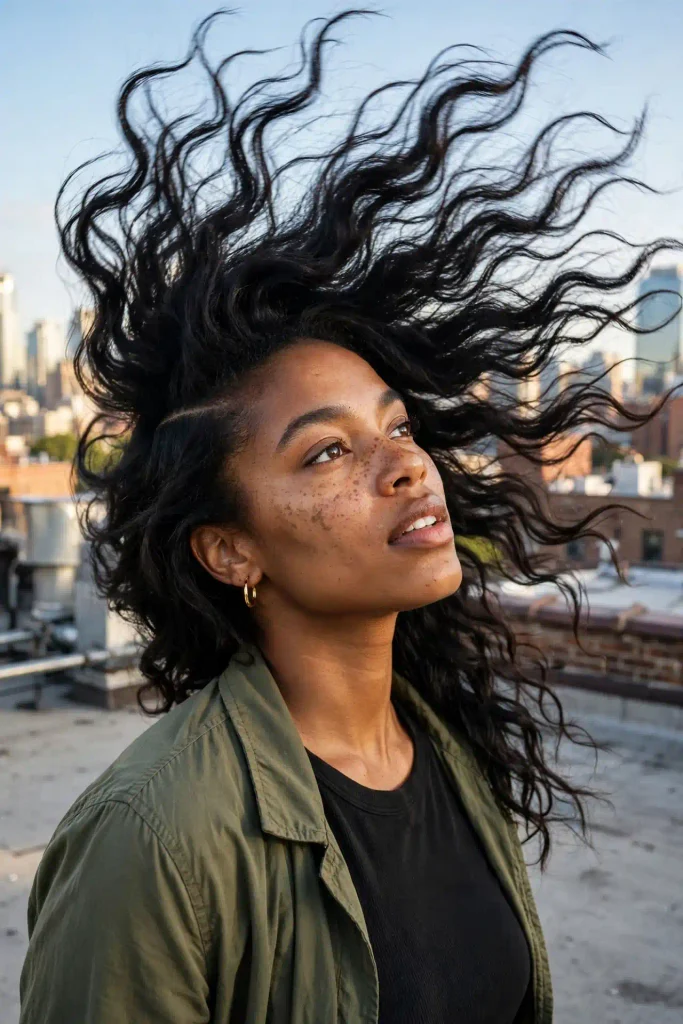
Light breeze: holds well if the root volume was set with a strong-hold mousse. Moderate wind: the deep part can get pushed in the opposite direction, requiring a quick finger-comb reset. Strong gusts: volume can flatten on the windward side. Hold rating: moderate. Fix: carry a small comb and reset the part direction after any serious gust rather than trying to prevent it entirely.
Run 5, Half-Up with the Rest Down and Wavy
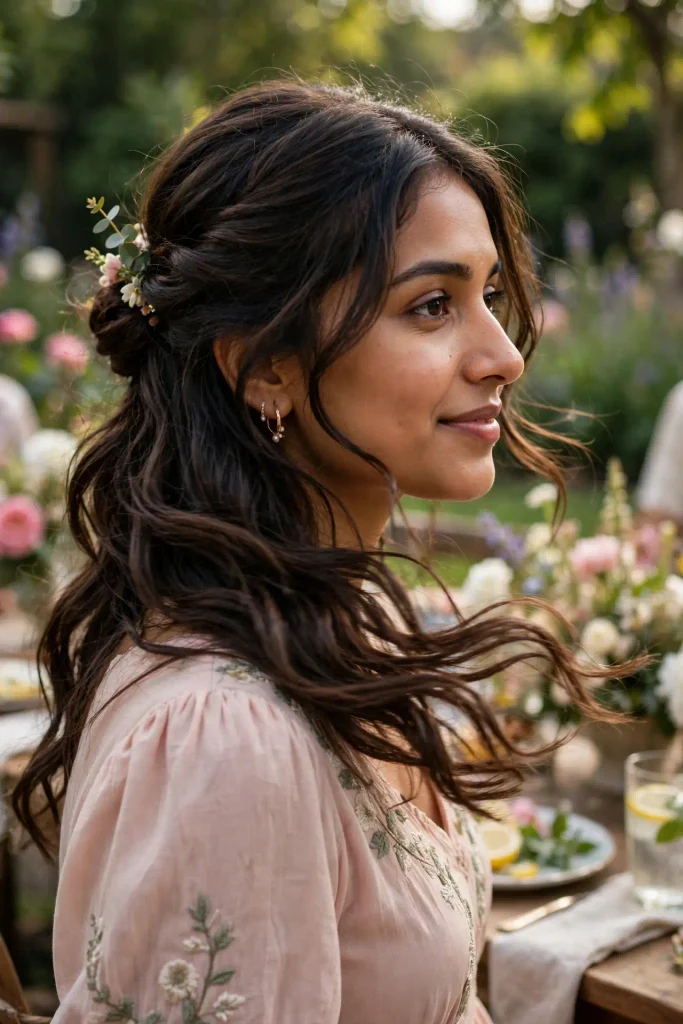
Light breeze: the gathered top section anchors the whole style, keeping hair out of the face even as the lower half moves. Moderate wind: performs well since the face-framing concern is already solved by the half-up element. Strong gusts: the loose lower half can tangle against the gathered top section. Hold rating: high. Fix: use a small amount of detangling spray on the ends before heading into very windy conditions, since tangles are easier to prevent than to fix later.
Run 6, Fully Down, Blown Out with Volume (Old Hollywood Style)

Light breeze: can hold if set with a strong-hold hairspray, but the volume is inherently fragile. Moderate wind: this style breaks down fastest of anything in the log, since the whole point is lifted, voluminous hair that wind directly targets. Strong gusts: essentially undone within minutes. Hold rating: low. Fix: this style is genuinely best reserved for indoor events or very short outdoor exposure, like walking from a car to a venue door, rather than a day spent outside.
Run 7, Braided Crown with the Rest Down

Light breeze: the braided sections around the crown anchor hair away from the face while the lower length still moves naturally. Moderate wind: performs very well, since the structural element is built in rather than reliant on product. Strong gusts: holds its shape better than almost any other style in the log. Hold rating: very high. Fix: rarely needed, though securing the braid ends with a small clear elastic prevents them from unraveling in extended wind exposure.
Run 8, Curtain Bangs, Rest Down and Straight

Light breeze: bangs stay parted and framed nicely. Moderate wind: bangs are the first thing to lift and cross the face, since they’re the shortest, lightest section. Strong gusts: can require constant hand adjustment. Hold rating: moderate for the body, low for the bangs specifically. Fix: a small dot of flexible-hold pomade at the root of the bangs only, keeping the rest of the style product-light.
Run 9, Loose Fishtail Braid, One Side

Light breeze: minimal movement given the braided structure. Moderate wind: the unbraided loose pieces that give this style its texture can catch wind individually, but the main braid stays put. Strong gusts: holds well overall. Hold rating: high. Fix: spray the braid lightly with a flexible hold spray after braiding to keep the loosened pieces from pulling further apart than intended.
Run 10, Fully Down with a Thin Headband

Light breeze: the headband keeps hair off the face regardless of what the length does. Moderate wind: performs reliably since the main vulnerability, hair blowing into the eyes, is already solved. Strong gusts: length can still tangle, but the face stays clear. Hold rating: high for practicality, moderate for overall neatness. Fix: a wider headband holds more securely than a thin one in genuinely strong wind.
Run 11, Slicked-Back Wet-Look, Hair Down
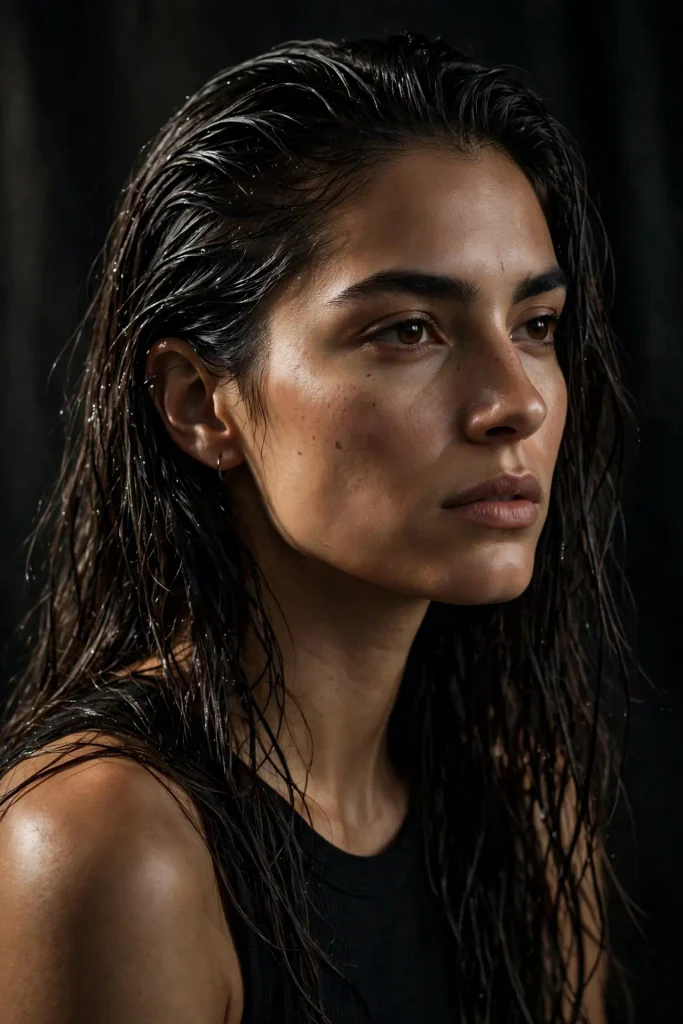
Light breeze: the wet-look gel holds the front section firmly in place. Moderate wind: the slicked front resists movement well, though the ends can still blow around. Strong gusts: generally holds its core shape better than a dry blowout would. Hold rating: moderate to high. Fix: touch up the hairline with a small amount of gel on a toothbrush if flyaways appear.
Run 12, Loose Twin Braids, Rest of Hair Down Between Them

Light breeze: a hybrid style, performs similarly to the fishtail braid with added coverage near the face from two anchored sections instead of one. Moderate wind: handles well, the double-braid structure resists shifting. Strong gusts: one of the more reliable options for extended outdoor wear. Hold rating: high. Fix: secure both braid ends and consider a small amount of spray along the braided sections only.
Run 13, Fully Down, Air-Dried Natural Texture (Curly or Coily)

Light breeze: curl pattern already has built-in volume and movement, so wind integrates rather than disrupts. Moderate wind: performs genuinely well, curls can shift and reshape without looking undone, since movement is already part of the style’s character. Strong gusts: the only concern is frizz from friction rather than losing shape entirely. Hold rating: high. Fix: an anti-humidity, anti-frizz serum applied before heading out, focused on reducing friction-caused frizz rather than trying to control shape.
Run 14, Low, Loose Waves with a Side-Swept Section Pinned Back

Light breeze: the single pinned section keeps hair consistently off one side of the face. Moderate wind: performs reliably, similar logic to the headband and half-up options, since the main problem area is already solved. Strong gusts: the unpinned side can still move freely, but overall the style holds its intention. Hold rating: high. Fix: use a slightly stronger pin or a few bobby pins layered rather than just one, since a single pin is the most common point of failure in gusty conditions.
How to Run Your Own Wind Test
Testing at Home Before You Commit
Stand in front of a box fan or an open window on a breezy day, on the lowest setting first, for about a minute, with your finished style. If it holds its intended shape, bump the fan to a higher setting for another thirty seconds. This two-minute test, done the night before or morning of an outdoor event, reveals exactly which flyaways and weak points will actually show up later, rather than guessing based on how the style looked in a completely still room.
Reading the Results Honestly
If a style collapses on the lowest fan setting, it’s genuinely not suited for any outdoor wear that day, regardless of how good it looked finished. If it holds through the low setting but struggles on the higher one, it’s a reasonable choice for brief outdoor exposure, walking between locations, but not for an entire afternoon outside. If it holds through both settings with only minor flyaways, it’s ready for a genuinely windy day without much worry.
The Hold-Rating Product Guide
Matching Product Strength to Your Actual Wind Rating
For styles that tested as low hold (Run 6 specifically), use the strongest hairspray you own and accept that the style is best for limited outdoor exposure. For moderate hold styles (Runs 1, 4, 8, 11), a medium-hold spray or serum applied to the specific vulnerable section identified in testing, rather than the whole head, keeps the rest of the style from feeling stiff. For high hold styles (Runs 2, 3, 5, 7, 9, 10, 12, 13, 14), minimal product is actually ideal, since these styles perform well because of their inherent structure, and overloading them with product can make movement look stiff rather than natural.
Weather-Specific Adjustments
Humid Conditions
Humidity affects hold differently than wind alone. Curly and wavy styles (Runs 2, 13) genuinely benefit from humidity, since it enhances natural texture. Sleek and blown-out styles (Runs 1, 3, 6, 11) suffer most, since humidity fights a smooth finish directly, making an anti-humidity serum essential rather than optional for those specific runs.
Cold, Dry Wind
Static becomes the primary enemy rather than loss of shape. A small amount of anti-static spray, or even rubbing a dryer sheet lightly over the surface of the hair, resolves this for nearly every run in the log, particularly Runs 1, 3, and 11.
Rain
Braided and structured styles (Runs 7, 9, 12) hold their shape through light rain far better than anything relying on a blowout or sleek finish, since the structure is physical rather than product-dependent, making them the safest choice when rain is a genuine possibility.
Choosing Your Run by the Day Ahead
If you’ll be outside for an extended period in uncertain weather, choose from the very high hold ratings, Runs 3, 7, 9, 12, or 13, since these were built to survive real conditions rather than just look good in a photo. If you’re moving briefly between indoor spaces, the moderate and even low-hold options become reasonable, since the wind exposure is minimal. If you genuinely don’t know what the day holds, running your own quick fan test the morning of removes the guesswork entirely.
Quick Answers
What open hairstyle holds up best in wind?
Braided styles, particularly Run 7’s braided crown and Run 9’s fishtail braid, consistently tested highest, since their structure comes from the braid itself rather than product that wind can undo.
What’s the worst open hairstyle for a windy outdoor event?
Run 6, the fully blown-out, voluminous style, breaks down fastest in any real wind, since lifted volume is exactly what wind targets first.
How do I test a style before committing to it for an event?
Stand in front of a fan on low, then high, for about a minute each, and watch which part of the style gives out first, then apply a targeted fix to that specific section rather than overloading the whole head with product
Does natural curly or coily hair need different wind preparation?
Less than most people expect. Natural texture, Run 13 specifically, tends to integrate wind movement rather than fight it, with frizz from friction being the main concern rather than losing shape entirely.
One Last Thing
An open hairstyle that only works in a still bathroom mirror isn’t actually finished, it’s only half-tested. The real test happens the moment you step outside, and running that test ahead of time, even with something as simple as a box fan, tells you exactly where a style will hold and where it needs a little reinforcement.
Run your own quick wind test before your next outdoor event, and choose the style that matches the conditions you’re actually walking into rather than the stillest, calmest version of the day.
Which run matches your plans today: a calm indoor event, or a genuinely windy afternoon outside? Save this article for your next outdoor occasion, and send it to a friend whose hairstyle always seems to fall apart the moment she steps outside.