17 Simple Wedding Dresses Ideas That Prove Less Is More
Here’s a secret from someone who’s been to eleven weddings in three years: the dresses I remember aren’t the dramatic ones. They’re the simple ones — the clean crepe sheath, the bias-cut slip, the unadorned A-line — worn by brides who looked like themselves on the best day of their lives instead of like a bridal mannequin.
Simple is also the hardest thing to get right. Without beading or lace to hide behind, everything depends on cut, fabric, and fit. That’s why this list exists: seventeen genuinely simple dresses, each with an honest “best for” and “skip if” — because the wrong simple dress is worse than the wrong fancy one.
What “Simple” Actually Means (And What It Doesn’t)
Simple doesn’t mean plain, cheap, or boring. It means edited — every detail earns its place. A simple dress has clean lines, minimal embellishment, and lets the bride (not the dress) be the focal point. What it doesn’t mean: shapeless, low-quality, or “I gave up.” The best simple dresses are often the most expensive-looking in the room precisely because there’s nothing to distract from perfect tailoring.
One more thing: simple dresses are the easiest to personalize. A dramatic veil, heirloom jewelry, bold shoes — accessories that would fight a beaded gown become the stars against a clean dress. Think of simple as a canvas, not an absence.
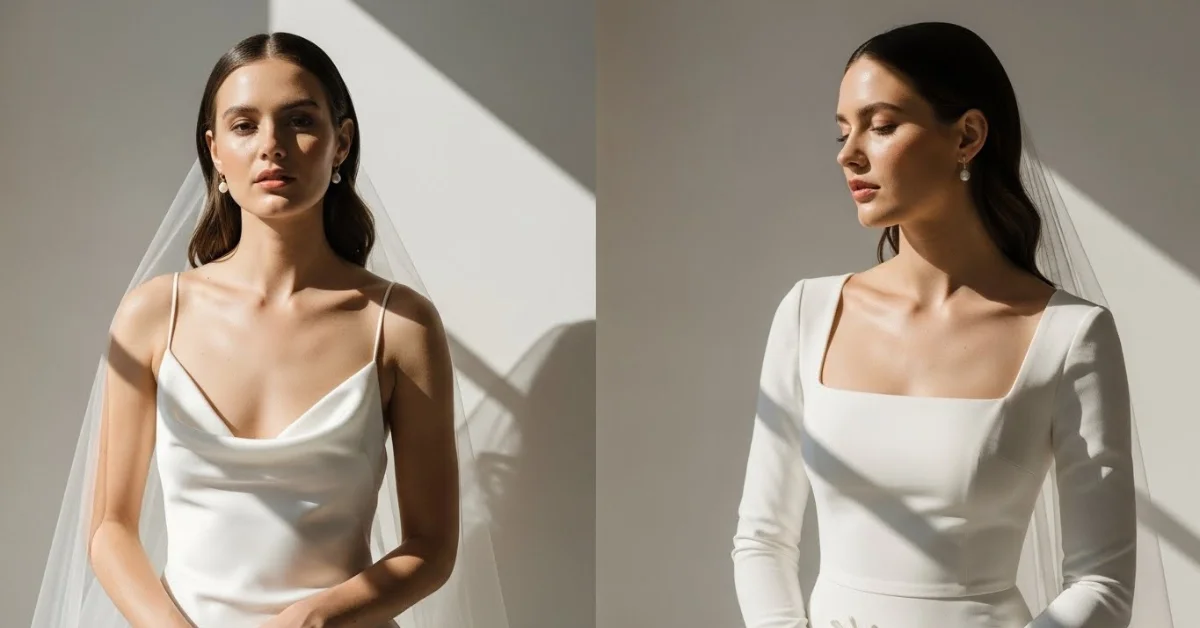
1. The Bias-Cut Satin Slip
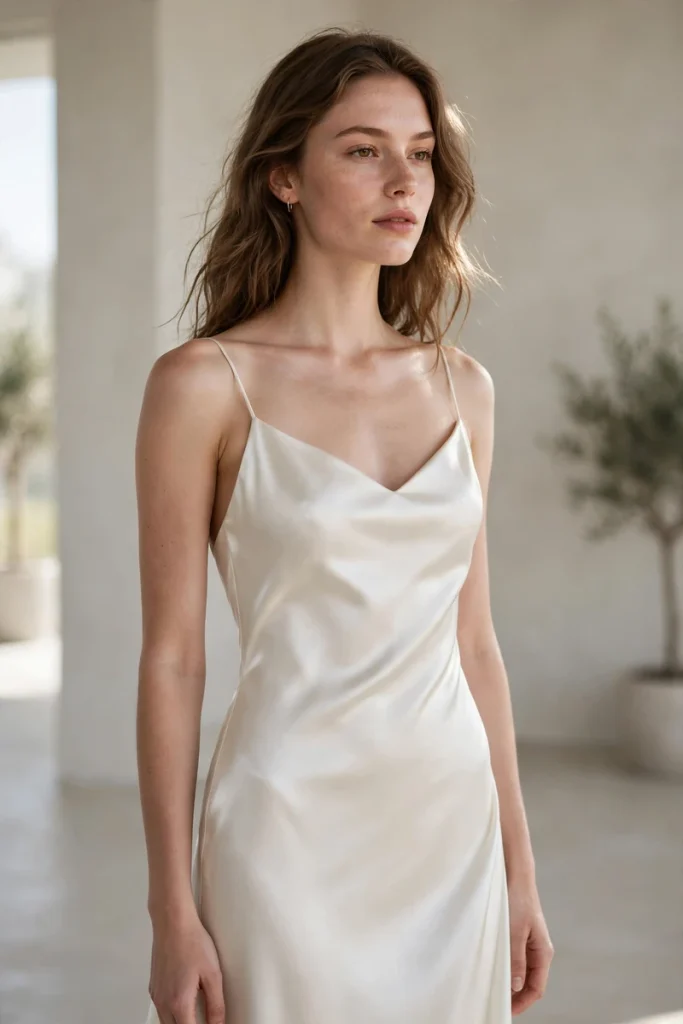
Nineties minimalism that never left: a bias-cut satin slip dress with thin straps and a cowl or straight neckline. It skims the body, moves like liquid, and looks expensive in any light. The ultimate “effortless bride” dress.
Best for: courthouse weddings, elopements, evening receptions, second weddings.
Skip if: you need serious bust support or you’re uncomfortable with a body-skimming fit — bias cut shows everything.
2. The Clean Crepe A-Line
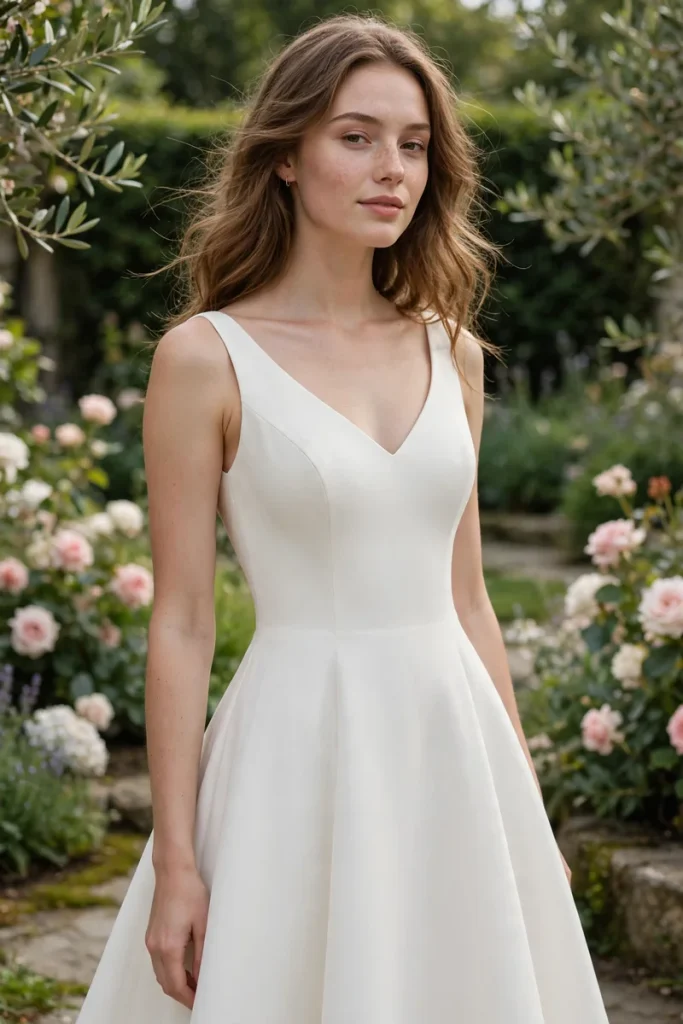
If there were a default wedding dress, this would be it: crepe fabric, A-line skirt, unadorned bodice, maybe a simple neckline. Universally flattering, appropriate everywhere, and the silhouette that suits the widest range of bodies.
Best for: brides who want one dress that works for any venue, any season.
Skip if: you crave drama — this is beautiful, not breathtaking, and that’s a real distinction.
3. The Sheath/Column
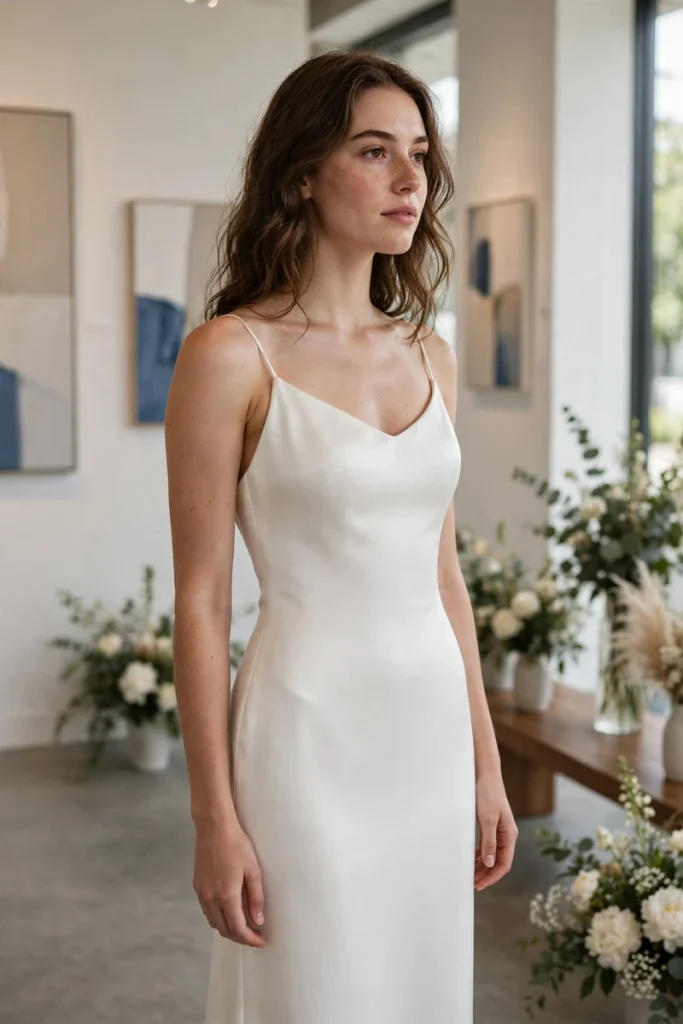
Straight down, no flare, no fuss — the column dress is modern architecture in fabric. Usually crepe or mikado, often with a clean bateau or V neckline. It’s the dress equivalent of a sharp sentence.
Best for: tall brides, city weddings, art-gallery venues, minimalists.
Skip if: you want to hide your hips or need to sit comfortably for hours — columns don’t forgive and don’t flex.
4. Simple Strapless Sweetheart
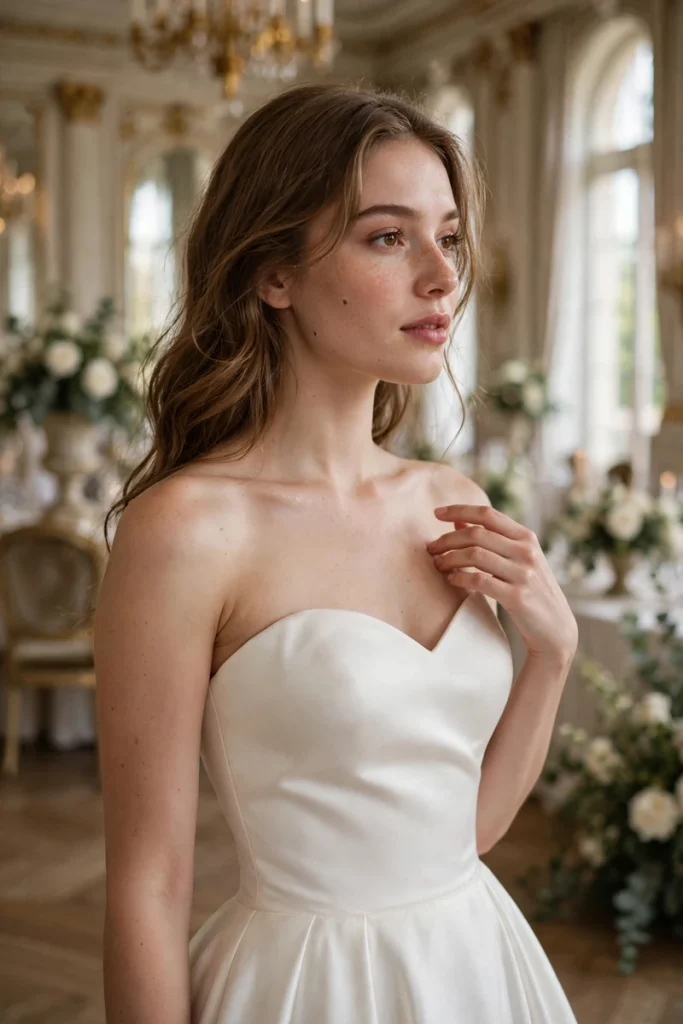
The classic strapless, minus everything extra: clean sweetheart neckline, fitted bodice, plain skirt. It’s the most “bridal” silhouette stripped to its essence — familiar, flattering, and endlessly photographable.
Best for: traditional weddings where you want timeless without the weight of embellishment.
Skip if: you hate fussing — strapless means checking and adjusting, all day, no exceptions.
5. The Scoop-Neck Midi
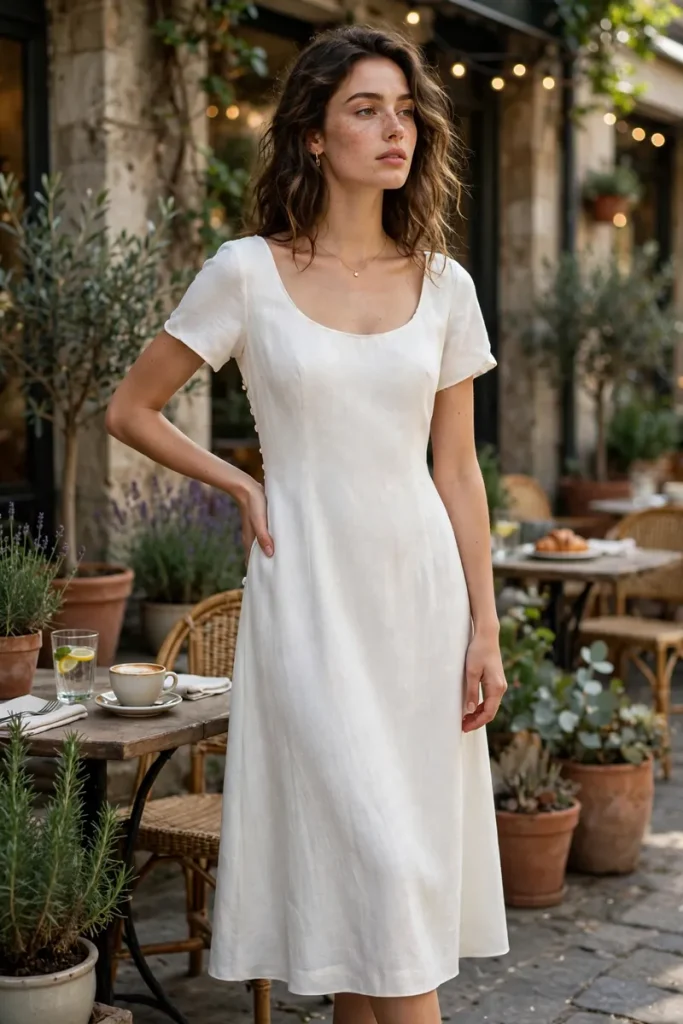
Knee-to-tea length, scoop neckline, simple skirt — the casual wedding hero. It’s bridal without the production, and the rare wedding dress you might genuinely wear again.
Best for: daytime weddings, garden parties, courthouse ceremonies, budget-conscious brides.
Skip if: your wedding is formal — a midi reads festive, not grand, and the venue sets the ceiling.
6. Barely-There Lace Sheath
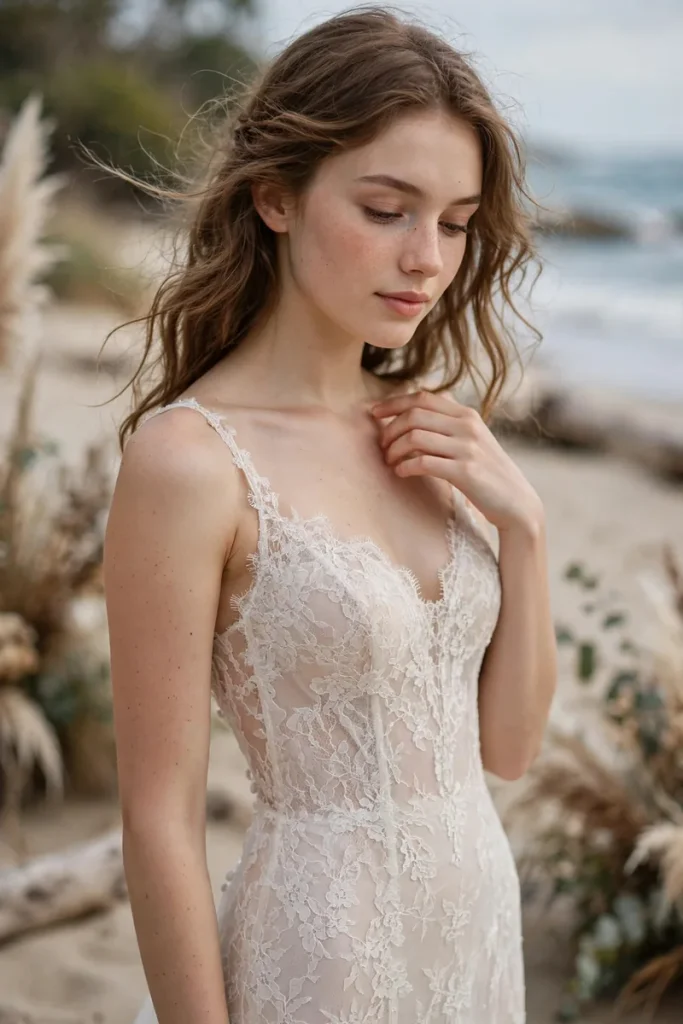
For brides who want simple with a whisper of romance: a sheath silhouette in an all-over subtle lace, no appliqué, no beading. The lace is the texture, not the decoration.
Best for: brides torn between simple and romantic — this is the compromise that doesn’t feel like one.
Skip if: you want true minimalism — even subtle lace reads as “detail” next to clean crepe.
7. The Unadorned Satin Ballgown
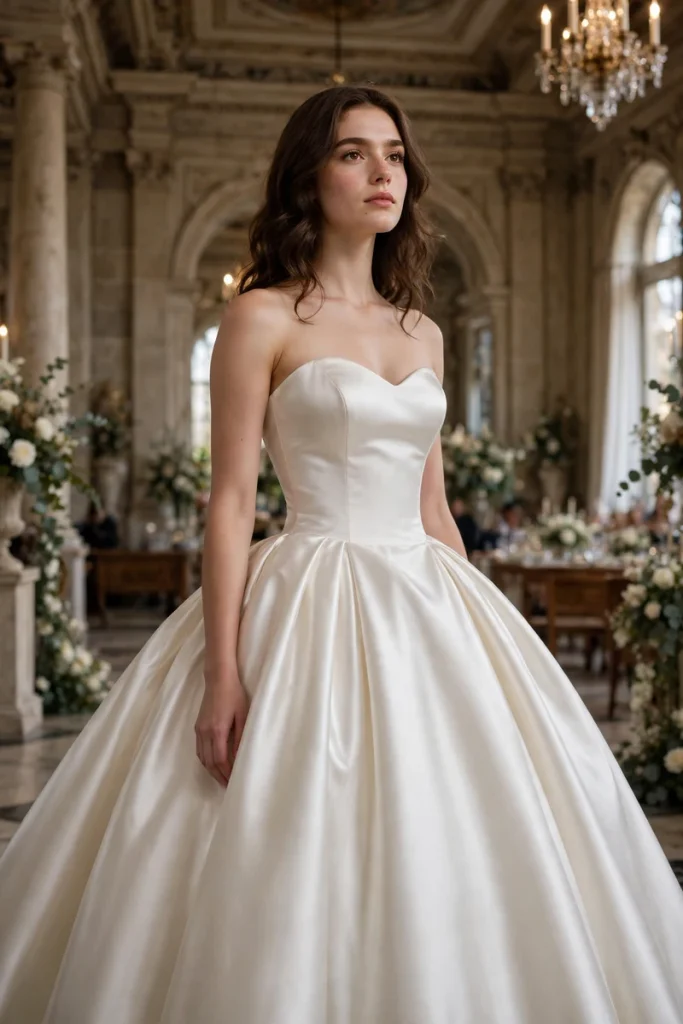
Proof that simple and dramatic aren’t opposites: a full satin ballgown with zero embellishment. The volume is the statement; the lack of decoration is what makes it modern instead of princess-costume.
Best for: grand venues, winter weddings, brides who want impact without sparkle.
Skip if: your venue is small or outdoors — this much skirt needs room, and grass plus satin is a bad combination.
8. Square-Neck Crepe
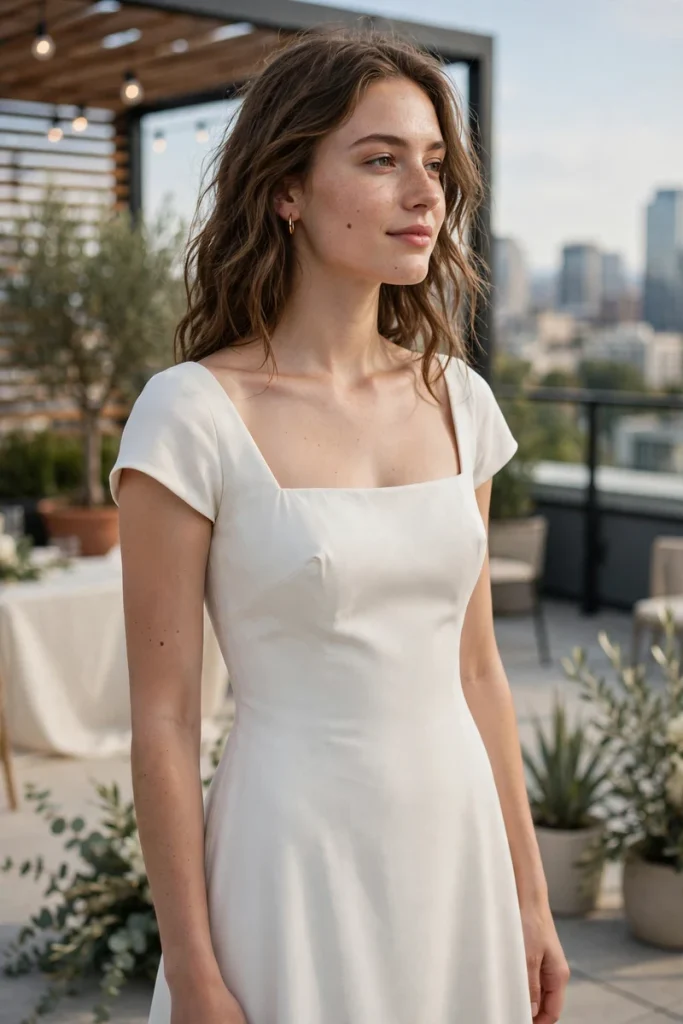
The neckline is the entire design: a clean square neckline on a simple crepe dress, usually A-line or sheath. It’s structured, slightly regal, and very now — the kind of dress that looks like a fashion choice, not a default.
Best for: brides with great collarbones and shoulders who want one strong detail.
Skip if: you have a larger bust — square necklines can feel restrictive and require precise tailoring to sit right.
9. The Cowl-Neck Slip
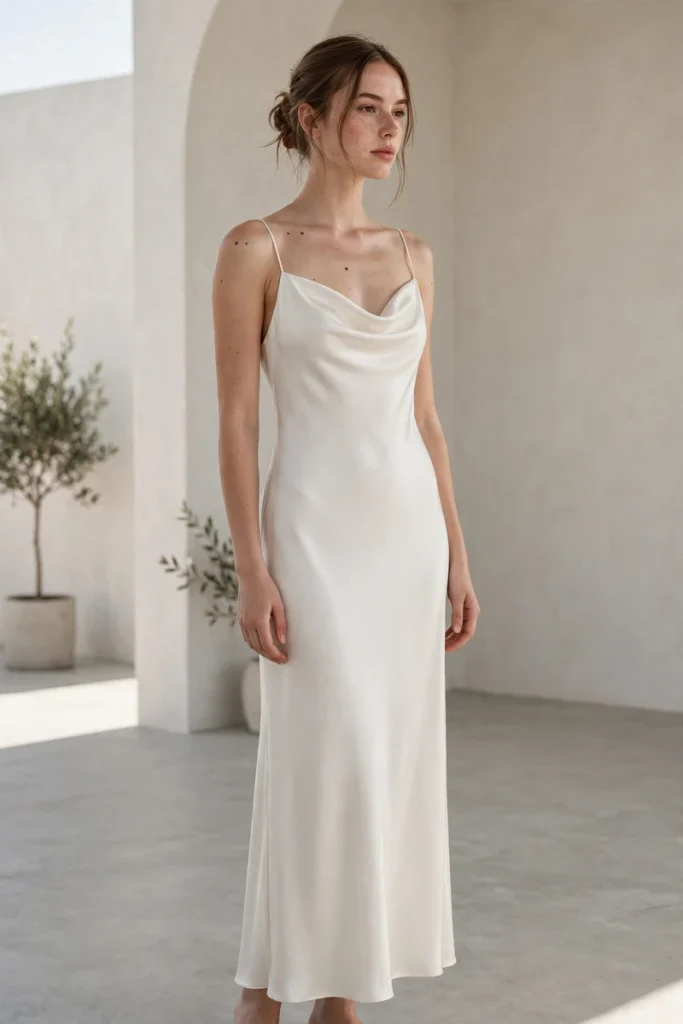
The slip dress’s softer sister: draped cowl neckline, bias cut, usually midi or full length. It’s romantic where the straight slip is severe — same simplicity, warmer feeling.
Best for: evening weddings, brides who love the slip look but want a little more softness.
Skip if: you’re small-busted and want the cowl to drape — cowls need something to drape over, or they fall flat.
10. Long-Sleeve Minimalist Crepe
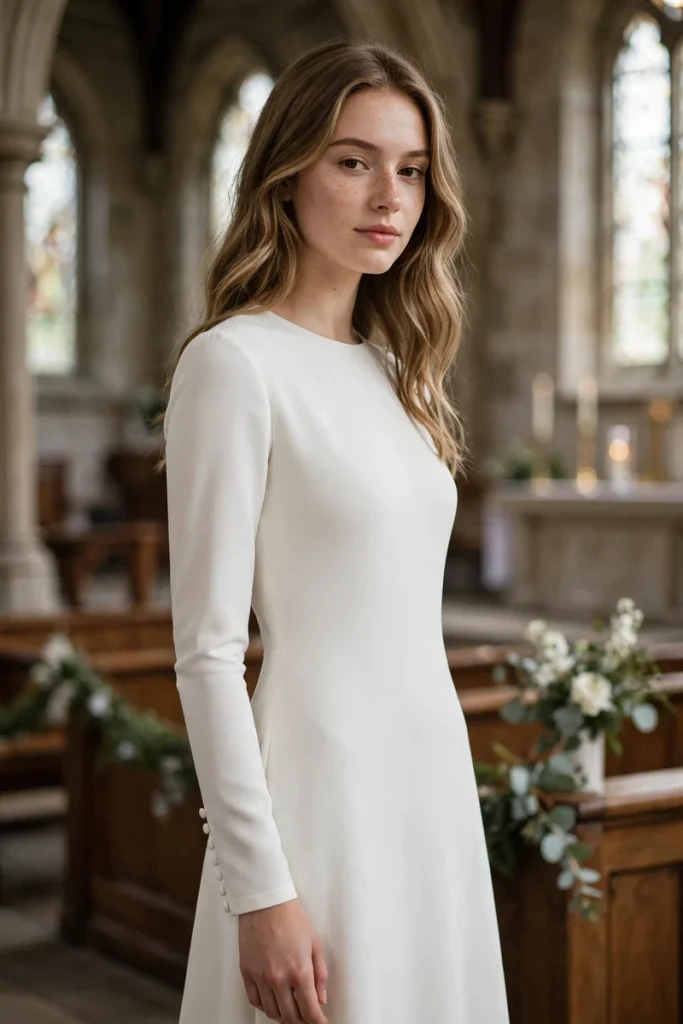
Clean crepe, long fitted sleeves, high or bateau neckline, column or A-line skirt. Understated to the point of severity — and absolutely stunning on the right bride. The restraint is the luxury.
Best for: fall and winter weddings, formal ceremonies, brides who love the royal-wedding aesthetic without the lace.
Skip if: it’s a summer outdoor wedding — long crepe sleeves in heat are a commitment you’ll regret by cocktail hour.
11. Tea-Length Retro
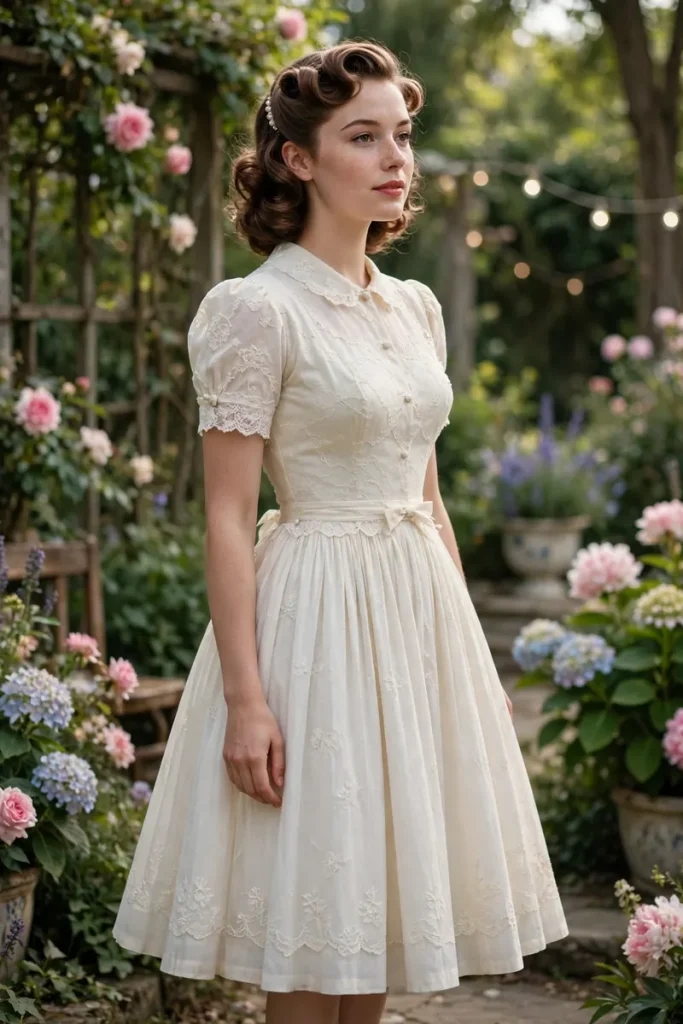
Fifties-inspired tea-length dress with a fitted bodice and full skirt — playful, photogenic, and refreshingly unfussy. Add a birdcage veil and red lip and you’re done.
Best for: vintage-loving brides, daytime weddings, dancing (that skirt was made to move).
Skip if: you want a formal, grand feeling — tea length caps the formality no matter how beautiful the dress.
12. The Tailored Jumpsuit
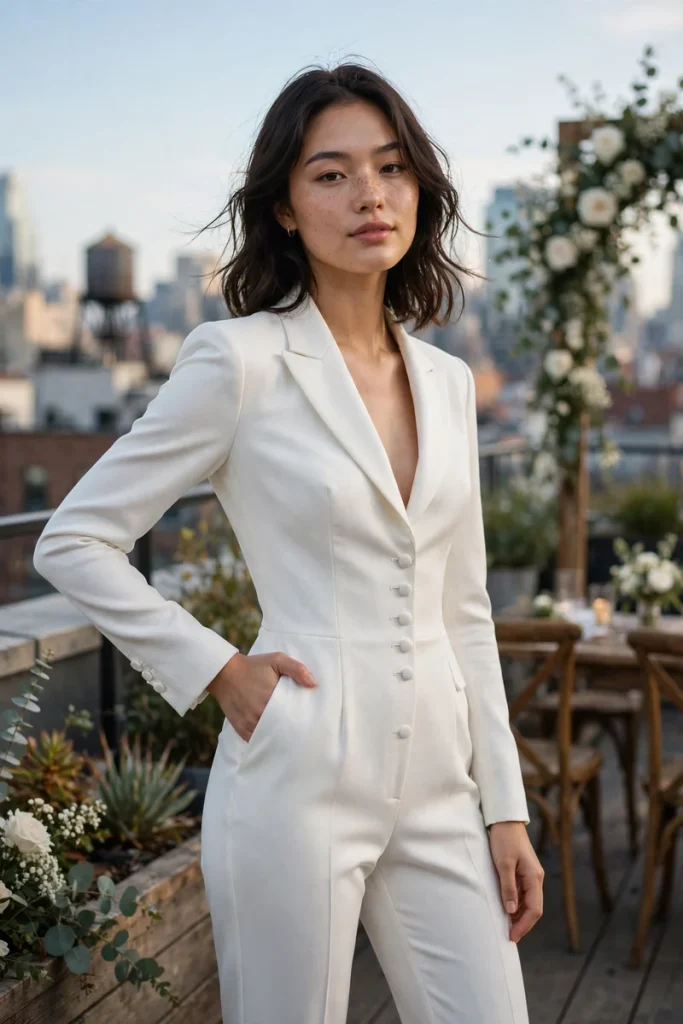
Not a dress at all, and that’s the point: a sharply tailored bridal jumpsuit in crepe or satin. Wide-leg or tapered, minimal detailing, maximum confidence. The most modern “simple” choice on this list.
Best for: city hall, modern venues, second weddings, brides who’ve never liked dresses.
Skip if: your family expects traditional — this is a statement whether you intend it or not, so own it or skip it.
13. Bridal Separates (Top + Skirt)
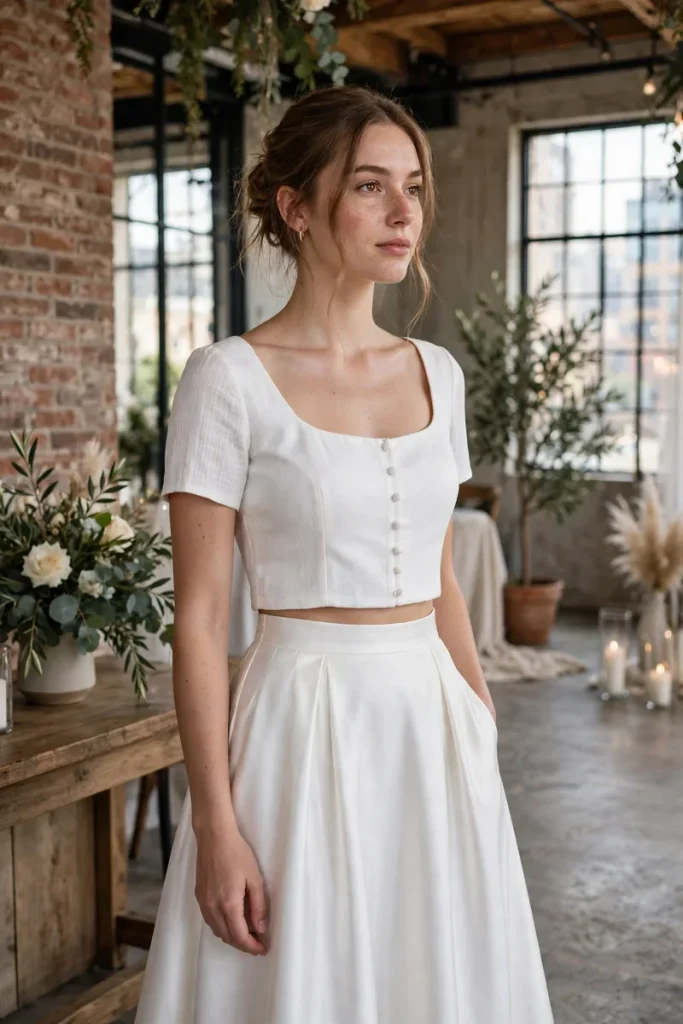
A simple top and simple skirt bought — or made — as separates. Maybe a silk camisole with a crepe A-line skirt, or a fitted bodice with a flowing chiffon skirt. The mix-and-match approach to simple.
Best for: in-between sizes (different top and bottom sizes!), brides who want a custom feel without custom prices.
Skip if: you hate the idea of a visible waist seam — separates always have one, and some brides can’t unsee it.
14. Off-Shoulder Crepe
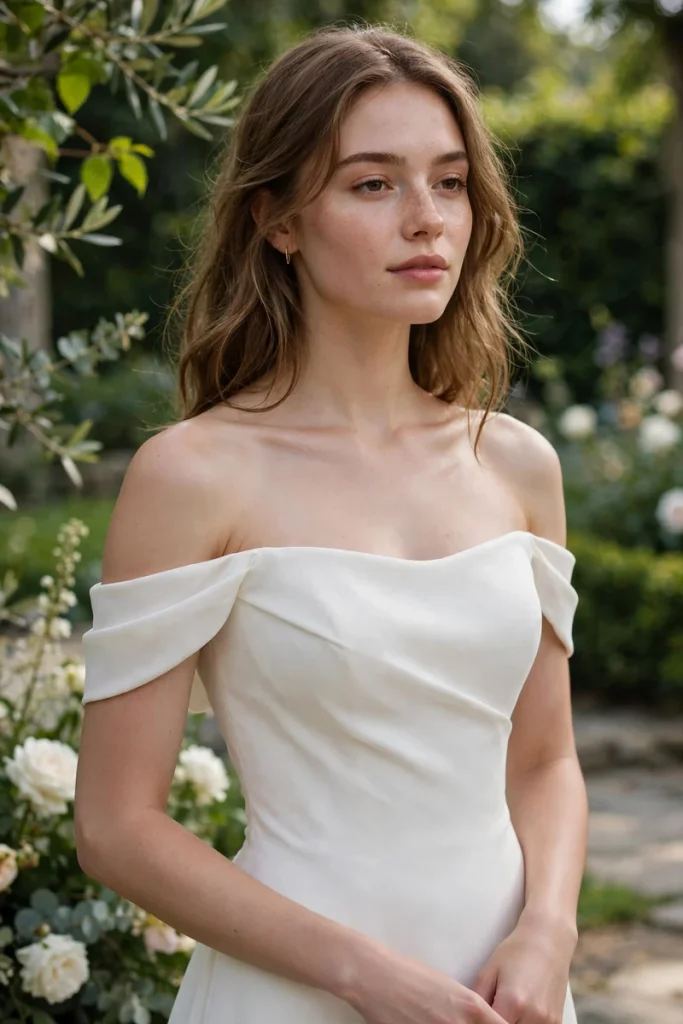
Bare shoulders, clean crepe, nothing else competing. The off-shoulder neckline adds romance to minimalism — it’s the rare simple dress with built-in sensuality.
Best for: brides who want simple but not severe; great collarbones are a bonus, not a requirement.
Skip if: you’ll be self-conscious about adjusting — off-shoulder necklines migrate, and you’ll be aware of it.
15. V-Neck Chiffon A-Line
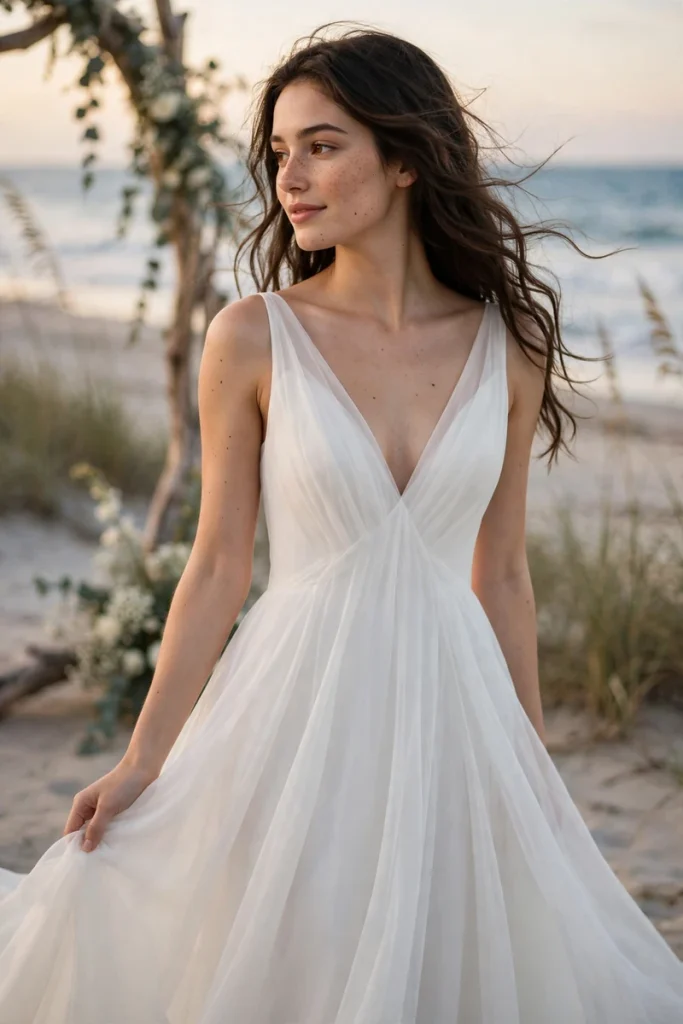
Light as air: a V-neckline bodice with a flowing chiffon A-line skirt, minimal lining, nothing heavy. The destination-wedding and garden-wedding answer to simple.
Best for: outdoor, beach, and summer weddings — it moves with the breeze instead of fighting it.
Skip if: it’s windy and formal — chiffon has a mind of its own, and Marilyn moments aren’t for everyone.
16. The Halter Minimalist
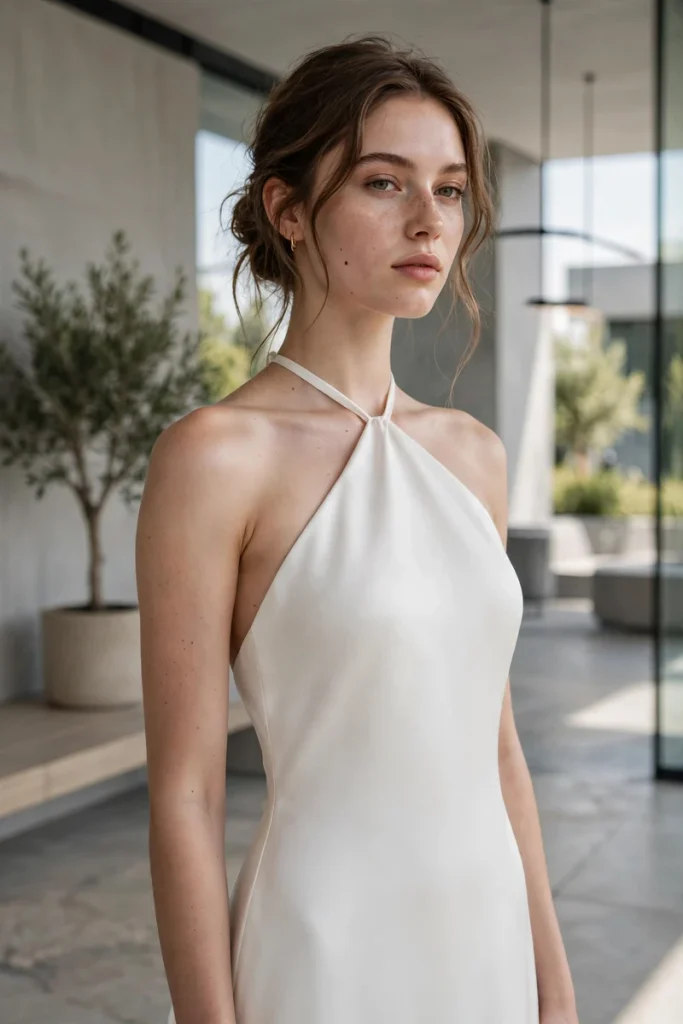
Clean halter neckline, open back, simple skirt — athletic-elegant, if that’s a thing (it is now). The halter draws the eye up and shows off shoulders and back with zero embellishment needed.
Best for: brides with toned shoulders/arms, modern venues, warm-weather weddings.
Skip if: you need a real bra — halters and supportive undergarments are natural enemies, so be honest about what you need.
17. Simple Dress + Statement Veil
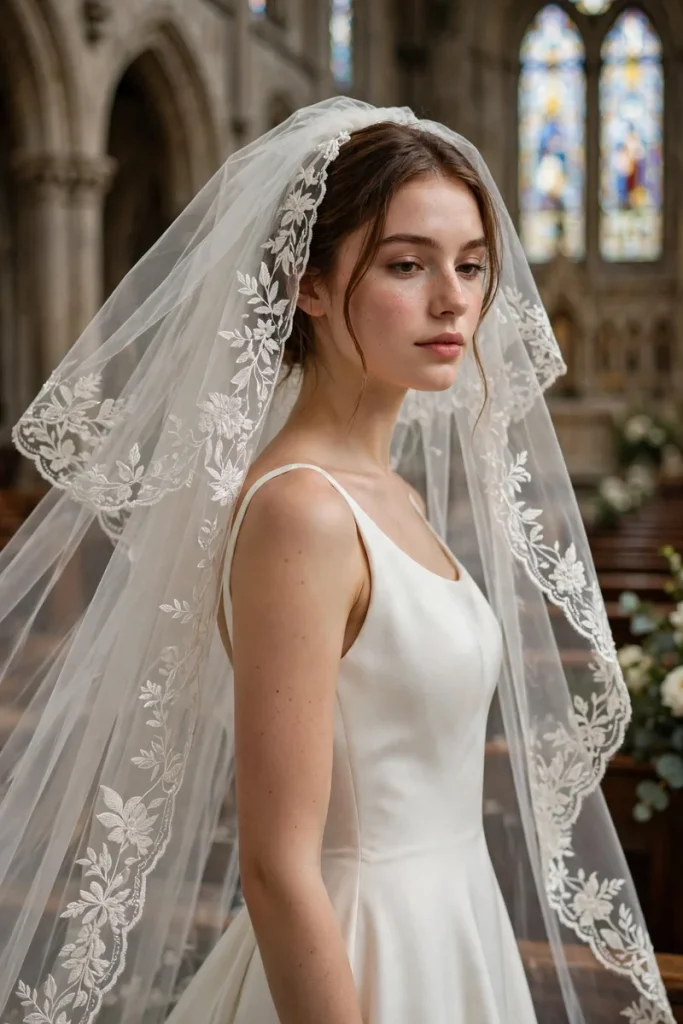
The cheat code: the plainest dress on this list paired with the most dramatic veil you can find — cathedral length, embroidered edge, blusher, whatever speaks to you. The dress whispers; the veil shouts.
Best for: brides who want simplicity and drama without choosing — plus, you get two looks when the veil comes off for the reception.
Skip if: you’re veil-averse on principle — the trick only works if you actually love veils, not as a compromise.
Where Simple Saves You Real Money
Here’s the open secret of the bridal industry: embellishment is expensive. Beading, appliqué, and hand-finishing are labor-intensive, and you pay for every hour. A clean crepe dress from a good maker often costs hundreds less than a beaded gown of similar quality — and alterations are simpler too, because there’s no lace pattern to match or beadwork to work around.
Where to look: sample sales (simple dresses are the most common samples, since salons stock them as baselines), direct-to-consumer bridal brands, and — honestly — the eveningwear section. A beautiful ivory evening gown at half the bridal price is the same dress without the word “wedding” on the tag. I know three brides who did exactly this, and their photos are indistinguishable from salon gowns.
FAQs
Are simple wedding dresses actually cheaper? Usually, yes — less handwork means lower prices, and alterations cost less without lace or beading to navigate. But “simple” from a luxury designer can still be pricey; you’re paying for fabric quality and cut. The savings are realest in the mid-range, where a $1,200 simple dress rivals a $2,500 beaded one in looks.
Do simple dresses photograph well? Better than busy ones, in my opinion. Clean lines don’t compete with your face, and simple dresses age beautifully in photos — no dated embellishment trends to regret in twenty years. One tip: simple dresses love good lighting, so prioritize your photographer’s golden-hour portraits.
Can I wear a simple dress to a formal wedding? Absolutely — formality comes from fabric, silhouette, and styling, not decoration. A satin ballgown or a crepe sheath with a cathedral veil is as formal as it gets. What reads “casual” is short hemlines and casual fabrics, not simplicity itself.
How do I accessorize a simple dress without overdoing it? Pick one star: dramatic veil, statement earrings, heirloom necklace, or bold shoes — not all four. Simple dresses are a frame; the accessory is the art. My rule: if the dress is quiet, one loud thing. If you add a second loud thing, take off the first.
Where’s the best place to buy an affordable simple wedding dress? Bridal sample sales, direct-to-consumer online bridal brands (with good return policies — order multiple sizes), and the eveningwear departments of major retailers. Also: preowned sites, where simple dresses hold up best because there’s no delicate beading to have worn badly. Always check return policies before ordering online.
Conclusion
Simple wedding dresses ask more of the bride and less of the dress — and that’s exactly why they work. Without decoration to hide behind, what shows is you: your posture, your smile, the way you move. The brides I remember weren’t wearing the most expensive gowns. They were wearing the ones that looked like they’d been made for them and no one else.
So try the simple ones. Try them even if your Pinterest board is full of ballgowns — especially then. The dress that makes you stand up straighter and stop fidgeting in the mirror isn’t the fanciest one. It’s the right one. And more often than you’d expect, the right one is the simple one.