16 Eid Outfit Ideas (Chand Raat to Eid Night)
There’s a particular magic to Eid mornings: the house smells of sheer khurma, the henna from chaand raat is still dark on your hands, and somewhere in the closet hangs the outfit you’ve been waiting weeks to wear. Eid dressing isn’t just fashion — it’s tradition, it’s family, it’s the one day when everyone you love sees you at your best.
From the quiet of dawn prayers to the laughter of evening dawats, Eid asks different things of your outfit at different hours. That’s why this list follows the day itself — so whatever hour you’re dressing for, there’s an idea waiting.
These sixteen outfits follow the day itself — from the quiet of Eid morning to the glamour of Eid night. Each one comes with a different insider note. Let’s celebrate, from the first takbeer to the last dawat.
1. White Chikankari Kurta Set

White chikankari kurta with straight pants and a light dupatta — fresh, elegant, and perfect for Eid morning. The shadow embroidery catches the morning light beautifully.
White on Eid morning is a tradition in many families: it feels pure, new, and full of hope. My mother has worn white chikankari every Eid morning for twenty years — it’s her signature, and now mine too. Some traditions are worth inheriting.
Comfort for prayers: the straight cut and breathable cotton make this ideal for Eid prayers — modest, comfortable, and beautiful in the morning light.
2. Embroidered Straight-Cut Suit

Pastel embroidered shalwar kameez in a straight cut, matching dupatta draped neatly, simple khussas. The classic Eid prayer outfit — modest, graceful, timeless.
The straight-cut suit is the backbone of Eid: it works for prayers, for hugging elders, for sitting on the floor with cousins. It’s the outfit that handles the whole morning. Every wardrobe needs this workhorse.
The dupatta drape: pin it at the shoulder for prayers (it won’t slip), then let it flow loose for the rest of the day. One dupatta, two moods.
3. Pastel Sharara + Short Kurti

Blush or mint sharara with a short embroidered kurti, delicate jewelry, embellished khussas. Playful and pretty — the sharara’s flare is pure celebration.
Shararas make every movement feel festive: they swirl when you walk, they catch the breeze, they photograph like dreams. I wore one last Eid and felt like the day itself was dancing. It’s impossible to feel ordinary in a sharara.
Photo with family: the sharara’s volume looks stunning in group photos — stand in the center and let the flare do the talking.
4. White + Gold Classic

White outfit with gold embroidery or gold accessories — the timeless Eid combination. White kurta, gold dupatta, gold khussas, gold jewelry.
White and gold is Eid’s most iconic palette: it says celebration without saying a word. It’s the combination that never dates, never fails, and suits everyone. When in doubt on Eid morning, this is the answer.
All-day elegance: this palette works from morning prayers to night dawats — just change the jewelry (simple for day, statement for night) and you’re set.
5. Emerald Green Anarkali

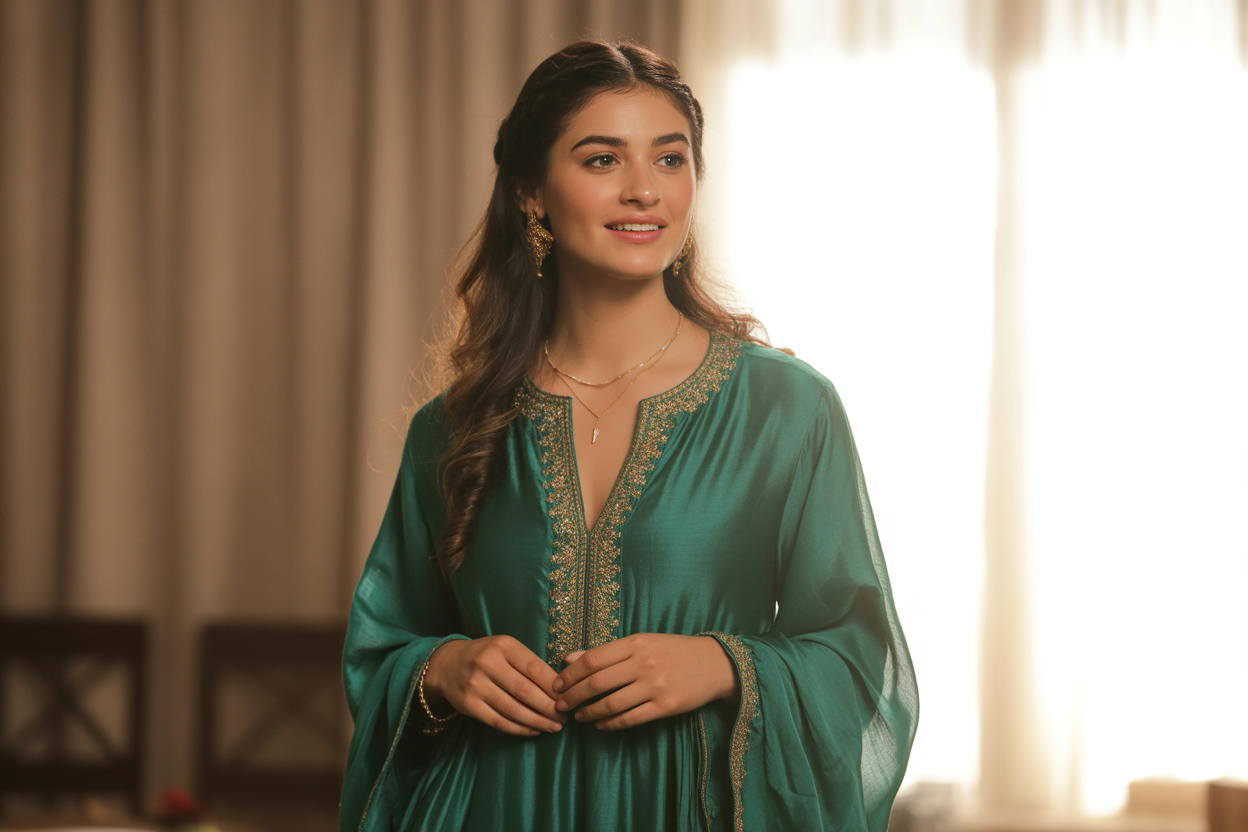
Floor-grazing emerald anarkali with gold detailing, matching dupatta, jhumkas, embellished heels. Regal and radiant — green is Eid’s signature color.
Green on Eid is tradition: it symbolizes growth, prosperity, and new beginnings. An emerald anarkali is the most majestic way to wear it — you’ll feel like royalty. The gold detailing catches light with every step.
Eidi-ready: the anarkali’s flowing silhouette has hidden pockets (or room for a small pouch) — perfect for collecting eidi from elders gracefully.
6. Organza Suit

Sheer organza kameez over a silk inner, straight pants, minimal jewelry, sleek hair. Modern elegance — the organza’s transparency adds depth and luxury.
Organza is the fabric of the moment: it looks delicate but makes a strong statement. The layered transparency photographs beautifully — it’s fashion-forward Eid. The silk inner keeps it wearable and comfortable.
Dawat-proof: the silk inner protects against spills, and organza doesn’t show wrinkles. Eat freely; the outfit forgives.
7. Printed Silk Saree

Rich printed silk saree with a modern blouse, statement jhumkas, sleek bun. Timeless drape — the saree is six yards of pure elegance.
For those who drape: a silk saree on Eid is unmatched. The pallu flows, the silk shines, and the whole look reads as heritage and pride. My aunt’s Eid saree tradition is legendary in our family — three decades and counting.
The dupatta drape: pin the pallu at the shoulder for security, pleat neatly for the classic look. A well-draped saree needs no other accessory.
8. Maroon Sharara (Bold)

Deep maroon sharara with gold zardozi work, short kurti, heavy jhumkas, embellished clutch. Bold and bridal-adjacent — for when you want maximum impact.
Maroon is the color of celebration in South Asian culture: rich, warm, and commanding. A maroon sharara doesn’t whisper Eid; it announces it. Wear it when you want to be unforgettable.
Photo with family: maroon pops in every photo — against white walls, green lawns, and colorful cousins. You’ll be unmissable in the best way.
9. Pastel Lehenga Choli

Pastel lehenga (blush, lavender, or mint) with an embroidered choli and sheer dupatta, delicate jewelry, embellished sandals. Dreamy and modern — pastels make lehengas daytime-friendly.
Pastel lehengas changed the game: all the grandeur of a lehenga, none of the heaviness. You’ll float through the day feeling like a modern princess. They’re the perfect bridge between tradition and now.
Chaand raat prep: steam the lehenga the night before and hang it — pastels show every crease. Prep the jewelry and shoes too; Eid morning is no time for hunting.
10. Beige + Gold Lehenga (Night Glam)

Champagne beige lehenga with heavy gold embroidery, matching blouse, sheer gold dupatta, statement jewelry. Evening royalty — this is the Eid night showstopper.
When the sun sets on Eid day and the dawats begin, the beige-gold lehenga takes over. It glows under lights, photographs like a dream, and feels like the grand finale the day deserves. End the day as beautifully as it began.
All-day elegance: if you’re wearing this all day, choose a lighter lehenga (less can-can) — you’ll thank yourself by evening. Comfort is the real luxury.
11. Kaftan (Lounging Glam)

Embroidered kaftan in jewel tones, sleek hair, statement earrings, embellished flats. Effortless glamour — the kaftan is elegance without effort.
Kaftans are the unsung heroes of Eid: they’re comfortable enough for a full day of hosting, glamorous enough for photos, and they suit every body. My go-to for Eid day two. One piece, zero stress, total elegance.
Dawat-proof: the kaftan’s loose cut is the most food-friendly silhouette in existence — eat, celebrate, repeat. No waistband will judge you.
12. Palazzo + Peplum Set

Embroidered peplum top with matching palazzo pants, light dupatta, block heels, modern jewelry. Contemporary festive — the peplum defines the waist beautifully.
The peplum-palazzo set is modern Eid dressing: it’s structured where it counts, flowing where it matters. Young, fresh, and fashion-forward without abandoning tradition. The best of both worlds, tailored.
Eidi-ready: palazzos often have pockets — the practical Eid choice. Stash your phone and eidi envelopes with zero fuss.
13. Gharara + Kameez (Traditional)

Classic gharara with a short kameez, heavy dupatta, traditional jewelry, khussas. Heritage dressing — the gharara is centuries of celebration in one silhouette.
Ghararas carry history: they’re what our grandmothers wore, and wearing one connects you to generations of Eid mornings. There’s pride in every flare. Some silhouettes are heirlooms in themselves.
The dupatta drape: the gharara demands a proper dupatta — draped over both shoulders or pinned at one. This is not the outfit for a carelessly thrown scarf.
14. Abaya-Style Elegance
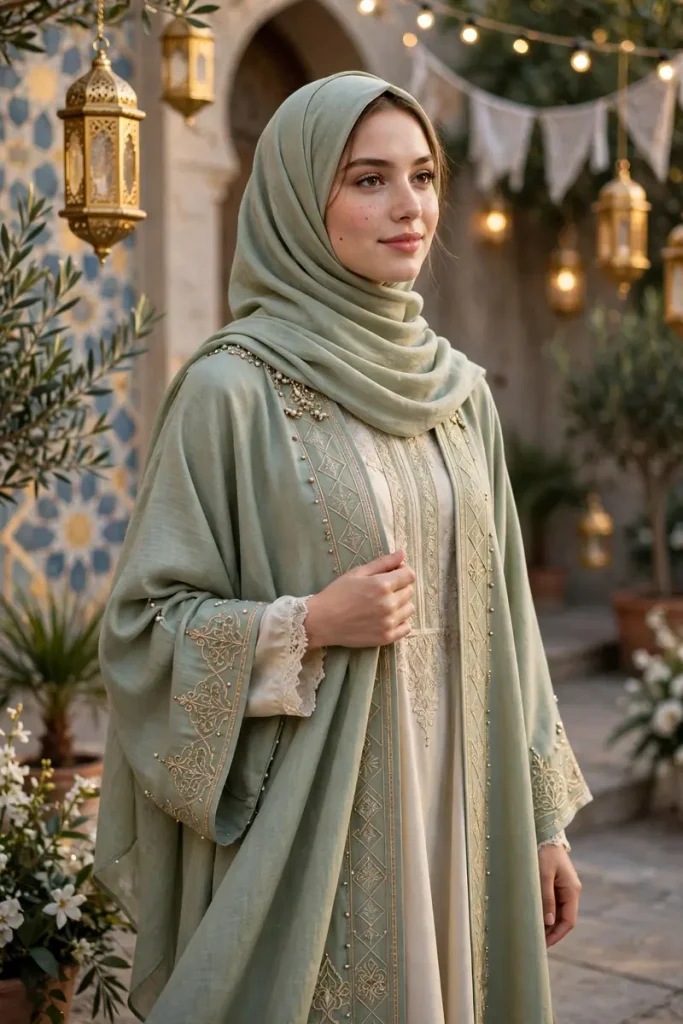
Embellished abaya in black, navy, or deep green over a simple dress, elegant hijab, minimal jewelry, classy heels. Modest luxury — the abaya’s flow is pure grace.
An embellished abaya on Eid is understated power: the embellishment catches light, the silhouette flows, and the modesty is the statement. Elegant in every sense. It’s proof that coverage and glamour are the same thing.
Comfort for prayers: the abaya is prayer-perfect — full coverage, easy to move in, and beautiful. It’s the most practical glamorous choice here.
15. Dhoti Pants + Crop Top + Jacket
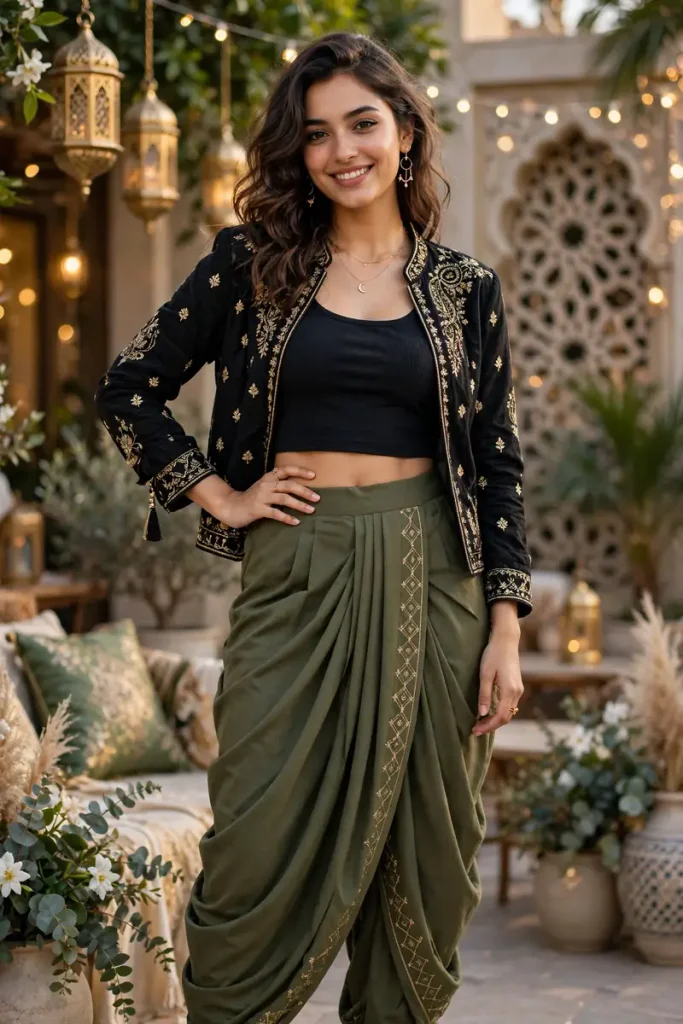
Silk dhoti pants, embroidered crop top, long embellished jacket over it, modern heels, statement earrings. Indo-western edge — tradition reimagined.
For the fashion-forward Eid: dhoti pants bring the drama, the crop top brings the modern, the jacket ties it together. It’s the outfit that gets “where is that from?” all day.
Chaand raat prep: this outfit has three pieces — lay them out the night before and check the fit together. Indo-western needs the proportions just right.
16. The Heirloom (Restyled)

Your mother’s or grandmother’s outfit — a vintage saree, an old lehenga, a classic suit — restyled for today. New blouse, modern jewelry, your own drape. Heritage, reworn.
The most meaningful Eid outfit isn’t new — it’s the one with history. I wore my grandmother’s shawl over a new suit last Eid, and it was the most complimented thing I owned. Some outfits carry love. This one carries generations.
Eidi-ready: the elders will notice — and they’ll love it. Wearing family heritage on Eid is the deepest compliment you can pay the people who came before you.
FAQs
What should I wear on Eid? Something new (or new-to-you), festive, and comfortable enough for a full day of prayers, visits, and feasts. Traditional options (shalwar kameez, sharara, lehenga, saree) are classic; modern festive (kaftans, co-ord sets, indo-western) works too. The unwritten rule: dress up — Eid is the day for your best. When in doubt, ask your family what the plan is and match the formality. It’s better to be overdressed than underdressed on Eid.
What colors are best for Eid? Festive and joyful: pastels (blush, mint, lavender) for mornings, jewel tones (emerald, maroon, navy) for evenings, and white-and-gold as the timeless classic. Green has special significance on Eid. Avoid dull or mournful colors — Eid is a celebration, and your palette should say so. When in doubt, brighter is better.
Can I wear western clothes on Eid? You can, but most families expect festive traditional — it’s part of the day’s spirit. If you prefer western, choose festive versions: a satin midi dress, an embellished jumpsuit, or elegant wide-leg trousers with a dressy top. The key is festive: Eid dressing is about marking the day as special, whatever the silhouette.
How do I style a dupatta for Eid? Three classic options: draped over both shoulders (traditional and elegant), pinned at one shoulder (practical for prayers and eating), or worn as a veil over the head (for prayers, then styled loose after). Pin it — safety pins are invisible and prevent the all-day slipping battle. Match or contrast with intention: same-color for elegance, contrasting for drama. And always check the drape in a mirror before leaving.
How can I look festive on Eid on a budget? Restyle what you own: last year’s outfit with a new dupatta reads as new. Borrow from family (the heirloom idea above). Focus spending on one statement piece (jewelry, khussas, or a dupatta) rather than a whole outfit. And shop after-Eid sales for next year — festive wear discounts deeply once the season passes, sometimes by half.
Conclusion
Sixteen outfits, one beautiful day. Eid dressing isn’t about impressing anyone — it’s about honoring the day, the family, and yourself. Whether you wear heirloom silk or a new pastel set, the best Eid outfit is the one that makes you feel connected: to tradition, to family, to joy.
So pick the outfit that feels like your Eid — the color that makes you happy, the silhouette that lets you hug everyone, the one you’ll remember in photos for years. Eid Mubarak — may your day be as beautiful as you look in it, and may the year ahead bring everything you’re hoping for.