
17 Short Natural Hairstyles: From Wash Day to Slay Day
Wash day is sacred. If you know, you know — the hours, the sections, the deep conditioner, the arm ache. But wash day is not the end. It is the beginning. What follows is the full ritual: seventeen short natural styles, in the order a real wash day unfolds — from the first rinse to the final slay. Tie your headscarf. Let us begin.
Phase One: The Cleanse
1. The Fresh Wash-and-Go TWA

Right out of the shower: the teeny-weeny afro in its purest form — clean, conditioned, defined with leave-in and a little gel. The TWA wash-and-go is honesty in hairstyle form: your texture, exactly as it grows. I wore my TWA like this for a year, and strangers stopped me to ask about my “cut.” It is not a cut, I would say. It is a beginning. Every ritual starts with truth.
2. The Puff, Fresh and High

While hair is still damp and manageable: gather it high into a puff. Fresh wash-day puffs have a softness that day-three puffs cannot replicate — the coils are hydrated, the shape is round, the edges lay like they were born to. This is the two-minute style that looks like twenty. The ritual rewards speed here; save the artistry for later.
Phase Two: The Deep Condition
3. The Conditioning Cap Style (Make It Cute)

Deep conditioner on, cap on, waiting thirty minutes — and yes, you can make this cute. A satin-lined cap, or a scarf tied artfully over the plastic, turns the least glamorous phase into a look. I do my conditioning with a silk scarf wrapped like a crown and answer the door like royalty. The ritual teaches: there are no ugly phases, only unstyled ones.
4. The Two-Strand Twist Set (While It Sets)

Twists in, setting overnight — but the twists themselves are a style. Neat two-strand twists, worn as-is, are a complete look: protective, pretty, purposeful. I have worn twist sets to work for a week straight, unraveling a few each day like an advent calendar of hairstyles. The ritual is efficient: style now, style later, same install.
Phase Three: The Style
5. The Twist-Out Reveal

The moment of truth: unraveling. Twist-outs on short natural hair are springy, defined, full of personality — the reveal never gets old. I unravel mine on Sunday evenings and stand in the mirror way too long. It is the ritual’s reward ceremony. Fluff at the roots, pick for volume, and behold: the week’s hair, born from patience.
6. The Finger-Coil Definition
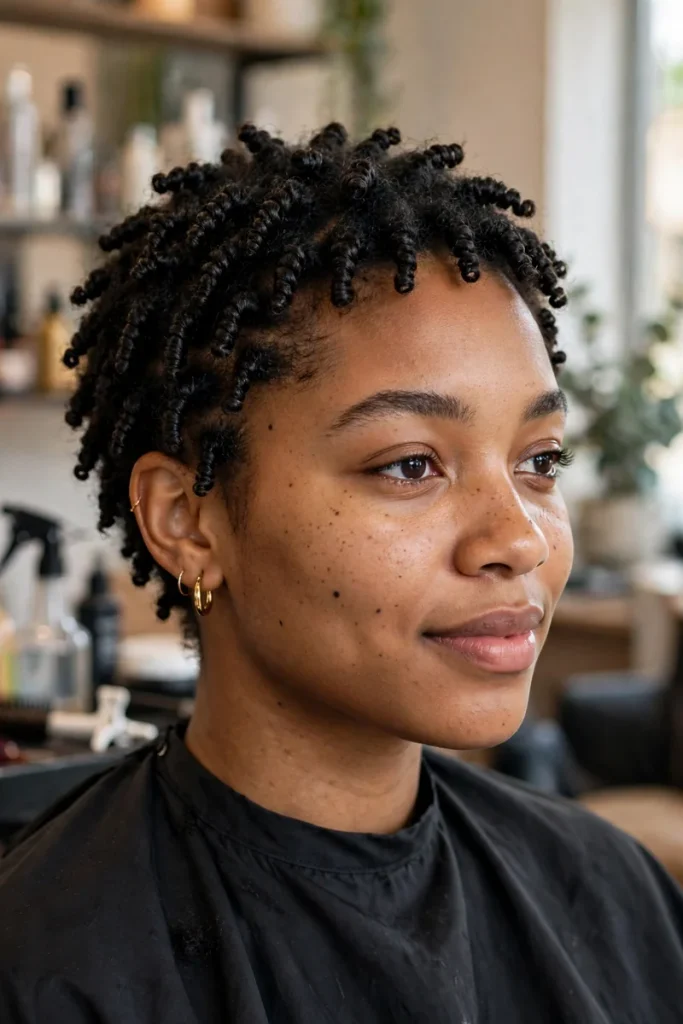
For maximum definition: finger coils. Twirl each section around your finger, set, release — coils so defined they look drawn on. It takes time (put on a podcast), but the result on short hair is immaculate. This is the ritual’s meditation phase: repetitive, calming, transformative. Your hands learn your hair’s language, one coil at a time.
7. The Tapered Cut, Freshly Shaped

Wash day is also shape day. The tapered cut — short sides, full crown — looks its absolute best fresh: edges crisp, coils popping, silhouette sharp. If you have a barber or stylist, book the shape-up for wash day. I time mine like clockwork. The ritual honors maintenance: a great cut maintained beats a great style neglected, every time.
8. The Short Afro, Picked to Perfection

After conditioning comes the pick. The short afro, lifted and shaped with a wide-tooth pick, is a halo you build yourself. Pick from the roots, shape with your hands, and watch it bloom. My grandmother picked her afro every morning like a garden. The ritual is gardening: you tend it, and it grows beautiful.
9. Bantu Knots, Freshly Done

Section, twist, coil into knots — bantu knots on short hair are sculptural and striking, and they set the stage for tomorrow’s knot-out. Wear them today as art; unravel tomorrow as curls. Two rituals, one install. My knots have started conversations with strangers twice. Art does that.
10. The Side Part and Swoop

Simple, devastating: a deep side part with the front swooped across the forehead. On short natural hair, the swoop adds drama and asymmetry that flatters every face. Edge control, a brush, and confidence. This is the ritual’s quick-change act — five minutes from puff to polished.
Phase Four: The Adornment
11. The Headwrap Crown

Some wash days end with a wrap — and that is not hiding, it is styling. A beautiful headwrap, tied high with an elaborate knot, is a crown in fabric form. I own eleven wraps. Each one is a mood. The ritual includes adornment: your hair carried you this far; now dress it like the royalty it is.
12. Gold Cuffs on Twists
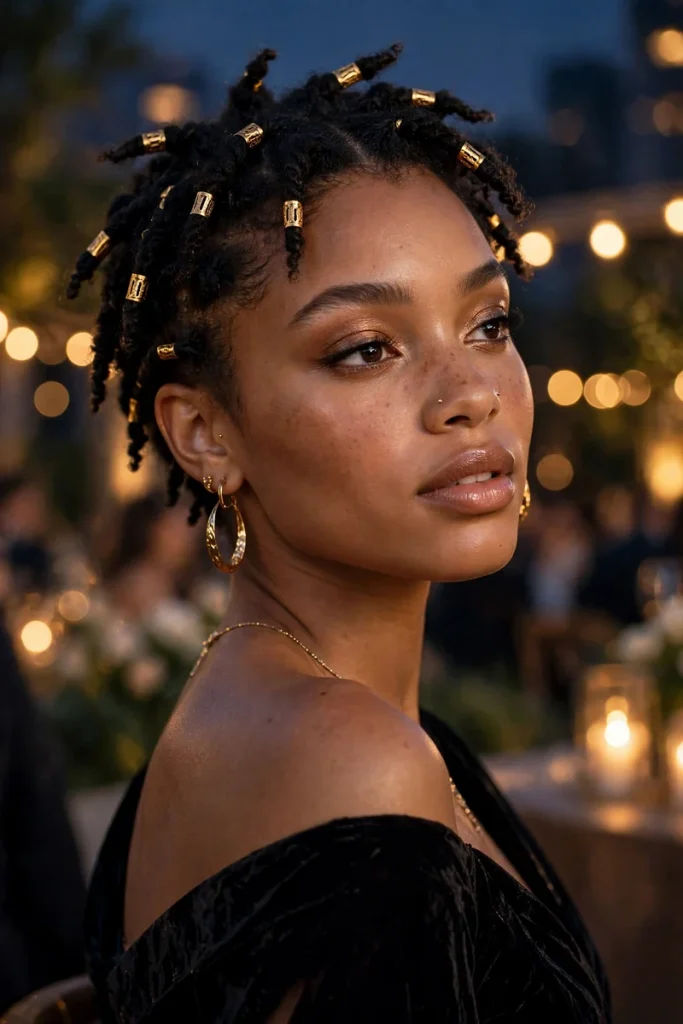
Thread gold cuffs onto a few twists — instant jewelry for your hair. Small detail, massive impact. I add cuffs when the week needs elevating: presentations, dates, days when I want to feel expensive. The ritual’s finishing touch: metal against coils, shine against texture. Beautiful.
13. The Pinned Side

One side pinned back with decorative pins, the other free — asymmetry as adornment. It takes thirty seconds and looks intentional. This is my “good enough is gorgeous” style, the ritual’s reminder that not every phase needs an hour. Sometimes thirty seconds and three pins are the whole ceremony.
Phase Five: The Slay
14. The Twist-Out, Day Three (The Sweet Spot)

Here is the ritual’s best-kept secret: day three is better than day one. The twist-out has settled, the volume has bloomed, the coils have character. Day-one hair is pretty. Day-three hair has personality. I plan important things for day three. The ritual rewards patience with interest.
15. The Pineapple, Styled

The nighttime pineapple, worn deliberately out: gathered high, curls cascading, edges laid. What started as preservation became a style — the ritual’s great accident. I have worn styled pineapples to dinners, to work, to a wedding. The wedding guests thought it was an updo. It was. Just one I invented in my sleep.
16. The Flat-Twist Updo

Flat twists curving back into a puff or bun — the updo that shows skill. This is the ritual’s showcase piece: cornrow-adjacent technique, endless pattern possibilities, stunning results on short hair. My flat-twist updo got me stopped by a photographer once. “Can I shoot your hair?” he asked. The ritual had reached its peak: hair as art, recognized as such.
17. The Big Reveal: Your Hair, Loved

The final phase is not a style. It is a state: your short natural hair, at whatever stage of the ritual, loved exactly as it is. Wash day to slay day was never about transformation. It was about attention — the hours you spend are love letters to yourself. Seventeen styles, one head, infinite ritual. The slay was never the destination. It was the wash day, the patience, the hands learning the hair. It was you, all along.
The Ritual Ends (Until Next Wash Day)
Every ritual ends where it began: with water, with hands, with time. Short natural hair asks for hours and repays them in beauty, versatility, and the quiet confidence of knowing exactly what your hair needs. Keep the bonnet close, the pick closer, and the ritual sacred. See you at the next wash day.
The Product Shelf: What the Ritual Requires
Every ritual needs its tools. The cleansers: a clarifying shampoo (monthly reset) and a moisturizing shampoo (regular wash) — know which day needs which. The conditioners: a daily conditioner and a deep conditioner (the heavy artillery, used with heat). The stylers: leave-in conditioner, curl cream, and gel — the holy trinity, applied in that order on soaking wet hair. The oils: seal with something light (jojoba, grapeseed) or rich (castor, shea) depending on your porosity. The tools: wide-tooth comb, Denman-style brush, microfiber towel or old t-shirt (never terry cloth — it steals moisture and causes frizz), satin bonnet, and a pick. The shelf is not consumerism. It is preparedness. The ritual deserves proper instruments.
The Night Shift: While You Sleep
The ritual does not end at bedtime — it changes shifts. The pineapple: gather hair high and loose to preserve curls overnight. The bonnet: satin, every night, no exceptions — it is the hardest-working item on the product shelf. The re-twist: for twist-outs, re-twist a few sections before bed to refresh the definition. The morning: remove, shake, fluff, go — second-day hair is often better than day one, because the ritual compounds. I have a whole nighttime routine and I am not ashamed. The night shift protects the day shift’s work. Respect the cycle.
The Elders’ Wash Day Memories
My grandmother’s wash day: a kitchen sink, a hot comb on the stove, Blue Magic, and an entire Saturday. My mother’s wash day: the relaxer years, the smell of chemicals, the burn she pretended not to feel. My wash day: the LOC method, a bonnet, and freedom. Three generations, three rituals, one lineage. The elders did what they had to with what they had — and their wash days bought my wash day. When I sit with conditioner on for thirty minutes, I think of my grandmother’s Saturdays. The ritual is longer than my lifetime. I am just its current keeper.
The Sunday Playlist
No ritual is complete without music. My wash day playlist: something soulful for the cleanse, something upbeat for the styling, something slow for the deep condition. The cleanse: Aretha, obviously — respect for the process. The detangle: something with a groove, because detangling needs rhythm. The deep condition: jazz or neo-soul — thirty minutes of waiting deserves beauty. The styling: whatever makes you dance in the mirror — the twist-out deserves a soundtrack. The reveal: your power anthem, full volume. Mine changes monthly. The playlist is personal. The principle is universal: wash day is a ceremony, and ceremonies need music.
The Wash Day Manifesto
We hold these truths to be self-evident: that all textures are created beautiful; that wash day is sacred and shall not be rushed; that no one gets to call our hair difficult; that protective styles are strategy, not surrender; that edges are precious and shall be protected; that the bonnet is non-negotiable; that second-day hair is a gift; that our grandmothers’ rituals live in our hands; and that the slay was never the point — the care was. Signed: everyone who ever spent a Sunday with conditioner on, building a crown. The manifesto is posted. The ritual continues.
The Apprentice
Every keeper trains an apprentice. Mine is my niece, nine years old, who sits beside me on wash days with her own little spray bottle, “helping.” I teach her what my grandmother taught me without words: section patiently, detangle gently, never rush. She asked me why wash day takes so long. I told her: “Because your hair is worth the time.” She nodded like she already knew. The ritual passes hand to hand, generation to generation. I was the apprentice once. Now I am the keeper. One day she will be. The wash day continues — not because hair needs it, but because we do.
The bonnet is on. The pick is down. The ritual rests — until the water runs again, and it all begins anew. That is the beautiful thing about wash day: it always comes back around, like Sundays, like seasons, like love. See you at the sink.
Wash day forever. Slay day always.
And if anyone ever calls your wash day “too much work,” smile like the keeper you are and say: “Gardens take tending.” Then flip your perfectly defined twist-out and walk away. The ritual speaks for itself.
The keeper rests. The crown remains. Always.
One more thing, keeper to keeper: you are doing beautifully. The hair knows. So do you.
The sink is calling. The conditioner is ready. The ritual awaits its keeper — and the keeper is ready too, bonnet in hand, playlist queued, crown prepared.
The water is warm. The time is yours. Begin.
Begin beautifully.