
14 Natural Curly Hairstyles, Organized Like an Almanac Through the Curl-Care Seasons
My grandmother kept a farmer’s almanac on the kitchen windowsill my whole childhood, checking it before planting anything. Years later, sitting with a curl specialist who kept referring to my hair’s “dry season” and “growth season” like she was reading the same kind of almanac, I realized natural curly hair genuinely does move through predictable cycles, not just weather-related ones, but wash-cycle seasons, product-buildup seasons, length seasons. So instead of organizing these fourteen styles by occasion, here they are laid out like almanac entries, each one tied to a season your curls actually move through.
The Fresh-Wash Season
Entry One: The Defined Wash-and-Go

This is opening week, hair at its most receptive, cleanest, and most willing to cooperate. Apply product generously in sections while soaking wet, scrunch upward, diffuse or air dry. A woman I spoke with described this specific window, the first eight or so hours after a thorough wash day, as the only time her curls genuinely match the photos in styling tutorials, and said she’s stopped comparing her day-four hair to those same photos once she understood they were never showing the same season at all.
Entry Two: The Fresh-Set Twist-Out
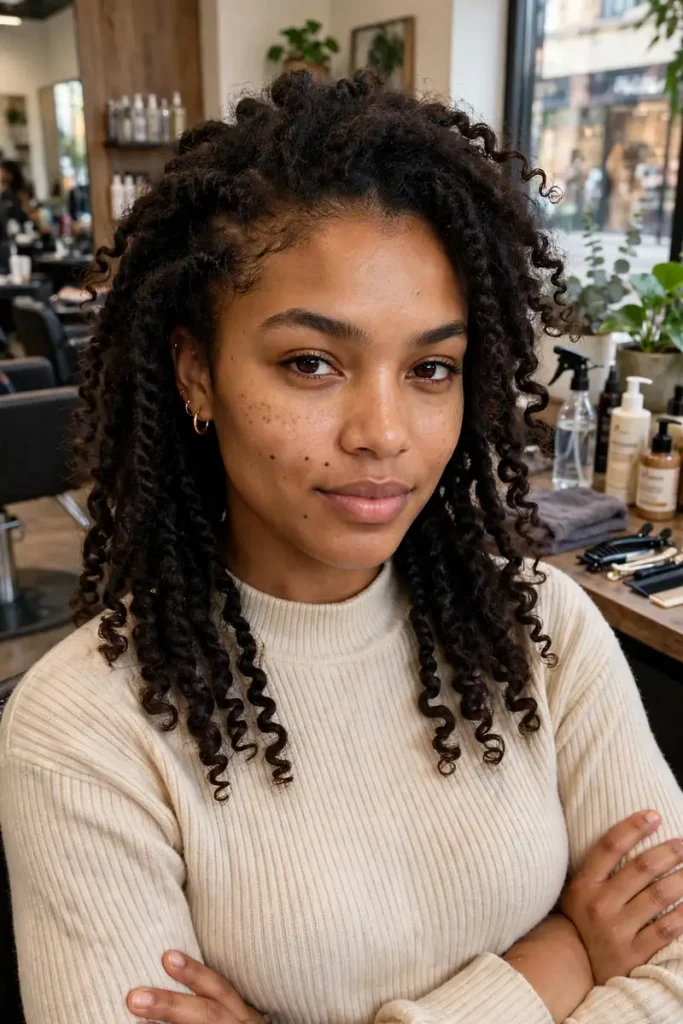
Also belonging to this earliest window, twisting clean, product-saturated hair produces the most defined result the whole cycle will offer. A mother told me she specifically schedules her daughter’s twist-outs for the night of wash day and no other night, having learned the hard way that attempting the same technique even one day later produces a noticeably softer, less impressive result.
The Settling Season
Entry Three: The Day-Two Puff

A day or so past the fresh wash, hair has relaxed just slightly from its most-defined state, making this the ideal window for a smooth, gathered puff that benefits from hair being neither too slippery (like day one) nor too textured (like later in the week). A friend explained she used to fight her day-two hair trying to recreate day-one definition, until she accepted that day two simply wants to be gathered rather than worn fully loose, and stopped trying to force it into a wash-and-go it wasn’t suited for anymore.
Entry Four: The Flat-Twist Refresh

Also at home in this settling window, flat twists set with a light water-and-leave-in mist hold cleanly on hair that’s lost just enough slipperiness from wash day to actually grip the twisting technique properly, something that’s genuinely harder to achieve on soaking wet, freshly conditioned hair.
The Midweek Texture Season
Entry Five: The Braid-Out Using Existing Definition

By the middle of a wash cycle, hair has built up enough natural texture and grip that unraveling a set of day-old twists into a looser braid-out produces real volume without needing fresh product. A stylist described this specific window as the most underrated part of the whole curl week, since most of her clients either restyle too aggressively at this point or give up entirely, missing the genuinely good results available if they’d just work with what the hair already has going on.
Entry Six: The Pineapple-and-Release Refresh

A quick overnight pineapple followed by a gentle release and reshape the next morning belongs squarely in this midweek window, reviving crown volume that’s started to settle without requiring a full restyle, something that genuinely only works this well once the hair has built up enough grip to hold the pineapple shape through the night in the first place.
The Buildup Season
Entry Seven: The Protective Low Bun

Toward the later part of a wash cycle, when product buildup and natural oil have both accumulated, hair often has enough genuine grip to hold a smooth, secure bun that would have slipped loose on fresher, slicker hair earlier in the week. A client described this as her favorite “use the buildup instead of fighting it” trick, gathering what she used to think of as dirty, unstyleable hair into a bun that held more securely than any bun she’d attempted on freshly washed curls.
Entry Eight: The Textured Updo

This buildup window is also when more structured, pinned updos tend to hold their shape best, since the slight grip from accumulated product and oil helps pins stay anchored in a way they simply don’t on freshly conditioned, slippery strands. A bridesmaid told me her stylist specifically asked how many days it had been since her last wash before deciding on a style, explaining that day five or six hair actually takes an updo better than freshly washed hair would.
The Growth Season
Entry Nine: The Shrinkage-Forward Twist-Out

As hair genuinely lengthens over months, a separate seasonal shift happens, one tied to actual hair growth rather than the wash cycle, where increasing length starts interacting with shrinkage differently than it did at a shorter stage. A woman growing out a big chop described her twist-outs changing almost every few months during this period, not because her technique changed, but because her hair’s actual relationship with its own weight and shrinkage kept shifting as it grew, something she said no single tutorial ever prepared her for since most assume a fixed length throughout.
Entry Ten: The Length-Check Puff

At various points through a genuine growth journey, simply gathering hair into a high puff and observing how much length actually shows, versus how much shrinkage pulls it back up, becomes its own useful almanac entry, a regular check-in on where your curls currently sit in their longer growth season rather than a styling choice in itself.
The Dry Season
Entry Eleven: The Deep-Conditioned Twist Set

During stretches of dry weather, whether seasonal or just an unlucky run of low humidity, curls often need a heavier hand with moisture before any styling technique will hold properly at all. A woman living somewhere with genuinely harsh winters described an entirely separate seasonal routine she switches into every year around the same months, deep conditioning before every single twist set rather than her usual lighter routine, explaining that skipping this step during her actual dry season produces twist-outs that simply fall apart by midday regardless of how carefully she sets them.
Entry Twelve: The Oil-Sealed Wash-and-Go

Also specific to genuine dry-season conditions, adding a sealing oil over leave-in and gel, rather than skipping straight to gel alone the way a more humid-season routine might, helps lock in moisture that dry air would otherwise pull straight back out within hours.
The Humid Season
Entry Thirteen: The Anti-Humidity Gel Set

The opposite seasonal problem, genuine high humidity, calls for a completely different product approach, favoring strong-hold, anti-humidity gels over lighter creams that would otherwise let the curl pattern swell and frizz within an hour of stepping outside. A friend who moved from a dry climate to somewhere genuinely humid told me her entire product cabinet changed within the first month, not because her hair itself had changed, but because the season surrounding it had shifted so completely that her old dry-season routine simply stopped working.
Entry Fourteen: The Braided Protective Style for Extended Humidity

For stretches of genuinely unavoidable humidity, a longer-lasting braided style sidesteps the daily frustration of fighting swelling and frizz entirely, something several people described switching to specifically during the most humid months of the year before reverting back to looser, more open styles once the season passed.
Reading Your Own Almanac
The real usefulness of thinking this way isn’t memorizing which of these fourteen entries applies when, it’s building the habit of actually checking where your hair currently sits before choosing a style, the same way my grandmother checked her almanac before deciding what to plant rather than planting the same thing regardless of the month. Is it fresh-wash hair or buildup-season hair? Dry-season or humid-season? Early growth or well into a longer journey? The answer changes what will actually work far more than any single universal technique ever could.
A Closing Note From the Windowsill
My grandmother’s almanac got consulted constantly, but it also got proven wrong sometimes, late frosts that weren’t predicted, droughts nobody saw coming. Your own hair’s seasons will occasionally surprise you too, a wash-and-go that works beautifully on what should be a bad hair day, a humid afternoon that somehow doesn’t frizz anything at all. Treat this almanac the way she treated hers, as a genuinely useful starting guide, not a rigid rulebook, and pay attention to what your own curls are actually telling you each season rather than forcing them into whichever entry the calendar technically suggests.