14 Long Curly Hairstyles Explained by the Weight Problem Nobody Warns You About
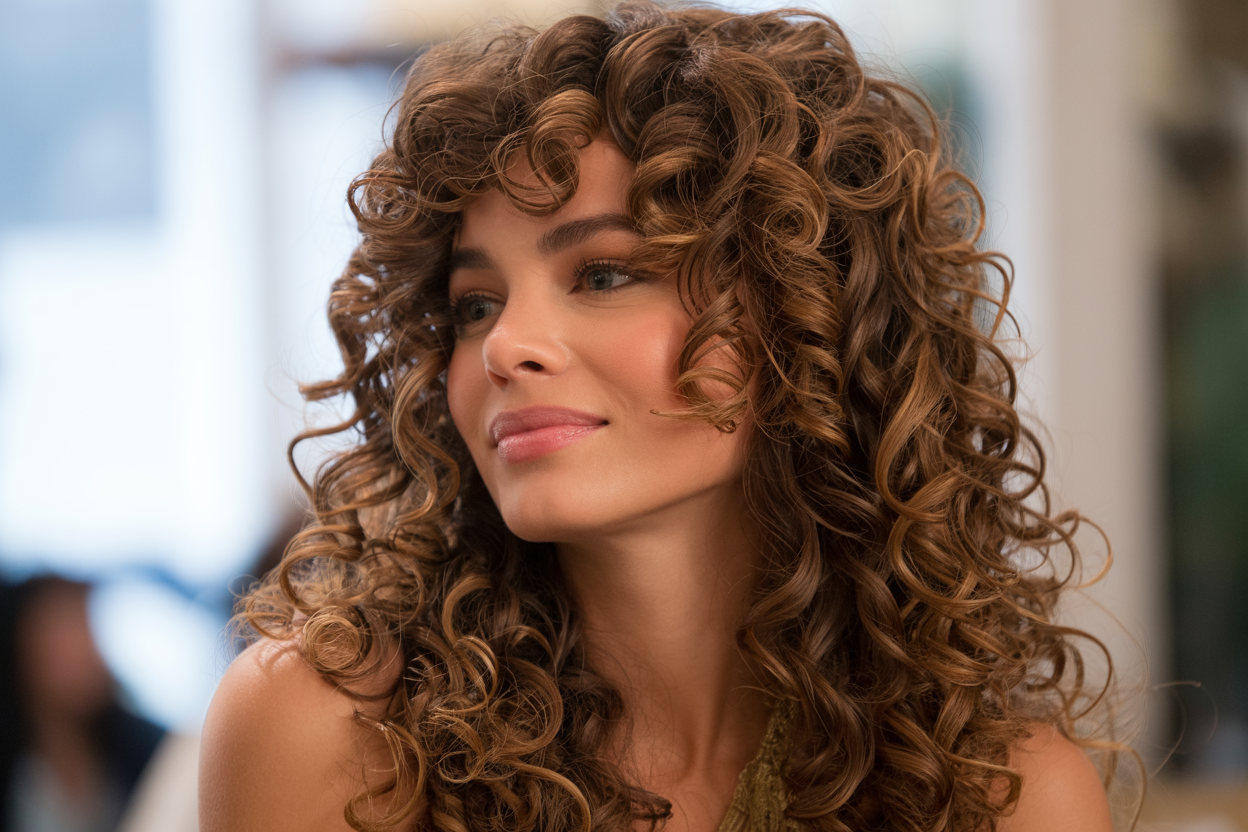
Somewhere around the length where curls start reaching mid-back, a genuinely different problem shows up that short and medium curly hair simply doesn’t deal with: sheer weight starts pulling the curl pattern looser, sometimes dramatically so, no matter how well-defined it was at the roots. A stylist once explained it to me like gravity slowly winning an argument with your curl pattern the longer the hair gets, and once I understood that single mechanic, almost every long curly style finally made sense in a way tutorials built around shorter hair never quite captured. So this list is organized around that one idea, how much a style fights the weight problem versus works with it.
Styles That Work With the Weight, Not Against It
The Natural Wash-and-Go, Let the Weight Do What It Wants
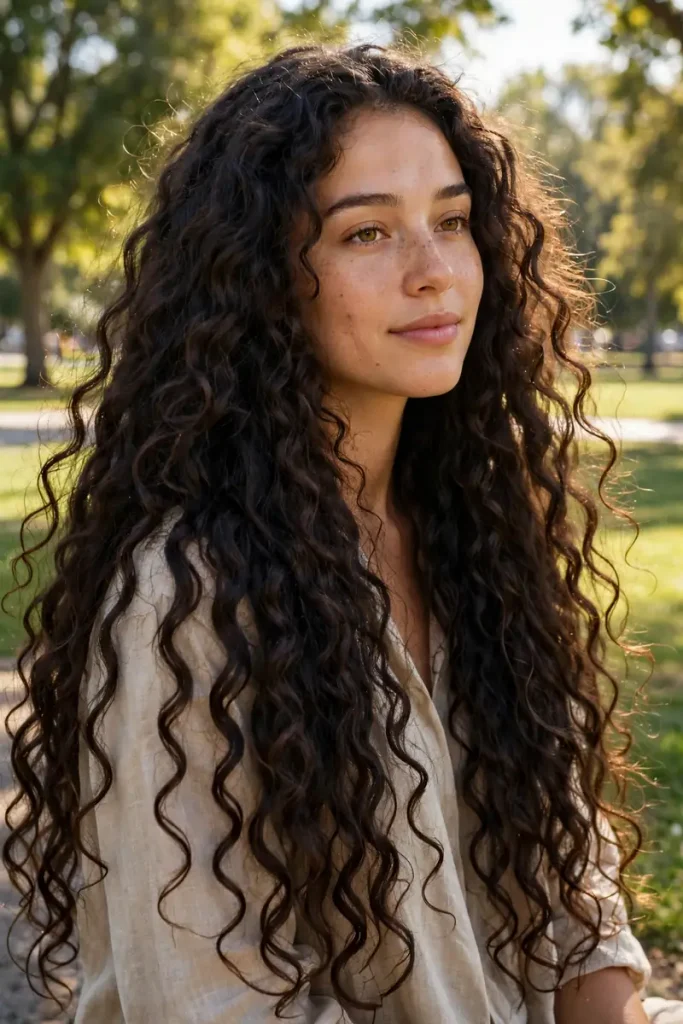
Rather than fighting the stretched-out curl pattern long hair naturally produces, this style embraces it entirely, washing, applying product, and letting the length pull itself into loose, elongated waves rather than tight ringlets. A friend with hair past her waist told me she spent years disappointed that her curls “weren’t as tight as they used to be,” until a curl specialist finally explained that her pattern hadn’t actually changed, the sheer length was just stretching it, and the moment she stopped trying to force tighter curls and started embracing the looser, elongated wave her length naturally created, she said it felt like finally being friends with her own hair again.
The Deep-Conditioned Twist-Out, Expecting the Drop
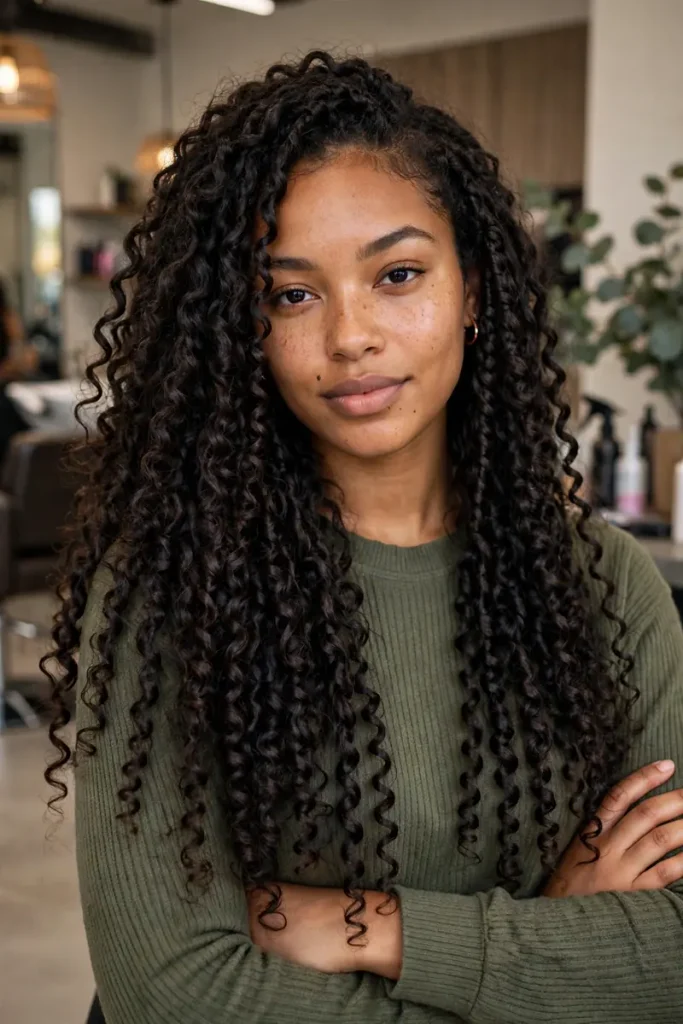
A twist-out on long hair genuinely drops and loosens more over the following day or two than the same technique would on shorter curls, purely from gravity working on all that extra length. Knowing this in advance, rather than being disappointed by it, changes the whole approach, going in with a slightly tighter initial twist than you think you need, specifically because you’re accounting for the inevitable loosening that’s coming.
Styles That Actively Fight the Weight
The Fully Pinned Updo, No Loose Length Allowed
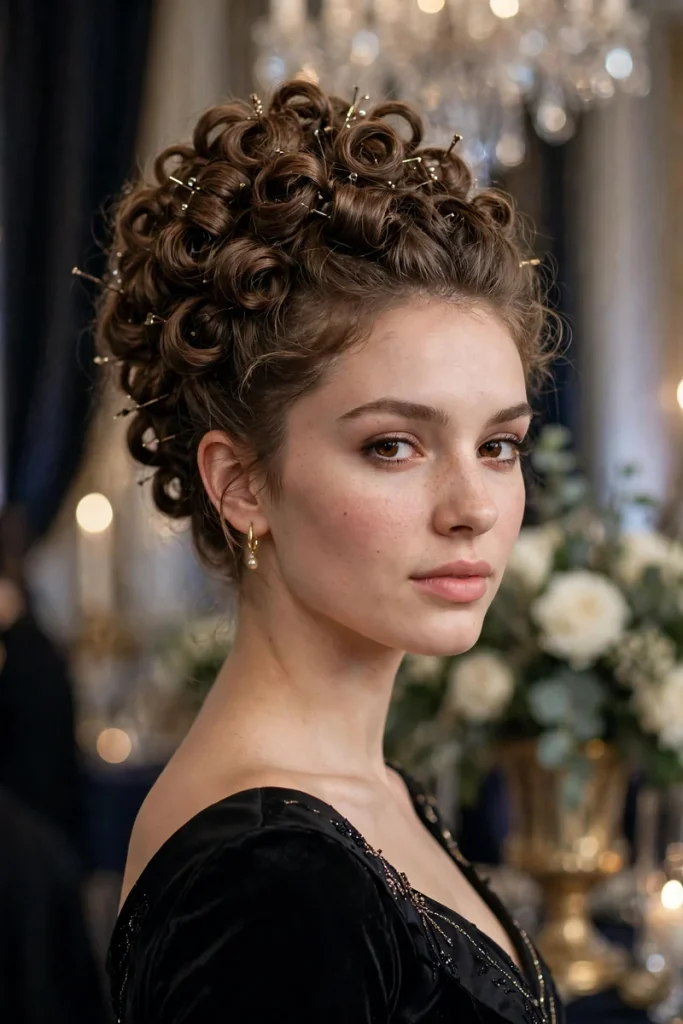
For anyone who genuinely wants their tightest possible curl definition to survive a full day, the only reliable solution is removing the weight’s influence entirely by pinning the length up and off the neck rather than letting it hang and pull downward all day. A bride I spoke with, with curls reaching well past her shoulder blades, told me her trial run with her hair worn down was a genuine disappointment, beautiful curls at 9am that had relaxed into loose waves by the ceremony hours later, purely from the weight of her own length working against the style all day. Switching to a fully pinned updo for the actual wedding solved the problem completely, since lifting the hair off her shoulders removed the gravitational pull that had been undoing her curls the whole trial day.
The High Ponytail, Redistributing Where the Weight Pulls
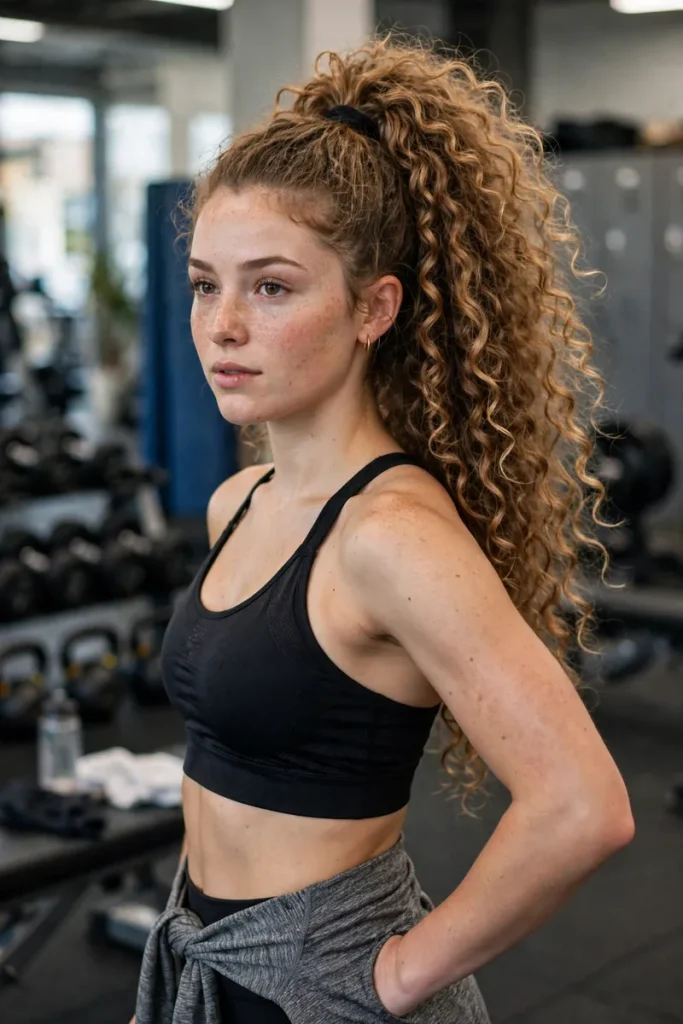
Gathering long curls into a high ponytail doesn’t eliminate the weight problem, but it changes where that weight actually pulls from, concentrated at one point near the crown rather than distributed evenly down the whole head and neck, which many people with long curls find genuinely more comfortable for extended wear than leaving the full length hanging loose all day.
Styles That Use Sectioning to Manage the Weight
Flat Twists at the Crown, Loose Curls Below

Splitting the style into two zones, a controlled, flat-twisted section near the root where you want structure, and loose, natural curls below where the weight is allowed to do what it naturally does, acknowledges the weight problem rather than fighting it everywhere at once. A client described this as her solution after realizing she only actually cared about volume and definition near her face and crown, and had basically stopped caring what happened to the curl pattern by the time it reached her lower back anyway.
The Half-Up Gather, Lifting Just Enough

Pulling up only the top third or half of long curls lifts enough weight off the crown to restore some root volume that fully loose hair loses almost immediately at this length, while still letting the lower length hang and do its natural, gravity-stretched thing.
Styles Built Around Protective Thinking
Pineapple Sleeping, Non-Negotiable at This Length
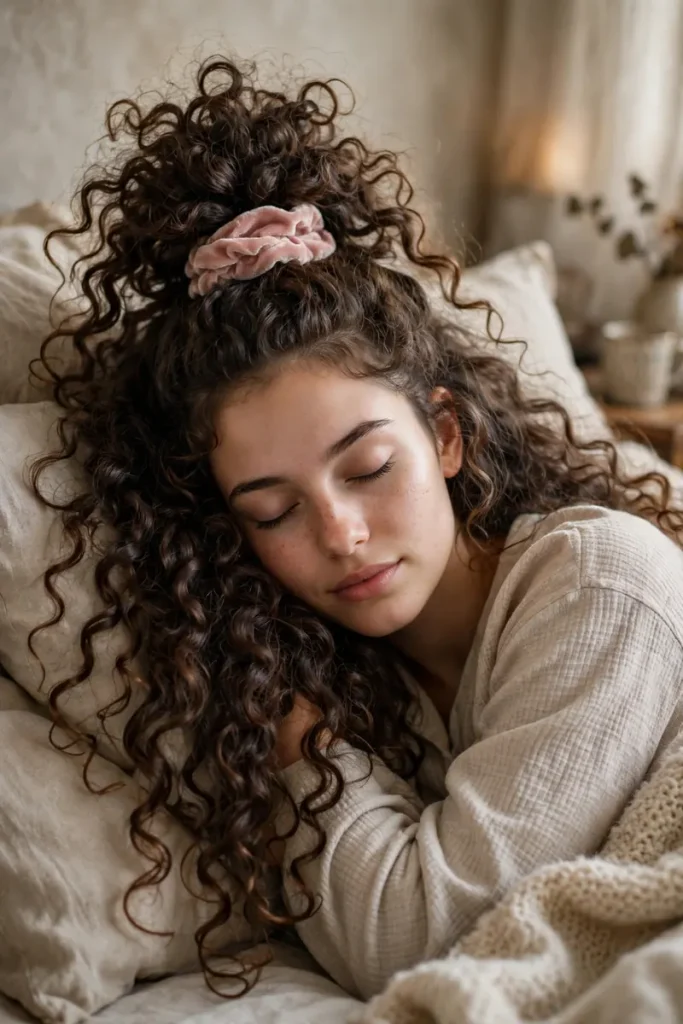
A single night of sleeping with long curls completely loose does noticeably more damage and tangling than the same night would with shorter hair, simply because there’s so much more length to get twisted and matted against a pillow. A woman with hip-length curls told me she treats her nightly pineapple as completely non-negotiable now, after one particularly bad morning years ago that took nearly forty-five minutes of careful detangling to undo the damage from a single night skipped.
Loose Braids Overnight Instead of a Pineapple

For hair long enough that even a gathered pineapple still drags against the pillow at this length, some people switch to one or two loose braids overnight instead, distributing the length into contained sections rather than one single gathered point at the crown.
Styles That Treat Length as the Main Event
The Full, Undefined Curly Mane
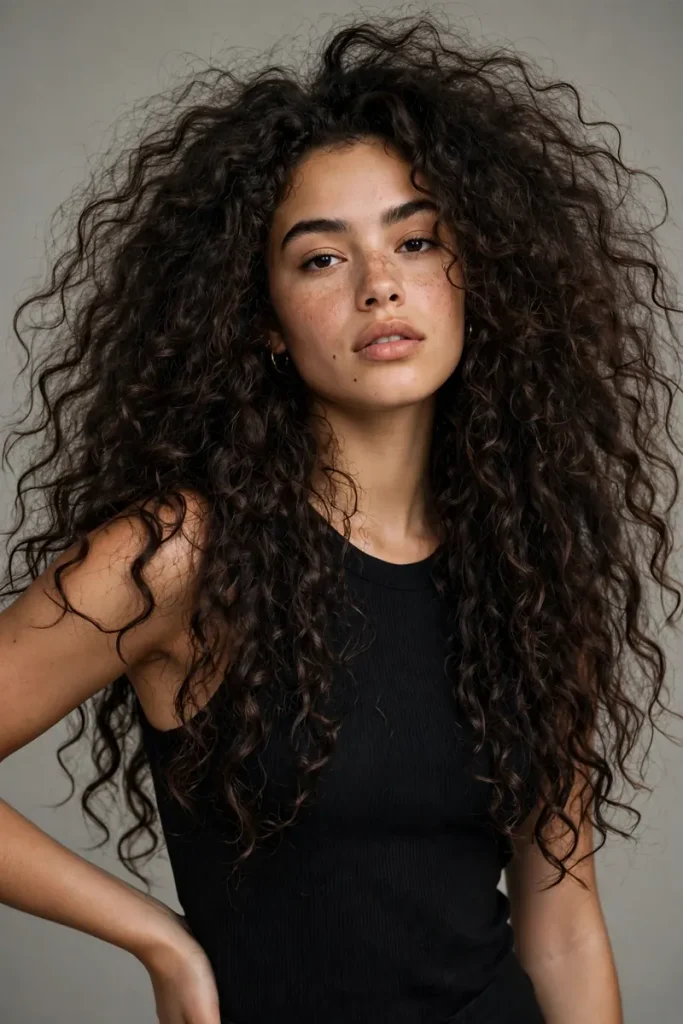
Sometimes the right choice is simply celebrating the sheer volume and length rather than trying to control or define every individual curl, leaving hair completely loose and unmanipulated after washing, letting it dry into whatever full, expansive shape it naturally takes. A woman who’d spent years keeping her long curls carefully controlled told me she had something of a realization at a festival once, surrounded by people with similarly long, loose, undefined curly hair, and came home determined to stop fighting her own length and just let it be as big as it wanted to be.
Curls Parted Deep and Swept to One Side
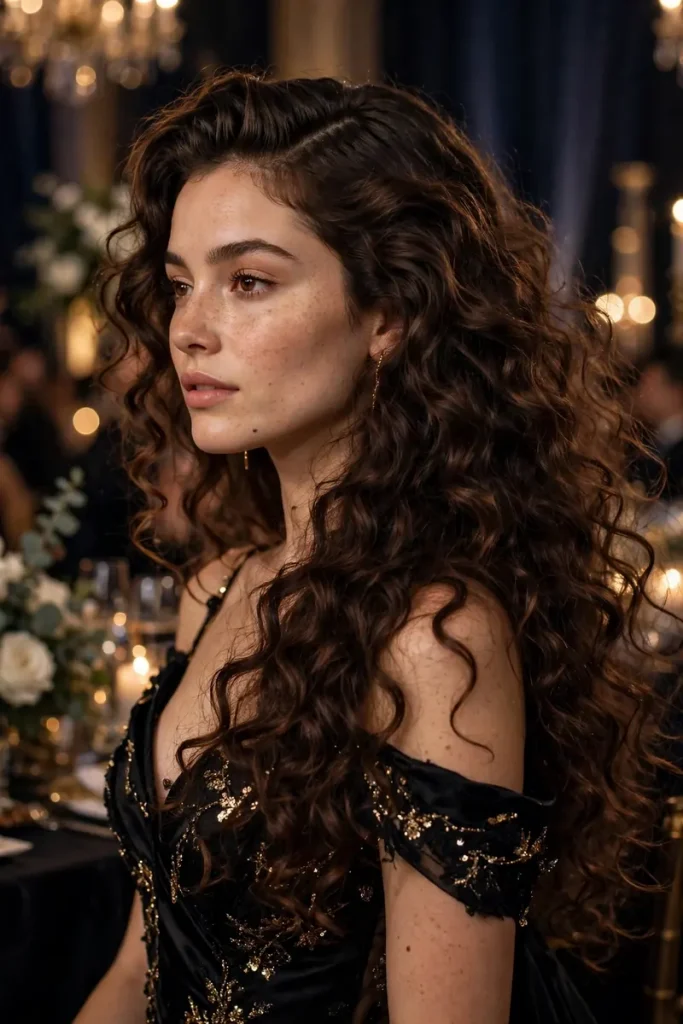
At significant length, a deep side part creates a genuinely dramatic, cascading effect simply because there’s so much length available to sweep across, something that barely registers as a style choice on shorter hair but becomes a real statement once there’s enough weight and length for the swept side to visibly fall and drape.
Styles for Managing Frizz at the Ends Specifically
The Trimmed, Blunt-Ended Twist-Out
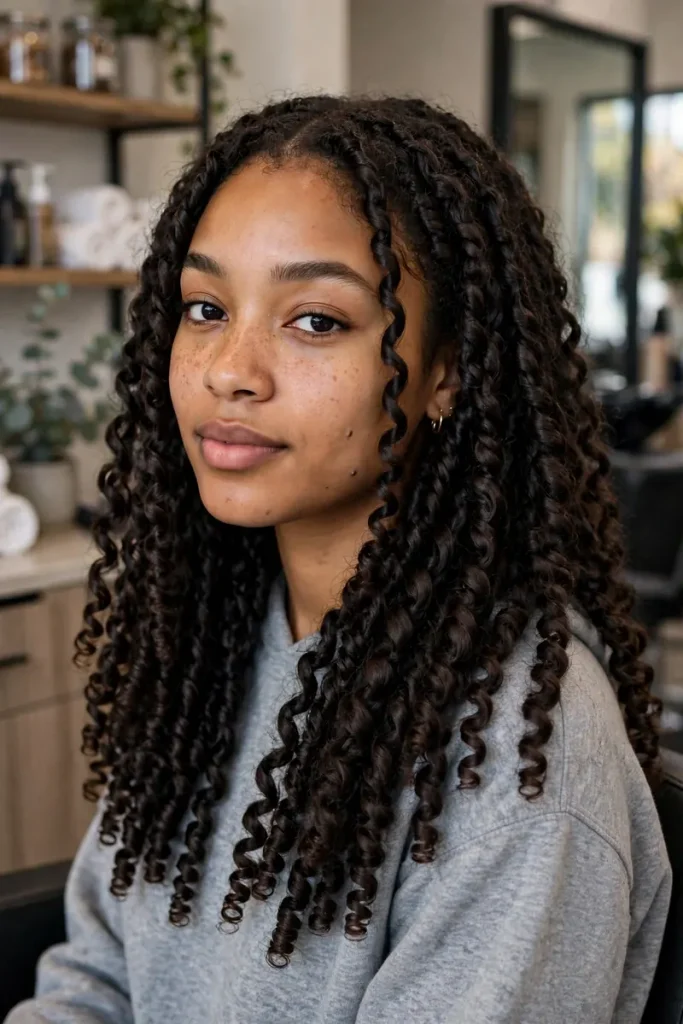
Long curls are more prone to visible single-strand knots and split, frizzy ends simply because those ends have survived longer and been through more washes and manipulation than shorter hair’s ends have. A stylist recommended keeping the actual ends blunt-cut rather than heavily layered specifically for long curly hair, explaining that layering, while it can help with the weight problem in theory, often makes the frizzy-end issue worse by creating more short, vulnerable pieces throughout rather than concentrating wear at one clean, blunt edge.
Oil-Sealed Ends Before Any Styling
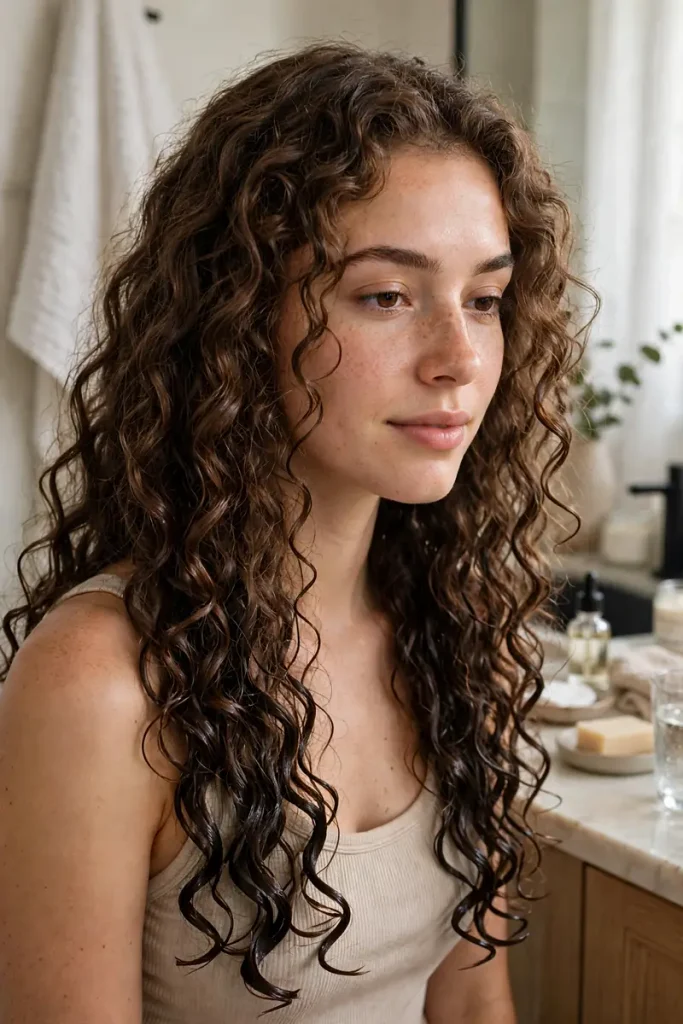
Applying a small amount of oil specifically to the last few inches before any other product goes on seals in moisture at exactly the point most vulnerable to dryness and frizz at this length, a small, specific habit that several long-haired clients mentioned as the single change that made the biggest visible difference in how their ends looked by the end of a styling session.
Styles for the Days You Genuinely Can’t Deal With the Length
Two Low Braids, the Honest Fallback
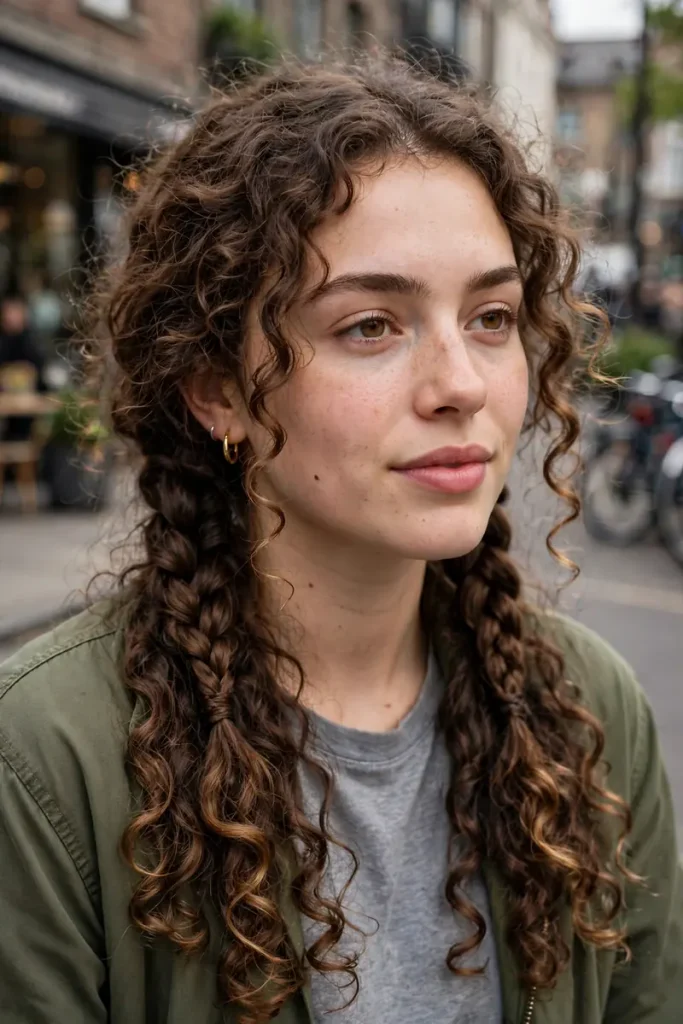
When the sheer time investment of properly caring for long curls feels like too much on a given morning, two simple, low braids handle the length efficiently without requiring any real definition work, contained and manageable in under five minutes regardless of how the curl pattern actually looks underneath.
The Low Bun, Weight Problem Solved by Just Removing the Option to Hang

Gathering everything into one substantial low bun at the nape sidesteps the entire weight conversation simply by not letting any length hang loose at all, genuinely the fastest complete solution on this list for a day when thinking about curl definition feels like one task too many.
What Understanding the Weight Problem Actually Changes
Once you genuinely internalize that long curly hair isn’t simply “the same curls as before but longer,” it’s curls under a meaningfully different physical influence that shorter hair never experiences, a lot of long-hair frustration starts making more sense. The twist-out that “doesn’t hold like it used to,” the crown that goes flat within an hour, the ends that seem to frizz no matter what you do, these aren’t signs something’s gone wrong with your curl pattern, they’re the predictable, physical result of more length pulling against itself all day.
Choosing From This List Honestly
Rather than picking a style because it looks appealing in a photo, it’s worth asking which relationship with the weight problem you actually want today: do you want to work with the natural stretch and embrace looser waves, fight it entirely with a pinned updo, manage it with sectioning, or just sidestep the whole conversation with a quick braid or bun. Once you know which category you’re actually choosing from, the specific style becomes a much easier decision than it was when every long curly hairstyle felt like it was fighting an invisible, unexplained battle against your own hair.