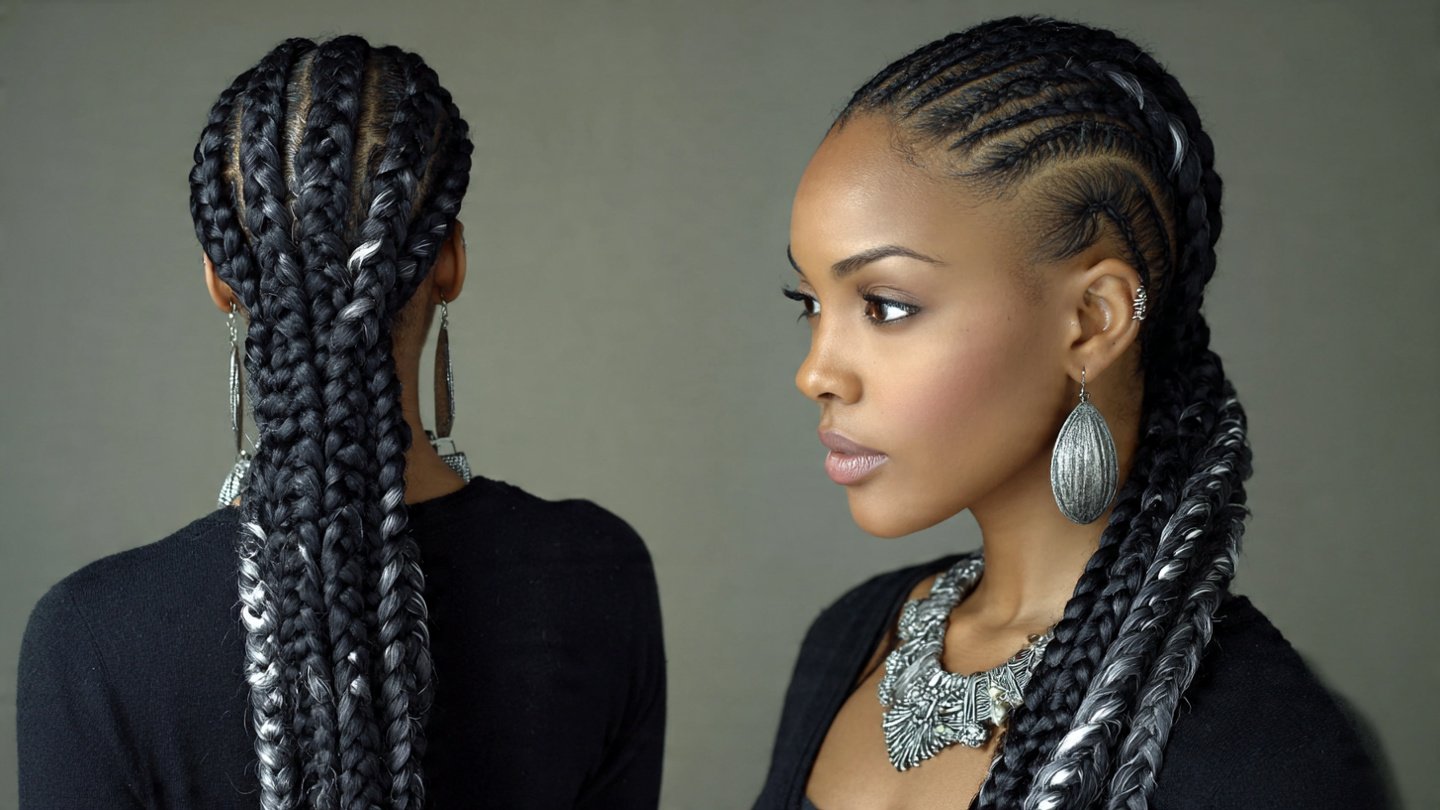
14 African Braid Hairstyles, Explained One Question at a Time
My aunt has been braiding hair for over thirty years, and I spent much of my childhood sitting on a cushion between her knees while she worked. She didn’t just braid. She told stories about how her grandmother braided, about the meaning certain patterns held, and about the hours women spent together, talking and laughing while their hands moved.
That’s what I love most about African braids. They’re beautiful, versatile and protective, but they’re also part of a long history of artistry, identity and community.
Whenever I share braids online, the same questions come up. What’s the difference between Ghana braids and cornrows? Are Fulani braids heavy? What should I ask my braider for? So this guide answers those questions, style by style. You’ll find 14 African braid hairstyles, each explained in plain language, plus exactly what to ask your braider for.
Where African Braids Come From
Braiding has been part of African cultures for thousands of years. Braided hairstyles are often cited in ancient art, including rock paintings in the Sahara, and in many communities, a hairstyle could signal a person’s age, marital status, family, wealth or community.
Braiding was, and still is, a shared and social activity. Today, these traditions continue across Africa and the diaspora, alongside new styles inspired by them. Wearing braids is a celebration of that heritage and artistry.
On-the-Scalp Braids
These styles are braided close to the scalp, creating patterns and lines across the head.
What Are Straight-Back Cornrows?
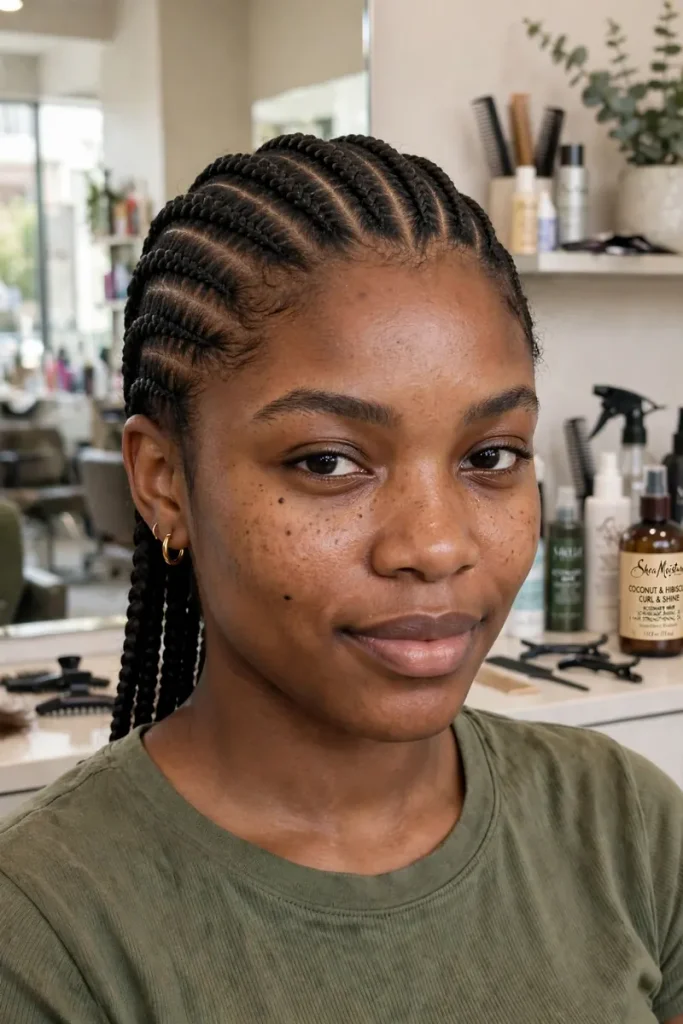
Straight-back cornrows are braids that run neatly from the hairline to the nape of the neck, lying flat against the scalp. They’re one of the oldest and most recognizable braided styles.
They’re simple, clean and incredibly versatile. They can be worn on their own, as a foundation for wigs and crochet styles, or decorated with beads and cuffs.
Ask your braider for: “straight-back cornrows, medium size, finished at the nape.”
What Are Ghana Braids?
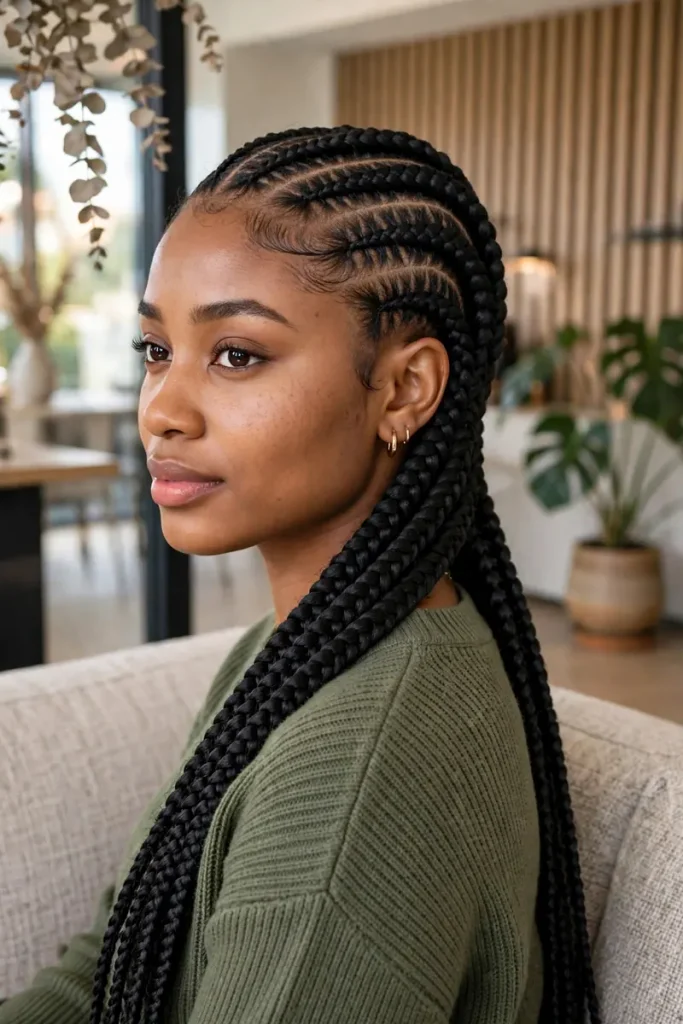
Ghana braids are cornrows created with the feed-in method, where braiding hair is gradually added as you braid. This makes them start thin at the hairline and grow thicker toward the back, creating a smooth, natural-looking finish.
They’re often thicker and bolder than regular cornrows and can be braided straight back, curved or in creative patterns.
Ask your braider for: “feed-in Ghana braids, with six to eight braids going straight back.”
What Are Shuruba Braids?
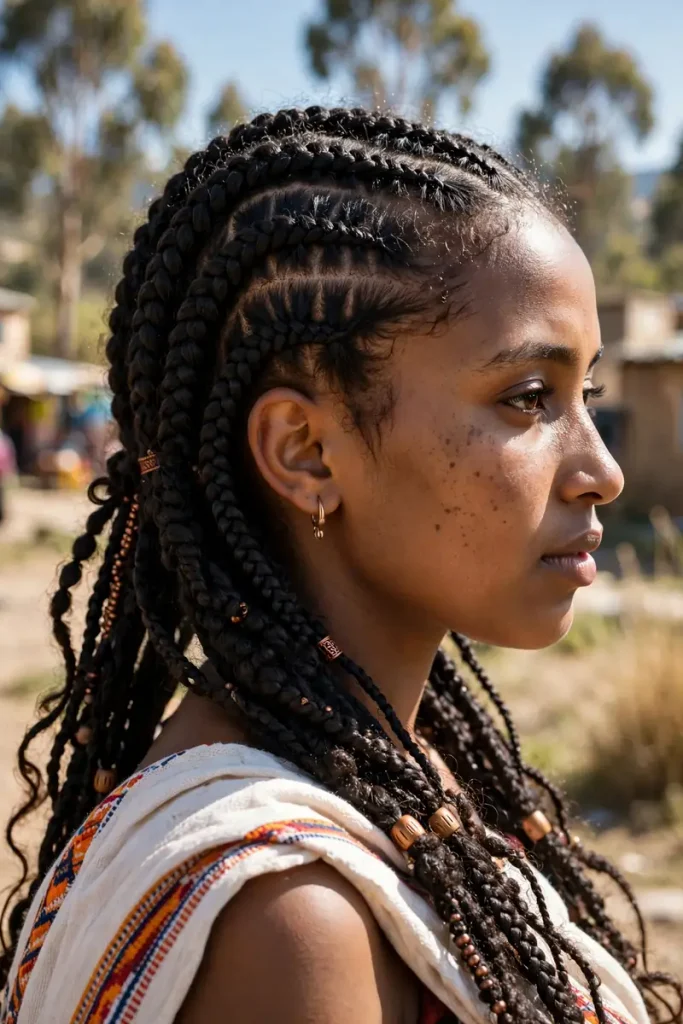
Shuruba is a term used in Ethiopia and Eritrea for traditional braided styles, often featuring many fine braids close to the scalp, sometimes gathered or left loose at the back.
The fine braids create detailed, elegant patterns and look especially beautiful with natural hair texture.
Ask your braider for: “fine shuruba-style braids close to the scalp, left loose at the back.”
What Are Goddess Braids?
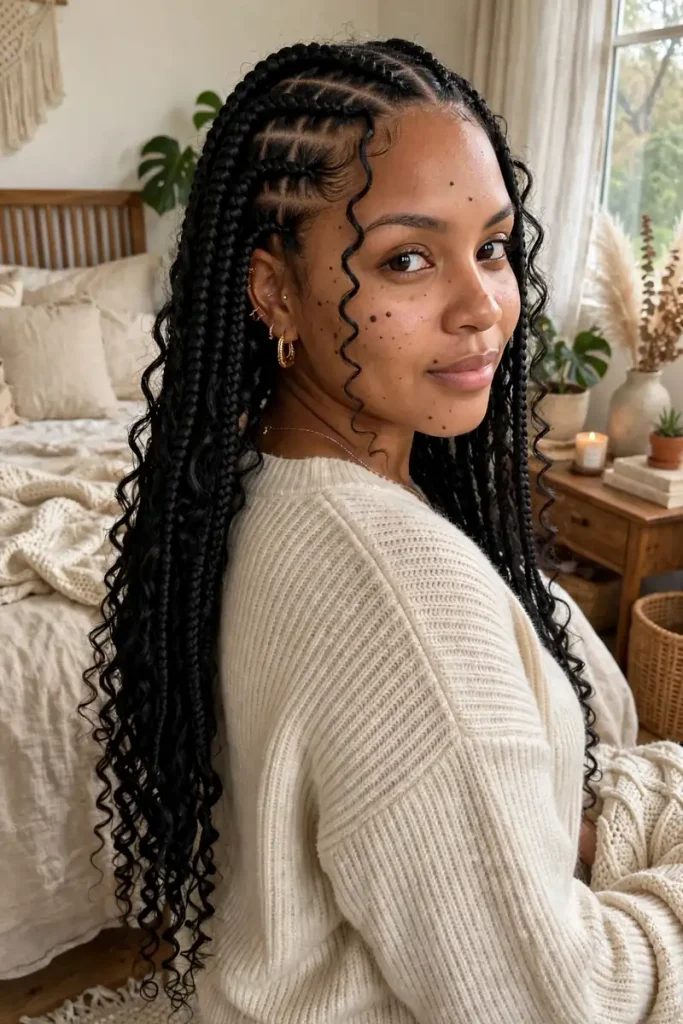
Goddess braids are oversized, chunky cornrows, often arranged in sweeping curves, halos or side-swept patterns. They’re bold, regal and dramatic.
Because they’re thick, they take less time to install than many smaller braided styles.
Ask your braider for: “two to four large goddess braids in a curved or halo pattern.”
What Are Cornrow Designs?
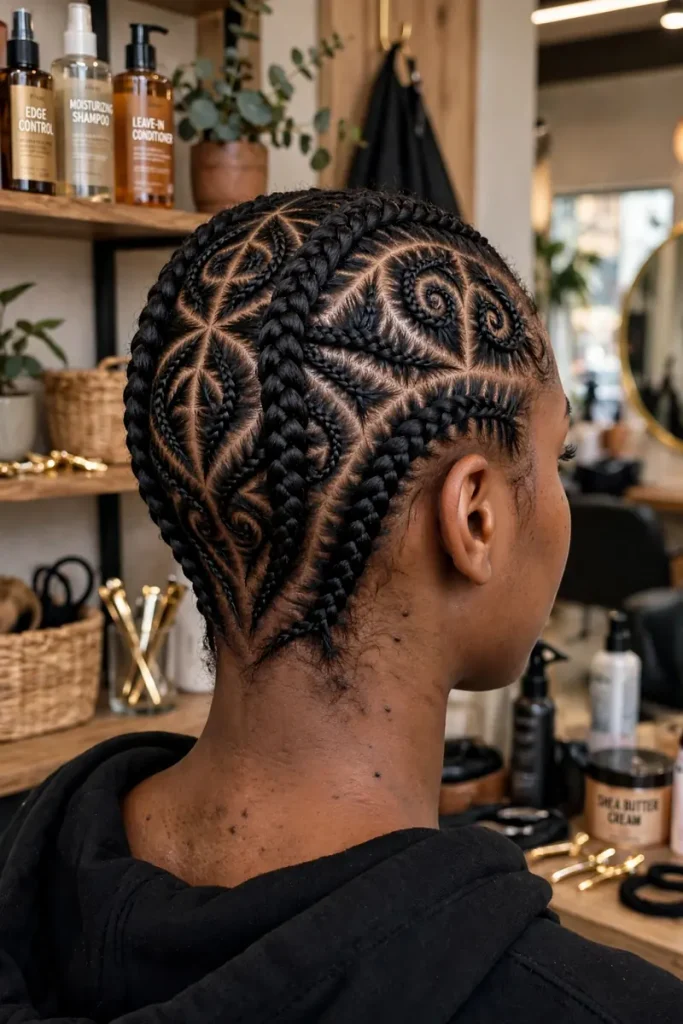
Cornrow designs use curves, zigzags, spirals and geometric patterns instead of straight lines. Each design is a little piece of art.
They’re a wonderful way to show your personality, and braiders can create almost any pattern you imagine.
Ask your braider for: a photo of the pattern you love, plus “medium cornrows with curved or zigzag parts.”
Off-the-Scalp Braids
These styles are made of individual braids that hang freely, offering lots of movement and styling options.
What Are Box Braids?
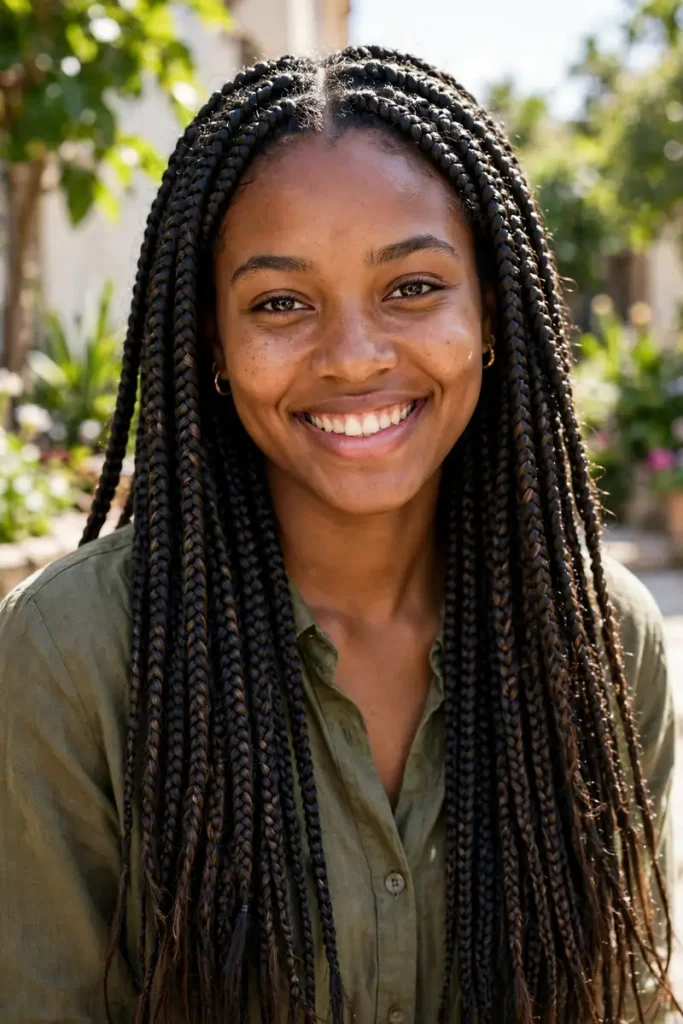
Box braids are individual braids created from square or “box”-shaped sections of hair. They hang freely and can be worn down, in ponytails, buns or updos.
They’re one of the most popular protective styles because they’re versatile and long-lasting.
Ask your braider for: “medium box braids, mid-back length, with square parts.”
What Are Jumbo Braids?
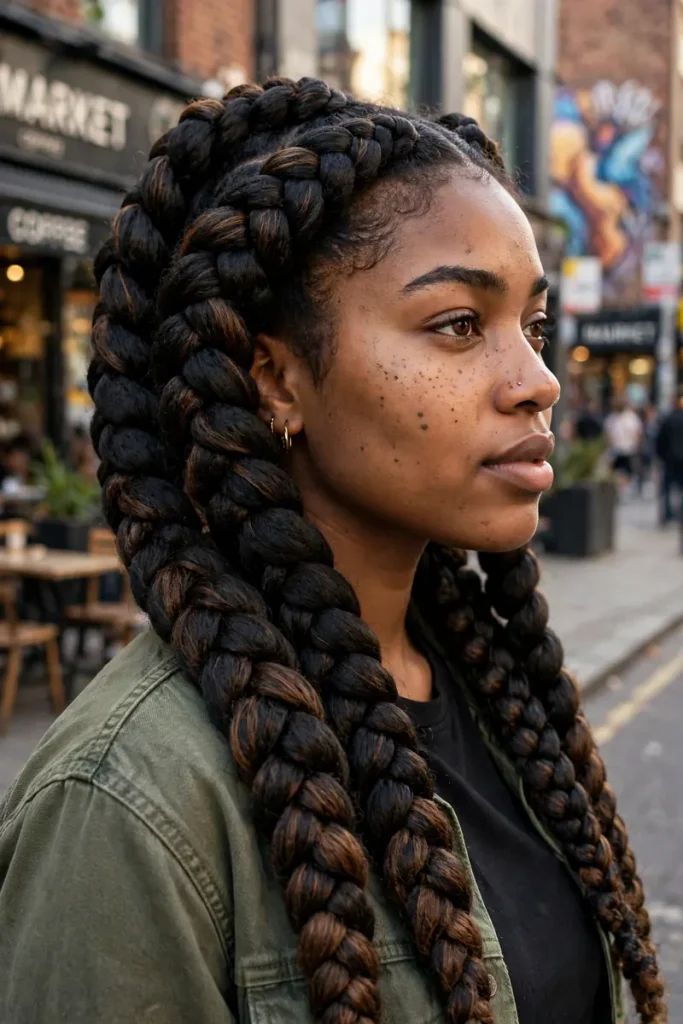
Jumbo braids are oversized box braids made with large sections of hair. They look bold and dramatic and take less time to install than smaller braids.
Because they’re thick, choose a shorter length if you’re worried about weight.
Ask your braider for: “jumbo box braids, shoulder length.”
What Are Micro Braids?
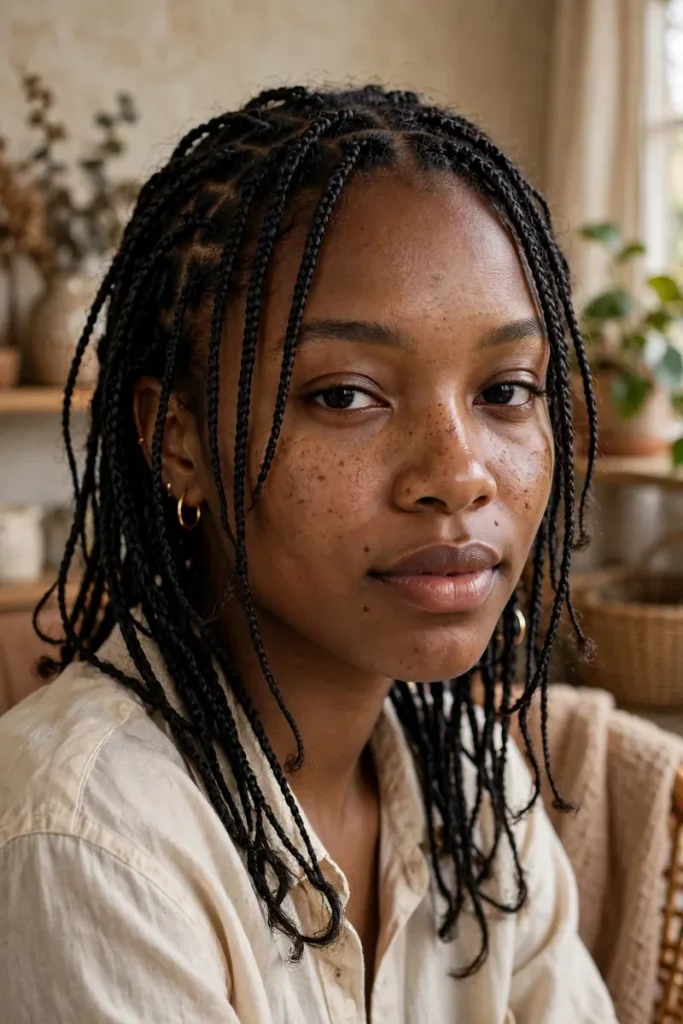
Micro braids are very tiny individual braids. Because there are so many, they move almost like loose hair and can be styled in countless ways.
They take a long time to install and remove, but many people love their natural movement.
Ask your braider for: “micro braids, with small, neat sections.” Ask about the time and cost before booking.
What Are Bohemian Braids?
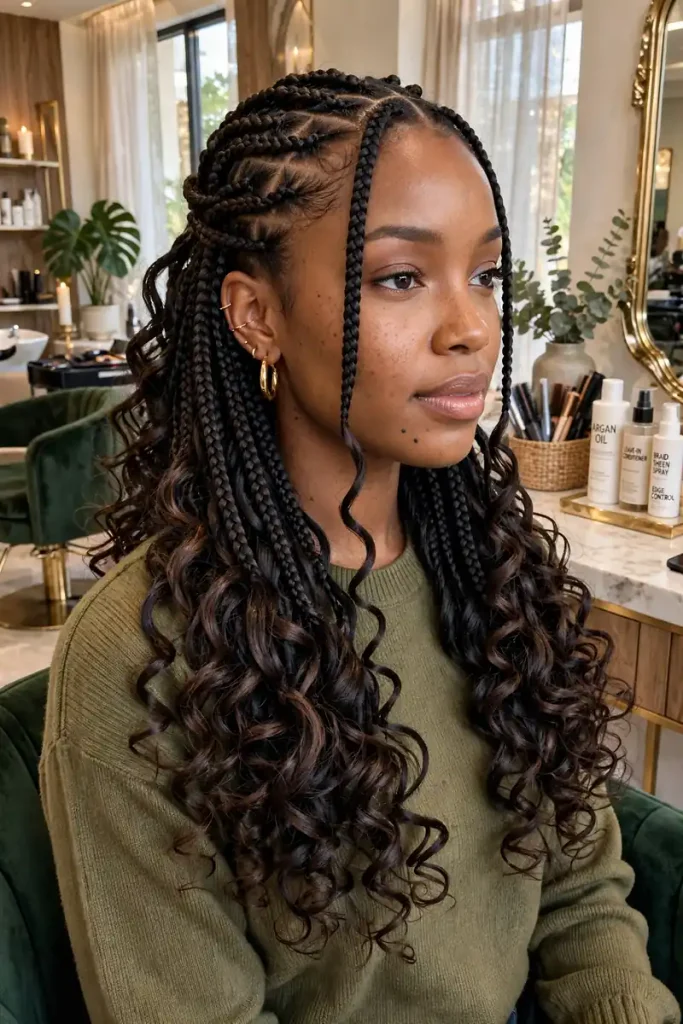
Bohemian braids, sometimes called boho braids, are box braids with loose curly hair added throughout and at the ends. They look soft, romantic and effortlessly beautiful.
Ask your braider for: “boho box braids with curly pieces throughout and curly ends.”
What Are French Curl Braids?
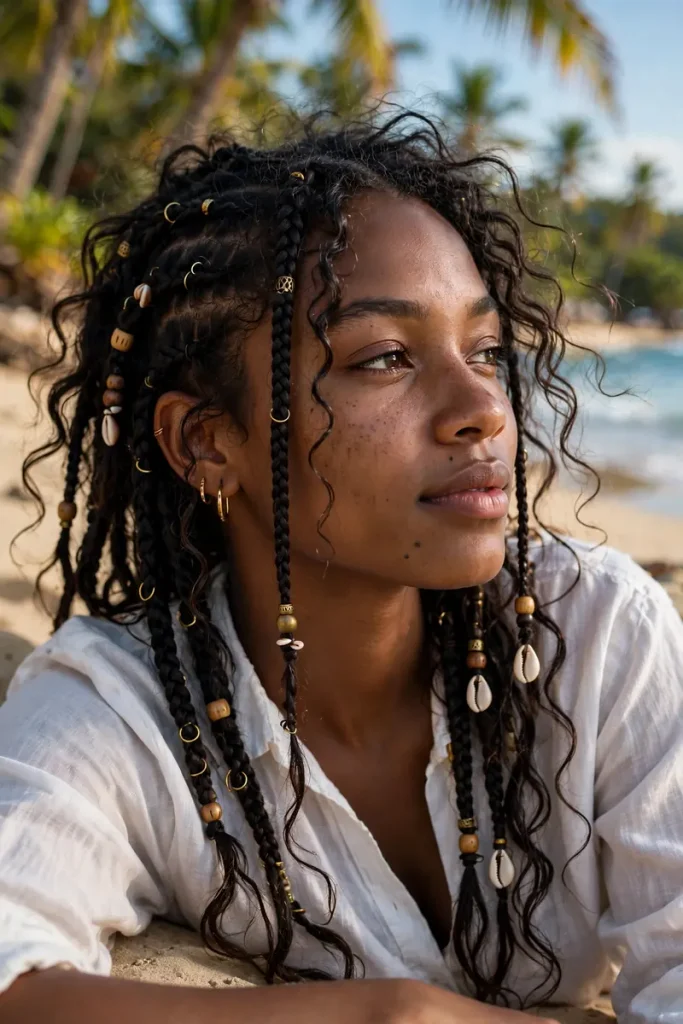
French curl braids are braids that end in long, loose, bouncy curls rather than a straight finish. The braided section often stops partway down, and the curly ends flow freely.
They look elegant, playful and full of movement.
Ask your braider for: “braids with French curl ends, braided to about mid-length.”
Updos and Combination Styles
These styles mix techniques or are designed to be worn up.
What Is the Shuku Style?
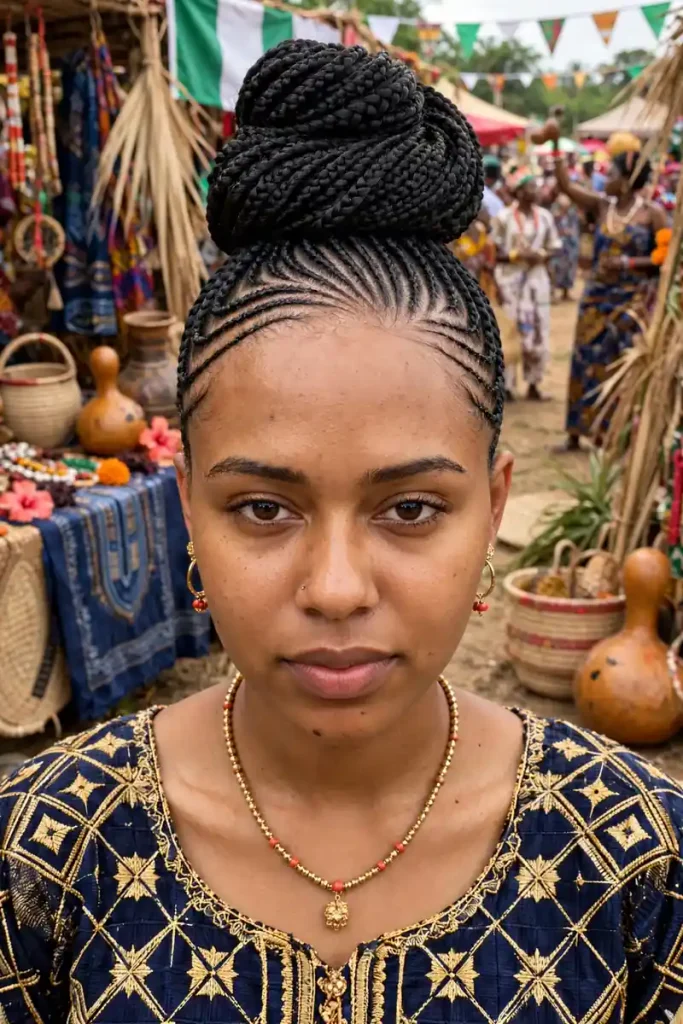
Shuku is a traditional Yoruba hairstyle from Nigeria in which braids, often cornrows, are directed upward toward the top of the head and gathered into a raised shape, sometimes compared to a basket.
It’s striking, sculptural and a beautiful way to wear braids for special occasions.
Ask your braider for: “cornrows braided upward into a Shuku-style top bun.”
What Are Fulani-Style Braids?
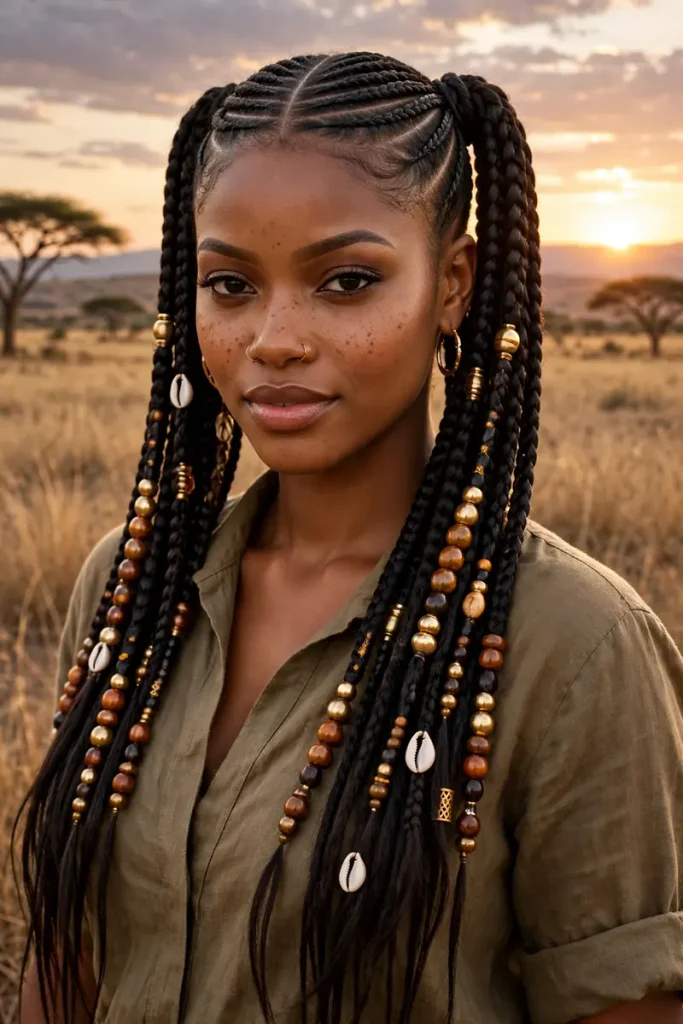
Fulani-style braids are inspired by the traditional hairstyles of the Fulani people of West Africa. They typically combine cornrows braided toward the face, a braid along the center of the head and loose braids at the back, often decorated with beads, cuffs or cowrie shells.
Ask your braider for: “Fulani-style braids with a center cornrow and beads or cuffs.”
What Is the Half Cornrows, Half Box Braids Style?
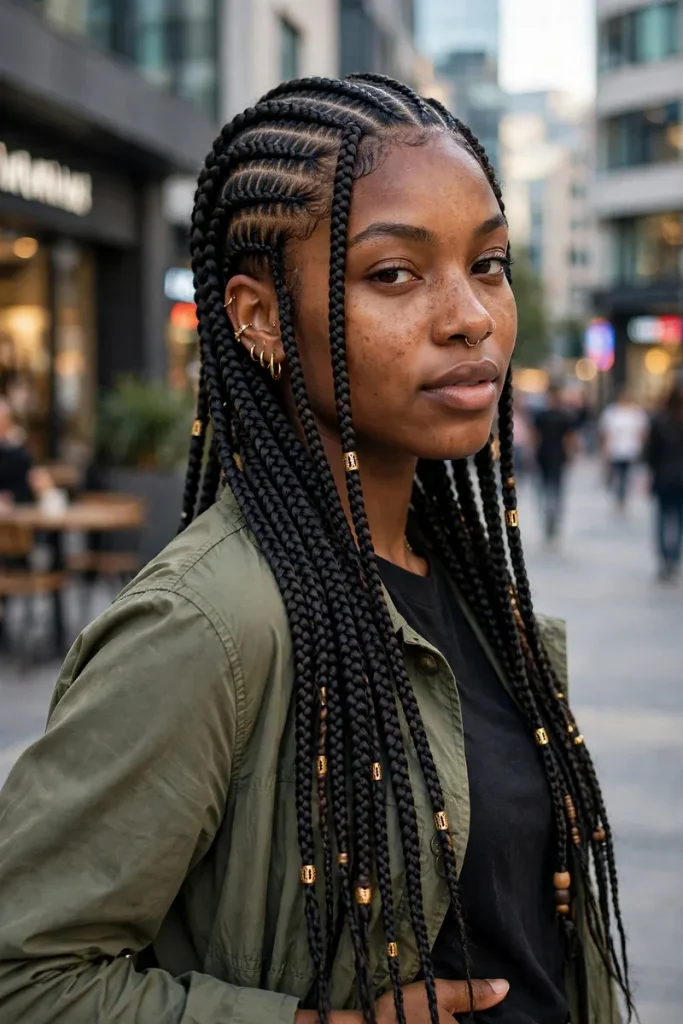
This style combines cornrows at the front of the head with box braids at the back. It gives you the clean lines of cornrows and the movement of box braids in one style.
Ask your braider for: “cornrows in the front half and box braids in the back half.”
What Is a Cornrow Updo?
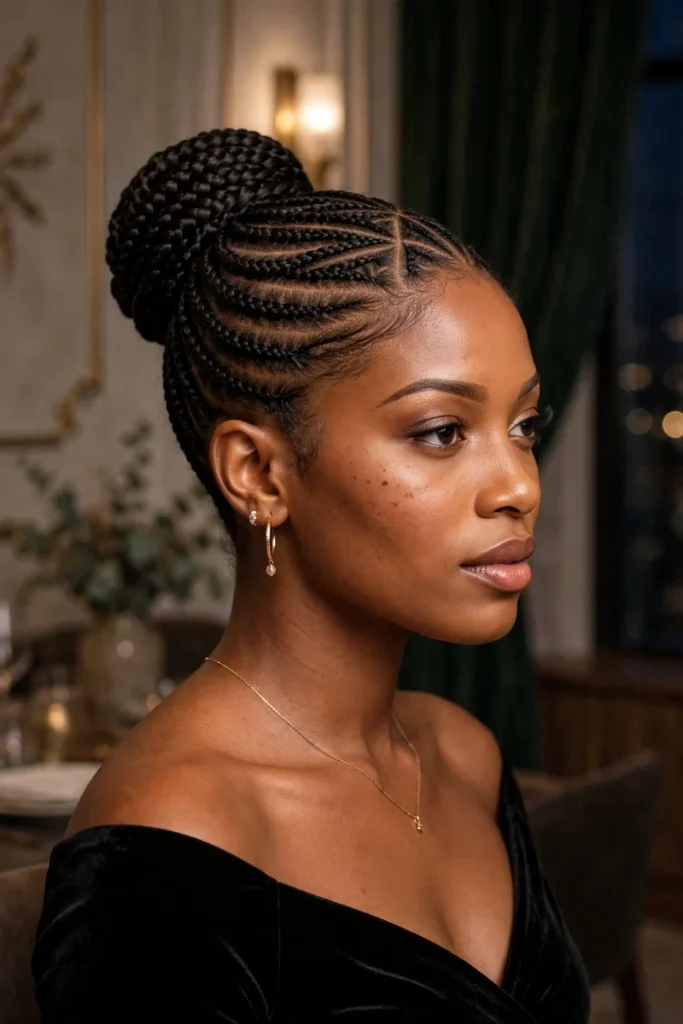
A cornrow updo has cornrows braided in a pattern that leads to a bun, ponytail or crown at the top or back of the head. It’s elegant, practical and perfect for formal events.
Ask your braider for: “cornrows braided upward into a high bun” or “into a low chignon.”
Comparing Install Time and Wear Time
Every braider and head of hair is different, so these are general estimates:
| Style | Approximate install time | Approximate wear time |
|---|---|---|
| Straight-back cornrows | 1–3 hours | 1–3 weeks |
| Ghana braids | 2–4 hours | 2–4 weeks |
| Goddess braids | 1–3 hours | 2–3 weeks |
| Box braids | 4–8 hours | 4–8 weeks |
| Jumbo braids | 3–5 hours | 4–6 weeks |
| Micro braids | 8+ hours | 6–8 weeks |
| Bohemian braids | 5–8 hours | 4–6 weeks |
| Fulani-style braids | 4–6 hours | 4–6 weeks |
Choosing Braid Size and Length for Comfort
The size and length of your braids affect how comfortable they feel:
- Longer braids are heavier, which can pull on your scalp and neck.
- Very small braids take longer but can feel lighter and more flexible.
- Very large braids are quicker but can feel heavy if they’re long.
- Shoulder-to-mid-back length is often a comfortable middle ground.
If it’s your first time wearing braids, start with a medium size and medium length.
Your Rights at School and Work
In the United States, many states have passed versions of the CROWN Act, which protects people from discrimination based on natural hair textures and protective styles, including braids, locs and twists, at work and in schools. Laws vary by state and country, so it’s worth checking the rules where you live.
Your braids are a valid, professional and beautiful choice.
Before You Book: Questions to Ask Yourself
- How much time can I spend in the chair?
- How long do I want the style to last?
- What’s my budget, including hair and tip?
- Will I want to wear it up, down or both?
- Do I have any scalp sensitivity or past tension problems?
Knowing your answers helps you and your braider choose the best style.
Final Thoughts
African braids are more than a hairstyle. They carry centuries of artistry, culture and community. Whether you choose sleek straight-back cornrows, bold goddess braids, romantic bohemian braids or a regal Shuku updo, you’re wearing a style with deep roots and timeless beauty.
Use the “ask your braider for” lines to book with confidence, choose a size and length that feels comfortable, and enjoy your braids.
Which African braid style are you trying next? Let me know in the comments below.