16 Bathroom Remodel Ideas So Good You’ll Want to Rip Out the Old Tile Tonight
A bathroom remodel can go from “I’ll just change the mirror” to “Why is there a bathtub in the hallway?” faster than anyone expects. The good news is that you do not need the biggest room or the fanciest stone to create a bathroom that feels fresh, practical, and truly yours. The smartest remodels fix daily annoyances first, then add beauty where it matters. This list is arranged like a real decision path: open the room, solve storage, choose a mood, and finish with updates that fit homeowners or renters. Costs below are rough U.S. planning ranges, not contractor quotes; labor, permits, materials, and location can change the final number. Before demolition, set aside a 10 to 20 percent cushion for surprises hiding behind walls. Old plumbing loves a dramatic entrance.
Before You Pick a Pretty Tile
Write down the three things that bother you most: poor lighting, no counter space, hard-to-clean grout, a cramped shower, or something else. Measure the room, door swing, window, toilet clearance, and existing plumbing. Then decide what must change and what can stay. Keeping the toilet, shower, and sink in the same general locations usually controls cost. For work involving wiring, drains, waterproofing, or structure, use qualified local professionals and check permit rules. A mood board is helpful, but a measured floor plan is what keeps the mood board from becoming an expensive collage.
Quick planning rule: Spend first on what is hard to change later—plumbing, waterproofing, electrical work, ventilation, and layout. Paint, mirrors, towels, and hardware can evolve over time.
Open Up the Room
1. Build a Walk-In Shower That Feels Open
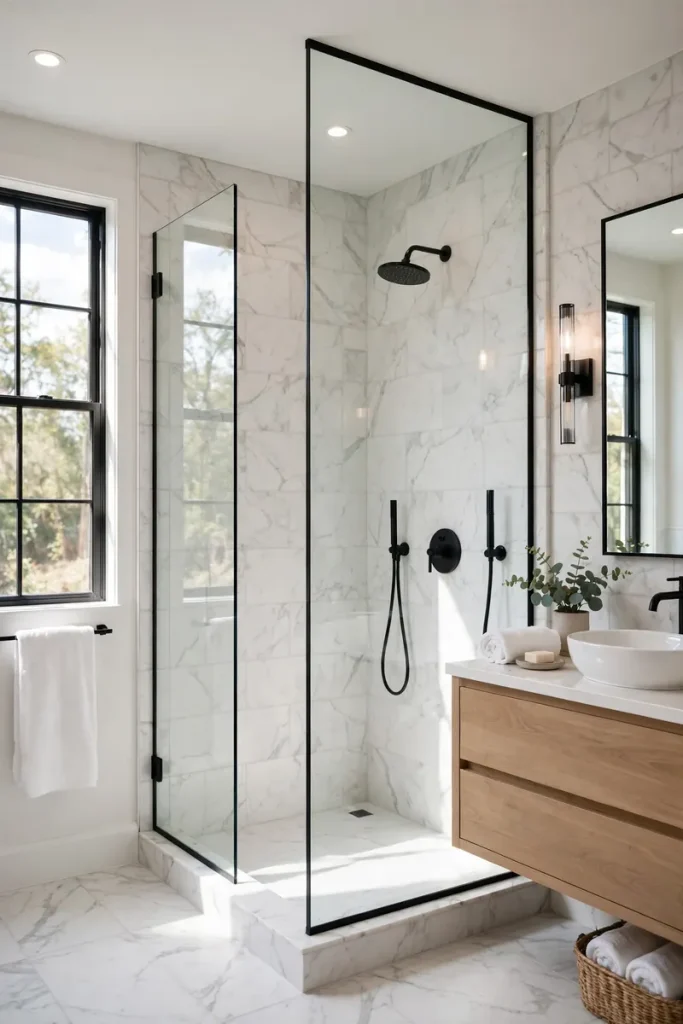
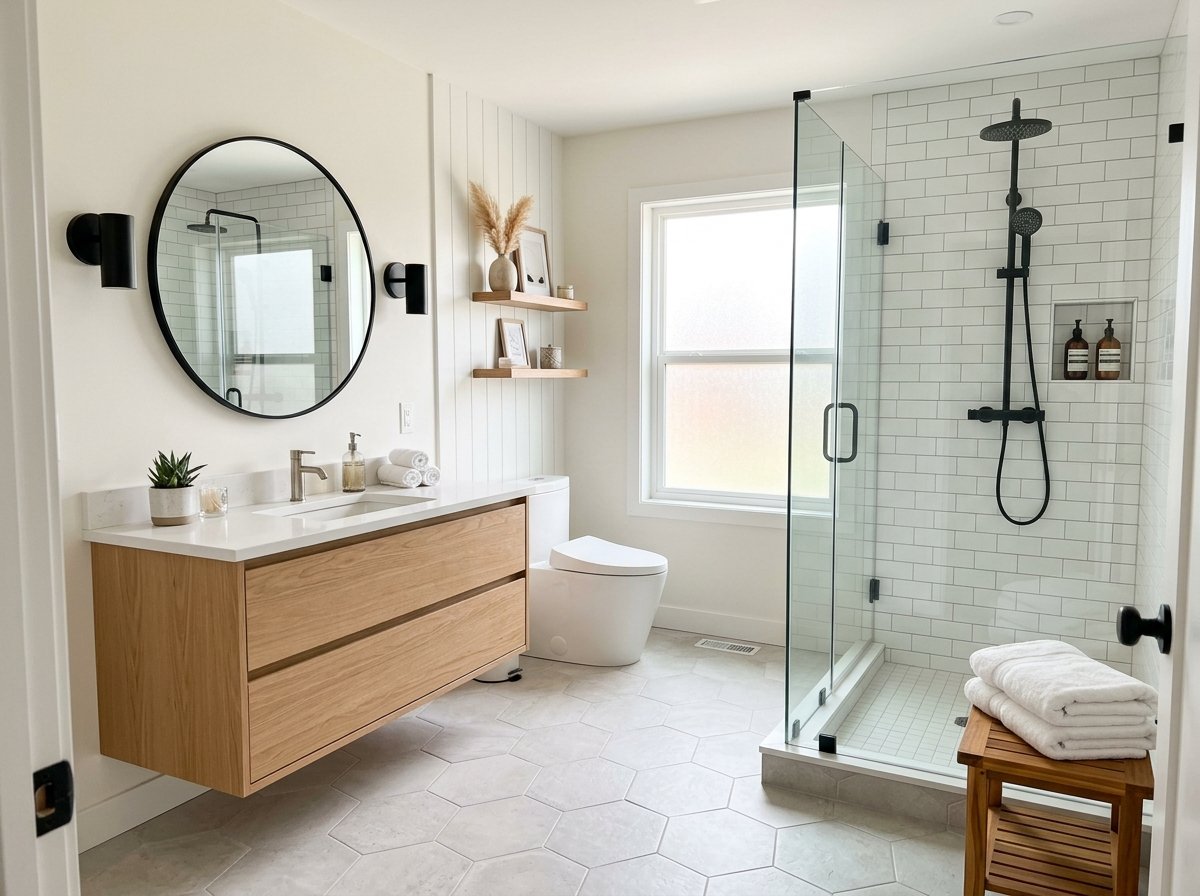
A walk-in shower can make an average bathroom feel twice as calm. Use clear glass instead of a heavy curtain, continue the floor tile into the shower, and add a recessed niche so bottles do not gather around your feet. When my friend replaced her old framed door, she kept opening the bathroom just to admire the extra light. We teased her about visiting her own shower, but honestly, it looked that good. For easier cleaning, choose large wall tiles with fewer grout lines and a handheld spray. A basic conversion often lands around $4,000 to $10,000 in the U.S., while custom glass and plumbing changes can push it higher. Ask for a slightly textured shower floor for grip.
2. Replace the Bulky Tub With a Roomy Shower
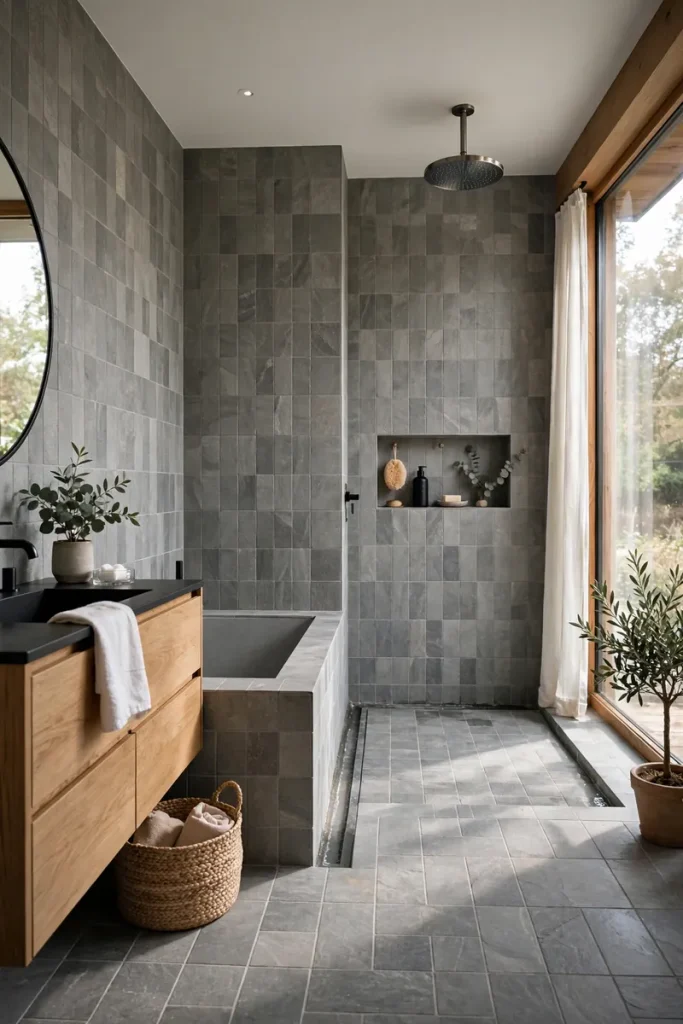
If nobody in your home takes baths, a tub-to-shower conversion can return useful space every day. A deep shower with a bench works well for shaving legs, storing products, or sitting under hot water after a long week. Keep at least one tub elsewhere if resale to families matters in your area. Durable porcelain tile gives the stone look without the same sealing routine. A straightforward conversion may cost about $3,500 to $8,000, depending on waterproofing, drain work, and glass. This is not the place to save money by skipping a waterproof membrane; water is a quiet little troublemaker.
3. Float the Vanity to Show More Floor
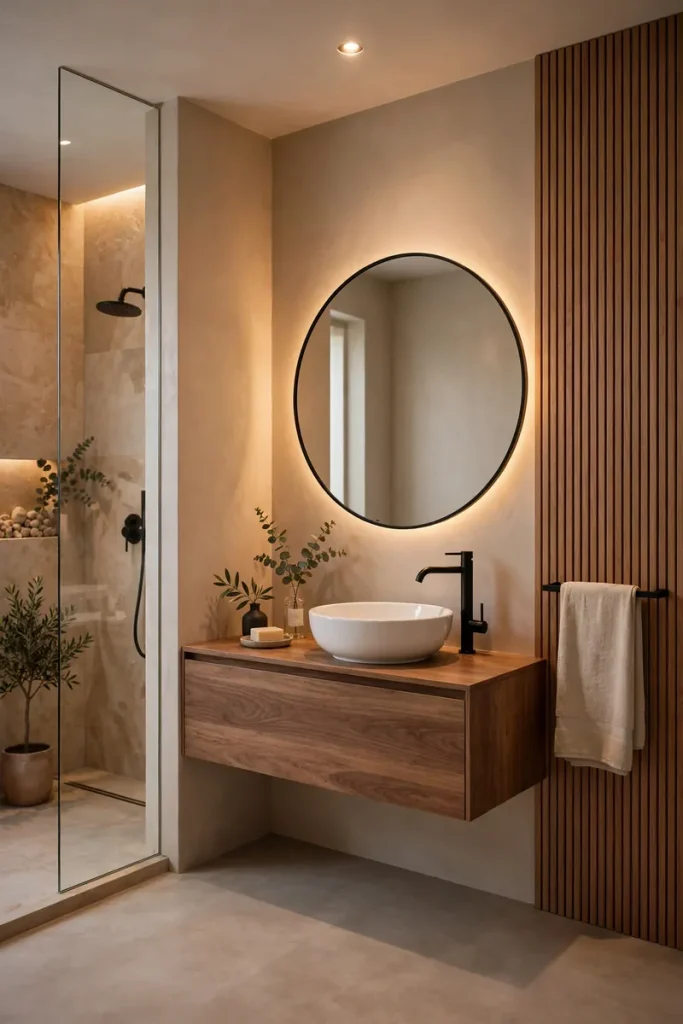
A wall-mounted vanity makes a bathroom look lighter because the flooring continues underneath it. That open strip is especially useful in a narrow bath, where every visible inch counts. Choose drawers instead of deep doors; drawers let you reach the hair dryer without kneeling like you dropped a contact lens. Ready-made floating vanities often begin near $500, while custom cabinets and installation can run into several thousand dollars. Check that the wall can support the weight and ask the contractor to plan plumbing before tile goes in. For durability, pick a moisture-resistant cabinet finish and wipe standing water quickly.
4. Make a Freestanding Tub the Focal Point
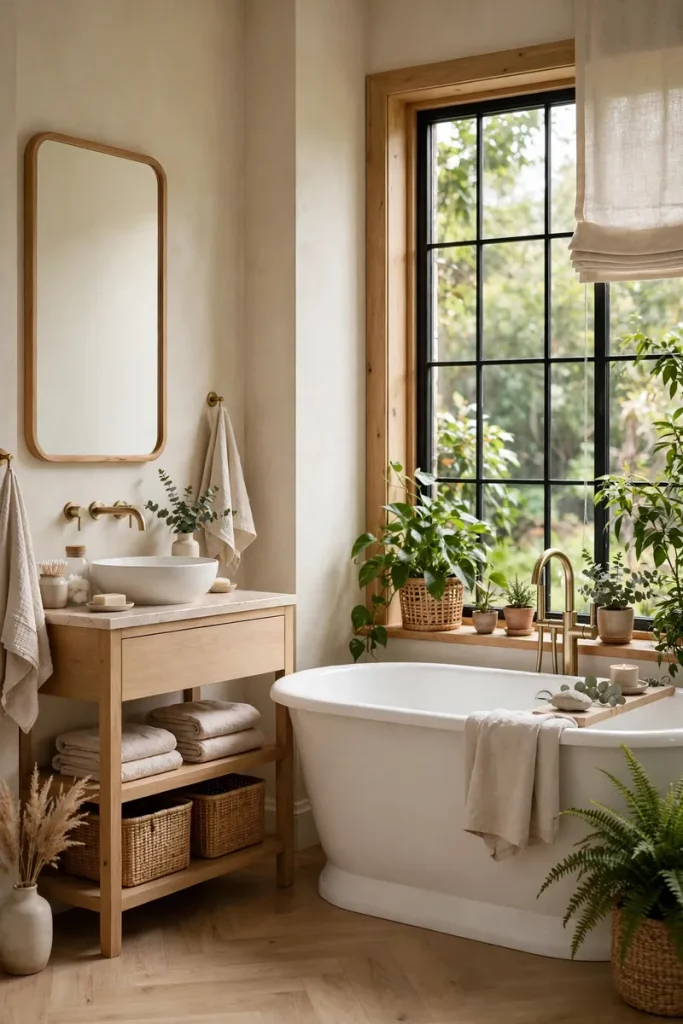
A freestanding tub can turn a plain bathroom into a relaxing retreat, but measure first. Leave enough space around the tub for cleaning, and sit inside a floor model before buying. Some sculptural tubs are beautiful but surprisingly awkward, like fancy shoes for your bathroom. Acrylic versions are lighter and usually more affordable than cast iron or stone. Expect many tubs to cost $800 to $3,000 before the faucet, plumbing, and labor. A floor-mounted filler looks dramatic, while a wall-mounted filler is often easier to clean around. Place the tub near natural light if privacy allows, then add a washable rug and a small stool.
Add Warmth, Color, and Character
5. Stretch the Room With Vertical Tile
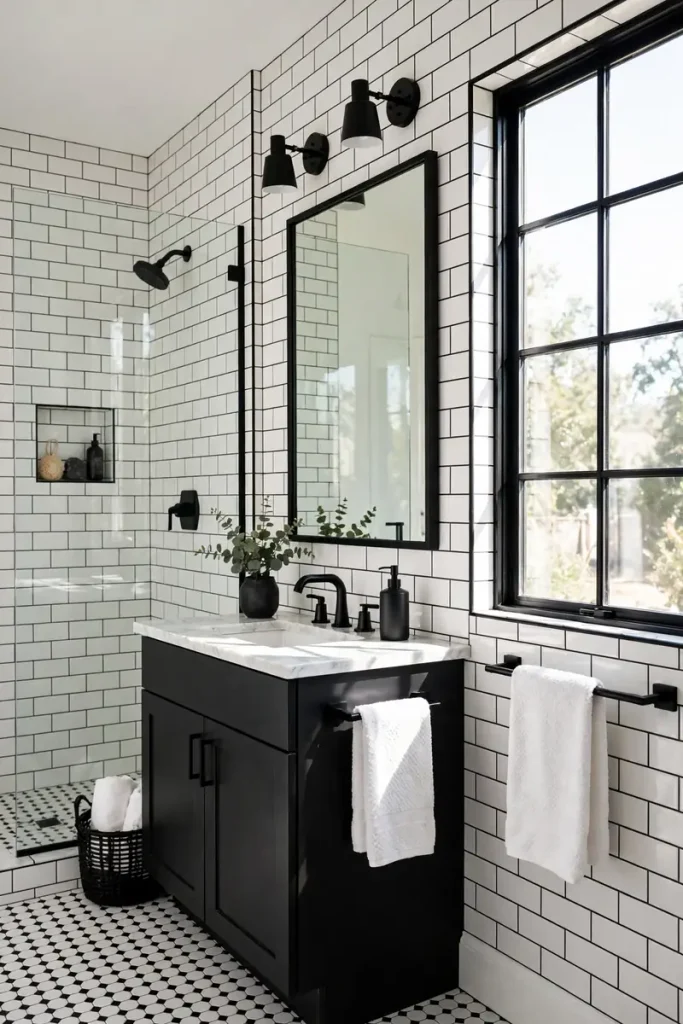
Slim tiles installed vertically pull the eye upward and can make a low ceiling seem taller. Use them on one shower wall, behind the vanity, or around the whole room for a clean envelope. I once chose horizontal tile for a tiny bath because it was on sale; it looked fine, but the leftover boxes stared at me from the garage for three years. Buy roughly 10 to 15 percent extra for cuts and future repairs. Ceramic tile can be budget friendly at about $2 to $10 per square foot for material, while installation adds much more. A grout color close to the tile creates a smooth look; contrast highlights the pattern.
6. Warm Up the Space With Natural Wood
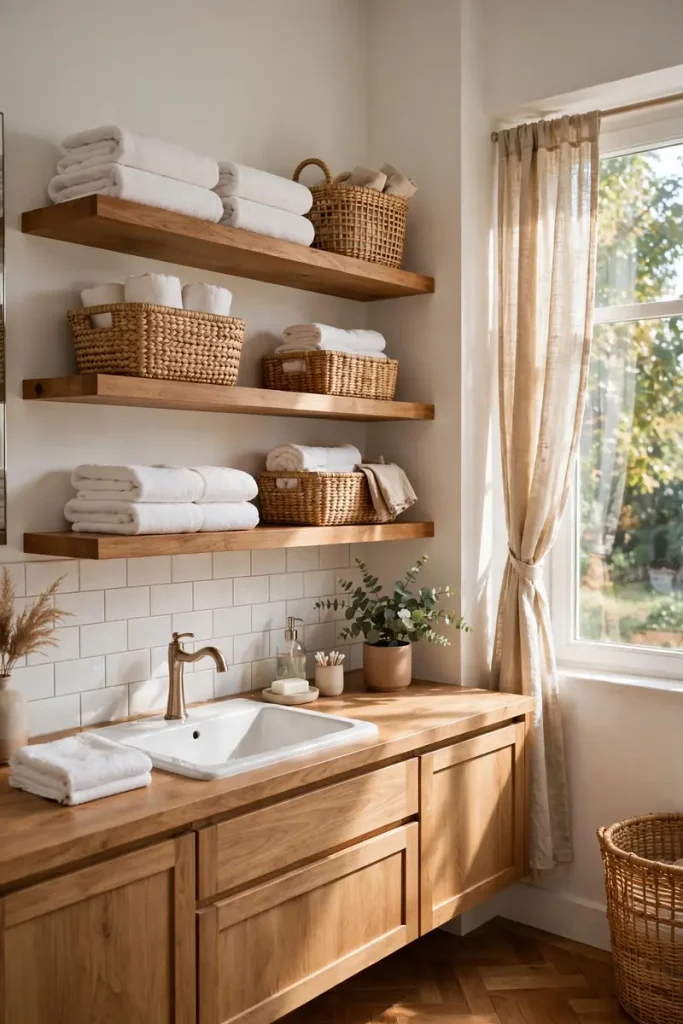
Bathrooms can feel cold when every surface is white, gray, and shiny. A wood vanity brings instant warmth without requiring a full cabin theme. White oak, walnut, and warm maple pair beautifully with stone-look counters and simple brass or black hardware. Real wood needs a bathroom-safe finish, and even sealed wood should not sit in puddles. A quality semi-custom vanity may cost $1,200 to $4,000, though stock options can be much less. If the budget is tight, keep the cabinet boxes and replace only the doors, drawer fronts, and hardware. Clean with a damp cloth rather than harsh sprays.
7. Use One Bold Tile as the Happy Surprise
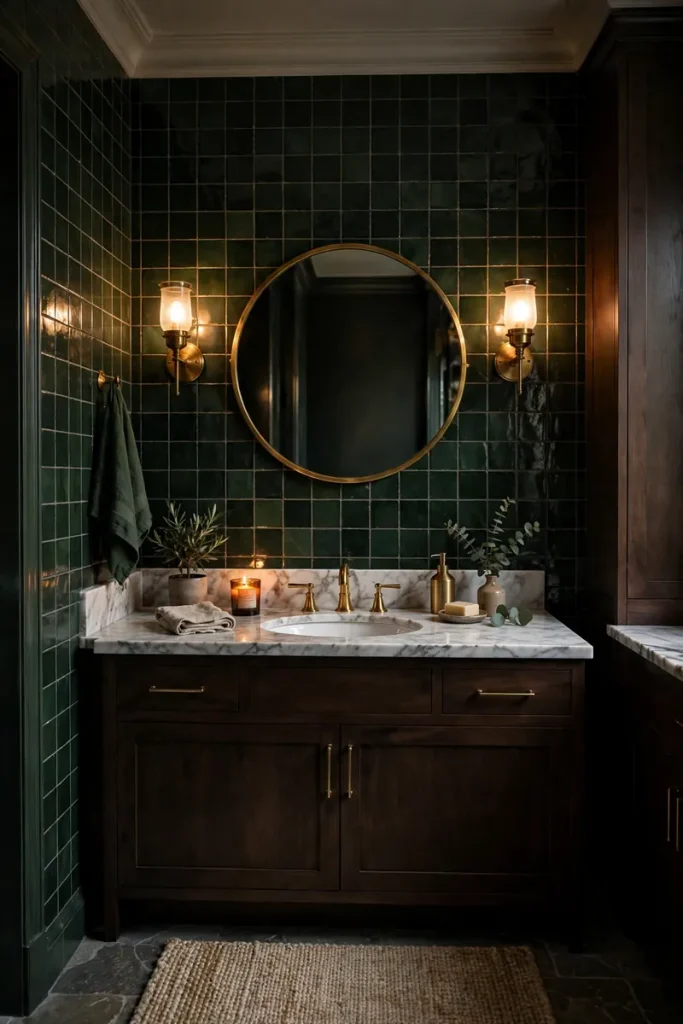
A colorful shower or backsplash gives a remodel personality without covering every wall. Green, blue, coral, or patterned tile can become the feature that makes the bathroom memorable. Keep the floor and large fixtures quieter, so the color has room to shine. Handmade-look tile varies slightly in tone, which hides small water marks better than a perfectly flat glossy surface. Material prices range widely, from roughly $5 to $30 or more per square foot, so use the special tile in a focused area if needed. Order samples and view them in morning and evening light; colors change more than we expect. My blue sample looked peaceful at noon and almost electric at night.
8. Try a Timeless Black-and-White Plan
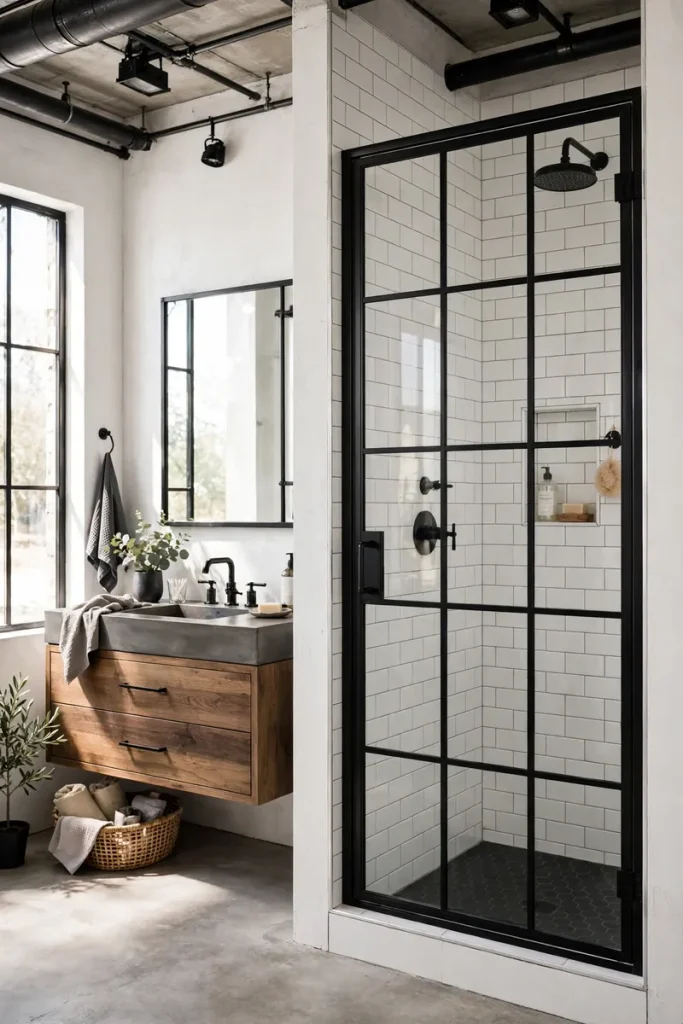
Black and white works in old homes, modern condos, and almost everything between. Start with white wall tile, bring in black through the floor, vanity, mirror, or fixtures, and use warm towels to keep the room welcoming. A patterned porcelain floor is durable and often easier to maintain than real cement tile. Black fixtures can show soap spots, so dry them with a soft cloth and avoid rough cleaners. This look can be done on a modest budget because basic white subway tile is widely available; spend more on one strong detail, such as a framed shower panel or graphic floor. If you rent, create the contrast with a black mirror, shower curtain, and removable accessories.
9. Create a Spa Corner With Stone Texture
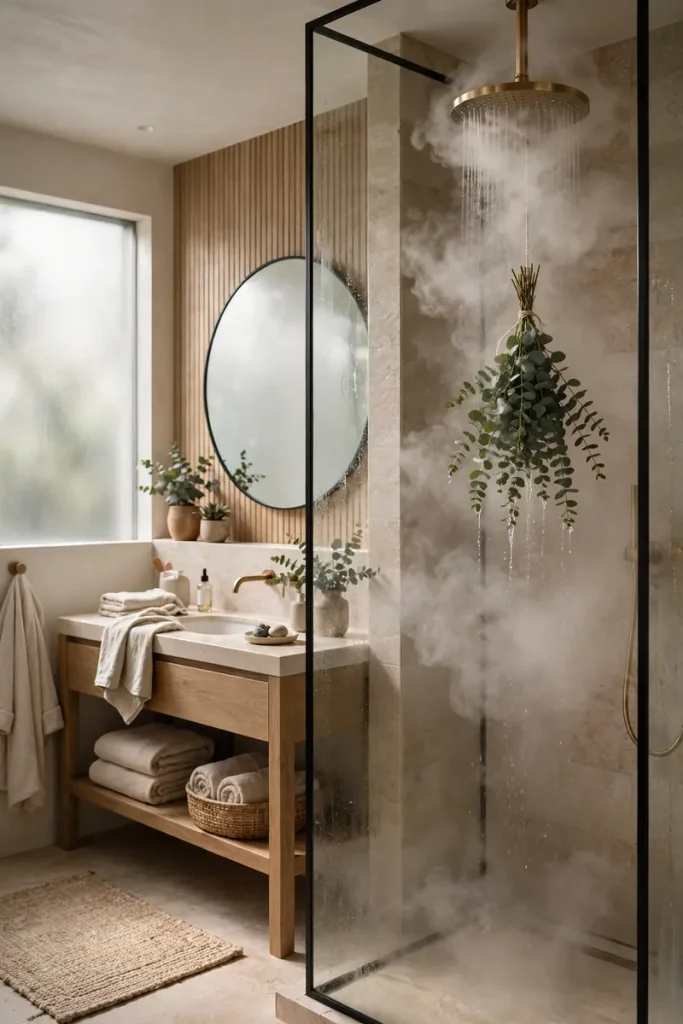
You do not need a hotel-sized room to build a spa mood. Use stone-look porcelain on one wall, add a rain shower or deep tub, and choose warm layered lighting instead of one harsh ceiling bulb. Natural stone is lovely but usually needs sealing and gentle cleaners. Porcelain copies the texture with less upkeep and can cost around $3 to $15 per square foot for material. Add a teak stool, closed storage, and two matching towels; visual calm matters as much as expensive finishes. Heated flooring is a wonderful splurge in cold states, often adding several thousand dollars to a remodel. If that is outside the plan, a plush washable mat still makes winter mornings nicer.
Make Every Inch Work Harder
10. Install a Double Vanity for Busy Mornings
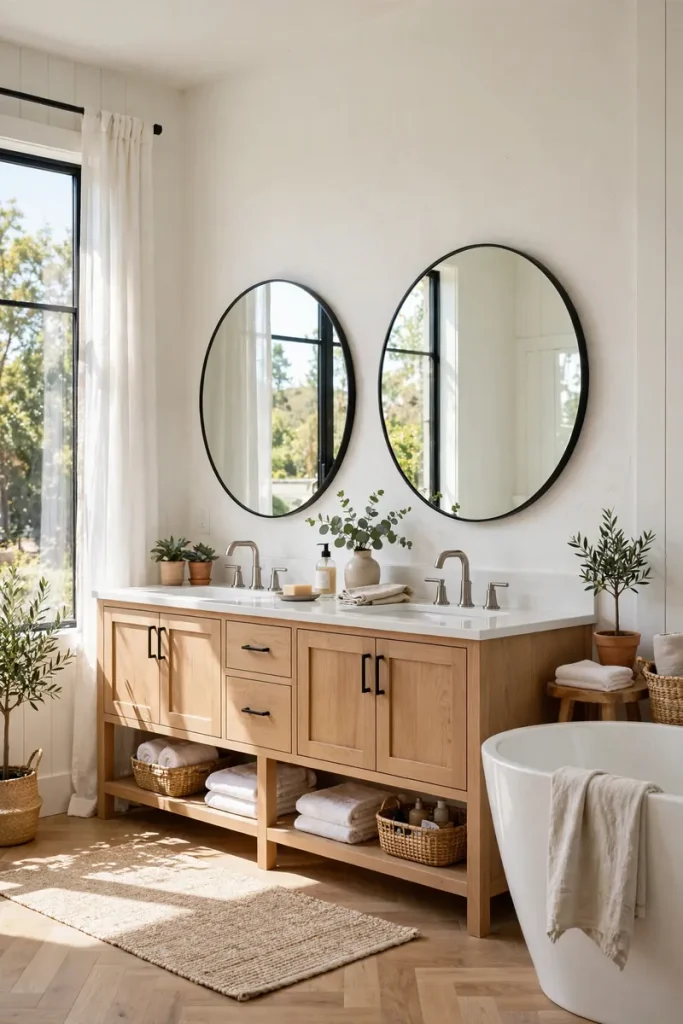
A double vanity is less about luxury and more about preventing the 7:30 a.m. toothpaste traffic jam. It works best when the cabinet is at least about 60 inches wide, though two separate vanities can fit unusual layouts. Give each person useful drawers and an outlet nearby, then add shared storage in the middle. Stock double vanities may start near $1,000, while custom cabinetry, stone counters, sinks, and plumbing can bring the total above $5,000. Moving supply and drain lines increases labor, so keeping plumbing near its current location saves money. Choose an easy-care quartz counter and undermount sinks for quick wiping.
11. Build Storage Into an Empty Wall
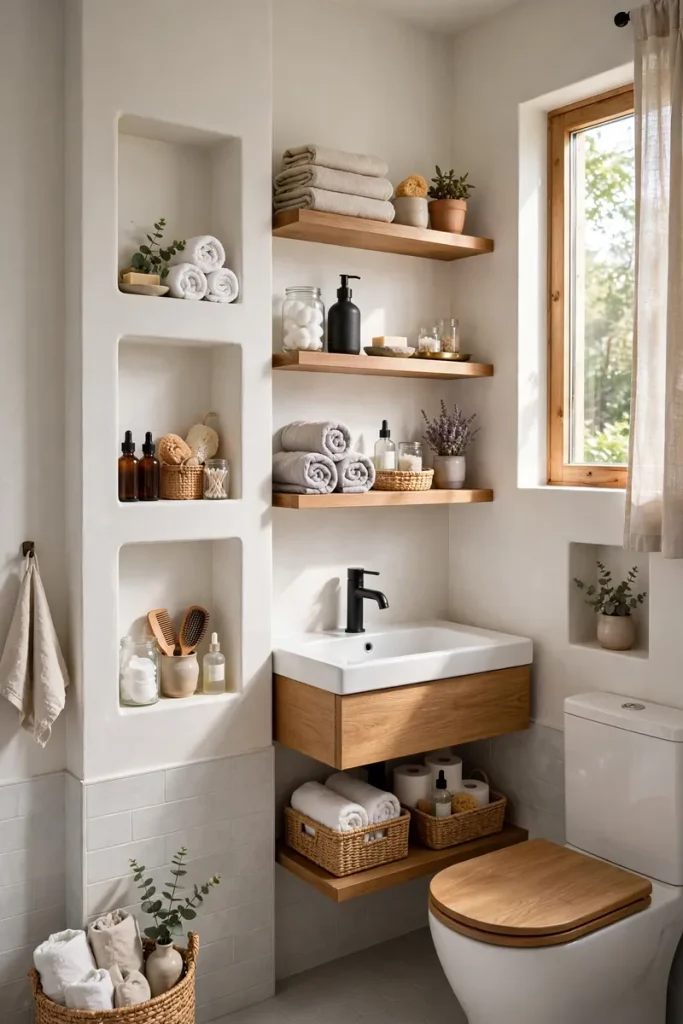
A shallow cabinet or open shelves can turn an ignored wall into hardworking storage. Recessed cabinets are especially useful above a toilet or beside a vanity because they keep the walkway clear. Closed doors hide backup toilet paper and cleaning supplies; open shelves are better for attractive baskets and towels. Custom built-ins may cost $1,000 to $4,000 or more, but simple painted shelves can be a weekend project for under a few hundred dollars. Use moisture-resistant paint and leave breathing room around damp towels. Measure door swings before adding anything. I once watched a cabinet door meet a bathroom door with a loud clack every morning.
12. Swap in Arched Mirrors and Better Lighting
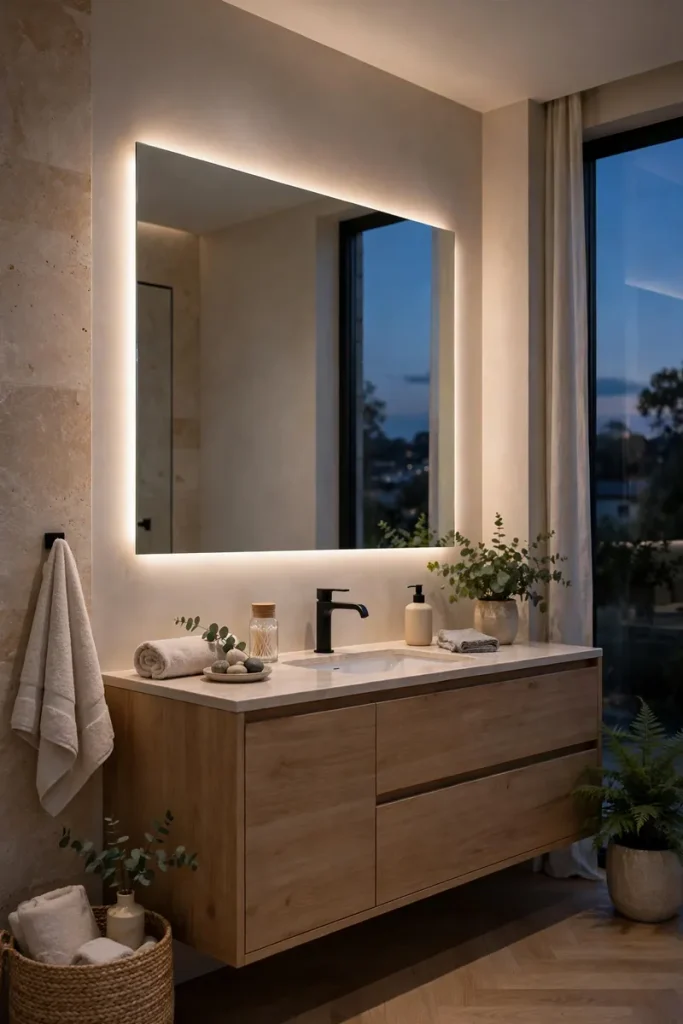
A full remodel is not always necessary. Arched mirrors soften square tile and straight cabinet lines, while new sconces improve the way the room feels and functions. Place lights near face height on both sides when possible; overhead-only light can create unhelpful shadows. Mirrors often cost $100 to $500 each, and stylish sconces can start below $100, though electrical work adds to the bill. Choose fixtures rated for damp locations and use warm-white bulbs around 2700K to 3000K. If you keep the vanity, this change can refresh the room for far less than replacing cabinets. Renters can hang a lightweight mirror with approved hardware and use plug-in lighting where safe.
Choose a Mood You Will Still Love
13. Go Green for a Nature-Inspired Retreat
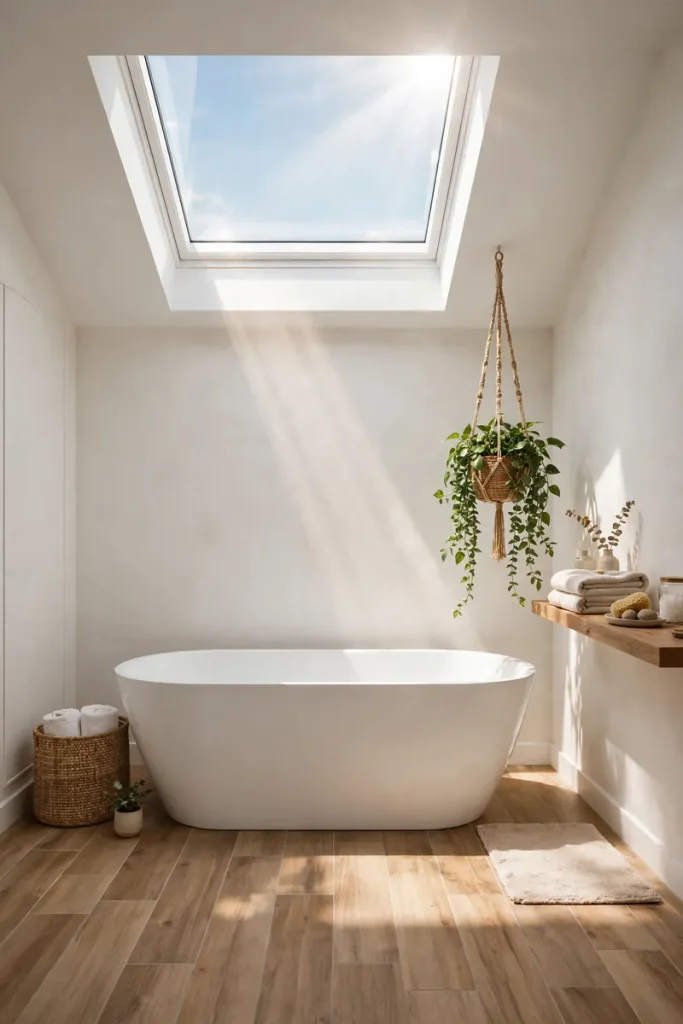
Green tile or paint brings the calm feeling of the outdoors inside. Sage feels soft and classic, olive adds warmth, and deep forest green gives a small powder room drama. For a family bath, use the bold shade on the vanity or shower wall and balance it with warm white. Paint is the lower-cost path, often under $150 for a DIY room, while tile becomes a larger investment. Choose a satin or semi-gloss bathroom paint that can handle moisture and wiping. Pair green with oak, unlacquered brass, cream towels, and one real plant that tolerates humidity. If the bathroom has no window, a convincing faux plant is allowed.
14. Wrap the Vanity in Deep Blue
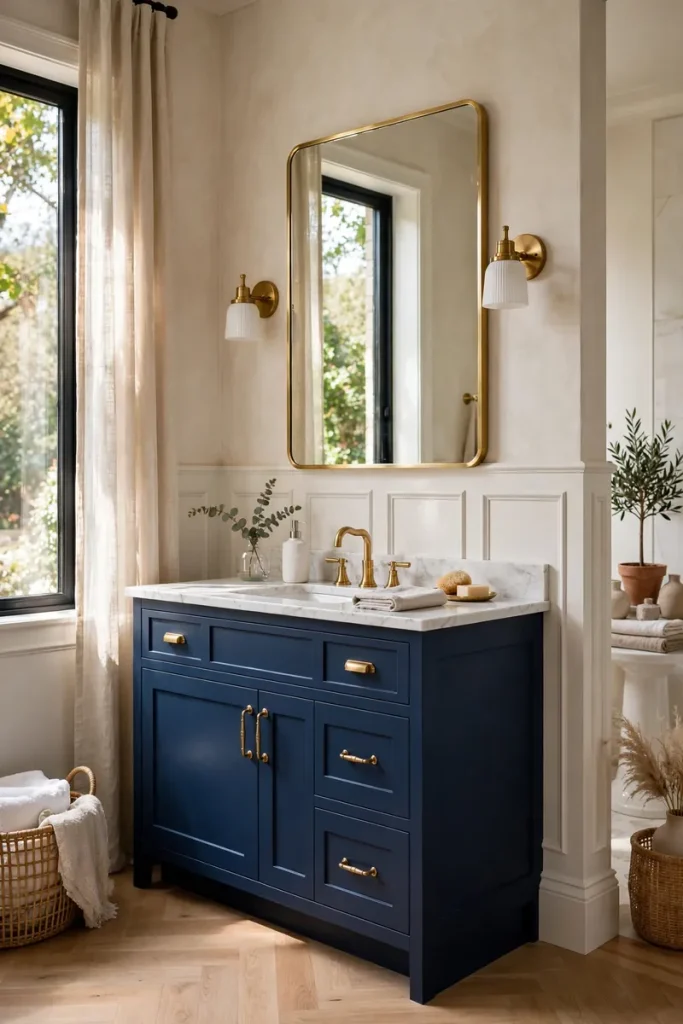
A blue vanity gives a remodel color without locking every surface into a trend. Navy looks tailored, cobalt feels playful, and dusty blue is easy to live with. If the cabinet is solid, professional painting can cost far less than replacement; careful DIY prep makes the finish last. Remove doors, clean grease, sand lightly, prime, and use cabinet enamel rather than wall paint. New hardware and a simple white counter finish the update. For tiny rooms, continue the blue on one wall or ceiling only if there is enough light. Wipe water from painted edges and use drawer organizers to protect the interior. This approach is ideal when the layout works but the room feels bland.
15. Give a Rental Bathroom a Reversible Refresh
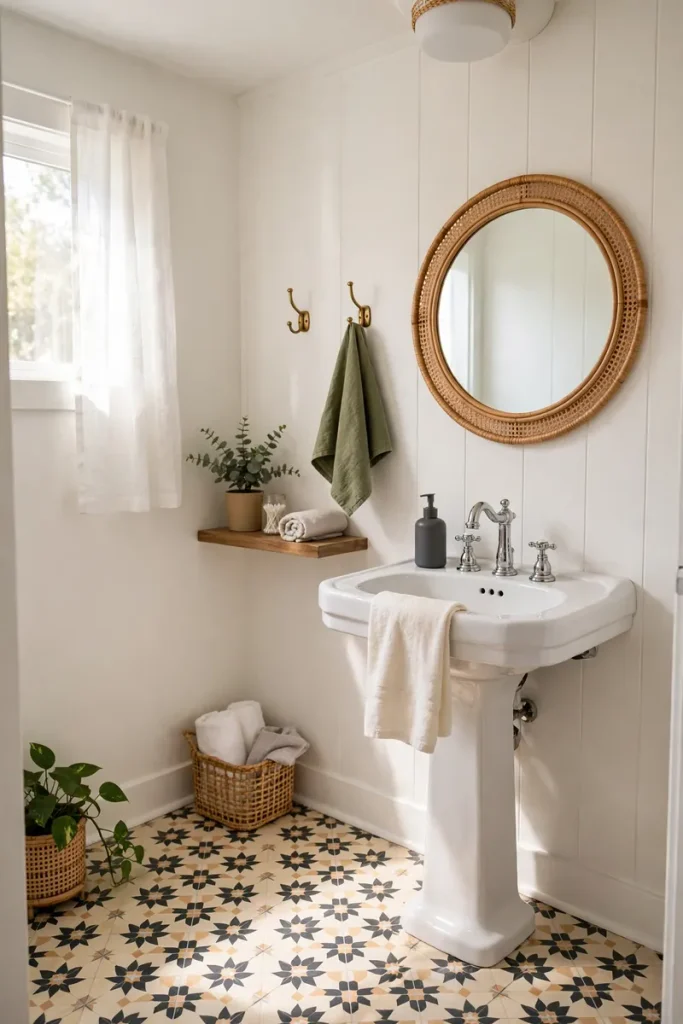
Renters can still create a bathroom that feels personal. Start with a washable shower curtain, framed art, matching towels, a better mirror, and freestanding storage. Peel-and-stick floor tiles can make a big visual change, but test one in a hidden area and get written landlord approval before covering anything. Moisture and old surfaces can affect removal. A reversible refresh may cost $150 to $800 depending on accessories and storage, much less than renovation. Use tension rods, over-toilet shelves, and adhesive hooks rated for humid spaces. Keep original hardware in a labeled bag so it can go back later.
16. Mix Vintage Character With Modern Comfort
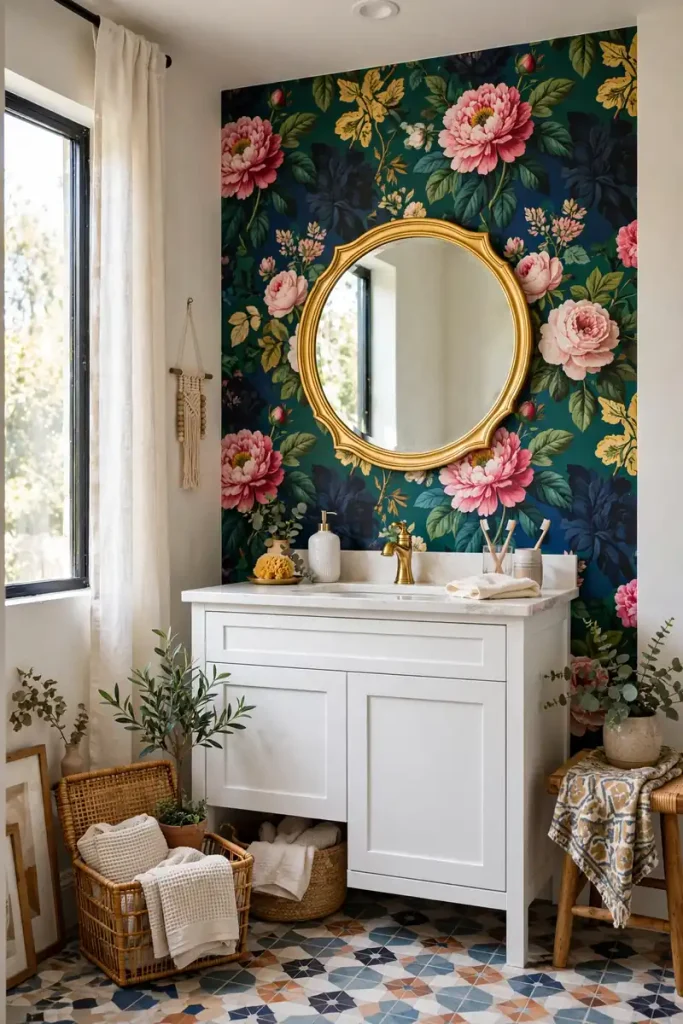
A bathroom does not have to look brand-new to work beautifully. Keep a claw-foot tub, old medicine cabinet, or classic hex floor if it is in good condition, then update the plumbing, lighting, ventilation, and storage around it. Restoring one original feature can save material and give the room a story. Vintage fixtures may need specialized repairs, so have a plumber inspect them before planning around them. Pair old pieces with simple wall tile and a modern vanity so the room feels collected, not themed. A restored tub may cost anywhere from several hundred dollars for refinishing to much more for repairs and installation.
The Remodel Test I Use Before Spending
For every idea, ask four questions: Will it make mornings easier? Can I clean it without special magic? Will the finish handle water for years? Does it fit the budget after labor and hidden costs? If an idea passes three or four, it deserves a place on the plan. If it only looks beautiful in one carefully lit photo, pause. Start with layout, ventilation, waterproofing, and storage, then choose the colors and details that make you smile. Your finished bathroom should be more than Pinterest-pretty. It should hold towels, survive toothpaste, feel safe under wet feet, and still look lovely when real life walks in.