17 Easy Hairstyles for Thick Hair Sorted by How Many Elastics and Pins You Actually Need
A hairstyle labeled easy for average-density hair can turn into a genuine struggle on thick hair, where a single elastic snaps under the weight, one bobby pin slides out within the hour, and techniques that take two minutes on thinner hair take five times as long simply because there’s so much more of it to move around. The honest measure of “easy” for thick hair isn’t how simple the technique looks in a tutorial, it’s how few tools and how little fighting against the hair’s sheer volume the style actually requires.
This list sorts eighteen hairstyles by the actual number of elastics and pins needed, from true one-elastic styles up to the more involved options using several, so thick-haired readers can genuinely judge effort level before starting rather than discovering halfway through that a “simple” style needs six bobby pins their hair keeps rejecting.
One Elastic Only
These styles use nothing but a single, strong hair elastic, ideal for the busiest mornings or anyone who simply doesn’t want to deal with pins falling out of thick, heavy hair.
The Low Ponytail
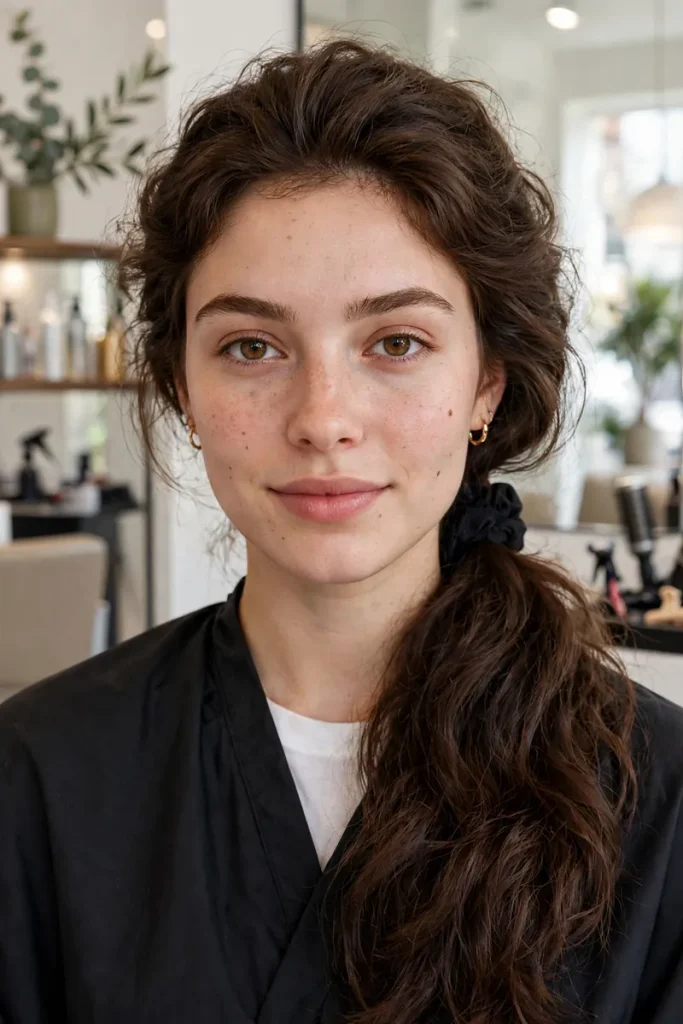
Gathered at the nape and secured with one thick, strong elastic, this remains the single fastest option for thick hair specifically because the low position means less weight is pulling against the elastic than a high ponytail would create, reducing the chance of it slipping loose through the day.
The High Ponytail With a Double-Wrapped Elastic
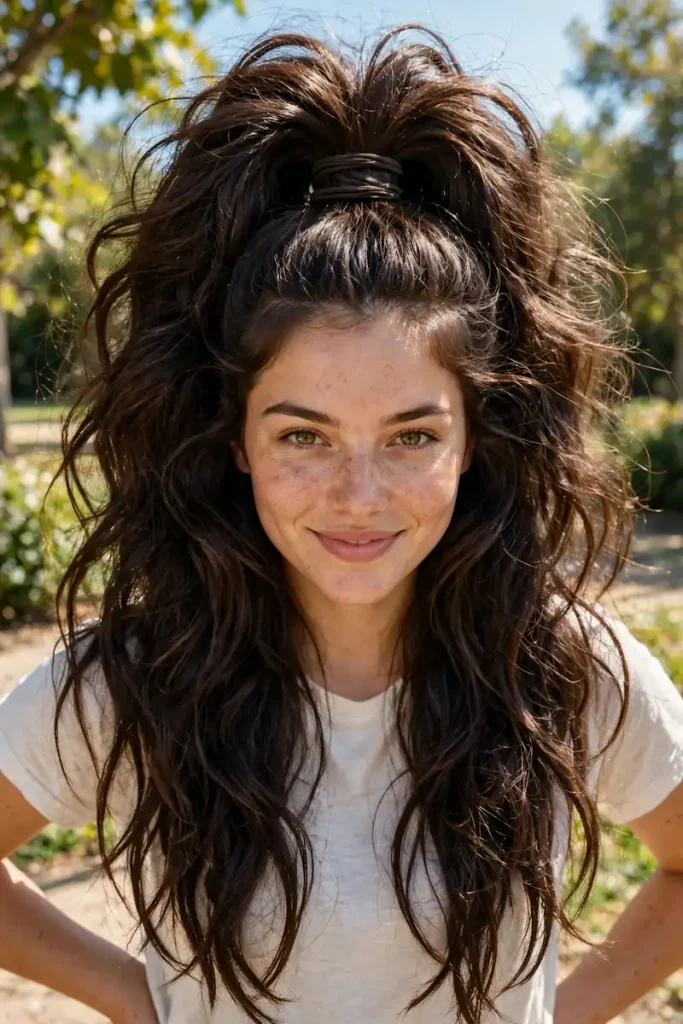
Wrapping a strong elastic around thick hair twice rather than the usual three times, since thick hair needs fewer wraps to achieve the same tightness, creates a secure high pony without needing any additional pins to catch loose pieces.
A Simple Side Ponytail

The same single-elastic technique, shifted to one side rather than centered, which also happens to distribute the weight of thick hair slightly differently and can feel more comfortable for extended wear than a perfectly centered pony.
A Loose, Low Bun Using a Hair Tie Alone
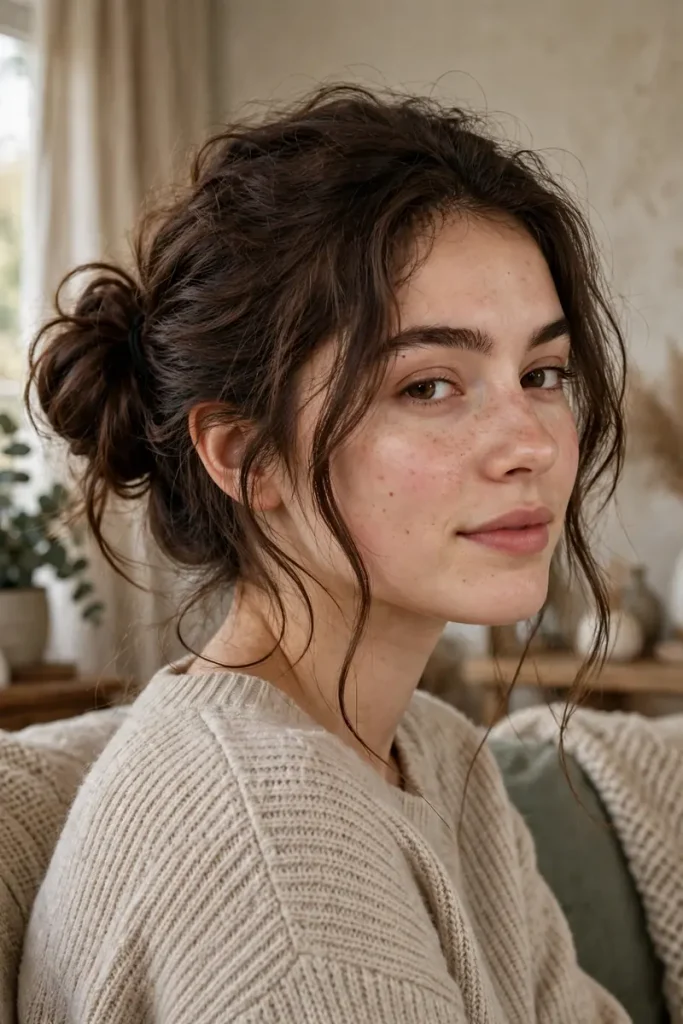
Gathering hair into a ponytail, then twisting the length around the base and tucking the end back through the elastic itself rather than pinning it, a classic trick that works particularly well on thick hair since there’s enough volume and texture for the tucked end to stay secure without any pins at all.
Two Elastics
A second elastic opens up slightly more structure without yet requiring any pins, good for styles needing two distinct sections.
Half-Up Ponytail
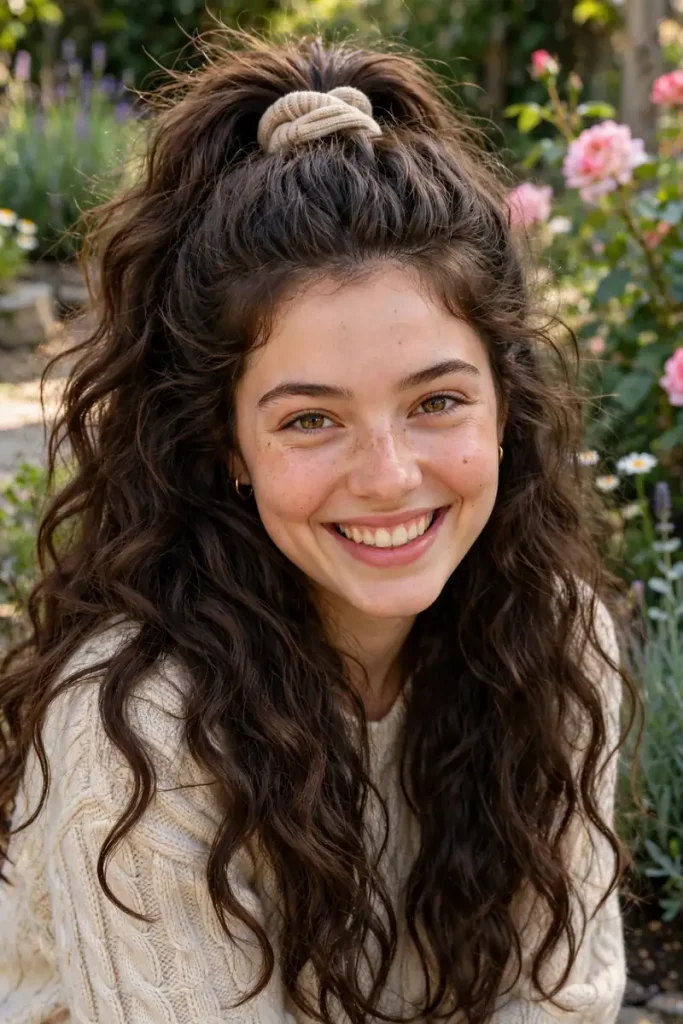
One elastic gathering the top section, left as is, no second elastic actually needed here technically, but many people prefer adding a thin elastic partway down the tail for extra security on heavy, thick hair that might otherwise slip loose from a single gather point.
Double Ponytails
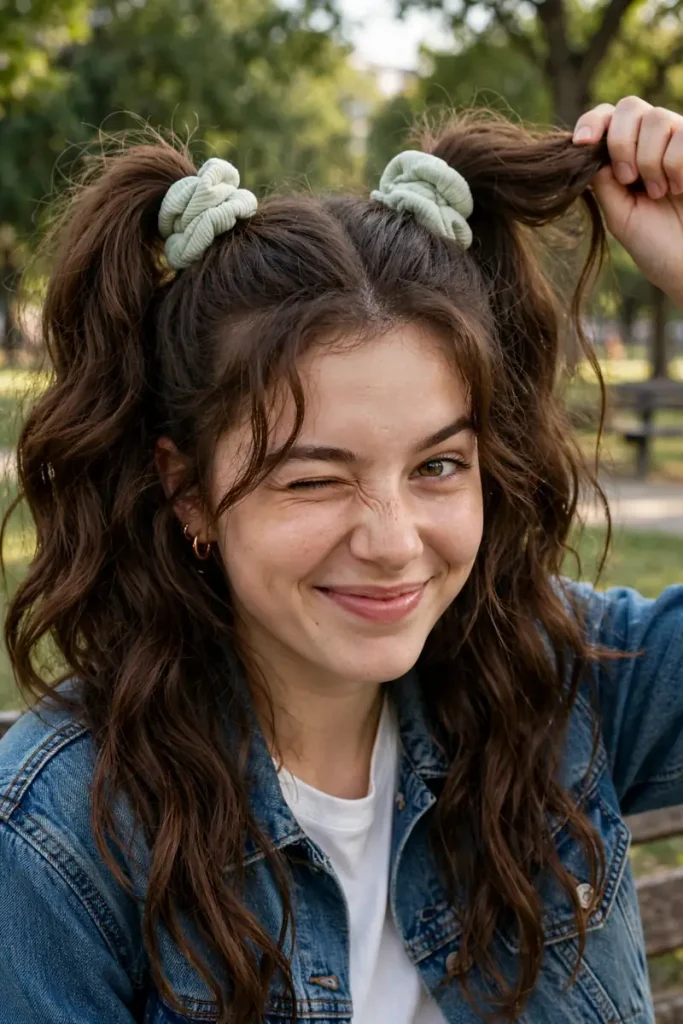
Two separate ponytails, one on each side or one stacked above the other at the back, each secured with its own elastic, a straightforward style that works especially well for thick hair since splitting the volume into two sections makes each one genuinely easier to manage than one enormous single ponytail.
A Bubble Ponytail
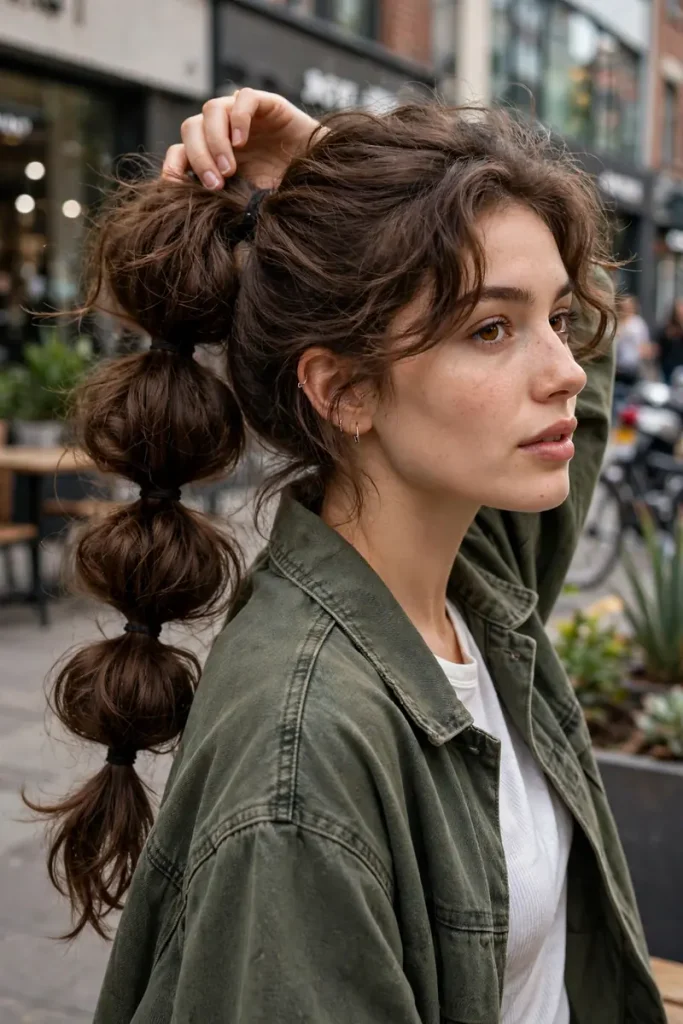
One main elastic at the base, with a second (or more, depending on length) placed partway down the tail to create the bubbled, sectioned effect, a style that happens to suit thick hair particularly well since there’s enough volume in each bubble section to look full and intentional rather than sparse.
Two Twisted Buns

Hair divided into two sections, each twisted and secured with its own elastic rather than pinned, a style that uses thick hair’s natural grip and volume to its advantage since twisted sections from thick hair tend to hold their coiled shape well even with minimal securing.
Three to Four Pins, No Elastics
Some styles skip elastics entirely and rely purely on pins, which thick hair can actually support well given how much material there is to anchor each pin securely.
A Pinned Half-Up Twist
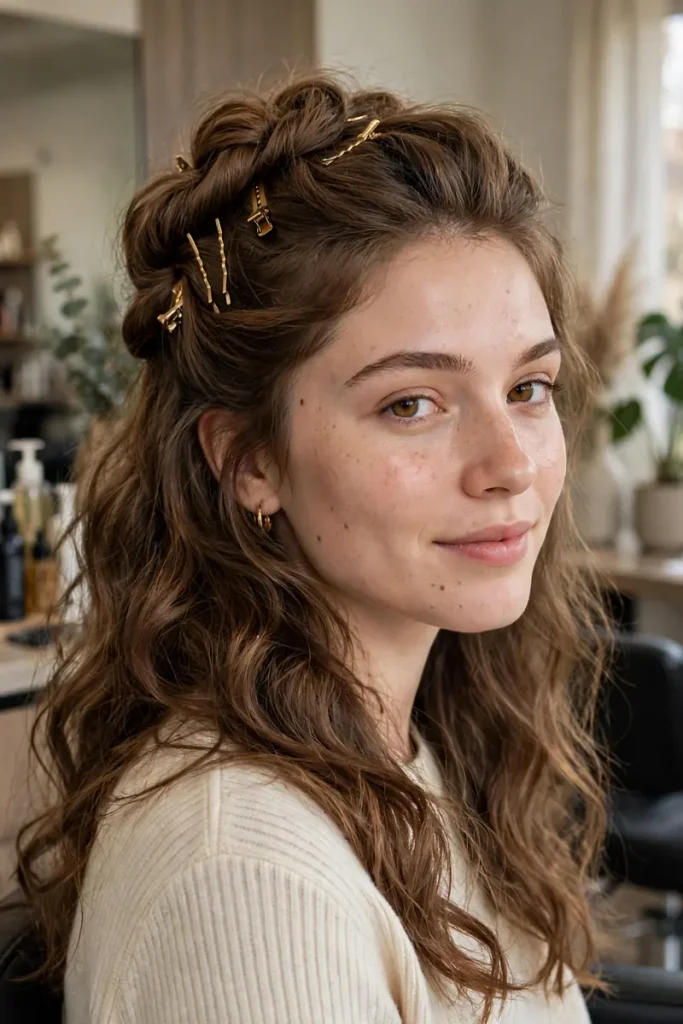
Two small sections twisted back from each side and crossed at the back of the head, secured with two to three bobby pins where they meet, no elastic needed since the twists themselves hold their shape, particularly on thick hair’s natural volume.
A Simple Pinned-Back Style
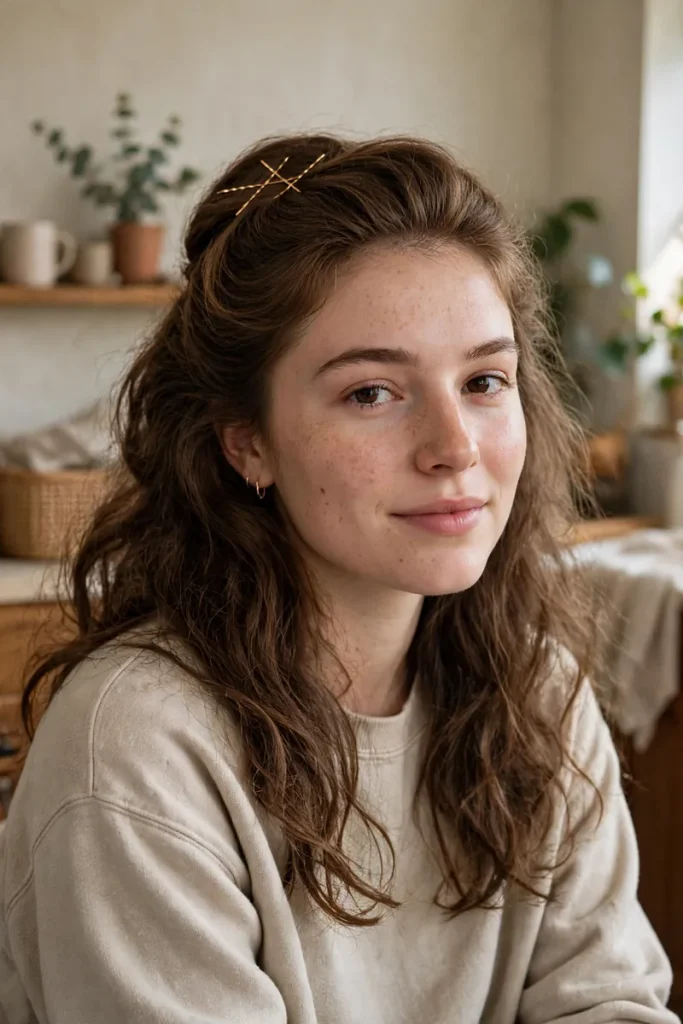
Just the front sections on each side twisted or rolled back and pinned near the crown, leaving the rest of the thick hair down, a style using three to four pins total that keeps hair out of the face without the weight and bulk of a full gathered style.
A Low Twisted Chignon
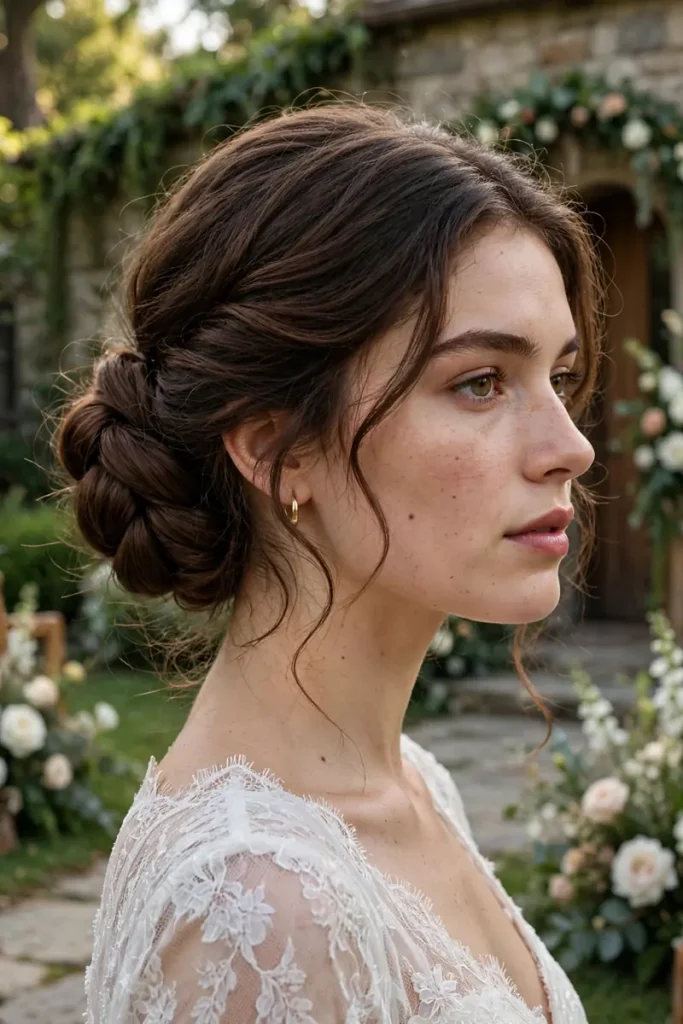
Hair twisted as a whole section at the nape and coiled into a loose knot, secured with three to four pins placed at different angles around the twist’s edge rather than straight through the center, a placement that holds notably better on thick, heavy hair than pins inserted at a single point.
Five to Six Pins, One Elastic
A slightly more involved combination, still genuinely quick but with enough structure for a style that holds through a full active day.
A French Twist
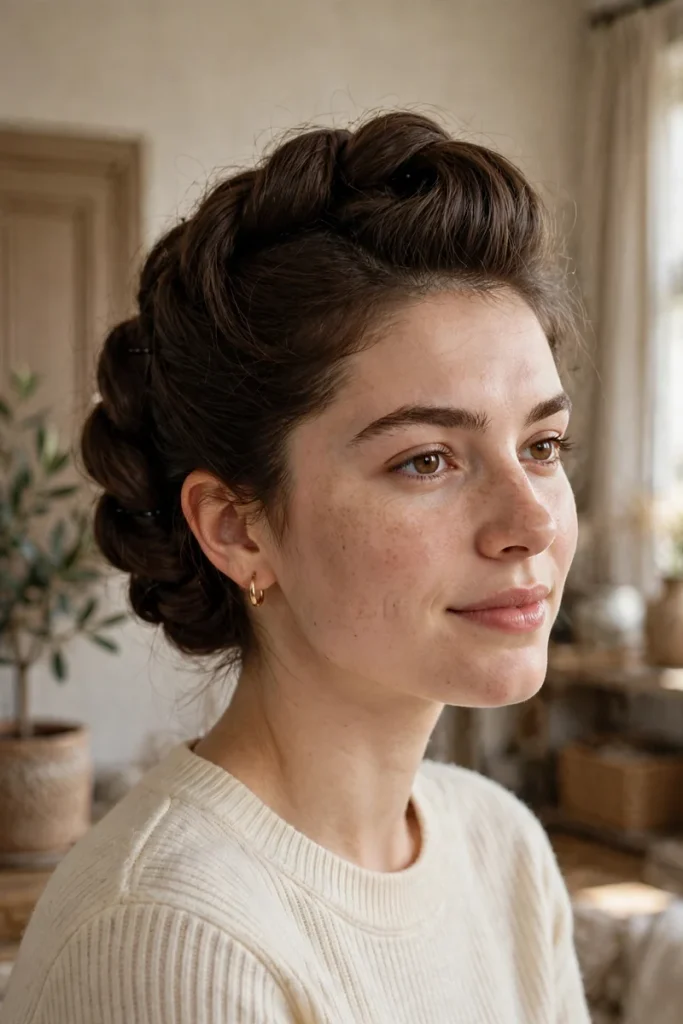
Hair gathered to one side, rolled upward into a vertical twist, and secured along its length with five or six pins, a classic style that thick hair actually executes beautifully since there’s enough volume to create a substantial, well-formed twist rather than a thin, insubstantial roll.
A Braided Low Bun
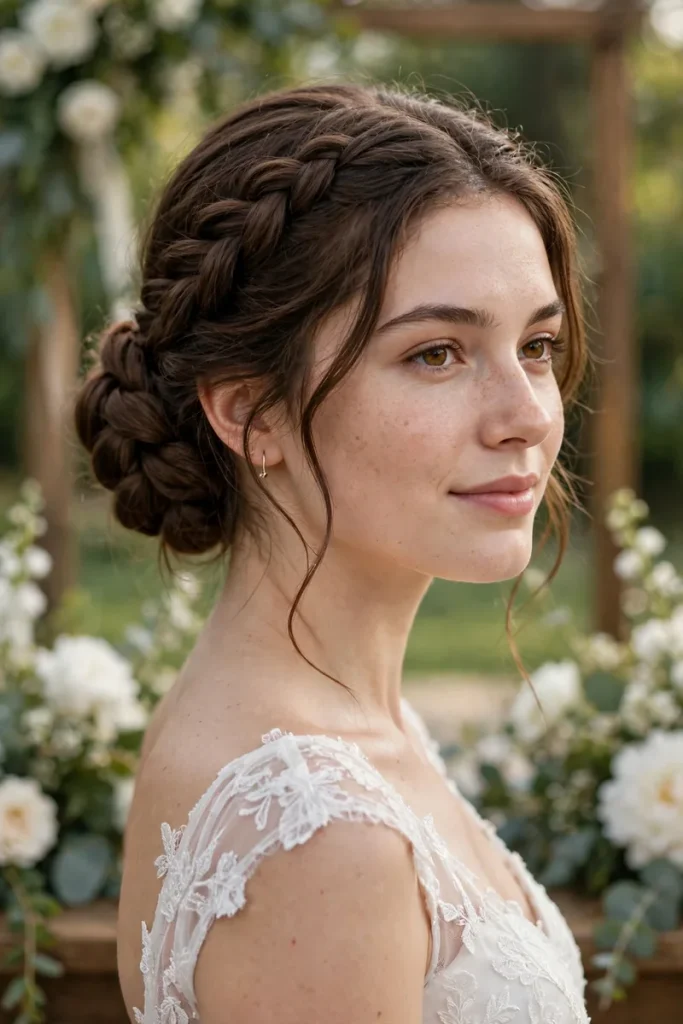
A simple three-strand braid, secured at the end with one elastic, then coiled into a bun shape and pinned around the edges with five to six pins, combining the security of a braid’s natural hold with just enough pinning to keep the coiled shape in place.
A Twisted Updo With Face-Framing Pieces
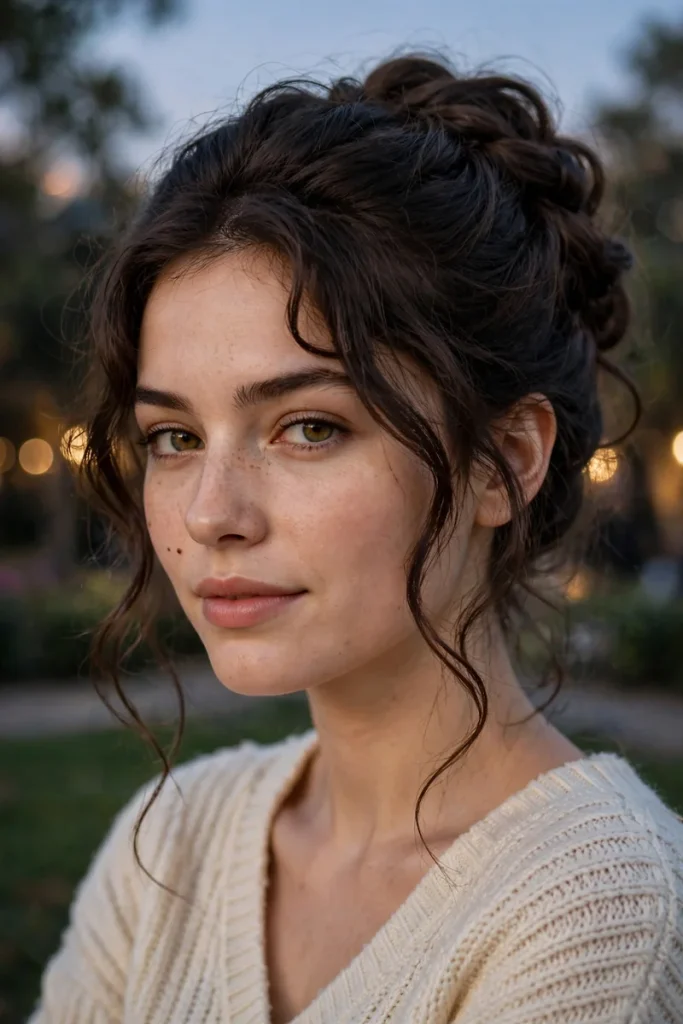
The bulk of the hair twisted up and pinned into a loose updo, with a couple of pieces deliberately left out to frame the face, using one elastic to initially gather the hair before twisting and five or six pins to secure the final shape.
Minimal Tools: Braids That Secure Themselves
A separate category worth mentioning, since braided styles on thick hair often need fewer tools overall than their appearance suggests, the braid’s own structure doing most of the securing work.
A Single Dutch Braid Down the Back
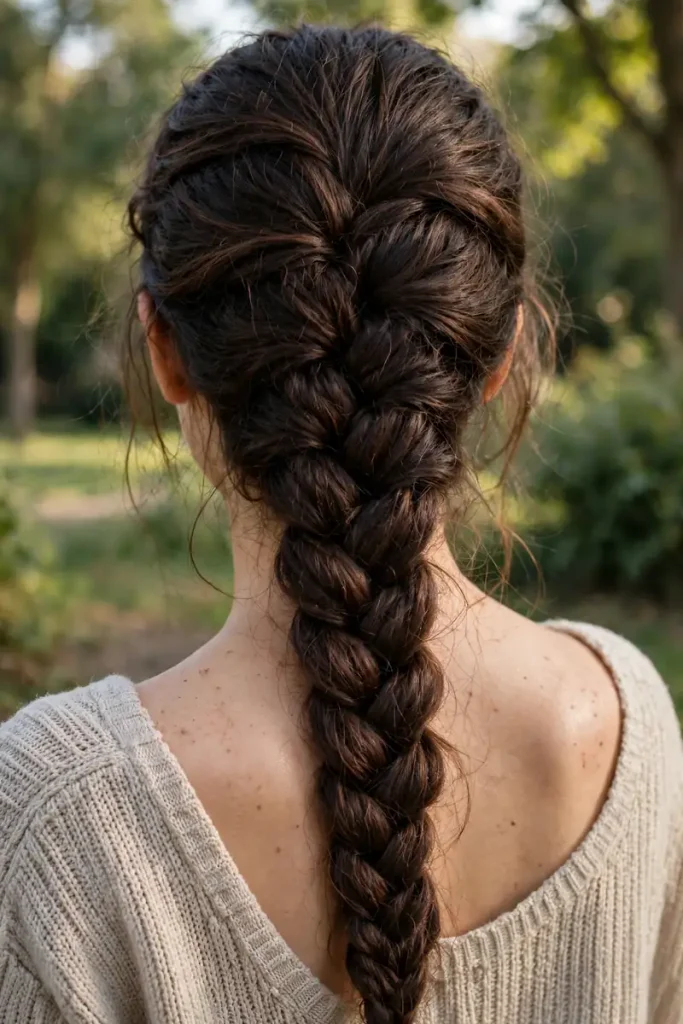
One braid from crown to nape, needing only one small elastic at the very end, since the braiding technique itself holds everything in place along the way, genuinely one of the most secure, tool-light options for thick hair specifically because thick strands grip a braid pattern more firmly than thin hair does.
Double Dutch Braids
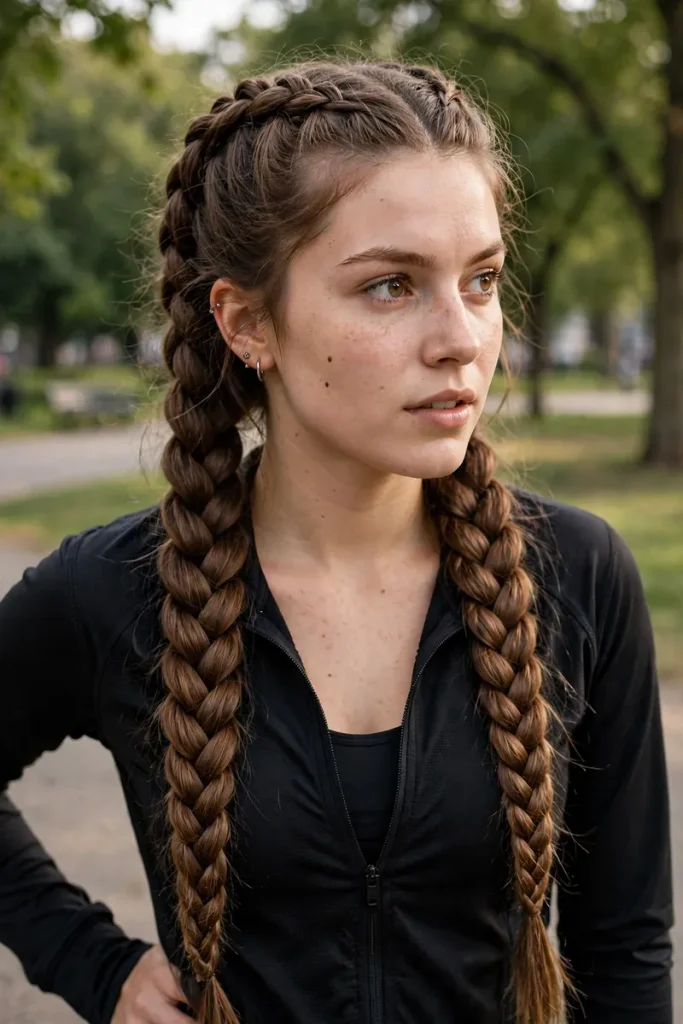
The same technique split into two braids, each needing just one elastic at the end, a reliably all-day style that uses thick hair’s natural density to its advantage rather than fighting against it.
A Braided Crown
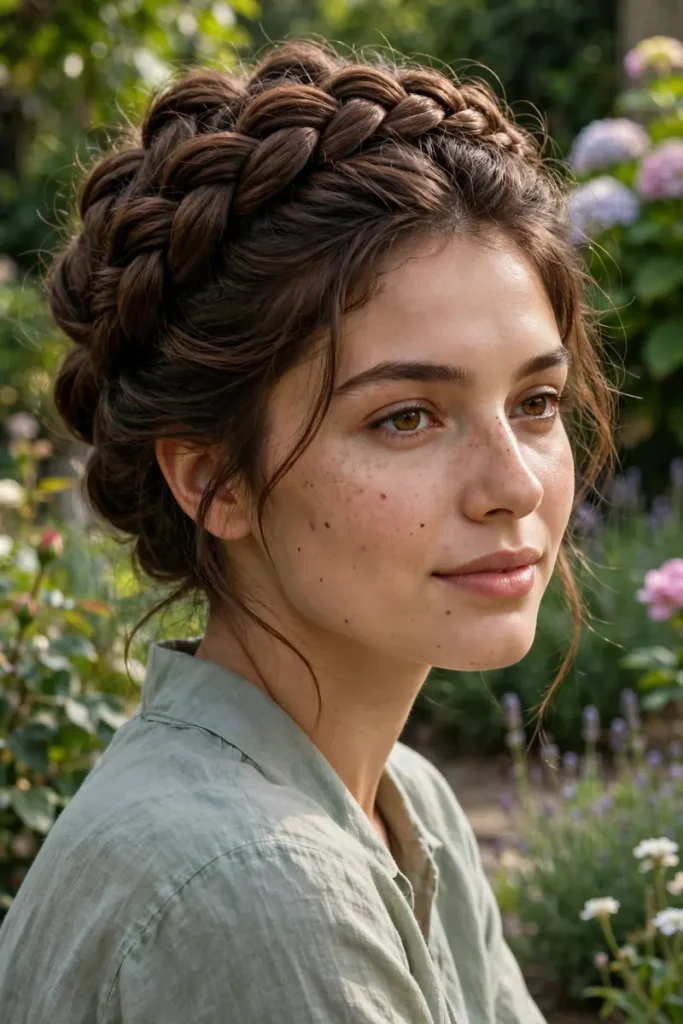
One or two braids wrapped around the head and secured at the end points with a small elastic each, plus perhaps two or three pins to tuck the braided ends neatly against the head, a style that looks considerably more involved than its actual tool count suggests.
Why Thick Hair Actually Has an Advantage Here
It’s worth noting directly that thick hair, despite often being assumed to be harder to style, actually holds many of these techniques more securely than thinner hair does, since there’s simply more material for each twist, braid, or pin to grip onto. The frustration usually comes from using tools sized or quantities planned for thinner hair, a single standard elastic instead of a reinforced one, or too few pins placed too close together, rather than from thick hair being inherently more difficult to manage.
Choosing Elastics That Actually Work for Thick Hair
A thin, standard elastic designed for average density hair will snap repeatedly on genuinely thick hair, so investing in a few thicker, fabric-covered elastics specifically marketed for thick or coarse hair solves more daily styling frustration than any particular technique adjustment. Similarly, standard bobby pins can slide right out of very thick, voluminous sections, while slightly larger, stronger pins designed for thick hair hold considerably better without needing double or triple the usual quantity.
A Quick Note on Pin Placement for Added Security
Rather than inserting all pins in the same direction, crossing a couple of them in an X pattern at key stress points, where a bun meets its base, or where a twist curves, adds meaningfully more hold on thick, heavy hair than inserting every pin parallel to each other, a small adjustment that costs no extra time but noticeably extends how long a style holds through an active day.
Easy doesn’t have to mean minimal styling ambition, it just means matching the technique and tool count honestly to how thick hair actually behaves rather than following a method built around thinner hair’s different needs. Pick a style from the tool-count category that matches the morning you’re having, use elastics and pins genuinely built for thick hair’s volume, and most of these styles will hold reliably through an entire day without the usual thick-hair styling frustrations.