
15 Fringe Hairstyles Ideas: A Field Guide to Fringes Spotted in the Wild
After fifteen years behind the chair, I have concluded that fringes are not haircuts. They are wildlife. Each species has its own habitat, temperament, and survival requirements, and choosing one without understanding it is how women end up crying in my chair three weeks later. So I wrote the guide I wish someone had handed me at twenty-two: fifteen fringe species, documented in the wild, with honest field notes on who each one suits and what it demands. Binoculars optional. A good stylist, essential.

Species No. 1: The Curtain Fringe (Curtaina effortlessa)
Habitat: Parted down the middle, sweeping to both sides, longest at the cheekbones. Temperament: The golden retriever of fringes — friendly, low-maintenance, suits nearly everyone. Field notes: I have recommended this species more than any other. It grows out gracefully into face-framing layers, which means the commitment is low and the forgiveness is high. My client Elena, terrified of bangs for a decade, started here and never looked back. If you are fringe-curious but risk-averse, begin your expedition here.

Species No. 2: The Blunt Fringe (Frons severa)
Habitat: Cut straight across the forehead in a single bold line. Temperament: High-maintenance, high-impact — the peacock of fringes. Field notes: This species demands commitment: trims every three to four weeks, daily styling, and the confidence to wear a statement on your forehead. It flatters oval and long faces most, and it is merciless on round faces. But when it works, nothing else looks this deliberate. My client Yuki has worn one for six years. Strangers photograph her on the subway. That is the power of severa.
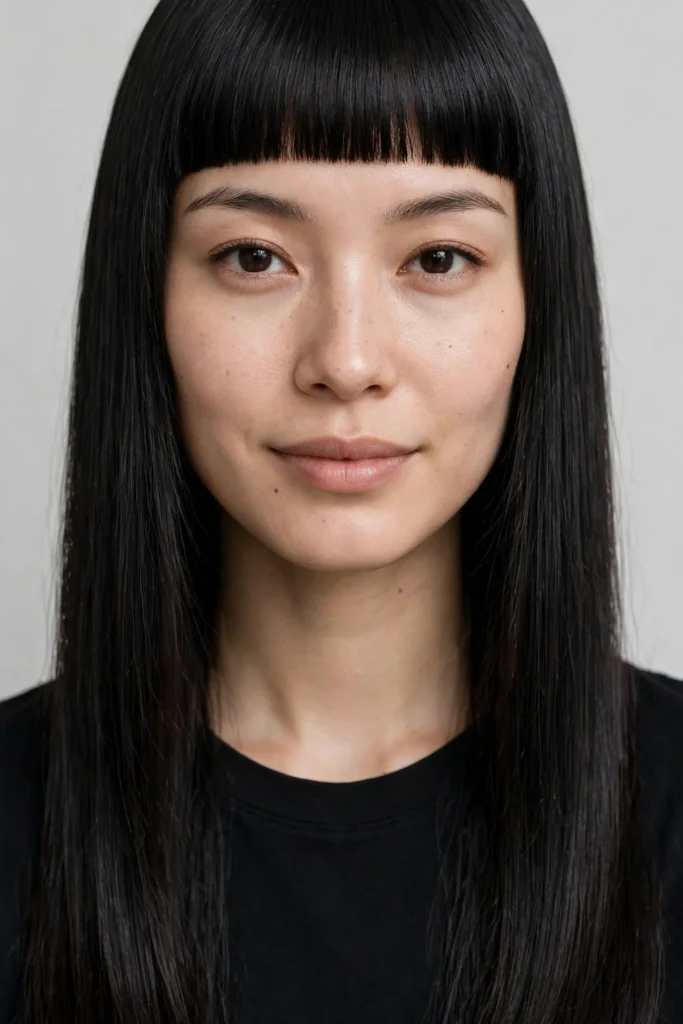
Species No. 3: The Wispy Fringe (Frons delicata)
Habitat: Feathered, piece-y, light enough to see forehead through. Temperament: Gentle and forgiving — the fawn of fringes. Field notes: The best species for fine hair and fringe beginners, because mistakes are nearly invisible in the wispiness. It softens strong features and adds romance without weight. The trade-off: it needs texturizing spray to avoid looking stringy, and humidity is its natural predator. Delicata thrives in dry climates and dies in August. Plan accordingly.

Species No. 4: The Side-Swept Fringe (Frons diagonalis)
Habitat: Swept dramatically to one side in a deep diagonal. Temperament: The diplomat — universally flattering, office-appropriate, endlessly versatile. Field notes: This is the species I recommend when a client says “just make me look good.” The diagonal line slims every face shape, it works on every hair length, and it grows out into nothing — it simply becomes a long layer. Diagonalis is the only fringe with no natural enemies. If fringes had a default setting, this would be it.

Species No. 5: The Micro Fringe (Frons audax)
Habitat: Cut well above the eyebrows, sometimes just an inch long. Temperament: Bold, architectural, not for the faint of heart. Field notes: Audax is a statement species — it draws every eye to the eyes and cheekbones, which means your bone structure does the talking. It suits oval and heart-shaped faces beautifully and demands regular trims to stay micro. My client Zara got one on a dare and kept it for two years. “It made me feel like art,” she said. Approach with courage. Leave with cheekbones.

Species No. 6: The Bottleneck Fringe (Frons versatilis)
Habitat: Narrow at the top, widening toward the cheekbones — like a bottleneck. Temperament: Adaptable, the chameleon of fringes. Field notes: Shorter in the center, longer at the edges, which means it can be worn parted, swept, or pushed back entirely. Versatilis is the fringe for commitment-phobes: on days you want bangs, you have them; on days you do not, they disappear into the rest of your hair. I call it the gateway fringe. Many a blunt-fringe devotee started as versatilis and never admitted it.
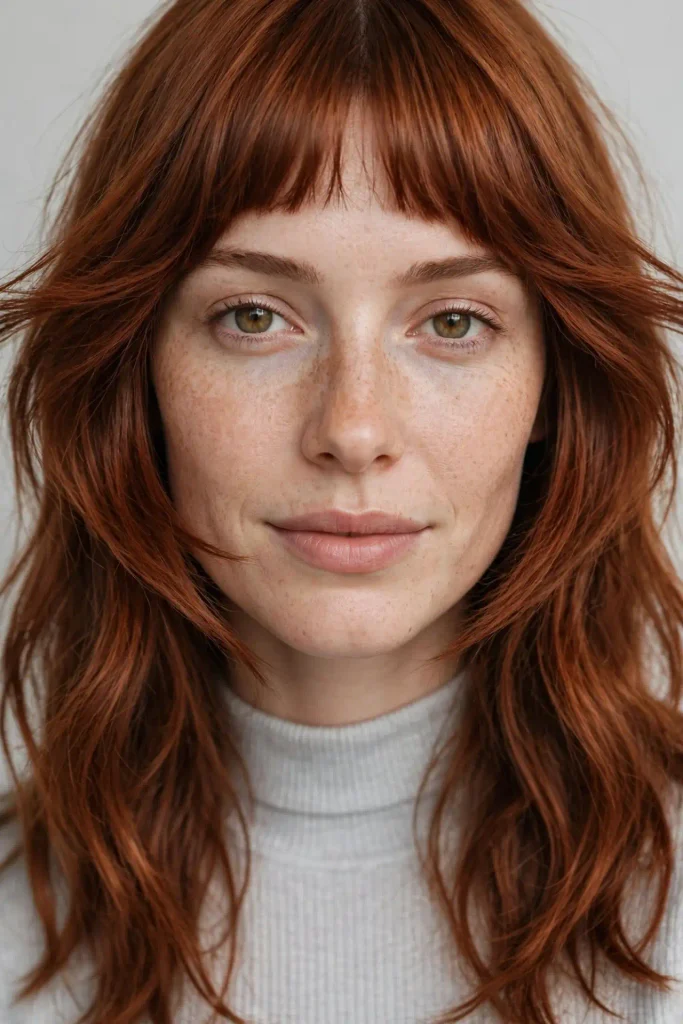
Species No. 7: The Curly Fringe (Frons spiralis)
Habitat: Worn in its natural curl pattern, never straightened into submission. Temperament: Wild and joyful — the most honest species in this guide. Field notes: Spiralis must be cut dry, curl by curl, accounting for shrinkage — cutting it wet is how disasters happen. It needs moisture, not heat, and a stylist who understands curls. My client Amara’s curly fringe is the most complimented hair in her office. “People think it’s brave,” she laughs. “It’s just my hair, allowed to exist.” Let it exist.

Species No. 8: The Bardot Fringe (Frons iconica)
Habitat: Thick, parted, sex-kitten volume — the sixties icon. Temperament: Glamorous, dramatic, unapologetic. Field notes: Iconica requires density — fine hair need not apply without extensions — and a round brush, and the willingness to be looked at. It is the fringe equivalent of red lipstick: it does not whisper. My client Vivienne wears it with jeans and a t-shirt and somehow looks dressed for the Riviera. Some species decorate the face. This one accessorizes the entire woman.
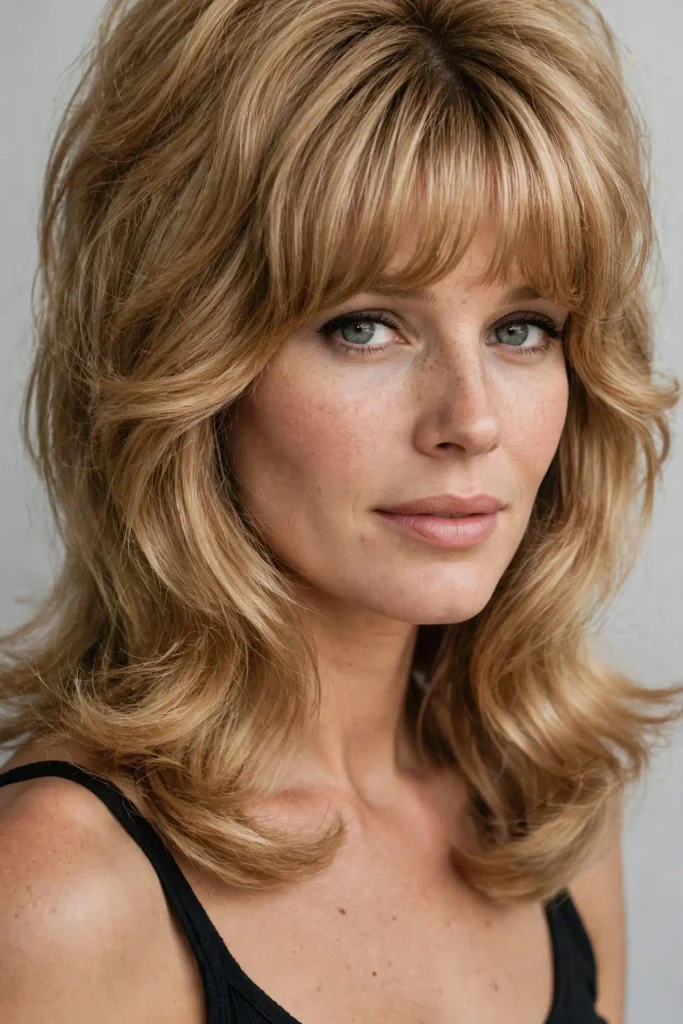
Species No. 9: The Feathered Fringe (Frons plumosa)
Habitat: Layered and flicked, wings at the temples. Temperament: Nostalgic but modern — the seventies revivalist. Field notes: Plumosa is curtain fringe’s wilder cousin: more layers, more movement, more flick. It suits thick hair beautifully, giving weight somewhere to go, and it air-dries better than almost any other species. The field guide warning: it needs those layers refreshed every eight weeks or the feathers go flat. Keep the wings clipped and it soars.

Species No. 10: The Textured Crop Fringe (Frons urbana)
Habitat: Choppy, piece-y, paired with short crops and pixies. Temperament: Cool, urban, deliberately undone. Field notes: Urbana is the fringe for women who want edge without effort — the choppiness means bedhead looks intentional. It is the lowest-maintenance species in this guide: wash, tousle, leave. My client Dee, a bike messenger, has worn it for years through wind, helmets, and rain. “It looks better the less I do,” she says. In the wild, urbana is often spotted with leather jackets and confidence.

Species No. 11: The Long Grown-Out Fringe (Frons patientia)
Habitat: Past the eyebrows, brushing the lashes, in transition. Temperament: Patient, in-between, secretly beautiful. Field notes: Every fringe becomes patientia eventually — this is the grow-out phase, and the guide insists it deserves respect, not hatred. Worn swept to the side or pinned back, it is effortlessly chic. The mistake is fighting it: work with the length, not against it. Patientia teaches the great fringe truth — that every species is temporary, and the in-between is a look, not a failure.

Species No. 12: The Baby Bangs on Long Hair (Frons contrastia)
Habitat: Short fringe against very long lengths — maximum contrast. Temperament: Editorial, striking, high-fashion. Field notes: Contrastia works by opposition: the shortness of the fringe makes the length look longer, the bluntness makes the waves look softer. It is a stylist’s favorite because the contrast does all the visual work. Best on thick, healthy long hair — the fringe needs to hold its line against all that length. Spotted in the wild at fashion weeks and art galleries, rarely in accounting firms. Know your habitat.

Species No. 13: The Shaggy Fringe (Frons sylvestris)
Habitat: Embedded in shag cuts, wild and layered. Temperament: Feral, joyful, wash-and-go. Field notes: Sylvestris cannot be separated from its ecosystem — it only exists within a shag, where the layers feed it texture. It is the best species for thick, wavy hair, turning bulk into movement. Maintenance is minimal; the wildness is the point. My client Robin’s shaggy fringe has survived three years, two dye jobs, and one impulsive kitchen trim. “It’s unkillable,” she says proudly. In the field guide, that is the highest praise.

Species No. 14: The Pinned Faux Fringe (Frons illusoria)
Habitat: Not a real fringe at all — hair pinned and tucked to fake one. Temperament: The trickster, here today, gone tomorrow. Field notes: Illusoria is the guide’s recommended first expedition: gather the front section, twist, pin it under to suggest a fringe, and live with it for a weekend. Photograph it. Show it to friends. If you love it, get the real thing; if not, unpin and forget. Every species in this guide should be test-driven as illusoria first. The faux fringe has saved more women from regret than any other technique in hairstyling.

Species No. 15: The Statement Color Fringe (Frons chromatica)
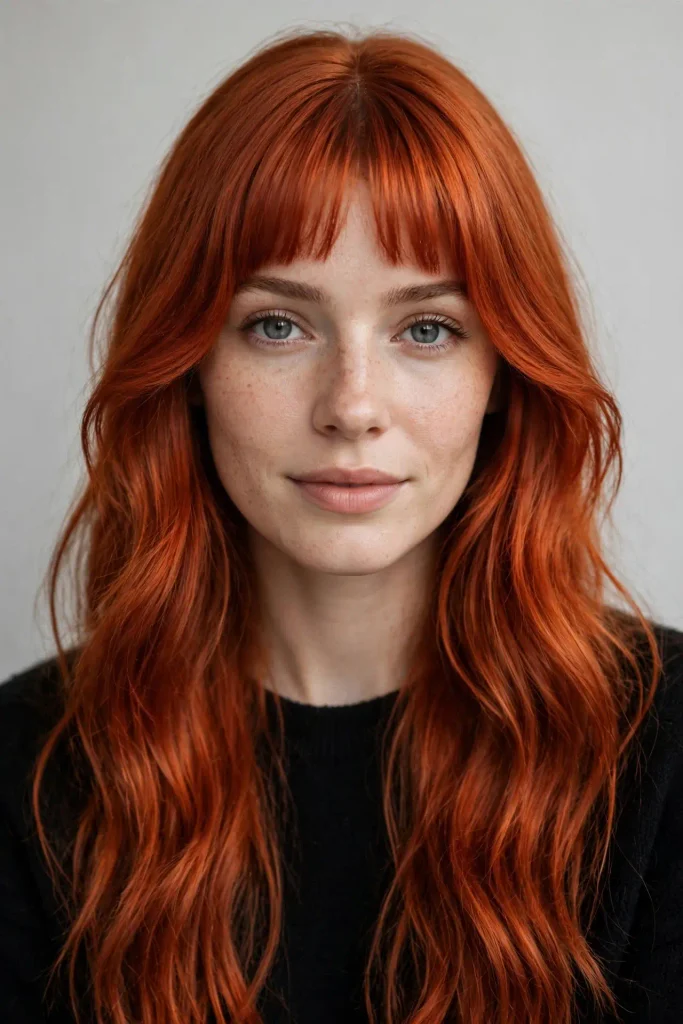
Habitat: Any species above, rendered in vivid color. Temperament: The show-off — impossible to ignore. Field notes: Chromatica is not a separate species but a plumage variation: take any fringe and dye it copper, platinum, cherry, or blue-black. The color turns even a simple fringe into a focal point. The field guide notes that color plus fringe is a double commitment — roots and trims on competing schedules — but the visual payoff is unmatched. My client June’s copper curtain fringe stops traffic. Literally. A driver once slowed down to stare. Wear with caution and excellent sunglasses.
A Note on Conservation
Every fringe in this guide is endangered by the same threat: neglect. Fringes need trims, styling, and attention — they are the neediest three inches of hair you will ever own, and the most rewarding. Choose your species honestly: match it to your hair texture, your maintenance tolerance, and your courage. Test-drive as illusoria first. And remember the field guide’s golden rule — there is no bad fringe, only a fringe in the wrong habitat. Find yours, and thrive.
Field Guide Appendix: The Extinct Species
Not every fringe survives. The Over-Straightened Fringe (Frons rigidus): once common in the 2000s, ironed flat as paper, extinct because it fought every hair texture and lost. The Side Fringe of 2009 (Frons emoensis): swept across the entire face, obscuring one eye — died out when its wearers grew up and needed peripheral vision. The Blunt Baby Bang on Fine Hair (Frons wispa-falsa): attempted blunt, achieved stringy; could not survive its own contradictions. The guide records them with respect. Every extinct species taught us something. Rigidus taught us to work with texture. Emoensis taught us moderation. And wispa-falsa taught us the most important lesson of all: know your hair’s limits before you test them.
The Expedition Checklist: Before You Get Bangs
Every expedition needs preparation. One: test-drive as illusoria — the pinned faux fringe — for a full weekend. Two: photograph it in daylight, not bathroom lighting. Three: check your calendar — do not get bangs the week before a wedding, a photoshoot, or anything documented. Four: find a stylist who cuts your hair type dry when it matters. Five: buy the tools before the cut: a small round brush, a mini straightener or curling iron, dry shampoo, and texturizing spray. Six: budget for trims every three to six weeks. Seven: accept the grow-out now, before you begin — every fringe becomes patientia eventually, and planning for it removes the panic. Checklist complete? Then go. The wild awaits.
The Hybrid Species: When Fringes Crossbreed
In the wild, species interbreed. Curtain meets chromatica: curtain fringe in copper — the most requested combination in my chair this year. Blunt meets wispy: a soft-blunt fringe, full but feathered at the ends, for those who want impact without severity. Micro meets curly: tiny coiled fringe on natural texture — audax plus spiralis, maximum personality. Bottleneck meets bardot: thick and parted with bottleneck shaping — iconica with training wheels. The field guide encourages crossbreeding: bring two species names to your stylist and ask for the hybrid. Some of the most beautiful fringes in the wild are mutts.
The Sighting Log: Your Turn
Every naturalist keeps a log. Start yours: date your first fringe, note the species, record the reactions. “Day one: curtain fringe. Stranger compliment at coffee shop. Day fourteen: growing on me, literally. Day thirty: why did I wait so long?” The log turns a haircut into an expedition and the grow-out into a story. Years from now you will read it and remember exactly who you were when you were brave enough to change your forehead. Log the sighting. The wild remembers.