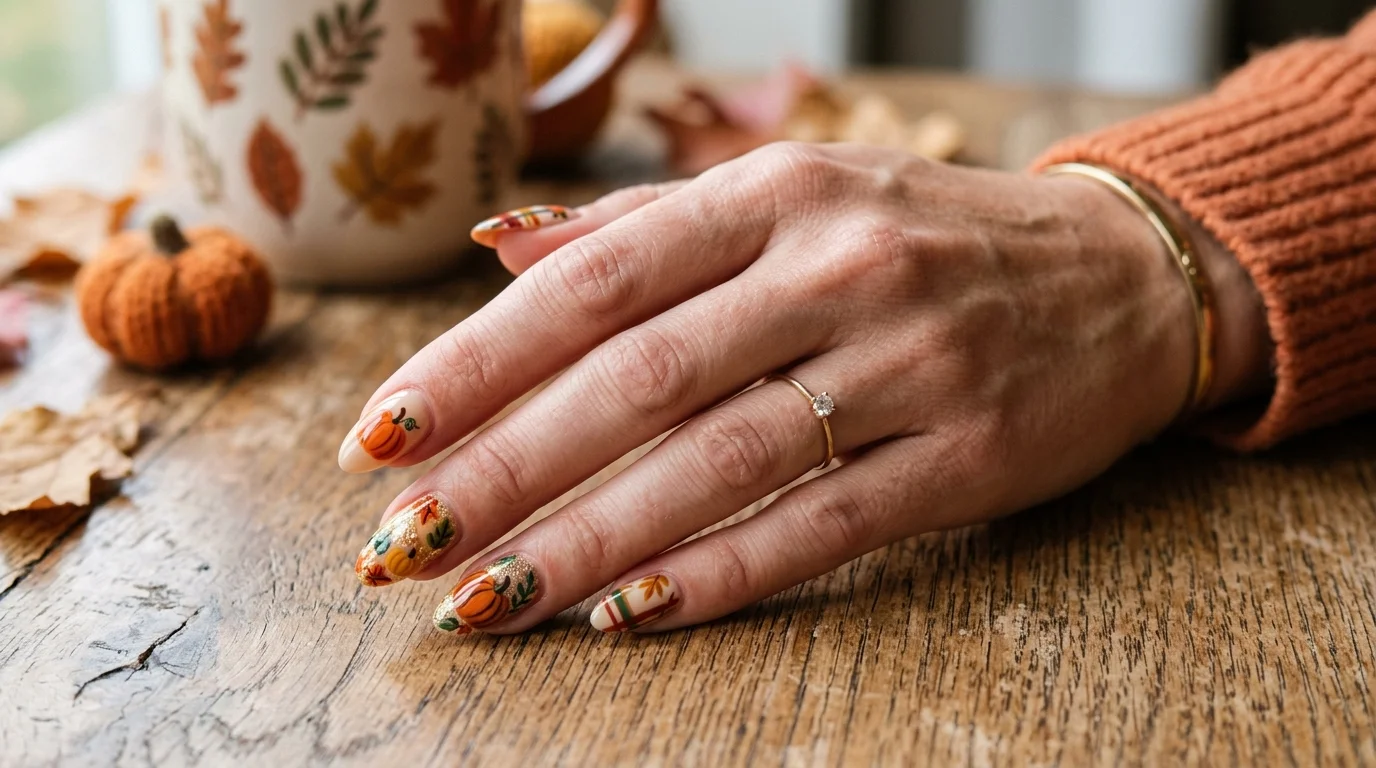
14 Fall Pumpkin Nails, Harvested Like Varieties at a Farm Stand
Every October I walk past a farm stand with a wooden crate labeled Cinderella pumpkins, another labeled Fairytale, another labeled Jarrahdale, and I realize most people, myself included for years, think a pumpkin is just orange and round. It isn’t. There are hundreds of actual cultivars, ranging from the pale blue-gray Jarrahdale to the deep green-black warty goblin, each with its own shape, ridging, and color depth.
That variety is exactly what makes pumpkin nail art more interesting than most people give it credit for. So instead of another list of orange polish with a face drawn on, I organized this post as an actual farm stand. Fourteen crates, each one a real pumpkin variety translated into a nail design, with a harvest week for when it suits the season best, a weight class for how durable the design is day to day, and a farmhand tip on technique.
The Crates
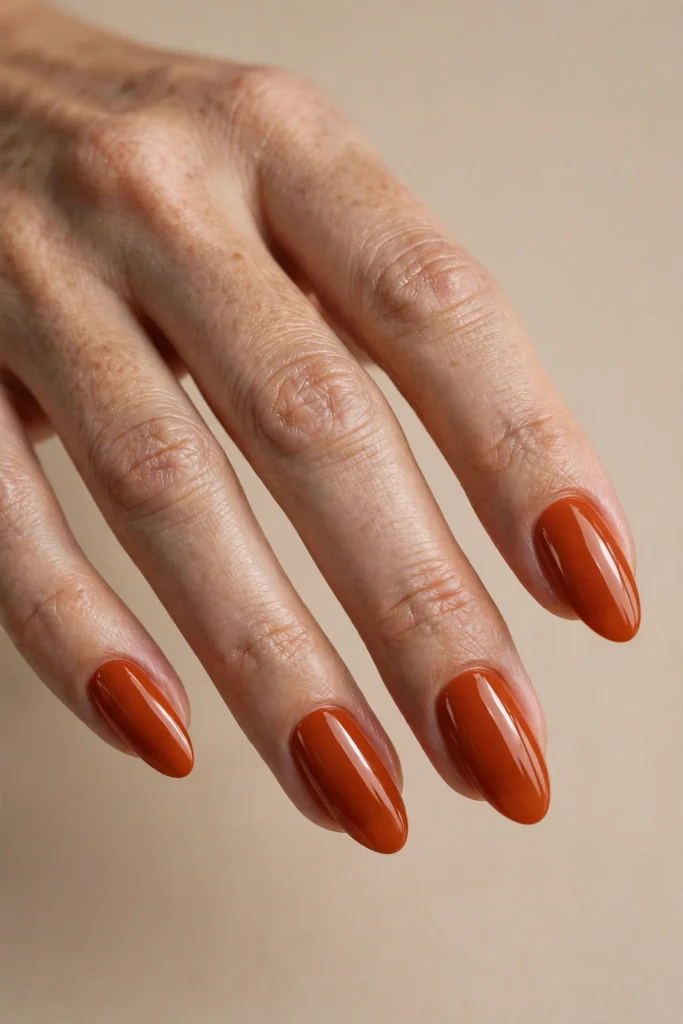
Crate 1, Sugar Pie.
The small, classic baking pumpkin, deep orange and smooth-skinned.
Design: a solid, glossy pumpkin-orange creme polish, no pattern at all, just the color itself.
Harvest week: early September, the first pumpkin of the season.
Weight class: heavy, meaning this holds up for two to three weeks with minimal chipping since a flat creme has nothing to smudge or wear unevenly.
Farmhand tip: this is the crate to start from if you’re new to pumpkin nails at all, since it requires zero technique beyond a clean, even application.
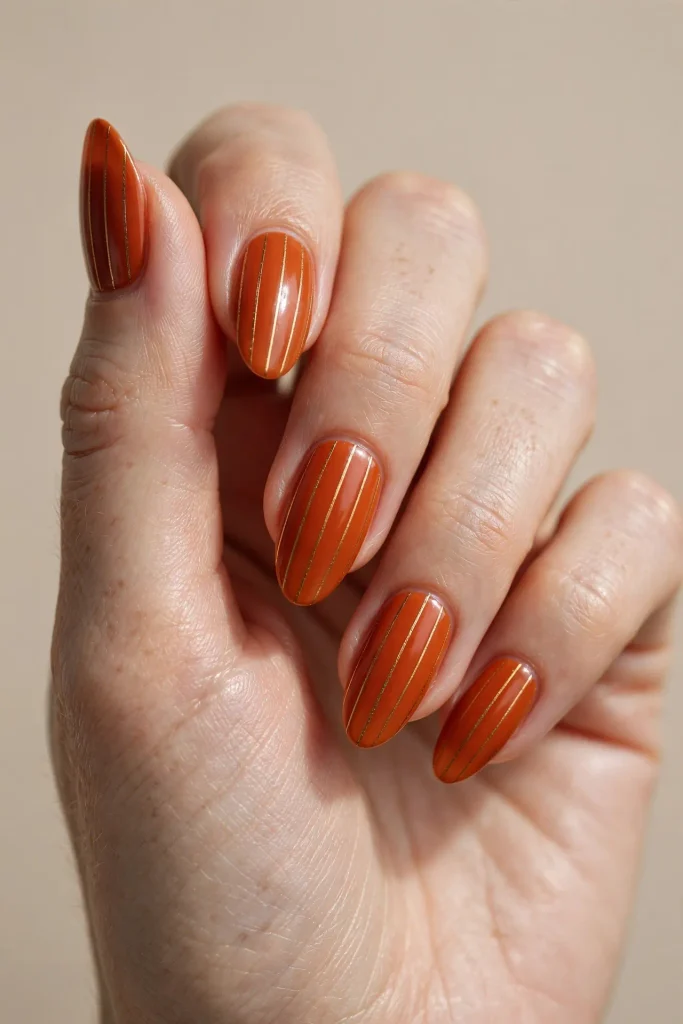
Crate 2, Cinderella.
The wide, deeply ribbed, flattened variety famous for its dramatic segmented shape.
Design: deep orange base with thin, vertical gold lines running from cuticle to tip on each nail, mimicking the pumpkin’s characteristic ribbing.
Harvest week: mid-September.
Weight class: medium, since the fine gold lines can show wear at the tips before the base color does.
Farmhand tip: use a striping brush or thin tape to keep the vertical lines straight, since wobbly ribbing looks more like a mistake than a deliberate segment line.
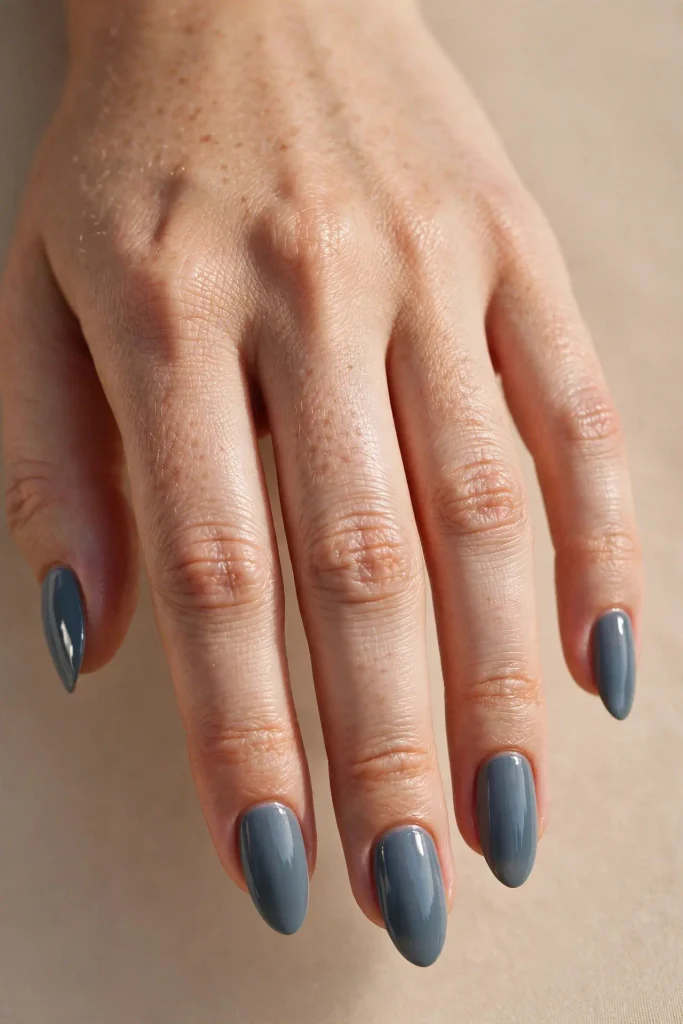
Crate 3, Jarrahdale.
The pale, blue-gray Australian variety, prized for looking almost nothing like a typical pumpkin at all.
Design: a muted slate-blue-gray base, no orange anywhere in this crate.
Harvest week: late September, right as the palette starts shifting cooler.
Weight class: heavy, since the muted tone hides regrowth and minor wear exceptionally well.
Farmhand tip: pair this specifically with silver jewelry rather than gold, since the cool undertone clashes slightly with warm metals.
Crate 4, Fairytale.
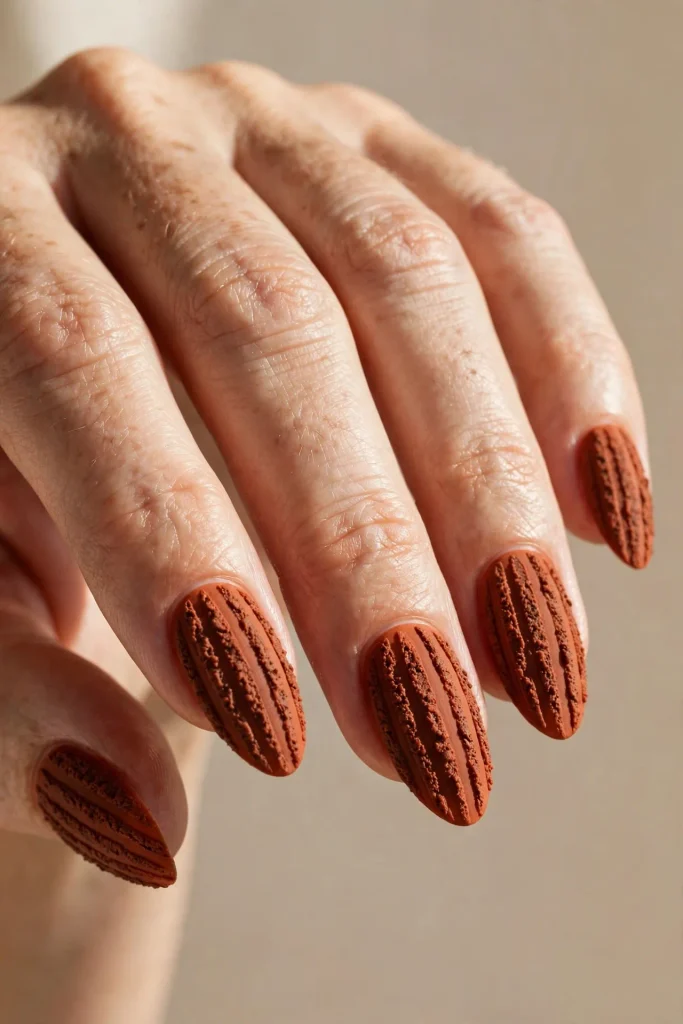
A deeply ribbed, flattened French heirloom variety in a warm terracotta-rust color, considered one of the most decorative pumpkins grown.
Design: a rust-terracotta base with a hand-painted or sponge-dabbed texture in slightly darker rust, suggesting the variety’s characteristic rough, warty-ribbed surface.
Harvest week: early October.
Weight class: medium, since the textured finish requires a careful top coat to avoid catching and chipping at raised texture points.
Farmhand tip: apply the texture layer while the base is still slightly tacky rather than fully dry, so the two layers blend rather than sitting as a harsh, separate layer on top.
Crate 5, Warty Goblin.
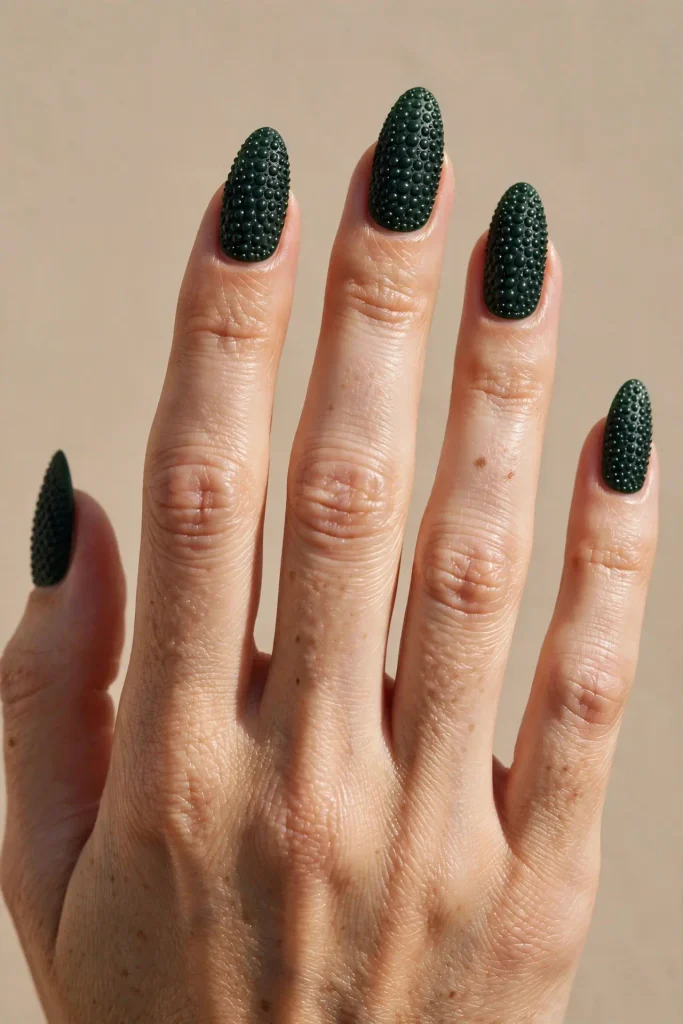
A genuinely strange, deep green-black variety covered in bumpy, wart-like protrusions, more Halloween decoration than baking pumpkin.
Design: a deep, near-black forest green base with tiny raised dots applied using a dotting tool, creating a textured, bumpy effect across the nail.
Harvest week: the week of Halloween specifically.
Weight class: light, meaning this is a shorter-wear design since the raised dots are the first thing to catch and chip.
Farmhand tip: reserve this crate for a single accent nail rather than a full set, since the texture is dramatic enough that one nail carries the whole effect.
Crate 6, White Ghost Pumpkin.
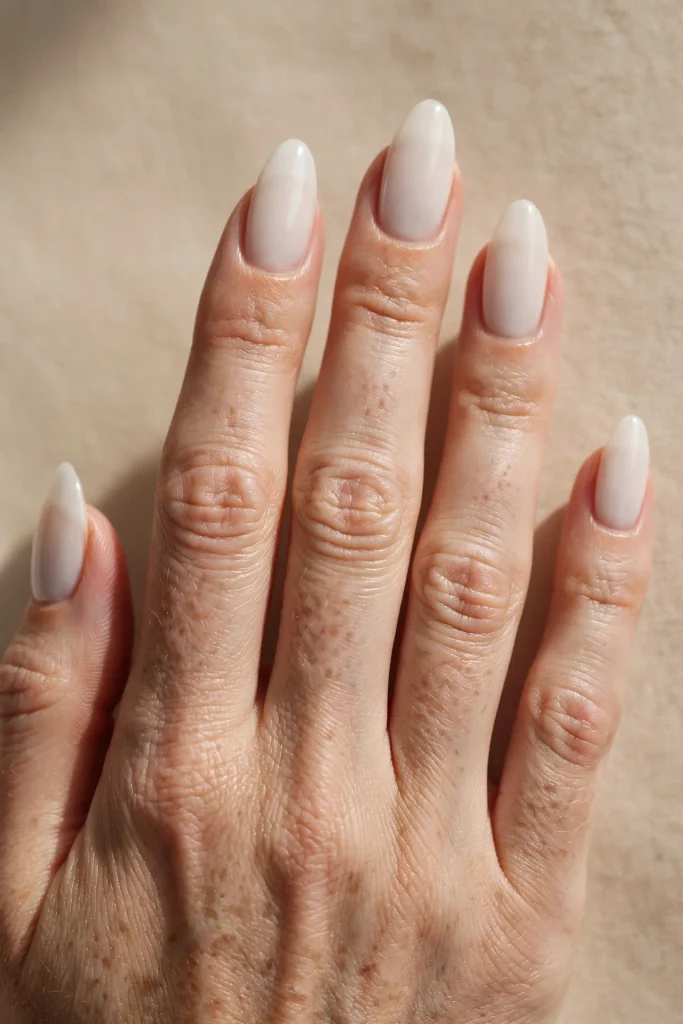
A smooth, pale ivory-white variety that looks almost sculptural against the orange pumpkins around it.
Design: a milky, sheer ivory-white creme base with absolutely no additional pattern, letting the color itself do all the work.
Harvest week: mid-October, as a palette-cleansing break between the deeper orange crates.
Weight class: light to medium, since pale colors show wear and staining faster than deep pigments.
Farmhand tip: always use a ridge-filling base coat under this specific crate, since white and off-white polishes reveal natural nail texture more clearly than any other color on this whole stand.
Crate 7, Long Island Cheese.
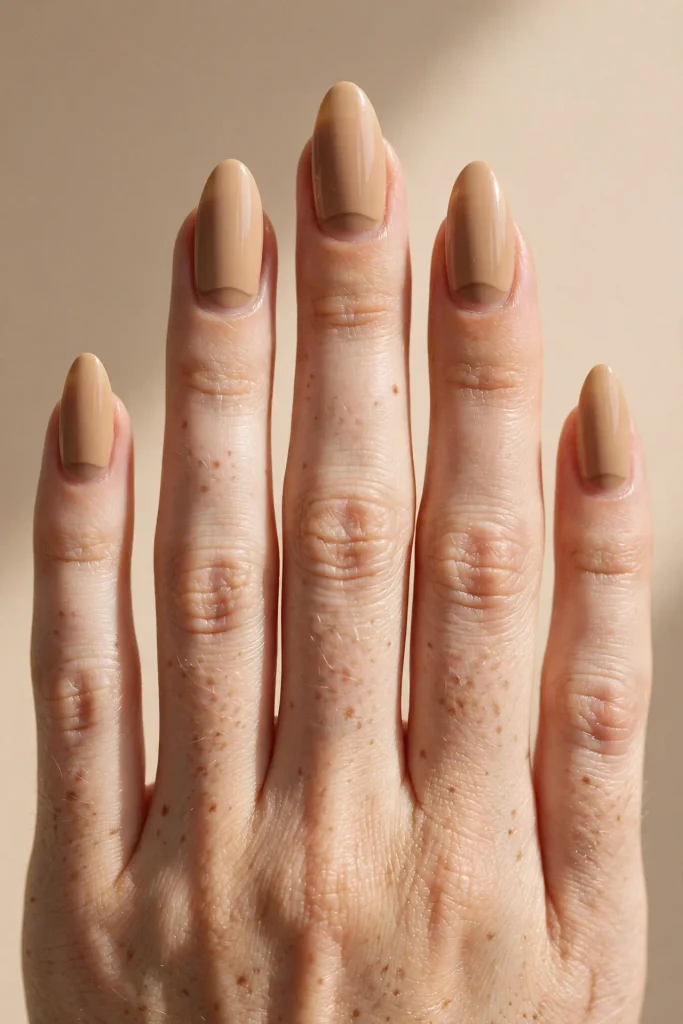
A flattened, pale tan-buff variety named for its resemblance to a wheel of cheese, an old heirloom type increasingly rare at actual markets.
Design: a warm, buff-tan base with a soft, barely-there darker tan crescent at the cuticle, like a subtle half-moon.
Harvest week: early October.
Weight class: medium.
Farmhand tip: this crate pairs beautifully with cream sweaters specifically, since the buff tone reads as a warmer, more sophisticated neutral than a plain nude.
Crate 8, Rouge Vif d’Etampes.
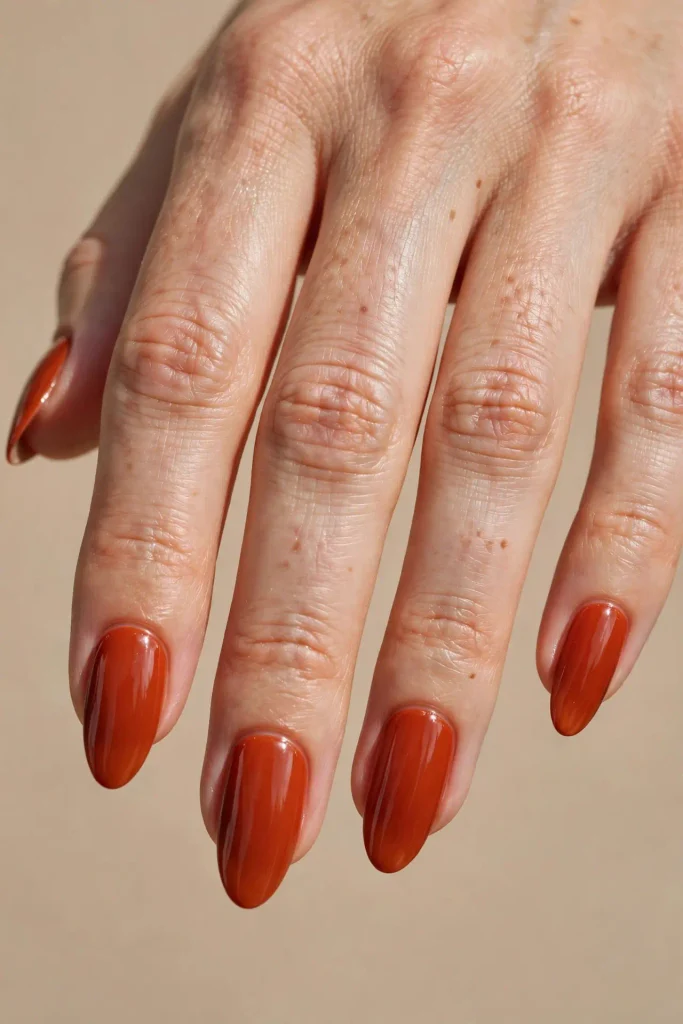
A vivid, deep red-orange French heirloom, one of the most photographed pumpkin varieties at any market for its dramatic flattened shape and saturated color.
Design: a rich, red-leaning burnt orange base, glossy, no additional pattern needed since the color alone carries the drama.
Harvest week: mid-October, peak season.
Weight class: heavy.
Farmhand tip: this is the crate for anyone who wants maximum fall color payoff with minimum technique required.
Crate 9, One Too Many.
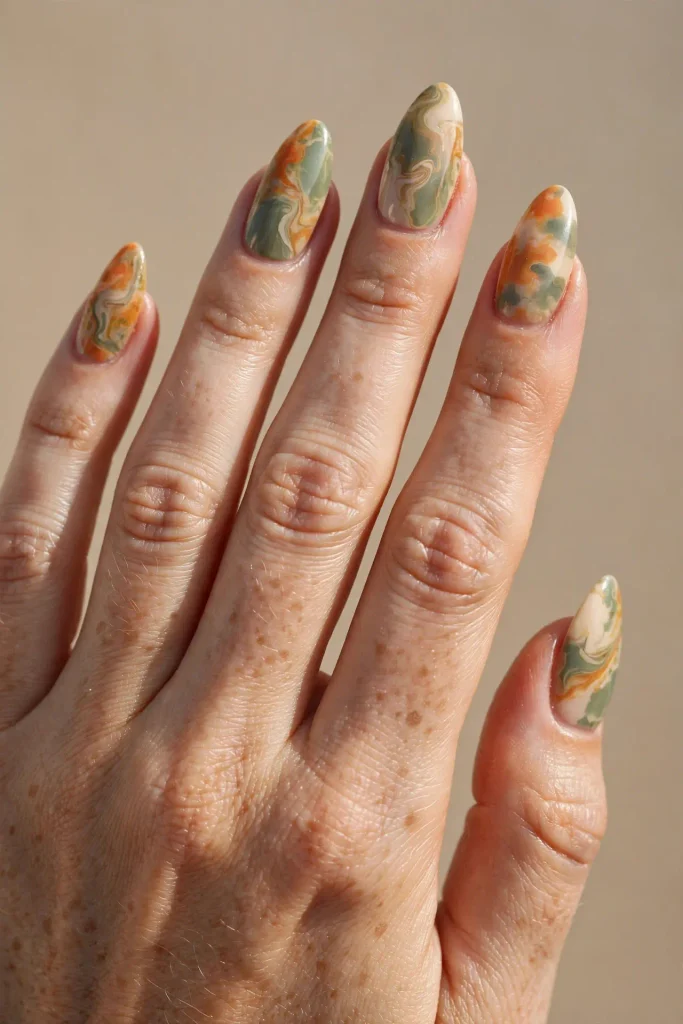
A specialty variety with a mottled, streaked skin combining orange, green, and cream in irregular patches, unpredictable in a way most pumpkins aren’t bred to be.
Design: a marbled combination of orange, sage green, and cream, blended with a toothpick while all three colors are still wet, creating an irregular, organic pattern with no repetition.
Harvest week: late September into early October.
Weight class: medium, since marbled designs hide small chips within their own irregularity better than a solid color would.
Farmhand tip: work on one nail at a time for this crate specifically, since the wet-blending technique requires all three colors to still be workable simultaneously.
Crate 10, Porcelain Doll.
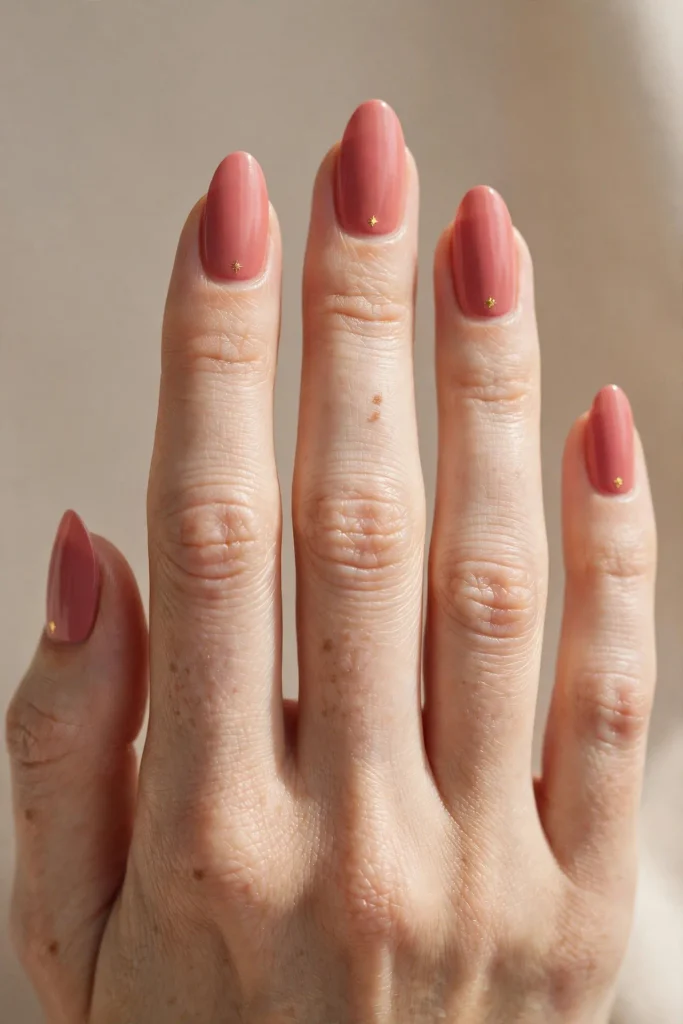
A soft, dusty pink-orange variety, unusually delicate-looking compared to most pumpkins on the stand.
Design: a dusty, muted coral-pink base with a single tiny gold star or fleck near the cuticle.
Harvest week: early September, the softest entry on the whole stand for the earliest, warmest part of fall.
Weight class: medium.
Farmhand tip: this crate is the one to reach for if you want pumpkin season without full commitment to traditional orange.
Crate 11, Black Kat.
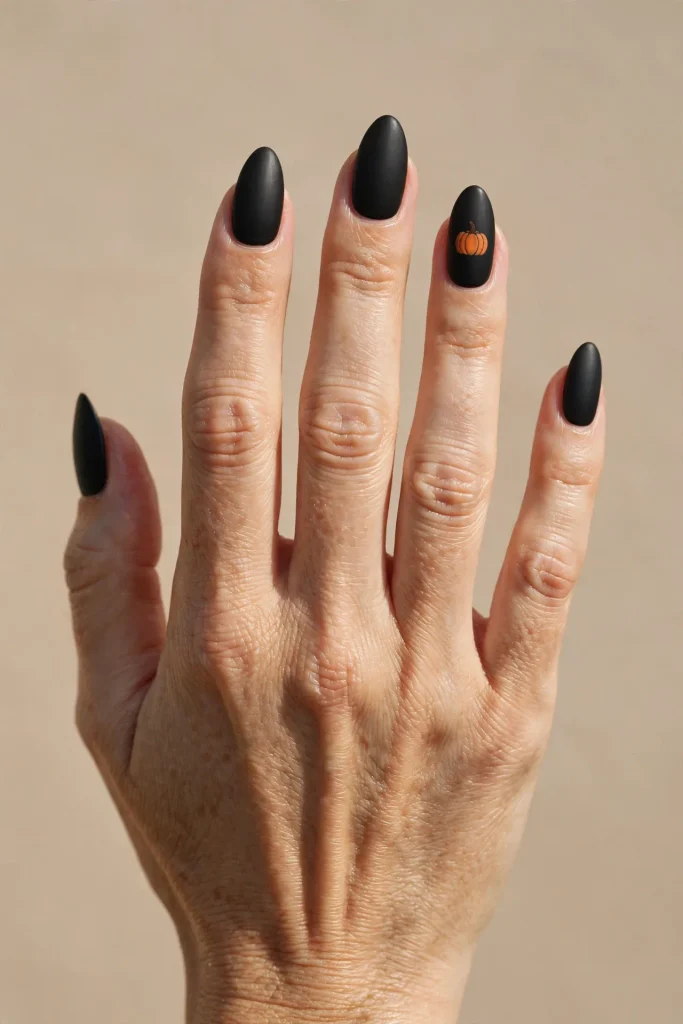
A near-black, deep charcoal variety, dramatic and unusual, grown more for visual impact than practical use.
Design: a matte black base with a single, small hand-painted orange pumpkin silhouette on one accent nail.
Harvest week: the final week of October.
Weight class: light, since matte finishes generally show fingerprint smudging faster than glossy ones and need more frequent top coat refreshing.
Farmhand tip: apply the small orange silhouette with a very fine brush, and keep it genuinely small, since a large painted pumpkin on a small nail surface tends to look clumsy rather than charming.
Crate 12, Musquee de Provence.
A deeply ribbed, flattened, tan-to-deep-orange French variety that changes color noticeably as it ripens on the vine, starting green and slowly deepening to a warm terracotta over weeks.
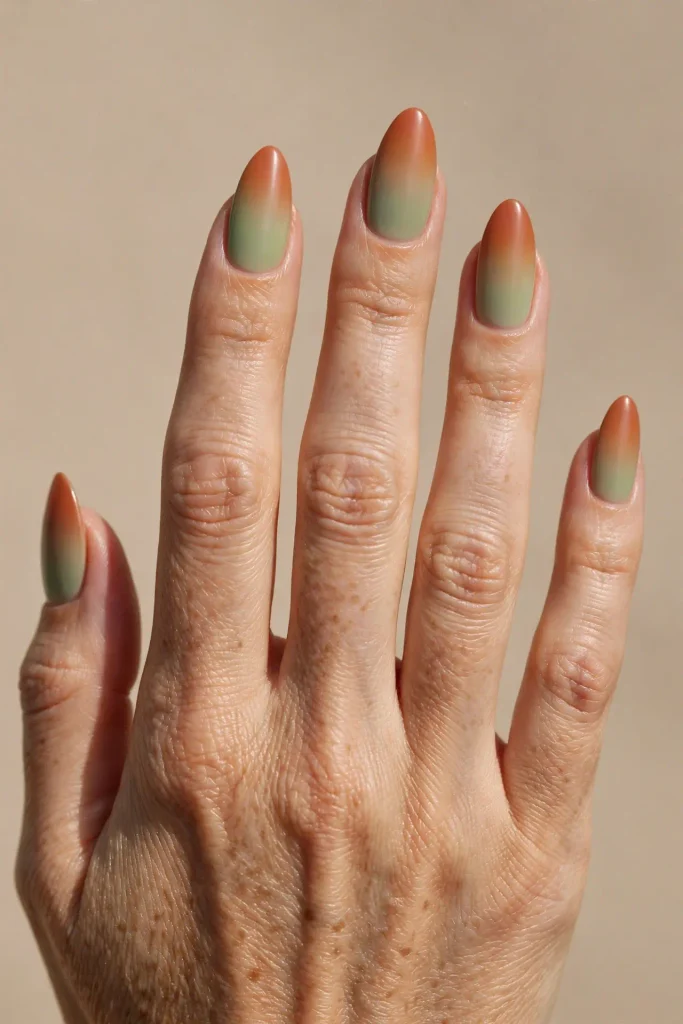
Design: an ombre gradient from soft green at the cuticle fading into warm terracotta at the tip, mimicking the variety’s actual ripening process.
Harvest week: throughout the entire month, since the design itself represents a gradual transition rather than one fixed color.
Weight class: medium, since gradients hide the natural growth line at the cuticle exceptionally well, making this a genuinely practical choice despite the more involved technique.
Farmhand tip: use a makeup sponge to blend the two colors, dabbing rather than dragging, for the softest possible transition between the green and terracotta.
Crate 13, Baby Boo.
A miniature, palm-sized white variety, popular specifically for small-scale decorating rather than baking or carving.
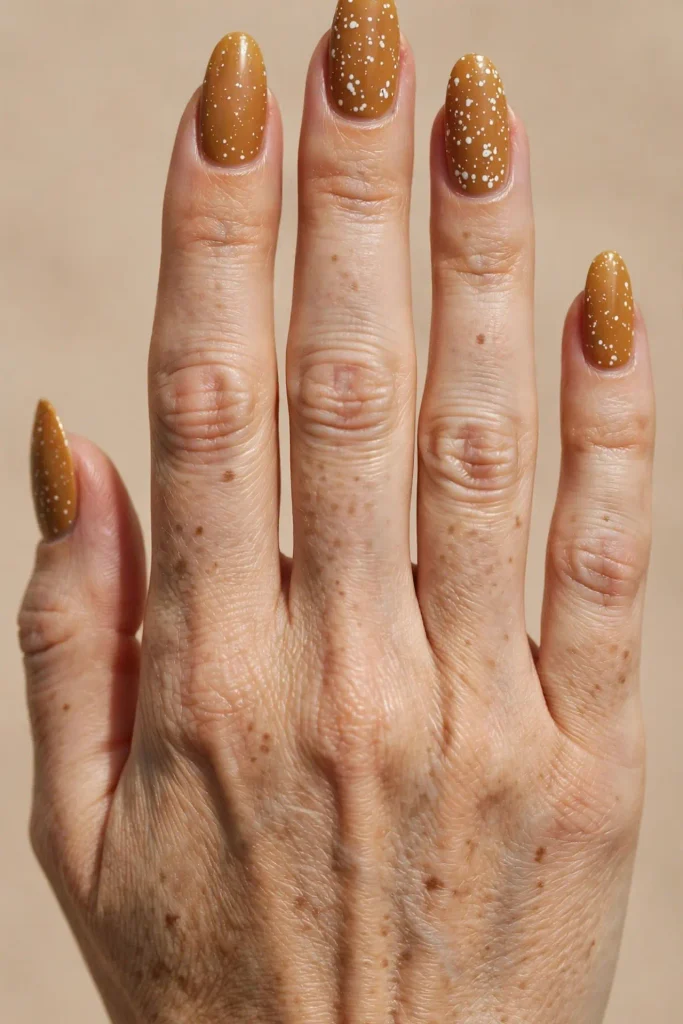
Design: tiny, scattered white dots across a warm caramel base, like a handful of miniature pumpkins tossed across each nail.
Harvest week: mid-October.
Weight class: medium.
Farmhand tip: use a dotting tool for genuinely consistent small dots, and vary their size slightly rather than making every dot identical, since real miniature pumpkins in a scattered pile are never perfectly uniform.
Crate 14, Howden.
The classic, large, deeply ribbed jack-o’-lantern pumpkin, the one variety almost everyone pictures first when they hear the word pumpkin at all.
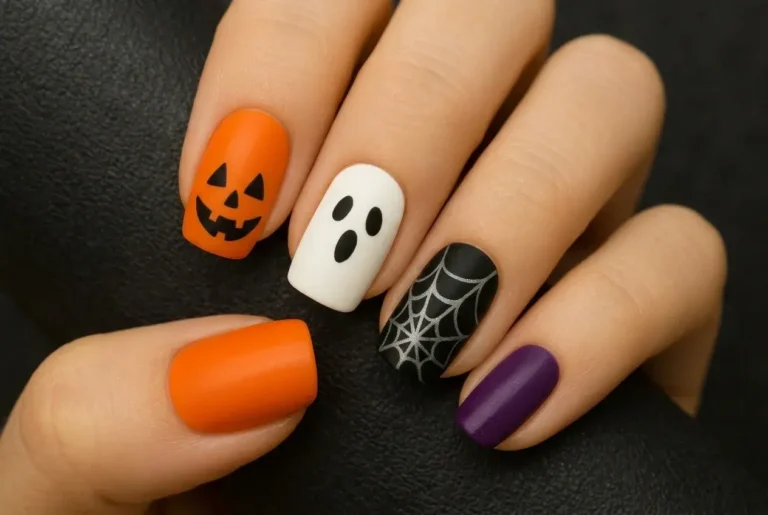
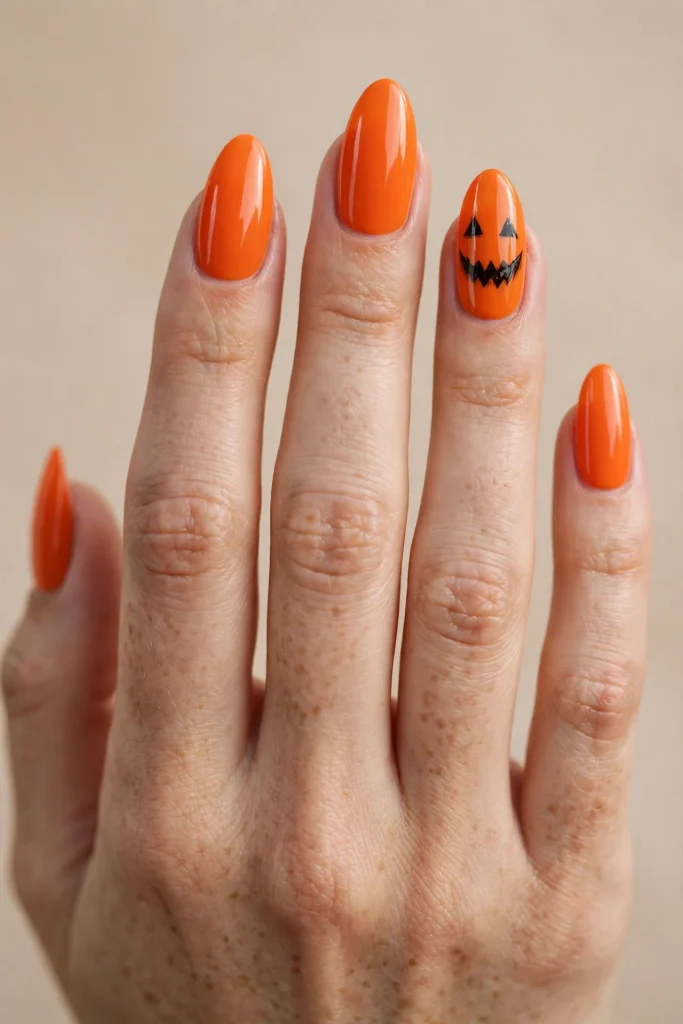
Design: a bold orange base with a single hand-painted jack-o’-lantern face, two triangle eyes and a jagged smile, on one accent nail, the rest left plain.
Harvest week: the final days before Halloween, the traditional carving pumpkin arriving right on schedule.
Weight class: light, since fine painted details are always the first thing to show wear.
Farmhand tip: paint the face with a very fine brush after the base color has fully cured, and keep the design to one nail only, since ten carved faces reads as costume rather than accent.
Something New: The Carving-to-Nail-Art Technique Translation
Pumpkin carving and pumpkin nail art actually share more technique overlap than people expect, and thinking about it that way makes several of the crates above much more intuitive to execute.
Carving a jack-o’-lantern face, as in Crate 14, works best with simple, bold shapes rather than intricate detail, since a knife through pumpkin flesh has the same forgiving-of-simplicity, unforgiving-of-fine-detail quality that a small brush on a curved nail surface does. Scoring the pumpkin’s surface lightly before committing to a full cut, a technique real carvers use to test a design before going deeper, translates directly to sketching a design lightly in a pale polish before committing to the final dark line on a nail. The texture techniques in Crate 4 and Crate 5, the warty and ribbed effects, mirror the way real carvers sometimes leave the pumpkin’s natural surface partially intact rather than removing all of it, letting some raw texture remain as part of the final piece rather than smoothing everything away.
The Ripening Color Guide
Real pumpkins don’t start out orange. Most varieties begin green on the vine and slowly ripen through yellow and into their final color over several weeks, which is directly why Crate 12’s gradient design exists and why it’s worth understanding for building your own custom blends.
| Ripening Stage | Color | Best Nail Application |
|---|---|---|
| Early, unripe | Deep green | Cuticle end of a gradient, or a full base for Jarrahdale-style designs |
| Turning | Yellow-green | Transition zone in blended or ombre designs |
| Midway | Golden-orange | Classic Sugar Pie or Howden-style full coverage |
| Fully ripe | Deep orange-red | Rouge Vif-style saturated designs |
| Overripe | Brown-orange | Fairytale or Musquee-style muted, earthy tones |
Understanding this progression is useful beyond Crate 12 specifically, since it explains why a gradient moving from green to deep orange reads as more naturalistic than one moving between two unrelated colors, it’s genuinely following the same color path a real pumpkin takes as the season progresses.
The Mixing Recipe Box
Several crates above call for specific custom tones that might not exist premixed in your own polish collection, so here’s how to build them from what you likely already own.
To recreate Crate 8’s Rouge Vif red-orange from a standard orange creme, mix in a small drop of true red, one drop at a time, until the shift toward red feels deliberate rather than accidental. To recreate Crate 3’s Jarrahdale blue-gray, mix a small amount of navy or slate blue into a light gray base, adjusting until the tone reads as cool rather than simply gray. To recreate Crate 10’s Porcelain Doll dusty coral, mix a small drop of true coral or salmon into a muted mauve-pink base. To recreate Crate 7’s Long Island Cheese buff-tan, mix a small drop of yellow into a warm beige base until it shifts from plain nude toward something with genuine golden warmth.
Test every custom mix on a spare nail tip or a piece of paper first, since mixed polish dries faster than you’d expect and there’s no undoing an overcorrection once it’s on the nail.
The Farm-to-Table Outfit Pairing Chart
| Crate | Best Outfit Pairing |
|---|---|
| Sugar Pie, Rouge Vif, Howden | Cream sweaters, denim, classic fall basics |
| Jarrahdale, Black Kat | Monochrome outfits, silver jewelry |
| Fairytale, Musquee de Provence | Rust and olive tones, earthy layered knits |
| White Ghost, Porcelain Doll | Blush and soft neutral palettes |
| Long Island Cheese | Camel and buff tones, minimalist outfits |
| One Too Many, Baby Boo | Playful prints, casual weekend wear |
Storage and Care Between Harvests
Real pumpkins need specific storage conditions to last through the season without rotting, and there’s a genuine parallel worth applying to keeping your polish collection in good shape. Store bottles away from direct heat and sunlight, the same way a real pumpkin left in full sun softens and spoils faster than one kept in a cool, shaded spot. Roll bottles gently between your palms before use rather than shaking them, since vigorous shaking introduces air bubbles the same way rough handling bruises an actual pumpkin’s skin. For the textured crates specifically, Warty Goblin and Fairytale, apply an extra-thin final top coat layer rather than a thick one, since a thick coat pools unevenly around raised texture the same way excess moisture pools in a pumpkin’s natural ridges and encourages early spoilage.
Choosing Your Crate by Week of the Season
If it’s the very start of September, reach for Crate 10 or Crate 1, the softest, earliest entries on the whole stand. If you’re deep in peak October, Crate 8 or Crate 4 carry the most saturated, classic fall color payoff. If Halloween itself is approaching, Crate 14, Crate 11, or Crate 5 bring the darker, more dramatic designs the earlier weeks of the season aren’t quite ready for yet.
Quick Answers
What’s the easiest crate for a genuine beginner?
Crate 1, Sugar Pie, since it’s a single flat color with no pattern, texture, or gradient technique required at all.
Which design lasts the longest without chipping?
The heavy weight class crates, Sugar Pie, Jarrahdale, and Rouge Vif specifically, since solid, deeply pigmented colors show minimal wear compared to textured or fine-detail designs.
How do I make a gradient look natural rather than streaky?
Dab the colors on with a makeup sponge rather than dragging a brush, following the same technique described for Crate 12’s ripening ombre.
What if I want the pumpkin theme without wearing orange at all?
Crate 3, Jarrahdale, or Crate 11, Black Kat, both skip orange entirely while staying firmly within the pumpkin variety theme.
One Last Thing
Pumpkin nails don’t have to mean one flat orange coat with a triangle-eyed face drawn on top. Real pumpkins come in an entire range most people never notice at the actual farm stand, blue-gray, near-black, dusty pink, deeply ribbed, smooth-skinned, and every one of those real varieties translates into a genuinely different manicure once you start looking at them that way.
Pick a crate that matches your week of the season, start with a heavy weight class option if you want something that lasts, and let the rest of the stand fill in as October moves along.
Which crate are you harvesting from first: the classic Sugar Pie, the dramatic Warty Goblin, or the unexpected Jarrahdale? Save this article for your next manicure appointment, and send it to a friend who thinks pumpkin nails only come in one shade of orange.