14 Summer Almond Nails: Where You Put the Art Matters as Much as the Art
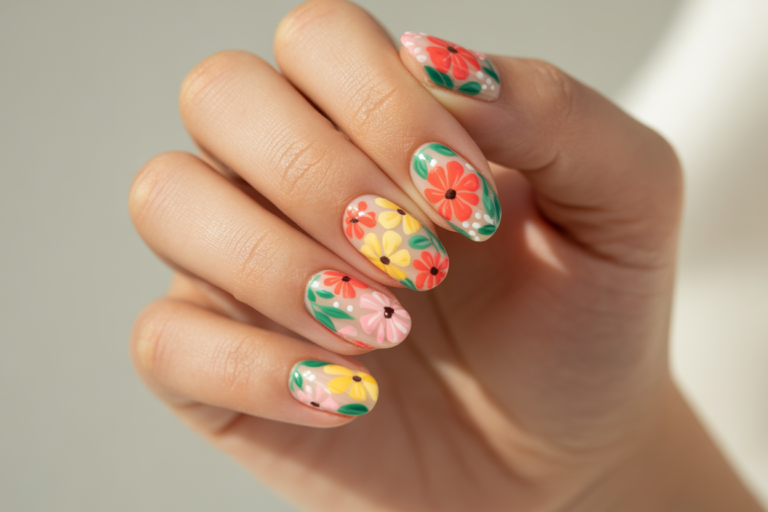
Almond nails are the diplomat of nail shapes — tapered enough to elongate, soft enough to stay elegant, strong enough to survive summer. But here’s what most almond lists miss: on an almond nail, placement is the design. The tapered tip, the wide center, the curved base — each zone has its own personality, and art placed in the right zone looks twice as good.
So these fourteen ideas are organized by where the art lives: tips, center, base, or all over. Because on almond nails, location isn’t just real estate — it’s the whole aesthetic.
Tip-Focused Designs
The almond tip is the narrowest, most delicate part of the nail — art here should be light, precise, and luminous.
1. Molten Chrome Tips

Liquid-metal tips — silver, gold, or rose — over a sheer nude almond base. The chrome should cover just the tip in a soft gradient fade, like the nail was dipped in molten metal. It’s futuristic and glamorous without being heavy.
The fade is what makes this work on almond: a hard chrome line would fight the soft taper, but a melted gradient follows it beautifully. The sheer base keeps the overall effect light.
The almond effect: the narrow tip concentrates the chrome’s reflectivity — maximum shine from minimum surface. Ask for: chrome powder applied to the tip area only, blended downward before sealing.
2. Sunset Gradient Tips
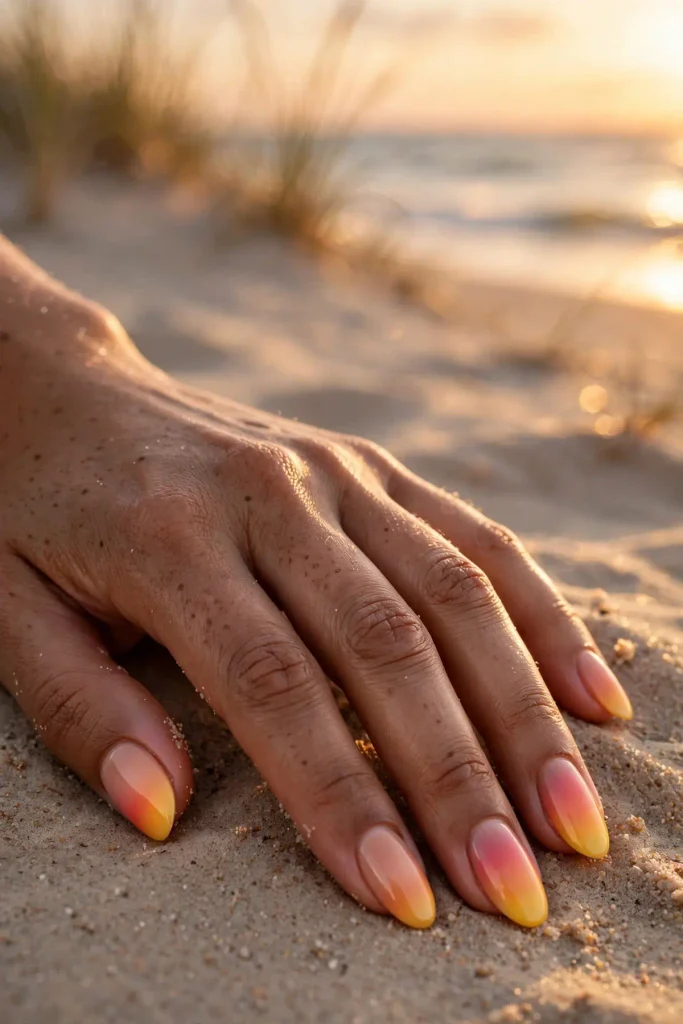
The tip dissolving from sheer nude into sunset shades — peach, coral, gold — like the nail is catching the last light of day. Unlike a French with its hard line, this is all soft transition: color that appears gradually and glows.
This works beautifully on almond because the taper gives the gradient a natural direction — the color deepens as the nail narrows, which feels inevitable rather than decorated. It’s the most romantic tip design on this list.
The almond effect: the narrowing tip intensifies the gradient — color naturally concentrates where the nail gets smaller. Ask for: sponge-blended gradient in two to three warm shades, sealed with high-gloss top coat.
3. Neon Tips
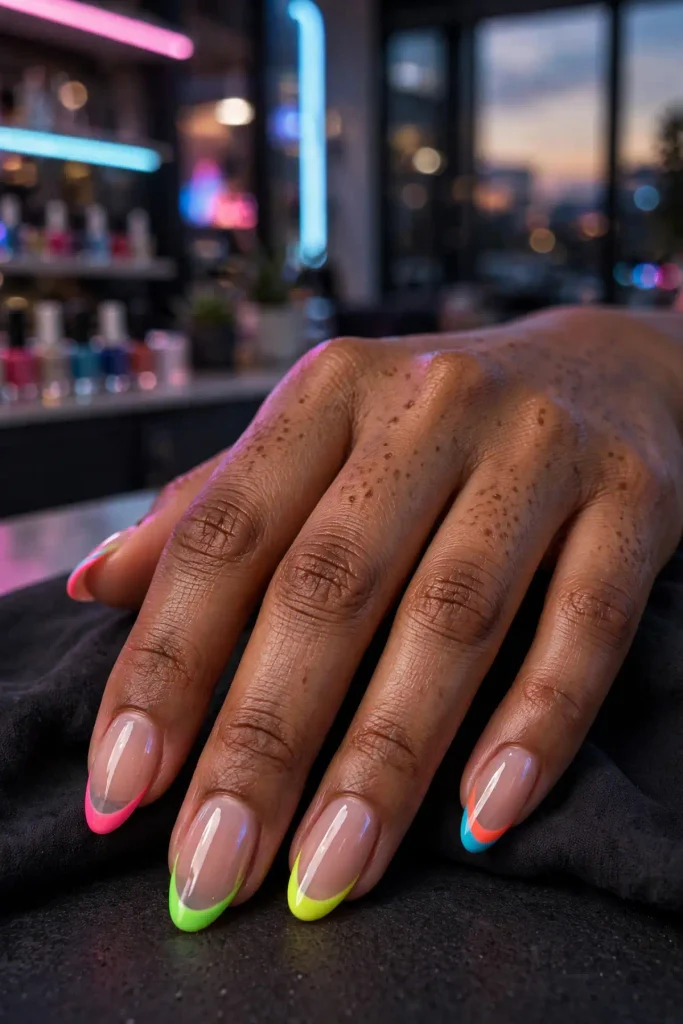
Sheer nude bases with screaming neon tips — lime, hot pink, electric orange. The French structure keeps it chic; the neon keeps it wild. On almond, the neon tip looks like a highlighter stroke — graphic, modern, and fun.
The key is keeping the neon band relatively thin — a thick neon tip overwhelms the delicate almond taper, but a slim band is the perfect tension between classic and crazy. It’s the design for people who want brights without committing all ten nails.
The almond effect: the slim taper makes neon look precise rather than loud — architecture tames electricity. Ask for: neon gel polish on the tips with a thin, even smile line; white underlay beneath neon doubles the brightness.
4. Gold Foil Tips

Sheer almond bases with irregular gold foil pressed onto the tips — like the nails were gilded. The foil should be organic and varied, not uniform: fragments and flakes that catch light unpredictably. It’s luxury with texture.
Foil tips are more interesting than solid metallic tips because the irregularity reads as handmade and artistic. On the almond taper, the foil concentrates naturally at the narrowest point — the design almost places itself.
The almond effect: the taper gathers the foil visually — scattered fragments look curated when the nail narrows beneath them. Ask for: gold leaf pressed onto tacky tips with tweezers, sealed under two coats of top coat.
Center-Stage Art
The widest part of the almond nail — the natural focal point. Art here gets maximum visibility and room to breathe.
5. Butterfly Center

A single small butterfly painted or placed at the center of each nail — wings spread across the almond’s widest point. The butterfly should be delicate: fine lines, soft colors, small scale. It’s whimsical without being childish, and the symmetry of the butterfly mirrors the symmetry of the nail.
Center placement is what makes this work — the butterfly sits exactly where the eye naturally lands on an almond nail. Keep the base sheer or pastel so the butterfly stays the star.
The almond effect: the wide center gives the butterfly wing room — on a narrower shape it would crowd, here it breathes. Ask for: hand-painted butterfly or high-quality decal, sealed flat.
6. Aura Bloom Center

A soft aura — peach, rose, or lavender — bloomed right in the nail’s center, fading into a milky base. It’s like the nail is glowing from within: no edges, no lines, just color radiating outward. The effect is dreamy and dimensional.
The center is the only place an aura truly works — offset auras look like mistakes, but centered ones look like light sources. On almond, the oval aura echoes the oval nail, creating a harmonious, almost meditative design.
The almond effect: the almond’s oval center is the ideal aura canvas — the shapes rhyme, and the glow looks intentional. Ask for: blooming gel or airbrush for the seamless blend; the center color should be soft, never harsh.
7. Pearl Drop Center

A single pearl placed at the exact center of each nail over a sheer or solid base — minimal, luminous, perfect. The pearl becomes a focal point that catches light with every movement. White pearls on nude are classic; black pearls on deep shades are dramatic.
One pearl is the whole design, which means placement must be flawless — dead center, every nail. The simplicity is the luxury: it says you don’t need more, and you’re right.
The almond effect: the centered pearl emphasizes the nail’s symmetry — almond’s balanced taper makes single-point designs look inevitable. Ask for: pearls set in builder gel (never just top coat) for a hold that survives the season.
8. Single Line Motif
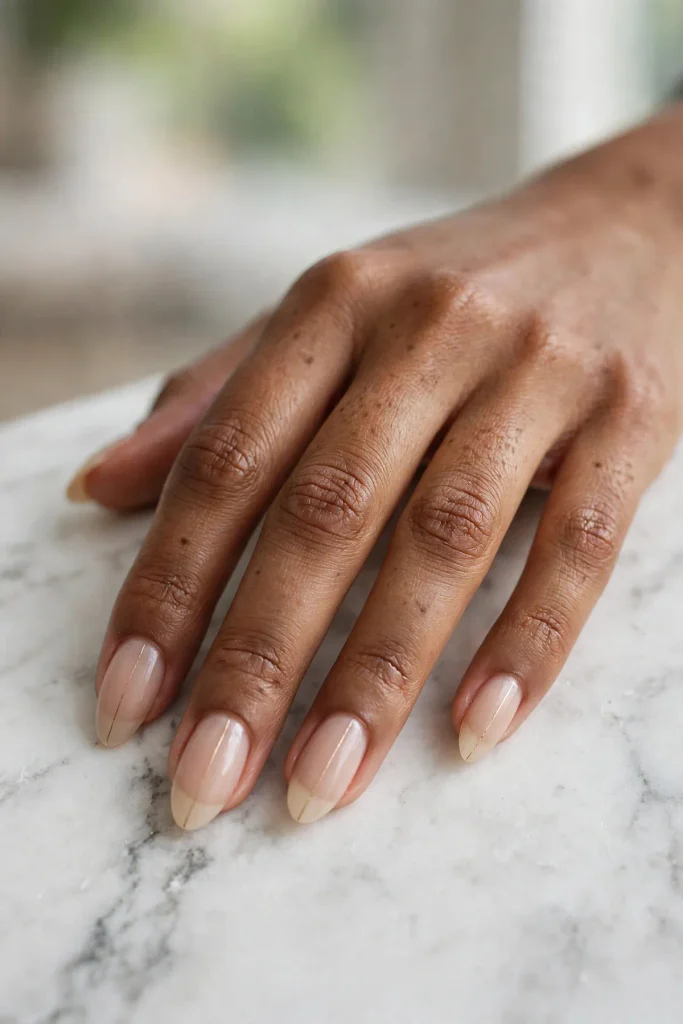
One continuous fine line forming a minimal motif — a wave, a sun, a face profile — drawn across the nail’s center. The line should be confident and unbroken: the beauty is in the economy. Black on nude is graphic; gold on deep green is luxe.
Center placement gives the line room to flow — it has space above and below, which makes the minimalism feel deliberate rather than sparse. This is the thinking person’s nail art: one line, fully committed.
The almond effect: the wide center gives the line its stage — on a narrow tip it would cramp, here it dances. Ask for: a fine liner brush and a steady hand, or a minimalist decal for the precision-challenged.
Base & Cuticle Details
The often-ignored zone near the cuticle — intimate, surprising, and perfect for details that reward a second look.
9. Reverse French Moon

A colored half-moon hugging the cuticle — the French, flipped. Deep coral, teal, or gold moons over sheer nude bases create a graphic, modern look that’s unexpected and chic. The moon should follow the cuticle’s natural curve precisely.
This design is brilliant on almond because it balances the tip-focused nature of most almond art — the visual weight sits at the base, creating equilibrium. It also hides regrowth beautifully, since the color starts where regrowth appears.
The almond effect: the almond’s curved base mirrors the moon shape — the design and the nail share a geometry. Ask for: the moon painted with a small brush following your natural cuticle curve; guides help for symmetry.
10. Gilded Cuticle Tracing

A whisper-thin gold line traced exactly along the cuticle — like the nail is outlined in light. Over any base color, the gold tracing adds a jewelry-like detail that’s visible up close and subtle from afar. It’s the most delicate design on this list.
The tracing must follow the cuticle precisely — that’s what makes it look like illumination rather than decoration. It’s intimate art: mostly for you, occasionally noticed by others, always delightful when it is.
The almond effect: the almond’s elegant curved base gives the gold line a perfect path to follow — the shape guides the art. Ask for: metallic gold gel paint with a liner brush, applied after the base is fully cured.
11. Initial Accent

Your initial — or a loved one’s — painted in delicate script near the base of one or two nails. It’s personal, romantic, and quietly luxurious: monogrammed nails. Keep it small and refined; this is jewelry-engraving energy, not graffiti.
Placement near the base keeps it intimate — it’s discovered, not displayed. Script in gold or white over a solid base is classic; tone-on-tone (nude on nude) is the subtlest version.
The almond effect: the base of the almond nail is wide enough for legible script — on narrower shapes the initial would cramp. Ask for: hand-lettering by a skilled tech, or a custom initial decal for perfect penmanship.
All-Over Almond
When the whole nail is the canvas — these three let the almond shape shine with full-coverage beauty.
12. Milky Bath

Nails bathed in milky white sheer — translucent, luminous, and clean. Multiple thin coats build a soft opacity that’s neither sheer nor solid: the perfect in-between. It’s the “glass skin” of nails, and on almond it looks impossibly elegant.
The milkiness flatters every skin tone and makes the almond taper look longer — the pale color extends the visual line of the finger. It’s also the most forgiving full-coverage look: regrowth and chips barely register.
The almond effect: pale, luminous color elongates — the almond taper plus milky white is the longest-looking combination here. Ask for: two to three thin coats of milky white gel or polish; patience between coats prevents streaking.
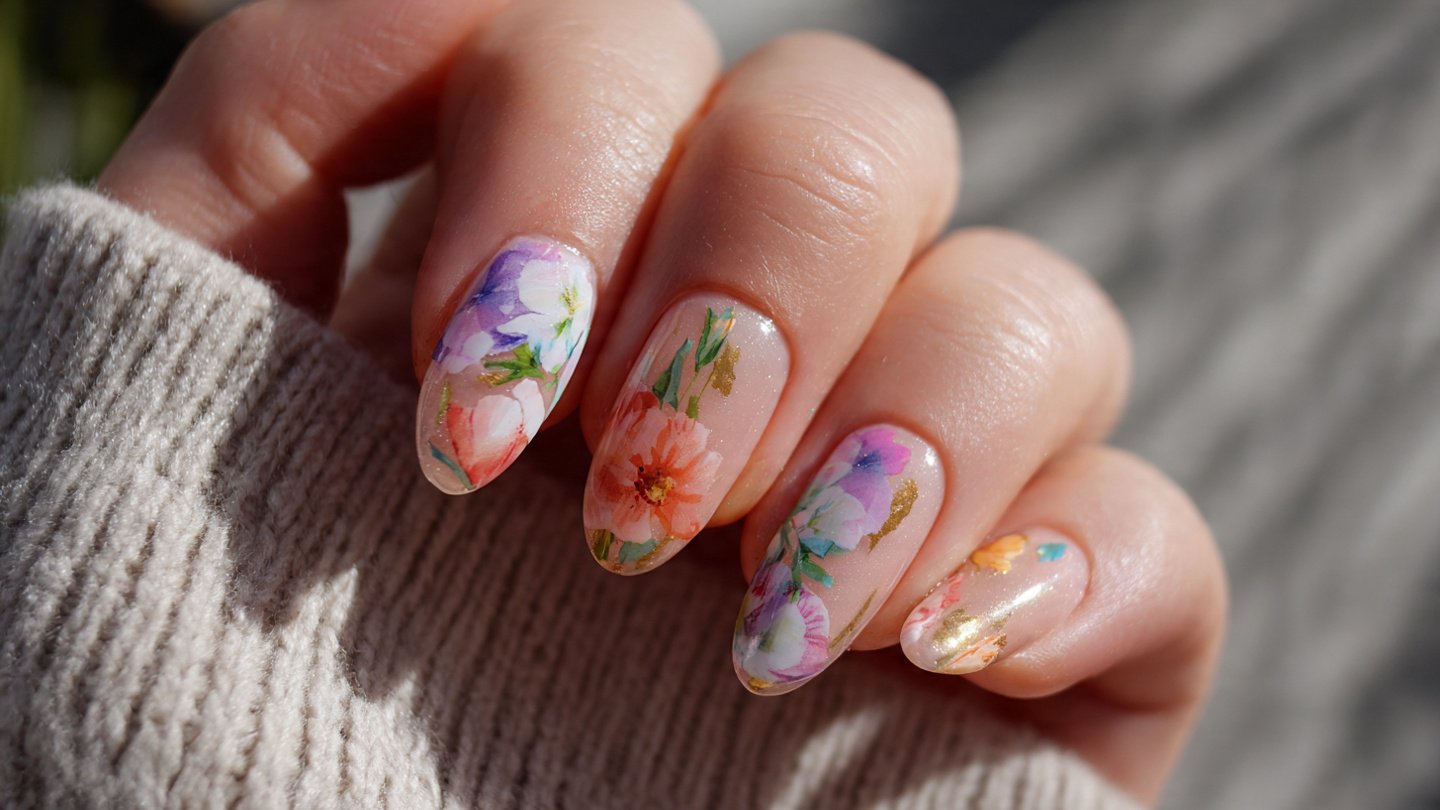
13. Watercolor Wash

Soft washes of color — peach bleeding into pink, blue into lilac — flowing across the whole nail like watercolor paint. The colors should be translucent and blended, with no hard edges anywhere. Each nail is a tiny abstract painting.
The almond shape suits watercolor because the taper gives the wash direction — color seems to flow toward the tip naturally. Keep the palette to two or three related shades; watercolor turns muddy when too many colors compete.
The almond effect: the tapered canvas guides the wash — color flows with the shape instead of fighting it. Ask for: sheer or jelly polishes worked while slightly wet, or blooming gel for the most organic blends.
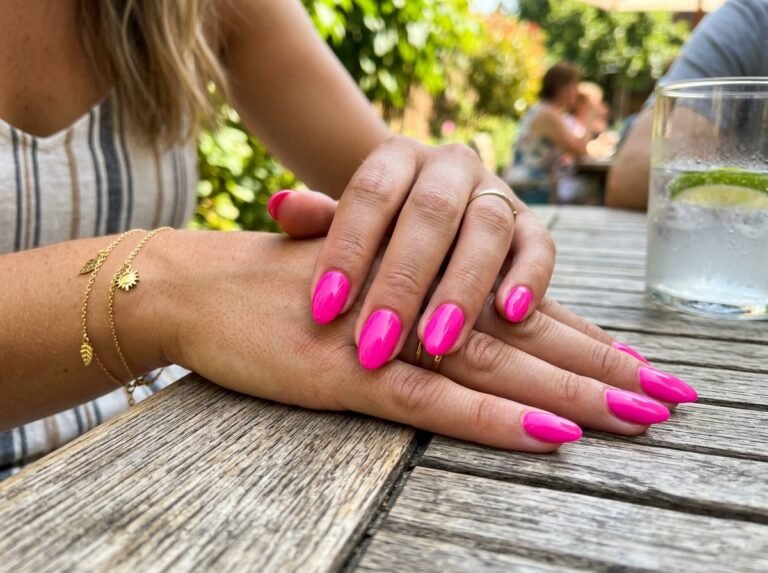
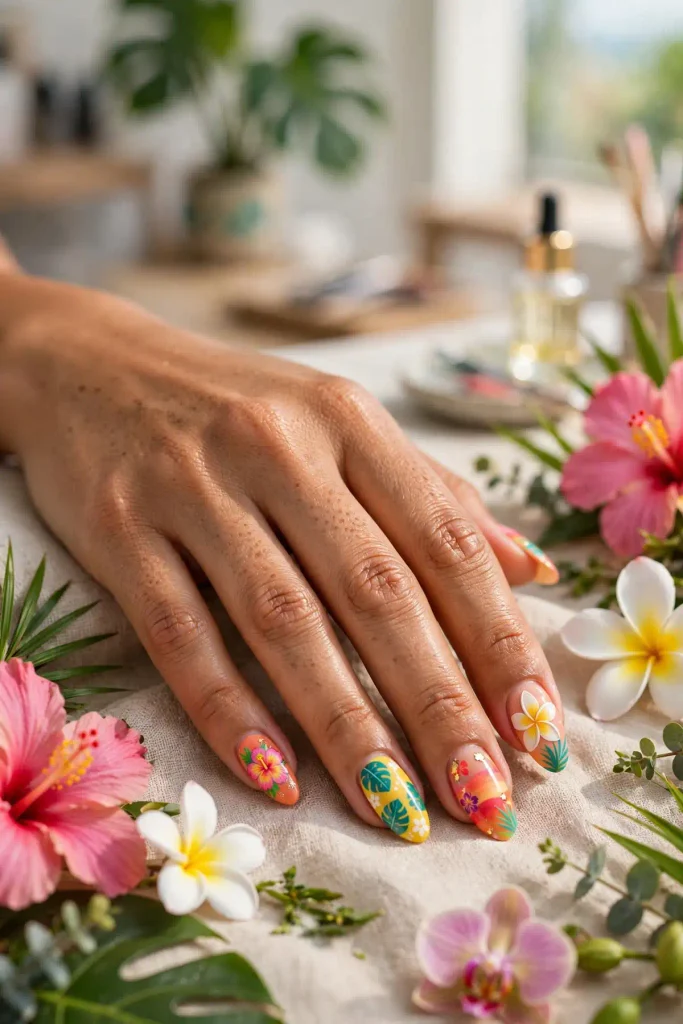
14. Guava Pink Crème

A vivid, juicy guava pink in a crème finish — tropical, vibrant, and unapologetic. It’s pinker than coral, softer than hot pink, with a fruity richness that’s pure summer. On almond nails, the bold color gets an elegant frame — vivid meets refined.
This is the statement solid of the list: one color, full coverage, maximum impact. The almond shape keeps the brightness sophisticated — the same shade on square would shout, on almond it sings.
The almond effect: the refined taper civilizes bold color — almond makes brights look chic instead of loud. Ask for: two coats of richly pigmented crème; brights need full opacity to look intentional.
Why Almond Wins Summer
The shape and the season are made for each other. Elongation without fragility: almond’s taper lengthens fingers visually, but the rounded tip is far stronger than a stiletto point — you get the elegant look without the breakage. Versatility: almond suits every design on this list, from minimal lines to full art — it’s the shape that says yes to everything. The summer practicality: the smooth, rounded tip doesn’t catch on swimsuits, beach bags, or sandal straps the way sharp shapes do. Photogenic: almond nails photograph beautifully — the taper creates a flattering line in every hand pose, which matters in a season of constant photos. And the feel: there’s something undeniably graceful about almond — it makes everyday gestures look a little more elegant, and summer is the season of gestures: waving, pointing at menus, holding iced drinks.
Almond Nail Care: Keeping the Point
The taper needs maintenance to stay beautiful. File with the shape: always file following the existing taper — filing straight across turns almond into oval, and you’ll lose the shape in one session. One direction only: sawing back and forth weakens the tapered sides, which is where almond breaks; file from edge toward center. Balance the sides: almond’s biggest enemy is asymmetry — check both sides regularly, because uneven tapers are obvious. Strengthen the stress point: the area where the free edge meets the nail bed takes the most force on almond; a builder-gel overlay reinforces it beautifully. Moisturize the cuticles: dry cuticles make even perfect almonds look ragged — oil daily, especially in summer sun. Reshape every two weeks: almond grows out into oval fast; a quick reshape keeps the taper intentional.
Almond Length Guide: Short, Medium, Long
Almond works at every length — but each has its character. Short almond: chic and practical — the taper still elongates, but the nails stay work-friendly. Best for: active lifestyles, first-time almond wearers, and minimal designs (ideas 8, 10, 11 shine here). Medium almond: the sweet spot — enough length for the taper to read clearly, short enough for real life. Best for: most people, most designs — this is the almond that does everything. Long almond: dramatic and glamorous — the full stiletto-adjacent effect without the fragility. Best for: events, vacations, and statement designs (ideas 1, 6, 14 love length). The rule: the longer the almond, the more maintenance — be honest about what your life allows, and choose the length you’ll actually maintain.
Almond Summer Nail Questions
Is almond better than oval for summer?
They’re cousins, not competitors. Almond tapers to a soft point (more elongating, slightly more delicate); oval follows the fingertip’s curve (stronger, more natural). For summer glam, almond wins; for summer practicality, oval edges ahead.
Do almond nails break easily?
Less than stilettos, slightly more than squares — the tapered sides are the vulnerable zone. Proper structure (a good apex) and regular fills keep breaks rare. Most almond breaks come from impact, not the shape itself.
Can I get almond on short nails?
Yes — short almond is a legitimate, chic shape (see idea list). The taper is subtler, but the elongation effect still works. It’s actually the best “first almond” — you get the aesthetic without committing to length.
What’s the best almond length for active summers?
Medium — long enough for the taper to read, short enough to swim, hike, and live. If you’re very active, add a builder-gel overlay for strength; it makes medium almond nearly indestructible.
Point Taken
Fourteen ideas, four zones, one shape that makes placement an art form. Whether your art lives at the tip, the center, the base, or all over — almond nails reward intentional placement like no other shape. The taper isn’t just pretty; it’s a guide for where every design belongs.
So pick your zone, find a tech who understands almond architecture, and let the shape do what it does best: make everything look deliberate. Summer’s too short for random nail art.
Which zone is yours — the luminous tips, the centered stage, the intimate base, or the full canvas? Save this list for your next almond appointment, and send it to the friend who’s been getting the same oval forever — it’s time she met the point.