16 Plus Size Outfits For Fall, Built Like an Architect Reads a Room
A friend once told me she avoided fitted sweaters because someone in a dressing room years earlier had made a comment about “hiding” her arms. She had spent a decade buying clothes to disappear in. When we finally went shopping together, I did not talk about hiding anything. I talked about structure, the way an architect talks about a building: where does the eye land first, where does the fabric need to move, and where does it need to hold still.
That reframe changes everything. Plus size dressing is not about tricks to look smaller. It is about understanding how fabric behaves on a body with curves, the same way a good architect understands how weight and light behave in a room. A stiff fabric will hold a shape and create definition. A soft, fluid fabric will drape and skim. Neither is better. They just do different jobs.
So this post is organized by the structural effect each outfit creates, not by where you’re going. Four sections: Definition (outfits that create a clear waistline), Drape (outfits that skim and flow), Volume Balance (outfits that play proportions against each other), and Layered Architecture (outfits built from multiple pieces working together). Each one includes a build note on how the fabric behaves.
Section One: Definition
Outfits that use structure, seaming, or a belt to create a clear waist. Good for days you want a defined silhouette.
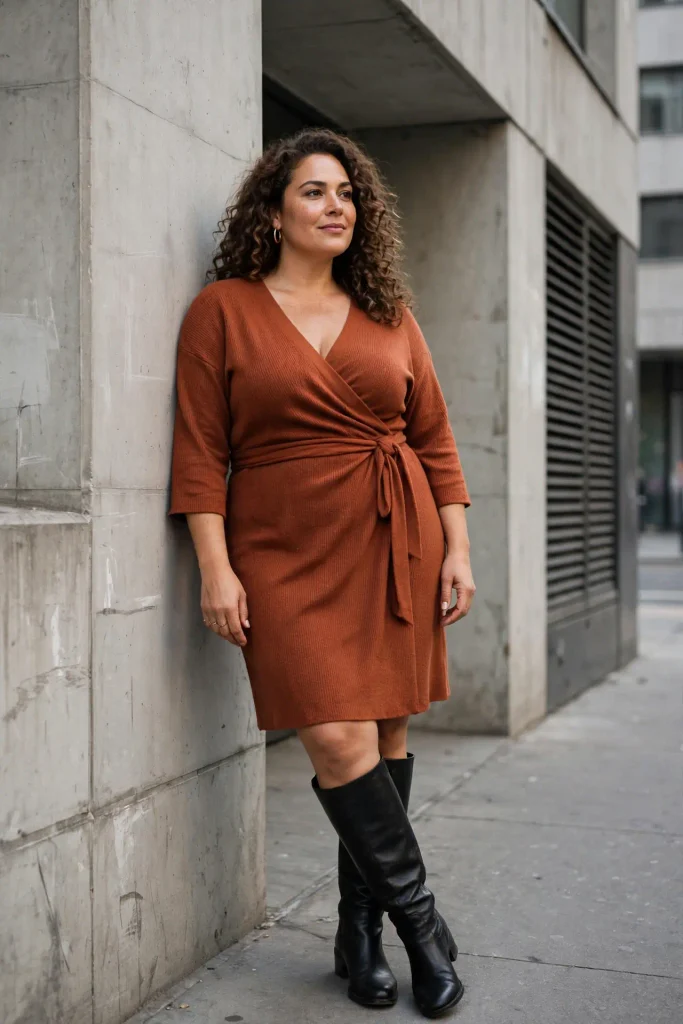
1. The Wrap Dress in Ponte Knit.
A wrap dress in a substantial ponte knit, not a thin jersey, in a rust or chocolate tone, with knee-high boots. Build note: ponte has natural structure and recovery, so it holds the wrap closed and defines the waist without needing a stiff lining. Thin jersey wrap dresses can gape and cling in ways that feel less controlled, so fabric weight matters more than the cut itself here.
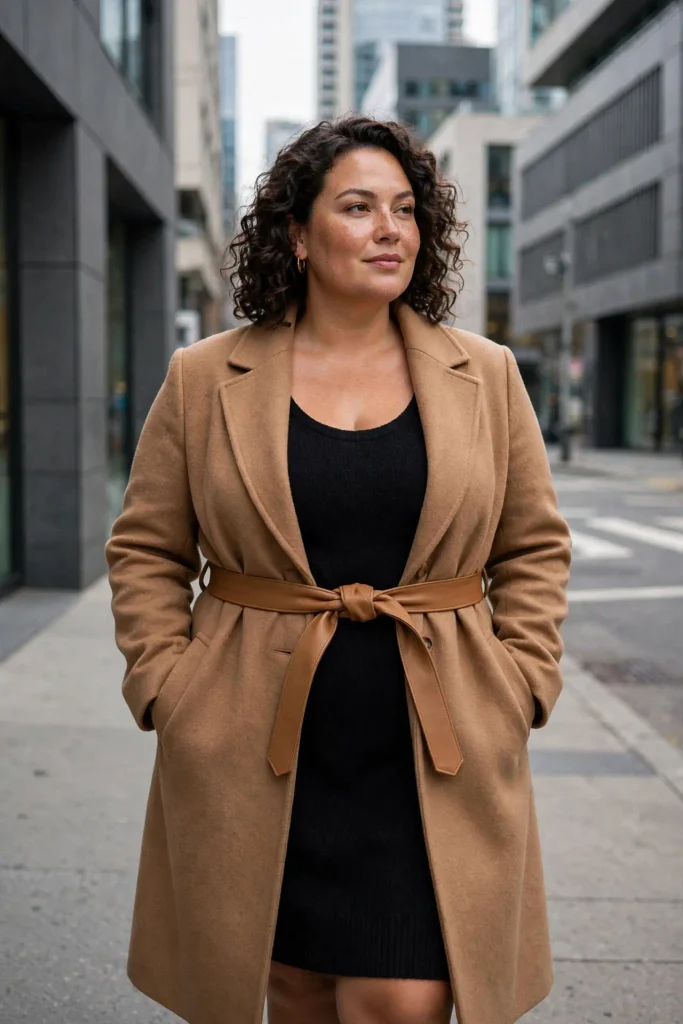
2. The Belted Wool Coat Over a Simple Dress.
A structured wool coat, belted at the waist, worn open over a simple knit dress underneath. Build note: the coat’s belt does the defining work, so the dress underneath can be totally relaxed. This is the easiest way to get a defined silhouette without any part of the outfit needing to be tight.
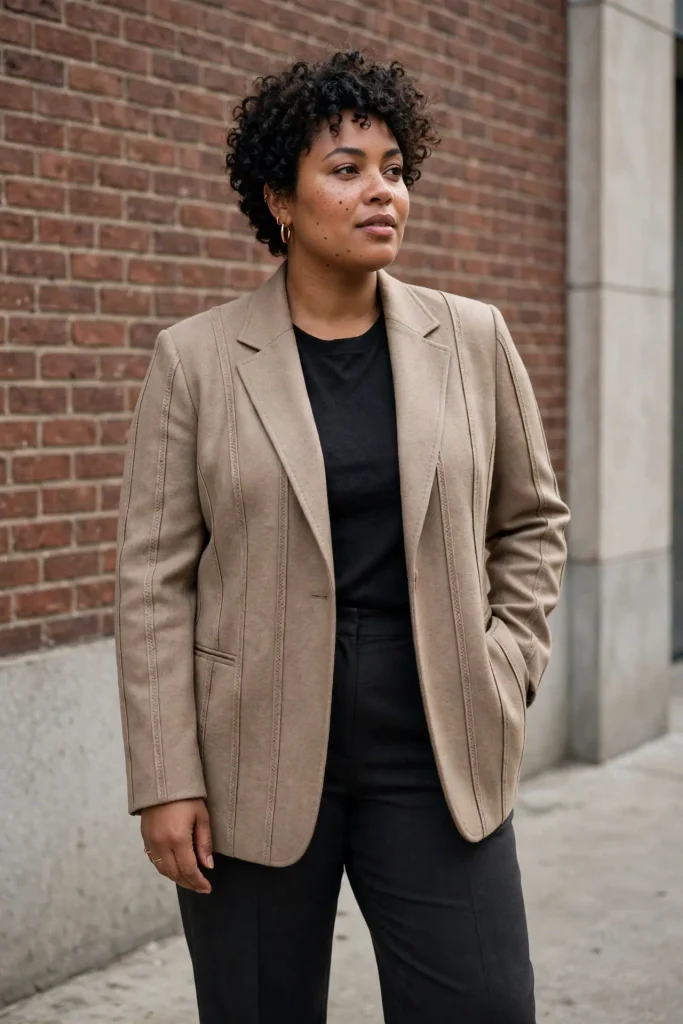
3. The Corset-Seamed Blazer.
A blazer with princess seams, the vertical seams that run from shoulder to hem rather than a boxy cut, paired with straight-leg trousers. Build note: princess seams are quietly doing the same job as a dart or a corset boning, shaping fabric to a curve without any elastic or stretch involved. Look for this seam detail specifically when blazer shopping, since it changes the whole fit.
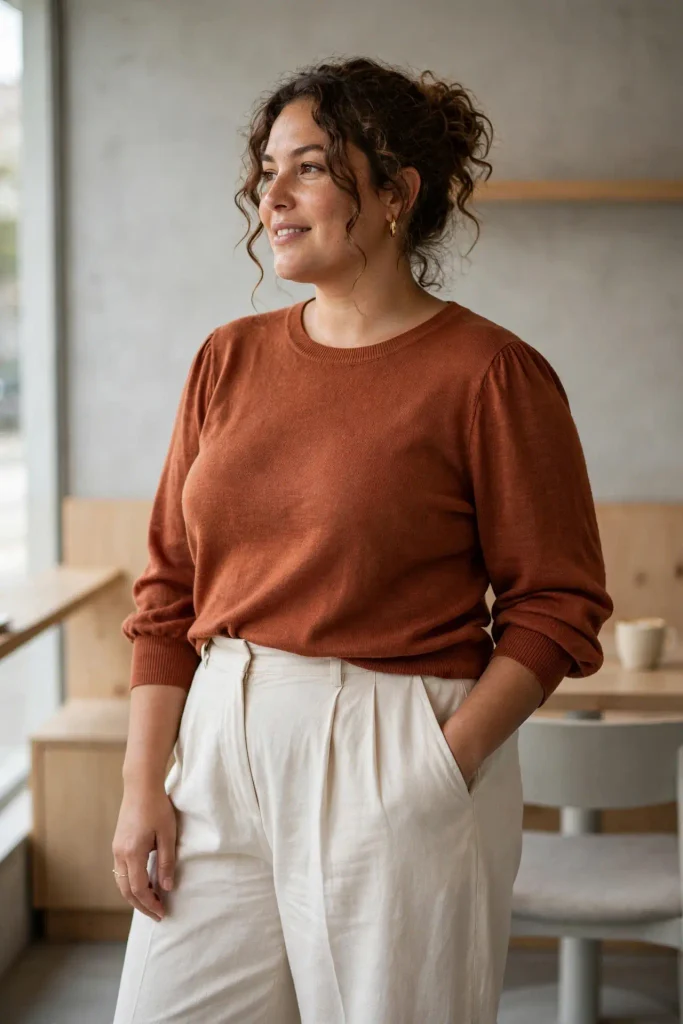
4. The High-Waisted Trouser and Tucked Sweater.
Wide-leg, high-waisted trousers with a lightly fitted sweater tucked in, not stuffed in bulkily, but tucked with a small blouson of fabric left loose over the waistband. Build note: a full, tight tuck can create a hard line across the stomach, while a slightly loose blouson tuck softens that line while still showing the waist is defined underneath.
Section Two: Drape
Outfits that use fluid, flowing fabric to skim rather than cling. Good for comfort-first days that still look intentional.
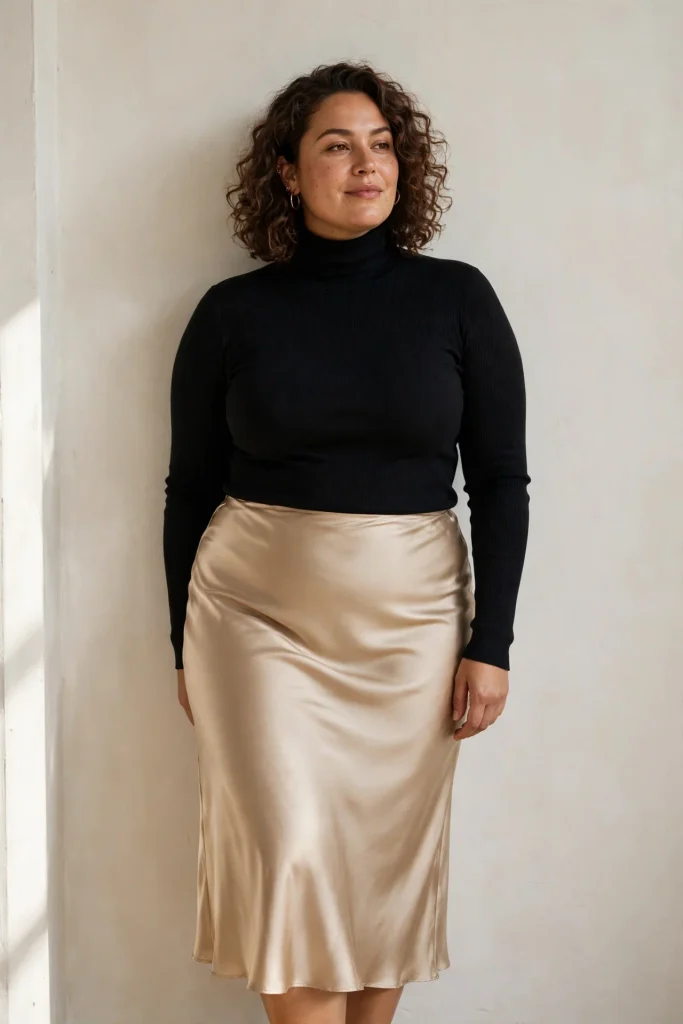
5. The Bias-Cut Midi Skirt.
A skirt cut on the bias, meaning the fabric grain runs diagonally rather than straight up and down, in a rayon or silk-blend, with a fitted turtleneck on top. Build note: bias-cut fabric has natural stretch and movement built into the weave itself, so it skims over hips and thighs without needing to be a specific size up or down. It moves with you rather than pulling against you.
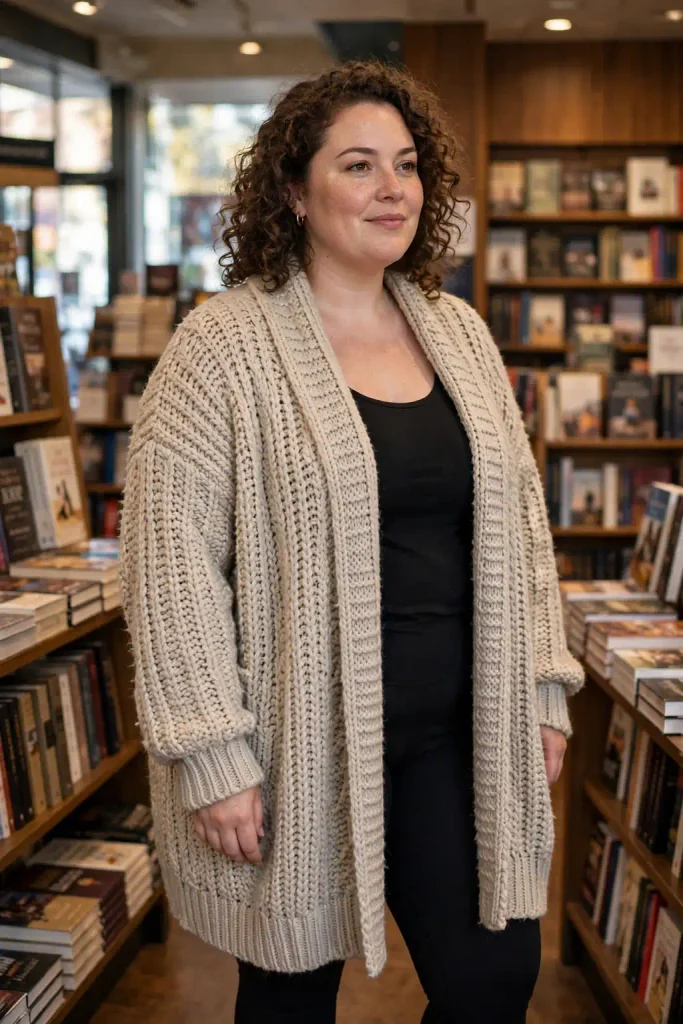
6. The Oversized Cardigan Over Leggings.
A long, unstructured cardigan in a heavy, drapey knit, worn open over fitted leggings and a plain tank. Build note: the cardigan’s weight is doing the work here, since a heavy knit falls straight down along the body’s natural lines rather than clinging or puffing out, which a lighter, flimsier cardigan tends to do.
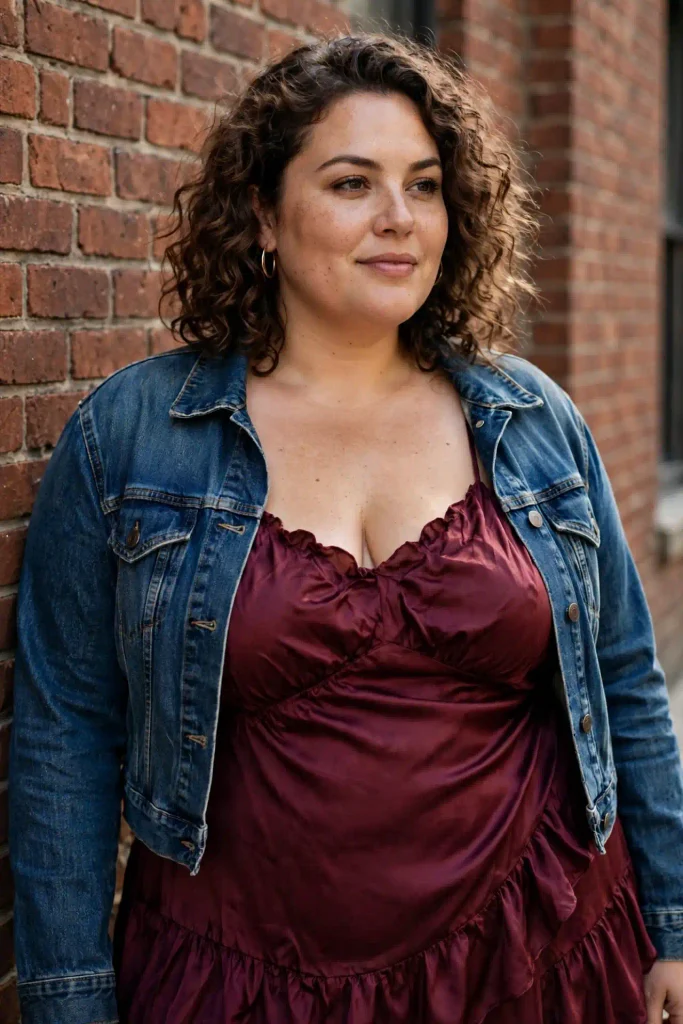
7. The Slip Dress with a Denim Jacket.
A satin or silk-blend slip dress, cut with soft gathers rather than a fitted bodice, layered under a cropped denim jacket. Build note: gathered fabric at the bust and waist creates soft folds that drape rather than stretch tight, which is far more forgiving across a day of sitting, eating, and moving than a fitted, boned bodice would be.
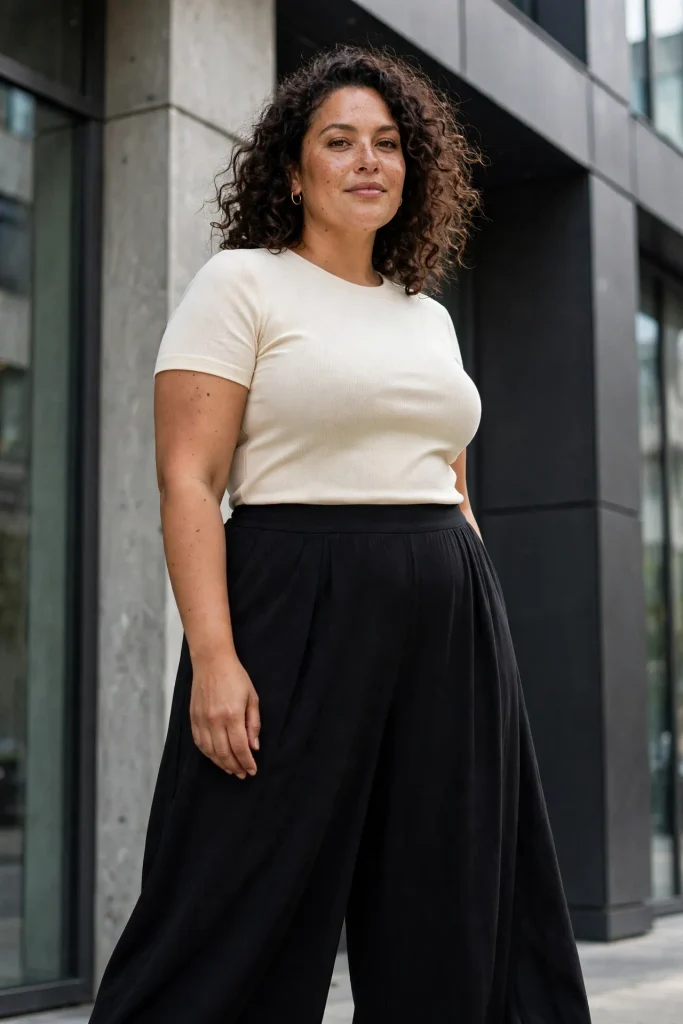
8. The Wide-Leg Palazzo Pant with a Fitted Top.
Flowing, wide-leg palazzo trousers in a soft crepe, paired with a more fitted top to keep the overall proportion balanced. Build note: crepe fabric has weight without clinging, so it drapes into clean vertical lines down the leg rather than billowing out horizontally, which keeps the silhouette long rather than wide.
Section Three: Volume Balance
Outfits that use proportion, putting volume in one place and structure in another, to create shape through contrast rather than fit.
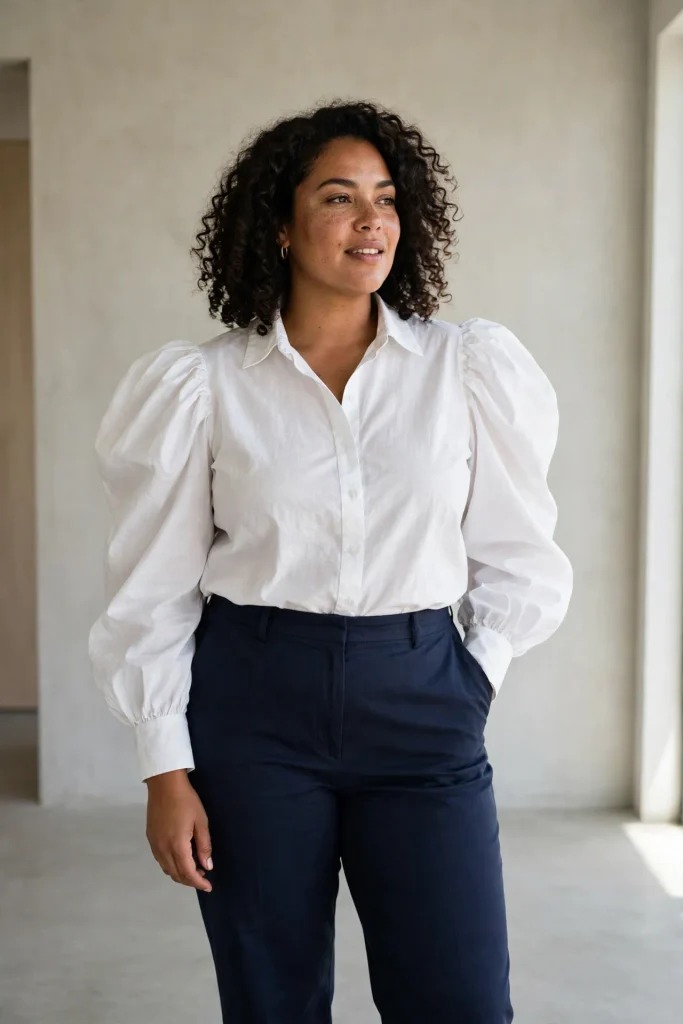
9. The Puff-Sleeve Top with Straight Trousers.
A blouse with dramatic puffed sleeves, tucked into simple, straight-leg trousers. Build note: the volume at the shoulder draws the eye upward and outward at the top of the body, which naturally balances against a straighter, quieter bottom half. This is proportion doing the styling work rather than fit.
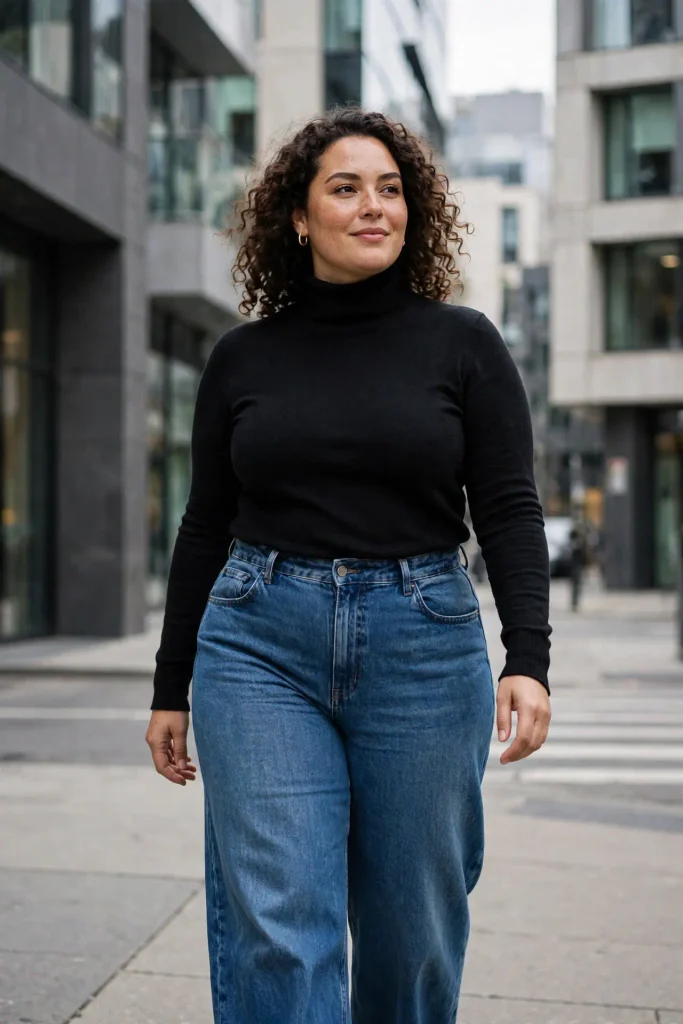
10. The Wide-Leg Jean with a Fitted Turtleneck.
Wide-leg, high-waisted jeans with a fitted, tucked-in turtleneck. Build note: this is a classic hourglass-through-contrast formula, where a fitted top over a wide bottom reads as balanced because the eye has a clear reference point at the waist, even though neither piece is tight through the hips or thighs.
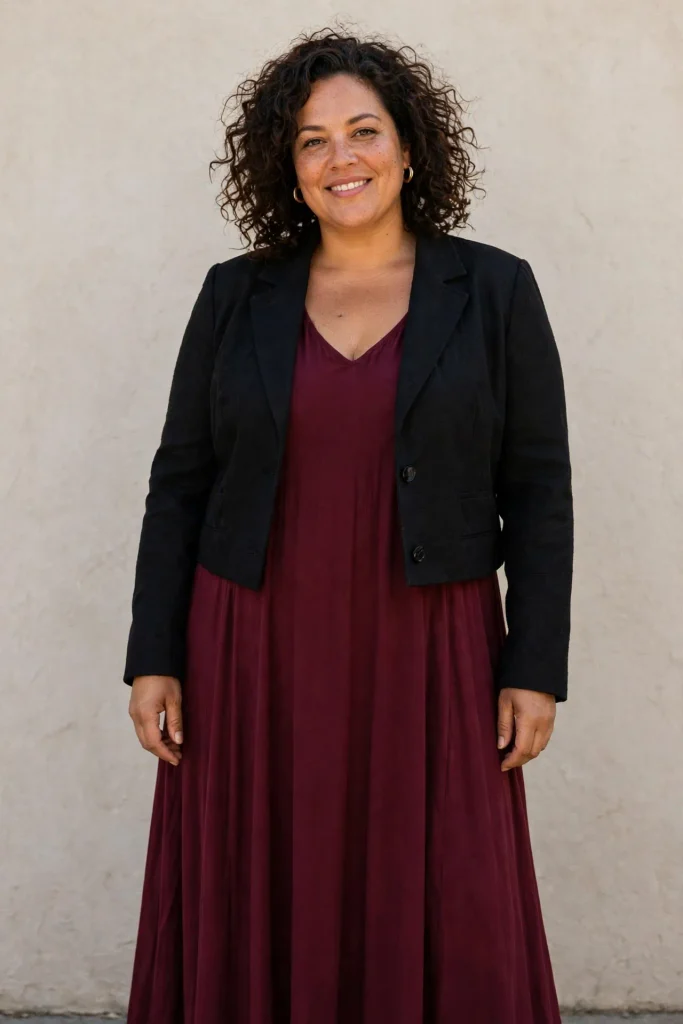
11. The Cropped Jacket Over a Flowing Maxi Dress.
A cropped, structured jacket worn over a long, flowing maxi dress, with the jacket hitting right at the natural waist. Build note: the short jacket creates a visual break at the waist, which segments a very long, vertical silhouette into two balanced halves rather than one uninterrupted column of fabric.
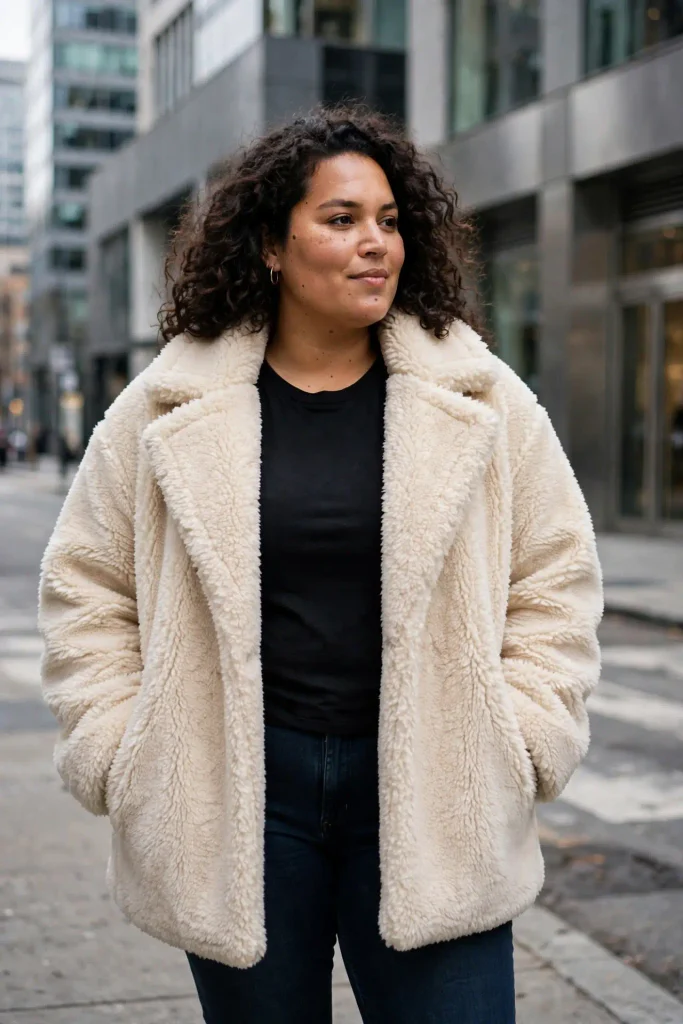
12. The Statement Coat Over a Slim Base.
An oversized, voluminous coat, faux fur, teddy, or a wide wool wrap style, worn over a slim base like fitted jeans and a simple top. Build note: when the outer layer carries all the volume, the layers underneath can be as fitted as you like, since the coat is the shape the eye reads first from a distance.
Section Four: Layered Architecture
Outfits built from several pieces working together, where the combination creates the shape rather than any single garment.
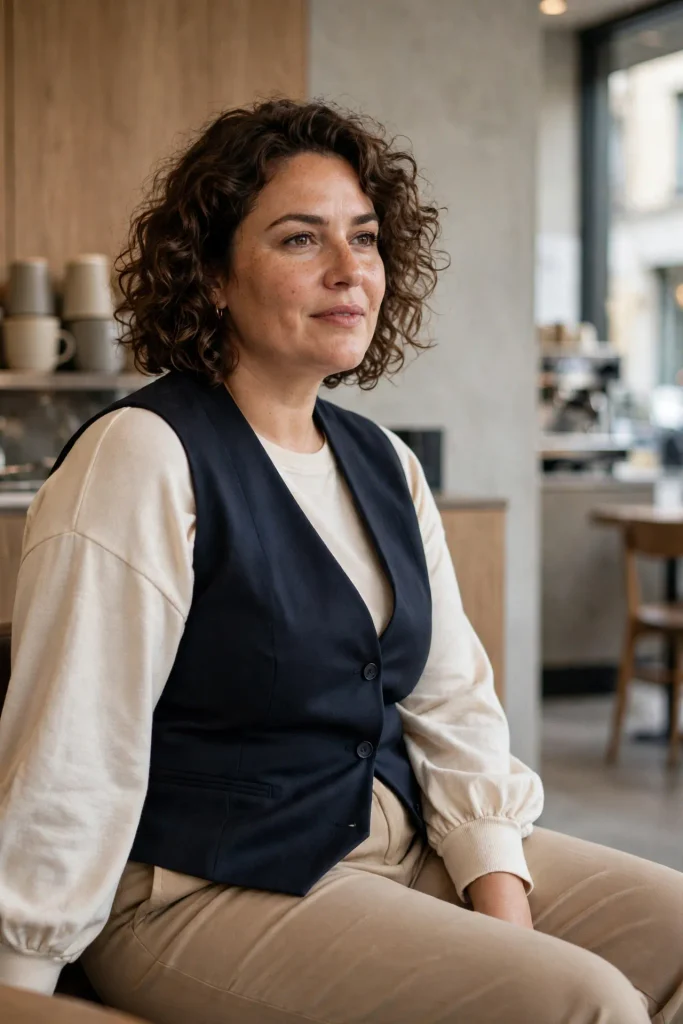
13. The Vest Over a Long-Sleeve Layer.
A structured, fitted vest worn over a looser long-sleeve top, with straight trousers below. Build note: the vest’s shoulder seams and waist tailoring sit as a defined outer shape, while the looser sleeves peeking out underneath keep the arms comfortable, giving you structure and ease in the same outfit.
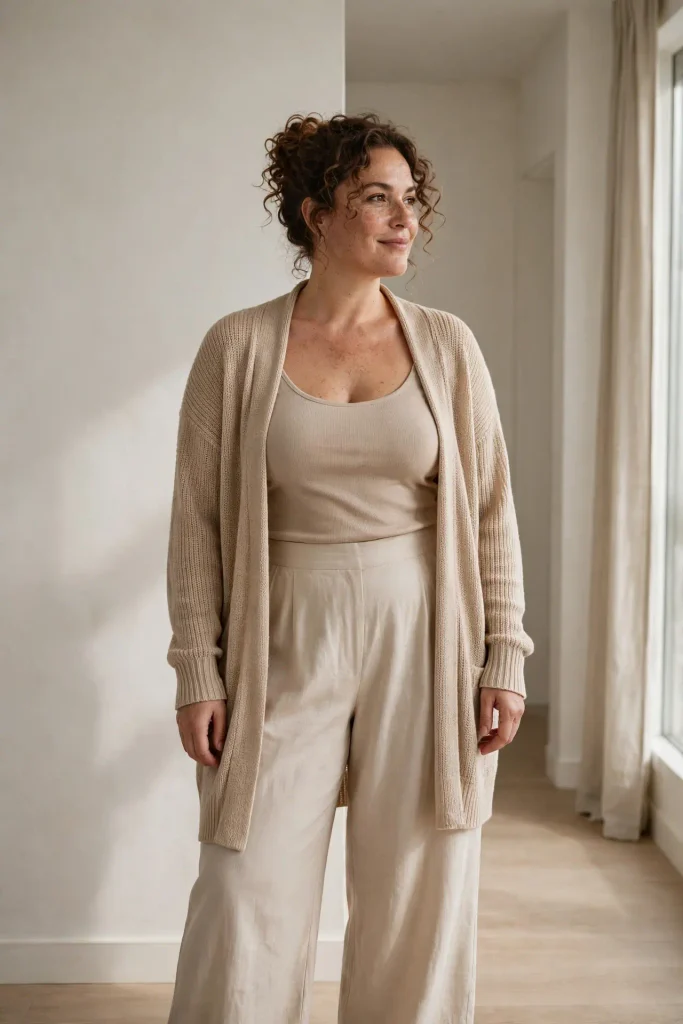
14. The Long Cardigan, Fitted Cami, and Trouser Trio.
A long, open cardigan, a fitted cami underneath, and wide trousers, all in a tonal color family. Build note: three pieces in one color family read as a single, elongated silhouette from a distance, which is a much stronger visual effect than three pieces in contrasting colors, even if the individual fits are identical.
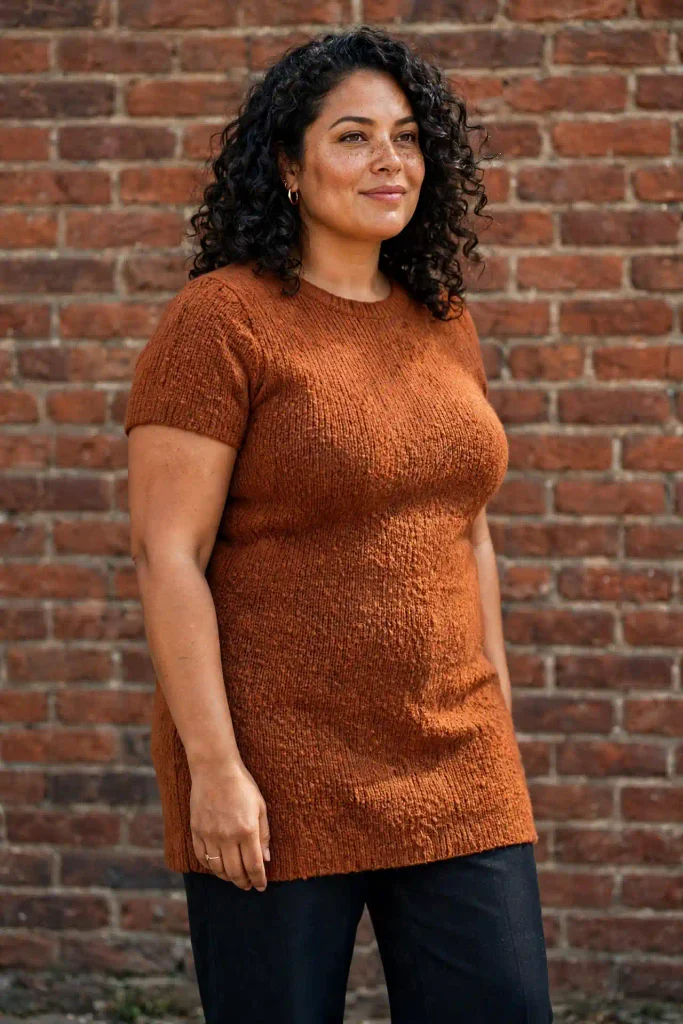
15. The Dress Worn Over Trousers.
A shorter, fitted dress worn over straight-leg trousers, a layering trick that is having a real moment. Build note: this breaks the usual “dress equals one solid block of fabric” rule, since the trousers add a vertical line at the bottom that visually lengthens the whole look, while the dress on top still gives you waist definition.
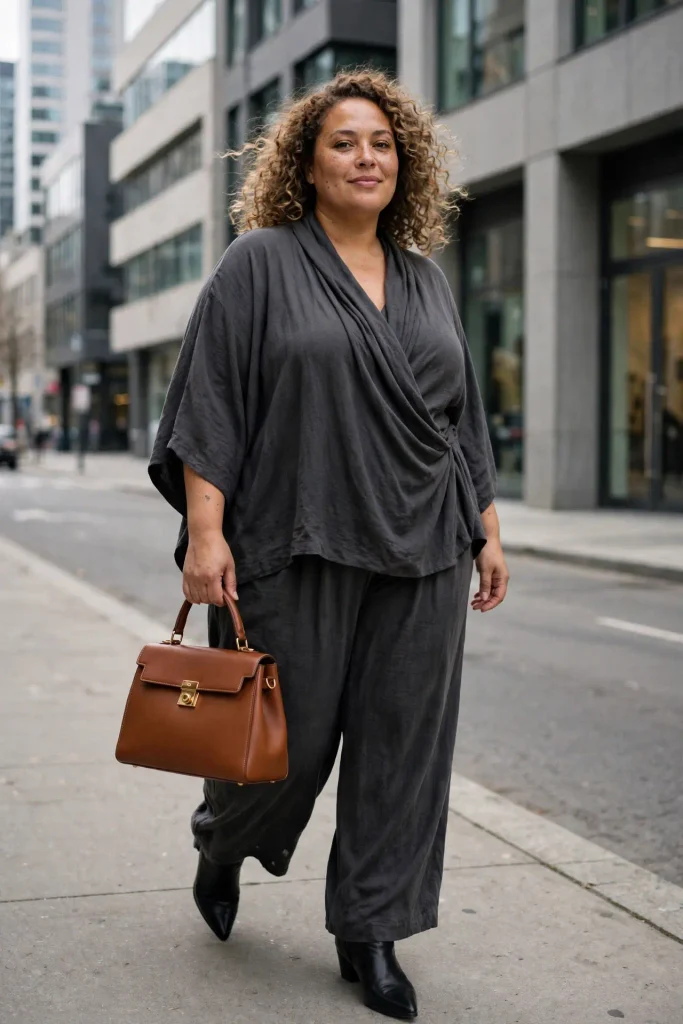
16. The Structured Bag and Boot Frame.
Not a clothing layer, but a styling layer: a structured, top-handle bag and a pointed-toe boot, worn with almost any outfit from this list. Build note: sharp, structured accessories at the hand and foot create visual bookends that make even a fully relaxed, drapey outfit read as put-together, since the eye clocks the sharp details first.
Something New: The Proportion Ratio Guide
Instead of “flattering,” think in ratios. Most outfits that feel effortlessly put-together follow roughly a one-third to two-thirds split somewhere in the silhouette, rather than a even fifty-fifty split.
If your top is fitted, let it end at roughly one-third of your total height, with the remaining two-thirds being your bottom half, rather than a top and bottom of equal visual weight. If your top is loose and long, balance it with a bottom that is either much slimmer, like skinny jeans, or clearly shorter, like a mini paired with tall boots, so the eye still finds a one-third to two-thirds split somewhere in the outfit.
This is not a rule about hiding anything. It is simply how the eye finds outfits visually interesting rather than static, and it works at any size.
The Fabric Behavior Chart
| Fabric | How It Behaves | Best For |
|---|---|---|
| Ponte knit | Structured, holds shape, slight stretch | Definition outfits, wrap dresses, blazers |
| Jersey (thin) | Clings closely, minimal structure | Base layers under something structured |
| Crepe | Weighted drape, moves in clean lines | Wide-leg trousers, flowing skirts |
| Bias-cut wovens | Diagonal stretch, skims naturally | Midi and maxi skirts |
| Heavy knit (chunky) | Falls straight down, adds visual weight | Long cardigans, oversized sweaters |
| Satin or silk-blend | Soft gather, catches light, drapes | Slip dresses, blouses |
| Structured wool | Holds a defined edge, doesn’t cling | Coats, blazers, tailored trousers |
| Denim (rigid) | Holds shape, minimal give | Structured jackets, straight jeans |
Knowing how a fabric behaves before you buy it tells you more about how it will actually sit on your body than the size label ever will.
The Five-Second Fit Check
Before buying anything, do this quickly in the dressing room. Sit down. A well-fitted piece should not dig sharply at the waist or gape open at the chest when seated, since most of a day is spent sitting, not standing still. Raise both arms overhead. If a top rides all the way up past your natural waist, it will do that all day, not just in the mirror. Walk a few steps. Wide-leg trousers and maxi skirts should swing, not stick between your legs with every step, which usually means sizing up rather than down. Look at the side profile, not just the front. Most mirrors in dressing rooms face you straight on, but the side view tells you how a garment drapes across the fullest part of your body, which is often the more honest preview of how it will look all day.
Reframing “Problem Areas” as Design Opportunities
Every so-called problem area is really just a place where a particular fabric or cut choice matters more, not a flaw to be minimized.
A fuller midsection is an opportunity for drape, not disguise, since a bias-cut or gathered fabric will move beautifully over it rather than clinging or wrinkling the way a stiff fabric might. Fuller arms are an opportunity for interesting sleeve details, like the puff sleeve in outfit nine, since sleeves are one of the few places where volume is genuinely celebrated in fashion regardless of body size. A shorter torso is an opportunity to use the one-third to two-thirds ratio deliberately, choosing cropped layers that create a waistline exactly where you want the eye to land. A larger bust is an opportunity for a wrap or surplice neckline, which is a cutting technique, not a trick, that naturally creates a flattering diagonal line across the chest for any bust size.
The Size Chart Translator
Plus size sizing varies enormously between brands, more than almost any other category of clothing, so here is how to shop smarter rather than by number alone.
Always check the brand’s actual measurement chart rather than assuming a size 18 in one store matches a size 18 in another, since they frequently differ by two or more inches at the same labeled size. Look specifically at the “ease” listed if the brand provides it, which tells you how much extra room is built into the garment beyond your actual body measurement, since a fitted style and a relaxed style of the same size number can have several inches of difference in ease. When between two sizes, size up for structured, woven fabrics like denim or wool, since they have little give, and consider sizing true or even down for fabrics with significant stretch, like ponte or ribbed knits. Read the fabric content on the tag before ordering online, since a garment listed as “95% cotton, 5% spandex” will behave very differently from one listed as “100% polyester,” even in the identical cut.
The Confidence Checklist
Before you leave the house, run through this rather than a mirror critique. Can you sit, walk, and raise your arms without adjusting the outfit every few minutes? Does at least one piece feel like genuinely your favorite thing you own, not just something that “works”? Would you be comfortable in this outfit if you ran into someone you wanted to impress? Are you thinking about the outfit, or has it already faded into the background of your day?
If the answer to that last one is that the outfit has faded into the background, that is usually the actual sign of success, not a sign the outfit was too plain to notice.
Quick Answers
What fabric is most forgiving for plus size fall outfits?
Ponte knit and crepe, since both hold structure without clinging tightly to every curve.
Should I size up or down when between sizes?
Size up for rigid, woven fabrics with little stretch, and size true to your measurement for knits with good stretch and recovery.
What is the easiest way to create a waistline without a tight garment?
A belt worn over an open coat or cardigan, since the belt does the defining work rather than the garment itself needing to be fitted.
Are there fabrics I should generally avoid?
Thin, unlined jersey in very fitted cuts can cling in ways that feel less comfortable across a full day, though this comes down to personal preference more than a hard rule.
One Last Thing
Getting dressed well is not about finding the outfit that makes the least of you visible. It is about understanding how fabric moves, where structure helps, and where drape does the work instead, the exact same principles a good architect uses to think about a room, just applied to a body instead of a building.
Pick one section that matches the effect you want today, definition, drape, volume balance, or layered architecture, and build from there.
Which structural effect are you building toward first? Save this article for your next closet reset, and send it to a friend who has been buying clothes to disappear in instead of clothes to actually wear.