14 Victorian Hairstyle Ideas So Gorgeous You’ll Ditch Your Flat Iron Forever
It started with a dusty photo album at my grandmother’s house. Tucked between pictures of my mom’s terrible 80s perm and my uncle’s mullet phase, there was a sepia-toned portrait of my great-great-grandmother — and her hair stopped me cold. Piled high, soft, romantic, with perfect little curls framing her face like she had her own personal glam squad. I am talking about a woman who did her hair by candlelight with no YouTube tutorials, and she looked like royalty.
Meanwhile, I had just spent forty-five minutes with a flat iron and still looked like I had been electrocuted. That photo sent me down a rabbit hole of Victorian hairstyles that lasted three weeks, one themed party, and approximately eleven failed attempts at a Gibson Girl before I finally got it right. These fourteen styles are the result — the prettiest, most wearable Victorian looks, modernized just enough that you can actually do them without a lady’s maid.
Early Victorian (1837–1860): The Romantic Years
The early Victorian era was all about softness. Hair was parted severely in the middle, smoothed down, and finished with romantic curls at the sides or a neat knot at the nape. Think of it as the “no-makeup makeup” of the 1800s — polished, feminine, and deceptively simple. These four styles are the easiest entry point if you are Victorian-curious.
1. The Center-Part Smooth Chignon
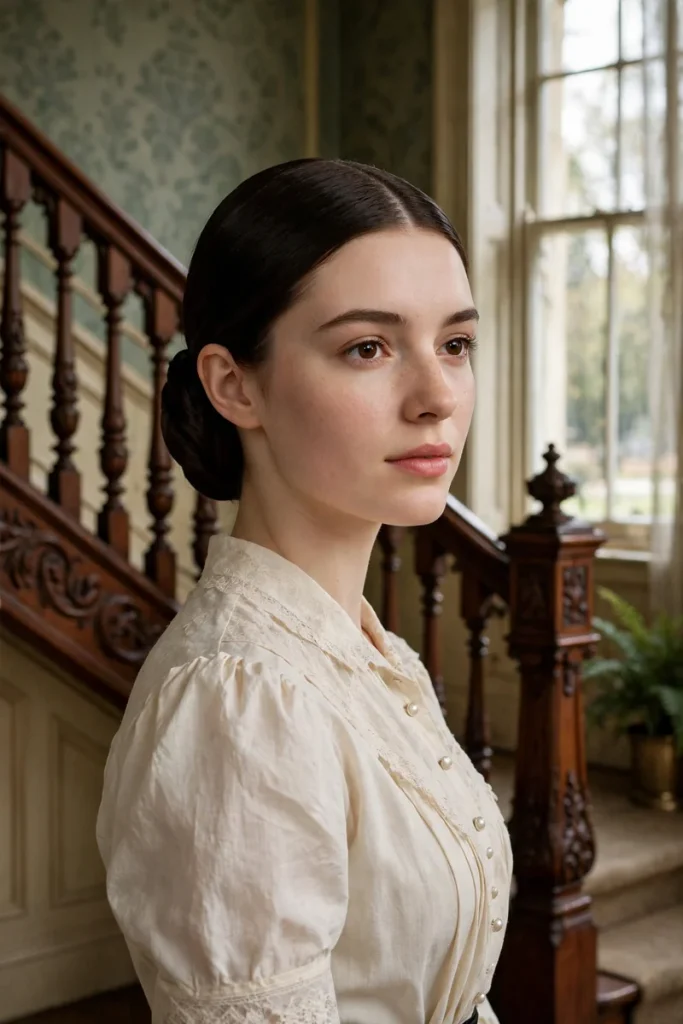
The chignon is the little black dress of Victorian hair — it goes with everything and never looks wrong. Part your hair dead center (the Victorians were strict about this; a side part was practically scandalous), smooth it back with a little pomade or serum, twist the length into a low knot at the nape, and pin it flat. My first attempt looked like a cinnamon roll that had given up on life, but here is the trick: twist in sections instead of all at once. Three smaller twists pinned together look smoother and hold longer than one big one. This style flatters oval and heart-shaped faces beautifully because the center part balances everything out. It survived a full wedding — ceremony, photos, and a very enthusiastic dance floor — without a single bobby pin escaping.
2. Sausage Curls (The Ringlet Revival)
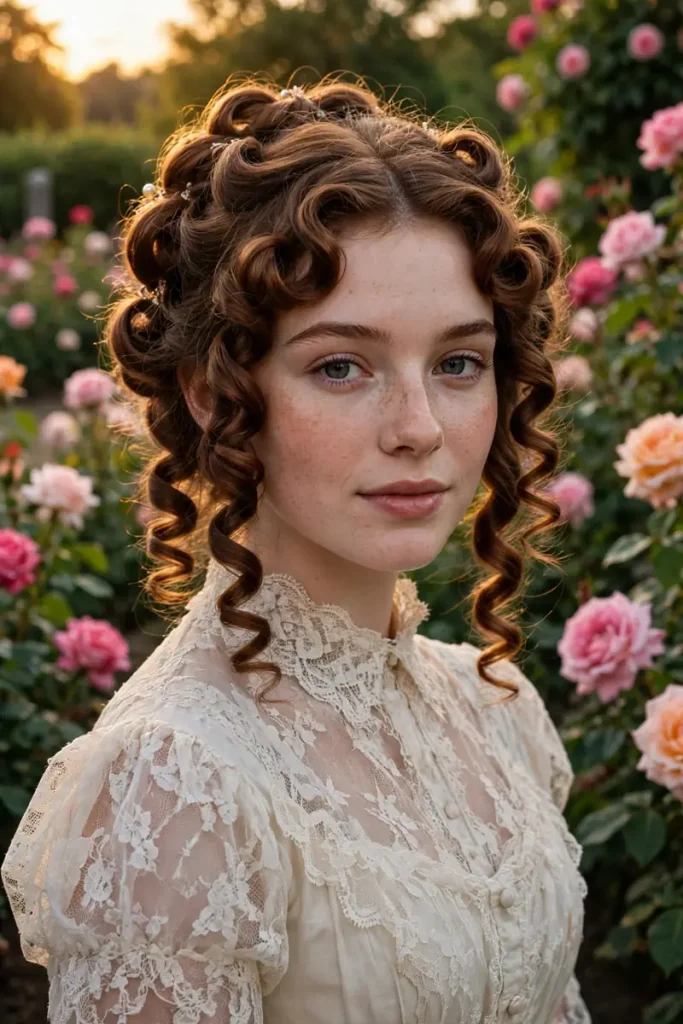
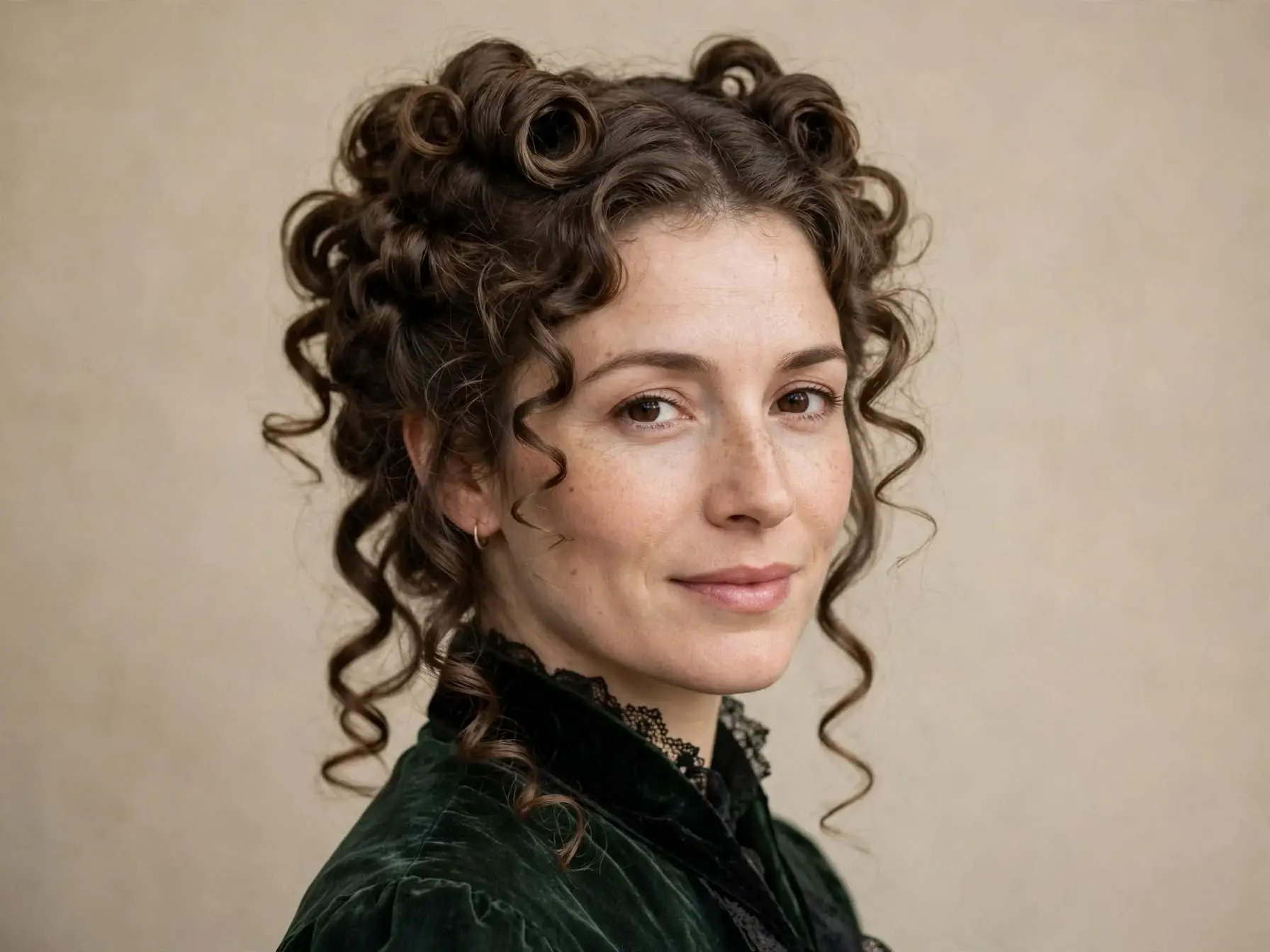
Sausage curls are those perfect, chunky ringlets that frame the face in every Victorian portrait, and yes, they are just as fun to say as they are to wear. The Victorians made them with heated curling tongs and a truly impressive amount of patience. You can cheat with a 1-inch curling iron: curl small sections, let each curl cool completely in your palm before dropping it, then leave them alone — do not brush them out. The first time I wore these to a holiday party, three separate people asked if I had gotten extensions. Nope. Just ringlets, patience, and a truly unhealthy amount of hairspray. They work best on medium to long hair, and if your hair is fine, curl it the night before and sleep with the curls pinned up — they will be even springier by morning.
3. The Braided Coronet
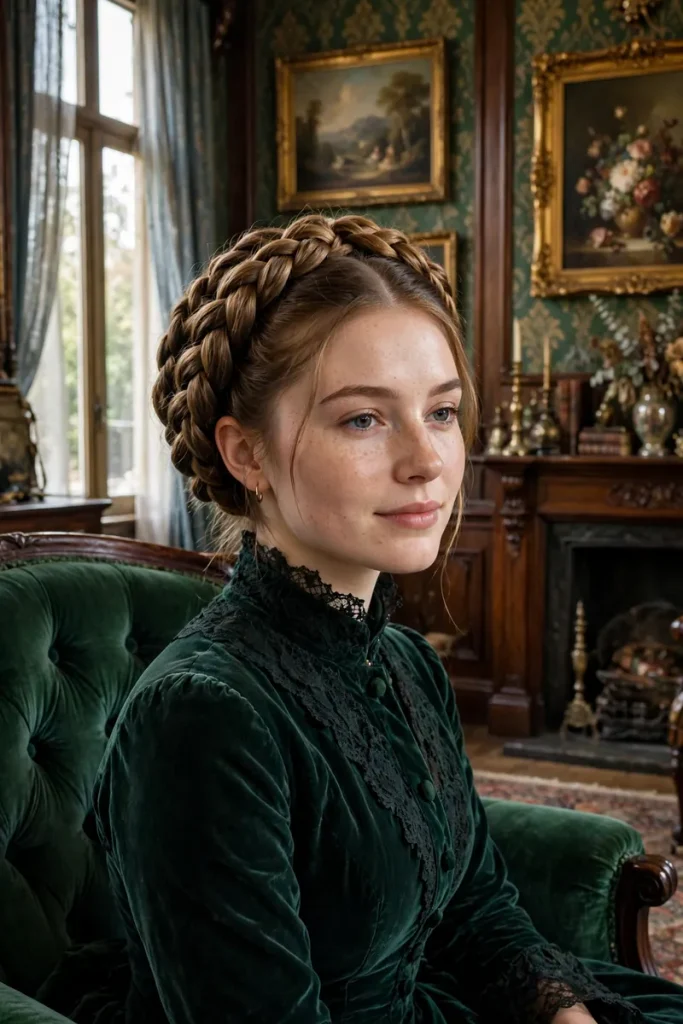
The braided coronet is exactly what it sounds like: a crown made of your own braids, wrapped around the head like you are the queen of absolutely everything. Make two braids (Dutch braids sit flattest), cross them over the top of your head, and pin the ends underneath. It sounds complicated, but it took me four tries to get it under ten minutes, and now it is my go-to for bad hair days that need to look like good hair days. The Victorians wore this for daytime calls and church; I wear it for brunch and parent-teacher conferences. Same energy, honestly. Pro tip: pancake the braids — gently pull them wider — before pinning, so the crown looks full and intentional instead of thin and apologetic.
4. Loose Romantic Waves with a Center Part
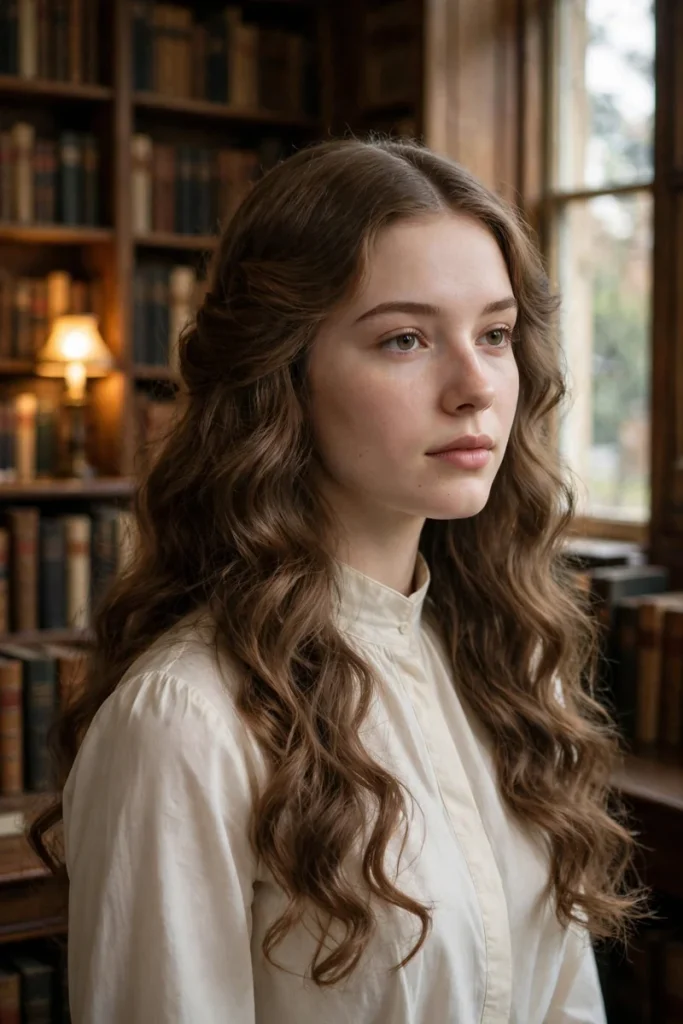
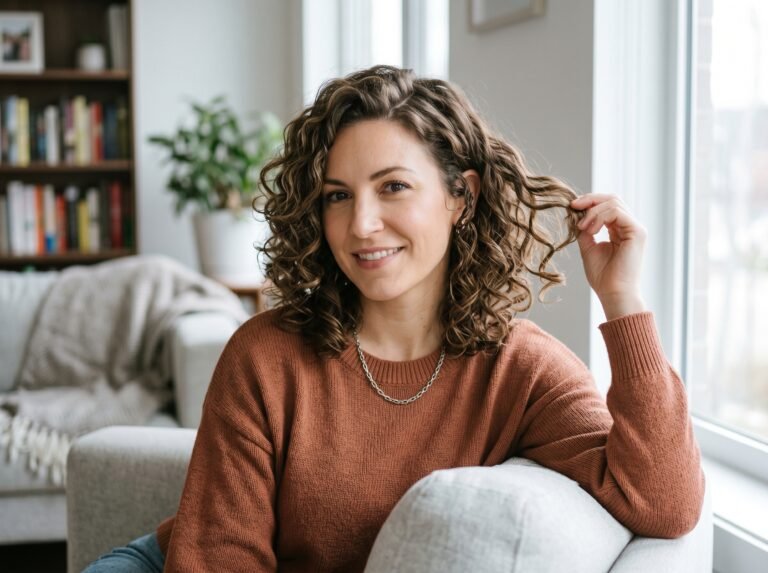
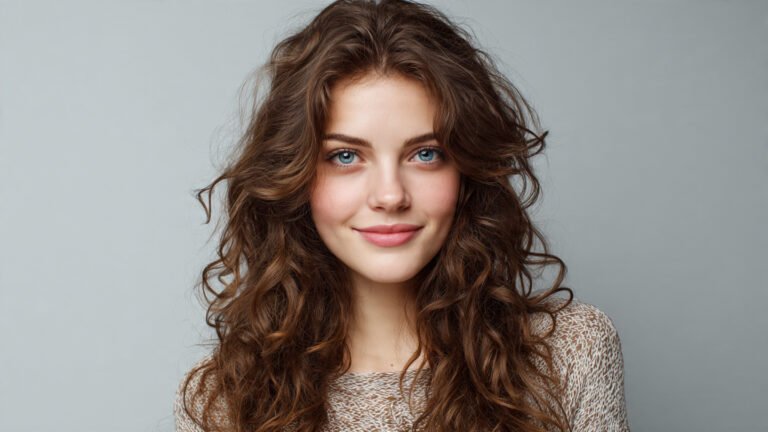
Not every Victorian woman was heading to a ball. For everyday life, the look was simpler: a severe center part with soft, loose waves falling past the shoulders. This is the easiest style on the entire list and the best one to start with. Braid damp hair into two loose braids before bed, undo in the morning, and shake it out — the Victorians would have killed for this trick, since they had to set their hair with rags. The center part is doing the heavy lifting here; it is what makes loose waves read as “Victorian romantic” instead of “beach day.” I wore this for a whole week once just to prove a point, and by day five my coworker asked if I had “done something different.” Ma’am, it is called consistency.
Mid-Victorian (1860–1880): Bigger, Bolder, Brassier
As the century marched on, hair got bigger — literally. The mid-Victorian era brought towering styles, elaborate braids, and the famous Gibson Girl silhouette. These five looks have the most drama, which makes them perfect for weddings, photoshoots, and any occasion where you want to feel like the main character.
5. The Gibson Girl Pompadour
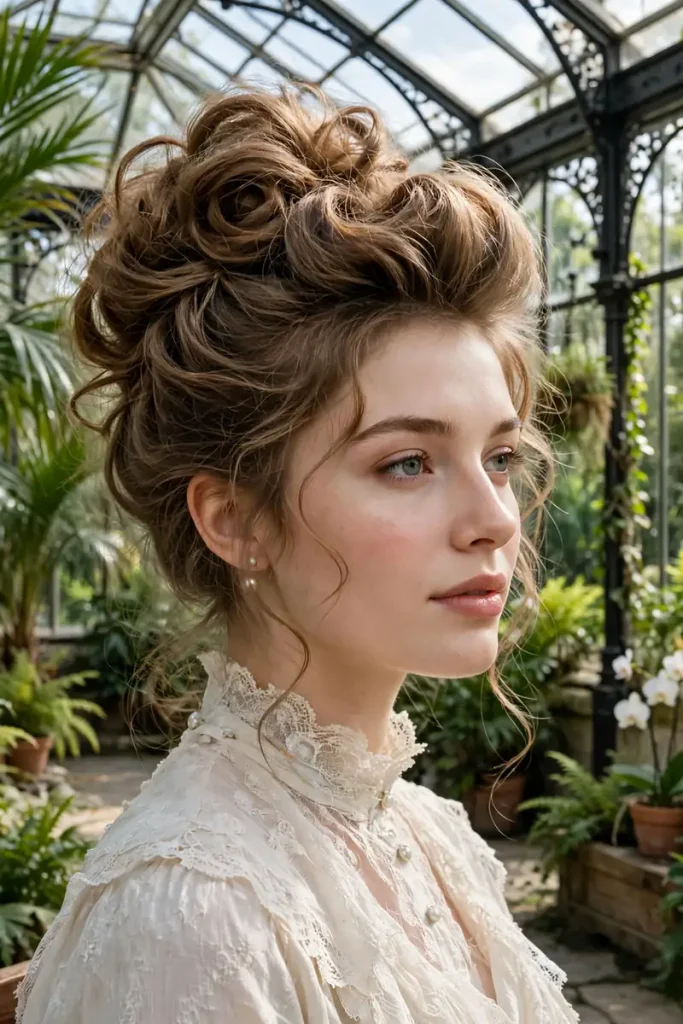
The Gibson Girl is one of the most recognizable late-19th-century hairstyles — that big, soft, piled-high look tied to the fashionable ideal of the 1890s. The secret is volume at the crown: tease the roots, smooth the top layer over, and gather everything into a loose, high bun or twist, leaving it soft and a little undone. My first Gibson Girl attempt gave me what can only be described as “distressed beehive,” but the fix was simple — less teasing, more smoothing. Use a boar-bristle brush to smooth the top layer and the whole thing transforms. This style is magic on round faces because all that height at the crown makes the face look longer. Fair warning: you will feel extremely fancy, and you will be tempted to refer to your living room as “the parlor.”
6. The Psyche Knot
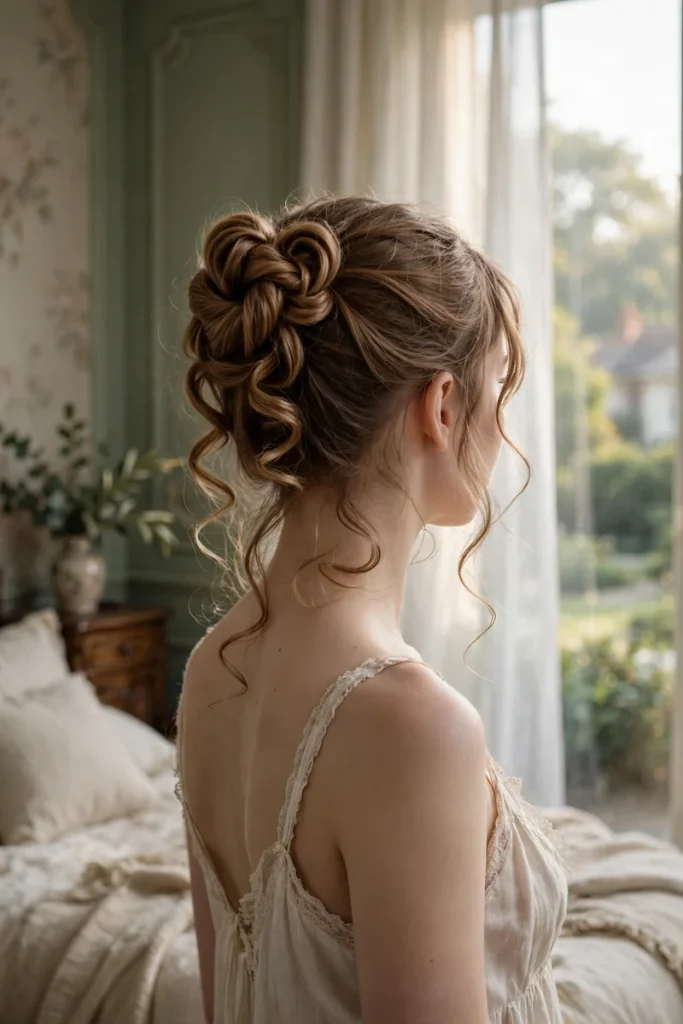
The Psyche knot sounds like something from a mythology exam, but it is actually one of the prettiest Victorian updos: hair looped and twisted into a soft knot at the back of the crown, with the ends left loose and curled. It is softer and more romantic than a chignon, with a sort of “I just threw this up but look how perfect it is” energy that took the Victorians a solid hour to fake. The trick is to not overthink it — loop, twist, pin, and let a few pieces escape around the face. I wore this to my sister’s wedding and my updo outlasted the bride’s. She has forgiven me. Mostly. This is the style to choose when you want Victorian elegance without looking like you are in a costume — it reads as effortlessly romantic, not theatrical.
7. The Waterfall of Curls (Half-Up Ringlets)
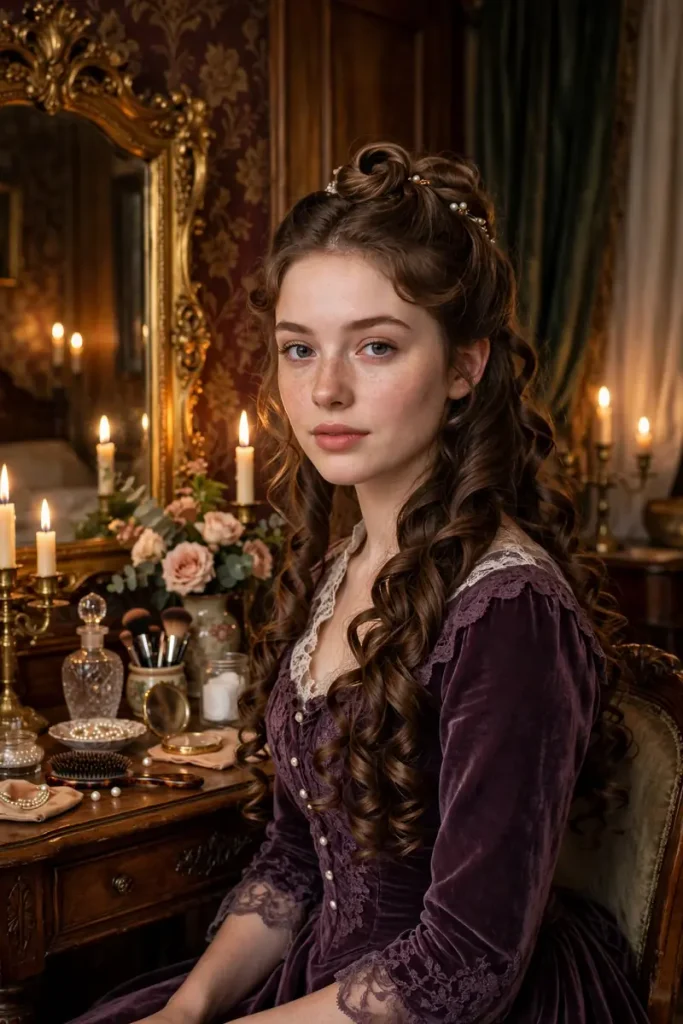
Imagine a Gibson Girl had a baby with a romantic heroine, and you get the waterfall of curls: the top half swept up and back into a soft pouf or twist, while the bottom half cascades in defined ringlets. This was the ultimate “look at all my hair” style of the era, and honestly, the Victorians were onto something. Gather the top section from temple to temple, twist it loosely, pin it at the crown, then curl the remaining hair in chunky sections. It photographs like an absolute dream — every angle looks good, which is more than I can say for most of my hairstyles. Budget tip: you do not need a salon for this. A $25 curling iron and twenty minutes will get you there, and the top twist hides any curling mistakes underneath.
8. Braided Crown with Ribbon
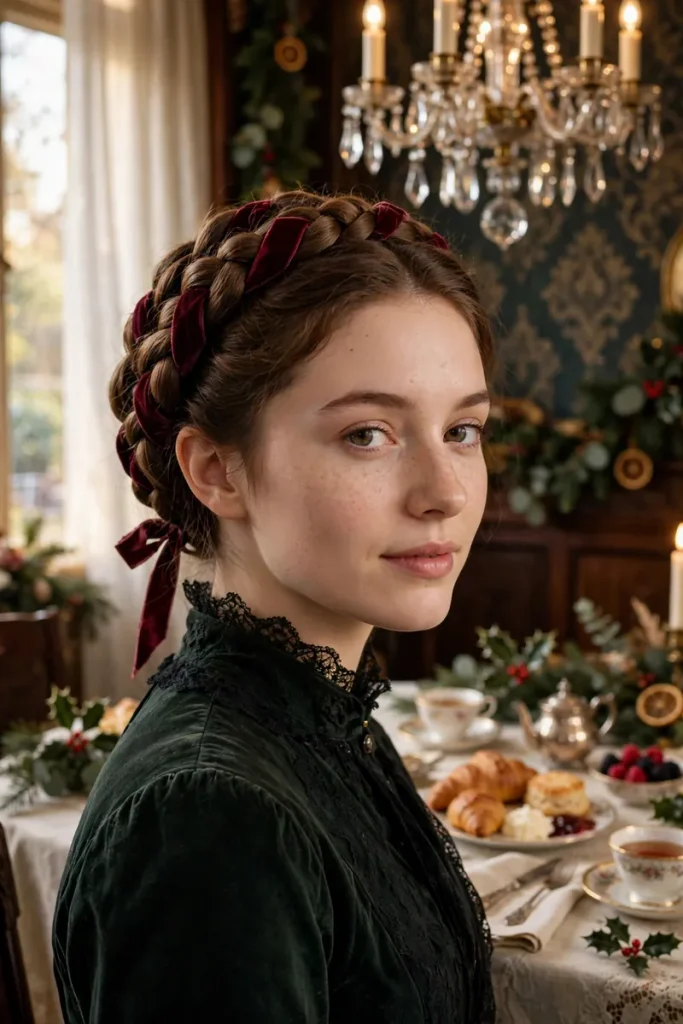
Take the braided coronet from the early era and dress it up: weave a velvet ribbon through the braids before wrapping them around your head. The Victorians were obsessed with ribbons — hair ribbons, hat ribbons, ribbons on everything — and this one detail takes a pretty style and makes it unforgettable. I did this for a Christmas party with a deep burgundy ribbon and got stopped twice for photos by total strangers. Twice! The ribbon also hides a multitude of sins: uneven braids, visible pins, that one section that refused to cooperate. Choose a ribbon color that matches your outfit or the season, and tie the ends in a small bow at the back for the full effect. It is the cheapest style upgrade on this list — ribbon costs about three dollars.
9. The Low Rolled Bun
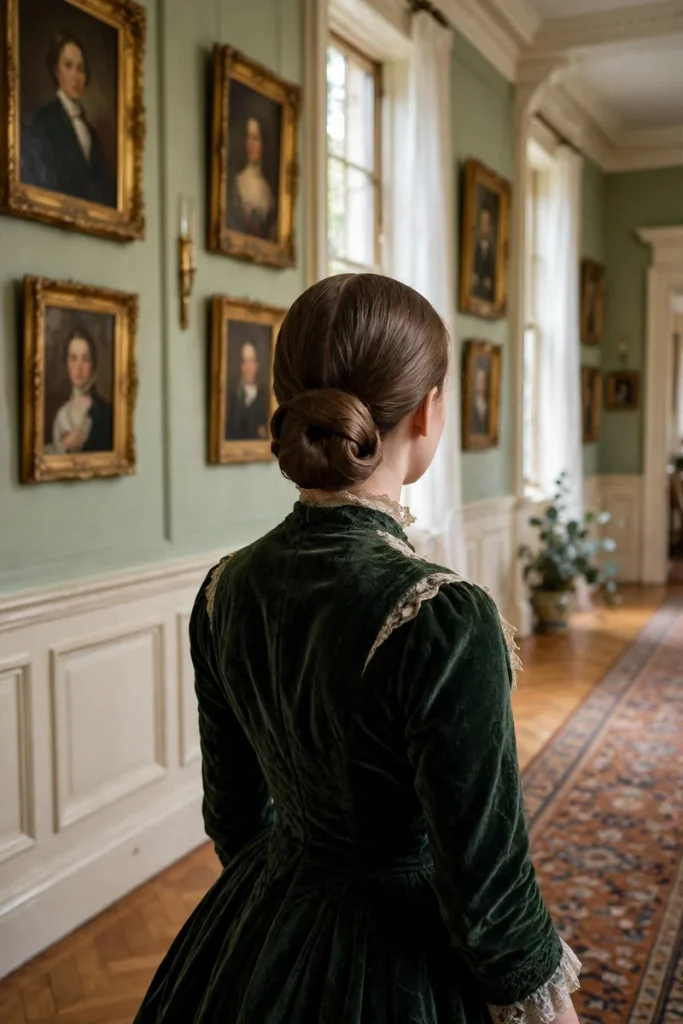
The low rolled bun is the Victorian answer to the question “what do I wear with a high neckline?” Hair is smoothed back and rolled under at the nape into a fat, soft roll — no twisting, just rolling, like you are tucking the hair into itself. It is simpler than a chignon and has a plumper, more romantic silhouette. The roll stays better than you would expect if you anchor it with pins in an X pattern instead of parallel — I learned this from a hairstylist friend after my first rolled bun slid south by lunchtime. This style is a gift for thick-haired girls: all that hair that makes other updos bulky becomes the star here, giving you a gorgeous, full roll that fine hair can only dream of. Finish with a light mist of flexible-hold spray, not the crunchy stuff.
Late Victorian (1880–1901): The Glamorous Finale
The last decades of the Victorian era went full glamour: bigger volume, softer textures, and styles that practically begged to be photographed. These final five looks are the most dramatic — and the most fun to wear today.
10. The Fluffy Pompadour with Puffed Bangs
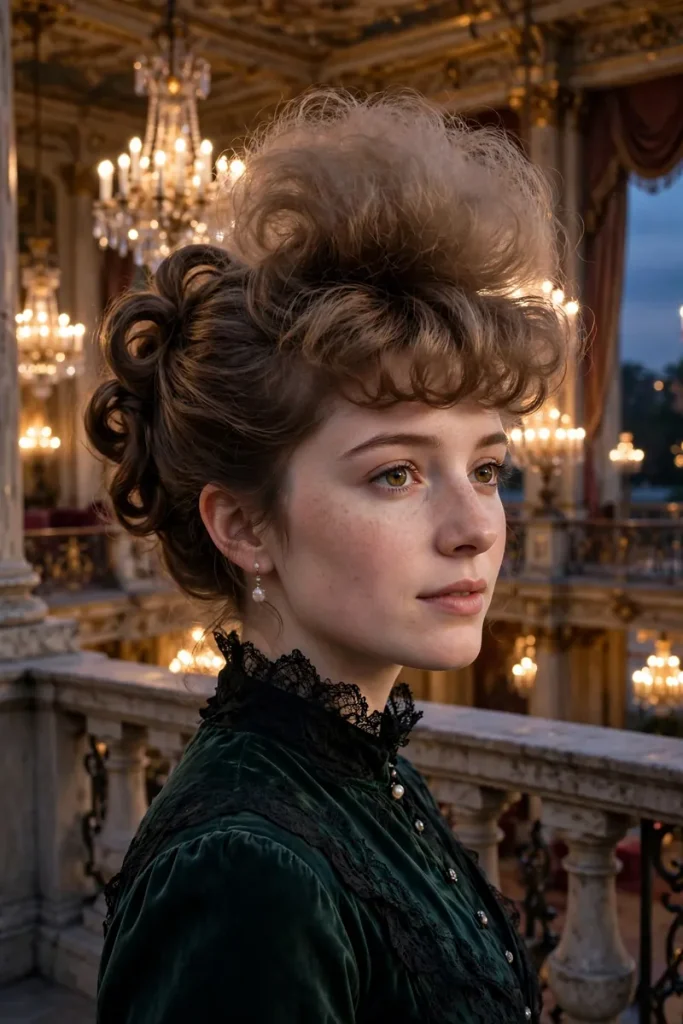
Late Victorian women took the pompadour and turned the volume up to eleven: the front hair puffed up high over the forehead in a soft, cloud-like roll, with everything else swept back. The “puffed bangs” part is the key — it is not a fringe, it is a whole architectural feature. To fake it, backcomb the front section, smooth it back over a small foam insert or a rolled sock (yes, really — the Victorians used hair rats made from their own shed hair, so a sock is honestly an upgrade), and pin it into a soft pouf. I wore this to a New Year’s Eve party and felt like I should have been arriving by carriage. It is the boldest style on this list, and it is absolutely worth it for the drama alone.
11. Finger Waves, Victorian Edition
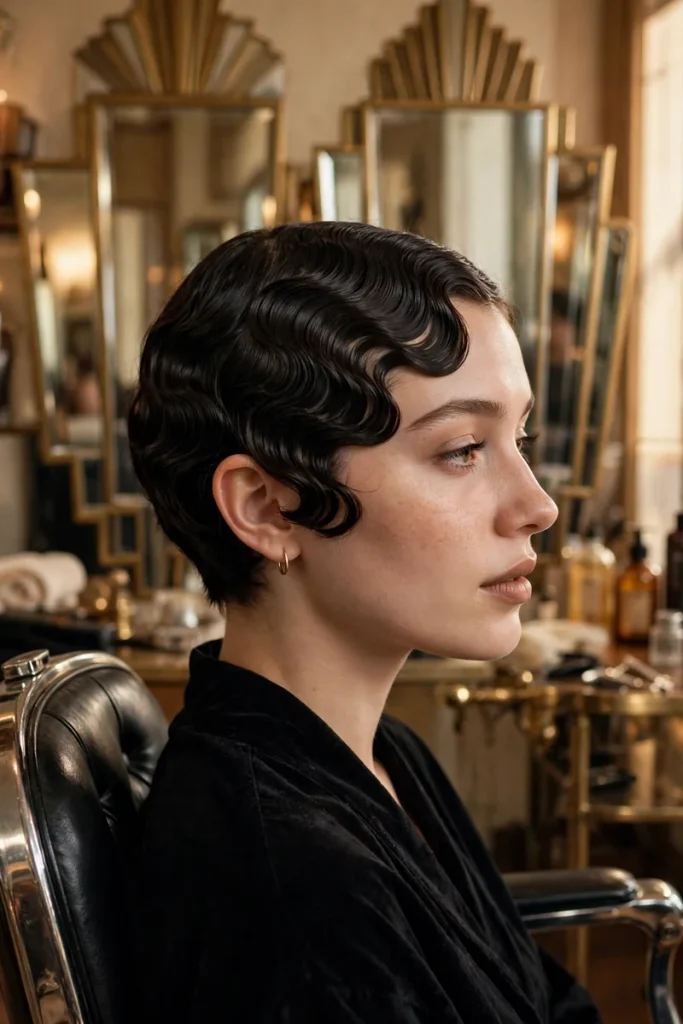
Finger waves are usually associated with the 1920s rather than the Victorian era, but their soft, sculpted S-shape pairs beautifully with a vintage-inspired look. Think of this one as a modern crossover, not a strict historical recreation. The technique is embarrassingly easy: apply strong-hold gel to damp hair, create deep waves with a comb and your fingers, clip each wave in place with duckbill clips, and let it dry completely (or diffuse on low). The result is pure vintage glamour that looks incredible on short to medium hair. My bob-length friend tried this and looked like she had stepped out of a silent film — in the best way. Maintenance note: this style laughs at humidity, which is to say, do not attempt it on a rainy day unless you enjoy watching your hard work dissolve in real time.
12. The Double Braided Buns
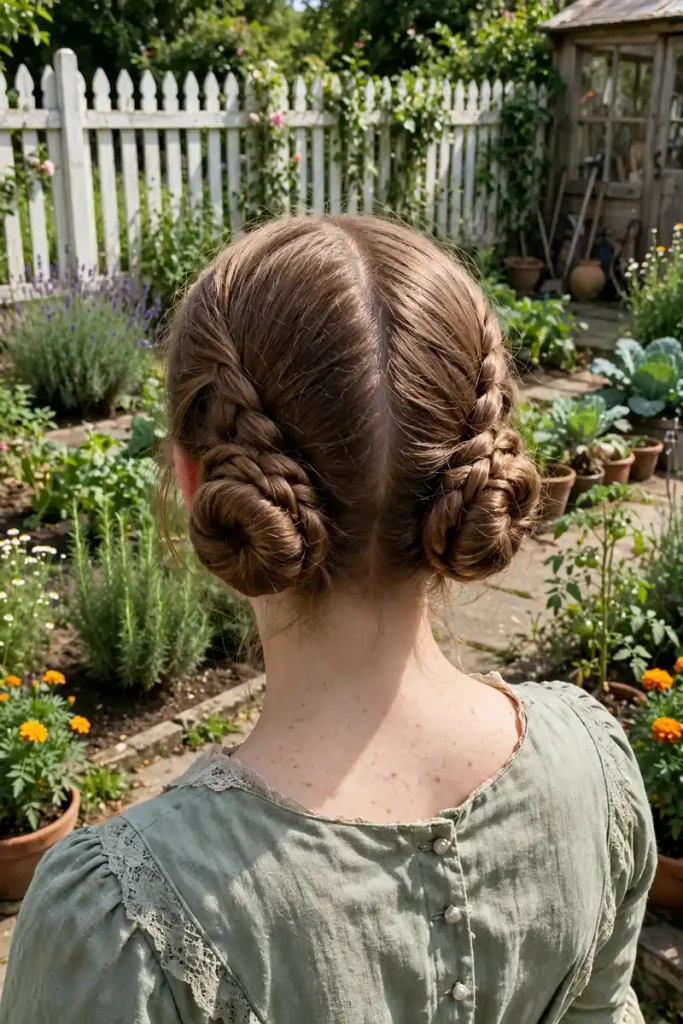
Two braids, two buns, one very happy head. Part your hair down the middle, braid each side, then coil each braid into a bun at the nape or just behind the ears and pin. The Victorians wore this as a practical daytime style — it kept long hair completely contained — but on modern heads it reads as sweet, symmetrical, and slightly whimsical. I wore this on a hiking trip (practical!) and then straight to dinner (cute!), which makes it the hardest-working style on this list. For extra Victorian authenticity, keep the center part severe and the buns smooth rather than messy. For extra modern wearability, pull a few face-framing pieces loose. Both versions are correct. This is also the best style here for very long hair — it distributes the weight evenly so your neck does not file a complaint.
13. The Topknot with Loose Tendrils
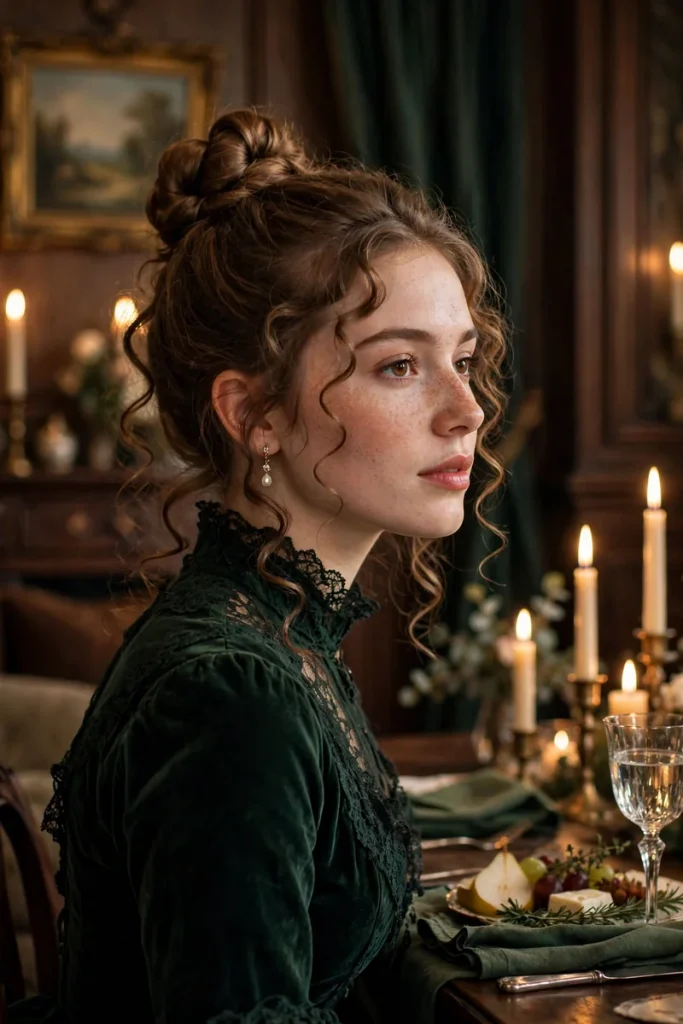
Before the topknot was a lazy-day staple, the Victorians were doing it with intention: hair swept high and twisted into a soft knot at the crown, with deliberately curled tendrils left loose around the face and nape. The difference between this and a modern messy bun is control — the Victorians wanted it to look soft, not sloppy. So smooth the base, build the knot neatly, then curl just the tendrils and let them fall. It is the perfect “fancy but not trying too hard” style for date night, and it takes about fifteen minutes once you have the motion down. My tendrils used to fall flat within an hour until I started curling them after pinning the knot, not before — game changer. Tiny detail, massive difference.
14. The French Twist, 1890s Style
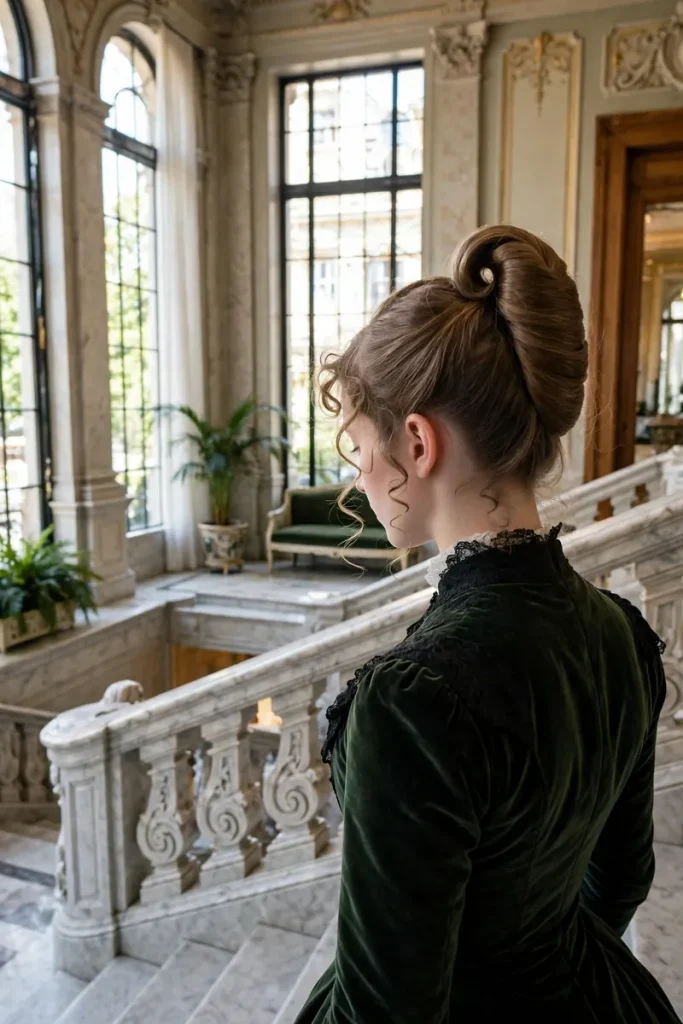
The French twist never really left, but the 1890s version was softer and more romantic than the severe office twist we know today: hair swept up and folded into a vertical roll, but with the top left full and slightly poufed, and soft curls escaping at the temples. The trick to the Victorian version is to not pull it too tight — modern twists are sleek, Victorian twists were plush. Roll loosely, pin generously, and let it breathe. This is my number-one recommendation for anyone who wants to try exactly one Victorian style: it works on almost every face shape, it suits every hair texture from fine to thick, it looks expensive, and it takes ten minutes. I have worn it to job interviews, weddings, and one memorable parent-teacher conference where I needed to look like I had everything under control. It worked. Probably.
Steal the Look: 5-Minute Victorian Tricks
You do not need to commit to a full historical reenactment to steal Victorian magic. A severe center part instantly makes any style read more Victorian. A velvet ribbon tied at the nape of a ponytail does the same. Bobby pins crossed in an X pattern can give an updo a firmer anchor than pins placed loosely side by side. And the single biggest trick: smoothness on top, softness everywhere else. Sleek crown plus romantic texture is the entire Victorian formula in one sentence. As for budget, every style on this list is DIY-friendly with tools you may already own: bobby pins, a curling iron, and a ribbon from the craft store. A professional updo can be pricey, while practicing at your bathroom mirror costs nothing. The Victorians did their hair by candlelight with no running water. You have got this.
FAQs
Will Victorian hairstyles work on short or fine hair?
Yes — with a few smart cheats. Fine hair actually holds Victorian curls beautifully because it takes a set well; just use a volumizing mousse at the roots first. For short hair, focus on the texture-based styles like finger waves or the loose romantic waves, and use clip-in extensions or a hairpiece for the big updos — the Victorians wore hairpieces constantly, so you are being historically accurate, not cheating.
Are Victorian hairstyles hard to do yourself?
Some are, some really are not. The loose waves, low rolled bun, and braided crown are genuinely beginner-friendly — twenty minutes or less once you have tried them twice. The Gibson Girl and Psyche knot take more practice, so try them on a lazy weekend first, not the morning of the wedding. Every style gets dramatically easier on the third attempt. That is not motivational fluff; it is just how muscle memory works.
How do I keep a Victorian updo from falling apart?
Three rules: start with day-old hair (freshly washed hair is too slippery), pin in X patterns instead of parallel, and finish with a flexible-hold hairspray rather than maximum-hold — the crunchy stuff cracks and then everything collapses at once. For all-day events, carry five extra bobby pins in your bag. Future you will be grateful, and past you will feel very clever.
Can I wear Victorian hairstyles to a modern office or wedding?
Absolutely — that is the whole point of this list. The chignon, French twist, low rolled bun, and smooth topknot can all look office-appropriate and polished rather than costumey. For weddings, the Gibson Girl, Psyche knot, and waterfall of curls are showstoppers that photograph beautifully. The trick is keeping makeup and outfit modern; Victorian hair plus modern clothes equals romantic elegance, not a history lesson.
Conclusion
Here is what three weeks in a Victorian rabbit hole taught me: those women were onto something. Their hairstyles were not just pretty — they were practical, long-lasting, and designed to make the most of what you have, no forty-five-minute flat iron sessions required. Start with the easy wins — the loose romantic waves, the braided crown, the low rolled bun — and work your way up to the Gibson Girl when you are feeling brave. Practice on quiet weekends, keep extra bobby pins in your bag, and remember the golden rule: smooth on top, soft everywhere else. My great-great-grandmother did all of this by candlelight. You have a curling iron and YouTube. Go make her proud — and send me a picture, because I am still collecting proof that the Victorians had better hair days than all of us.