16 Baby Halloween Costumes, Chosen by What Your Baby Can Actually Do Right Now
The first Halloween costume I ever bought for my daughter was a tiny dinosaur outfit with a spiked hood, and I was so pleased with myself. Then I put it on her, and she immediately burst into tears, because the hood kept flopping into her eyes and she had no way of pushing it off herself. We took exactly one photo before I gave up and let her wear it as a onesie, hood down, spikes flat.
That was the year I learned the thing every baby costume list should say up front and almost none of them do: the costume has to match what your baby can physically do. A newborn who can’t lift their head needs something completely different from a toddler who’s cruising around furniture and grabbing at everything within reach. So instead of organizing this by cute factor, I’ve organized it by stage. Find where your baby actually is right now, not where they’ll be in three months.
Newborn to 3 Months: Mostly Sleeping, Mostly Still
At this stage, your baby isn’t doing much besides lying there and being held, and honestly, that’s the whole appeal. The costume just needs to be soft, warm, and easy to get on and off for the six diaper changes you’ll do before you even leave the house.
1. A simple animal onesie with soft ears sewn onto the hood.
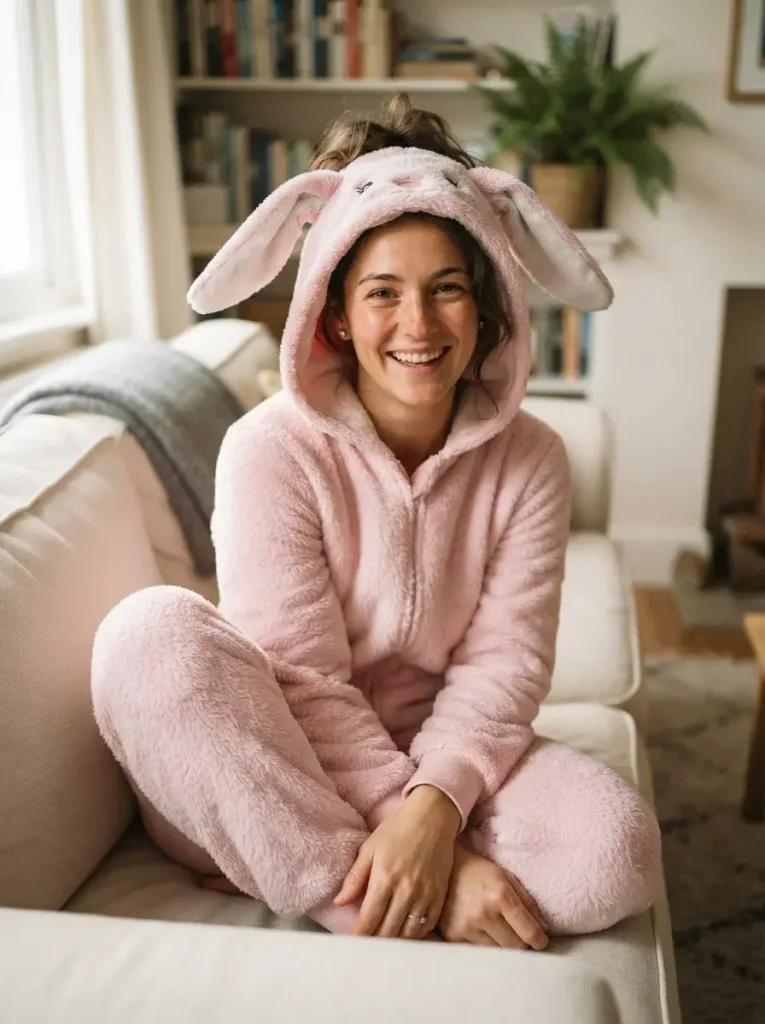
No separate headpiece to fuss with — the ears are attached to what they’re already wearing. This is the lowest-effort, highest-comfort option there is, and it photographs beautifully because newborns just look like tiny loaves no matter what you put them in.
2. Swaddled as a “burrito,” with a printed wrap.

If your baby is still being swaddled anyway, a seasonal-print swaddle blanket doubles as the costume. You don’t have to dress them in anything extra — just wrap them the way you already do, in fabric that happens to look festive.
3. A onesie with a small, soft headband.
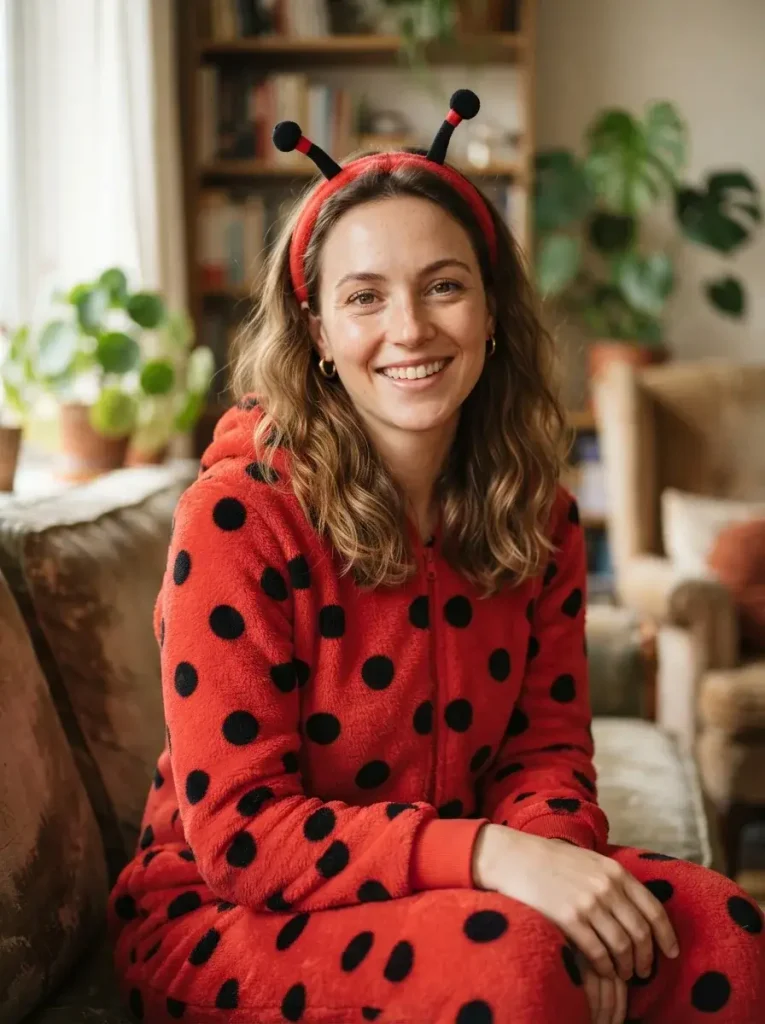
Something like tiny pumpkin-stem felt or a small fabric bow. Skip anything with elastic that sits tight across the forehead — a loose headband you can slip off in two seconds is worth more than a perfect photo.
4. Just their own outfit, plus one seasonal accessory nearby.
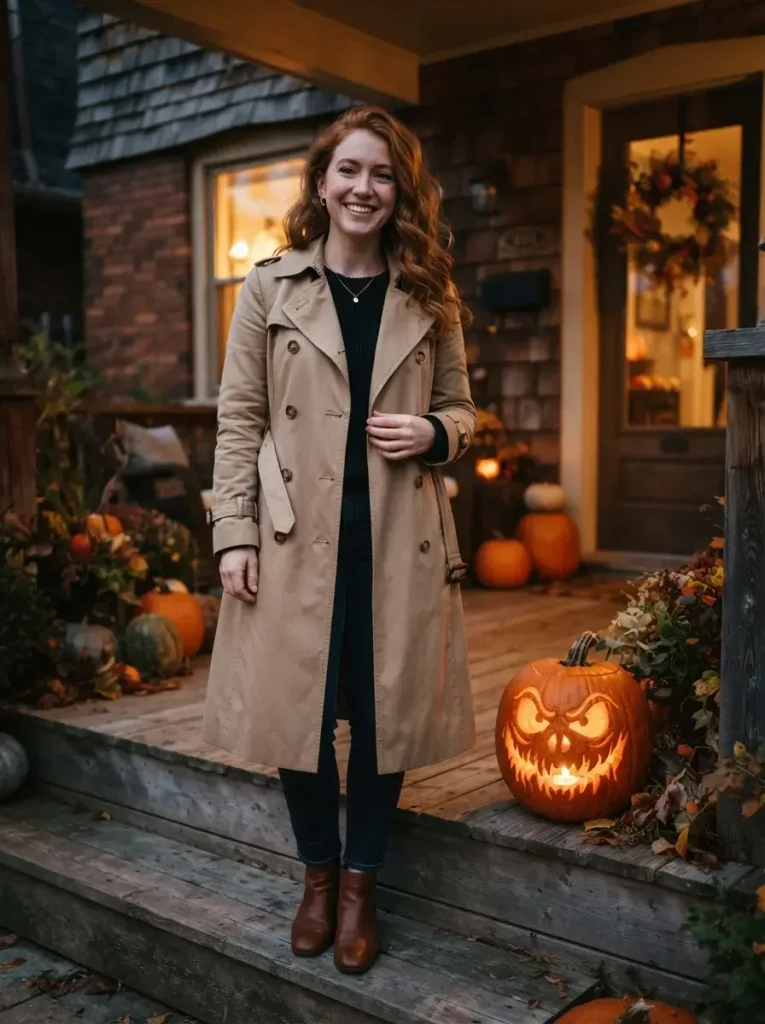
A small stuffed pumpkin placed next to them for photos, or a blanket in a fall print underneath them. At this age, most of the “costume” can genuinely just be styling around them rather than on them, and nobody will think less of you for it.
3 to 6 Months: Head Control, Rolling, Reaching
Your baby can hold their own head up now and is probably starting to bat at things, which opens up slightly more options, but anything near the face is still a hard no.
5. A footed sleeper in a costume print.

These exist in every pattern imaginable now — pumpkins, black cats, little devils — and they function exactly like the sleeper your baby already wears every night, just seasonal. Zero learning curve, maximum comfort.
6. A soft cape, tied loosely, over regular clothes.

If your baby is starting to roll, a light cape gives you the visual of a costume without restricting movement at all. Keep it loose enough that it doesn’t tangle if they roll onto their stomach.
7. Mittens or soft paws over their hands.
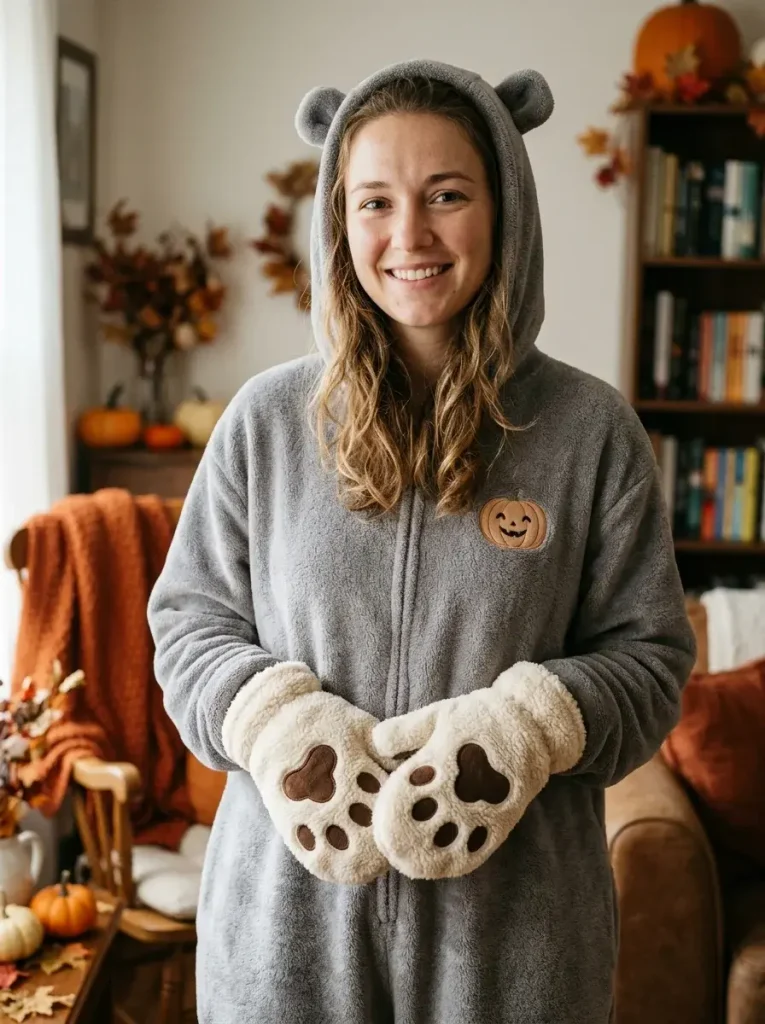
If your baby loves batting at things, paw-shaped mittens turn that natural movement into part of the costume. Bonus: it also stops them from scratching their own face, which at this age is doing double duty.
8. A simple bib shaped like a costume piece.

A pumpkin-shaped or ghost-shaped bib, worn over their regular outfit. Bibs are already part of the daily routine at this age, so it doesn’t add anything unfamiliar to their day.
6 to 12 Months: Sitting, Crawling, Grabbing Everything
Now your baby is mobile, curious, and extremely interested in pulling at anything attached to their own body. This is the stage where costumes fail fastest, because anything with small pieces gets grabbed and pulled within minutes.
9. A one-piece costume with no separate hat or headpiece.
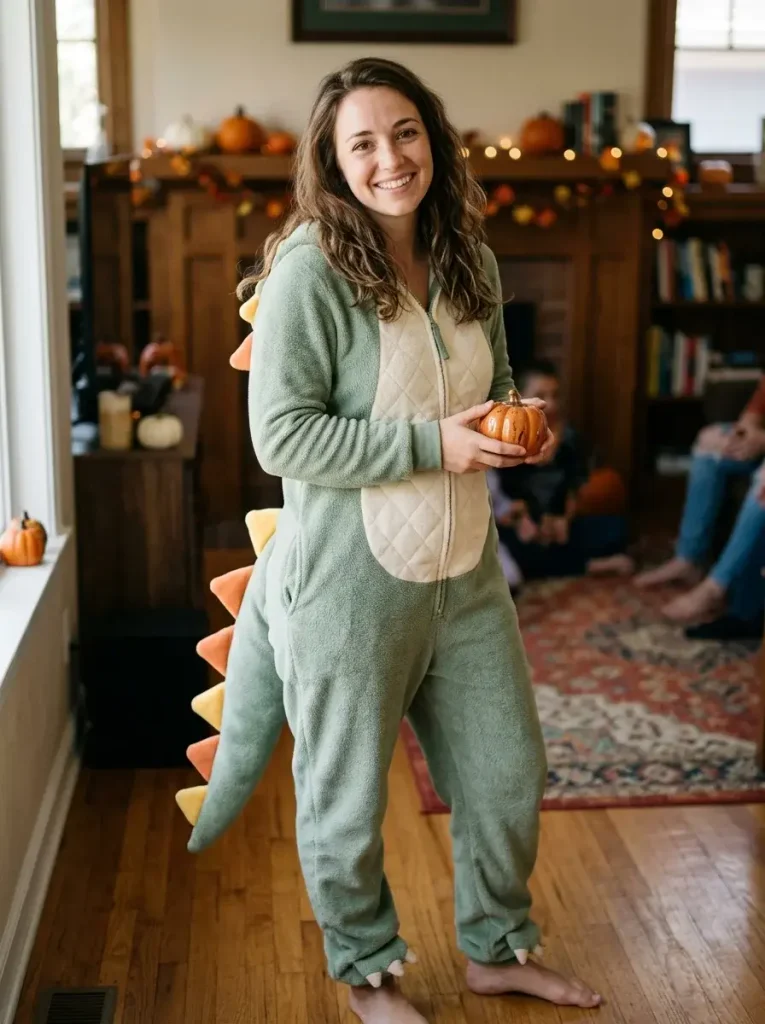
Full-body designs — like a built-in dragon or a built-in bear, all one piece — survive crawling and grabbing much better than anything with add-on parts. If it’s not attached, assume it will end up in their mouth or on the floor within ten minutes.
10. Something with a soft, structured shape they can crawl in.
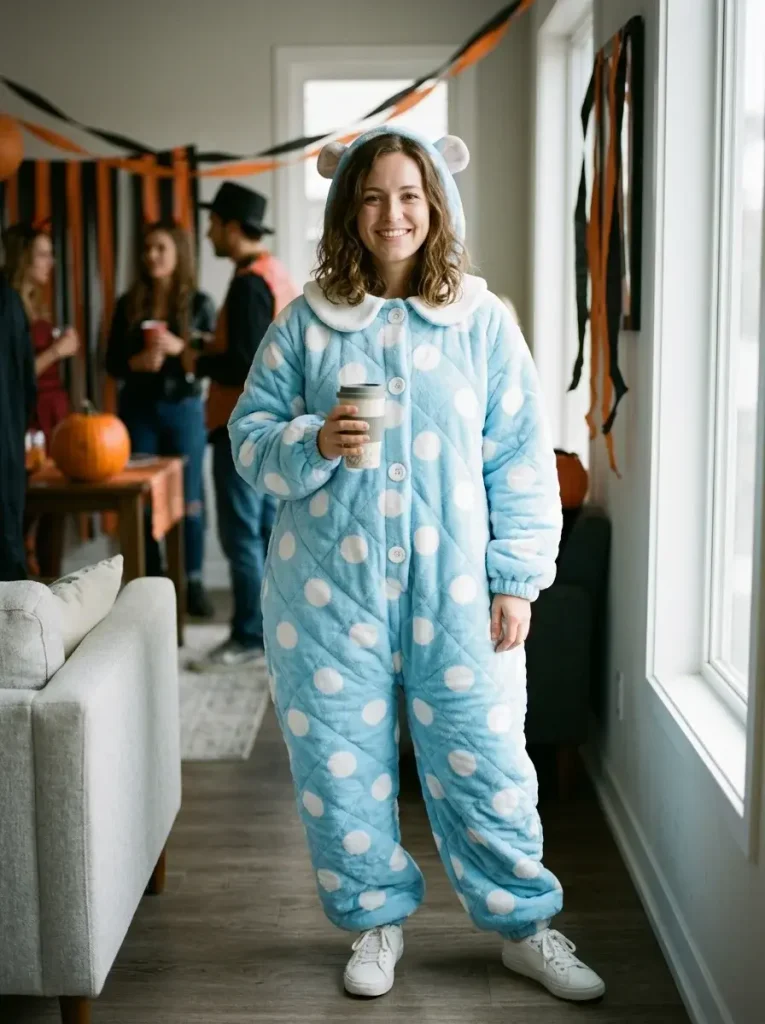
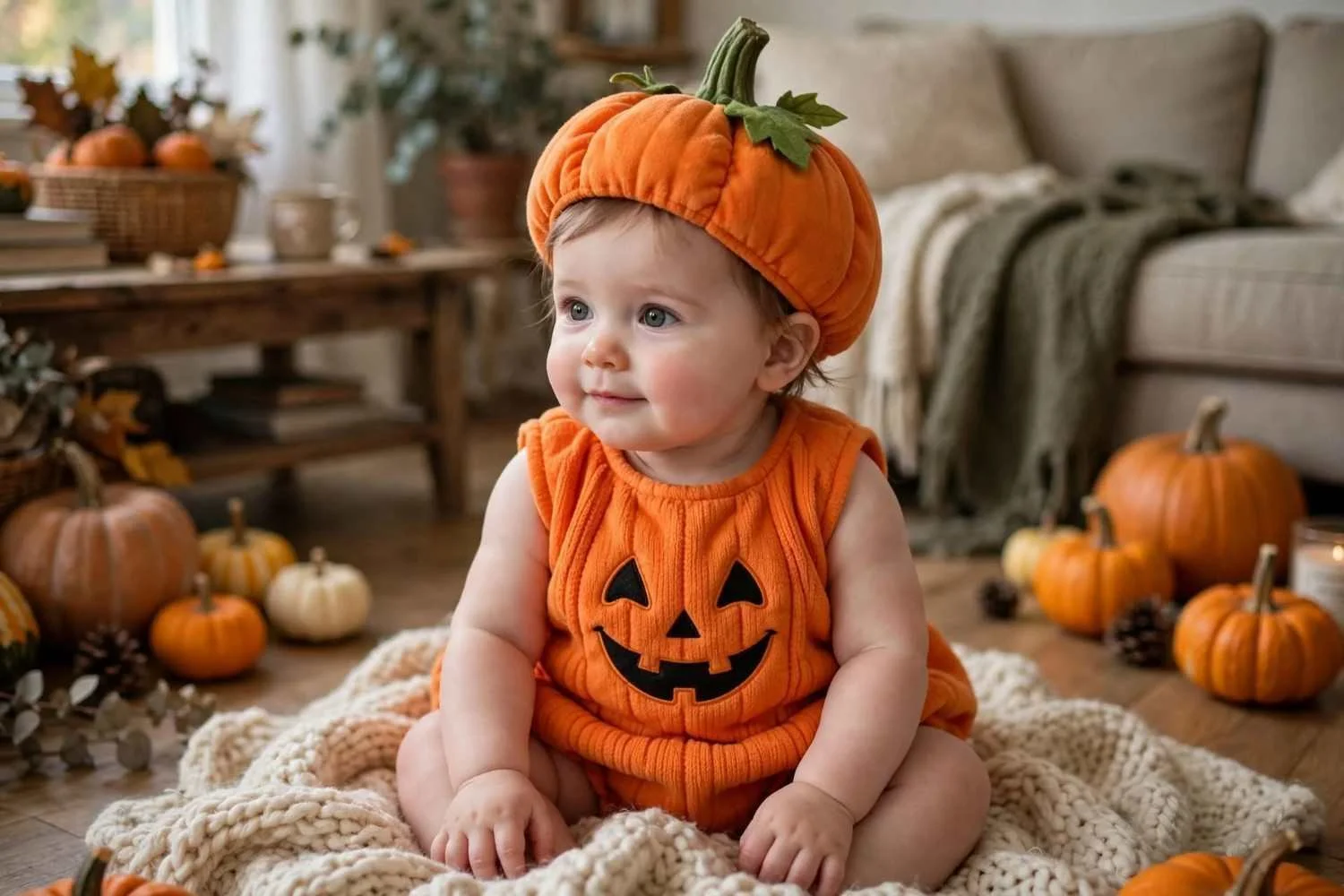
A rounded costume like a soft round animal or a pumpkin-shaped bodysuit gives you a strong visual without any dangling pieces. Check that the shape doesn’t restrict their knees or arms, since crawling is the whole activity at this stage.
11. A simple pair of soft horns or ears on a stretchy headband, treated as optional.

Put it on for the photo, take it off immediately after. Don’t expect it to survive the whole event, and don’t fight your baby about it — a five-second photo is worth more than a battle over a headband.
12. Overalls with a printed shirt underneath.

Loose enough to crawl in, easy to get on and off for diaper changes, and it reads as a full costume — a little pumpkin farmer, a tiny mechanic — without a single restrictive piece anywhere on their body.
12 to 24 Months: Walking, Opinions, Possibly Refusing to Wear Anything
Your toddler is walking now, has real preferences, and may have very strong feelings about what touches their body. This is the stage where the costume has to survive negotiation, not just movement.
13. Let them choose between two options you’ve already approved.

Instead of picking one costume and hoping they’ll wear it, narrow it down to two you’re equally happy with and let your toddler point. Giving them the choice — within limits you’ve already set — massively increases the odds they’ll actually keep it on.
14. A costume that’s just a really good version of their favorite everyday item.

If they love a specific blanket, hat, or stuffed animal, look for a costume built around that exact thing. Familiarity beats novelty at this age, every time.
15. Something with pockets, if they’re a hoarder of small objects.
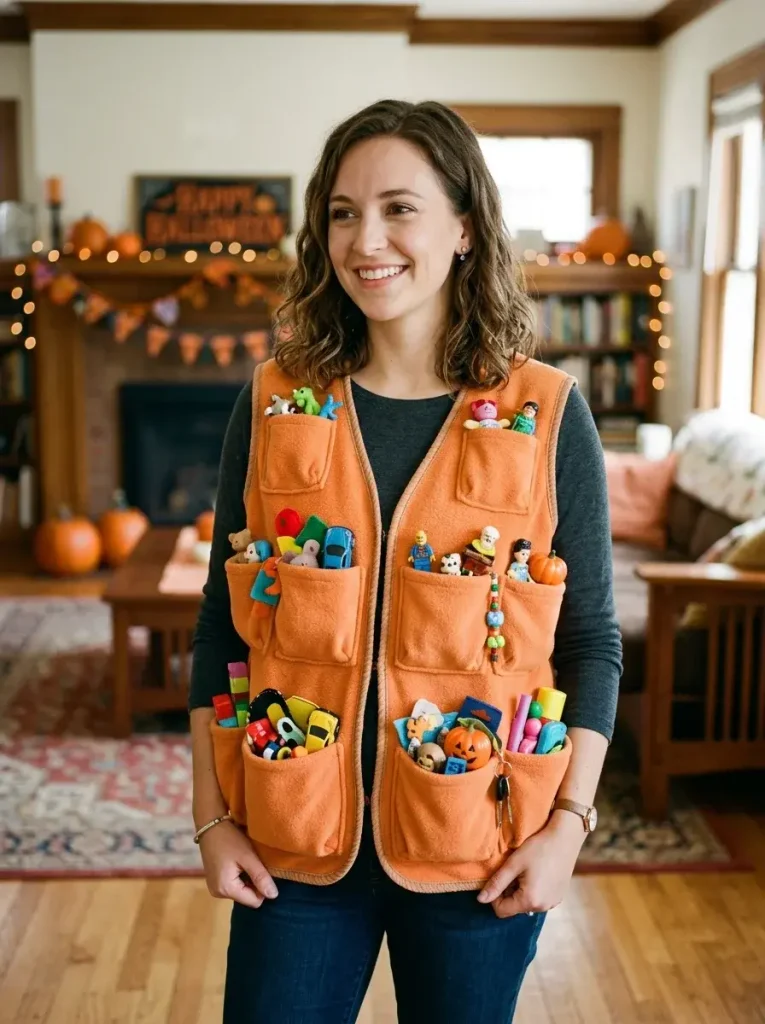
Toddlers this age tend to collect things — a rock, a leaf, a piece of candy — and a costume with actual working pockets keeps their hands busy and their focus off pulling at the costume itself.
16. A costume they can put on partially themselves.
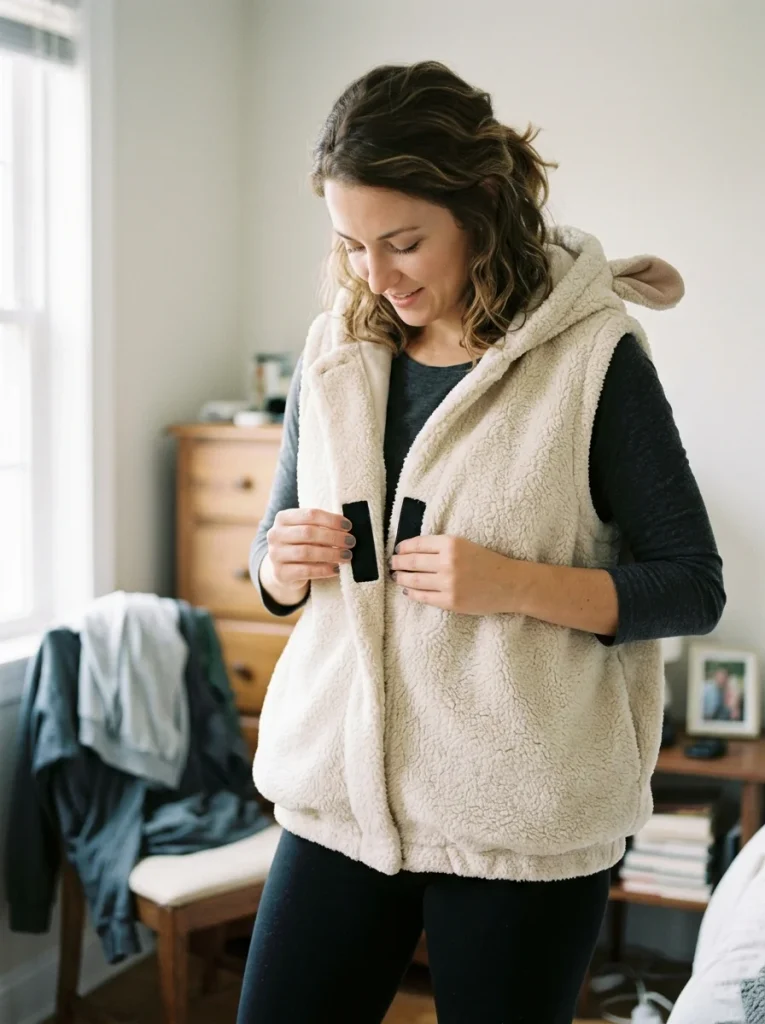
Something with a simple front zipper or a costume they can step into, even if you finish the job. Toddlers this age want independence, and a costume that lets them “help” is far more likely to end the night still on their body.
The Comfort-First Checklist
Before you buy anything, run it through this list. I wish someone had handed me this before the dinosaur hood incident.
Can your baby breathe and see clearly in it, with nothing covering their nose or eyes even loosely? Is there anything with a drawstring, ribbon, or long tie near the neck — because that’s an automatic no, regardless of how cute it looks. Can you get the whole thing off in under thirty seconds for a diaper change, at 9pm, in the dark, one-handed? Is the fabric something you’ve already tested against your baby’s skin, or is it new and unfamiliar for the first time on a night you also need to leave the house? And if your baby is asleep in it, does it still work as pajamas — because there’s a real chance they’ll nap in whatever they’re wearing that day.
If a costume fails more than one of these, it’s not the right costume for right now, no matter how good it looks online.
The Photo Window
Here’s something nobody talks about, and it’s saved me every single year: babies have a genuinely small window where the costume is on, they’re not crying, they’re not asleep, and the lighting is decent. For most babies under one, that window is somewhere between five and fifteen minutes, total, for the whole day.
Don’t save the photos for the actual event. Do them earlier — an hour after a nap, after a feeding, when your baby is at their most content — and treat the actual evening as just for wearing the costume and being present, not for getting the shot. I’ve chased the “perfect Halloween photo” during an actual event more times than I can count, and it never once worked. The good photos always happened earlier in the day, when nobody was rushing and nobody was overtired.
What Actually Matters Here
Every year, the costumes I look back on fondly aren’t the most elaborate ones. They’re the ones where my daughter was comfortable, where I wasn’t fighting her to keep something on, and where we got one genuinely good photo without a meltdown attached to it.
Match the costume to the stage your baby is actually in today, not the stage you’re hoping they’ll be in by the time Halloween arrives. Run it through the comfort checklist before you fall in love with how it looks in a photo online. And take the real picture early in the day, when everyone’s still in a good mood. That’s the whole formula, and it’s held up for me every year since the dinosaur hood.