14 Pregnant Fall Outfits That Grow With You (Not Just Your Bump)
Somewhere around week 22, I stood in my closet holding a maternity dress I’d bought online — beige, shapeless, the kind of thing that seemed to whisper “just get through it” — and I put it back. Not because it didn’t fit. Because it didn’t feel like me, and I was tired of dressing like a placeholder for the person I’d be after the baby came.
That was the moment I stopped shopping the “maternity” section like it was its own separate wardrobe universe and started asking a different question: what do I actually want to wear, and how do I let my body change inside of it? Fall turned out to be the easiest season to answer that question, because fall clothes were already built for layering, draping, and things that move with you instead of against you.
This isn’t a list of maternity basics. It’s fourteen outfits I actually wore, organized the way pregnancy actually unfolds — by how your body and your energy shift, trimester to trimester — plus something I wish someone had handed me back in month one: a section on which of these outfits keep working after the baby arrives. Because nobody tells you that the six weeks after birth are their own strange, tender dressing challenge, and half the outfits below were built to survive that stretch too.
How I Actually Think About Dressing a Changing Body
A few things I came back to again and again, worth saying before the outfits themselves:
Your regular clothes work longer than you think. I wore my own oversized sweaters and open cardigans well into the second trimester. The maternity section is a tool, not a rulebook — reach for it when something specific stops fitting, not on principle.
Stretch and drape are your two best friends, and they do different jobs. Stretch fabric moves with sudden growth spurts. Draped fabric skims over whatever shape you’re at that week without needing to stretch at all. A wardrobe with both covers you on the days your body surprises you.
Waistlines are optional, not mandatory. Empire waists, wrap ties, and elastic aren’t a maternity cliché because they’re boring — they’re everywhere because they genuinely work at every stage, including the weeks right after.
And the biggest one: comfort is not the opposite of stylish right now. It’s the whole style. The outfits that photograph best in this season of life are almost always the ones where you weren’t fighting your clothes to get through the day.
Early Days: First Trimester, When Nothing Looks Different Yet (Outfits 1–4)
The strange thing about the first trimester is that your clothes haven’t caught up to how you feel. You might be nauseous and exhausted with a completely flat stomach, which means the real dressing challenge here isn’t coverage — it’s comfort you can hide.
1. The Loosened Denim.
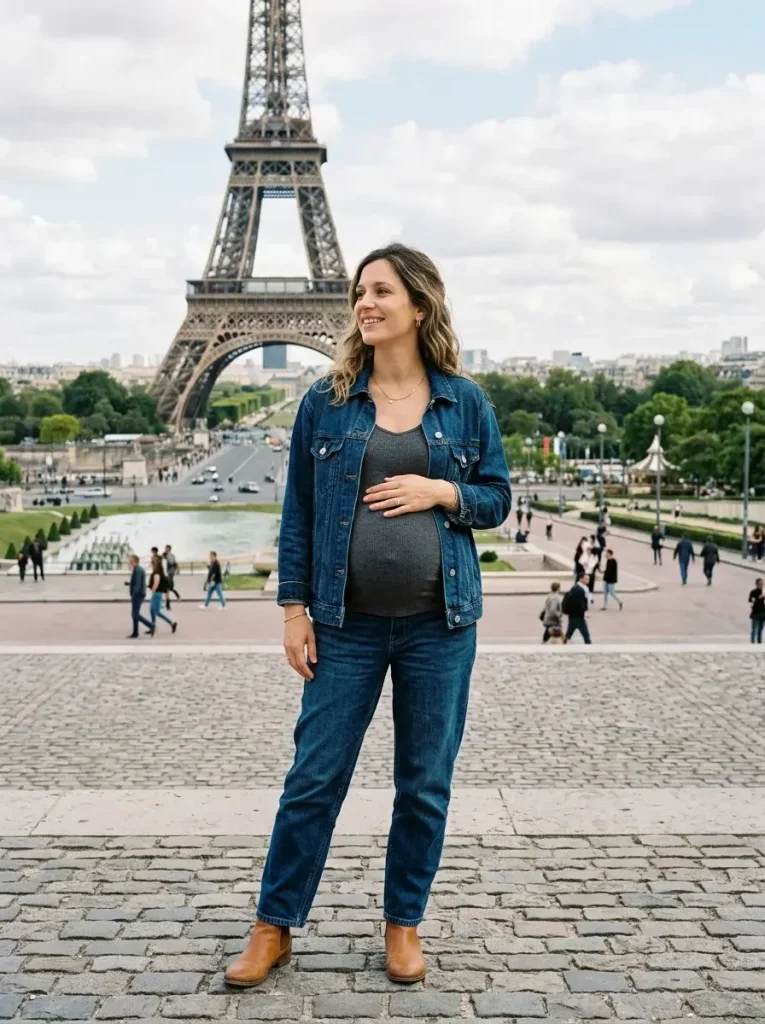
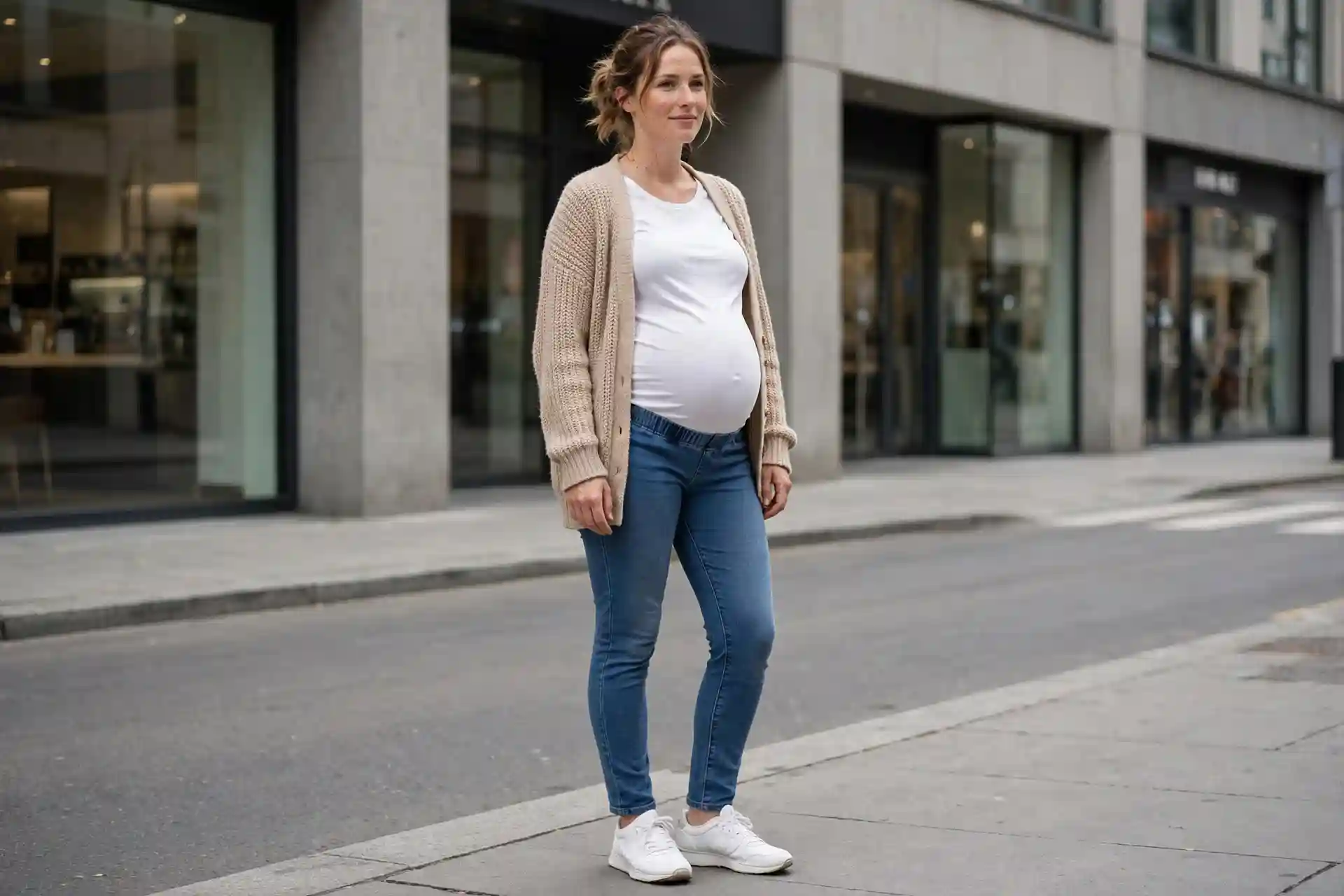
My actual regular jeans, unbuttoned at the top and hidden under a long open cardigan, with a soft tee tucked loosely underneath. Nobody could tell, and my waistband wasn’t fighting me by 2 p.m.
2. The Wrap Dress Default.
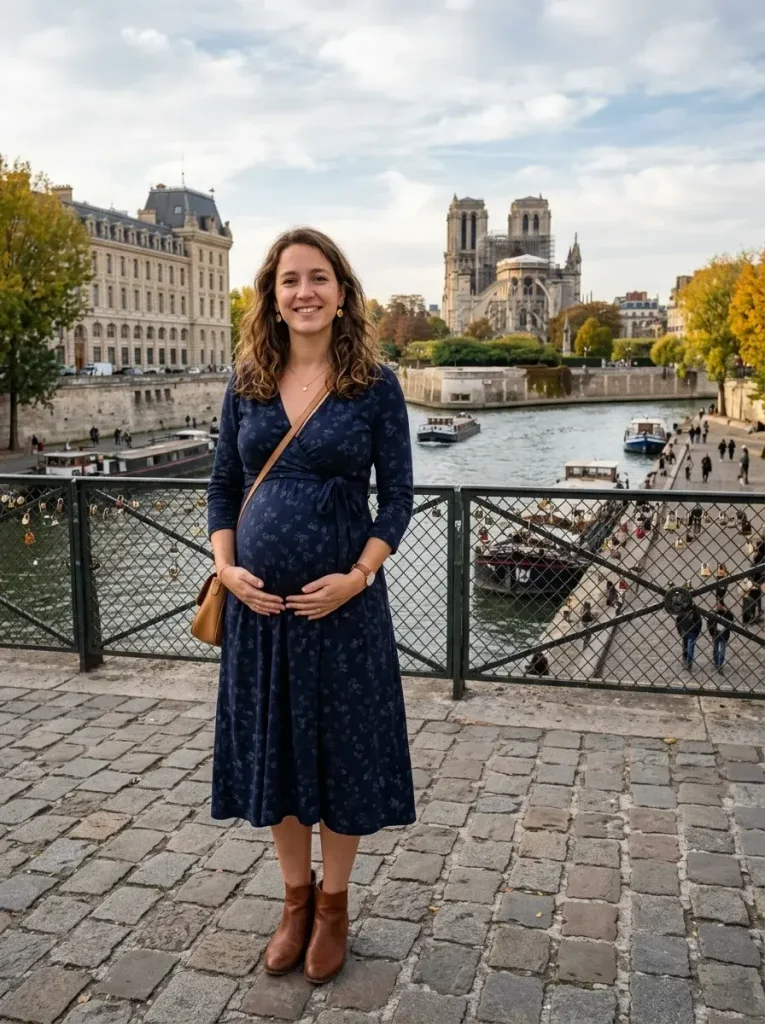
A jersey wrap dress in rust, tied at whatever felt comfortable that day, with ankle boots. This became my go-to for the weeks I felt too tired to think about an outfit — one dress, zero decisions, endlessly adjustable.
3. The Oversized Sweater Reset.
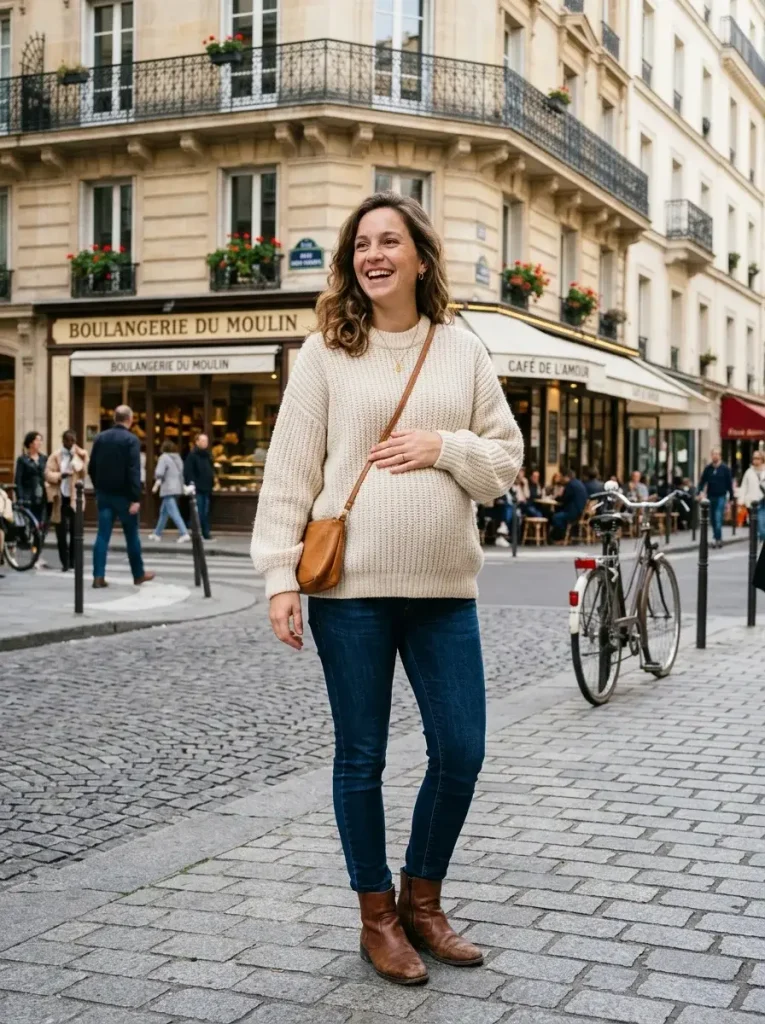
A chunky, longer-length sweater over leggings, worn on the days nausea made anything fitted feel unbearable. I stopped apologizing for this outfit around week nine.
4. The Structured Blazer Trick.
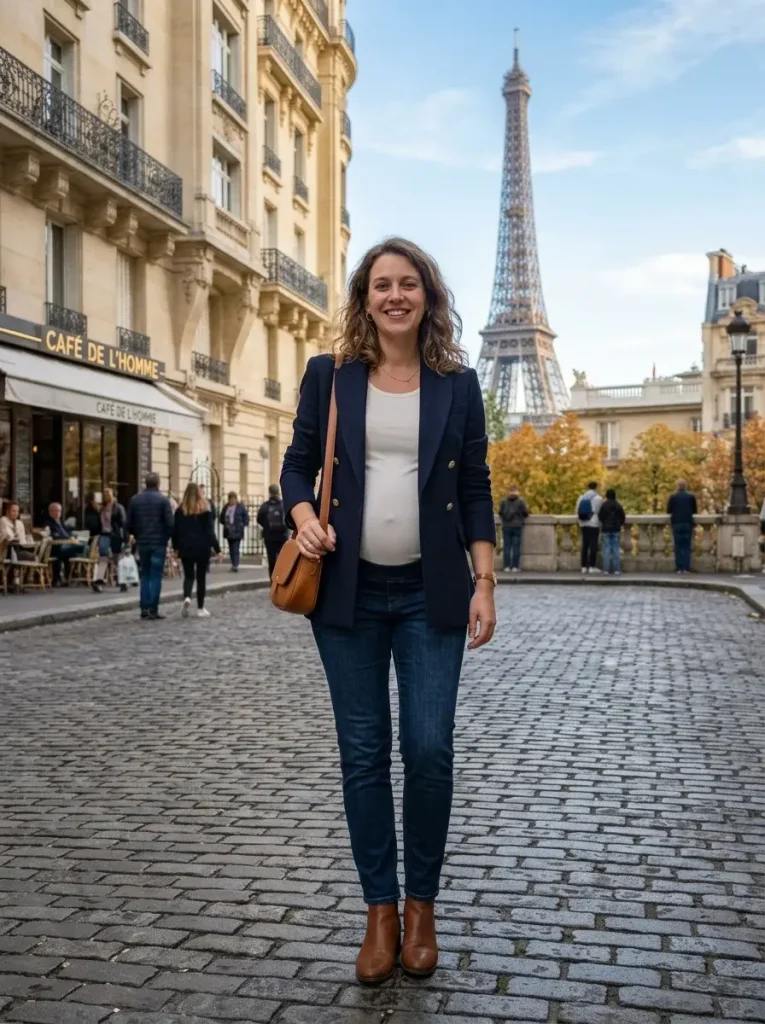
My own blazer, worn open over a soft tee and stretch-waist trousers, for the days I had to look “on” at work while feeling anything but. The blazer did all the visual work so my actual outfit underneath could be pure comfort.
The Turn: Second Trimester, When the Bump Announces Itself (Outfits 5–9)
Somewhere around week 16 to 20, clothes start making decisions for you. This is when I actually enjoyed dressing the most — enough bump to feel proud of, not yet so much that bending down felt like a negotiation.
5. The Belted Coat Moment.
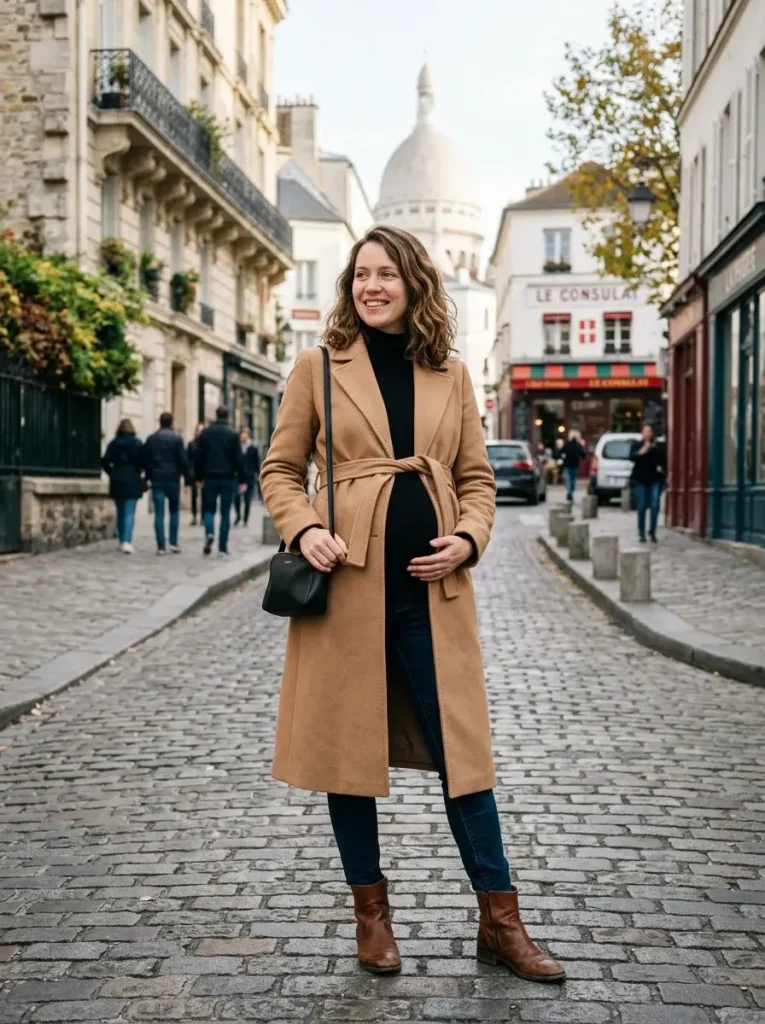
A longline wool coat, belted just above the bump instead of at the natural waist, over a fitted long-sleeve top and leggings. Moving the belt point is the single best trick I learned this whole pregnancy — it flatters instead of fighting your new shape.
6. The Overall Comeback.
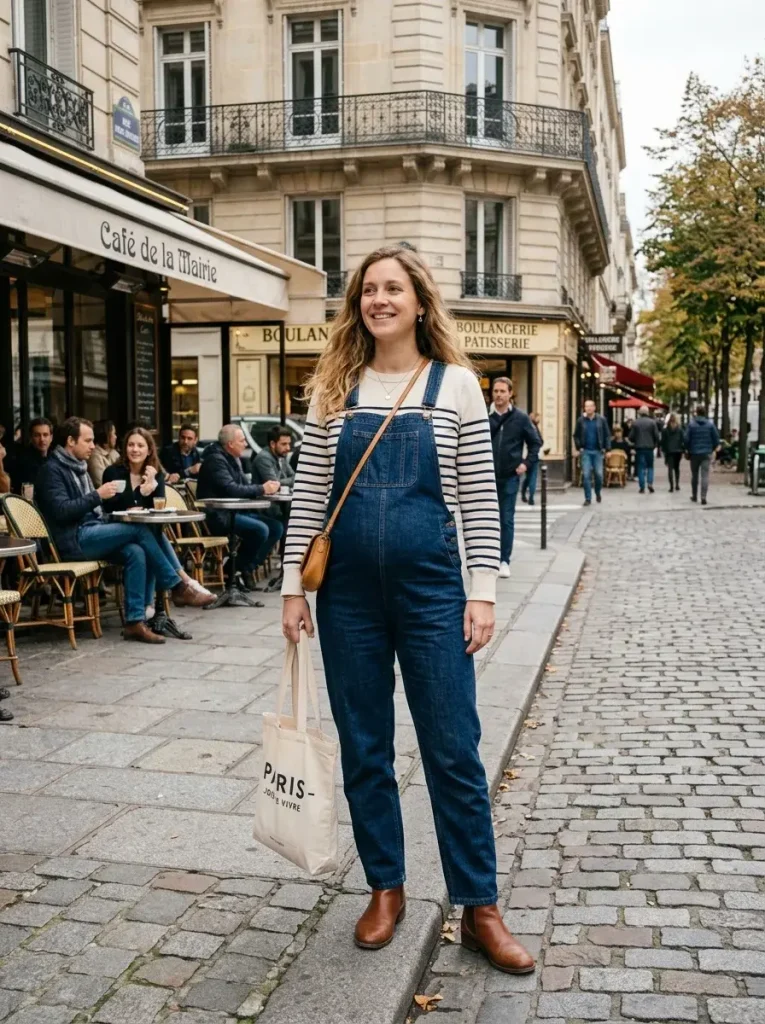
Maternity overalls with a stretch panel, worn over a striped long-sleeve top, with sneakers. I hadn’t worn overalls since I was a kid, and somehow they became the outfit I got the most compliments on all season.
7. The Midi Skirt and Bodysuit.
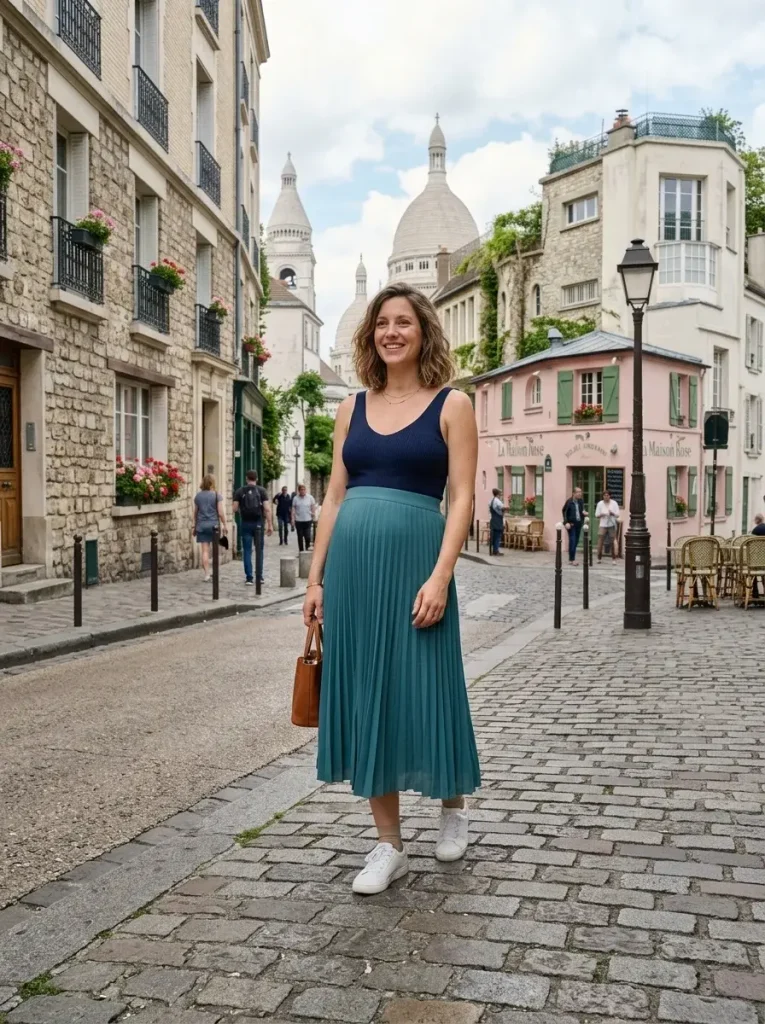
A stretch-waist midi skirt with a fitted bodysuit tucked in (no bunching, no re-tucking every hour) and a cropped jacket over the top. This is the outfit that made me feel like myself again after weeks of “just comfortable.”
8. The Maxi Dress Layer.
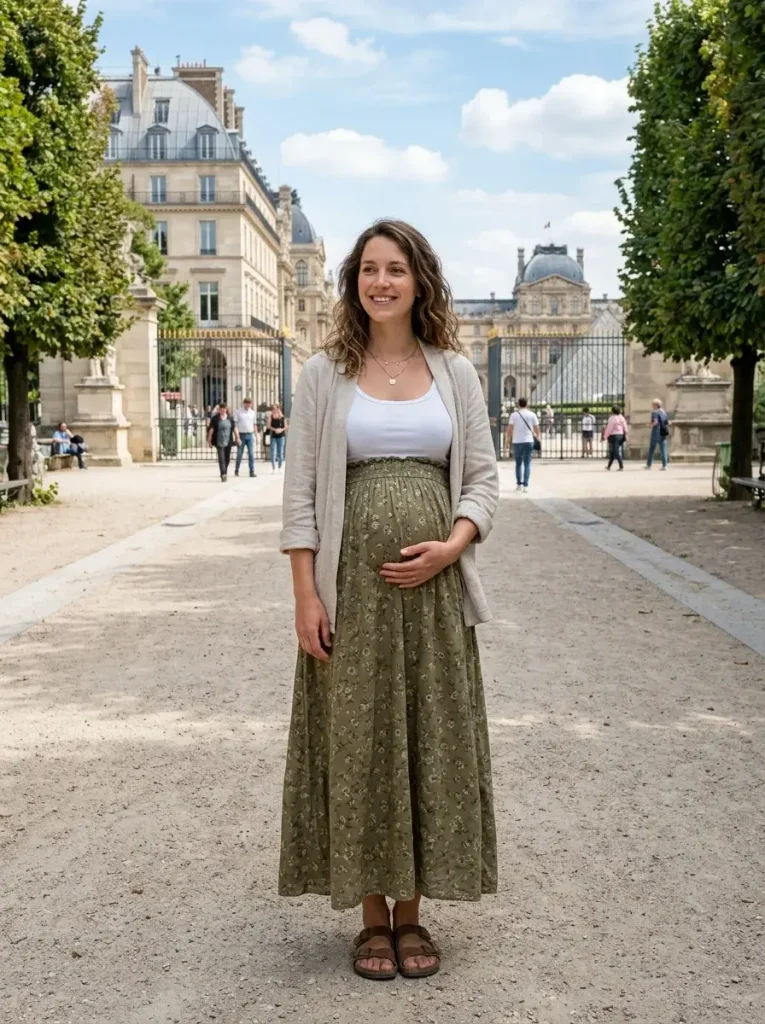
A soft jersey maxi dress under an open flannel shirt, with the flannel sleeves rolled up. This became my weekend uniform for three straight months.
9. The Trouser and Tunic Set.
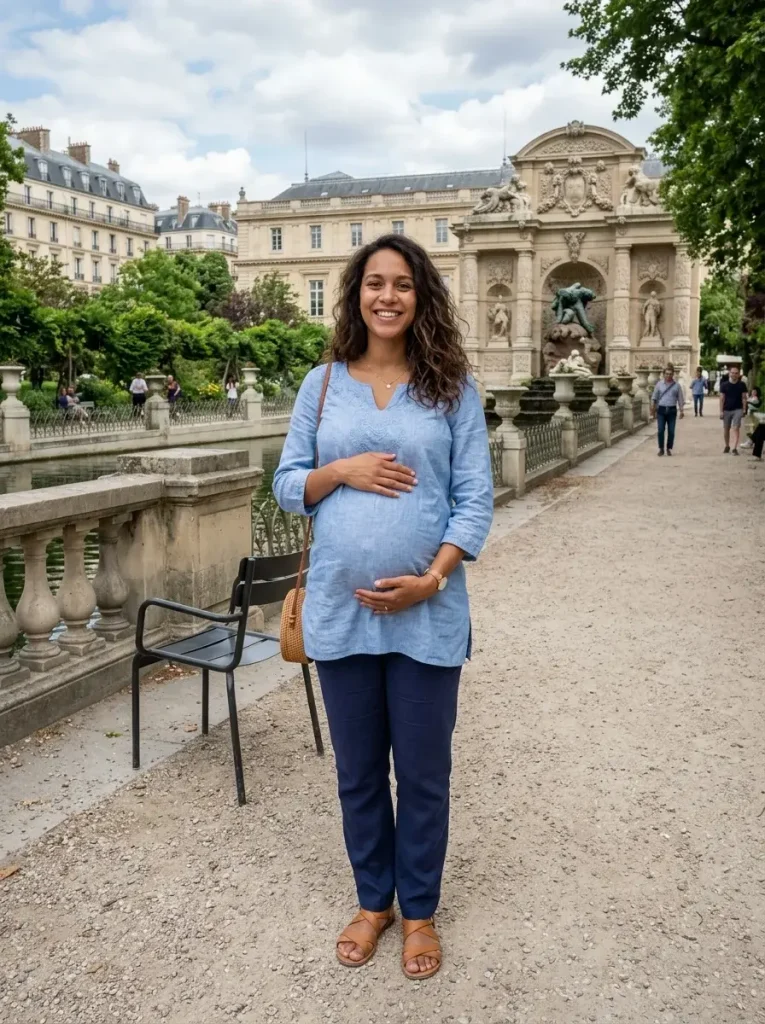
Wide-leg maternity trousers with a stretch panel, paired with a silky tunic top left untucked. This is the outfit I wore to every appointment where I wanted to look put-together without any part of it being tight.
The Final Stretch: Third Trimester, When Everything Needs Room (Outfits 10–13)
By the third trimester, the goal changed completely. It wasn’t about hiding or flattering anymore — it was about clothes that let me breathe, sit, and stand up off a couch without help.
10. The Full Wrap Dress.
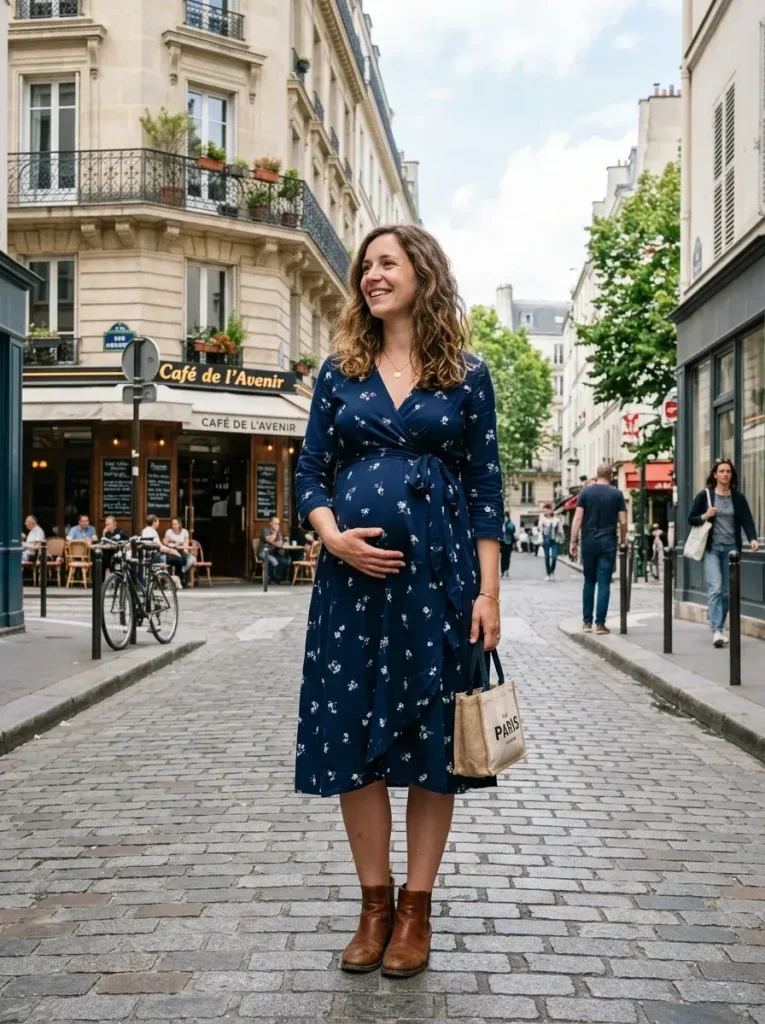
A heavier knit wrap dress, tied loosely, with flat boots. The wrap style adjusts daily to however much room you need that particular week, which by month eight, changes more than you’d expect.
11. The Duster Cardigan Over Everything.
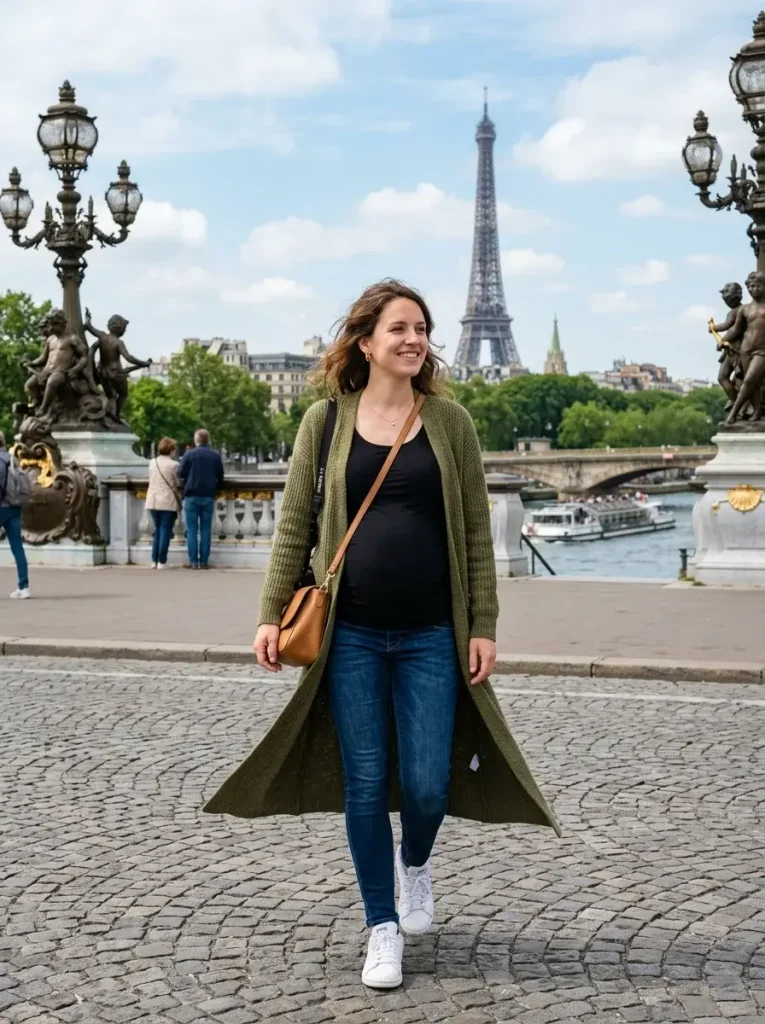
A floor-length open cardigan over a simple stretch-waist dress underneath. This became my “I don’t know what to wear but I have somewhere to be” solution for the final six weeks.
12. The Palazzo Pant Set.
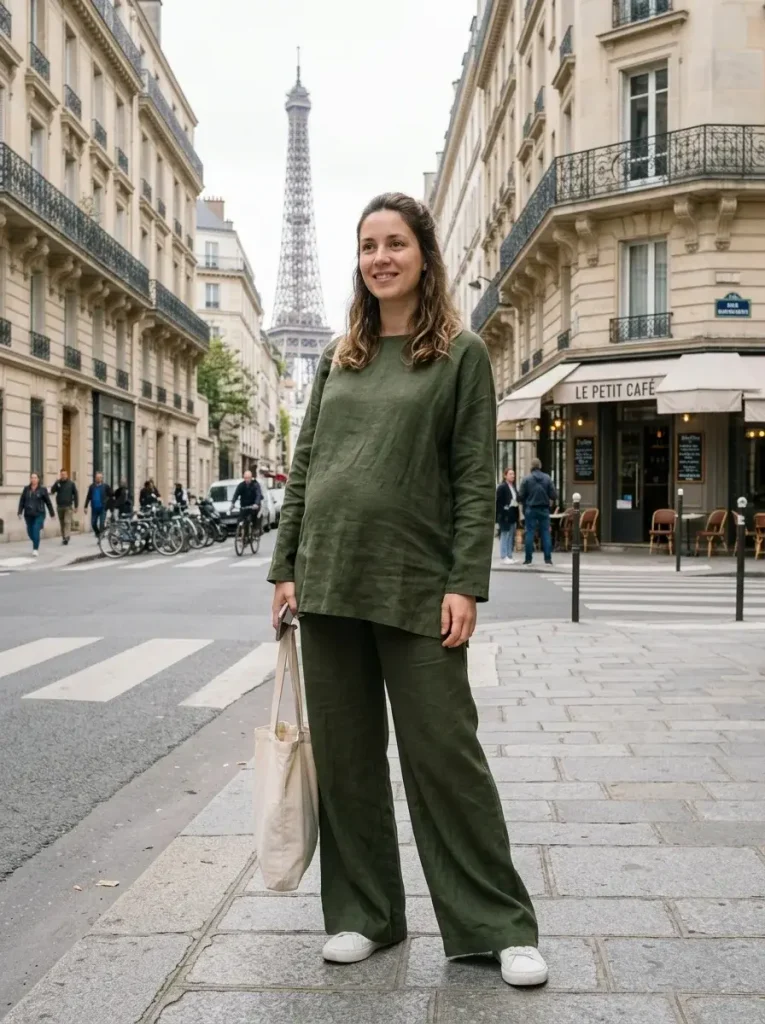
Wide, flowing palazzo pants with an elastic waist, paired with a loose tunic top and slip-on shoes — because by this point, bending to tie laces had become its own small daily challenge.
13. The Stretch Legging and Oversized Shirt.
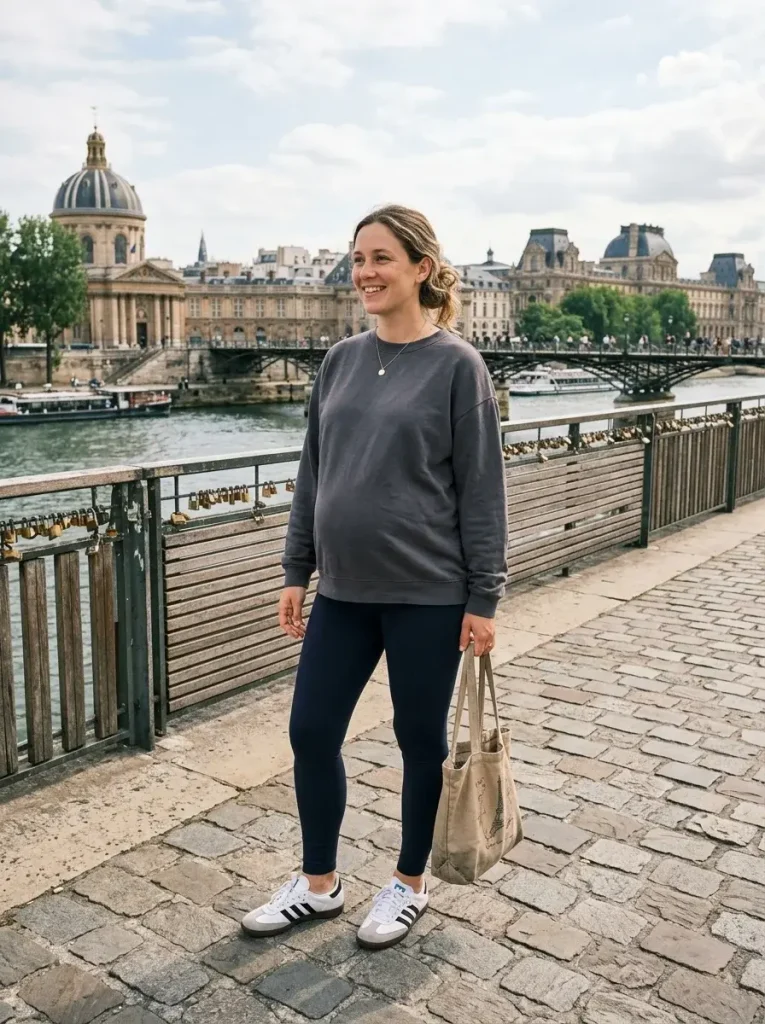
Full-panel maternity leggings under my husband’s flannel shirt, worn as a dress with the sleeves rolled. Not glamorous. Genuinely the outfit that got me through the last two weeks.
The One Built to Last: Outfit 14, and the Idea Behind It
14. The Empire-Waist Wrap Top and Stretch Trouser.
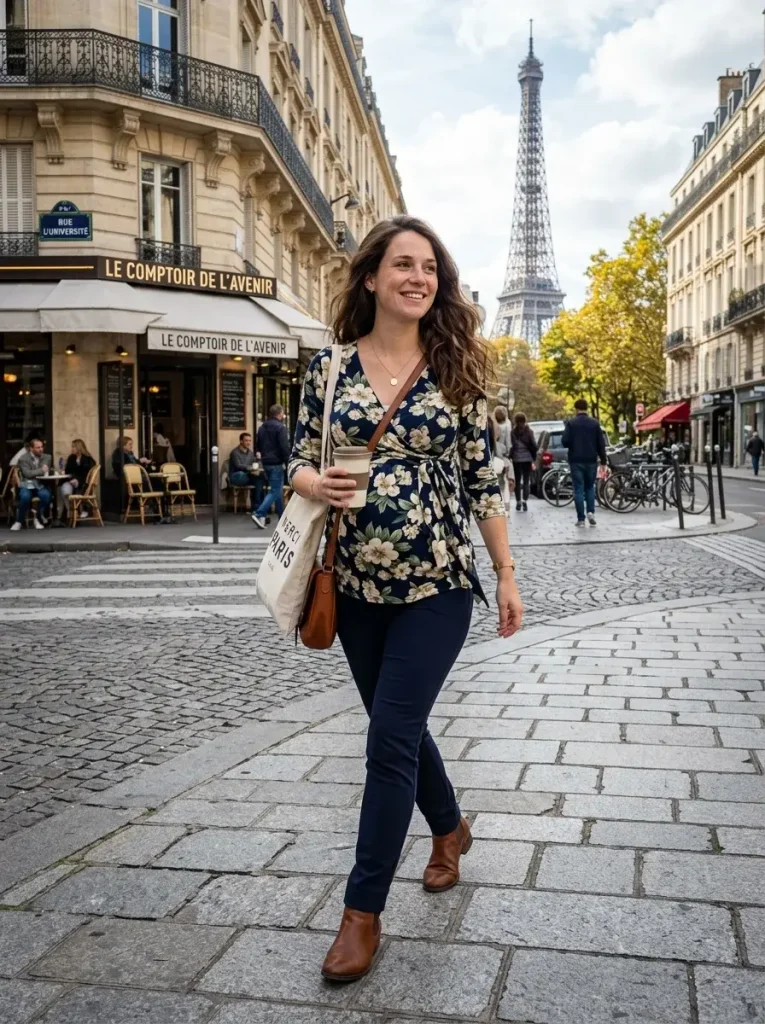
This is the outfit I’m ending on because it’s the one that actually followed me past the finish line. An empire-waist wrap top (the kind that ties, not zips) over stretch-waist trousers, worn with flat boots. It fit the bump at week 30. It fit the fourth-trimester body at week two postpartum. And when I needed to nurse, the wrap top opened from the neckline without me having to change a thing.
That outfit is the whole idea behind the next section.
The Second Life: Outfits That Work Before and After Birth
Nobody warned me that the weeks right after having a baby are their own dressing puzzle — a body that’s neither pregnant nor “back,” clothes that need to allow for nursing or just recovery, and absolutely zero energy to figure any of it out from scratch. So here’s something I haven’t seen in other guides: which of the outfits above are built to cross over.
The Wrap Dress Default (outfit 2), the Duster Cardigan (outfit 11), and the Empire-Waist Wrap Top (outfit 14) all share the same quiet feature — nothing about them requires a specific body shape to work. A wrap tie adjusts to whatever you need that day, whether that’s a growing bump or a healing midsection. If I could tell my first-trimester self one thing, it would be this: buy the wrap dress now, and you’ll still be wearing it in week three postpartum without a single alteration.
The Fabric Cheat Sheet for a Body That Won’t Sit Still
Ribbed jersey stretches in every direction and recovers its shape, which matters when your size is genuinely different at 9 a.m. and 9 p.m. some days.
Ponte knit gives structure without any pull at the seams, ideal for blazers and trousers you want to keep wearing through every stage.
Soft wovens with a touch of spandex — think cotton-poplin blends — are what I reached for in dresses and tunics, because they drape instead of cling, without feeling like activewear.
Pure stiff denim, on the other hand, is the one fabric I’d skip in true maternity pieces unless it specifically has a stretch panel built in. Regular denim simply won’t give you the room you’ll need by month six.
Three Mistakes I Made So You Don’t Have To
Buying maternity-specific pieces too early. I didn’t need a single true maternity item until week 18. Your own wardrobe, worn a little differently, carries you further than the ads suggest.
Chasing trends instead of function. A trendy piece that doesn’t accommodate how fast your body is changing gets worn twice and abandoned. I now ask “will this still work in six weeks?” before every purchase.
Ignoring shoes until my feet started swelling. Swap to a slightly roomier, flatter shoe earlier than you think you need to — comfort here compounds, and it’s much easier to adjust before it becomes urgent.
One Last Thing
Dressing through pregnancy isn’t really about hiding a changing body or flattering it into submission — it’s about clothes that keep up with a body that’s doing something extraordinary on its own timeline. Every outfit on this list earned its place because it worked with the changes, not around them.
Start with whichever outfit matches where you are right now, not where you think you’ll be in a month. Your body will tell you when it’s time to reach for the next one.
Which trimester are you dressing for today — the early quiet, the announcing middle, or the final stretch? Save this one for the months ahead, and pass it to a friend who just found out she’s expecting and has no idea where to start.