15 Vintage Christmas Tree Ideas That Feel Like Grandma’s
You switch on the tree at your grandmother’s house and the whole room softens: the lights bubble, the baubles are real glass, and nothing matches a catalogue page. If new decor leaves you cold, a vintage Christmas tree brings back that layered, loved look. These fifteen ideas stick to the genuine old styles, from silver tinsel to paper chains.
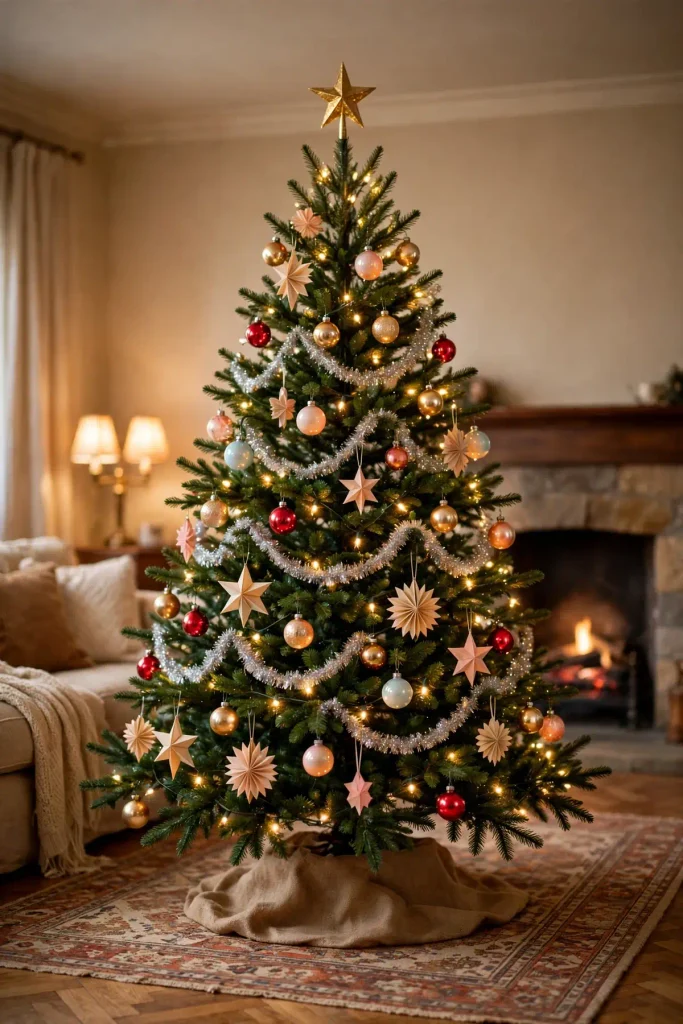
What I love about old trees is that they were decorated by hand and by habit, not from a shopping list. A box of baubles gathered over years, lights that outlived three houses, that mix is hard to fake with a new set. Every idea below works with real finds, honest copies, or a blend of the two.
Find Your Pick in 10 Seconds
Short on time? Match your room and your patience to one of these:
- The full retro showpiece: the silver aluminum tree with a spinning colour wheel (idea 1) fills a room on its own.
- Lights that move: bubble lights (idea 2) and big coloured bulbs (idea 7) give you motion and glow.
- Only a table free: the ceramic tree (idea 4) and feather tree (idea 6) sit small and look complete.
- Happy to make things: paper chains (idea 10) and sequin baubles (idea 11) are the hands-on routes.
- Already own a mixed box: the mixed-years tree (idea 15) turns leftovers into the whole look.
Every idea names where the money goes, so you can pick your spend first.
1. Silver Aluminum Tree With a Spinning Colour Wheel

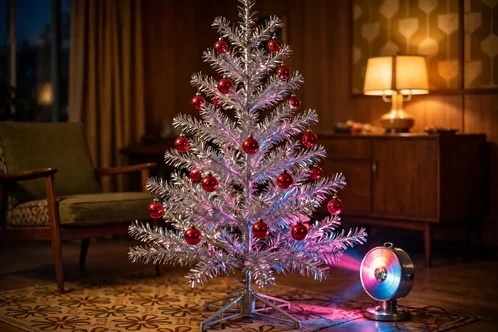
This is the tree people picture when they say vintage: stiff branches of silver aluminum foil, hung with glass baubles in a single colour. A rotating colour wheel on the floor does the lighting, washing the silver pink, blue, green and gold in turn. No string lights belong on it; the wheel is the whole show. Genuine aluminum trees in good shape are the splurge of this list, and the wheel adds to the bill, but a modern copy reads close enough that most people save there and spend on real glass instead.
- Colour note: one bauble colour only, red is the classic, teal a close second.
- Wheel note: stand the wheel back from the branches; the colour wash needs distance.
2. Bubble Lights Bubbling Away on a Deep Green Tree
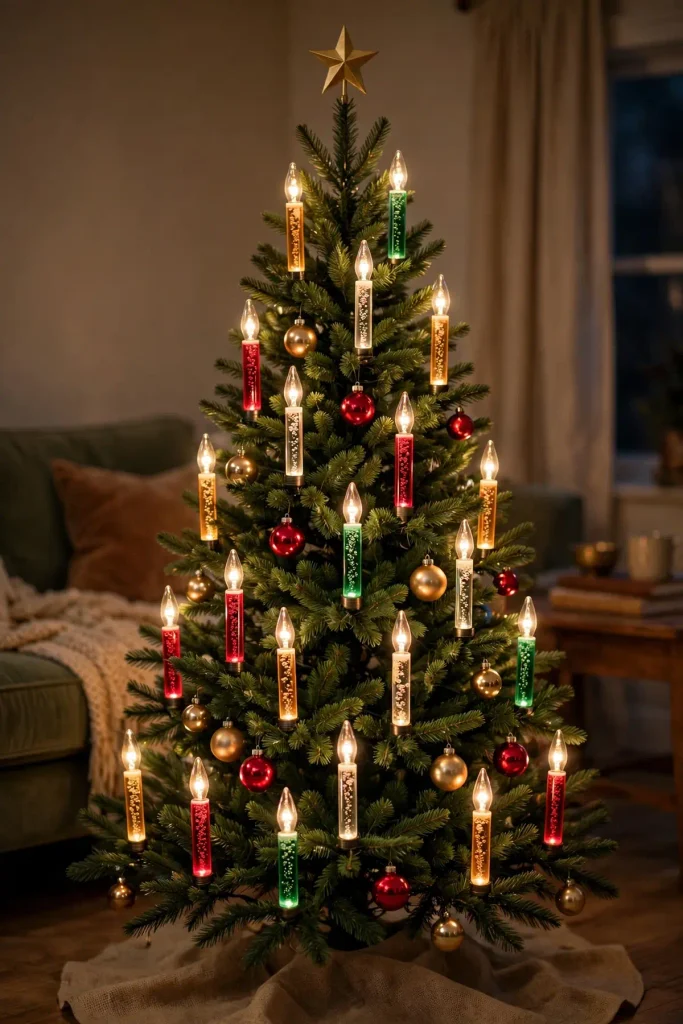
Bubble lights are small glass candles with a tube of coloured liquid that bubbles as it warms, and a string of them keeps a tree quietly moving all evening. Hang them upright on a deep green tree, mix red, green and amber, and add plain glass baubles so the lights stay the story. A working vintage string costs more than its size suggests, because survivors are scarce; new-made strings cost far less and bubble the same way, so many people run new strings and keep old ones for a small tree.
- Upright note: a tilted bubble light stops bubbling, clip each one straight before plugging in.
- Warm-up note: give the string ten minutes; bubbles start slowly, then settle into rhythm.
3. Shiny Brite-Style Baubles in Pastel and Jewel Tones
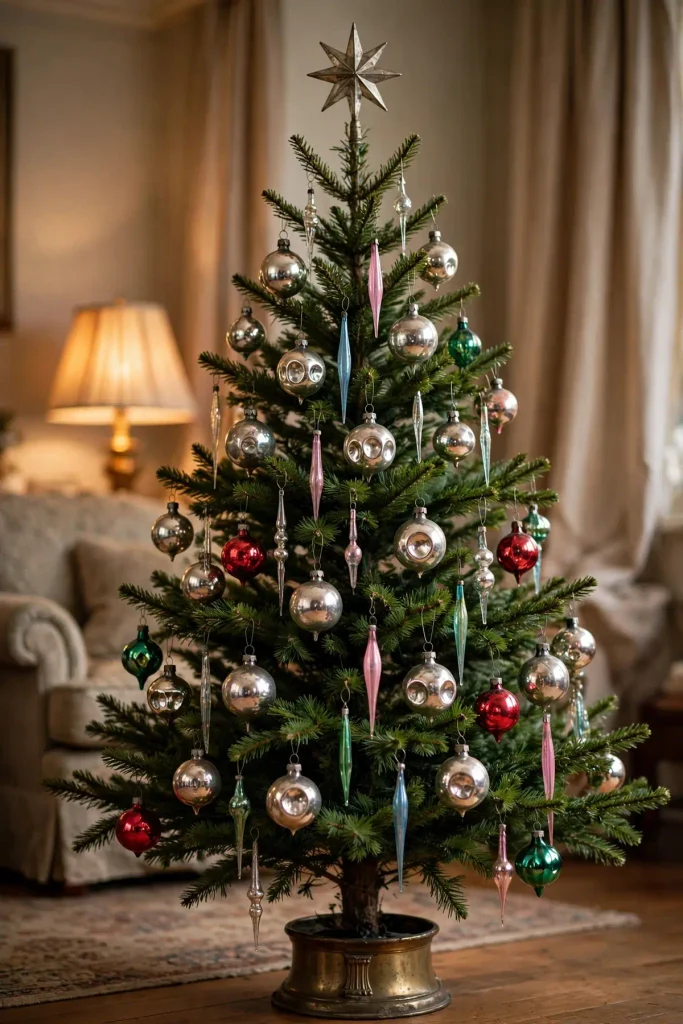
These are the baubles from the compartmented cardboard box: thin glass, silvered inside, in pastel pink, blue and mint beside jewel red and emerald. The prettiest carry an indent, a small reflector cup pushed into the glass that throws the light back out. A tree full of them glows without one big statement ornament. Boxed sets in tidy condition lead the prices; loose singles at estate sales cost much less, so a patient hunter builds the same tree for low money.
- Indent note: place the reflector baubles where lamplight lands; they earn their keep in the evening.
- Handling note: eggshell-thin glass, hang these after the sturdy ornaments.
4. Ceramic Tabletop Tree With Glowing Peg Lights
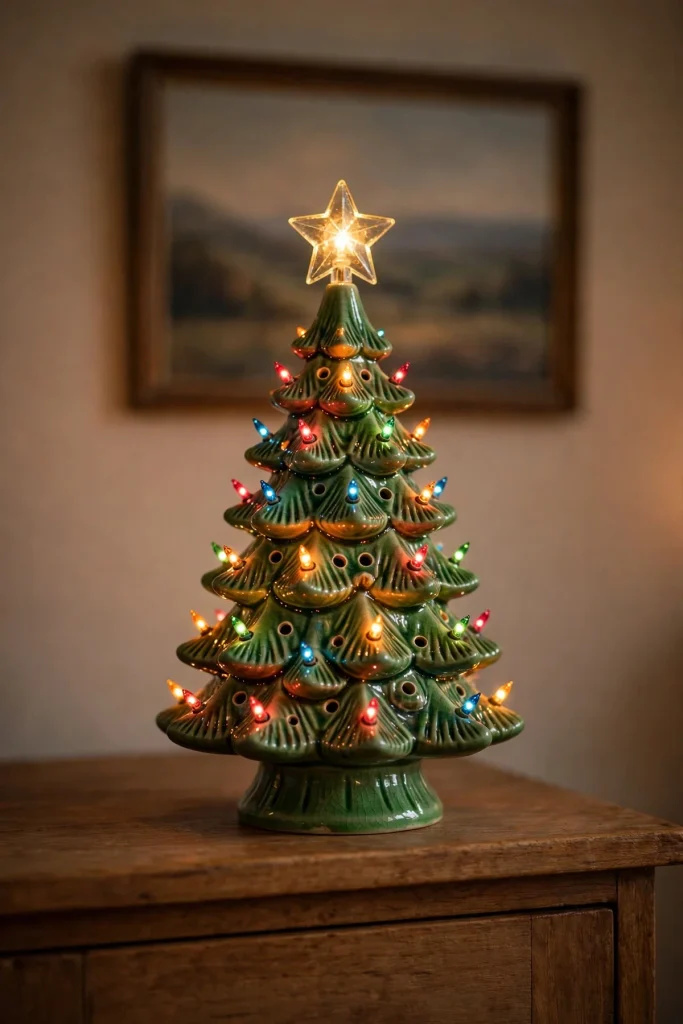
The ceramic tree sat on sideboards and television tops for decades: a green ceramic fir with little plastic peg lights in its branches and a star glowing on top. It asks for no decorating at all, which is its charm. Thrifted ones turn up cheaply and often; the spend creeps up on the tall ones with a working light kit inside. Buy one with its pegs complete if you can, a full set of spare pegs costs more than you would guess, and the gaps show at night.
- Table note: a cloth under the base stops ceramic scratching polished wood.
- Peg note: keep spare pegs in a labelled envelope in the storage box.
5. Victorian Branches With Paper Cornucopias and Popcorn Strings

A Victorian-style tree is dressed from the kitchen and the sewing box: paper cornucopias filled with nuts and sweets, strings of popcorn and cranberries, gilded walnuts, and paper ornaments edged like lace. The colours stay soft, cream, dull gold, deep red. The materials cost very little; your hours are the real spend. Genuine antique paper pieces sit at the other end of the scale, so most trees mix a few old finds with new paper made in the old shapes.
A Victorian tree was not about buying a look — it was about making one, slowly, from what the house already held.
- Stringing note: thread day-old popcorn; fresh kernels tear, day-old ones hold the needle.
- Fresh note: make the popcorn and cranberry strings last, they do not store.
6. German Feather Tree on a Turned Wood Base
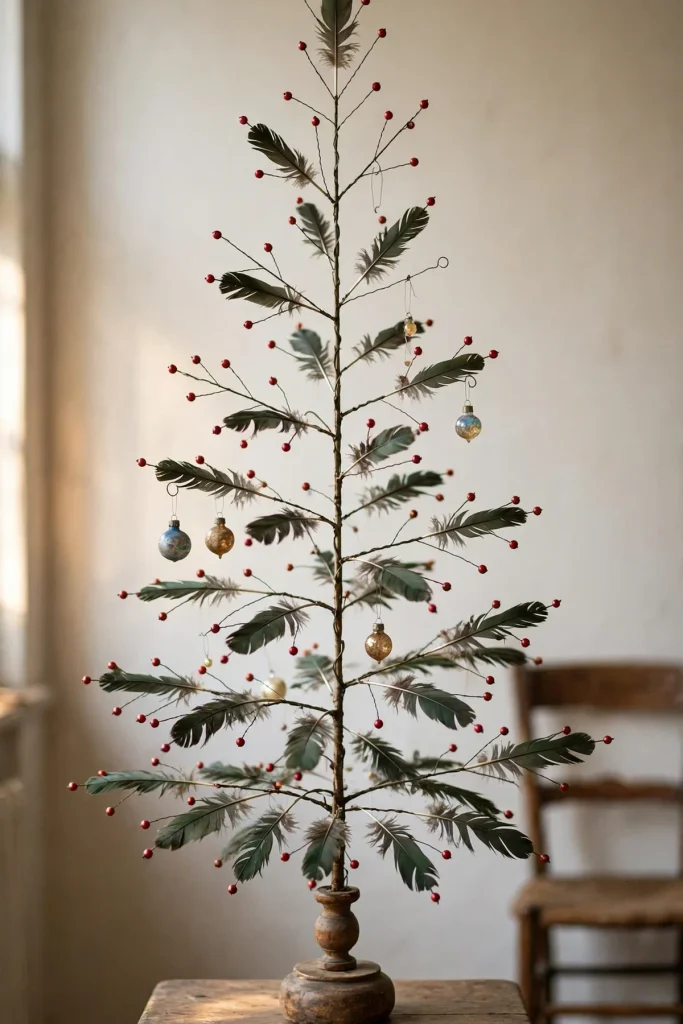
Feather trees were made in Germany from dyed goose feathers wrapped around wire branches, standing sparse and graceful on a turned wooden base, often with a red berry at each branch tip. The open spacing is the point: every small ornament hangs in its own pool of air. Real antique feather trees are collector pieces now and priced that way; the honest save is a new feather-style tree, which copies the shape for a fraction and leaves room for a few genuinely old ornaments.
- Berry note: check branch tips before buying, missing berries go first on an old tree.
- Table note: a table or mantel shows the turned base off better than the floor.
7. Big Coloured Bulbs, the Way Lights Used to Look
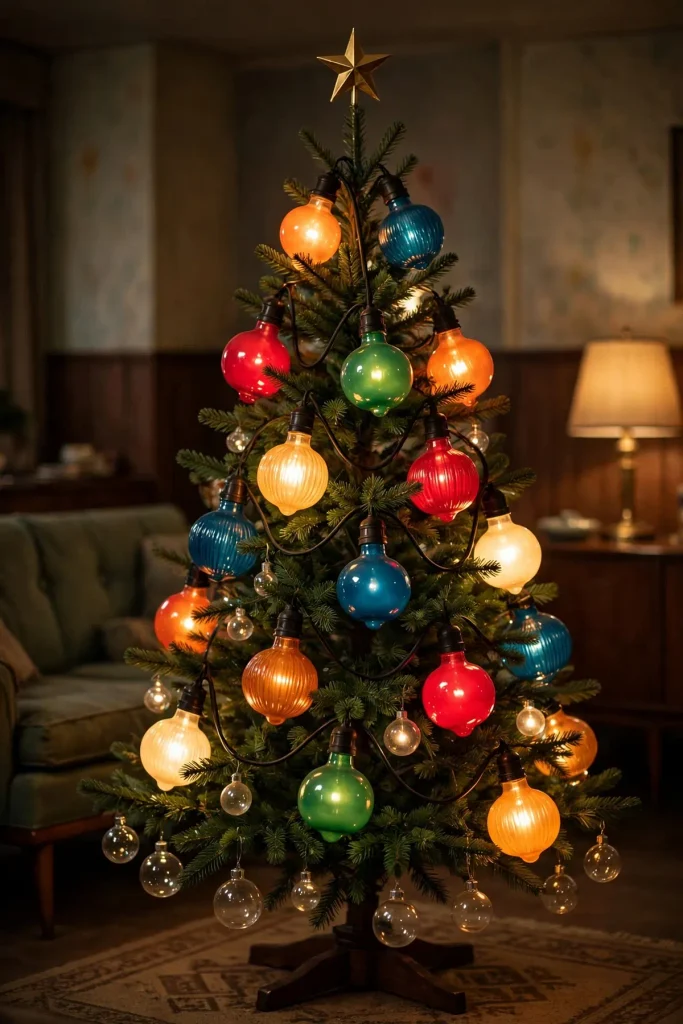
Before fairy lights took over, trees wore big glass bulbs, chunky, painted, and bright enough to read by. Strings of them in red, green, blue and amber give a tree its forties and fifties face, especially over simple glass baubles. The strings sit in the low-to-mid band; what adds up is keeping them fed with replacement bulbs. If you fall for a genuinely old set, have the wiring checked before it goes near a tree, that small electrician’s bill is part of this idea’s real cost.
- Heat note: big painted bulbs run warm, keep them away from paper ornaments and dry needles.
- Spare note: buy spares the day you buy the string; old sizes vanish fast.
8. Aqua Flocked Branches, Straight From the Sixties
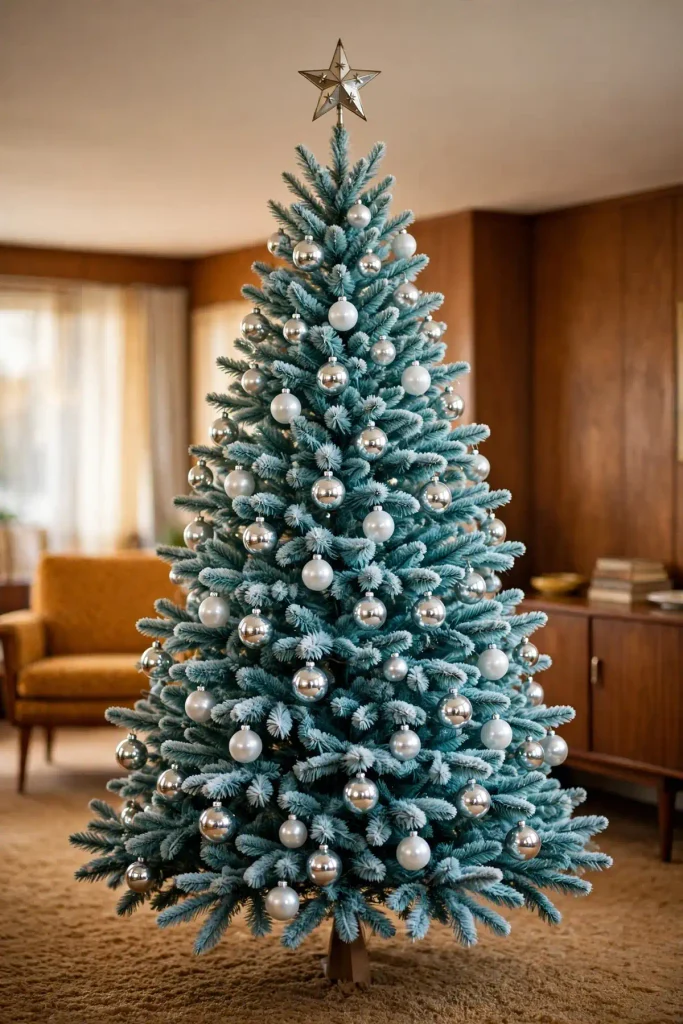
In the sixties, flocking came in colours, and aqua was the show-off: a tree dusted blue-green, dressed with silver and white baubles. It is a bold guest in a room, so keep the rest of the decor quiet and let it pose. The tree itself is the spend here, coloured flock costs more than plain green, and re-flocking an old tree costs more again, while the silver baubles on it are the cheapest part of the picture.
- Room note: aqua argues with warm wood less than you would think; it fights red, so keep red out.
- Flock note: coloured flock sheds, dress the tree where it stands, not across the room.
Halfway pause: hunting vintage? Measure your ceiling and photograph your room before you buy. Old trees run shorter and wider than new ones, and sizes vary a lot.
9. Spun-Cotton Fruit on a Small Parlour Tree
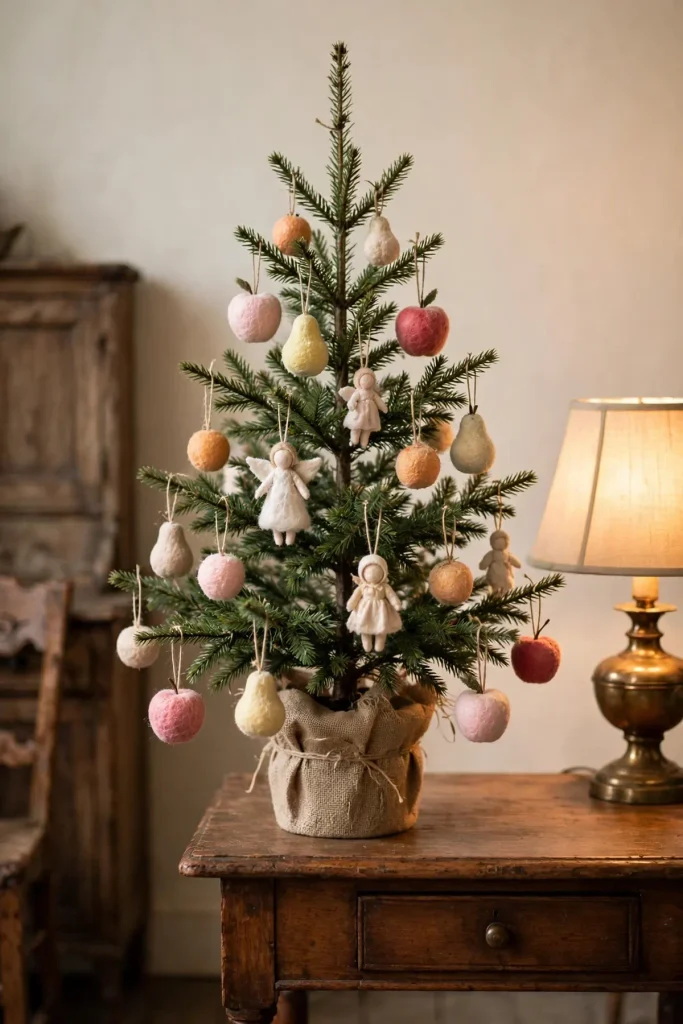
Spun-cotton ornaments, matte little apples, pears, oranges and figures wound from cotton wadding, hung on small parlour trees long before glass took over. Their soft, chalky surface drinks light instead of throwing it back, so the tree reads gentle and old. True antique cotton pieces are fragile and priced for collectors; new cotton ornaments bring the look down to a gentle mid-band and survive being handled.
- Dust note: cotton hates water, a soft, dry brush is the whole cleaning kit.
- Size note: cotton ornaments are small; a tabletop tree shows them better.
10. Paper Chains and Wartime Make-Do Charm
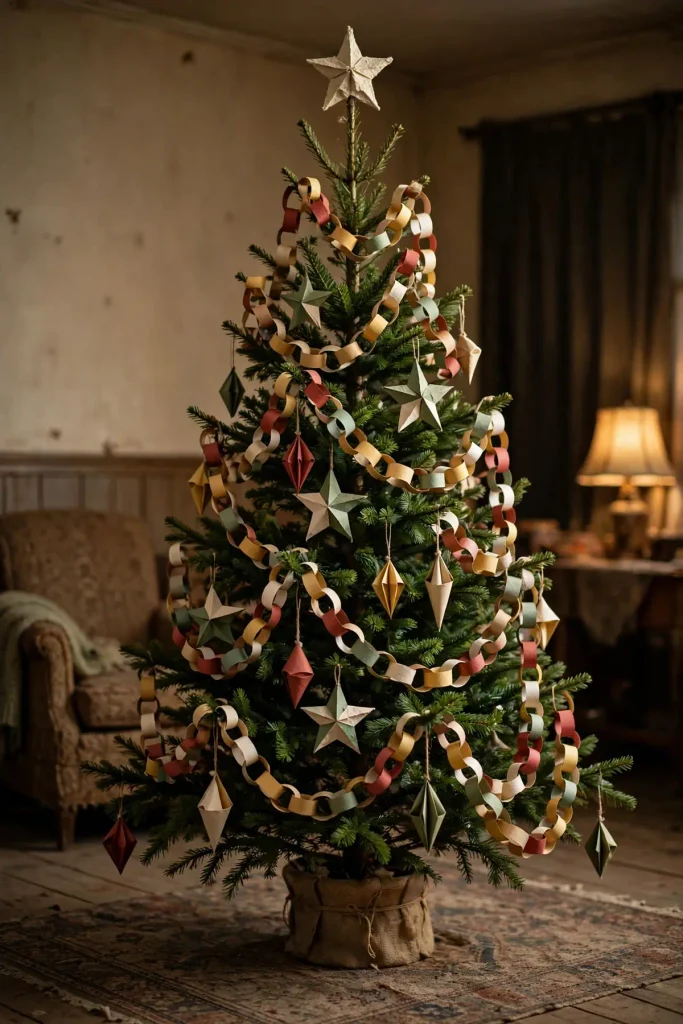
Paper chains were the wartime tree: strips of coloured paper pasted into loops and draped in long swags, with a few paper stars and cones. Nothing on this tree was bought finished, and that is exactly its warmth. It is the lowest spend on this list, paper, paste and time, and making it can fill a December weekend with children or friends. Use the duller, older colours, brick red, mustard, sage, cream, and the chains read vintage instead of classroom.
- Paste note: flour-and-water paste holds fine and costs nothing; glue sticks are faster with small helpers.
- Swag note: drape chains in long, loose swags rather than winding them tight.
11. Sequin-and-Pin Satin Baubles From a Sixties Craft Night

In the sixties and seventies, craft kits turned plain satin baubles into jewelled ones, one pin and one sequin at a time. A tree of them, ruby, emerald, sapphire and gold, each ball paved with sparkle, catches light in a dense, rich way no smooth bauble manages. Ready-made vintage ones sit mid-band; making your own from craft-shop supplies costs less and eats happy hours. Either way the set stores well and comes out yearly, spreading the cost kindly.
One sequin at a time sounds slow until you light the tree — then every pin you pushed in turns into a point of light.
- Thimble note: pushing pins all evening needs a thimble; your thumb will thank you by bauble two.
- Pattern note: work in rings from the top cap down, rings keep rows even.
12. Carved Wooden Figures With Straw Stars
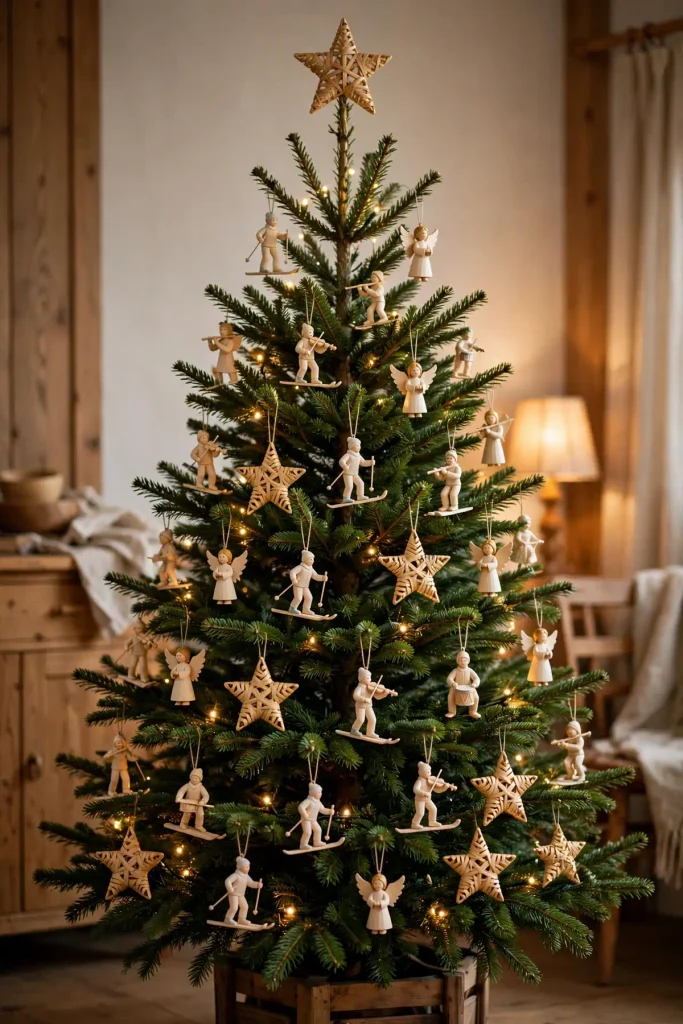
German wooden ornaments, tiny carved skiers, angels, musicians and market stalls in pale painted wood, hang light and warm, with flat straw stars woven between them. Nothing glitters here except the lights, and the tree feels calm in a way glass rarely does. Hand-carved pieces carry the cost and add up one by one; machine-cut sets and straw stars keep the same mood for much less, so many people buy two carved pieces a year and fill the gaps with straw.
- Straw note: straw stars are feather-light; they ride thin top branches glass cannot.
- Mixing note: keep wood tones close, pale carved wood and golden straw belong together.
13. Tiny Tin Toys, Drums and Rocking Horses
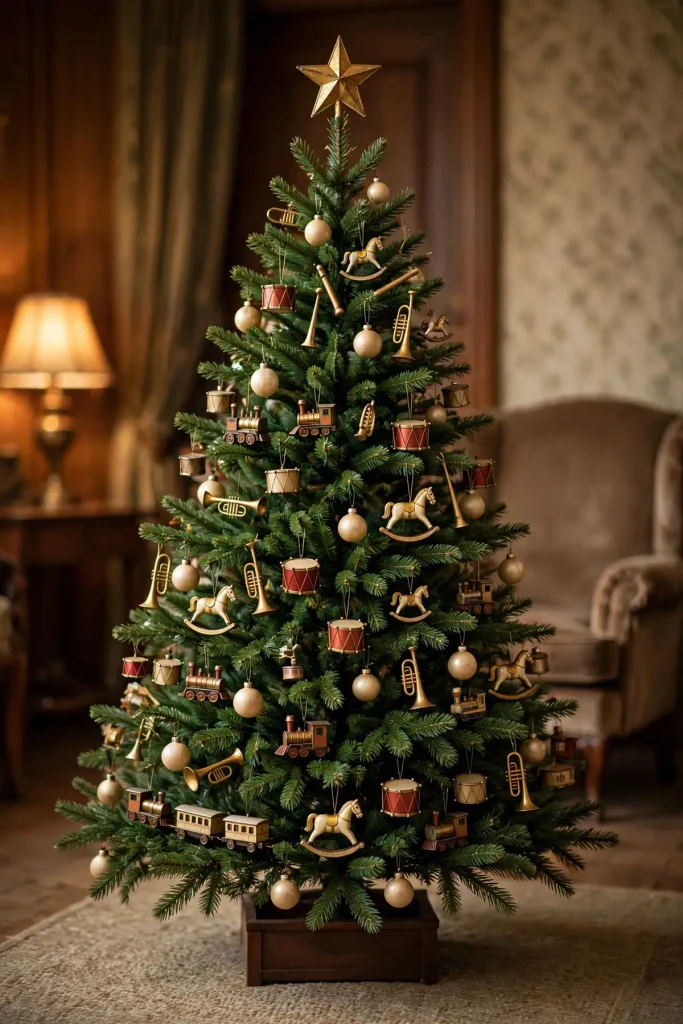
Old trees often carried toys: miniature tin drums, rocking horses, tiny trains and trumpets, made as ornaments rather than playthings. A tree of them is playful, especially in dull reds, golds and creams. True antique tin is a collector splurge that dents if you look at it sternly; modern tin ornaments come in the same shapes for very little, and mixing one or two real pieces into a new set is the usual route.
- Edge note: check old tin for sharp seams before small hands help decorate.
- Pairing note: tin reads strongest against plain baubles, let the toys be the detail.
14. Deep Green Branches Under Heavy Tinsel Garland
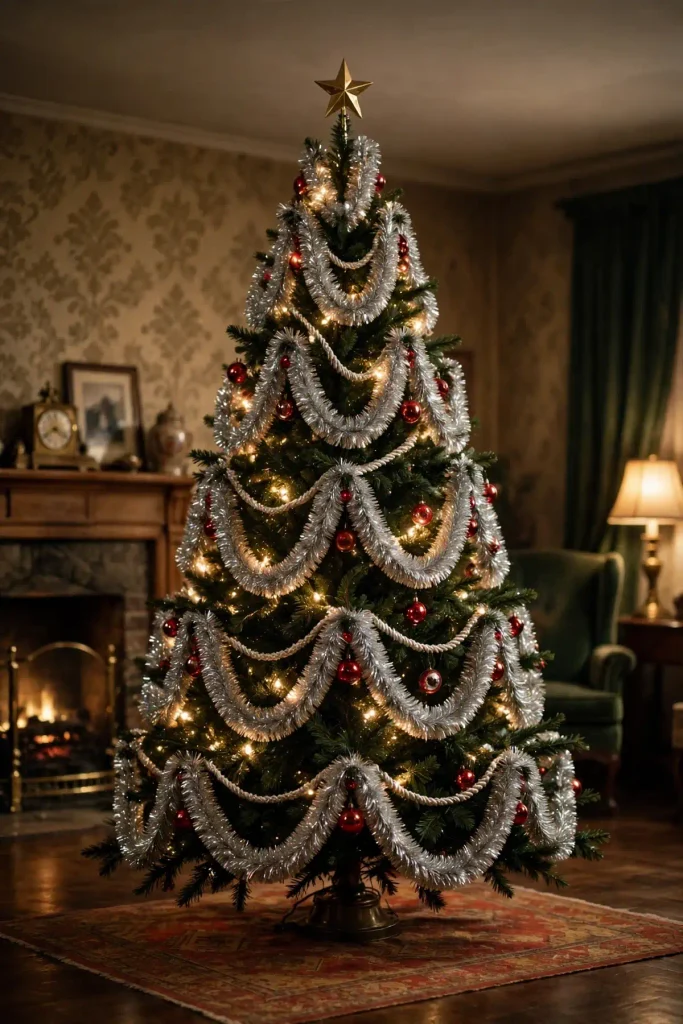
Before baubles did the shining, tinsel garland did: thick ropes of silver tinsel draped in deep swags around a dark green tree, with red glass baubles tucked along the ropes. It is the forties parlour look, generous, a little formal, and quick to hang. The garland costs very little; the quiet spend sits in the lights behind it, because warm bulbs make silver glow while cold ones turn it grey. Hang new tinsel, not old: very old tinsel was made with lead foil, so genuine strands belong in a display box, not on branches small hands touch.
- Swag note: settle each swag’s low point first, then even the sides, swags hung by eye drift.
- Light note: warm bulbs only here; silver tinsel under cool light reads as grey plastic.
15. The Mixed-Years Tree: Nothing Matches, Everything Stays
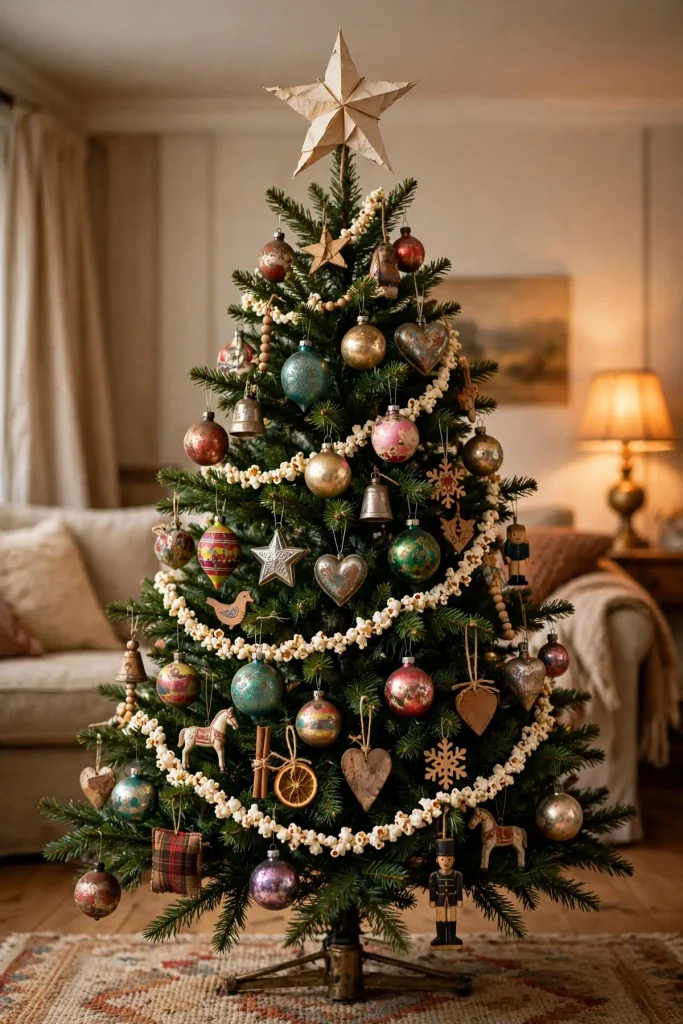
The last tree is the one many families already own: a box of ornaments from every decade, a grandmother’s glass bauble, a school-made star, the set bought for a first flat, hung together with no plan at all. Nothing matches, and the tree is better for it. The spend here is close to zero; the one worthwhile buy is a sturdy divided storage box, because these pieces cannot be replaced. Group colours loosely as you hang, and the mix reads as history instead of clutter.
- Story note: hang fragile, long-kept pieces high, out of reach of small hands and tails.
- Box note: wrap each piece in tissue; label the box by room, not by year.
Where Old Trees and Trims Still Turn Up
Estate sales and house clearances are the richest hunting ground, because whole boxes of decorations change hands at once. Charity shops reward regular visits rather than one big trip, the good box lands on a random Tuesday. Online auctions hold the widest choice, though postage on fragile glass needs a thought before you bid. January is the quiet secret: people clear lofts after Christmas, and vintage pieces surface at softer prices. Whatever the source, ask about working order on anything electrical before money changes hands.
Real Vintage or Just Vintage-Looking: Honest Checks
Old glass baubles feel thin and light in the hand, their metal caps carry a dull patina, and the paint often sits a little uneven, new copies feel heavier and look too perfect. An old aluminum tree has individual foil branches that slot into a central pole, usually with gentle wear on the foil. A real feather tree shows wrapped wire branches and soft, uneven feather texture on a scuffed wooden base. Ceramic trees carry mould lines, slight crazing in the glaze, and often a maker’s mark under the base.
None of this makes a copy a bad buy. The checks matter for one reason: price. Pay vintage money only when the signs say vintage. A new aluminum tree with old glass baubles fools every guest, just do not let a seller charge antique prices for it. Wiring is the one place where age is not charming: any old light string deserves a check before it runs on a tree.
Keeping Old Decorations Going: Storage and Gentle Care
Wrap glass baubles one by one in tissue and store them in a divided box; loose glass in a shared tub is how sets shrink. Cotton, paper and straw pieces want dry air above all, a damp loft spots paper and mildews cotton in one season. Coil light strings around card so bulbs stay protected, and keep the ceramic tree’s peg lights in a labelled envelope. Store the lot somewhere cool and dry, off the floor, and most of it will outlast the tree it hangs on.
Vintage Christmas Tree Questions, Answered
Are vintage Christmas decorations safe to use? Mostly yes, with two checks: have old wiring tested before use, and keep very old tinsel, which was made with lead foil, away from children and pets. New-made vintage-style pieces skip both worries.
Where can I buy a real vintage Christmas tree? Estate sales, house clearances, charity shops and online auctions turn them up most often, and January clear-outs bring the widest choice at the softest prices.
How can I tell whether a glass bauble is really old? Old glass feels thin and light, the metal cap shows age, and the paint sits slightly uneven; new copies feel heavier, thicker and far too tidy.
Do aluminum trees need special lights? They were lit by a colour wheel rather than strings, for looks and because foil branches and old wiring were poor company. A colour wheel or a nearby spotlight keeps the classic effect.
What if real vintage costs too much? Build the look with new copies for the big pieces, the tree and the lights, and spend on a few small genuine ornaments. The mix reads vintage at a fraction of the full cost.
A Tree With a Past
A vintage tree does not ask the room to match it; it asks to be looked at slowly. Pick the era that feels like your own childhood Christmases, hunt with patience, and let the tree gather its stories year by year.