
20 Best Sectional Living Room Ideas (You’ll Wish You Knew!)
Finding the right sectional living room ideas can completely change how your family enjoys time together. Many homeowners struggle with awkward layouts and wasted space, but sectionals offer the perfect solution. Whether you’re working with a small apartment in Brooklyn or a spacious home in suburban Dallas, these 20 best sectional living room ideas will help you create a cozy, functional space that matches your lifestyle and brings everyone together for movie nights, game days, and everyday relaxation.
1. L-Shaped Sectional for Corner Optimization
The L-shaped sectional is perfect when you want to make the most of that awkward corner in your living room. Sarah, a teacher from Portland, transformed her narrow living room by placing an L-shaped sofa against two walls, instantly creating more walking space and a cozy conversation area.
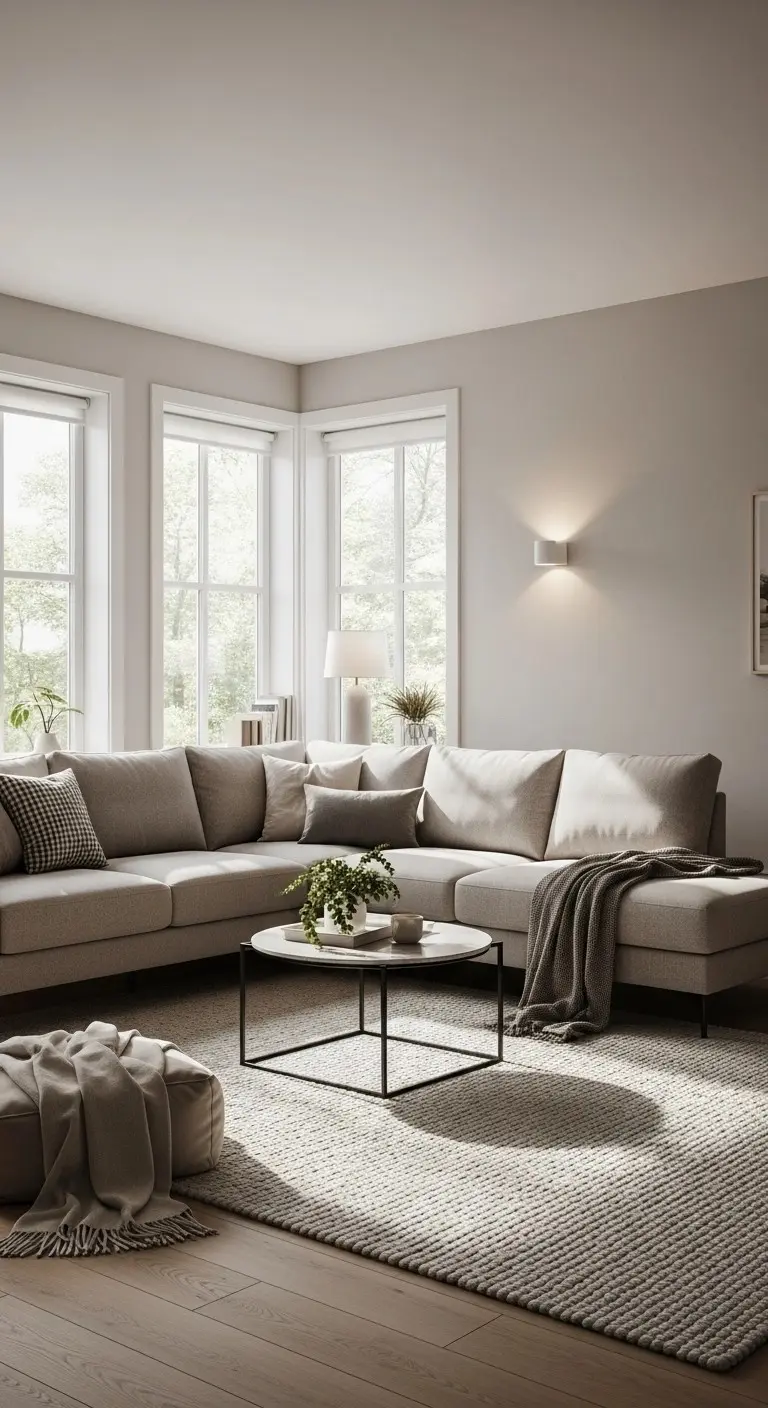
This layout works beautifully in both small and large rooms because it naturally defines your seating zone without blocking pathways. You can position the longer side along your main wall and let the shorter section float into the room, creating an inviting spot where kids can sprawl out with their tablets while you relax with a book.
2. U-Shaped Sectional for Large Families
When the Martinez family in Phoenix needed seating for their five kids plus visiting grandparents, they chose a U-shaped sectional that wraps around three sides of their living room. This generous configuration seats 8-10 people comfortably, making it ideal for households that love hosting or have multiple children.
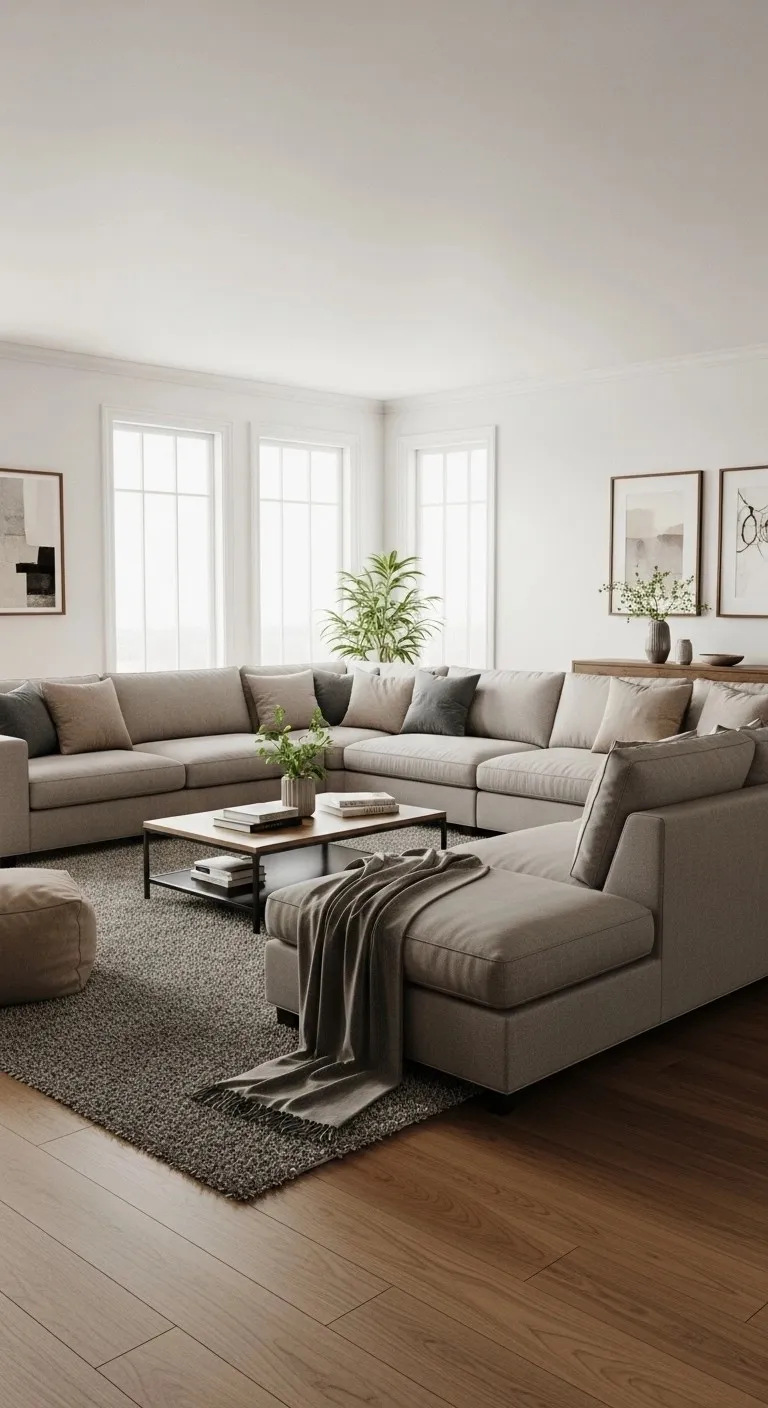
The U-shaped design creates an intimate gathering space where everyone faces each other, perfect for family game nights or holiday celebrations. Place a large ottoman or coffee table in the center, and you’ve got a functional entertainment hub where drinks and snacks stay within everyone’s reach.
3. Modular Sectional for Flexibility
Modular sectionals are like building blocks for adults—you can rearrange the pieces whenever your needs change. Jessica, a freelance designer in Austin, loves that she can reconfigure her modular sofa from a traditional L-shape for everyday use to a long straight sofa when she hosts her monthly book club.
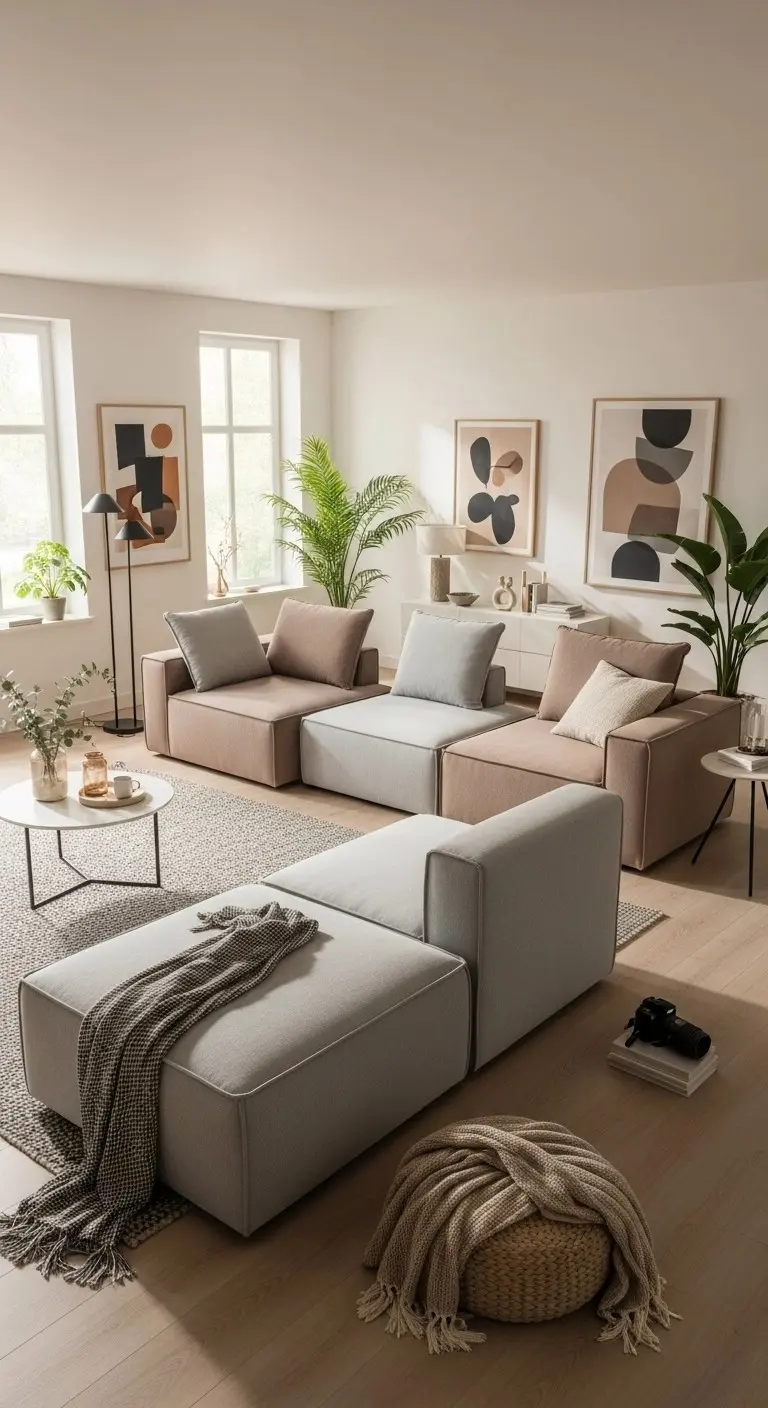
These versatile pieces typically come in individual seats, corner units, and ottomans that connect with clips or brackets. If you move frequently or like refreshing your space, investing in a modular sectional means you’ll never feel stuck with one boring arrangement.
4. Chaise Sectional for Ultimate Lounging
Nothing beats stretching out on a chaise after a long workday. The chaise sectional features an extended seat on one end, giving you that perfect spot to put your feet up while binge-watching your favorite shows or reading Sunday morning newspapers.
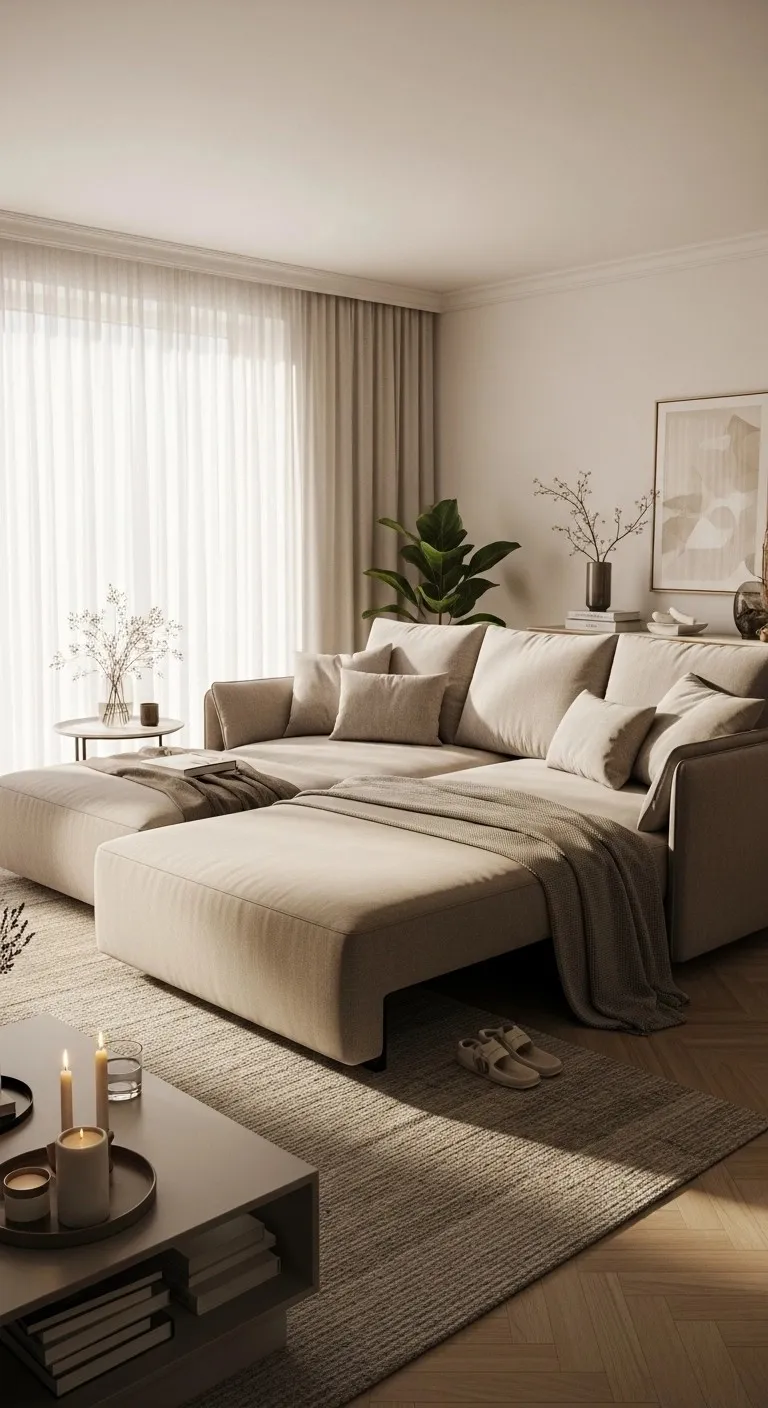
Mark, an accountant from Chicago, says his chaise sectional saved his back problems because he can fully recline instead of awkwardly propping his legs on a coffee table. Position the chaise near a window for natural reading light, or aim it toward your TV for the ultimate viewing experience.
5. Sleeper Sectional for Guest Accommodation
When Rachel’s sister visits their Boston apartment twice a month, she doesn’t need to book a hotel anymore—Rachel’s sleeper sectional transforms into a comfortable queen-size bed in minutes. This dual-purpose furniture is a game-changer for anyone who wants to accommodate overnight guests without dedicating an entire room to a guest bed.
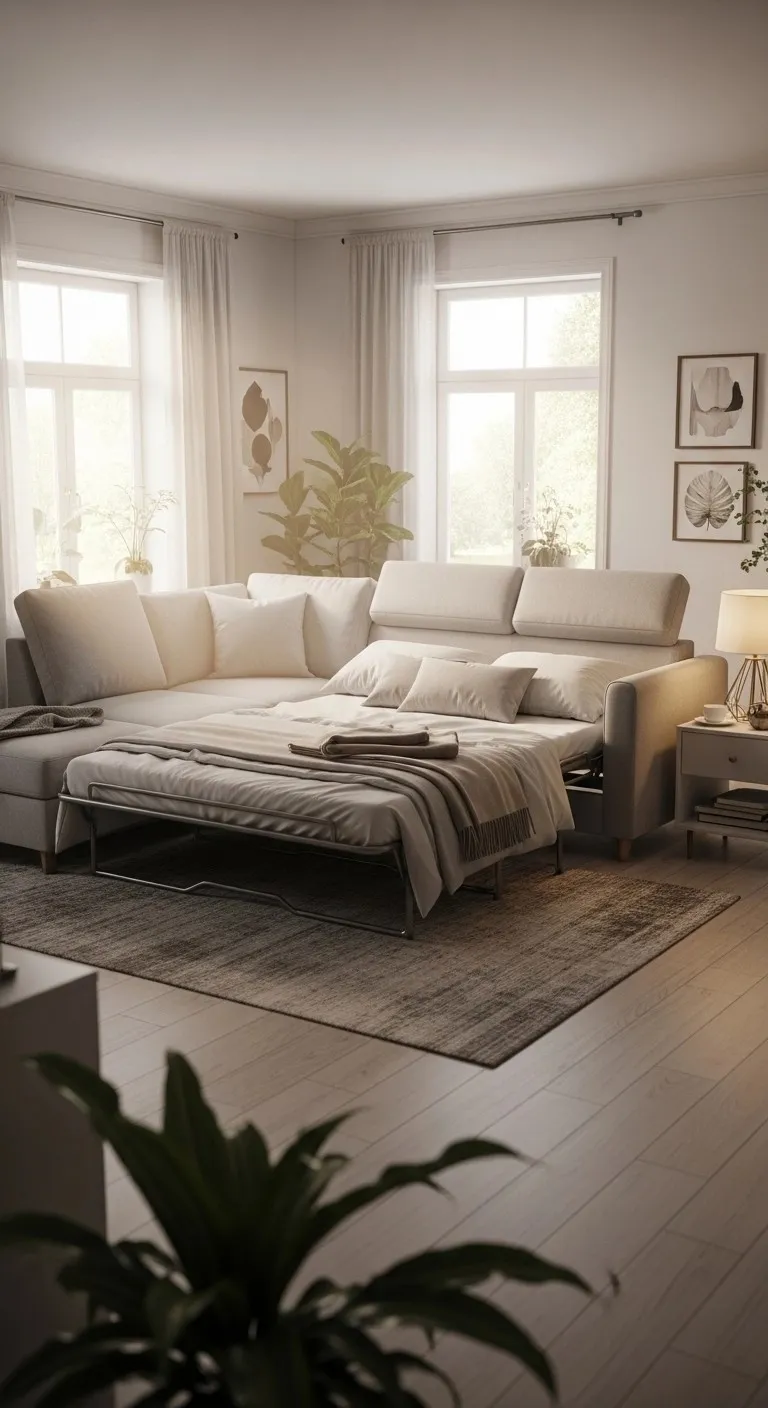
Modern sleeper sectionals have come a long way from those uncomfortable fold-outs your grandparents owned. Look for models with memory foam mattresses and easy pull-out mechanisms that won’t leave your guests (or your back) complaining in the morning.
6. Small-Scale Sectional for Apartments
Living in a 650-square-foot apartment doesn’t mean you have to sacrifice comfort. Emma, a graduate student in San Francisco, found a compact sectional specifically designed for small spaces—it’s only 78 inches wide but still seats four people comfortably.
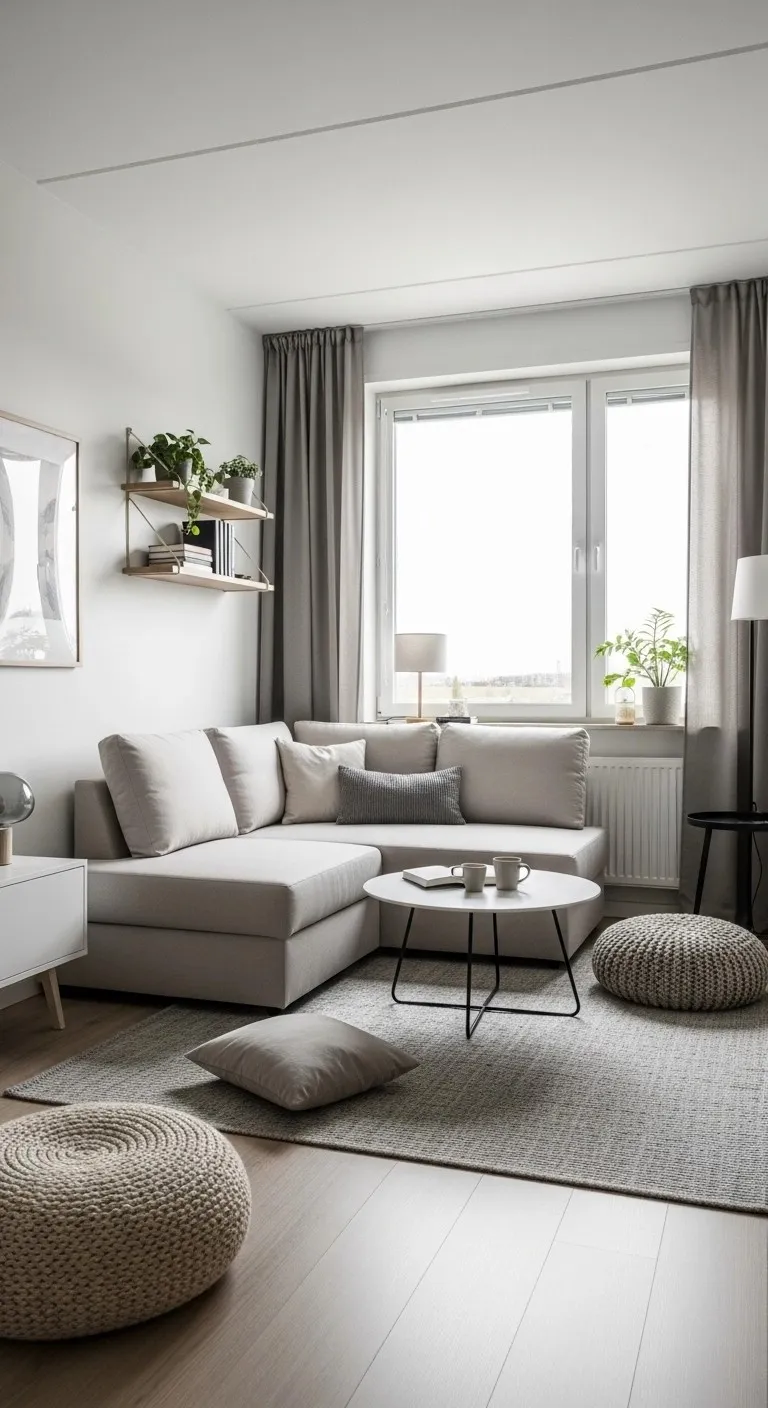
Small-scale sectionals typically feature slimmer arms, shallower seats, and strategic proportions that maximize seating without overwhelming your room. Pair yours with wall-mounted shelves instead of bulky entertainment centers to keep the space feeling open and breathable.
7. Outdoor Sectional for Patio Living
The Johnson family in Miami extended their living space by adding a weather-resistant sectional to their covered patio. Now they spend summer evenings outside, enjoying the breeze while the kids play in the yard, all while sitting on furniture as comfortable as their indoor sofa.
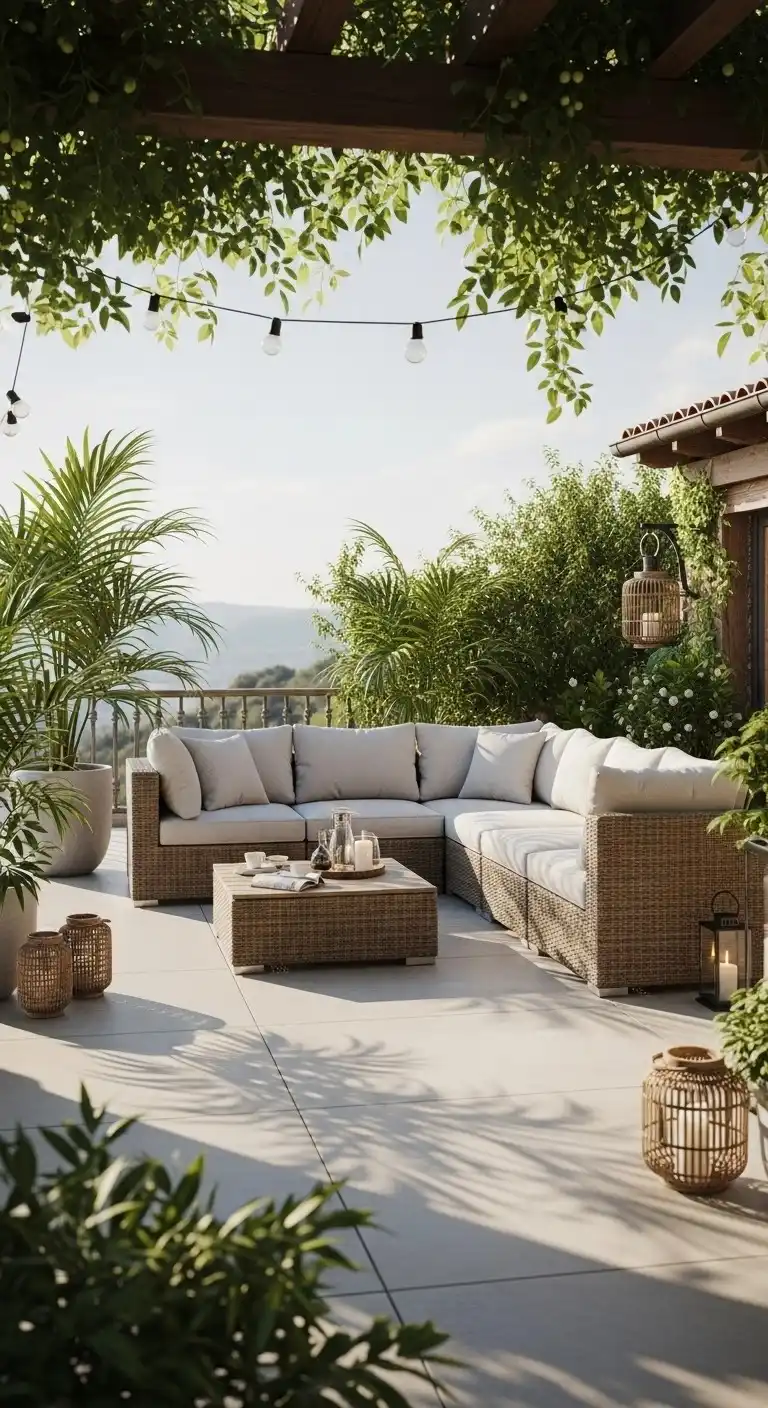
Outdoor sectionals made from materials like resin wicker, teak, or powder-coated aluminum can withstand sun, rain, and humidity. Add water-resistant cushions in bright colors or coastal blues, and you’ve created an outdoor oasis that feels like a resort vacation right at home.
8. Symmetrical Sectional for Formal Spaces
For a balanced, sophisticated look, symmetrical sectionals work beautifully in formal living rooms or open-concept spaces. David, an architect in Seattle, designed his living room around a perfectly symmetrical sectional with equal-length sides extending from a center piece, creating a polished, intentional appearance.
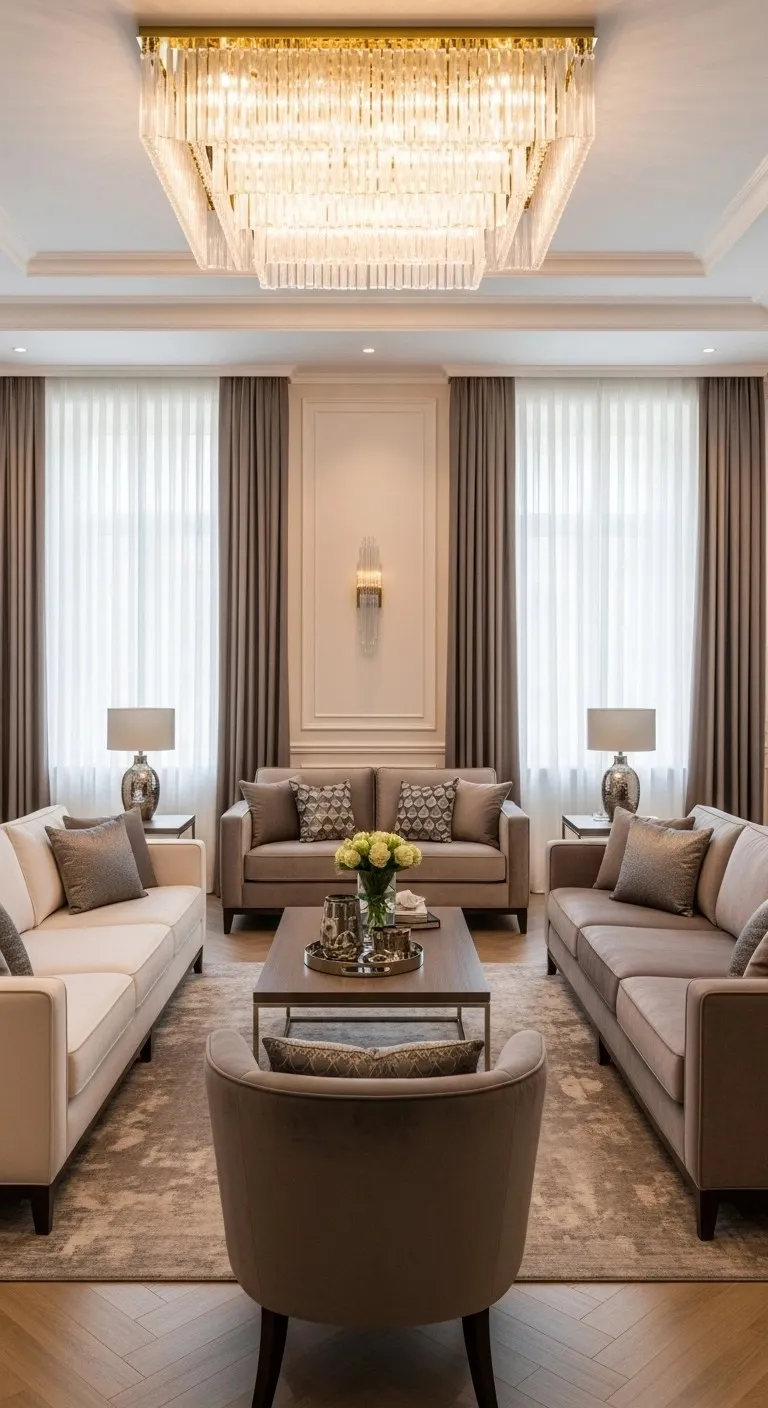
This arrangement works especially well when you center it in the room rather than pushing it against walls. Place matching side tables and lamps on each end to emphasize the symmetry, and you’ll achieve that magazine-worthy look interior designers love.
9. Sectional with Built-In Storage
Hidden storage compartments transform your sectional from simple seating into a clutter-fighting superhero. Linda, a busy mom of three in Denver, stores everything from extra throw blankets to board games in the lift-up storage under her sectional’s chaise portion.
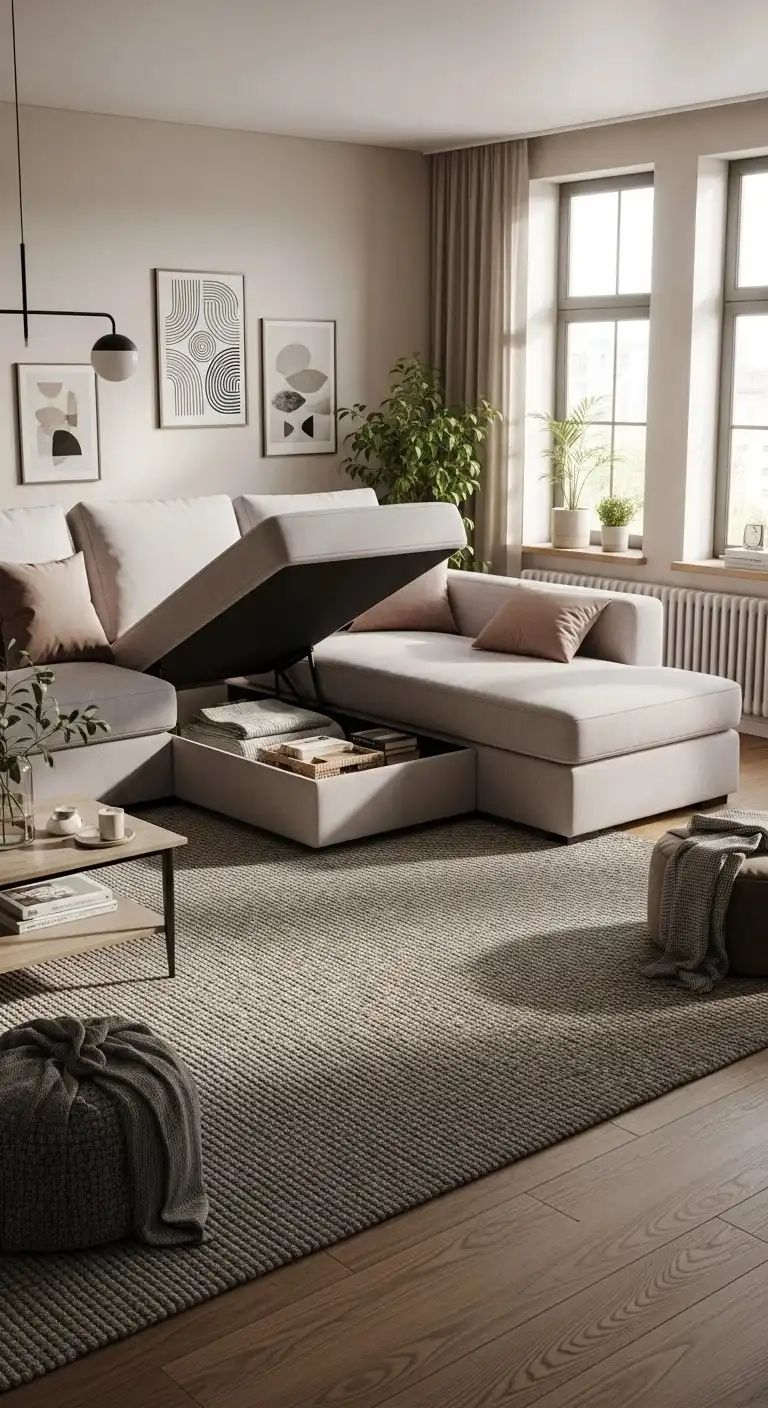
Look for models with storage ottomans, under-seat compartments, or hidden drawers in the arms. This feature is particularly valuable in smaller homes where every square inch counts, helping you maintain that clean, organized look without renting a storage unit.
10. Curved Sectional for Conversation Areas
Curved sectionals create a natural conversation circle that makes everyone feel included in the discussion. When the Patel family in Atlanta renovated their living room, they chose a gentle curve design that encourages face-to-face interaction during their weekly family meetings and game nights.
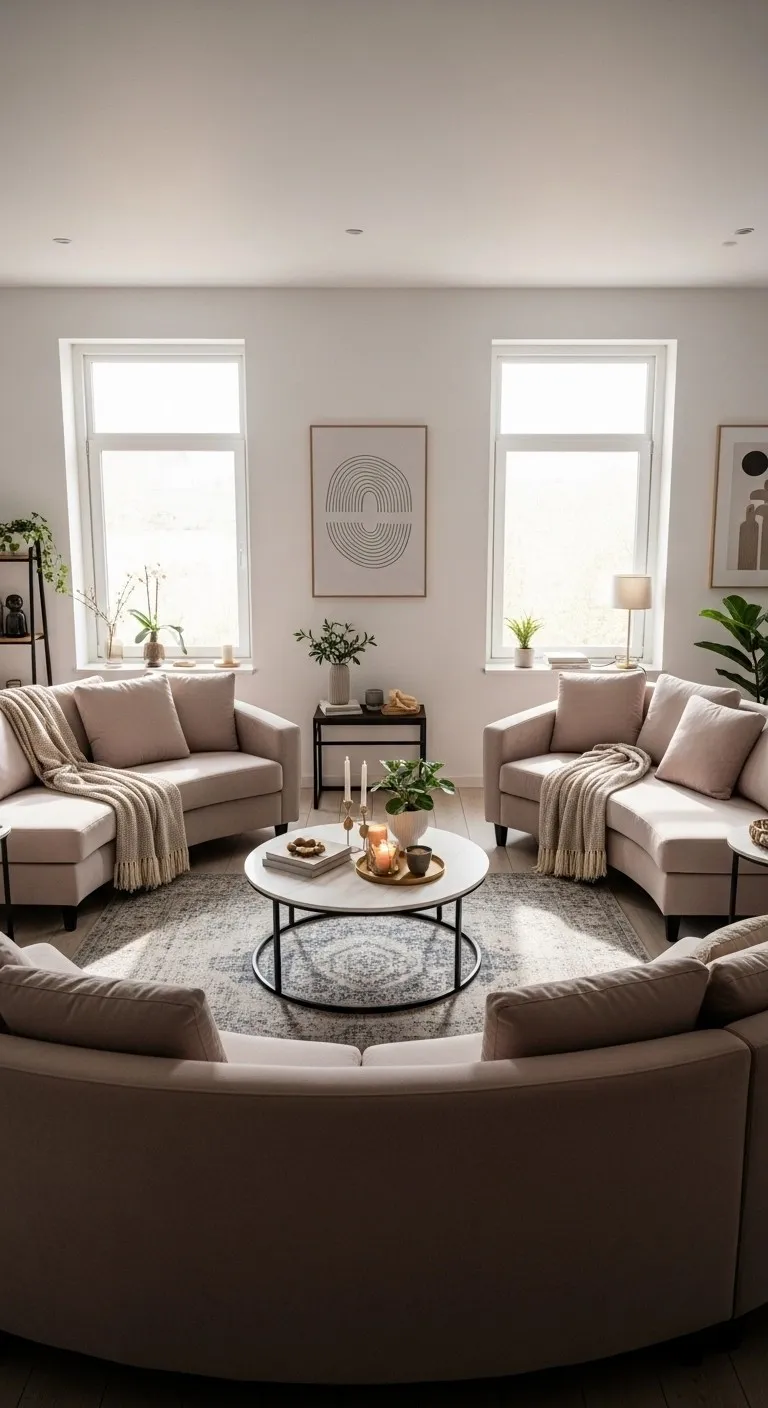
The flowing shape adds visual interest and softens the hard angles typical in most rooms. Position a curved sectional around a central fireplace or facing a picture window to take advantage of your room’s best features while creating an inviting gathering spot.
11. Neutral-Toned Sectional for Versatility
A gray, beige, or cream sectional serves as the perfect canvas for changing décor seasons. Jennifer, an interior design enthusiast in Nashville, loves that her light gray sectional looks fresh with spring pastels, cozy with autumn oranges, and festive with winter reds—all without replacing her main furniture piece.
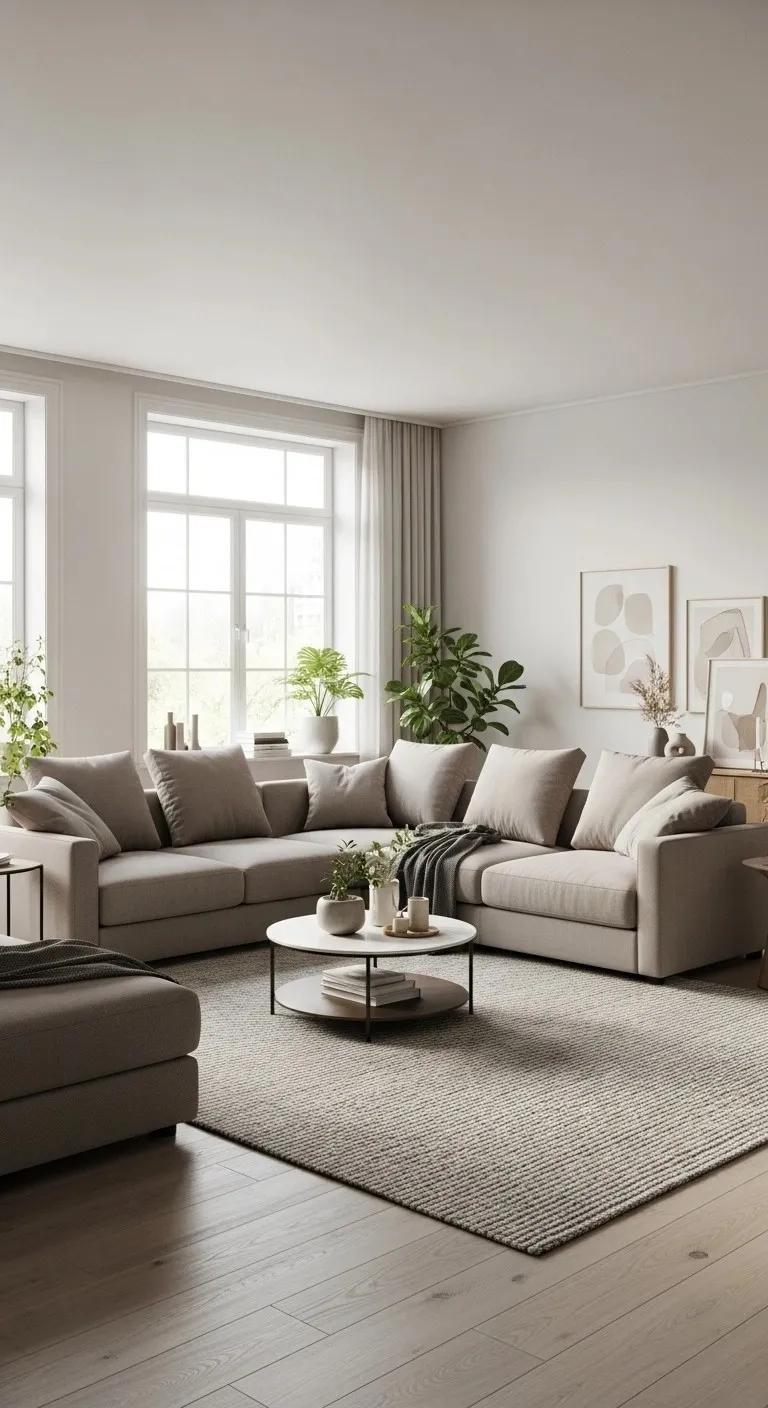
Neutral sectionals also increase your home’s resale appeal since potential buyers can easily visualize their own style on a blank slate. Add personality through colorful throw pillows, textured blankets, and rotating artwork instead of committing to a bold sofa color you might tire of in two years.
12. Bold-Colored Sectional as Statement Piece
Sometimes you want your sectional to be the star of the show. Kevin, a graphic designer in New York, chose a rich navy velvet sectional that immediately draws the eye and sets a sophisticated, dramatic tone in his industrial loft space.
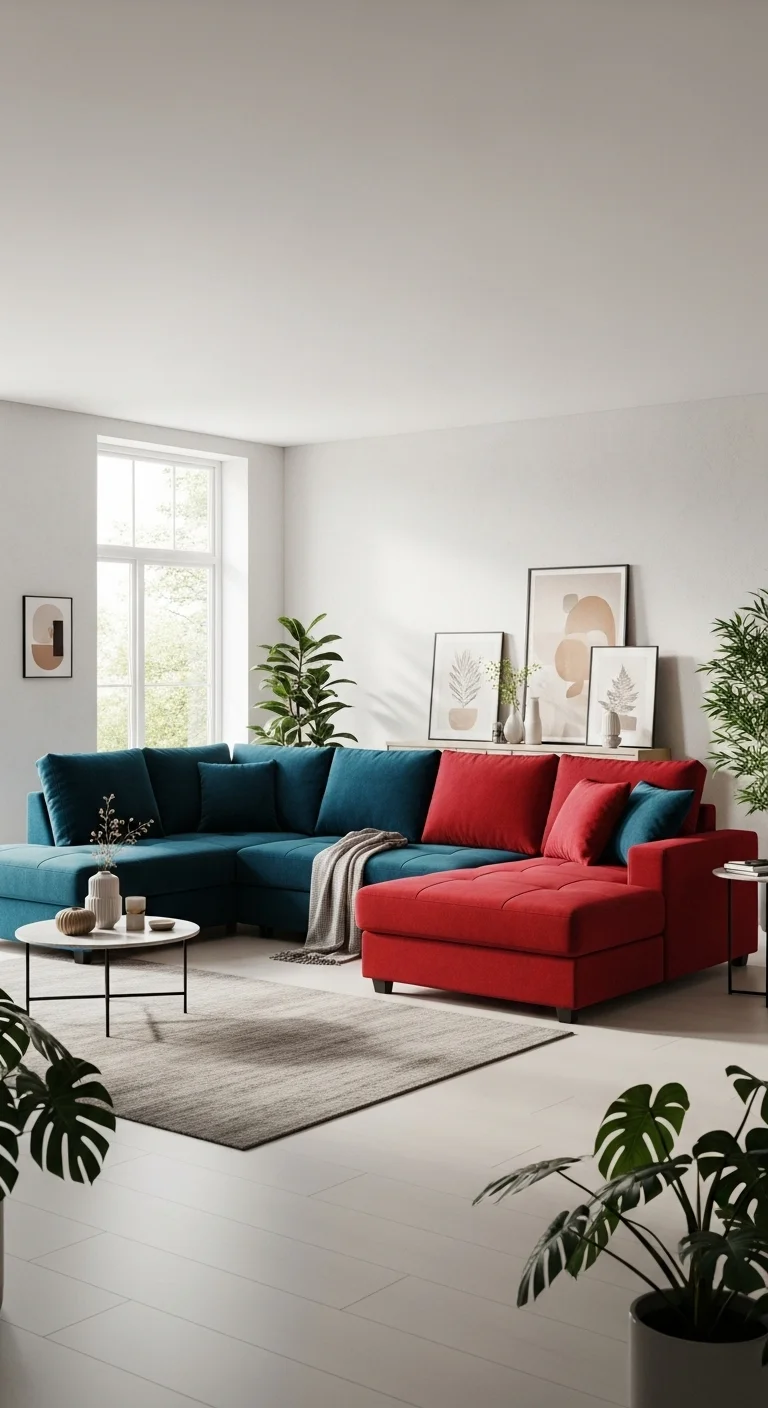
Deep jewel tones like emerald green, sapphire blue, or burgundy create luxury and depth, while bright colors like mustard yellow or burnt orange add playful energy. If you’re going bold, keep surrounding furniture and walls neutral so your sectional can truly shine without visual competition.
13. Leather Sectional for Durability
Pet owners and parents of young children appreciate leather sectionals for good reason—spills wipe clean in seconds. Tom and Maria from Houston say their chocolate brown leather sectional has survived three kids, two dogs, and countless juice box accidents while still looking presentable for adult gatherings.
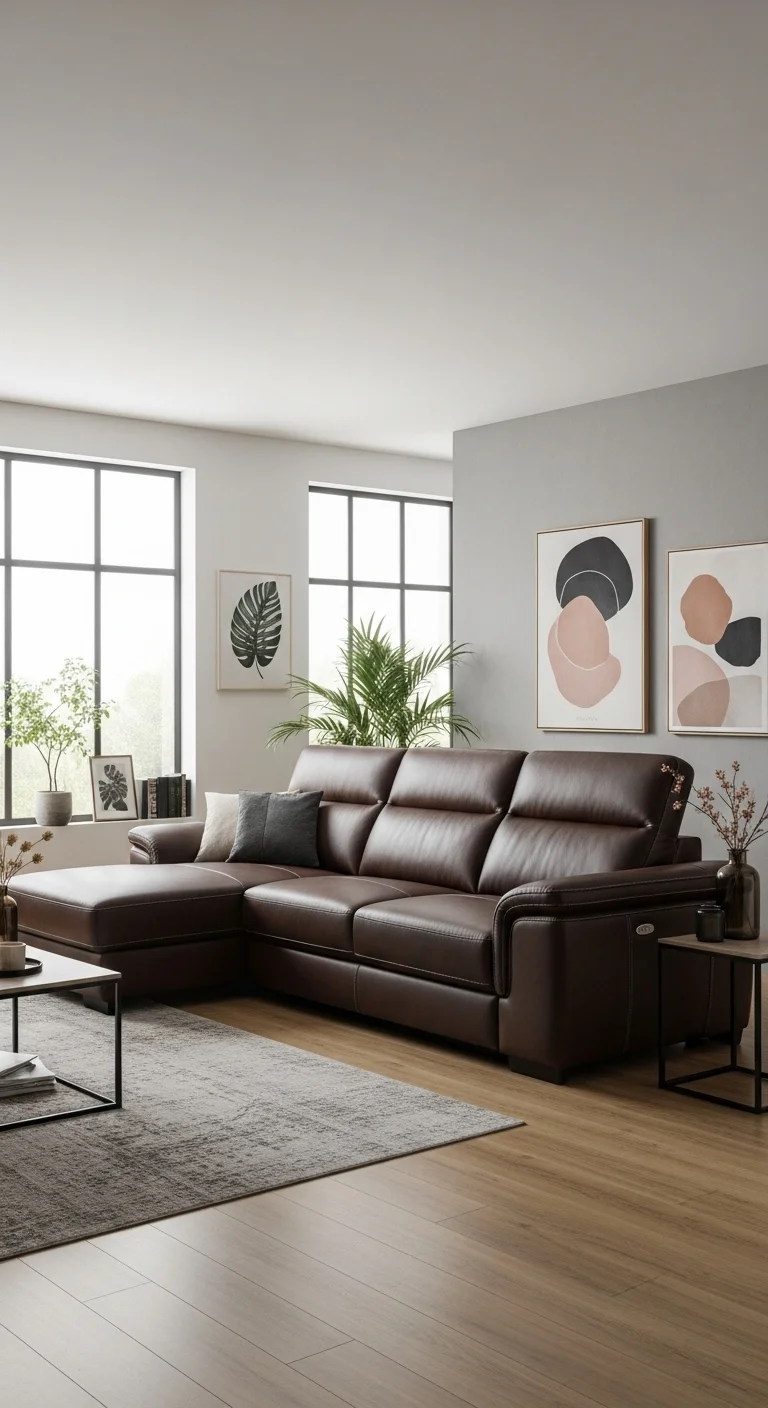
Quality leather develops a beautiful patina over time, actually looking better with age rather than worn out. Choose top-grain or full-grain leather for maximum durability, and condition it twice yearly to keep it supple and prevent cracking in dry climates.
14. Fabric Sectional for Comfort and Warmth
Nothing feels cozier than sinking into a soft, plush fabric sectional after a stressful day. Amanda, a nurse in Minnesota, specifically chose a chenille fabric sectional because the texture feels welcoming and warm during long, cold winters when her family practically lives in the living room.
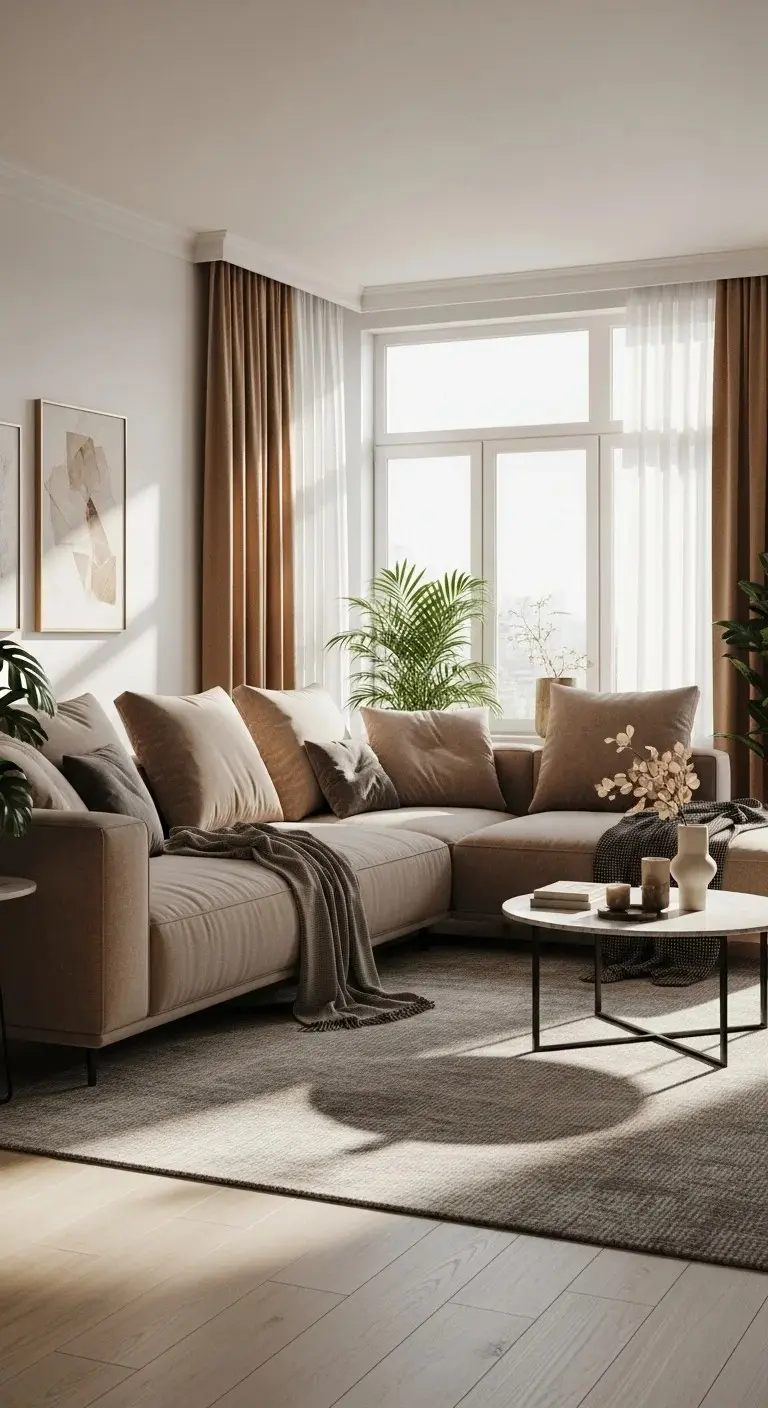
Fabric options range from easy-care microfiber that resists stains to luxurious velvet that adds elegance. Consider performance fabrics treated for stain resistance if you have active households—these modern materials combine comfort with practical durability that families actually need.
15. Tufted Sectional for Classic Elegance
Deep button tufting adds dimension and timeless sophistication to any living room. The Williams family in Charleston chose a tufted sectional in soft linen for their historic home renovation, perfectly blending modern comfort with traditional Southern elegance.
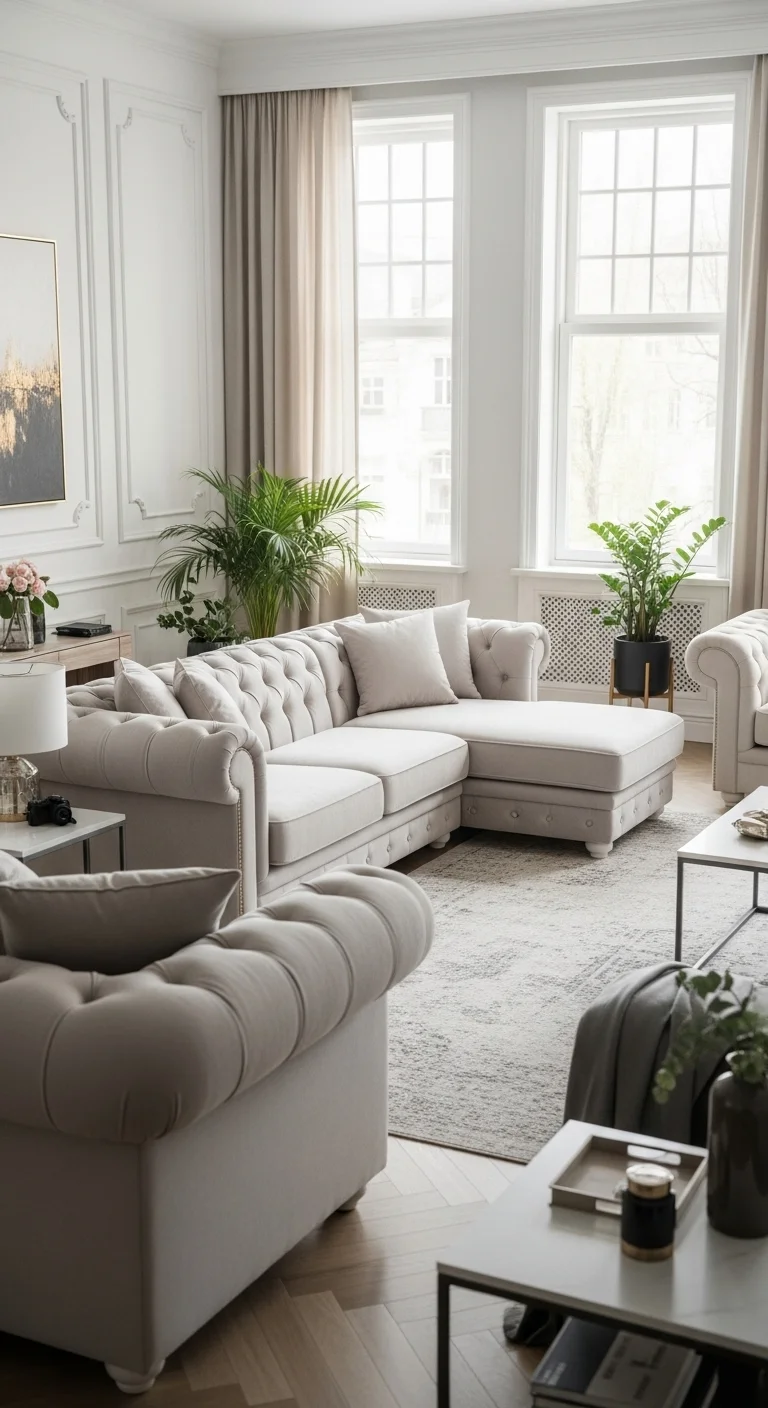
Tufting works beautifully in both traditional and transitional spaces, adding visual texture without overwhelming patterns or busy designs. The classic detail ensures your sectional won’t look dated in five years, making it a smart investment for homeowners who prefer enduring style over trendy designs.
16. Low-Profile Sectional for Modern Minimalism
Low-slung sectionals with sleek lines create that contemporary, uncluttered aesthetic popular in modern homes. Jake, a tech entrepreneur in San Diego, loves how his low-profile sectional makes his living room feel more spacious and open, with clean lines that complement his minimalist design philosophy.
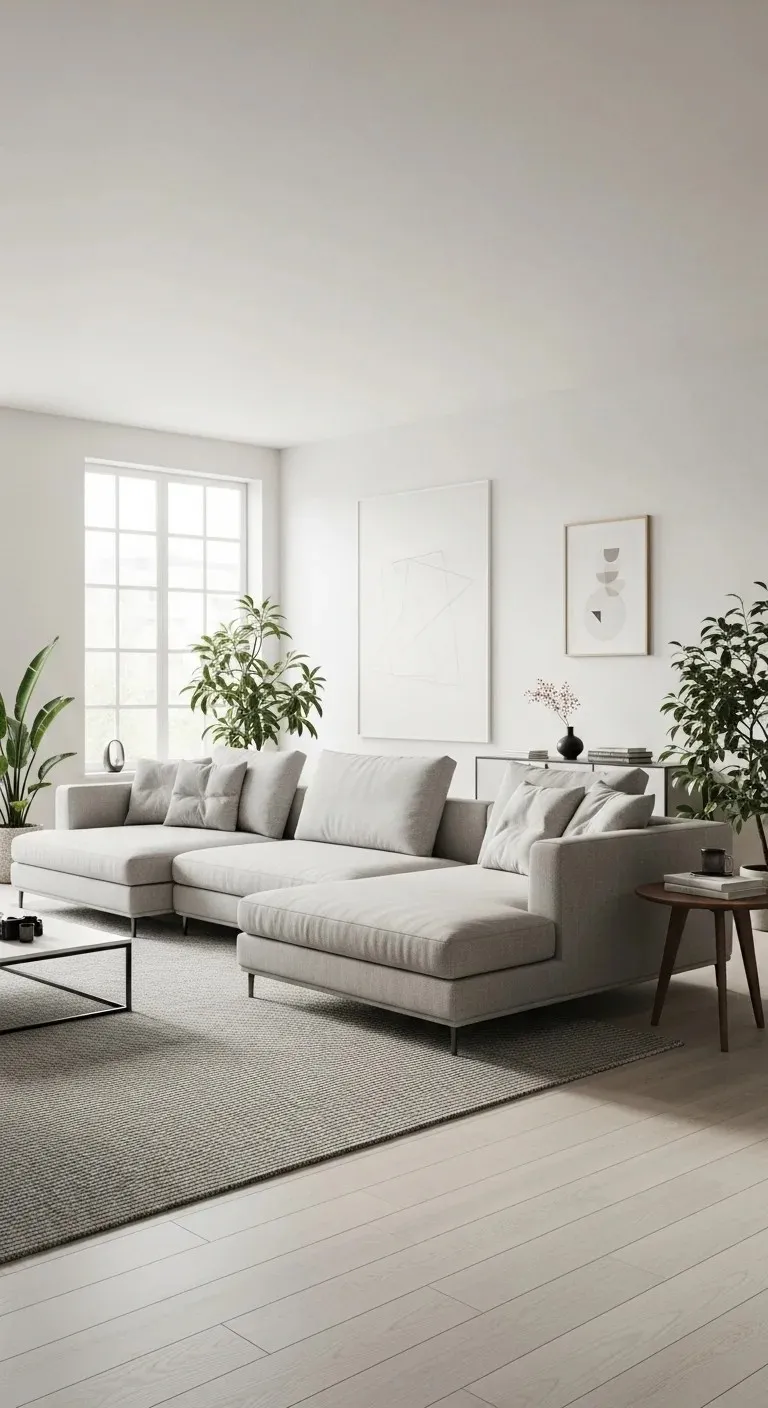
These sectionals typically sit closer to the ground with thin arms or no arms at all, emphasizing horizontal lines that make ceilings appear higher. Pair with simple geometric coffee tables and uncluttered décor for that effortlessly cool, modern vibe you see in design magazines.
17. Sectional with Recliners for Ultimate Relaxation
Power recliners built into sectional seating bring movie theater comfort straight to your home. The Garcia family in Las Vegas installed a sectional with three reclining seats and built-in cup holders, transforming their living room into the neighborhood’s favorite spot for watching big games.
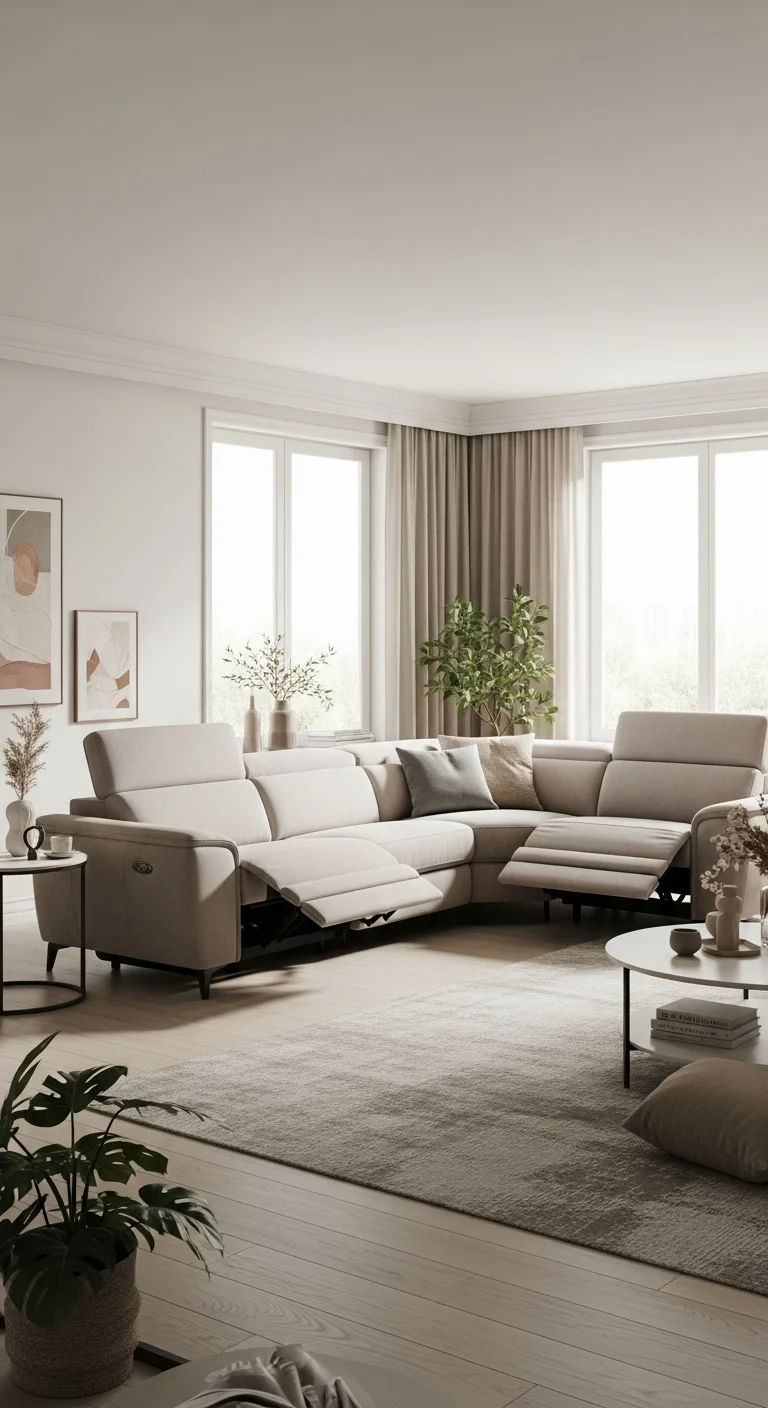
Modern reclining sectionals have come far beyond the bulky, obvious mechanisms of the past. Look for sleek designs where the reclining function hides seamlessly into the overall silhouette, giving you comfort without sacrificing style.
18. Sectional Around a Fireplace
Arranging your sectional to face or wrap around a fireplace creates an incredibly cozy focal point. When winter arrives in their Vermont home, the Thompson family gathers on their sectional positioned in a gentle curve around their stone fireplace, creating warmth both literal and emotional.
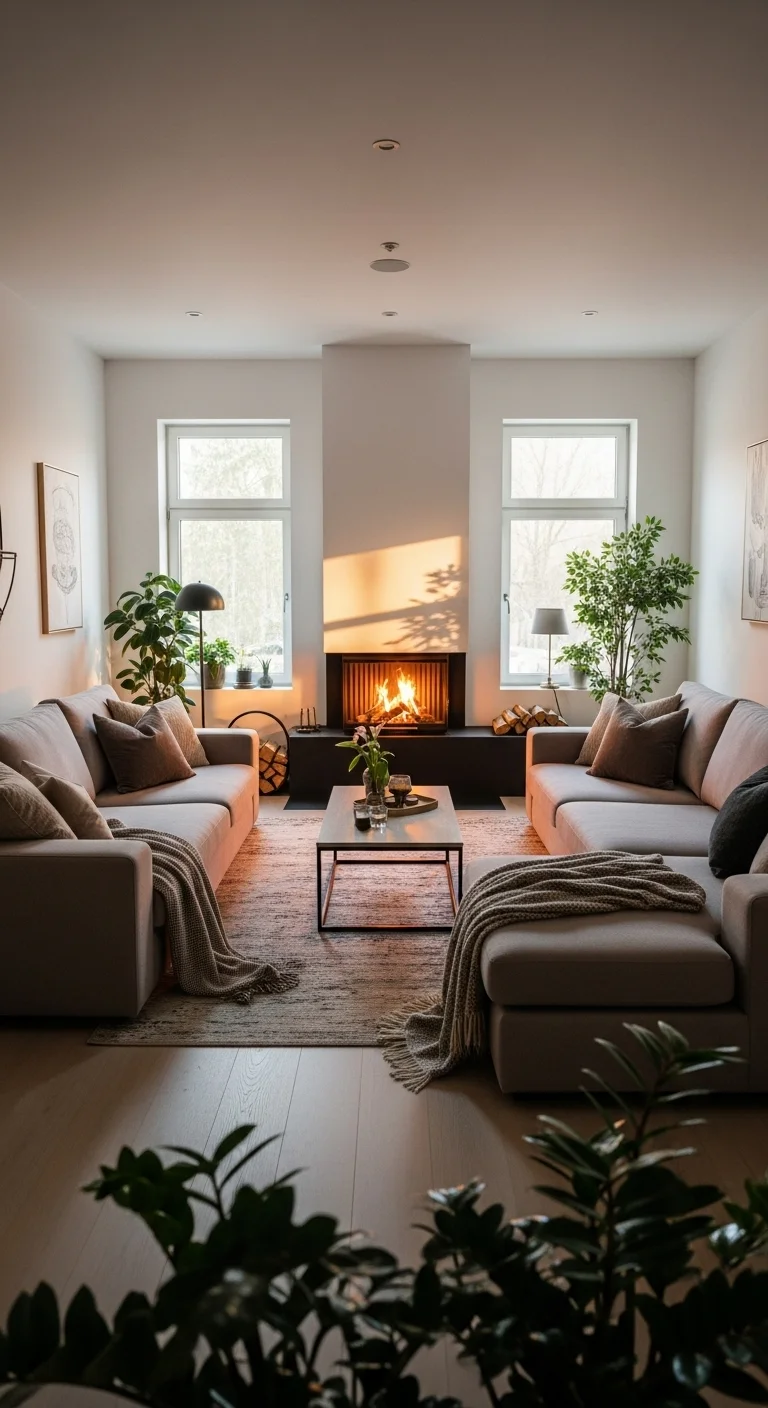
This layout works particularly well in open-concept homes where you need to define the living area without walls. Angle the sectional to face the fireplace while still maintaining sight lines to the kitchen or dining area, ensuring the cook never feels isolated during gatherings.
19. Sectional Dividing Open Spaces
In open-concept homes, a sectional can define your living area without building walls. Carlos, a homeowner in Miami with a combined kitchen-living-dining space, floated his sectional in the middle of the room, creating a clear living zone while maintaining the open, flowing feeling he loves.
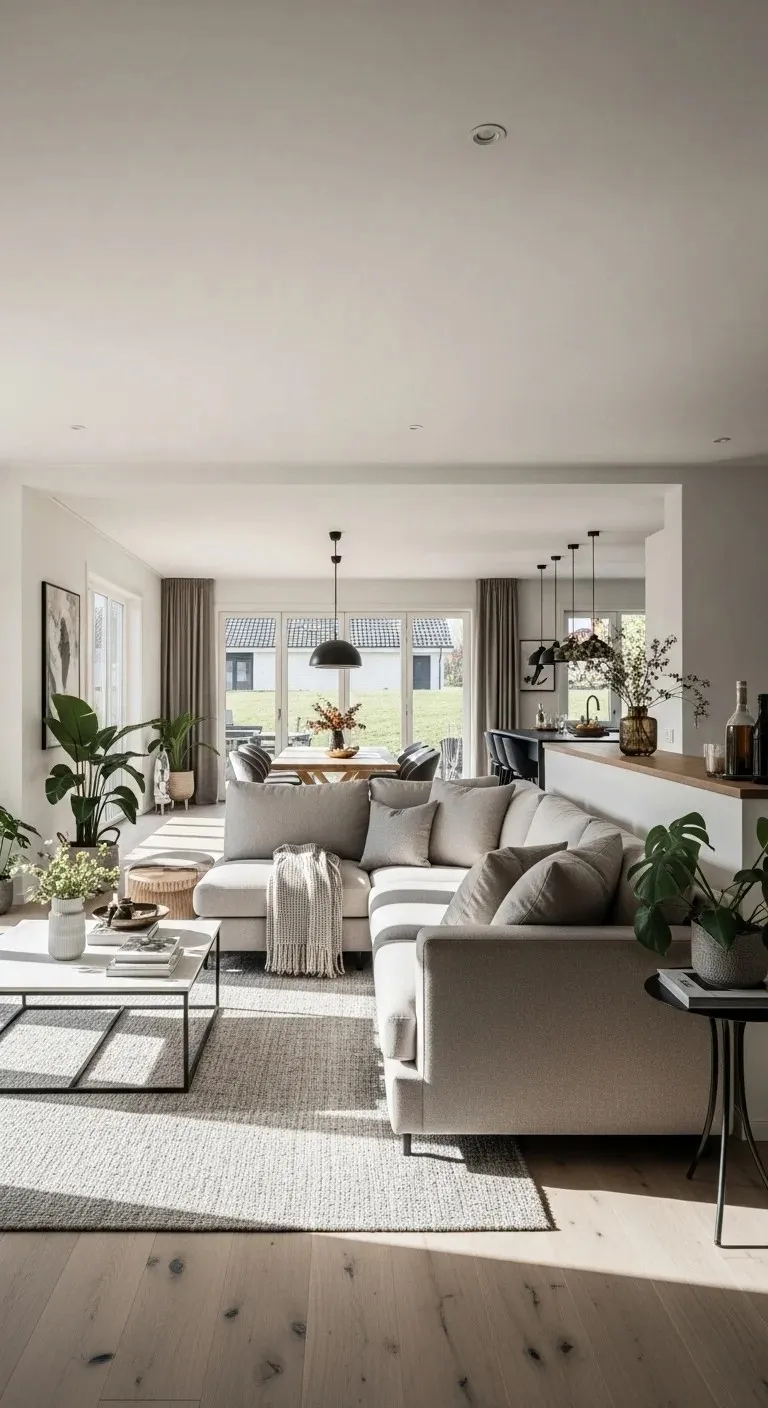
This approach requires choosing a sectional with a finished back that looks attractive from all angles. Add a console table behind the sofa for additional functionality, creating a spot for lamps, charging stations, or displaying photos while naturally separating spaces.
20. Sectional with Contrasting Pillows and Throws
The simplest transformation comes from layering textures and colors through pillows and throws. Michelle, a stylist in Los Angeles, refreshes her neutral sectional seasonally by swapping pillow covers and throws, spending less than $100 to completely change her living room’s mood.
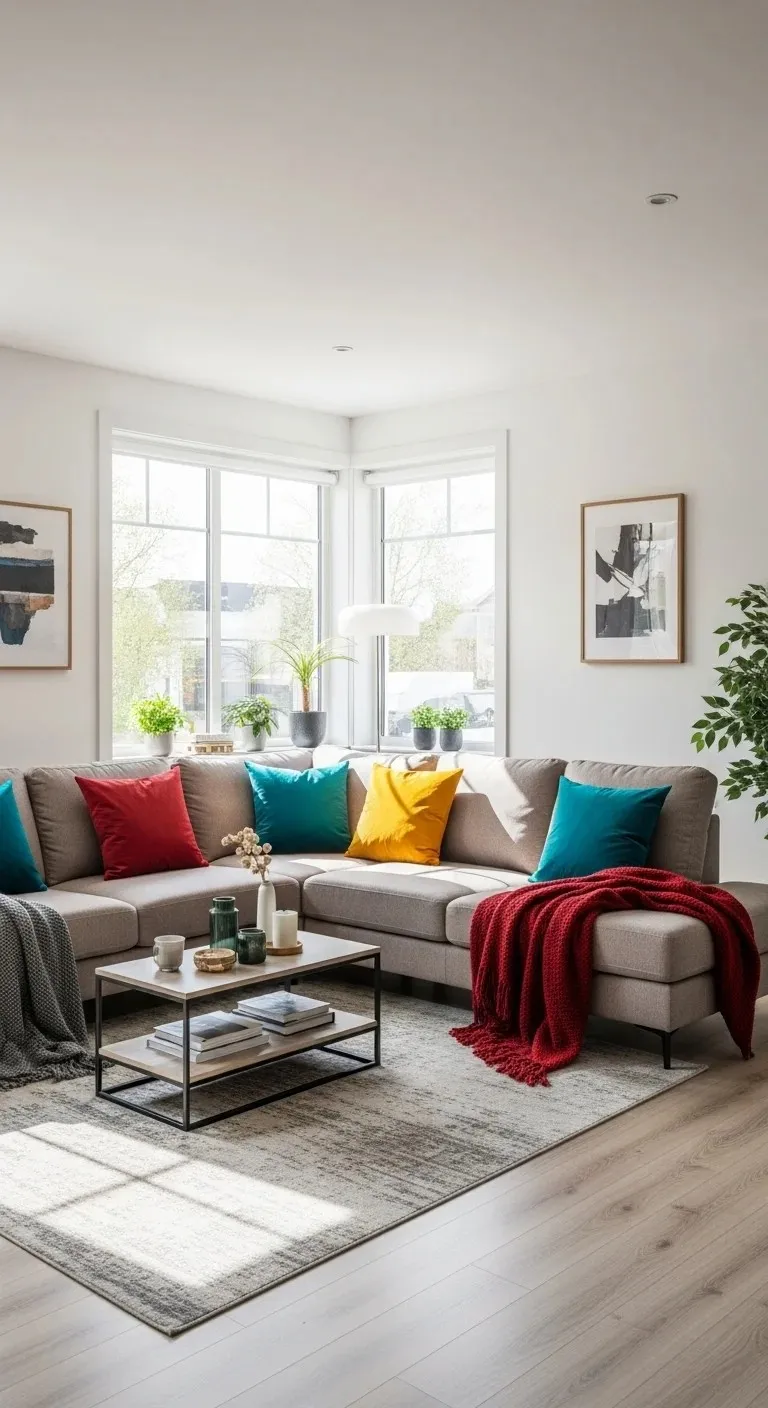
Mix different sizes (22-inch and 18-inch pillows work well together), combine patterns with solids, and layer two or three throws in complementary colors. This approach lets you express creativity and follow trends without the commitment and expense of replacing major furniture pieces.
Why Sectionals Work Better Than Traditional Sofas
Sectionals offer significantly more seating in the same amount of floor space compared to a standard sofa-and-chairs arrangement. According to furniture industry research, a typical L-shaped sectional provides 30-40% more seating capacity while actually using less square footage than separate pieces.
The connected design eliminates those awkward gaps between furniture where remotes and toys disappear forever. Families with young children particularly appreciate how sectionals create a contained play area—toddlers can climb from one end to the other while parents keep a watchful eye from the same piece of furniture.
Choosing the Right Size Sectional for Your Space
Measuring your room properly prevents the all-too-common mistake of buying a sectional that overwhelms your space or floats awkwardly small in a large area. Before shopping, measure your room’s length and width, then map out at least 30-36 inches of walking space around the sectional’s perimeter.
Use painter’s tape on your floor to outline your ideal sectional’s footprint, then live with it for a few days. Walk through the space, test traffic patterns, and ensure doors can open fully. Michael, a contractor in Dallas, says this simple trick has saved countless clients from expensive returns and disappointment.
Best Fabrics for High-Traffic Living Rooms
Performance fabrics have revolutionized family-friendly furniture in recent years. These treated materials resist stains, fading, and wear while maintaining the soft feel of traditional upholstery. Look for fabrics rated at least 30,000 double rubs on the Wyzenbeek test—this indicates commercial-grade durability suitable for busy households.
Popular high-performance fabric options include:
- Crypton fabric with moisture barriers
- Solution-dyed acrylic that’s fade-resistant
- Microfiber with tight weaves that repel liquids
- Treated polyester blends with stain guards
Leather and faux leather alternatives offer easy cleanup but can feel cold in winter and sticky in summer. Many families compromise with leather on seats and fabric on backs, combining durability where needed with comfort where it matters most.
Color Psychology in Living Room Design
The color of your sectional influences your room’s entire emotional atmosphere. Cool tones like blues and grays create calm, relaxing environments perfect for unwinding after work, which is why hospitals and spas favor these shades. Warm tones like rust, terracotta, and golden yellows energize spaces and encourage conversation and activity.
Dr. Sally Augustin, an environmental psychologist, explains that people naturally gravitate toward earth tones in living spaces because these colors subconsciously signal safety and comfort. This explains the enduring popularity of tan, brown, and green sectionals—they create environments where our brains can truly relax.
Arranging Furniture Around Your Sectional
Your sectional placement determines your entire room’s traffic flow and functionality. The most common mistake is pushing all furniture against walls, which actually makes rooms feel smaller and less intimate. Instead, float your sectional away from walls by 6-12 inches to create visual breathing room and usable space behind the sofa.
Consider the “conversation distance” rule—seats should be 4-8 feet apart for comfortable talking without shouting. Add accent chairs perpendicular to your sectional rather than directly opposite, creating a more dynamic, interesting arrangement that encourages interaction from multiple angles.
Lighting Considerations for Sectional Seating
Proper lighting transforms a sectional from simple seating into a functional zone for reading, working, or relaxing. The Reed family in Seattle learned this lesson after initially loving their sectional but struggling to read comfortably in the evenings until they added proper task lighting.
Layer three types of lighting around your sectional: ambient (overhead or recessed), task (floor or table lamps for reading), and accent (highlighting artwork or architectural features). Position floor lamps behind corner sections or at the ends of chaises, ensuring every seat has access to good light for activities beyond watching TV.
Sectional Maintenance and Care Tips
Regular maintenance extends your sectional’s life by years and keeps it looking fresh. Vacuum your sectional weekly using the upholstery attachment to remove dust, pet hair, and crumbs before they work deep into fibers. Rotate cushions monthly so they wear evenly, preventing that telltale “favorite spot” indentation.
Address spills immediately by blotting (never rubbing) with a clean white cloth, working from the outside toward the center to prevent spreading. Professional cleaning every 12-18 months removes deep-set dirt and oils that regular vacuuming can’t reach, especially important for light-colored fabrics in family homes.
Budget-Friendly Sectional Shopping Strategies
Quality sectionals represent a significant investment, but smart shopping strategies help you afford better furniture without breaking your budget. Memorial Day, Fourth of July, and Black Friday consistently offer the deepest discounts, with retailers clearing floor models at 40-60% off to make room for new inventory.
Money-saving tips for sectional shopping:
- Buy floor models with minor imperfections
- Choose neutral colors (they go on sale less often but last longer stylistically)
- Negotiate delivery fees and old furniture removal
- Consider financing offers with 0% interest periods
Floor samples often show minimal wear and come at steep discounts. Brandon, a furniture salesman in Phoenix, shares that most floor models receive protective treatments and sit in showrooms for just 3-6 months before being sold at clearance prices.
Mixing Sectionals with Other Furniture Styles
Your sectional doesn’t have to match every other piece in your living room—in fact, mixing styles creates more visual interest than perfectly coordinated sets. Pair a modern, streamlined sectional with a vintage trunk coffee table, or balance a traditional tufted sectional with contemporary accent chairs for an eclectic, collected-over-time appearance.
The key is finding a common thread—whether that’s color, material, or scale—that ties diverse pieces together. Interior designer Patricia Martinez recommends choosing one element to coordinate (like keeping all wood tones similar) while varying everything else, preventing the room from feeling too matchy-matchy or boring.
Pet-Friendly Sectional Features
Pet owners need sectionals that accommodate their furry family members without sacrificing style. The Anderson family in Colorado chose a sectional with removable, machine-washable covers that they can throw in the laundry after their golden retriever’s muddy park adventures, maintaining a clean home without constantly yelling at the dog.
Dark colors and patterns disguise pet hair better than solid light fabrics, while tightly woven materials resist claw snags. Consider sectionals with wooden or metal legs instead of skirted bases—they’re easier to vacuum under and prevent pets from hiding toys or accidents underneath where you can’t easily reach.
Creating Zones in Open-Concept Spaces
Open floor plans offer spacious, flowing layouts but can feel chaotic without proper definition. Your sectional becomes a powerful tool for creating distinct zones within one large area. By positioning the sectional with its back toward the kitchen or dining area, you subtly define the living space while maintaining the open concept’s visual connection.
Area rugs anchor your sectional and reinforce zoning—choose a rug large enough that all sectional legs rest on it, or at least the front legs of each section. This grounds the furniture grouping and prevents the floating, disconnected feeling that happens when furniture sits randomly on bare floors.
Sectional Styling for Different Design Aesthetics
For Modern Farmhouse Style:
Choose a light linen or cotton sectional in cream or light gray, adding texture through chunky knit throws, plaid pillows, and a reclaimed wood coffee table. Brittany from Tennessee says her farmhouse-style sectional, paired with metal lanterns and greenery, creates that perfect cozy-but-clean aesthetic she sees on home improvement shows.
For Coastal Style:
Opt for white, blue, or striped sectionals with natural fiber rugs and driftwood accessories. The relaxed, slipcover look works beautifully here, creating that effortless beach house vibe even if you live hours from the ocean.
For Industrial Style:
Pair leather or dark gray sectionals with metal accent tables, exposed brick (or brick-look wallpaper), and Edison bulb lighting for that urban loft aesthetic popular in converted warehouse apartments.
The Environmental Impact of Furniture Choices
Sustainable sectional options have expanded dramatically as consumers demand eco-friendly furniture. Look for certifications like FSC (Forest Stewardship Council) for wood frames, CertiPUR-US for foam without harmful chemicals, and GREENGUARD for low chemical emissions that protect your indoor air quality.
Companies like Medley, Burrow, and Inside Weather now offer sectionals made from recycled materials, sustainably harvested wood, and water-based adhesives. While these options typically cost 15-20% more upfront, their durability and lower environmental impact make them worthwhile investments for environmentally conscious buyers.
Sectionals for Awkward Room Shapes
Weird angles, support columns, and odd dimensions challenge many homeowners, but sectionals can actually solve these layout problems better than traditional furniture. Custom or modular sectionals adapt to unusual spaces, turning architectural quirks into design features rather than frustrating limitations.
Julia in San Francisco lives in a Victorian with a living room featuring a bay window and an awkward support beam. Her L-shaped sectional wraps around the beam, turning the obstacle into a natural room divider that defines her conversation area from her dining space. Sometimes the problem becomes the solution with creative thinking.
Technology Integration in Modern Sectionals
Today’s sectionals go beyond simple seating, incorporating USB charging ports, wireless charging pads, and Bluetooth speakers directly into the furniture. The Kim family in Austin chose a sectional with built-in power outlets in each armrest, eliminating the tangle of charging cables and extension cords that previously cluttered their living room.
LED lighting strips underneath some sectionals create ambient mood lighting and help prevent stubbed toes during midnight trips to the kitchen. While these tech features add $200-500 to the sectional’s cost, they eliminate the need for separate charging stations and side table lamps, potentially saving money overall.
Sectional Psychology: Why We Love Them
Psychologists note that humans instinctively prefer spaces where they can observe their surroundings while feeling protected—the sectional’s corner seats satisfy this biological preference perfectly. Sitting in the L’s corner position lets you see the entire room while the sofa’s high back and arms create a secure, nest-like feeling.
Family therapists also observe that sectionals promote togetherness without forced intimacy. Unlike a straight sofa where everyone sits in a row, sectionals allow family members to angle toward or away from each other naturally, respecting personal space while maintaining proximity. This flexibility supports healthier family dynamics during both connection and alone time.
Common Sectional Buying Mistakes to Avoid
The biggest mistake buyers make is choosing a sectional based solely on showroom appearance without considering home measurements and lifestyle needs. Robert, a furniture store manager in Detroit, says at least 20% of sectional sales result in returns because customers didn’t account for stairwell widths, doorway clearances, or actual living patterns.
Another common error is prioritizing trendy colors or styles over timeless design. That burnt orange velvet sectional might look amazing in the store, but will you still love it in five years when your décor tastes evolve? Neutral bases with colorful accessories offer more long-term flexibility and better resale value if you move.
How Room Layout Affects Sectional Choice
TV placement largely determines your sectional orientation in most American homes. The average person spends 2-3 hours daily watching television, making the sectional-to-TV arrangement critical for comfort and viewing angles. Position your sectional perpendicular or facing your TV at a distance of 1.5-2.5 times your screen’s diagonal measurement for optimal viewing.
Windows present another layout consideration—avoid placing dark sectionals in direct afternoon sunlight, which causes fading over time. Light-colored and fade-resistant fabrics handle sunny spots better, though UV-protective window films and strategic curtains extend any sectional’s life regardless of color.
Sectional Sizing Statistics You Should Know
Important sectional measurements and industry standards:
Standard sectional depth: 36-40 inches
- Seat height: 17-19 inches from floor
- Arm height: 24-28 inches
- Small-space sectionals: 75-85 inches total width
- Standard sectionals: 100-120 inches total width
- Large sectionals: 120+ inches total width
According to furniture research, 60% of homeowners underestimate the size of sectionals when shopping, leading to delivery day surprises. Always add 6 inches to manufacturer measurements to account for the visual bulk once the sectional occupies your room—this mental adjustment provides more realistic expectations.
Conclusion
Choosing from these 20 best sectional living room ideas transforms your space into a comfortable, stylish haven that meets your family’s specific needs. Whether you prefer a small-scale option for a cozy apartment or a sprawling U-shaped design for big family gatherings, the perfect sectional exists for every lifestyle and budget. Remember to measure carefully, consider your daily activities, and choose quality over trends for a sectional that serves you beautifully for years to come.
Frequently Asked Questions
What is the best sectional layout for a small living room?
L-shaped or small-scale sectionals work best in compact spaces, ideally placed in a corner to maximize floor space. Choose models with slim arms and legs to create a lighter visual footprint, and avoid oversized chaise sections that can overwhelm tight quarters.
How do I choose between leather and fabric sectionals?
Leather sectionals offer superior durability and easy cleaning, making them ideal for homes with kids and pets, while fabric sectionals provide more color options and a cozier, warmer feel. Consider your lifestyle—leather for active households, fabric for comfort-focused environments.
Can you put a sectional in the middle of a room?
Yes, floating a sectional in the center of a room works beautifully in open-concept spaces or large living rooms, creating defined zones while maintaining flow. Choose a sectional with a finished back and add a console table behind it for a polished, intentional look.
How often should I replace my sectional sofa?
Quality sectionals typically last 7-15 years depending on construction, fabric, and daily use patterns. Look for signs like sagging cushions, broken springs, or irreparable stains as indicators it’s time to shop for a replacement rather than following a strict timeline.Retry


