14 Mid-Length Hairstyles That Solve the Most Common Medium-Hair Problems
Mid-length hair has been my most frustrating length and, strangely, my favorite. The first time I grew my bob out to my shoulders, it flipped outward every single morning no matter what I did. My friends called it “the shoulder flip,” and I spent weeks fighting it with a flat iron.
Then my stylist said something that changed my approach: “Mid-length hair isn’t difficult. It just has a few predictable problems. Once you know them, you can cut and style around them.”
That’s what this guide is all about. Instead of a random list, I’ve organized these 14 mid-length hairstyles around the most common medium-hair problems: flipping at the shoulders, feeling flat, the awkward grow-out stage, feeling boring, being too thick and being too thin. For each style, you’ll find the fix, the maintenance it needs, and a few real stories from my own mid-length journey.
What Counts as Mid-Length Hair?
Mid-length or medium hair usually falls somewhere between the chin and the shoulder blades. It’s long enough for ponytails and braids, but short enough to feel light and quick to style.
Problem 1: “My Hair Flips Out at the Shoulders”
When hair rests on your shoulders, the ends get pushed outward, creating the dreaded shoulder flip.
1. The Collarbone Cut

A cut that ends just above the shoulders, around the collarbone. Because it doesn’t rest on your shoulders, it doesn’t flip.
This was the cut that ended my shoulder flip battle. My stylist took off just an inch, and suddenly my hair fell straight and smooth every morning.
The fix: sitting above the shoulders stops the ends from being pushed outward.
Maintenance: trim every 6 to 8 weeks to keep it above the shoulders.
2. The Flipped-Out Mid-Length

If your hair wants to flip, let it. Use a round brush or flat iron to flip the ends outward on purpose for a playful, retro look.
The fix: turns the problem into a style.
Maintenance: trim every 8 weeks.
3. Long Layers Past the Shoulders

Grow your hair a little longer, just past the shoulders, and add long layers so the ends fall forward or backward instead of flipping.
The fix: longer hair falls past the shoulders instead of resting on them.
Maintenance: trim every 8 to 10 weeks.
Problem 2: “My Hair Feels Flat”
Mid-length hair can lose volume, especially if it’s fine or heavy.
4. The Mid-Length Shag

A layered shag with plenty of choppy, textured layers throughout. It adds instant volume and movement.
My best friend switched to a mid-length shag after years of flat, one-length hair. She told me she suddenly had “hair that actually does something.”
The fix: layers remove weight and create lift.
Maintenance: trim every 6 to 8 weeks.
5. Crown-Layered Mid-Length

Shorter layers placed at the crown add height and lift where hair often falls flat.
The fix: volume at the top balances the length below.
Maintenance: trim every 8 weeks.
6. The Velcro Roller Blowout
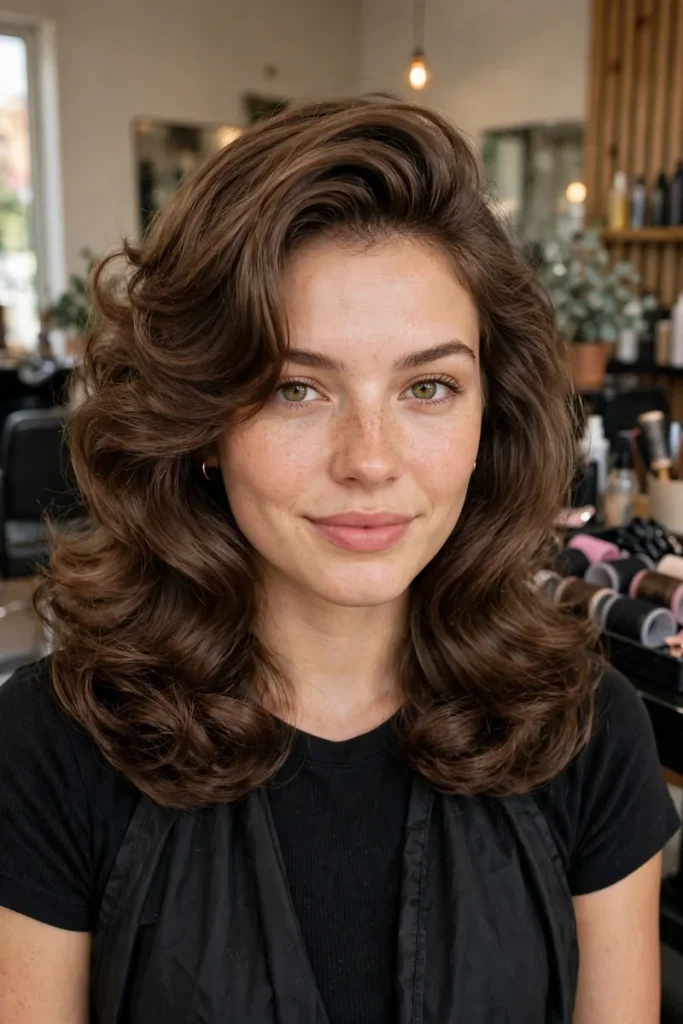
A bouncy, voluminous blowout using velcro rollers at the crown while your hair cools. It creates big, glamorous volume without much heat.
The fix: rollers lift the roots and add bounce.
Maintenance: no extra salon visits needed.
Problem 3: “I’m Stuck in the Awkward Grow-Out Stage”
Growing out a bob or pixie means passing through mid-length, often with uneven layers.
7. Mid-Length With Curtain Bangs

Curtain bangs help blend shorter front pieces into longer hair, making the grow-out stage look intentional.
When I was growing out my pixie, curtain bangs were my saving grace. They made the shorter front pieces look like a deliberate style instead of an accident.
The fix: blends uneven front layers.
Maintenance: trim bangs every 4 to 6 weeks.
8. Blended Face-Framing Layers

Your stylist cuts face-framing layers that blend shorter grow-out pieces into the rest of your hair.
The fix: hides uneven lengths around the face.
Maintenance: trim every 8 weeks.
9. The Soft A-Line Long Bob

A long bob that’s slightly shorter at the back and longer at the front, cut to even out grow-out lengths.
The fix: turns uneven lengths into a shape.
Maintenance: trim every 6 to 8 weeks.
Problem 4: “My Hair Looks Boring”
Sometimes mid-length hair just feels plain. A few changes can make it exciting.
10. Mid-Length With Face-Framing Highlights

Lighter highlights placed around the face, sometimes called a “money piece,” brighten your complexion and add dimension.
A colleague added face-framing highlights to her plain mid-length hair before a big birthday. She said it was the biggest change she’d ever made without cutting a single inch.
The fix: adds dimension without changing the cut.
Maintenance: touch-ups every 8 to 12 weeks.
11. Textured Beach Waves

Soft, textured waves created with a flat iron or wand and finished with sea salt spray. They make mid-length hair look effortless and full of movement.
The fix: adds texture and personality.
Maintenance: no extra salon visits needed.
Problem 5: “My Hair Is Too Thick and Heavy”
Thick mid-length hair can feel bulky and look triangular.
12. Mid-Length With Internal Layers

Layers are cut underneath the top section of hair, removing bulk without changing the overall shape.
The fix: reduces weight while keeping the length.
Maintenance: trim every 8 weeks.
13. Ghost Layers

Ghost layers are very subtle, hidden layers cut through the interior of the hair. You can’t really see them, but they make hair move and feel lighter.
My sister has extremely thick hair, and ghost layers made her mid-length cut feel half as heavy. She said she could finally blow-dry it in less than half an hour.
The fix: lightens thick hair invisibly.
Maintenance: trim every 8 to 10 weeks.
Problem 6: “My Hair Is Too Thin”
Fine or thin mid-length hair can look sparse at the ends.
14. The Blunt Mid-Length Cut

A single-length cut with a blunt, straight edge. Without layers, the ends look thicker and fuller.
The fix: a blunt line makes thin hair look denser.
Maintenance: trim every 6 to 8 weeks to keep the edge sharp.
Why Mid-Length Hair Flips
Mid-length hair often flips because:
- It rests on your shoulders, which push the ends outward.
- Collars and necklines push against the ends.
- Sleeping on your hair can bend the ends.
Cutting your hair slightly shorter or longer than your shoulders usually solves it.
Necklines and Mid-Length Hair
Your clothing can affect how mid-length hair falls:
- Turtlenecks and high collars can push the ends outward.
- Scoop necks and V-necks let mid-length hair fall smoothly.
- Off-the-shoulder tops show off mid-length waves beautifully.
On turtleneck days, try tucking your hair inside the collar or wearing it up.
Five Heat-Free Ways to Style Mid-Length Hair
- Braid damp hair overnight for soft waves.
- Twist damp hair into two buns for bouncy curls.
- Use velcro rollers while your hair dries.
- Wrap damp hair around a headband overnight for heatless curls.
- Scrunch in mousse and air-dry for natural texture.
Staying Mid-Length vs. Growing Longer
- To stay mid-length: book trims every 6 to 8 weeks.
- To grow longer: trim only every 10 to 12 weeks, removing just split ends.
Tell your stylist your goal, so they know whether to maintain your length or protect it as it grows.
Final Thoughts
Mid-length hair doesn’t have to be frustrating. Once you know its common problems, like flipping, flatness, awkward grow-out stages, boredom, too much thickness or not enough, you can choose a cut and style that solves them.
Find your problem, try the fix, and enjoy the most versatile length there is.
What’s your biggest mid-length hair challenge? Let me know in the comments below.