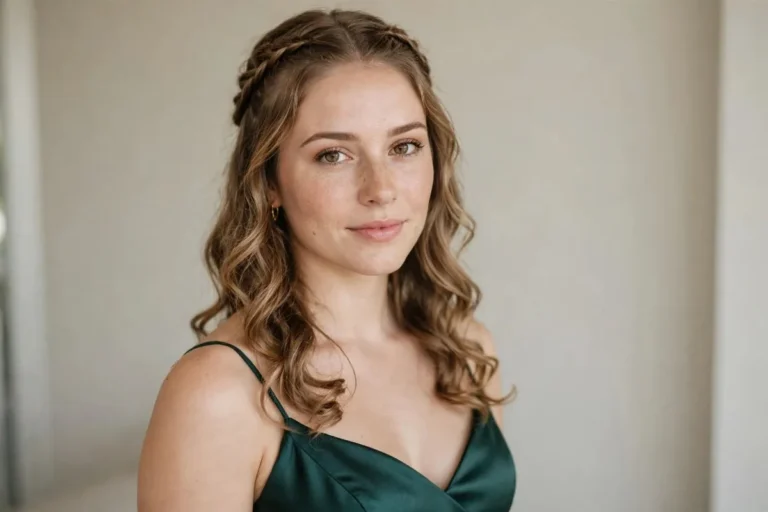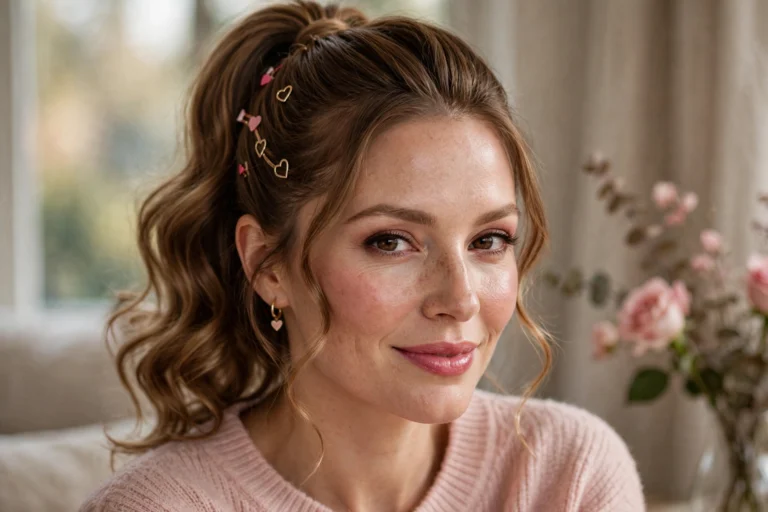
13 Long Wolf Cuts: Tame, Wild, and Completely Untamed
Not all wolves are the same animal. Some are house-trained: soft layers, subtle texture, office-approved. Some are feral: razored ends, dramatic shapes, visible from space. And that is the beauty of the long wolf cut. It is not one haircut. It is a spectrum, and you get to choose exactly how wild you want to be.
I have lived at three points on this spectrum, and each one taught me something about myself. The tame wolf taught me that edge can be quiet. The wild wolf taught me that hair can be a personality. The untamed wolf taught me that some compliments come from strangers and some stares do too, and both are fine. These thirteen cuts are organized along the spectrum: tame, wild, untamed. Find your point.
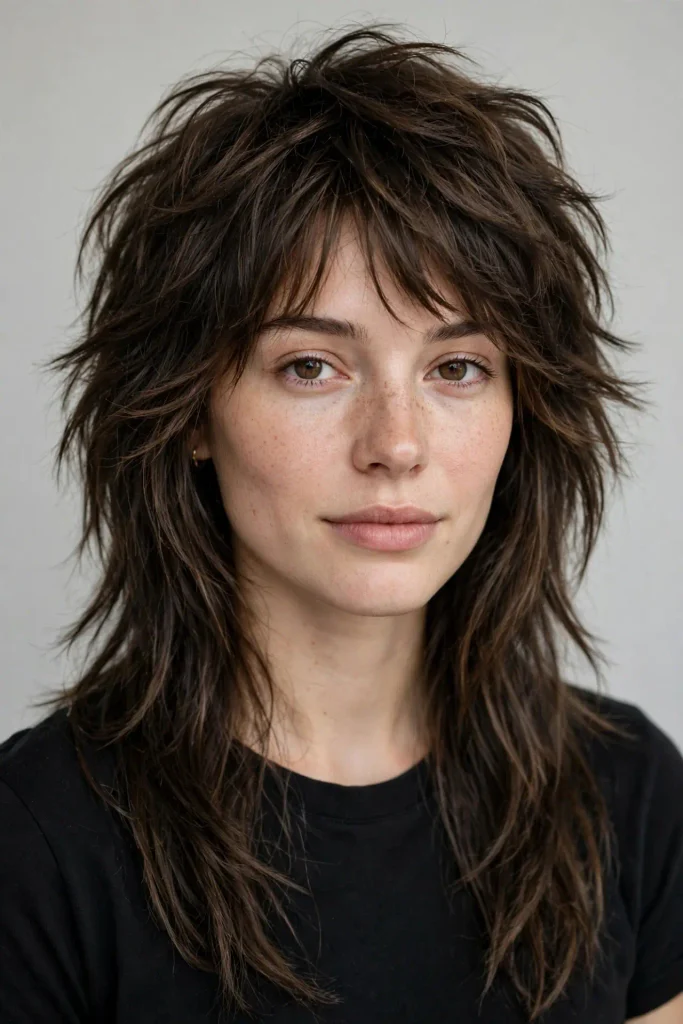
Wolf vs Shag vs Mullet: The Definitive Guide
Expert minute, because these three get confused constantly. The shag is about even, all-over layers with a soft, rounded shape. It is the chill one. The mullet is about contrast: short top and sides, long back. It is the rebellious one. The wolf lives between them: shorter, wilder layers on top like a shag, with length through the back like a mullet, but blended. The wolf is the shag’s edgier sibling and the mullet’s more wearable cousin. If your stylist cannot explain the difference, find one who can before you book.
The Tame: Wolves in Sheep’s Clothing
For the wolf-curious. These read as “cool layered cut” to most people, and only you know the truth.
1. The Soft Long Wolf
Wildness: 2/5. Gentle wolf layering through long hair. The layers are there, but they whisper. I started here, and it was the perfect entry: my long hair finally had movement and shape, but nobody at work blinked. The soft wolf is for women who want the texture without the statement. A gateway wolf.
Maintenance: trims every ten to twelve weeks. Very forgiving.

2. The Polished Wolf
Wildness: 2/5. Wolf layers with a smooth, blowout finish. This is the wolf that goes to galas. The layers create the shape; the styling creates the polish. I wore this to a formal event and the combination of edgy cut and sleek styling was the best-dressed hair in the room. Proof that wild cuts and polished styling are not opposites.
Maintenance: styling takes effort; the cut itself is low-maintenance.
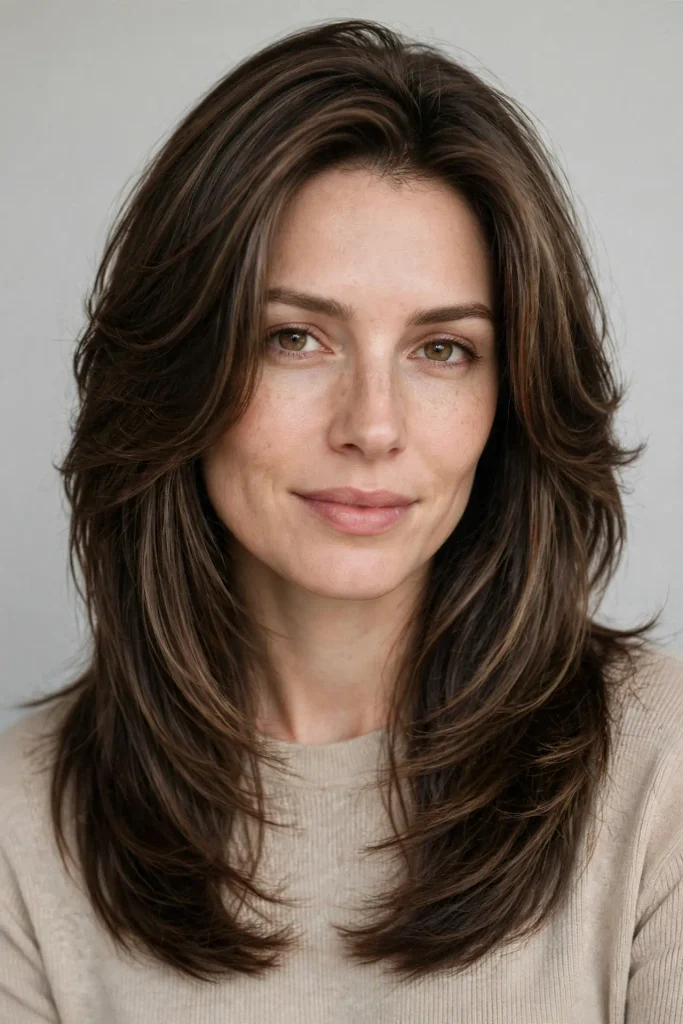
3. Long Wolf With Curtain Fringe
Wildness: 3/5. The curtain fringe makes it fashion; the wolf layers make it wild. This combination is the most popular long wolf for a reason: the fringe frames the face while the layers create that signature texture. I wore this for a year. It photographed beautifully, styled easily, and grew out gracefully. The people’s wolf.
Maintenance: fringe trims every six to eight weeks; lengths go twelve.
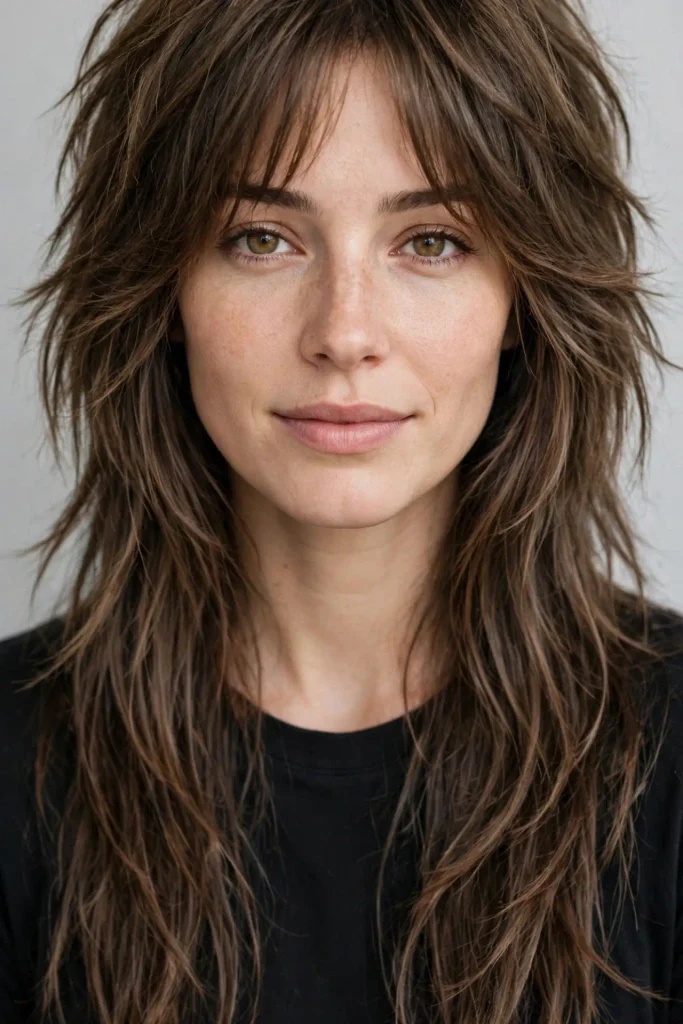
4. The Subtle Wolf
Wildness: 1/5. Barely-there wolf texture on long hair. The layers are long, the shape is soft, the effect is movement. This is the wolf for women who do not think of themselves as wolf women. I recommended this to my mother. She loved it. If my mother can wear a wolf, anyone can.
Maintenance: the lowest on this list. Twelve weeks, easy.
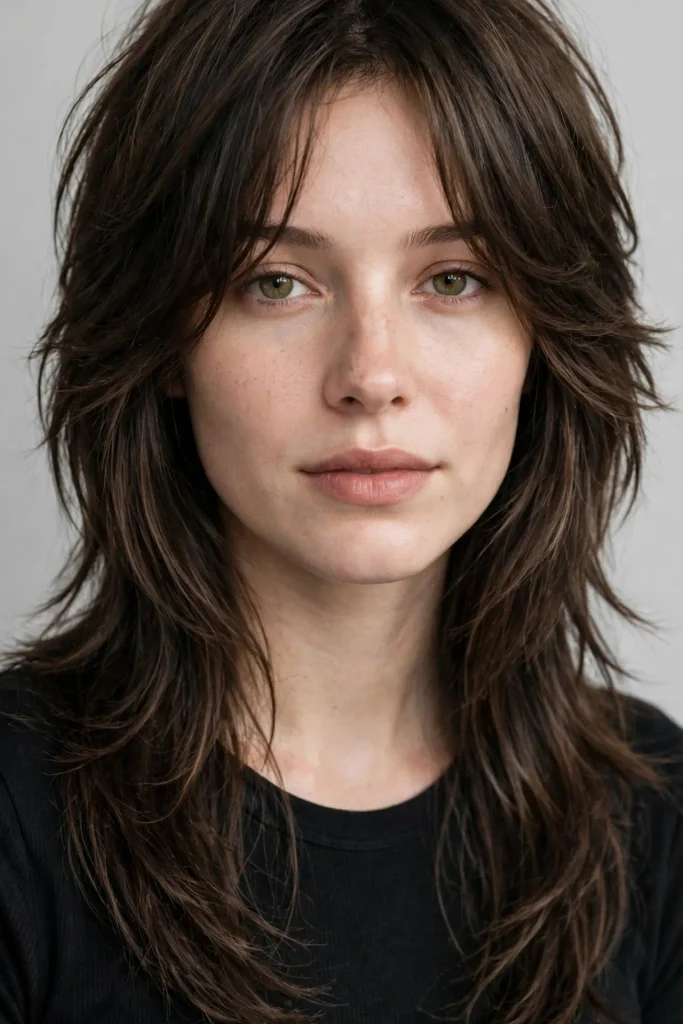
The Wild: Actual Wolves
The middle of the spectrum. These are unmistakably wolf cuts: textured, edgy, full of personality.
5. The Classic Long Wolf
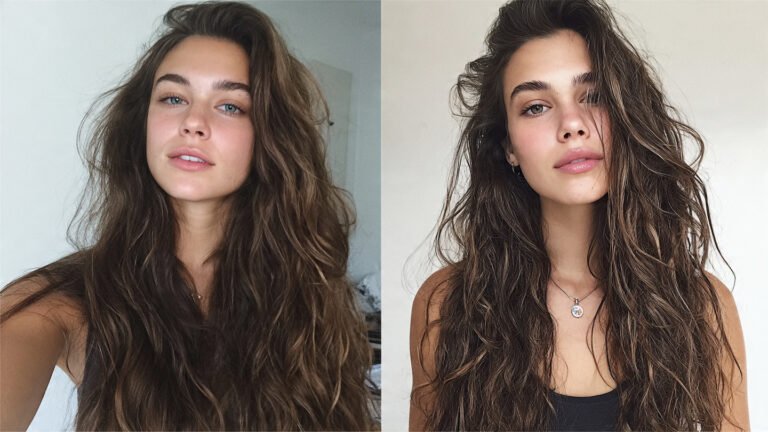
Wildness: 4/5. The archetype: heavy crown layers, textured lengths, piece-y ends. This is the cut from the reference photos. I got this at my wildest and it was the most “me” my hair has ever felt. The crown layers create height, the textured lengths create movement, and the whole thing has that untamed energy. The classic for a reason.
Maintenance: trims every eight to ten weeks to keep the shape.
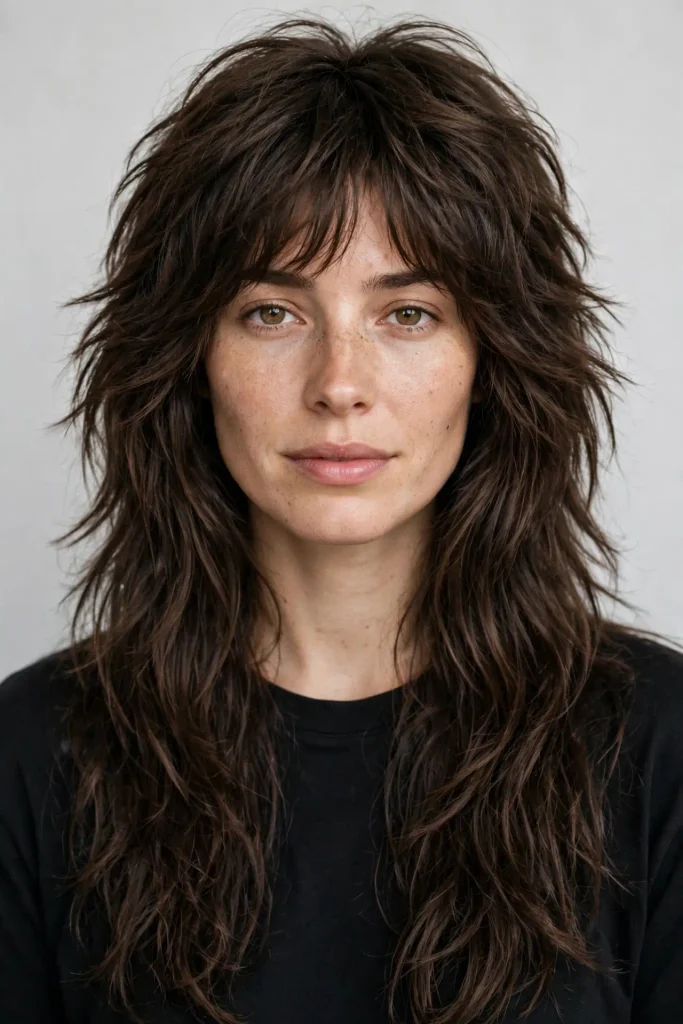
6. The Shaggy Wolf
Wildness: 4/5. Maximum shag influence: layers everywhere, undone texture. The shaggy wolf is the coolest person at the party. I wore this through my most creative year and it matched my energy exactly. It air-dries into something interesting, which is the true test of any cut. Wash, scrunch, live your life.
Maintenance: eight to ten weeks. Loves air-drying.
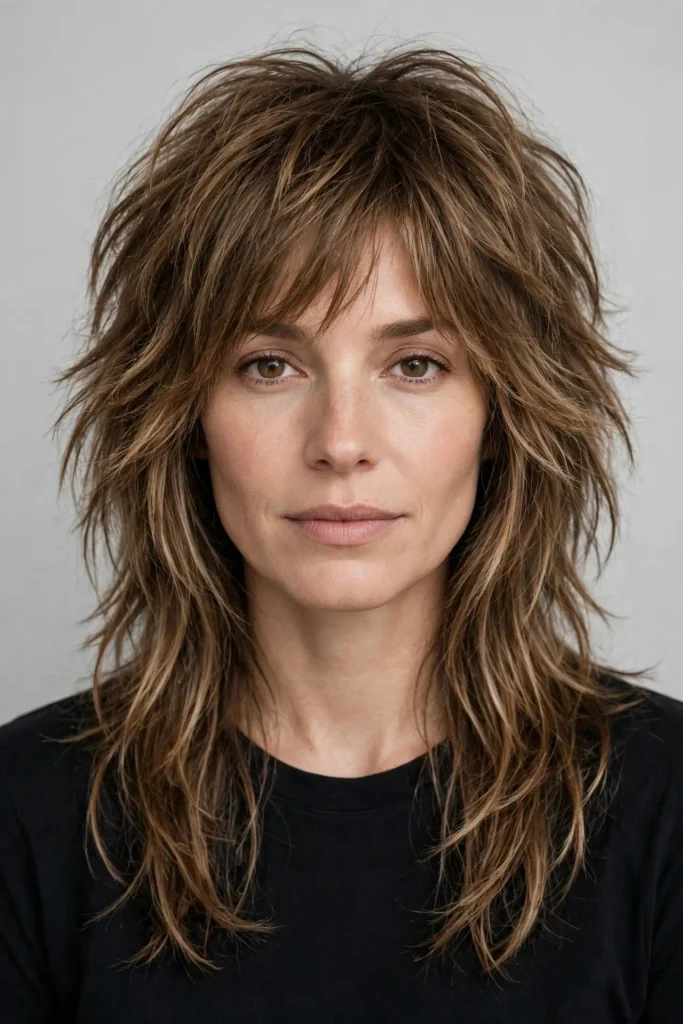
7. The 70s Wolf
Wildness: 3/5. Feathered, flipped, Farrah-adjacent. The 70s wolf takes the decade’s iconic feathering and gives it the wolf’s edge. I wore the revival version and felt like a rock album cover. The flipped layers give long hair bounce and movement that flat layers never could. Nostalgia, but make it wild.
Maintenance: needs some styling for the flip; the cut holds eight to ten weeks.
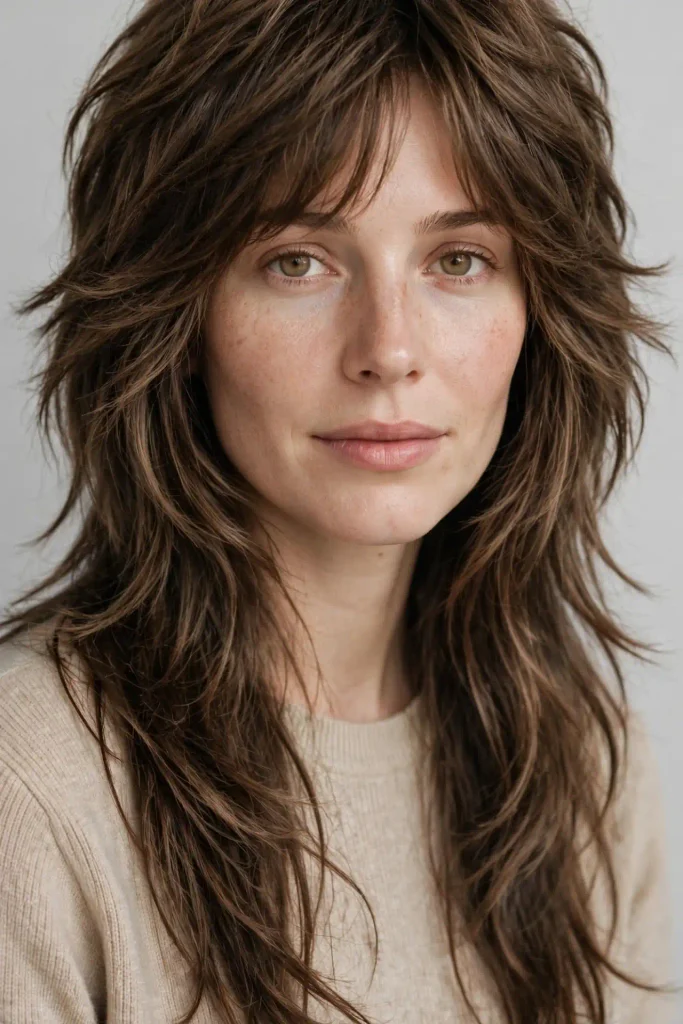
8. The Razored Wolf
Wildness: 5/5. Razor-cut ends, maximum texture, pure edge. The razor creates piece-y, separated ends that scissors cannot replicate. I got this once and the texture was unreal: every end separated, every layer distinct. The catch: razored ends need more frequent trims, because razor texture grows out faster. Worth it for the texture obsessed.
Maintenance: trims every six to eight weeks. The price of razor texture.
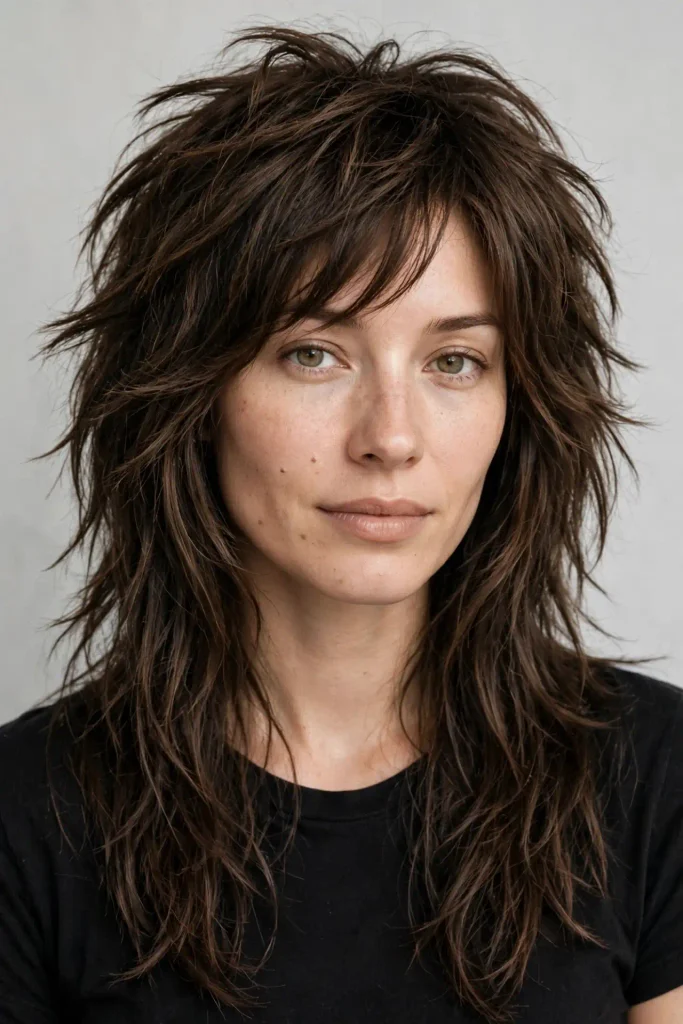
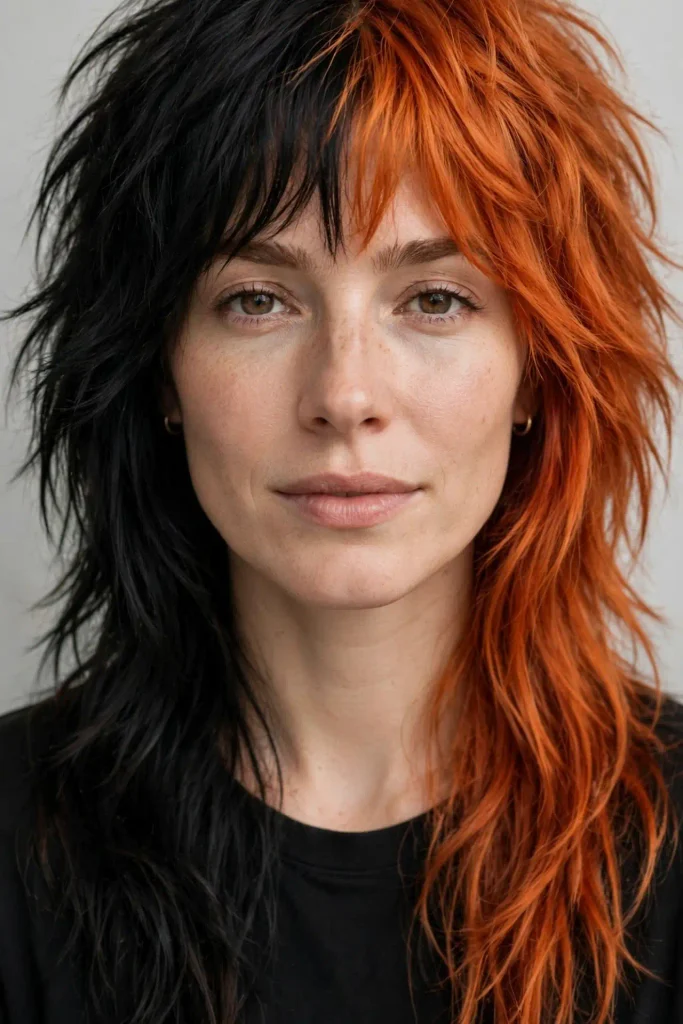
9. The Color-Block Wolf
Wildness: 5/5. Wolf cut plus bold color placement: money pieces, peekaboo panels, dip-dyed ends. The color makes every layer visible. I went copper with my wolf and the color turned the texture up to eleven. Cut first, color second, always. The colorist needs to see the actual shape to place the color.
Maintenance: color upkeep plus trims. The highest maintenance here, and worth it.
The Untamed: Wolves Off the Leash
For the fearless. These are statements, not haircuts. Proceed with confidence.
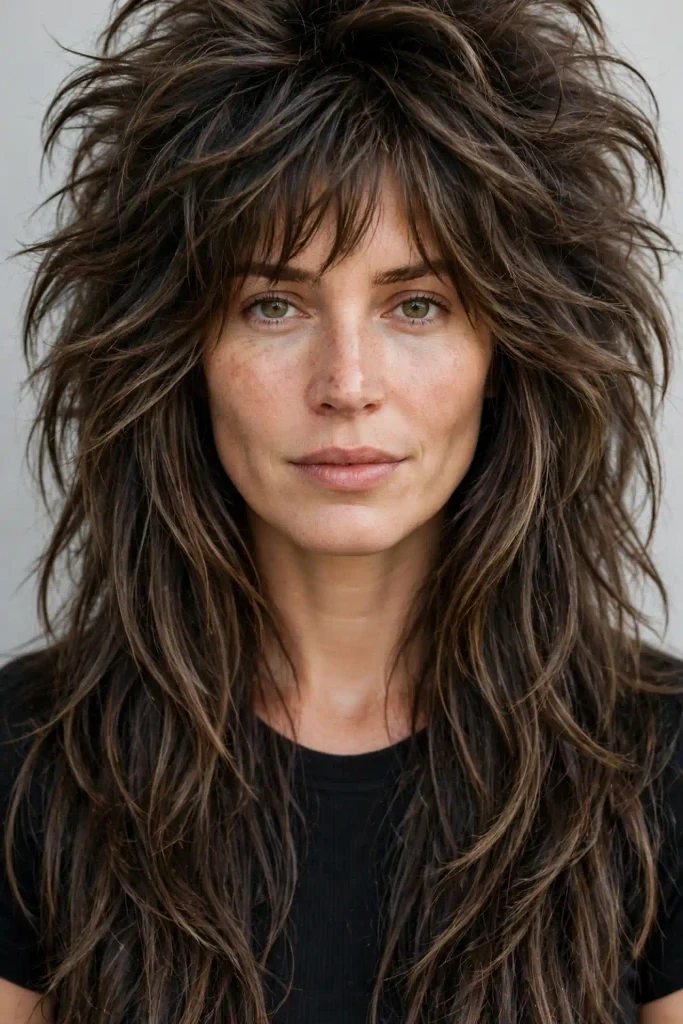
10. The Extreme Wolf
Wildness: 5/5. Dramatic crown volume, heavily textured lengths, maximum contrast. The extreme wolf does not whisper. I tried this for one glorious summer. Strangers stopped me. Photos looked editorial. It was the most dramatic hair of my life, and I do not regret a single day. Some cuts are experiences, not just styles.
Maintenance: six to eight weeks. Drama requires upkeep.
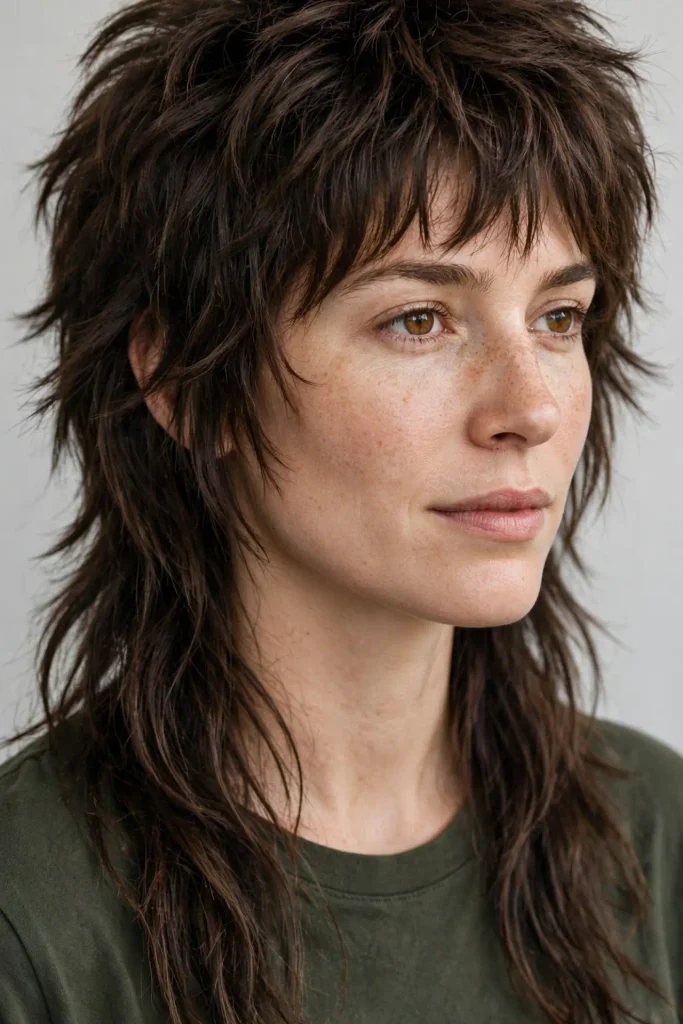
11. The Mullet Wolf
Wildness: 5/5. The hybrid: mullet contrast with wolf texture. Shorter, wilder top; longer back; blended where the mullet would be harsh. This is the edgiest wearable cut on the list. I have admired it on others more than I have worn it myself. It takes confidence and the right stylist. When it works, nothing else looks like it.
Maintenance: shaping every six weeks to maintain the contrast.
12. The Long Wolf With Undercut
Wildness: 5/5. Hidden edge: long wolf on top, shaved or closely cropped underneath. The undercut removes bulk and adds secret rebellion. I had this and nobody knew until the wind blew. It is the wolf for women with thick hair and a hidden wild side. The best secret in hair.
Maintenance: undercut needs buzzing every three to four weeks; the wolf goes eight to ten.

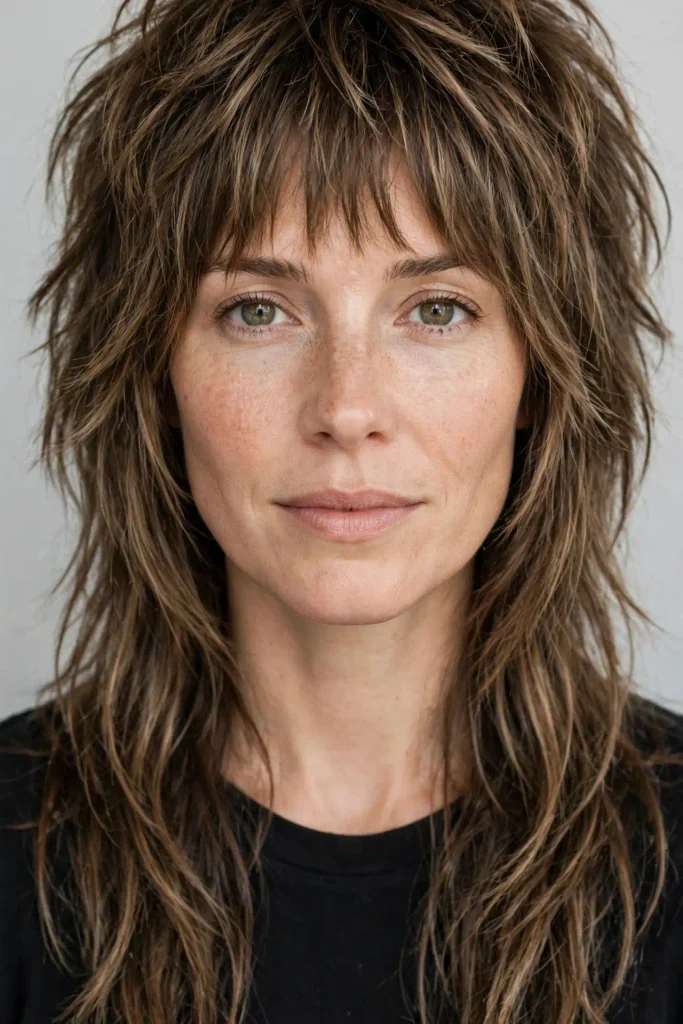
13. The DIY Wolf
Wildness: ?/5. We end with a warning disguised as an idea. Yes, people cut their own wolves. Yes, some look great. No, I do not recommend it for long hair, because long wolf layers are architecture and YouTube tutorials are not apprenticeships. If you must: cut dry, cut less than you think, and have a stylist’s number ready. The bravest wolf is the one that knows when to call a professional.
Maintenance: depends on the outcome. Good luck.
The Grow-Out Timeline: Month by Month
Month one: perfection. The shape is sharp, the texture is fresh. Month two: still great. The layers are softening into something lived-in. Month three: the crown layers are growing; the shape is relaxing. This is actually a beautiful phase. Month four: decision time. Reshape for the wolf, or let it grow into a shaggy layered cut, which is also gorgeous. Month six: it is now a different haircut, and probably a good one. Long wolves have the most graceful grow-out of any edgy cut, because texture disguises everything.
Three Signature Styles for the Long Wolf
The long wolf is three haircuts in one, because it styles three completely different ways. The air-dried wild: wash, scrunch in curl cream and a little mousse, and leave it alone. The layers create natural texture as they dry. This is the wolf’s native state, and it is beautiful. Total effort: five minutes. The blowout smooth: rough-dry upside down for volume, then smooth sections with a round brush, flipping the ends. The wolf layers become soft, bouncy movement instead of wild texture. Same cut, completely different energy. Total effort: twenty minutes. The half-up edge: gather the top half into a twist or small bun, leaving the wolf layers loose underneath. The crown layers create volume in the half-up section, and the textured lengths frame it. This is my favorite wolf style: it shows off the cut’s architecture. Total effort: three minutes.
Learn all three, and the long wolf never gets boring. It is the most versatile long cut precisely because the layers respond so differently to different styling.
The Product Shelf: What a Long Wolf Actually Needs
Four products. That is the complete shelf. A volumizing mousse for the crown layers: applied at the roots on damp hair, it gives the wolf its height. A texture spray for the lengths: misted on dry hair, it enhances the piece-y separation that defines the wolf. A light oil for the ends: the textured ends are the driest part of the cut, and a drop of oil keeps them from looking frayed. A flexible-hold spray for finishing: it holds the shape without freezing it. The wolf should move. Anything that stops the movement is the wrong product. Four products, used correctly, beat twelve products used randomly.
Color and the Wolf: A Love Story
The wolf cut and color are made for each other, because the layers create dimension that color amplifies. Face-framing highlights follow the wolf’s shorter pieces and brighten the face. Balayage through the textured ends makes every layer visible. Bold fashion colors turn the wolf into art. The rules: always cut before coloring, so the colorist works with the real shape. Deep-condition after any chemical service, because textured ends are fragile. And refresh the toner when the color fades, because faded color on textured ends looks dull faster than on blunt cuts. Done right, color does not just complement the wolf. It completes it.
The Wolf Cut Glossary
Speak fluent wolf with these terms. Crown layers: the short layers at the top that create the wolf’s height and volume. Face frame: the shorter pieces around the face, often curtain-shaped. Textured ends: ends cut with point-cutting or razoring for piece-y separation. Perimeter: the bottom edge of the cut; in a wolf, it is usually long and textured. Internal layers: layers cut inside the hair to remove weight without changing the outline. Point cutting: the technique of cutting into the ends vertically to create texture. The blend: where the short crown meets the long lengths; a good blend is seamless, a bad one is a shelf. Dusting: a micro-trim that maintains the shape without losing length. Learn these seven terms and every consultation becomes a collaboration instead of a gamble.
The Wolf Cut Myths, Busted
Myth one: the wolf only suits young women. False. The tame section of this list works beautifully at every age; the wolf is about texture, not youth. Myth two: you need thick hair. False for tame wolves, true for extreme ones. Match the wildness to your density. Myth three: it is unprofessional. The polished wolf disproves this daily in offices everywhere. Myth four: the grow-out is terrible. The opposite is true: the wolf has one of the most graceful grow-outs of any layered cut, because texture disguises growth. Myth five: it is just a mullet. Read the definitive guide above. They are related, not identical.
Quick Answers
Will a wolf cut work on thin hair? The tame versions, yes. Keep the layers long and the perimeter solid. Avoid the extreme and razored versions, which need density to support the texture.
Is the wolf still trendy? The wolf has moved from trend to staple. It is now a classic option alongside the bob and the shag, not a passing fad.
Can I wear a wolf cut professionally? The tame section was designed for exactly this. The polished wolf and soft long wolf are fully office-appropriate.
What is the biggest wolf mistake? Too-short crown layers on the wrong hair type. The crown layers are the engine of the wolf; they must be designed for your texture and density.
Thirteen wolves, one spectrum. Find your wildness level, and wear it like you mean it.