15 Leather Jacket Fall Outfits, Written as Simple Equations You Can Solve in Two Minutes
I bought my first leather jacket in a hurry. It was stiff, a little too short in the sleeves, and it smelled like a new car. For a month, I wore it to look cool and felt like a person in a costume. Then one rainy October afternoon, I threw it over a plain gray sweater and a long skirt, and I finally understood what people mean when they say a leather jacket “does the work.”
A leather jacket is the one piece that can make a plain outfit look planned. But it can also make an outfit feel too tough, too stiff, or too much like a uniform. The fix is not a new jacket. It is knowing what job the jacket is doing in each outfit.
So I turned this post into outfit math. Every look is a formula: jacket plus a few simple pieces equals an outfit. I sorted them by the jacket’s role. In The Anchor, the jacket is the star. In The Contrast, it balances something soft. In The Layer, it sits over other layers for warmth. In The Finisher, it is a small final touch on a dressy outfit.
Part One: The Anchor (The Jacket Is the Star)
Simple pieces underneath, so the leather carries the look.
1. The Everyday Classic.
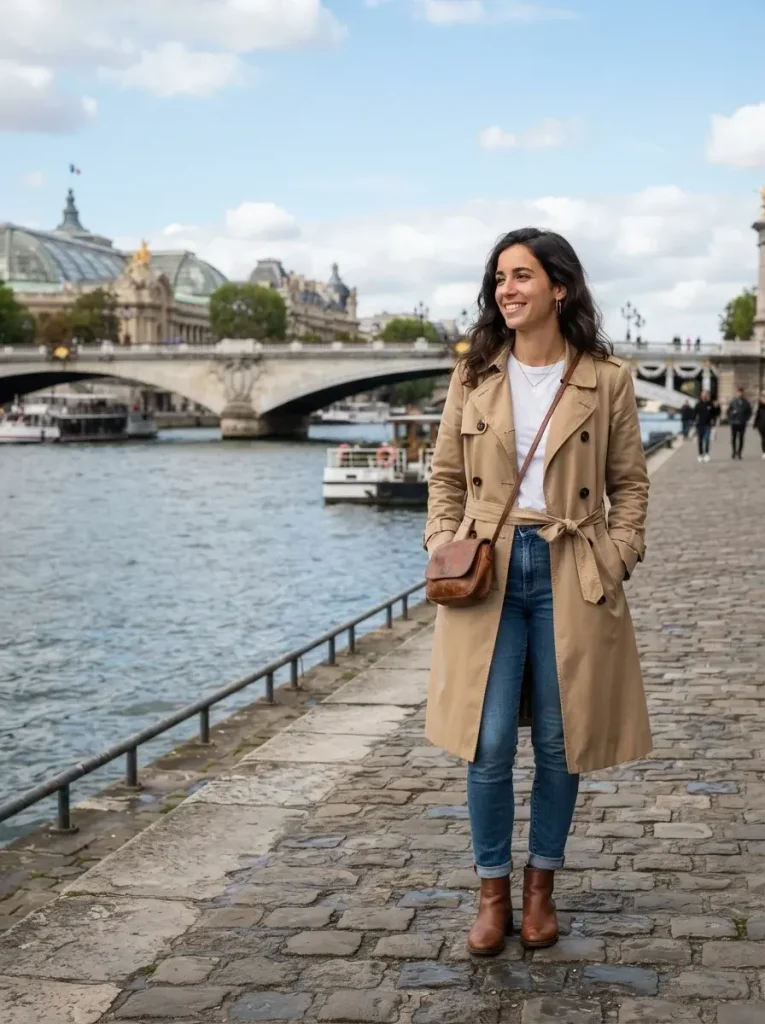
Formula: black leather jacket + white tee + straight blue jeans + white sneakers. Temperature: 12 to 20°C (54 to 68°F). Swap: use a faux leather jacket. This is the easiest outfit on the list. Keep the tee fitted and the jeans clean, and add a simple gold necklace for a finished look.
2. The All-Black Sharp.

Formula: black leather jacket + black turtleneck + black trousers + black ankle boots. Temperature: 8 to 16°C (46 to 61°F). Swap: use a thin black knit if you do not own a turtleneck. Mix textures, such as ribbed knit, smooth leather, and matte wool, so the outfit does not look flat. Add one gold piece of jewelry.
3. The Cropped Cool.

Formula: cropped leather jacket + high-waisted wide-leg jeans + fitted bodysuit + loafers. Temperature: 12 to 20°C (54 to 68°F). Swap: use a regular tee instead of a bodysuit. A cropped jacket sits at your waist, so high-waisted bottoms keep the proportions balanced.
4. The Brown Leather Warmth.
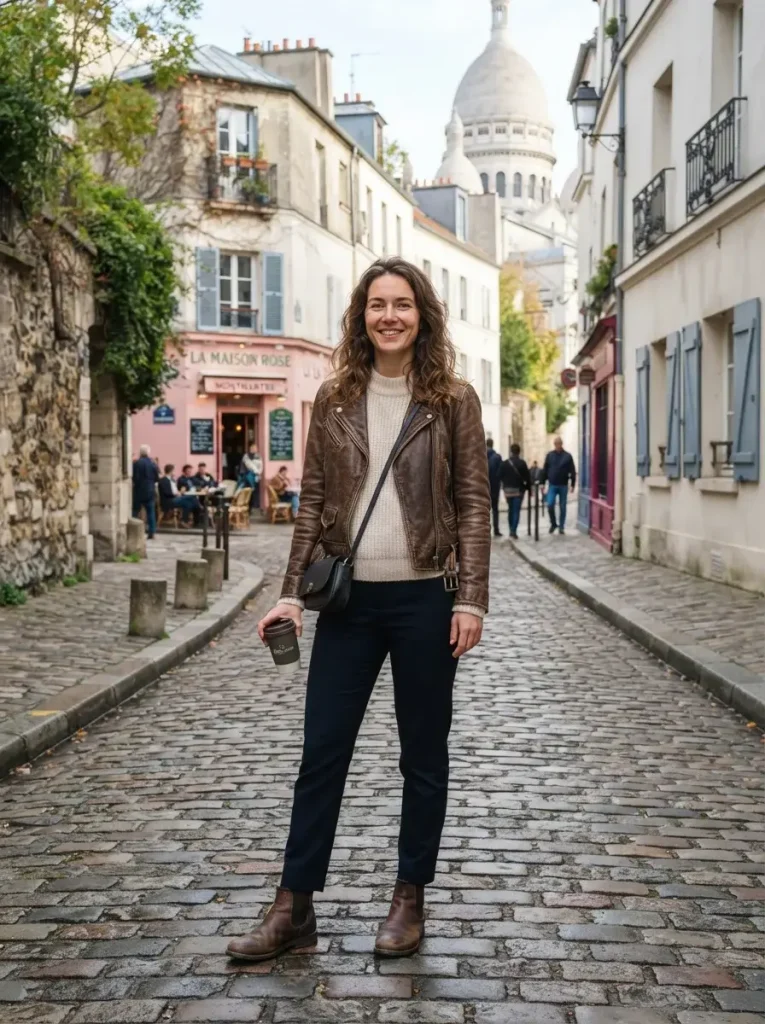
Formula: brown leather jacket + cream sweater + dark jeans + tan ankle boots. Temperature: 10 to 18°C (50 to 64°F). Swap: use a thrifted brown jacket. Brown leather looks softer than black and suits warm fall colors like cream, olive, and rust.
5. The Oversized Boyfriend.
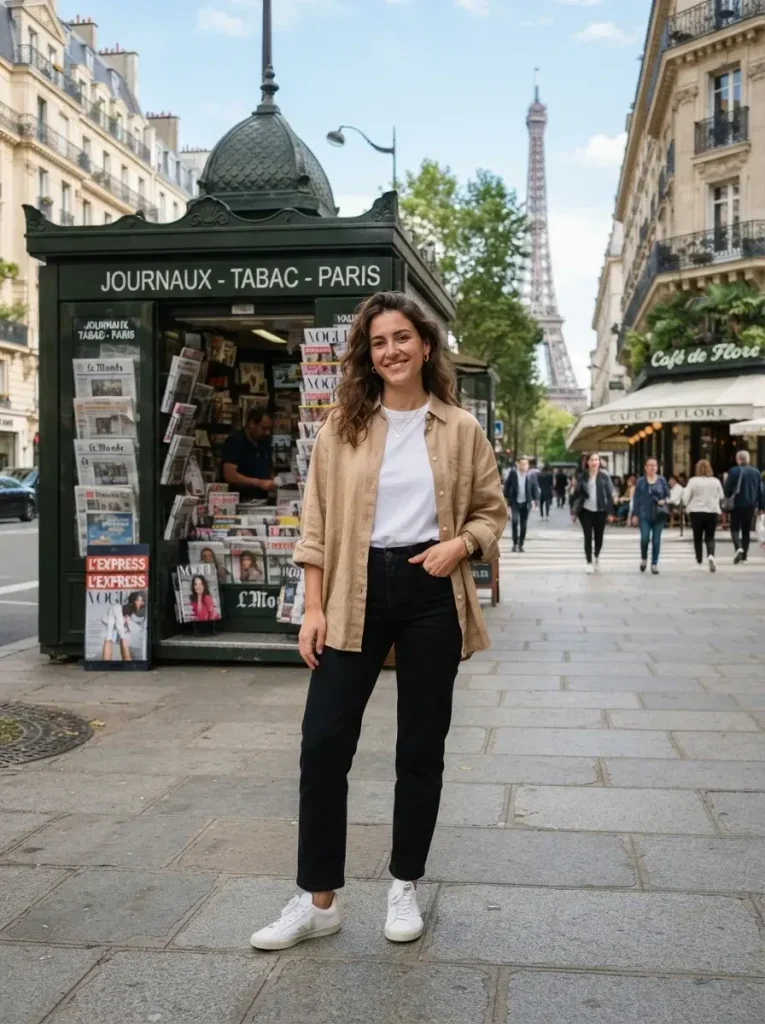
Formula: oversized leather jacket + fitted long-sleeve top + slim trousers + pointed boots. Temperature: 8 to 15°C (46 to 59°F). Swap: buy a men’s size at a thrift shop. Keep everything under the jacket fitted so the outfit does not feel shapeless.
Part Two: The Contrast (Leather Balances Something Soft)
Tough on the outside, romantic underneath.
6. The Floral Dress Twist.
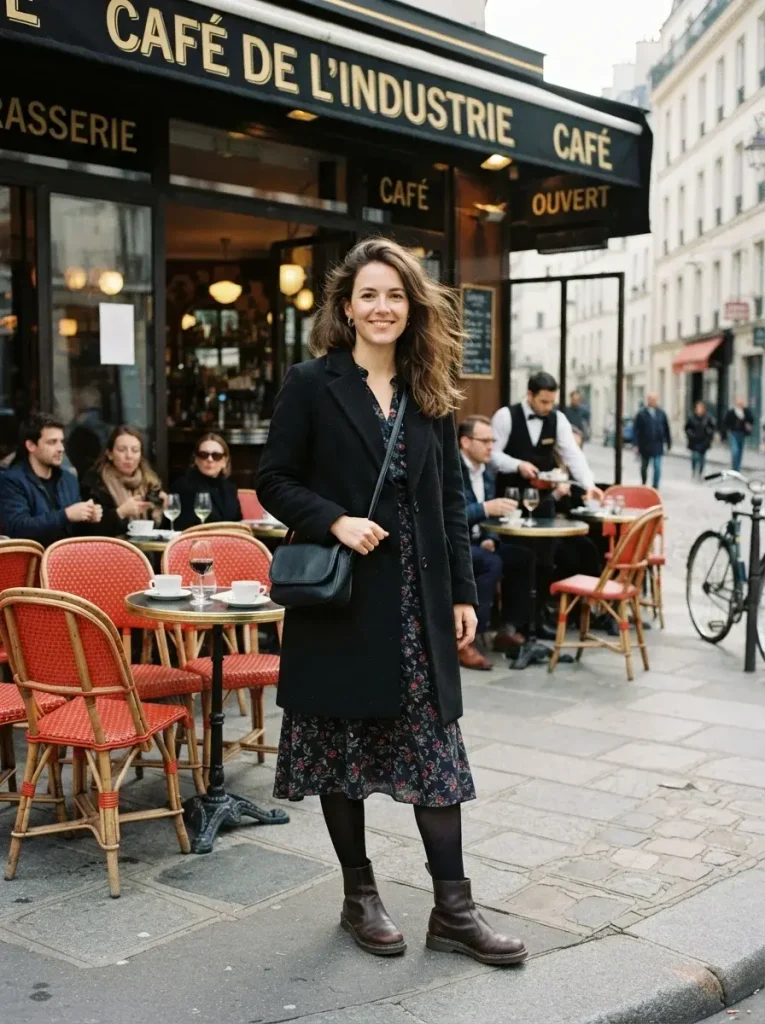
Formula: black leather jacket + dark floral midi dress + ankle boots + tights. Temperature: 10 to 18°C (50 to 64°F). Swap: use a denim jacket if you do not have leather. Choose a floral with a dark background so it feels like fall.
7. The Satin Slip Edge.
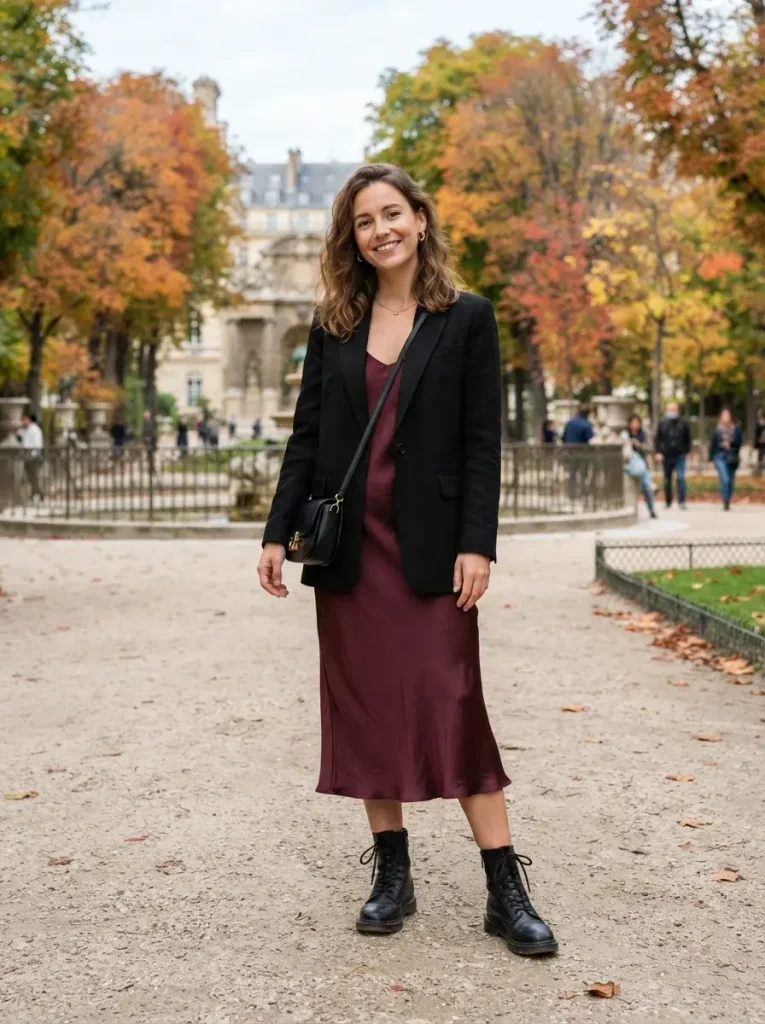
Formula: leather jacket + satin midi skirt + fitted knit top + heeled boots. Temperature: 10 to 17°C (50 to 63°F). Swap: use a plain cotton skirt for daytime. The shiny satin and matte leather make a beautiful contrast.
8. The Sweater Dress Balance.
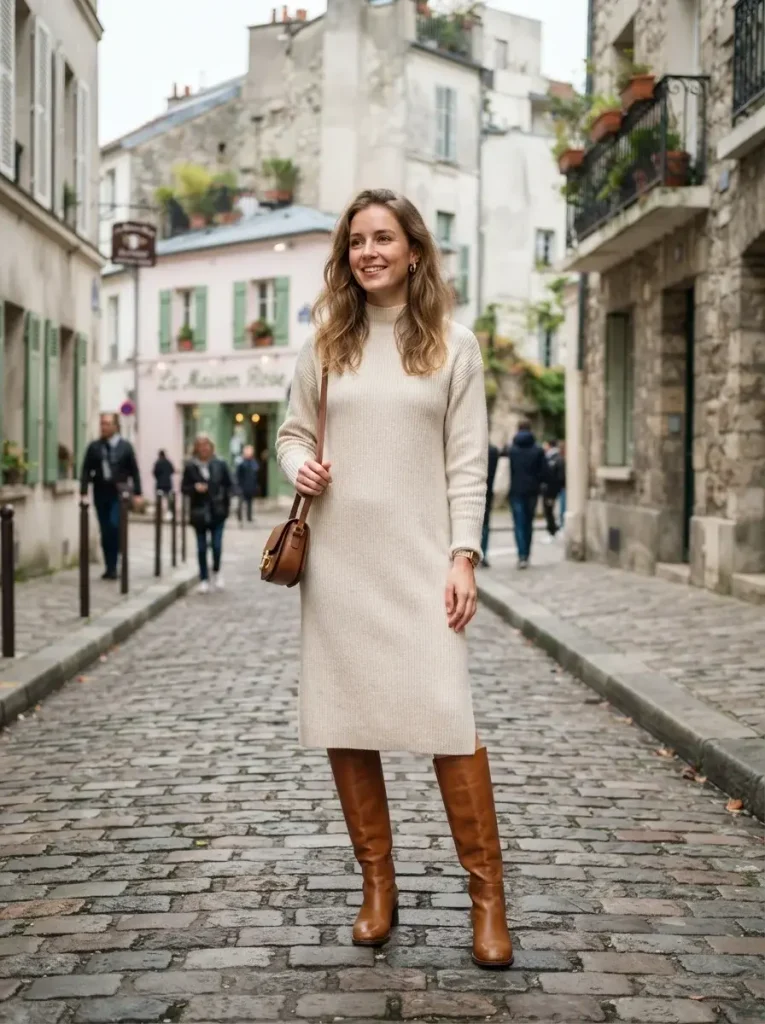
Formula: leather jacket + ribbed sweater dress + opaque tights + chunky boots. Temperature: 6 to 14°C (43 to 57°F). Swap: use a long knit top and skirt. This is a warm, cozy outfit that still looks sharp.
9. The Pleated Skirt Mix.
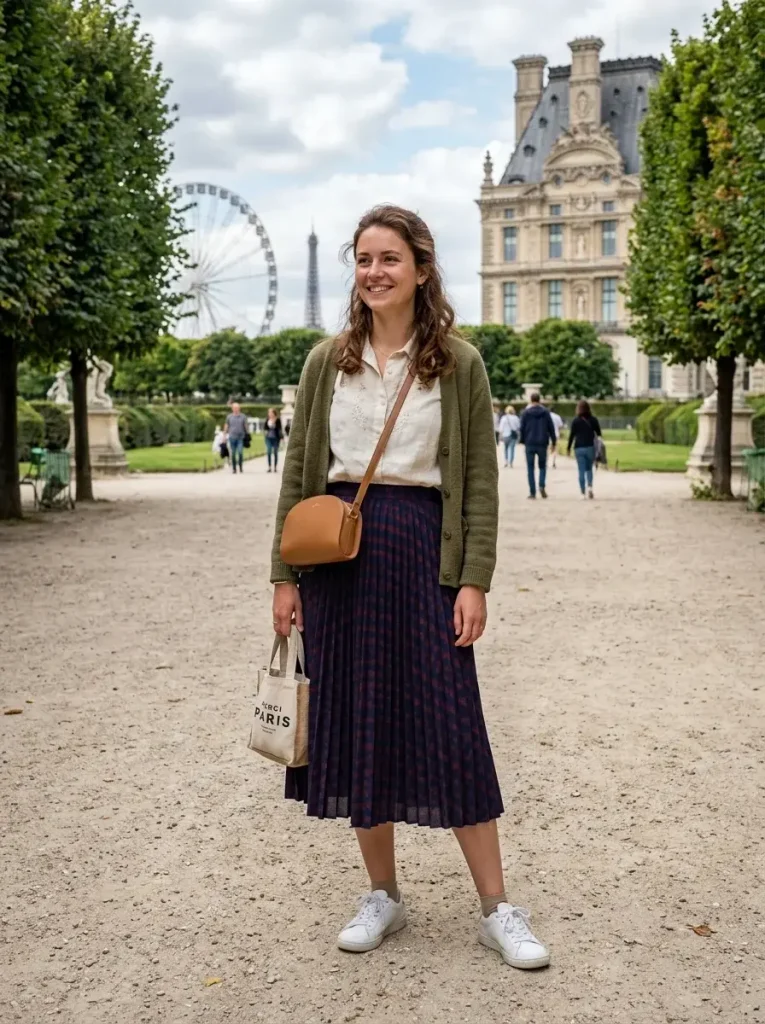
Formula: leather jacket + pleated midi skirt + white shirt + loafers. Temperature: 10 to 18°C (50 to 64°F). Swap: use a plain long skirt. The pleats add softness, and the loafers add a preppy touch.
10. The Lace Trim Surprise.
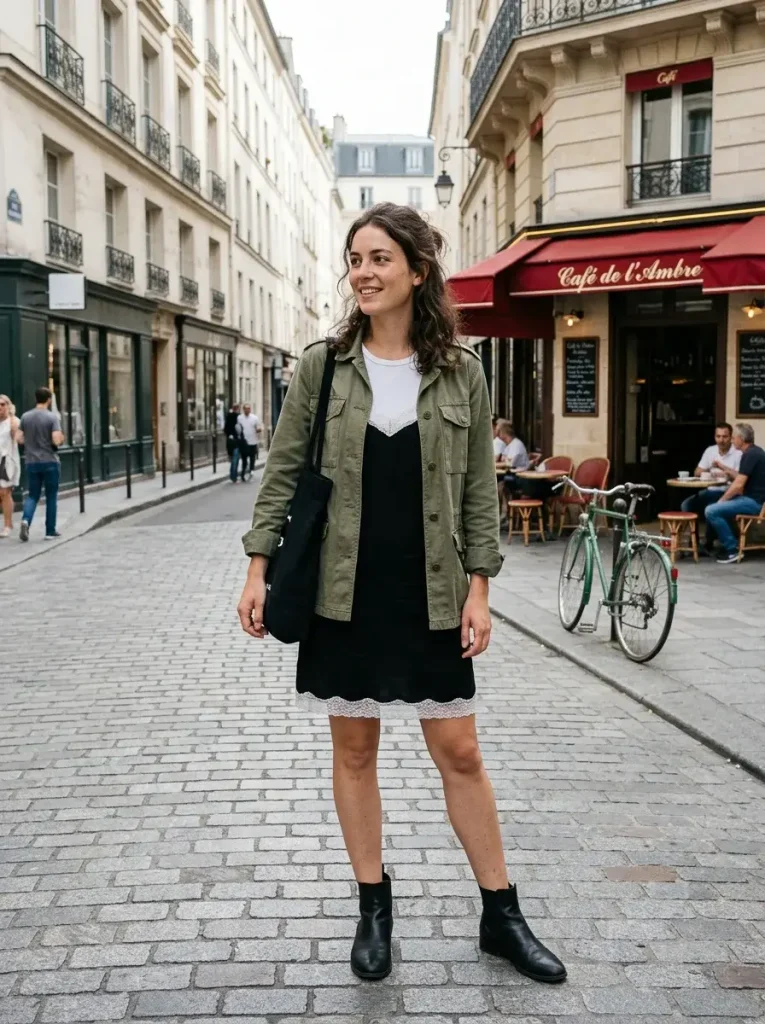
Formula: leather jacket + lace-trim camisole + straight jeans + ankle boots. Temperature: 12 to 20°C (54 to 68°F). Swap: use a plain satin cami. A little lace under leather looks delicate and confident.
Part Three: The Layer (Warmth Without Bulk)
For colder fall days, when the jacket needs backup.
11. The Hoodie Layer.
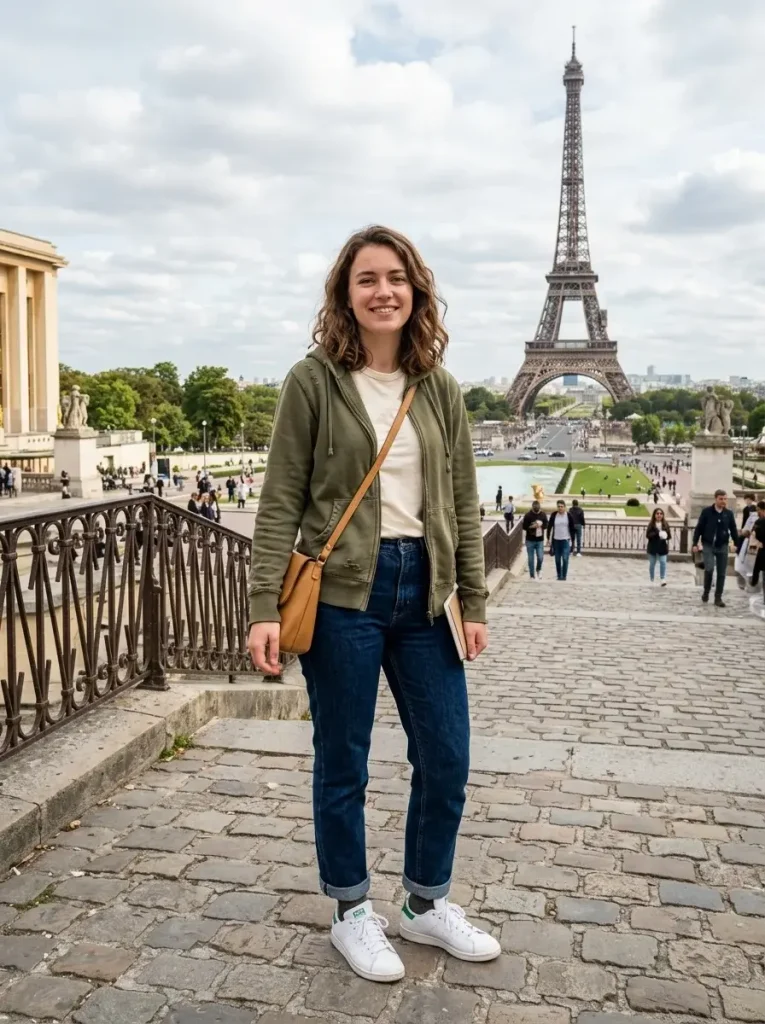
Formula: leather jacket + thin hoodie + jeans + sneakers. Temperature: 6 to 14°C (43 to 57°F). Swap: use a zip hoodie you already own. Wear the hood out over the collar for a casual, streetwear feel.
12. The Scarf and Knit.
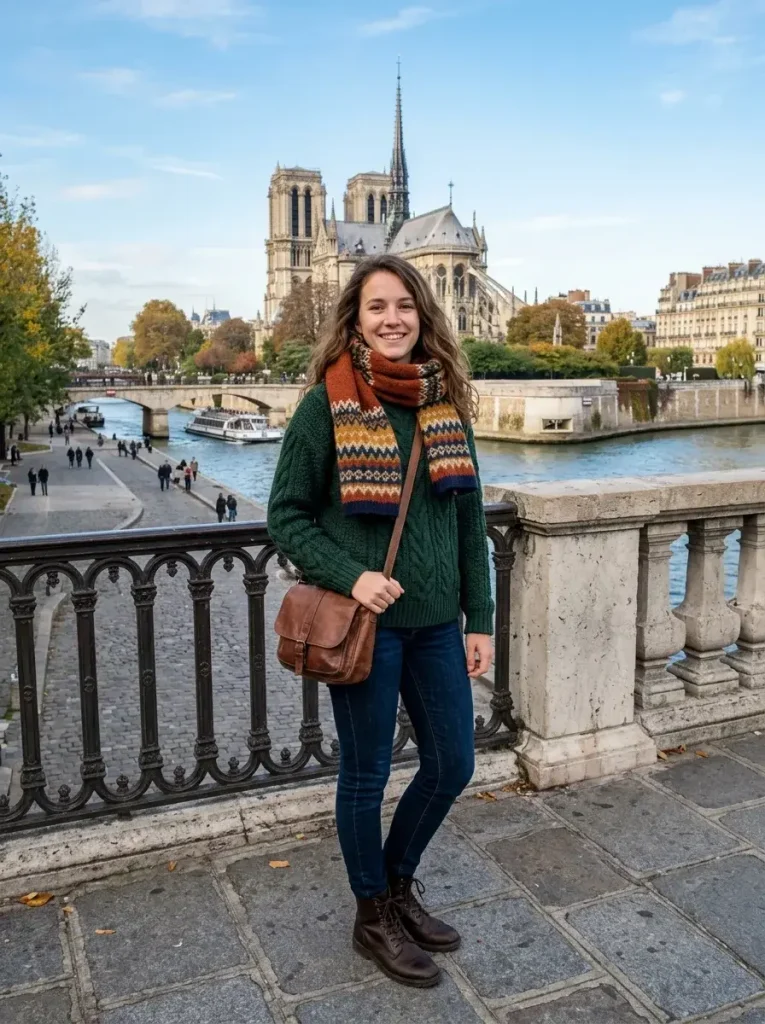
Formula: leather jacket + chunky sweater + wool scarf + dark jeans + boots. Temperature: 4 to 12°C (39 to 54°F). Swap: use a blanket scarf. Choose a jacket with room in the shoulders so it fits over the sweater comfortably.
13. The Long Coat Combo.
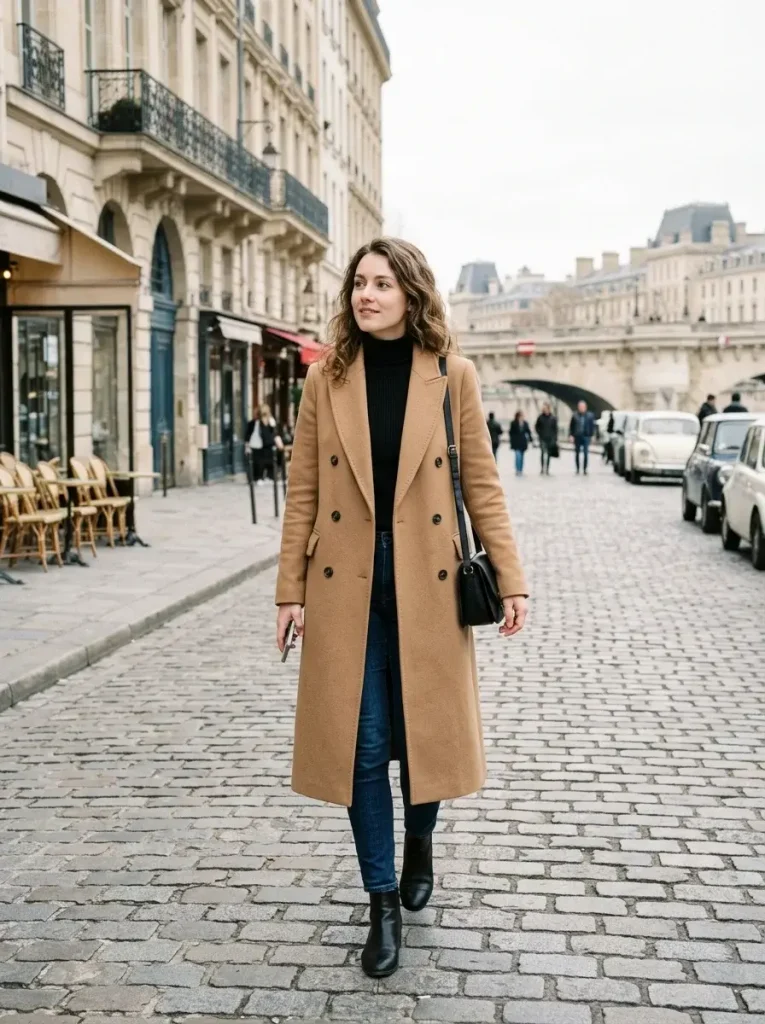
Formula: leather jacket layered under an oversized wool coat + turtleneck + trousers. Temperature: 0 to 8°C (32 to 46°F). Swap: use a thin puffer vest instead of a coat. It looks fashionable and very warm, and the leather collar peeks out at the neck.
Part Four: The Finisher (A Touch on a Dressy Look)
When you want elegance with a little edge.
14. The Dinner Look.
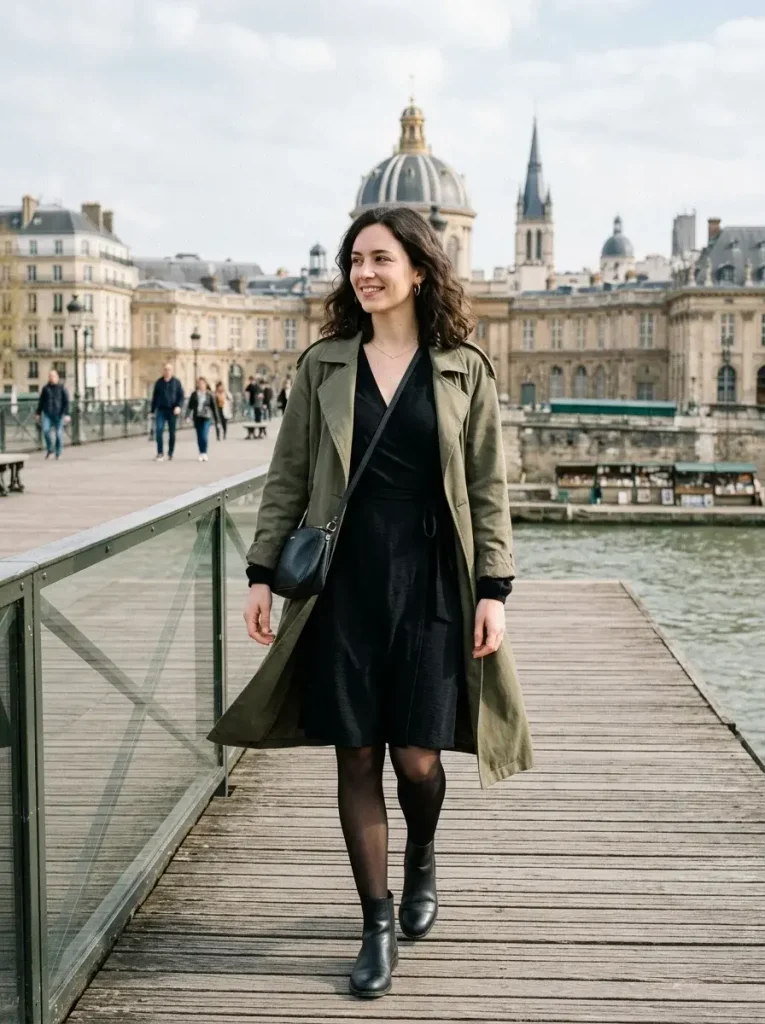
Formula: cropped leather jacket + little black dress + sheer tights + heeled boots. Temperature: 10 to 16°C (50 to 61°F). Swap: use flat boots for a relaxed dinner. The jacket adds warmth and keeps the dress from feeling too formal.
15. The Office Edge.

Formula: slim leather jacket + silk blouse + tailored trousers + pointed flats. Temperature: 10 to 18°C (50 to 64°F). Swap: use a blazer on days when leather feels too casual. Keep the jacket clean and the fit sharp for the workplace.
Something New: The Leather Type Decoder
Not all leather jackets are the same. Here is what you are actually buying.
Lambskin is soft, thin, and lightweight. It drapes beautifully but scratches easily. Cowhide is thicker and durable, and it feels stiff at first but softens with wear. Goatskin is tough and slightly textured, which makes it a good all-rounder. Faux leather (polyurethane) is affordable and animal-free, but it does not breathe well and can crack over time. Vegan leather made from plant materials is newer and varies in quality.
If you are buying one jacket to last years, cowhide or goatskin is a strong choice. If you want soft and stylish for occasional wear, lambskin is lovely. If you are on a budget or avoid animal products, choose a well-made faux option with a lining.
The Fit Test
Try on the jacket and do five things. Raise your arms above your head. Cross your arms in front of you. Sit down. Zip it up and take a deep breath. Look at the shoulders in a mirror.
The shoulder seams should sit at the edge of your shoulders. You should be able to move without the jacket riding up. The sleeves should end at your wrist bone. If the jacket pulls across your back or bunches at the elbows, try another size.
The Sleeve and Hem Rule
Sleeves that are too long swallow your hands, and sleeves that are too short look awkward. Aim for the wrist bone. A slightly longer sleeve is fine on an oversized jacket, but push it up for balance.
For the hem, a cropped jacket should meet the top of your high-waisted bottoms. A classic jacket should land at your hip bone. An oversized jacket can reach mid-thigh, but keep the rest of the outfit fitted. The jacket hem should never end at the widest part of your hips unless you want to draw attention there.
The Color Clash Fixer
Black leather goes with almost everything, but some combinations feel heavy. If black looks too harsh, soften it with cream, camel, or olive. If brown leather looks muddy, pair it with cream, denim blue, or forest green. If burgundy leather feels too bold, wear it with black or gray.
A quick rule: let one color lead, and let the jacket be a neutral. If your outfit is already colorful, keep the jacket black or brown.
Thrift Shop Checklist
A used leather jacket can be a great find. Check these things. Smell it, since a strong musty odor is hard to remove. Look at the collar and cuffs for cracks or peeling. Run your hand over the lining to check for tears. Test the zipper from top to bottom. Look at the seams, especially at the underarms. Gently stretch a small area to see if the leather cracks.
A small scratch is fine, since leather ages with character. Deep cracks or peeling on faux leather mean the jacket is nearing the end of its life.
The Leather Care Calendar
Leather lasts if you look after it a little.
After each wear: Hang it on a wide hanger so the shoulders keep their shape.
Monthly: Wipe with a soft, slightly damp cloth to remove dust.
Every three to six months: Apply a leather conditioner in a thin layer, then buff it with a dry cloth.
Before rainy season: Spray a water-repellent made for leather. Test in a hidden area first.
If it gets wet: Blot with a towel and let it air-dry away from heaters. Heat can crack leather.
Storage: Keep it in a breathable garment bag, never plastic.
Choosing by Body Shape and Height
If you are petite, choose cropped jackets and pair them with high-waisted bottoms. If you are tall, you can wear cropped and oversized jackets equally well. If you have a broad bust or shoulders, choose a jacket with a soft drape and a little stretch. If you have wider hips, a jacket that ends at the hip bone or lower balances the proportions. If you are curvy, choose styles with a defined waist and avoid stiff, boxy shapes.
Shoes and Bags That Suit Leather
Boots suit most outfits, and sneakers keep things relaxed. Loafers suit office and preppy looks. For bags, a structured tote suits work, a small shoulder bag suits dinners, and a crossbody suits casual days. Match metals across your zippers, bag hardware, and jewelry for a polished feeling.
Quick Answers
What is the most versatile leather jacket color? Black, then brown.
Can I wear a leather jacket to the office? Yes, a slim, clean black or brown jacket looks polished with trousers and a blouse.
What is the best leather jacket for a beginner? A classic black jacket in a fitted but not tight cut, such as the one in outfit #1.
How do I make a leather jacket less stiff? Wear it often, and use a leather conditioner. It softens with time.
Can I wear a leather jacket in the rain? Light rain is fine, but use a water-repellent and dry it away from heat.
One Last Thing
A leather jacket is not about looking tough. It is about giving an outfit a little backbone. The best outfits are the ones where the jacket is doing exactly one job and the rest of the look supports it.
Start with the equation that feels closest to your current wardrobe, and solve it this weekend. Then adjust one variable at a time until it feels like yours.
Which part are you solving first: the anchor, the contrast, the layer, or the finisher? Save this post for your next chilly morning, and send it to a friend who has a leather jacket hanging in her closet that she never wears.