17 Christmas Tree Ideas That Make the Whole Room Glow
The tree is the whole point of the room, so a sad little tree shoved in the corner is a wasted December. These christmas tree ideas start with the tree itself: its shape, its colour, its size and its spot. Once that part is right, the rest of the room falls into place fast.
I pick the tree before I pick a single ornament. I decorated first and measured later once, and the tree hid half the window, so now the tape comes out before the baubles do.
Find Your Pick in 10 Seconds
Short on time? Match your room to a number and jump straight there.
- Big room, big statement: idea 1, or idea 15 if your ceiling takes real height.
- Small flat or tight corner: ideas 3, 5 and 16 were made for rooms short on floor space.
- Snowy look, no real snow: idea 2 flocked, idea 12 for the green-to-white fade.
- No floor tree? Table and hallway picks: ideas 4 and 9.
- Bold colour moves: idea 6 in black, idea 13 in rose gold, idea 7 in clean white.
Every idea below names the room it suits, the effort involved and one cheaper swap.
17 Christmas Tree Ideas Worth Building a Room Around
1. The Classic Full Green Tree That Anchors the Room
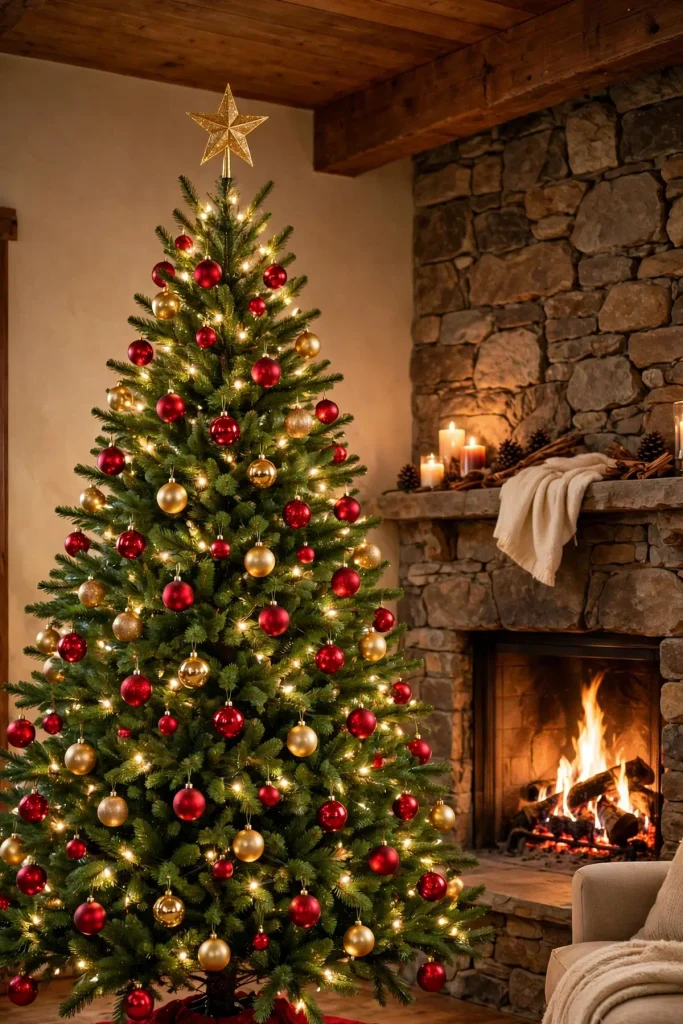
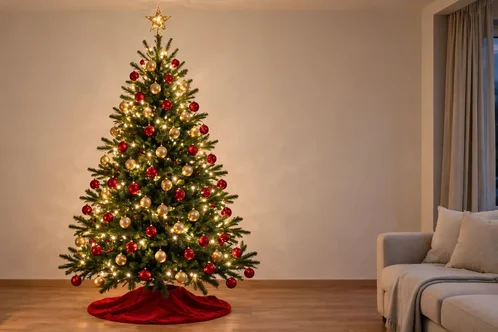
A full, wide green tree with red and gold on it is the one most of us picture first. The shape is the classic triangle in rich green, lit with warm white lights and finished with a gold star and a red skirt. It suits a medium or large living room, beside a fireplace or a clear wall. Effort is Medium, mostly fluffing and shaping. Budget is Mid, and the cheaper swap is the same palette on a smaller tree rather than a thinner one, which reads scraggly fast.
2. A Flocked Tree for the Snowy Look, Minus the Weather

This suits you if your taste runs pale and calm. A flocked tree arrives with its snow already on, branches dusted white over the green, and silver and ice-blue baubles sit beautifully on it against cool white lights. It suits bright rooms and anyone who finds red loud. Effort is Easy once up; the first unboxing sheds white dust, so open it outside or on a sheet. Budget is Mid; the swap is a plain green tree with white and silver decorations, most of the mood for less.
3. A Slim Pencil Tree for Flats That Feel Full Fast
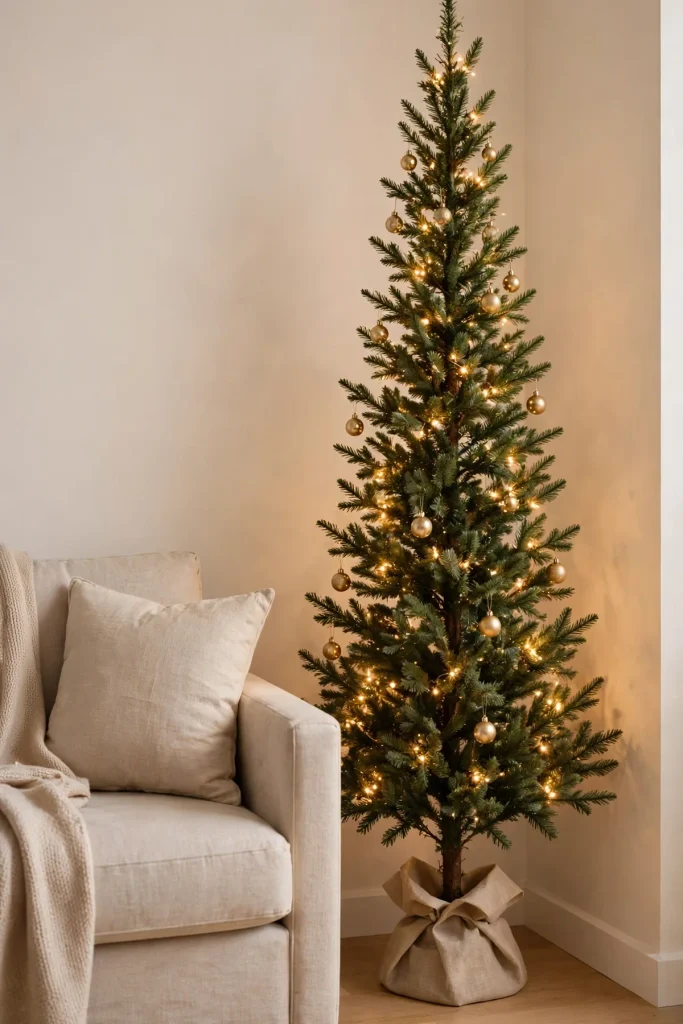
The common mistake in a small flat is buying a standard-width tree and losing a chair. The fix is a pencil tree: same height, a third of the width, so it slides beside a sofa or into the gap by a bookcase. Dress it small: gold baubles and warm white lights on the outer edges, so the slim shape stays visible. Effort is Easy, budget Low, since a narrow tree costs less to fill. The swap is a half tree from idea 16 if even a pencil feels too wide.
4. A Tabletop Tree for Homes Skipping the Floor Tree
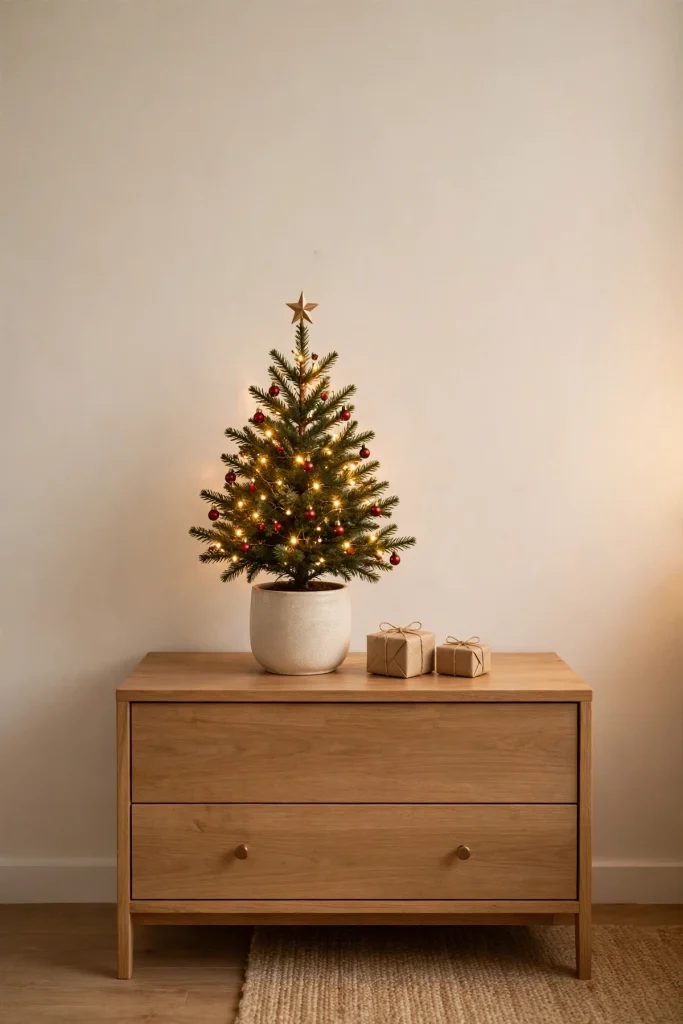
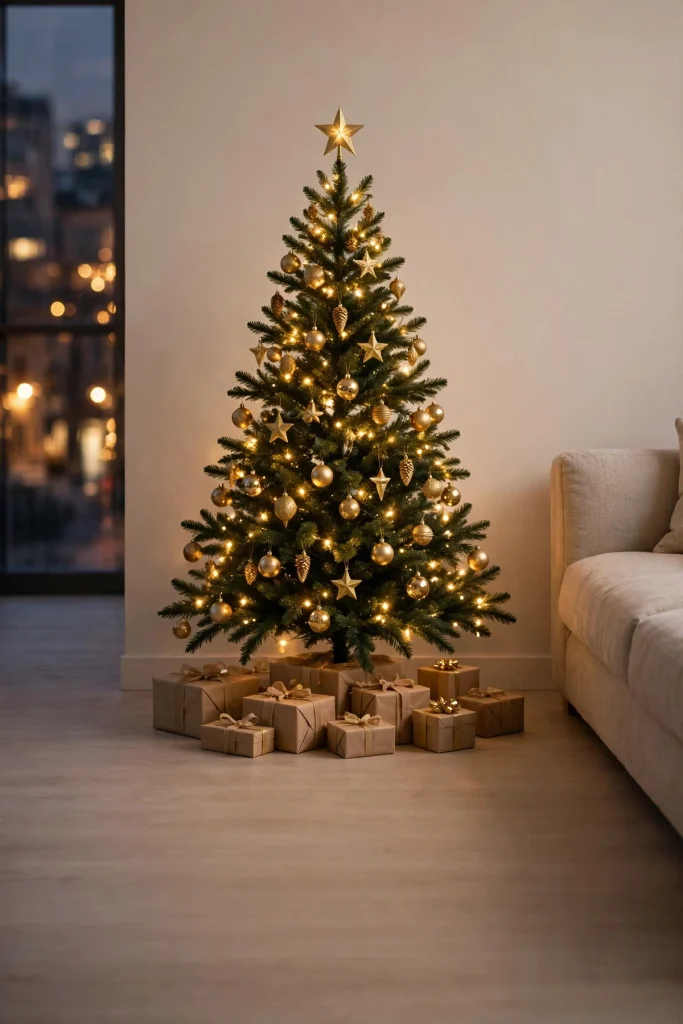
A tabletop tree stands on a sideboard, desk or hall table and still does the full job: lights, baubles, a tiny star, presents at its base. It suits studios, rented rooms and homes with toddlers or pets where a floor tree would get climbed. Effort is Easy and the budget is Low. Dress it like a big tree in miniature, with ornaments light enough for the small branches. A ceramic pot or wrapped box base looks tidier than the plastic stand most minis ship with.
5. A Corner Tree That Gives You the Floor Back

A corner tree is cut flat at the back, so it pushes into the corner instead of floating a foot into the room. Set one up in three moves:
- Stand it in the corner first, then shape only the front and sides you can see.
- Run warm white lights down the front face, where they earn their keep.
- Finish with red baubles, a gold star, and the skirt over the stand.
A corner tree is the honest answer for small rooms: the full front view people actually look at, and the floor stays yours.
Effort is Easy, budget Low to Mid, made for rooms where the tree and sofa fight over the same patch of carpet.
6. A Black Tree for Rooms That Like a Little Drama
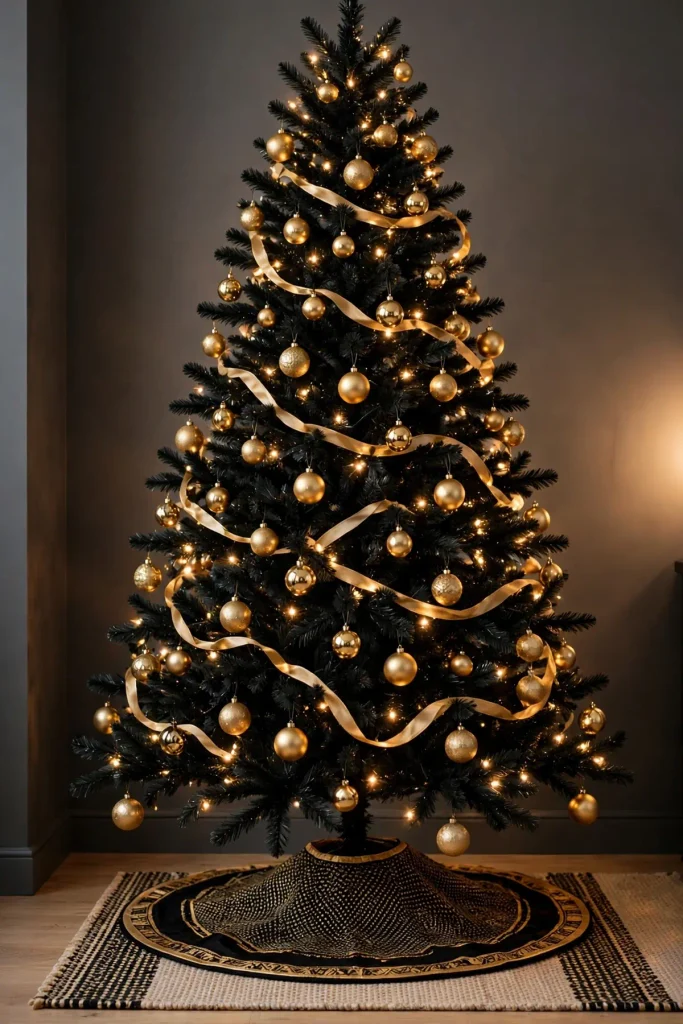
Black branches sound like a risk until the lights go on. Gold baubles, ribbon and warm white lights against jet-black needles glow harder than on green, and the tree reads evening-elegant, not spooky. It suits modern rooms, dining spaces and dark walls that would swallow a green tree. Effort is Medium, because black shows dust and needs a fuller dressing to look rich. Budget is Mid; the swap is a very dark green tree with the same gold palette.
7. An All-White Tree That Reads Calm, Not Cold
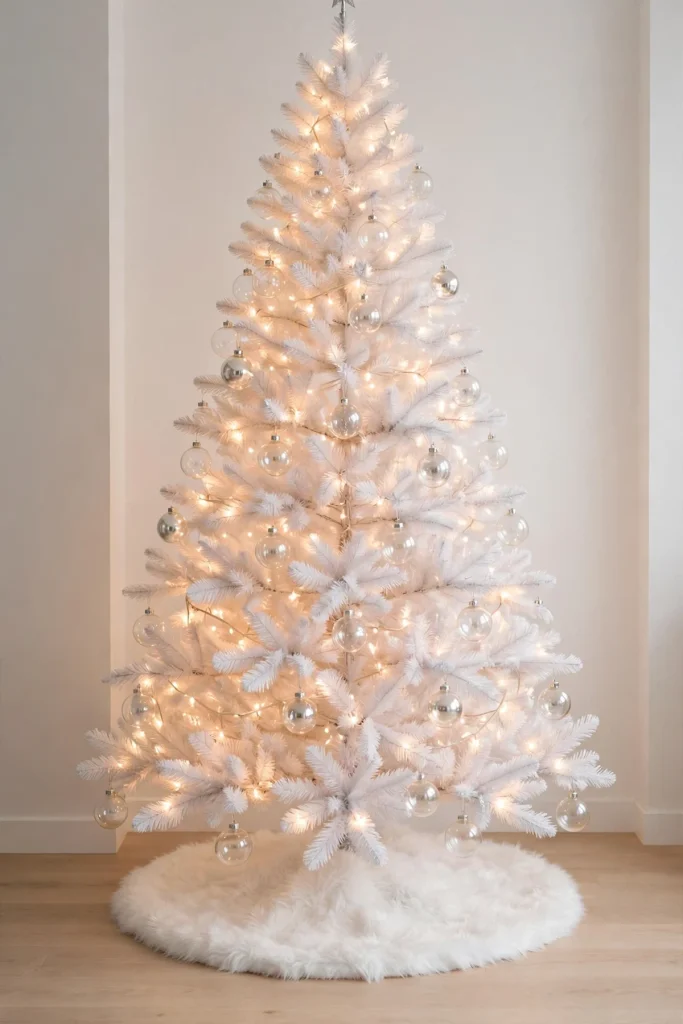
Pick this one if your room already carries a lot of colour and pattern. A white tree with warm white lights and clear glass baubles acts like a pause in the room, and everything around it looks warmer by contrast. It suits minimalist rooms and pale colour schemes. Effort is Easy to Medium: white shows gaps, so spread lights evenly and step back often. Budget is Mid. The swap is the flocked tree from idea 2: the pale look, with green still showing through.
8. An Upside-Down Tree for Families Who Like a Reaction

The mistake here is treating it as a joke and dressing it badly. Hung point-down with the wide end up, it deserves the same care as any tree: colourful baubles, multicolour lights, presents piled beneath it. It suits playful family rooms and tight floors, since the wide part sits up high, out of the way. Effort is Expert, mostly the secure mounting; budget is Splurge. The swap: a standard tree with one deliberately silly topper.
Halfway reminder: measure ceiling and floor patch before you fall for any tree below. Ten minutes with a tape saves a return trip.
9. A Potted Tree That Greets People at the Door
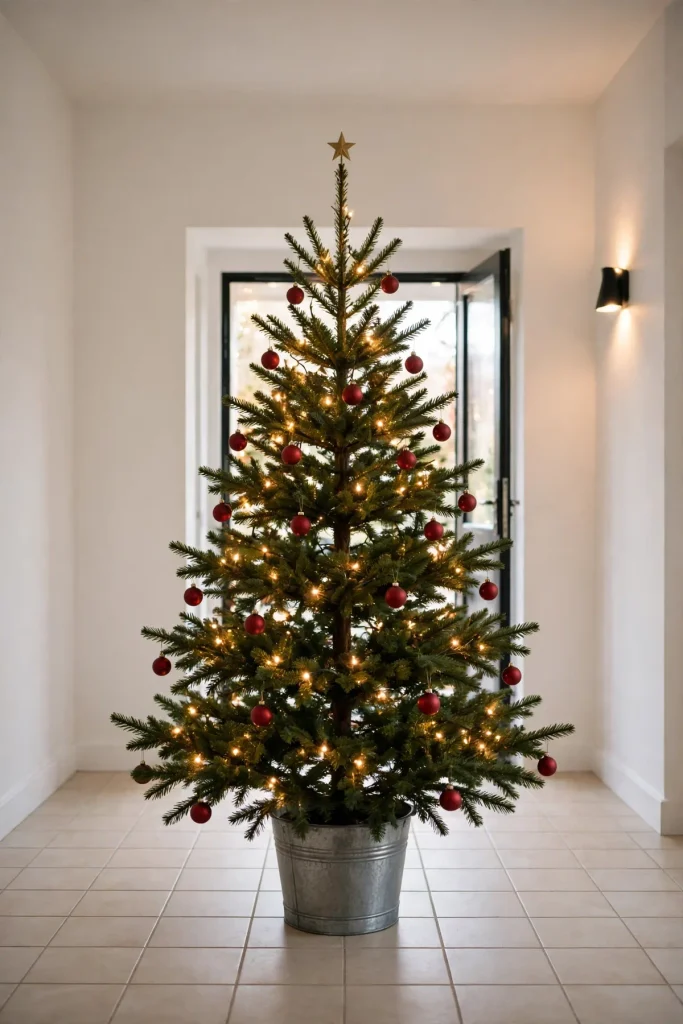
A potted tree by the front door starts the Christmas feeling before guests reach the living room. A galvanized pot or wooden crate hides the stand on the slimmer tree a hall can fit. Keep the dressing simple: red baubles and warm white lights are plenty at this size. Effort is Easy, budget is Low, and the swap is the tabletop tree from idea 4 moved onto a hall console.
10. Twin Trees That Frame the Fireplace
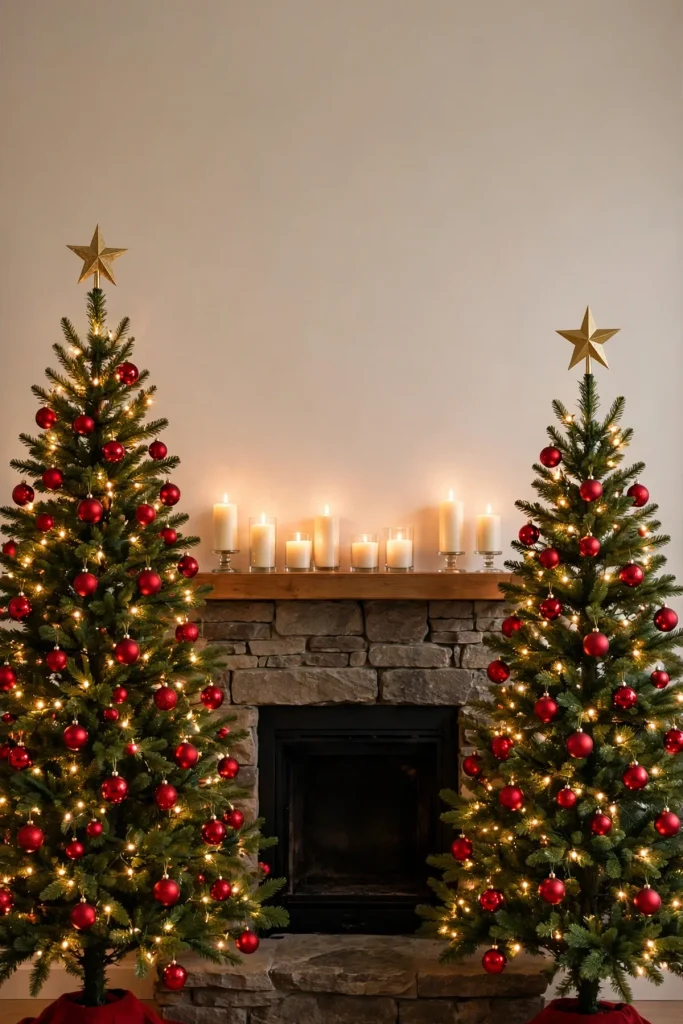
Two matching trees flanking the fireplace give you symmetry that makes a room look planned. Build the look in three steps:
- Stand two trees of the same height and shape level before decorating either.
- Dress them as a pair: same red baubles, same warm white lights, same star on each.
- Leave the mantel between them simple, with candles, so the pair stays the picture.
Effort is Medium; budget Mid to Splurge, though two smaller trees often cost less than one giant. It suits wide fireplaces and long rooms needing balance at both ends.
11. A Blue Spruce for Cool-Toned Rooms

This suits you if your room runs grey, navy or pale blue and a yellow-green tree keeps clashing. A blue spruce carries blue-grey needles that sit quietly in cool rooms, and silver baubles with cool white lights sharpen the effect. Effort is Medium: real spruce needles are stiff and sharp, so gloves help. Budget is Mid; the swap is an artificial blue-toned tree, same colour, no dropped needles.
Match the tree to the room’s temperature, not just its size. Blue-toned in a grey room looks chosen; yellow-green looks borrowed.
12. An Ombre Tree That Fades From Green to White
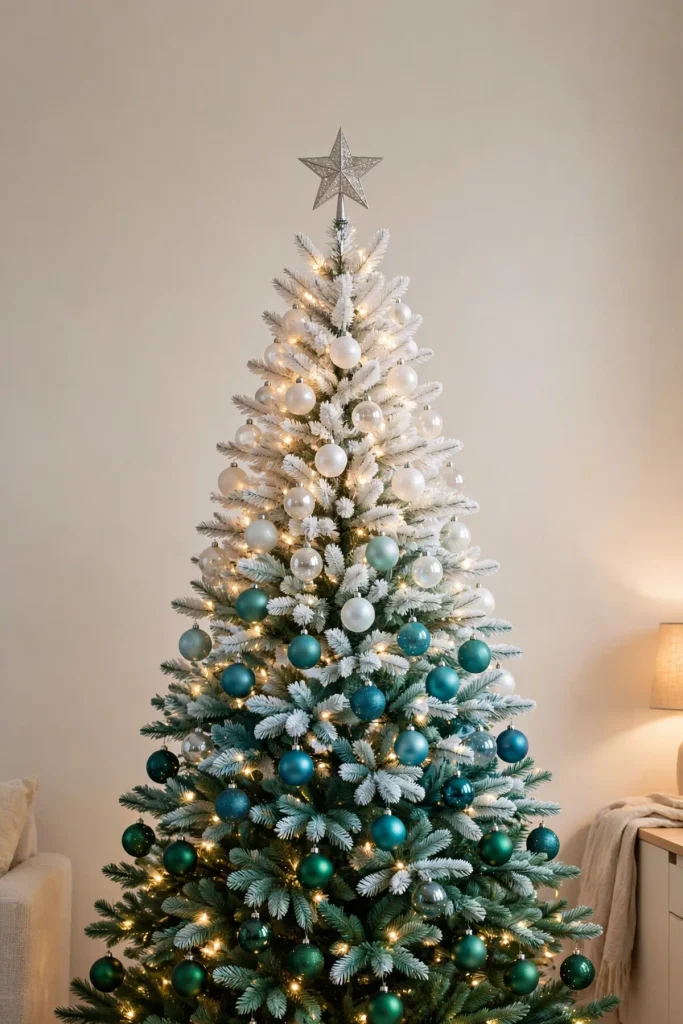
The mistake with an ombre tree is random colour placement, which just looks untidy. The fix is a strict gradient: dark green at the base, teal through the middle, snowy white at the top, baubles matched to each band, warm white lights tying it together. It suits modern rooms and anyone bored by one colour. Effort is Expert: the fade only works if you sort ornaments by shade first. Budget is Mid to Splurge; the swap is a two-band version, green below, white above, far quicker to dress.
13. A Rose Gold Tree for Warm, Glowy Rooms
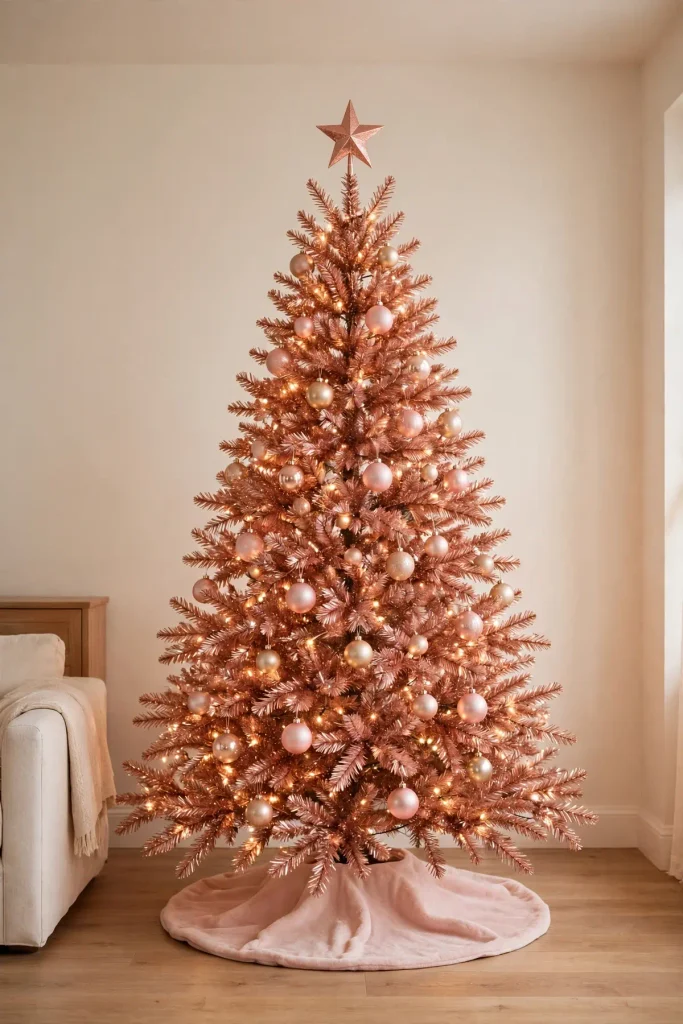
A tinsel tree in rose gold is a lamp that thinks it is a tree. The metallic branches catch warm white light and throw it back, so the corner glows even with modest decorations; blush and champagne baubles are enough. It suits glam corners and bedrooms where a green tree would feel heavy. Effort is Easy: no fluffing into a natural shape needed. Budget is Mid; the swap is a champagne-gold tinsel tree, a touch more classic. Keep the rest of the corner plain so the shine stays the feature.
14. A Sparse Scandi Tree With Room to Breathe

A sparse tree shows daylight between its branch layers, and that gap is the whole point. Wooden bead ornaments and warm fairy lights leave the shape on show; a woven basket collar finishes the base. It suits bright, simple rooms and anyone who finds a loaded tree stressful. Effort is Easy and the budget is Low, because a tree like this takes very few ornaments. If your eye keeps wanting to fill the gaps, add ribbon, not more baubles.
15. A Tall Tree for Halls and High Ceilings
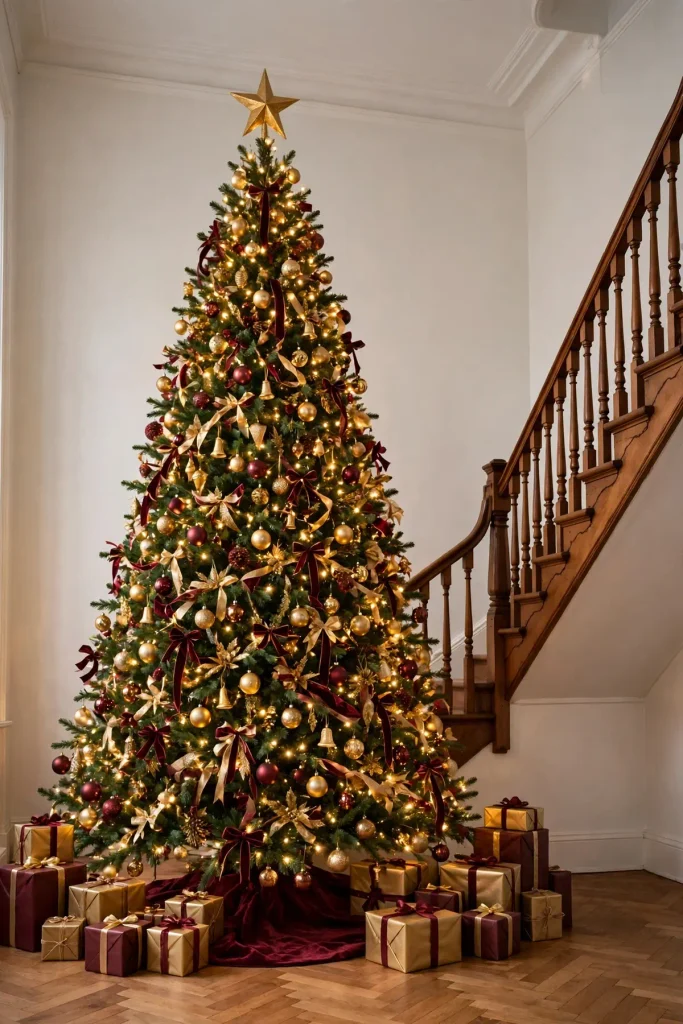
Made for rooms most trees get lost in: the double-height hall, the staircase turn, the big open-plan space. A tall tree in gold and burgundy fills vertical space furniture cannot reach, and guests see it from the door.
Effort is Expert: expect a ladder, a second pair of hands and lights added in sections.
Budget is Splurge; the honest swap is a standard tree on a sturdy, skirt-covered crate, which buys height for far less. Measure the ceiling twice; a topper needs its own few inches.
16. A Flat-Back Tree for Walls With No Floor to Spare
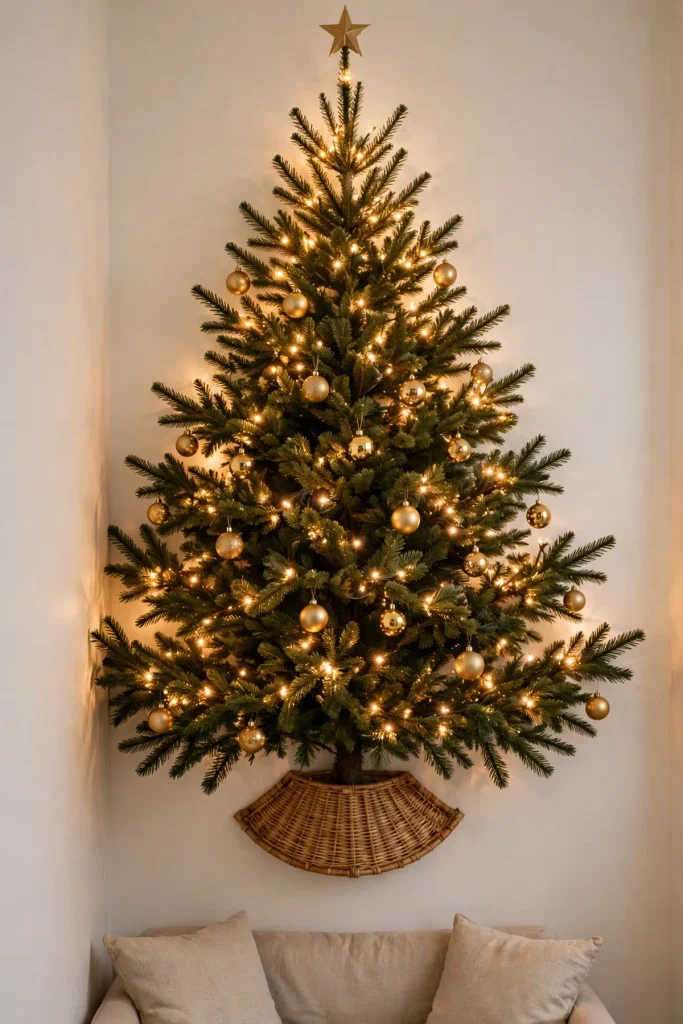
A flat-back tree is half a tree, made to hug the wall where every inch of floor is spoken for. Set it up in three steps:
- Fix it flush to the wall, then check from the door that no flat side shows.
- Shape the front branches wide so the silhouette reads full from the front.
- Dress the front only: gold baubles, warm white lights, a small star, done.
Effort is Easy and the budget is Low. It suits studio flats, narrow halls and kids’ rooms where a full tree blocks a walkway.
17. A Real Tree in a Basket for the Rustic Finish
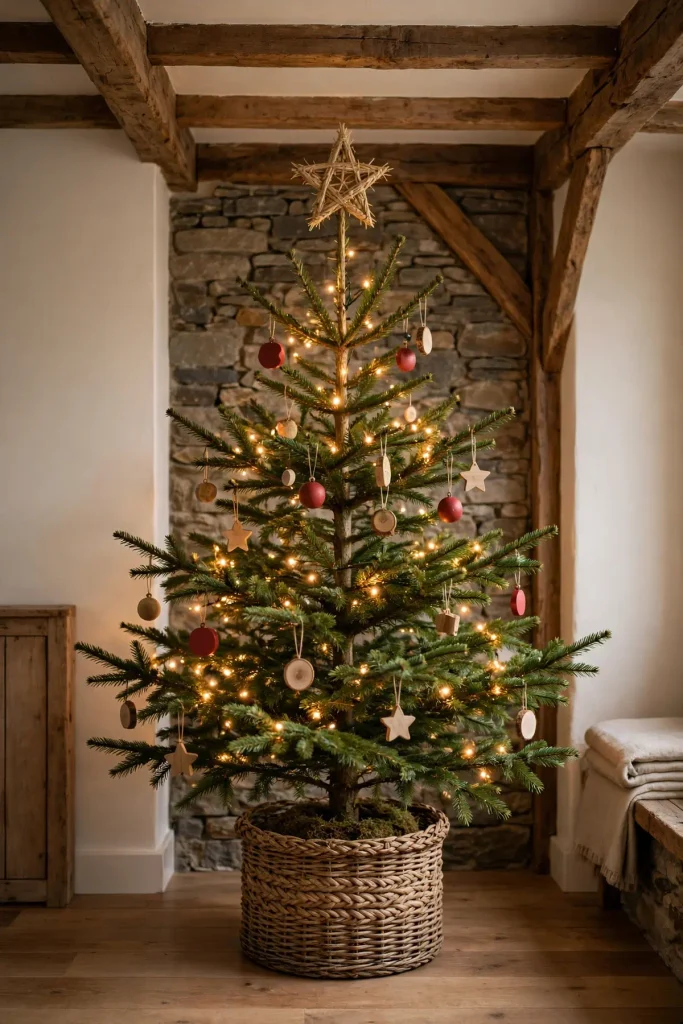
A real fresh-cut tree, slightly uneven, in a woven basket collar: the one that smells like Christmas the moment it comes through the door. Simple red and wooden ornaments and a straw star suit the honest shape better than heavy dressing. It suits rustic rooms with beams and stone, and anyone who treats choosing the tree as part of the season. Effort is Medium, mostly watering and needle patrol. Budget is Mid each year, and the swap is a good artificial rustic-style tree you only pay for once.
What Size Tree Does Your Room Need?
Height is the decision people rush, so use the room, not the photo, as your guide.
| Tree height | Room it suits | Ceiling check | Effort |
|---|---|---|---|
| Under 3 ft | Sideboards, desks, tiny flats | Any ceiling works | Easy |
| 4 to 5 ft | Small rooms and corners | 7 ft ceiling, plus topper room | Easy |
| 6 to 7.5 ft | Most living rooms | 8 to 9 ft ceiling | Medium |
| 8 to 10 ft | Halls and high ceilings | 10 ft or more | Medium |
| Over 10 ft | Double-height spaces | Measure twice, then again | Expert |
The Three-Layer Rule: Lights, Depth, Shine
Every tree here that works does the same three things in the same order. Lights go on first, wound from the trunk outward, so the glow comes from inside the branches, not from a net on the surface. Depth comes second: push your plainest, largest baubles deep into the tree, close to the trunk, so the eye reads layers, not a flat green wall. Shine comes last, on the outer tips, where your prettiest pieces catch the light. Most disappointing trees are dressed in the wrong order: shine first, nothing behind it. Follow lights, depth, shine and even a budget tree looks planned.
Picking the Shape and Colour Before You Shop
Shape first. Full trees need width as much as height, so check your floor patch, not just the ceiling. Slim and flat-back trees exist for real rooms; choosing one on purpose beats squeezing a full tree into a gap. Colour second. Green is the flexible base; flocked, white, black and metallic trees are commitments, so picture them against your walls before you pay. If the room is already warm and busy, a calm tree usually wins. If the room is pale and plain, the tree carries the colour for the whole space.
What to Check in the Shop Before You Pay
For an artificial tree, shake one branch and pull gently: loose needles and wobbly tips only get worse at home. Check the stand is metal, not thin plastic, and ask how it stores: a folder beats a cupboard-eater. For a real tree, run a branch through your fingers: needles should flex and stay put. Either way, count the light strands you will need before you leave, not after the tree is up.
Time and Budget, Planned Honestly
A full-size tree is a half-day job with shaping, lights and dressing; a tall one can take a full day. Budget in three parts: the tree itself, the lights, and the dressing. The swap that saves the most is keeping a plain tree for years and changing only the colour story of the baubles. Tabletop and corner trees are the low-budget heroes: small tree, small ornament count, same finished feeling in photos.
DIY Touches That Make a Plain Tree Look Planned
Wind ribbon down through the branches in loose spirals, not around them, and a plain tree gains depth in minutes. Cluster baubles in threes on one hook rather than spacing singles evenly; clusters read as intention. A basket, crate or folded throw at the base covers any stand for free if it already lives in your house. These are the touches guests actually notice, and none of them needs a new tree.
Keeping a Tree Fresh and Storing One Well
A real tree drinks most in its first days, so check the water daily and do not let the stand run dry, or the trunk seals and stops drinking. Keep it away from radiators where you can. For an artificial tree, compress the branches gently, bag it upright if you have space, and coil lights around card so next December starts calm. Flocked trees store well in a bag, since their snow rubs off on cardboard.