18 Christmas Tree Bow Ideas That Pull the Whole Tree Together
Last December, my tree was up, lit, and fully decorated, and it still looked plain. The baubles were fine. The lights were fine. It just sat there like a tree in a shop window, not the heart of the room.
That evening I cut up two rolls of wired ribbon I already owned, tied a handful of bows, and pushed them into the branches. Twenty minutes later, the same tree looked finished. Bows are the cheapest full makeover a tree can get.
Below are the bow looks I reach for every year, sorted by where the bows sit on the tree. You will find sizes, counts, and the little placement tricks that keep bows looking neat instead of droopy.
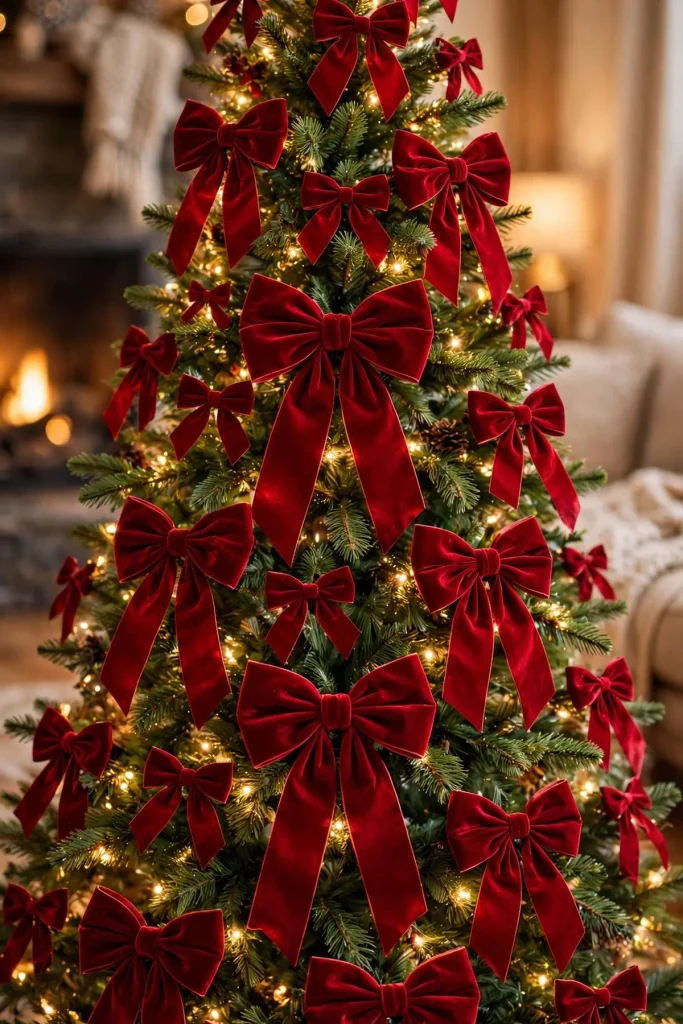
The Big Topper Bow
One oversized bow at the very top does the job of a star, an angel, and a ribbon garland all at once. It is the first thing guests notice, and it sets the color story for everything below it.
1. The Oversized Velvet Topper Bow
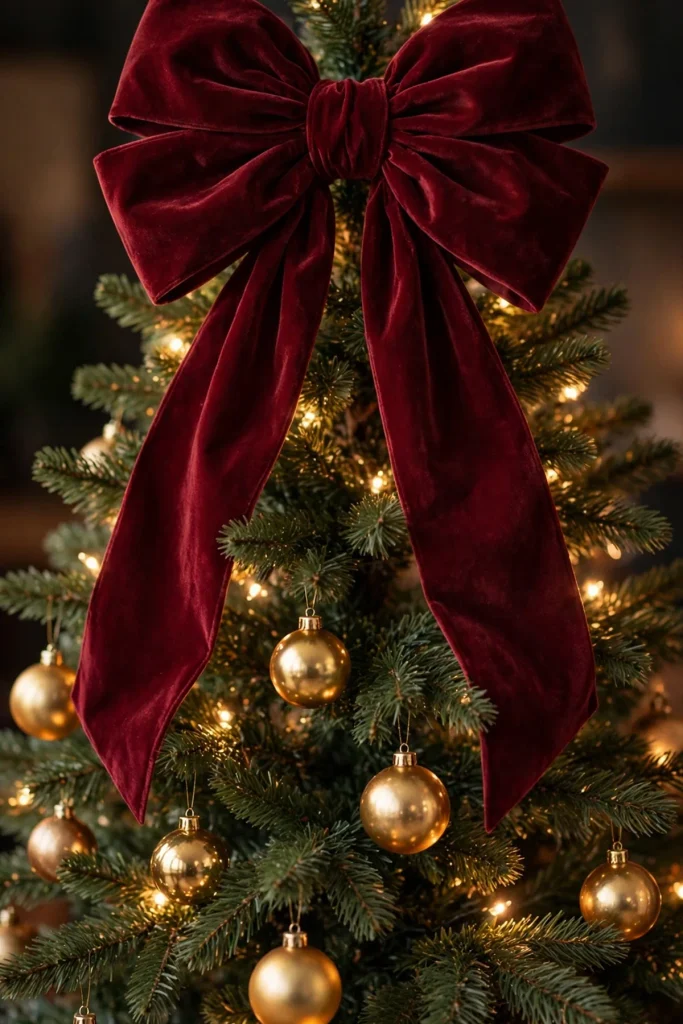
Make one bow that is almost too big. A topper bow should span 12 to 16 inches across the loops on a standard 7-foot tree, with two tails that fall a good 18 inches down the branches.
Velvet is the fabric that makes this work. It catches the light softly, holds its shape on wired edges, and reads rich even in a plain deep red or burgundy.
Wire the bow to the top branch with a pipe cleaner through the back knot. Never rely on the top branch alone; a bow this size will slowly lean by week two if it is just balanced there.
2. The Double-Layer Bow With Long Tails
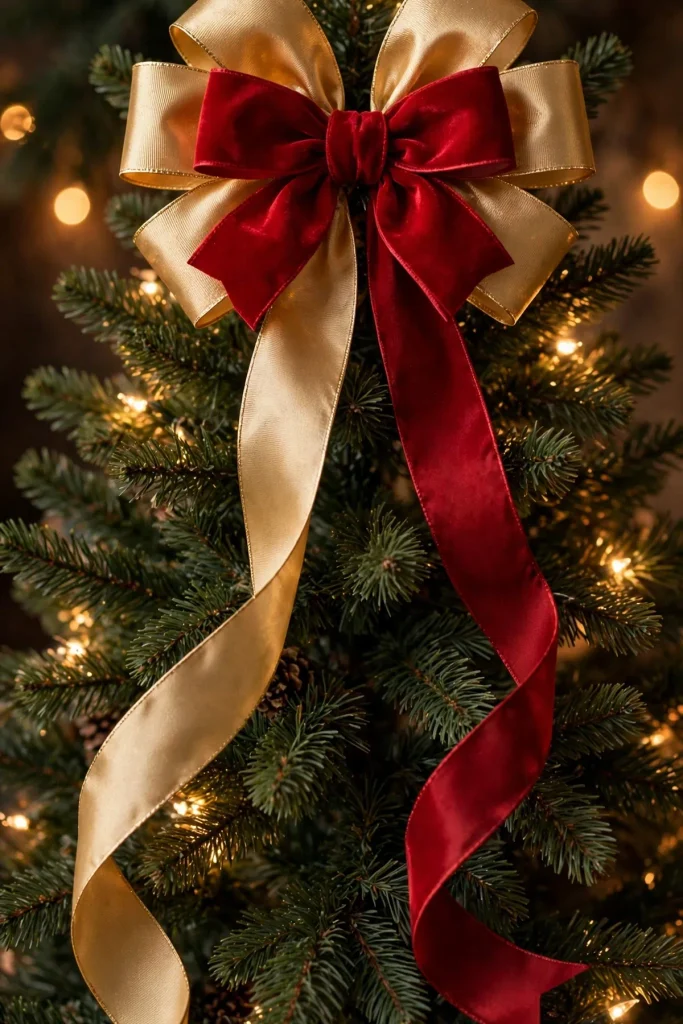
Stack two bows on top of each other: a wide gold bow at the back, a slightly smaller red bow in front. The layered look gives the top of the tree real depth, the way a good wreath has layers.
Cut the tails long and at different lengths, one ending near the top third of the tree, the other a little shorter. Long tails are what make a topper bow look expensive — short stubby tails make it look like a gift box.
Let the tails rest on the branches rather than pulling them straight. A gentle curve over the greenery looks natural and soft.
3. The Big Plaid Topper Bow
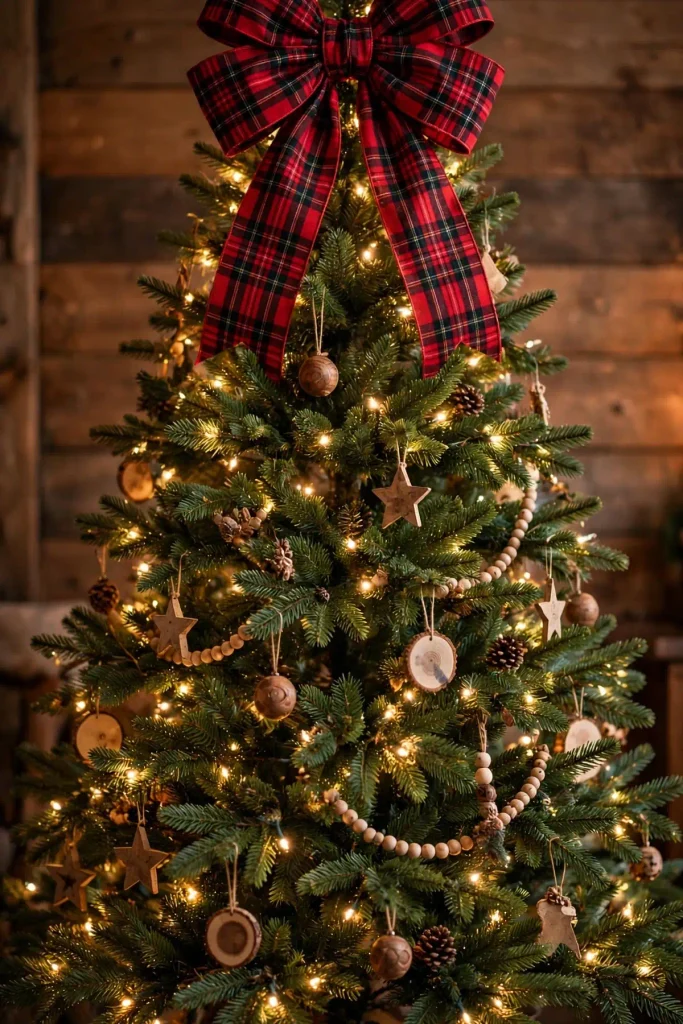
For a cozy, cabin-style tree, one large plaid bow at the top sets the whole mood in seconds. Red and black or red and green tartan both work, and the pattern hides small tying flaws better than any solid ribbon.
Choose a ribbon at least 4 inches wide for this one. Narrow plaid gets lost at the top of the tree and just reads as a dark blob from across the room.
Keep the rest of the tree simple when the topper is this bold: warm white lights, wooden ornaments, and a few solid red baubles are plenty.
4. The Gold Mesh Topper Bow
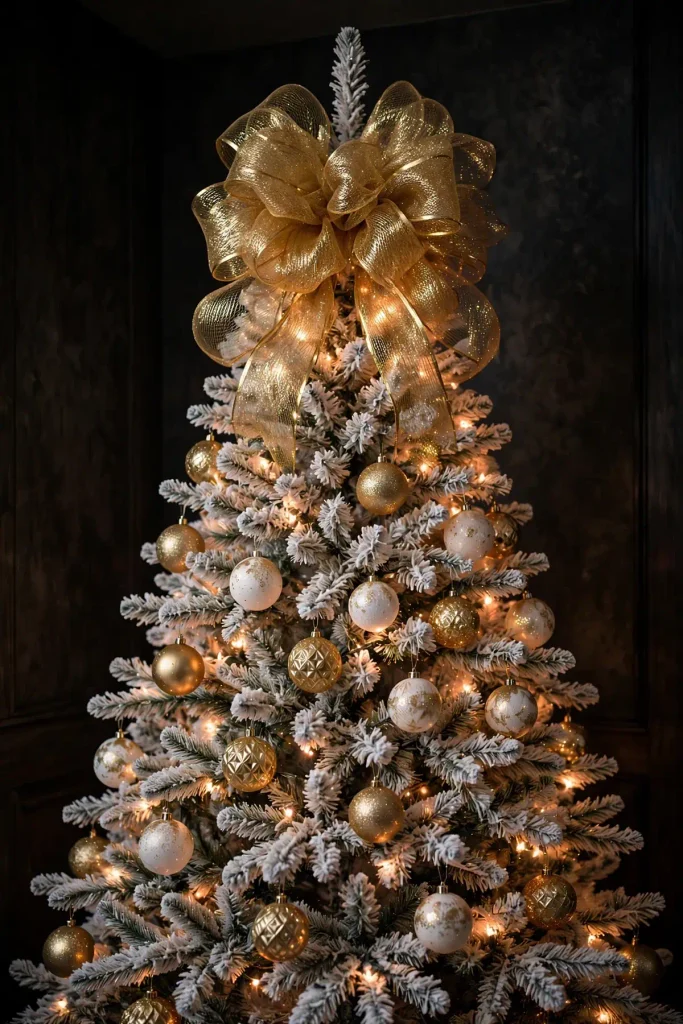
Gold mesh ribbon makes the fluffiest bow of all, because the fabric is stiff and airy at the same time. Loops puff up on their own and hold for the whole season without a single adjustment.
Pair it with a white and gold tree for a bright, elegant look. The mesh catches the string lights and almost glows, which is lovely on a tree that sits in a darker corner.
One warning from experience: mesh frays. Cut the tails with sharp scissors and seal the ends with a quick pass of clear nail polish or a lighter held close, never touching.
Bows All Over: Scattered and Statement
Scattered bows are the classic look, and the one most people get slightly wrong. The trick is spacing. Bows should land where your eye naturally travels, in rough rows, with gaps that breathe.
5. Classic Red Velvet Bows, Head to Toe
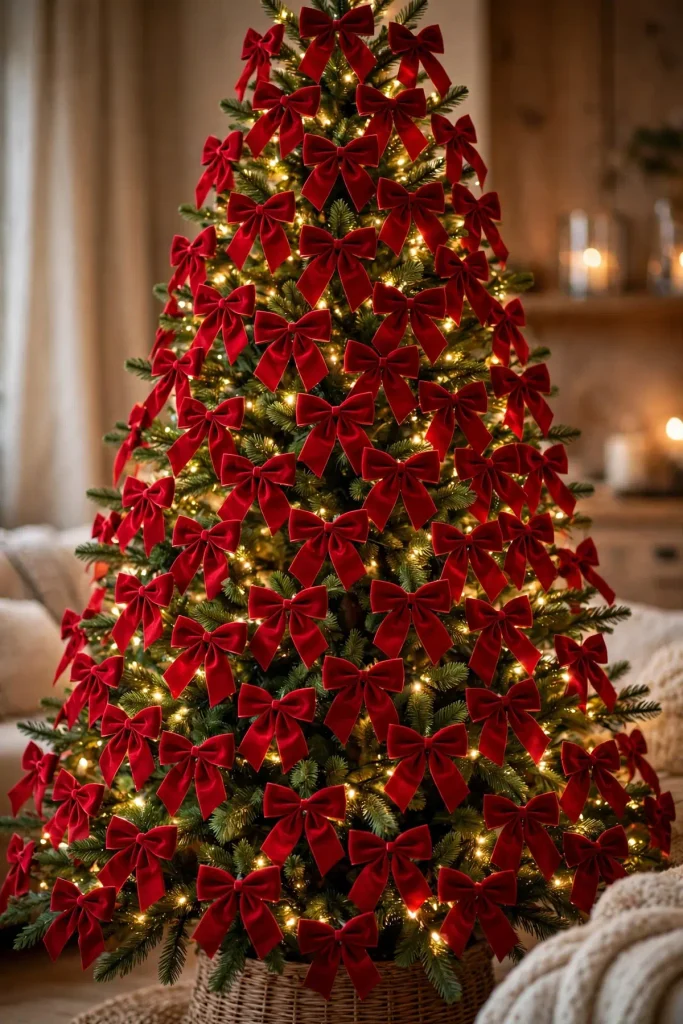
This is the look from every childhood Christmas card: medium red velvet bows spread over the whole tree. Use bows about 5 to 6 inches wide — big enough to see from the door, small enough to repeat.
On a 7-foot tree, plan on 18 to 24 bows. Push each one a few inches into the branches instead of pinning it on the very tips, so it nestles into the green instead of floating on top.
Work in a loose spiral as you place them, stepping back every five bows. Your eye will spot the empty patch long before a measuring tape will.
6. Buffalo Check Bows for a Farmhouse Tree
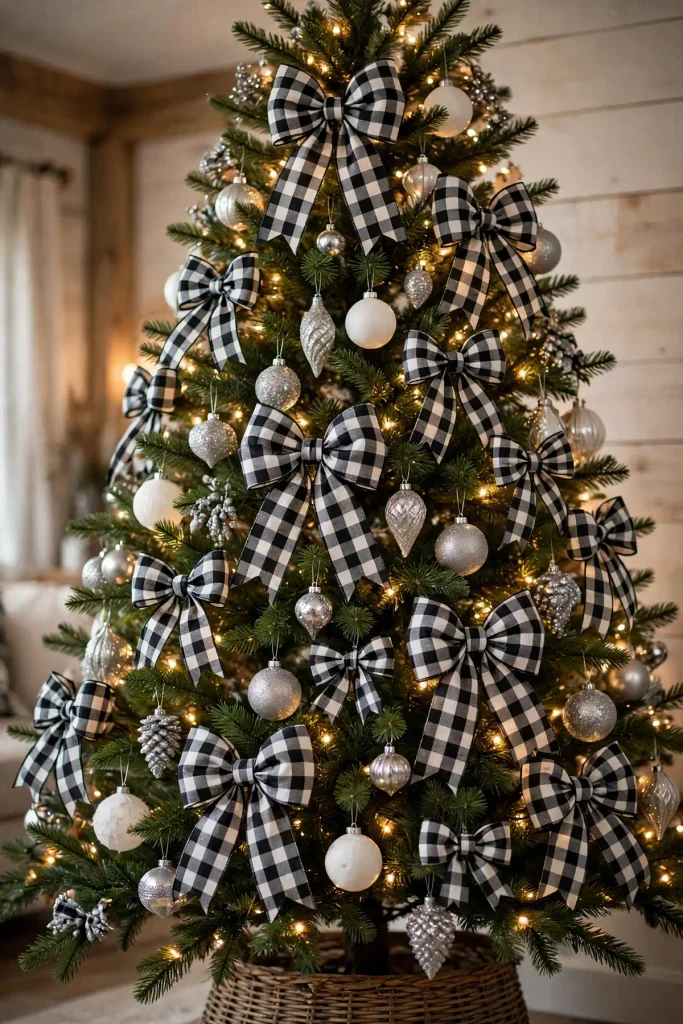
Black and white buffalo check bows give a tree instant farmhouse charm. The bold pattern means you need fewer of them — 12 to 15 medium bows dress a full tree.
Buffalo check ribbon is usually cotton or burlap-backed, so pick a wired version or the loops will slump within days. Fluff each loop with your fingers when you hang it.
They pair beautifully with galvanized metal ornaments, white baubles, and plain warm lights. Let the bows be the only pattern on the tree.
7. Tiny Bows on Every Branch Tip
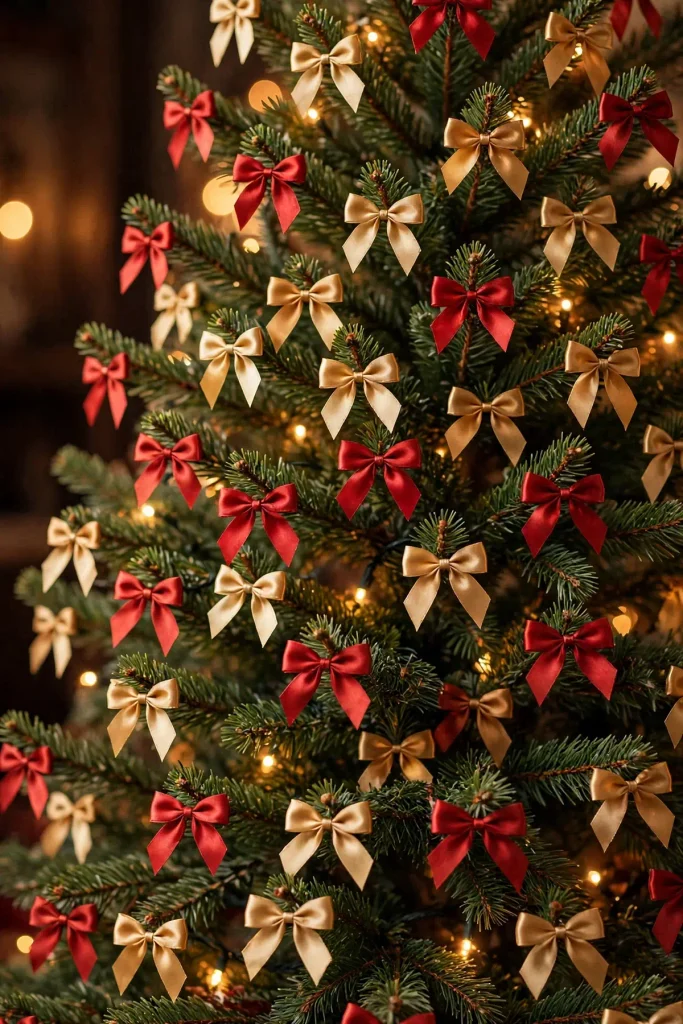
Sweet, old-fashioned, and a little bit magical: dozens of tiny bows, each about 2 inches wide, tied right at the branch tips. This is the one to do with kids or grandkids helping, because there is no wrong way to place them.
Thin satin ribbon without wire is best here. It ties into soft little knots that sit lightly, and a single roll makes 40 or more bows.
Mix two colors if you like — red and gold is classic — but keep the size the same. Same size, mixed color looks planned; mixed sizes look like leftovers.
8. Blush Pink Satin Bows
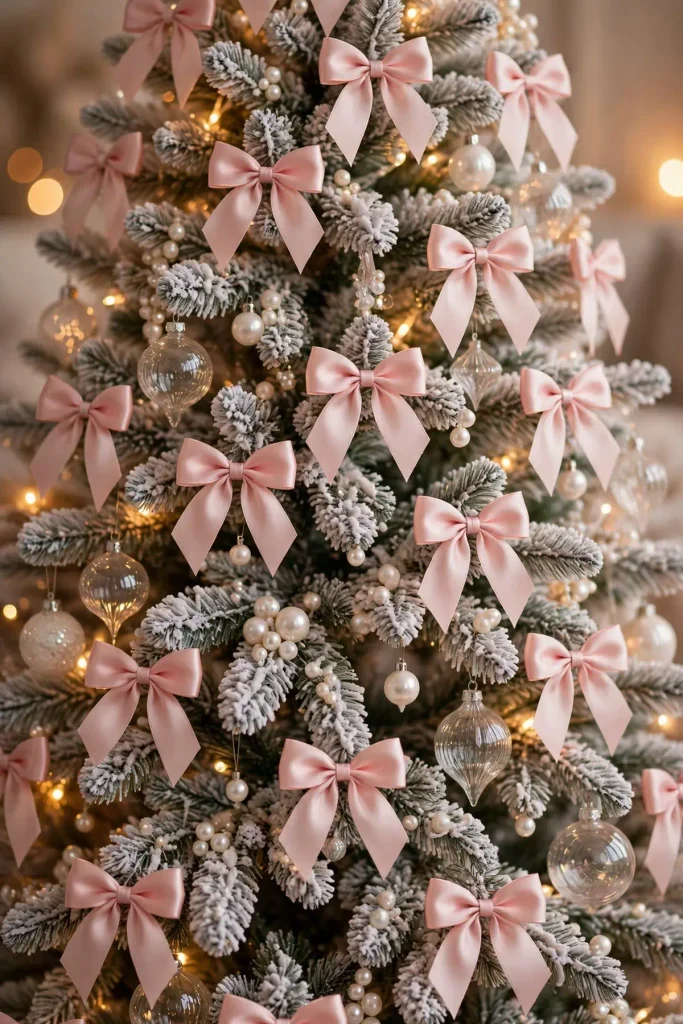
Blush pink bows turn a tree soft and romantic, especially on a flocked or white tree. Satin has a gentle shine that photographs beautifully, which matters if your tree is your December photo backdrop.
Keep loops small and neat, around 4 inches, and tie the knot tight — satin slips. A tiny dot of hot glue inside the knot keeps it closed all season.
Add pearl or clear glass ornaments and warm lights. Skip colored lights with this one; they fight the soft palette.
9. Black and White Gingham Bows
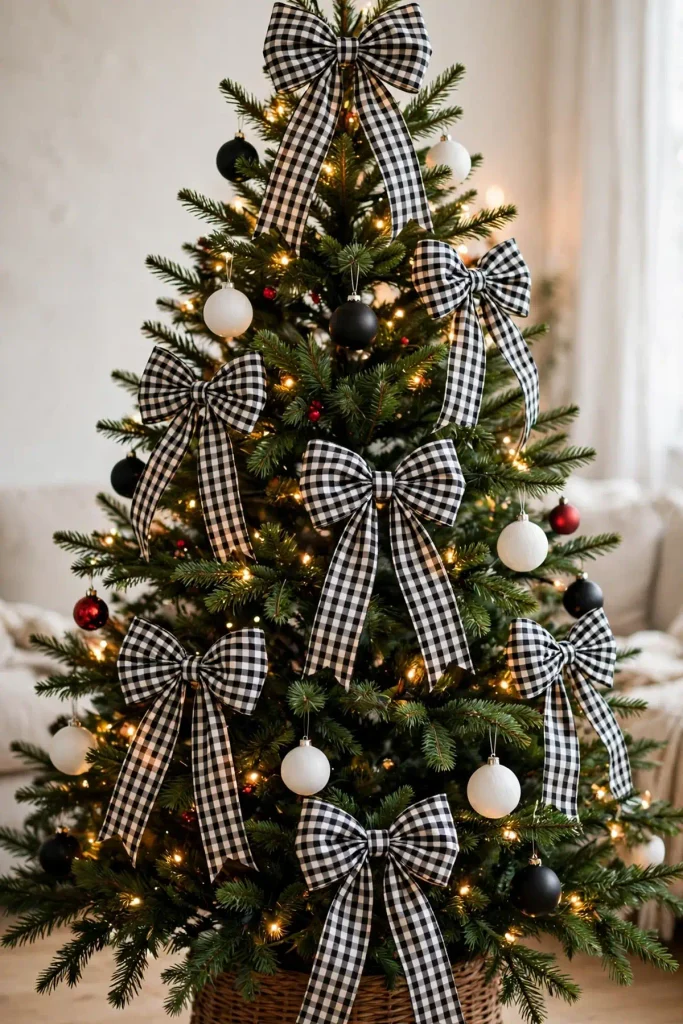
Gingham is buffalo check’s smaller, sweeter sister. The fine check reads crisp and clean, and it suits a kitchen or dining room tree that needs a lighter touch.
Make the bows a touch bigger than you think — 6 inches — because the small pattern loses presence from a distance. Wired gingham is easy to find and holds a perky loop.
This look loves plain white and black ornaments with it, plus a few red berries or baubles if you want one pop of color.
10. Rustic Burlap Bows
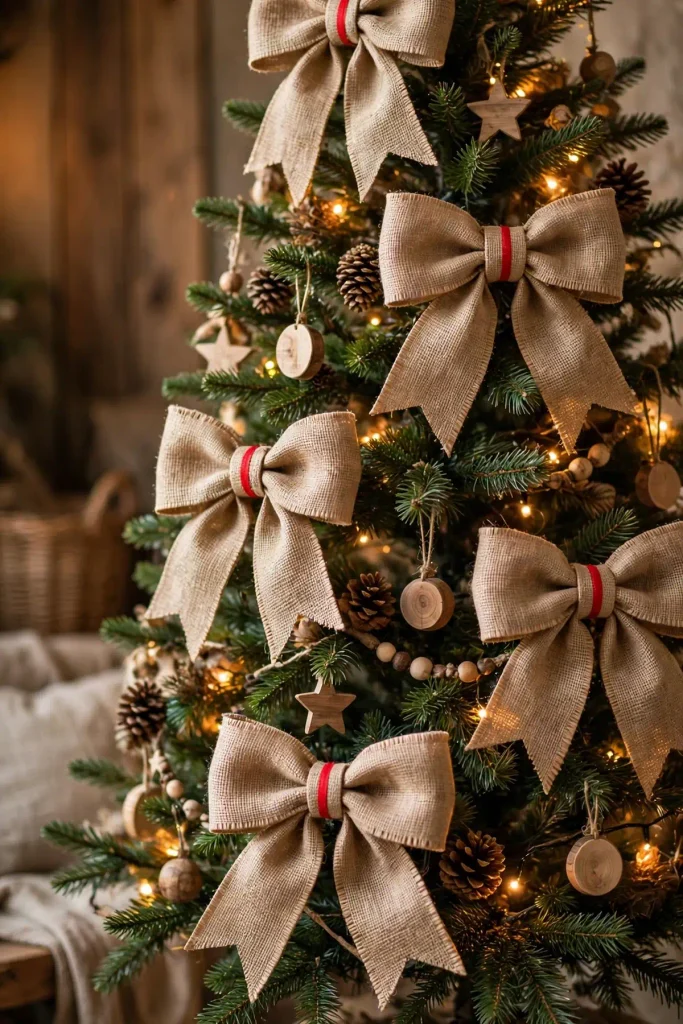
Burlap bows bring texture that no shiny ribbon can copy. They suit wooden ornaments, pinecone decorations, and any tree that leans natural and earthy.
Burlap is stiff, so bows almost tie themselves. The one flaw is shedding: cut burlap ribbon over a bin, and give each finished bow a shake outside before it goes on the tree.
Try layering a thin red ribbon through the center knot of each burlap bow. That one small stripe of color stops the tree from looking flat brown.
Bow Garlands and Cascades
Instead of scattering bows at random, link them into a path. A cascade or garland gives the tree movement, and it is surprisingly forgiving — the path does the design work for you.
11. The Spiral Bow Cascade
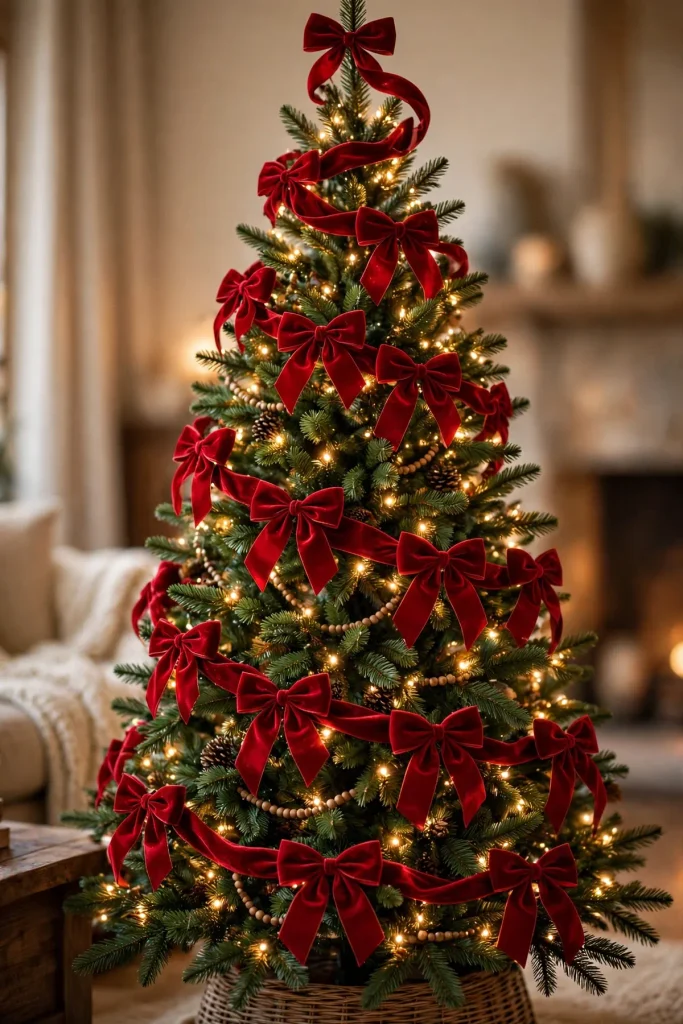
Start at the topper and wind a trail of matching bows down the tree in a slow spiral, each bow roughly 12 inches below and a little to the side of the one above.
Use 10 to 14 bows in one color and one size for a 7-foot tree. Matching is the whole point here; the trail should read as one flowing line.
This is my favorite fix for a sparse tree. The cascade draws the eye along the bows and straight past the thin patches.
12. Bow Garland Swags
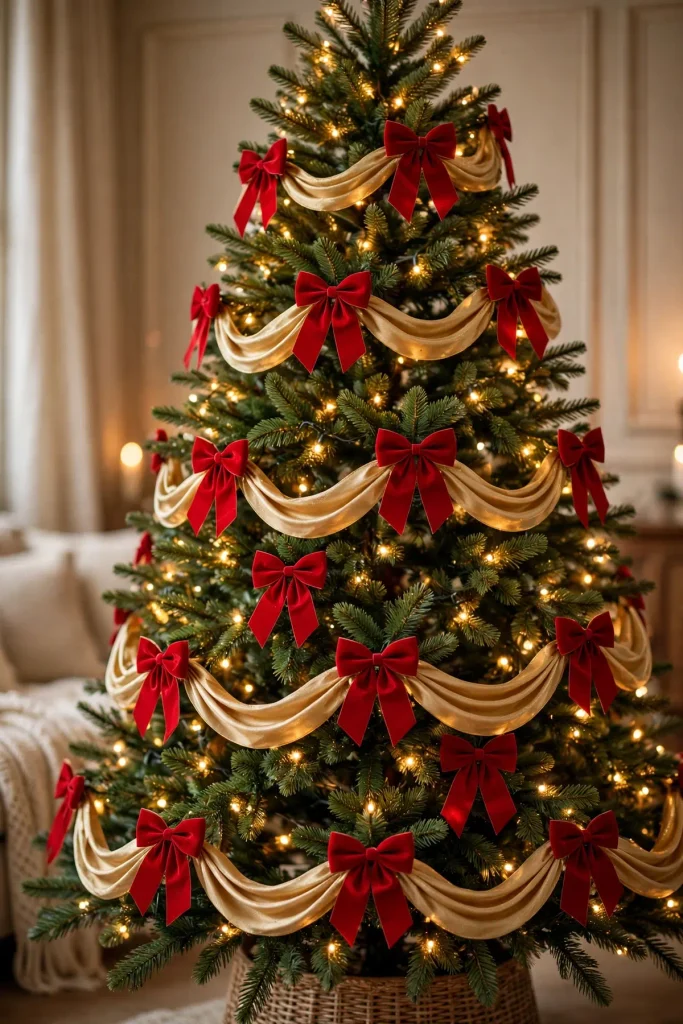
Drape ribbon around the tree in soft scallops, the way garland hangs, and pin a bow at the low point of every swag. The bows mark the dips and turn plain ribbon into a necklace for the tree.
Keep the swags shallow. Deep swoops eat ribbon and pull the eye down; gentle dips about 8 inches deep look graceful and use half the material.
Six to eight bows are enough for the front-facing swags on most trees. Nobody sees the back — spend your bows where guests stand.
13. A Staircase of Bows Down One Side
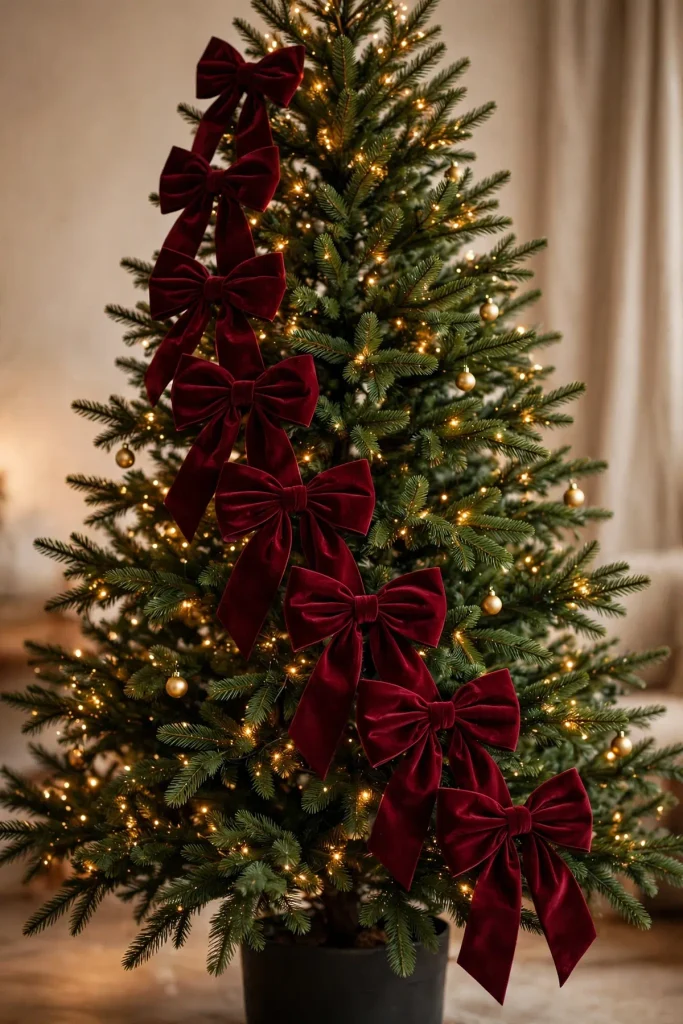
For a modern, styled look, run one bold diagonal line of large bows down a single side of the tree, like steps. Leave the rest of the tree to plain ornaments and lights.
Use your biggest bows here, 7 to 8 inches wide, spaced a steady 10 inches apart. Five or six bows make the full staircase on a tall tree.
Face the staircase toward the room’s main seat. Asymmetry only works when it is clearly on purpose, and a clean diagonal line reads as a decision, not an accident.
14. Bow and Bauble Clusters
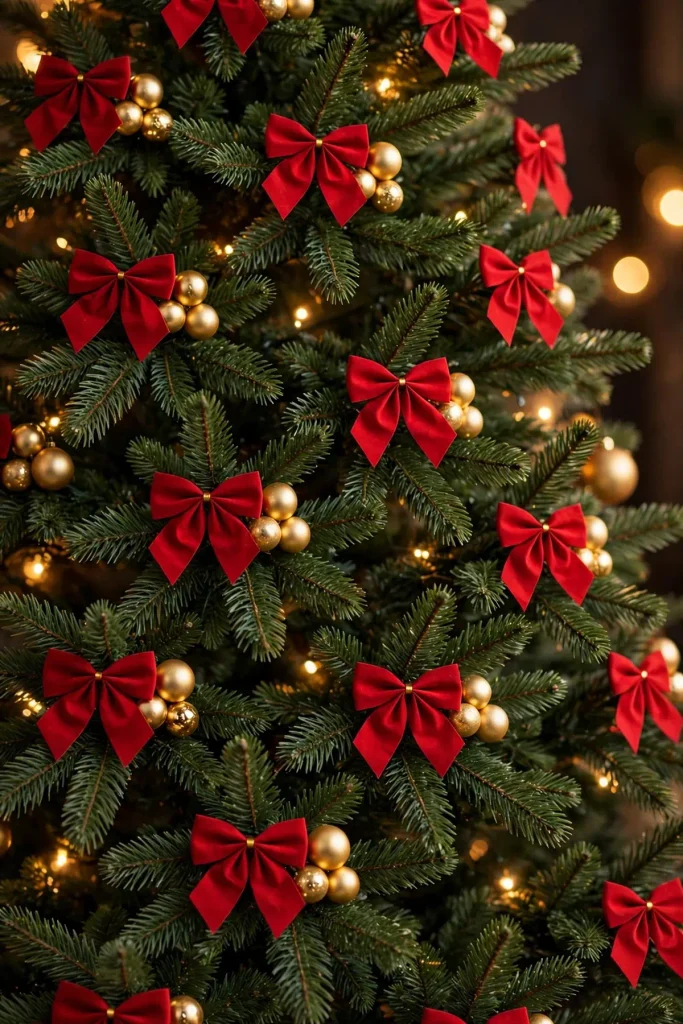
Group one bow with two or three baubles and tuck the little cluster deep into the branches. Repeat eight to ten times around the tree. The clusters look like small gifts hiding in the green.
This is the best use for leftover ribbon ends and the odd baubles that never matched anything. In a cluster, mismatched pieces suddenly look like a set.
Vary the cluster spots: one near the top, a few at eye level, two low. Even spacing looks stiff; a little randomness looks like a real home.
Bows With Ribbon: The Layered Look
Ribbon first, bows second. When ribbon runs through the tree and bows sit on top of it, the whole thing looks like a florist did it. This is the most polished style in the list, and it is easier than it looks.
15. Ribbon Waterfalls With a Bow at Every Drop
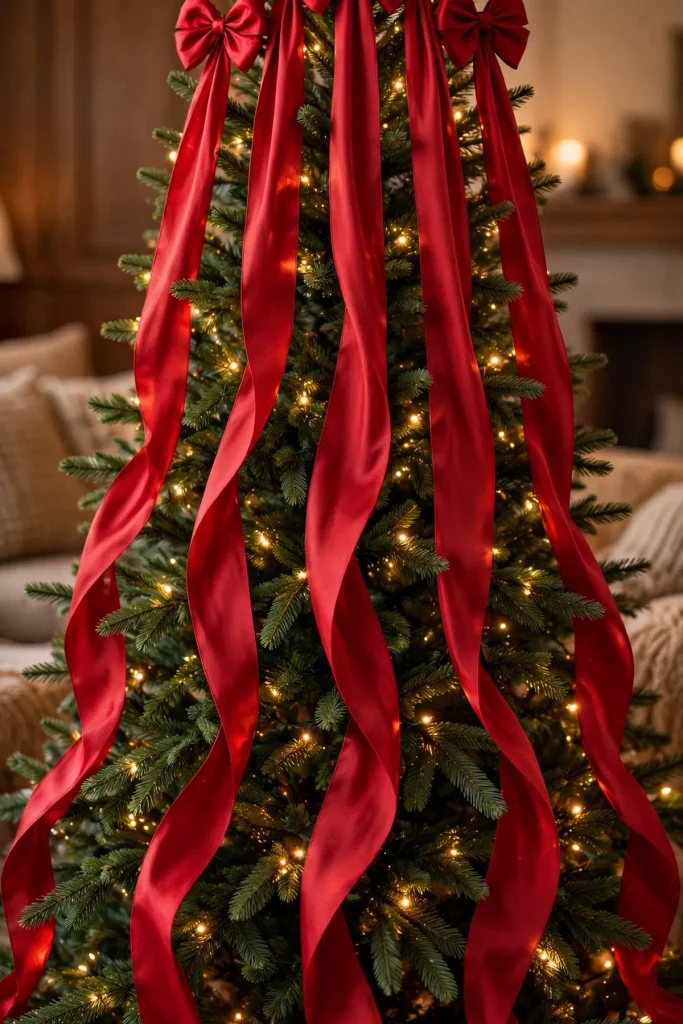
Cut ribbon into long strips, tuck the top of each strip into the crown of the tree, and let it fall straight down in soft waves. Then pin one bow where each waterfall starts.
Five or six waterfalls suit most trees. Push the ribbon into the branches every 8 inches or so, in and out, so it weaves instead of hanging like washing on a line.
The bows at the top hide every tuck and staple. That is their real job — the decoration is also the cover-up.
16. Cream Ribbon With Deep Red Bows
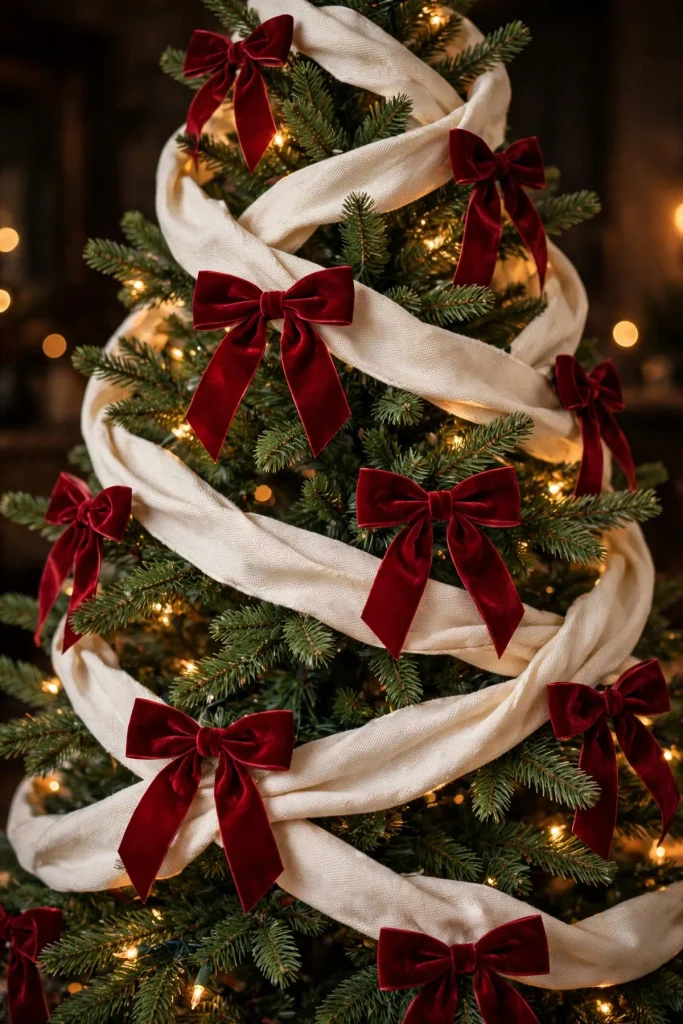
Wind wide cream ribbon loosely around the tree, then place deep red velvet bows over the ribbon at scattered points. The pale ribbon makes the red bows glow against it.
This pairing suits almost any ornament collection, because cream goes with everything and red is Christmas itself. It is the combo I suggest to anyone decorating a first tree.
Keep the bows at 5 inches and the ribbon at 4 inches wide. When both are the same width, the layers blur together and the bows stop standing out.
17. Gold Ribbon Loops With Green Velvet Bows
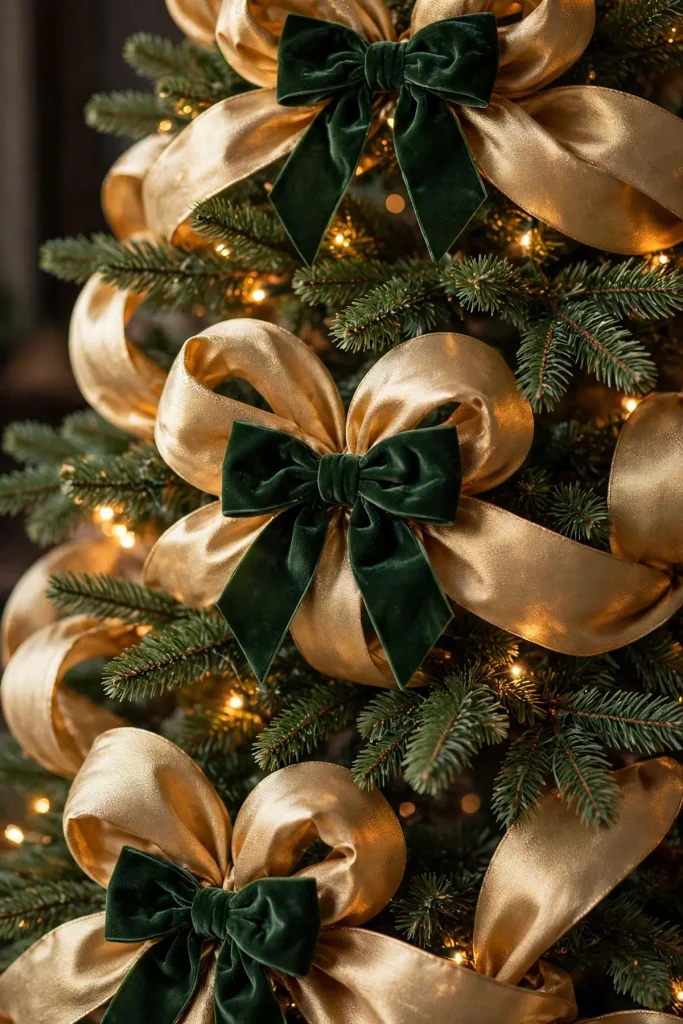
Push gold ribbon into the tree in big loops, the way florists do, letting each loop puff out between the branches. Then set one dark green velvet bow on every second or third loop.
Green on green sounds risky, but the velvet is so much darker and richer than the needles that the bows read clearly, and the gold does the sparkling for both.
You need fewer bows than any other look here — eight to ten on a full tree — because each one sits on a stage of gold.
18. Sheer Ribbon Clouds With Ivory Bows
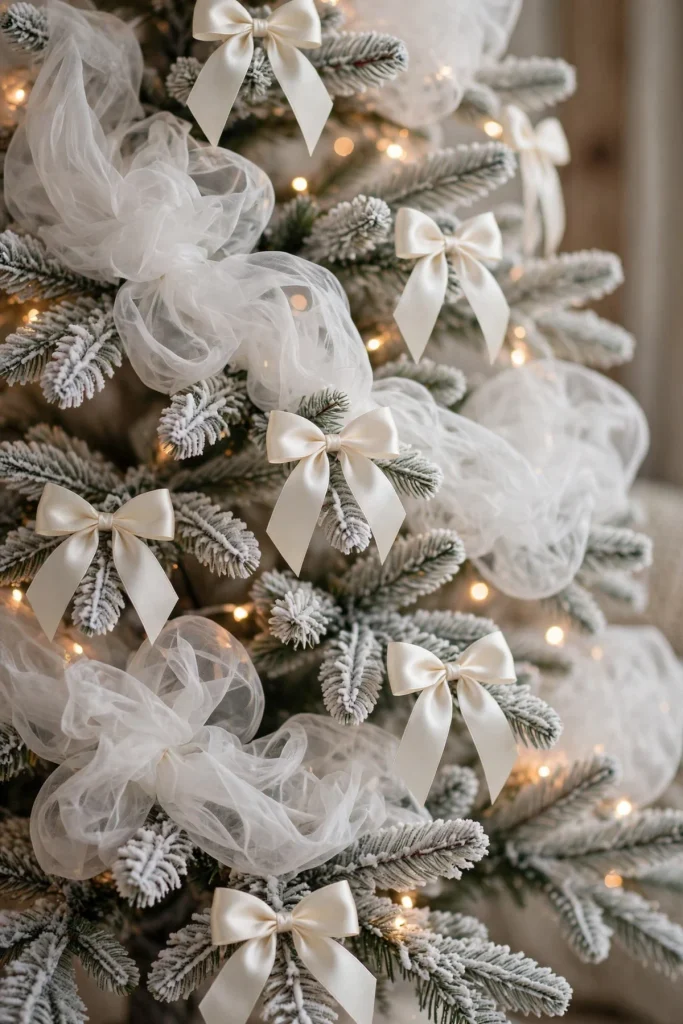
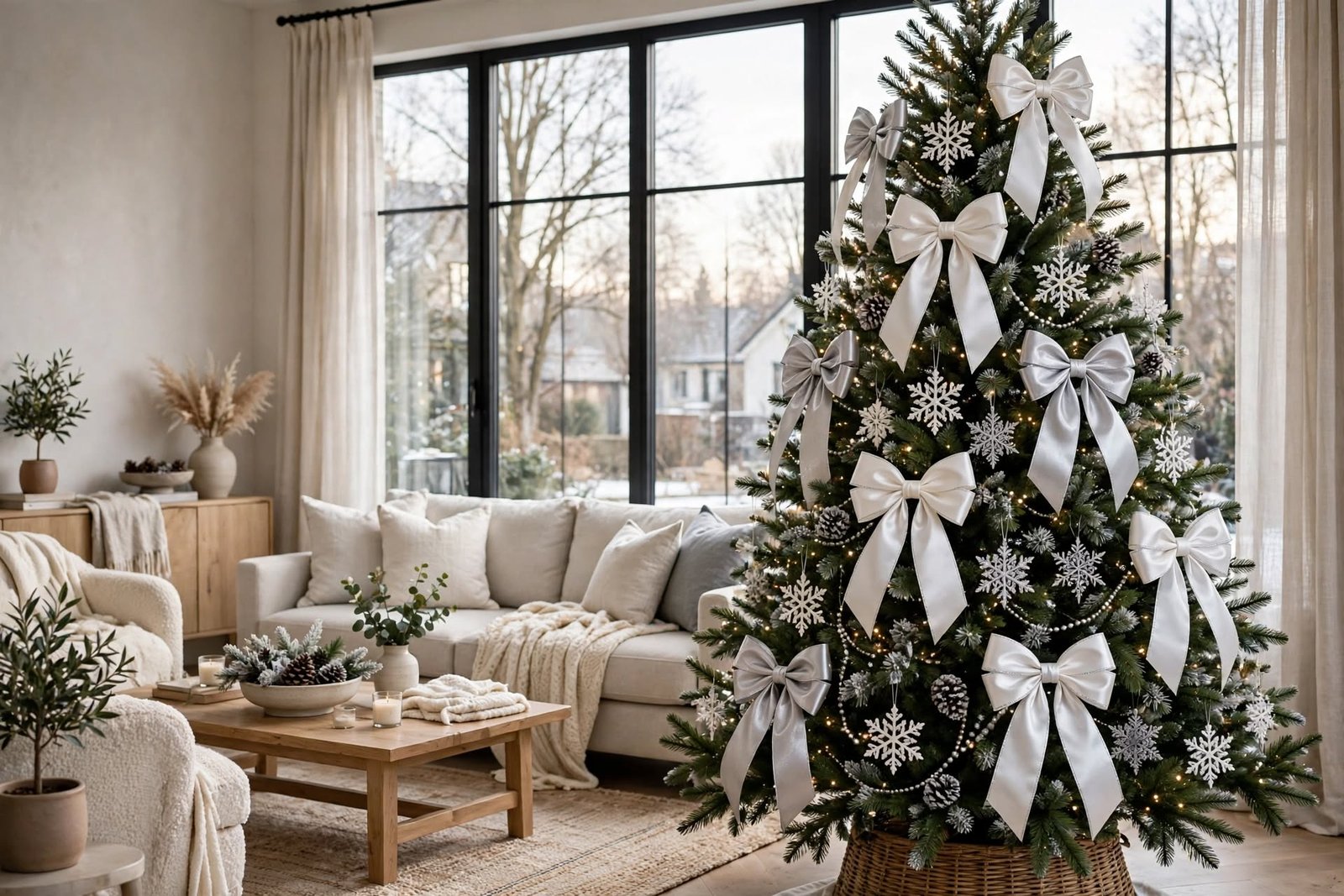
For a soft white tree, bunch sheer organza ribbon into loose clouds and tuck them all over, then finish with small ivory satin bows at the front of the fullest branches.
The sheer ribbon catches light like frost. Keep the bows matte — satin, not glitter — so the contrast between cloud and bow stays gentle.
This is the quietest look in the list, and the one that gets the most compliments in person. It needs warm white lights only; cool lights turn it icy blue.
Bow Math: How Many You Actually Need
Here is the count I give friends, by tree height, for medium 5-inch bows scattered all over: a 4-foot tree needs about 10, a 6-foot tree about 16, a 7.5-foot tree about 24, and a 9-foot tree 32 or more.
For ribbon, one standard 10-yard roll makes roughly eight medium bows with short tails, or five big topper-style bows. Buy one roll more than your count says. The extra roll covers mistakes, the wreath on the door, and next year’s repairs.
And always choose wired ribbon for tree bows. The wire edge is the whole secret: it lets you shape a loop once and trust it until January.
FAQs
How do I attach bows to the tree without them falling off?
Twist a green pipe cleaner or a short piece of floral wire through the back of the knot, then twist it around the branch. It takes seconds, holds all season, and comes off clean in January.
Should the bows go on before or after the ornaments?
Bows first, ornaments second. Bows sit deeper in the branches and set the spacing; ornaments then fill the gaps. If you reverse it, you end up moving baubles all evening.
Can I mix bow colors on one tree?
Yes, if you keep one thing the same — either the size or the fabric. Red and gold velvet bows in one size look rich. Three fabrics in three sizes look like a craft drawer.
How do I stop velvet bows from drooping?
Use wired velvet ribbon, fluff the loops when you hang each bow, and store bows flat in a box with tissue between layers. A droopy bow can usually be saved with fresh fluffing and a day of rest off the tree.
Are bows enough decoration on their own?
Honestly, yes. Lights plus bows is a complete, classic tree. Add ornaments when you want more, not because the tree needs them to count as decorated.
Final Thoughts
A handful of bows fixed my plain tree in one evening, and it is still the trick I trust most. Start with one roll of wired ribbon, tie five bows, and step back. You will know exactly where the next five belong.
If this gave you a plan, save the post for your decorating day, and tell me in the comments which bow you tried first. I read every single one.