16 Choppy Bob Hairstyles Sorted by the Cutting Technique Behind Them
A choppy bob isn’t defined by length at all, it’s defined by the cutting technique used to create its texture, which is exactly why two bobs cut to the identical length can look completely different once finished. Point cutting creates a soft, feathered edge. Razor cutting creates a wispier, more deconstructed texture. Slide cutting removes weight while keeping length. Knowing which technique actually produces the look in a reference photo means a conversation with a stylist that uses real cutting vocabulary instead of a vague photo and hope.
This list covers sixteen choppy bob styles organized by the technique that creates them, so the words used to describe what’s wanted actually match what a stylist needs to hear to execute it correctly.
Point-Cut Bobs: Soft, Feathered Texture
Point cutting involves holding the scissors at a vertical angle into the ends of the hair rather than cutting straight across, removing small triangular sections that soften a blunt line without reducing much overall length.
The Lightly Textured Classic Bob

A chin-length bob with a blunt base line that’s been point-cut only at the very ends, creating softness without fully disguising the clean shape underneath, a good entry point for anyone nervous about committing to a fully choppy look.
The Feathered Collarbone Bob

Slightly longer than chin length, with more extensive point cutting throughout the ends rather than just at the perimeter, producing visible texture and movement while keeping the overall silhouette rounded and soft rather than jagged.
The Point-Cut Lob With Curtain Bangs

A longer bob paired with curtain bangs that have also been point-cut at their ends, creating a cohesive, soft texture that runs consistently from the bangs through the rest of the length rather than treating the fringe as a separate element.
Razor-Cut Bobs: Wispy, Deconstructed Edges
Razor cutting uses an actual razor blade rather than scissors, shaving into the ends at an angle to create a thinner, wispier finish than point cutting achieves, generally producing a more deliberately undone, grunge-adjacent texture.
The Razored Shag Bob

Heavy layering combined with razor-cut ends throughout, creating a textured, piece-y bob with significant movement, a style that leans into visible, intentional choppiness rather than softening it.
The Razored Micro-Bob

A very short bob, often above the chin, razor-cut throughout to prevent the shorter length from looking heavy or blunt, since razor cutting removes more bulk than point cutting and keeps a short length feeling light rather than dense.
The Asymmetrical Razored Bob
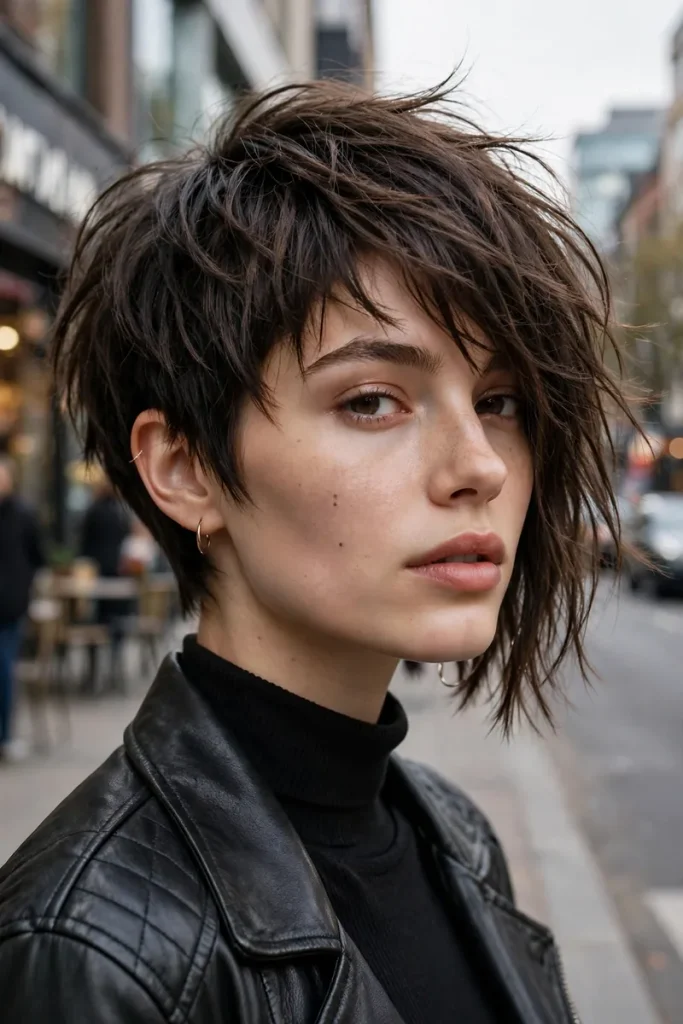
One side cut noticeably shorter than the other, with razor work throughout both lengths to keep the asymmetry feeling intentional and textured rather than simply uneven, a combination that needs a skilled hand since razor cutting on fine hair can thin it out more than intended if overdone.
Slide-Cut Bobs: Length With Reduced Weight
Slide cutting involves sliding the scissors along already-cut sections of hair to remove internal weight and bulk without shortening the overall length, useful for thick hair that would otherwise look heavy and solid at bob length.
The Slide-Cut Thick Hair Bob

A chin or collarbone-length bob on genuinely thick hair, where slide cutting throughout the internal sections removes enough bulk that the bob moves and falls naturally rather than sitting as one dense, heavy block, solving the specific problem thick hair often has with shorter cuts.
The Slide-Cut Wavy Bob

For naturally wavy hair, slide cutting throughout allows the wave pattern to show clearly rather than being weighed down by too much internal density, producing bouncier, more visible texture than a blunt cut would allow on the same hair.
The Soft A-Line With Slide-Cut Layers

An A-line bob, shorter in back and longer in front, with slide cutting used specifically to keep the longer front sections from feeling heavy or pulling the whole shape downward, maintaining the A-line’s intended angle rather than letting weight flatten it over time.
Blunt-Cut Base With Choppy Interior Layers
Some choppy bobs keep a completely blunt, straight perimeter line while adding significant chop and texture only within the internal layers, creating contrast between a clean outer edge and a textured interior.
The Blunt-Edge, Choppy-Interior Bob

A sharp, straight-across bob line at the very bottom, with heavy internal layering cut much shorter throughout the rest of the length, creating a style that reads as sleek and graphic from a distance but reveals significant texture and movement up close.
The Graduated Choppy Bob
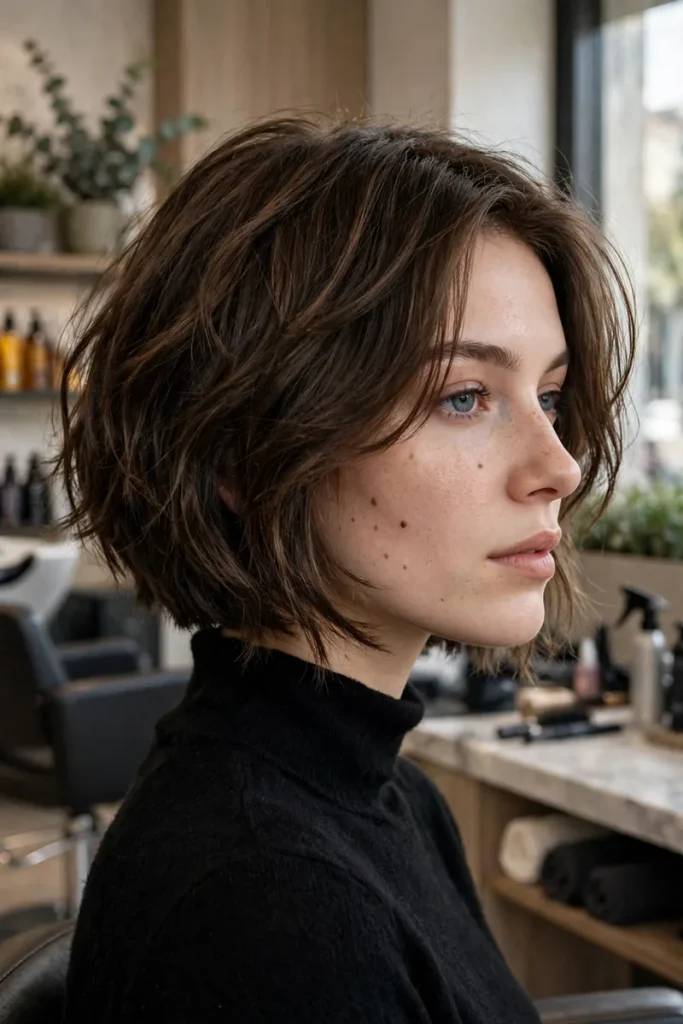
Similar internal chop concept, but with the external line gradually angled rather than perfectly blunt, a slightly softer take on the contrast between clean perimeter and textured interior.
Deep Layered Choppy Bobs
These styles use aggressive, deliberately uneven layering throughout the entire length rather than concentrating texture at just the ends or just the interior, producing the most dramatically choppy result on this entire list.
The Full Shag Bob
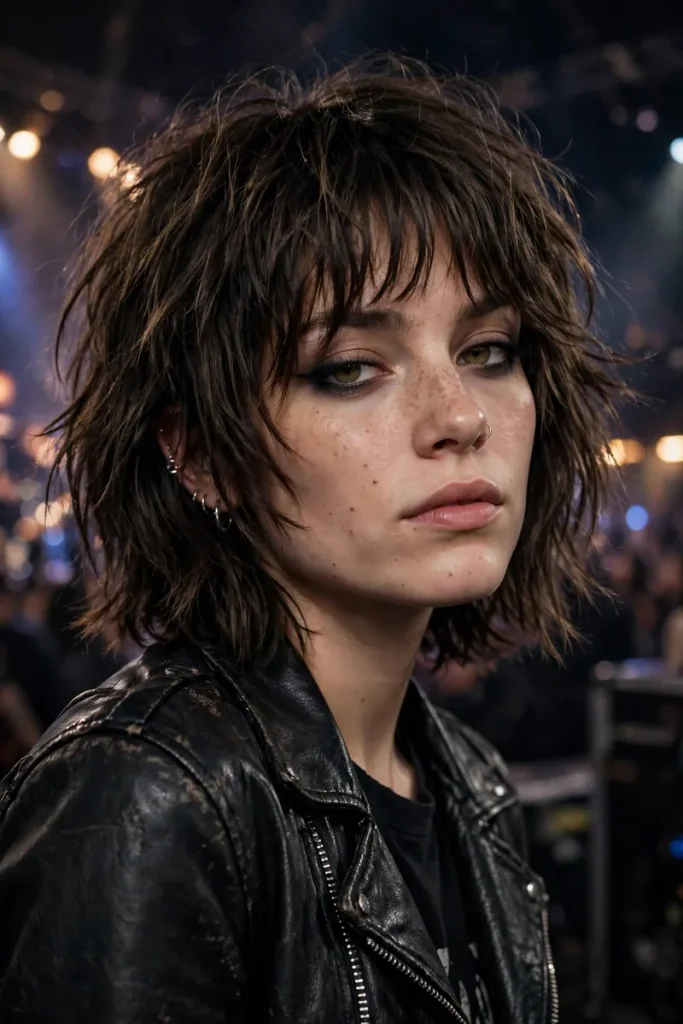
Heavy, choppy layers cut throughout the entire head at varying, deliberately inconsistent lengths, producing maximum texture and movement, genuinely one of the more dramatic interpretations of a choppy bob and best suited to thick or coarse hair that can support this much layer separation without looking thin.
The Wolf-Cut Influenced Bob

Borrowing heavily layered, volume-at-the-crown styling from the broader wolf cut trend but kept at bob length rather than longer, producing a choppy, textured silhouette with noticeable lift at the top blending into shorter, choppier pieces throughout.
The Piece-y Pixie-Bob Hybrid
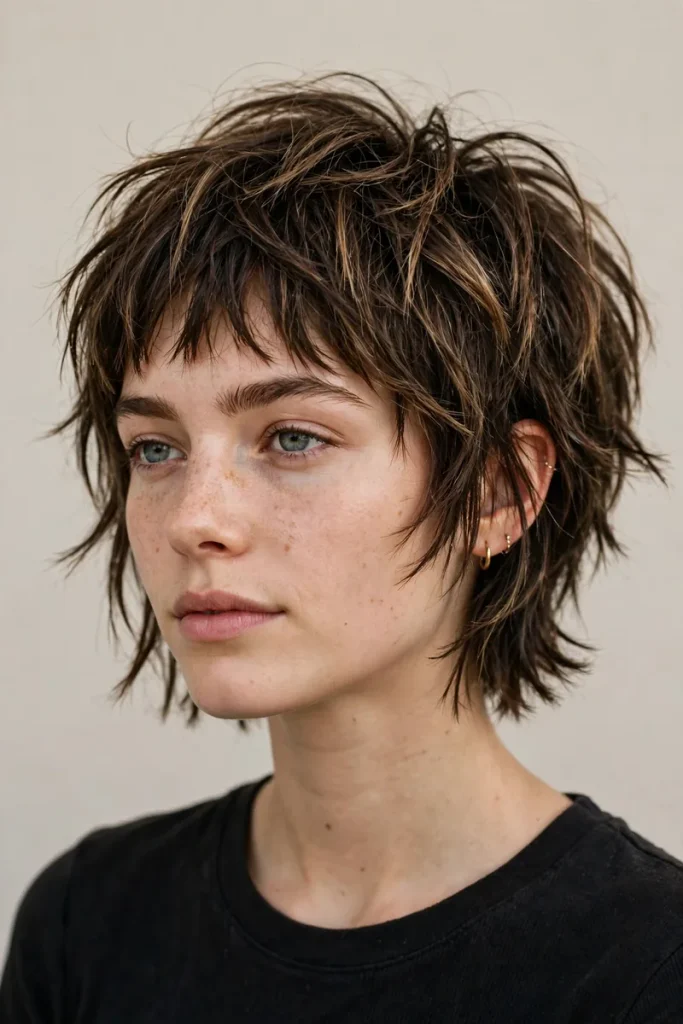
Sitting between a pixie and a bob in overall length, with aggressive choppy layering throughout that blurs the line between the two categories entirely, a genuinely bold choice that needs confidence and a stylist experienced with heavy texturizing work.
The Curly Choppy Bob

For curly and coily textures specifically, heavy layering cut dry so the stylist can see exactly how each curl springs and falls, producing a choppy, voluminous bob shape that works with the natural curl pattern rather than fighting it into a uniform line.
The Extra-Textured Bob With Heavy Face-Framing

Deep layering concentrated specifically around the face, cut noticeably shorter than the rest of the choppy length, creating dramatic framing alongside the overall textured silhouette, a combination technique that typically takes the longest in the chair since it requires careful blending between the face-framing pieces and the rest of the choppy layers.
How to Actually Explain What You Want to a Stylist
Rather than simply showing a photo and hoping the result matches, naming the technique directly, “I’d like point cutting at the ends for a softer texture” versus “I’d like razor-cut ends for something wispier”, gives a stylist immediate, precise information about execution rather than requiring them to reverse-engineer a photo’s technique themselves, which can vary in interpretation from one stylist to another even looking at the identical reference image.
Matching Technique to Hair Type Honestly
Fine hair generally handles point cutting and light slide cutting better than heavy razor work, since razor cutting can thin already-fine hair past the point of looking intentionally textured into simply looking sparse. Thick hair often benefits most from slide cutting and deep internal layering, since these techniques specifically address the bulk and weight thick hair carries at bob length. Curly and coily hair benefits from dry cutting regardless of which specific technique is used, since wet curl length is deceptive and can result in unexpected shrinkage once the hair dries into its natural pattern.
What Each Technique Means for At-Home Styling
Point-cut bobs generally air-dry well with minimal effort, since the technique itself already builds in soft movement. Razor-cut bobs often look their best with some product scrunched in while damp, encouraging the wispy ends to separate naturally rather than lying flat. Slide-cut bobs tend to need the least daily styling effort of any technique here, since the whole point of the cut is to let hair fall and move naturally without excess weight working against it.
A Note on Growing Out a Choppy Bob
Heavily razor-cut and deeply layered choppy bobs generally grow out less gracefully than point-cut or slide-cut versions, since the internal layers created by aggressive technique take longer to blend into a uniform length again. Anyone considering a choppy bob who isn’t fully committed to maintaining regular trims might reasonably lean toward the gentler point-cutting and slide-cutting techniques covered earlier in this list, which tend to transition more smoothly into longer styles down the road.
Choosing a choppy bob by technique rather than by photo alone means walking into a salon appointment with language that actually communicates the desired result, point cutting for softness, razor cutting for wispy drama, slide cutting for reduced weight without reduced length, rather than hoping a stylist interprets a reference image exactly the way it was intended.