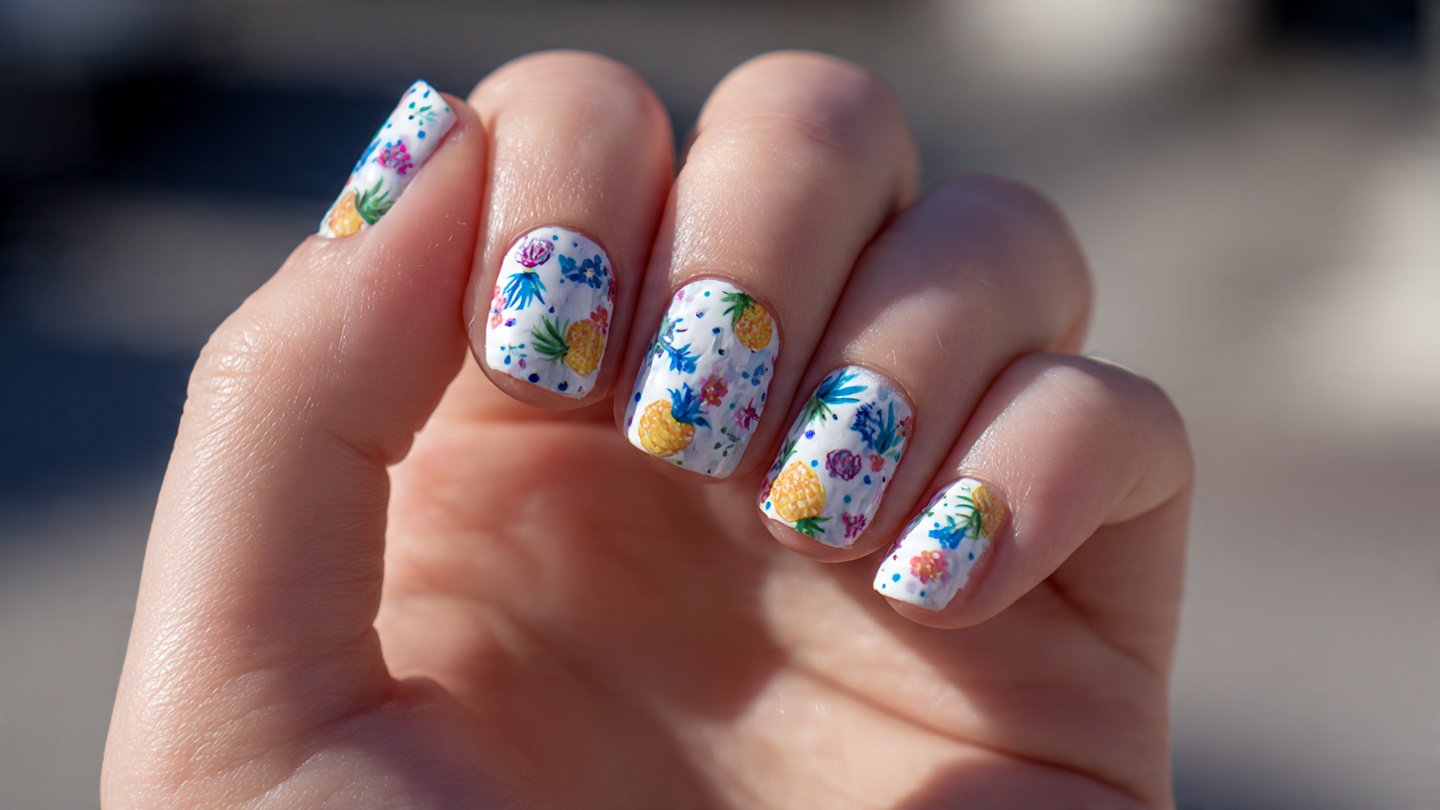
16 Summer Nails for Kids: Safe, Fun, and Made for Little Hands
Kids’ nails aren’t miniature adult nails — they’re a whole different project. Little hands wiggle, little mouths explore, and little attention spans last about four minutes. But that doesn’t mean kids can’t have fantastic summer nails. It just means the rules are different: safety first, fun always, and perfection is officially optional.
These sixteen ideas are organized by age — tiny tots, big kids, and tweens — because a 4-year-old and a 12-year-old need very different manicures. Each idea includes what the grown-up needs to know: safety, supervision level, and how to keep it fun.
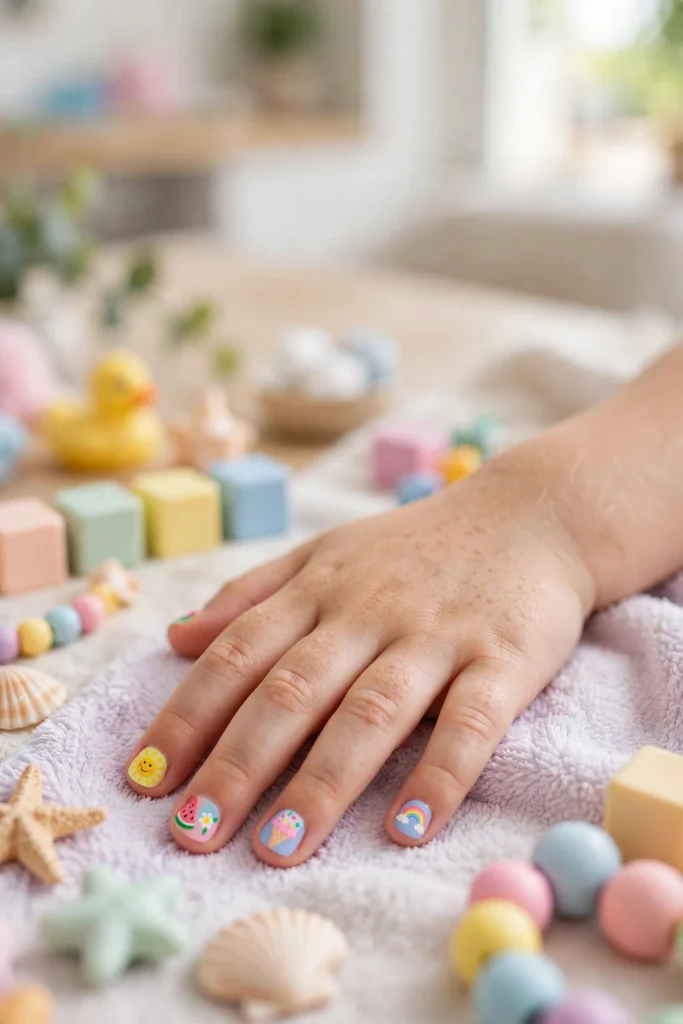
Tiny Tots (Ages 3–6): Safe & Simple
At this age, it’s about the experience, not the result. Keep it fast, non-toxic, and joyful — wobbly is wonderful.
1. Rainbow Dots
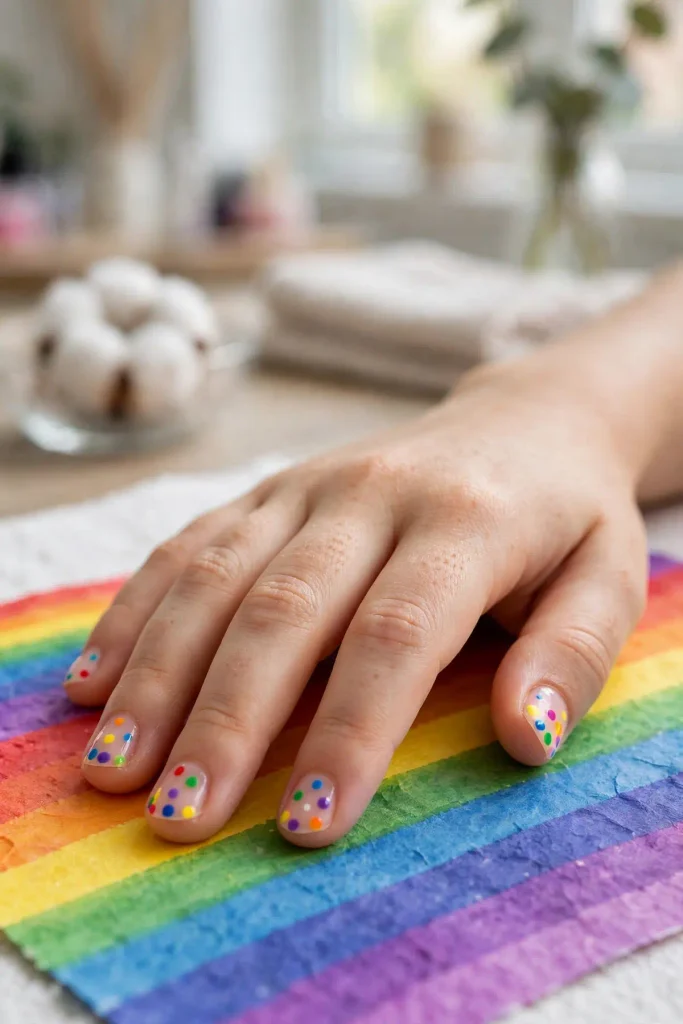
One dot of each rainbow color on every nail — red, orange, yellow, green, blue, purple, one per nail. The dotting tool (or the end of a paintbrush) makes perfect dots with zero skill, and the rainbow sequence turns the manicure into a color-learning game.
Safety note: use water-based, non-toxic kid polish — it washes off with soap and water, no harsh remover needed. Grown-up help needed: full — you do the dotting while they watch and choose colors.
2. Sticker Parade
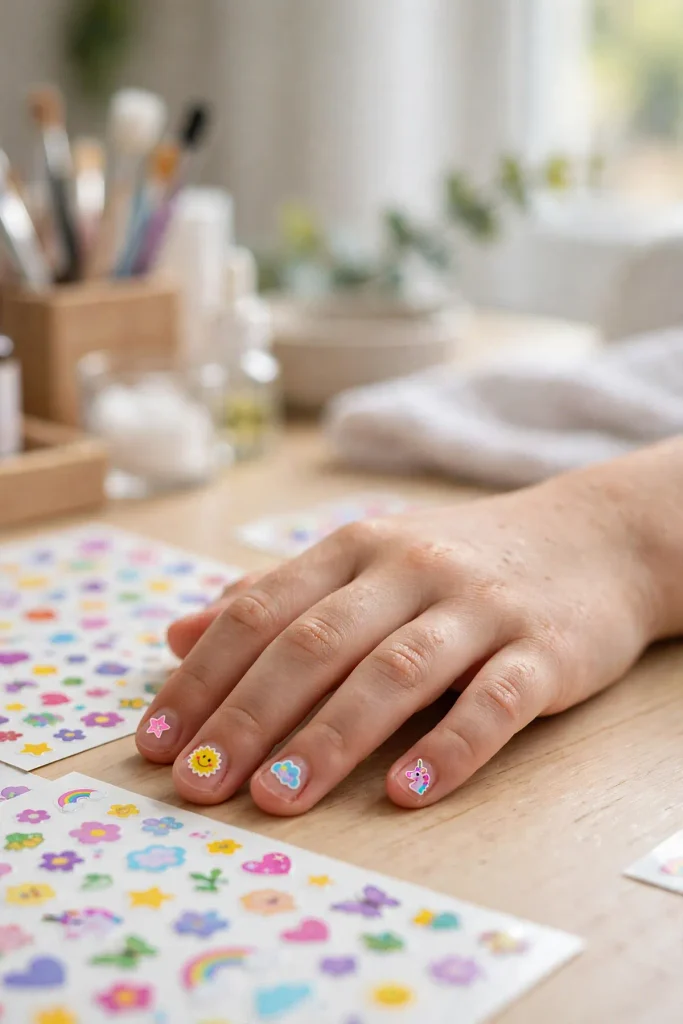
Peel-and-stick nail stickers — stars, hearts, animals, rainbows — pressed onto bare or painted nails. No polish skills required, instant gratification, and endlessly re-stickable when they peel off (which they will, within hours, and that’s fine).
Stickers are the perfect tiny-tot manicure because there’s no drying time and no mess. Let them choose and place the stickers themselves — the pride of doing it “all by myself” is the whole point.
Safety note: stickers are safest of all — no chemicals whatsoever. Just check that small stickers aren’t a mouthing hazard for the youngest ones. Grown-up help needed: minimal — help with placement, then let them take over.
3. One-Color Brights
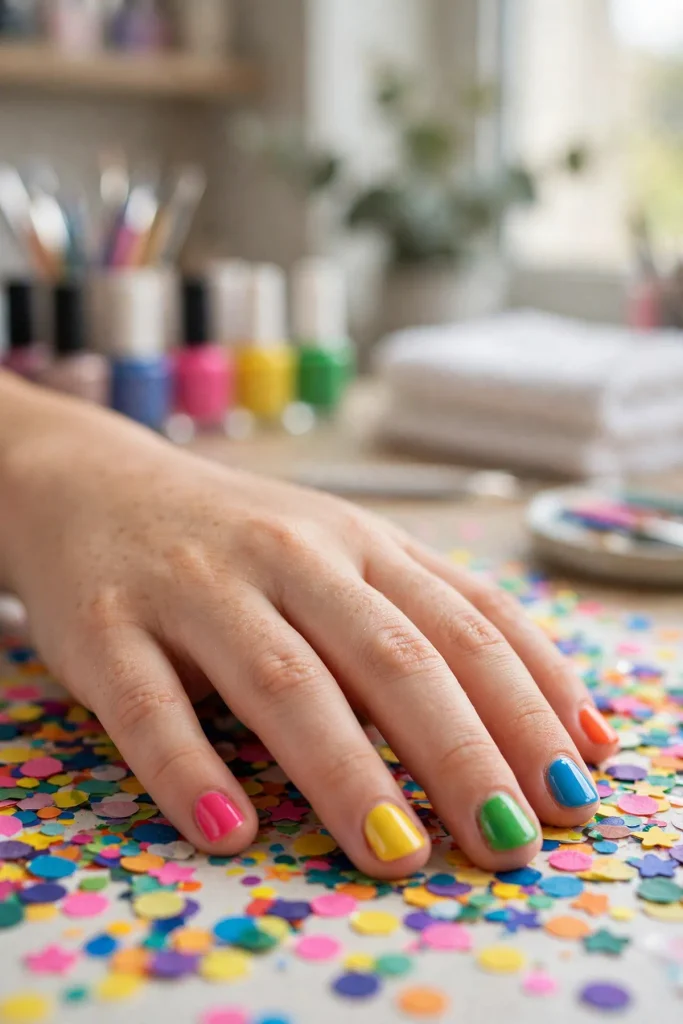
A single bright, happy color on all ten tiny nails — cherry red, sky blue, sunny yellow. Let them choose the color; the choosing is half the fun.
One color means one bottle, one coat, and no decisions mid-manicure — which matters when your model is actively trying to leave. Bright colors also hide the wobbles that are inevitable at this age.
Safety note: kid-safe polish only — look for “water-based” and “non-toxic” on the label, and skip anything with strong fumes. Grown-up help needed: full — fast hands, quick coats, done before the wiggles win.
4. Glitter Topper Magic
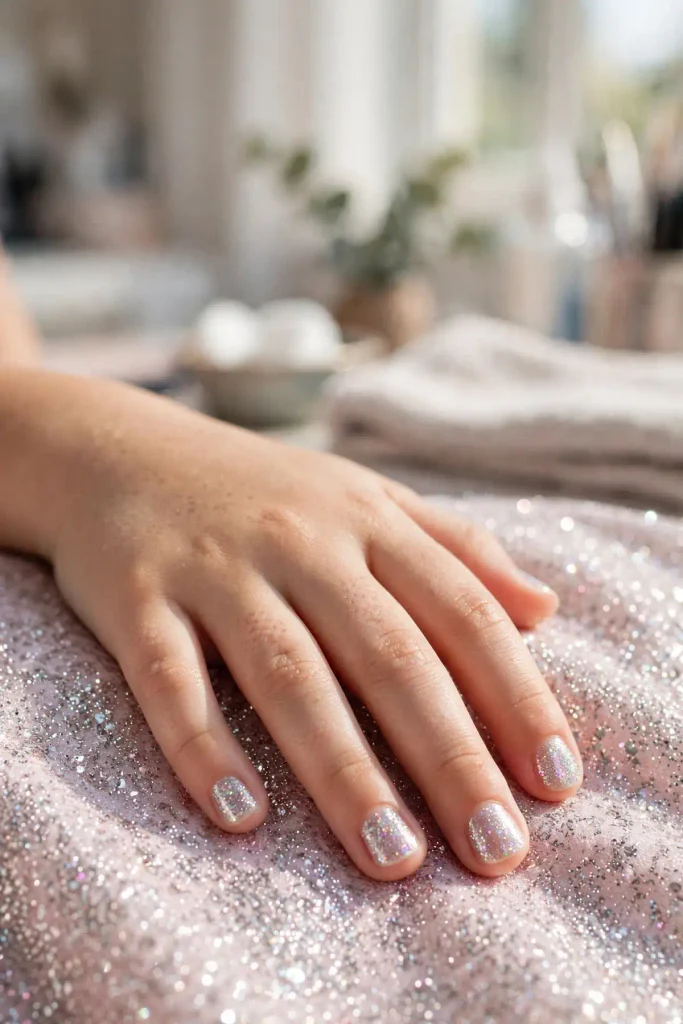
Any base color (or bare nails) finished with a kid-safe glitter topper — instant fairy dust. The glitter transforms even a rushed single coat into something magical, and kids are universally obsessed with sparkle.
Glitter toppers are forgiving: they hide uneven base coats, dry fast, and peel off easily with water-based formulas. It’s the highest fun-per-minute option on this list.
Safety note: cosmetic-grade glitter only — craft glitter can have sharp edges; nail-specific glitter is rounded and safe. Grown-up help needed: moderate — you handle the base, they can help with the glitter.
5. Finger Paint Rainbow
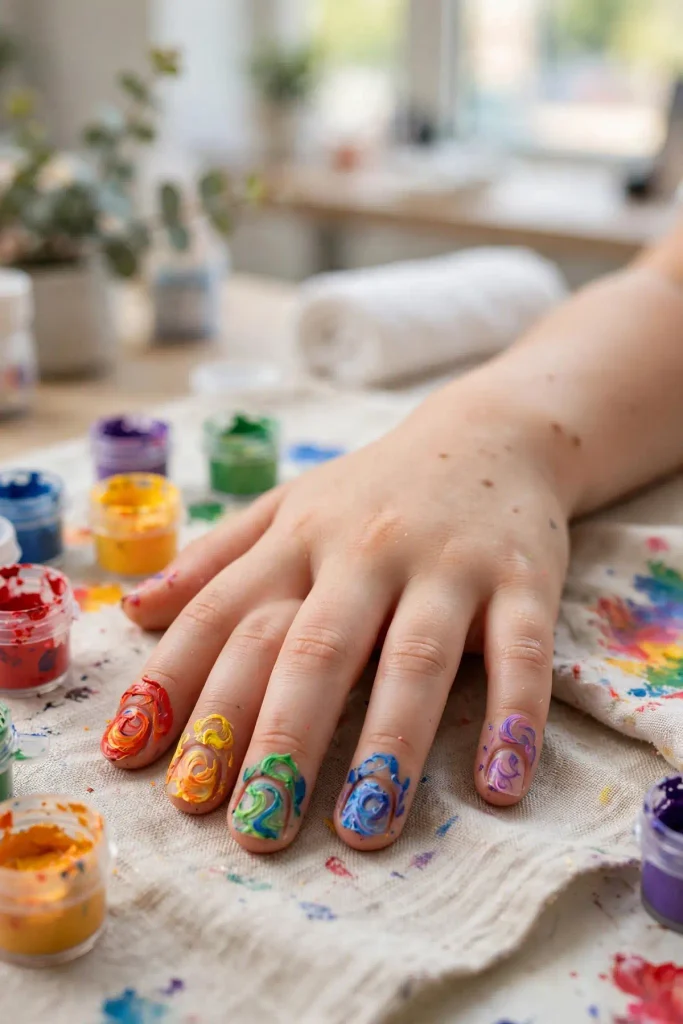
Each nail a different bright color — the full rainbow across ten tiny fingers. It’s chaotic, joyful, and exactly what a 4-year-old wants: ALL the colors, right now. No design, no rules, just color.
This is less a manicure and more an art project, and that’s the point. The mismatched rainbow is charming precisely because it’s unplanned — it’s a child’s aesthetic, honored as-is.
Safety note: same as above — water-based kid polish, and don’t worry about skin staining; it washes off. Grown-up help needed: full, but let them “help” by holding bottles and choosing the next color.
Big Kids (Ages 7–10): Fun & Creative
Old enough for real designs, young enough to want them fun. These six introduce actual nail art — still easy, now with personality.
6. Watermelon Nails
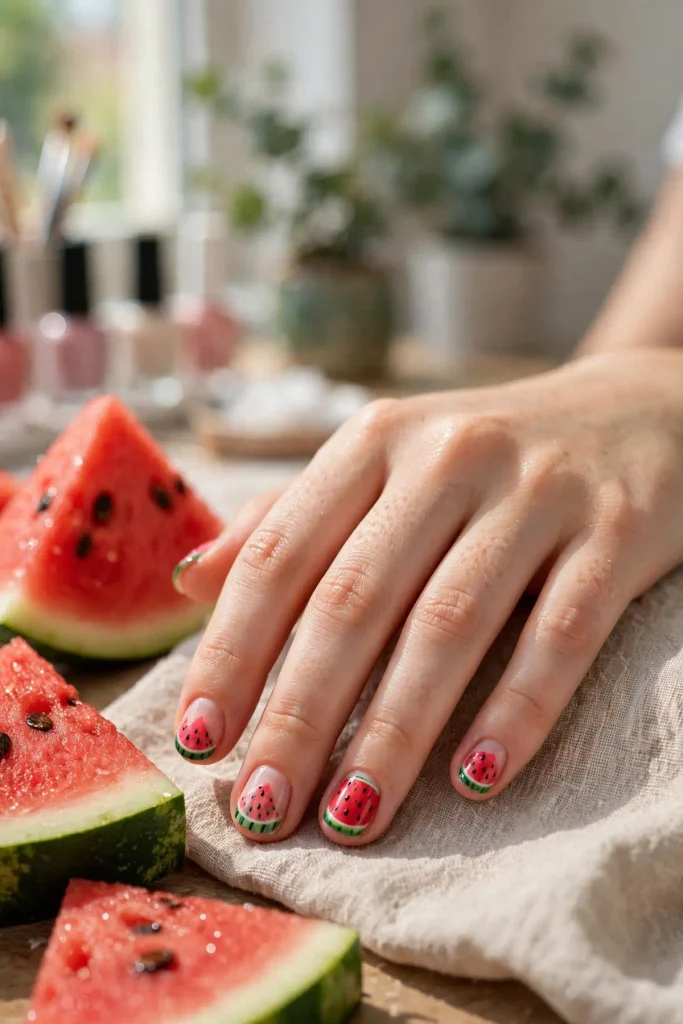
Pink-red bases with tiny black seeds and a green tip — actual watermelons on nails. The seeds are just dots; the green tip is a quick swoosh.
Big kids love this one because it’s “real” nail art — it looks like the grown-up versions but stays playful. Let them do the seeds themselves; dotting is the perfect skill for this age.
Safety note: regular kid-safe polish is fine; the design uses simple dots, no sharp tools. Grown-up help needed: moderate — paint bases together, then let them dot the seeds.
7. Daisy Chain
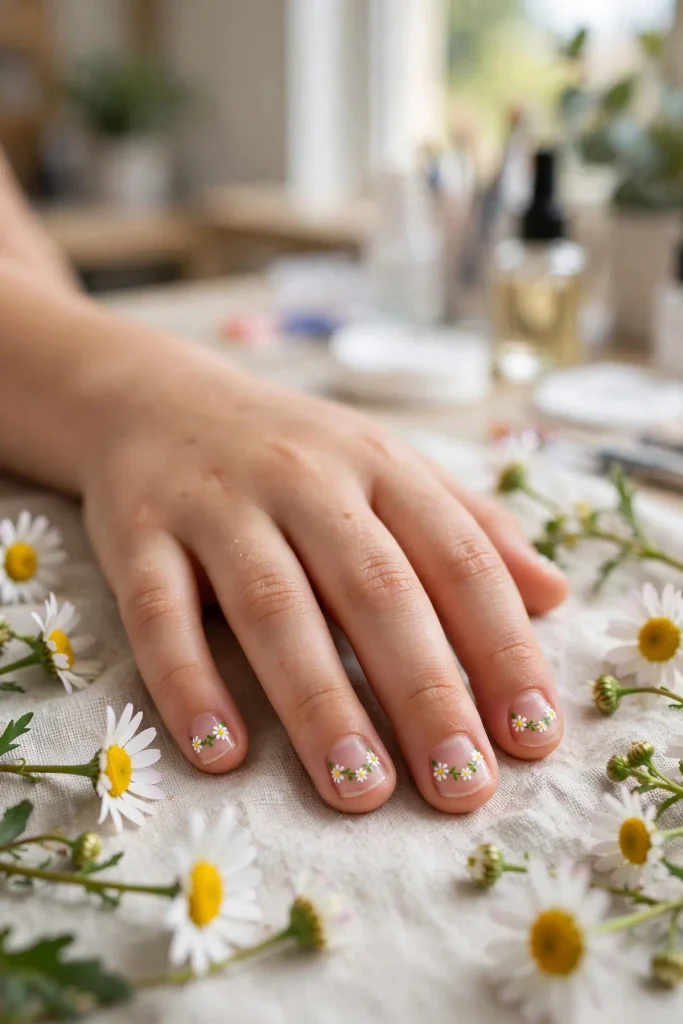
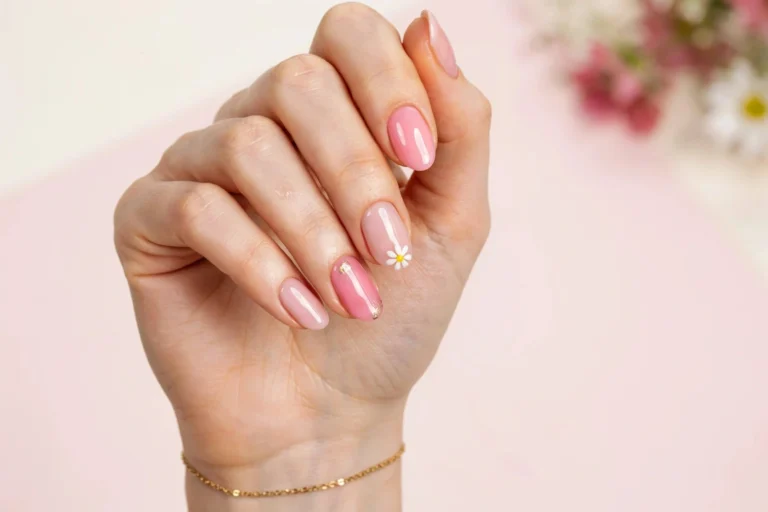
Simple white daisies — five dots around a yellow center — on pastel bases. It’s the friendliest flower in nail art and the perfect first “real” design for this age: dots are easy, daisies are adorable, and the result looks genuinely pretty.
Daisies teach the fundamental nail-art skill (controlled dotting) while producing something wearable. One daisy per nail is classic; a daisy on just the ring fingers is the subtle version.
Safety note: all standard kid-safe products; dotting tools have no sharp points. Grown-up help needed: light — demonstrate one daisy, then supervise while they do the rest.
8. Candy Stripes
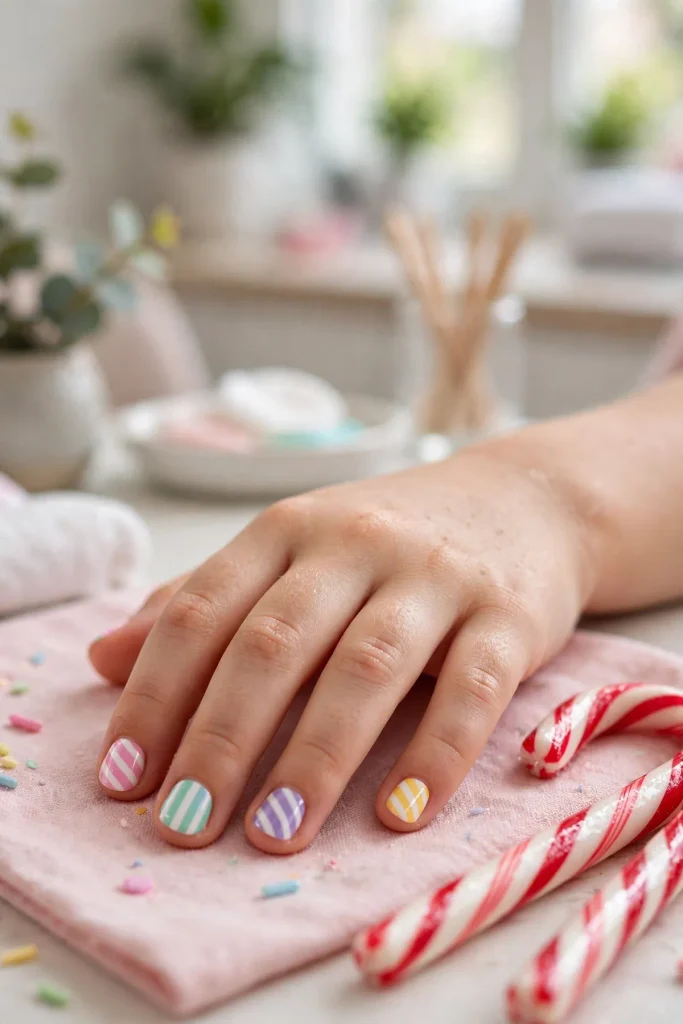
Diagonal candy stripes in two colors — pink and white, blue and yellow — like a candy cane went to summer camp. Striping tape makes the lines crisp, but freehand stripes have a charming handmade wobble that suits the age.
This introduces the concept of masking — a real technique that feels like magic when the tape peels away to reveal perfect stripes. The reveal moment is genuinely thrilling at this age.
Safety note: kid-safe polish; striping tape is gentle on skin. Grown-up help needed: moderate — help with tape placement, then let them paint and peel.
9. Butterfly Accent
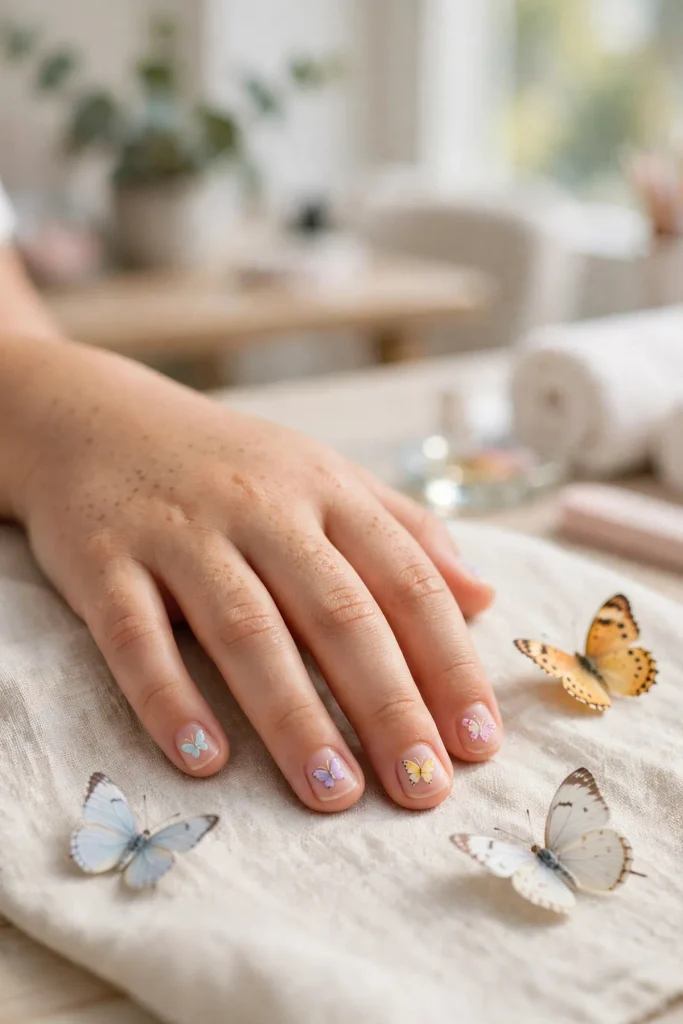
A single butterfly sticker or simple hand-drawn butterfly on one accent nail per hand, with coordinating solids elsewhere. Butterflies are peak kid-fascination, and one accent keeps the manicure wearable for school and camp.
Stickers make this foolproof, but big kids can also try simple hand-drawn butterflies: two wing ovals, a body line, done. Either way, the accent-nail format teaches design restraint.
Safety note: stickers are zero-chemical; hand-drawn uses standard kid polish. Grown-up help needed: light — stickers they can do alone; hand-drawn needs a demo first.
10. Mermaid Scales
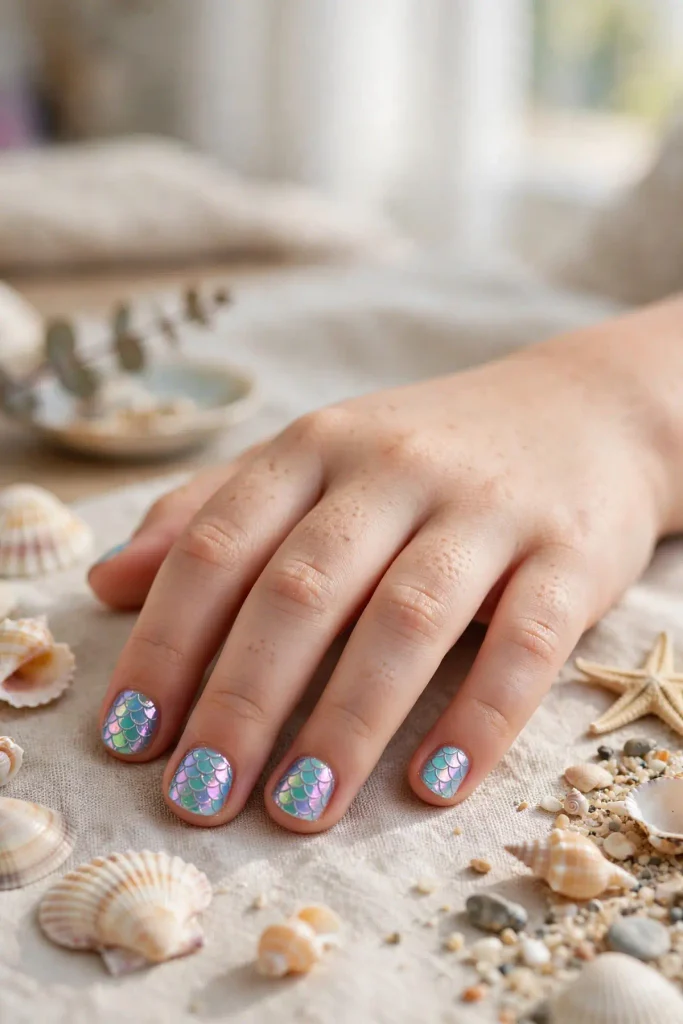
Overlapping scallop shapes in blues, greens, and purples — mermaid scales across the nails. A dotting tool or the edge of a brush creates the scallops; layering two rows gives the scale effect.
The scale pattern is forgiving — overlapping scallops hide imperfections naturally, and the color blending looks intentional even when it’s accidental. It’s the rare design that looks better slightly messy.
Safety note: standard kid-safe products throughout. Grown-up help needed: moderate — the scallop technique needs one demonstration, then they’re off.
11. Silly Faces
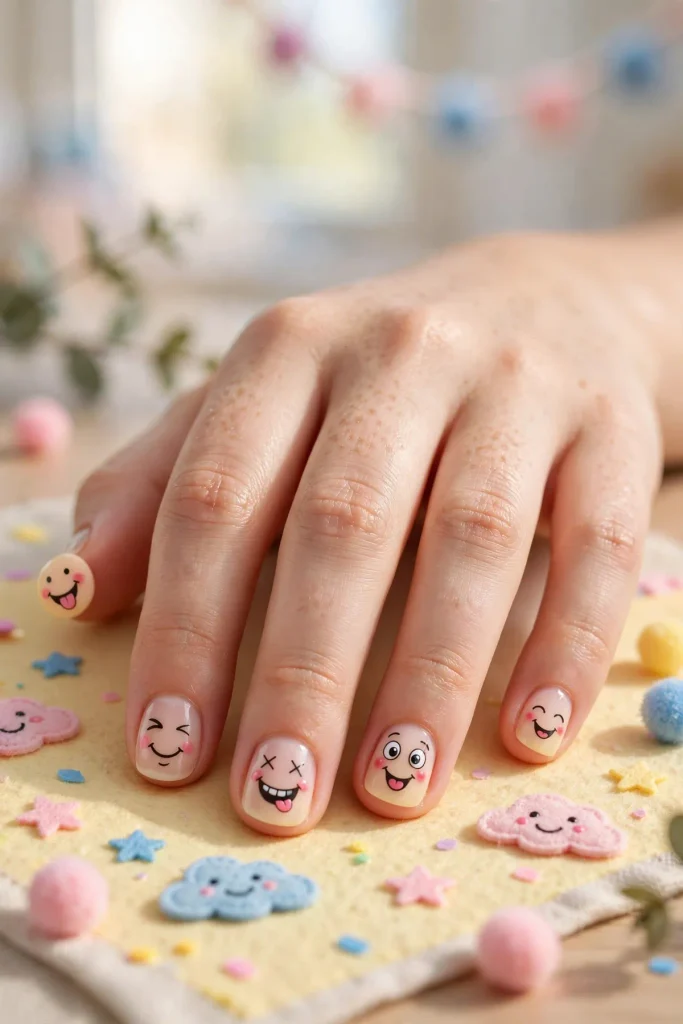
Googly-style silly faces — winking eyes, tongues out, surprised O mouths — one per nail in black over bright bases. It’s nail art with a sense of humor, and big kids find it hilarious. The sillier, the better; perfection would ruin it.
This is pure joy nail art — no one’s trying to look elegant, everyone’s trying to make each other laugh. Let them invent the faces; the creativity is the activity.
Safety note: all safe, standard products; a fine brush or dotting tool for details. Grown-up help needed: light — they genuinely don’t need help, just supplies and encouragement.
Tweens (Ages 11–13): Cool & Trendy
Old enough for real trends, young enough for parental guidance on products. These five are genuinely cool — the kind tweens actually want.
12. Pastel Ombré
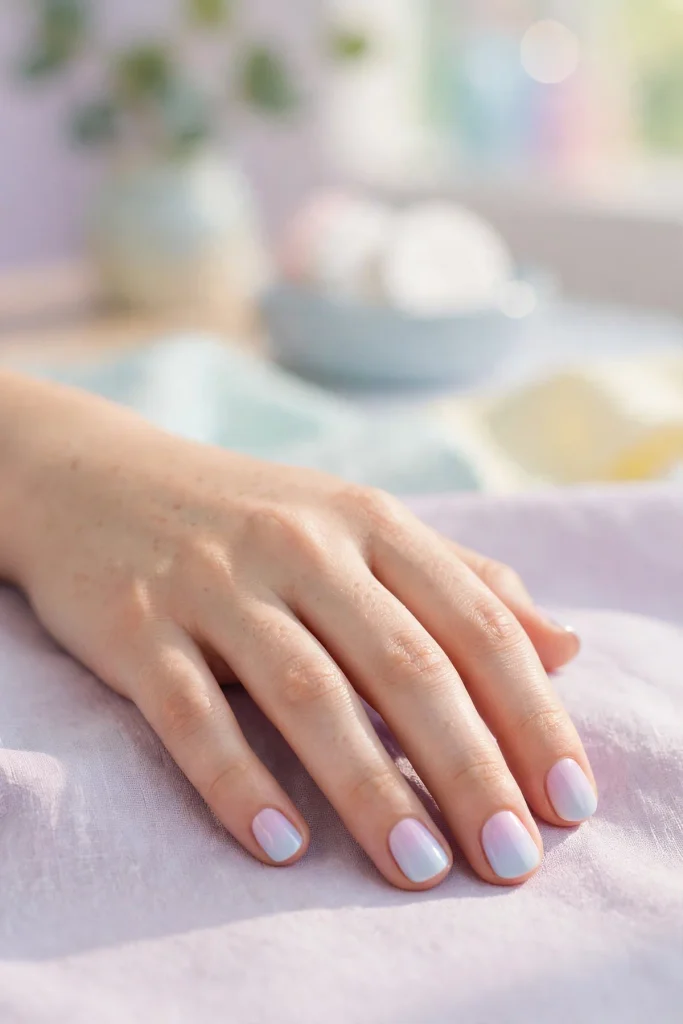
A soft gradient blending two pastels — lilac into pink, mint into blue — sponged to seamless perfection. It’s the trendy gradient look, done in tween-friendly pastels. The technique is simple (sponge dabbing), but the result looks advanced.
Tweens love ombré because it’s all over their feeds — and it’s genuinely achievable at home, which gives them independence. Teach the sponge technique once and they’ll do it themselves forever.
Safety note: graduate to regular polish if they’re responsible — but keep it 3-free or higher (no formaldehyde, toluene, DBP); tweens are old enough to understand why. Grown-up help needed: minimal — one demo, then independence (with ventilation).
13. Colored French Tips
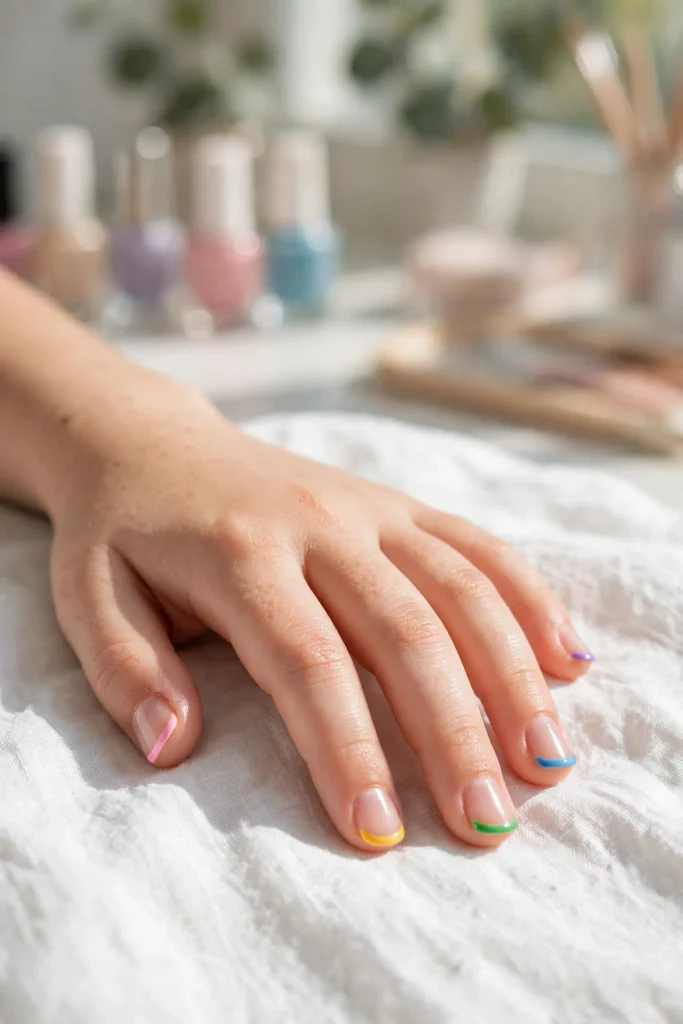
The French manicure, tween-ified: sheer nude base with bright colored tips — neon pink, electric blue, lime green. It’s the classic structure with a cool twist, and it reads as fashionable rather than formal.
This bridges childhood brights and grown-up elegance — it’s the design that makes tweens feel sophisticated without abandoning color. French tip guides make it achievable; freehand comes with practice.
Safety note: same as above — better-quality polish is fine at this age with supervision. Grown-up help needed: light — guides help; the technique is very learnable.
14. Soft Aura Nails
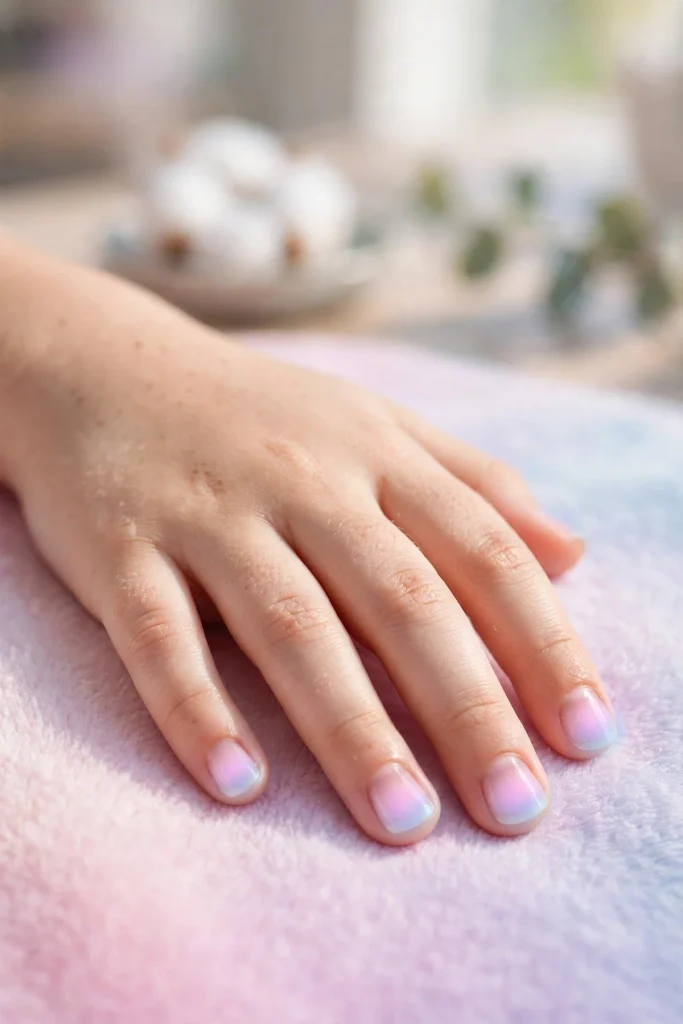
A gentle aura — peach, lavender, or baby blue bloomed softly in the nail’s center over a milky base. It’s the trendy aura look in its softest form: dreamy, dimensional, and very now. Tweens recognize it instantly from social media.
The blooming technique (or careful sponging) creates the soft glow — it’s easier than it looks, which makes it perfect for this age: impressive results, modest skill. It’s the design they’ll show everyone.
Safety note: standard better-quality polish; no special concerns beyond ventilation. Grown-up help needed: minimal — sponging is intuitive; one demo suffices.
15. Glazed Donut Lite
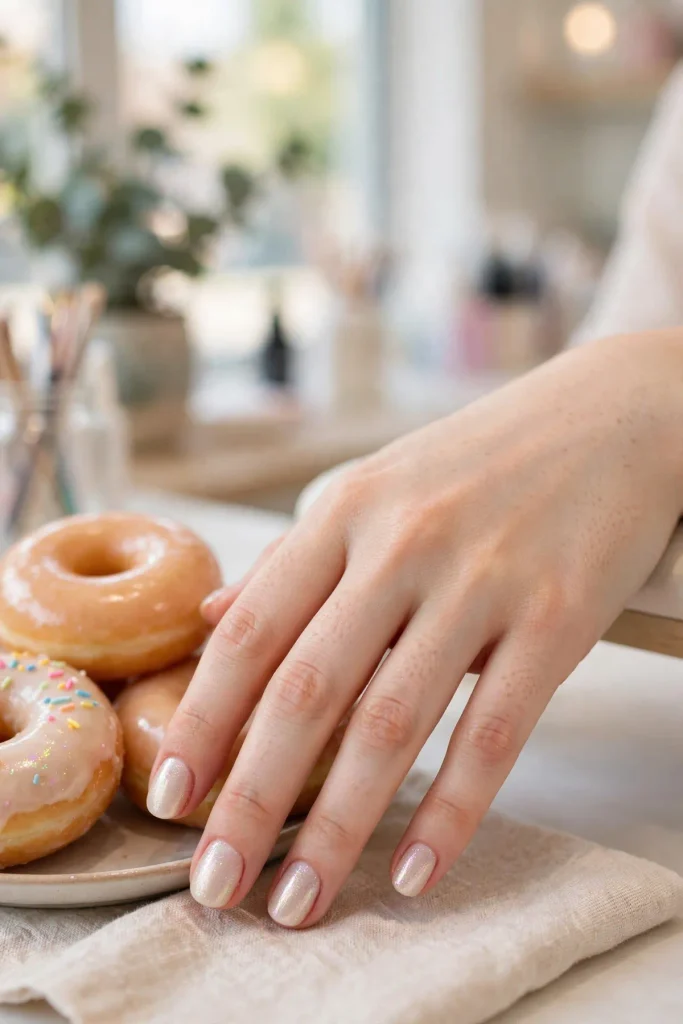
The famous glazed look, tween edition: sheer nude with a subtle pearl shimmer on top — luminous but not full-chrome. It’s the trendy finish without the salon-grade chrome powder, achievable with a shimmer topper at home.
Tweens want this because it’s everywhere — and the “lite” version is genuinely close to the real thing. It’s also school-appropriate, which matters: trendy without breaking dress codes.
Safety note: shimmer toppers are standard polish — no concerns. Grown-up help needed: none, really — this is a base-plus-topper manicure they can do solo.
16. Tiny Charm Accents
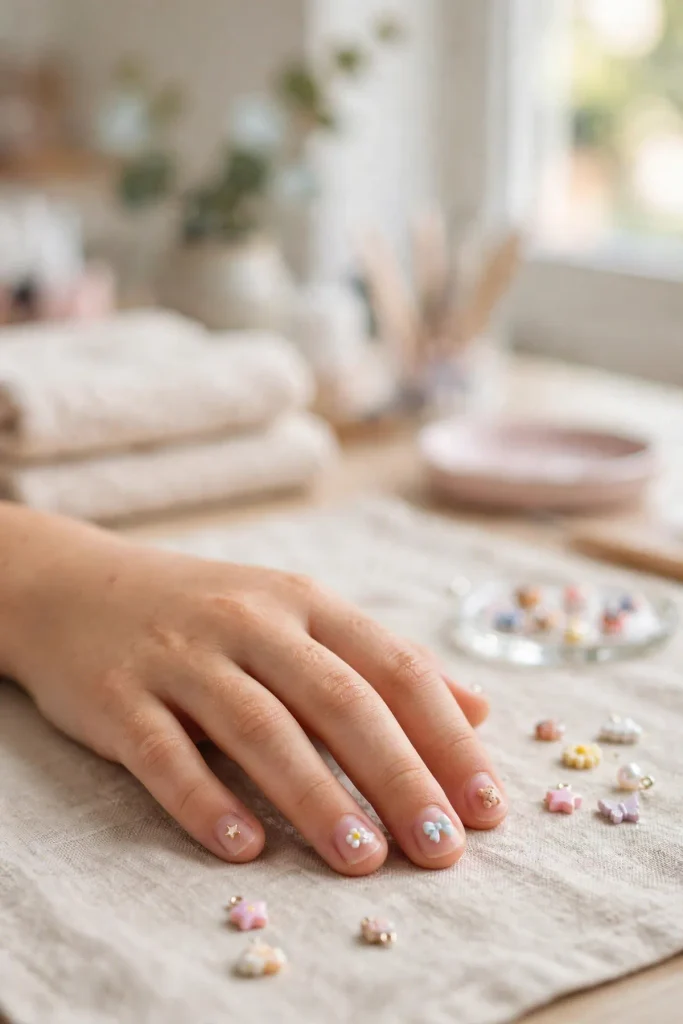
Small, flat charms — tiny bows, stars, hearts — on one or two accent nails, attached with nail glue dots. It’s the tween gateway to 3D nails: real dimension, minimal commitment. Keep charms small and flat so they survive school life.
Teach the golden rule: less is more — one charm per hand is chic, ten is a craft project. Flat-backed charms last longest; anything tall will pop off by Tuesday.
Safety note: nail glue needs supervision — it’s strong adhesive; an adult should handle the gluing until they’re older. Small charms aren’t mouth-safe for younger siblings nearby. Grown-up help needed: moderate — adult handles glue, tween handles placement.
Kid-Safe Polish: What to Look For
Not all polishes are kid-appropriate — here’s the safety guide. Water-based formulas: the safest option for young kids — non-toxic, odorless, and removable with soap and water or gentle peel-off. No harsh chemicals, no fumes. “3-free” minimum: for older kids graduating to regular polish, choose 3-free (no formaldehyde, toluene, DBP) at minimum; 5-free, 7-free, and 10-free go further. Avoid: adult gel polish on young children — the lamps, prep, and acetone removal aren’t kid-appropriate; save gel for teens. Remover: water-based polishes need only soap and water; for regular polish, use acetone-free, gentle remover — never industrial acetone on little nails. Ventilation: even safe polishes need fresh air — paint near an open window, never in a closed car or tiny bathroom. Allergies: patch-test new brands on one nail first; kids’ skin is more reactive than adults’. The golden rule: if it smells strongly chemical, it’s not for little kids — trust your nose.
The No-Tears Manicure: Tips for Painting Little Nails
How to actually get through it without tears (yours or theirs). Timing is everything: paint after a meal and playtime, never when they’re hungry or tired — a calm kid is a paintable kid. Set up first: everything open and ready before they sit down — hunting for the top coat mid-manicure loses them. Distraction works: a show, an audiobook, or a “paint while I tell you a story” deal buys precious stillness. Thin coats, fast hands: one thin coat beats two thick ones for drying time — and drying time is the enemy. The pinky promise: let them do one nail themselves (usually a pinky) — participation buys patience for the other nine. Embrace imperfection: skin-painted cuticles wash off; a wobbly line is charming; the goal is fun, not flawless. End with a reward: the manicure is the reward, but a little hand cream “spa finish” makes it feel complete. Know when to stop: if they’re done, you’re done — five painted nails and a happy kid beats ten and tears.
When to Say No: Age-Appropriate Boundaries
Loving boundaries keep nail fun safe. Acrylics and hard gels: not for kids under 14 — the prep, chemicals, and removal are too harsh for developing nails; their nail beds are thinner and more vulnerable. Long extensions: skip until teens — long nails on active kids break painfully and harbor playground dirt. Nail glue: adults only for under-10s — it’s strong adhesive near small fingers and mouths. Salon chemicals: skip MMA acrylics and strong-smelling services for kids entirely; if booking a salon, choose one that offers kid services with gentle products. Biting deterrents: bitter polishes are fine short-term, but address the habit with kindness — it’s usually anxiety, not defiance. What to say yes to: everything on this list, with the age-appropriate supervision noted — nail joy has no age limit, just safety guardrails. The conversation: as kids grow, talk about why certain products wait — understanding beats forbidding, and it builds the judgment they’ll need later.
Kids’ Nail Questions
What age can kids start wearing nail polish?
There’s no official age — water-based kid polishes are safe for toddlers (2–3+) since they’re non-toxic and wash off. The real question is temperament: if they’ll sit still for five minutes and won’t immediately mouth their fingers, they’re ready.
Is nail polish safe for kids who bite their nails?
Water-based kid polishes are non-toxic, so occasional mouthing isn’t dangerous — but try to break the habit first, since polish (even safe polish) shouldn’t be ingested regularly. Bitter-tasting deterrent polishes can help short-term.
How do I remove kid nail polish?
Water-based formulas: soap, warm water, and gentle rubbing — or they peel off on their own in a day or two. Regular kid-safe polish: acetone-free remover on a cotton pad, held (not scrubbed) for a few seconds.
Can tweens get gel nails?
It’s a judgment call — most techs recommend waiting until 14+ for gel, since the prep and removal are harsh on developing nails. For special occasions, a compromise: gel on special request with a trusted tech, or high-quality regular polish that mimics the look.
Little Hands, Big Summer
Sixteen ideas, three ages, one universal truth: kids’ nails are about joy, not perfection. Whether you’re dotting rainbows on a 4-year-old, sponging ombré with a 12-year-old, or just letting them choose the color — the manicure is the memory.
So grab the water-based polish, put on the show, and paint those little nails. Summer’s too short for bare kid nails — and childhood’s too short not to sparkle.
Which age are you painting for? Save this list and share it with the parent who’s been saying “maybe when you’re older” — with the right polish, older starts now.