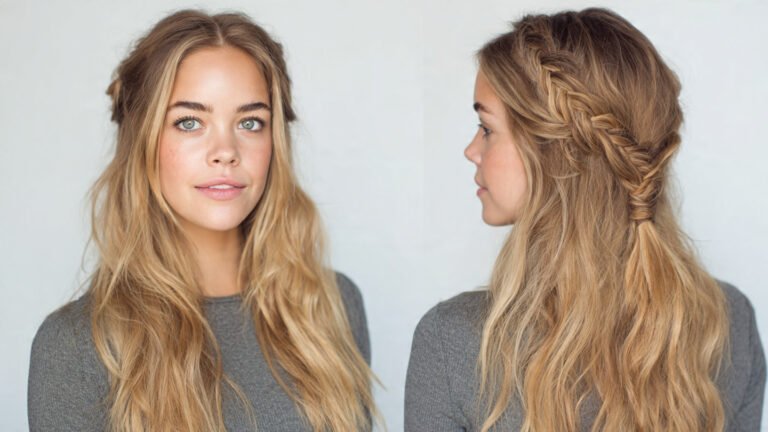
13 Volleyball Hairstyles: The Playbook
Volleyball hair has three enemies, and they are all relentless. Sweat: it loosens pins, flattens volume, and turns sleek styles into stringy ones. Impact: diving, rolling, and hitting the floor destroy anything not anchored properly. Time: tournaments mean multiple games with minutes between them. Your hairstyle must survive all three, or it is not a volleyball hairstyle. It is just a hairstyle that visited a volleyball court once.
I played through high school and college, and I learned that volleyball hair is engineering, not fashion. Every style in this playbook is rated for hold, tested against the three enemies, and designed for real games. Let us break down the game plan: offense, defense, and special teams.
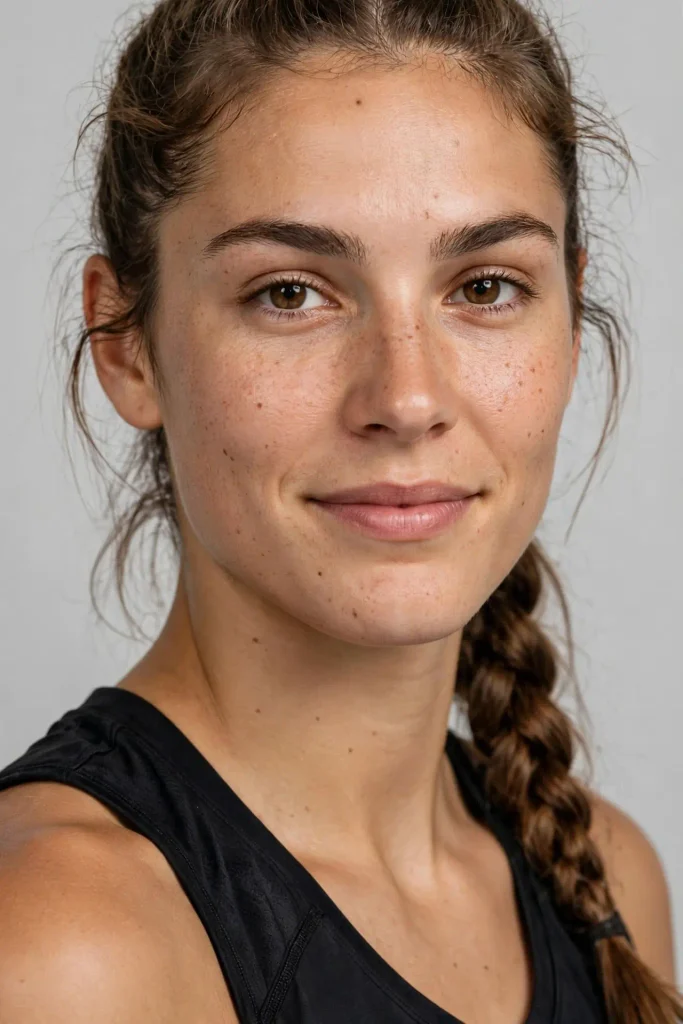
Offense: Attack the Game
Offensive styles keep your hair out of your face and off your neck so you can see the ball, call the play, and swing freely. These are your starters.
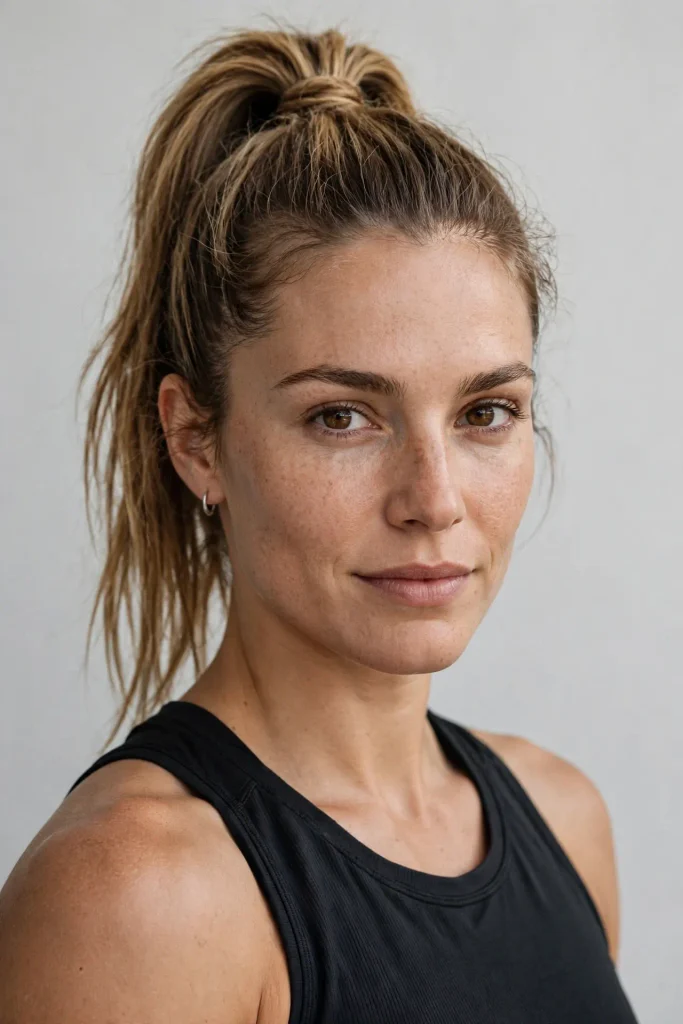
1. The High Ponytail
Hold rating: 3/5. Survives: serves, rallies, light sweat.
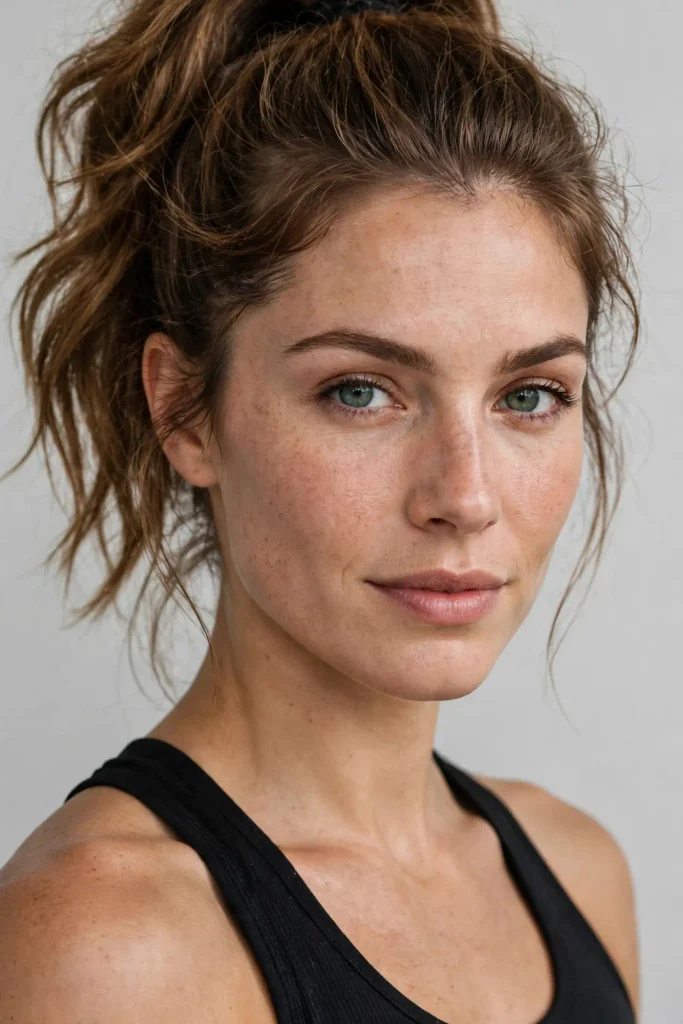
The classic for a reason: it gets everything off your neck and gives you full visibility. But the basic pony has weaknesses — it swings into your face on dives and loosens with sweat. The volleyball upgrade: secure it high with two elastics (one at the base, one an inch up the pony), and wrap the base tightly. I wore the double-elastic pony through two seasons. It never moved. The single-elastic version moved constantly. Two elastics. That is the whole secret.
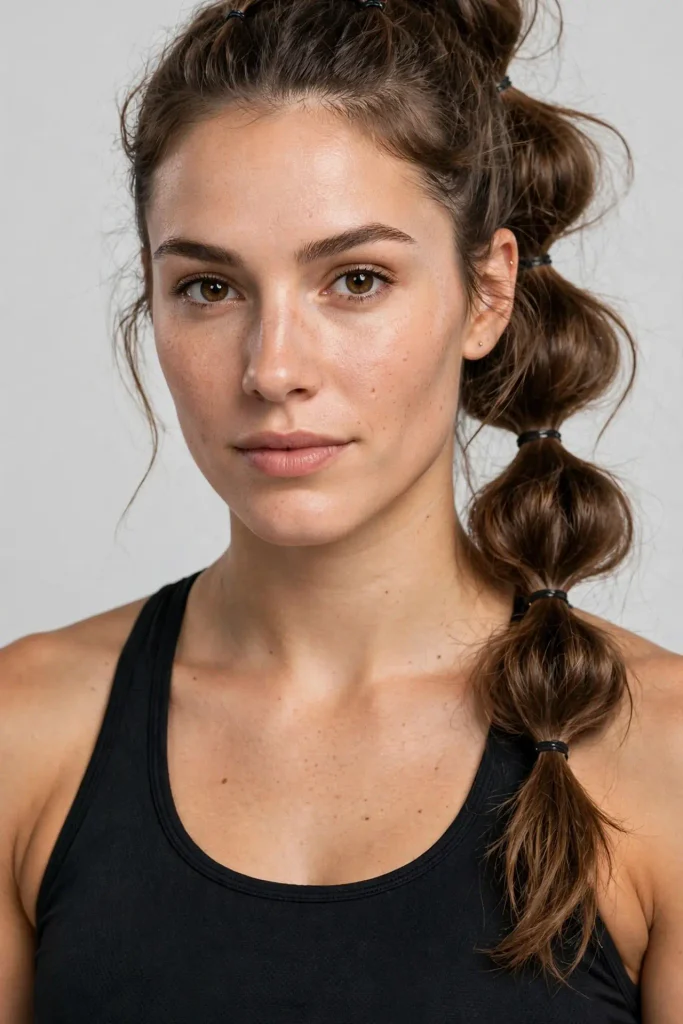
2. The Bubble Ponytail
Hold rating: 4/5. Survives: everything the high pony survives, plus dives.
The bubble pony segments the ponytail with elastics every two inches, which stops the swinging and whipping that makes regular ponies annoying. It is also the most stylish volleyball look: it photographs incredibly for team photos. My team’s bubble ponies became our signature. Opponents remembered us. The trick: pancake each bubble (gently pull the edges) for volume, and use clear elastics so the segments look clean.
3. The Braided Ponytail
Hold rating: 5/5. Survives: everything. Dives, rolls, tournaments, hurricanes.
The gold standard. A high ponytail with the length braided: the braid eliminates swinging, the pony keeps it high and visible. I wore this for every important match of my college career. It never loosened, never tangled, never distracted me. If you only learn one volleyball hairstyle, learn this one. The trick: braid tightly and secure the end with two elastics. One is a hope. Two is a guarantee.
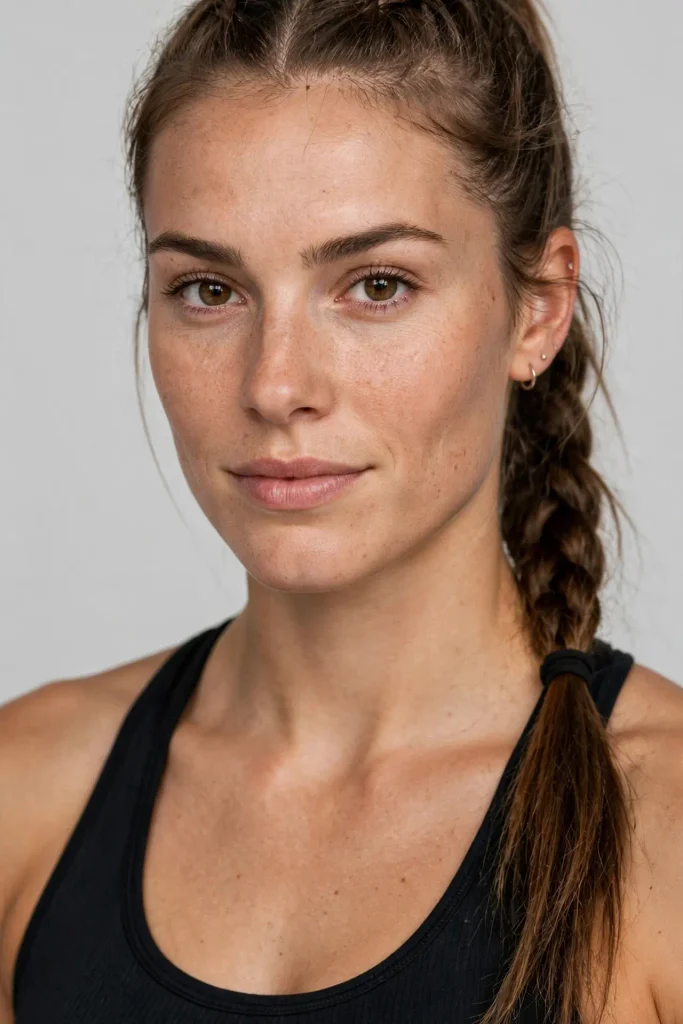
4. The Top Knot
Hold rating: 4/5. Survives: heat, sweat, long tournaments.
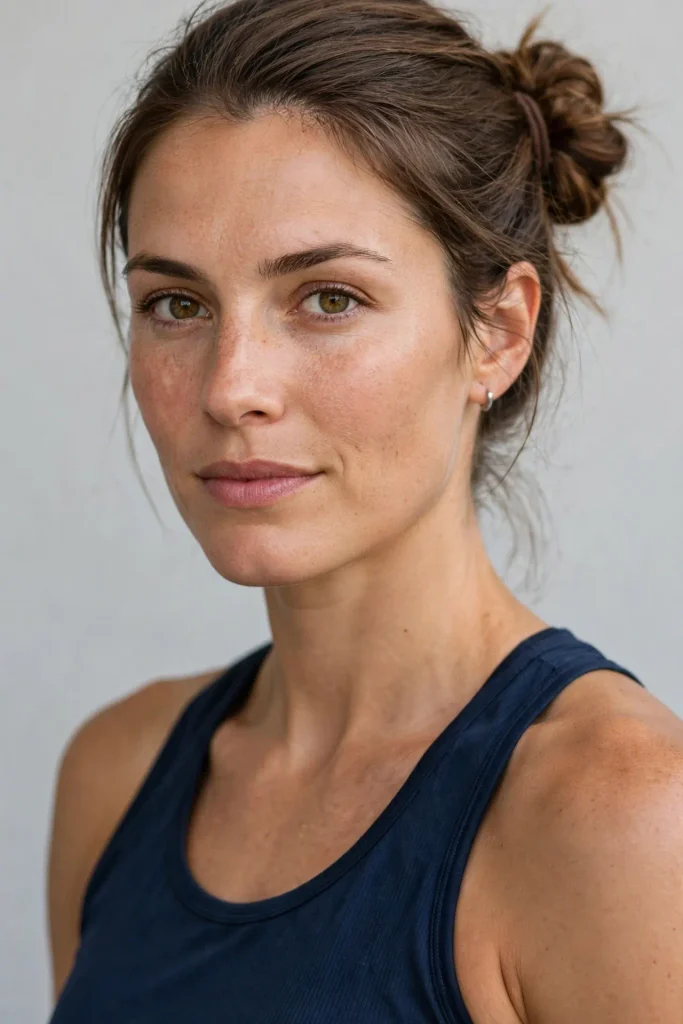
Everything up, everything off your neck. The top knot is the best volleyball style for hot gyms and outdoor tournaments: maximum airflow, zero neck sweat trapped under hair. I lived in a top knot through summer league. The key is placement: high enough to avoid the floor on dives, secure enough to survive them. Twist, wrap, pin, and then add an elastic for insurance.
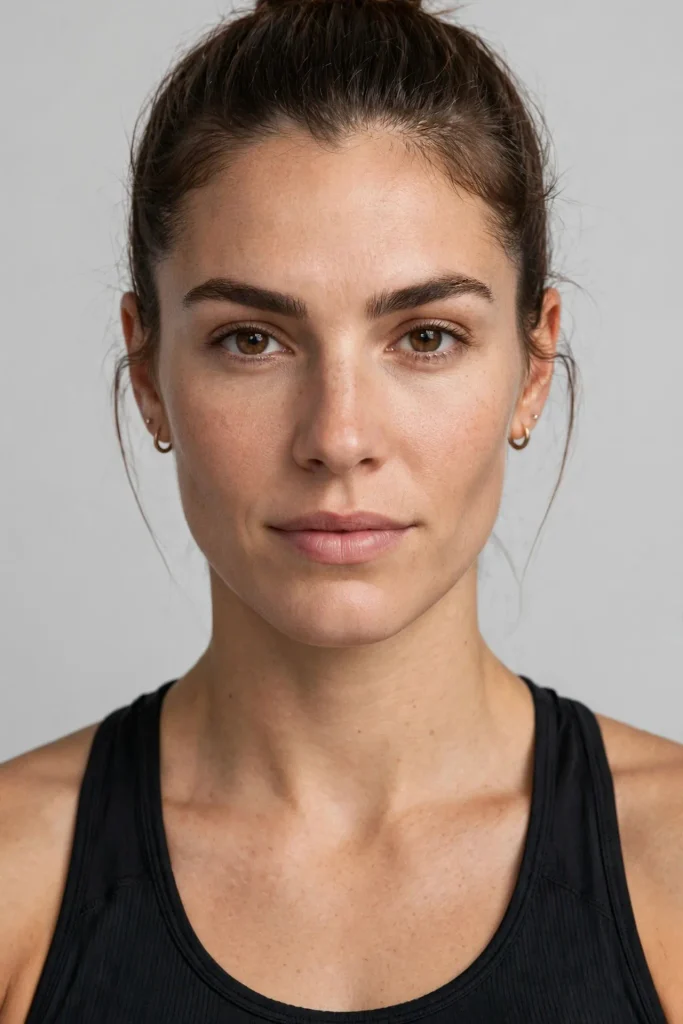
5. The French Braid Ponytail
Hold rating: 5/5. Survives: the entire tournament, plus the bus ride home.
French braid from the hairline into a high ponytail: the braid locks down the front (no flyaways, no sweat-stuck strands on your forehead), and the pony keeps the back controlled. This was my championship-game style. The front stayed perfect through five sets. The trick: braid on slightly damp hair with a little gel at the hairline. Damp hair braids tighter and holds longer.
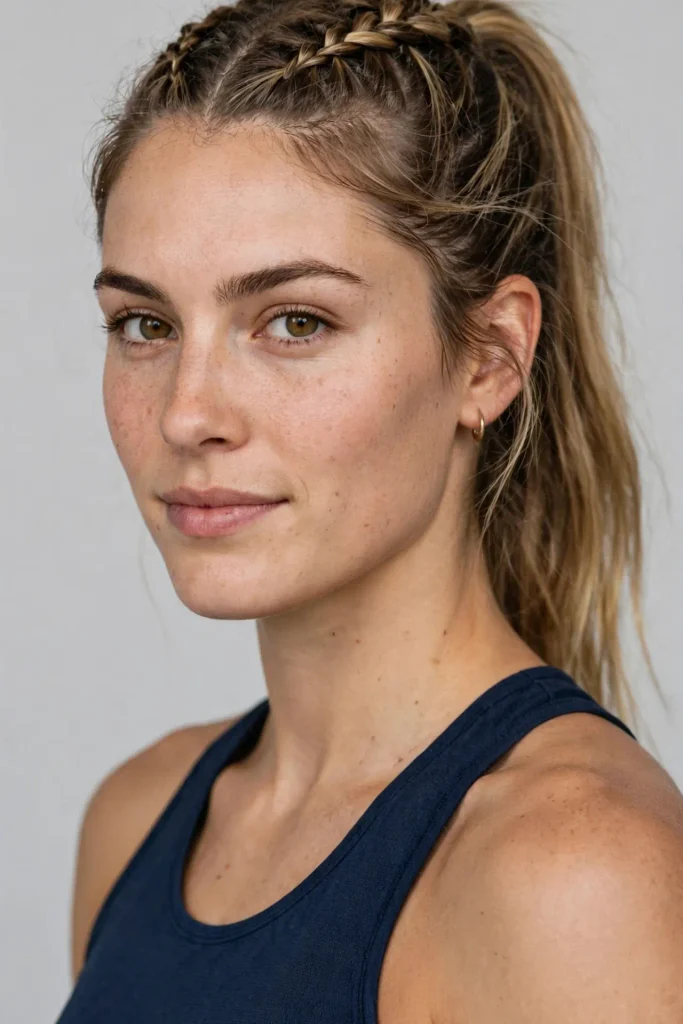
Defense: Survive the Dive
Defensive styles are built for impact. When you are hitting the floor, your hair must stay exactly where you put it. These are the lockdown styles.
6. The Double Dutch Braids
Hold rating: 5/5. Survives: dives, rolls, floor burns, everything.
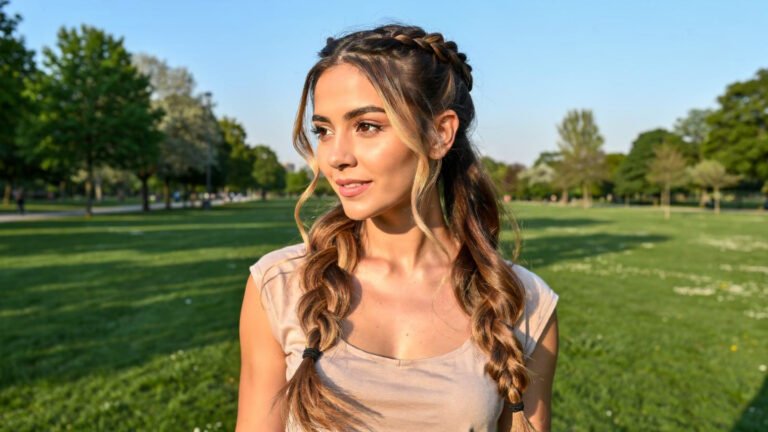
Two Dutch braids, tight to the scalp, secured at the nape. This is the most secure hairstyle in volleyball: nothing moves, nothing swings, nothing touches the floor before you do. Our libero wore these every game. She dove more than anyone and her hair never moved. The trick: Dutch braid (underhand) instead of French (overhand). Dutch braids sit tighter to the scalp and survive impact better.
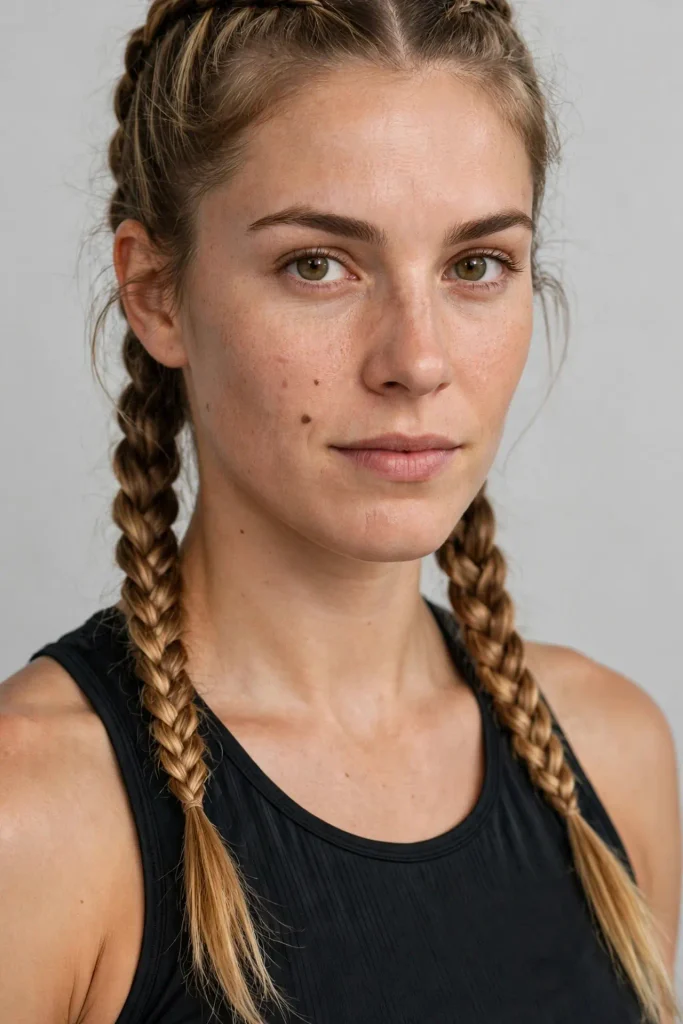
7. The Single French Braid
Hold rating: 5/5. Survives: everything the doubles survive, with less prep time.
One French braid down the back: faster than doubles, nearly as secure. The single braid is the practical choice for early-morning games when you have ten minutes. I braided mine on the bus more times than I can count. The trick: start the braid high at the crown, not at the nape. A high-start braid stays tighter through impact.
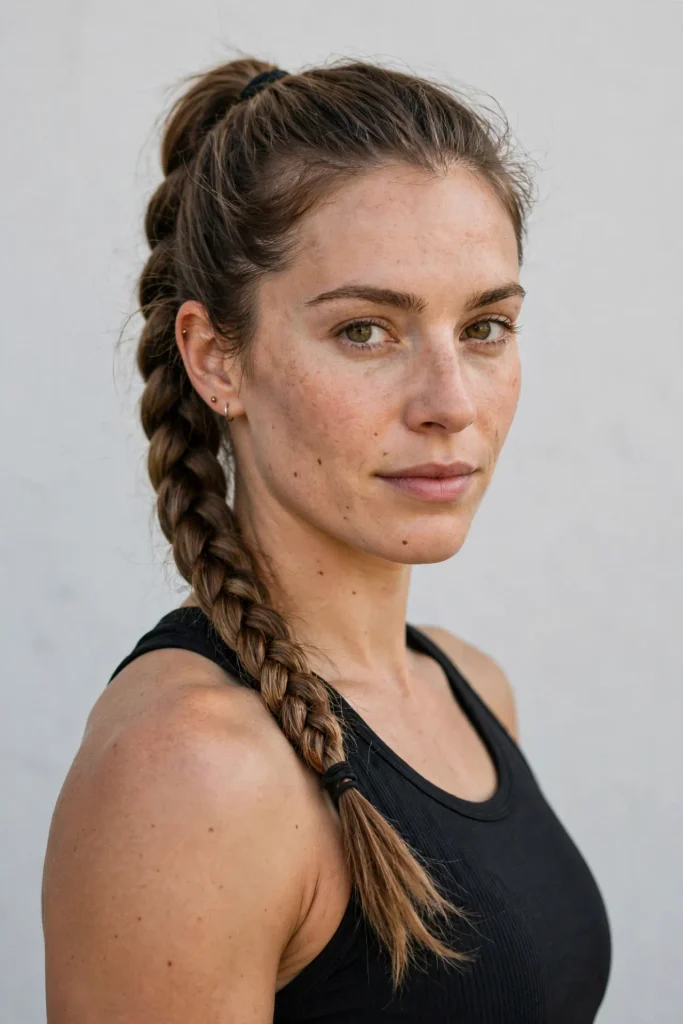
8. The Braided Bun
Hold rating: 5/5. Survives: anything. This style is a vault.
Braid the hair, then wrap the braid into a bun and pin it. Nothing hangs, nothing swings, nothing can come loose. The braided bun is the choice for the most intense games: playoffs, finals, rivalry matches. My braided bun survived a five-set final that went to extra points. The style was perfect at match point. The trick: pin in an X pattern with bobby pins. X-pattern pinning holds twice as well as parallel pinning.
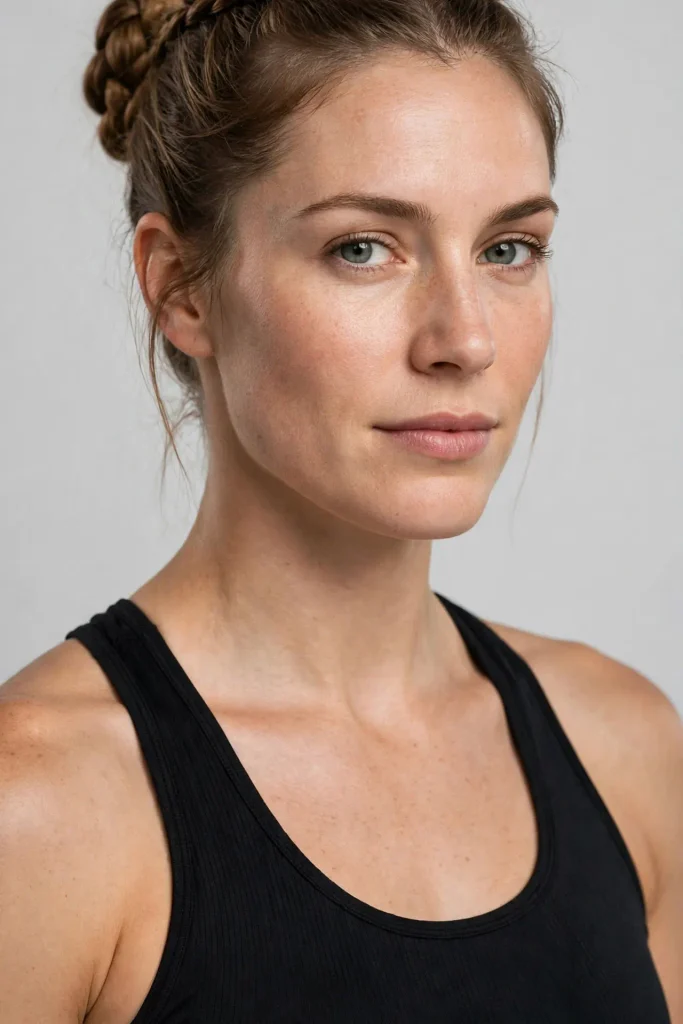
9. The Low Braided Ponytail
Hold rating: 4/5. Survives: dives and defense, with less neck exposure.
For players who prefer low styles: a low ponytail with the length braided. It stays clear of the floor on dives better than high styles, and the braid prevents tangling. Our setter wore this — she said high styles interfered with her peripheral vision on sets. Position matters. Choose your height by your position.
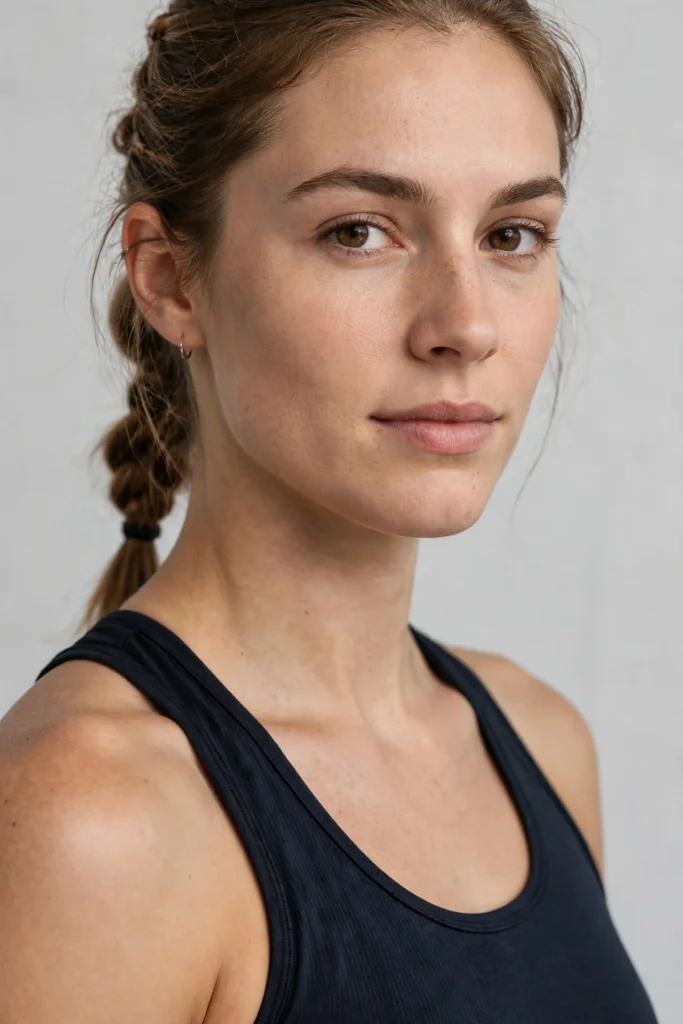
Special Teams: Between-Set Fixes
Tournaments give you minutes between games. These are the quick fixes that reset your hair without a full redo.
10. The Headband Reset
Hold rating: 2/5 (as a fix). Fixes: sweat-soaked hairline, flyaways, frustration.
Ninety seconds: push a wide headband back from your hairline, tuck the flyaways under it, and keep playing. The headband absorbs sweat, controls the hairline, and looks intentional. I kept three headbands in my bag at all times. The reset takes less time than a timeout. The trick: choose headbands with silicone grip strips. Regular headbands slide off sweaty hair. Grip strips do not.
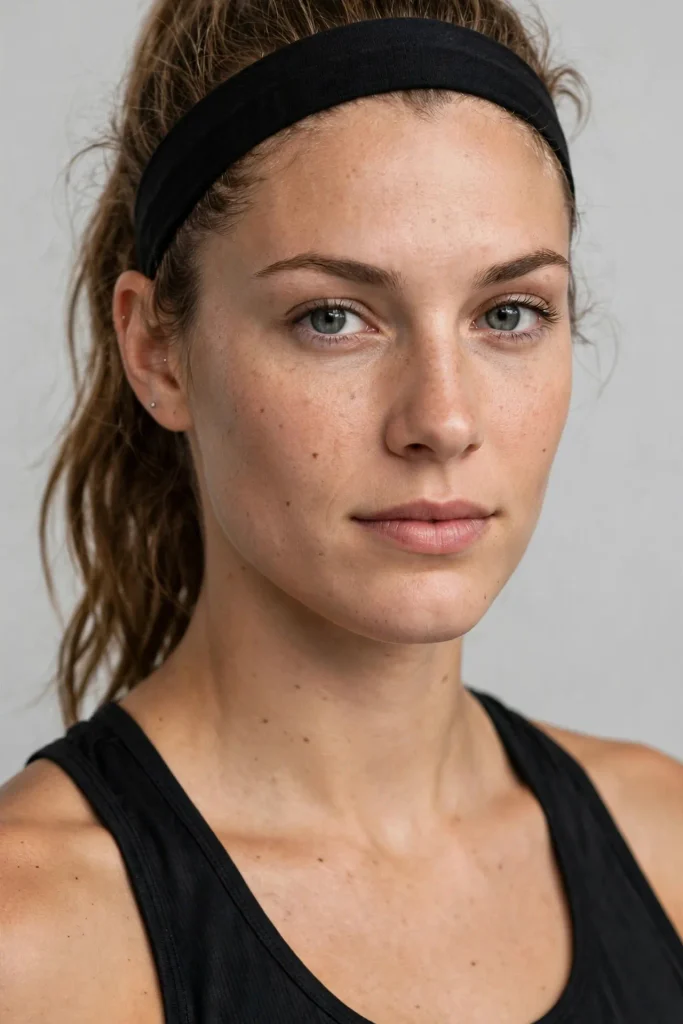
11. The Dry Shampoo Trick
Hold rating: 3/5 (as a fix). Fixes: sweaty roots, flatness, the third-game slump.
Two minutes: spray dry shampoo at the roots, wait thirty seconds, massage it in, and reshape. The dry shampoo absorbs sweat and restores the grip that sweat destroyed. This is the tournament-day lifesaver: by game three, everyone’s hair is struggling. Yours does not have to. The trick: apply before you need it. A preventive spray between games one and two beats a rescue spray before game four.
12. The Re-Braid
Hold rating: 4/5 (as a fix). Fixes: loosened braids, escaped sections.
Three minutes: undo the loosened section, re-braid it tightly, secure with a fresh elastic. You do not need to redo the whole style — just the failed section. I could re-braid a section during a timeout without missing the next serve. The trick: carry spare elastics on your wrist. The players who fix fastest are the ones who do not have to search for supplies.

13. The Sideline Bun
Hold rating: 3/5 (as a fix). Fixes: total hair meltdown between games.
When everything has failed and the next game starts in five minutes: gather everything into a high bun, twist it tight, secure with an elastic and whatever pins you can find. It is not pretty. It is functional. I have won games with sideline buns. Pretty is for photos. Functional is for winning. The trick: the messier the bun, the better it holds. Neat buns loosen. Messy buns grip.
The Scouting Report: Hairstyles by Position
Different positions, different hair needs. Setters need full peripheral vision: low braided styles or French-braid ponytails that keep the hairline clean without high volume blocking sightlines. Liberos dive more than anyone: double Dutch braids or the braided bun, maximum security, zero swing. Outside hitters need the hair clear on the hitting shoulder: side braids or asymmetric styles that keep one side completely clean. Middle blockers jump constantly: high, tight styles that do not shift on landing — the braided ponytail or top knot. Opposites do a bit of everything: the versatile French-braid ponytail. The rule: your position determines your ponytail height, your braid direction, and your security level. Play your position, wear your position.
The Away-Game Kit
Pack this for every tournament. Elastics: twenty, minimum. They break, they vanish, they get borrowed. Bobby pins: fifteen, in your hair color. Dry shampoo: travel size, for the third-game slump. Headbands: three, with grip strips. A small brush: for between-game smoothing. Hair gel: travel tube, for hairline control. A satin scrunchie: for the bus ride — gentle on post-game hair. Spare everything: the golden rule of away games is that whatever you need is whatever you forgot. Pack like a pessimist. Play like an optimist.
The Rookie Mistakes
Mistake one: the same tight ponytail, same spot, every day. It causes breakage at the elastic line. Rotate styles. Mistake two: skipping the hairline gel. Sweat plus loose hairline strands equals distraction. Gel is not vanity. It is equipment. Mistake three: new style on game day. Never debut an untested hairstyle in competition. Practice it first. Mistake four: metal elastics or rubber bands. They tear hair. Use seamless fabric elastics only. Mistake five: ignoring the post-game wash. Sweat left in hair causes buildup and breakage. Wash it out. Every time. Rookies learn these the hard way. You just read them. That is the advantage of a playbook.
Post-Game Recovery
The game ends, but hair care continues. Undo everything gently: sweaty elastics tangle. Remove them carefully, not yanked. Wash or co-wash: tournament sweat needs washing. If you play daily, alternate full washes with co-washes to avoid stripping your hair. Deep-condition weekly: sweat, sun, and tight styles stress the hair. A weekly mask repairs the damage. Let it down: after hours of tight styles, your scalp needs freedom. Loose hair, no elastics, for the rest of the day. Your hair works hard for you. Return the favor.
The Captain’s Speech
Listen up. Your hair is part of your uniform. It should be as prepared as your serve and as reliable as your dig. The playbook gives you thirteen plays — learn five, master three, and have one emergency fix you can do blindfolded. Practice your game-day style at practice, not at games. Pack your kit the night before, not the morning of. And when the game is on the line, your hair should be the last thing on your mind — because you prepared it to be. That is what the playbook is for. Not pretty hair. Ready hair. Now get out there and win the point. Your hair has got you. Go get them.
The Team Hair Guide
Coordinated team hair is a psychological weapon. Matching braids for finals: the whole team in double Dutch braids looks unstoppable and feels united. Team colors in ribbons or elastics: small detail, big identity. The pre-game ritual: braiding each other’s hair before big games builds the bond that wins close sets. My team’s ritual was bubble ponytails before every playoff game. We never lost one. Correlation is not causation. But we were not taking chances. The rule: team hair is about unity, not uniformity. Find the style your whole team can wear, and wear it together when it matters most.
The Coach’s Rules: Hair Health for Athletes
Rule one: never play with wet, unsecured hair. Wet hair stretches and breaks under impact. Rule two: vary your styles. The same tight ponytail in the same spot every day causes breakage at the elastic line. Rotate between the playbook. Rule three: satin scrunchies for practice, strong elastics for games. Train gentle, compete secure. Rule four: protect your hairline. Constant tight styles cause traction damage. If your hairline is thinning, loosen up and see a stylist. Rule five: the best volleyball hairstyle is the one you do not think about during the game. If you are adjusting your hair, it is the wrong style. The playbook exists so your hair disappears and the game appears.
Thirteen plays, three units, one goal: hair that never costs you a point. Now get on the court.