13 Short Blonde Haircuts I Only Recommend After Asking One Question First
Every short-blonde consultation I do starts with the same question, and it has nothing to do with hair texture or face shape. I ask: “What are you actually trying to feel different about?” Not look — feel. Because in eleven years of cutting hair short, I’ve learned that people who go short chasing a feeling stay happy with the result. People who go short chasing a photo they saved without asking themselves why often end up growing it back out within a year, disappointed, blaming the cut instead of the mismatch between what they wanted and what they actually needed.
So before I hand you thirteen haircuts, I’m handing you the question first. Sit with it for a second. Are you trying to feel lighter, literally and figuratively? Bolder, like you want people to notice you differently? More like yourself, stripping away a style that stopped fitting who you are? Or simply free of a routine that’s been eating your mornings for years? Hold that answer. It’ll tell you more about which of these thirteen cuts is actually yours than any face-shape chart ever could.
The Short Blonde Decision Tree
Here’s how I’ve grouped these: not by length exactly, but by the feeling each one delivers best, because that’s genuinely how clients respond to them in the chair. Four feelings, thirteen cuts. Find yours.
For “I Want to Feel Lighter” (Cuts 1–4)
These are the cuts I recommend to clients coming out of a long-hair era who want the physical and mental relief of less weight, without going so short it feels like a shock.
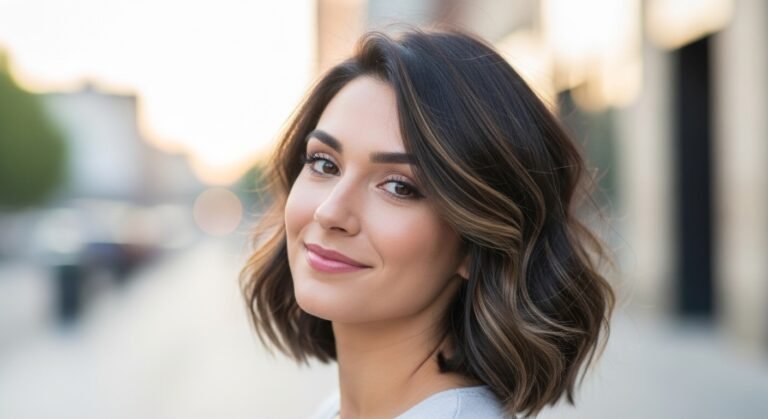
1. The Textured Bob
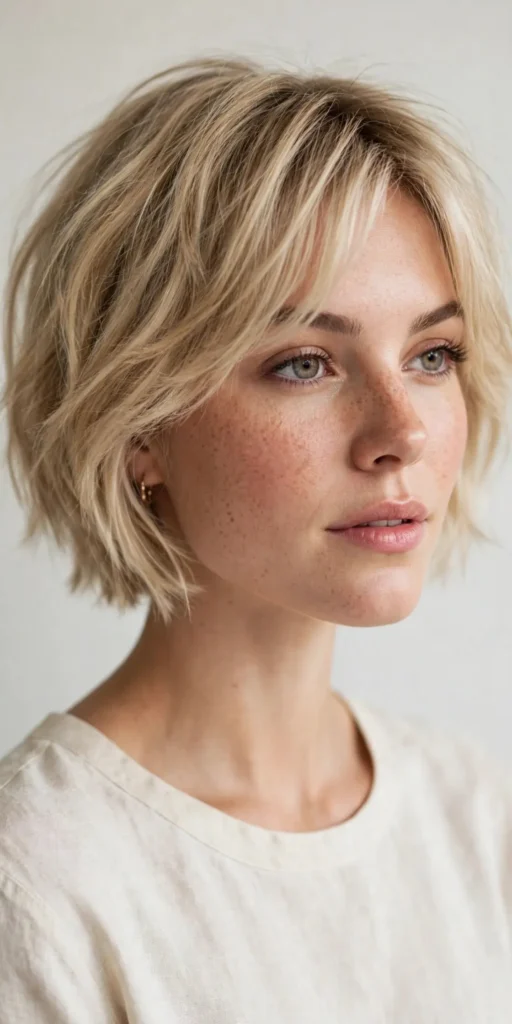
A jaw-length bob with soft, razored ends that move rather than sit heavy. On blonde hair specifically, the lighter color already reads as airy, and pairing it with a textured cut doubles that lightness — this is the single most common “I finally feel like myself” reaction I get in the chair.
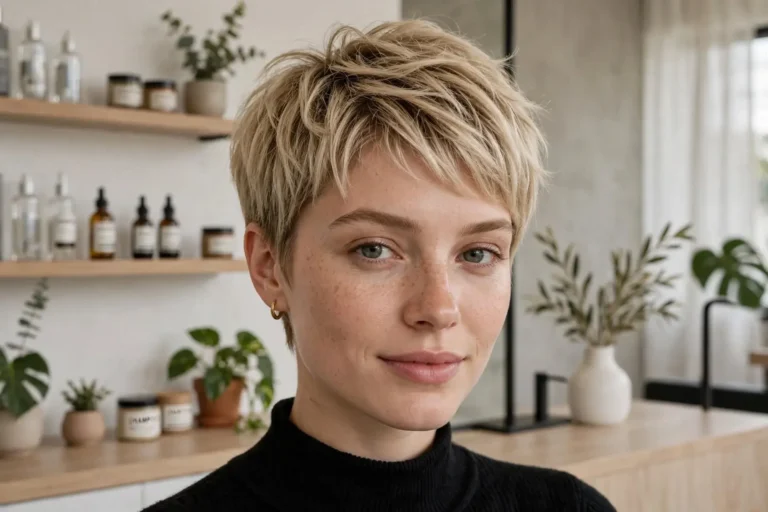
2. The Feathered Pixie-Bob
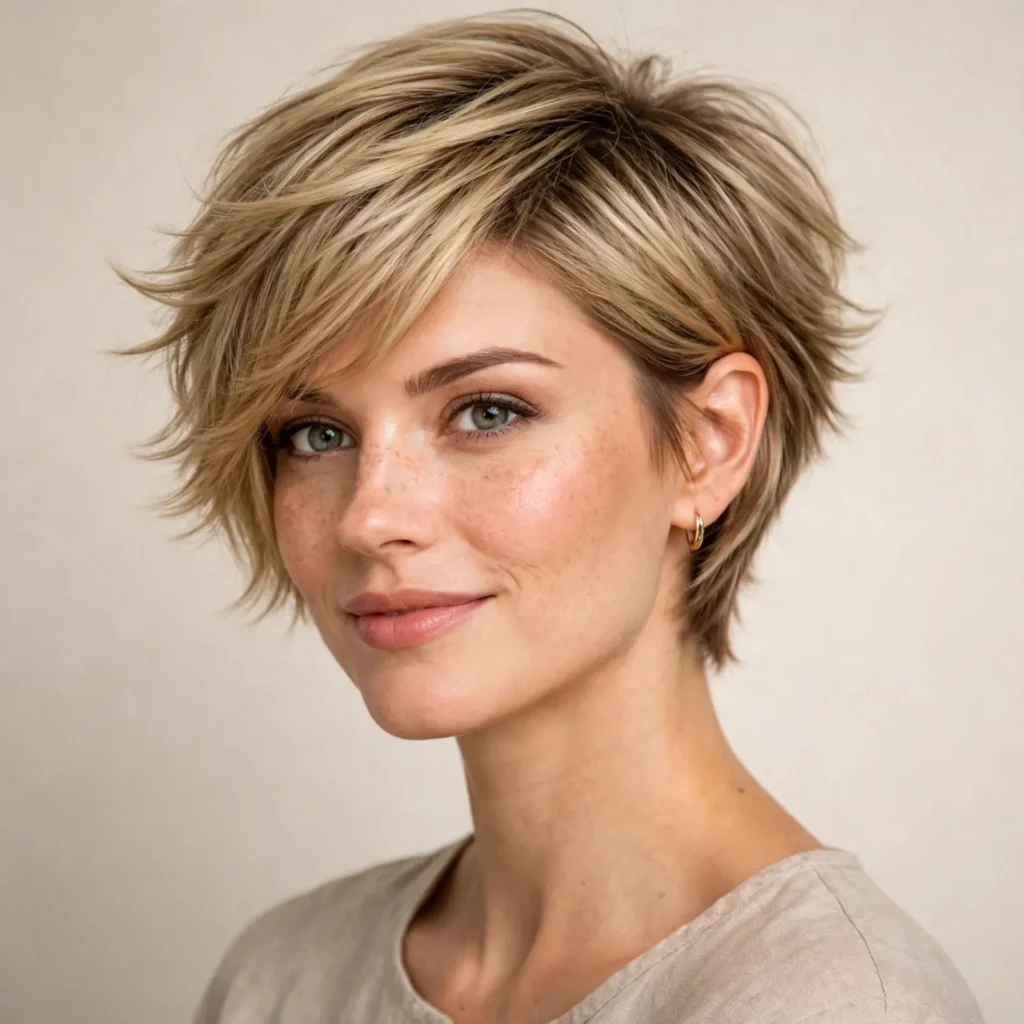
Slightly longer than a true pixie, with feathered layers throughout that keep movement at the crown. It sits in the sweet spot between “short” and “still recognizable to everyone who’s known you with long hair,” which matters more to first-time short-hair clients than they usually admit going in.
3. The Swept-Back Crop
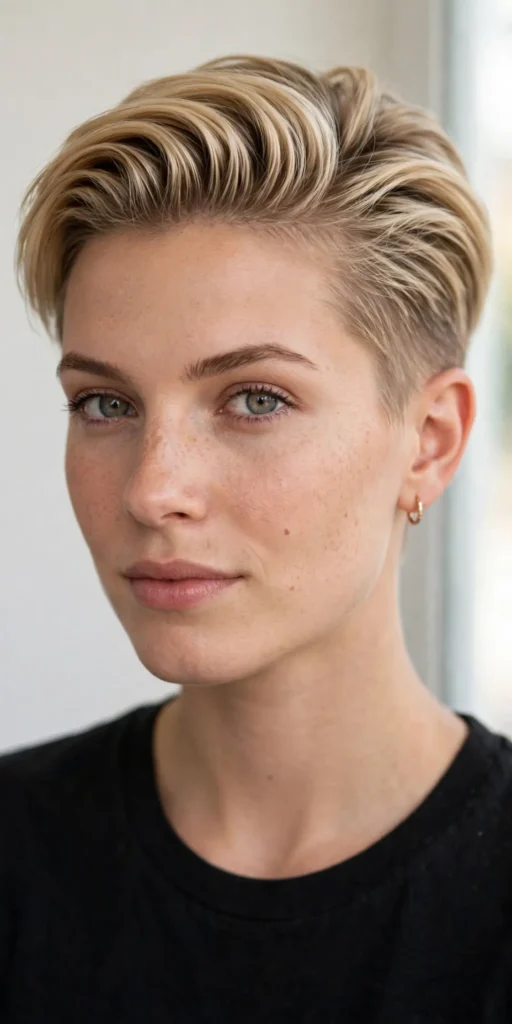
Short all over, styled to sweep back off the face rather than forward or down. This is a genuinely freeing cut for anyone who’s spent years pushing hair out of their eyes — there’s nothing left to push.
4. The Soft Shag Bob
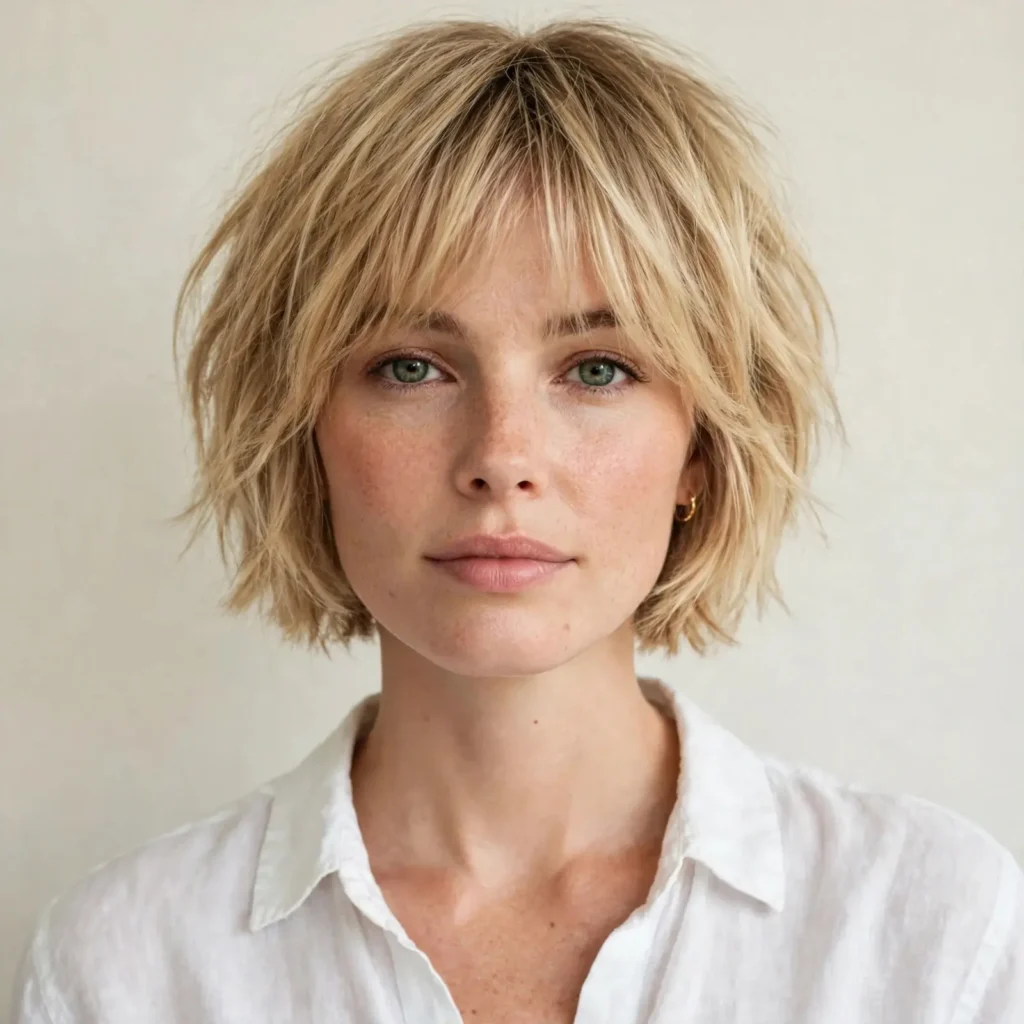
A bob with heavy internal layering and face-framing pieces, styled to look intentionally undone. This is the cut for someone who wants short and light but isn’t ready to give up all sense of texture and volume.
For “I Want to Feel Bolder” (Cuts 5–8)
These are for clients who’ve told me, in one way or another, that they want people to do a double take. Bold doesn’t have to mean extreme — it means the cut makes a statement on purpose.
5. The Blunt Bob With Bangs

A precise, sharp bob at the jaw paired with equally blunt, full bangs. This is architectural in a way that’s impossible to ignore, and on platinum or icy blonde, the graphic contrast is even sharper.
6. The Pixie With an Undercut
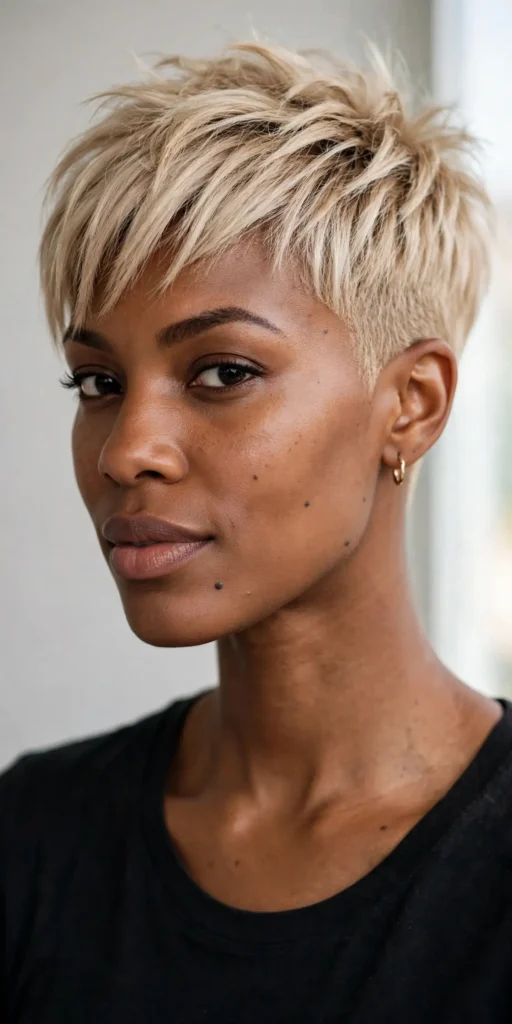
Short on top with visible texture, shaved or closely clipped underneath at the nape and around the ears. This is the boldest option on the entire list, and it’s also, somewhat counterintuitively, one of the lowest-maintenance — there’s simply less hair to manage day to day.
7. The Asymmetric Bob
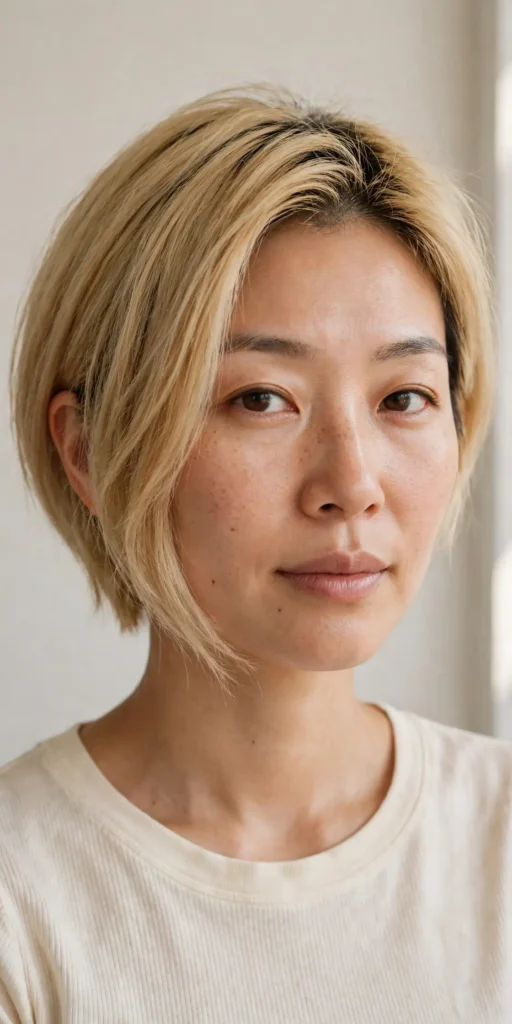
One side cut noticeably shorter than the other, with the longer side often swept to emphasize the imbalance. This is a genuine conversation-starter cut, and on blonde hair, the color makes the asymmetry read even more clearly from across a room.
8. The Micro Bang Pixie
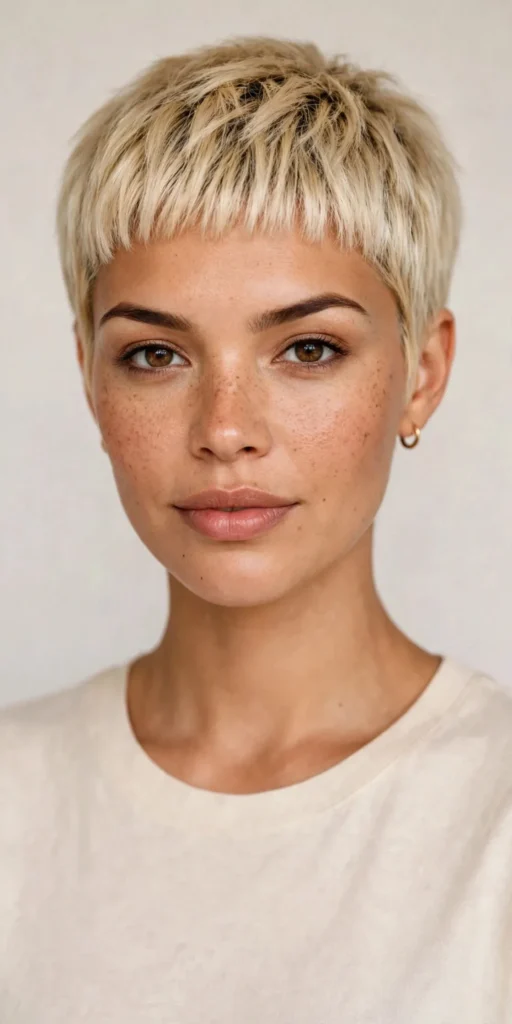
A very short pixie paired with even shorter, blunt micro-bangs sitting well above the brow. This is not a subtle choice, and I only recommend it to clients who’ve already answered my opening question with something close to “I want to feel unrecognizable, in a good way.”
For “I Want to Feel Like Myself Again” (Cuts 9–11)
These are the cuts I most often do for clients returning to short hair after years of growing it out for a wedding, a job, or someone else’s opinion. There’s a specific relief in this category that’s different from the others — less about transformation, more about return.
9. The Classic Chin-Length Bob
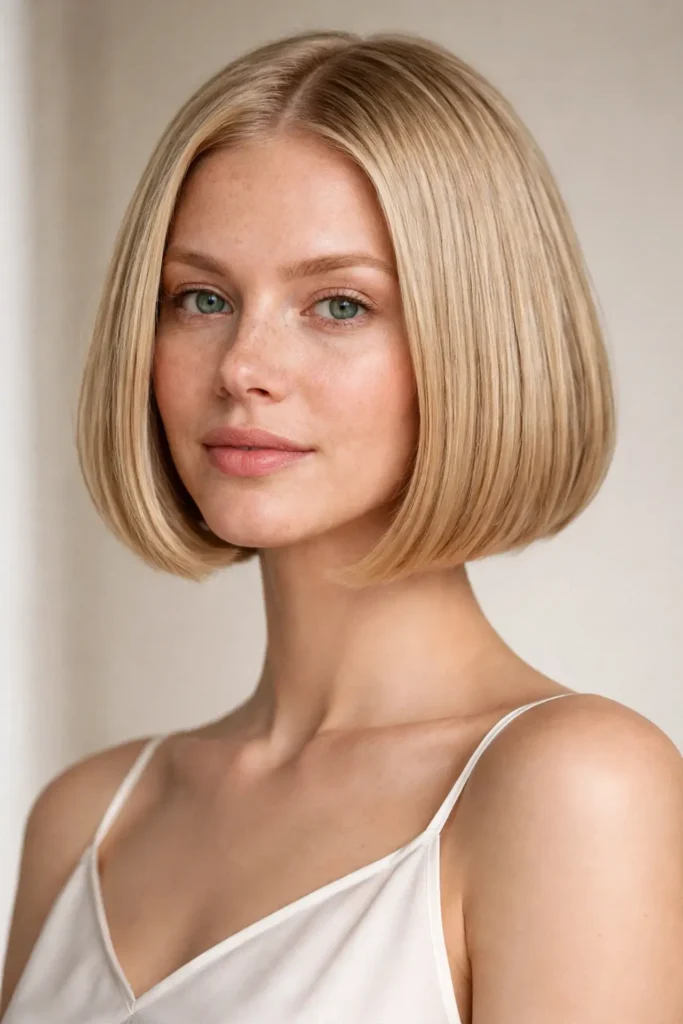
No dramatic layering, no asymmetry, just a clean, precise bob at the chin. For clients who wore this exact cut in their twenties and are coming back to it now, this is almost always described to me as “coming home,” and I believe them every time.
10. The Soft Pixie
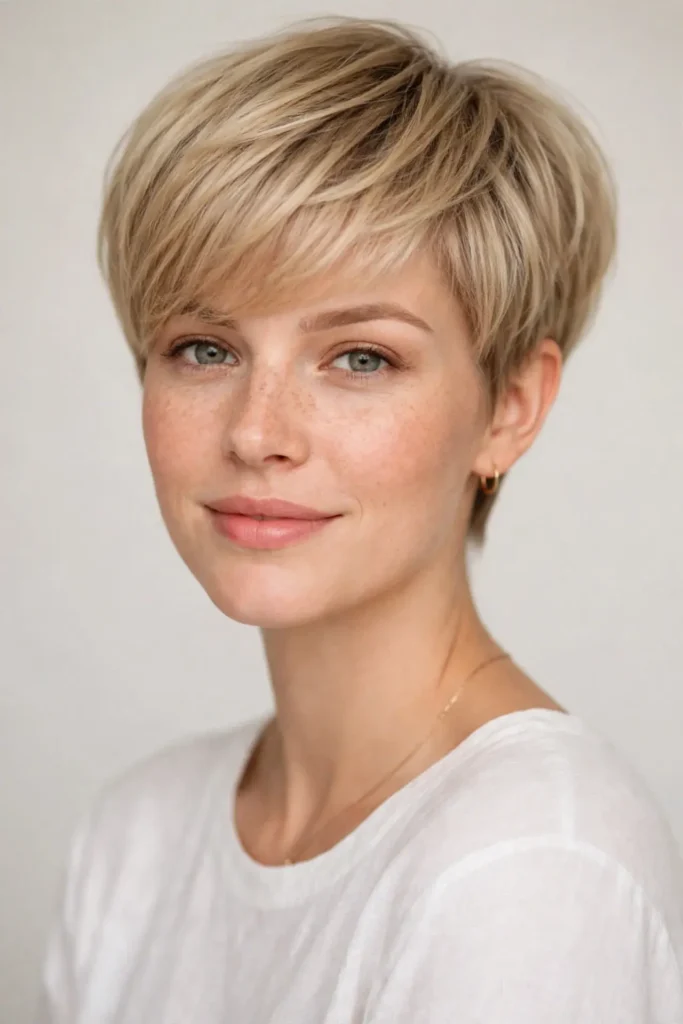
Rounded, gentle layers, nothing severe or graphic, styled to sit close to the head with soft movement on top. This is the cut for someone who’s had short hair before, loved it, and simply wants the easy, familiar version back.
11. The Grown-Out Pixie Shag
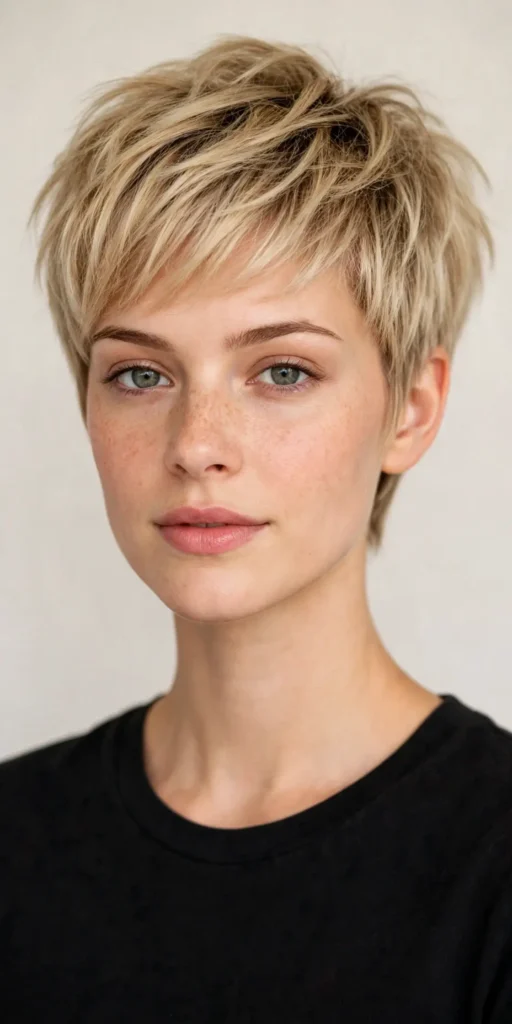
A pixie that’s been allowed to grow a bit past its sharpest shape, styled with texture rather than forced back into precision. This is what I cut for clients who remember loving short hair years ago but want a slightly softer, more relaxed version of who they were then.
For “I Want My Mornings Back” (Cuts 12–13)
These are the two cuts I recommend specifically when a client’s honest answer to my opening question is about time, not feeling. And that’s a completely valid reason to go short — maybe the most practical one of all.
12. The Wash-and-Go Crop
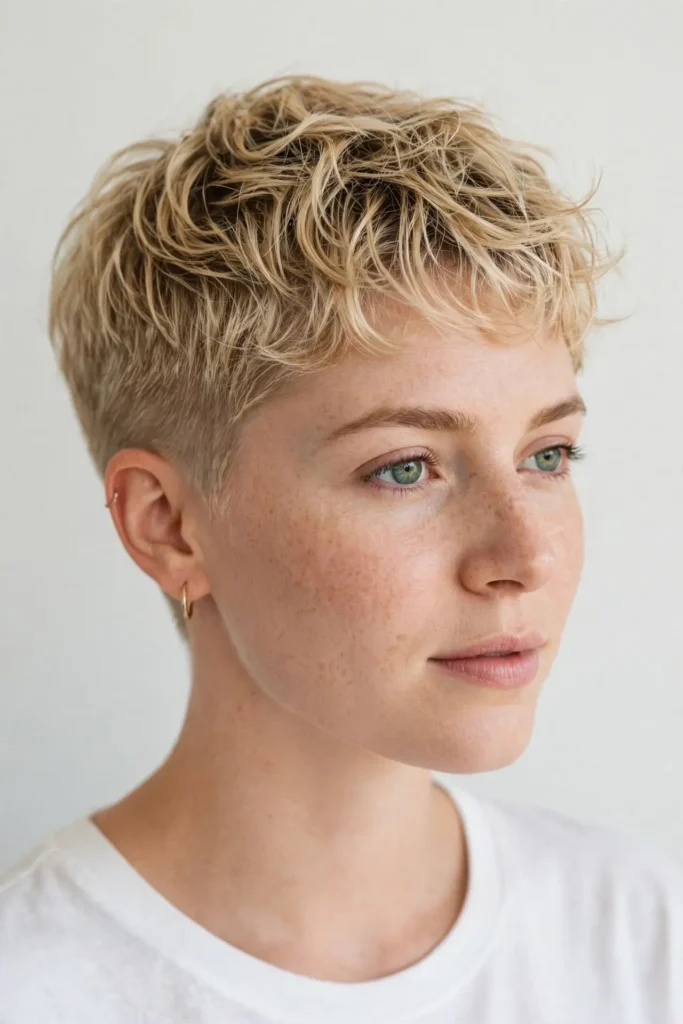
Short all over, cut specifically to fall into place with nothing more than towel-drying and a small amount of texture paste. This is the cut I recommend to new parents, people starting demanding new jobs, or anyone who’s simply decided their mornings belong to them now, not their hair.
13. The Low-Maintenance Bob
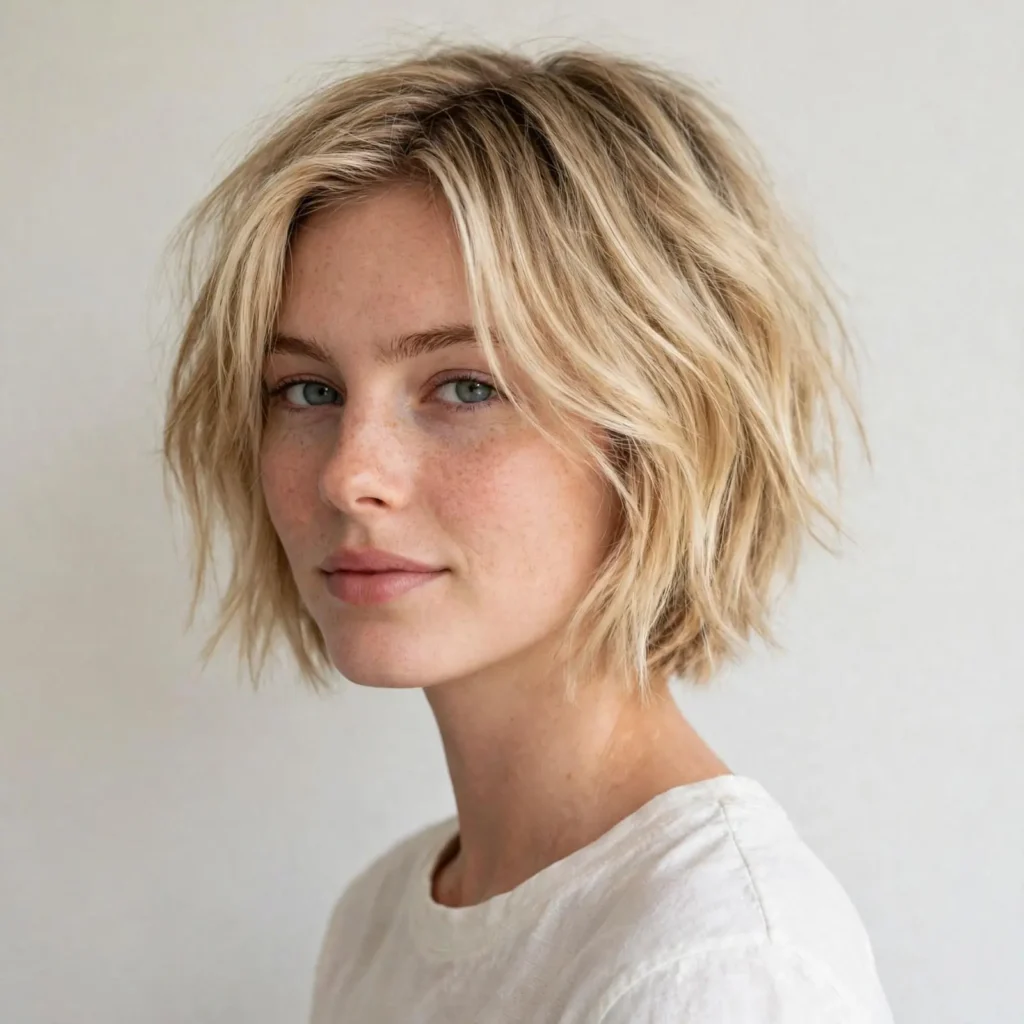
A blunt bob cut slightly longer than the classic version, specifically because a bit of extra length means it can go longer between trims while still air-drying into a clean shape. This is the cut for someone who wants the ease of short hair without committing to a six-week trim schedule they know they won’t keep.
Something New: The Big Chop Countdown
Here’s what I wish every client had before their appointment, because the biggest source of short-hair regret I see isn’t the cut itself — it’s the lack of preparation before it. This is the four-week countdown I actually walk clients through.
Four weeks out: Start collecting reference photos, but photograph your own face from the front and the side in natural light and compare your bone structure honestly against the reference. A cut that suits an oval face reads completely differently on a round or square one, and this is the week to notice that, not the day of your appointment.
Three weeks out: Book a consultation separate from your cutting appointment if your salon offers it, or arrive fifteen minutes early to your cutting appointment specifically for this conversation. Ask your stylist to be honest about how your specific hair — its natural texture, its growth pattern, any cowlicks — will affect the cut you want, not just the length.
Two weeks out: Do a trial run with your styling routine on your current length. If you currently rely on thirty minutes of blow-drying to feel put together, practice the air-dry-only routine you’ll likely use with short hair, so the maintenance reality isn’t a surprise on week one.
One week out: Revisit my opening question one more time — what are you trying to feel different about — and say your honest answer out loud to someone you trust. If the answer has shifted in four weeks, that’s useful information, not a reason to cancel.
The day before: Wash your hair the way you normally would and leave it in its natural state for your appointment. Stylists cut short hair more accurately on hair that shows its true texture, not hair that’s been straightened or curled into a shape it won’t hold on its own.
Something New: The Regret-Proofing Checklist
Beyond the countdown, here are the four questions I ask every single short-hair client before I pick up shears, because these four have the highest correlation with satisfaction six months later, in my own completely unscientific but eleven-years-running tracking.
Have you gone short before, and if so, what specifically did you like or dislike about it last time? Past experience is the single best predictor of future satisfaction, more reliable than any photo.
Is this decision coming from you, or from someone else’s opinion about what would look good on you? Cuts chosen to please someone else are the ones I see grown back out fastest, almost without exception.
Do you know your natural hair texture well enough to describe how it dries without any product? If the honest answer is “I don’t actually know, I always blow-dry it,” that’s worth discovering before a short cut, not after.
Are you prepared for the grow-out phase around month three to four, when even well-cut short hair moves through an awkward, in-between stage before settling into its next length? Every stylist knows this stage exists. Not every client is warned about it in advance.
If you can answer all four honestly and you’re still excited, you’re ready. If any of them gives you pause, that pause is worth sitting with for another week before you book.
The Blonde-Specific Maintenance Reality
Short cuts and blonde color interact differently than long cuts and blonde color, and it’s worth knowing before you commit to both at once. Regrowth is more visible on short hair simply because there’s less length to camouflage the line between your natural root and your color — expect root touch-ups every four to five weeks if you want to maintain a seamless look, tighter than the six-to-eight-week window longer blonde hair can often stretch to. Purple shampoo still matters just as much on short hair, but you’ll need less product per use simply because there’s less hair to cover. And because short cuts require more frequent trims to maintain their shape, you’re naturally cutting away color-treated ends more often too, which actually works in your favor — it keeps the most processed, potentially driest hair from accumulating the way it can on longer blonde hair.
What I Tell Clients Who Are Nervous
Almost everyone who sits in my chair for a first big chop is nervous, and I’ve learned the nervousness itself doesn’t predict regret — ignoring the four questions above does. Hair grows back. That’s true and also, I think, slightly beside the point, because the goal isn’t just tolerating the in-between months while it grows out. The goal is choosing a cut you’d be glad to have for the year it takes to fully return to long hair, if you ever decide you want to. Choose accordingly, and the nerves usually settle into excitement by the time the cape comes off.
Mistakes I See Booked Into My Chair Constantly
Bringing in a photo of a cut without checking whether the model’s face shape and hair texture have anything in common with their own — a cut is a formula that depends on the variables, not a fixed image that transfers identically to every head.
Skipping the honest texture conversation and assuming a short cut will look the same air-dried as it does freshly styled in the salon chair.
Underestimating the grow-out stage and being caught off guard by it, when a five-minute conversation beforehand about what month three typically looks like would have prepared them completely.
One Last Thing
Short blonde hair isn’t just a length and a color. It’s a decision that changes your mornings, your maintenance schedule, and honestly, how people read you at a glance — and the clients who love their short hair a year later are almost always the ones who answered my opening question honestly before they ever sat down in my chair.
So before you book anything, ask yourself what you’re actually trying to feel different about. Then come back to this list and find the cut built for that specific feeling, not just the one that looked good in a photo.
What’s your honest answer to the question — lighter, bolder, more like yourself, or simply free of the routine you’re in now? Save this list, and bring your answer with you to your next consultation.