14 Red Christmas Tree Ideas That Feel Festive, Never Loud
Years ago, I decorated a tree that shouted at the room.
Every bauble was bright red. The ribbon was red. The lights were red. It looked less like Christmas and more like a fire alarm that had learned to sparkle.
Then I saw a red tree at a friend’s house that did the opposite. It sang. Same color family, completely different feeling.
The difference was never the red. It was the balance around the red — what sat next to it, how much green still showed, and which finish did the talking.
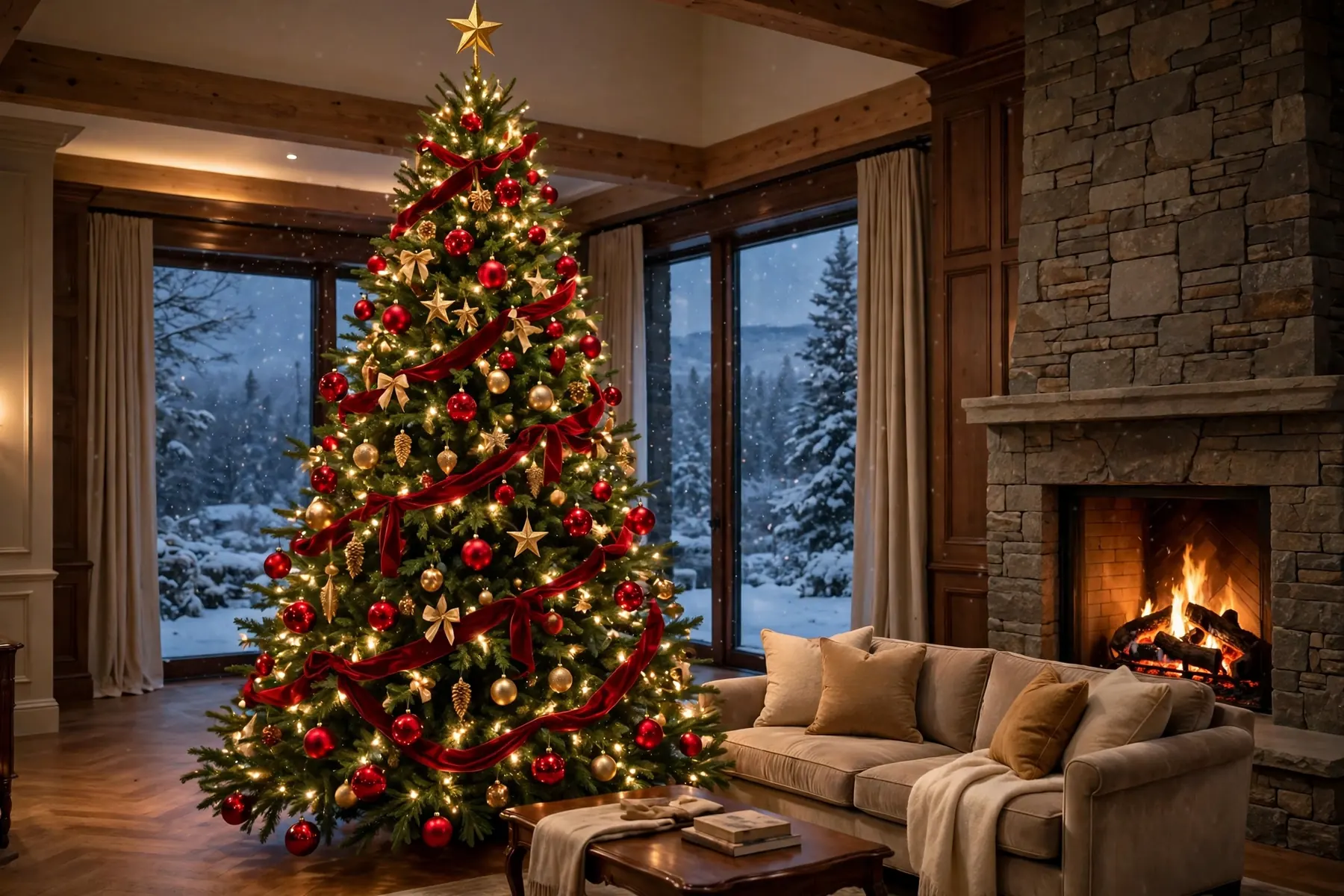
That is what this list is about. Fourteen red tree ideas, from classic red and gold to deep burgundy and calm natural pairings.
Every one of them feels festive. None of them will yell at your guests.
The Balance Rule That Saves Red Trees
Before the ideas, one small rule. It is the whole secret, honestly.
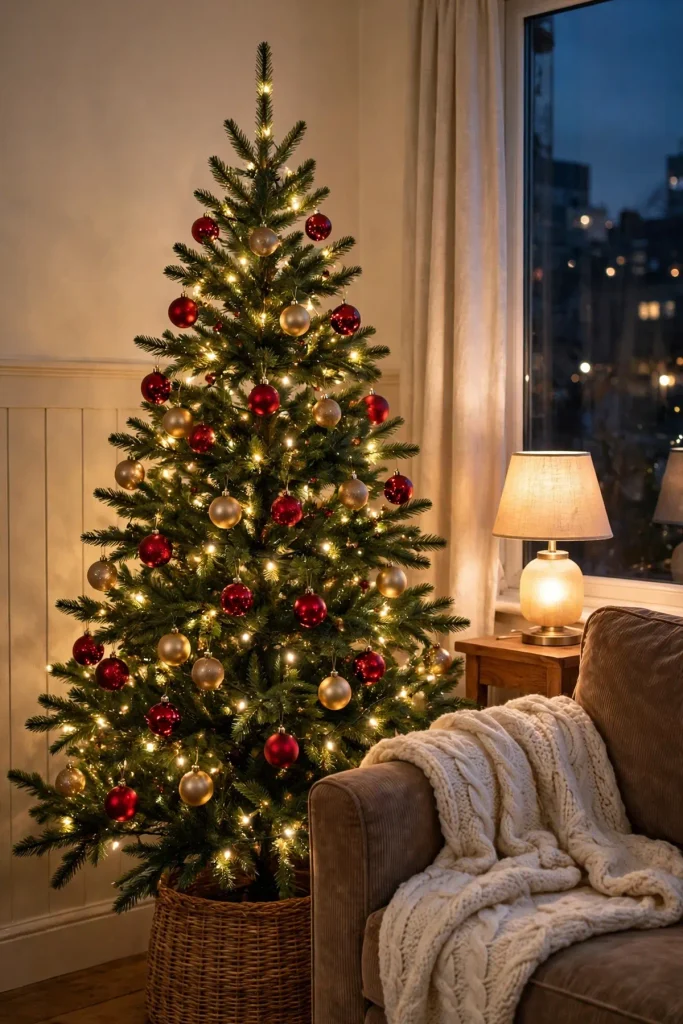
Think of your tree in three rough parts. Green branches are the biggest part. Red is the second part. Then one partner — gold, white, wood, copper — takes the smallest part.
When red covers everything, the eye has nowhere to rest. When red sits on plenty of green with one calm partner, it reads as rich instead of busy.
Two more habits help. First, mix your finishes: matte, shiny, and glitter reds together look layered, while all-shiny red looks like a shop display.
Second, keep the lights warm white. Warm light softens red. Colored lights on top of red decorations are where most red trees tip into loud.
Hold on to that, and every idea below gets easier.
Classic Red and Gold
1. Full Red and Gold, Done the Rich Way
This is the tree most of us picture first, and it still works beautifully when the ratio is right.
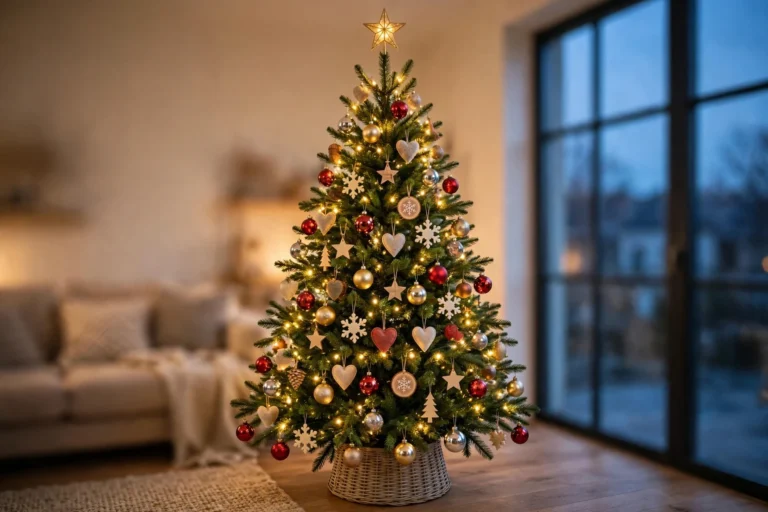
Aim for roughly twice as much red as gold. Red baubles in two sizes carry the tree, and gold steps in as the accent — a gold star, slim gold ribbon, a few gold baubles tucked deep near the trunk where they catch the light.
Deep placement is the trick people skip. Gold near the trunk glows through the branches, so the tree looks lit from inside instead of frosted on the surface.
Finish with a simple red or gold tree skirt. Skip the novelty topper here. This tree is a classic, and classics do not need a punchline.
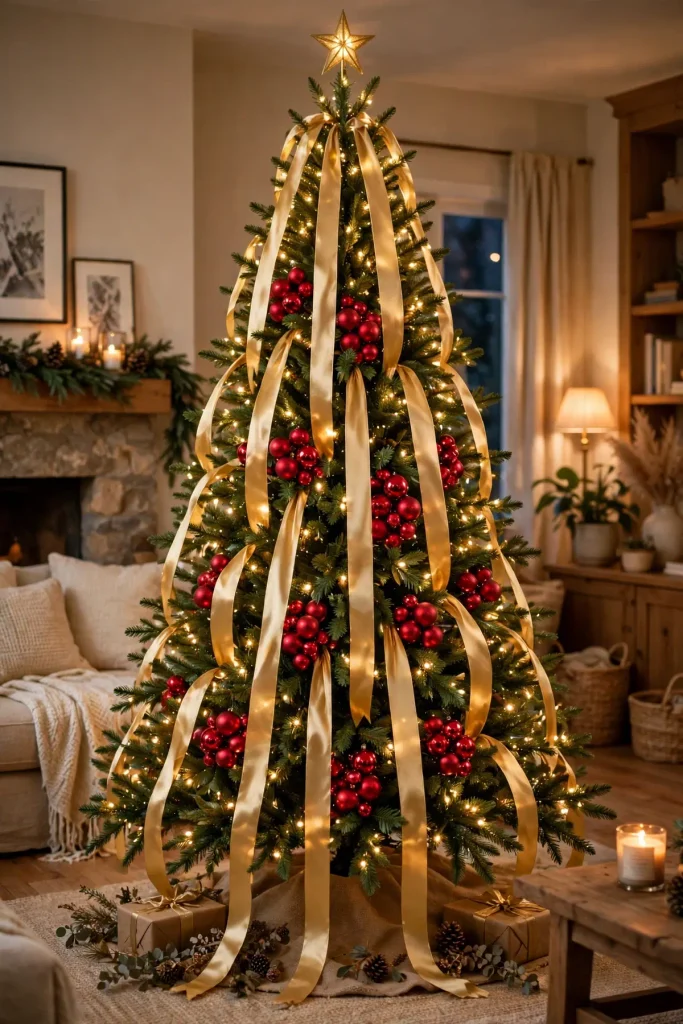
2. Gold Ribbon Waterfalls With Red Baubles
If your red and gold tree ever felt flat, it probably needed movement. Ribbon gives it that.
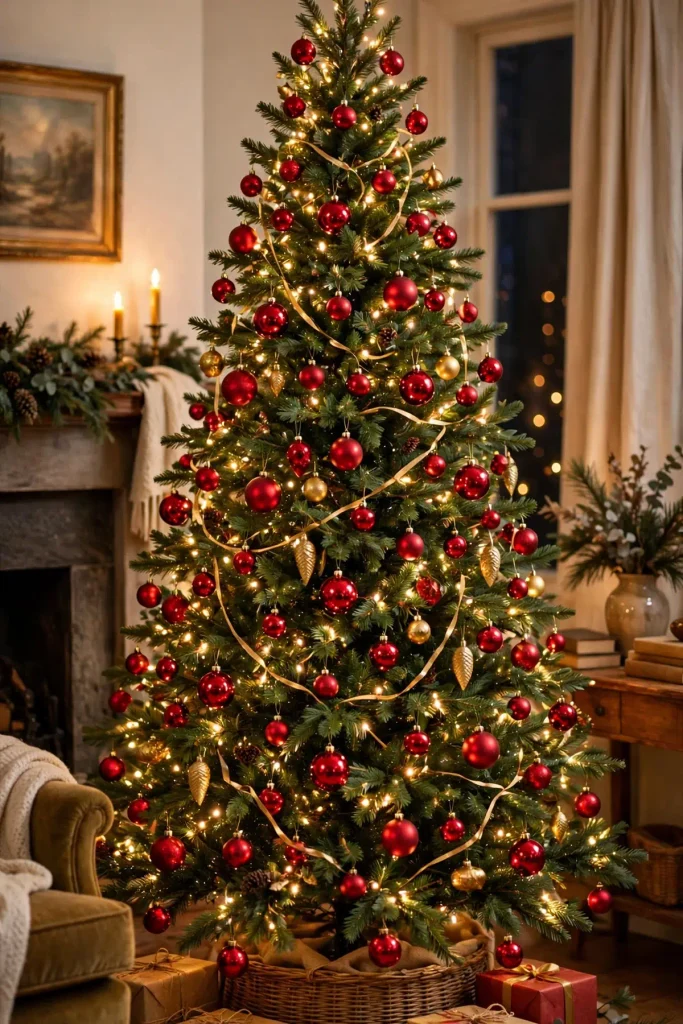
Use a wide wired gold ribbon, around four inches across. Cut long lengths and let each one fall from the top of the tree to the bottom in a soft waterfall, tucking it into the branches every foot or so.
Four or five waterfalls around the tree are plenty. Then place your red baubles in the spaces between them, in small clusters of two and three.
Because the gold is doing the sweeping work, you can use plain shiny red baubles and still get a designer look. The ribbon is the luxury. The baubles just fill in.
3. Matte Red Baubles With Shiny Gold
Here is a small finish swap that changes everything.
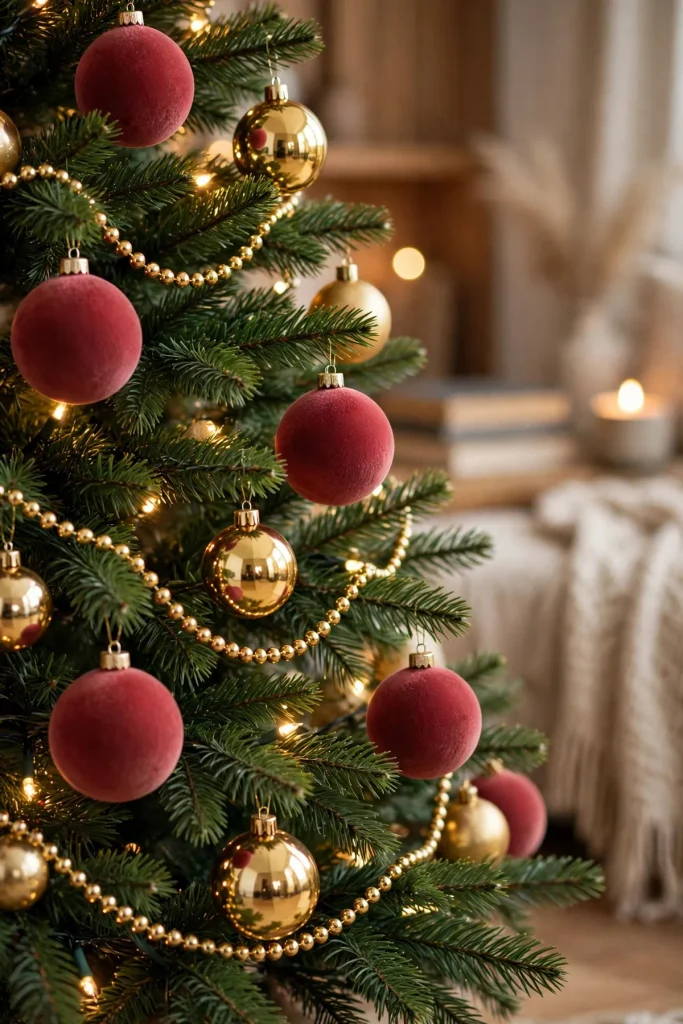
Most of us buy shiny red baubles, because they are what the shops push forward. Try matte red instead — the soft, velvety kind that absorbs light instead of throwing it back.
Against matte red, shiny gold ornaments suddenly look expensive. The contrast does the work that extra decorations usually try to do.
Keep the mix simple: matte red baubles as the base, shiny gold baubles and gold beaded garland as the sparkle. Nothing else is needed.
This is also the most forgiving version for small trees, because matte finishes never look cluttered up close.
4. Red and Gold Under Warm White Lights Only
This idea is less about what you add and more about what you refuse to add.
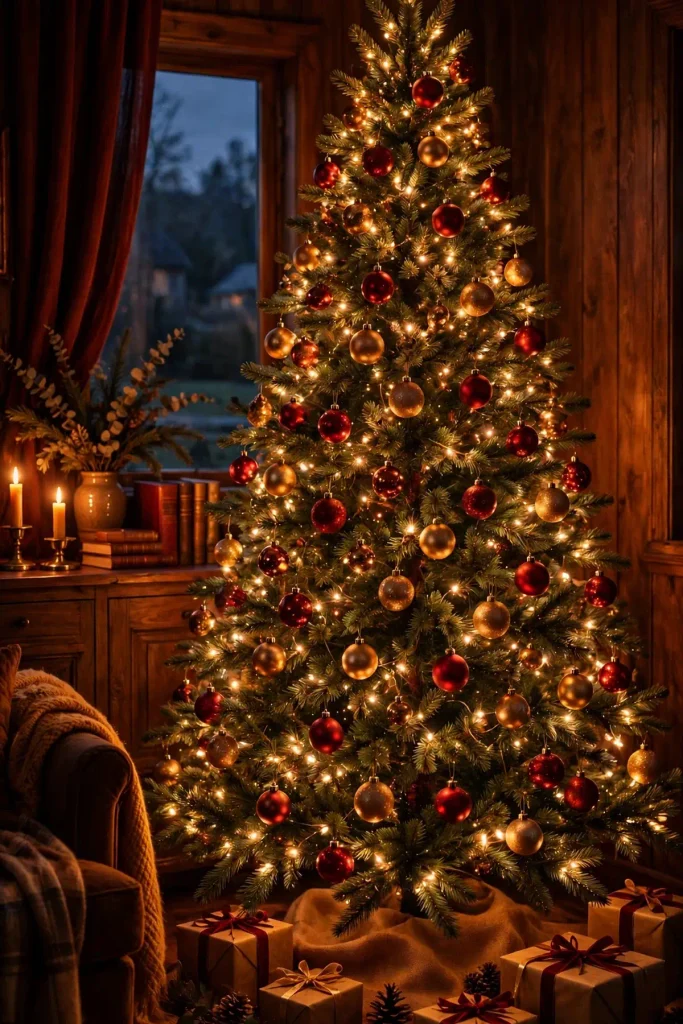
Decorate in red and gold as you like, then light the tree with warm white lights and nothing else. No red lights. No multicolor strands. No flashing settings.
At dusk, a red and gold tree under warm white light turns the whole room amber. The reds deepen, the golds glow, and the tree feels like a fireplace you can sit beside.
If your lights have a dimmer, even better. Drop them a touch in the evening and the tree goes from pretty to genuinely cozy.
It is the simplest idea on this list, and the one guests ask about most.
Red and White: The Candy Shop Look
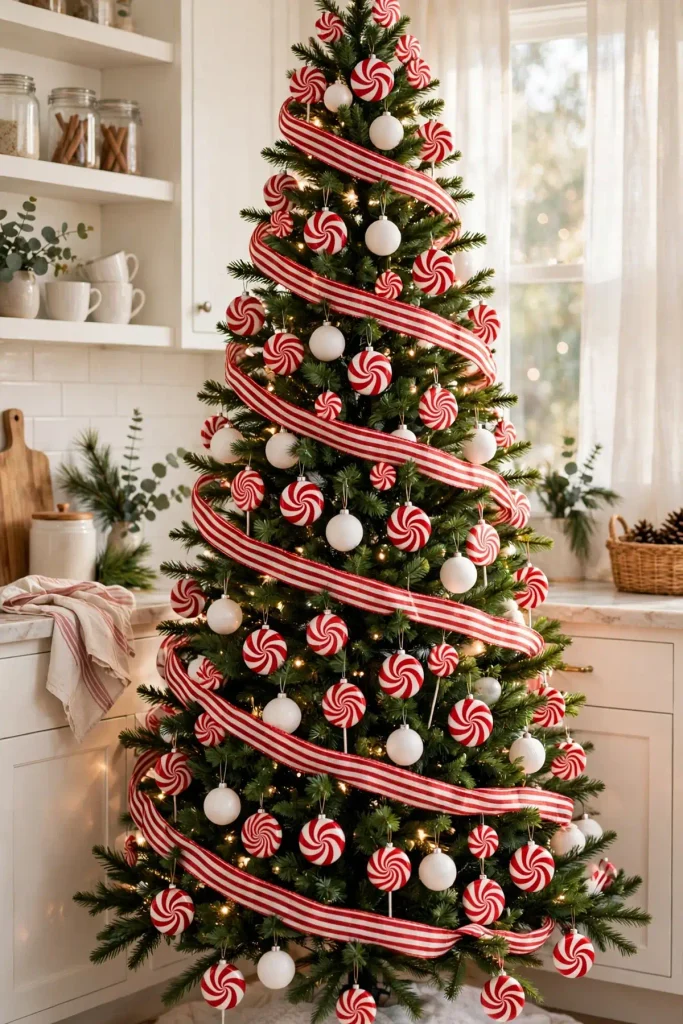
5. Peppermint Stripes and Swirl Ornaments
Now for the playful end of red. Peppermint is red and white at their happiest.
Start with a red and white striped ribbon, wound loosely around the tree in a spiral. Add swirl ornaments — the round ones that look like boiled sweets — plus simple white baubles to rest the eye.
The mistake to avoid is adding candy canes, lollipop picks, and striped everything all at once. Pick two peppermint elements, ribbon and swirls, and let plain white do the calming.
This tree belongs in a kitchen corner, a hallway, or anywhere children actually gather. It is sweet on purpose, and it knows it.
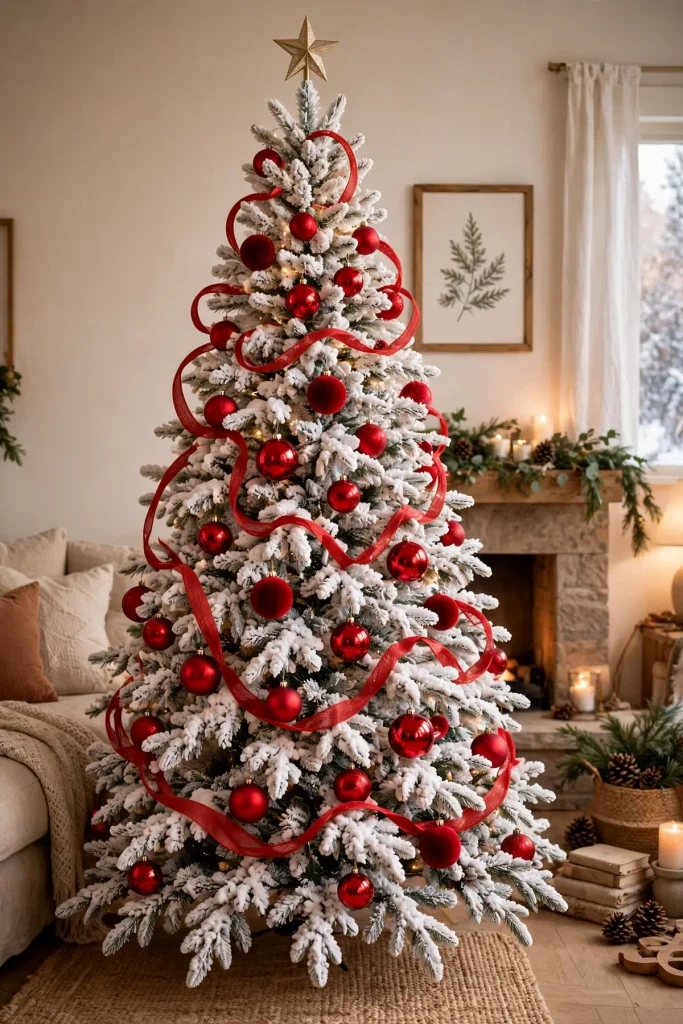
6. Bright Red on a Flocked White Tree
A flocked tree — the snowy white kind — is the best backdrop red will ever get.
The white branches act like a blank page. Every red bauble, bow, and berry reads crisp and clean, the way red lipstick reads against pale skin.
Because the tree itself is already white, skip white decorations completely. Go red in two finishes, matte and shiny, and add red ribbon in loose loops rather than a tight spiral.
One warning from experience: flocking sheds. Decorate this tree where it will live, not across the room from it, unless you enjoy white footprints.
7. White Baubles With Big Red Bows
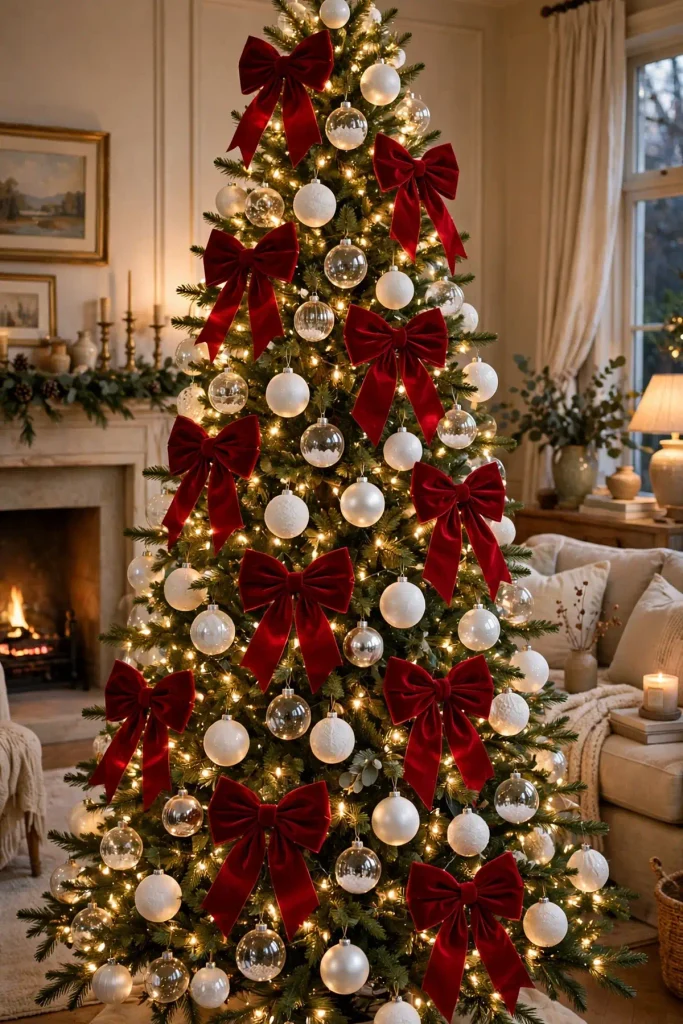
Flip the ratio and red gets even more powerful.
Cover the tree mostly in white baubles — matte white, shiny white, a few clear glass ones. Then tie on big red velvet bows, around a dozen for a full-size tree, placed wide apart like punctuation.
Each bow becomes a small event. Because there are so few of them, the eye travels from bow to bow and the whole tree feels designed rather than decorated.
Make the bows from wired velvet ribbon so the loops hold their shape all season. Floppy bows are the only way this idea fails.
Deep Reds: Burgundy and Wine
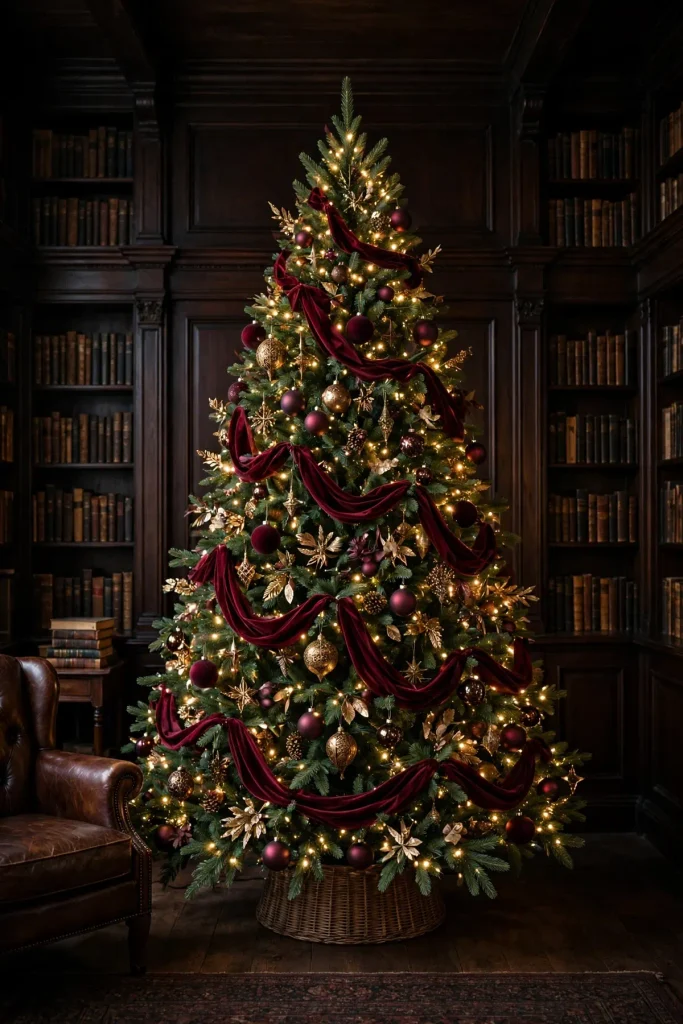
8. Burgundy Velvet Ribbon With Dark Gold
Burgundy is red after it grows up. It is the shade for anyone who finds bright red a little cheerful for their taste.
Drape burgundy velvet ribbon in slow, deep loops around the tree. Pair it with dark antique gold — not the yellow shiny kind, the aged kind that looks almost bronze in low light.
Add burgundy baubles in a matte finish and keep the lights warm. The whole tree should feel like a library at Christmas, in the best way.
This pairing loves leather chairs, dark wood, and rooms that already lean moody. In a bright white room it can feel heavy, so know your space.
9. Wine Red With Warm Copper
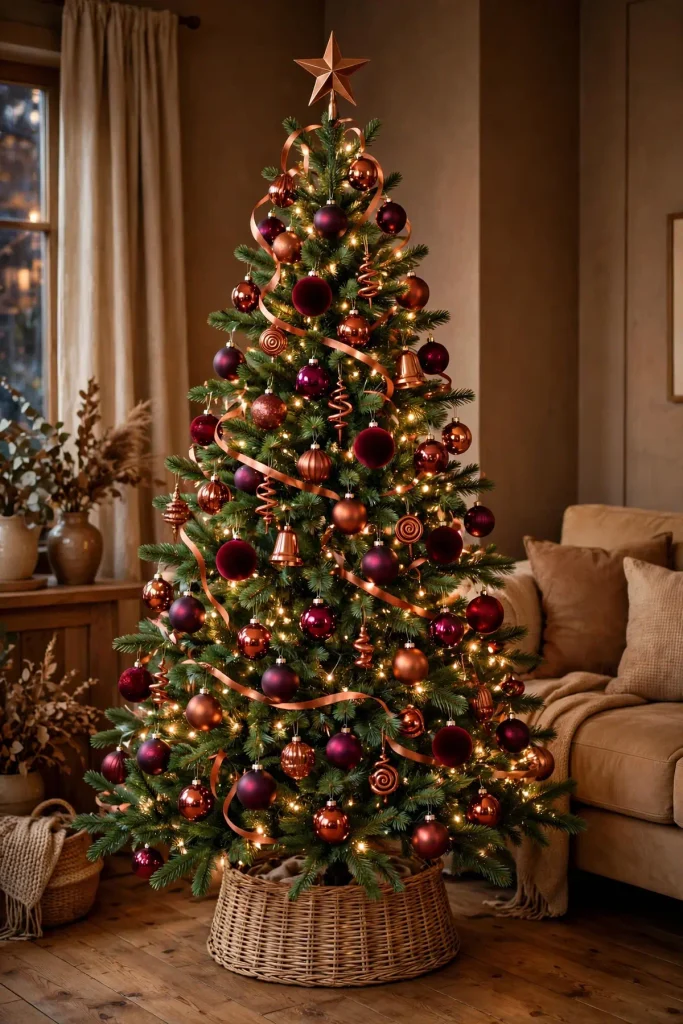
Copper is gold’s warmer cousin, and wine red adores it.
Use wine-colored baubles — that deep purple-red — with copper ornaments and a slim copper ribbon. The two tones sit so close on the warm scale that the tree almost glows brown-red at the edges, like mulled wine in a glass.
Copper also solves a real problem. It bridges red and the browns most living rooms already have — wooden floors, tan sofas, leather. The tree stops looking placed and starts looking like it belongs.
Keep green showing generously here. Wine and copper are both rich, and they need the breathing room.
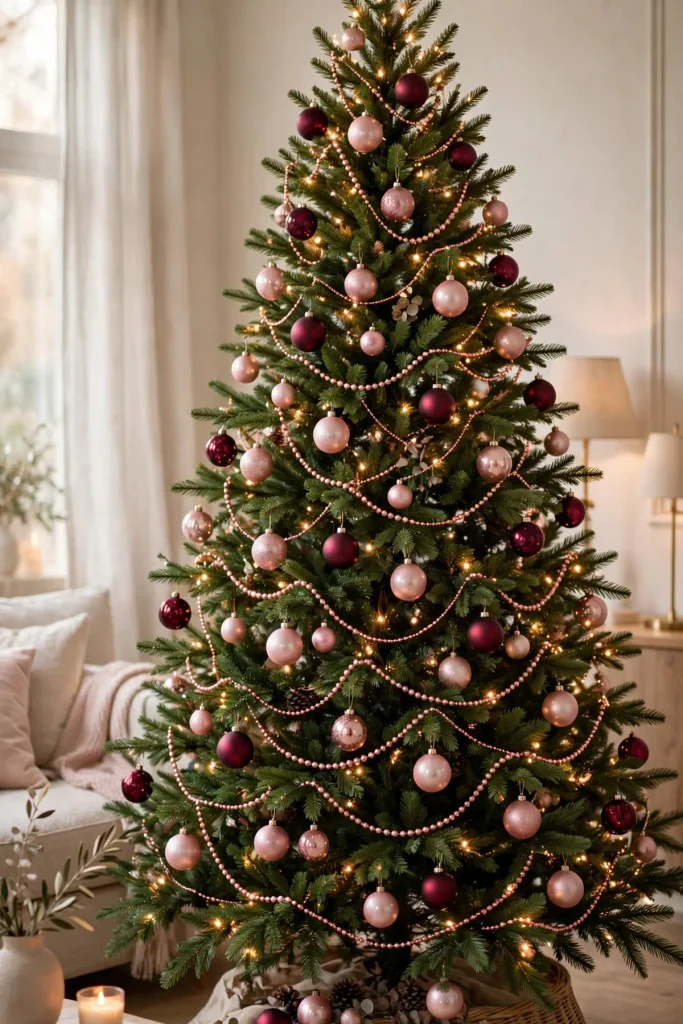
10. Burgundy Softened With Blush
This is the romantic one, and the one people either love or walk straight past. Fair warning given.
Mix burgundy baubles with blush pink ones in roughly equal amounts. The blush lifts the burgundy out of its heaviness, and the burgundy stops the blush from turning sugary.
Add one metallic to hold them together — rose gold works beautifully, plain gold works too — and use it sparingly, in the ribbon or a beaded garland only.
Soft white lights, never warm-yellow, keep the pinks true. This tree photographs like a dream, which your Pinterest board will confirm within a day.
11. One Red, Many Depths: The Layered Look
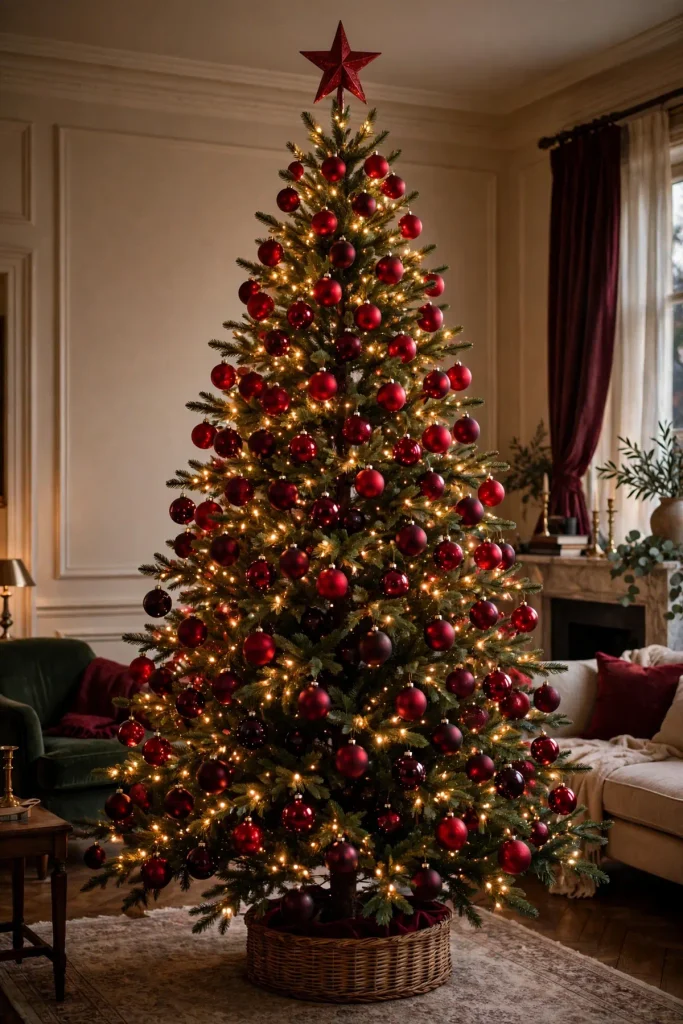
For the confident decorator: a tree in red only, but every depth of it.
Start with the darkest reds — oxblood and wine — deep inside the tree near the trunk. Move outward through burgundy and true red, and finish with the brightest cherry reds on the outer tips.
The tree gains a shadow-to-light gradient that makes it look twice as full as it is. From across the room it reads as one rich red mass; up close, it is full of movement.
This takes patience and a lot of baubles, so shop the January sales for it if you can. Done well, it is the most dramatic tree on this list — and still not loud, because there is only one color speaking.
Red With Naturals: Wood, Pine and Calm
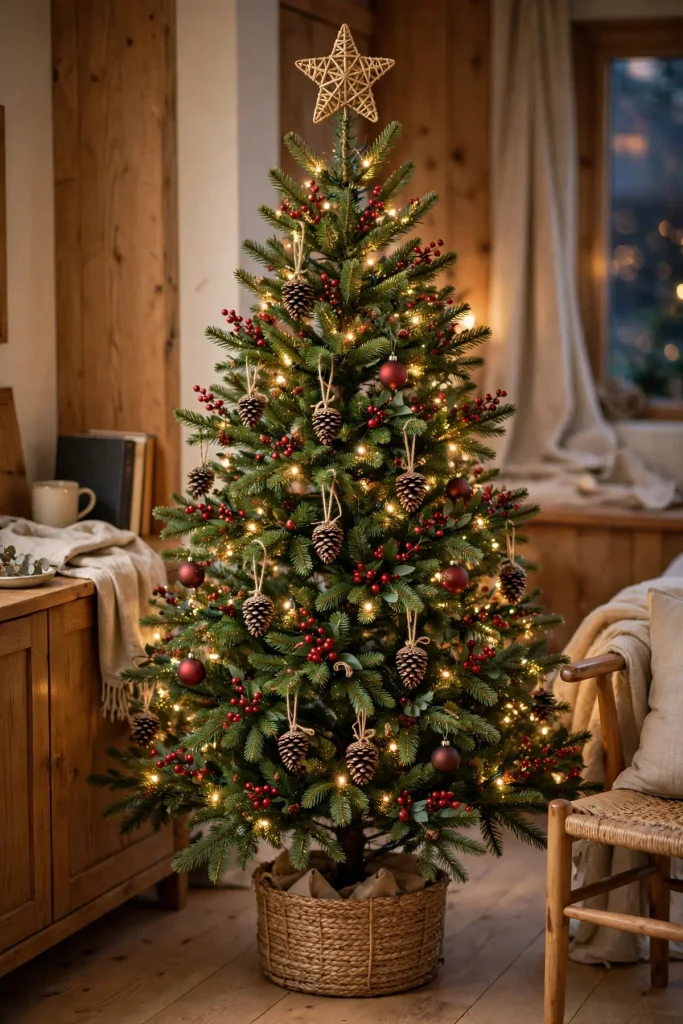
12. Red Berries and Real Pinecones
Sometimes the calmest partner for red is not a color at all. It is texture.
Tuck sprigs of red berries throughout a plain green tree, then add pinecones — wired onto branches or hung with twine. A few matte red baubles, and that is honestly enough.
The berries give you red in its natural form, small and scattered, so the color feels gathered rather than applied. Pinecones bring the brown that red loves and rarely gets.
This is the cheapest tree on the list to build and the one that suits a quiet house best. It looks like it grew this way.
13. Wooden Beads, Burlap and Pops of Red
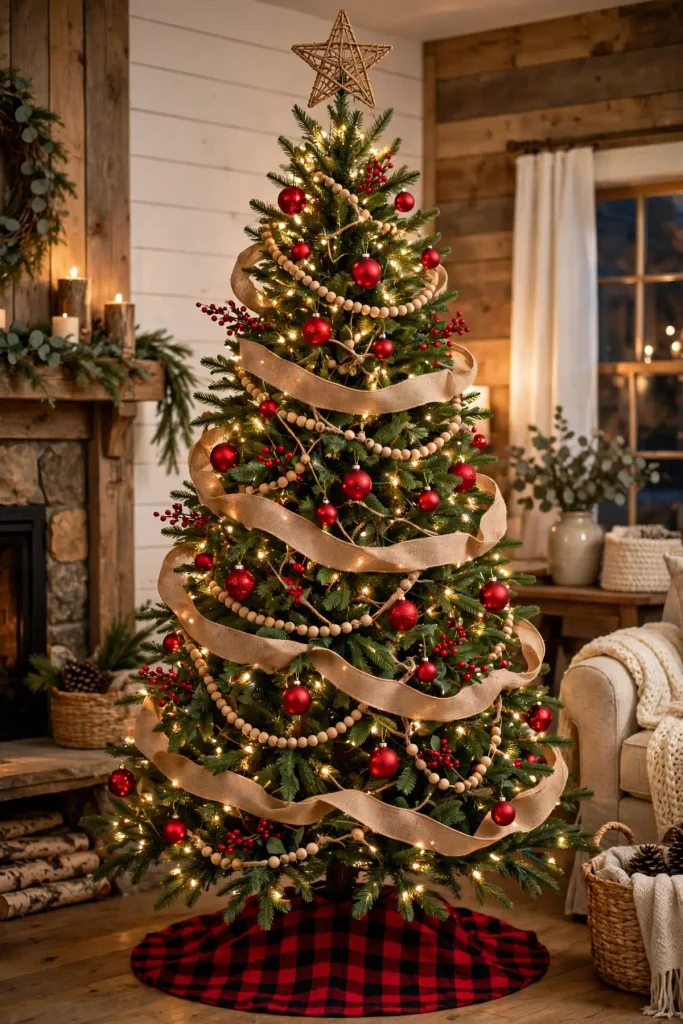
Farmhouse style gets red right by surrounding it with humble things.
Wind a wooden bead garland around the tree and add a burlap ribbon — wide, loosely looped, edges fraying a little if you like. Then bring in red as the pop: baubles, a few berry sprigs, maybe red ticking-stripe bows.
Because wood and burlap are so quiet, the red can be the bright true red that would shout on other trees. Context is everything.
A plaid or grain-sack tree skirt finishes it. This is the tree for a house where Christmas smells like baking and nobody minds flour on the floor.
14. Just Red Pops on a Bare Green Tree
The last idea is the quietest, and honestly my favorite some years.
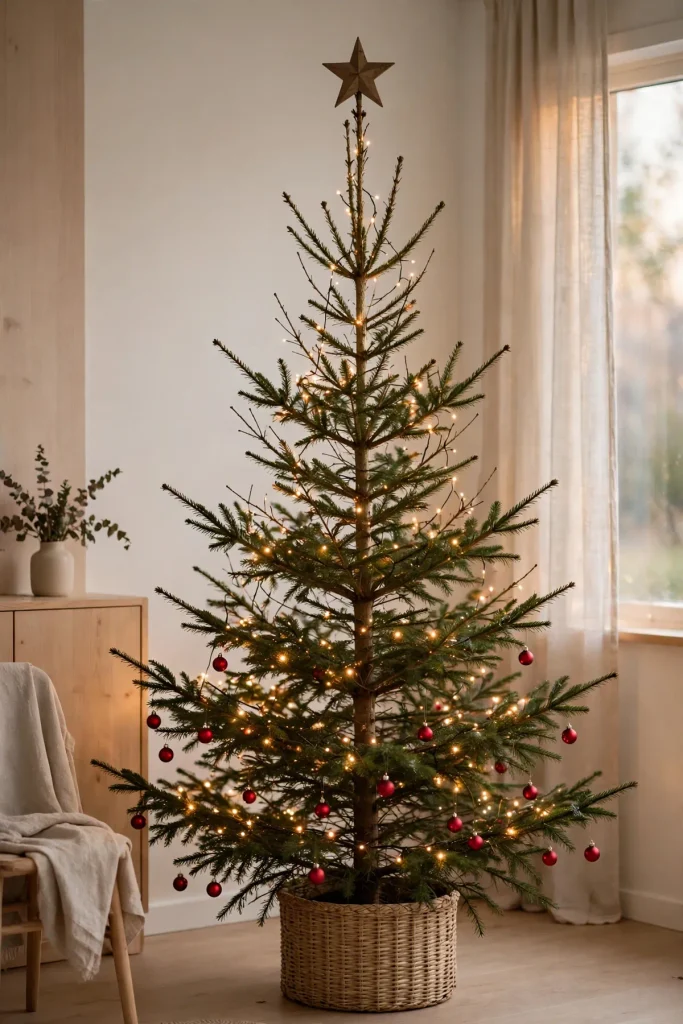
Take a good green tree and add almost nothing — warm white lights, and small red baubles placed sparingly, maybe twenty on a full tree, hung low and wide rather than clustered at the front.
No ribbon. No garland. No topper beyond a simple star. The green does nearly all the work, and each red bauble lands like a berry on a bush.
This is the tree for years when life is full and decorating energy is not. It takes fifteen minutes, it looks intentional, and it proves the whole point of this article: red never needed to shout. It only needed room.
Questions I Get Asked All the Time
How much red is too much on a Christmas tree?
When no green shows through, it is too much. Keep roughly half the tree visibly green, let red take the next share, and give your partner color the smallest share. If you step back and see a red shape instead of a tree, thin the baubles out.
Which red suits a small tree best?
Matte red in one finish, with a little gold. Small trees clutter fast, so skip ribbon waterfalls and mixed patterns. A few deep-placed gold baubles give a small tree the same glow as a big one.
Can I mix burgundy and bright red together?
Yes, if you layer them with intention. Put burgundy deep inside the tree and brighter reds toward the tips, like the layered idea above. Scattered randomly side by side, they tend to argue. Arranged dark to light, they blend.
What color lights work best on a red tree?
Warm white, almost always. It softens red and flatters gold, copper, and wood. Red lights on red decorations flatten everything into one note, and cool white light makes red look harsh and slightly orange.
My red tree looks cheap. What is the fastest fix?
Remove a third of the red, then add one calm partner — gold ribbon, white baubles, or pinecones. Cheap-looking red trees are nearly always overcrowded, not under-decorated. Space is the luxury.
Final Thoughts
Red is the oldest Christmas color we have, and it earned that place. It is warmth, berries in snow, candlelight, and every December memory most of us carry.
It only turns loud when we ask it to do every job at once. Give it green to rest on, one partner to talk to, and warm light to glow under, and red will sing in any room — classic gold, candy white, deep burgundy, or plain pinecones.
Pick the one idea that sounds like your house, and start there. Save this post for your decorating day, and if your tree turns out beautifully, I would love to hear which red you chose.