18 Christmas Tree Decor Ideas That Look Like a Display
Most christmas tree decor ideas fail in the same quiet way: the ornaments are pretty, but the placement is flat.
A tree decorated in the wrong order reads thin and patchy, even when the baubles on it cost good money.
These eighteen moves fix the order, the spacing and the glow, so a home tree can hold its own next to a shop display.
I decorate by layers, not by shopping bags: lights first, then ribbon, then big pieces, then details. That order has rescued more trees than any single ornament.

Three Decor Habits That Quietly Ruin a Tree
I see the same three habits on most home trees, in my own family, and each one quietly undoes the money spent on ornaments.
- Solo ornaments dotted evenly everywhere read flat. Fix: wire baubles into clusters of three and hang the clusters instead (idea 2).
- Ribbon wrapped round and round like a scarf flattens the tree. Fix: let it cascade or weave instead (ideas 1 and 4).
- Every ornament on the front surface leaves the middle hollow. Fix: tuck a third of them deep near the trunk (idea 13).
Start with the fix that matches your tree and skip the rest.
The Eighteen Decor Moves
1. A Velvet Ribbon Cascade That Does the Heavy Lifting
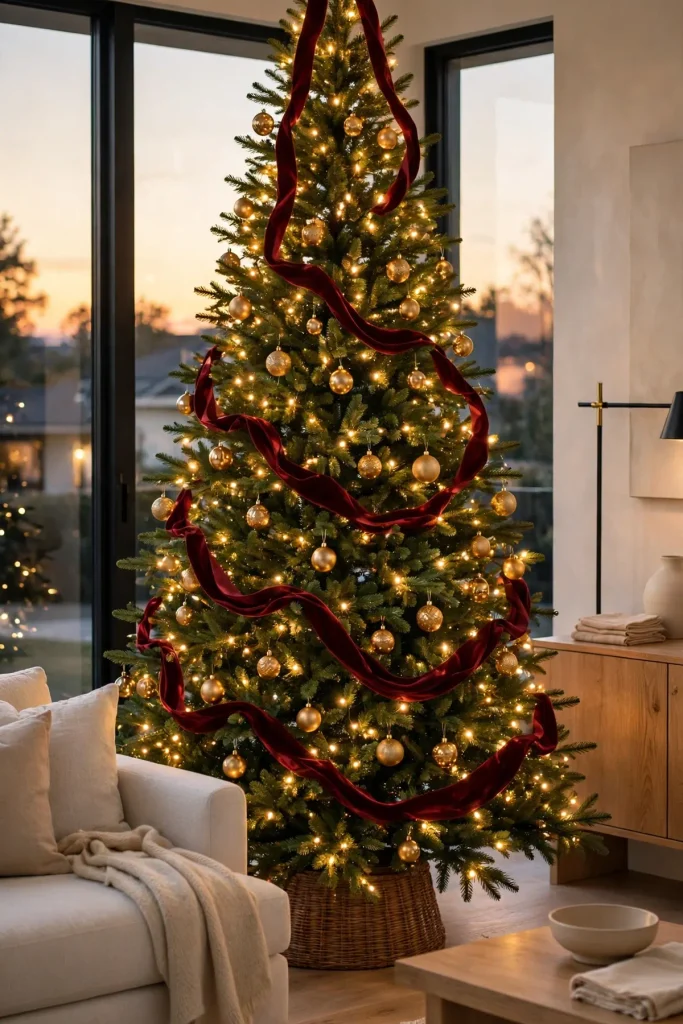
This is the move I would save first for a tree that must look finished tonight. Wide velvet ribbon with wired edges leaves the topper in loose waves and lands in soft folds between the branches. It fills gaps no ornament can reach, and gold baubles read richer against it. One wide roll covers a medium tree (budget Mid); the swap is wide satin ribbon, and effort is Medium, mostly the first two waves. In photos, the cascade is the line your eye follows.
2. Ornament Clusters, Wired Together in Threes

Build clusters at the table, not on a ladder:
- Pick three baubles in one colour family, different in size and finish.
- Thread thin wire or ribbon through all three caps and twist it into one loop.
- Hang the cluster as a single piece, smallest bauble turned toward the light.
A cluster reads as one generous moment instead of three lonely dots, so a tree needs far fewer. Wire costs pennies (budget Low), the swap is tying with leftover ribbon, and effort is Easy. Clusters photograph as depth, since the baubles sit at different distances.
3. Bead Garland Swags Instead of Tight Wrapping
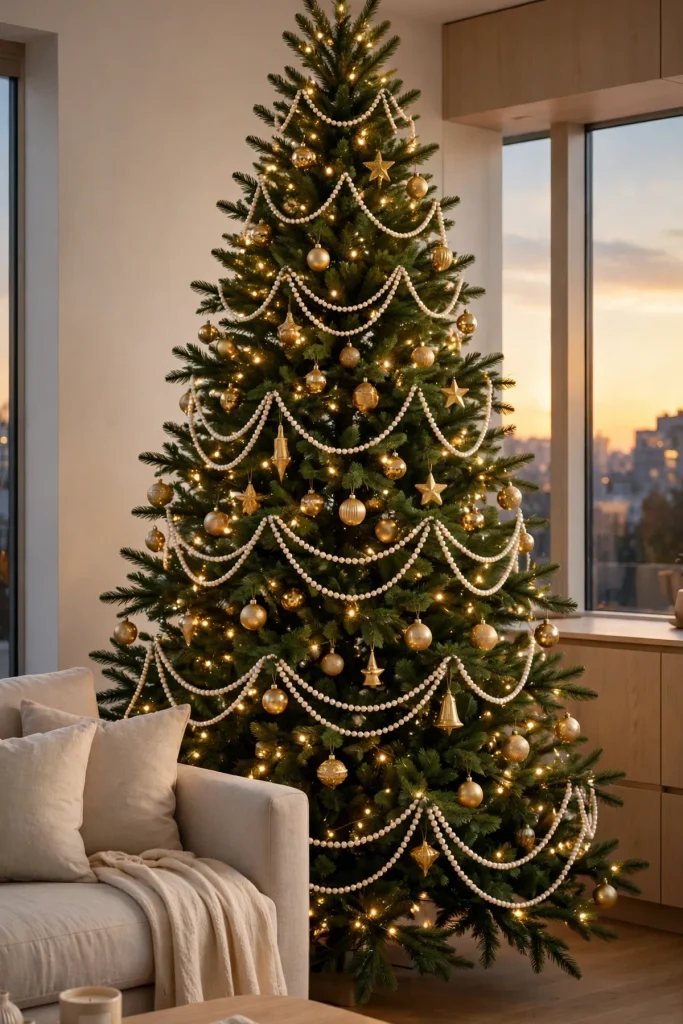
The mistake is pulling a bead garland tight until the tree looks belted. The fix is swags: let the strand dip in soft scallops, deeper in the middle of each dip, with high points pinned deep where nobody sees the join. Pearl or gold beads catch light along the whole curve. Two strands cover most trees (budget Low to Mid); the swap is wooden bead strands from another season. Effort is Easy. In photos the scallops draw a rhythm around the tree, so keep the dips even.
4. Ribbon Woven Through the Branches, Not Around Them
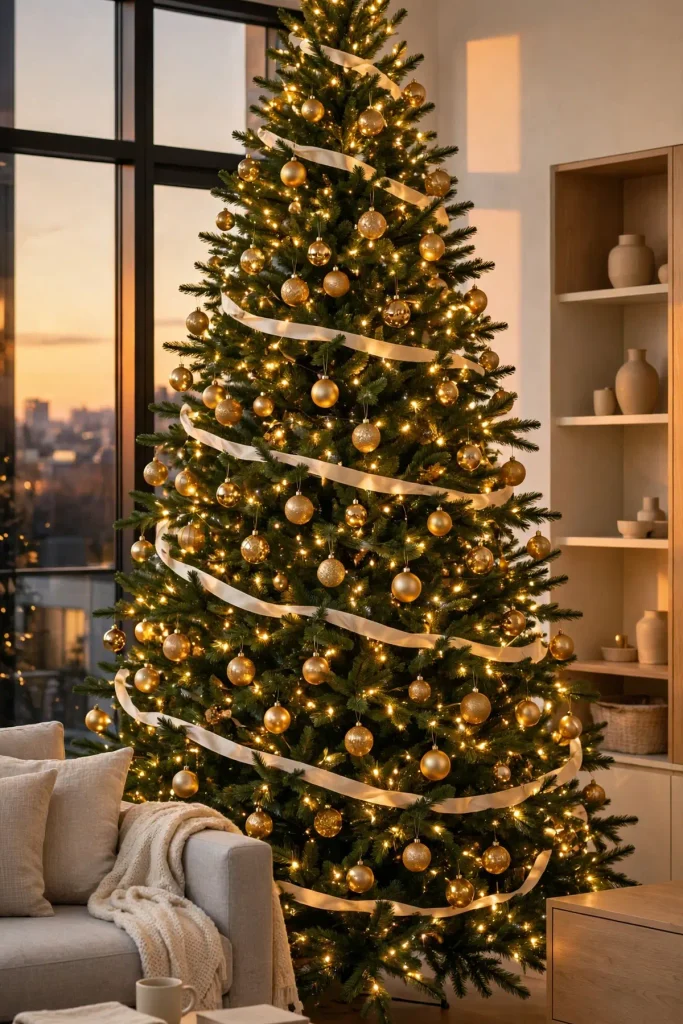
This one suits you if your tree is wide and a cascade would vanish into it. A medium ribbon dives in and out of the branches, showing a flash of colour, hiding, then showing again. The tree gains layers without a single extra ornament. Two rolls do a large tree (budget Mid); the swap is strips from a retired table runner. Effort is Medium; judge the path from across the room.
Ribbon should move like it grew there. Once it looks measured, it stops looking like decor and starts looking like packaging.
From the camera, it reads as colour threaded through the tree, not a stripe on it.
5. Icicle Picks That Stretch a Short Tree Taller
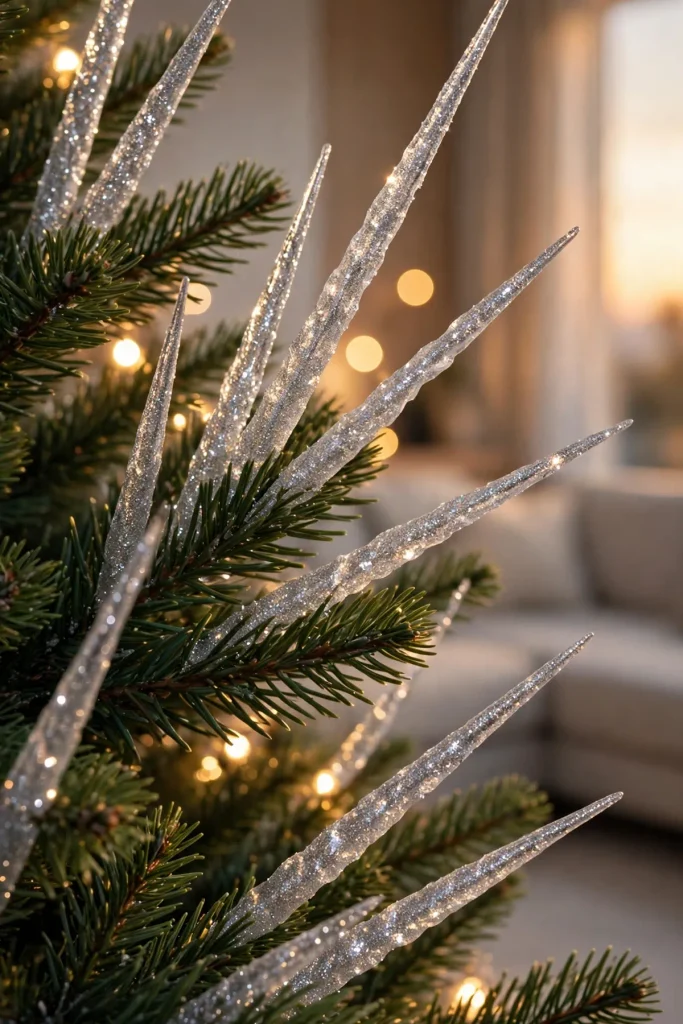
Silver or clear icicle picks, pushed in at upward angles through the top third, lend a small tree height it does not have. Each pick is a thin spike of glittered, glass-look strands; a bundle of twelve covers the visible faces. They sit between ornaments, lengthening the branch lines. A bundle is Low budget, and the swap is silver tinsel strands cut long and grouped in fives. Effort is Easy. In photos, icicles are the sparkle that survives a phone flash.
6. Candle Clips for a Glow Bulbs Cannot Copy
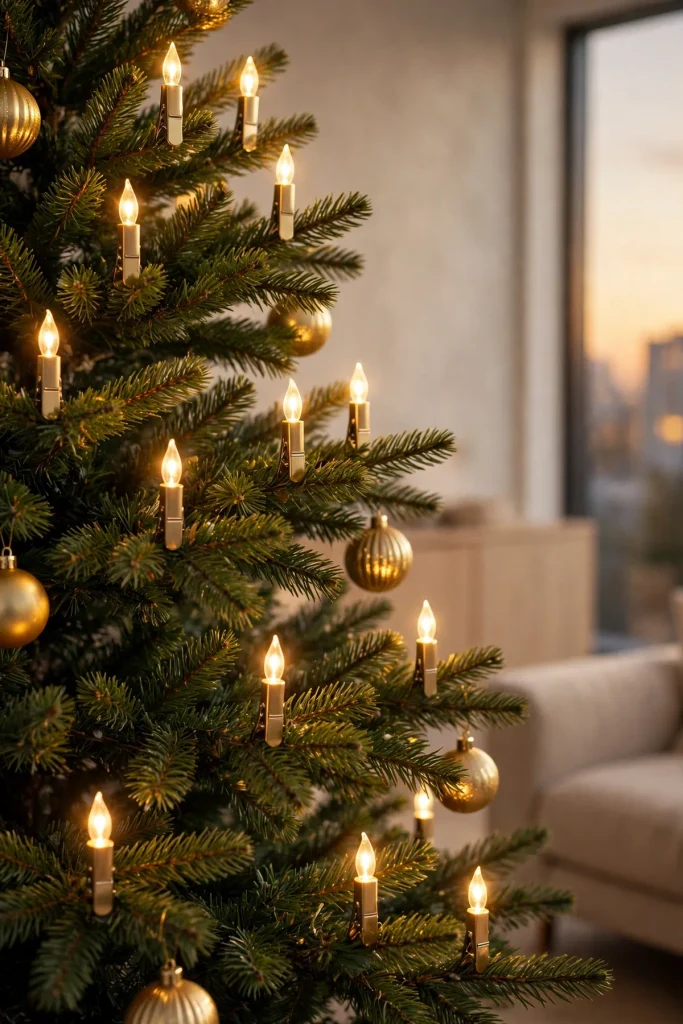
Clip-on candles are small LED candles on green clips that grip a branch and stand upright, like candles on old European trees. Ten to fifteen is plenty; more turns the tree into a chandelier. The flames sit above the branches, so the glow lands on the needles around them, which tucked-in string lights cannot match. A set is Mid budget; the swap is three LED candles on the mantel. Effort is Easy. They photograph warm and steady.
7. Colour Blocking: One Shade per Section of Tree
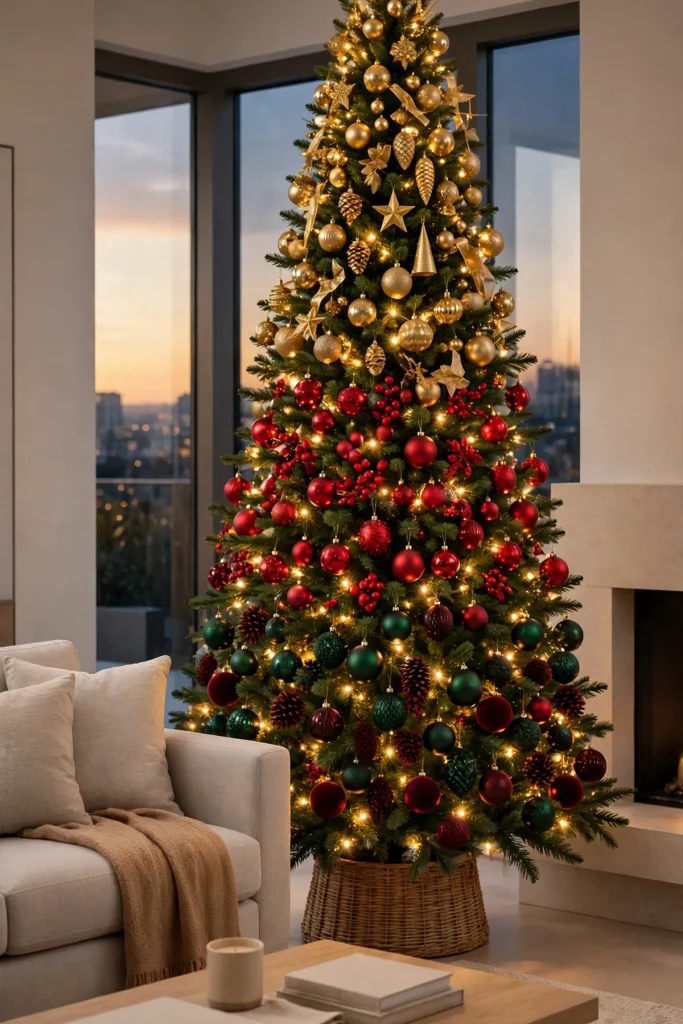
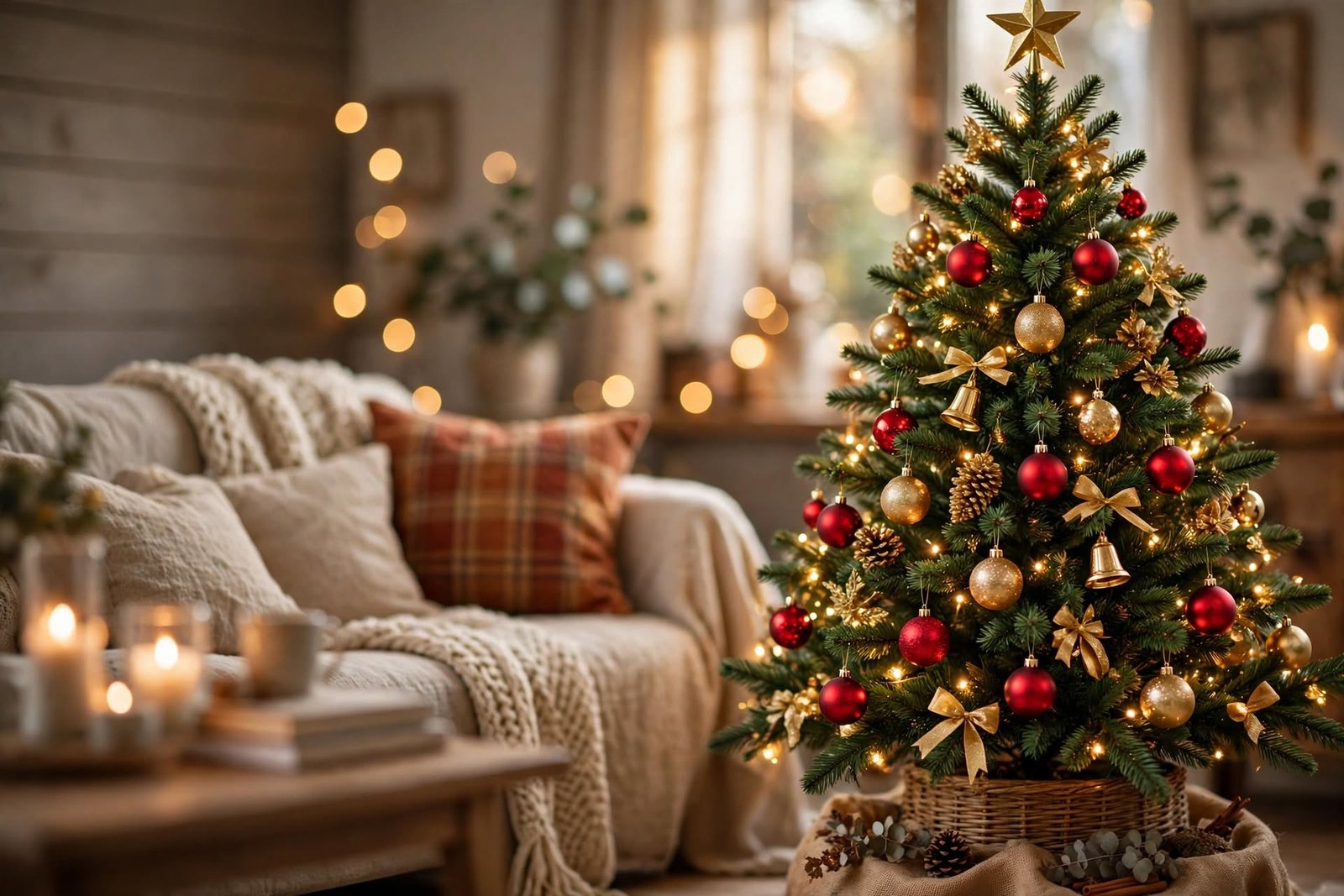
The usual failure is mixing colours so evenly that none registers: red, gold, red, gold, until the tree turns beige from across the room. The fix is zones. Gold up top, red through the middle, deep green and burgundy low, or your own split. Inside a zone, mix finishes freely; the shade does the organising. It uses ornaments already in the box (budget Low), and the swap is blocking by finish instead: matte low, shine high. Effort is Easy. From the doorway, blocked colour makes a home tree read deliberate.
8. A Tree Collar Where a Skirt Used to Be
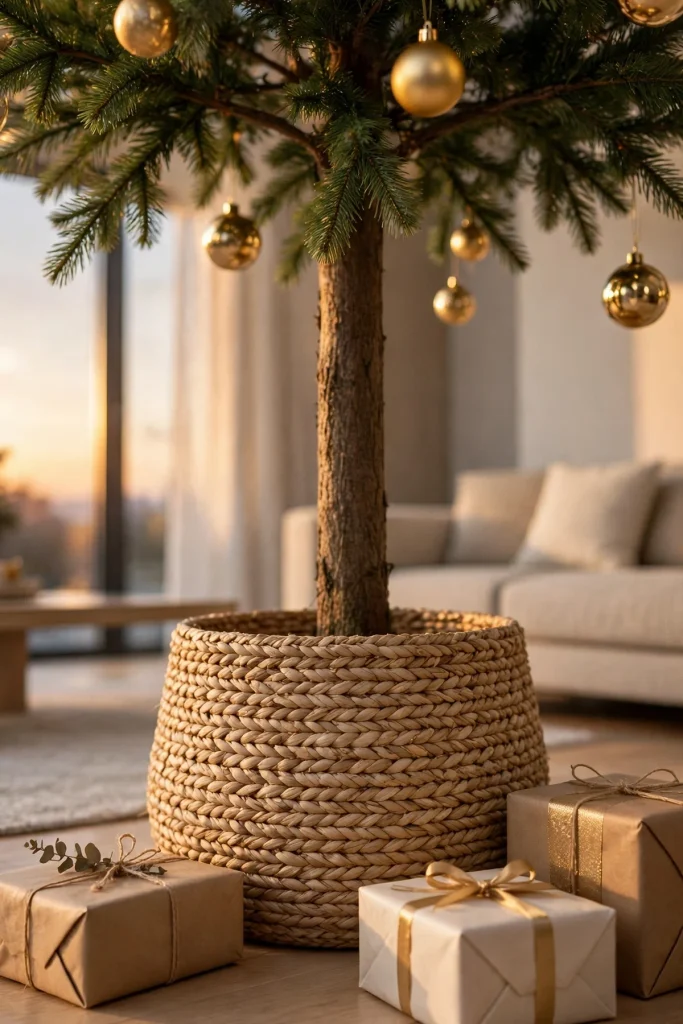
A collar is a ring of woven seagrass, metal or wood around the trunk that hides the stand, the cables and the dust. It gives the base a finished edge and stays put when gifts are pulled out. Measure the stand first; wide stands need wide rings. A simple woven collar is Mid budget; the swap is a large basket you own, its base folded down inside it. Effort is Easy, a two-minute job. The base appears in nearly every tree photo, so guests notice this fix without knowing why.
9. A Burst Topper Built From Picks and Sprays
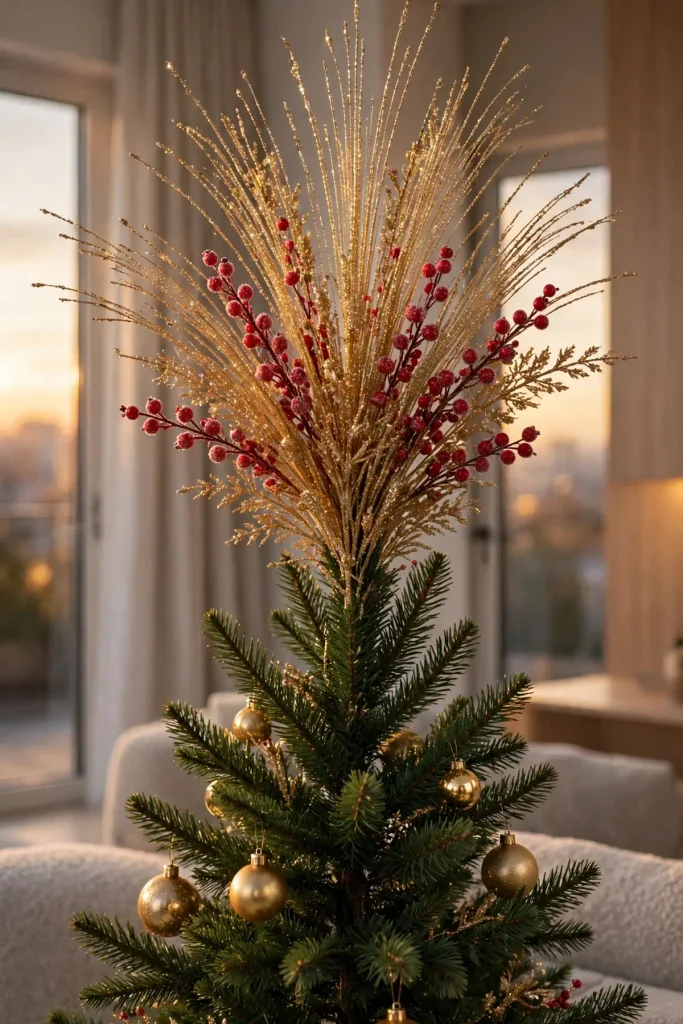
Swap the single star for a burst of sprays and picks fanning up from the treetop:
- Wire the tallest spray dead centre to the top branch.
- Add shorter sprays at angles, like clock hands between ten and two.
- Trail one pick down each side to connect the burst to the tree.
The pieces live in the craft-store pick bin (budget Low to Mid); the swap is a big bow with long tails; effort is Medium, all wiring. A burst photographs well from low angles, how most tree photos get taken.
Halfway check: squint from the doorway. Dark holes want one deep ornament or one pick, not another strand.
10. Photo Ornaments That Turn the Tree Into a Family Album
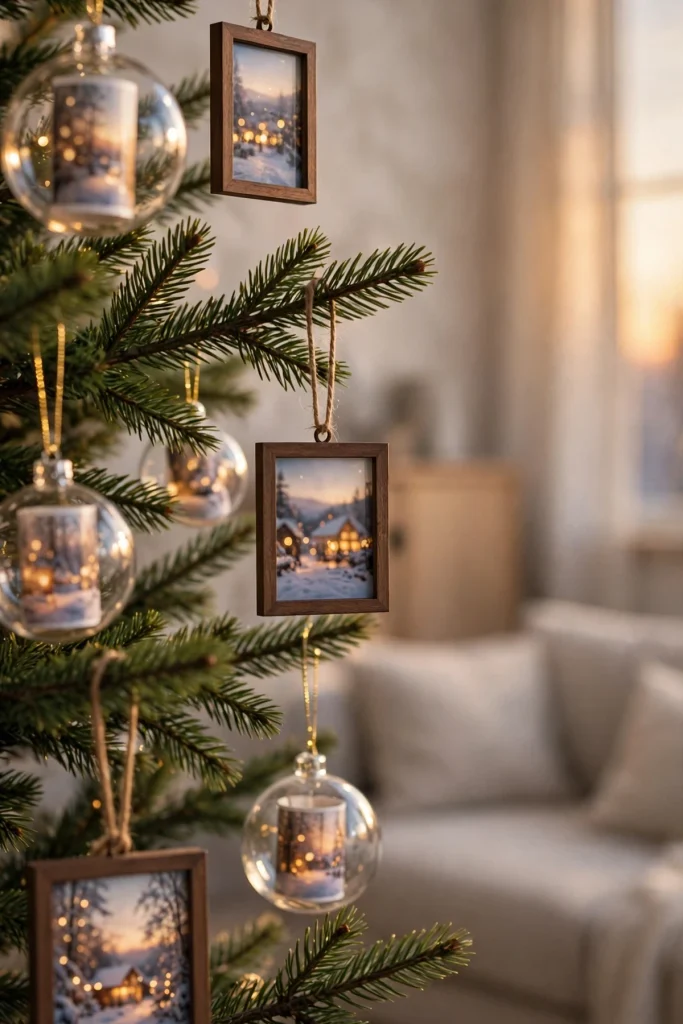
This suits you if the tree looks beautiful but a bit like a stranger’s. Small frames and clear fillable balls hold one photo each, hung at eye level. Print photos small and bright; tree light is dim, and dark prints disappear into the branches. A set of frames is Low budget; the swap is home prints in clear balls you own. Effort is Easy; the choosing takes longer than the hanging. Visitors photograph these more than the costly ornaments, so put the warmest pictures at the front.
11. Monogram Letters for the People in the House

One letter per person, scattered through the middle of the tree, turns generic decor into something that could only belong to your house. Gold or wooden letters about palm-size read clearly without shouting. Sold singly, they keep the budget Low for most families; the swap is letters cut from thick card and painted at home. Effort is Easy. Keep letters out of the top and bottom thirds, away from topper and collar. In photos they are the detail people zoom in on, so spell carefully.
12. Two Layers of Lights, One Deep and One Bright
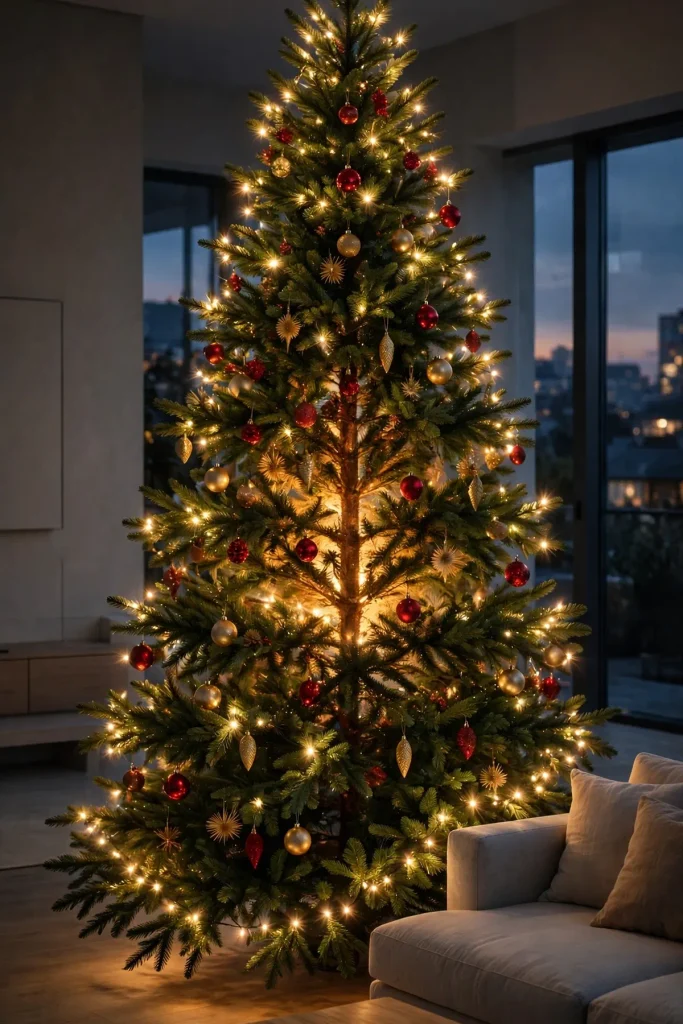
One string on the outside of the branches gives a lit surface and a dark middle. Two layers fix it: one warm string wound deep, close to the trunk, and a second, sparser one along the outer tips. The deep layer glows through the needles like embers; the outer one gives the shape its sparkle. Two strings take the light budget to Mid; the swap is adding just the deep layer to the string you own. Effort is Medium; the deep string goes on before anything else. Trees lit this way hold up in evening photos without a flash.
13. Ornaments Tucked Deep for a Tree With Depth
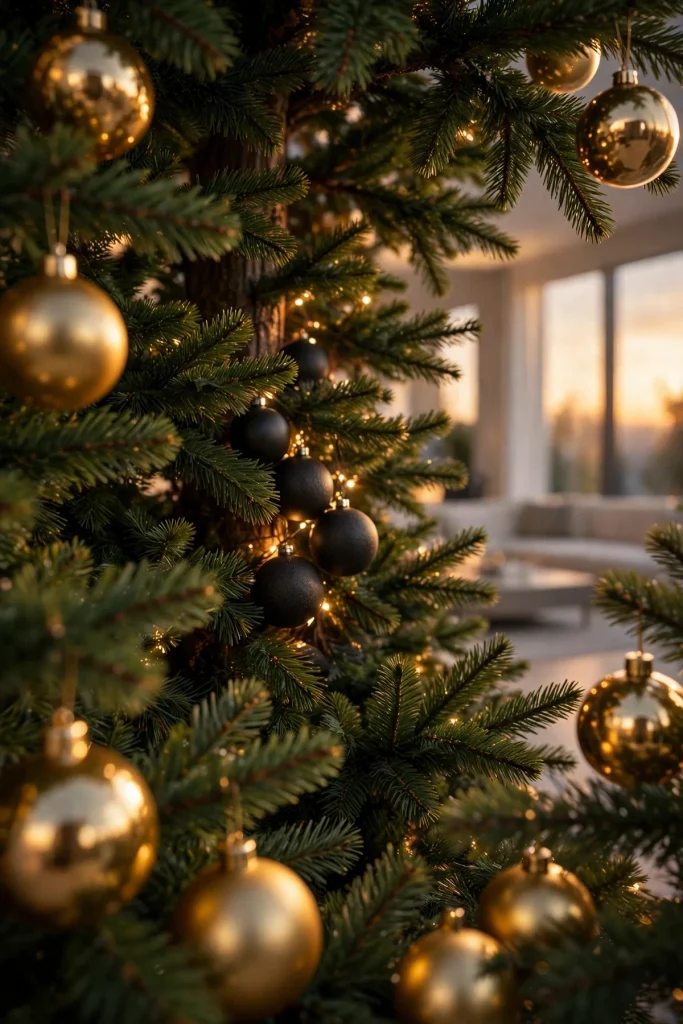
The mistake is hanging every ornament on the outermost tips, where they line up like soldiers and leave the inside of the tree empty. The fix costs nothing: push a third of your ornaments deep, close to the trunk, in matte, darker finishes, so they glow softly through the needles. Save the shiniest pieces for the surface. Budget Low, effort Easy.
Depth is the difference between a decorated tree and a decorated surface. The ornaments you barely see do more work than the ones you can.
Deep ornaments make a tree photograph round instead of flat.
14. Small Bows Tied Right on the Branch Tips
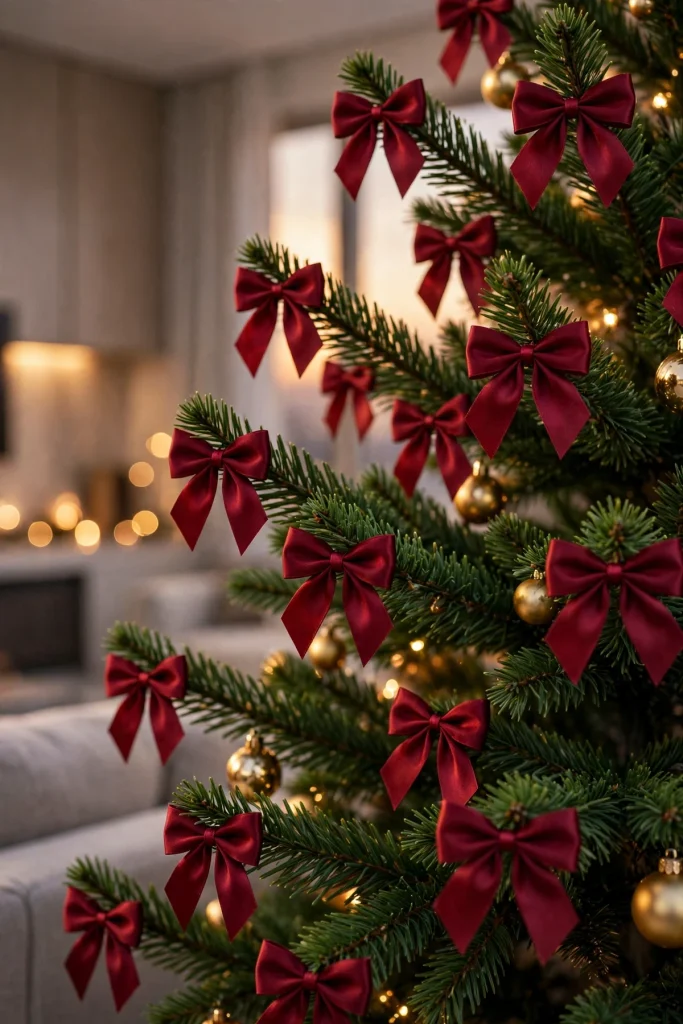
Bows finish the bare tips other decor cannot reach:
- Tie simple two-loop bows in batches while the kettle boils.
- Wire one bow onto each chosen tip, upright, like it landed there.
- Step back every ten bows and aim the next batch at the emptier side.
One roll of velvet ribbon makes a lot of small bows (budget Low); the swap is offcut bows from ideas 1 and 4. Effort is Easy but repetitive, a podcast-length job. Bows read clearly in photos even at the back of the tree: cheap insurance for the far side.
15. Dried Orange Slices for a Warm, Natural Note
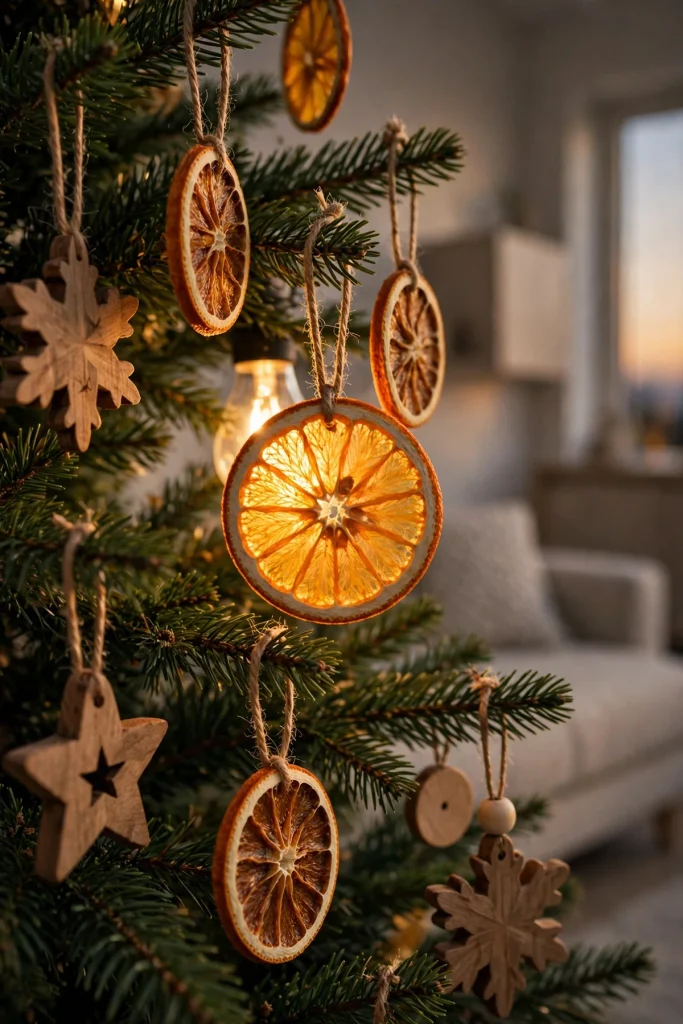
Made for a traditional tree of wood, wool and warm colour. Dried until light shines through them, the slices hang from twine loops and glow like stained-glass windows when a bulb sits behind one. A bag is Low budget; the swap is drying your own in a low oven one afternoon. Effort is Easy to hang, Medium if you dry your own. Keep them mid-tree, away from the lowest lights. In photos they bring the one colour most trees miss: a true, warm orange.
16. Big Ornaments Low, Small Ones High
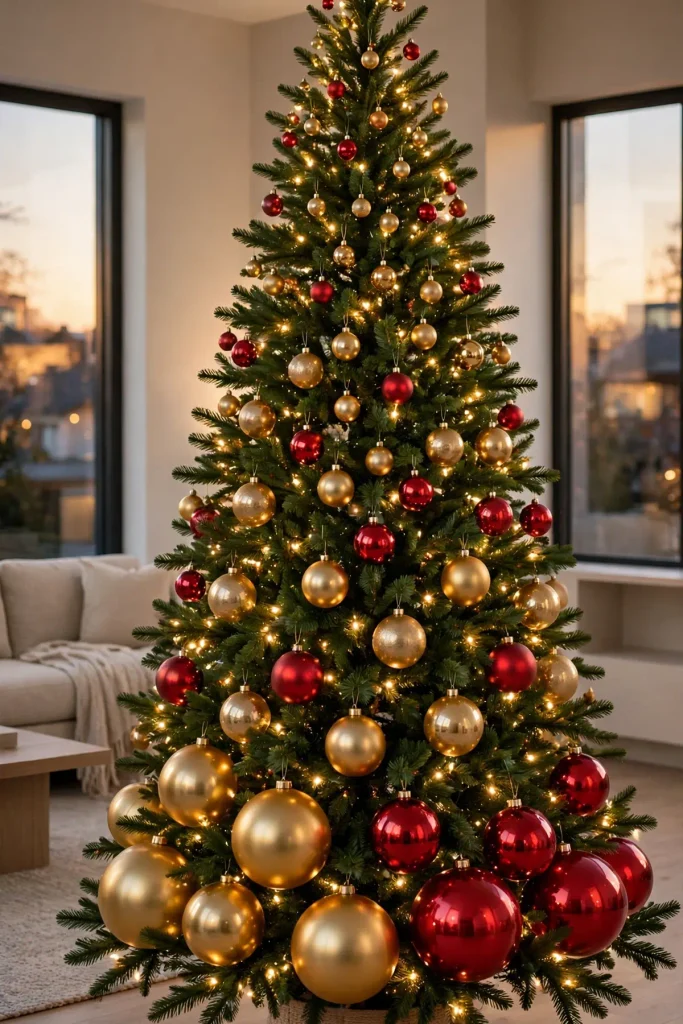
Size order is the quiet rule under most display trees. The largest ornaments hang in the bottom third, where branches are longest, medium ones through the middle, and the smallest near the top, where a big bauble looks ready to fall. Most home trees mix sizes at random and look unsettled for no obvious reason. It costs nothing (budget Low, effort Easy), mostly sorting the box first. If your collection is all one size, group them into the clusters from idea 2 and treat each cluster as one big piece. The gradient gives photos that calm, balanced look.
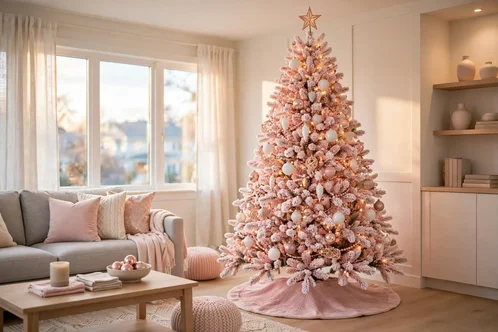
17. Snow-Dusted Tips From a Can of Flocking
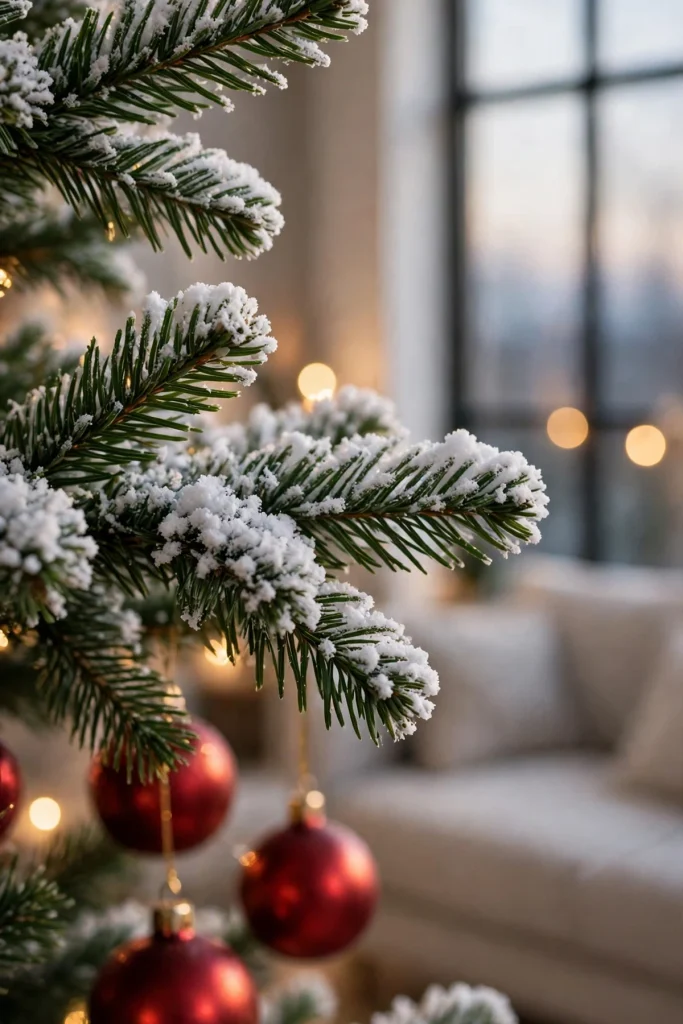
A light pass of flocking spray over the outer tips turns a plain green tree snowy without the price of a flocked tree. Work in short bursts from above, so snow lands where real snow would, and stop early; a heavy hand turns the tree grey. One can covers a medium tree (budget Low to Mid); the swap is white and silver ornaments clustered at the tips. Effort is Medium, a garage job with drying time before anything else goes on. Snowy tips catch window light in daytime photos better than any ornament.
18. Ribbon Loops Instead of Wire Hooks
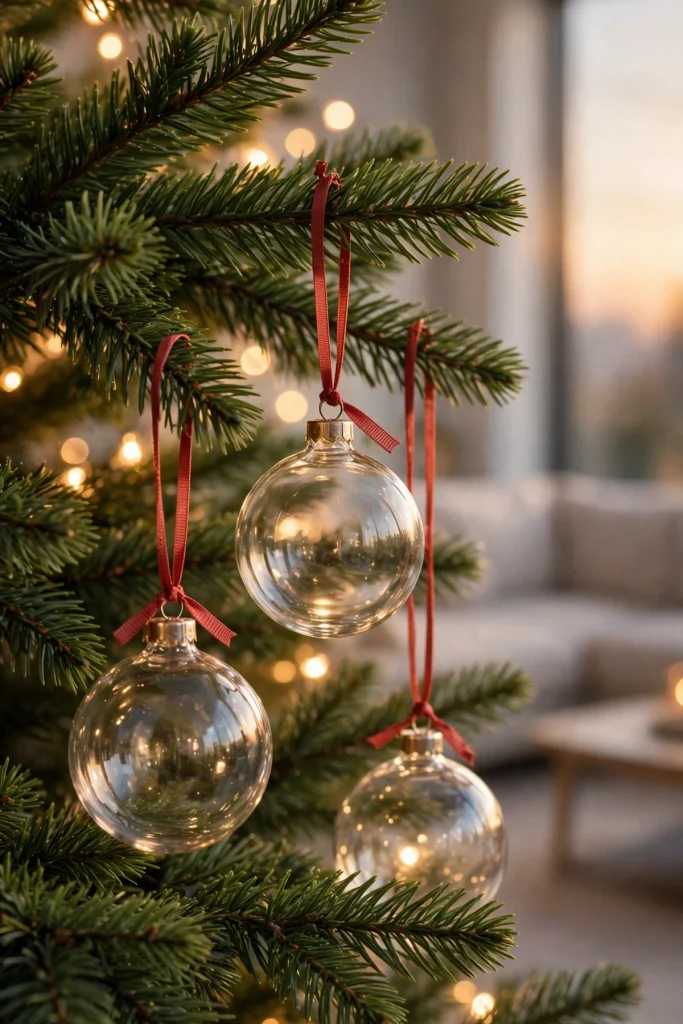
The last detail is one nobody sees and everybody feels. Wire hooks bend, scratch and leave ornaments at odd angles; a short loop of thin ribbon tied through the cap lets each one hang straight and slightly higher, tucked into the branch. It also means no sharp hooks in the carpet in January. A spool of narrow ribbon is Low budget and lasts for years; the swap is plain twine on a rustic tree. Effort is Medium the first year, Easy after: the loops stay on in storage. Photos will not show the loops, only every ornament hanging true.
A Simple Order: What Goes on the Tree First
Order is the whole secret. Lights first, the deep string before the outer one, while the tree is bare enough to reach the trunk. Ribbon and garlands next, because they need room to fall and hate being threaded past ornaments. Then the largest ornaments, low and deep, then clusters, then surface baubles in their colour zones. Picks, icicles and candle clips go in once the shape is set; the topper crowns it; bows fill the bare tips. Decorating out of order is how ornaments get crushed behind ribbon.
Odd Numbers Everywhere: Why Clusters of Three Read Better
Look at any tree in a shop window and count: bows in threes, ornaments in threes and fives, picks in odd fans. No accident. Groups of three form a rough triangle, and the eye reads a triangle as finished; a pair reads as two things awaiting a verdict. Odd groups refuse to line up, so the tree keeps the loose, gathered look even spacing kills. This is practical, not precious: when a section looks thin, the fix is rarely one added ornament, but a cluster of three, or a fifth bow in a run of four. Threes work at every scale, and they forgive an uneven hand: a group with no matching rule cannot look mismatched.
Small Budget, Full Tree: Where the Money Actually Shows
If the budget stretches to two purchases, make them ribbon and lights. Ribbon covers ground nothing else can, and deep light makes modest ornaments glow like good ones. Ornaments are the worst first spend: single baubles vanish on a tree, and money shows there only on a few large pieces for the bottom third. Everything else can be borrowed from the house: baskets become collars, photos become ornaments, offcuts become bows. Time is the other budget: an unhurried hour for lights and ribbon, half an hour for the rest.
Three Decor Pieces You Can Make at the Kitchen Table
Dried orange slices are the easiest make: slice, pat dry, give them a slow afternoon in a low oven, then loop twine through a hole in the rind. Ribbon bows are second; the small two-loop kind from idea 14 needs no bow gadget, just ribbon, scissors and patience. Third is printed photo ornaments, cut to fit clear fillable balls from a craft-shop multipack. All three cost very little, store flat or small, and are the pieces guests ask about first.
Packing It Away So Next Year Starts Easy
Store the clusters exactly as they hang, wired together in a shallow box, and next year’s fullest section is already built. Ribbon keeps its waves rolled loosely, not folded; velvet especially dislikes a hard crease. Take batteries out of candle clips before boxing them, and coil each light string around cardboard so the two strings stay separate. Ornaments stored with their ribbon loops still tied save a long hook-hunt in December. A tree packed in layers comes out in layers, in order, ready to decorate.
Christmas Tree Decor Questions, Answered Plainly
How many ornaments does a tree actually need to look full?
Fewer than the box suggests, if placed well. Clusters, deep tucking and a size gradient make a modest collection read full; thin spots want ribbon or picks, not more baubles.
Does ribbon go on before or after the ornaments?
Before, almost every time. Ribbon needs room to fall and weave, and threading it past hung ornaments crushes both. The exception is small bows, which fill bare tips at the end.
How do I make a sparse tree look fuller?
Work the inside first: deep lights, ornaments near the trunk, picks in thin patches. Then add one wide ribbon move. Sparse trees fail from the inside out.
What can go on top if I do not like stars or angels?
A burst of sprays and picks is the strongest swap; a large bow with long tails is the softer one. Both wire into the star’s spot, and a good one connects downward instead of perching.
How do I stop the tree looking messy with lots of decor on it?
Limit the palette and organise what is left: two or three colours in zones, ornaments in threes, sizes graded big to small. That tidies a busy tree faster than removing pieces; mess usually means no system.