17 Fall Outfits with Boots, Mapped by the Ground You’ll Actually Walk On
I bought a gorgeous pair of pointed-toe ankle boots with a slim heel for a fall trip to a city known for its cobblestone streets, and by the second afternoon my ankles had turned into something resembling shaky newborn deer legs. The boots were beautiful. They were also completely wrong for the terrain, and no amount of outfit planning around them could fix that mismatch.
That trip taught me to think about boots the way a hiker thinks about a trail map before choosing footwear, not by how an outfit looks in a mirror, but by where your feet will actually spend the day. So this post is organized by terrain. Seventeen outfits, each matched to a specific walking surface, with a terrain reading explaining why that boot works there and a sole check on what to look for before you buy.
Terrain One: Cobblestone and Uneven Streets
Old city centers, historic districts, uneven brick. This terrain punishes thin, unstable heels more than any other.
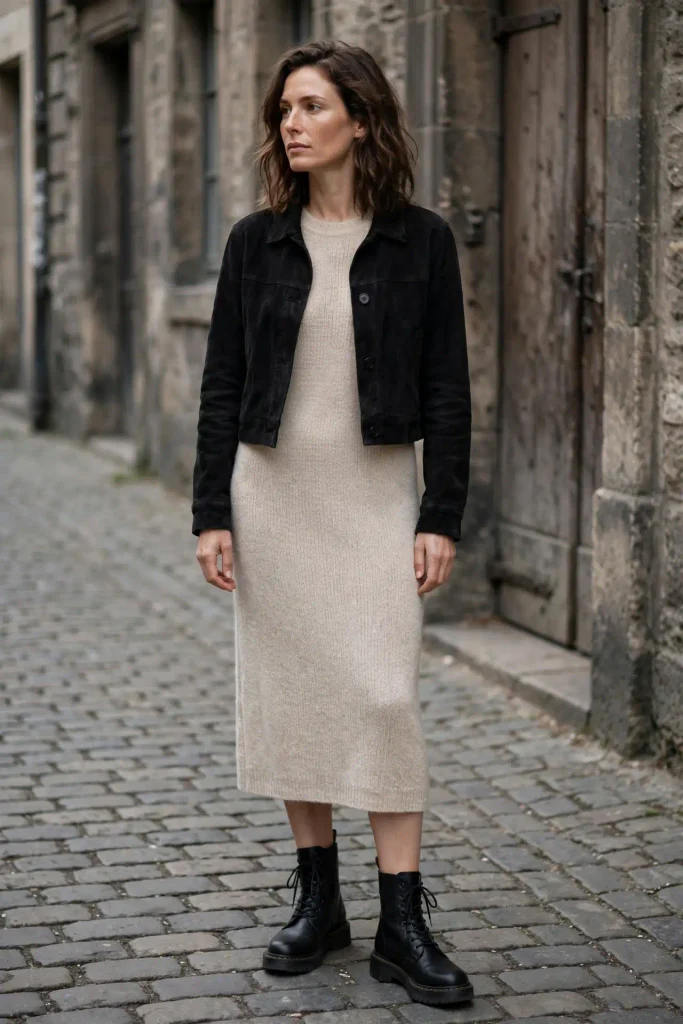
1. The Flat Combat Boot and Midi Dress.
A flat, lace-up combat boot with a wide, low sole, a knit midi dress, a cropped jacket.
Terrain reading: a wide, flat sole distributes your weight evenly across uneven stones, while anything with a narrow heel will catch in the gaps between them.
Sole check: look for a sole with almost no heel lift at all, ideally under an inch.
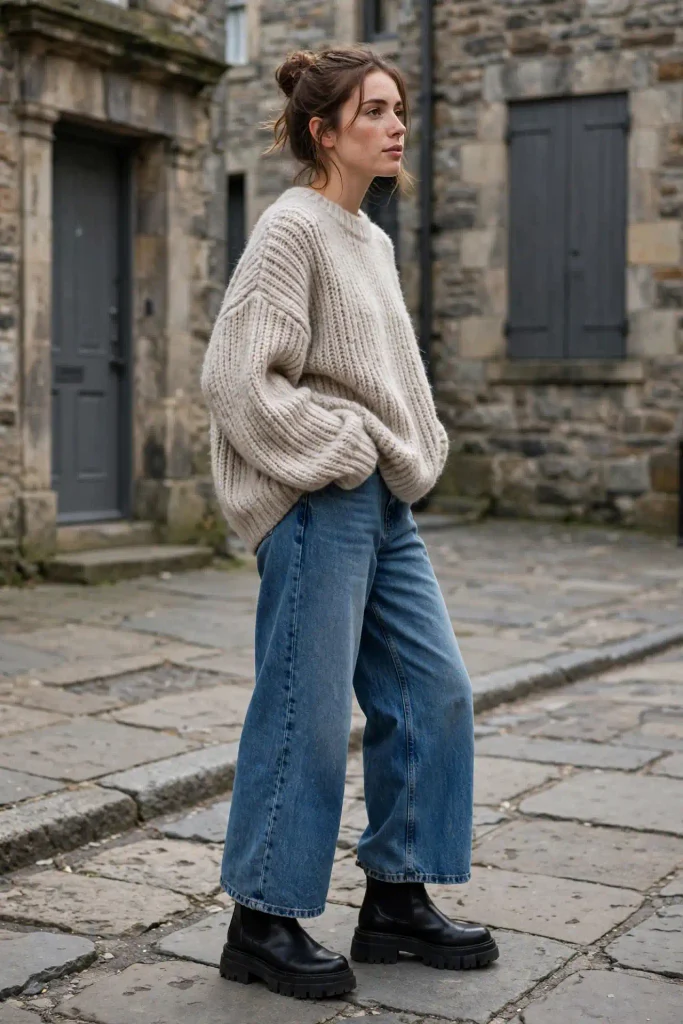
2. The Lug-Sole Chelsea Boot and Wide-Leg Jean.
A chunky, lug-soled Chelsea boot, wide-leg jeans that skim the top of the boot, an oversized sweater.
Terrain reading: the deep tread on a lug sole grips uneven, slightly slick stone surfaces far better than a smooth leather sole would.
Sole check: run your finger across the sole in the store, and if the tread pattern feels shallow or worn smooth already, skip it.
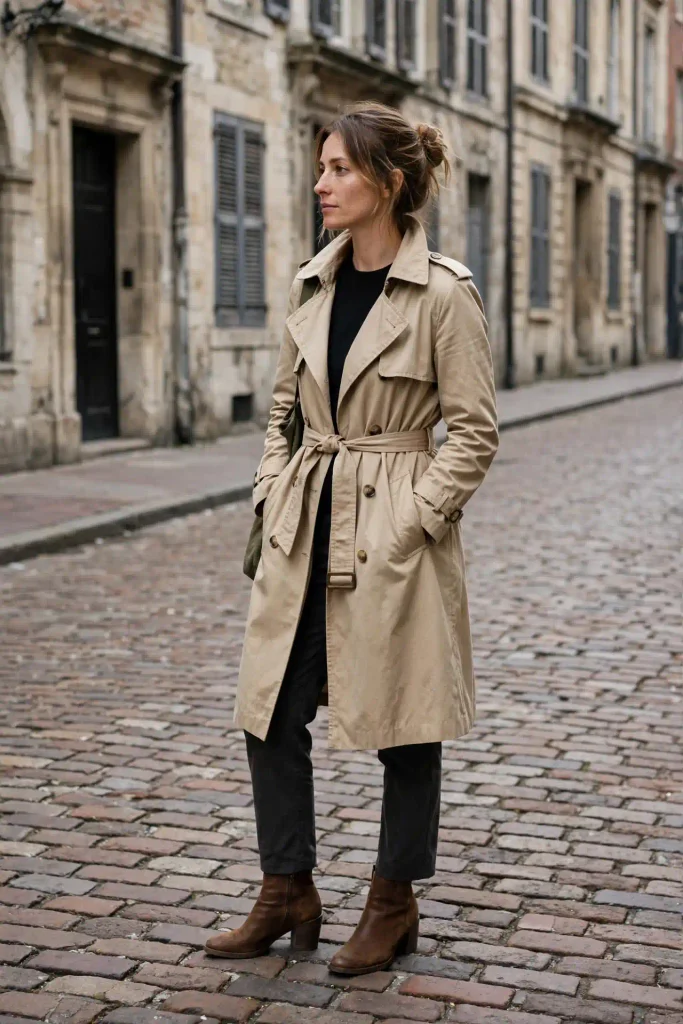
3. The Low Block Heel Boot and Trench.
An ankle boot with a wide block heel no taller than two inches, a belted trench coat, straight trousers.
Terrain reading: a block heel offers a small height boost without the instability of a slim stiletto heel, which matters enormously the moment a heel meets an actual gap between stones rather than flat pavement.
Terrain Two: Wet Sidewalks and Rain
Genuinely wet weather, not just cool temperatures. This terrain is about sealed seams and grip as much as style.
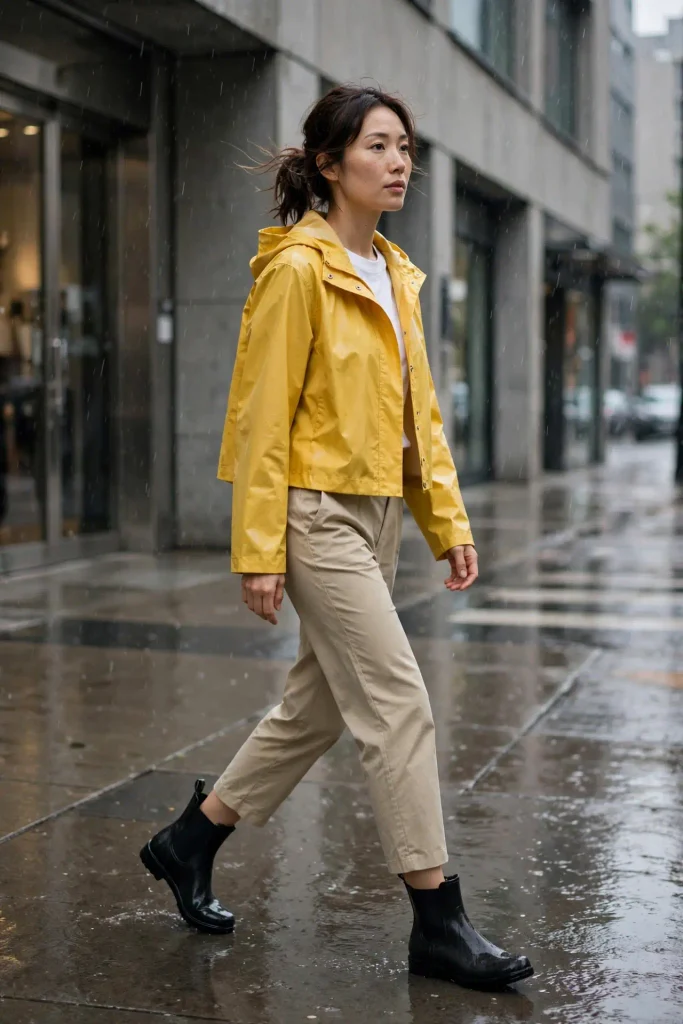
4. The Rubber-Soled Rain Boot and Cropped Pants.
A sleek, ankle-height rubber rain boot, cropped straight-leg trousers, a cropped raincoat.
Terrain reading: rubber is the only material on this whole list that is genuinely waterproof rather than water-resistant, which matters the moment you step in an actual puddle rather than just damp grass.
Sole check: look specifically for a deep, multi-directional tread, since smooth rubber soles can be surprisingly slick on wet tile or painted crosswalk lines.
5. The Treated Leather Boot and Midi Skirt.
A leather ankle boot treated with a waterproof spray, opaque tights, a midi skirt, a warm coat.
Terrain reading: treated leather sheds light rain well but will eventually let water in during a genuine downpour, so this pairing works for a drizzly commute rather than a full storm.
Sole check: check that the sole itself, not just the leather upper, has a rubber or synthetic grip layer rather than a smooth leather sole that becomes dangerously slick when wet.

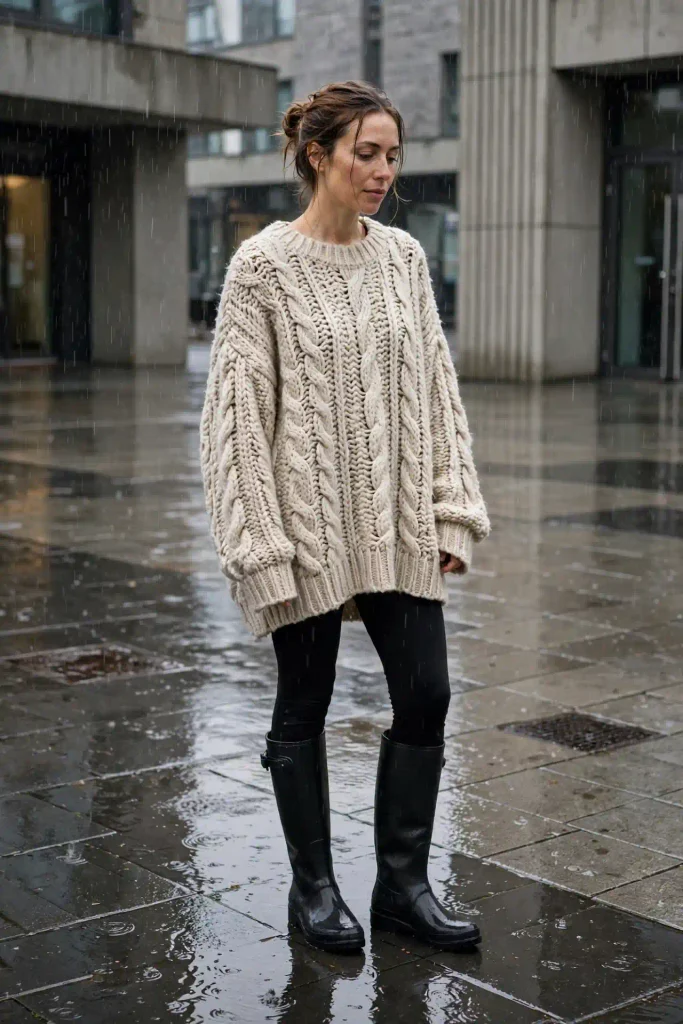
6. The Tall Rain Boot and Oversized Sweater.
A knee-high rubber rain boot, an oversized knit sweater worn as a dress or with leggings underneath.
Terrain reading: height matters here as much as material, since ankle-height waterproofing does nothing if you’re stepping through a puddle deeper than the boot’s shaft.
Terrain Three: Campus Lawns and Grass
Quads, parks, grassy walking paths between buildings. Soft, occasionally muddy ground that punishes thin heels even worse than cobblestone.
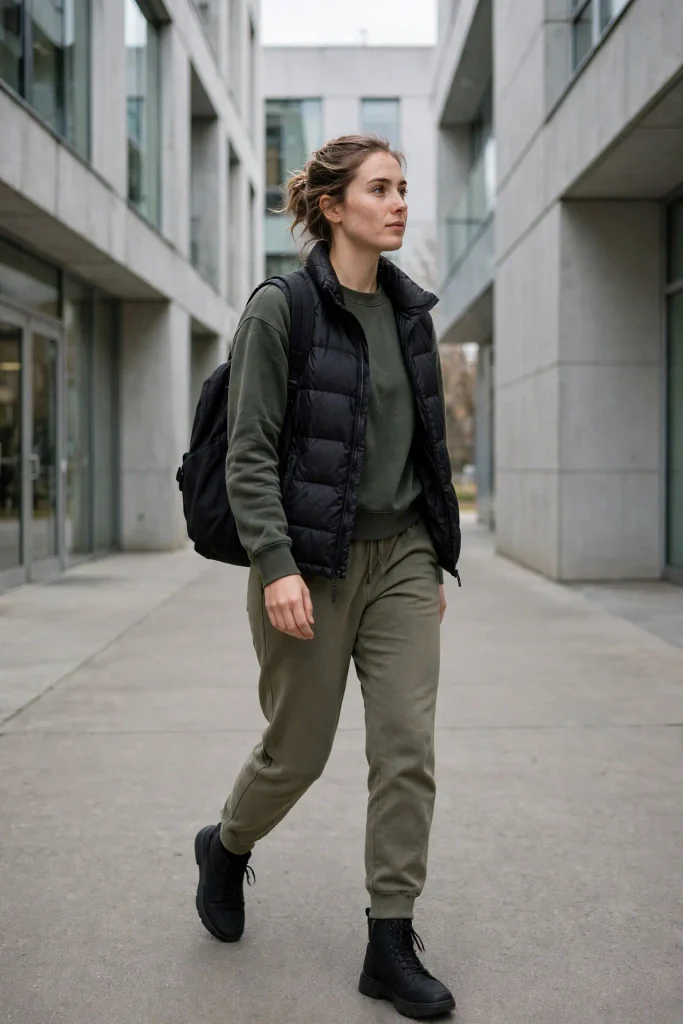
7. The Sneaker-Boot Hybrid and Joggers.
A low, sneaker-style ankle boot with a flexible rubber sole, straight-leg joggers, a puffer vest.
Terrain reading: soft ground needs a sole that can flex and grip simultaneously, which a rigid dress boot sole generally can’t do as well as a hybrid athletic-boot construction.
Sole check: bend the boot in half slightly in the store; a sole with genuine flex will bend readily, while a stiff dress-boot sole will resist.
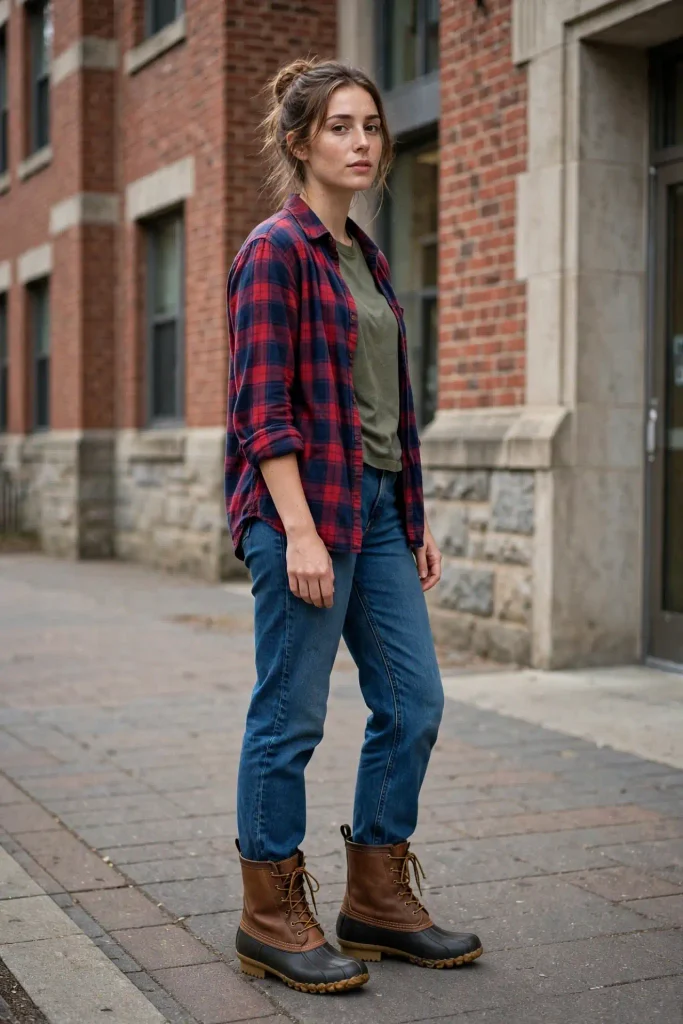
8. The Duck Boot and Flannel Layers.
A classic duck boot with a rubber lower shell and leather upper, layered flannel over a tee, straight jeans.
Terrain reading: duck boots were originally designed for exactly this kind of unpredictable, sometimes-muddy ground, and the rubber lower shell handles wet grass far better than an all-leather construction.
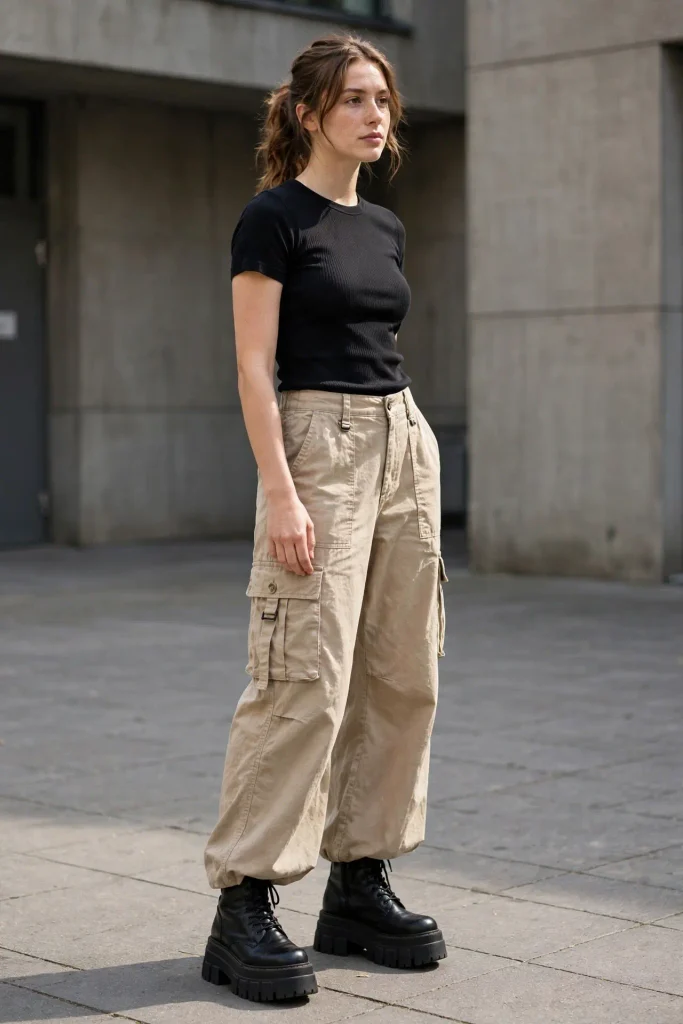
9. The Platform Combat Boot and Cargo Pants.
A chunky platform combat boot, wide-leg cargo pants, a fitted top.
Terrain reading: the added platform height keeps you slightly above genuinely muddy patches without sacrificing the wide, stable base a flat combat sole already provides.
Terrain Four: Office Carpet and Polished Floors
Indoor, climate-controlled, smooth. This terrain is actually the most forgiving in terms of grip, but the hardest on comfort across a full seated-then-standing workday.
10. The Pointed Ankle Boot and Tailored Trouser.
A pointed-toe ankle boot with a slim mid-height heel, tailored straight-leg trousers, a silk blouse.
Terrain reading: smooth indoor floors are the one place a slimmer heel genuinely makes sense, since there’s no uneven ground or wet surface to fight against, only the demand of looking polished while seated most of the day.

11. The Knee-High Boot and Sheath Dress.
A sleek knee-high boot with a low, stable heel, a fitted sheath dress, a blazer.
Terrain reading: indoor terrain lets you prioritize the visual line of a tall boot without worrying about tread or waterproofing at all, since the entire day happens on flat, dry flooring.

12. The Loafer-Boot Hybrid and Wide Trouser.
A low, loafer-inspired ankle boot with almost no heel, wide-leg trousers, a fitted knit top.
Terrain reading: for an office day involving significant walking between meetings on hard floors, a near-flat sole reduces foot fatigue far more than even a low block heel would across eight consecutive hours.

Terrain Five: Hiking Trails and Unpaved Paths
Actual dirt, gravel, tree roots, inclines. The most demanding terrain on this whole map, and the one where fashion genuinely has to defer to function.
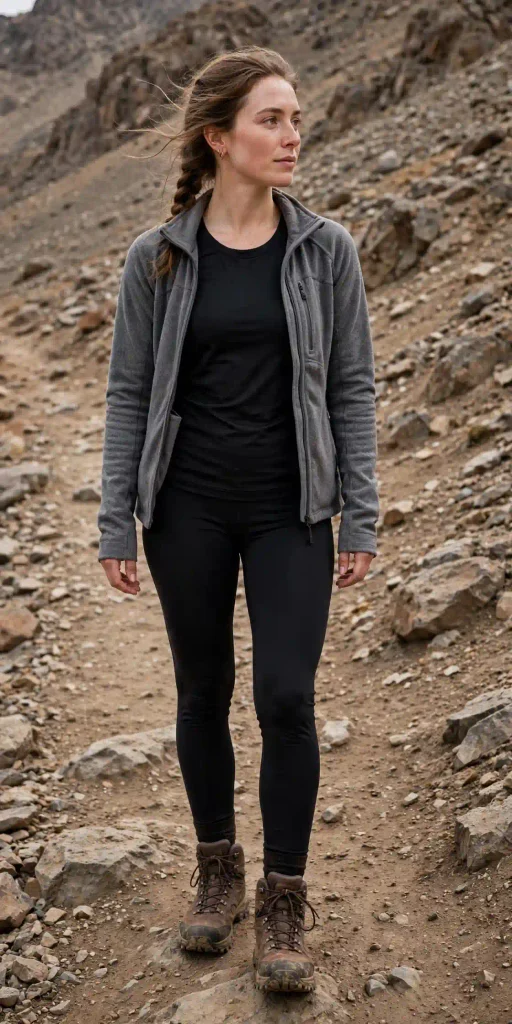
13. The Waterproof Hiking Boot and Technical Layers.
A genuine ankle-height hiking boot with an aggressive tread, moisture-wicking base layers, a technical fleece.
Terrain reading: this is the one terrain on the map where a fashion boot simply cannot substitute for purpose-built footwear, since ankle support and tread depth are doing real structural work rather than aesthetic work.
Sole check: look for a sole rated specifically for hiking rather than a lifestyle boot styled to look outdoorsy, since the tread depth and rubber compound genuinely differ.
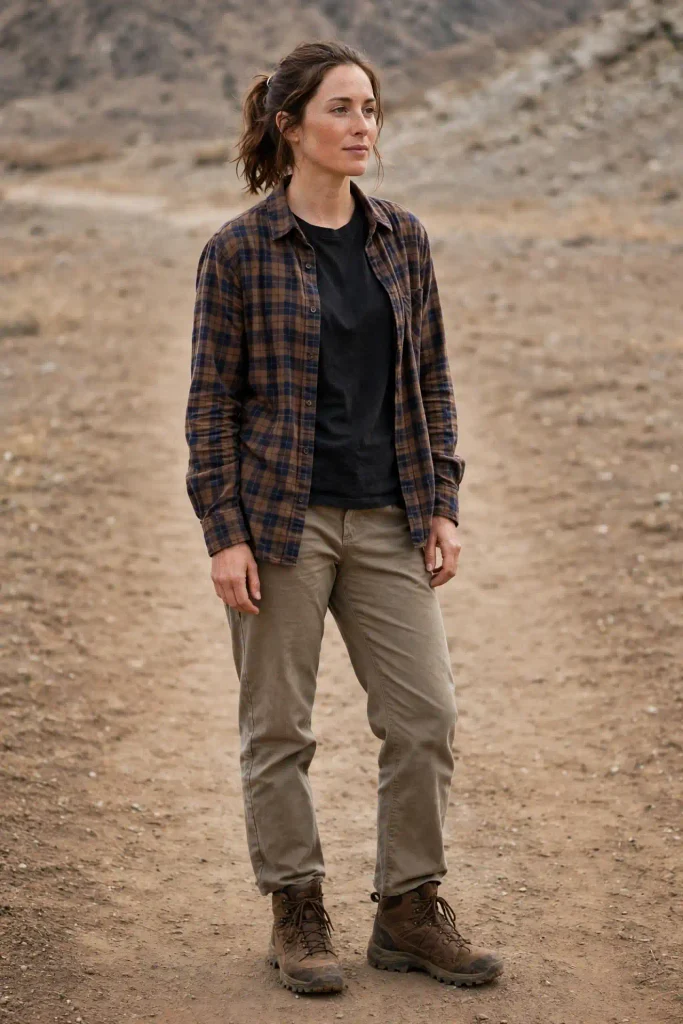
14. The Trail-Ready Combat Boot and Flannel.
A rugged combat boot rated for light trail use, flannel layered over a base tee, straight canvas pants.
Terrain reading: a slightly dressed-up trail boot works for well-maintained paths and moderate inclines, though it won’t offer the same ankle support as a true hiking boot on steep or rocky terrain.
Terrain Six: The Transitional Day (Multiple Terrains in One Outing)
The realistic scenario most people actually face: pavement to the car, a store’s polished floor, a walk across a parking lot, maybe a wet curb. Versatility matters more than specialization here.
15. The Classic Chelsea Boot and Straight Jean.
A leather Chelsea boot with a moderate, stacked low heel, straight-leg jeans, a wool coat.
Terrain reading: this is the genuine all-rounder of the entire map, competent on pavement, indoor floors, and light rain, without excelling dramatically at any single terrain, which is exactly why it’s the boot most people should own first.

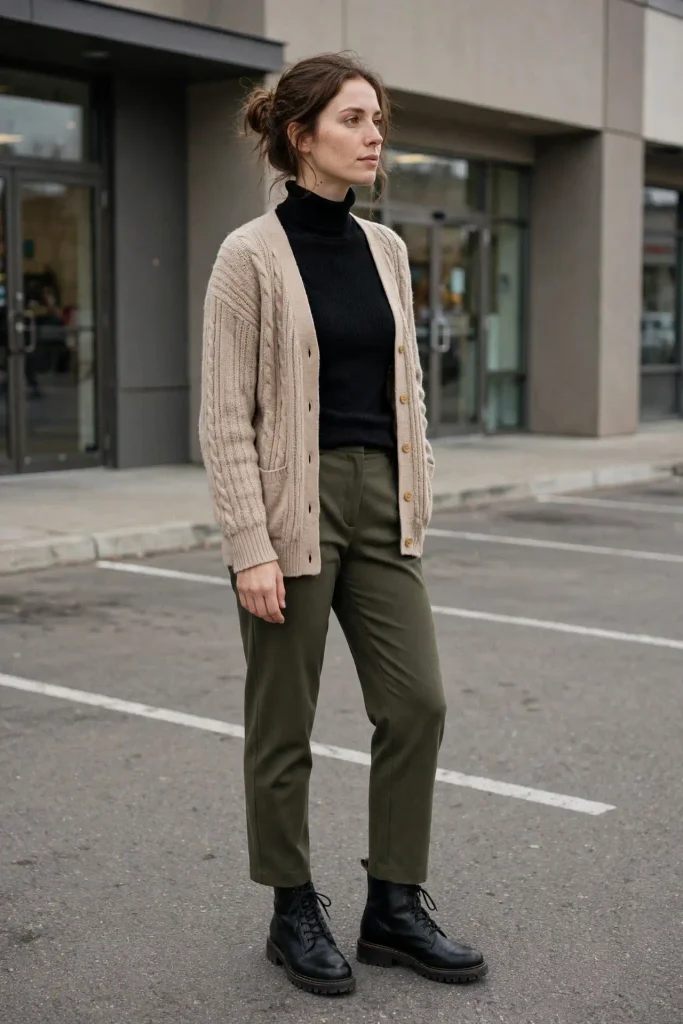
16. The Lace-Up Ankle Boot and Layered Knits.
A lace-up ankle boot with a moderate lug sole, a turtleneck under a cardigan, straight trousers.
Terrain reading: the lace closure adjusts for thicker socks on colder days while the moderate tread handles everything from a rainy sidewalk to an uneven parking lot reasonably well.
17. The Mid-Calf Boot and Wrap Dress.
A mid-calf boot with a low block heel, a wrap dress, a structured coat.
Terrain reading: mid-calf height splits the difference between an ankle boot’s mobility and a knee-high boot’s coverage, making it a genuinely sensible choice for a day involving a car, a few different stores, and unpredictable weather, without committing fully to any single terrain’s specialized boot.

Something New: The Shaft-Height Math
Boot shaft height, meaning how far up your leg the boot extends, interacts with your outfit’s hemline in a way that’s easy to get visually wrong. The general rule: leave no more than a few inches of bare leg, or a consistent layer of tights, visible between the top of the boot shaft and the bottom of your skirt or dress hem. A large, inconsistent gap of exposed leg between a knee-high boot and a mini skirt reads as accidental rather than intentional, while either a small gap or full coverage reads as deliberate. If you’re pairing a boot with trousers instead, this math disappears entirely, which is part of why terrain-heavy outfits like the hiking and campus entries above default more often to trousers over skirts.
The Heel Sound Check
Before buying any boot with even a small heel, do this simple test on the hardest floor available in the store. Walk normally, not carefully or slowly, and listen. A heel that produces a sharp, loud click with every single step will be genuinely disruptive in a quiet office, library, or lecture hall, regardless of how the boot looks. A slightly wider or rubber-capped heel tip produces a noticeably softer sound and is worth prioritizing for any terrain involving quiet indoor spaces, which is exactly why several office-terrain entries above specify a wider block heel rather than a slim stiletto.
The Salt-and-Rain Protection Chart
| Material | Rain Performance | Salt Stain Risk | Best Terrain |
|---|---|---|---|
| Treated leather | Water-resistant, short exposure | Moderate, needs cleaning after | Light rain, mixed terrain |
| Untreated leather | Poor, absorbs moisture | High | Dry terrain only |
| Suede | Poor, stains easily | High | Dry terrain only |
| Synthetic/faux leather | Water-resistant | Low | Wet sidewalks, budget option |
Road salt, used in many regions once temperatures drop toward winter, leaves visible white residue on leather and suede specifically, which is worth knowing before wearing an expensive leather boot through a freshly salted sidewalk. Rubber and most synthetics resist salt staining almost entirely.
The Ankle Flex Test
This is specifically relevant for any uneven terrain, cobblestone, campus grass, or trail paths. Put the boot on and, while standing, try to gently rock your ankle side to side and slightly rotate it. A boot with genuine ankle support will resist this movement somewhat, holding your ankle in a more stable position, while a boot offering little support will allow your ankle to wobble freely. This matters far more on uneven ground than on a flat office floor, which is exactly why the map above pairs low, wide-based boots with the cobblestone and trail terrains specifically, prioritizing stability over a slimmer silhouette.
The Boot Rotation Budget
Rather than buying one boot and expecting it to handle every terrain on this map, which is realistically impossible, build a small rotation of two or three boots that together cover your actual weekly terrain. Most people’s real fall life involves some mix of pavement, indoor floors, and occasional rain, which the Chelsea boot, the treated leather ankle boot, and one genuine rain boot together can handle almost entirely, without needing a hiking boot or a cobblestone-specific flat combat boot unless your actual routine regularly includes that terrain.
Spend the most on whichever single boot covers your most frequent terrain, and consider the others a lower-cost, occasional-use purchase rather than an equal investment across all three.
Choosing Your Terrain Honestly
Before shopping, actually think through a typical week rather than an idealized one. If most of your days involve a car, an office, and the occasional store, the Transitional Day entries are genuinely your terrain regardless of how appealing the cobblestone or trail entries look in photos. If you live somewhere with genuinely uneven historic streets or frequent rain, prioritize the wider, flatter soles from those specific sections even if a slimmer heeled boot is more tempting to buy.
Quick Answers
What’s the single most versatile boot for someone who can only own one pair?
The Chelsea boot with a low, stacked heel, since it performs reasonably across pavement, indoor floors, and light rain without excelling dramatically at any one terrain, but also without failing badly at any of them.
How do I know if a boot has enough tread for uneven ground?
Run your finger across the sole; deep, distinct grooves indicate real grip, while a smooth or shallow tread pattern will slip on both wet and uneven surfaces.
Are rubber rain boots ever appropriate for a dressier outfit?
Yes, particularly sleek, ankle-height styles rather than bulky rubber boots, which can look genuinely polished with cropped trousers and a structured raincoat.
Why does heel width matter more than heel height for uneven terrain?
A wider heel base distributes weight over more surface area, reducing the chance of the heel catching in a gap or sinking into soft ground, regardless of how tall the heel itself is.
One Last Thing
The best fall boot outfit was never really about the boot looking good standing still in a store mirror. It’s about matching the boot to the actual ground you’re going to walk on that day, cobblestone, wet pavement, office carpet, a muddy trail, since the wrong pairing turns a beautiful boot into a genuinely miserable afternoon.
Think honestly about your real weekly terrain before you shop, build a small rotation that covers it, and save the specialized, terrain-specific pairs for the days you actually need them.
Which terrain matches your real week most closely: the pavement-and-office transitional day, the wet-sidewalk commute, or something rougher underfoot? Save this article for your next boot-shopping trip, and send it to a friend who bought gorgeous boots for a cobblestone city trip and immediately regretted it by lunchtime.