14 Fall Cat Eye Nails, Bred Like a Catalogue of Cats
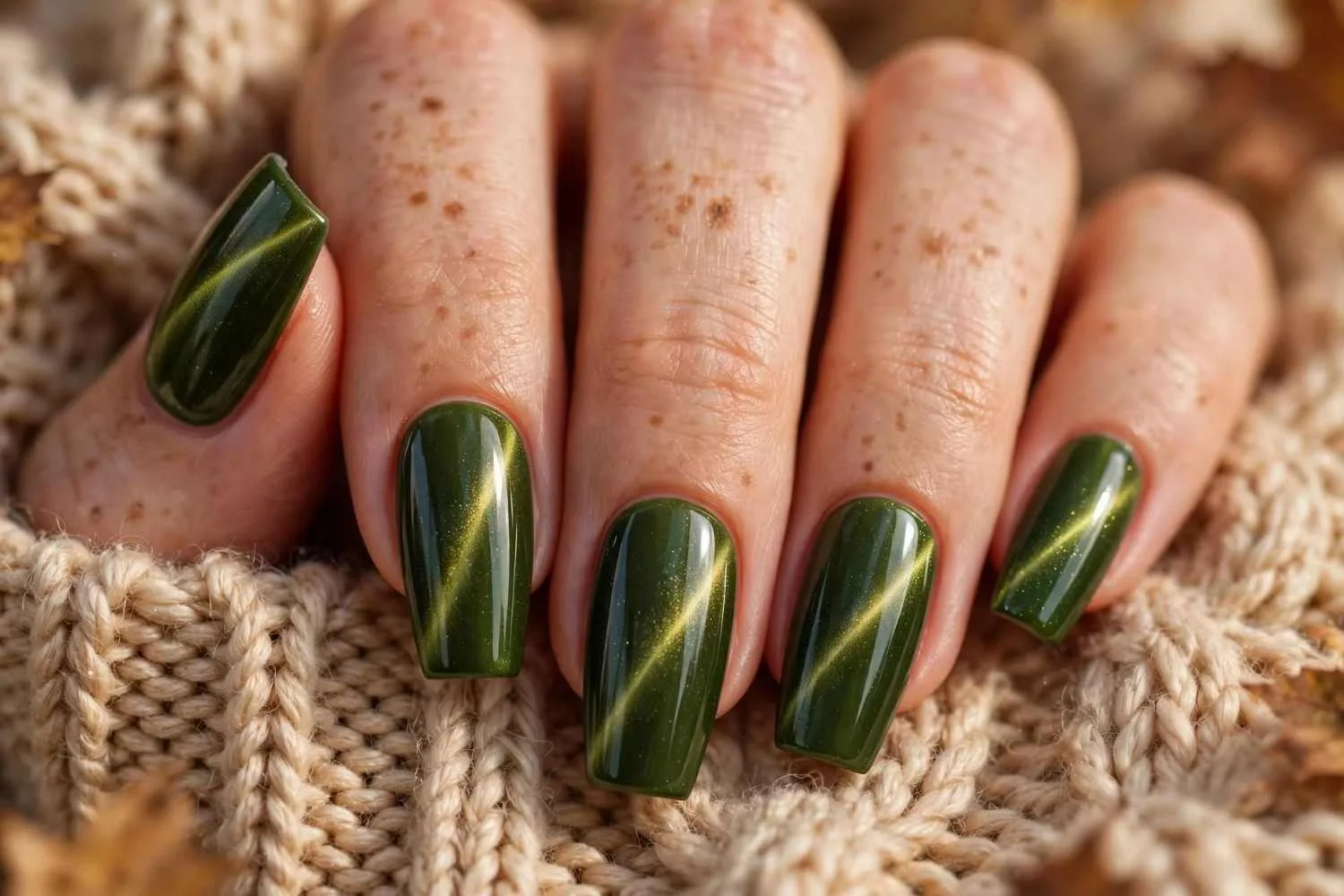
I did not understand cat eye nails until someone explained that the effect has nothing to do with painting a line freehand. It is magnetism. There are actual iron particles suspended in the polish, and you drag a magnet over the wet surface to pull them into a streak of light, the same way you would drag a magnet through iron filings on a school desk. Once that clicked, the whole technique stopped feeling like art and started feeling like a small home science experiment.
Because the effect depends so much on the angle you hold the magnet, I built this post around fourteen different “breeds” of cat eye, each one named after and modeled on a real cat’s coloring and personality. A breed with a stripe down its back gets a straight-line magnet pull. A breed with scattered markings gets a looser, more playful pull. Find the one that matches your mood, and the extras on magnet technique follow the catalogue.
The Catalogue
1. The Russian Blue.
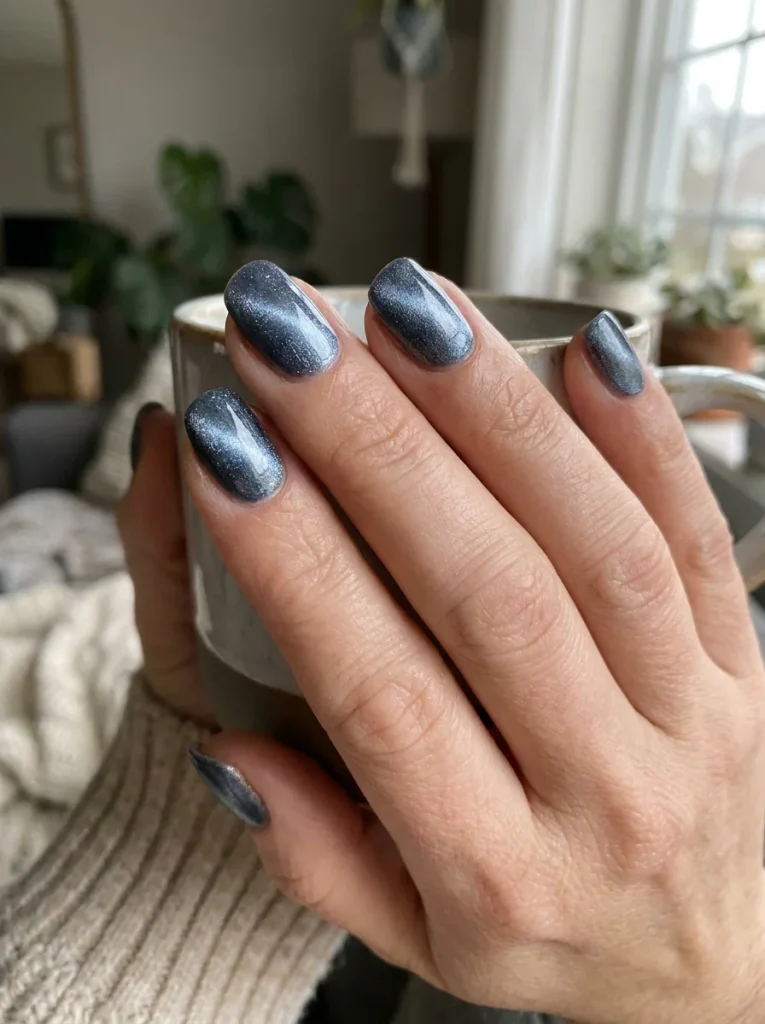
Coloring: a solid, cool-toned pewter gray with a single silver-white streak. Personality: quiet, reserved, elegant. Magnet angle: hold the magnet flat and pull it straight down the center of the nail in one smooth motion, from cuticle to tip, for a single clean line.
2. The Bengal.
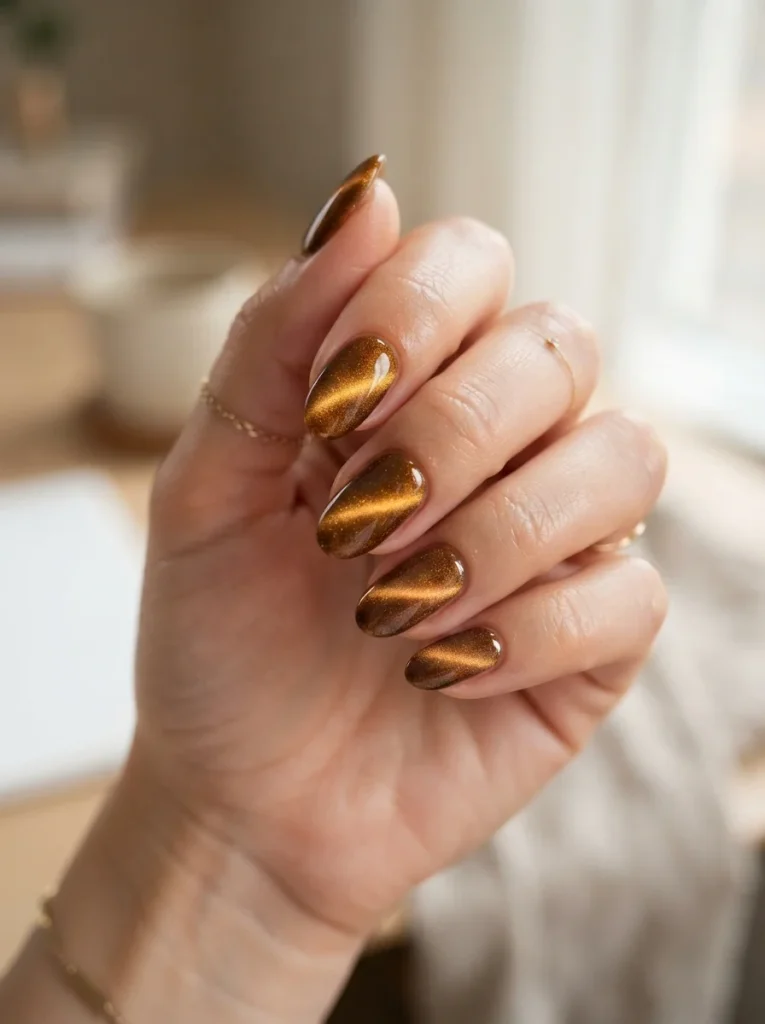
Coloring: a warm golden-brown base with two or three streaks that catch light at slightly different angles, mimicking rosette markings. Personality: bold, athletic, impossible to ignore. Magnet angle: hold the magnet at a diagonal and make two short, overlapping passes instead of one long one.
3. The Ragdoll.
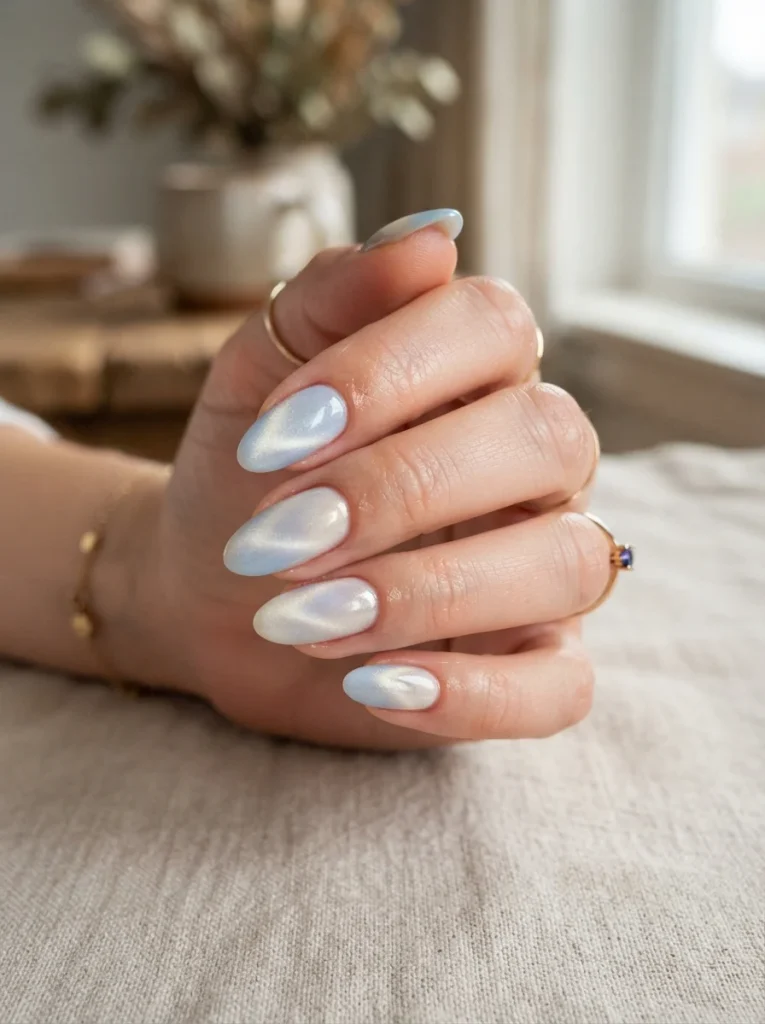
Coloring: a soft, milky beige-cream with a wide, gentle shimmer band rather than a sharp line. Personality: docile, affectionate, low drama. Magnet angle: hold the magnet slightly farther from the nail than usual, about half an inch, so the pull is diffuse rather than crisp.
4. The Black Bombay.
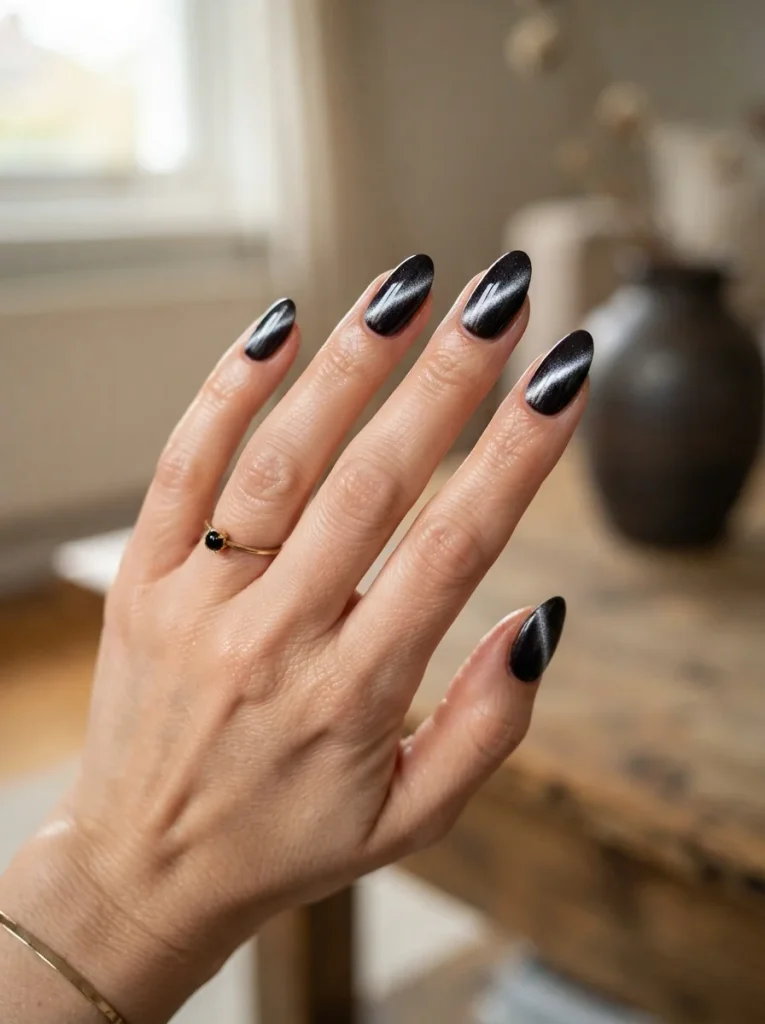
Coloring: a deep, near-black base with a single sharp silver streak that looks almost like a scar of light. Personality: sleek, mysterious, dramatic in low light. Magnet angle: hold the magnet very close to the polish, almost touching, for the sharpest possible line.
5. The Maine Coon.
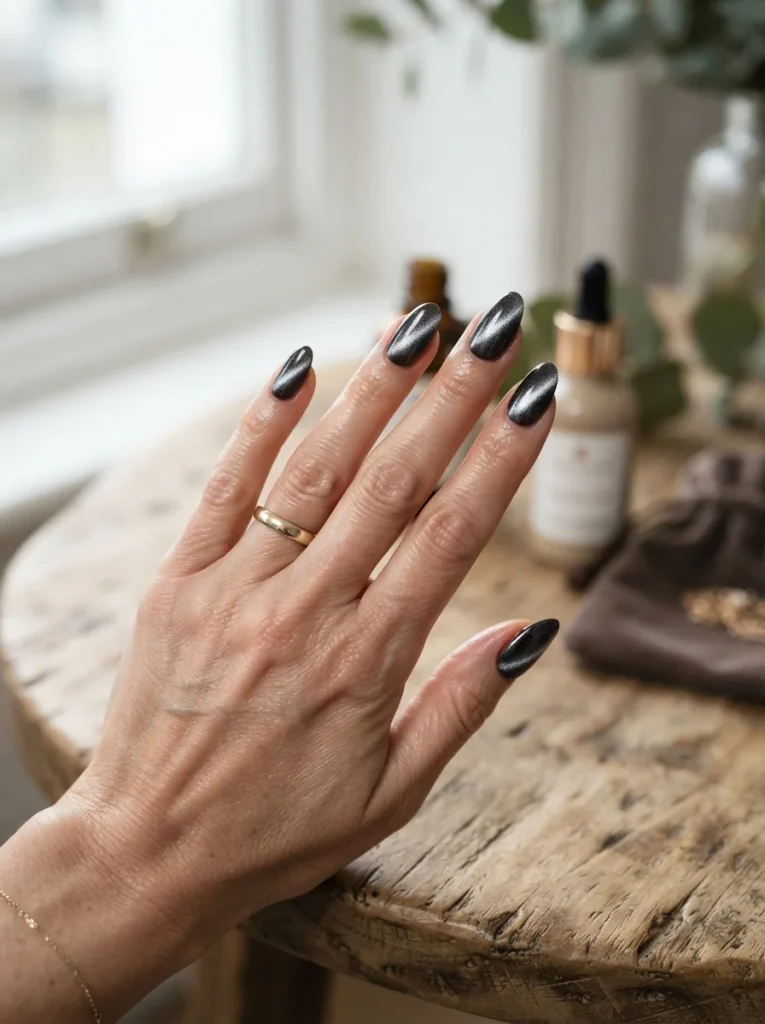
Coloring: a rich burnt-orange or rust base with a wide, textured shimmer that seems to have depth, like layered fur. Personality: big presence, gentle underneath. Magnet angle: use a curved magnet if you have one, sweeping it in a slight arc rather than a straight pull, to mimic a fuller texture.
6. The Siamese.
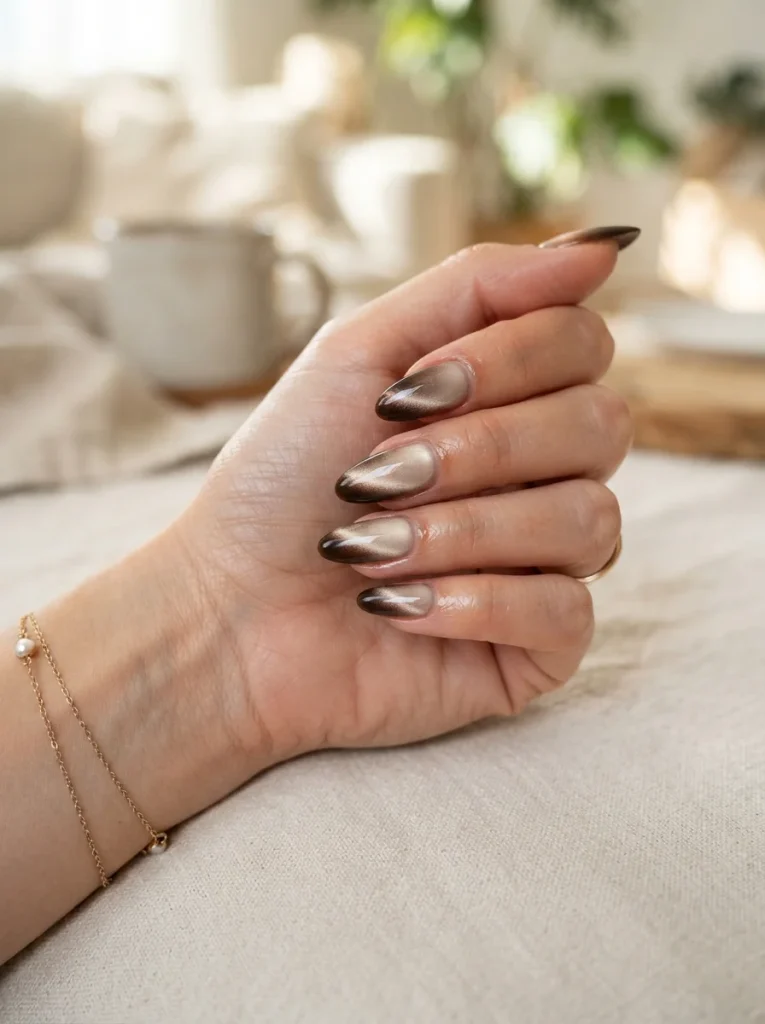
Coloring: a pale cream base with the shimmer concentrated only at the tip, like the classic darker “points” on ears and paws. Personality: vocal, distinctive, instantly recognizable. Magnet angle: hold the magnet only over the upper third of the nail near the tip, leaving the base plain.
7. The Chartreux.
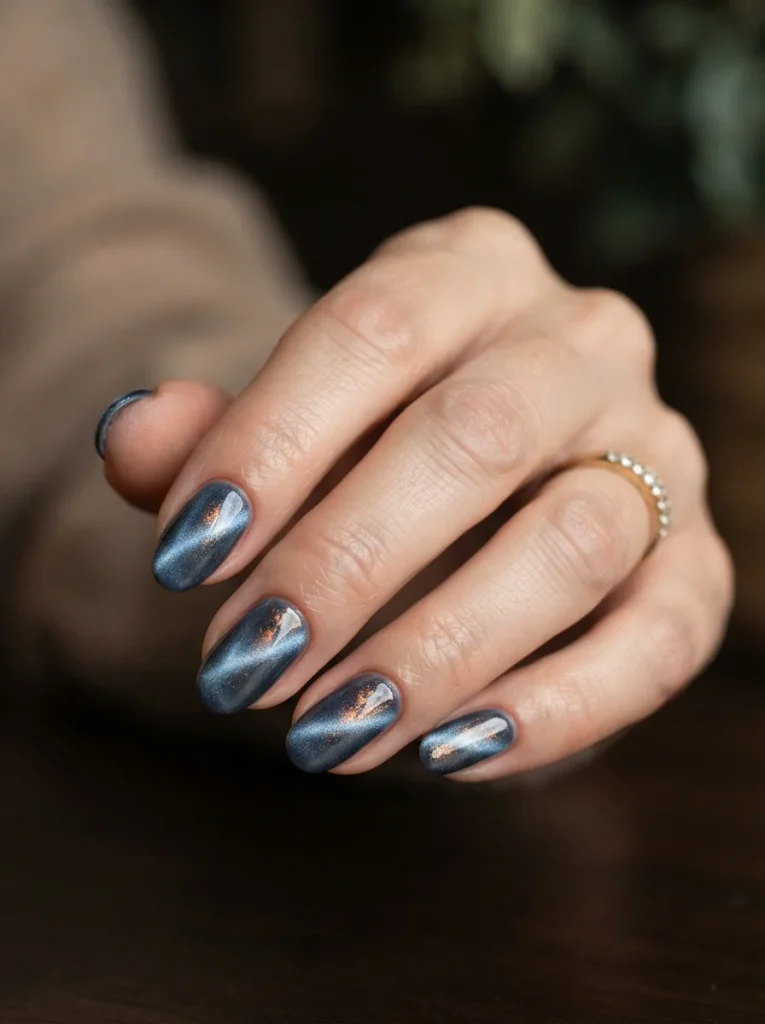
Coloring: a soft blue-gray with a subtle, almost hidden shimmer that only appears when the hand moves. Personality: calm, watchful, quietly confident. Magnet angle: use light pressure and a slower pull than usual, so the shimmer stays understated rather than obvious.
8. The Tortoiseshell.
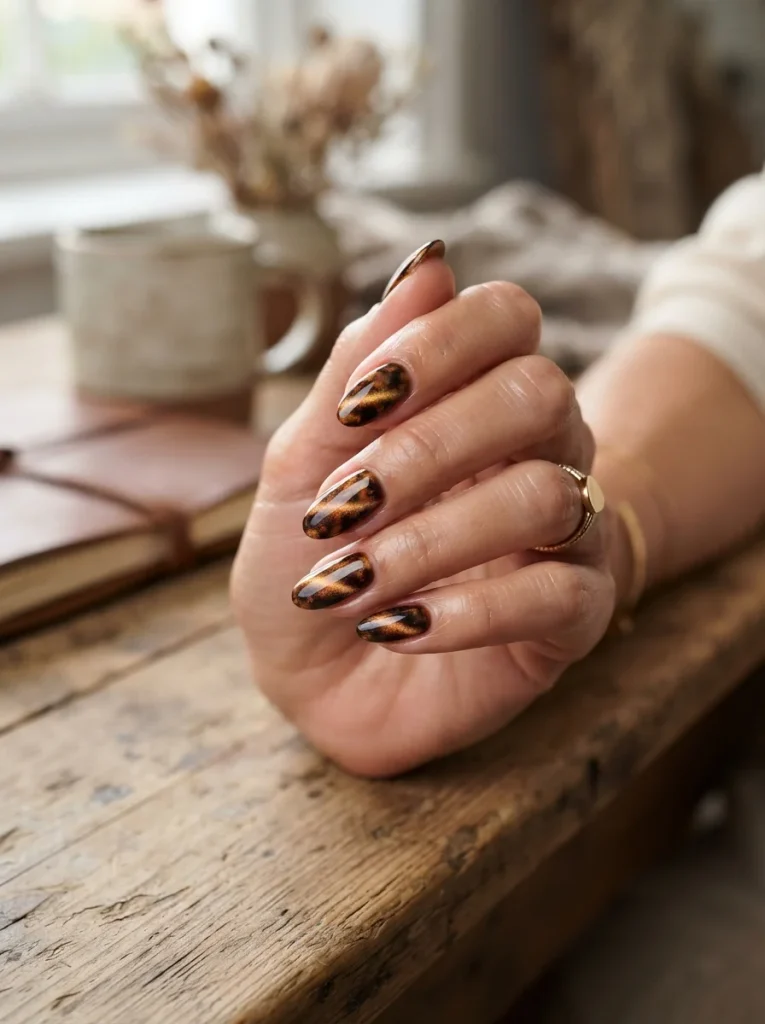
Coloring: a mottled mix of deep plum, rust, and black in the base polish itself, with a gold shimmer scattered across in patches rather than one clean line. Personality: unpredictable, full of personality, a favorite for a reason. Magnet angle: make three or four short, random taps with the magnet instead of one continuous pull, to scatter the shimmer unevenly on purpose.
9. The British Shorthair.
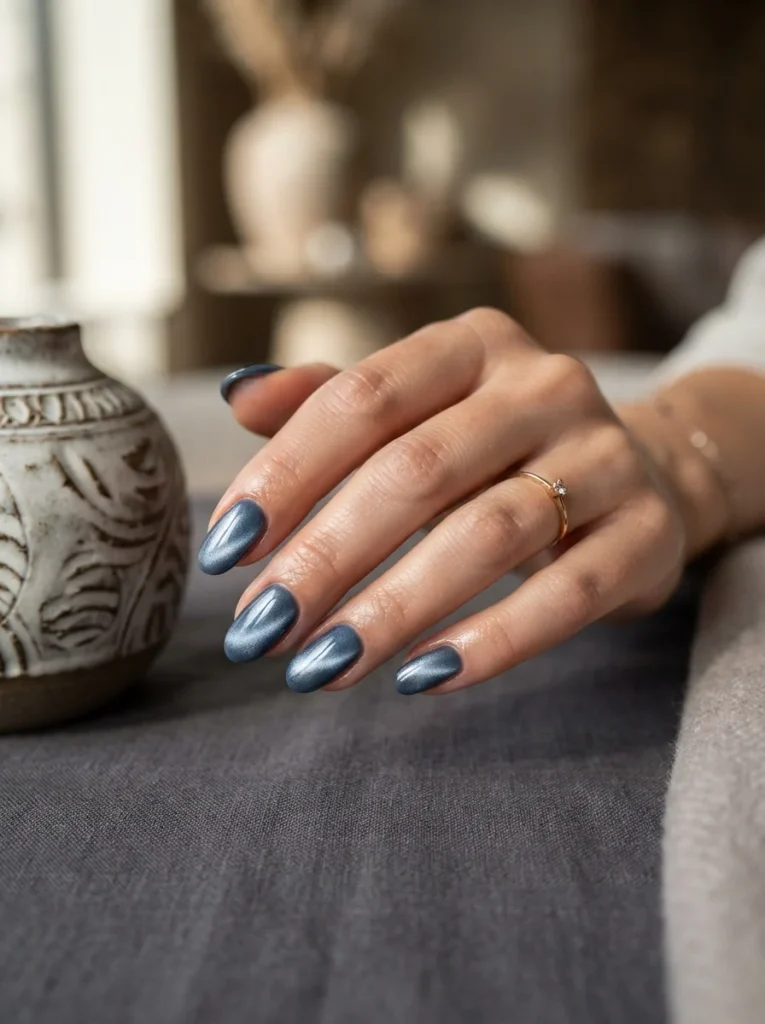
Coloring: a dense, plush-looking taupe-gray with a wide, soft silver band across the middle. Personality: sturdy, easygoing, a classic. Magnet angle: hold the magnet flat and pull it horizontally across the widest part of the nail rather than vertically.
10. The Abyssinian.
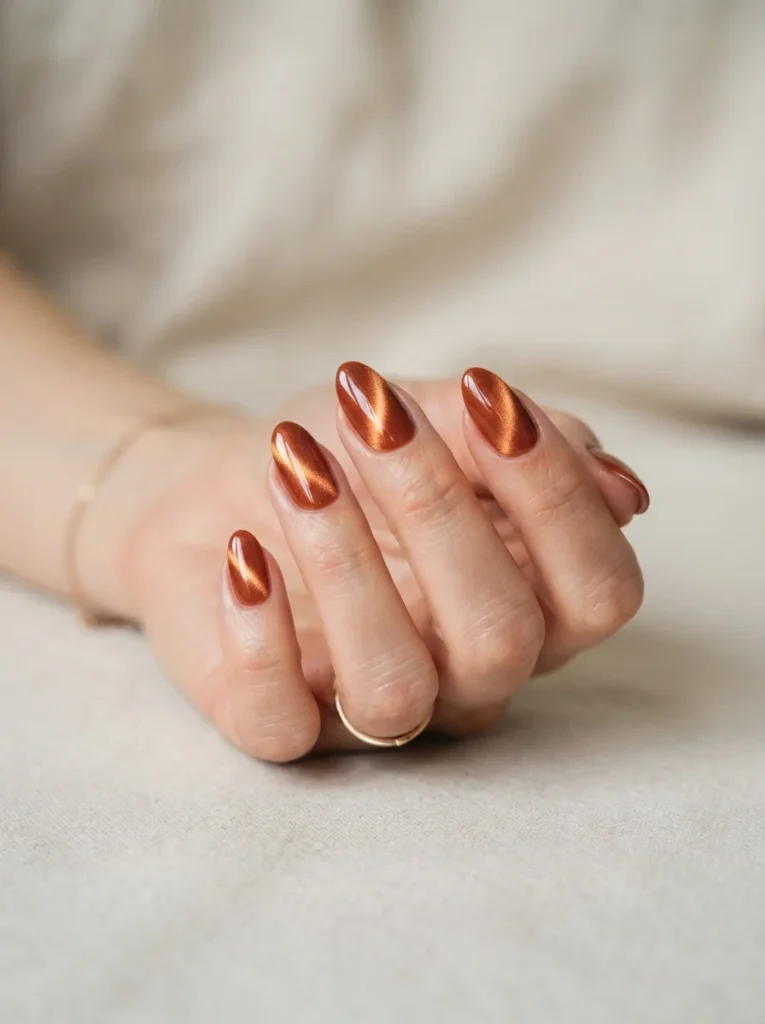
Coloring: a warm, ticked amber-bronze where the shimmer seems to shift between gold and copper depending on the light. Personality: curious, energetic, always moving. Magnet angle: tilt the magnet at two different angles mid-pull, changing direction slightly halfway down the nail.
11. The Sphynx.
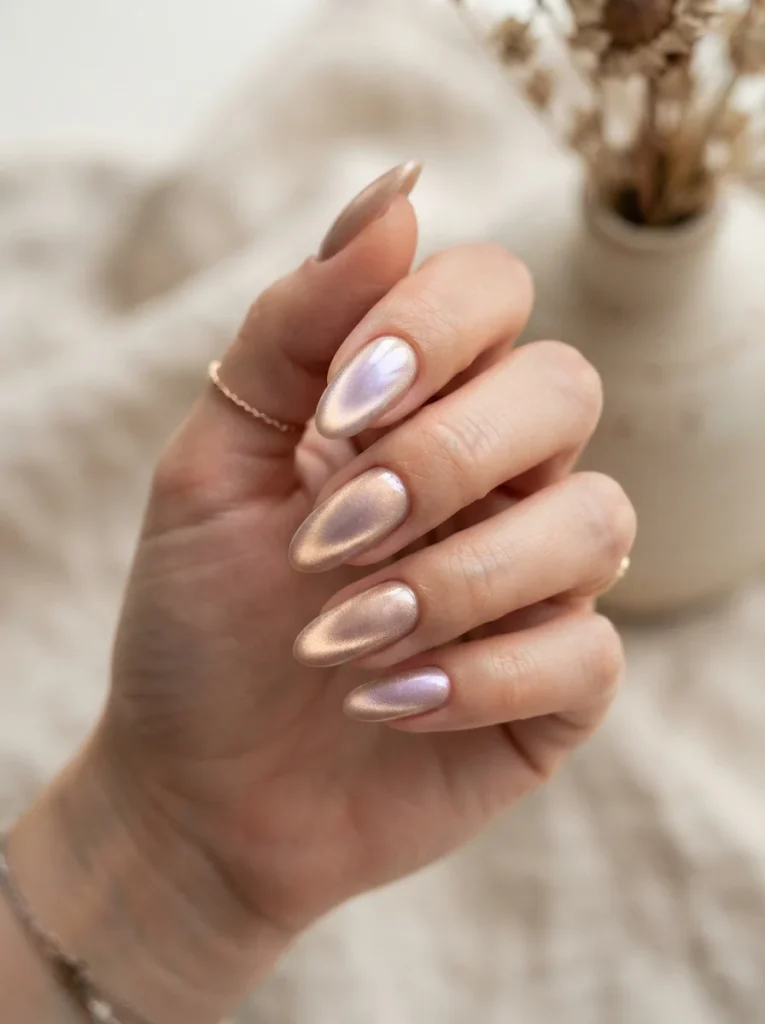
Coloring: a bare, warm beige-pink base with almost no shimmer at all, just the faintest hint of a line, since the breed itself has famously little fur. Personality: unusual, striking, not for everyone. Magnet angle: use the weakest pull of the whole catalogue, holding the magnet far enough away that only a whisper of shimmer appears.
12. The Nebelung.
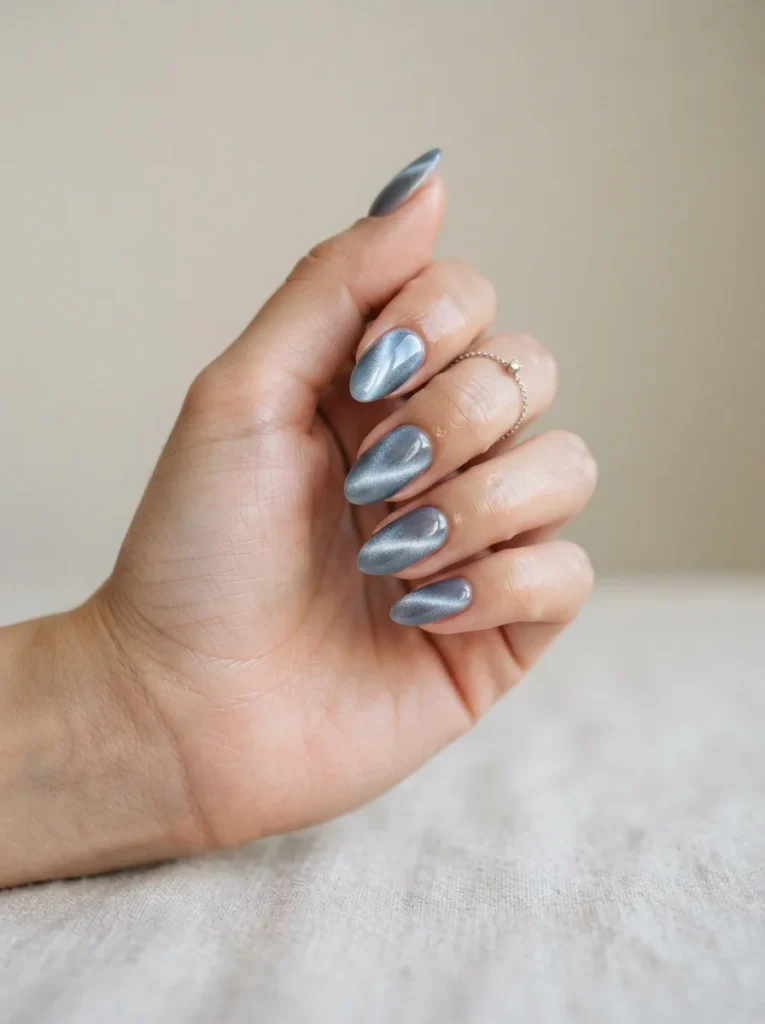
Coloring: a smoky, silvery lavender-gray with a soft, foggy shimmer rather than a defined stripe. Personality: gentle, a little otherworldly. Magnet angle: move the magnet in a slow zigzag rather than a straight line, blurring the shimmer into a cloud.
13. The Calico.
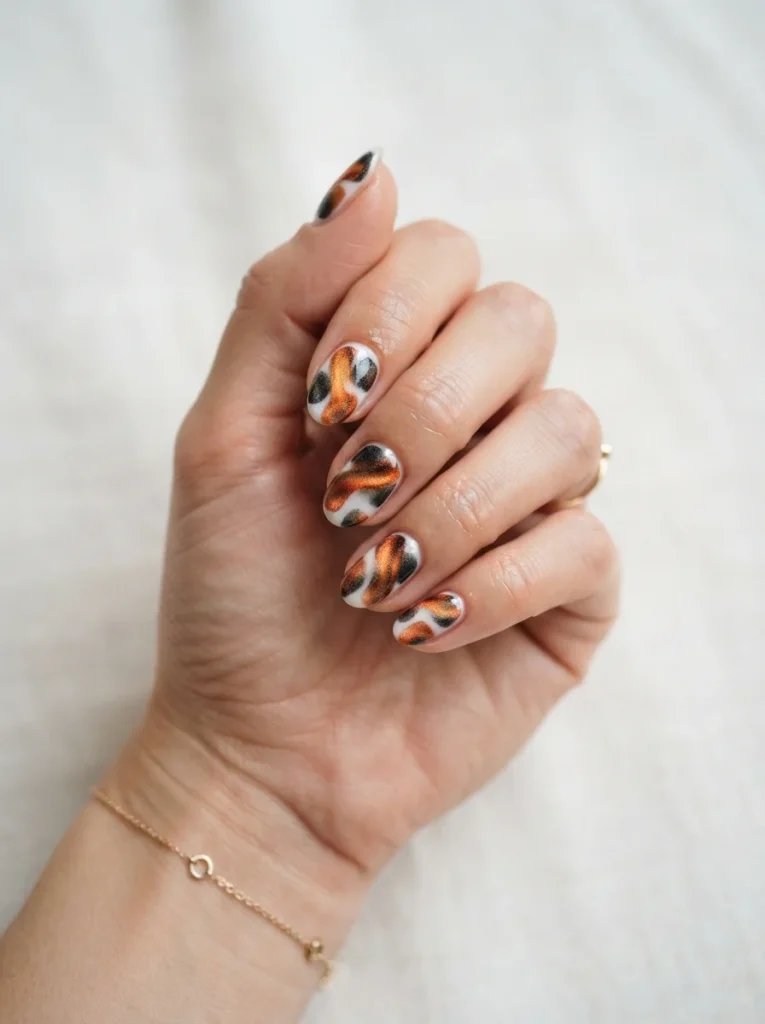
Coloring: three-toned, a cream base with patches of rust and charcoal shimmer applied separately to different sections of the nail. Personality: cheerful, unmistakable, a little chaotic in the best way. Magnet angle: apply chrome or shimmer polish in patches rather than a full coat, magnetizing each patch separately before it dries.
14. The Black Panther-Coated Cat.
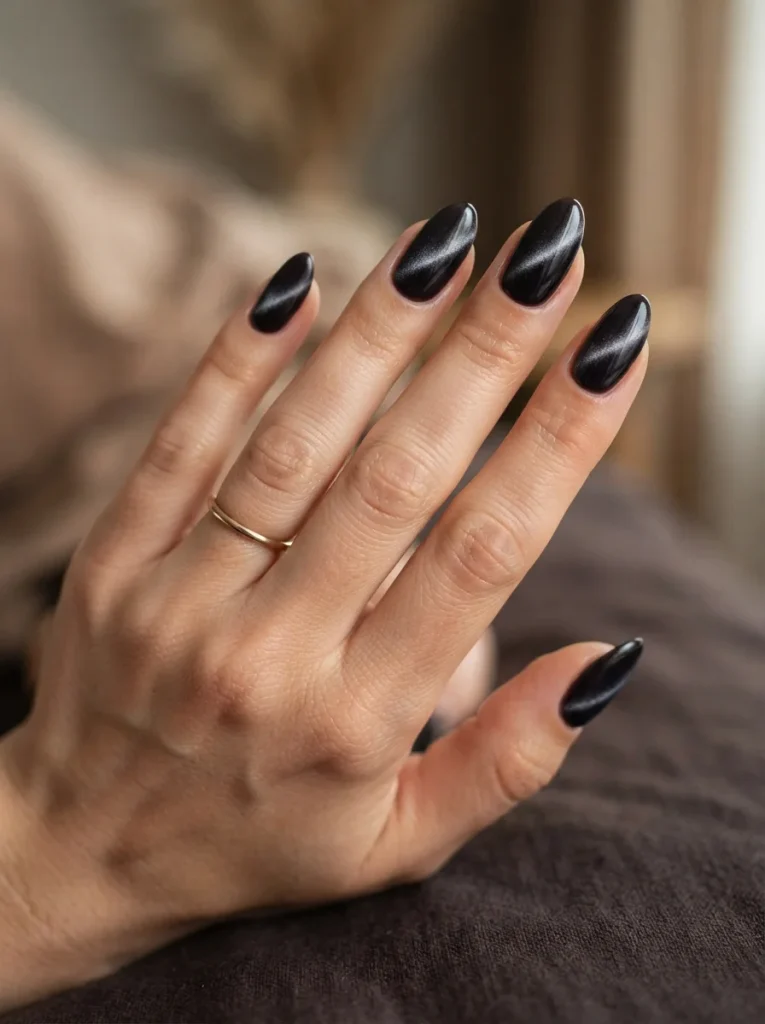
Coloring: a glossy, near-black base with a full-nail shimmer rather than a single line, catching light across the entire surface at once. Personality: sleek, confident, a showstopper. Magnet angle: cover the entire nail in overlapping passes, working in sections so no part of the nail dries before you reach it.
Something New: How Magnetic Polish Actually Works
Understanding the mechanics makes every single design above easier to execute, so here is the short version.
Magnetic, or cat eye, polish contains tiny metallic particles suspended in a pigmented, often slightly translucent base. When the polish is wet, those particles can still move freely. Holding a magnet close to, but not touching, the wet polish pulls the particles toward the magnet’s poles, arranging them into a streak, a band, or a scattered pattern depending on how the magnet is shaped and moved. Once you stop moving the magnet and let the polish begin to set, the particles lock into that arrangement permanently, which is then sealed with a top coat.
The three things that change the result every time are distance, speed, and angle. Distance controls sharpness, since a closer magnet makes a crisper line and a farther magnet makes a softer, more diffuse glow. Speed controls how defined the line is, since a fast pull creates a thinner streak and a slow pull creates a wider one. Angle controls direction, since tilting the magnet changes where the shimmer sits on the curve of the nail.
The Angle Diagram, in Words
Picture the nail as a clock face lying flat, with 12 at the cuticle and 6 at the tip.
For a classic vertical stripe, hold the magnet parallel to the nail and pull from 12 to 6.
For a diagonal, more dynamic stripe, hold the magnet tilted about 30 degrees off vertical and pull from roughly 11 to 5.
For a horizontal band, hold the magnet parallel to the cuticle line and pull from 9 to 3.
For a concentrated point of light, hold the magnet still directly over one spot, usually just below the cuticle at 12, without pulling it at all.
For a scattered, all-over shimmer, do not pull in one direction at all. Instead, hover the magnet in short taps across the whole nail, moving it to a new spot every second or two.
The Base Color Matcher
Just like chrome polish, cat eye polish is affected heavily by what sits underneath and around it, since most cat eye formulas are semi-translucent themselves.
If you want the coolest, most silver-toned shimmer, choose a base already in the cool family, gray, charcoal, or true black. If you want a warm, golden or copper shimmer, choose a base in the warm family, rust, chocolate, or amber. If you want the shimmer itself to be the main event with almost no colored base showing through, choose a near-black or very deep base so the metallic particles have the most contrast to shine against. If you want a softer, more pastel effect, like the Ragdoll or Sphynx entries above, choose a much lighter base, since a pale base mutes the shimmer’s intensity rather than sharpening it.
Troubleshooting
If the shimmer line looks faint or barely visible, the magnet was likely held too far away, or you waited too long and the polish had already started to set before you passed the magnet over it. Move faster next time, since you generally have only three to five seconds of working time per nail before the polish begins to lock.
If the line looks blotchy rather than smooth, the coat of polish underneath was probably applied too thin. Cat eye polish needs a slightly thicker coat than a standard color coat, since the magnetic particles need enough liquid to move through.
If the shimmer disappeared entirely after the top coat, you likely applied the top coat before the magnetized pattern had fully set. Wait the full recommended cure time, usually thirty seconds to a minute under a lamp or several minutes for air-dry formulas, before sealing.
If you cannot get the line straight, tape a straight edge, like a strip of low-tack tape, along the side of your finger as a guide, and pull the magnet parallel to it.
Application Steps From Scratch
Prep the nail with a base coat and let it cure or dry fully. Apply the magnetic polish in one even, slightly thicker-than-usual coat. Immediately, before the polish begins to set, hold the magnet above the wet polish at your chosen distance and angle, following the pattern from the breed you have chosen. Hold it steady for three to five seconds. Remove the magnet and let the polish finish curing or drying completely, without touching it. Once fully set, seal with a glossy top coat, applying it gently so you do not drag or smear the pattern underneath.
Work on one nail at a time rather than painting all ten and going back, since the working window is too short to return to an earlier nail.
Aftercare
Cat eye finishes hold up about as well as a standard gel manicure, generally two to three weeks, since the shimmer itself is sealed under a normal top coat and behaves the same as any other polish once cured. The one thing worth watching is the top coat layer specifically, since a scuffed or thin top coat can dull the metallic shine faster than it would dull a plain color. Reapply a very thin layer of top coat once a week to keep the shimmer looking fresh, and avoid picking at the edges, which can lift the whole design rather than just chip a corner.
Choosing by Mood
If you want something quiet and professional, choose the Russian Blue or the Chartreux. If you want something bold enough to notice from across a room, choose the Bengal or the Black Panther-Coated Cat. If you want something soft and low-effort, choose the Ragdoll or the Sphynx. If you want something with a little unpredictability and personality, choose the Tortoiseshell or the Calico.
Quick Answers
What is the easiest cat eye design for beginners? The Russian Blue, since it uses the simplest single straight pull with no direction changes.
Do I need a special magnet? Yes, the magnet has to be designed for cat eye polish specifically, since the poles need to be arranged correctly to pull the particles into a line rather than a blob. Most cat eye polish bottles come with a matching magnetic cap.
Can I do this without a UV lamp? Some cat eye formulas are air-dry rather than gel-based, so check your specific polish. Air-dry versions give you a slightly longer working window, which can actually be easier for beginners.
Why does my shimmer look different from the bottle? The base color underneath and around the shimmer changes how it reads, exactly as described in the base color matcher above.
One Last Thing
Cat eye nails are one of the only manicure techniques where the tool matters as much as the polish itself, and once you understand that you are essentially doing a tiny magnet experiment rather than painting a picture, the whole process gets much less intimidating.
Pick the breed that matches your personality this season, practice the pull on a spare nail tip first if you can, and give yourself permission for the first attempt to look a little more Sphynx than Bengal.
Which breed are you adopting for your nails first? Save this article for your next manicure night, and send it to a friend who has always wanted to try cat eye polish but assumed it needed steadier hands than hers.