
21 Built-In Living Room Shelf Ideas 2026: Transform Your Space Like a Pro
Listen up. Your living room looks boring because you’re treating storage like an afterthought. Built-in living room shelf ideas for 2026 aren’t just about stuffing books somewhere—they’re about creating a space that screams “I’ve got my life together” while actually solving your clutter problem. These custom shelving solutions combine smart design with practical functionality, and I’m about to show you exactly how to nail this.
Why Built-In Shelves Beat Regular Furniture Every Time
Built-in shelving units aren’t just another home improvement trend. They’re a permanent investment that increases your property value while giving you custom storage that actually fits your space. Unlike freestanding bookcases that wobble and waste corners, built-ins use every inch of your wall space efficiently.
Think about it. My neighbor Sarah spent $800 on random shelves from big-box stores over three years. Then she installed built-in shelves for $1,200, and guess what? Her home appraisal went up by $5,000. That’s the kind of ROI that makes sense.
21 Game-Changing Built-In Shelf Designs for Your Living Room
1. Floor-to-Ceiling Window Frame Shelves
Floor-to-ceiling shelves around your windows create an instant library vibe. This design maximizes vertical space while turning your window into a stunning focal point. The natural light hits your book spines and decorative items perfectly.
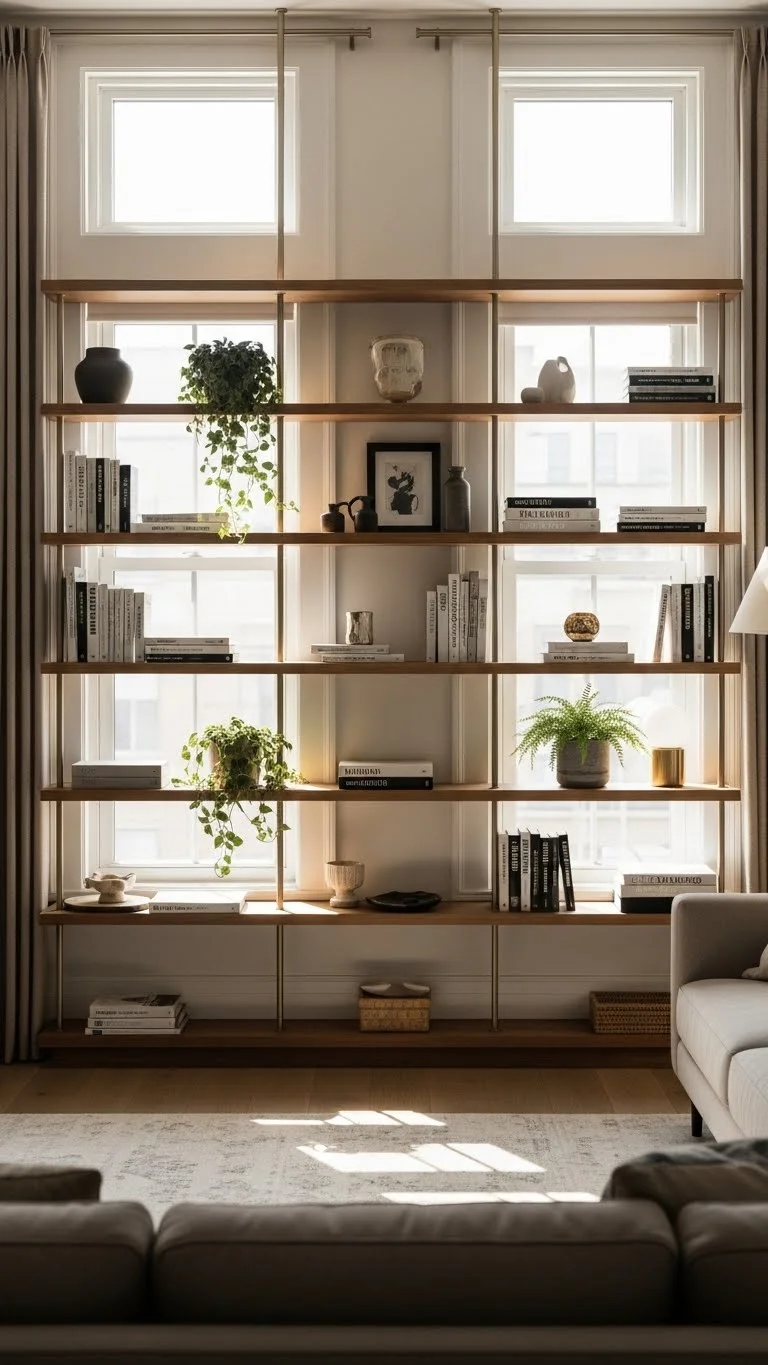
Installation takes about 2-3 days for a standard 8-foot wall. You’ll need around 15-20 linear feet of shelving material. Most homeowners spend between $800-$1,500 depending on wood choice and complexity.
2. TV Wall Integration with Storage Compartments
Built-in entertainment centers hide cables and create clean lines around your television. These units combine open shelving for display items with closed cabinets for electronics and gaming systems. Your living room instantly looks 10x more expensive.
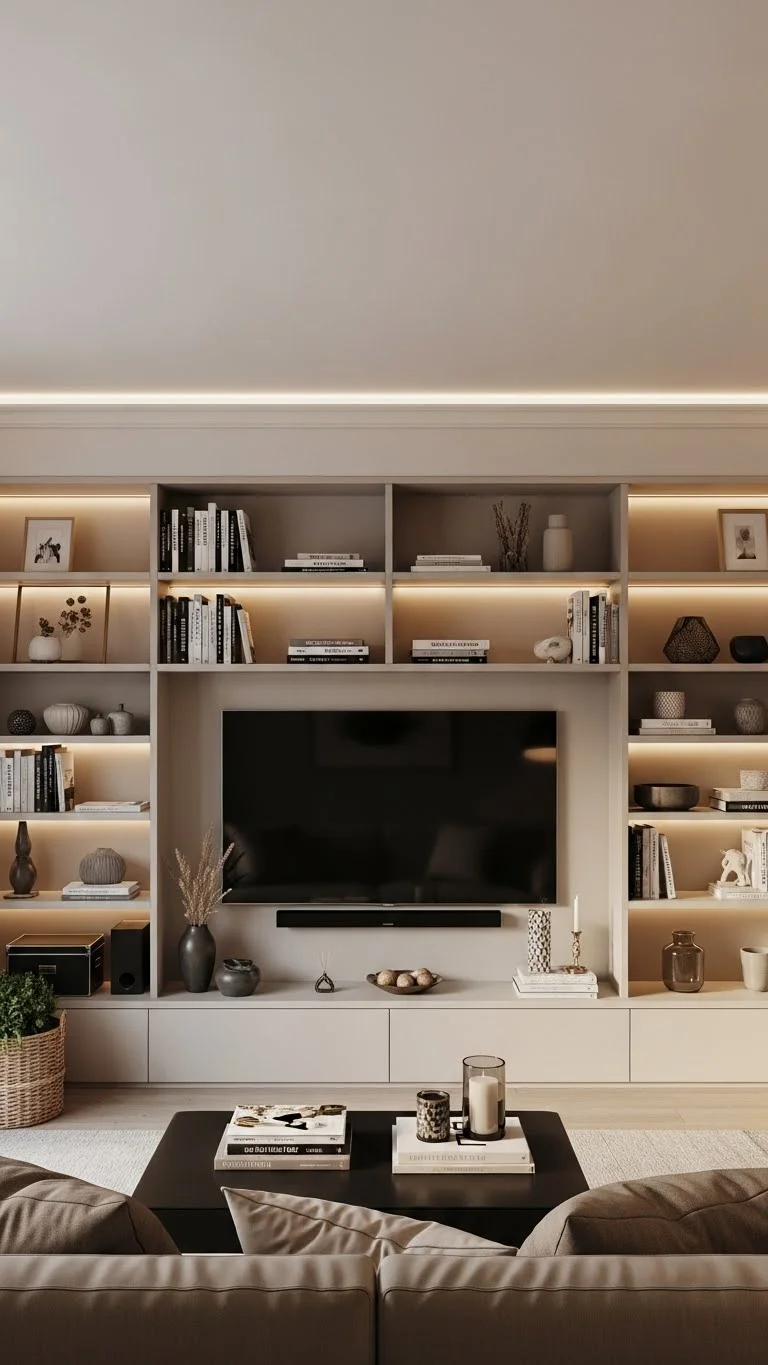
My friend Mike did this last year. He went from a messy TV stand with tangled wires to a sleek wall unit. His kids’ video game controllers now have actual homes instead of living on the coffee table.
3. Asymmetric Floating Shelf Arrangements
Asymmetric designs break boring patterns and add visual interest to plain walls. You stagger shelves at different heights and lengths to create a modern, artistic look. This works perfectly in contemporary and minimalist living spaces.
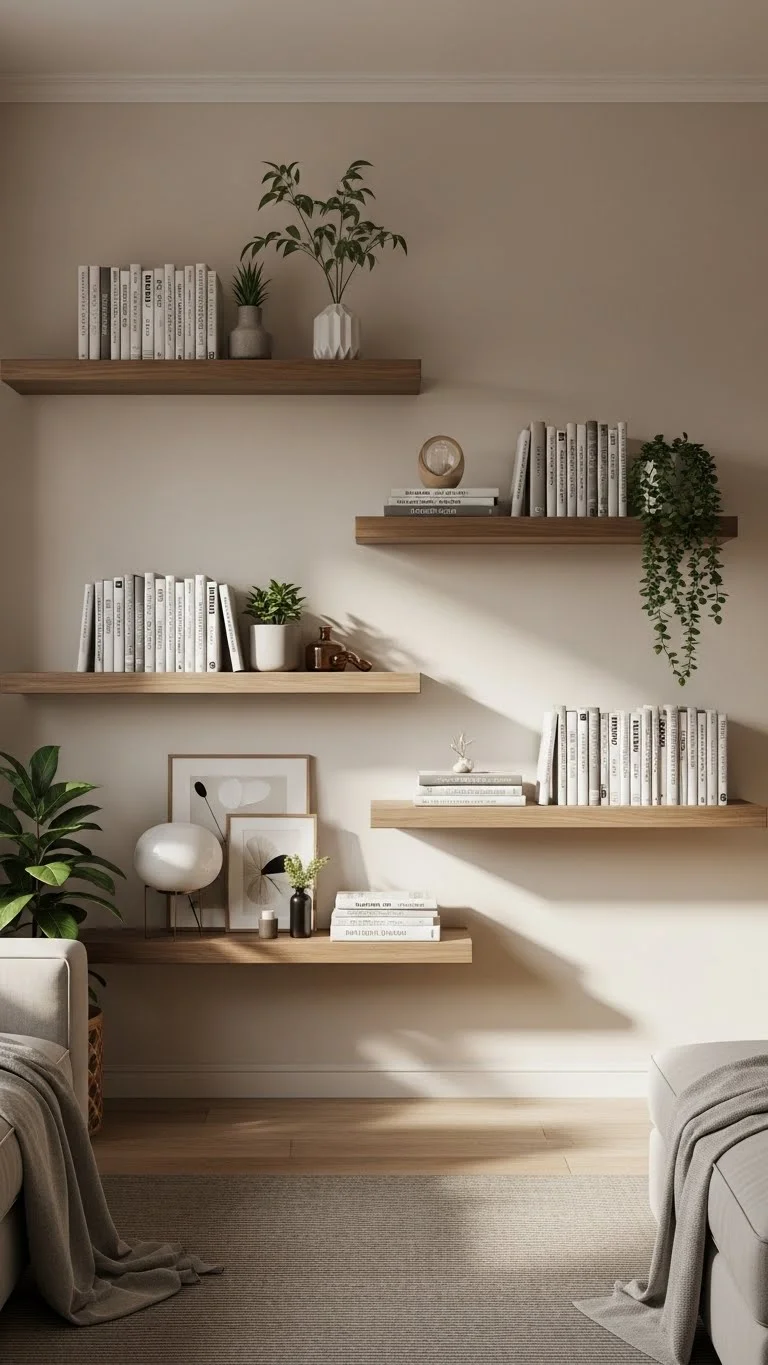
The key is planning your layout on paper first. Use painter’s tape on your wall to visualize placement before drilling. Most people arrange 5-7 shelves in a cluster for maximum impact.
4. Corner L-Shaped Built-In Units
Dead corners become functional storage with L-shaped built-in shelves. These wrap around two walls and utilize space that typically gets wasted. You gain 40-50% more storage compared to straight shelving.
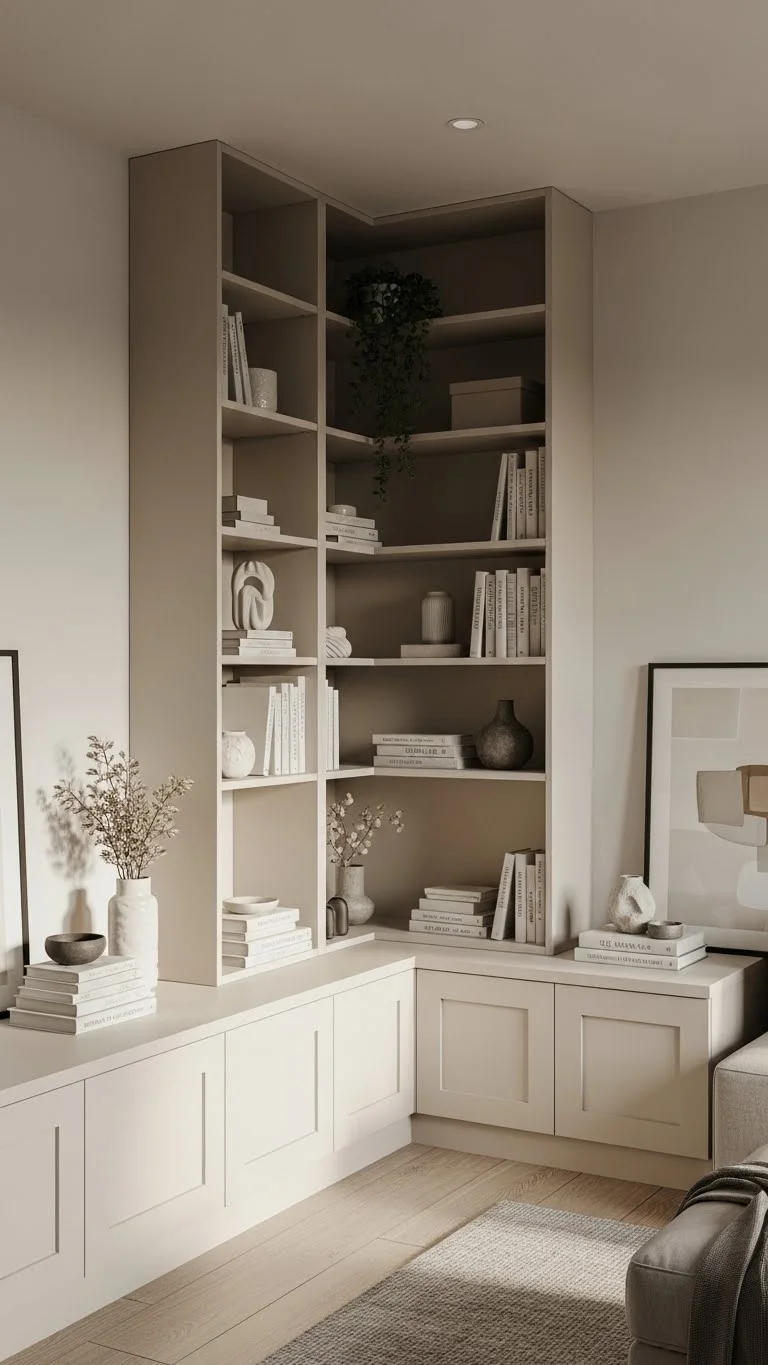
Corner units work great for small living rooms where every square foot counts. They create a cozy reading nook when you add a chair. Install LED strip lighting underneath for ambiance and functionality.
5. Fireplace Surround Shelving Systems
Built-in shelves flanking your fireplace create symmetrical beauty and extra storage. This classic design balances the room and draws eyes to your fireplace as the centerpiece. Most installations include 3-5 shelves on each side.
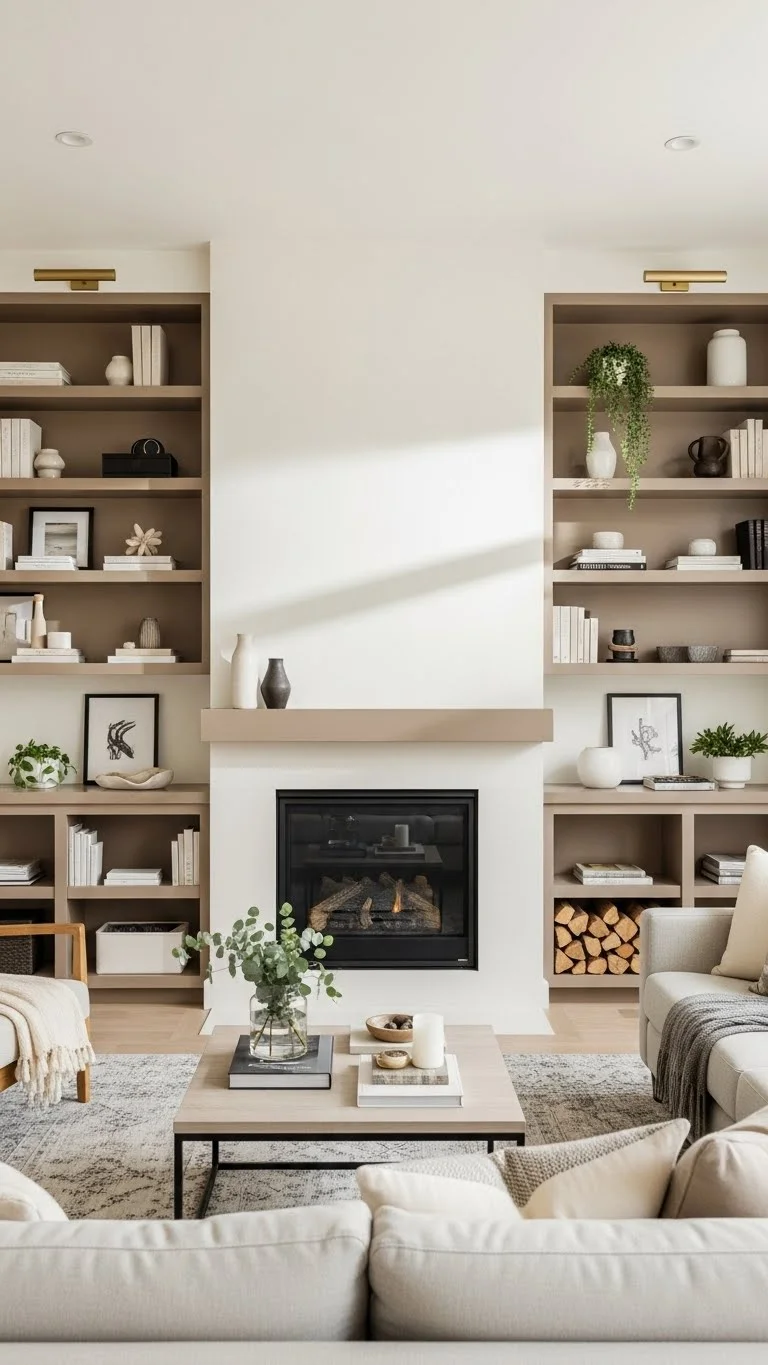
Use heat-resistant materials within 12 inches of the firebox. Popular choices include stone, tile, or treated wood with proper clearance. The mantel shelf typically sits 54-60 inches above the floor for optimal viewing.
6. Under-Staircase Custom Shelving
That awkward space under your stairs can become premium shelving real estate. Custom-fitted shelves follow the stair angle and create unique display opportunities. This adds 15-30 cubic feet of usable storage.
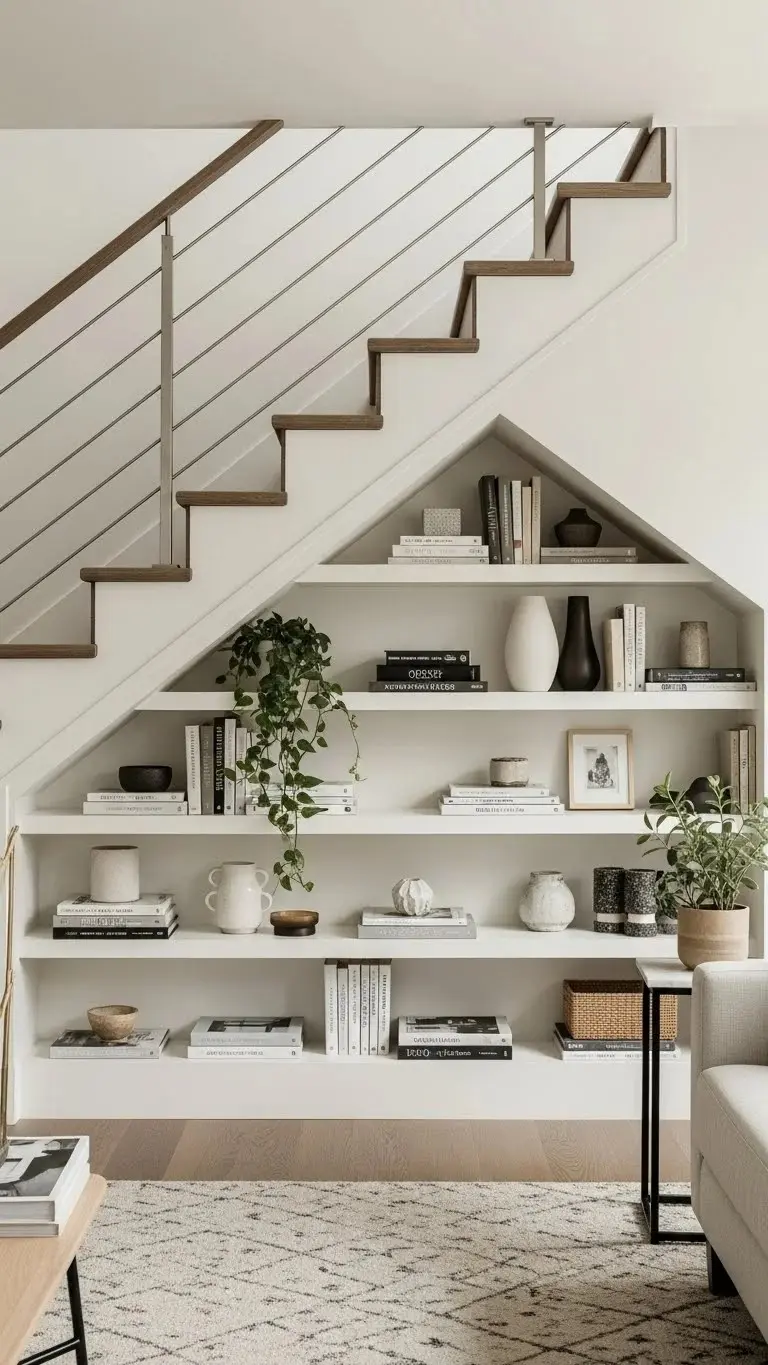
One client turned this dead zone into a home bar with bottle storage and glassware display. Another created a kids’ reading corner with low shelves for picture books. The slanted design actually makes it more interesting than standard shelves.
7. Behind-Sofa Console Shelving
Built-in shelves behind your sofa divide open-concept spaces without blocking sightlines. These work as room dividers while providing storage and display space. Height typically ranges from 36-42 inches to stay below eye level when seated.
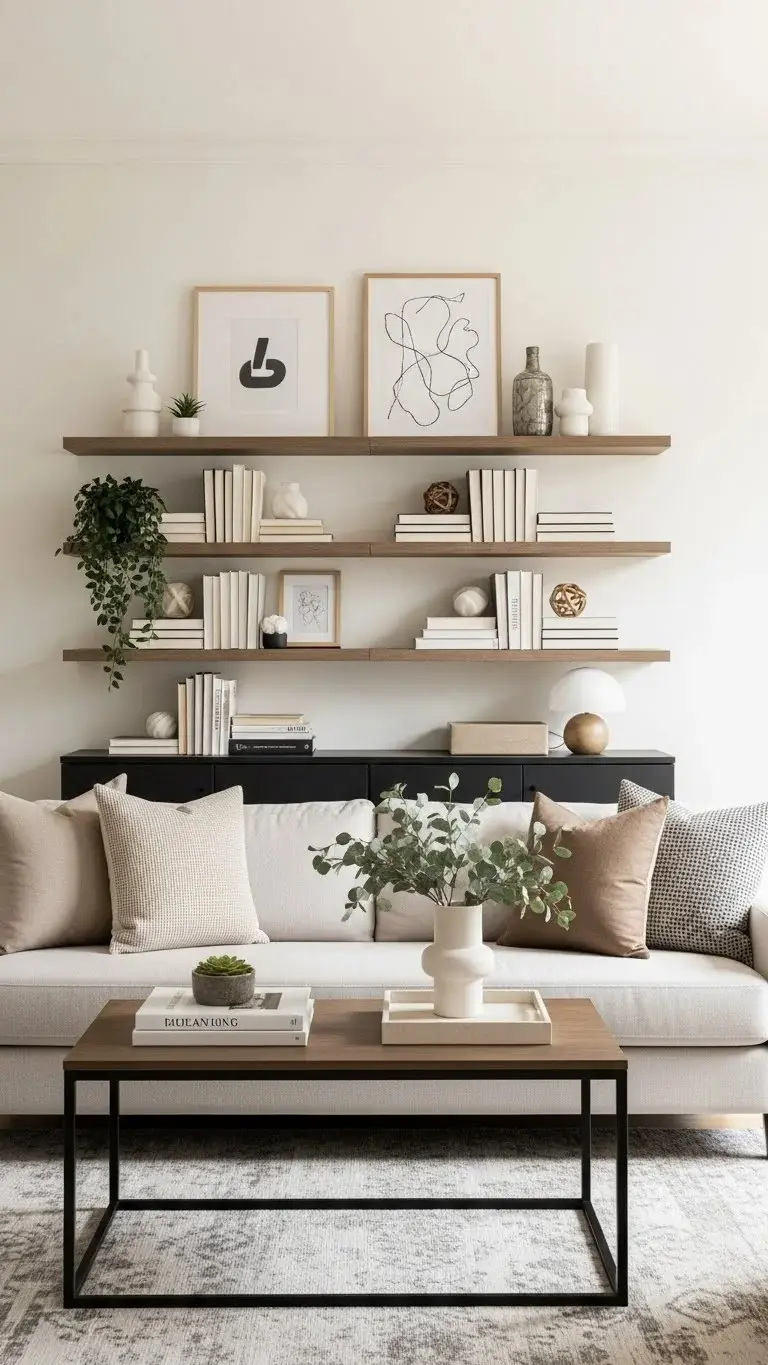
This design works perfectly in studio apartments or great rooms. You can access items from both sides. Add outlets in the shelving for charging stations and lamps.
8. Alcove Fitted Bookcase Systems
Alcoves and wall recesses become custom fitted bookcases that look built by architects. These maximize odd spaces that furniture can’t fill properly. Measurements matter—get within 1/8 inch for that seamless look.
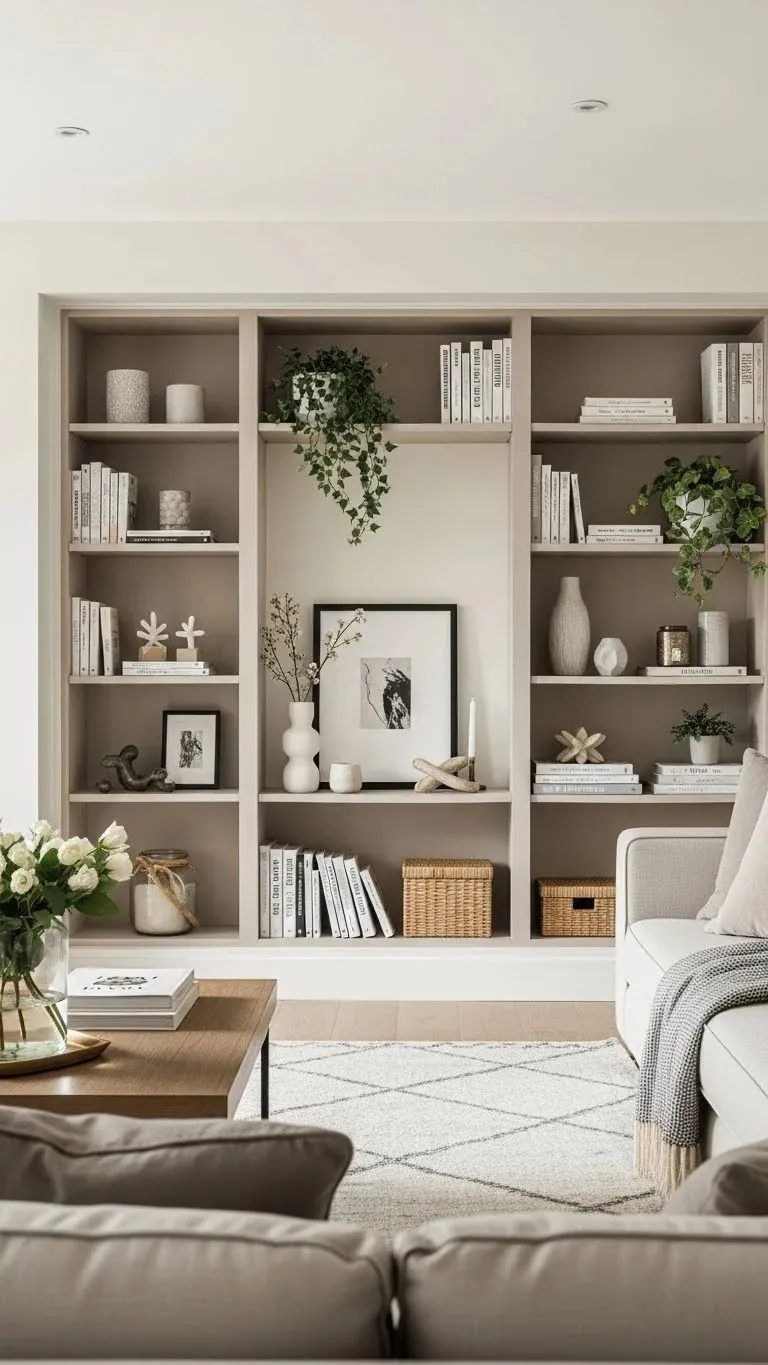
Paint these the same color as your walls for a subtle look. Or choose contrasting colors to make them pop. Add adjustable shelves so you can modify spacing as your needs change.
9. Minimalist Recessed Wall Niches
Recessed shelves sit flush within your wall cavity for ultra-clean aesthetics. These work between wall studs (typically 14.5 inches wide) and create shadow boxes for art and objects. No shelves sticking out means more floor space.
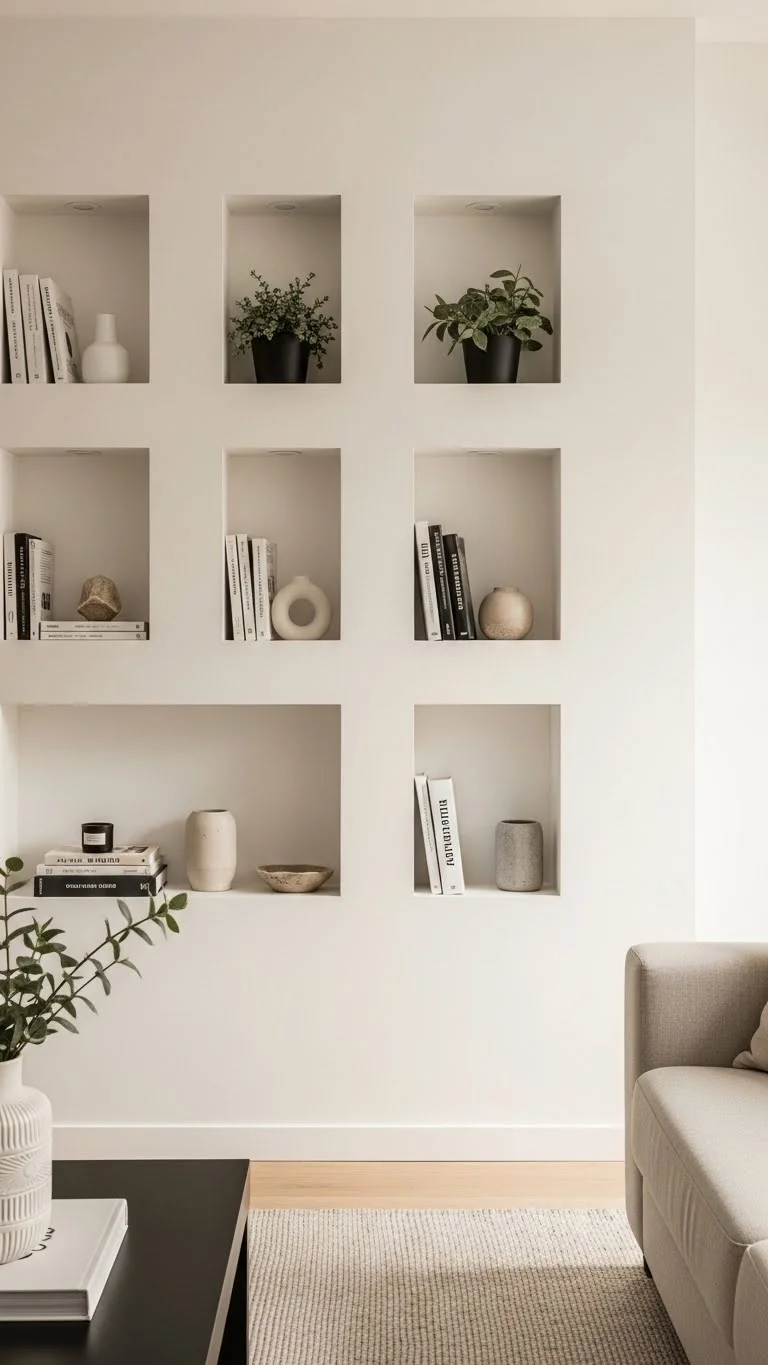
Installation requires cutting into drywall and framing properly. Standard depth is 3.5 inches for 2×4 walls. Illuminate each niche with small LED pucks for gallery-style presentation.
10. Multi-Depth Layered Shelf Design
Varying shelf depths creates dimension and accommodates different item sizes. Front shelves at 8 inches hold books while back shelves at 12 inches fit larger items. This prevents the boring “everything’s the same” problem.
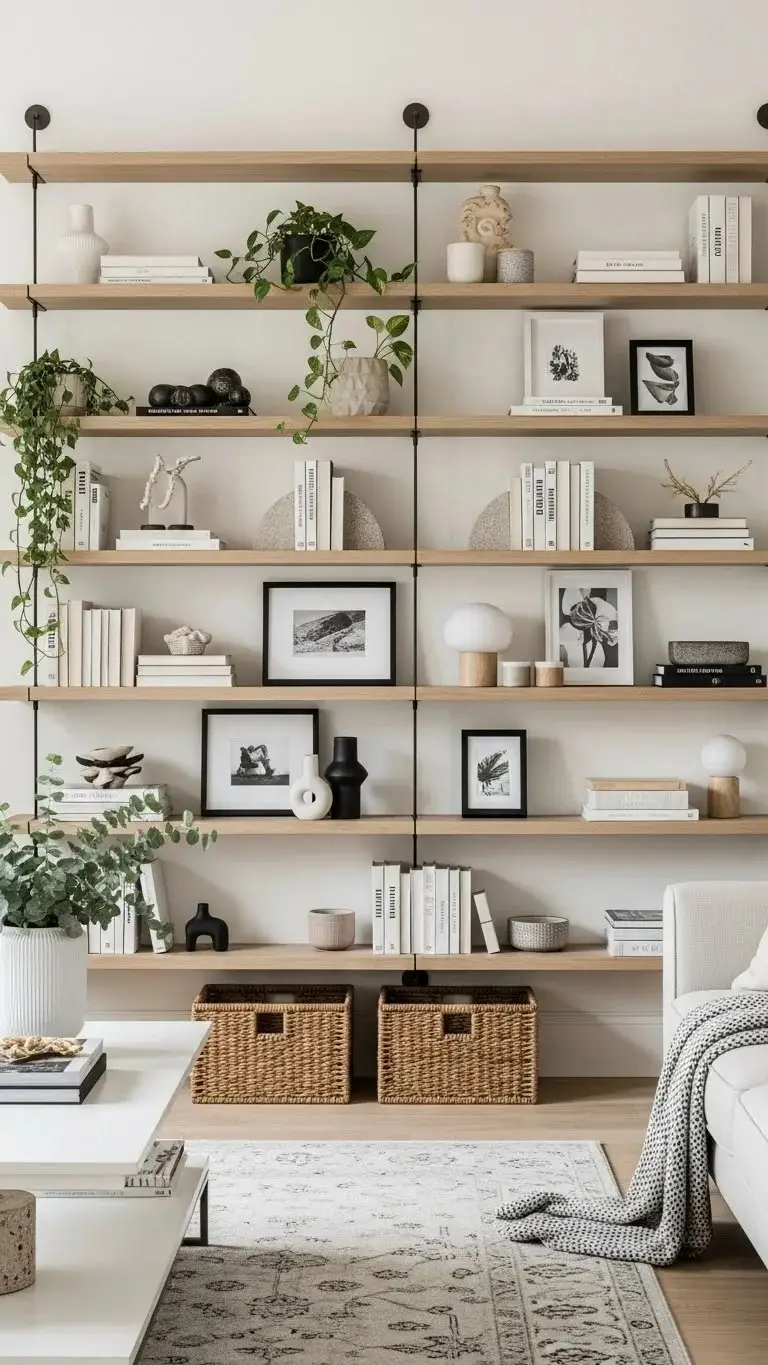
Layer 2-3 different depths for visual interest. Deeper shelves go on bottom for stability. This design trick makes budget materials look custom and expensive.
11. Integrated Desk and Shelving Combo
Built-in desk units with surrounding shelves create a home office zone in your living room. The desk surface sits at standard height (29-30 inches) with shelving above and beside. This maximizes productivity in limited space.
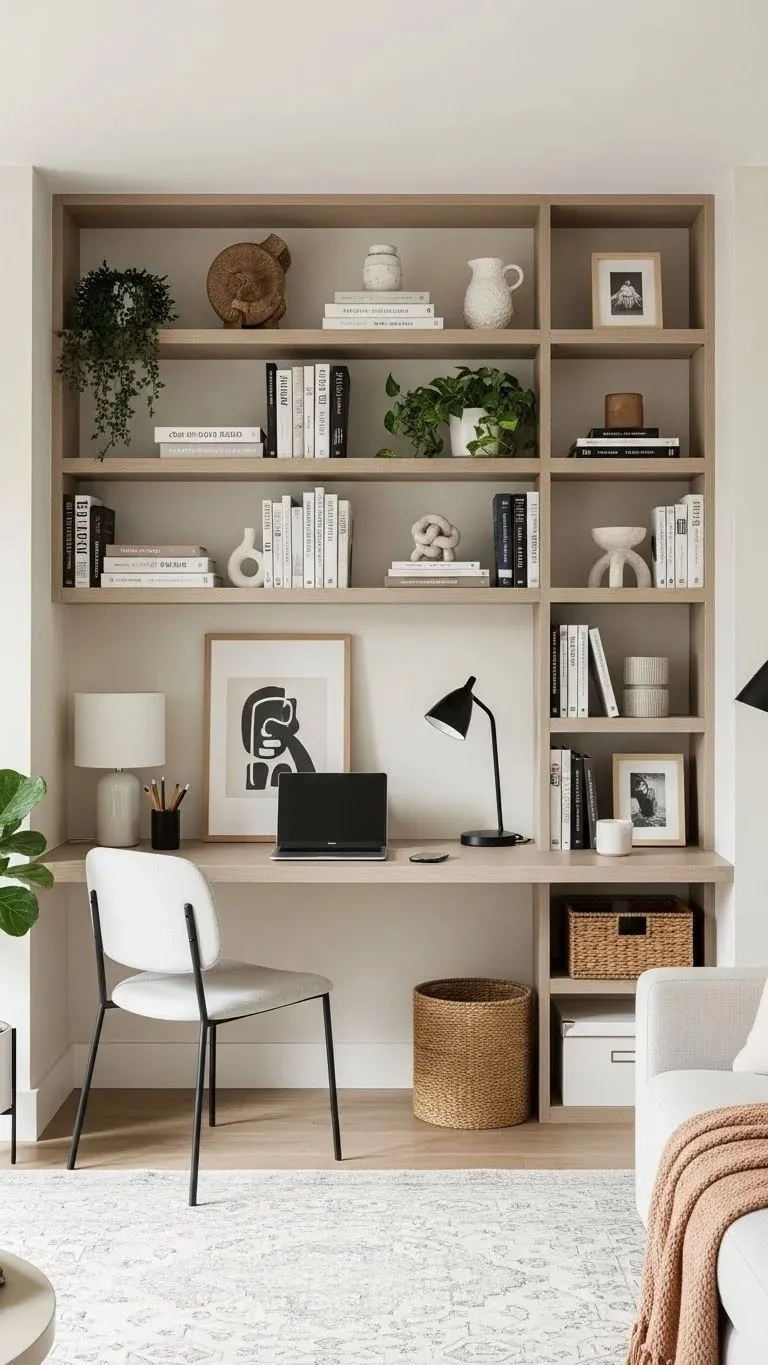
Remote workers love this setup. Everything stays organized and you avoid the laptop-on-coffee-table look. Include wire management holes for clean cable routing.
12. Bench Seating with Storage Shelves Above
Window seats or bench seating with built-in shelves above create cozy reading spots. Storage underneath the bench holds blankets and pillows. Shelves above keep books within arm’s reach.
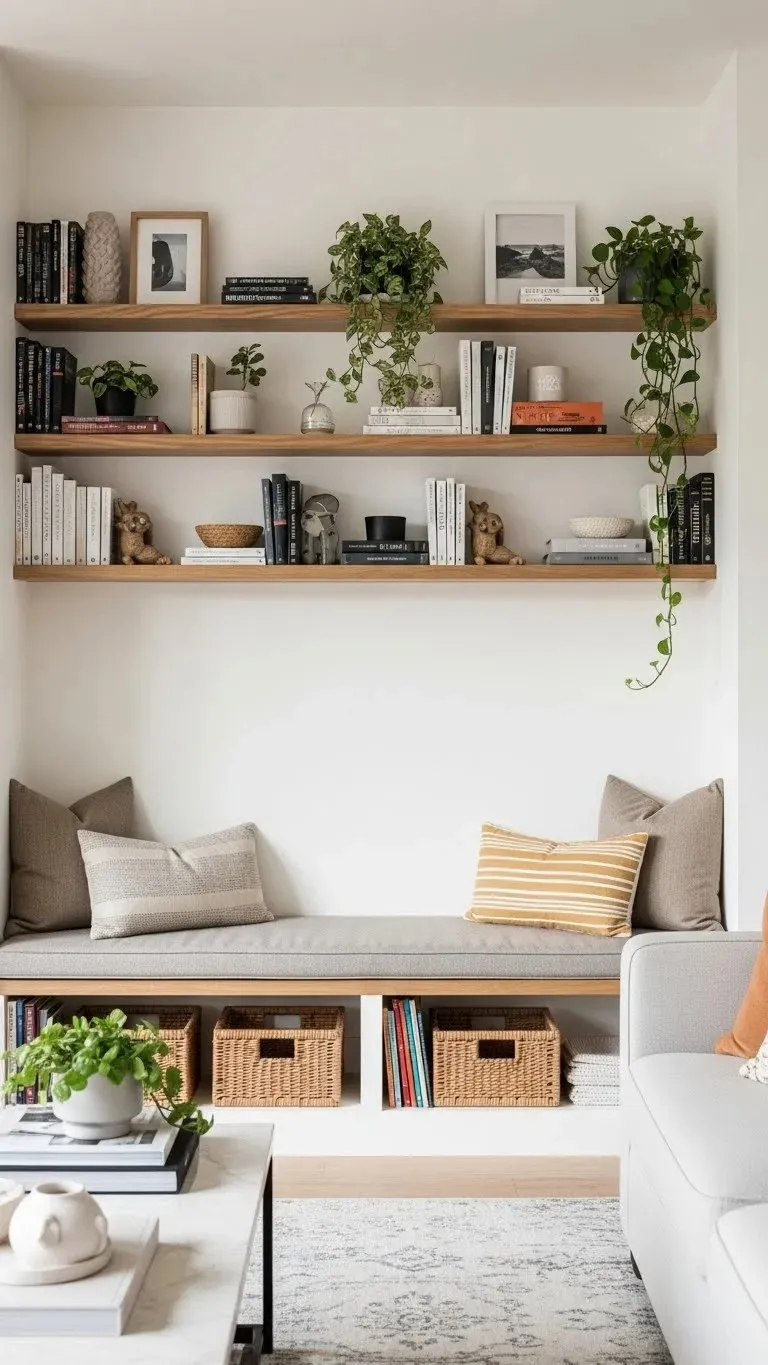
Install cushions that are 18 inches deep and 18-20 inches high for comfortable sitting. Add 3-4 shelves above at comfortable reaching height. This combo uses vertical space brilliantly.
13. Diagonal Corner Shelf Configurations
Diagonal shelves cut across corners for unexpected visual appeal. These create triangular display areas that catch attention. The angled design makes standard rectangular rooms feel more dynamic.
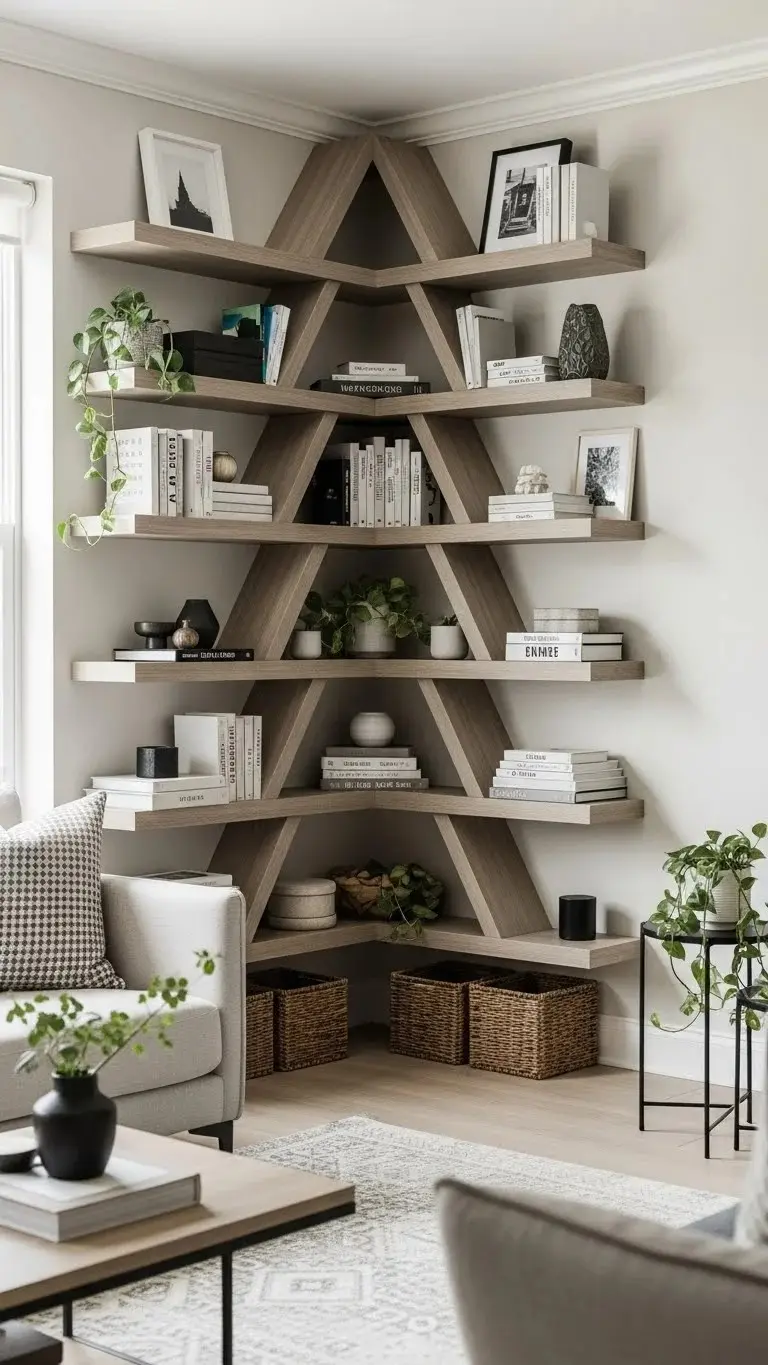
Space diagonal shelves 12-15 inches apart vertically. They work great for plants, photos, and decorative objects. This style fits modern farmhouse and eclectic design schemes perfectly.
14. Open and Closed Cabinet Combination
Mixing open shelves with closed cabinets balances display and hidden storage. Show off pretty things while hiding ugly necessities. The standard ratio is 60% open to 40% closed for visual balance.
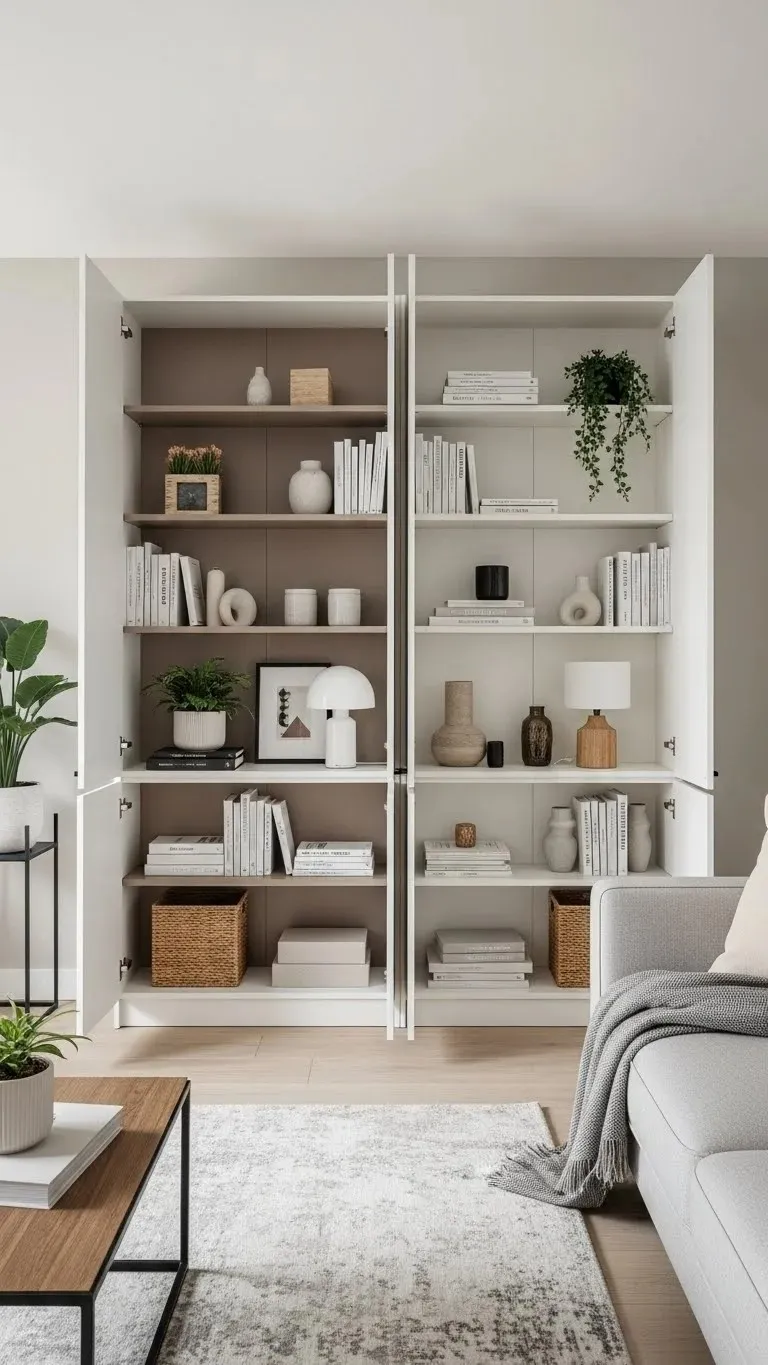
Closed cabinets on bottom create weight and stability. Open shelves on top prevent the space from feeling heavy. This combination keeps your living room looking organized even when life gets messy.
15. Arched Alcove Built-Ins
Arched openings add architectural elegance to standard built-in shelves. The curved top creates Old World charm and softens rectangular rooms. This style fits traditional, Mediterranean, and transitional decor.
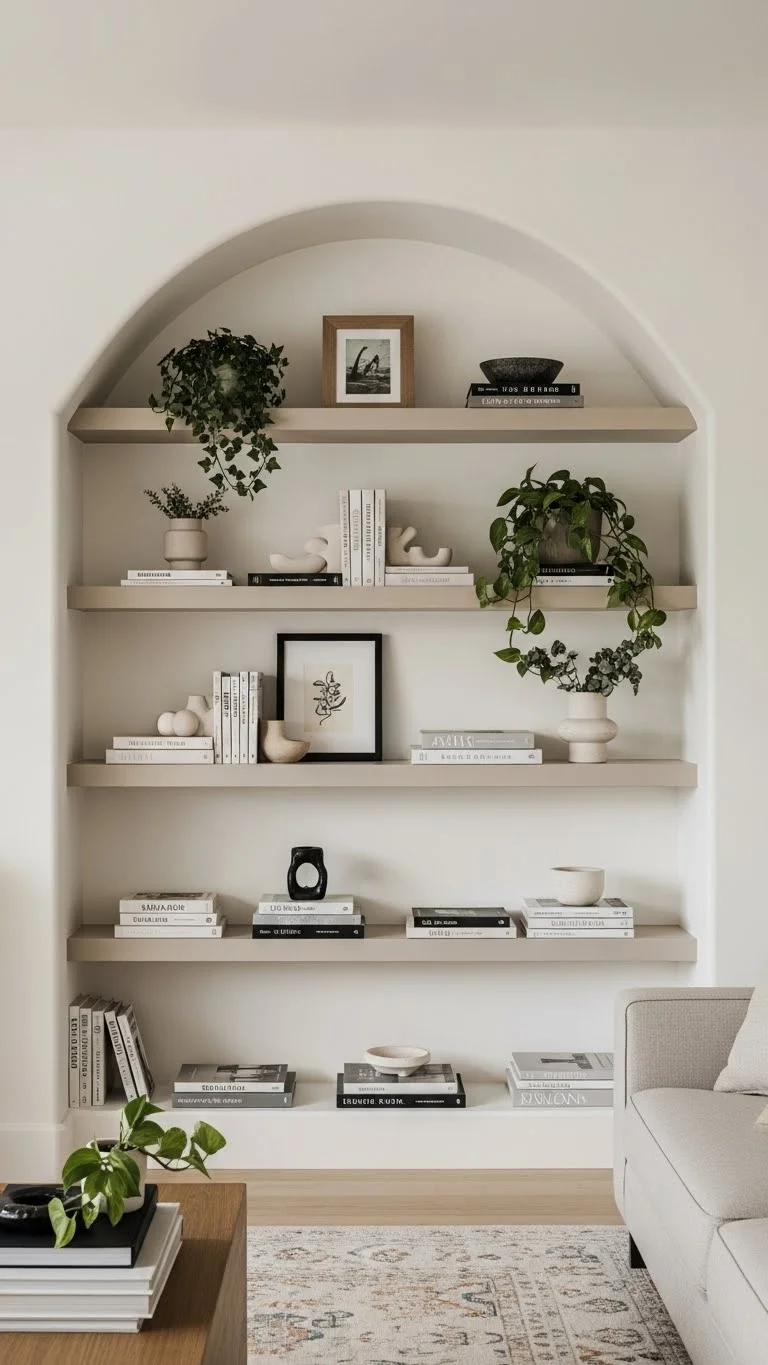
Arches require skilled carpentry or pre-made forms. Standard arch height adds 8-12 inches to overall unit height. Paint the interior a different color to emphasize the arch shape.
16. Geometric Pattern Shelf Arrangements
Hexagonal, diamond, or honeycomb patterns create Instagram-worthy shelf walls. These modular designs let you customize configuration and expand over time. Each segment typically measures 12-24 inches across.
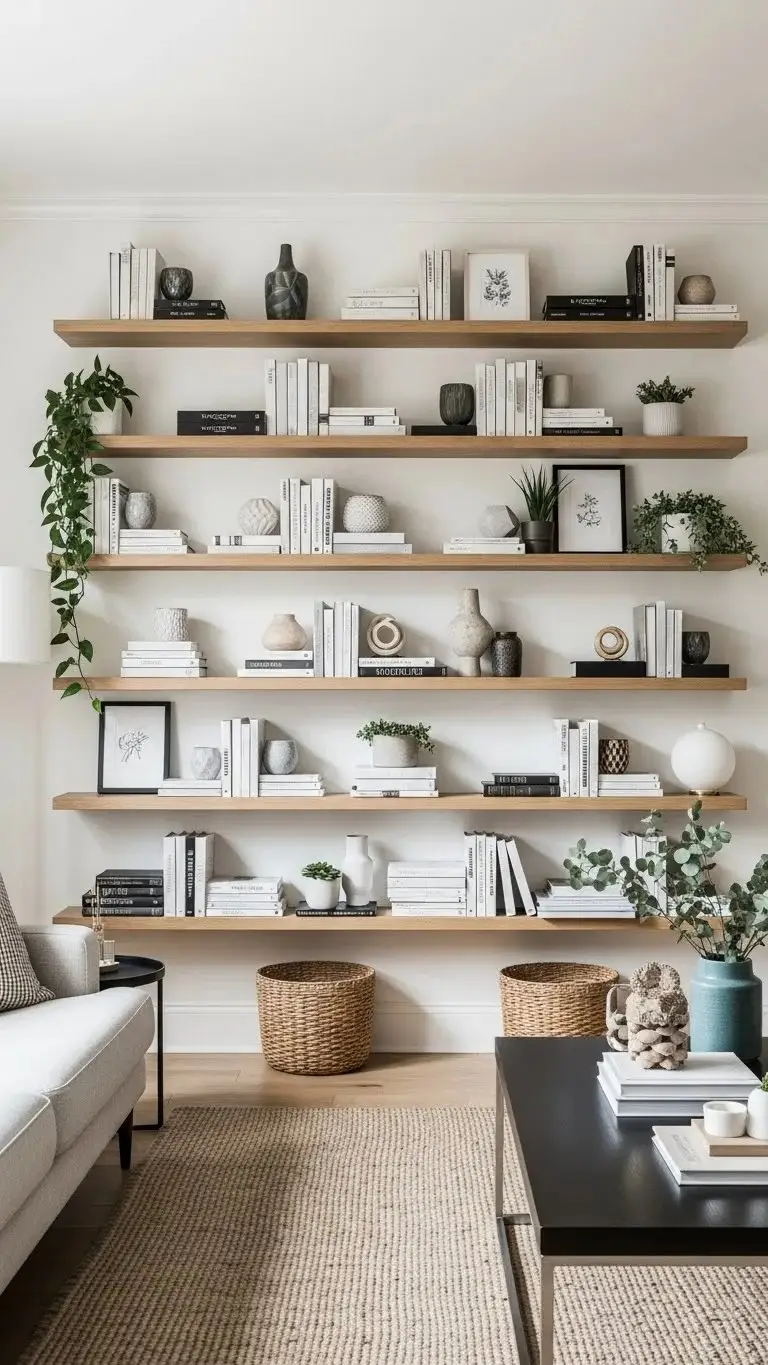
Start with 7-9 pieces for impact without overwhelming the space. These work as accent walls rather than full-room solutions. Perfect for displaying small collectibles and plants.
17. Wrap-Around Wall Shelving Systems
Shelves that wrap around an entire room create library-like atmosphere. These run along 3-4 walls at consistent height for cohesive flow. Total shelving can reach 30-50 linear feet.
This dramatic approach works best in dedicated living rooms or home libraries. Keep consistent spacing of 12-14 inches between shelves. Include a rolling ladder for upper shelves—practical and stylish.
18. LED-Lit Glass Display Shelves
Glass shelves with integrated LED lighting showcase collectibles like a museum. Backlighting creates drama and highlights special items. Tempered glass shelves handle 20-30 pounds safely.
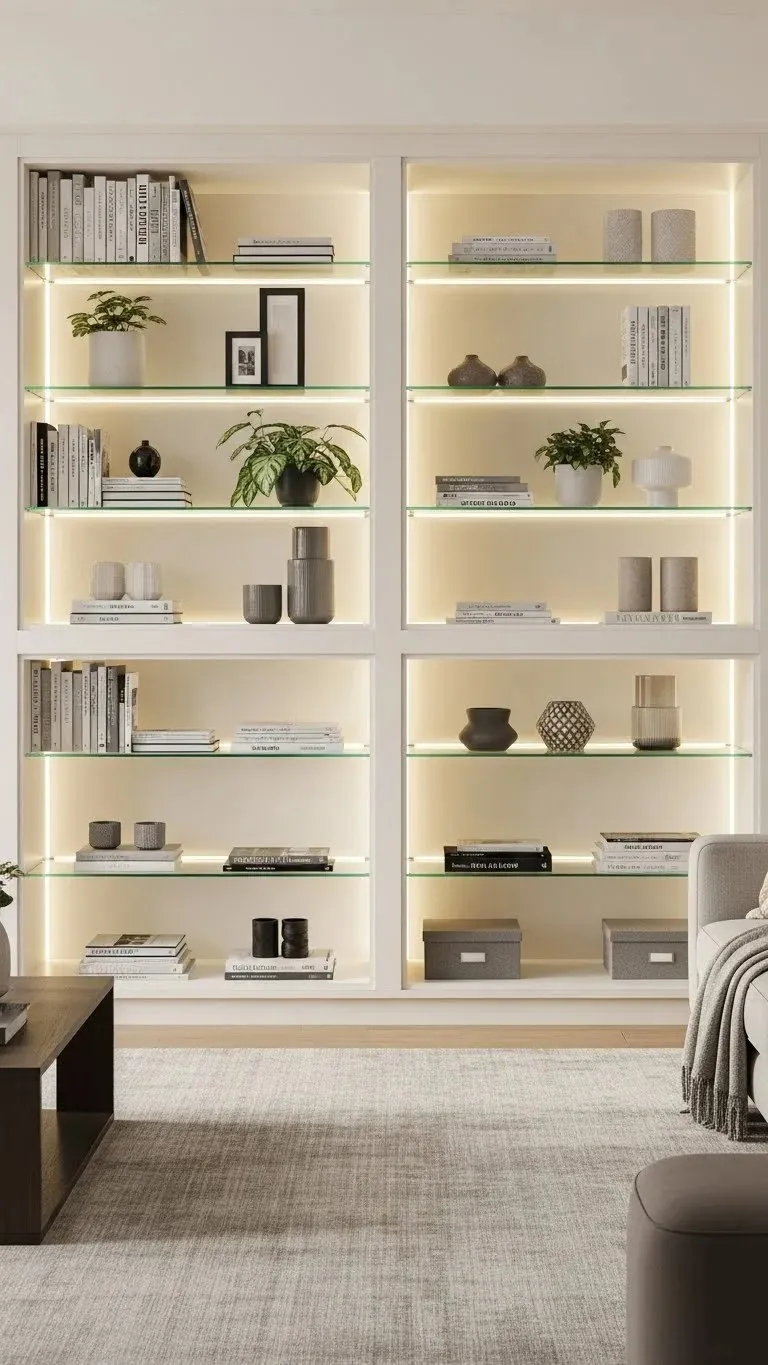
LED strips consume minimal electricity and last 25,000+ hours. Cool white lighting works for modern spaces while warm white suits traditional rooms. This upgrade adds $200-400 to basic built-in costs.
19. Industrial Pipe and Wood Shelf Hybrids
Combining wood shelves with metal pipe supports creates industrial-chic storage. The contrast between warm wood and cool metal adds character. This DIY-friendly option costs 30-40% less than full carpentry.
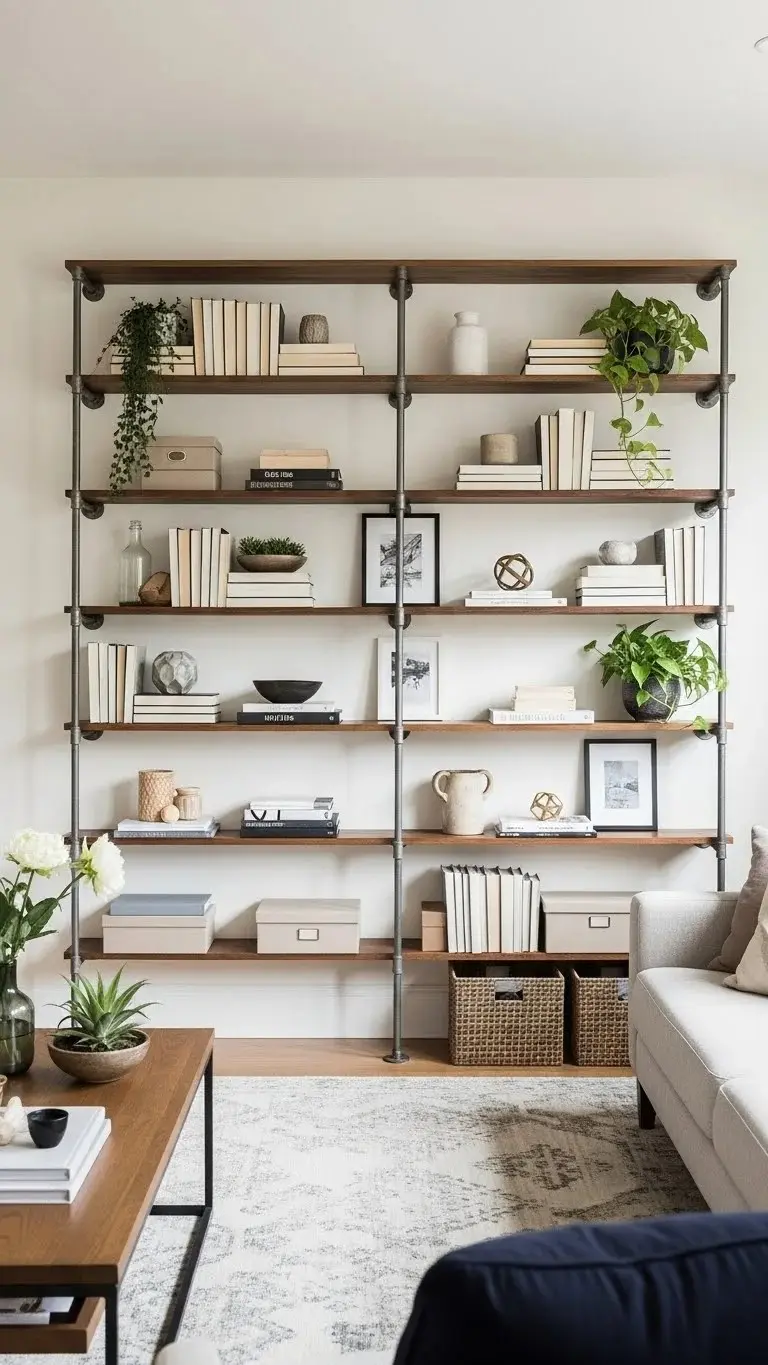
Use 3/4-inch black iron pipes for authentic industrial look. Wood planks should be 1.5-2 inches thick for durability. Seal wood properly to prevent warping and staining.
20. Built-In Bar Shelving with Wine Storage
Transform wall space into an entertainment bar with specialized storage. Wine racks, stemware holders, and bottle displays create home bar functionality. Upper shelves hold spirits while lower cabinets store bar tools.
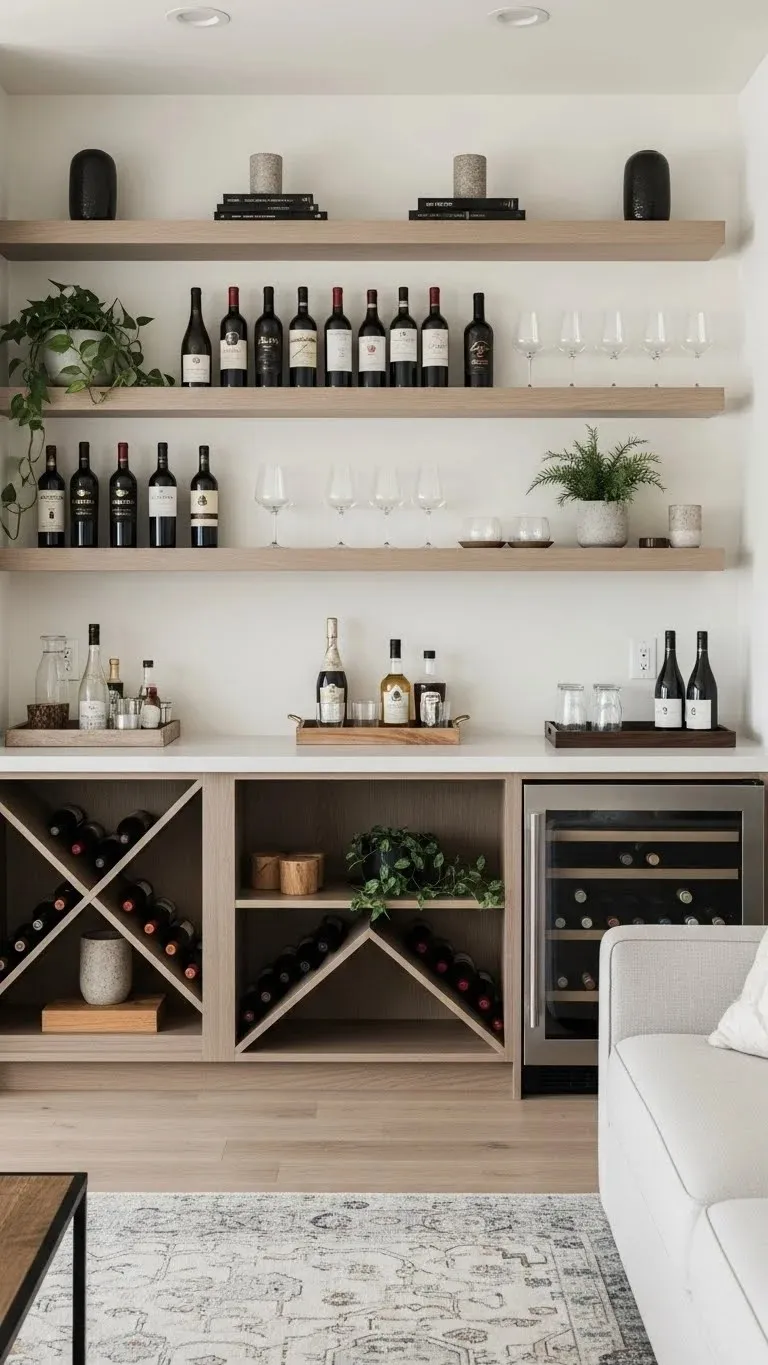
Standard wine storage holds bottles at 15-degree angles. Stemware racks suspend glasses by their bases. This setup requires 48-60 inches width minimum for practical use.
21. Modular Adjustable Track Systems
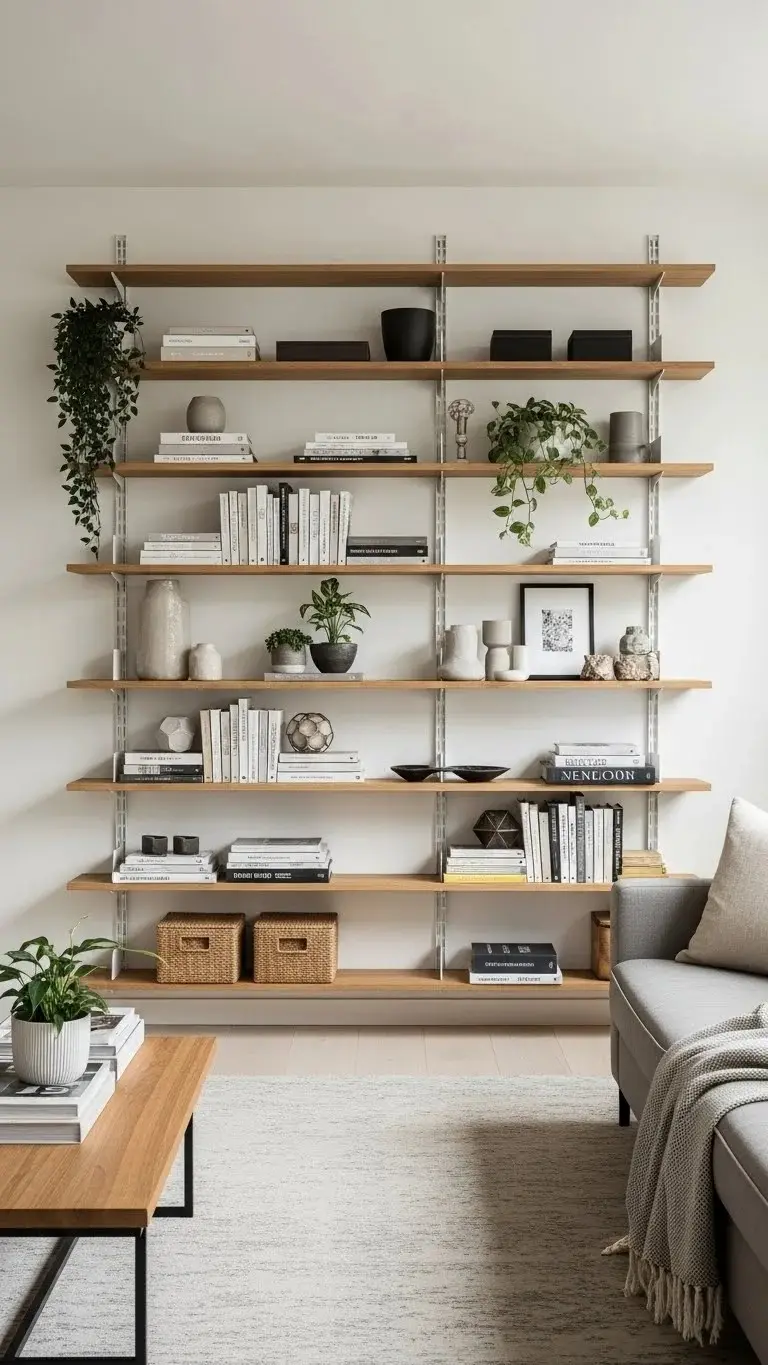
Track-mounted shelving systems allow height adjustments without new holes. Metal tracks mount to walls with shelves that clip in at any height. This flexibility adapts to changing needs over years.
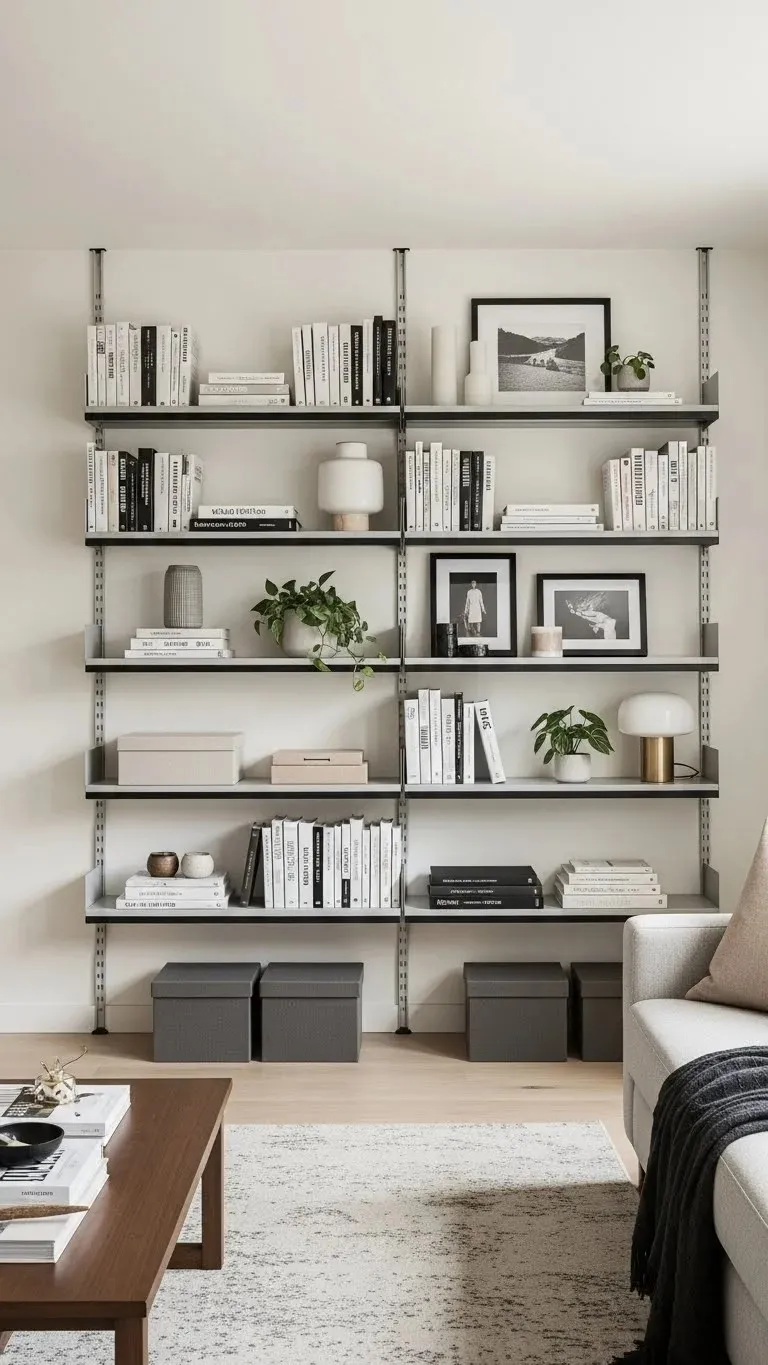
Adjust shelves in 1-inch increments along the track. Load capacity reaches 50-100 pounds per shelf depending on bracket quality. Perfect for growing families whose storage needs evolve.
Materials That Make or Break Your Built-In Shelves
Your material choice determines longevity, appearance, and budget. Solid wood like oak, maple, or walnut costs $8-15 per linear foot but lasts decades. MDF (medium-density fiberboard) runs $3-6 per linear foot and works great when painted.
Plywood offers the sweet spot—stronger than MDF at $5-9 per linear foot. For high-end looks, consider walnut or cherry for visible areas. Use cheaper materials for hidden cabinet interiors. My rule: spend money where people see it, save where they don’t.
Key Material Stats:
- Solid hardwood supports 50-75 lbs per shelf
- Plywood handles 40-60 lbs per shelf
- MDF works for 25-40 lbs per shelf
- Glass shelves hold 20-30 lbs safely
Installation Costs and Timeline Expectations
Professional built-in installation ranges from $1,200-$5,000 depending on complexity and materials. Simple wall-mounted shelves take 1-2 days. Full wall entertainment centers require 3-5 days plus finishing time.
DIY installation cuts costs by 50-60% but demands carpentry skills and tools. You’ll need a level, drill, saw, studfinder, and measuring tools minimum. Factor in 2-3 weekends for a medium project if you’re learning as you go.
Labor typically represents 40-50% of total project cost. Geographic location impacts pricing—urban areas cost 20-30% more than rural regions. Get three quotes before choosing a contractor. Check reviews and ask to see previous work.
Styling Your Built-In Shelves Like an Interior Designer
The 3-object rule prevents cluttered shelves—group items in threes for visual balance. Vary heights by placing tall items next to short ones. Leave 30-40% of shelf space empty so things breathe.
Layer items front to back for depth. Place books both vertically and horizontally. Add one living plant per shelving unit for freshness. Rotate displayed items seasonally to keep the look fresh.
Color coordinate your books for Instagram-worthy shelves. Use decorative boxes or baskets to hide small clutter. Incorporate personal items like family photos between decorative objects. The goal is curated, not cramped.
Conclusion
Built-in living room shelf ideas for 2026 combine smart storage with stunning design that transforms ordinary walls into functional art. These 21 approaches give you options for any budget, style, or space constraint. The right built-in shelves increase your home value while solving real organizational problems daily.
Stop settling for furniture that doesn’t fit right. Choose designs that match your lifestyle and commit to quality installation. Your living room deserves custom solutions that work as hard as they look good.
FAQs
How much do built-in living room shelves typically cost?
Built-in shelves cost between $1,200-$5,000 installed, depending on size, materials, and complexity. Basic painted MDF units start around $1,200 while custom hardwood installations reach $5,000+. DIY projects cut costs by 50-60% but require carpentry skills and proper tools.
Can I install built-in shelves myself or do I need a professional?
You can DIY built-in shelves if you have basic carpentry skills and tools like a level, drill, and saw. Simple floating shelves or track systems work well for beginners. Complex projects involving electrical work, structural changes, or custom millwork require professional installation for safety and quality.
What’s the best depth for built-in living room shelves?
Standard shelf depth runs 10-12 inches for books and decor. Deeper shelves at 14-16 inches accommodate larger items but protrude more into the room. Shallow display shelves work at 6-8 inches. Match depth to what you’re storing—books need less depth than electronics or board games.
How do I prevent built-in shelves from sagging over time?
Prevent sagging by using 3/4-inch thick material minimum and installing support brackets every 24-32 inches. Solid wood and plywood resist sagging better than MDF. Add a backing board for extra support. Don’t overload shelves beyond their weight capacity—typically 50-75 pounds for wood shelves with proper support. Claude can make mistakes. Please double-check responses.


