
17 Winter Hairstyles ideas, Sorted by What the Weather’s Actually Doing
I used to pick a winter hairstyle the way I picked anything else — based on mood, or whatever looked good in the mirror that morning. Then I’d walk outside into actual January weather and watch the whole thing fall apart within twenty minutes, and I’d wonder what went wrong.
What went wrong was that I picked the style before I checked the weather. Dry indoor heat wrecks certain styles. Snow wrecks different ones. Wind takes out a whole separate category entirely. So this list is built around that — five weather conditions, several styles for each, chosen specifically because they hold up against that particular kind of winter day.
Dry Indoor Heat Days
The kind of day where you’re mostly inside, heating’s running constantly, and static becomes the actual enemy rather than cold itself.
1. The Low, Loose Bun

Gather hair loosely at the nape, twist once, and secure without pulling tight. A loose bun keeps flyaways contained without the friction of a tight style, which matters because tight styles actually generate more static in dry air, not less.
2. The Braided Crown

Two loose braids wrapped around the head and pinned. Braided styles keep individual strands from separating and catching static the way loose, down hair does in a heated room all day.
3. Sleek Half-Up with Serum

Half the hair pulled back, the rest left down, with a light anti-static serum worked through before you leave the house. This is less about the style itself and more about treating the actual cause, since serum coats the hair shaft and reduces the static that dry heat otherwise guarantees.
4. The Wrapped Ponytail

A regular ponytail with a small section of hair wrapped around the elastic to hide it. This hides the base cleanly, and because it’s a smooth, contained shape, it resists the frizzy separation that dry heat causes in a loose, brushed-out style.
Snow Days
Actual falling snow, which means moisture landing directly on your hair and melting, then potentially refreezing if you’re outside long enough.
5. The Single Braid Down the Back
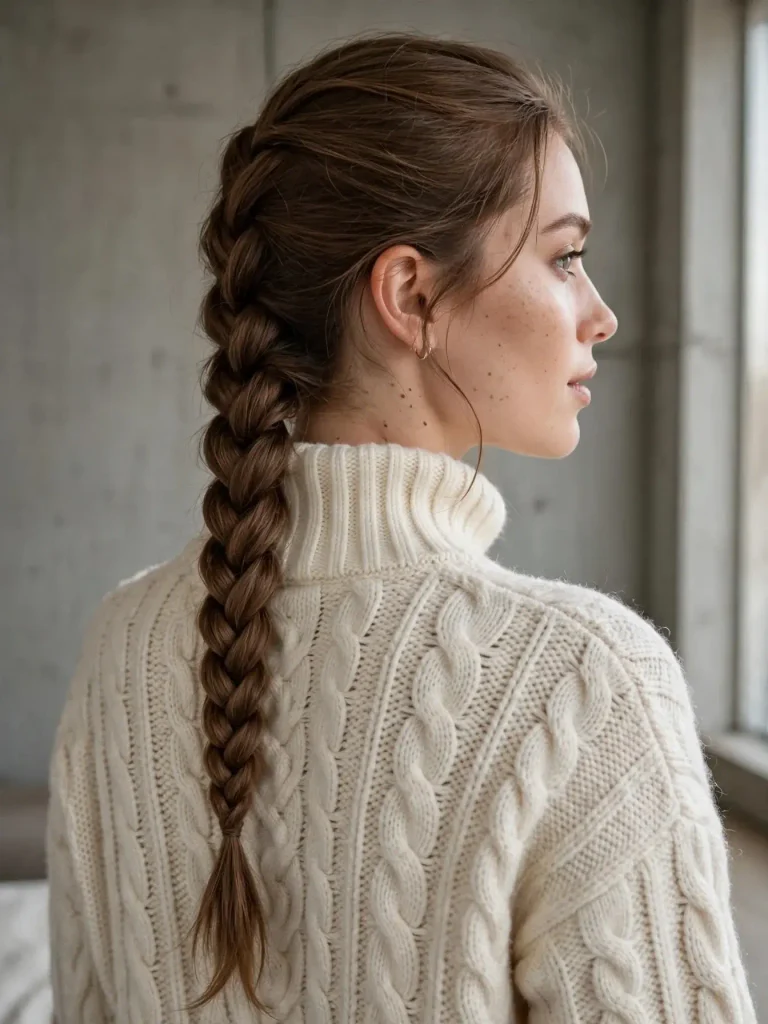
One thick braid, secured at the end. A braid contains hair so snow lands on the outside of a controlled shape rather than getting tangled into loose strands, and it dries evenly once you’re back inside.
6. The Under-Hood Bun
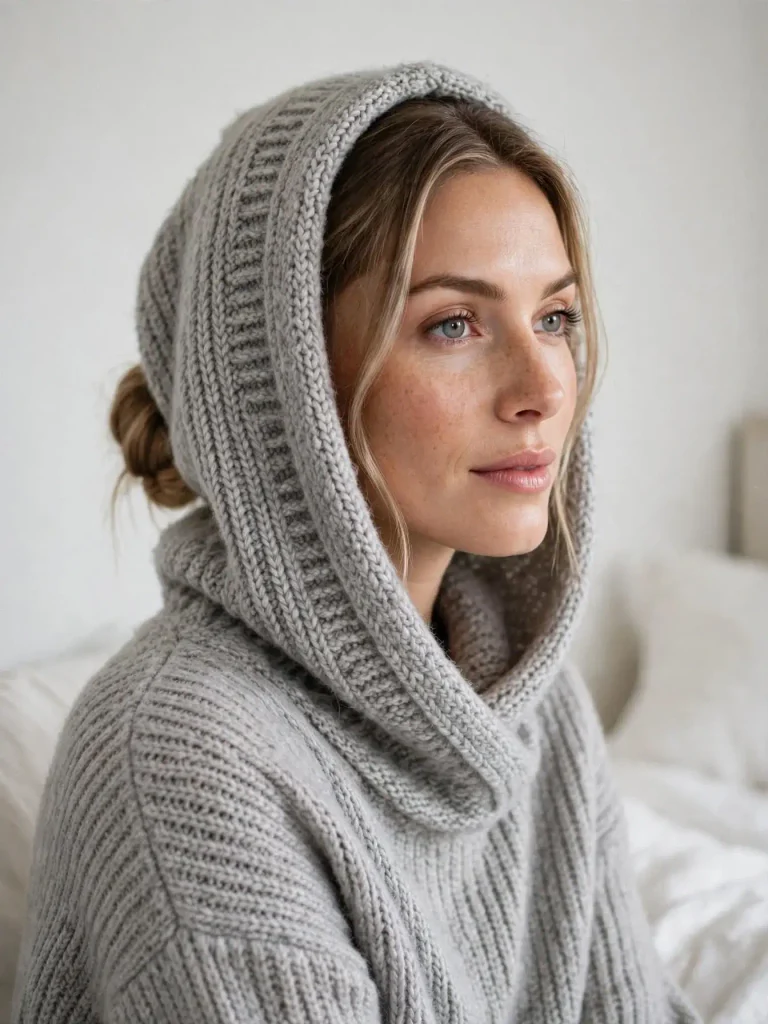
A small, tight bun positioned low enough to fit comfortably under a hood without bulging or getting crushed. This is a genuinely practical choice for anyone walking any real distance in snow, since a bun that fits properly under a hood means the hood actually stays up.
7. Twin French Braids

Two French braids running from the front hairline to the nape. These hold their shape even when snow melts into them, since the braided structure dries in place rather than collapsing the way loose curls or waves would.
8. Tucked-In Waves Under a Beanie

Loose waves, tucked entirely under a beanie before heading out, released once you’re indoors. This protects the actual style from snow contact altogether, essentially treating the beanie as a shield rather than trying to make a style snow-resistant on its own.
Windy Days
Wind does something specific that other winter conditions don’t — it lifts and tangles hair from underneath, which most styles aren’t built to resist.
9. The Low Ponytail, Tightly Secured

A ponytail positioned low, at the nape rather than higher up, secured with a strong elastic. Lower ponytails have less length exposed to catch wind from below, and a tight elastic prevents the whole tail from whipping around and tangling on itself.
10. The Double Dutch Braid

Two Dutch braids, close to the scalp, ending in a secured tail. Because the braid sits flat against the head rather than loose, wind has almost nothing to grab onto until it reaches the very ends.
11. The Slicked-Back Bun

Hair pulled back completely smooth, no loose pieces left out, secured into a bun with a bit of gel or pomade at the hairline. This is the most wind-resistant style on this entire list, because there’s genuinely nothing left for wind to lift.
12. A Scarf-Anchored Half-Up

A half-up style with a scarf tied over the crown, anchoring the pulled-back section in place even as wind hits the loose hair underneath. The scarf does double duty here, adding a style element while also functioning as a literal anchor point.
Wet, Slushy Days
Not snow falling directly, but the general dampness and unpredictable moisture of a slushy commute, wet umbrellas, and general winter grime.
13. The Messy Top Knot

A high, deliberately loose bun on top of the head. Positioning it high keeps it further from splashes and low-hanging wet coat collars, and the intentional messiness means a little dampness doesn’t visibly change the style much.
14. Braided Pigtails

Two simple braids, one on each side, secured at the ends. Splitting hair into two smaller sections rather than one large one means moisture affects each section less dramatically, and both dry faster once you’re inside somewhere warm.
15. A Fully Contained Braid Under a Hood

The same single-braid logic as the snow section, but paired specifically with a hood kept up through the wettest part of a commute, then removed once indoors. This treats wet slush the same way as falling snow — protect the style rather than trying to make it moisture-proof.
Hat-Required Days
Not about the weather condition directly, but about any day cold enough that a hat is non-negotiable for the entire outdoor portion of your day.
16. The Two-Braid Base

Two low braids, one on each side, positioned specifically to sit flat and comfortable under hat pressure for hours at a time. Braided styles hold their shape under a hat far better than loose waves, which tend to flatten unevenly and look disheveled once the hat finally comes off.
17. The Post-Hat Refresh Style

Not a style you put on before the hat, but one you do after taking it off — finger-comb through, add a small amount of texture spray, and twist the ends loosely for five seconds each. This isn’t about avoiding hat hair at all, it’s about having a fast, reliable fix ready the moment the hat comes off, rather than being surprised by flat, staticky hair with no plan.
The Hat-Hair Recovery Move
This deserves its own explanation, because it’s genuinely useful and almost nobody talks about it directly: the first sixty seconds after removing a hat determine whether your hair recovers or stays flat for the rest of the day.
The moment the hat comes off, flip your head upside down and run your fingers through the roots two or three times, working against the direction the hat pressed hair down in. This reintroduces air and volume at the root before the flattened shape has a chance to set, which matters because hair that’s been pressed down for an hour under a hat tends to “remember” that shape the longer it sits.
Follow that with a small amount of dry shampoo or texture spray at the roots specifically, even if your hair isn’t oily, since the product adds grip that helps hair hold the volume you just reintroduced rather than falling flat again within minutes. This one habit has saved more of my winter hairstyles than any product or technique I’ve tried on its own.
Static Check
A genuinely simple test worth running before you commit to any style above: hold a section of dry hair up to the light and look for individual strands standing away from the rest.
If you’re seeing noticeable separation already, before you’ve even left the house, that’s a sign the day is going to be a heavy static day regardless of which style you choose, and it’s worth adding a light serum or leave-in product before styling rather than after the fact. If the hair looks smooth and settled without any visible separation, you likely have more flexibility to choose a looser or more down style without worrying about static ruining it within the first hour.
This check takes about five seconds and it’s a far more reliable predictor of how your day is actually going to go than just assuming based on how cold it feels outside.
Choosing by Weather, Not Mood
The real shift here is checking the forecast before picking a style, not after you’re already frustrated twenty minutes into your commute. Dry heat, snow, wind, slush, and hat-required cold all do genuinely different things to hair, and a style built for one condition can fail completely in another, even if both days feel equally “cold” in a general sense.
Check what the day’s actually doing, match it to the right section above, and the whole winter styling process stops feeling like a guessing game you lose more often than you win.