
17 Small Living Room Ideas 2026 — Your Space Isn’t the Problem, These Fix It!
If you’re struggling with 17 small living room ideas 2026, you’re not alone—millions of homeowners face the challenge of making compact spaces feel bigger and more inviting. Picture walking into a cramped room that feels like a storage closet, then imagine transforming it into a cozy retreat where every inch works perfectly. This guide reveals proven design tricks that turn even the tiniest living rooms into functional, beautiful spaces you’ll love spending time in.
1. Multi-Functional Furniture That Works Double Duty
Sarah from Brooklyn transformed her 150-square-foot living room by replacing her bulky coffee table with an ottoman that opens up for storage. She now keeps blankets, magazines, and her kids’ toys hidden inside while using the top as a footrest during movie nights.
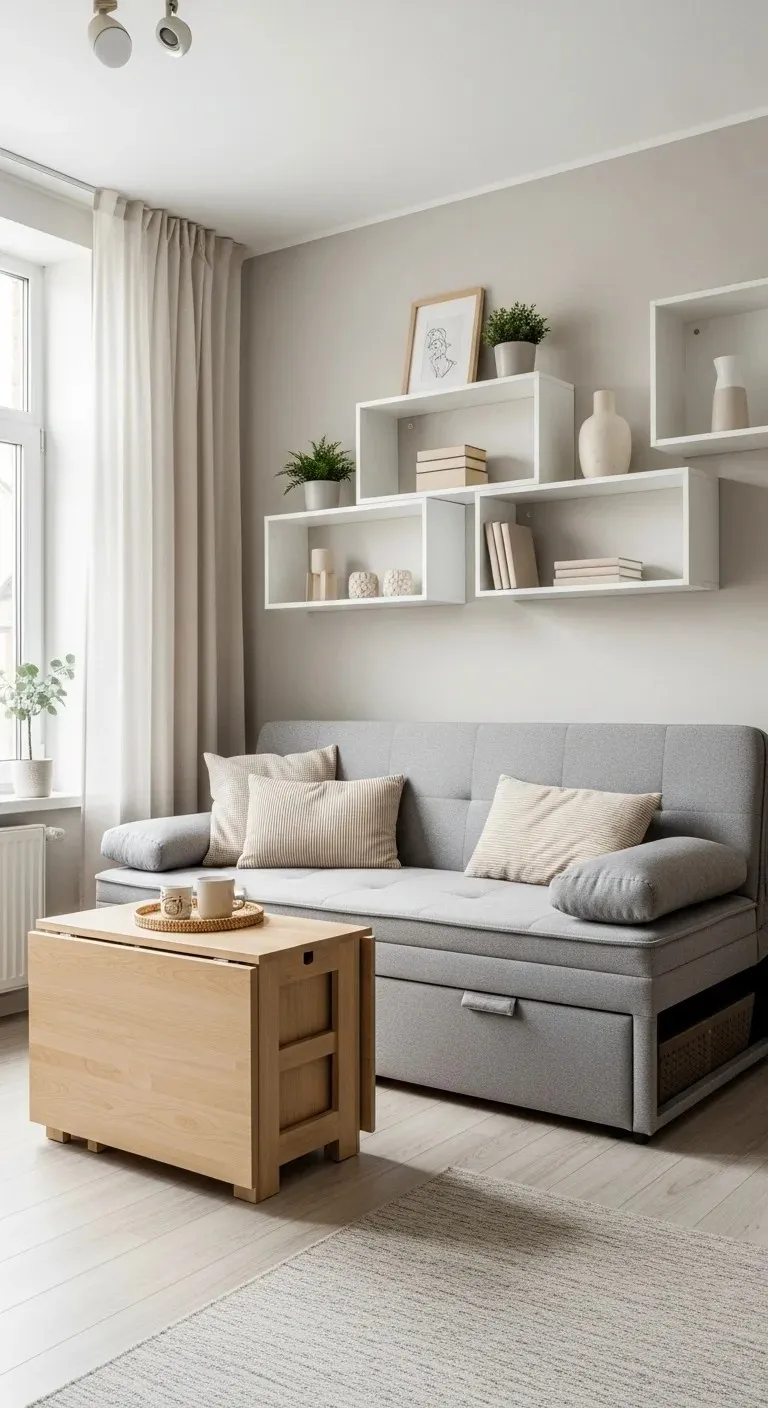
Multi-functional furniture is your best friend in small spaces. Look for sofas that convert into beds, coffee tables with built-in shelving, or benches with hidden compartments. The IKEA Friheten sleeper sofa, for example, includes storage under the seats and pulls out for overnight guests. These pieces eliminate the need for separate storage units and extra seating, giving you more floor space to move around freely.
2. Light Colors to Open Up Your Space
When Maria repainted her Madrid apartment living room from dark brown to soft cream, she couldn’t believe her eyes—the room instantly felt twice as big. Light reflects differently on pale walls, creating an airy atmosphere that makes boundaries seem to disappear.
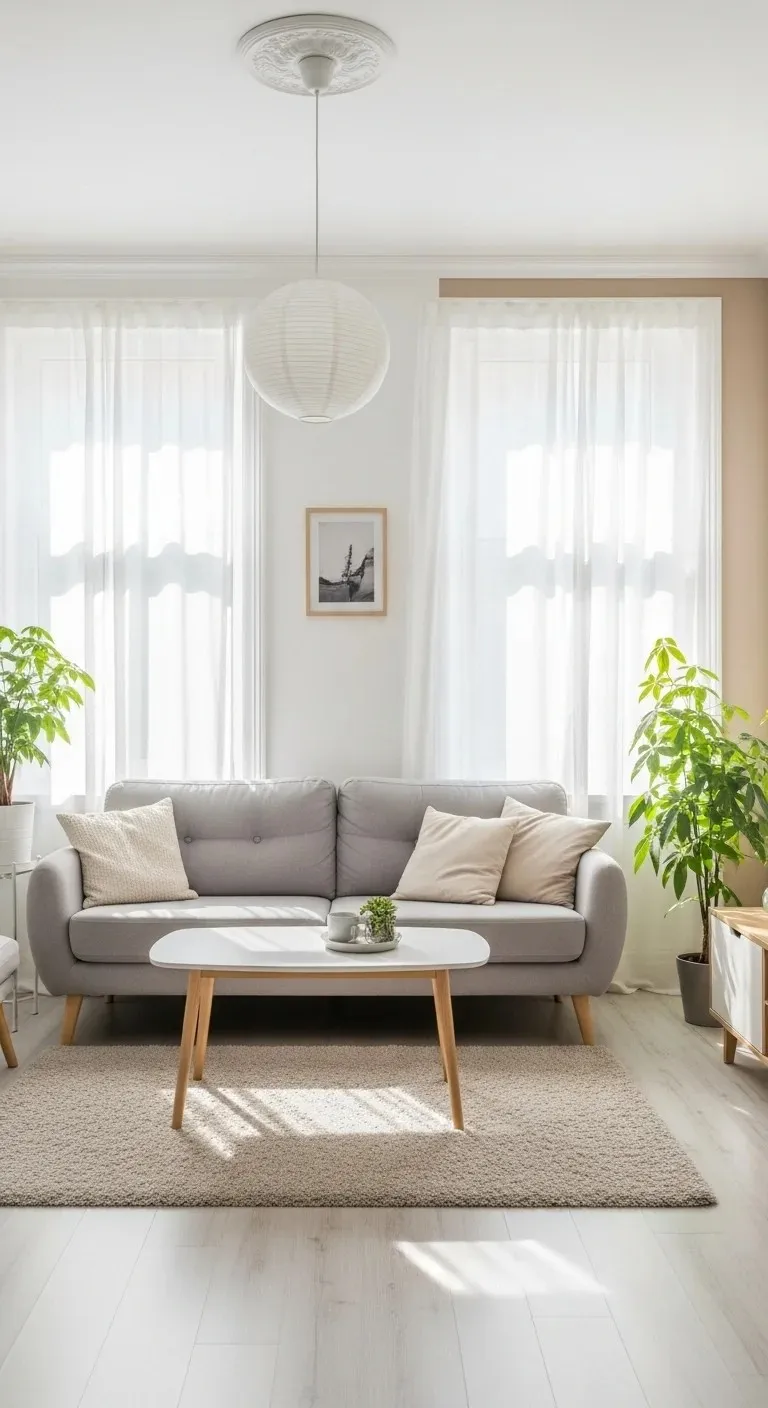
Choose whites, beiges, light grays, or pastels for your walls and larger furniture pieces. According to interior designers at Sherwin-Williams, light colors reflect up to 80% more natural light than dark shades. You don’t have to go all white—mixing cream walls with a light gray sofa and white curtains creates depth while maintaining that spacious feeling.
3. Vertical Storage Solutions
James, a college student in Seattle, ran out of floor space until he discovered vertical shelving. He installed floating shelves from floor to ceiling along one wall, displaying his book collection, plants, and photo frames without sacrificing any walking room.
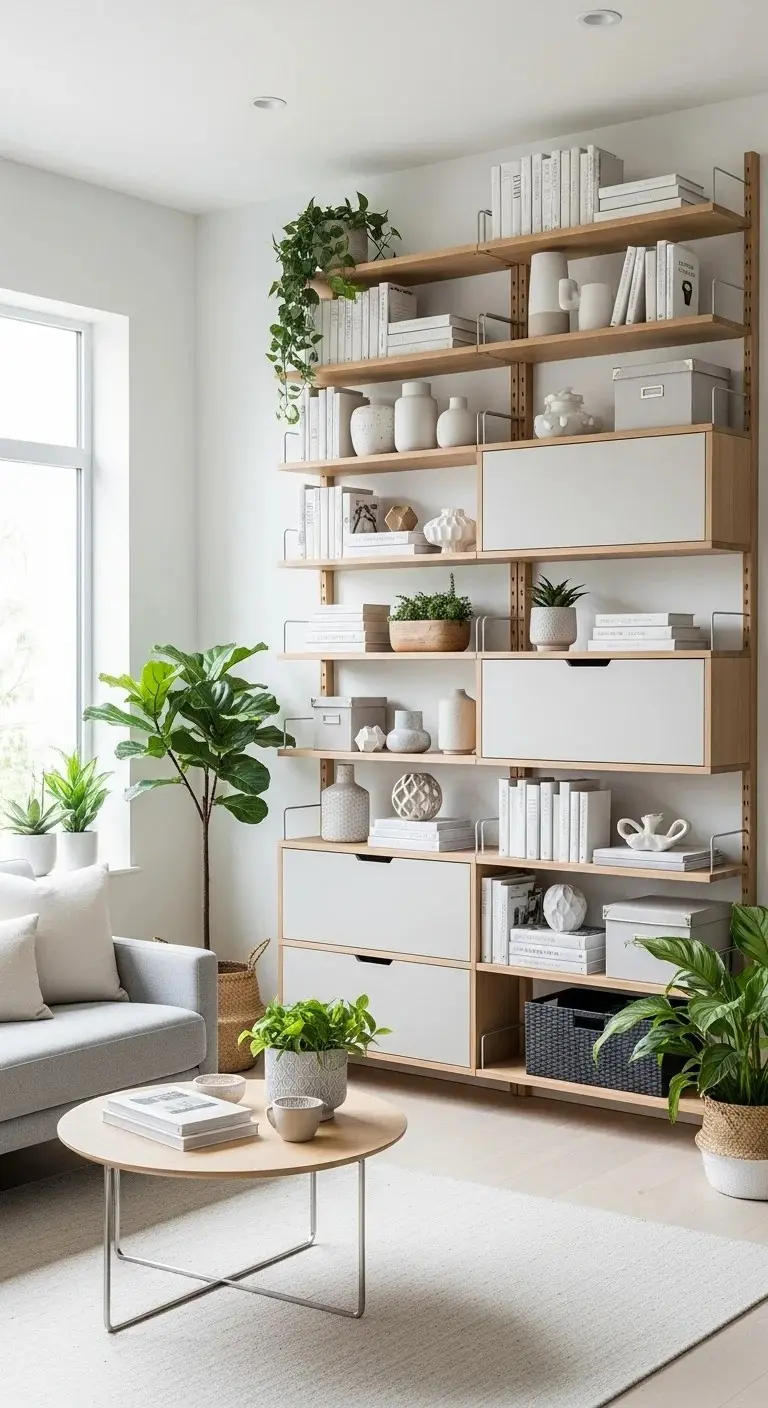
Vertical storage draws the eye upward, making ceilings appear higher and rooms feel larger. Wall-mounted shelves, tall bookcases, and hanging organizers utilize often-wasted wall space. The Container Store reports that vertical storage can increase usable space by up to 40% in small rooms. Install shelves above doorways, in corners, or along entire walls to maximize every vertical inch.
4. Mirrors to Create Depth and Light
Rebecca hung a large mirror opposite her Los Angeles apartment window, and suddenly her dark living room flooded with natural light throughout the day. The mirror reflected not just light but also her small balcony view, making the room feel connected to the outdoors.
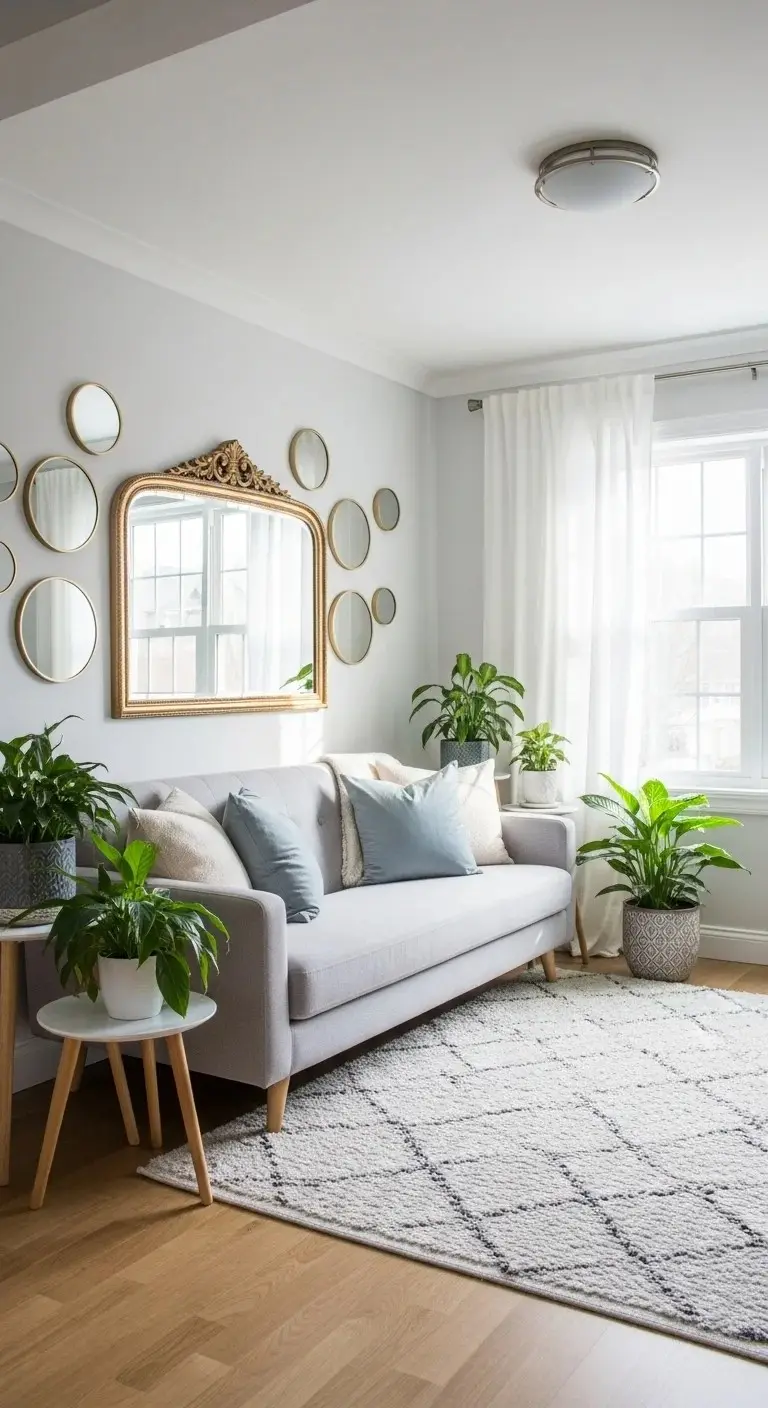
Mirrors are magical for small spaces because they bounce light around and create the illusion of extra square footage. Place a large mirror across from a window to double natural light, or create a gallery wall of smaller mirrors for an artistic touch. Designer Nate Berkus suggests mirrors should be at least two-thirds the size of the furniture they’re above to make a real impact.
5. Floating Furniture Away From Walls
Tom always pushed his furniture against the walls in his Chicago studio until his designer friend suggested pulling the sofa a few inches forward. That small change created walking space behind the sofa and made the room feel less cramped and more intentional.
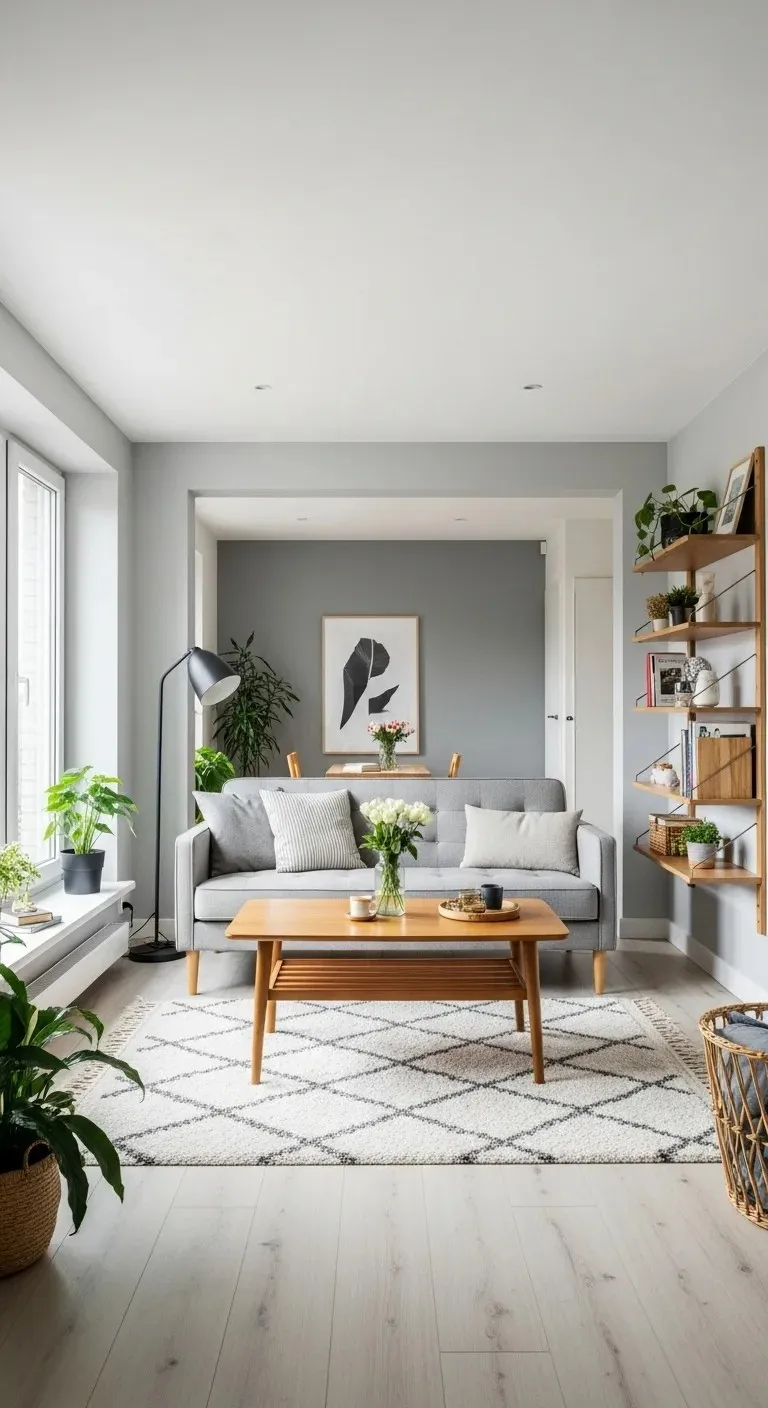
Floating furniture might seem counterintuitive in small spaces, but it actually creates better flow and makes rooms appear larger. Pull your sofa 6-12 inches from the wall, leaving space for a narrow console table behind it. This adds depth perception and gives you extra surface area for lamps or decorative items without eating up floor space.
6. Transparent and Lucite Furniture
When Jennifer replaced her wooden coffee table with a clear acrylic one in her San Francisco loft, guests kept asking if she’d removed furniture. The transparent table serves its purpose while visually disappearing, making her living room feel less cluttered.
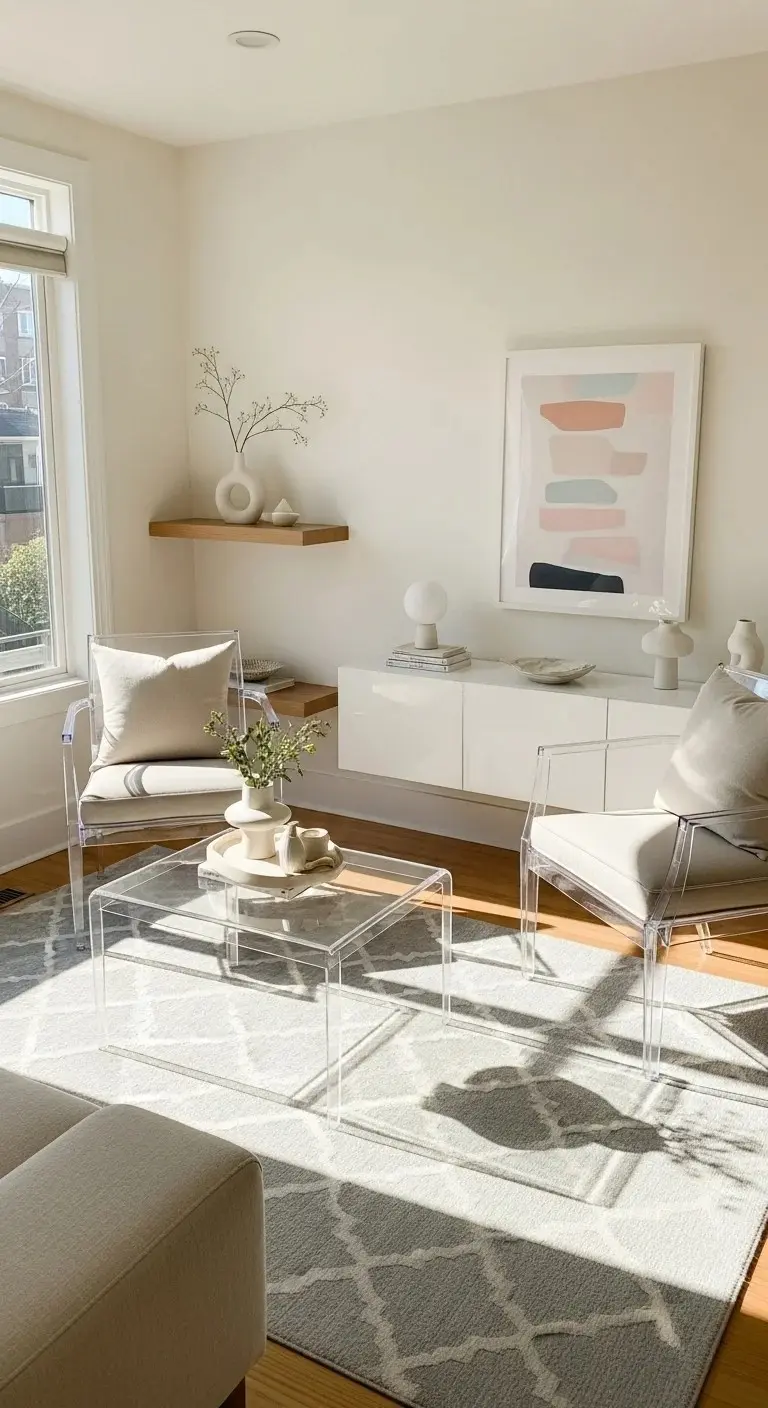
Glass, acrylic, and lucite furniture pieces don’t block sightlines, creating an open, airy feeling. A clear coffee table, ghost chairs, or glass side tables provide necessary function without visual weight. CB2 and West Elm offer numerous transparent furniture options that work beautifully in compact living rooms. These pieces are especially effective when you need furniture but want to maintain an uncluttered aesthetic.
7. Smart Lighting Layers
David’s Boston apartment felt like a cave until he added three types of lighting: overhead fixtures, table lamps, and LED strips under his shelves. The layered lighting transformed the mood completely, making the small space feel warm and inviting at night.
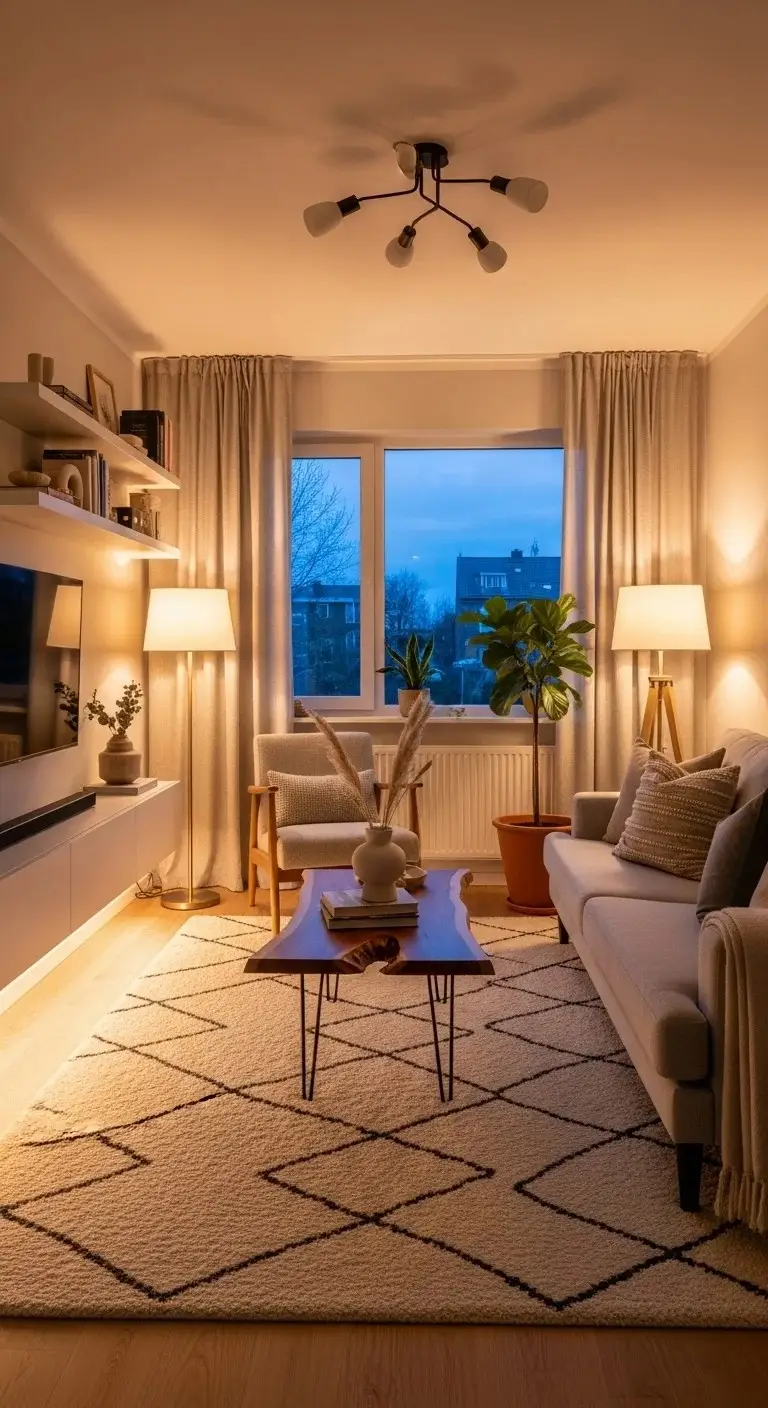
Good lighting makes small rooms feel larger and more welcoming. Combine ambient lighting (overhead), task lighting (reading lamps), and accent lighting (picture lights or LED strips) to create depth and dimension. Philips Hue reports that proper lighting can make spaces feel up to 30% larger. Avoid single overhead lights that create harsh shadows—instead, use multiple light sources at different heights throughout the room.
8. Strategic Rug Placement
Anna made a common mistake in her Denver condo—she bought a tiny rug that made her furniture look like it was floating in space. After upgrading to a larger rug that fit under at least the front legs of all her furniture, the room suddenly felt pulled together and more spacious.
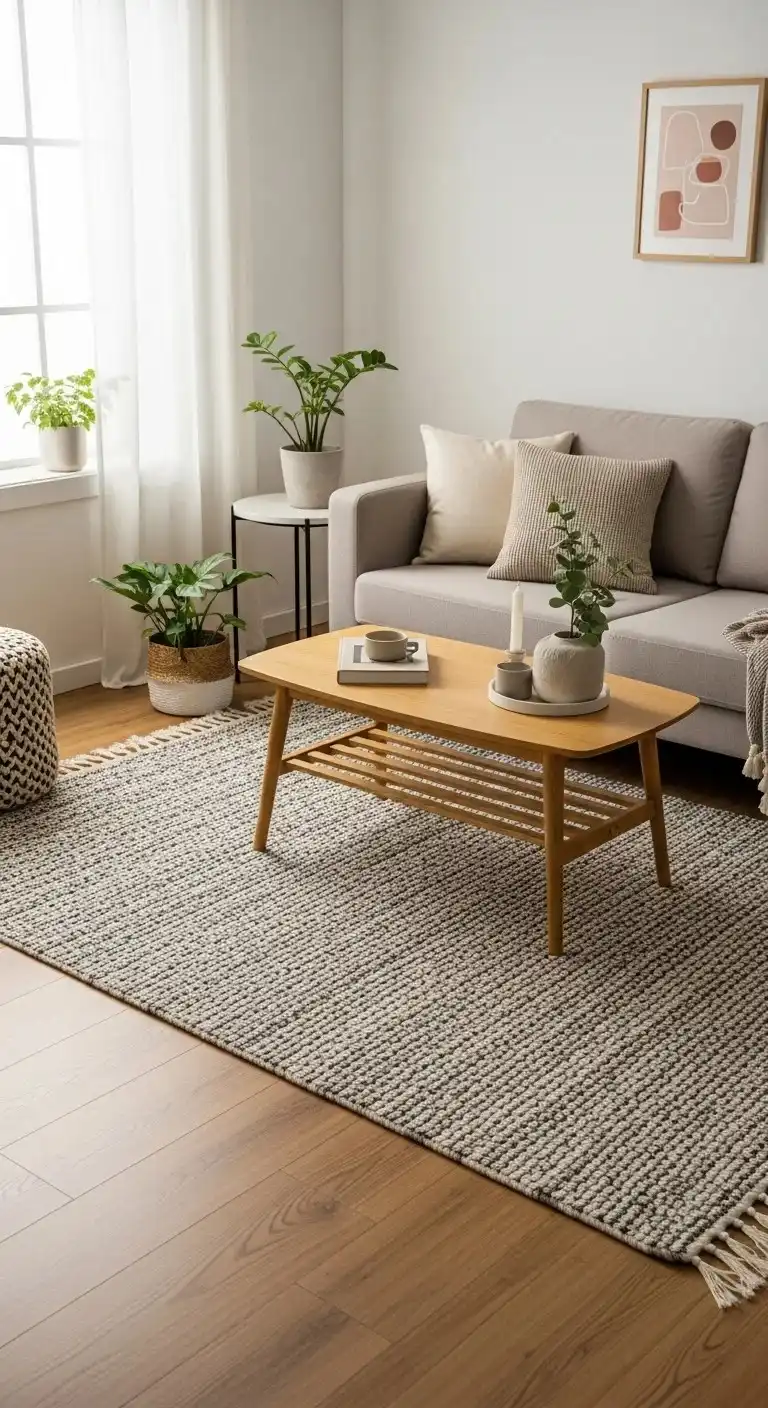
The right rug anchors your furniture grouping and defines your living area without walls. Choose a rug large enough that at least the front legs of your sofa and chairs rest on it. This creates a cohesive conversation area and makes the room feel more intentional. In small spaces, one appropriately sized rug works better than several small ones, which can make the room feel chopped up and cluttered.
9. Built-In Storage and Custom Solutions
Marcus hired a carpenter to build custom shelving around his Philadelphia apartment’s awkward alcove, turning wasted space into beautiful storage that looked like it came with the apartment. The built-ins added character while solving his storage crisis.
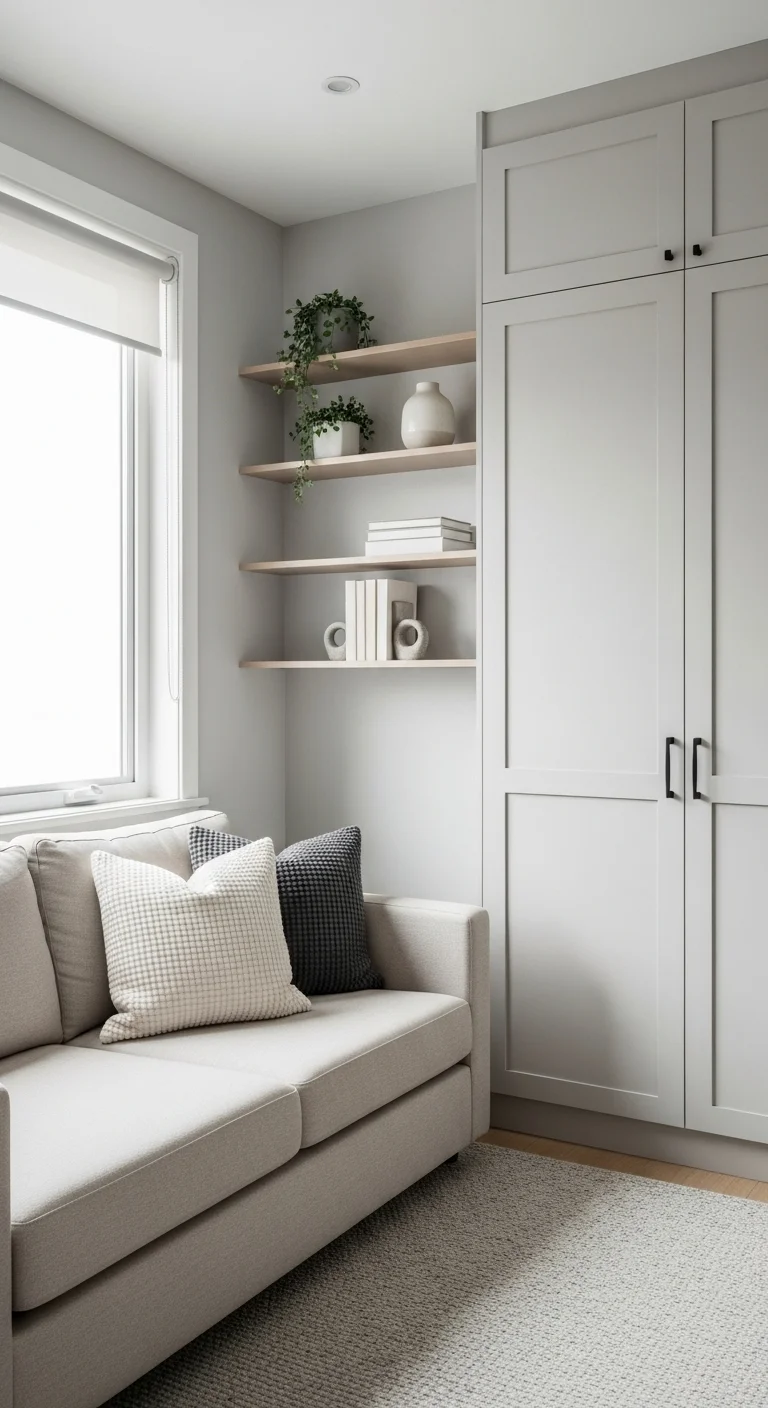
Custom built-ins maximize every inch of available space, especially in rooms with unusual layouts. Built-in benches with storage underneath, shelving units that fit perfectly into alcoves, or custom entertainment centers can transform dead space into functional areas. While they require upfront investment, Houzz reports that built-in storage can increase home value by 5-7% while dramatically improving daily living in small spaces.
10. Minimalist Approach and Decluttering
Sophie from Portland followed the “one in, one out” rule for six months, and her living room went from chaotic to calm. Every time she bought something new, she donated something old, gradually curating a collection of only items she truly loved.
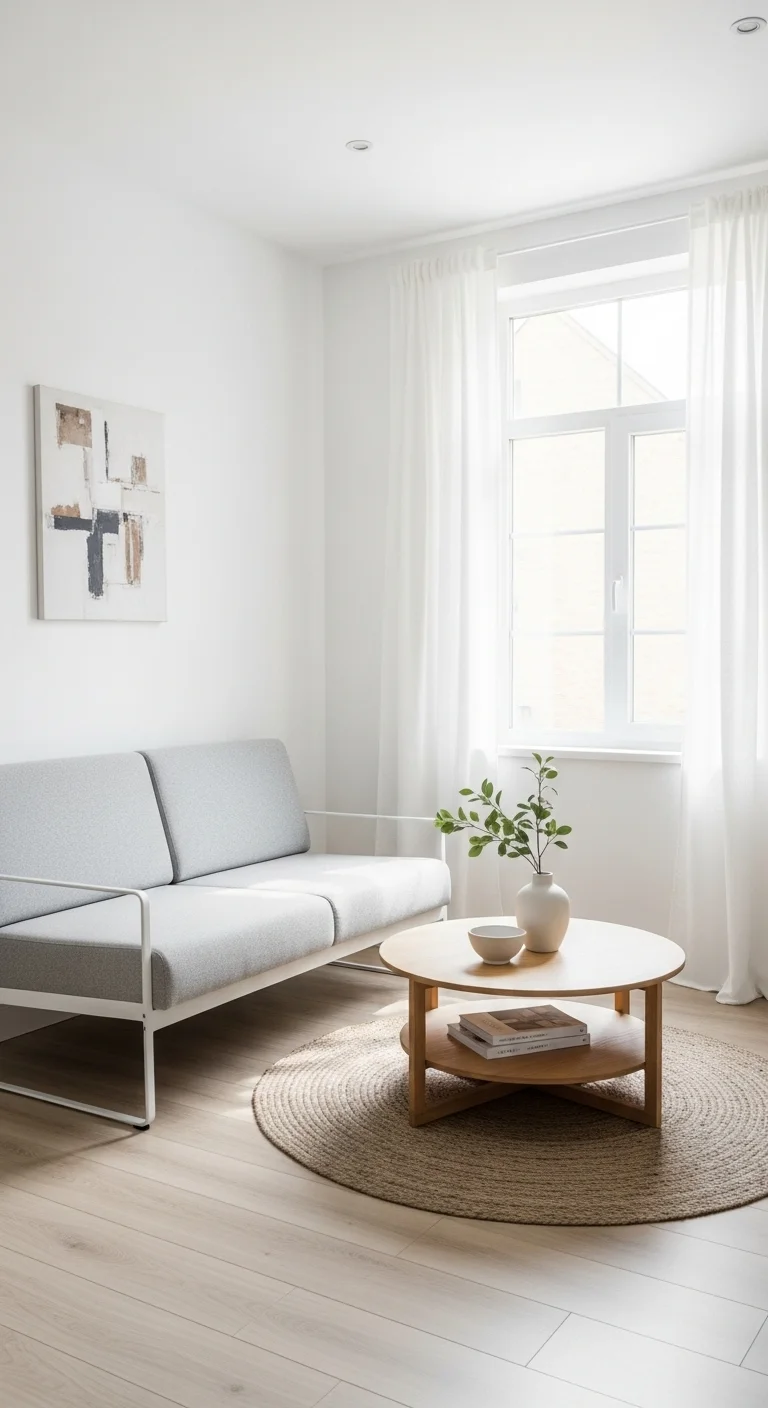
Less really is more in small living rooms. Each item you display should serve a purpose or bring you joy—everything else is visual clutter that makes spaces feel smaller. Marie Kondo’s decluttering method has helped millions create breathing room in their homes. Start by removing items from surfaces, then evaluate each piece of furniture—do you really need that extra side table, or could you use a wall-mounted shelf instead?
11. Sliding Doors or Curtains Instead of Traditional Doors
Rachel’s New York studio had a standard door that swung into the living area, taking up valuable floor space every time it opened. She replaced it with a sliding barn door, instantly reclaiming about 10 square feet that she used for a reading nook.
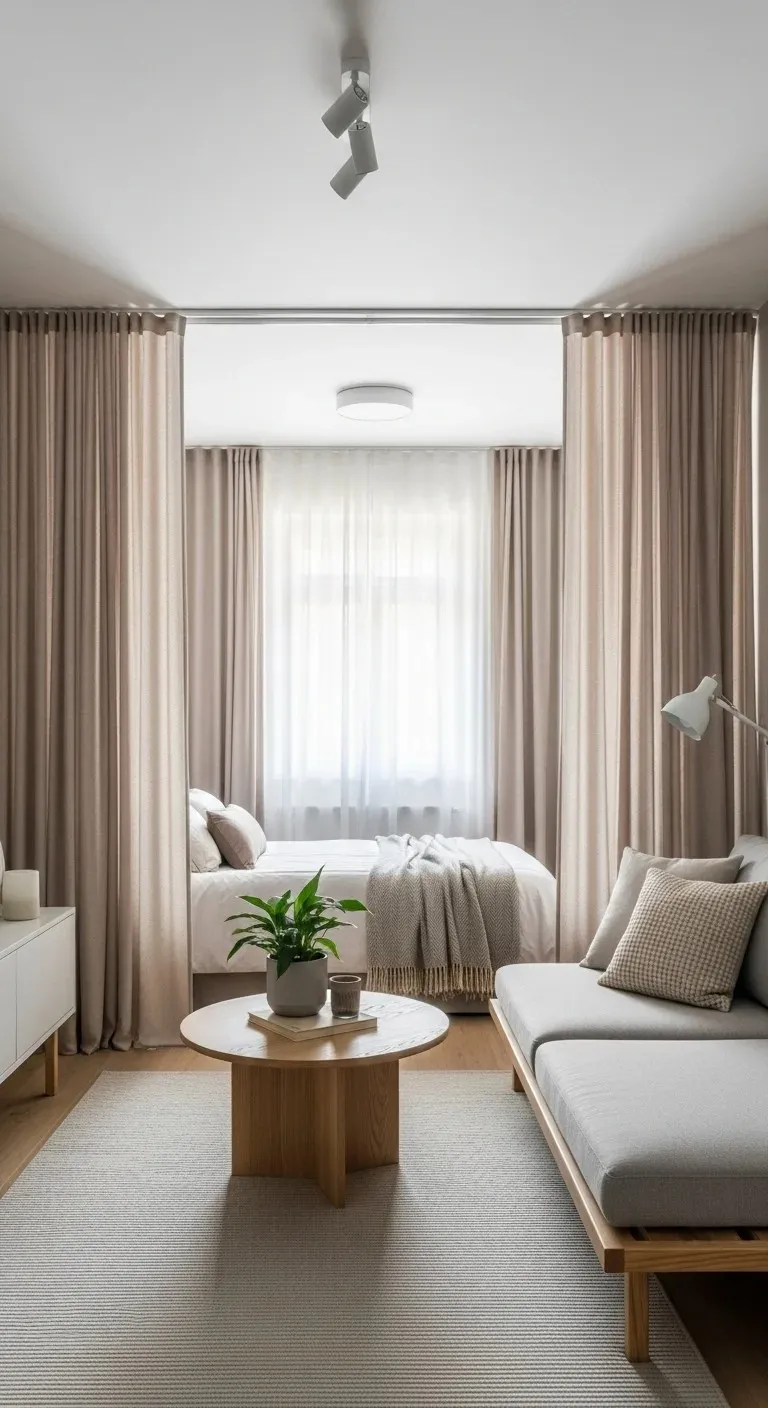
Traditional swinging doors require clearance space that could be used for furniture or movement. Sliding doors, barn doors, or even curtains eliminate this wasted space. Pocket doors that slide into walls are ideal but require renovation, while surface-mounted sliding doors are easier to install and add rustic charm. Even replacing doors with attractive curtains can work in the right spaces, especially for closets or bedroom entries.
12. Window Treatments That Don’t Overwhelm
Linda’s small Boston living room had heavy, dark drapes that blocked light and made the space feel like a cave. She switched to simple white linen curtains hung close to the ceiling, and the room instantly felt taller and brighter.
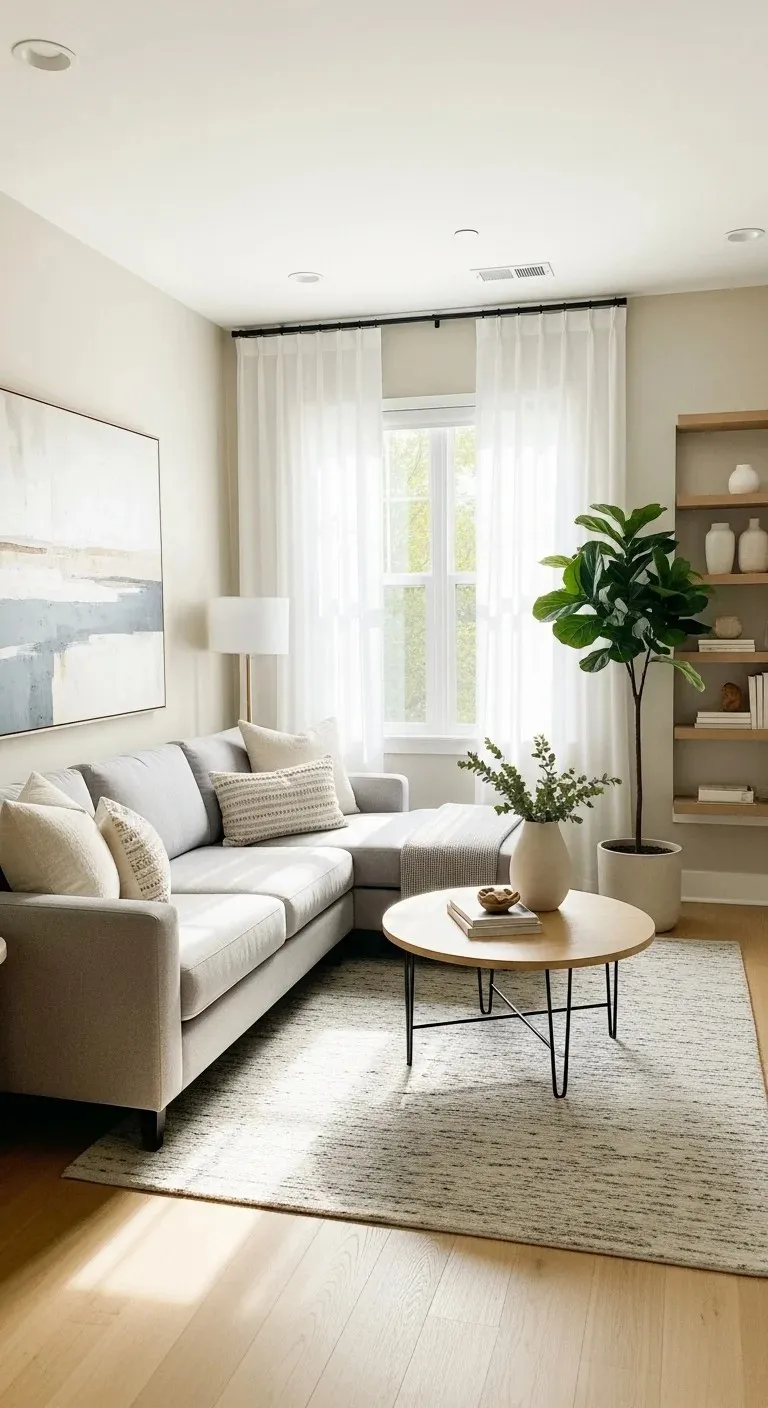
Choose window treatments that let in maximum light while providing privacy. Sheer curtains, light-colored blinds, or simple roman shades work better than heavy drapes in small spaces. Hang curtains as close to the ceiling as possible and let them touch the floor—this draws the eye upward and makes windows appear larger. According to Better Homes & Gardens, ceiling-mounted curtains can make rooms feel up to 20% taller.
13. Corner Utilization
Kevin’s Austin apartment had two empty corners that collected dust until he placed a tall corner shelf in one and a reading chair with a floor lamp in the other. Those previously wasted spaces became his favorite spots in the whole apartment.
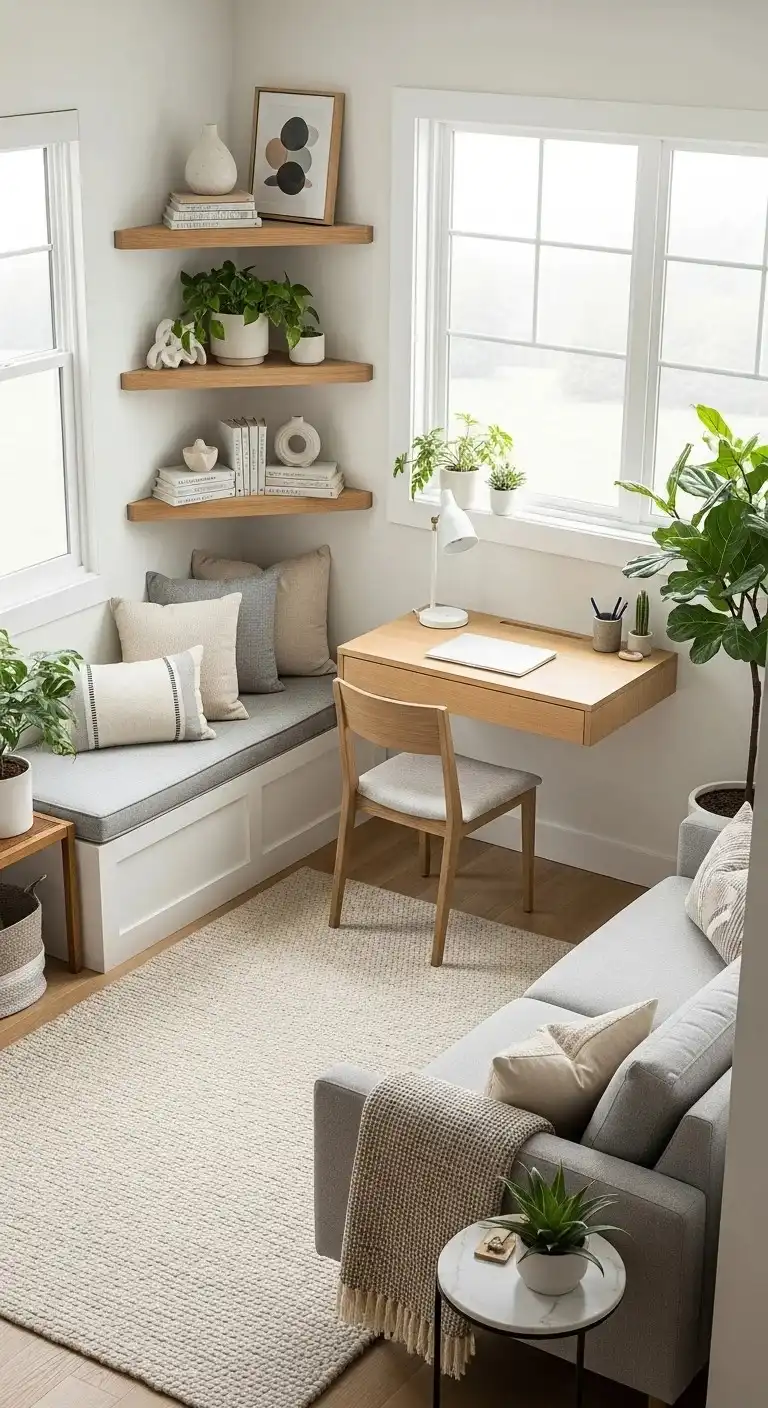
Corners are often forgotten in small living rooms, but they offer valuable real estate. Corner shelves, triangular tables, or carefully placed chairs can transform dead space into functional areas. L-shaped sofas also maximize corner space while providing ample seating. The key is choosing furniture specifically designed for corners rather than trying to cram rectangular pieces into angular spaces.
14. Monochromatic Color Schemes
When Priya painted her Mumbai apartment living room in various shades of blue—from powder blue walls to navy accents—her friends couldn’t believe it was the same room. The monochromatic approach created a cohesive, flowing space that felt much larger than its actual 180 square feet.
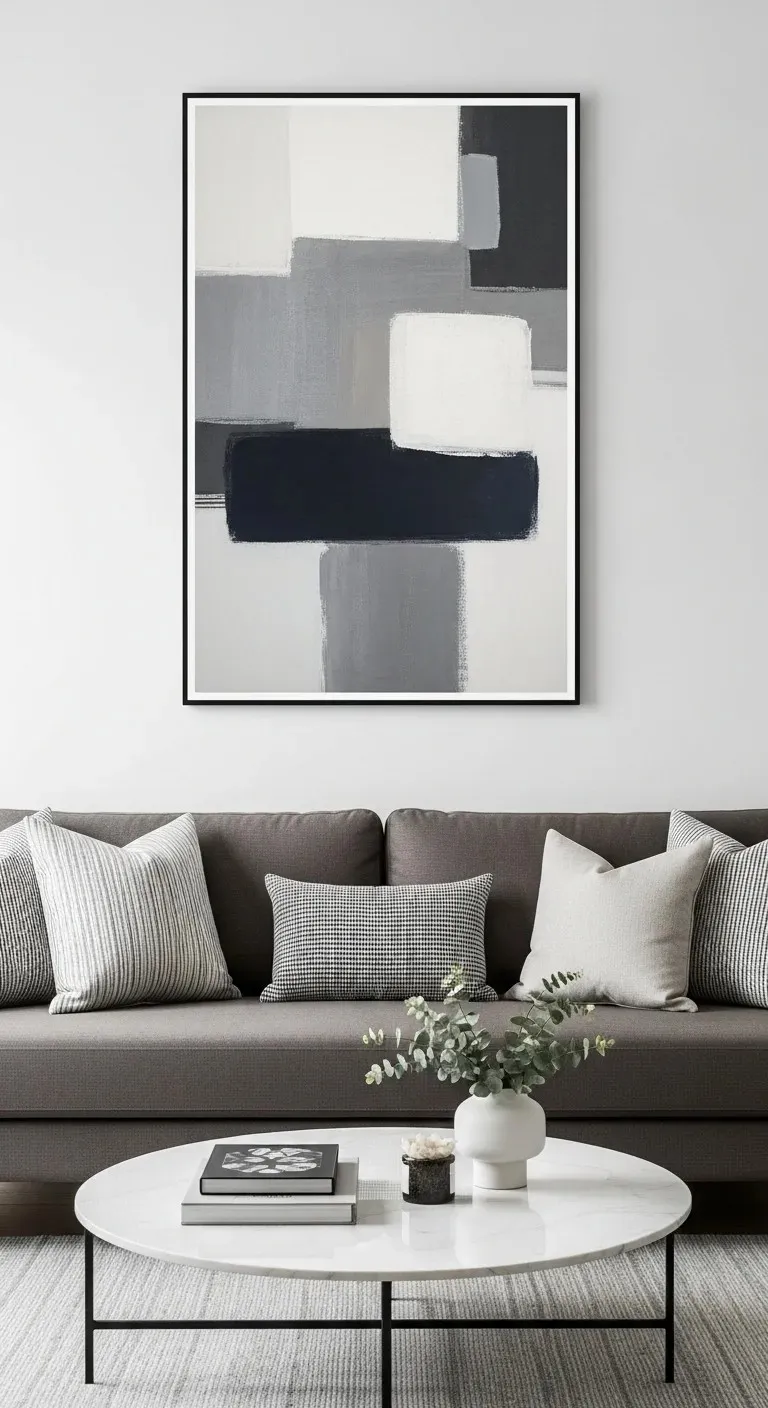
Sticking to one color family in different shades creates visual continuity that makes spaces feel more expansive. Instead of breaking up the room with contrasting colors, a monochromatic palette lets the eye travel smoothly around the space. This doesn’t mean everything must be identical—vary your chosen color through different tones, textures, and materials to add interest while maintaining that spacious feeling.
15. Scaled-Down Furniture Pieces
Michael bought a standard-size sectional for his small Seattle condo, and it completely dominated the room, leaving barely any walking space. After swapping it for an apartment-size sofa and two small armchairs, he could finally move around comfortably while still having plenty of seating.
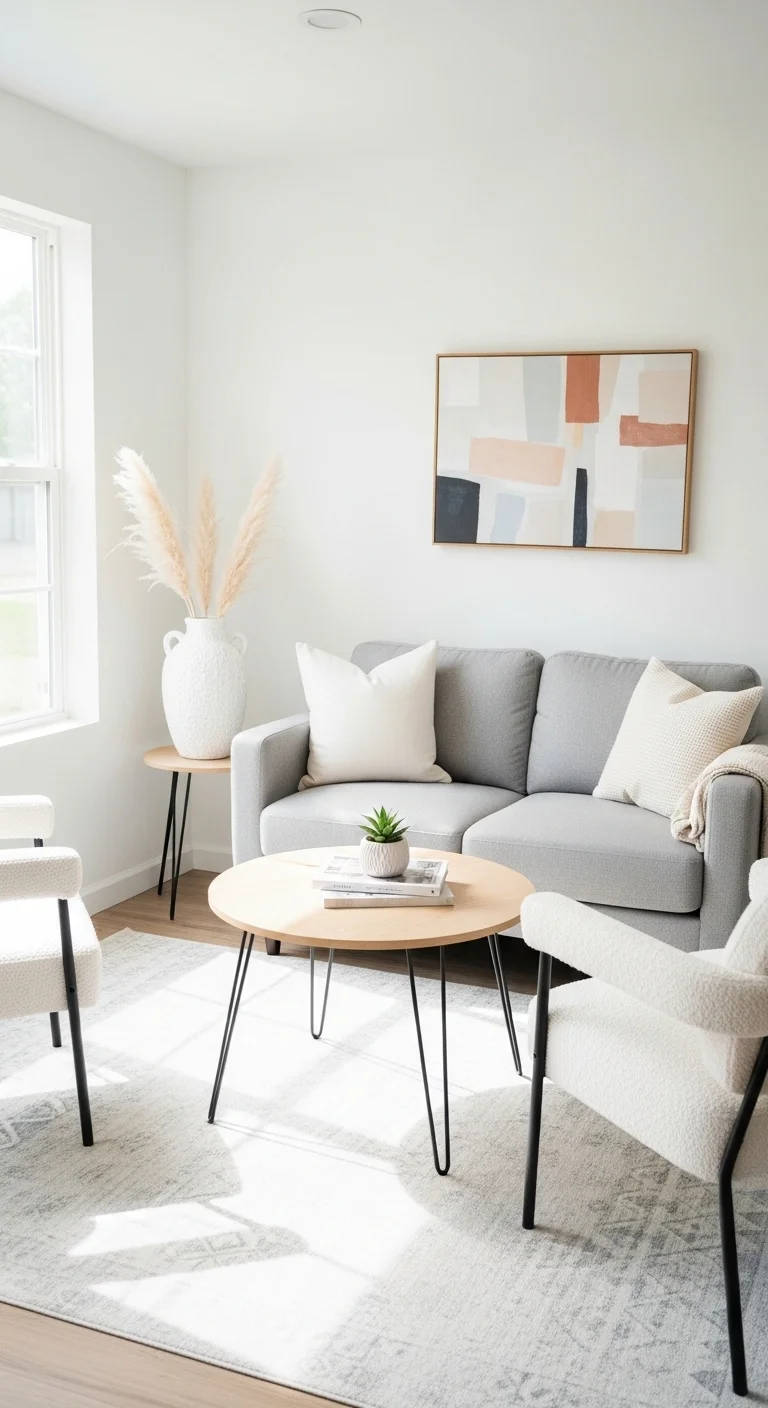
Not all furniture is created equal—pieces designed specifically for apartments and small spaces come in scaled-down dimensions without sacrificing comfort. Look for apartment-size sofas (typically 72-80 inches instead of 90+ inches), armless chairs, and slim-profile pieces. Room & Board and Apt2B specialize in scaled furniture that looks proportional in compact rooms. Measure your space carefully before buying, and leave at least 18 inches for walkways between furniture pieces.
16. Fold-Down and Wall-Mounted Tables
Emma’s London flat had no dining space until she installed a wall-mounted drop-leaf table. During the day, it folds flat against the wall, but when friends visit for dinner, she unfolds it to seat six people comfortably in her tiny living room.
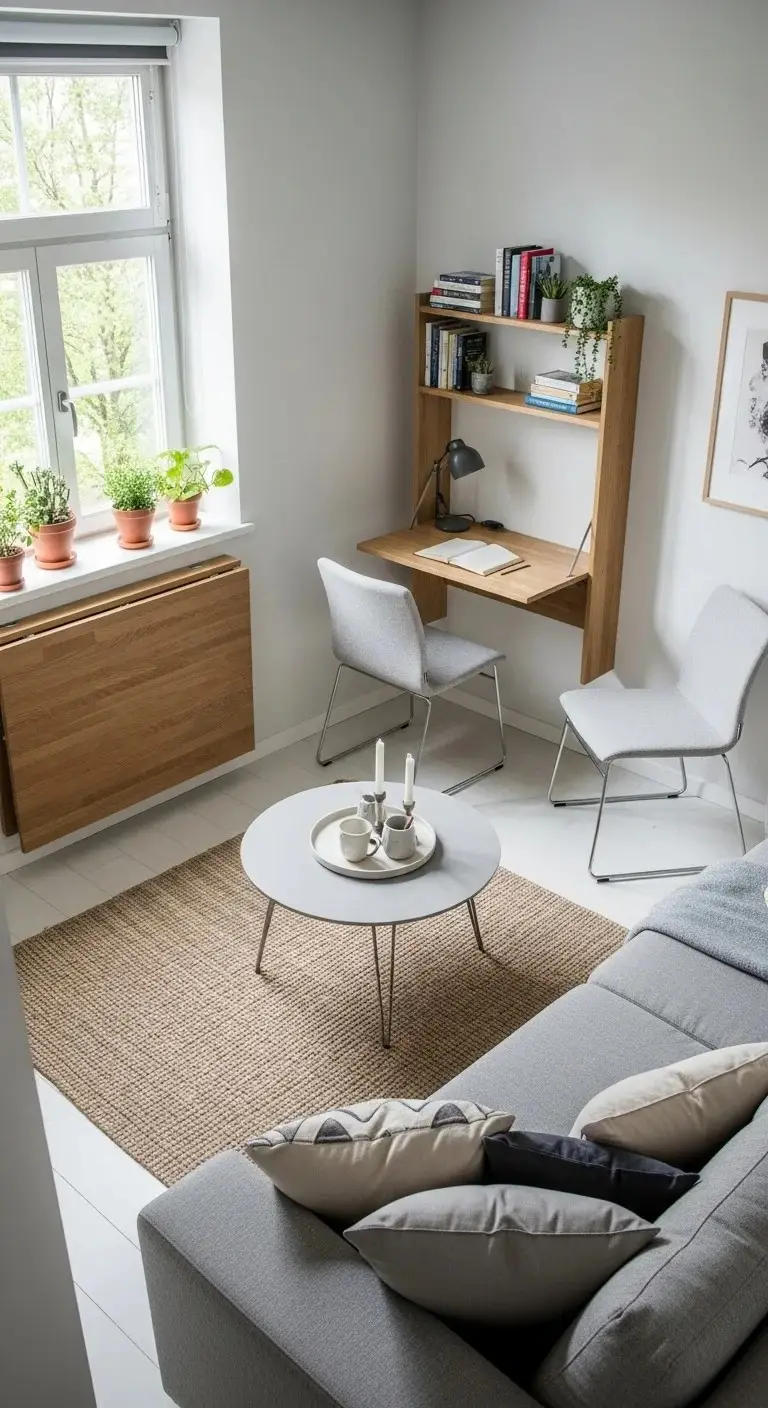
Fold-down tables, Murphy desks, and wall-mounted surfaces provide function when needed and disappear when not in use. These solutions are perfect for small living rooms that need to serve multiple purposes. Wall-mounted tables work great for eating, working, or crafting, then fold up to create open floor space. Companies like Resource Furniture specialize in transforming furniture that adapts to your changing needs throughout the day.
17. Strategic Use of Patterns and Textures
Carlos worried that patterns would overwhelm his small Miami living room, but his designer convinced him to try one accent wall with subtle geometric wallpaper. The pattern added personality and actually made the room feel more dynamic and interesting rather than smaller.
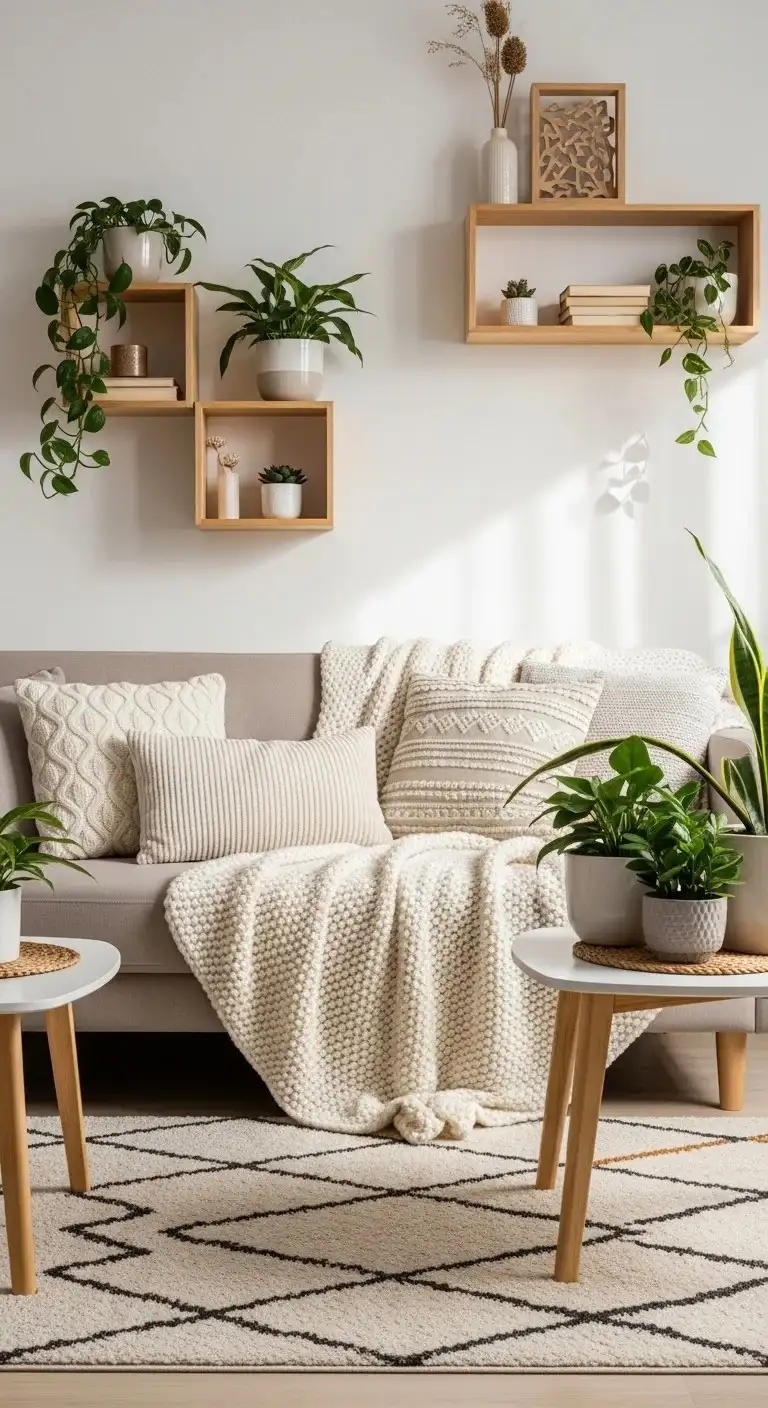
Patterns and textures add depth and interest without taking up physical space. The key is using them strategically—one patterned accent wall, textured throw pillows, or a patterned rug can prevent a small room from feeling flat and boring. Avoid large, bold patterns on multiple surfaces, which can feel overwhelming. Instead, choose one focal point for pattern and keep other surfaces more neutral with varied textures like linen, velvet, or woven materials.
Why Small Living Room Design Matters in 2026
The average American living room has shrunk by 15% over the past decade, according to recent housing data. In cities like New York, San Francisco, and Boston, people are paying premium prices for apartments where every square foot counts.
This trend isn’t slowing down. As urban populations grow and housing costs rise, learning to maximize small spaces has become essential. The good news is that compact living doesn’t mean sacrificing style or comfort. With smart design choices, a 200-square-foot living room can feel as comfortable and functional as a much larger space. Designers worldwide are now focusing specifically on small-space solutions, creating innovative furniture and layouts that previous generations never imagined possible.
Current Small Living Room Design Trends
Sarah Richardson, a prominent Canadian interior designer, notes that 2026 is seeing a major shift toward “intentional minimalism”—keeping only pieces that serve multiple purposes or bring genuine joy. This differs from stark minimalism; it’s about thoughtful curation rather than emptiness.
Warm neutrals are dominating small living room palettes this year, replacing the cool grays of previous years. Think warm beiges, soft terracottas, and creamy whites that create cozy atmospheres without making spaces feel closed in. Curved furniture is also trending, as rounded edges create better flow in tight spaces compared to sharp corners. Brands like Article and Burrow are releasing more curved sofas and chairs specifically for small apartments.
- Biophilic design elements bring nature indoors through plants and natural materials
- Flexible furniture that transforms throughout the day
- Vintage pieces mixed with modern elements for character
- Bold accent walls in small doses rather than all-over color
Budget-Friendly Small Living Room Makeover Tips
You don’t need thousands of dollars to transform a small living room. Alex from Michigan completely renovated his 150-square-foot space for under $800 by shopping secondhand, DIYing several projects, and prioritizing paint as his biggest impact investment.
Start with paint—it’s the cheapest way to make a dramatic change. A gallon costs $30-60 and can completely transform how a room feels. Next, focus on lighting; swapping out dated fixtures or adding $20 clip-on lamps can dramatically improve ambiance. Shop Facebook Marketplace, Craigslist, and thrift stores for furniture, especially for pieces you can refinish. One woman in Austin found a vintage credenza for $40, painted it white, and now it’s the centerpiece of her living room. Finally, use removable wallpaper or peel-and-stick tiles for renter-friendly updates that pack visual punch without permanent commitment.
Common Small Living Room Mistakes to Avoid
Buying furniture first and measuring later is the biggest mistake people make. Jason from Dallas bought his dream sectional online, only to discover it wouldn’t fit through his apartment door. Always measure doorways, hallways, and the actual room before purchasing anything.
Other common mistakes include using too many small furniture pieces instead of fewer, properly-sized ones—this creates clutter rather than solving it. Blocking natural light with heavy curtains or poorly placed furniture makes small rooms feel even smaller. Neglecting vertical space is another missed opportunity; people focus on floor space but forget about walls. Finally, many people match their furniture too perfectly, creating a showroom feel rather than a lived-in home. Mix different styles, materials, and eras for a collected look that feels personal and interesting.
How to Measure Your Small Living Room for Furniture
Before buying a single piece of furniture, grab a tape measure and map out your space properly. Create a simple floor plan on graph paper or use free apps like RoomSketcher or MagicPlan that let you create accurate layouts using your smartphone.
Measure the room’s length and width, noting any architectural features like windows, doors, radiators, or built-in elements. Measure doorways and hallways to ensure furniture can actually enter the space. When measuring for specific furniture pieces, remember the rule of thirds—your sofa should take up roughly one-third of the wall it’s against, not the entire length. Leave at least 18 inches for walkways and 14-18 inches between a coffee table and sofa. Write down these measurements and bring them when furniture shopping, or keep them in your phone for easy reference.
Conclusion
Transforming a small living room doesn’t require expensive renovations or magical thinking—it needs smart choices about furniture, color, storage, and layout. From multi-functional pieces that work double duty to mirrors that bounce light around, these 17 small living room ideas for 2026 prove that compact spaces can feel spacious, stylish, and completely livable. Start with one or two changes that fit your budget and lifestyle, then build from there. Your small living room has more potential than you think—it’s just waiting for the right design approach to shine.
FAQs
What is the best color for a small living room in 2026?
Light, warm neutrals like soft beige, cream, and warm white work best because they reflect natural light and make spaces feel larger. These colors create an airy, open feeling while still maintaining warmth and coziness.
How can I make my 150 sq ft living room look bigger?
Use light colors, hang large mirrors opposite windows, choose furniture with exposed legs (avoiding bulky skirted pieces), keep clutter minimal, and utilize vertical storage. Multi-functional furniture and transparent pieces like glass coffee tables also help maintain an open feeling.
What furniture is essential for a small living room?
Start with a properly-sized sofa (apartment-size around 72-80 inches), one coffee table with storage, and flexible seating like ottomans or poufs. Skip unnecessary side tables and large entertainment centers—wall-mount your TV instead and use floating shelves for storage.
How much should I budget for a small living room makeover?
You can refresh a small living room for $500-1000 if you shop smart, focusing on paint, lighting, and secondhand furniture. For a complete renovation with new furniture, plan for $2000-4000. Prioritize key pieces like the sofa and invest in quality multi-functional furniture that will last.RetryClaude can make mistakes. Please double-check responses. Sonnet 4.5


